



Texture does not need taming. It needs a shape.
Wavy curly hair looks best when the cut or style works with the bend instead of flattening it out. Anyone who has spent 20 minutes coaxing a wave into place, only to watch it slump by lunch, knows the problem: too much weight, too much brushing, not enough room for the hair to move. The good styles are rarely the ones that force every strand to behave.
The strongest looks do one of two things. They either let the hair fall in a soft, lived-in line that shows off every ripple, or they pin it in a way that leaves the ends loose and touchable. Both can look polished. Neither has to feel stiff. And yes, a good cut helps, but the styling choice matters just as much — sometimes more.
That’s why the best wavy curly hair looks for texture are the ones that build on what your hair already does well. A shag can make fine waves look fuller. A deep side part can wake up flat roots. A clipped-up style can keep volume without turning the ends into a helmet. Small moves. Big payoff.
1. Soft Shag With Airy Layers
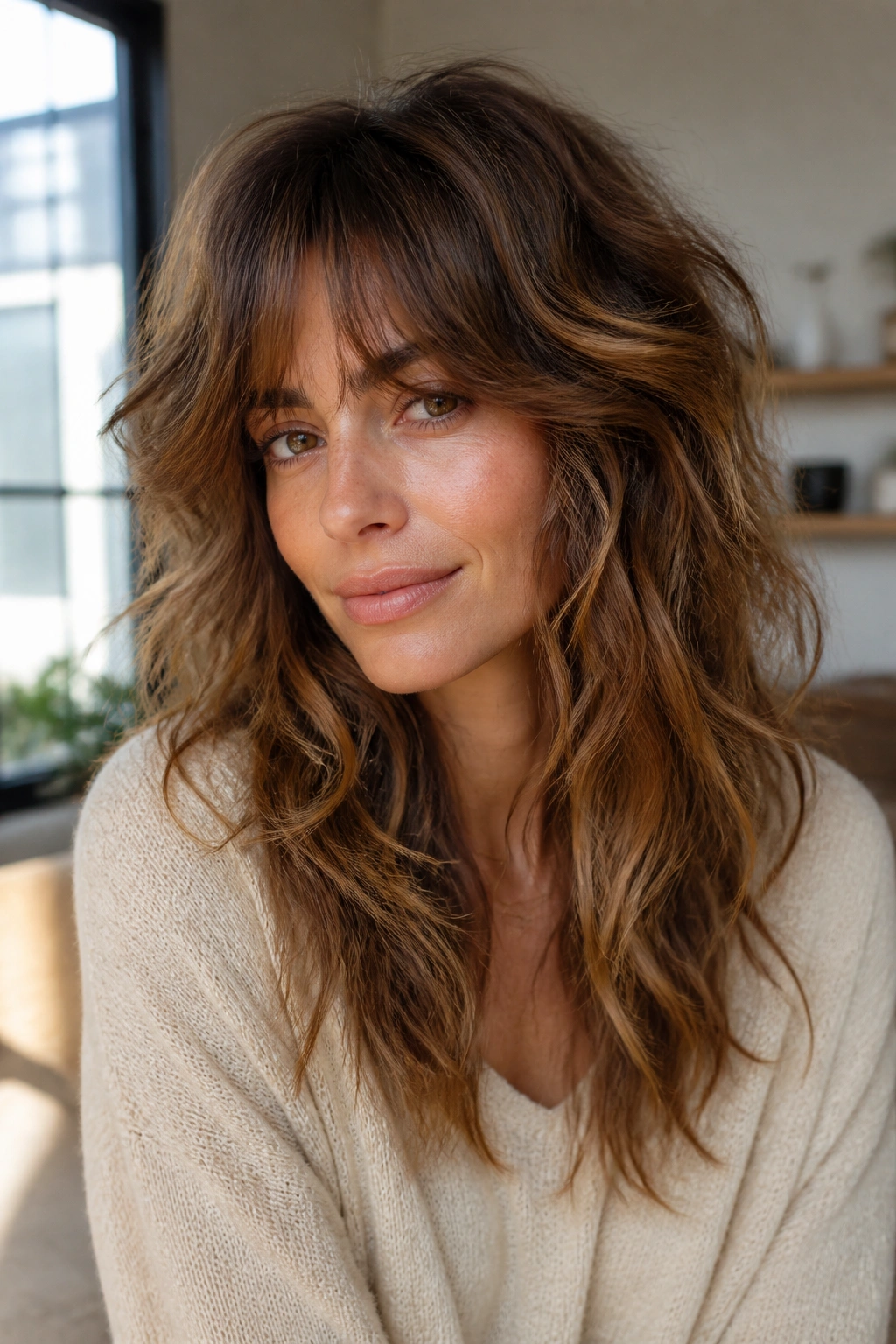
A soft shag is one of the easiest ways to make wavy curly hair look fuller without loading it up with product. The shape does the work for you. Shorter pieces around the crown lift the top, while longer layers keep the ends from looking heavy or boxy.
Why It Works On Texture
The trick is balance. A shag gives texture room to expand, so the hair can look deliberately messy instead of vaguely unkempt. That matters a lot when your waves sit in that in-between place — not straight, not ringlets, just enough bend to collapse if the cut is too blunt.
Ask for light, face-framing layers and a bit of movement through the crown. If your hair is finer, keep the layers soft so you do not lose too much weight. If it’s thicker, you can go choppier. A diffuser helps, but I’d still avoid over-drying the crown. Leave a little dampness there and let the shape finish itself.
Best with: shoulder length or longer
Styling move: scrunch in a foam or light mousse, then air-dry 70% before diffusing
Skip if: you want one smooth, uniform shape
One good shag cut can make your texture look like it has a memory.
2. Deep Side Part With Brushed Waves

A deep side part changes everything fast. It lifts the roots on one side, drops a little drama over the forehead, and makes natural bend look intentional instead of random. On flat-to-medium waves, it’s a cheap fix with a very expensive-looking result.
The reason it works is simple: hair wants to fall. When you move the part over by a few inches, you shift the weight line and the hair responds with instant volume. Brushing the top section before it dries can help, but do not brush the whole head unless you enjoy frizz and triangle shape. That’s a bad trade.
Try this when your hair looks too symmetrical or too close to the scalp. Pair it with a tuck behind one ear, or let the heavier side frame the cheekbone. Either way, it gives you that “I did not overthink this” feeling.
- Good for: fine waves, medium curls, second-day hair
- Works best with: a light cream or leave-in, not a heavy butter
- Style note: clip the part in place while the hair cools after diffusing
- Small bonus: it hides grow-out well
3. Curtain Bangs And Shoulder-Length Coils
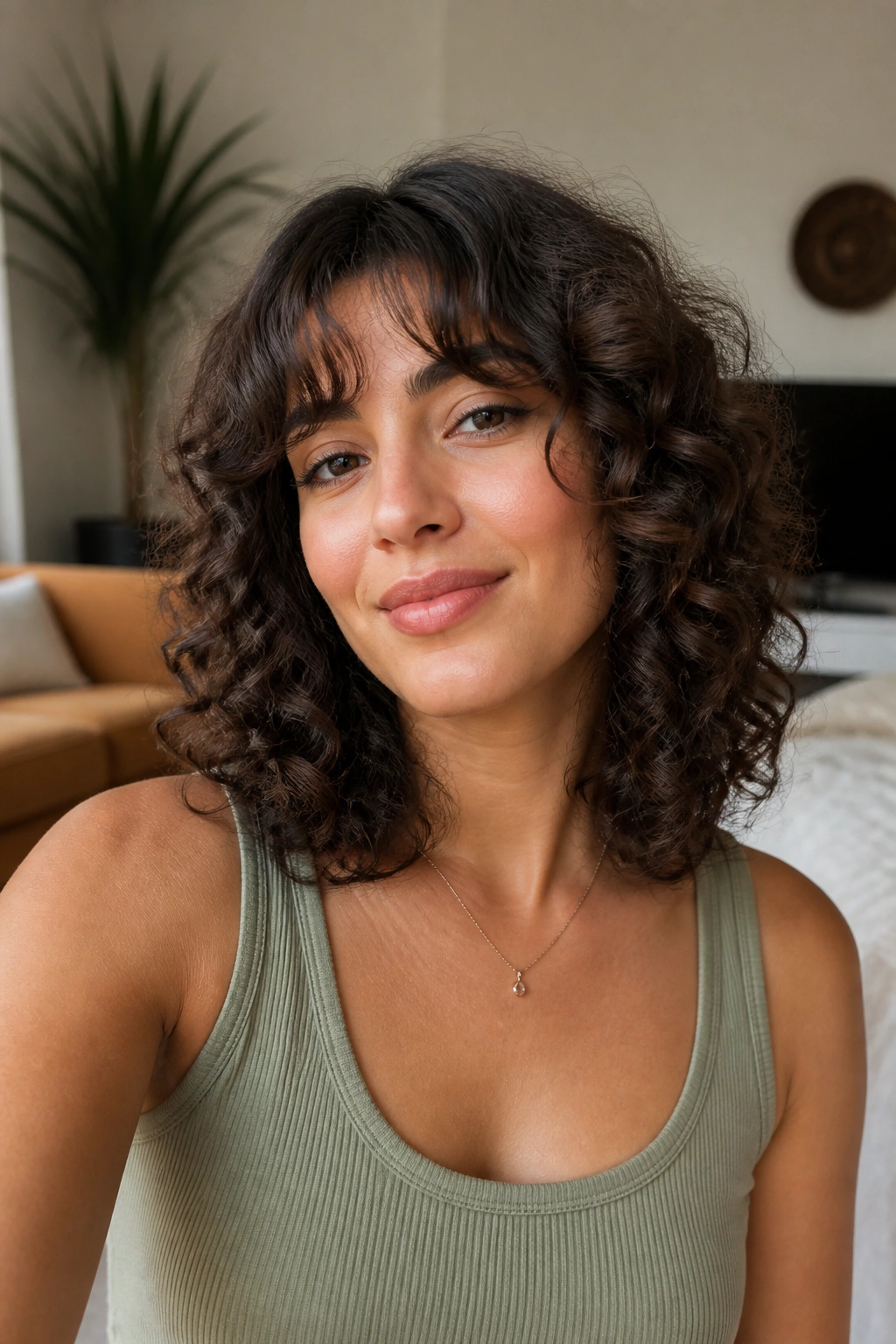
Can bangs work on curly hair without turning into a battle? Yes — if they’re cut to fall apart a little. Curtain bangs are softer than blunt fringe, which makes them easier to live with when your waves tighten, loosen, or change their mind from one wash to the next.
Why They Flatters Mixed Texture
The middle part opens the face, and the longer sides blend into the rest of the cut. That means the bangs do not sit there like a separate project. They move. They bend. They can be tucked, pinned, or left loose when they dry with a weird kink, which happens more than people admit.
This style is especially good if your hair is wavy at the top and curlier underneath. The bangs make that mix look deliberate. Keep the shortest point around the cheekbone or just below it, then let the rest graze the jaw. Too short and they bounce up in a way that can feel fussy.
A little styling cream on wet bangs helps, but keep the amount tiny. Too much product around the face tends to make them clingy, and nobody wants that.
4. Half-Up Twist With Loose Ends
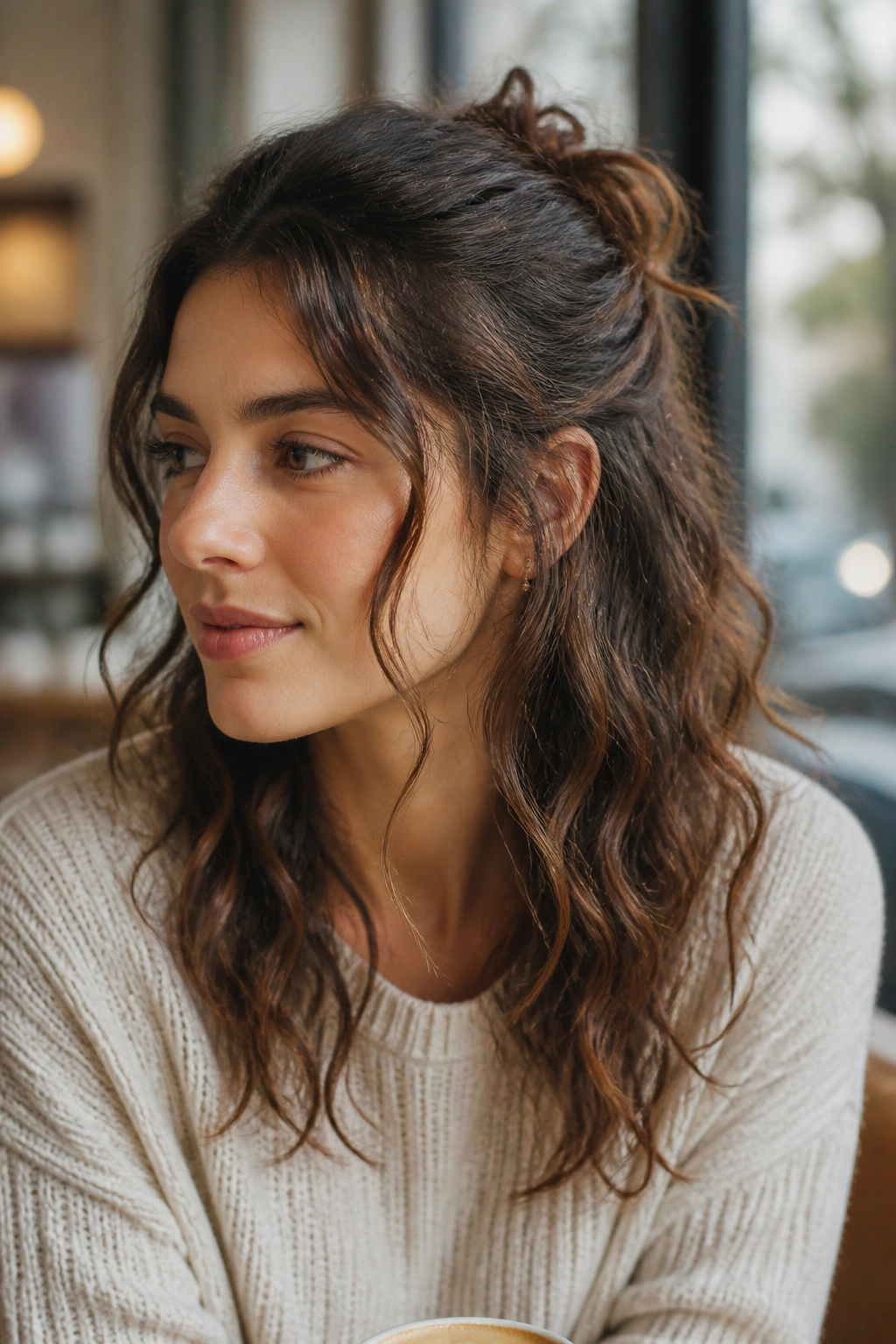
This one feels like the hairstyle version of rolling up your sleeves. It looks casual, but there’s enough structure to keep texture from going wild. Pulling the top section back lets the waves and curls at the ends stay visible, which is the whole point.
I like this look for days when the roots are behaving badly but the lengths still have life. Gather the top half loosely at the crown, twist it once or twice, and pin it with two bobby pins in an X. Leave a few face-framing pieces out. Not too many. Just enough to soften the line around the face.
The best part is that it works with hair that is not perfectly fresh. A little grit helps. Day-two waves hold pins better than silky clean hair, and that tiny bit of texture keeps the twist from slipping by lunchtime.
Try it with: a claw clip, a small barrette, or clear elastics
Avoid: slicking the top too tight; it kills the volume at the crown
Looks best on: collarbone-length hair or longer
5. Defined Wash-And-Go With A Soft Gel Cast
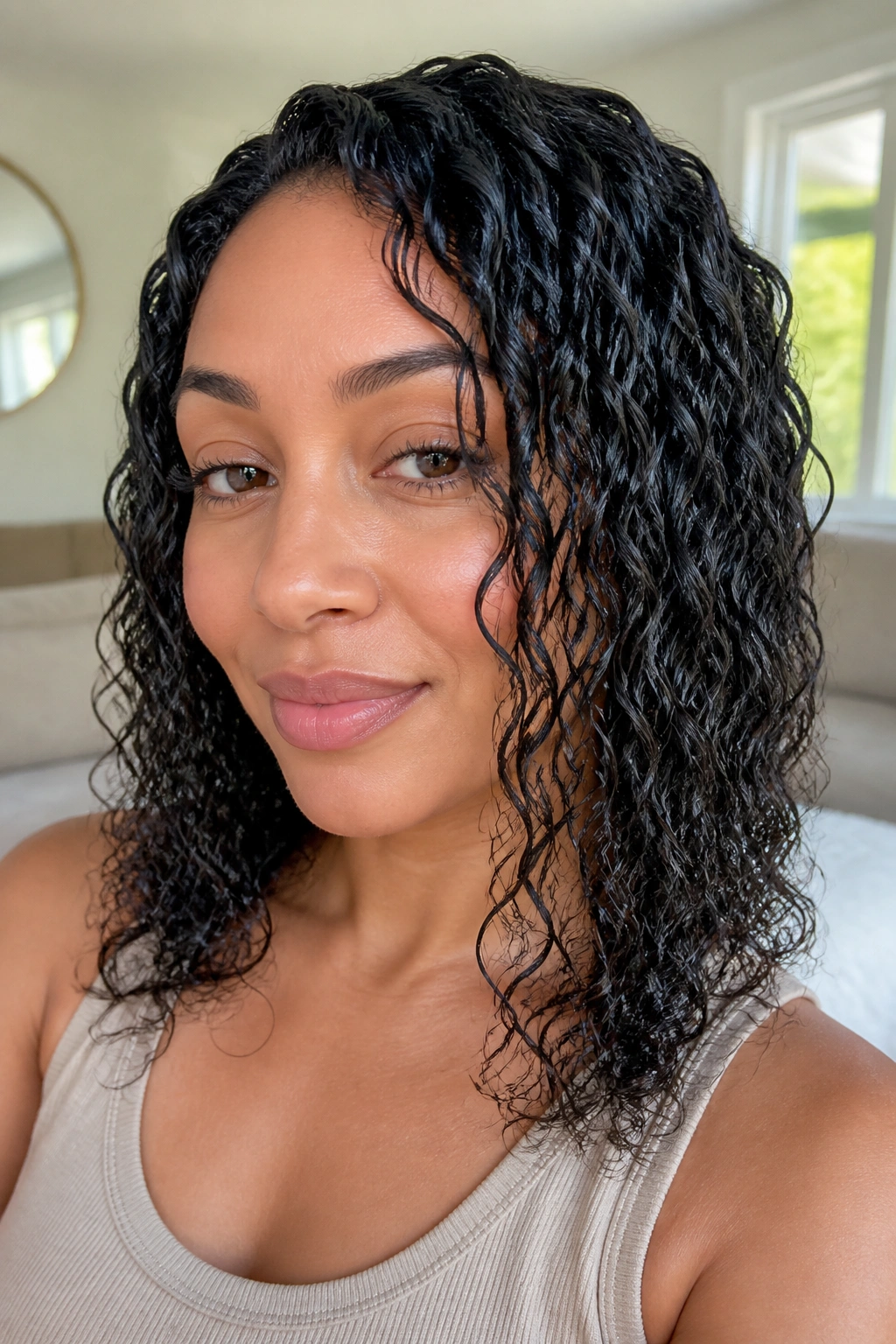
A defined wash-and-go is not boring. It’s precise. And on wavy curly hair, that precision is often what makes the texture look rich instead of fuzzy. The key is a light gel cast — that firm shell you scrunch out once the hair is dry.
Start with soaking-wet hair. Work in leave-in, then a curl cream or foam, then a gel that has enough hold to lock in the clumps. Use praying hands or a raking motion, then scrunch. Do not keep touching it. Touching is how you lose the curl pattern and end up with frizz halo instead of definition.
Once it dries, the hair may feel a little crunchy. Good. That means the shape is set. Scrunch out the cast with clean hands or a drop of lightweight oil, and the finish will feel soft, not sticky.
When This Look Makes Sense
Use it when you want your pattern to show, especially if your waves have uneven spots. It can make loose curls look more polished and make mixed textures look more even. If you hate product feel, use less gel and more foam. The hold will be lighter, but the finish stays airy.
6. Diffused Volume Bob
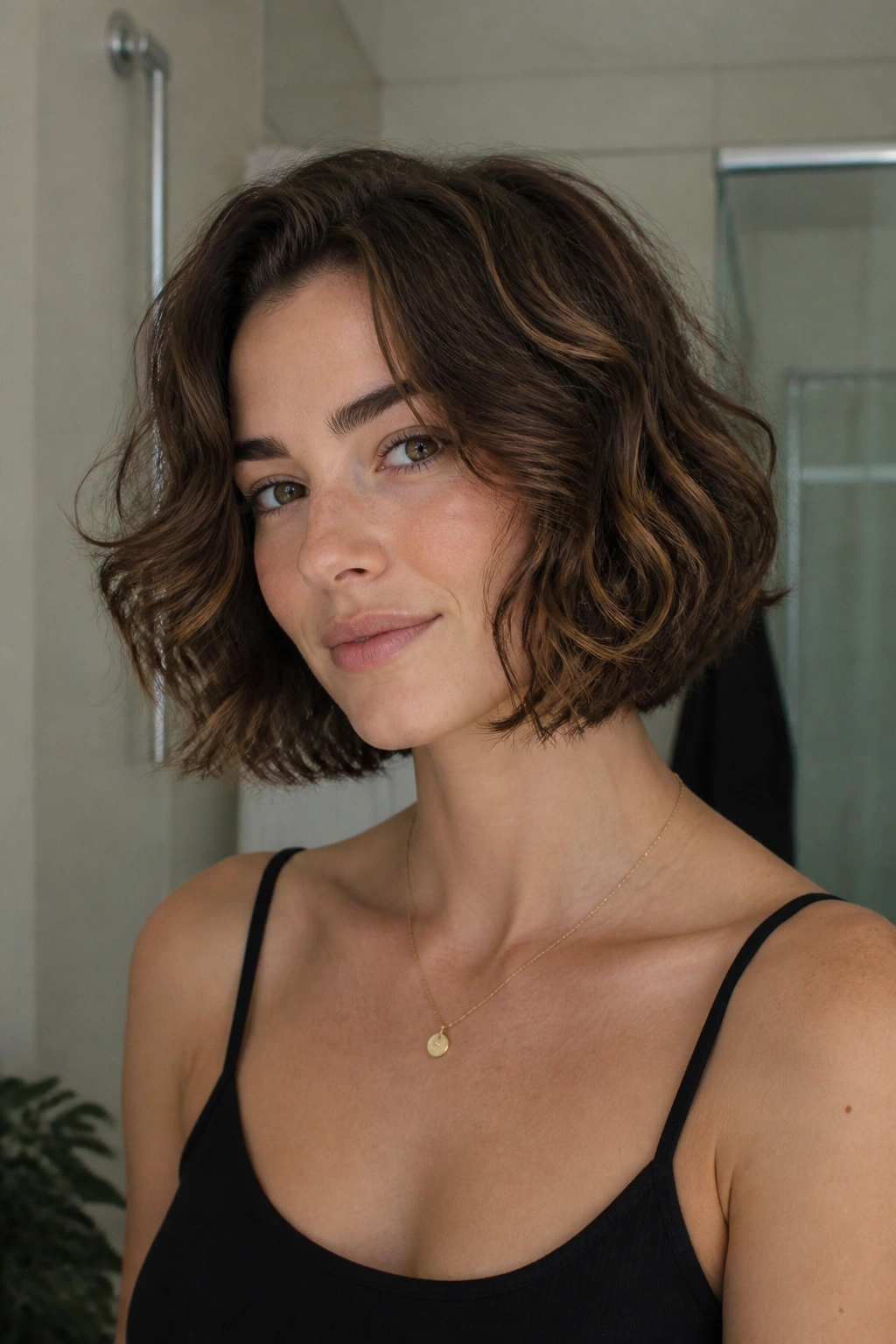
A bob with diffused volume is the opposite of flat and precious. It has lift at the roots, a rounded shape through the middle, and enough bend at the ends to keep it from feeling helmet-like. That’s the danger with bobs on textured hair — when they’re cut too blunt and dried too neatly, they lose their life.
This version leaves some room for movement. Ask for a bob that hits between the jaw and collarbone, then shape the ends so they can curve or kick out instead of sitting in one stiff line. A diffuser on low heat helps the layers settle without dragging them down. Tilt your head side to side while drying. Small motion. Big payoff.
It suits people who want a cleaner outline than a shag but still want body. It also makes earrings show up, which sounds minor until you actually wear the cut. Then it matters.
- Use with: mousse at the roots, then a small amount of cream on the mids
- Better than: air-drying if your roots fall flat easily
- Avoid: heavy oils at the crown; they collapse the shape fast
- Best on: chin-length to collarbone-length cuts
7. Pineapple Ponytail With Face-Framing Pieces
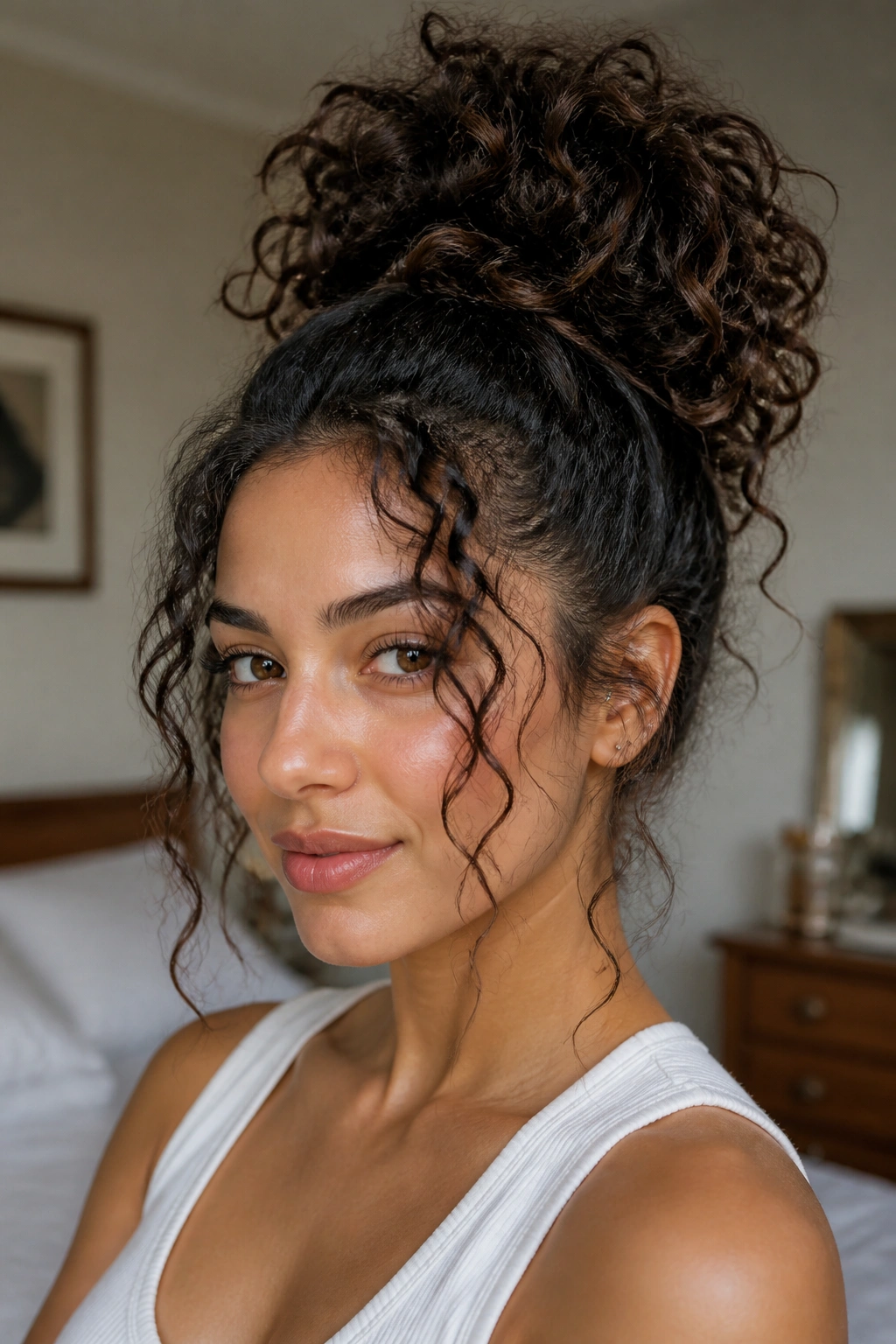
Pineapple hair gets a bad rap because people use it like a sleep style and stop there. That’s a mistake. As a daytime look, it can make waves and curls look tall, fresh, and a little playful without hiding the texture underneath.
The trick is to gather the hair high but loose, so the curls at the back do not get smashed. Use a soft scrunchie, not a tight elastic. Let the ends spill forward, and pull out two or three pieces around the face. Those front pieces keep the look from feeling too severe. They also help if your crown gets frizzy, which it often does when humidity gets involved.
This is one of those styles that works better the less you fuss with it. A little unevenness is good here. If the ponytail leans slightly to one side, leave it. Perfect can look odd on textured hair. Natural usually looks better.
How To Keep It From Looking Bunched Up
Flip your head over when you gather the ponytail. That keeps the top from flattening. If you want extra lift, pin the base slightly forward before you tighten the scrunchie. Little cheat. Big difference.
8. Long Layers With Bent Ends
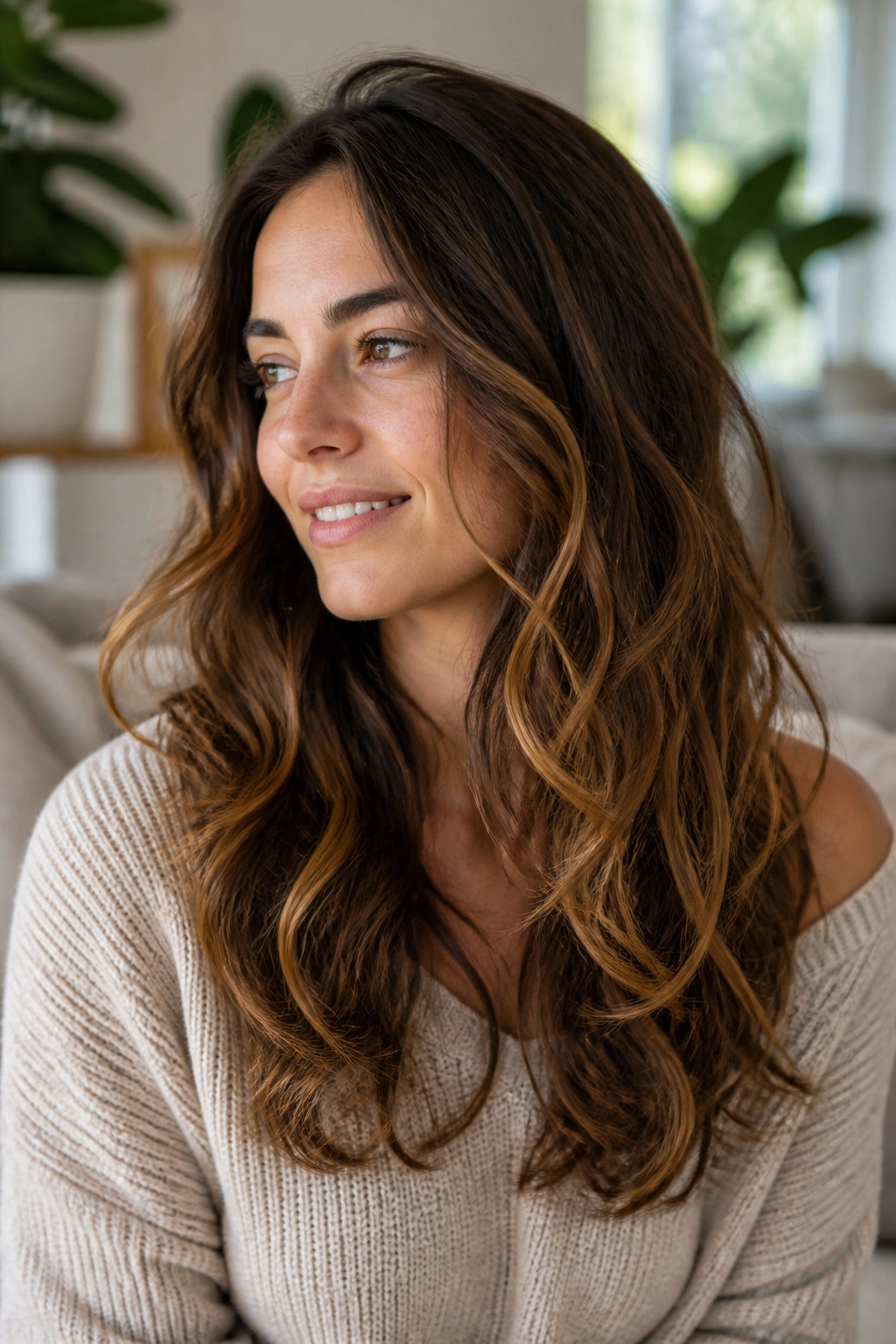
Long hair can be a blessing or a drag. Without layers, texture often sits in one heavy curtain and loses all that pretty bend toward the bottom. With layers, the hair can swing. It can separate. It can actually show off the wave pattern instead of hiding it under its own weight.
This look is not about dramatic chopping. It’s about keeping the ends soft so the hair has movement from top to bottom. Ask for long layers that start below the cheekbone if you want to keep length, or a little higher if your hair is thick and stubborn. The ends should fall with some shape, not hang like a rope.
A wide-tooth comb is your friend here. A brush can pull the pattern apart too much when the hair is dry, and once that happens, the lengths tend to puff in a way that is hard to fix. I’d rather use fingers and a tiny bit of leave-in than chase perfection with a brush that only makes things bigger.
Good if you want: softness without sacrificing length
Best styling move: twist a few damp sections away from the face and let them set
Works especially well: on loose curls that need help clumping
9. Wet-Look Slicked-Back Crown And Textured Lengths

The wet-look crown has a mood. Clean, sharp, a little cheeky. And when the lengths stay textured, it stops looking severe and starts looking expensive in the practical sense — like you knew exactly what you were doing.
Use gel only at the front and top section. Smooth it back with a brush or your hands, then stop before the product reaches the mid-lengths. That separation matters. If the whole head gets coated, the style turns heavy and sticky. If only the crown is slicked, the waves underneath still breathe.
This works well when the roots are frizzy but the lower half still has decent shape. It also does a good job on second- or third-day hair. The scalp area gets control, the ends keep their softness, and you do not have to wash everything just because the top is acting up.
A middle part makes it sharper. A side part makes it easier to wear. Either way, keep the crown close and the rest loose. That contrast is the whole trick.
10. Claw Clip French Twist With Loose Ends
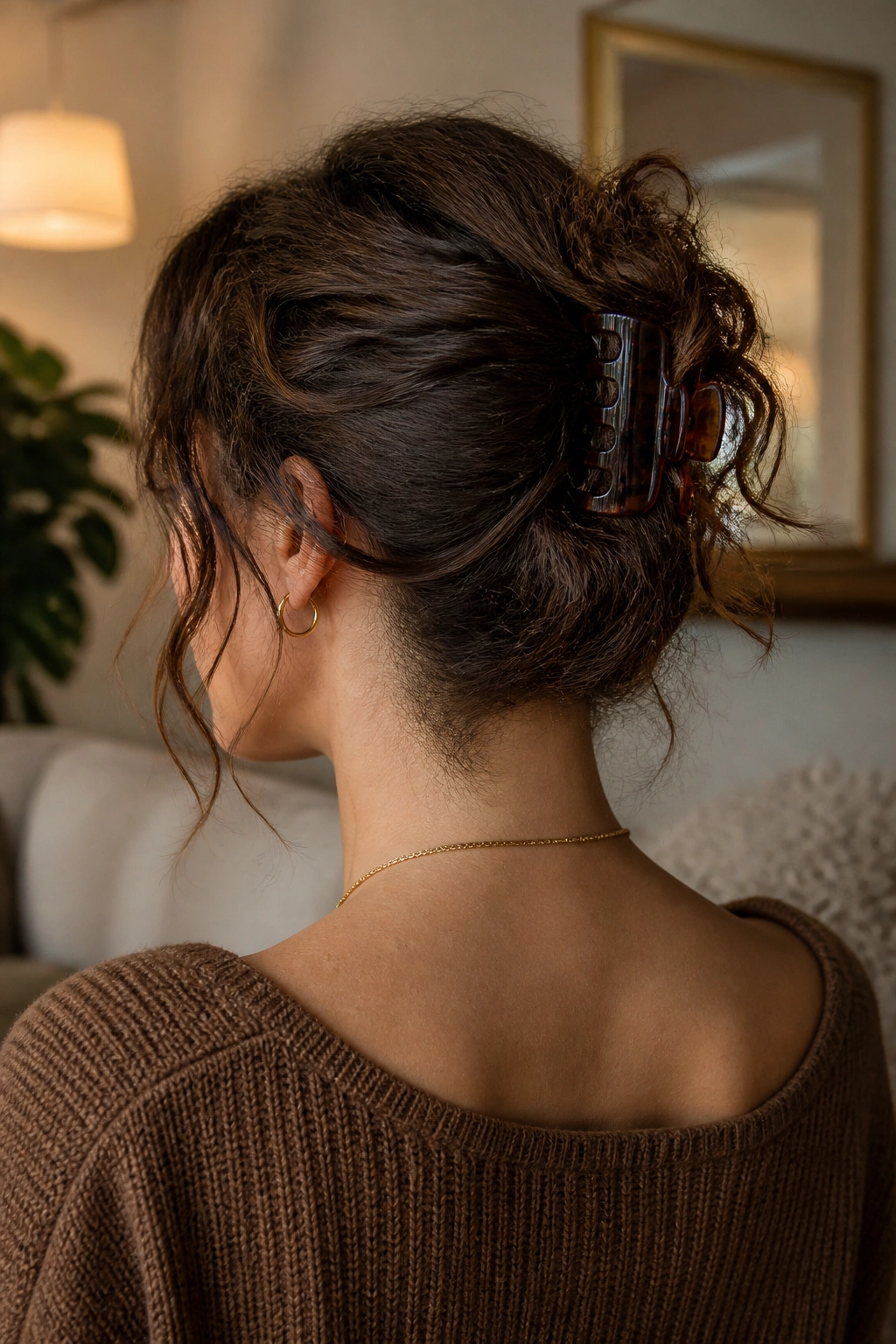
A claw clip French twist is one of those styles that looks much harder than it is. That is part of the appeal. You gather the hair, twist it upward, tuck the length into a clip, then let a few ends escape on purpose. Those loose ends are not mistakes. They make the style work for texture.
Unlike a sleek bun, this keeps curl pattern visible. The twist holds the shape, but the pieces around the nape and temples can still bend and bounce. It’s especially useful for hair that is too short for a full chignon but too long to leave fully down when you need it out of your face.
- Best clip shape: medium or large claw clip with a curved jaw
- Better hold: twist the hair once, clip, then pin the loose section under the first clamp
- Nice detail: leave one curl by each ear
- Avoid: pulling every strand tight; it makes the twist slip
This is the kind of style that saves a bad hair day without looking like a rescue mission.
11. Bubble Braid Down The Back
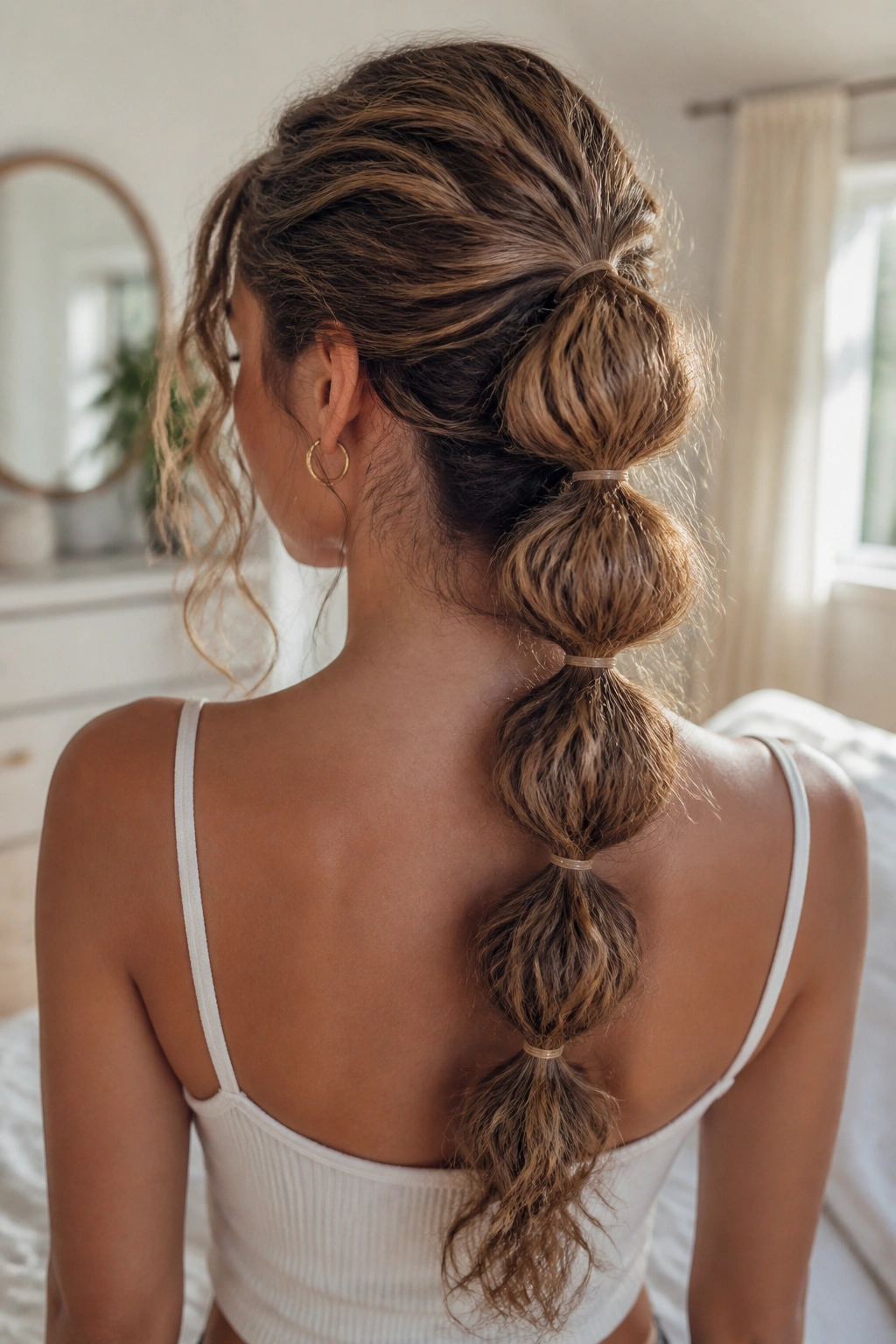
Bubble braids are excellent when you want structure but do not want to flatten the life out of textured hair. The braid itself is simple — one ponytail down the back, then more elastics spaced every few inches, with each section puffed out between them. What you get is shape, movement, and a little bit of play.
The reason it works on wavy curly hair is that the bubbles let the texture live inside the braid instead of getting squeezed into a tight plait. If your ends are loose and uneven, even better. That irregularity gives the style some personality. You can tug each bubble outward a little more if you want fullness, or keep it neat if the texture is already thick.
This is a good style for busy days, travel, or any time you want your hair controlled but not scraped back. A bit of hairspray on the elastics helps. So does a tiny dab of pomade on flyaways, but only on the surface.
What Makes It Different
A standard braid compresses. A bubble braid decorates. That difference matters when the goal is to show texture, not hide it.
12. Tousled Pixie With Crown Lift
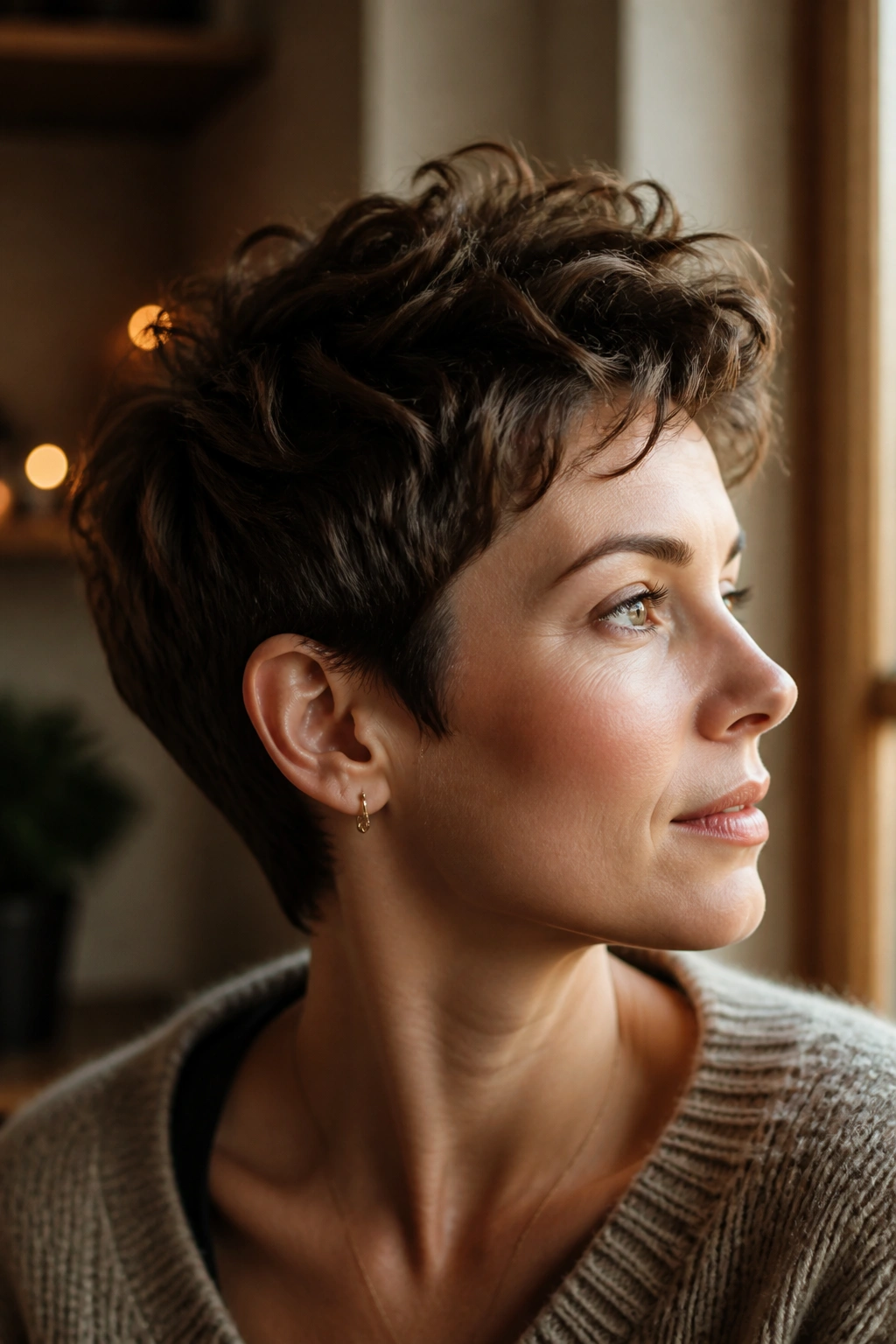
Short textured hair has a specific kind of freedom. It wakes up fast. It also goes flat fast, which is why a tousled pixie lives or dies by the crown.
The best version keeps the sides neat enough to frame the face while leaving more length on top for bend and lift. A little mousse at the roots, then fingers only. No round brush unless you want a more polished finish. The top should look touched, not shellacked. There’s a line between airy and over-styled, and pixies cross it quickly.
The nice thing about this cut is how it changes with a few inches of length. Let it grow out slightly and it becomes softer. Trim it tighter and it gets sharper. Either way, the texture reads first. That’s why this look works for people who do not want to spend half the morning on their hair.
- Need to know: crown length matters more than side length
- Works with: loose curls, tight waves, or mixed textures
- Best product: a matte paste or lightweight foam
- Watch out for: heavy wax; it crushes the lift
13. Crown Braid With Open Texture
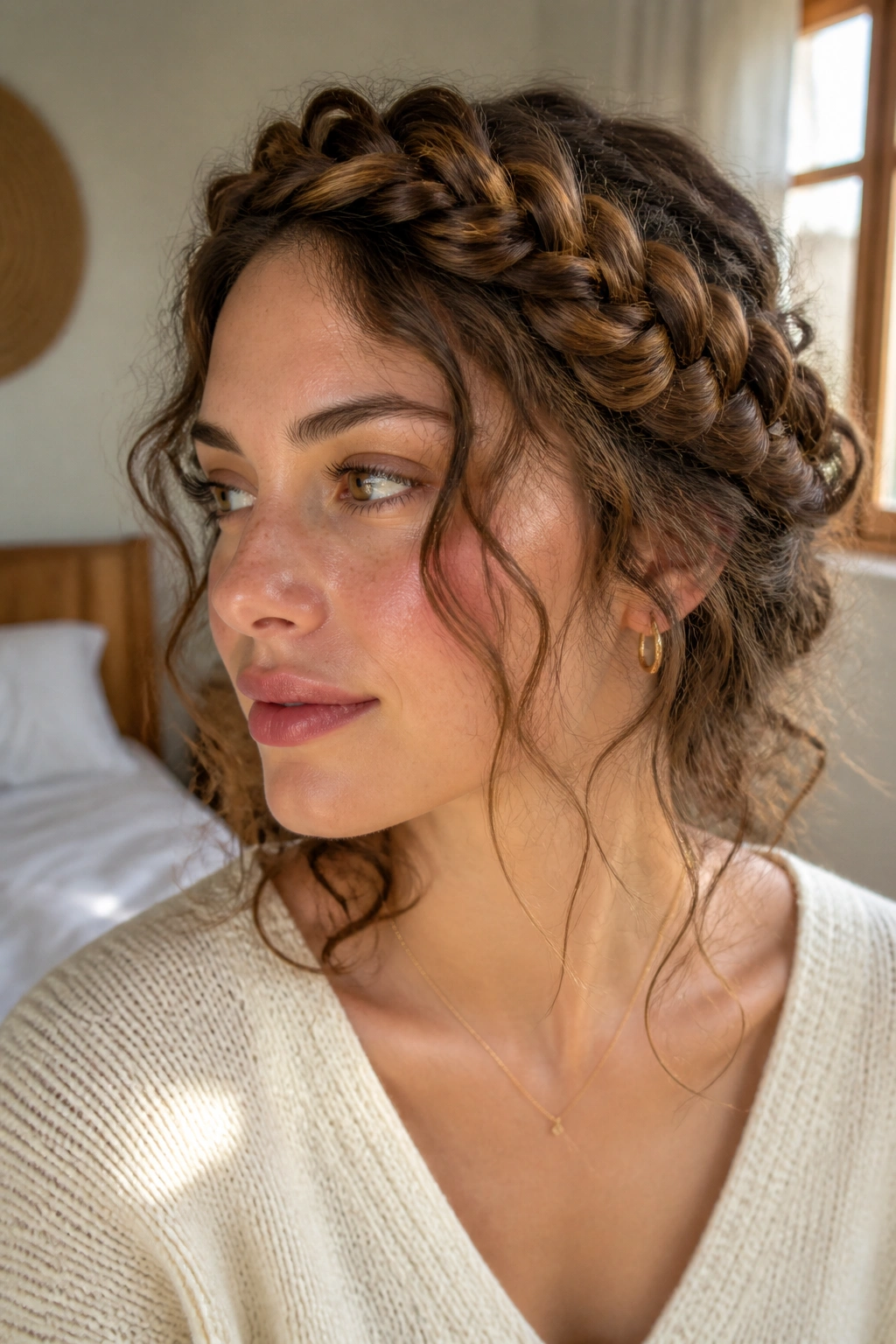
Can a braid show texture instead of hiding it? Absolutely, if you keep the braid loose and let the rest of the hair stay open. A crown braid does this well. It pulls the front pieces away from the face, then leaves the back soft, wavy, and visible.
Start the braid near the part line and keep your fingers relaxed while you work. A tight braid looks neat for about ten minutes, then starts to fight the natural bend. A looser braid wears better because it bends with the hair. Pull a few tiny strands free around the hairline if you want a softer edge. Not a lot. Just enough to keep the style from feeling locked down.
This look is good for weddings, dinners, and those days when you want your hair to look done without feeling formal. It also holds surprisingly well on hair that has a little grit from day two or three. Clean hair can be slippery. Slightly lived-in hair behaves better.
How To Use It
Finish the braid with a small clear elastic, then pin the tail under the back section. That keeps the line clean and stops the ends from poking out in odd directions.
14. Shoulder-Grazing Lob With Bent Ends
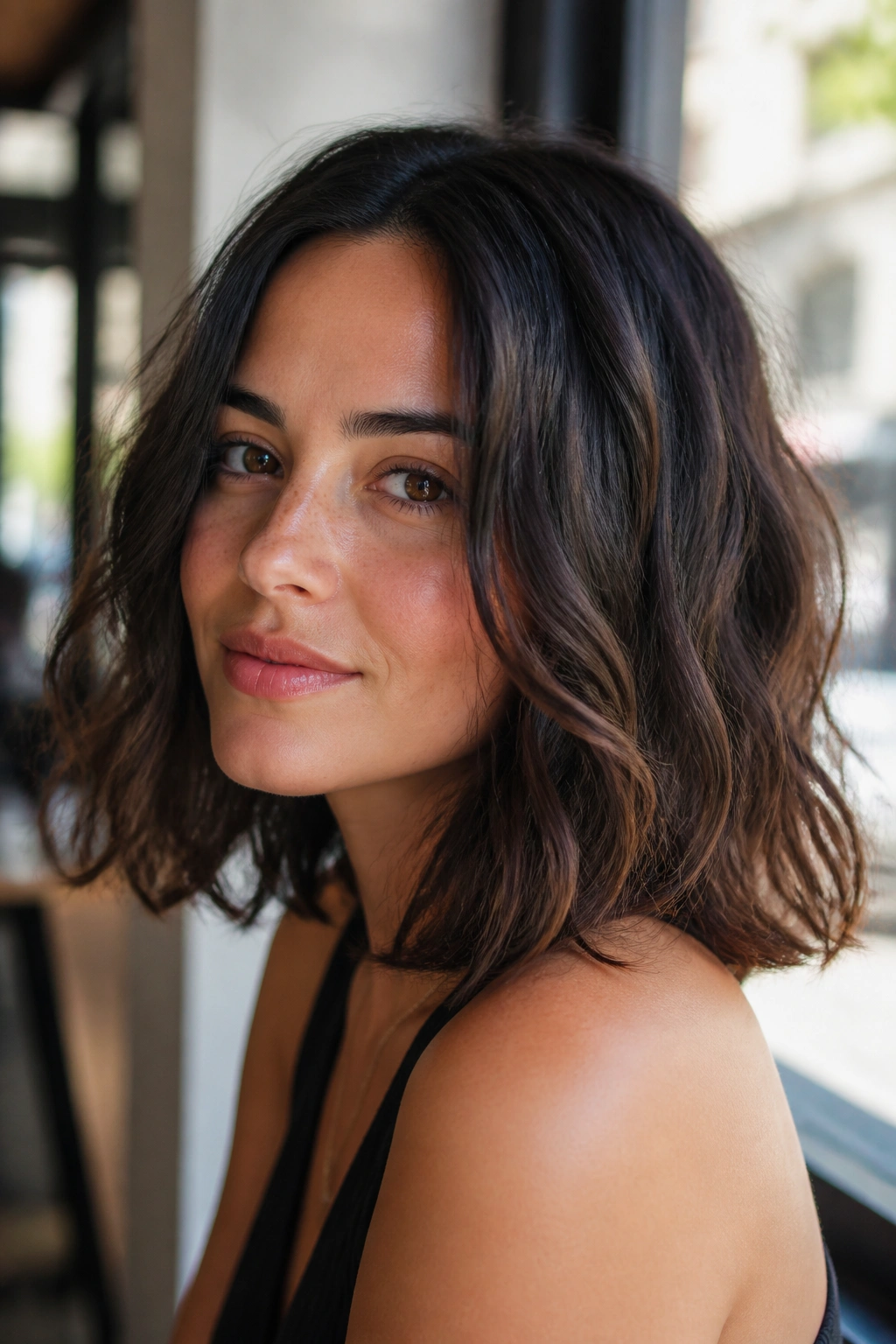
A lob is one of the safest bets for textured hair, and honestly, that’s not a bad thing. When it hits around the shoulders, it gives the hair enough length to show shape while staying light enough to bounce. The bent-end version leans into that movement instead of trying to force sleekness.
Ask for the ends to be cut with a soft point or slight bevel, not razor-straight. That lets the waves curl under or flip out in a way that feels natural. If your hair tends to puff, a lob keeps it from getting too wide. If it tends to fall flat, the length gives it enough weight to form a smoother bend. Good middle ground. Rare, but real.
A quick pass with a diffuser or a few bends created with your fingers while the hair is damp usually does the job. No need to overwork it. The cut already carries the style.
Strong point: this shape plays well with low-maintenance routines
Style cue: tuck one side behind the ear for instant asymmetry
Better than a blunt cut if: your texture changes from one wash to the next
15. Space Buns With A Texture Halo

Space buns are not just for festivals or younger crowds. Done well, they can be smart, easy, and a little mischievous. On wavy curly hair, the magic is in the halo of loose texture left around the buns. That edge softens the look and keeps it from feeling too neat.
Part the hair down the middle, gather two high buns, and leave the ends of each bun slightly messy. Do not twist them too hard. The goal is volume, not sculpture. A few front pieces can frame the face, and a couple of flyaways around the crown help the style look lived-in rather than lacquered.
This is a good pick when you want your hair up but still want to show the pattern. It works on short-to-medium lengths especially well. Long hair can do it too, though the buns may sit lower and feel heavier. That’s fine. They just read differently.
- Best elastics: soft, snag-free ties
- Optional upgrade: wrap a small strand around each base to hide the band
- Watch the tension: too tight makes the buns pull and lose shape
- Nice touch: leave the ends curly instead of tucking everything in
16. Side-Swept Asymmetrical Cut

An asymmetrical cut gives textured hair a bit of edge without turning it into a costume. One side sits slightly longer or fuller than the other, which creates movement even when the hair is mostly still. That uneven line is the point.
This kind of cut is especially good if your waves fall in different directions on each side of your head. Instead of fighting that, you use it. The longer side can tuck behind the ear or drape forward over the cheekbone, while the shorter side opens the face. It feels sharp, but not severe.
The best version keeps the transition gradual. A big, dramatic difference can look cool, but it also needs more maintenance. If you want something easy to live with, a small asymmetry does the job. A slight angle at the jawline is enough to change the whole mood.
Who it suits: people who want movement without tons of layering
How to style: air-dry with a curl cream, then break up the ends with fingers
What to avoid: flat ironing the whole thing smooth; you lose the point of the cut
17. Twist-Out Texture With A Soft Edge

A twist-out is one of the cleanest ways to show off definition on curly and wavy hair. Twist the hair while it’s damp, let it dry fully, then unravel it carefully. What you get is a pattern with separation, shape, and a little stretch at the roots.
Why It Works So Well
The twist creates control without flattening the curl family. Each section dries in its own little lane, which means less chaos and fewer random frizz patches. If your hair has mixed textures, that can be a lifesaver. It gives the top, sides, and ends something closer to the same visual rhythm.
Use a cream with slip, then seal lightly with gel if you want more hold. Big twists make a looser, fluffier result. Smaller twists give tighter definition. There’s no mystery here. The size of the twist decides the size of the pattern.
Unravel only when the hair is dry to the core. If it feels even a little damp, wait. Damp twist-outs unravel badly and lose their shape fast. Patience pays off here.
18. Low Bun With Soft Escaped Curls
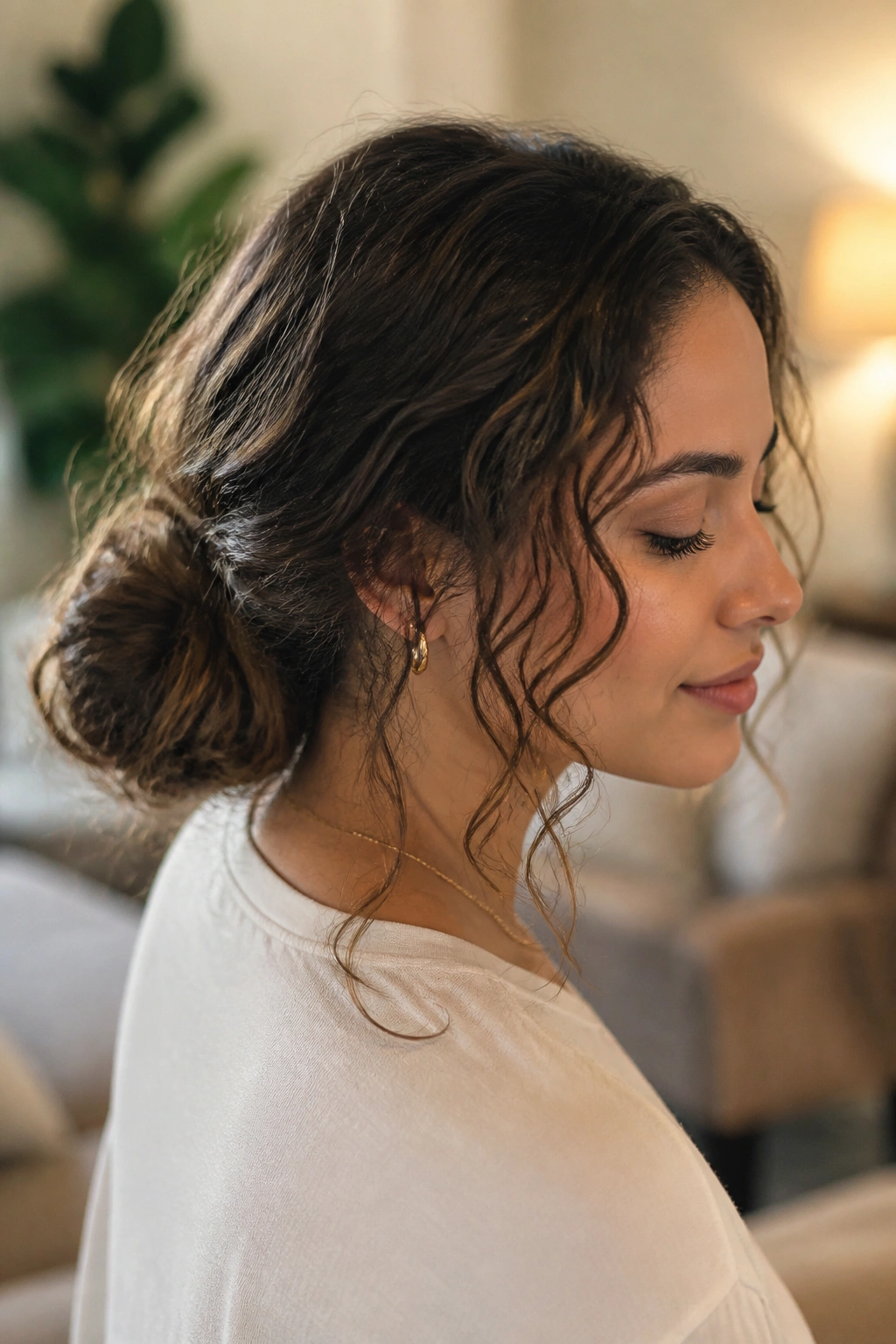
A low bun can look severe in a hurry, which is why the escaped curl detail matters. Leave a few textured pieces around the temples, the nape, and maybe one tendril near the cheek. Suddenly the bun feels softer, less formal, and much more suited to natural movement.
This is one of my favorite looks for days when you need the hair out of the way but do not want to lose the texture entirely. Gather the hair low, twist it into a bun, and pin it with enough support that it holds without strain. Then pull a few pieces loose. Not enough to become messy. Enough to stop the style from looking locked down.
The bun itself can be smooth or lightly textured. I prefer lightly textured on wavy curly hair because it blends better with the loose pieces. A smooth bun plus curly tendrils can feel disconnected. A little texture everywhere reads more coherent.
- Use: pins instead of one tight elastic if your hair is thick
- Add: a mist of shine spray to the bun, not the loose pieces
- Good for: work, dinners, and humid weather
- Avoid: over-brushing the top; it can turn puffy at the crown
19. Deep Root Lift With Curtain Volume
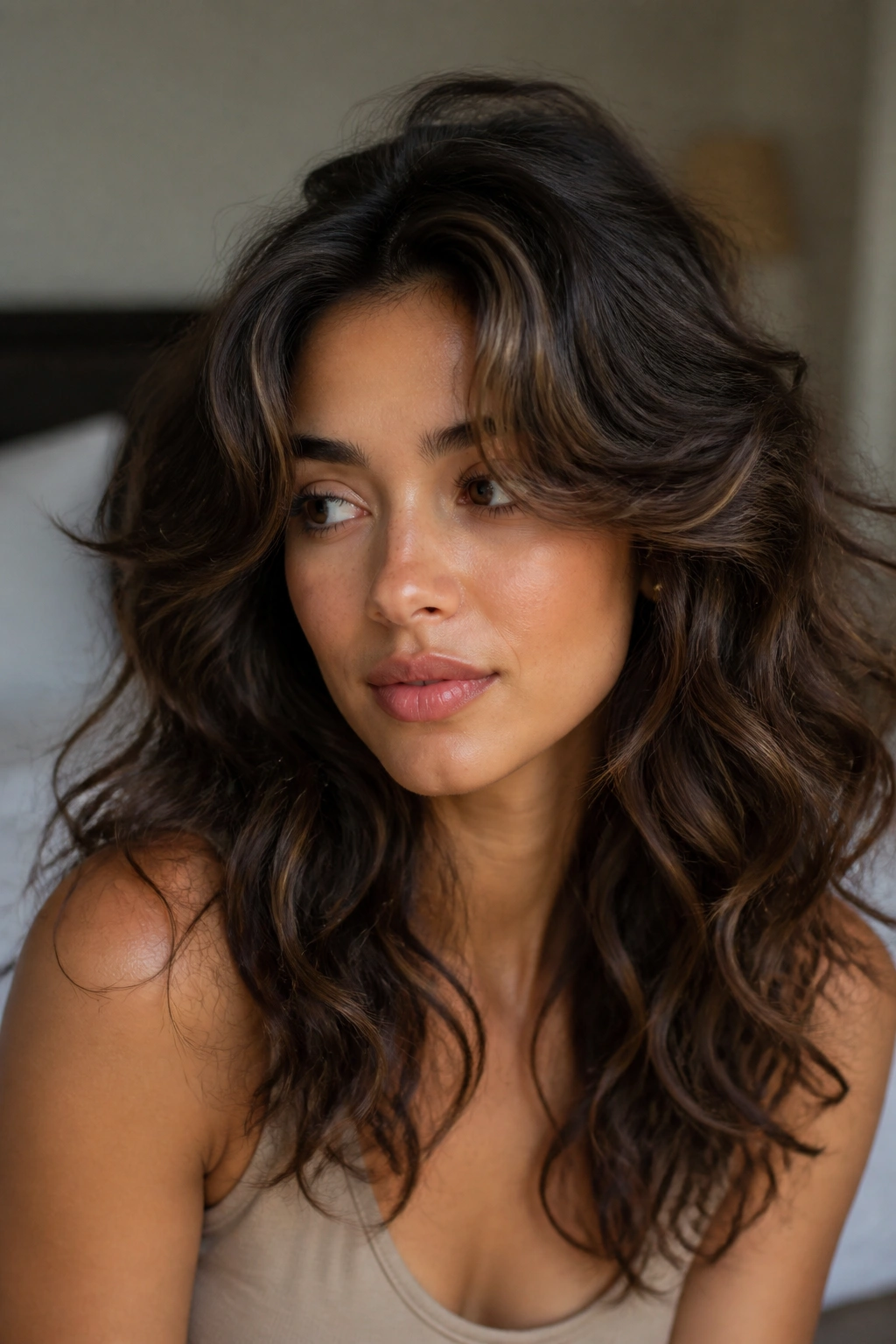
Some styles are less about the shape of the ends and more about what happens right at the scalp. Deep root lift is one of them. On textured hair, volume at the crown can change the whole silhouette, making even simple waves look fuller and more intentional.
The easiest way to get it is to dry the roots in the opposite direction of the part, then flip the hair back once it cools. A clip at the crown while the hair sets can help too. You are trying to create lift without making the top frizzy, which means less rough handling and more patience than people usually want to give it.
This look works especially well with curtain pieces that sweep away from the face. The front gets movement, the crown gets height, and the rest can stay soft. It’s a good answer when your hair is thick through the mids but flat at the scalp. A lot of textured hair has that exact problem. Annoying. Also fixable.
Small but useful detail: a root-lifting spray at the scalp works better than a heavy cream when volume is the goal.
20. Scarf-Tied Puff With Open Texture
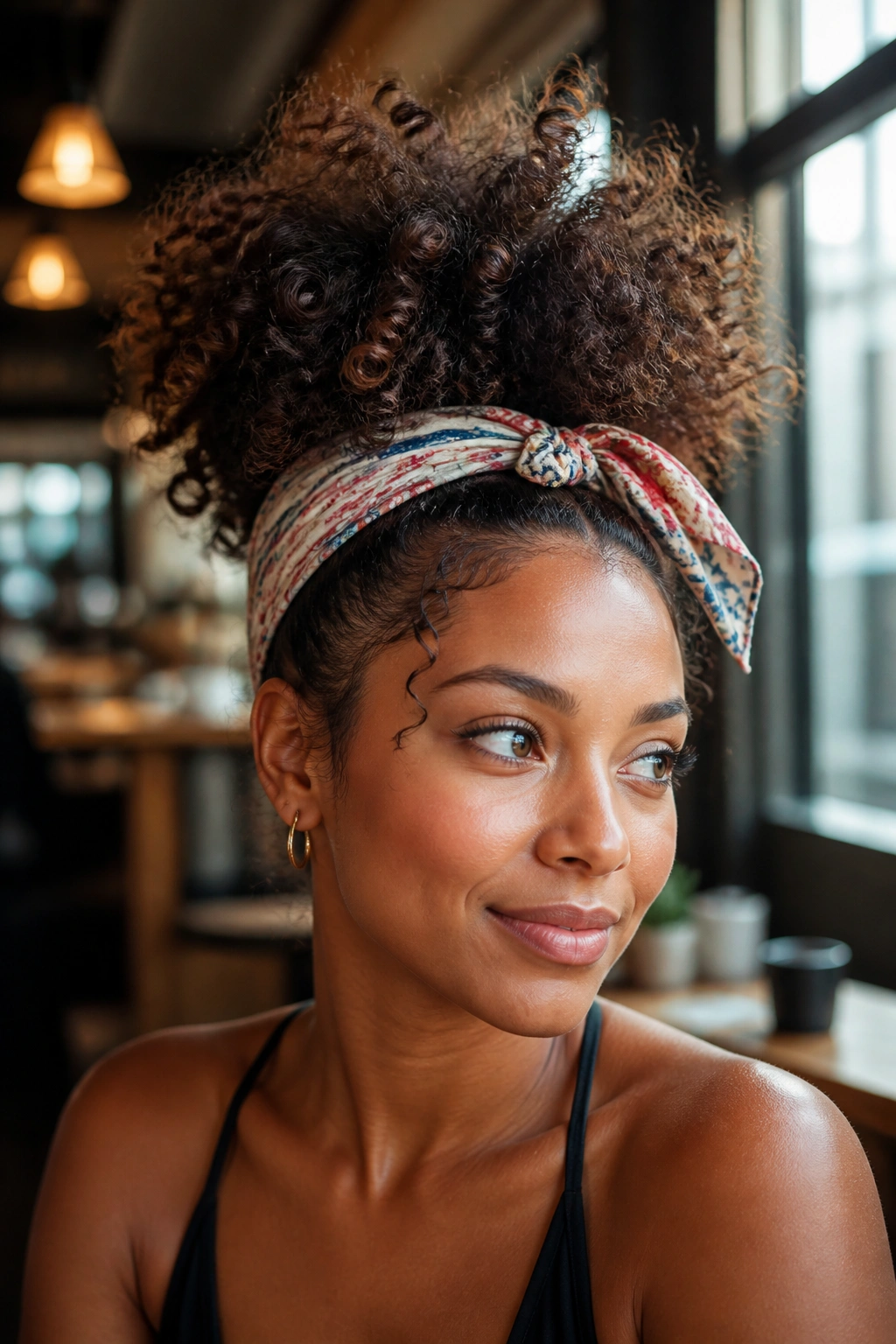
A scarf-tied puff is one of those styles that looks easy because it is easy, but it still feels intentional. Pull the hair back into a high puff or low puff, then tie a scarf around the base to dress it up. Let the texture at the crown and ends stay visible. That’s what gives the style its charm.
The scarf does three jobs at once. It adds color, keeps the base neat, and gives the whole look a little visual lift. Choose a silk or satin scarf if your hair gets frizzy fast, or a cotton scarf if you want a more casual finish. The knot can sit on top, at the nape, or slightly off to one side. I like it off-center. It feels less stiff.
This style works when you want your texture to stay part of the look instead of getting hidden. It also buys you time between washes, which is never a bad thing. If the front pieces have gone a little wild, smooth just the hairline and leave the puff itself untouched. That contrast is enough.
A good scarf-tied puff is fast, pretty, and forgiving. That trio is rare.
And honestly, that is why textured hair styles like this keep coming back. They do not erase the hair’s shape. They work with it, which is the whole deal.
