



Wavy hair has a funny habit of looking expensive one day and a little chaotic the next. The trick is not chasing perfect curls; it’s choosing a shape that lets the bend in your hair do its job. The best wavy hairstyles for medium and long hair usually have one thing in common: they keep the movement, but stop the bulk from taking over.
A blunt, one-length cut can swallow waves whole. So can too much product, or a style that pulls every strand into the same tired pattern. What actually works is a mix of smart layers, a clean part, a bit of lift at the root, and enough softness at the ends that the whole thing still moves when you turn your head.
Medium lengths are a sweet spot because they can hold shape without feeling heavy. Long hair gives you more room for braids, twists, ponytails, and those loose, glossy bends that look polished without looking stiff. And if your waves are irregular — tighter in the back, looser around the face, flatter on top — good. That’s normal. The right style uses that variation instead of trying to iron it out.
Some of the looks below are easy weekday fixes. Others are the kind you save for dinners, weddings, interviews, or any moment when you want hair that looks like you spent more time on it than you did. Start with the first one if you want the least fuss. The rest cover just about every mood wavy hair can have.
1. Soft Center-Parted Waves for Medium and Long Hair
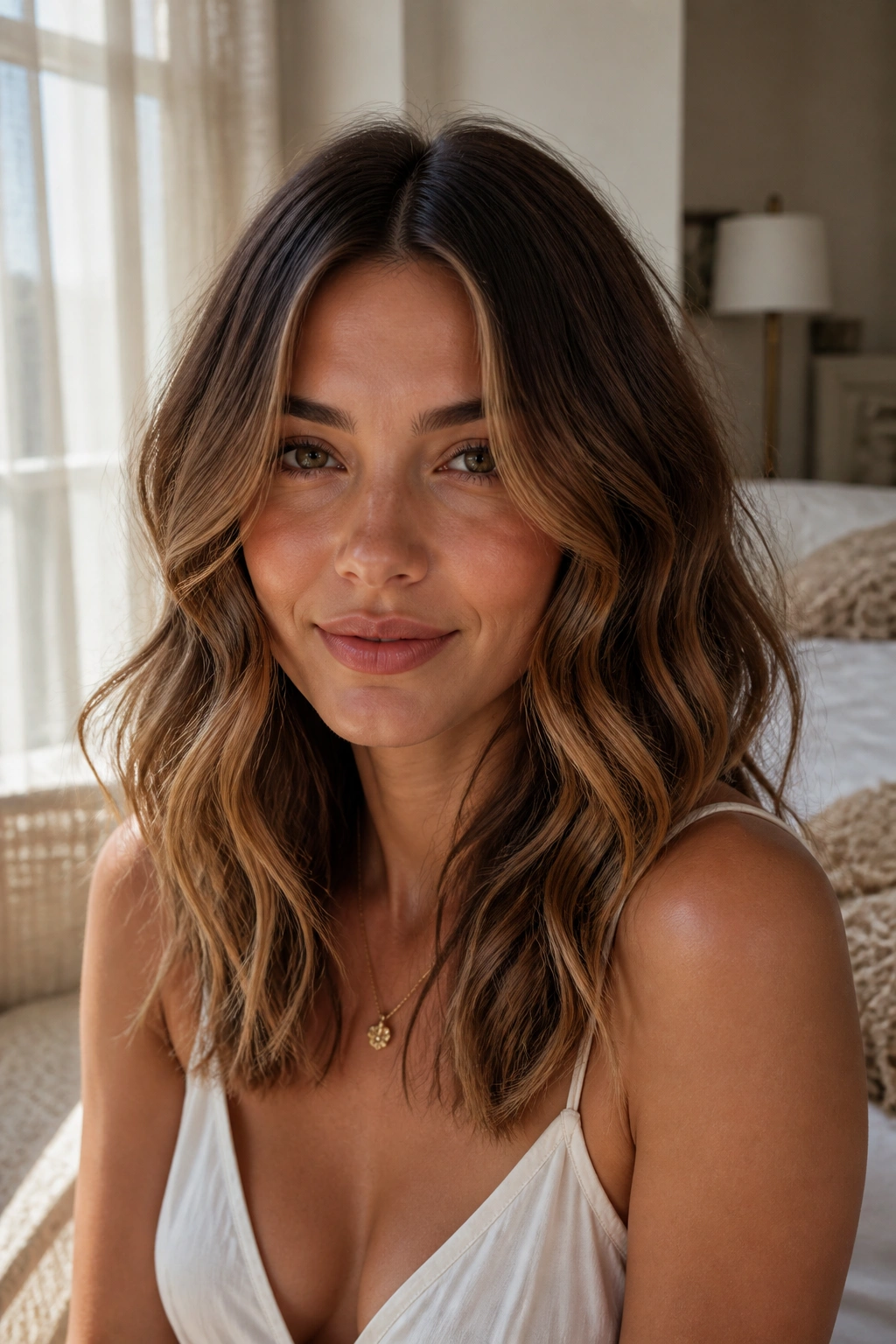
This is the one I keep coming back to when someone wants wavy hair to look calm, clean, and a little expensive without turning into a full glam situation. A center part gives waves symmetry, and that symmetry does a lot of the work for you. On medium hair, it stops the style from looking boxy. On long hair, it keeps all that length from feeling heavy.
The sweet spot is movement through the mid-lengths and soft ends, not curl from root to tip. If your hair has a natural bend, let it lead. If you use a wand, wrap away from the face for the top sections and switch direction below the ears so the finish doesn’t look too uniform.
One small thing matters here: keep the root area smooth and the wave pattern relaxed. Too much volume at the crown makes the whole look puff up. A light mist of flexible-hold spray is enough.
Less is more. Seriously.
2. Tousled Beach Waves
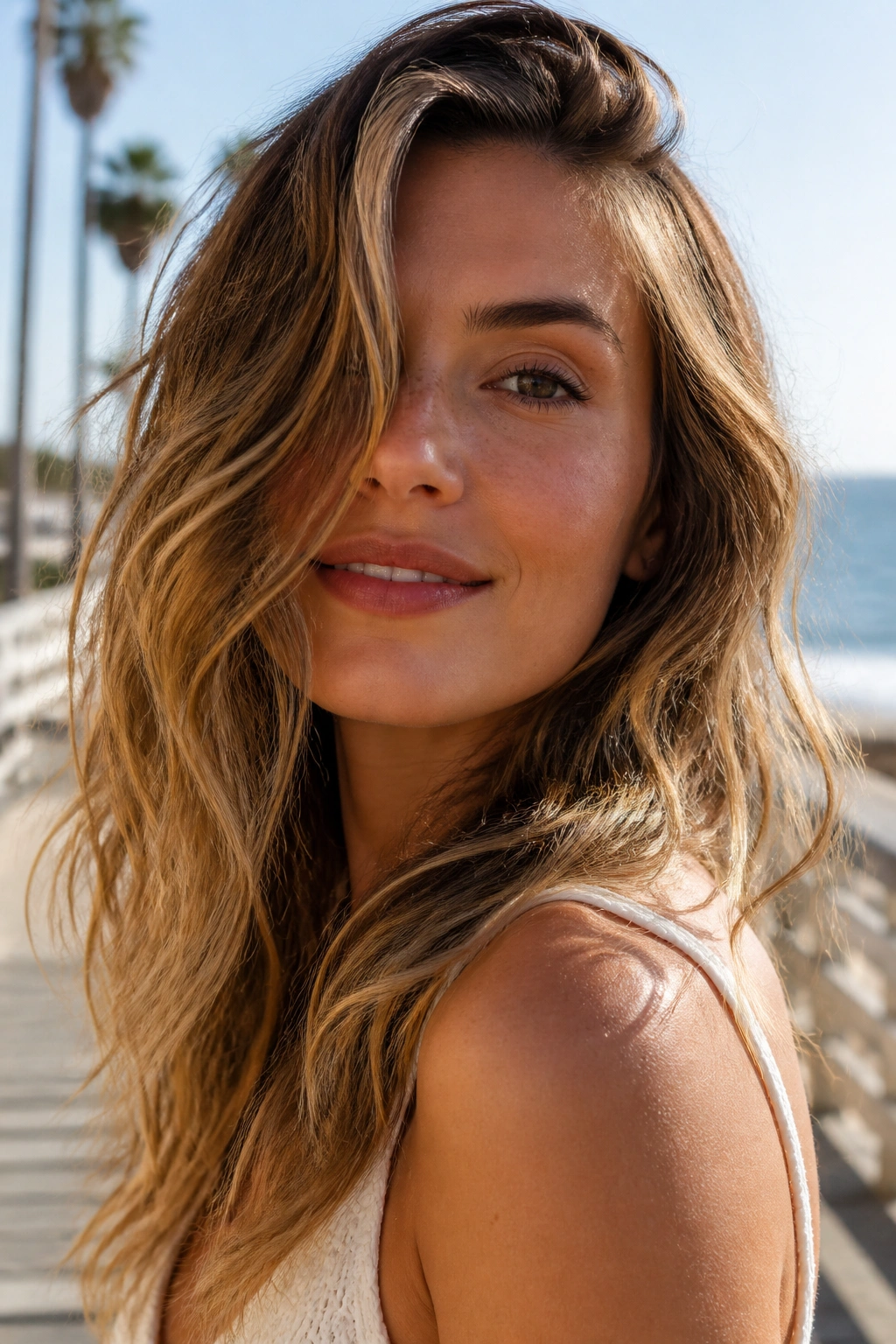
What makes beach waves work is not the “beach” part. It’s the way the texture looks broken up and a little imperfect, like the hair bent on its own and you only helped it along. That loose, tossed finish is especially good on medium hair that needs more body, or long hair that tends to fall flat by lunch.
How to Get the Tousled Finish
Start with hair that’s fully dry or about 90% dry. A small amount of mousse at the roots helps, but don’t load the ends with anything heavy. Wrap 1-inch sections around a 1-inch barrel, leave the last inch out, and alternate curl direction every few pieces. Then stop touching it for a minute. That pause matters.
- Mist a texturizing spray from mid-length to ends.
- Break up the waves with your fingers, not a brush.
- Tilt your head and shake out the roots for lift.
- Leave a few straighter pieces around the face if you want it to feel less done.
The best beach waves look a little unfinished. If every strand is shiny and identical, the style loses its charm fast.
3. Long Layers with Curtain Bangs
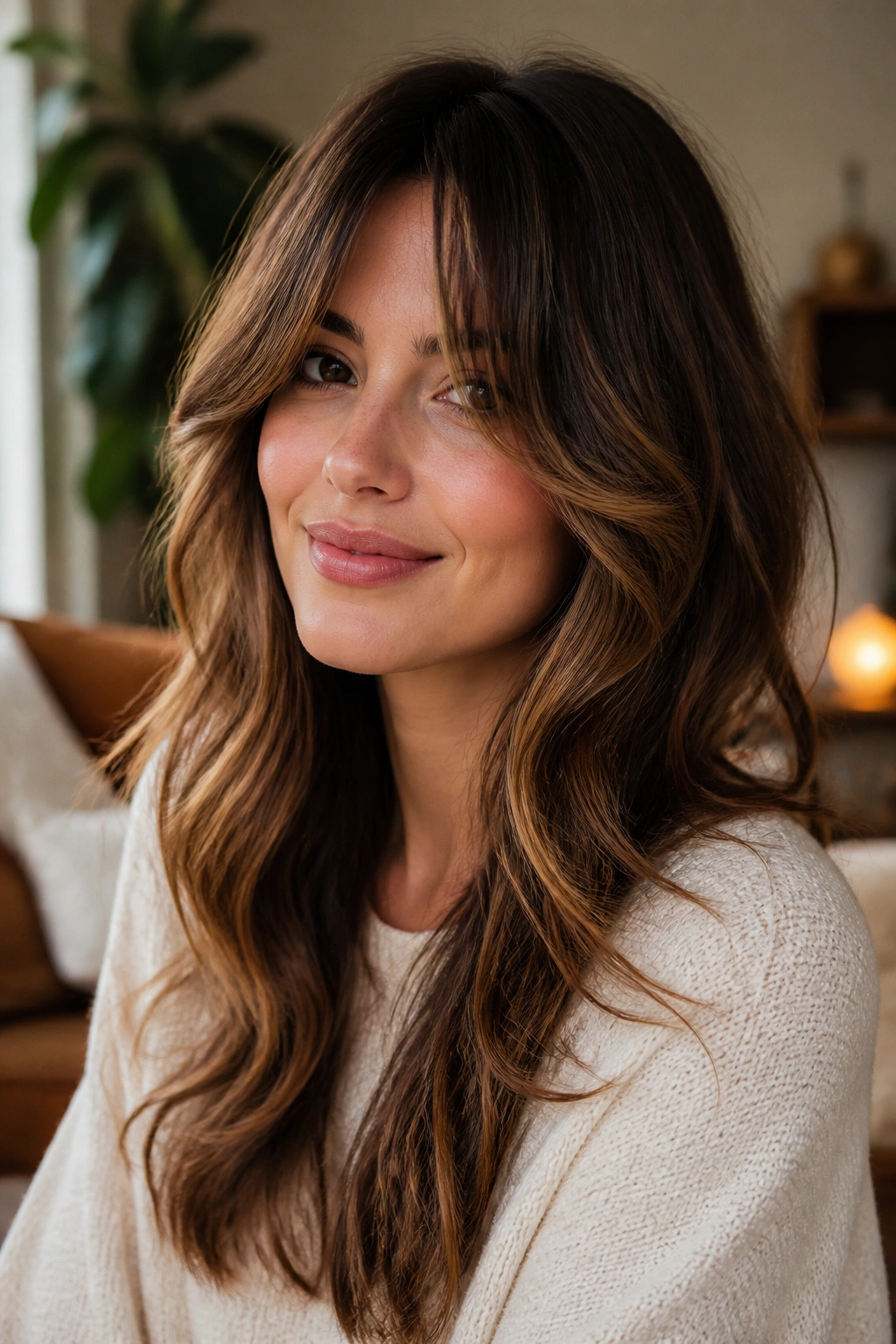
Heavy hair and waves do not always get along. Add curtain bangs and the whole thing shifts in a good way. The bangs pull attention to the face, while long layers take weight out of the bottom half, which is where waves often go limp.
This cut is especially useful if your hair sits somewhere between medium and long and you want movement without having to curl every inch. Curtain bangs can be worn airy and parted right down the middle, or fluffed to the side when you want a softer frame. The shorter pieces around the cheekbones also help the waves blend instead of hanging there like a single block.
Ask for the layers to start where your wave pattern needs support, not just where a chart says they should. That usually means around the chin or collarbone. If the bangs are too short, they can fight the rest of the shape. If they’re too long, they disappear.
A good cut does half the styling for you. A great one makes the hair look like it already knows what it’s doing.
4. Side-Swept Hollywood Waves
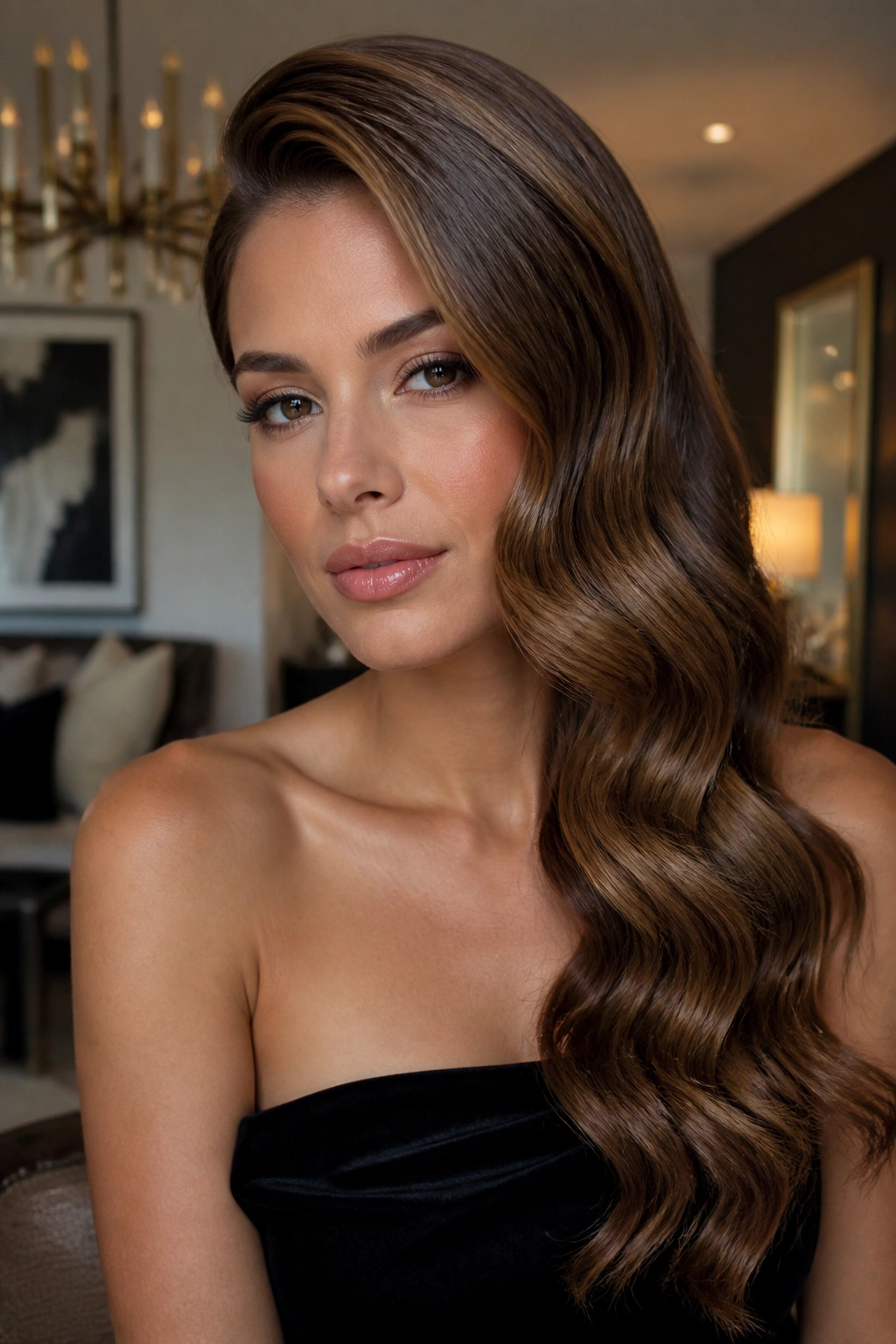
Side-swept waves are for days when you want your hair to look polished without looking frozen in place. The deep side part opens up one side of the face and creates that long, smooth curve that feels much more elegant than a center part. On long hair, the effect is dramatic. On medium hair, it can make the length feel fuller.
The key is consistency. The wave pattern should be broad and smooth, not crimped or over-separated. A 1.25-inch iron works well here, and a soft-bristle brush after curling helps blend everything into one continuous shape. Pin the lighter side behind the ear or tuck it low at the nape if you want the style to stay put.
This style likes shine. A pea-sized amount of serum on the ends gives it that satin finish, but don’t smear product through the roots. That’s how it goes limp.
If your waves are uneven, this is one of the best ways to hide it. The side sweep lets the hair flow in one direction, so the eye stops hunting for mistakes.
5. Half-Up Twist with Loose Waves
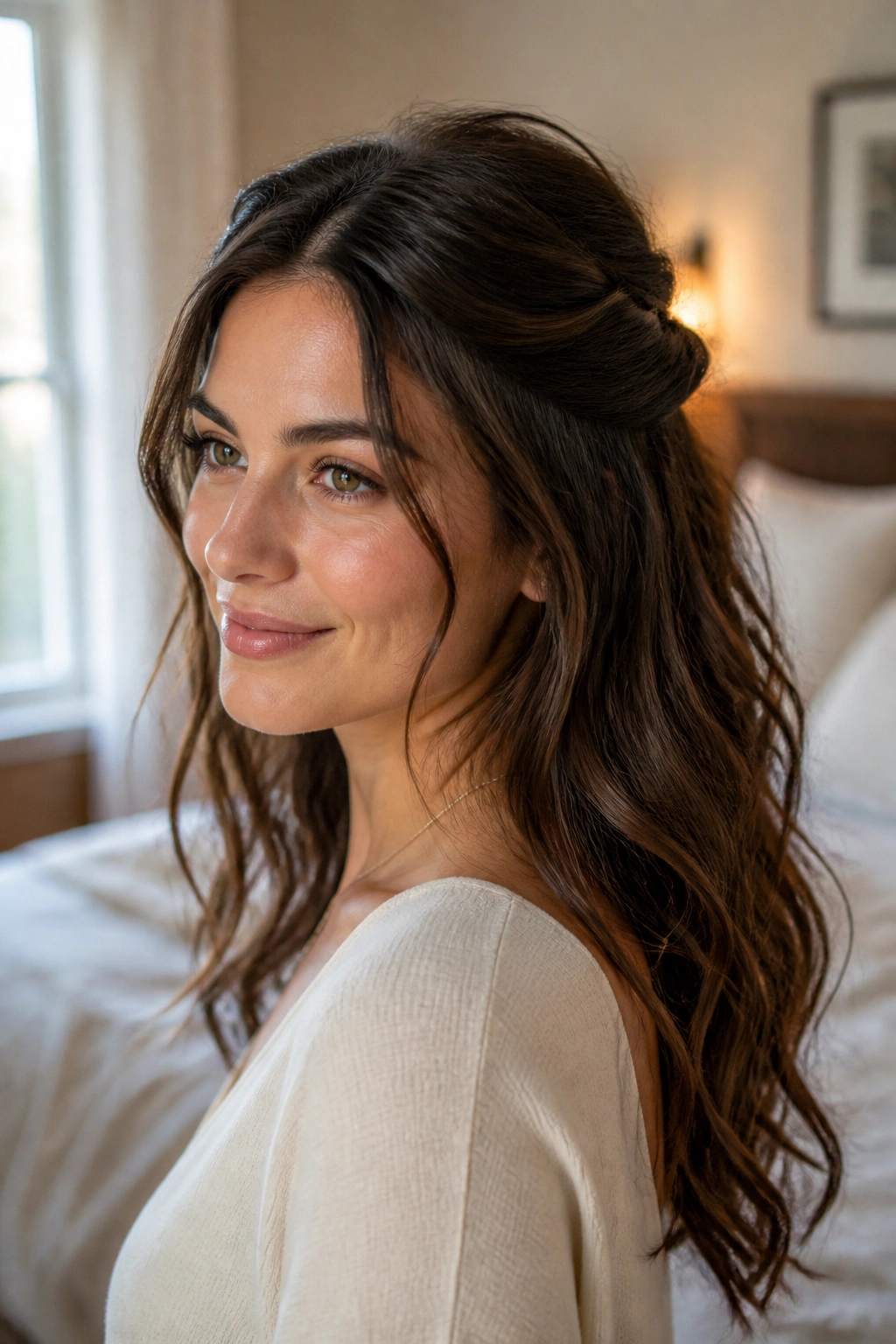
A half-up twist is one of those styles that looks more thoughtful than it is. That’s the appeal. You keep the length visible, but the top section gets lifted away from the face, which is handy when your waves are starting to puff up or collapse at the sides.
Unlike a full ponytail, this one still shows off the movement through the lengths. Unlike a braid, it doesn’t need clean sectioning. You can twist both temple sections back, secure them with pins or a small clip, and let the rest fall loose. On medium hair, it gives the illusion of more length. On long hair, it keeps the shape from feeling heavy around the shoulders.
This is one of my favorites for second-day waves. The texture is already there, and a twist uses it instead of fighting it. A little dry shampoo at the root helps the top stay lifted.
If you want the twist to read soft rather than formal, keep it slightly loose and let a few face-framing pieces slip free. That tiny mess is the whole point.
6. Braided Crown with Wavy Ends
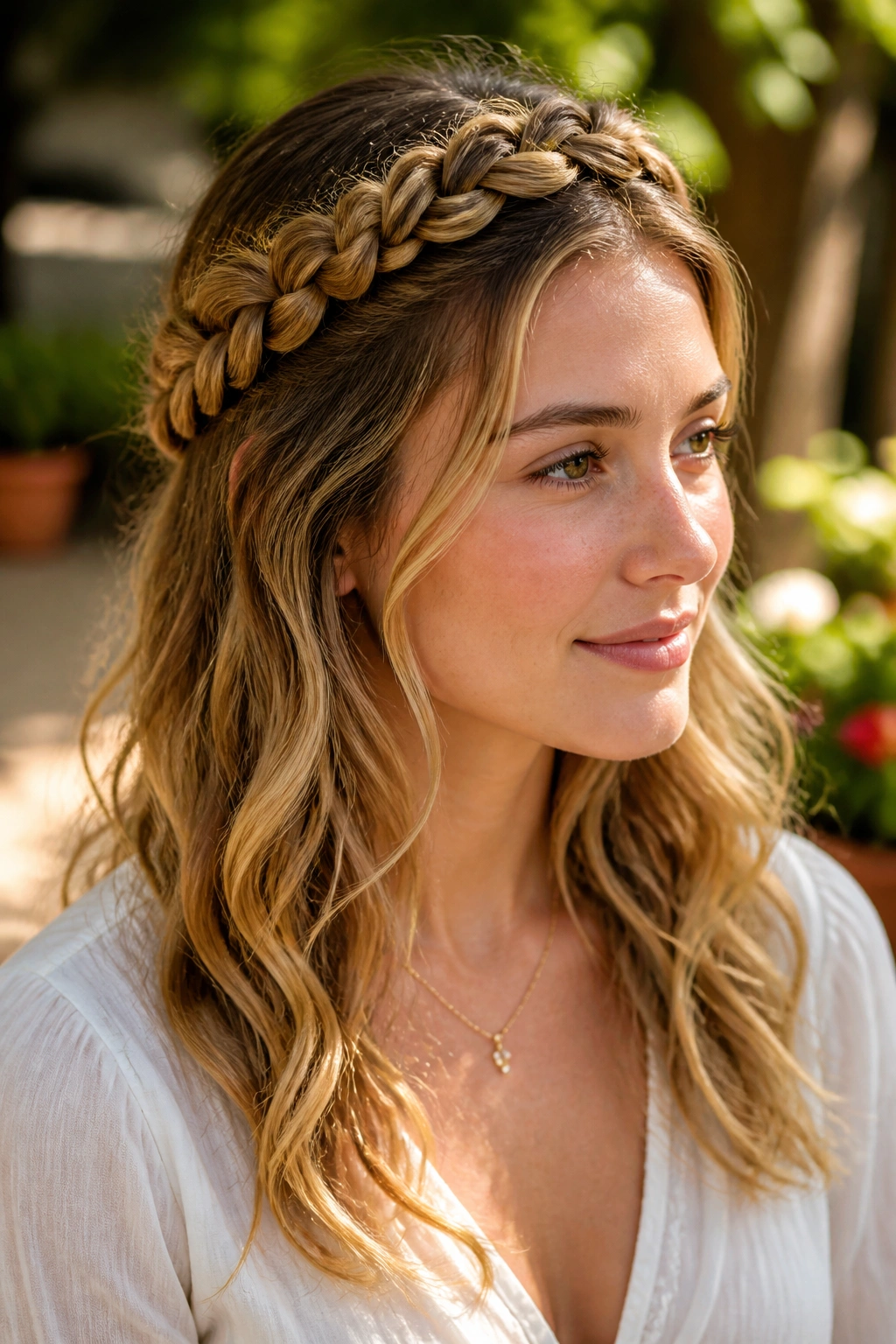
Braided crowns can go in two directions. They can look sweet and a little costume-like, or they can look polished and clean. The difference is usually tension. Keep the braid loose enough that it does not dig into the scalp, and the style feels modern instead of stiff.
What Makes It Wear Well
The braid does the framing, and the loose wavy lengths do the balancing. That’s why this works so well on medium-to-long hair: there’s enough length for the braid to travel, but also enough hair left down for the style to breathe. If your hair is thick, braid only the top layer. If it’s finer, a little texture spray gives the braid more grip.
- Start the braid behind one ear and guide it across the crown.
- Secure with a pin, not a chunky elastic.
- Leave the ends waved rather than curled tight.
- Pull the braid apart gently if you want a fuller look.
The braid should sit like a band, not a helmet. That’s the whole difference between charming and awkward.
7. Low Wavy Ponytail
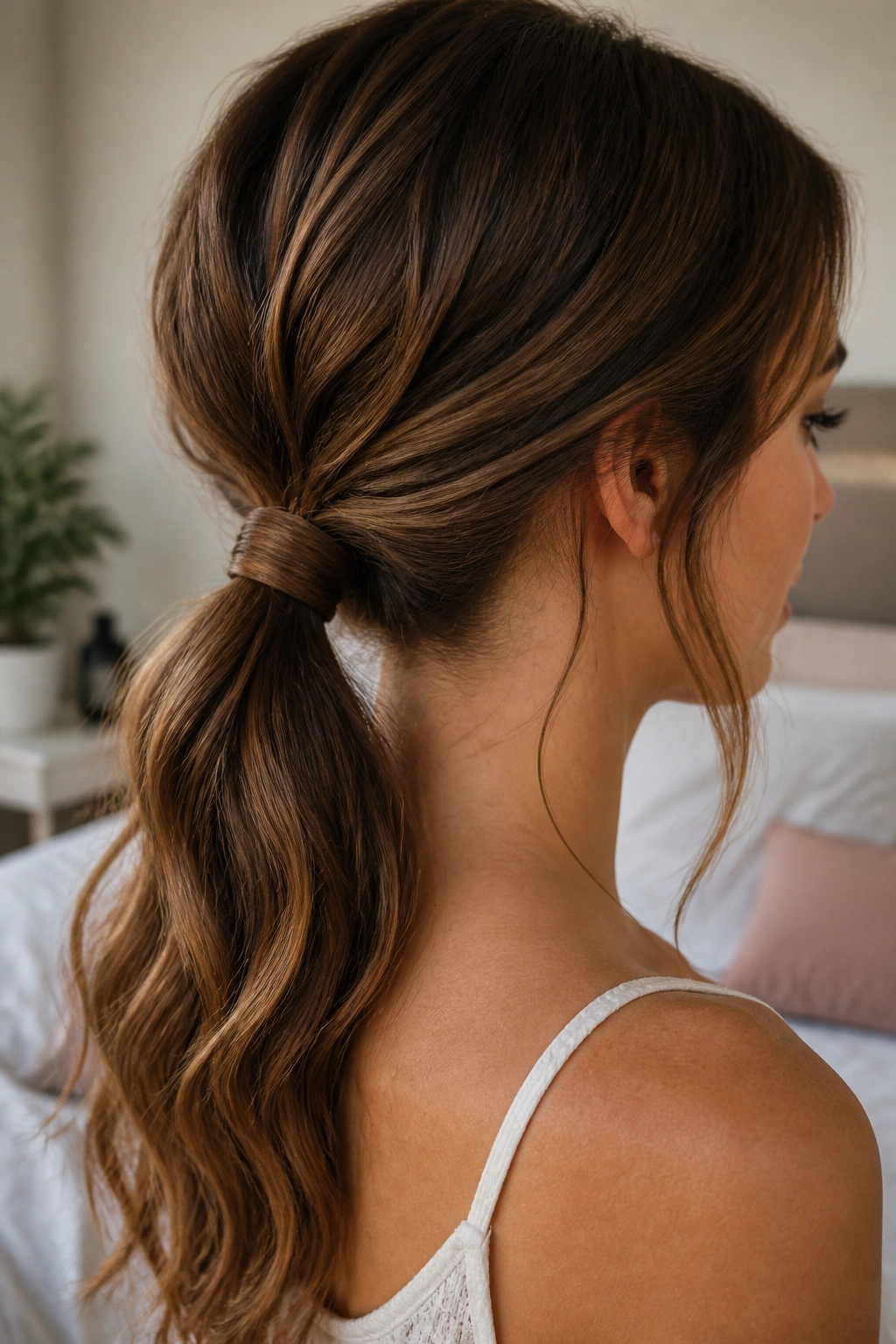
A low ponytail does not have to look basic. On wavy hair, it can be one of the nicest ways to show texture without pretending the texture isn’t there. The secret is keeping the ponytail loose at the base and letting the wave pattern stay visible through the length.
This is the hairstyle I’d pick when hair is clean but not freshly blown out. Pull it back at the nape, leave the crown smooth, and secure it with a soft elastic so the root area doesn’t get dented. Then wrap a small section of hair around the elastic to hide it. That little finish changes everything.
Long hair tends to look especially good in this style because the ponytail drapes instead of sticking out. Medium hair works too, though it looks sharper and a little more playful. If the waves at the tail flatten out, bend just the bottom third with a large iron.
No need to overthink it. Good low ponytails are all about restraint.
8. Shaggy Collarbone Waves for Wavy Hair
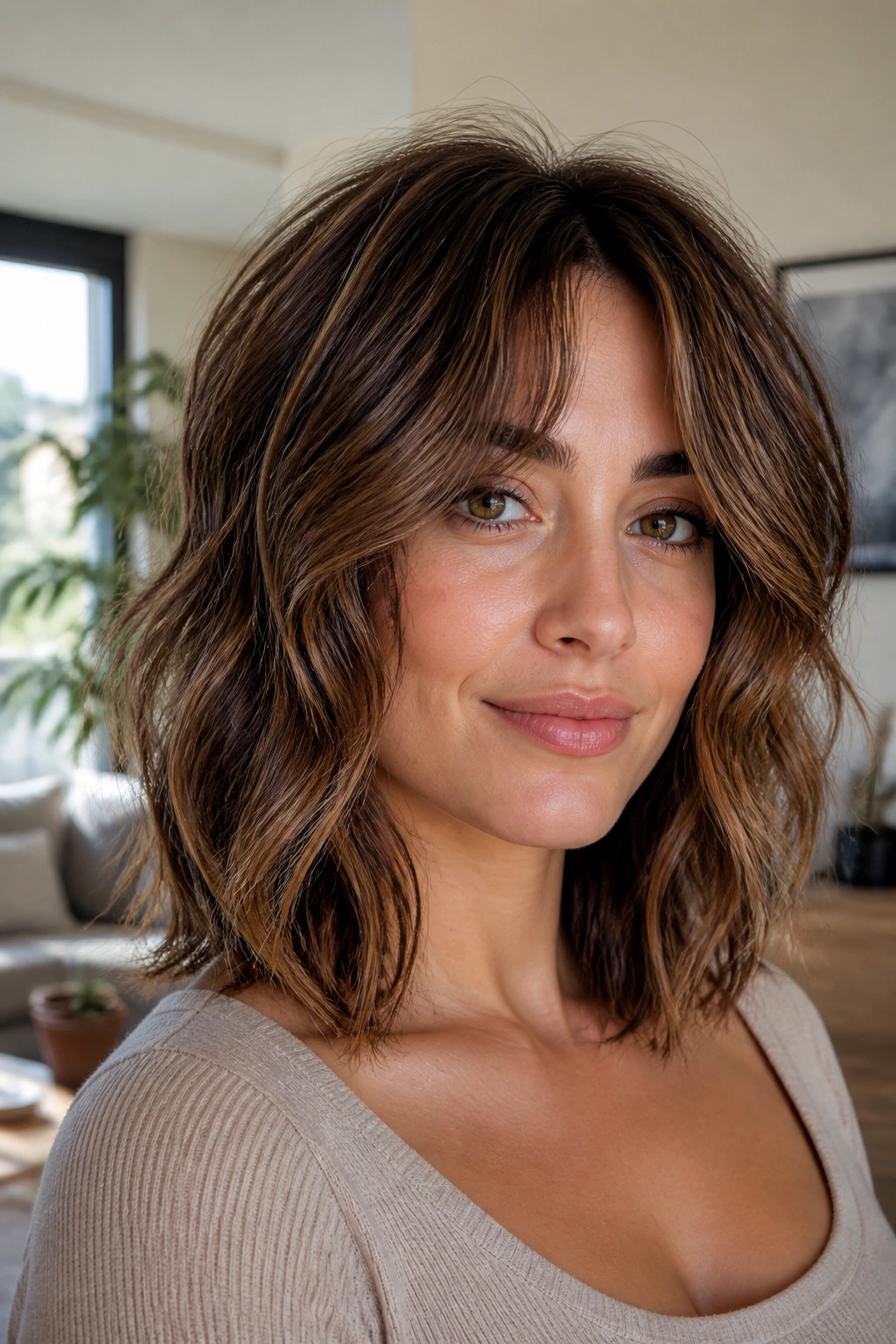
Can a cut make styling easier? Absolutely. A shaggy collarbone cut is one of the most forgiving options for wavy hair because it builds movement into the shape before you even touch a tool. The length sits right where the shoulder and jawline can both help support the bend.
This is especially good if your hair grows heavy at the bottom. Collarbone length keeps enough weight to stop frizz from exploding outward, but the layered interior gives the wave room to spring. Curtain pieces at the front help, too, because they connect the bangs and the rest of the cut instead of leaving a hard line.
How to Ask for It
- Collarbone length with internal layers, not a blunt edge.
- Face-framing pieces that start near the cheekbone.
- Ends that are lightly textured, not choppy.
- Enough length to tie back, but not so much that the wave pattern gets dragged down.
A shag like this is not precious. That’s the best part. It grows out in a way that still looks intentional, which is rare and worth getting excited about.
9. Rope-Braid Half-Up
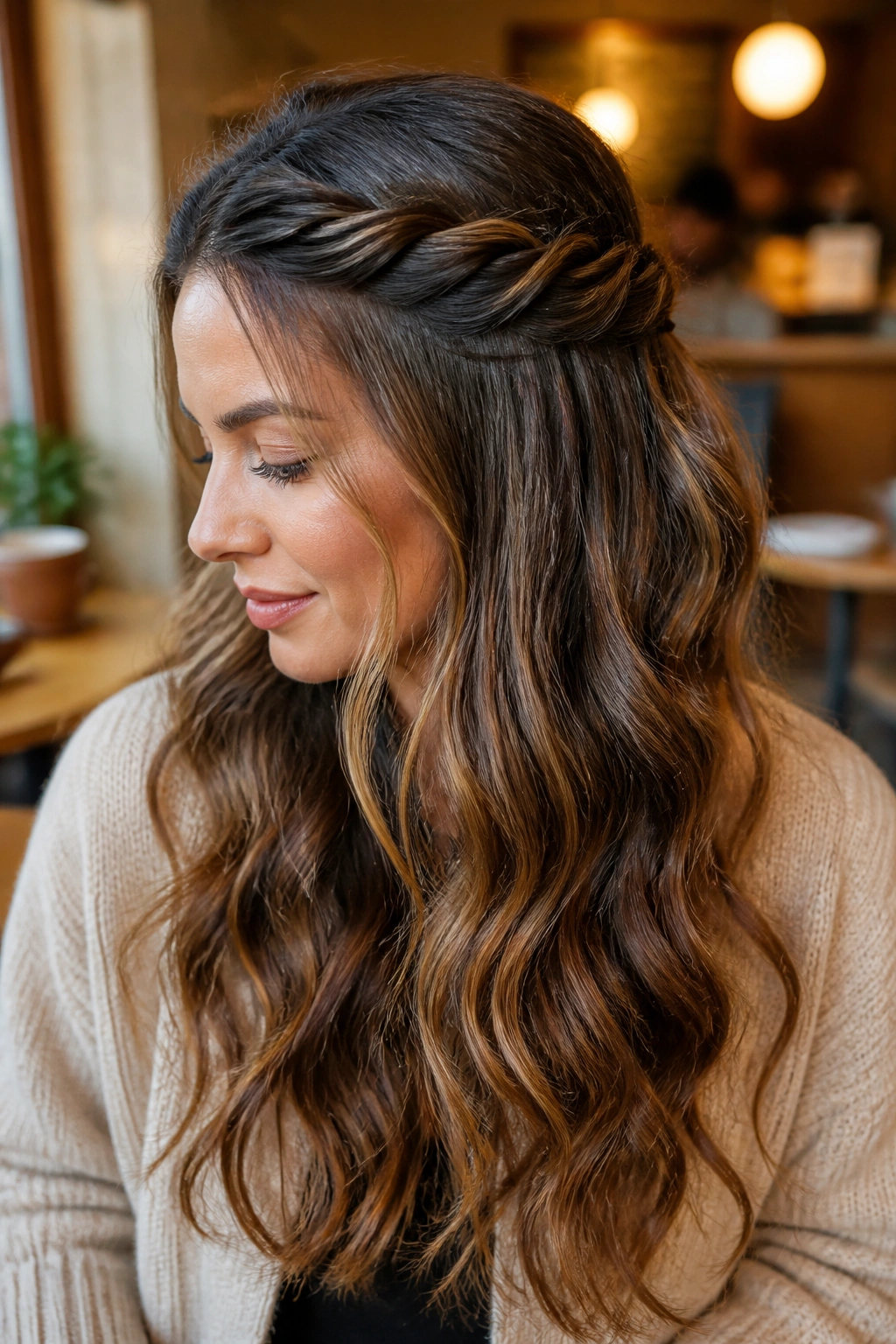
A rope-braid half-up is the hairstyle equivalent of a clever shortcut. It takes almost no time, but it looks like you actually did something. Twist two sections from the front, cross them toward the back, and secure them together. That’s it.
The nice part is how well it works on hair that has uneven waves. Since the twist is more about shape than symmetry, the style can absorb little differences from one side to the other. It also keeps the front sections under control without flattening the rest of the hair.
This one is especially good on long hair because the twist has room to travel and the loose lengths can keep their movement. On medium hair, it reads a little more playful. Either way, the style looks best when the front pieces are softly lifted rather than pulled tight.
If you want a bit more hold, mist the front sections with light hairspray before twisting. Do not soak them. Sticky hair makes a rope twist feel stiff, and that ruins the point.
10. Face-Framing S Waves
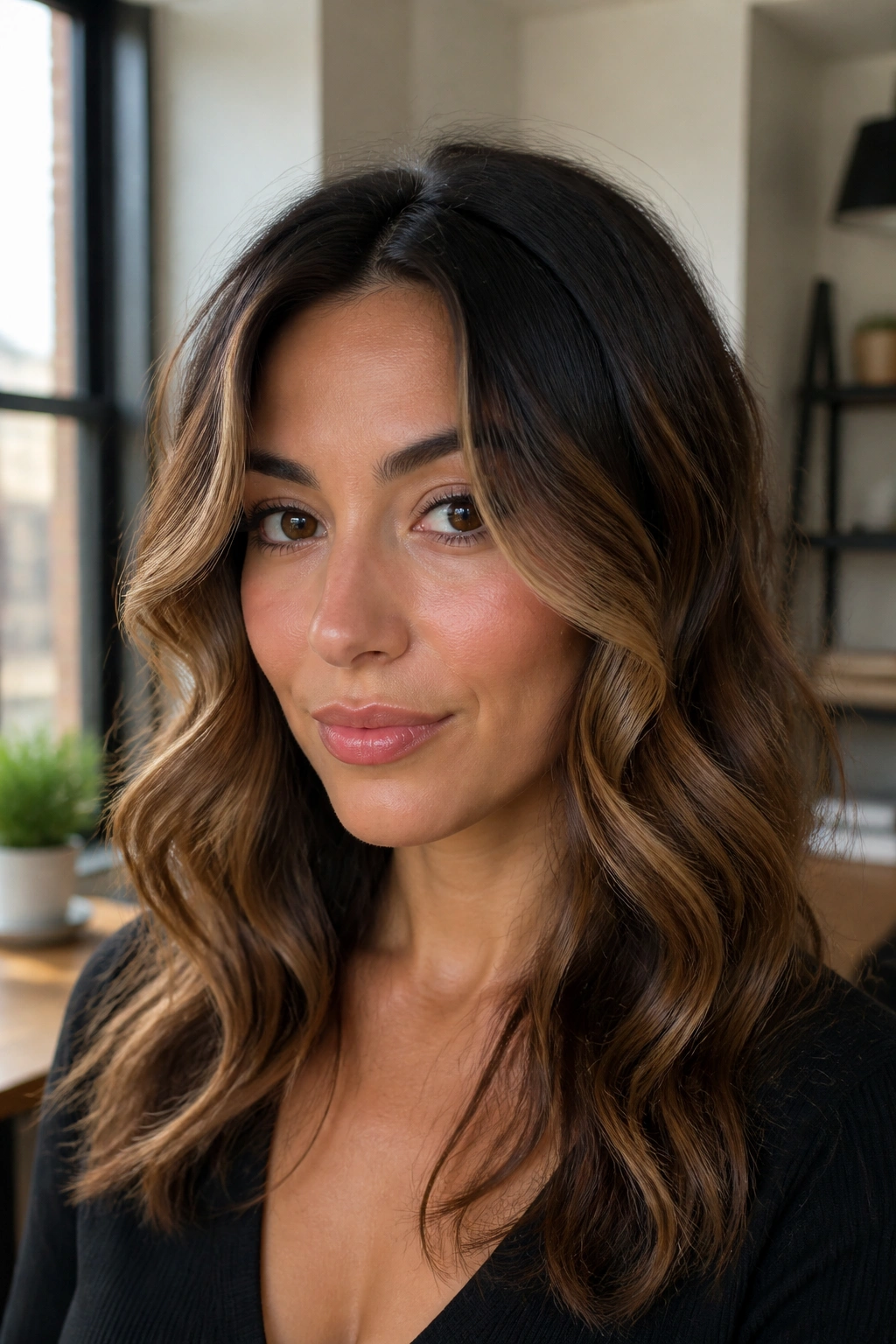
S waves are a nice middle ground for people who want shape without obvious curls. The bend is softer than a ringlet and less casual than beach waves, which makes this style useful for work, dinner, or any day when you want your hair to look neat but not overdone.
The best place to focus is the front. A few smooth S-shaped bends around the cheekbones and jawline can change the whole face shape, especially on medium hair where the length sits closer to the shoulders. Long hair gets a more dramatic version because the wave can travel farther before it falls out.
I like this style because it doesn’t ask for perfection. The pieces near the face can be more defined, while the back can stay loose and airy. That contrast gives the style some life.
Use a larger iron or a flat iron bend, then pinch the wave shape while it cools. If you skip the cooling part, the curve relaxes too fast. Small habit, big difference.
11. Sleek Root, Wavy Ends
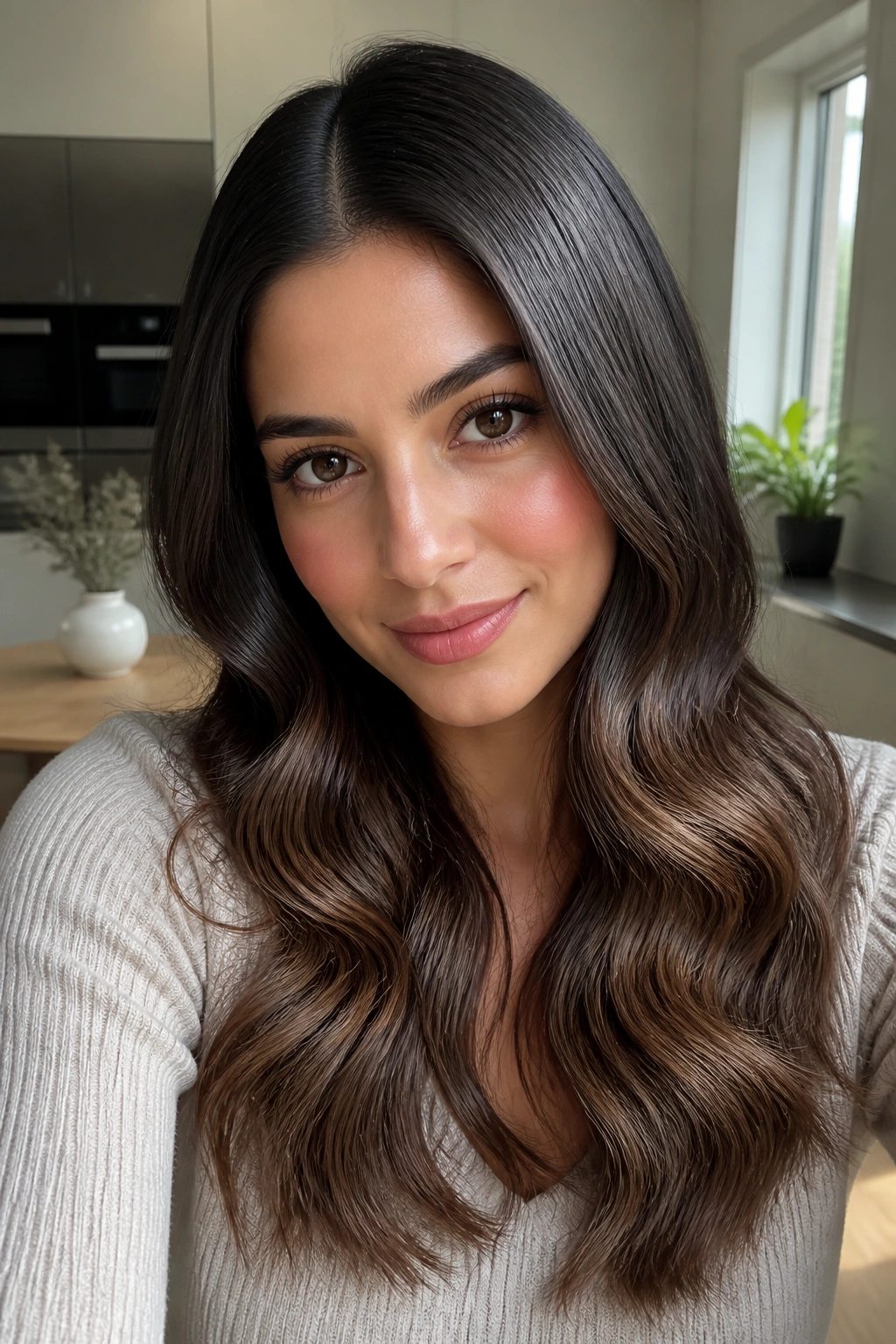
This is the cleanest way to wear waves when you want the length to feel polished. Keep the crown smooth, then let the wave start lower, usually somewhere around the cheekbone or chin. That split between sleek and soft gives the hair a deliberate shape.
It works especially well for thick hair, because a smooth root reduces puffiness and the waves below it keep the style from looking flat. On medium hair, the result is sharp and modern. On long hair, it gives all that length a little discipline.
What makes this style so useful is that it hides a lot of normal hair behavior. Roots that grow in with some lift? Fine. Ends that want to flick out? Also fine. You only need the upper section to look tidy. The rest can stay loose and movable.
A small amount of smoothing cream through the top and a wave spray through the ends is enough. If you use too much product, the contrast gets muddy. Clean root, airy ends. That’s the formula.
12. Messy Low Bun with Wave Texture
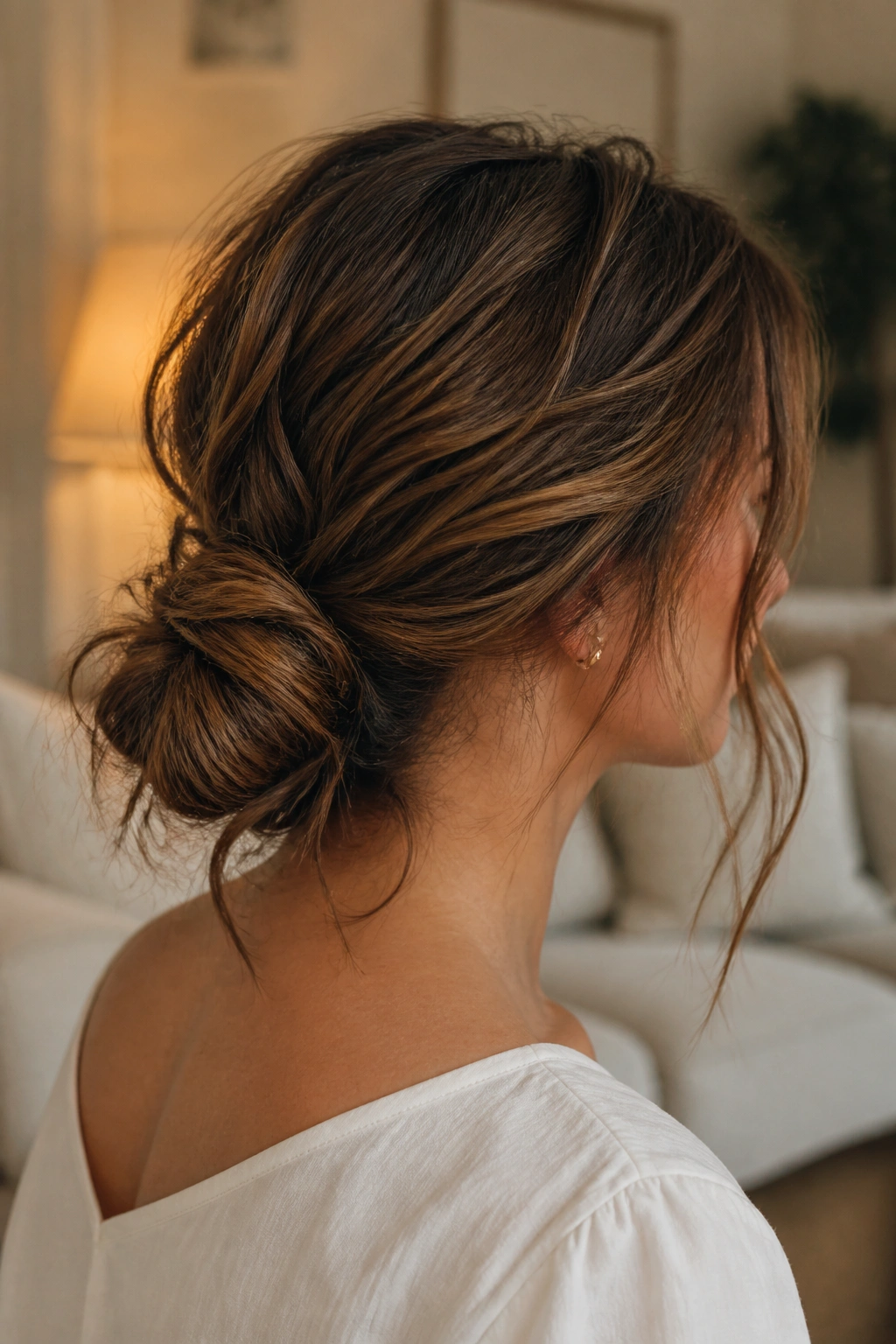
A low bun is often treated like a fallback. I think that’s unfair. On wavy hair, a messy low bun can look intentional, soft, and far more flattering than a tight knot ever will.
The texture is doing the heavy lifting here. Instead of forcing the hair smooth, you gather it low, twist it loosely, and let some bends and shorter pieces stay out around the face and neck. That softness matters. It keeps the bun from looking severe, which is especially helpful on medium hair that does not have enough length for a big rolled chignon.
If your waves are frizzy, this is one of the easiest ways to use that to your advantage. A little texture gives the bun grip. A little looseness keeps it from looking like a librarian’s emergency updo from the back of a car.
What to Keep Loose
- A few pieces around the temples.
- One small section at the nape if you want softness.
- The top of the bun, so it does not look cinched.
- Ends that peek out a little instead of being hidden perfectly.
13. Waterfall Braid Waves
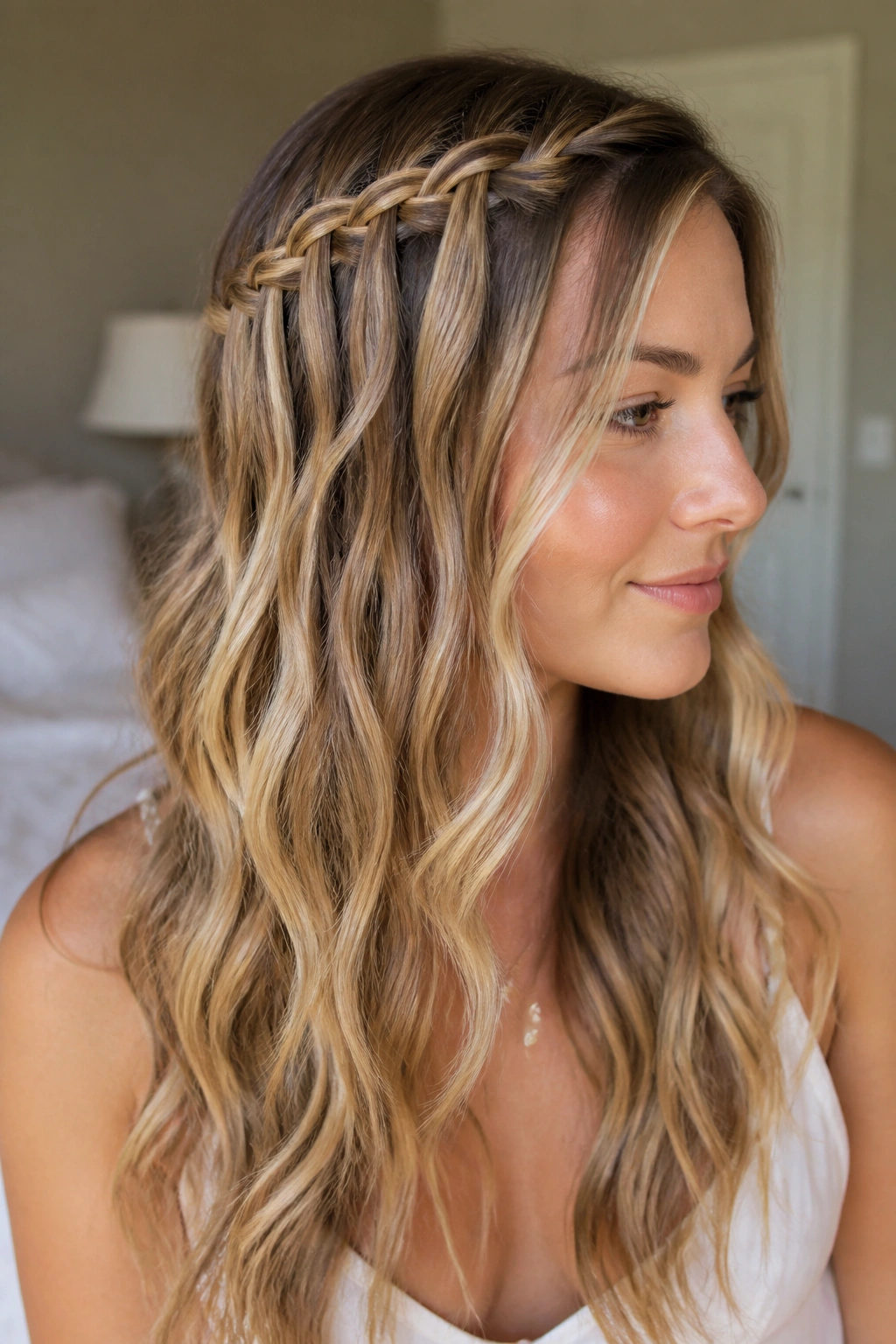
Waterfall braids look more complicated than they are. That’s part of why people avoid them. But if you have long hair and want waves that feel a little dressed up without losing movement, they’re worth the effort.
The braid creates a line of detail across the head while the dropped strands keep falling through, which means the style still shows off the length and the wave pattern. That’s the whole trick. You get structure at the top and softness everywhere else.
This style works best when the waves underneath are already loose and touchable. If they’re too tight, the braid competes with them. If they’re too flat, the braid becomes the only thing you notice. A loose wand wave or even day-two texture is usually enough.
I also like this one because it photographs cleanly from the side. The braid gives a clear shape, and the loose ends stop it from feeling stiff. It has enough detail to look special without asking for a full updo. That’s a useful balance.
14. Mermaid Waves
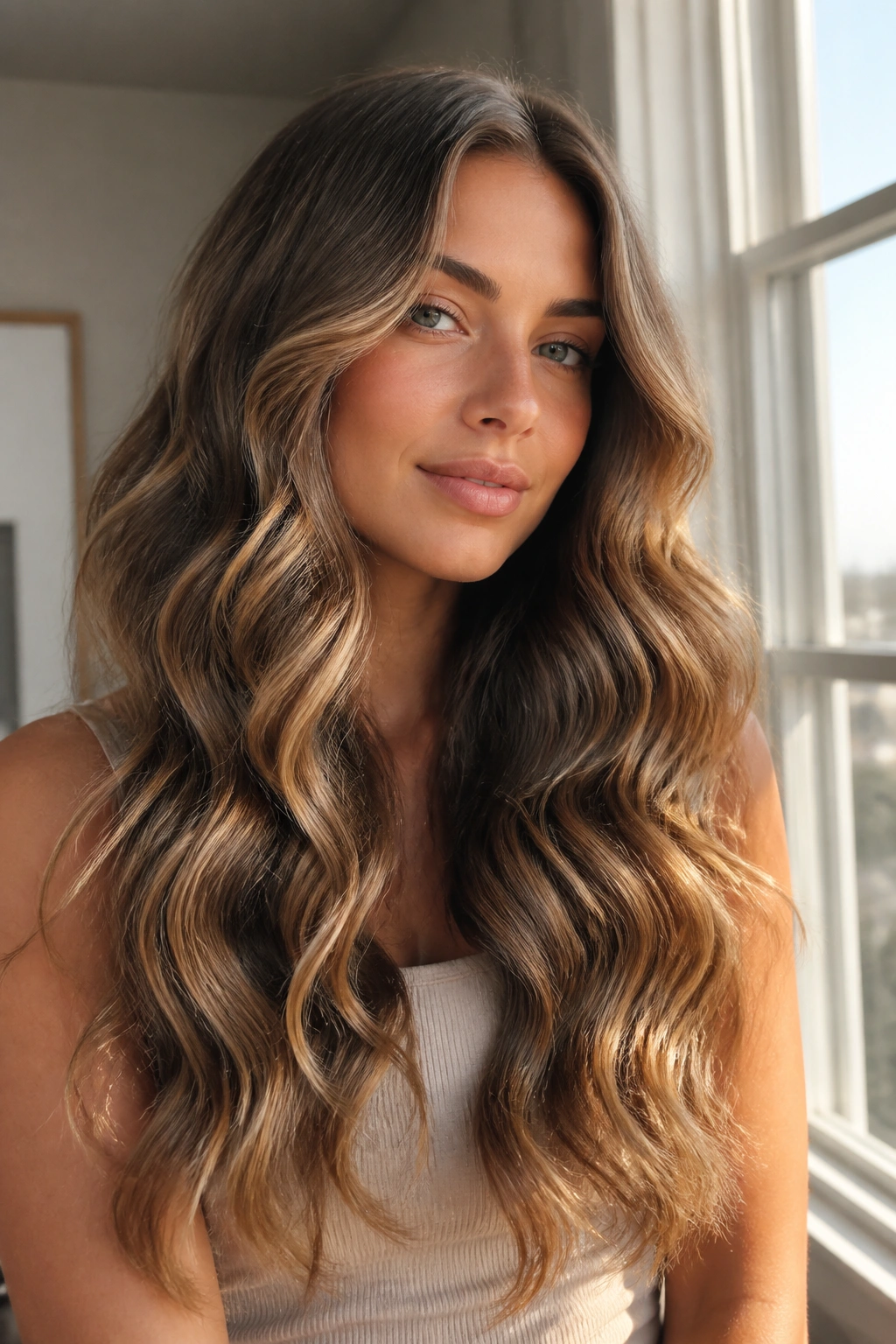
What makes mermaid waves different from regular curls is the width of the bend. They’re broader, smoother, and usually more uniform from top to bottom, which gives long hair that soft, rippling look people keep saving on mood boards.
This style works best on hair that has some length to show off. Medium hair can wear it too, but the effect is strongest when the waves have room to fall in long sections. A large-barrel iron, a triple waver, or even a strong blow-dry set can all get you there. The important part is not making every bend too tight.
A little shine spray on the ends helps because the style leans on reflection as much as shape. Matte mermaid waves can look dry fast. Glossy ones feel richer.
Keep the bends long and loose. If the wave pattern gets too small, it stops looking dreamy and starts looking busy. That’s the line to watch.
15. Voluminous Blowout Waves
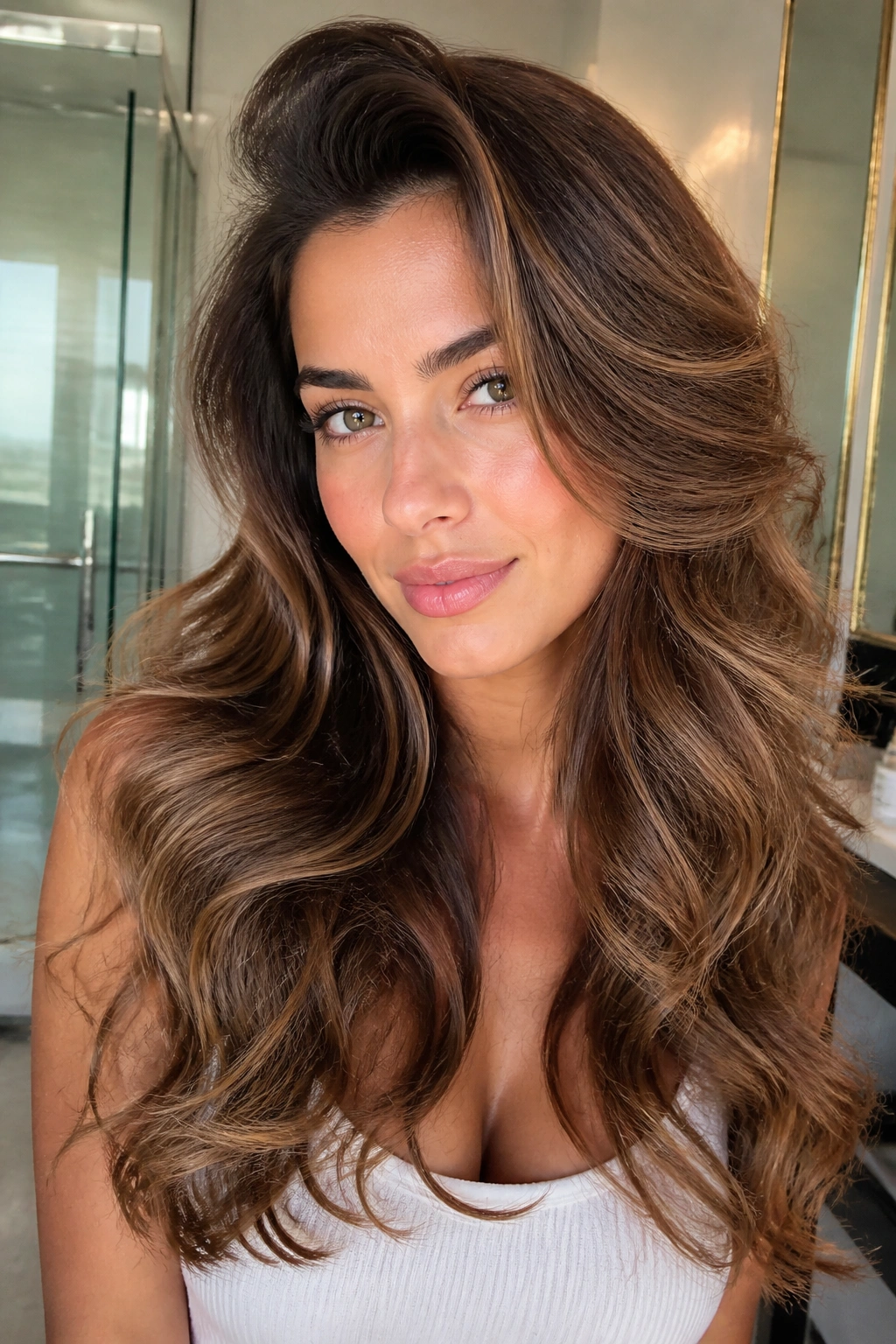
You know that soft, bouncy finish that moves when you walk? That’s the point here. Voluminous blowout waves are about body first and definition second, which makes them a favorite for medium hair that needs lift and long hair that needs to stop hanging flat.
The look starts at the roots. Use a round brush or a large hot brush to raise the crown, then bend the lengths just enough to create movement. The ends should curve, not curl tightly. If they flip under or out a little, that is fine. Honestly, that little imperfection makes the style feel more natural.
This is one of the more wearable options on the list because it sits between styled and easygoing. It works for brunch, meetings, and events where you want your hair to look full without screaming for attention.
A root-lift spray before drying helps a lot. So does clipping the top section up for a minute while it cools. Cool hair holds shape better. Simple, but people skip it all the time.
16. Lob with Defined Wavy Ends for Medium Hair
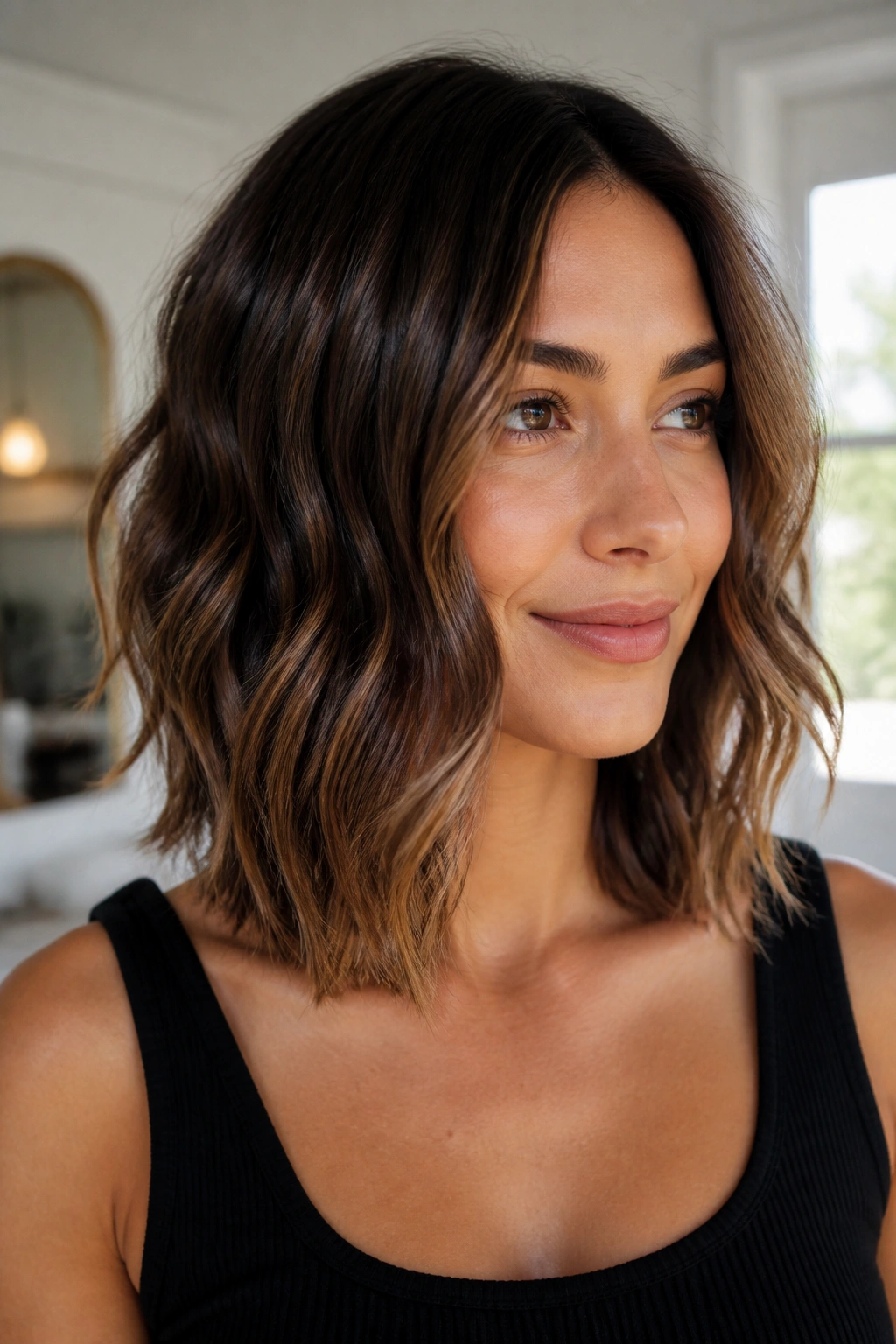
A lob is a very good haircut for wavy hair, and I’ll die on that hill. It gives the wave enough length to move, but not so much that the style gets dragged down by its own weight. Around collarbone length, the ends can still bounce instead of collapsing.
Defined ends are the whole point here. You want a clean edge with enough wave through the body to keep it from looking flat or old-fashioned. A 1-inch iron can help shape the lower half, but I’d keep the top soft and the ends slightly piecey. That little imbalance keeps the cut from looking too neat.
This is a smart choice if your hair is medium length and you do not want to fight frizz every morning. The lob gives structure. The wave gives personality. That combination is hard to beat because it behaves in real life, not just in photos.
If you only style one section, do the front and the very ends. That alone can make the cut feel fresh again.
17. Scarf-Tied Waves
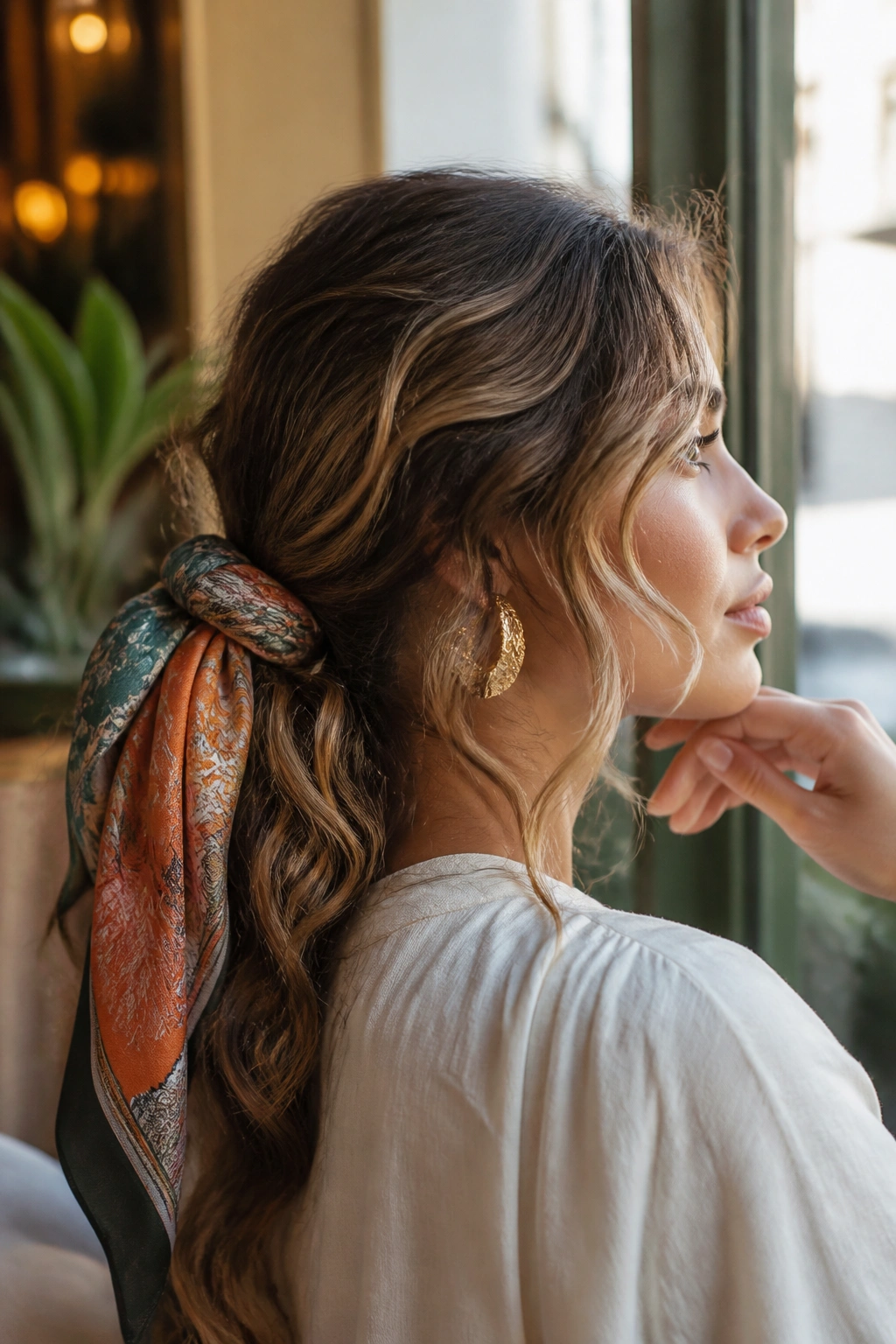
A scarf can change a wave style faster than almost any tool. Tie one at the base of a ponytail, wrap it around a loose bun, or use it as a headband with the ends tucked into the hair. Suddenly the whole look feels intentional.
Unlike jeweled clips or heavy barrettes, a scarf brings color and movement without adding weight. That matters on medium and long hair because the accessory should help the wave pattern, not flatten it. Silk feels easiest to handle, but a thin cotton scarf works if you want more grip.
This style is especially handy when the hair is in that in-between stage: not dirty, not freshly washed, just a little too soft to hold an elaborate shape. The scarf gives it purpose. It also lets you keep some front pieces loose, which helps the waves stay visible.
A small print can be enough. You do not need a giant bow unless you want one. The smartest scarf styles look deliberate, not costume-y.
18. Low Bubble Ponytail with Waves
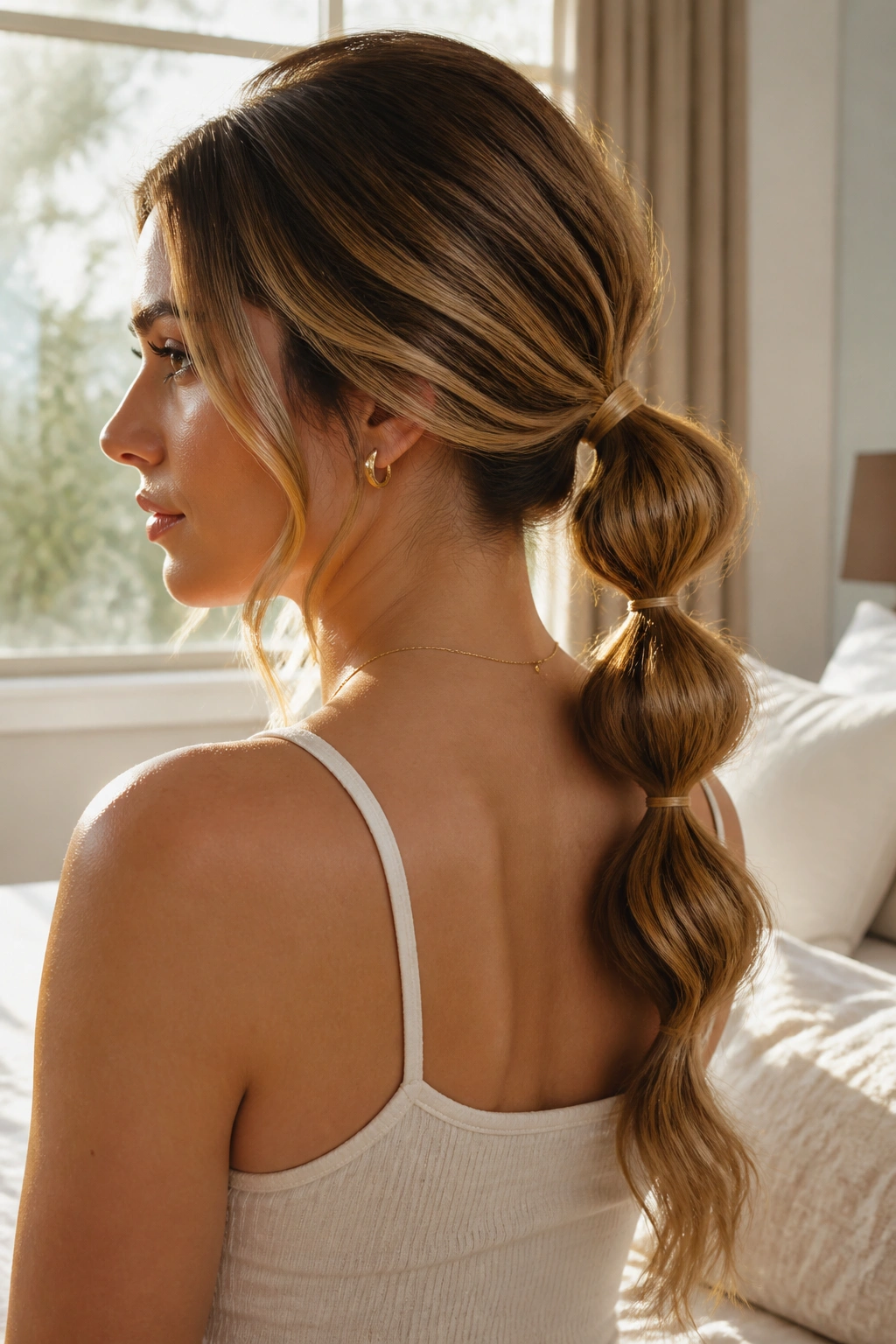
A bubble ponytail sounds playful because it is. On wavy hair, it also solves a practical problem: how to make a ponytail look full when the length is fine, dry, or a little uneven. The bubbles create shape at regular intervals, and the wave texture softens the lines between them.
This works best when the hair reaches past the shoulders. Medium hair can do it too, but the bubbles will sit shorter and the effect is more compact. Use clear elastics every 2 to 3 inches, then gently tug each section outward until it rounds out a bit. Don’t overpull. You want shape, not fuzz.
The wave pattern helps here because it keeps the ponytail from looking too tight or sporty. A smooth crown plus bouncy sections down the tail gives the whole style some contrast.
- Wrap a small strand around the base elastic.
- Keep the bubbles slightly uneven for a softer look.
- Leave the ends wavy, not fully curled.
- Spritz the tail lightly so it stays touchable.
Tiny irregularities make this better. A perfectly measured bubble ponytail can feel stiff. A slightly loose one feels lived-in.
19. Glossy Wet-Look Waves
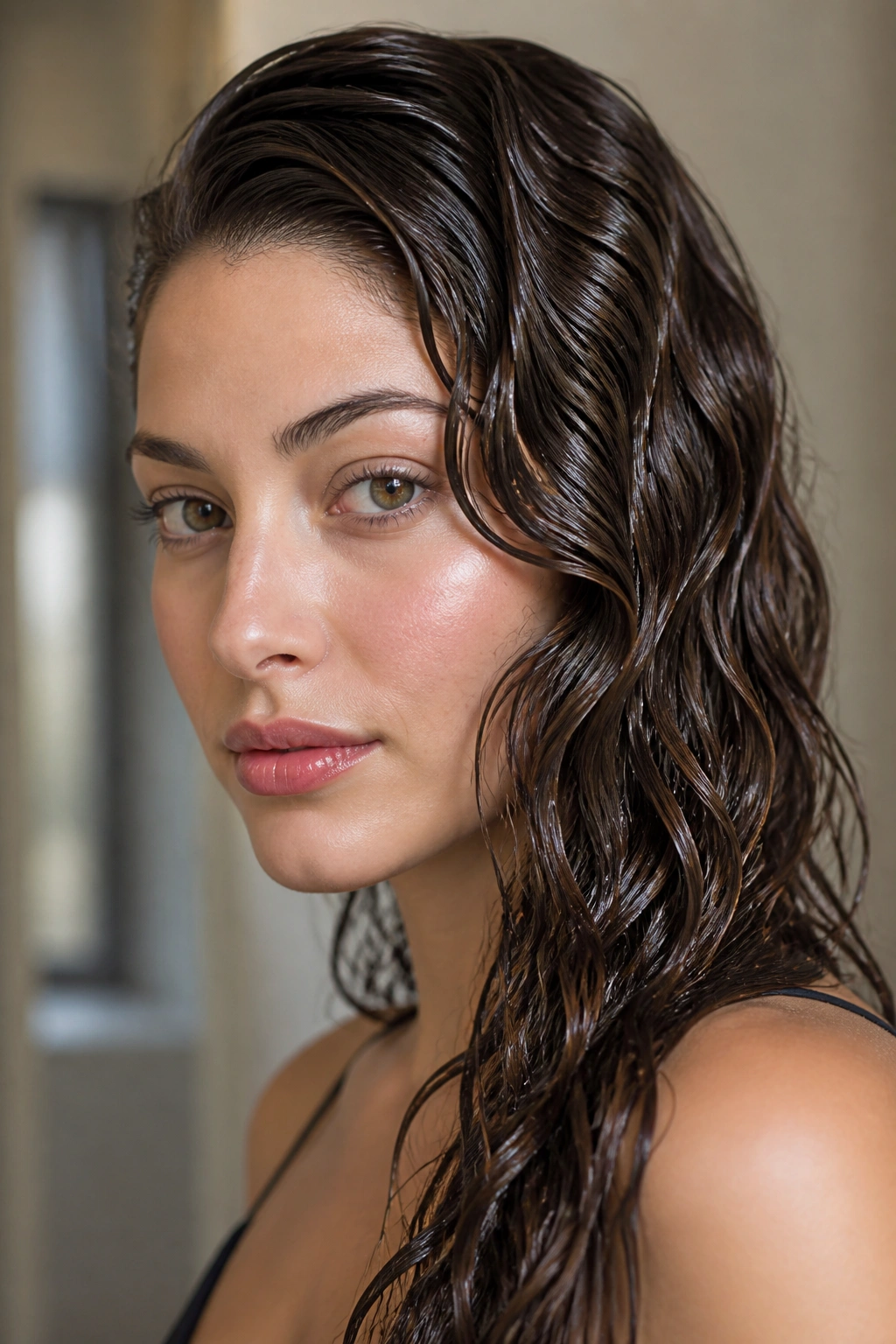
Most wet looks fail for one reason: too much product. The hair ends up slick at the top and crunchy at the bottom, which is not the same thing as glossy. Done well, though, wet-look waves can be sharp, modern, and surprisingly flattering on medium and long hair.
Start with damp hair and comb a gel or cream-gel mix through the roots and mid-lengths. Use a fine-tooth comb to create a clean part, then shape the waves with your fingers or a diffuser if you want a softer finish. The ends should stay a little more flexible than the crown. That contrast is what keeps the style from looking heavy.
This is a strong choice for nights out or editorial moments because it loves light and movement. It also handles frizz better than a lot of other styles, which is not nothing. But it does ask for restraint. If the product pile gets too thick, the style turns stiff fast.
I like a side part here because it gives the shine a place to travel. Center parts can work too, but they feel a bit more severe.
20. Dutch-Braid Into Loose Waves
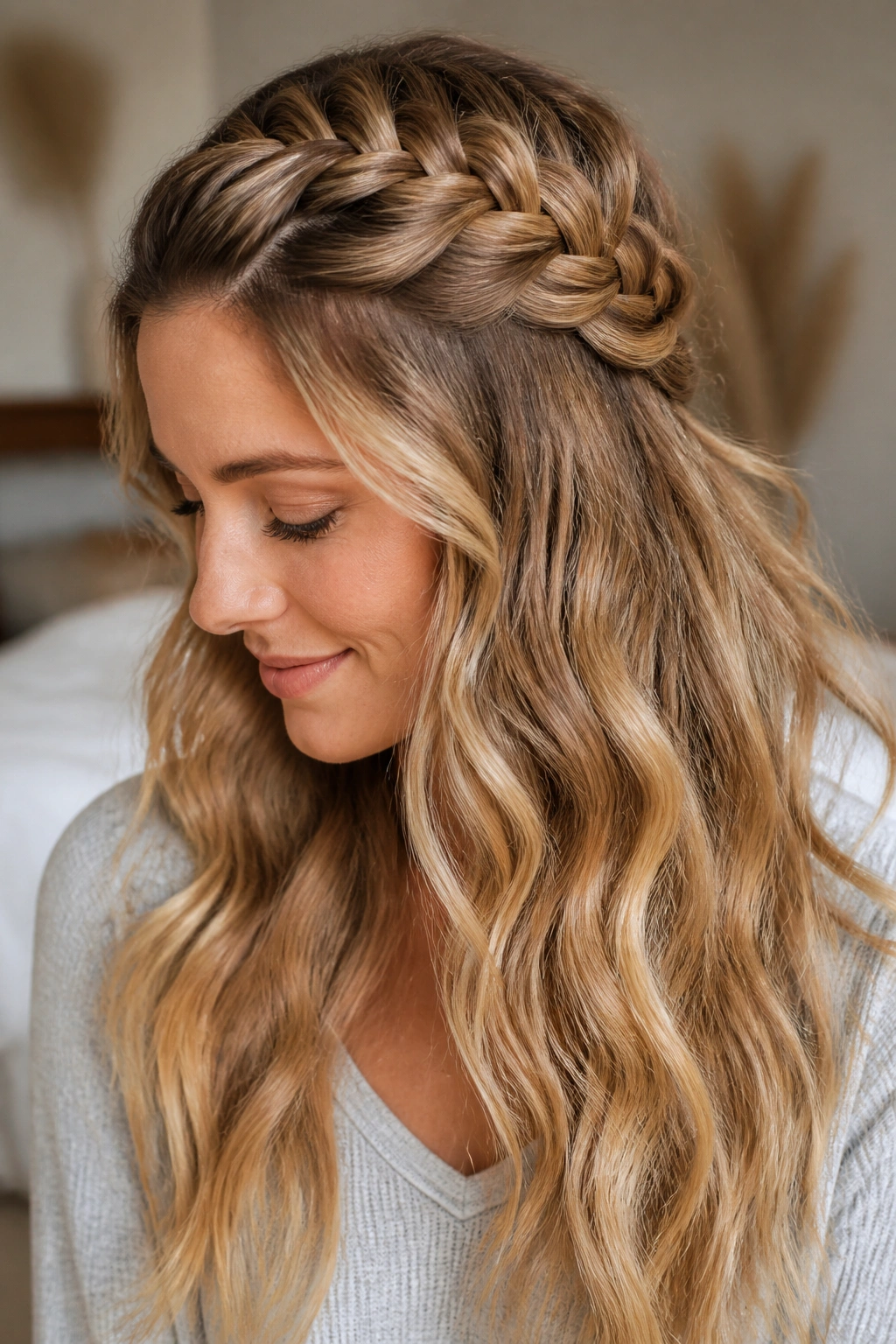
A Dutch braid into loose waves is a smart way to make texture do double duty. The braid gives lift and direction at the top, while the lengths fall loose and wavy underneath. It’s practical, yes, but it also has a nice, slightly sporty finish that reads younger than a standard half-up.
This is one of the easiest styles to wear on second-day hair. If the roots feel a little flat, the braid hides that. If the waves feel overdone, the braid breaks them up. It’s a forgiving style, which is why I keep recommending it to people who say their hair never holds shape evenly.
How to Keep It from Looking Crimped
Braid only the top section, not the whole head. Keep the tension firm enough that the braid sits close to the scalp, but not so tight that it creates a hard ridge. Once the braid is secured, tug the outer edges gently to widen it. That little stretch softens the look right away.
A braid like this works beautifully with long hair, since there’s more room for the loose wave pattern to show after the braid ends.
21. Side Clip and Tucked Wave
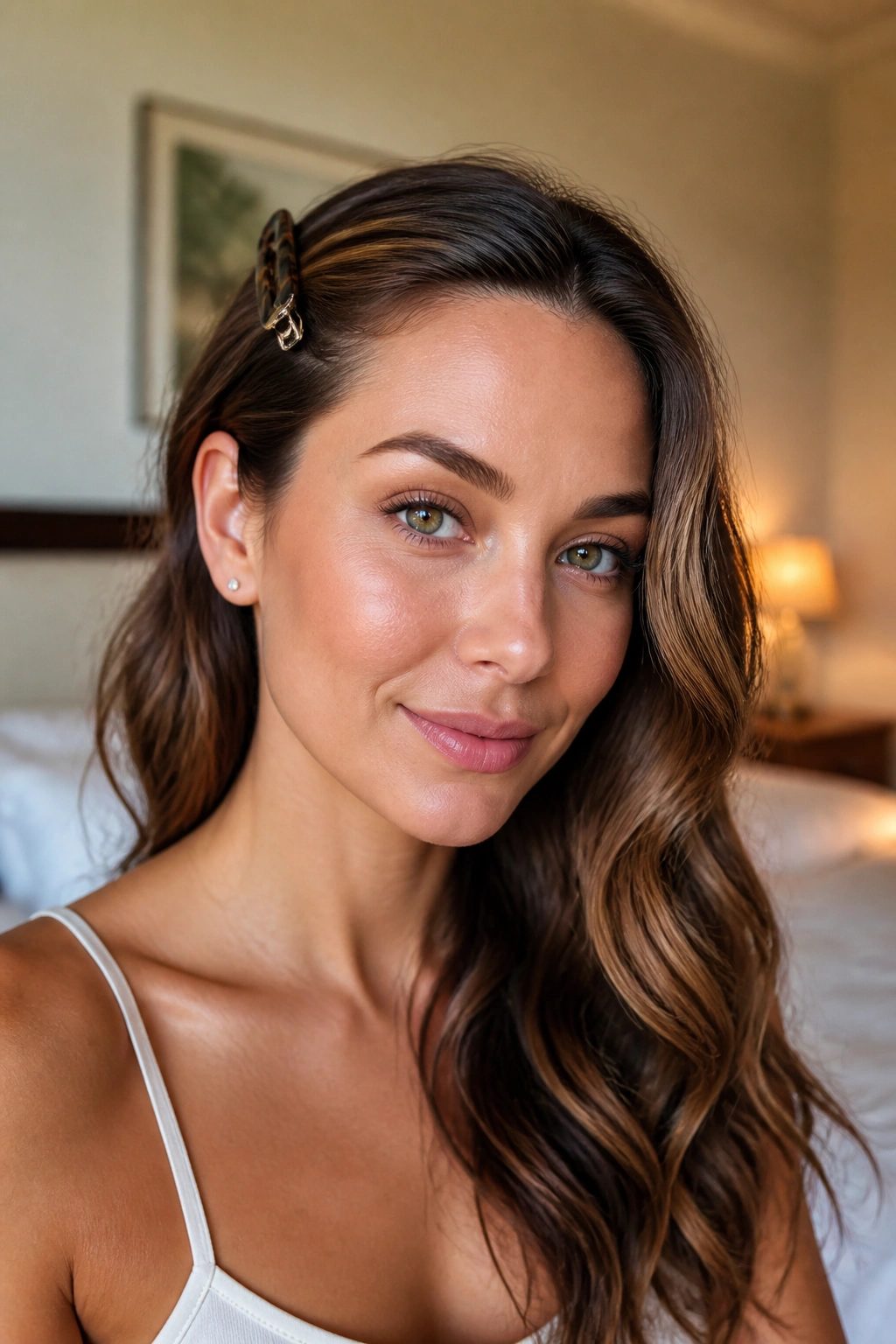
Sometimes the smartest hairstyle is the one that takes 30 seconds. A side clip and tucked wave can fix a flat side, keep hair out of your face, and make medium or long waves look more deliberate without changing the whole shape.
The trick is asymmetry. Pull one side back just enough to create lift at the temple, then secure it with a barrette or a simple clip. Tuck the hair behind the ear on the other side, or leave it loose if you want more softness. The wave pattern should stay visible through the lengths, so don’t flatten everything down with your hand.
This is great for days when the hair is clean but not cooperating. It also works when one side is behaving better than the other — which, let’s be honest, happens a lot. Instead of fixing the mismatch, this style uses it.
A clip with a little weight tends to hold better than a flimsy one. If the hair is thick, choose something with teeth. If it’s fine, a lighter clip is less likely to slip.
22. Twisted Half Crown
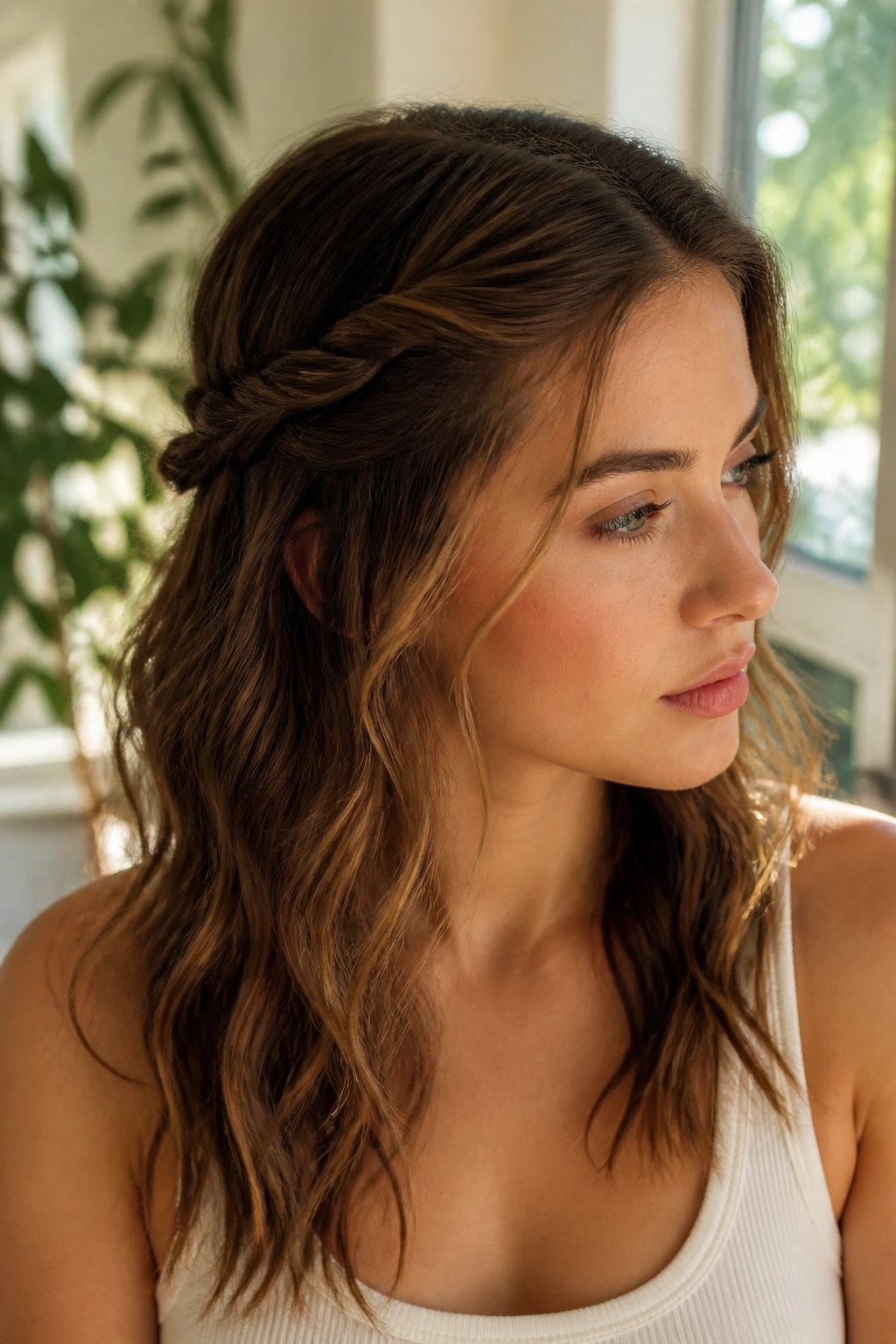
A twisted half crown feels softer than a braid and more relaxed than a pinned-back updo. That’s why it works so well on wavy hair. The twist picks up the front sections, but the rest of the hair stays loose and moving, which keeps medium and long lengths from looking trapped.
This style has a bit of a romantic feel without becoming fussy. Twist one section from each side, bring them toward the back, and pin them where they meet. Leave the lower half wavy and touchable. If the twists are too tight, the style loses all the softness that makes it worth doing.
It’s especially pretty when the hair has a little texture already. Day-two waves give the twists grip, and the loose lengths keep the crown from looking overbuilt. If the ends are frizzy, a drop of serum on the very bottom pieces helps.
The nice thing about this look is that it flatters a lot of lengths. Medium hair gets lift. Long hair gets shape. Neither one gets flattened.
23. Retro Side Pin Waves
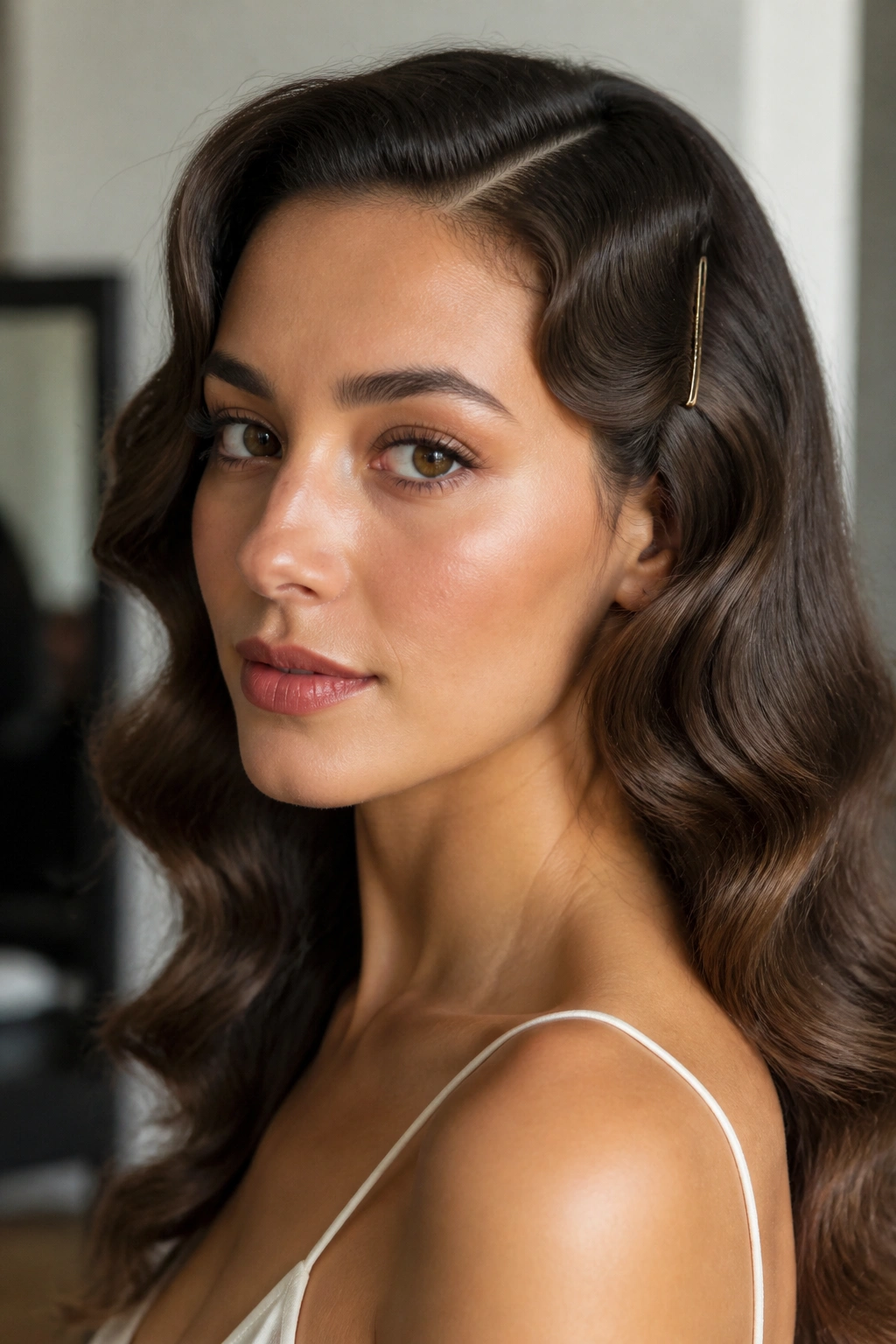
Retro side pin waves sit somewhere between a clean everyday style and a dressed-up evening look. A single side pin — usually placed low and slightly back from the hairline — changes the whole reading of the waves. The rest of the hair stays loose, so you get polish without giving up movement.
Unlike full Hollywood waves, this version is less formal and easier to live in. The wave pattern can be softer, the part can be less dramatic, and the pin can be decorative or plain. That flexibility is why it works on so many face shapes and hair densities.
I’d use this when you want the front of your hair to behave but you still want the length to show. It’s especially nice on medium-to-long hair with a little natural bend because the pin creates a focal point while the rest of the hair does the visual work.
A pearl clip, a slim barrette, or even a metal slide all work. Just keep the accessory proportional to the wave pattern. A giant clip can overpower soft hair fast.
24. Heatless Clip-Set Waves
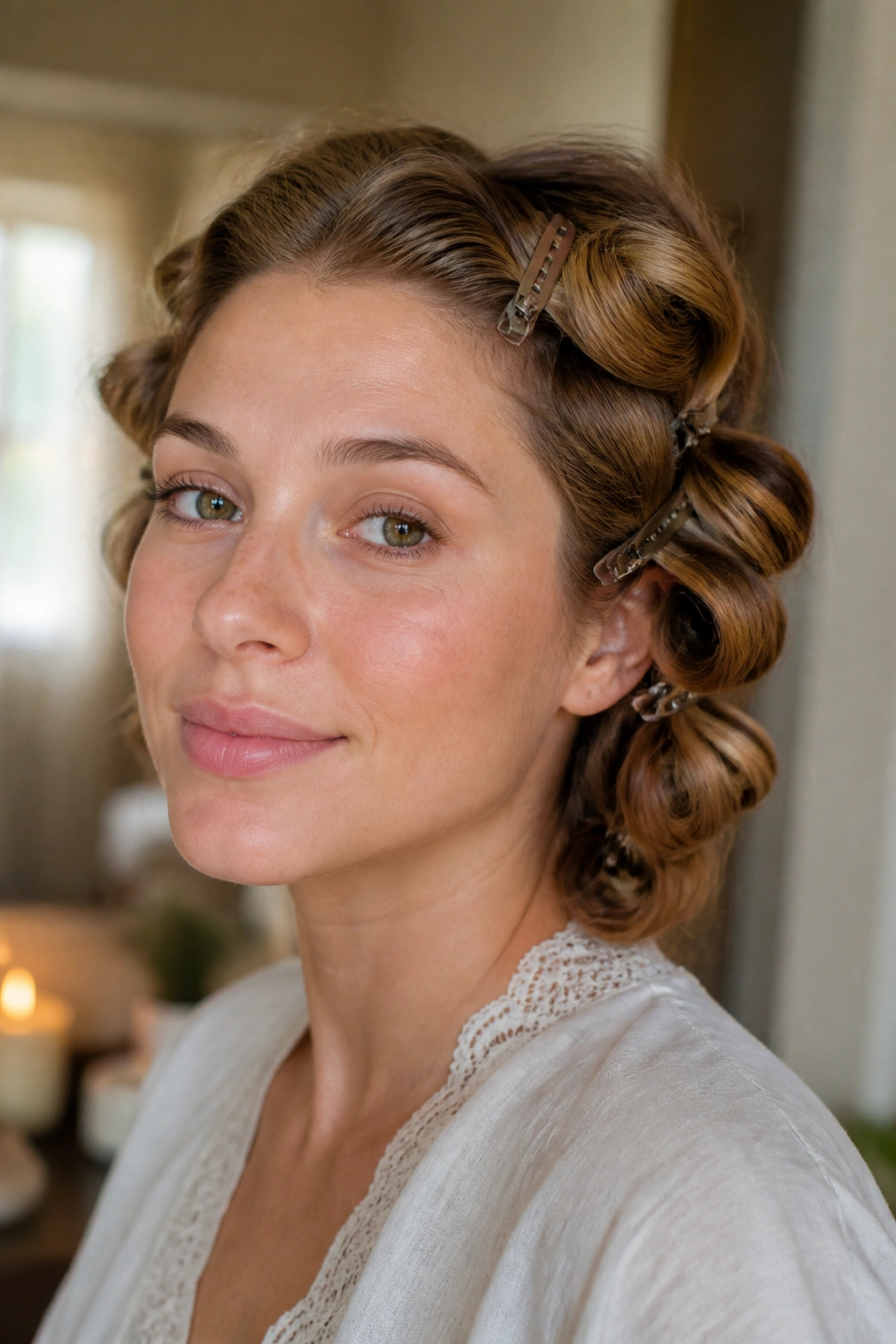
Heatless waves are usually sold as a lazy option, but they’re more useful than that. Set with clips, pins, or flat sections while the hair dries, they create a soft bend that often looks calmer than ironed waves. That’s a big deal if you like movement but hate the fried ends that hot tools can leave behind.
This style works best when the sections are clean and fairly even. Twist or fold the damp hair into broad shapes, pin them flat, and let the hair dry all the way before taking the clips out. If you rush the release, the bend falls apart. If you want more hold, a light mousse before setting helps the shape stay put.
What to Watch For
- Don’t use sections that are too thick.
- Keep the clips smooth so they don’t leave sharp dents.
- Let the hair dry completely before removing them.
- Finger-comb only at the end.
The result is soft and a little lived-in, which suits medium and long hair beautifully. And yes, it takes patience. That’s the tradeoff.
25. Big Loose Waves with Natural Ends
Big loose waves are the style I reach for when I want long hair to look healthy and full without looking overworked. The bend starts broad, the ends stay a little natural, and the whole effect feels open rather than dense. On medium hair, it adds width. On long hair, it keeps the shape from dragging.
The reason this works is simple: leaving the final inch or two of the ends less curled stops the style from getting too round. That tiny omission keeps the wave modern. If every strand is curled from root to tip, the style can feel dated fast. A straighter end keeps things fresh.
A large-barrel iron or a blowout brush can create this shape, but the real trick is brushing the waves out only after they cool. Not before. If you brush too early, the bend falls apart and you’re left with frizz and regret.
Soft ends make the whole look lighter. That’s the line I’d hold onto here. It’s the difference between hair that feels airy and hair that feels packed in.
Final Thoughts
Wavy hair does not need to be tamed into something straight or curled beyond recognition. The better move is usually to give it shape, room, and a finish that suits how it already behaves. That is why the strongest wavy hairstyles for medium and long hair almost always balance softness with a little structure.
If your hair tends to flatten, start with styles that lift the crown or bring the detail higher on the head. If it tends to puff up, keep the root smoother and let the movement live through the lengths. Small changes matter more than people think.
And honestly, that’s the fun of it. Wavy hair gives you enough freedom to play, but not so much freedom that you have to reinvent it every morning.
