



Thick hair is generous, dramatic, and a little bossy. It holds shape better than fine hair, which is the good news, but it also asks more of every elastic, pin, clip, and brush you own. A flimsy hair tie snaps. A weak claw clip slips. A loose braid expands into a whole event by lunch.
That extra density is exactly why thick hair can look so good when it’s styled with intention. You get volume without trying. You get texture that shows up even when the style is simple. You also get the occasional headache from a ponytail that pulls like it’s trying to move your scalp.
The trick is picking styles that work with the weight instead of fighting it. Some thick hair hairstyles need tension, some need strategic looseness, and some need a little bit of both. The best looks are the ones that stay put, keep the shape you wanted, and don’t feel like a chore by the third hour.
1. High Ponytail with a Wrapped Base
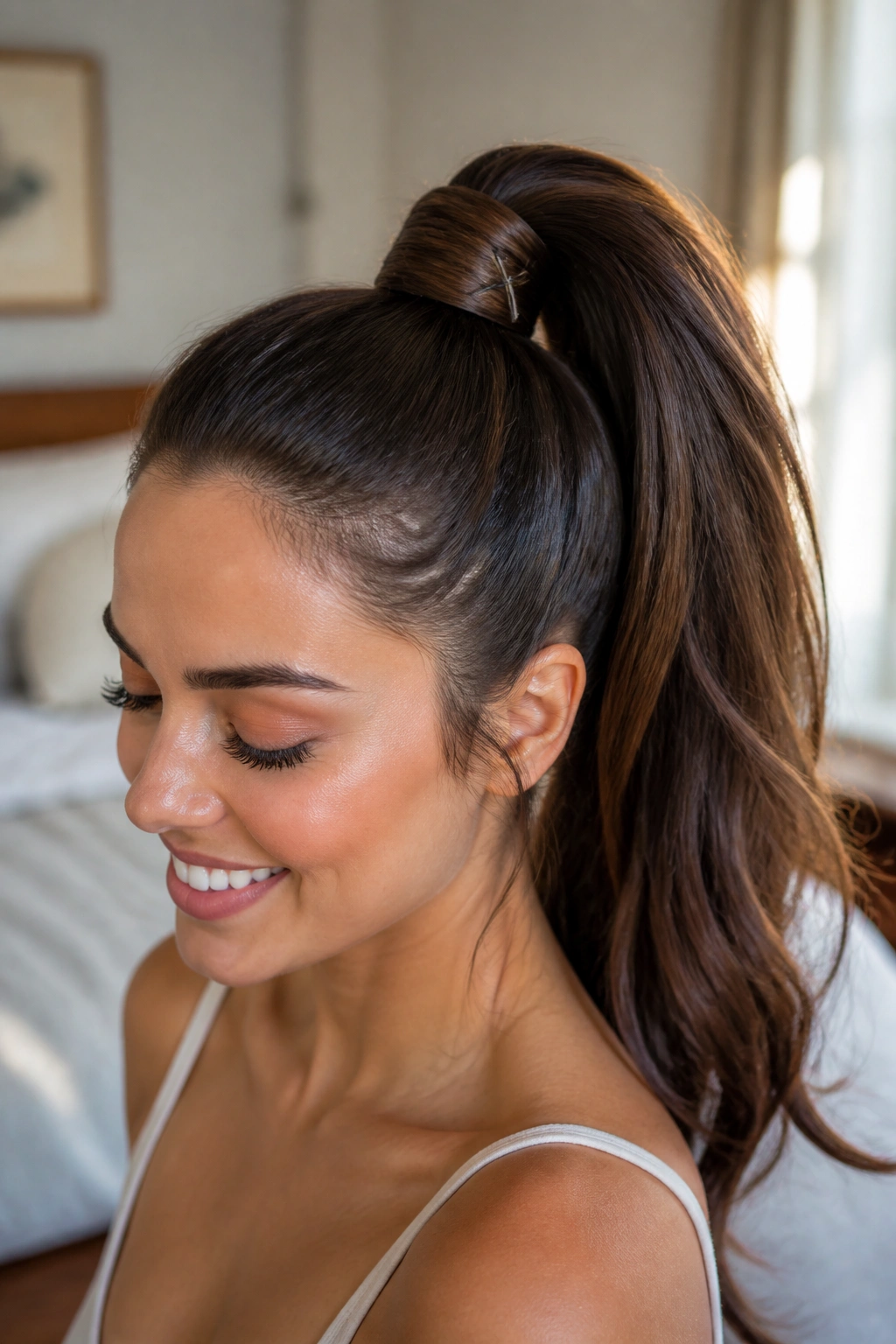
A high ponytail is one of those styles that looks easy until you try it with thick hair and realize it needs a bit more muscle. When it’s done well, though, it’s clean, sharp, and lifts the face without making the hair feel overworked.
Why It Works on Thick Hair
Thick hair gives this ponytail real body, so the tail doesn’t go limp halfway through the day. The wrapped base also hides the elastic and makes the style look finished instead of thrown together. If your hair is long, the ponytail can swing with a heavy, glossy look that thinner hair can’t fake.
Use a brush to smooth the top, then gather the hair at the crown or just above it. Secure it with a strong elastic, not one of those soft ones that stretches out after one use.
- Best with second-day hair or a light mist of texturizing spray
- Works well on straight, wavy, or blown-out textures
- A small section of hair wrapped around the base makes it look cleaner
- Two bobby pins crossed under the wrap help lock it in
Pro tip: If the pony feels too heavy, split the tail in half underneath and pin the two sections together. It removes some tug without changing the look.
2. Low Sleek Bun

A low sleek bun is the style I reach for when I want thick hair to stop arguing with me. It’s tidy, polished, and mercifully fast once you get the hang of it. No big tricks. No drama.
The key is using enough control at the nape so the bun stays compact. Thick hair has a habit of puffing out from the sides if you skip smoothing cream or a touch of gel. That puff is charming in some styles. In this one, not so much.
Pull the hair low, twist it into a coil, and wrap it around its base. If your hair is very dense, split the ponytail into two twisted sections first. That makes the bun sit flatter and easier to pin.
Best for: office days, formal dinners, humid weather, and any morning where your hair feels heavier than your patience.
3. Loose Braided Ponytail

Why does this style work so well on thick hair? Because the braid has enough material to look full even when you don’t pull it tight. Thin hair often needs extra teasing to get this look. Thick hair just shows up ready.
The ponytail base keeps the weight contained, and the braid controls the length so it does not swing around like a rope. That matters more than people admit. Long, dense hair can be a lot on the shoulders.
How to Wear It
Start with a mid or high ponytail, then braid the tail loosely and secure the end with a clear elastic. Gently widen each braid section with your fingers, but stop before it gets frizzy. A tiny bit of oil on the ends helps if the braid looks dry.
This style feels casual, but it still reads as done. That’s the sweet spot.
4. Half-Up Claw Clip Twist
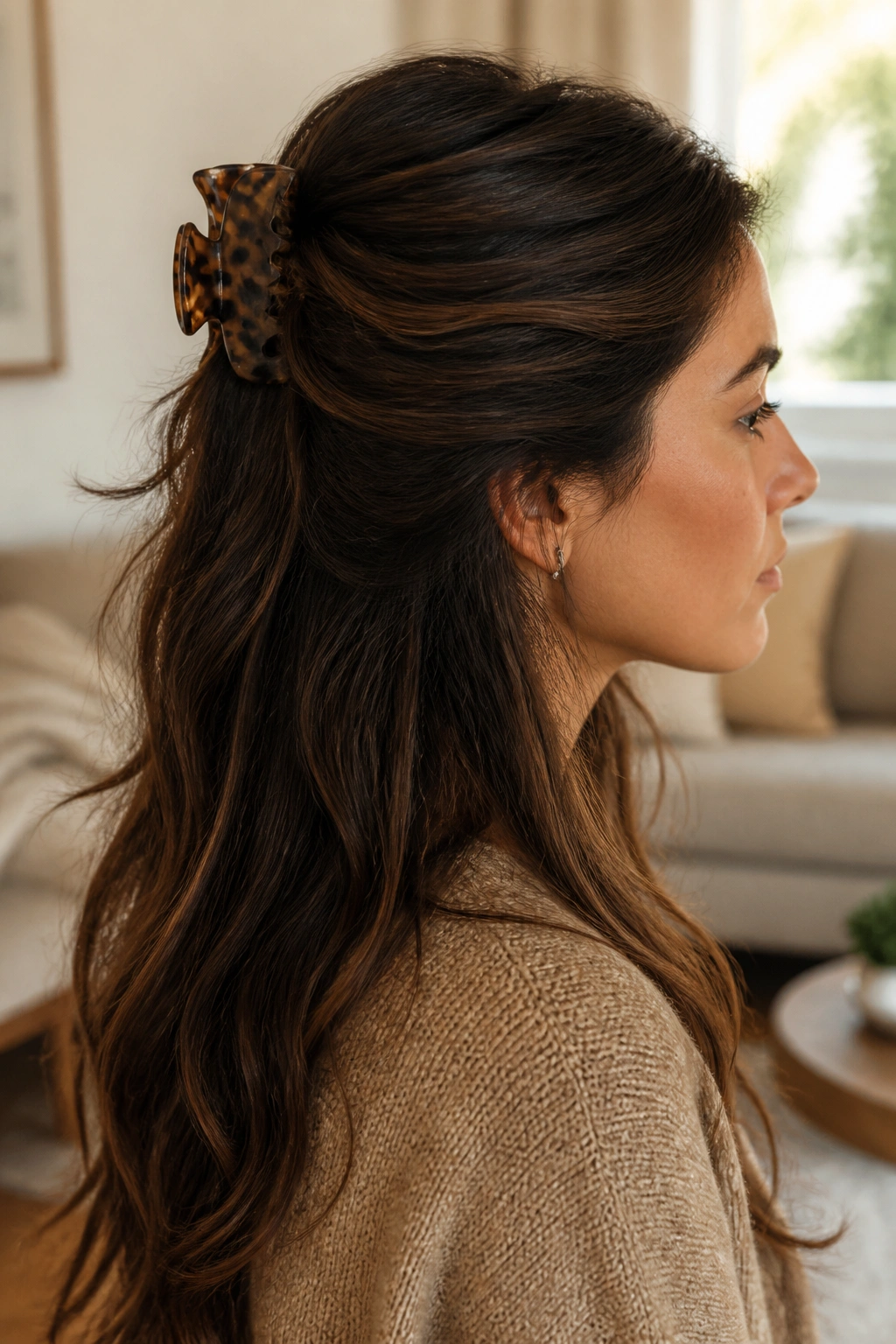
Picture this: you want your hair off your face, but you do not want a full updo that takes ten minutes and six bobby pins. That’s where the half-up claw clip twist earns its keep.
Thick hair can overwhelm weak clips, so use a large, sturdy claw clip with teeth that actually grip. The twist should sit high enough to lift the crown, but not so high that the clip feels like it’s trying to hold up a brick.
Gather the top half of the hair, twist once or twice, and fold it upward before clipping it in place. Leave the lower half loose so the style keeps movement. A few face-framing pieces make it feel softer.
- Best with shoulder-length to long hair
- Easier on hair that has a little texture
- Use a matte clip for extra grip
- Keep two bobby pins nearby for backup
5. Braided Crown
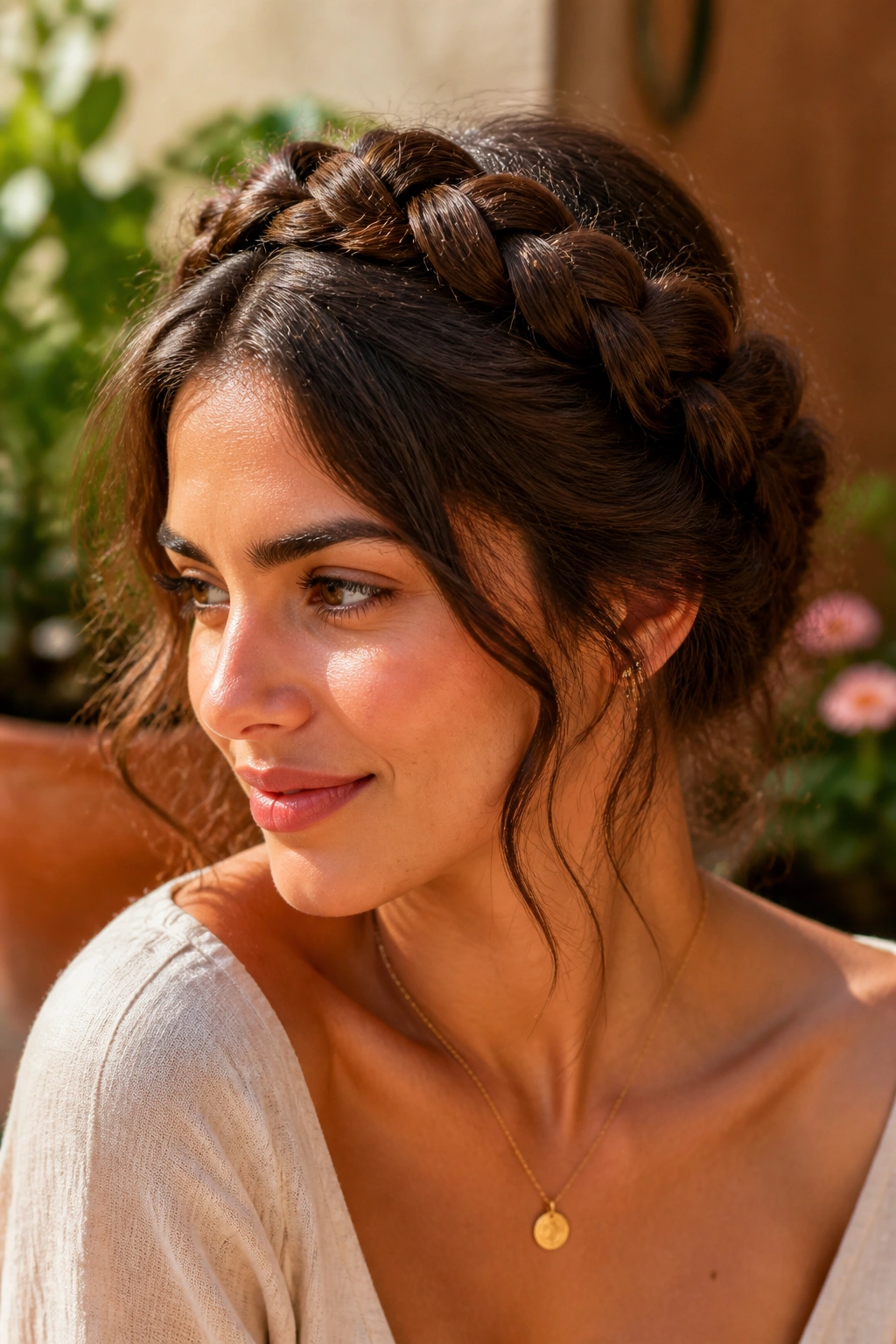
A braided crown has a little bit of theater to it, and thick hair is perfect for that. The braid has enough mass to trace the head in a visible band, which is exactly why this style looks so rich on fuller hair.
It works especially well when you want the front sections controlled but still want the rest to feel romantic. You can braid both sides and pin them across the back, or take one long braid and sweep it around like a loop. The second version is easier. The first one looks a touch more finished.
Use a light spray or a bit of mousse before braiding so the sections stay crisp. Then pin the braid with sturdy U-pins or long bobby pins tucked underneath the braid path.
What Makes It Different
A crown braid keeps thick hair close to the head, which means less bulk at the neck than a big bun. That can be a relief on warm days.
6. Bubble Ponytail
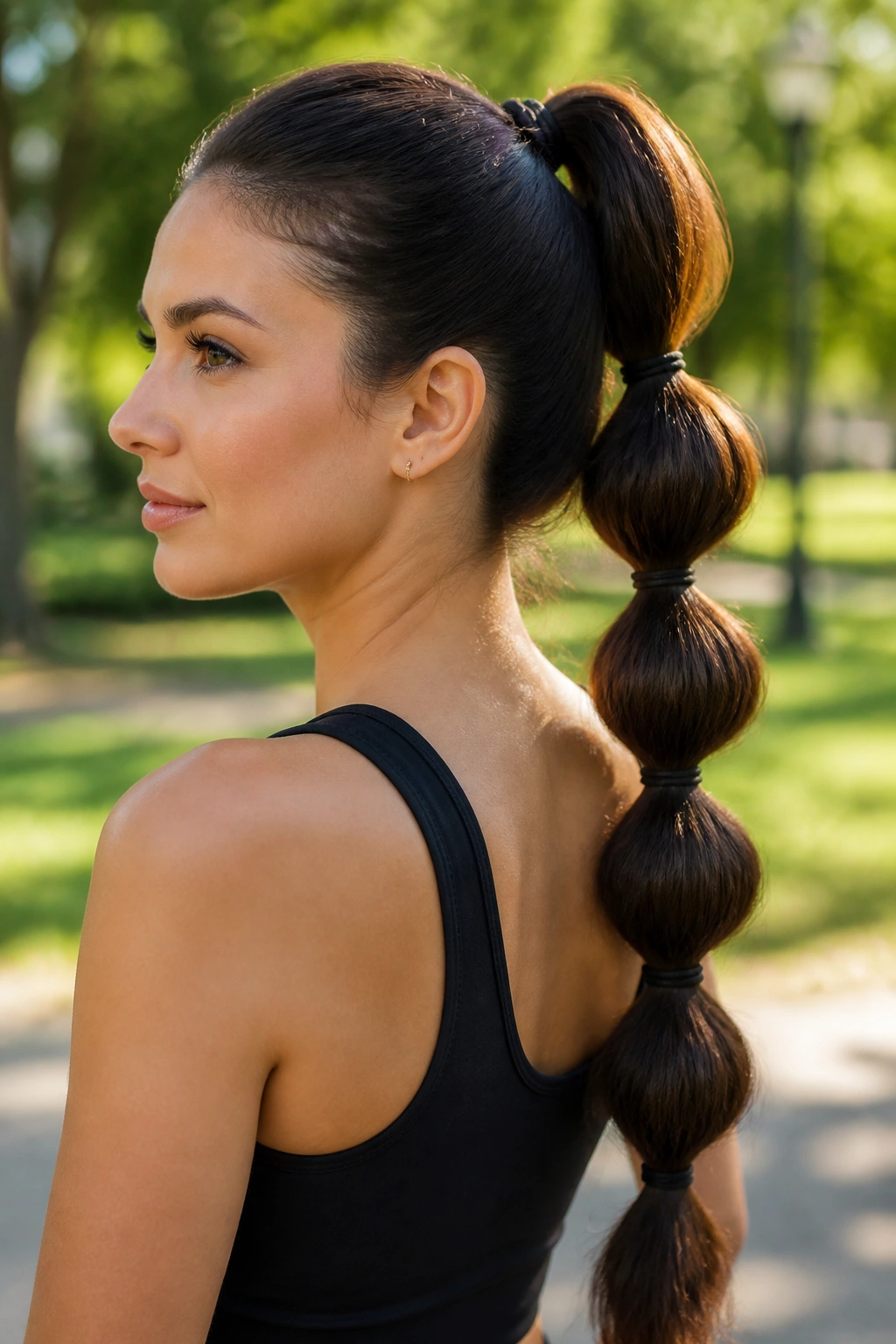
A bubble ponytail is one of the few styles that actually gets better when the hair is thick. Each “bubble” has enough material to look round and even, instead of flat and stringy. Thin hair can struggle to fill out the sections. Thick hair has no such problem.
The trick is spacing the elastics evenly, usually every 2 to 3 inches, depending on the length. After each elastic goes in, gently tug the section outward until it looks puffed and balanced. Don’t yank. You want shape, not frizz.
This style has a playful edge, but it still works for everyday wear if you keep the bubbles tight and the base smooth. If you want it softer, pull out two small pieces near the temples.
It’s one of the easiest thick hair hairstyles to dress up without curling anything.
7. Messy Top Knot

A good messy top knot on thick hair looks full, balanced, and a little bit casual in the best way. A bad one looks like you shoved a loaf of bread onto your head and hoped for the best. The difference comes down to control at the base.
Start with a high ponytail, twist the length, and coil it loosely. Thick hair usually needs a second elastic or a few pins to keep the knot from sagging. If your hair is especially heavy, make the knot in two loops instead of one. That spreads the weight better.
Leave the ends slightly loose if you want a relaxed shape. Pull a few pieces around the face if the style feels too severe. This is a good one for weekends, errands, and days when your scalp wants a break.
8. Low Braided Bun

The low braided bun is quieter than a top knot, but I think it holds up better on thick hair. The braid gives the bun structure, and that structure matters when you have a lot of hair to tuck in.
Start with a low ponytail, braid the length, then wrap the braid around its base. Pin along the underside so the pins disappear. If your hair is very long, fold the braid in half before wrapping. That keeps the bun from getting too wide.
Why It Stays Put
The braid acts like a little spine inside the bun. It helps the shape stay tight instead of puffing open after an hour.
Use a smoothing cream at the crown if flyaways bother you. If they don’t, skip it. A bit of softness here can look nicer than a helmet-finish bun.
9. French Braid

A French braid on thick hair is one of those classic styles that never gets old because it earns its keep. The braid starts neat at the crown and gets thicker as it moves down, which makes the whole thing feel strong and intentional.
Thick hair gives the braid more dimension, but it can also make your arms tired if you try to keep every section perfect. Don’t chase perfection. Keep the sections even enough, and the result will still look clean. A little looseness near the nape actually helps the braid sit more naturally.
If your hair is very layered, use a light styling cream before braiding so shorter pieces don’t spring out everywhere. Finish with a clear elastic and a light mist of flexible hold spray.
This is one of the most practical thick hair hairstyles for school, work, travel, and active days.
10. Dutch Braid Pigtails
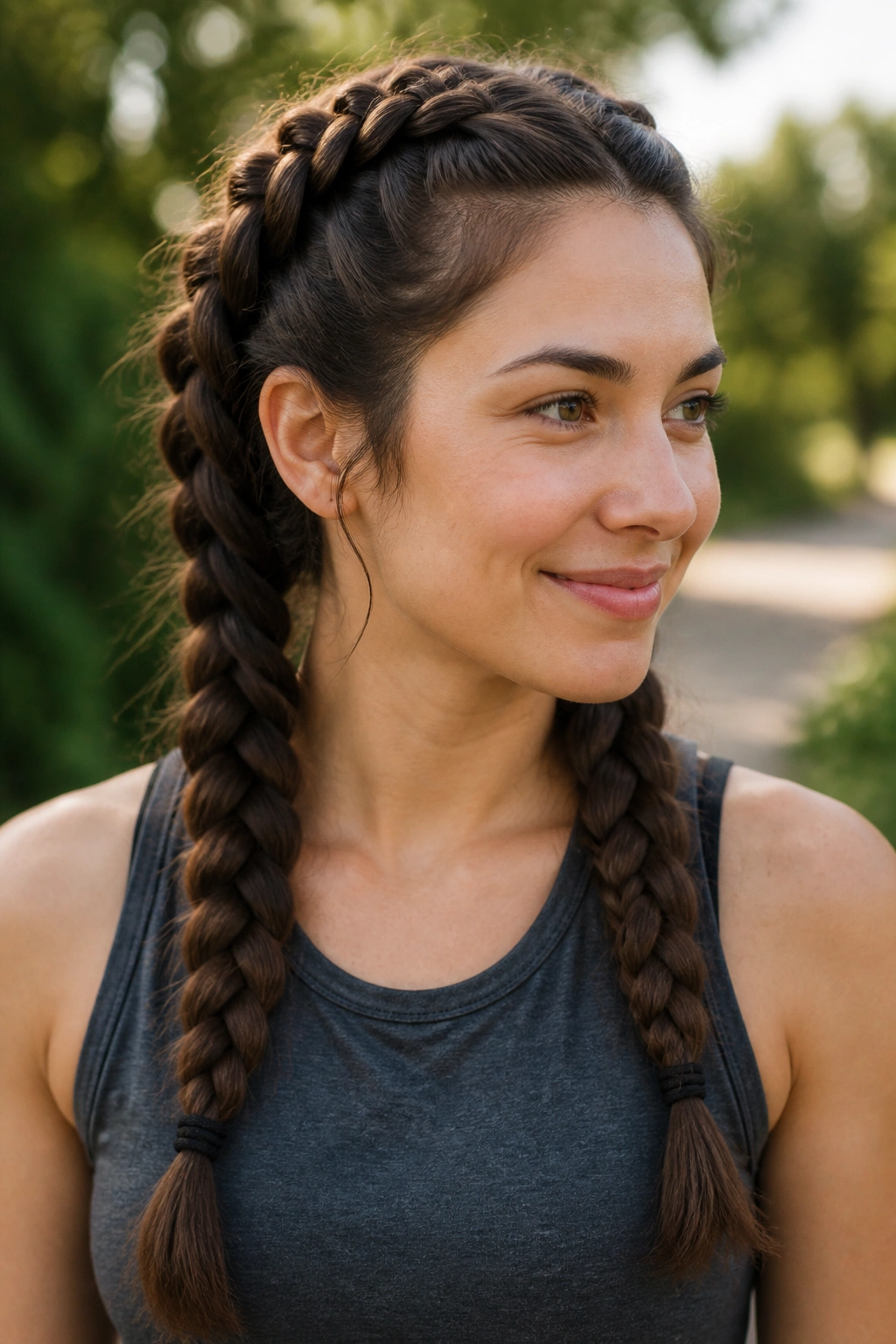
Dutch braid pigtails are bolder than a single braid, and thick hair makes them look even fuller. The raised braid pattern gives the style a bit of edge, while the two braids keep the weight balanced across the head.
They’re also useful when your hair is too much for one braid down the back. Split it cleanly down the center, braid each side underhand, and keep the tension even from root to tip. If one side starts looking too tight, pause and loosen the sections with your fingers before going farther.
- Best on medium to long hair
- Great for workouts or busy days
- Works well with natural waves
- Add ribbons or small elastics if you want a softer finish
A simple center part keeps this style tidy. A slightly off-center part makes it feel less strict.
11. Side Braid

A side braid is the style I recommend when you want thick hair down but not in your face. It has that easy, lived-in feel without actually being sloppy. The fullness of thick hair makes the braid look more substantial, even when it’s loose.
Sweep the hair over one shoulder and braid it from just below the ear or from the nape, depending on where you want the weight to land. A loose side braid is softer and more casual. A tighter one keeps layers under control.
This style is also forgiving if your hair has a little grit from day-old texture spray. In fact, that texture often helps the braid hold better. Pull a few pieces loose around the face if you want it less rigid.
No fancy equipment. Just a brush, one elastic, and maybe two pins if your layers won’t behave.
12. Space Buns

Space buns can look playful or surprisingly sleek, depending on how you finish them. Thick hair gives each bun enough volume to feel like a real shape instead of a tiny knot. That’s half the appeal.
Part the hair down the middle, make two high pigtails, and twist each tail into a compact bun. Pin them with more support than you think you need. Thick hair adds weight, and weight pulls. If your buns keep slipping, use smaller sections and build them closer to the head.
What They’re Good For
They keep hair off the neck, which is the whole point for a lot of people. They also work well when you want something fun that still feels controlled.
If the buns look too severe, pull out a few face pieces and soften the part. If you want a sharper finish, smooth the roots with gel first.
13. Sleek Straight Blowout

Straight styles can be tricky on thick hair because the goal is not flatness. It’s control. A sleek blowout lets the hair move while keeping the surface smooth, and that’s usually more flattering than forcing every strand into submission.
A round brush or a paddle brush blow-dry works well here, especially if you dry in sections about 2 inches wide. Use a heat protectant first. Dry the roots thoroughly before moving to the ends, or the style will puff back up in half an hour.
The real payoff is the shine. Thick hair often reflects light well once the cuticle lies flat, and a clean blowout makes that even more obvious. A center part looks modern. A side part adds lift.
This is one of the best thick hair hairstyles when you want the hair to look expensive without being overdone.
14. Soft Beach Waves
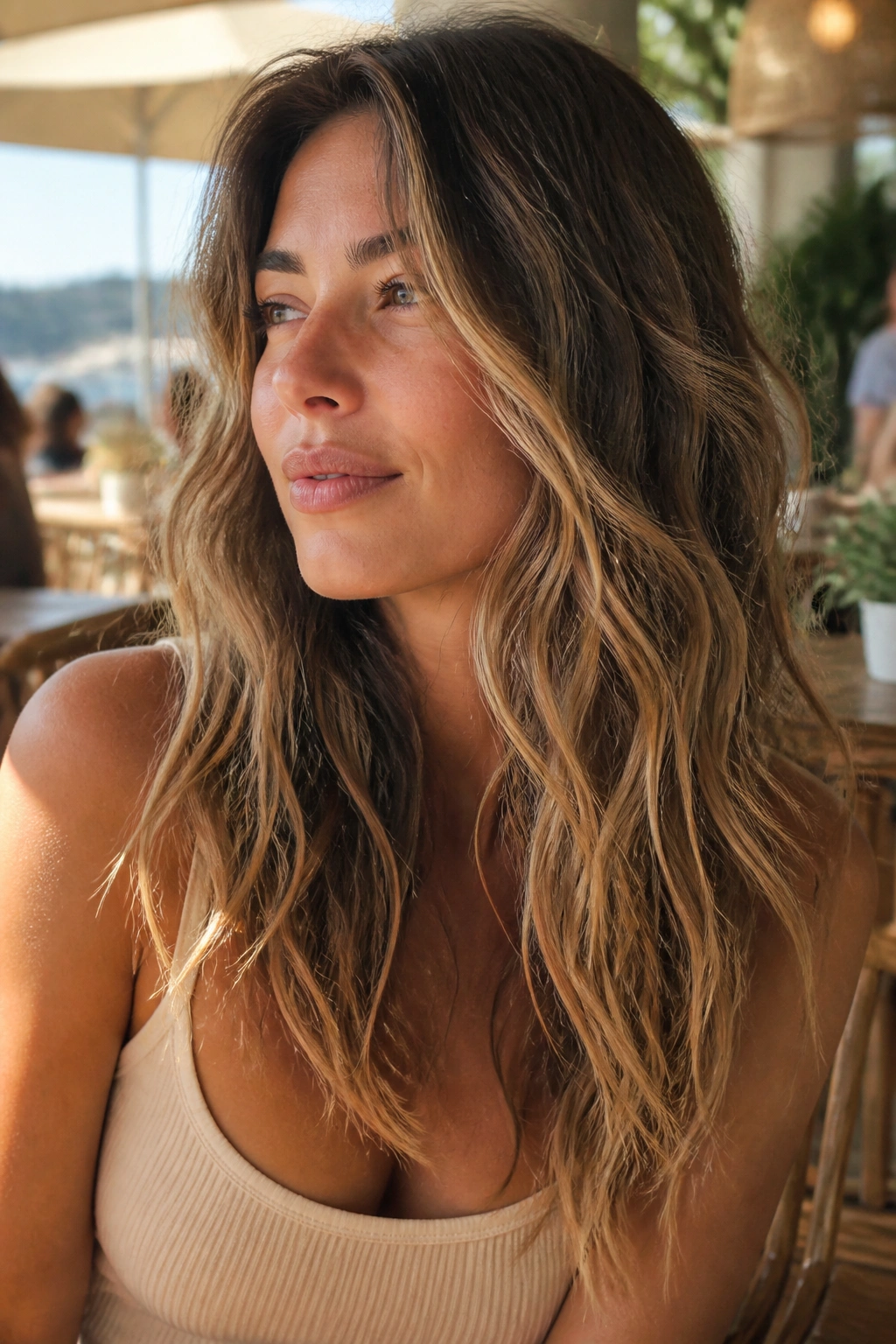
Soft waves are one of the easiest ways to make thick hair feel lighter without actually losing length. They break up the mass, give movement, and stop the hair from sitting like one heavy sheet.
Use a 1-inch or 1¼-inch curling iron and wrap random sections away from the face. Leave the last inch of each section out if you want the ends to stay loose. After the curls cool, shake them out with your fingers, then mist lightly with texture spray.
The Part That Matters
Do not curl every strand in the same direction. That’s how you get a tube of hair instead of waves.
Thick hair can handle more product than fine hair, but it still doesn’t need a ton. A small amount of smoothing cream on the ends is enough. If the waves look too polished, rough them up a bit at the roots.
15. Hollywood Waves

Hollywood waves are the dressed-up cousin of soft waves. They need more shape, more polish, and a little patience, but thick hair gives them a gorgeous base. The waves hold their curve better because there’s enough hair to support the pattern.
Set the hair in large sections with a curling iron or hot rollers, then brush through once it cools. That brush-out is what creates the smooth wave line. Pin the front section while it cools if you want the top to stay lifted.
This style works best when the surface is sleek, so use a light serum before curling. A side part usually looks more elegant here. A center part can work too, but it changes the whole mood.
It’s not an everyday style for most people. Still, when you want thick hair to look dramatic, this is hard to beat.
16. Half-Up Half-Down Twist
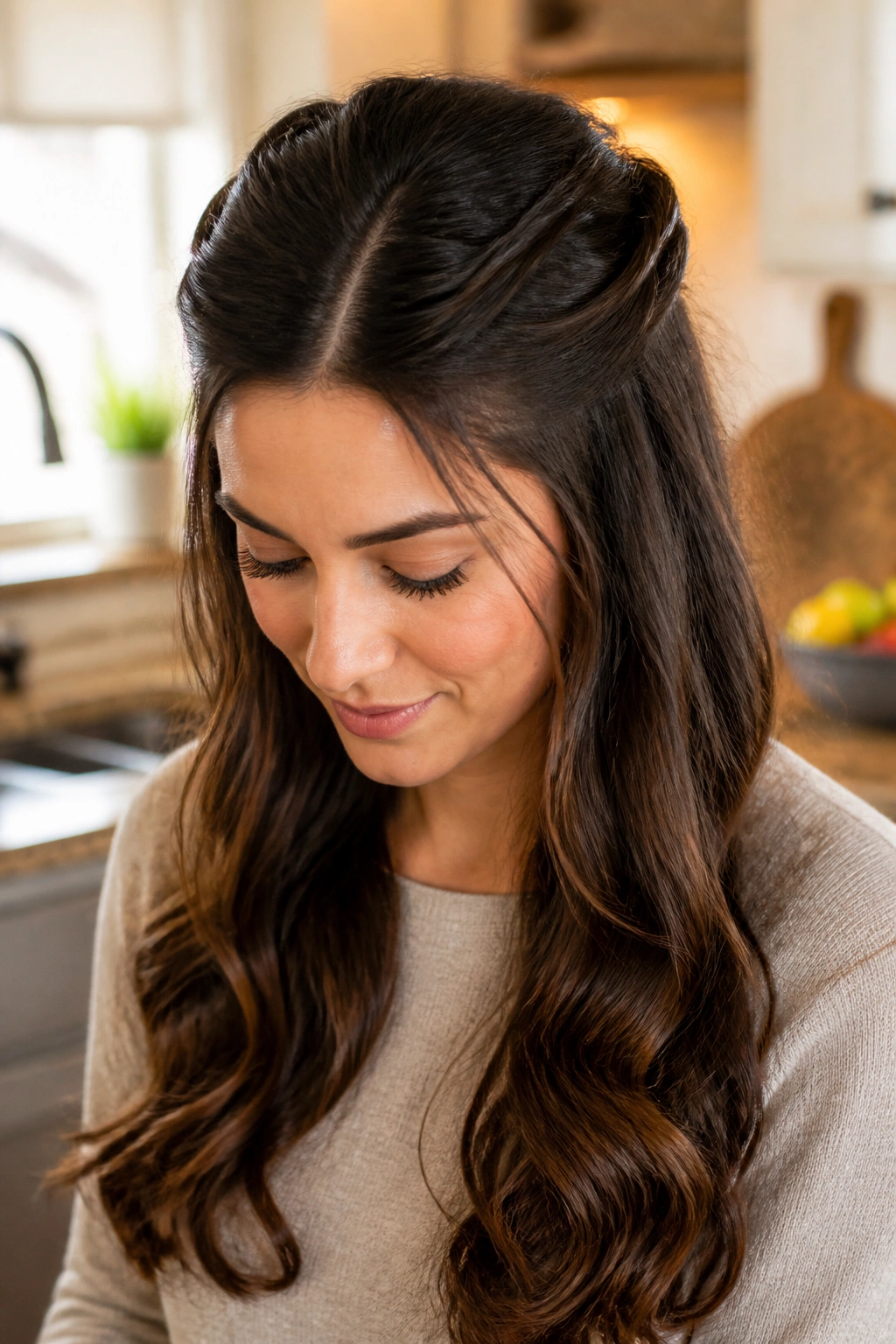
A half-up half-down twist is one of the easiest ways to keep thick hair manageable without hiding it. You get the lift at the crown, the weight at the back, and enough softness around the face to keep the style from feeling stiff.
Take two sections from above the ears, twist them back, and pin them together at the center. If your hair is layered, twist a little lower so shorter pieces don’t slide out. A small claw clip can work, but pins usually hold better.
Use this style when you want something between casual and dressed up. It’s good for dinners, meetings, and days when you want your hair off your cheeks but not fully contained.
A little wave in the bottom half helps, though straight hair works too.
17. Claw Clip French Twist
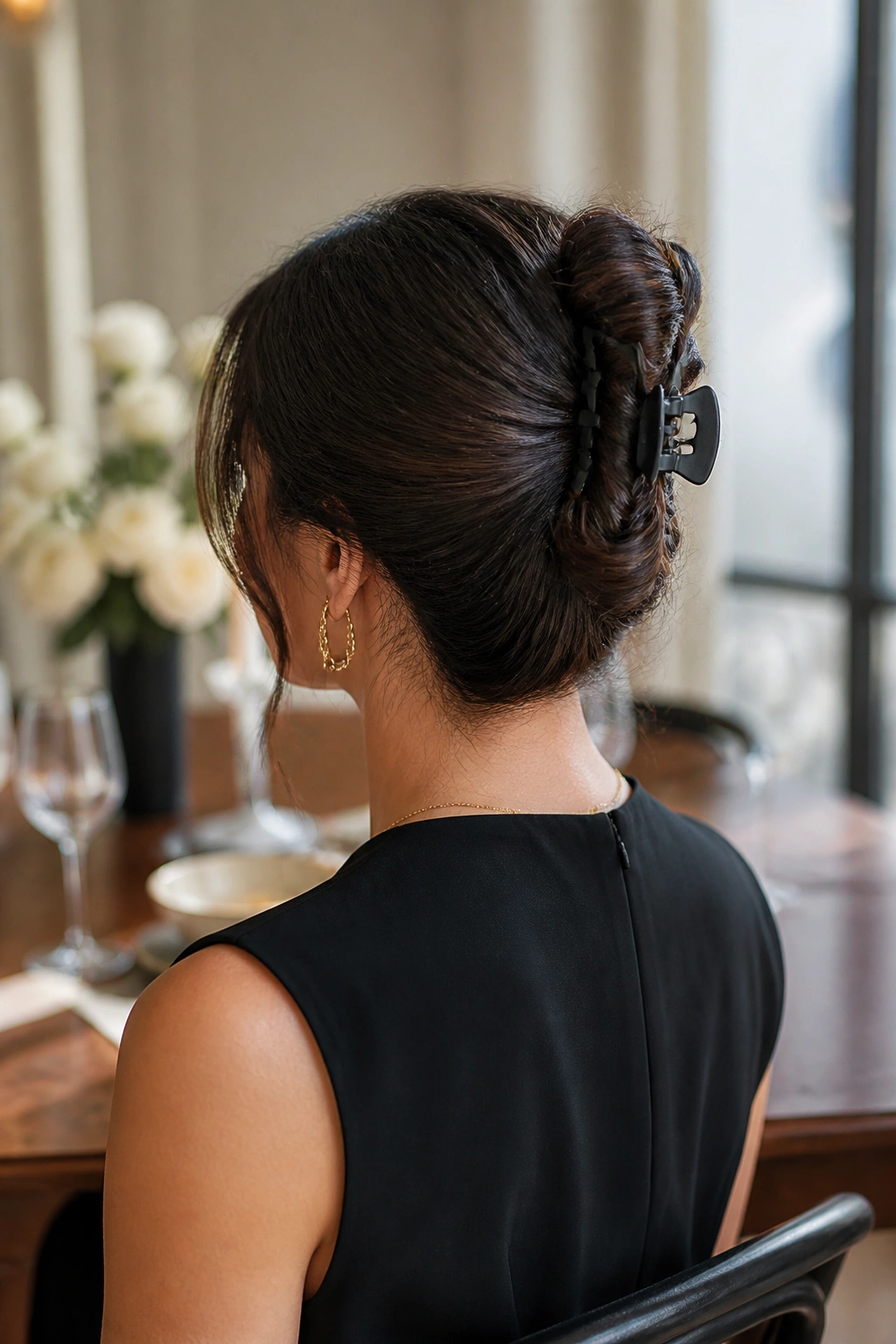
There’s a reason the claw clip came back: thick hair actually gives it something to hold. A French twist with a clip is one of the fastest ways to get your hair up and still look like you meant to do it.
Gather the hair at the back, twist it upward, and fold the length into the clip. The ends can fan out a little at the top or tuck neatly inside, depending on the look you want. Bigger clips work better here. Small ones are a joke on thick hair.
Practical Note
If the clip feels loose, twist the hair tighter before folding it. That gives the teeth more to grip.
This style is excellent for second-day hair and for times when you want your neck clear without wearing a full bun. It has less tension than a tight ponytail, which matters if your hair is heavy.
18. Slicked-Back Ponytail with Curled Ends

A slicked-back ponytail with curled ends gives you contrast, and thick hair is perfect for contrast. The roots stay smooth and close to the scalp, while the tail keeps movement and shape.
Brush the hair back with a little gel or cream, then secure it low or mid-height. Curl the tail in large sections so the ends bend rather than frizz out. That detail matters. Straight ends can make the whole style feel unfinished.
This is one of those looks that can lean athletic or polished depending on the finish. If you want it sharp, keep the part clean and the crown flat. If you want it softer, pull a few tiny pieces loose near the ears.
It’s simple. But not boring.
19. Twisted Halo Half-Up

The twisted halo half-up style keeps the front off your face and leaves the rest free, which is a smart trade when you have thick hair. The twist adds shape across the crown without piling all the hair onto the head.
Take a section from each temple, twist them back, and pin them together behind the crown. If your hair is very dense, make the sections slightly thinner so the twist sits flatter. If it’s layered, you may need one extra pin to stop the shorter pieces from escaping.
This style is soft enough for daytime wear but neat enough to feel deliberate. It’s a good one when your hair looks best with some movement but you still want control around the face.
A touch of wave in the lower half gives it a little more life. Not required, though.
20. Low Ponytail with Face-Framing Pieces
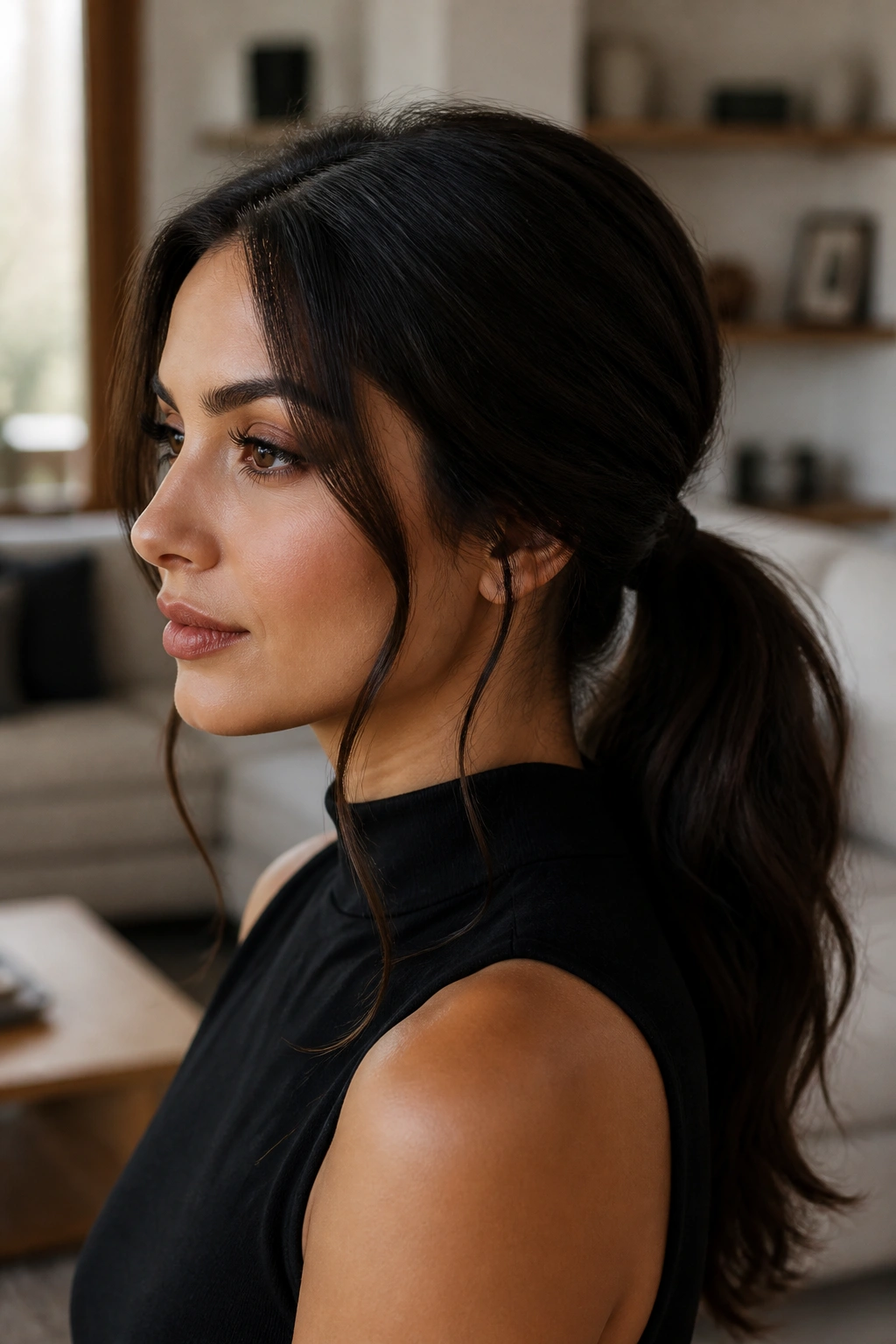
A low ponytail can look plain on some hair types. On thick hair, it looks clean, grounded, and sometimes even elegant, especially when you leave a couple of face-framing pieces out. The density gives the ponytail enough body to feel full instead of flat.
Keep the base smooth and secure it low at the nape. Then choose two thin front sections and curl or bend them away from the face. That small move changes everything. It softens the look and keeps the ponytail from feeling too strict.
If your hair is very long, wrap a small section around the elastic for a more finished look. If it’s layered, let the ends move a little instead of forcing them into perfect order.
This is a favorite for days when you want to look put together in under five minutes.
21. High Bun with Braided Detail

A high bun with a braid worked into the base or wrapped around the outside adds structure to thick hair without making the style feel heavy. The braid is the detail that makes it feel intentional.
Start with a high ponytail, braid a small side section first, then use that braid to wrap around the bun or anchor it at the base. You can also braid the ponytail itself before coiling it up. That version looks more built-in and less decorative.
How to Keep It Balanced
Use enough pins to support the weight. Thick hair can make a bun tilt backward if you don’t anchor both sides.
This style is good when you want something neat but not plain. The braid gives your eye somewhere to go, which helps the whole bun look more polished.
22. Fishtail Braid

A fishtail braid on thick hair has a textured, detailed look that is hard to fake with thinner hair. Each cross-over shows up clearly, and the finished braid tends to feel rope-like in the best way.
The downside is time. A fishtail takes more patience than a regular braid because you’re splitting sections smaller. Start by dividing the hair into two sections, then move tiny pieces from the outside of one side to the inside of the other. Once it’s finished, gently tug the braid wider.
Thick hair helps the braid hold shape, but it can also make the process feel bulky in your hands. Keep the sections controlled and use a mirror if you’re doing it over your shoulder.
A fishtail braid looks especially good when the hair has a little texture. Bone-straight hair can work too, but it usually needs more grip.
23. Waterfall Braid

A waterfall braid is one of those styles that looks harder than it is, which is probably why people love it. On thick hair, the braid line stays visible and the dropped sections have enough volume to create a pretty, layered effect.
The braid runs across the head, letting strands fall through like little loops. That makes it better for showing off length than containing it. If your hair is very dense, keep the sections neat so the pattern does not disappear into the volume.
This style is especially useful when you want half the hair down but need a little structure near the crown. It’s not the fastest option on this list, but the visual payoff is worth it if you enjoy braiding.
Use a few pins hidden under the braid path to keep it from sagging behind the ear.
24. Rope Braid Ponytail
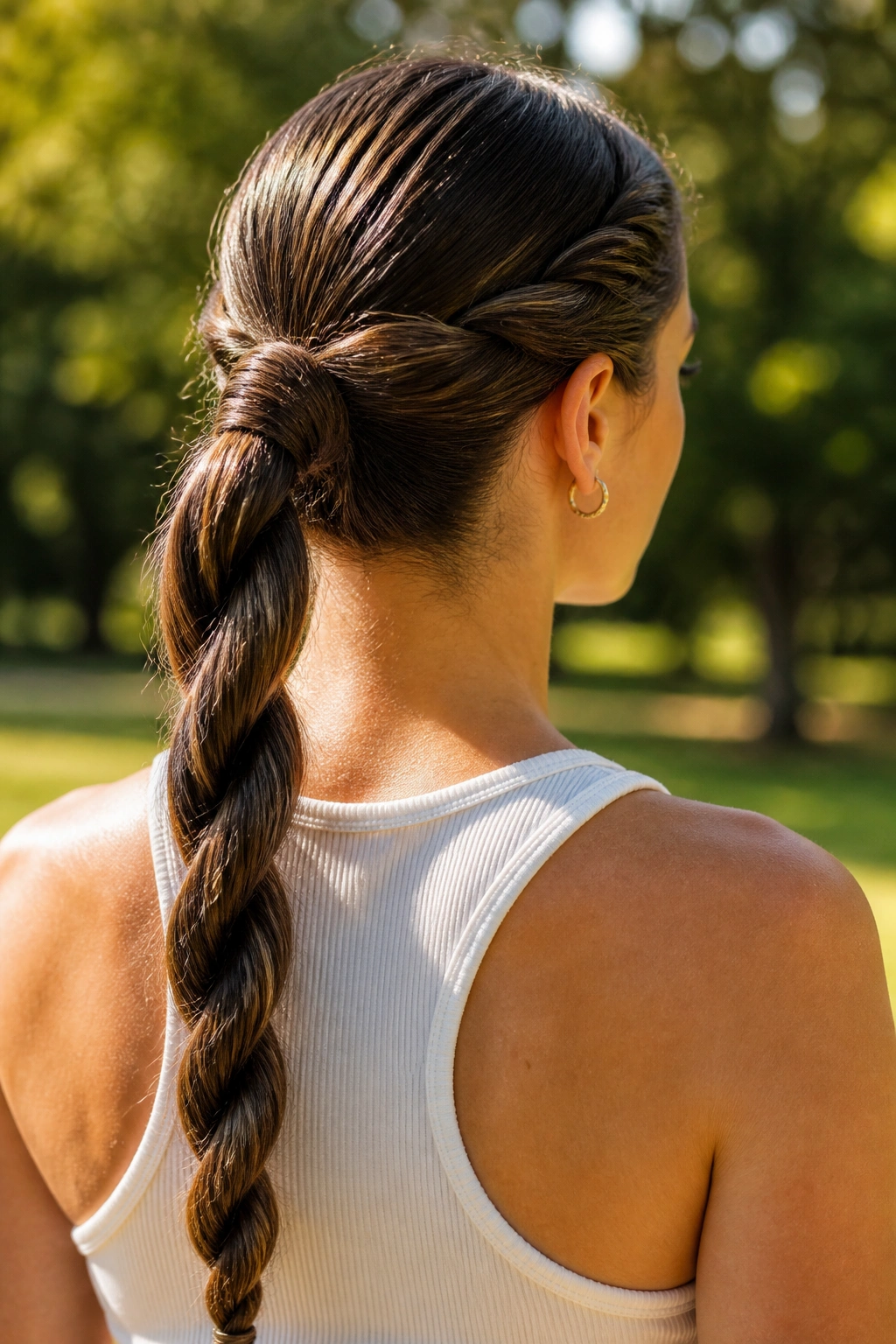
A rope braid ponytail is fast, tidy, and surprisingly strong on thick hair. It uses two twisted sections instead of three braided ones, which makes it easier when your arms are tired or your hair is already slipping out of your hands.
Gather the hair into a ponytail, split it into two sections, twist each section clockwise, then twist them around each other in the opposite direction. That opposite spin is what keeps the braid from unraveling. Secure the end with a small elastic.
This style is a nice switch if regular braids feel overused. It has a cleaner, more graphic look. It also tends to show shine well, which thick hair often has in the right light.
A rope braid works best when the hair is smooth and a little damp from leave-in or blow-dry cream.
25. Low Chignon
A low chignon is the kind of style that quietly makes thick hair look expensive without trying too hard. It sits close to the neck, gathers the length neatly, and leaves room for a clean profile.
To make it, pull the hair into a low ponytail, twist it, and pin the twist into a compact knot. You can make it sleek or slightly loose depending on how formal you want it to feel. Thick hair gives the chignon enough body that it doesn’t vanish at the back of the head.
A side part changes the mood fast. Center part for sharp and minimal. Side part for softer and more classic.
This is one of the better choices for weddings, dinners, or any situation where you want your hair under control but still graceful.
26. Tousled Lob with Volume
A tousled lob is not an updo, but it belongs in any thick hair hairstyle list because it’s one of the best everyday ways to wear density without fighting it. The lob length keeps the hair lighter on the shoulders, and the tousled finish stops it from looking too heavy.
The cut itself matters here, sure, but the style is what gives it life. Use a round brush or a large curling iron to bend the ends slightly inward or outward. Then rough it up with your fingers. You want movement, not a helmet.
Why Thick Hair Likes This Cut-Style Combo
The length removes some weight, while the texture keeps the style from collapsing flat.
It’s a smart option if your hair is so full that long lengths start feeling bulky. You get body, but the shape is easier to manage day to day.
27. Big Round-Brush Blowout
A big round-brush blowout gives thick hair lift at the roots and a smooth bend through the ends. I like it because it respects the hair’s natural volume instead of flattening it out and pretending that’s the goal.
Work in sections and dry each one fully. Start with the roots, then pull the brush through the mid-lengths and ends while following with heat. A 2-inch round brush works well for dense hair because it gives enough tension without getting stuck.
The finish should feel bouncy, not stiff. If the ends are too curled under, loosen them with your fingers. If the crown falls too fast, let the roots cool in clips before touching them.
This style takes more effort than a ponytail, sure. It also lasts long enough to make the effort feel fair.
28. Natural Curls Pineapple Updo
If your thick hair is curly, the pineapple updo is a lifesaver. It protects the curl pattern, keeps the bulk up and away, and lets the curls keep their spring instead of getting crushed into a flat shape.
Gather the hair loosely on top of the head, secure it with a soft scrunchie, and leave the curls to fall forward a bit. The goal is height without tension. Tight elastics are a bad idea here. They leave dents and can wreck the curl line.
You can wear this style loose around the house or dress it up with a scarf or a satin band. It also works well for sleeping if you swap the scrunchie for something gentler.
For thick curls, this style solves two problems at once: volume and frizz control. That’s a solid trade.
29. Double Braids with Loose Ends
Double braids with loose ends are sturdier than they look. They split the weight across both sides of the head, which makes thick hair easier to wear for long stretches. They also give the length a bit of shape without trapping every strand.
Braid each side from the nape down, then stop a few inches before the ends and leave them free. That little gap softens the look and keeps it from feeling too severe. You can also braid only the top half of each side and let the rest fall if you want something less uniform.
What to Watch For
Keep the braids low enough that they don’t pull at the temples. High tension on thick hair gets old fast.
This style works on straight, wavy, and curly textures. It’s especially nice when you want a sporty shape that still looks intentional.
30. Sleek Low Bun with a Center Part
A sleek low bun with a center part is the cleanest style on this list, and thick hair gives it enough substance to look deliberate instead of tiny. The center part sharpens the shape, and the bun at the nape keeps the weight low.
Start by parting the hair straight down the middle and smoothing each side with a brush and a little gel or cream. Gather it low, twist it into a bun, and pin it flat against the head. If your hair resists, split the ponytail into two sections before wrapping. That makes the bun sit tighter.
This style is good when you want crisp lines and no fuss around the face. It works for interviews, dinners, and any day where thick hair needs to look controlled without losing its character.
And honestly, that’s the whole game with thick hair: not shrinking it, not fighting it, just giving it a shape that can carry the weight well.
