



Hair that stays out of your face can feel like a small victory. Then you hit the second mile, or the final set, or the last ten minutes of a hot class, and the “cute” part of your hairstyle starts slipping out of its own plan. That is where sport hairstyles for active women earn their keep: they need to survive sweat, motion, heat, and the little chaos of a real day.
A loose ponytail is not enough. It swings into your cheek on a treadmill, tangles in headphone cords, and somehow finds the exact spot where your sunglasses sit. Annoying.
The best workout hairstyles usually share three traits: they sit close enough to the head to stop bouncing, they spread tension out so one spot doesn’t ache, and they can be fixed with one hand when you’re already late. A style can be pretty, sure, but if it falls apart halfway through a spin class, it’s not really a good style. It’s a costume.
Some of the options below are built for running and lifting. Others are better for yoga, Pilates, or a day that starts with errands and ends with a walk. A few are just plain reliable, and I say that as praise. Reliable hair is underrated.
1. High Ponytail With a Wrapped Base
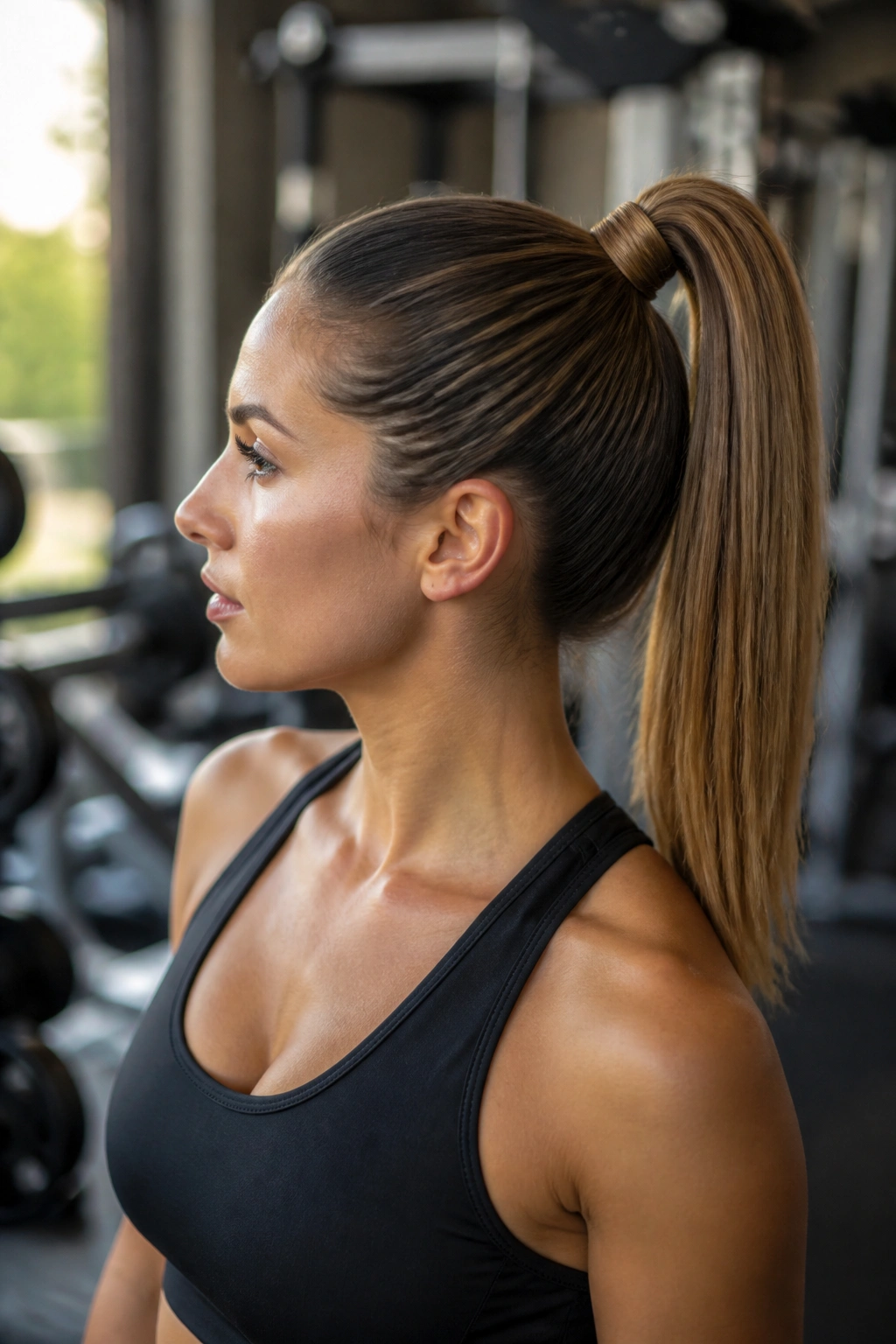
A high ponytail with a wrapped base is the sort of style that looks clean on purpose, not because you spent twenty minutes fussing with it. The wrapped section hides the elastic, which sounds minor until you realize how much neater the whole thing looks when the base is smooth instead of bunched and obvious.
Why the Wrap Matters
The wrap does two jobs at once. First, it keeps the ponytail from looking like an afterthought. Second, it gives the base a little more grip, which helps when your hair is slippery or freshly washed. That matters on a sweaty day, because clean hair tends to slide.
Use a firm elastic at the crown, then take a 1-inch section from underneath the ponytail and wind it around the base once or twice. Pin the tail underneath with a small bobby pin. If your hair is fine, mist the roots with a light texturizing spray before you tie it up. If it’s thick, tilt the ponytail slightly backward instead of straight up; that keeps the weight from pulling on your scalp.
Best for: gym sessions, brisk walks, dance classes, and days when you want your face fully clear.
Watch for: a ponytail that sits too high can tug at the hairline by the end of the day.
Small upgrade: tug the crown gently after securing the elastic to create a bit of lift without loosening the base.
2. Double Dutch Braids
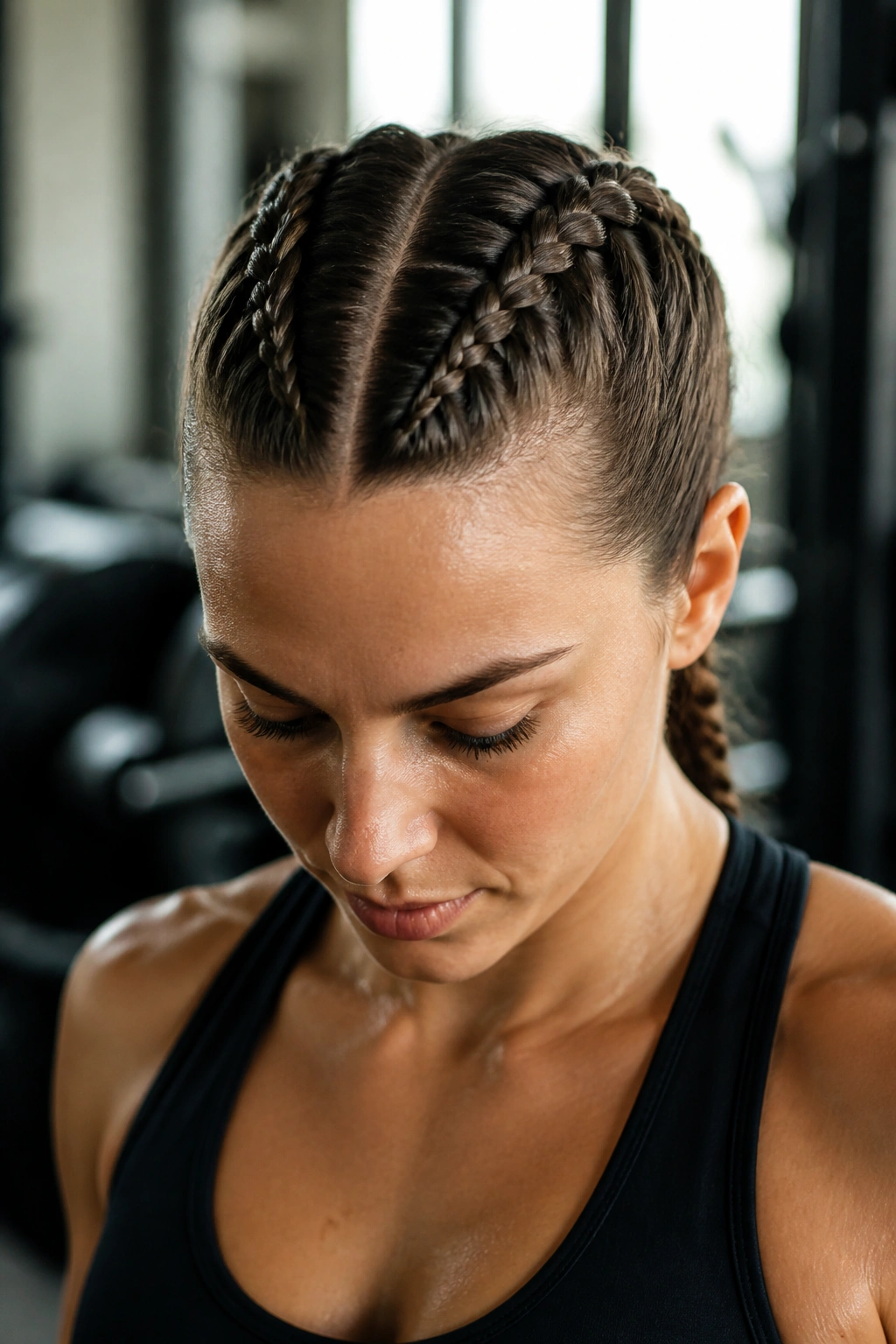
If I had to pick one gym hairstyle that can survive almost anything short of a full wash day meltdown, double Dutch braids would be near the top. They pin the hair to the scalp, keep the weight spread out, and don’t swing around every time you turn your head.
A regular braid hangs. Dutch braids stay anchored. That’s the whole trick.
What Makes Them Hold So Well
The braid pattern sits under itself instead of over, so the braid rises off the head in a cleaner ridge. That makes it feel firmer, especially around the temple and crown. You can wear them tight enough for a run or a bike ride, or a touch looser if you want them to feel less severe.
Start with a center part and divide the hair into two equal sections. Work the braid from the front hairline down toward the nape, adding small pieces as you go. Keep each add-in close to the scalp; that’s what stops the style from puffing out too fast. For slippery hair, a pea-size bit of styling cream on each side helps the sections stay neat.
This is one of those styles that looks athletic in the best way. No drama. No bouncing ends flying around your face.
3. Low Braided Bun
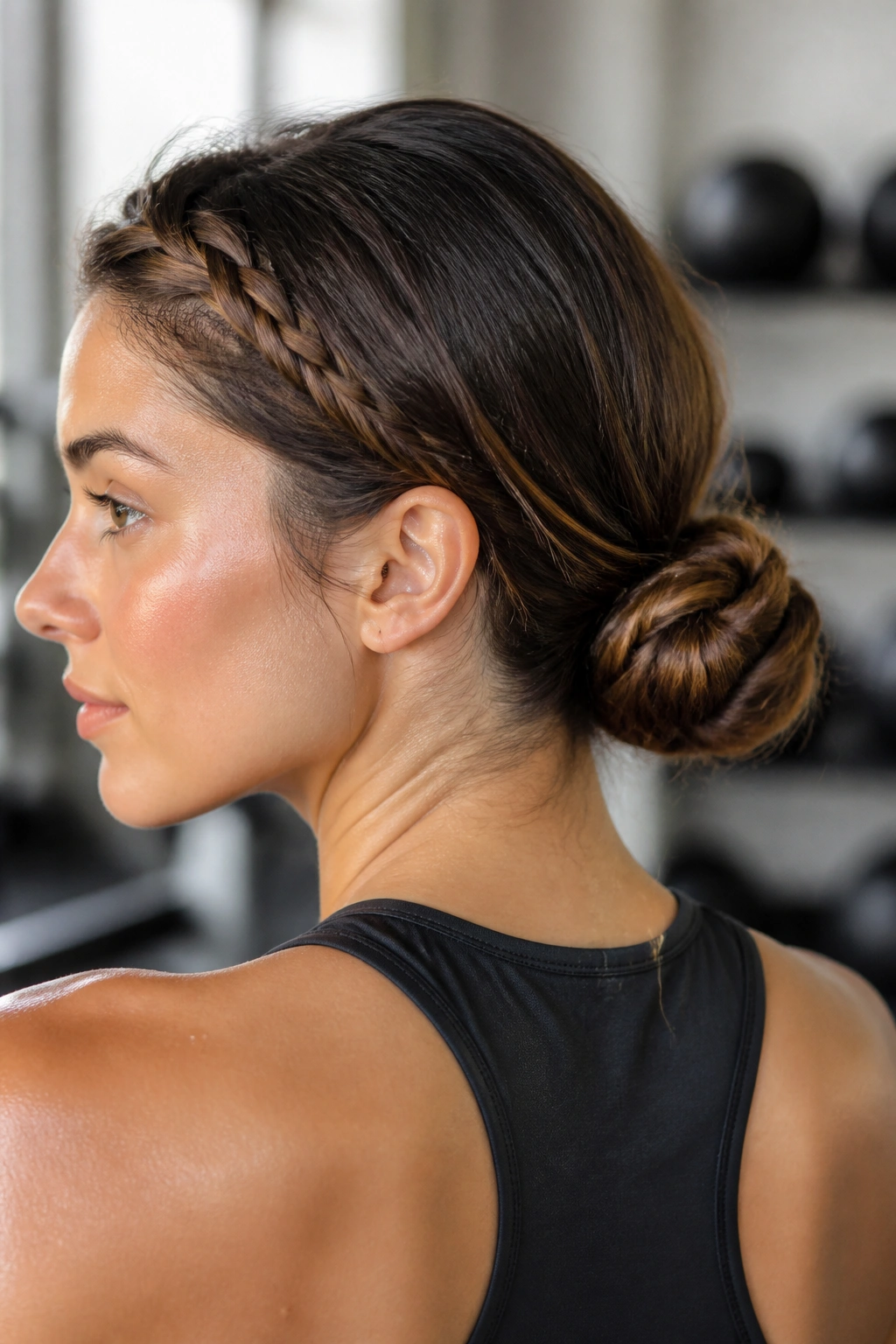
Need everything off your neck and still want something that looks tidy when class is over? A low braided bun is a solid answer. It has the polish of a bun, but the braid keeps the length locked down so the shape doesn’t sag halfway through the day.
How to Keep It Smooth
Start with a low ponytail at the nape, braid the tail all the way to the ends, then coil the braid into a bun and pin it flat against the head. Use two crossed bobby pins if your hair is fine; thicker hair usually needs three or four pins plus one elastic at the base. If you have layered hair, a few shorter pieces may slip out. That is normal. Pin them down before they get ideas.
I like this style for Pilates, barre, yoga, and long stretches of sitting in a car or office chair after a workout. It keeps the neck clear, which feels good when your skin is warm and you don’t want stray hairs sticking to it.
A tiny detail helps here: make the braid slightly tighter than you think you need. Braids loosen a little as the day goes on, especially if your hair is smooth.
4. Bubble Ponytail
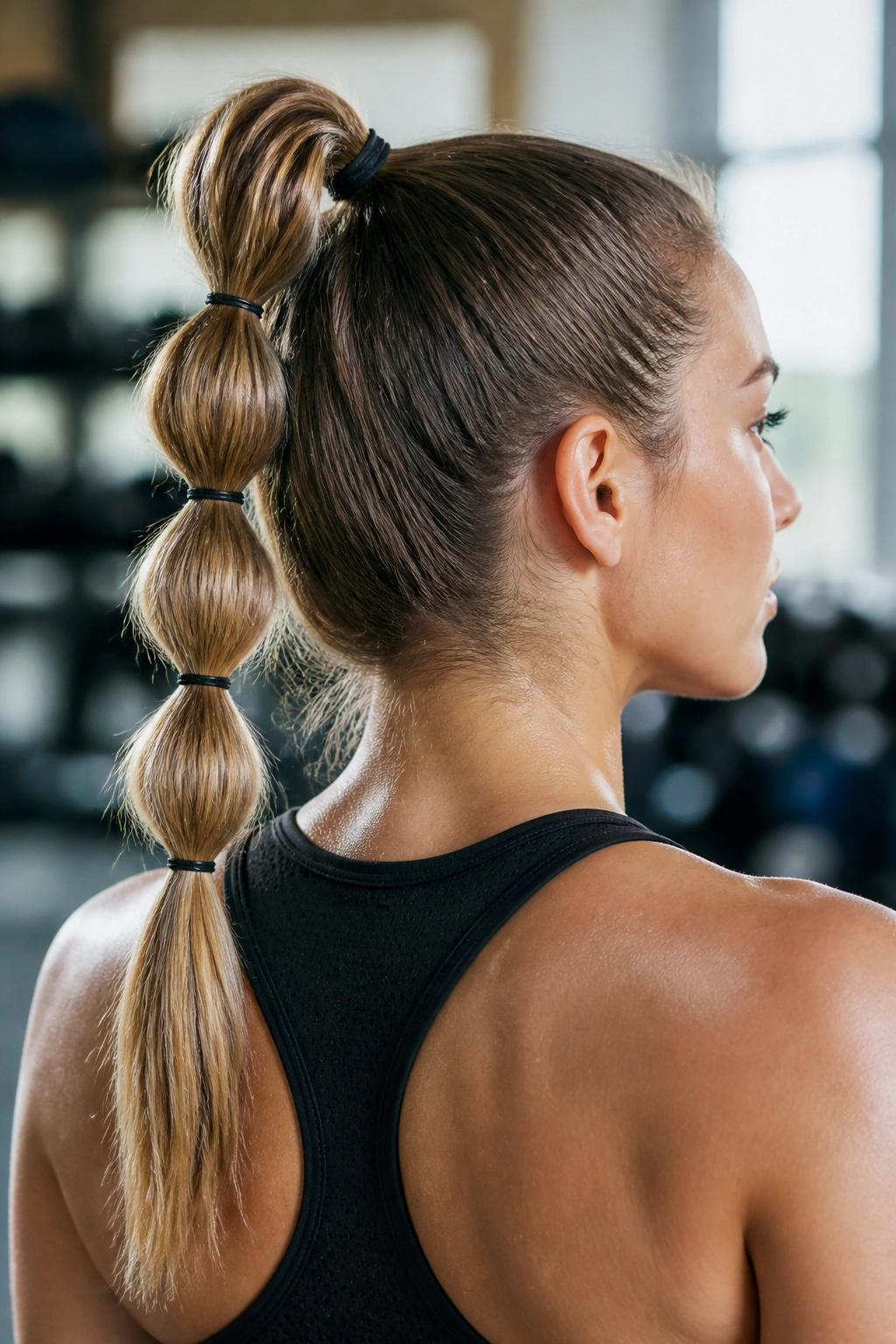
Picture a long day that starts with a workout and ends with groceries, school pickup, or a late dinner. A bubble ponytail is a good choice when you want your hair controlled without spending ages on a braid that will fall apart at the end.
The style looks playful, but the real benefit is structure. Those spaced elastics stop the length from swinging everywhere, and the little “bubbles” keep the ponytail from collapsing flat.
- Start with a mid- or high ponytail and secure it with one strong elastic.
- Add another elastic 2 to 3 inches down the length.
- Gently tug each section between elastics until it puffs into a rounded bubble.
- Use clear mini bands or soft elastics if your hair breaks easily.
- If your hair is very long, keep the bubbles smaller so the style does not drag.
This one works especially well on long hair that gets heavy when wet with sweat. It keeps shape better than a loose tail and takes less time than most braided styles.
The effect is neat, but not stiff. That balance is what makes it worth wearing.
5. Sleek Low Ponytail With Center Part
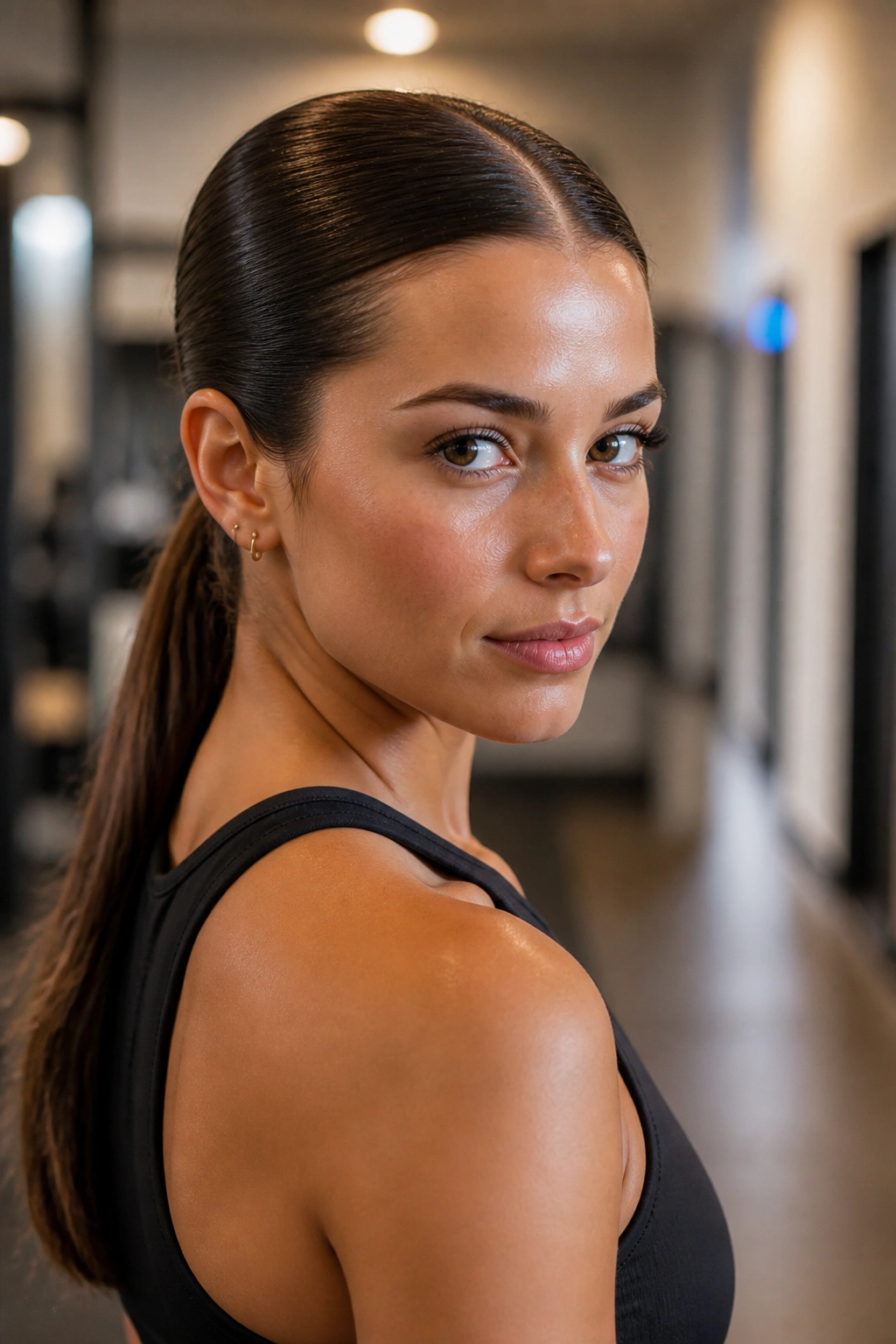
A sleek low ponytail with a center part has a clean, no-fuss look that works when you want your hair controlled but not overly styled. It’s the kind of sport hairstyle that can move from a low-impact class to the rest of your day without screaming “I just left the gym.”
The center part gives the style a straight, balanced frame, and the low placement keeps bounce to a minimum. If your hairline tends to frizz, smooth a little styling cream or lightweight gel across the top with a fine-tooth comb. Don’t drown it. A thin layer is enough.
The trick is the base. Tie the ponytail snugly at the nape, not mid-neck, so it stays flat when you lean back on a bench or a mat. If your hair is layered, tuck the shortest pieces under the elastic with two bobby pins. That keeps the tail looking tidy instead of ragged at the sides.
I like this style for low-impact workouts, travel, and days when you want a neat look that doesn’t need constant fixing. It’s plain in the best possible way. Plain can be efficient.
6. Boxer Braids
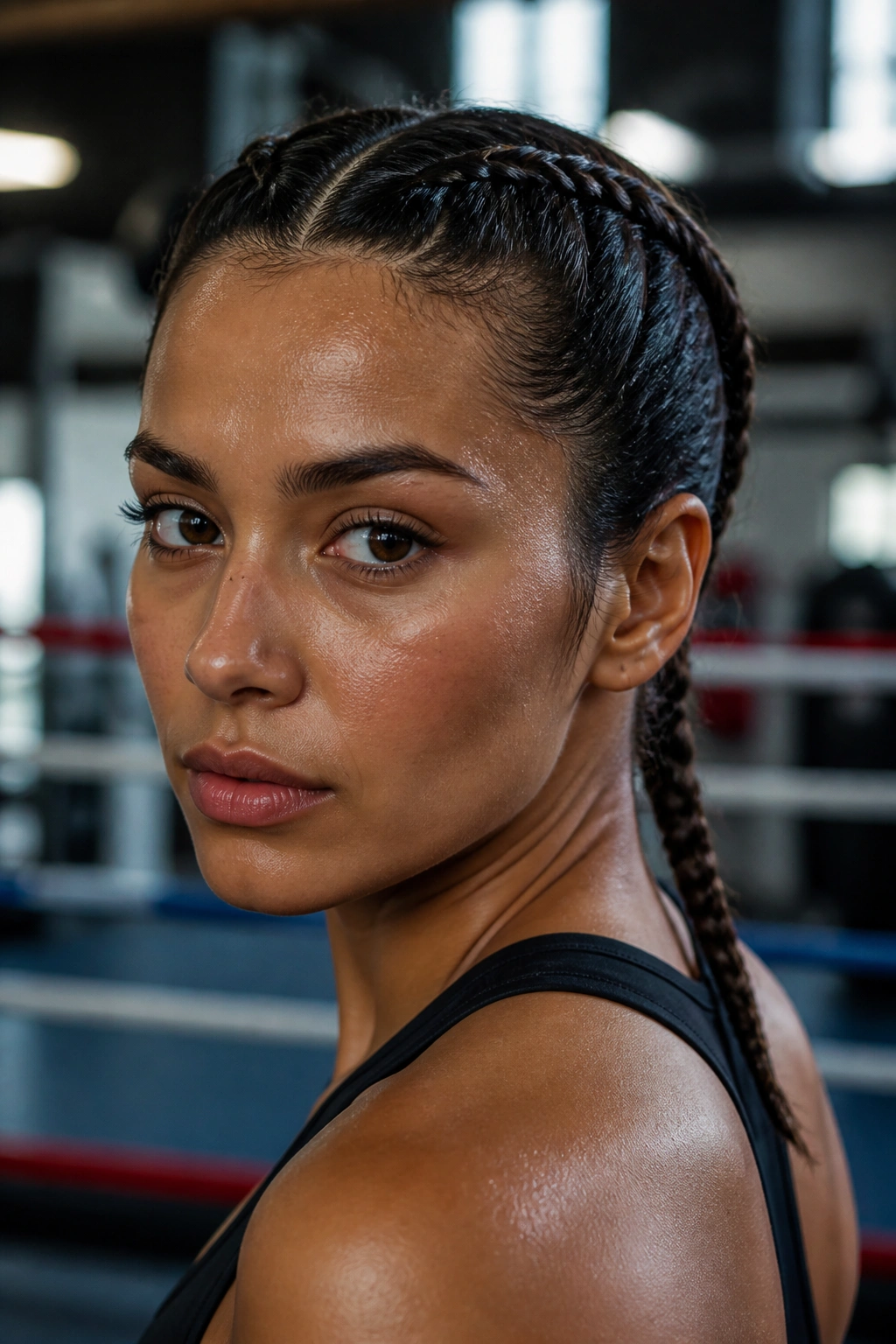
Boxer braids are not just two braids with a louder name. They sit closer to the scalp than loose pigtails, and that tighter structure makes them a better pick when you’re moving hard and do not want strands flying into your eyes.
Why They Feel Different From Regular Braids
The braid starts at the hairline and follows the head more tightly, so the weight is pulled in instead of hanging away from the face. That matters for boxing, cycling, HIIT, and long runs. You can also wear them under a cap or visor without feeling a thick lump at the back.
For straight or wavy hair, a little texture powder at the roots helps the sections grip. For curly hair, start on slightly stretched hair so the braid stays smoother and does not puff out before lunch. Add a tiny amount of gel near the front if your baby hairs tend to escape.
Best part? They keep the neck cool. That sounds small until you’ve had hair stuck to a sweaty collar for 40 minutes.
If you want a style that says “I came to work,” this one does the job.
7. High Braided Bun
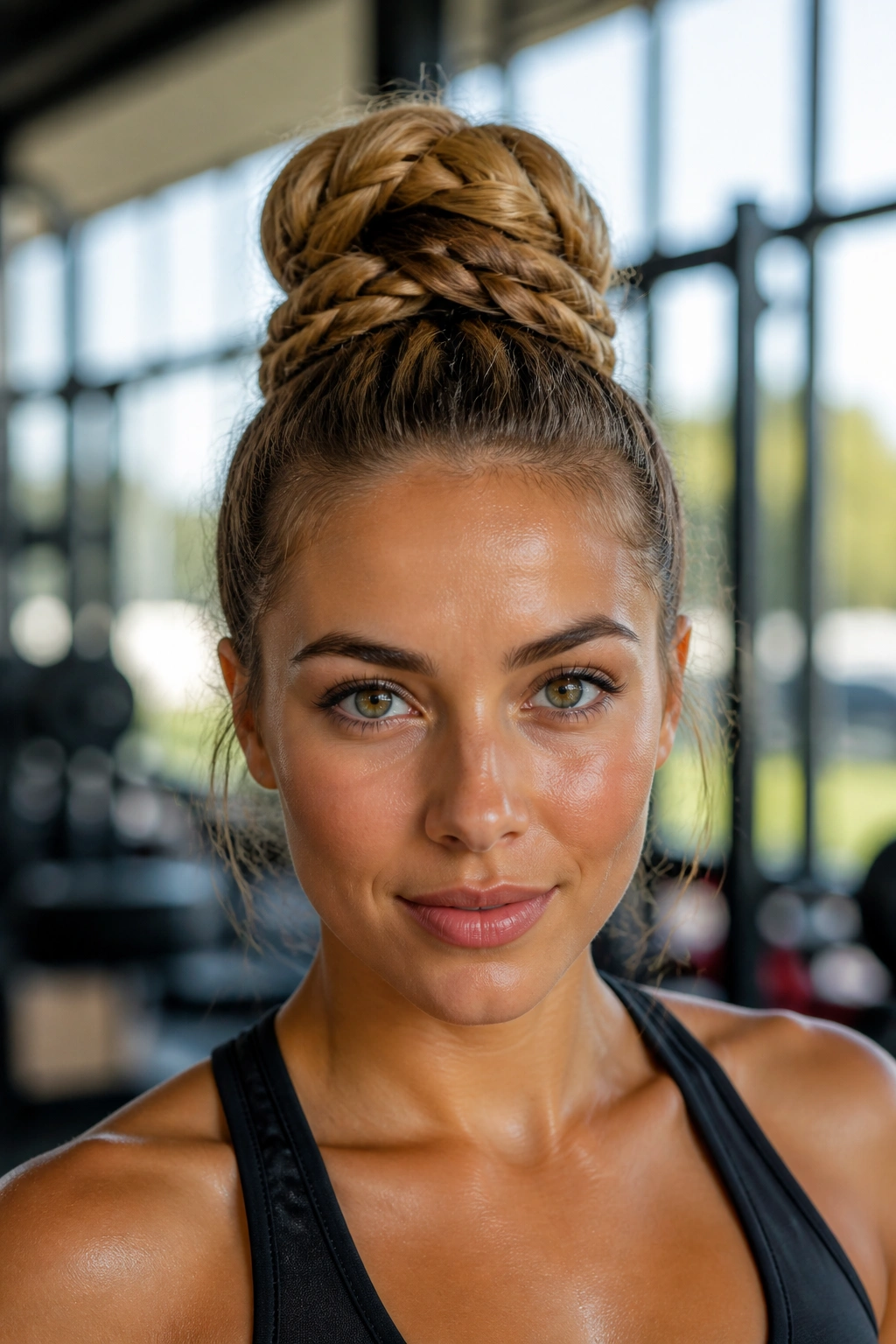
A high braided bun gives you two layers of control: the braid locks the length down, and the bun keeps the tail from swinging. That’s a nice setup when you’re doing something bouncy, fast, or just plain hot.
Why It Survives Sweat Better
The braid reduces the way long hair twists inside the bun, which means less pulling at the roots. It also helps thick hair stay compact instead of blooming out in the middle of your workout. If your hair is heavy, braid the ponytail first, then wrap it around itself in a wide circle rather than a tight knot. A tight knot can sit like a lump.
Use one elastic to secure the high ponytail and another to hold the braided tail before pinning. For coarse or textured hair, a satin scrunchie at the base can cut down on snagging. For finer hair, bobby pins placed in a crisscross pattern hold better than one pin shoved straight in.
I reach for this when I know I’ll be moving a lot and don’t want to think about my hair again. That is the whole point.
8. French Braid Into a Ponytail
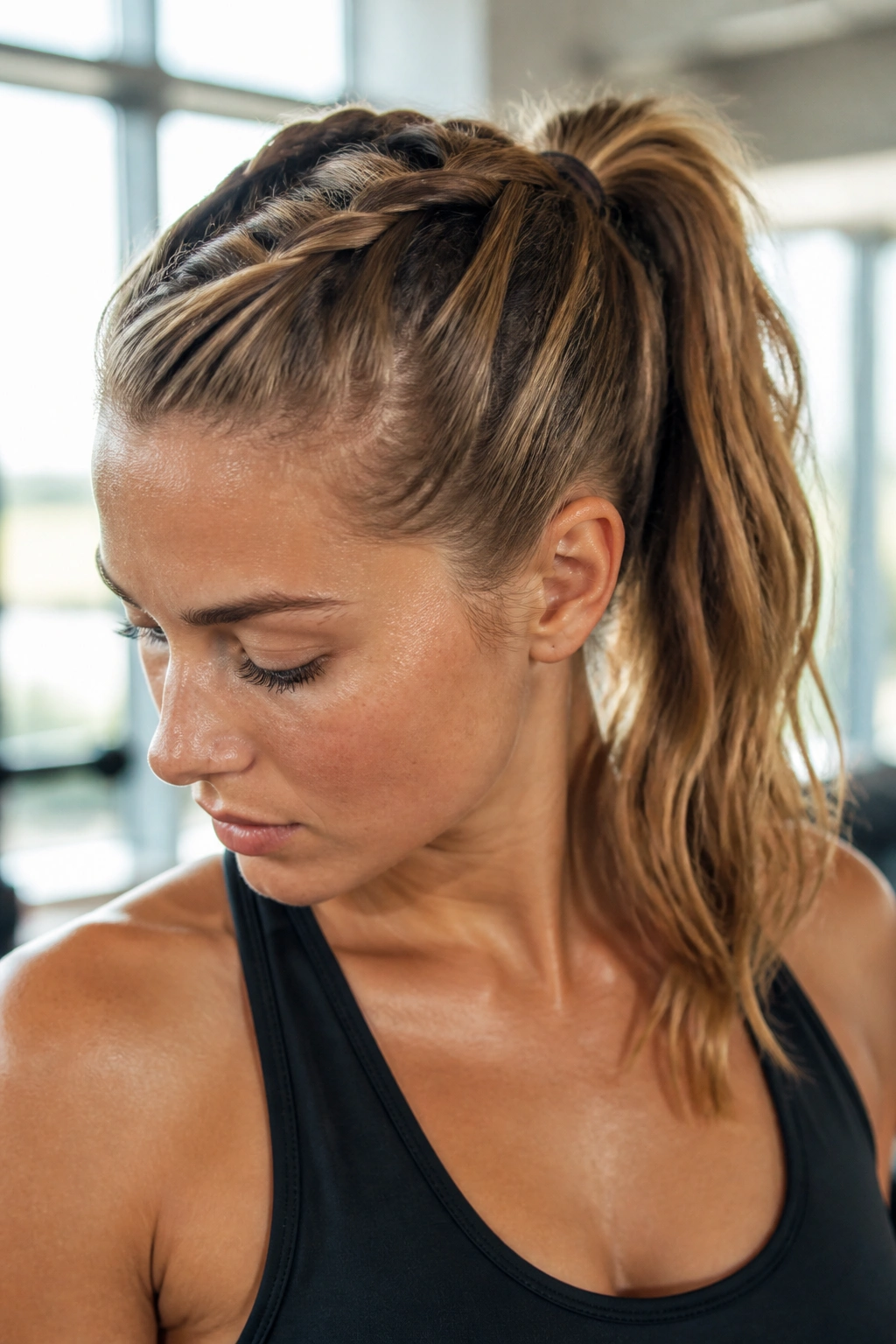
This is one of those styles that looks more intentional than it really is. A French braid into a ponytail keeps the front and crown tidy, then lets the tail hang where you want it. It’s a nice middle ground if you don’t want a full braid down your back.
The braid starts at the hairline and adds sections as it moves toward the crown. Once you reach the point where you want the ponytail to begin, tie off the braid and leave the rest of the hair loose. That loose section gives you movement without the face-framing chaos that comes from a regular ponytail.
For a cleaner finish, smooth the front with a small brush or your fingertips before you start. If your hair is layered, that first braided section helps keep shorter pieces under control. If it’s thick, the style still holds because the braid carries most of the tension.
I’d choose this for a gym day that also includes errands or a casual lunch. It is sporty, but not too sporty. That line matters more than people admit.
9. Top Knot
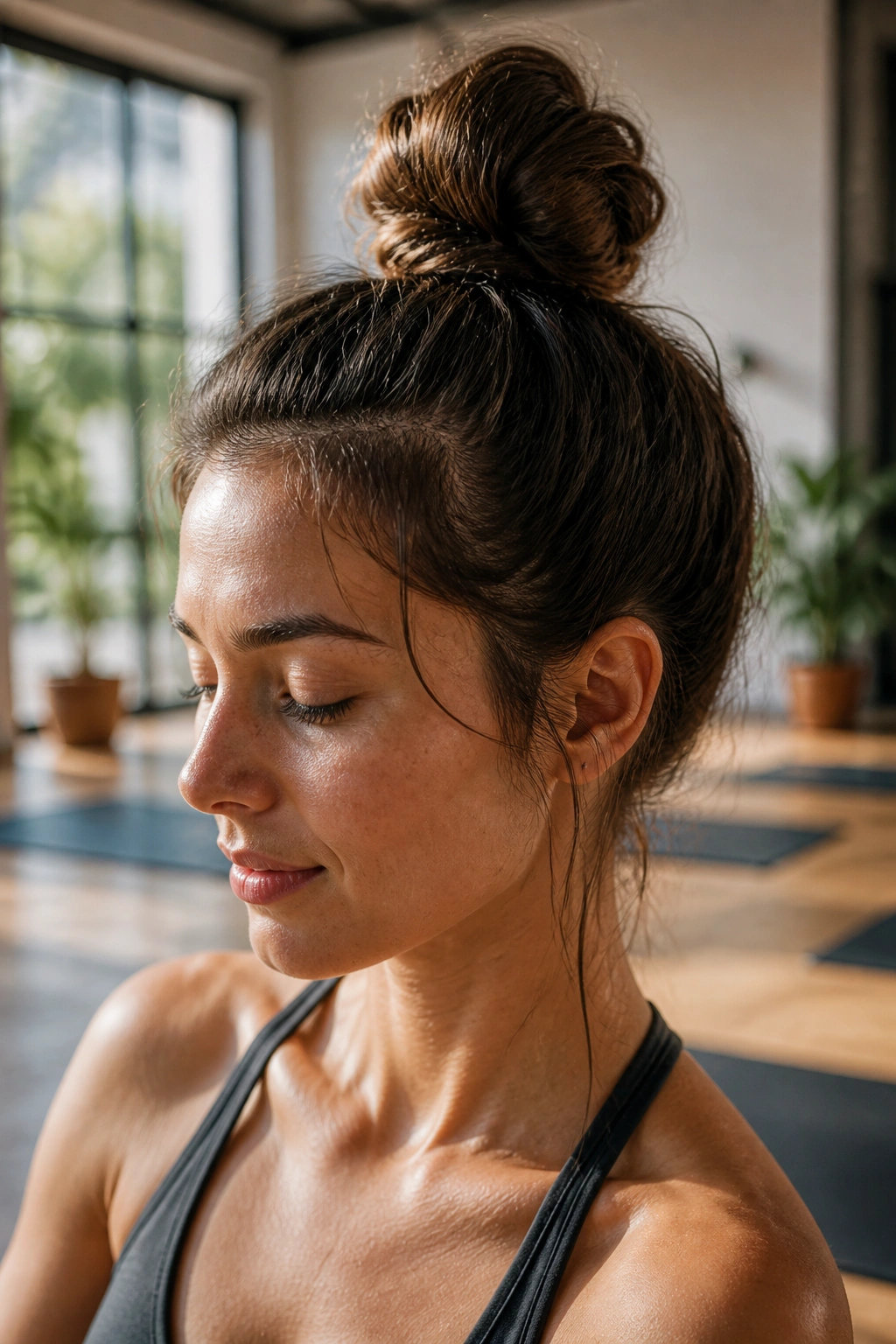
Why do so many active women keep a top knot in rotation? Because it gets the hair off the neck fast, and on some days that is the only reason you need.
A good top knot sits high, feels secure, and doesn’t wobble every time you turn your head. The mistake is making it too tight at the base and too loose everywhere else. That gives you a headache and a lopsided bun. Not worth it.
How to Keep It From Slipping
Pull the hair into a high ponytail first, then twist the length around the base and secure it with a second elastic or a few pins. If your hair is slippery, rough up the roots a little with dry shampoo or texture spray before you start. If it’s thick, split the ponytail in two and twist each section around the base separately. That gives more control than one giant coil.
This one works best for yoga, stretching, light cardio, and any day when you want full neck clearance. It is not my first choice for running, because a high bun can shift if it isn’t anchored well. But for low-impact movement? It earns its spot.
10. Pigtail Braids
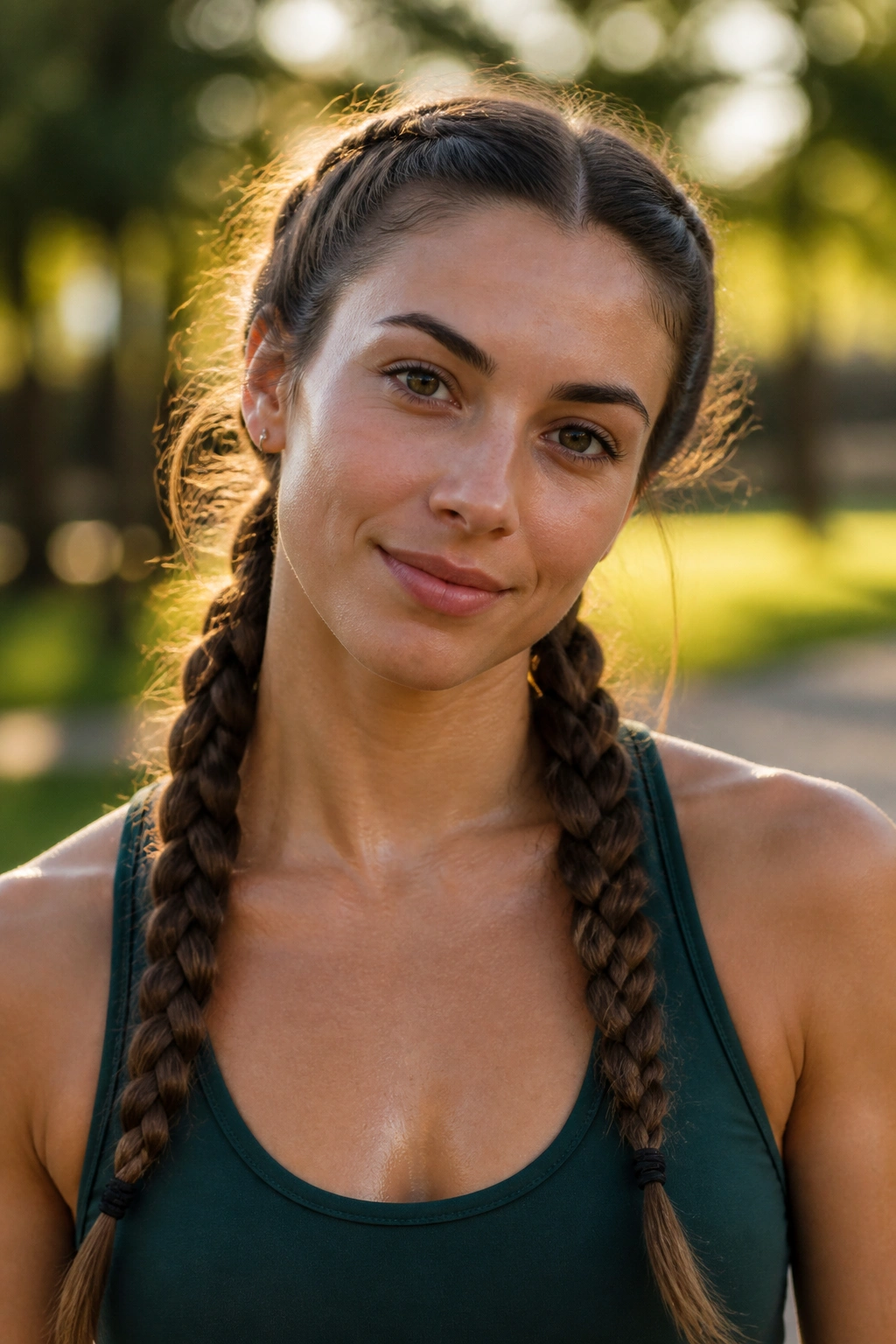
If your hair starts to feel heavy by the second mile, pigtail braids can be a relief. They spread the weight into two smaller sections instead of one long rope hanging down your back.
The style has a school-day feel, but don’t let that fool you. On active days, it does a useful job. It keeps the ends contained, cuts down on tangling, and works well for hair that tends to puff up when it gets damp.
- Part the hair cleanly down the middle, or use a slightly zig-zag part if your scalp needs more grip.
- Start each braid just behind the temples for a snugger hold.
- Keep the braid fairly firm so the tail does not whip around.
- Use soft ties at the ends to avoid snagging.
- For very thick hair, braid slightly lower so the roots don’t feel overloaded.
I like pigtail braids for walking, hiking, and long afternoons when I need my hair out of the way but don’t want the sharper look of boxer braids. They feel easy. That’s part of the appeal.
11. Cornrows
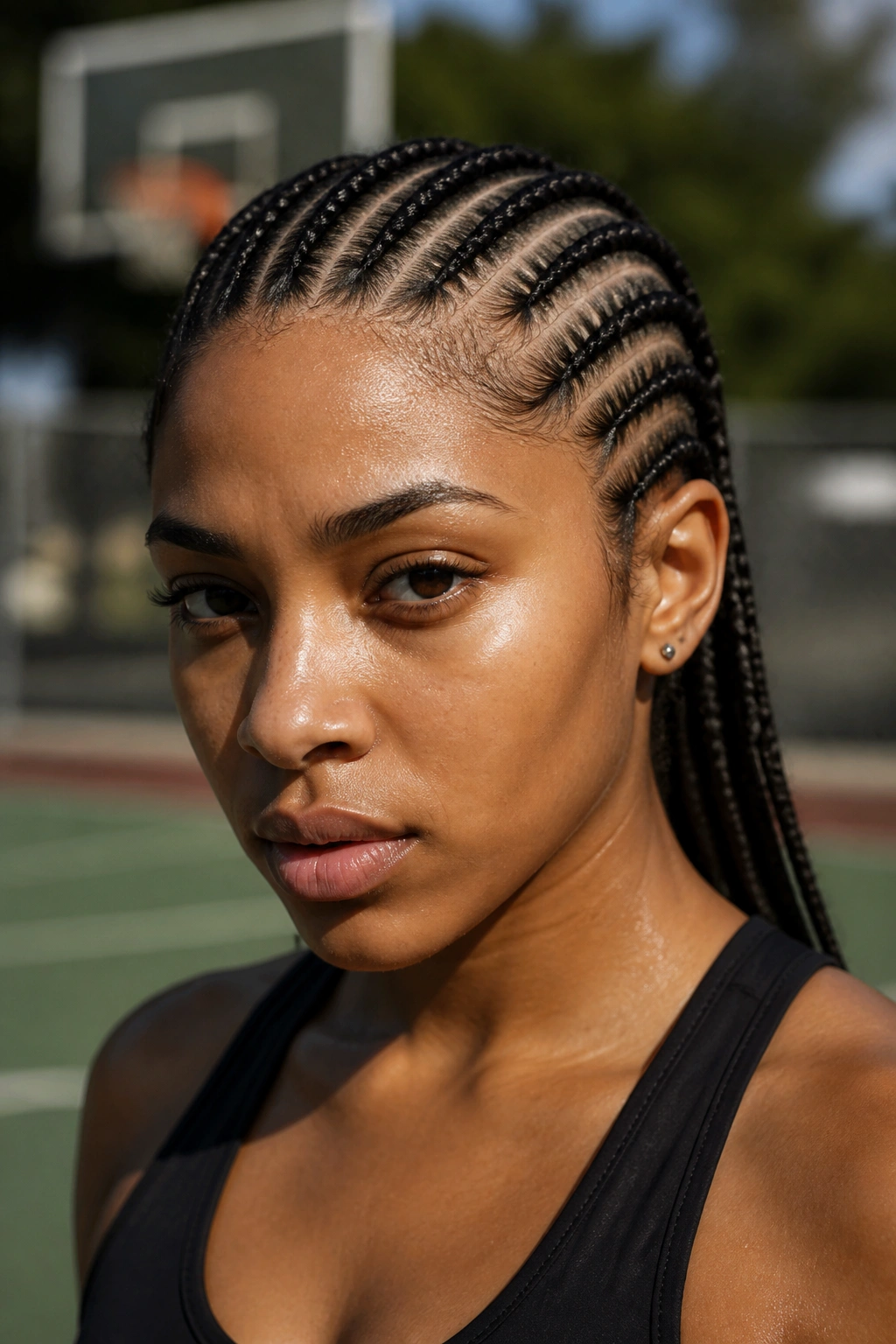
Cornrows are one of the most practical sport hairstyles for active women with coily or tightly curled hair, and they deserve respect for that alone. They hold the hair close to the scalp, lower daily manipulation, and can last through many workouts without turning into a frizzy mess.
The style matters because it reduces the number of times you have to handle the hair. Less handling usually means less breakage, especially around the front and sides where hair gets tugged most. That is why cornrows are often treated as a protective style, not just a workout style.
What people get wrong is tension. Cornrows should feel secure, not painful. If your scalp is sore right after styling, the braids are too tight. A bit of edge control can smooth the hairline, but don’t use so much product that the roots feel greasy or stiff. Clean scalp, light oil if needed, and a satin scarf at night will keep the style fresher for longer.
They also work under hats, helmets, and headbands without much fuss. That makes them useful for cycling, tennis, outdoor training, and travel. Simple. Effective. No need to reinvent them.
12. Rope-Braid Ponytail
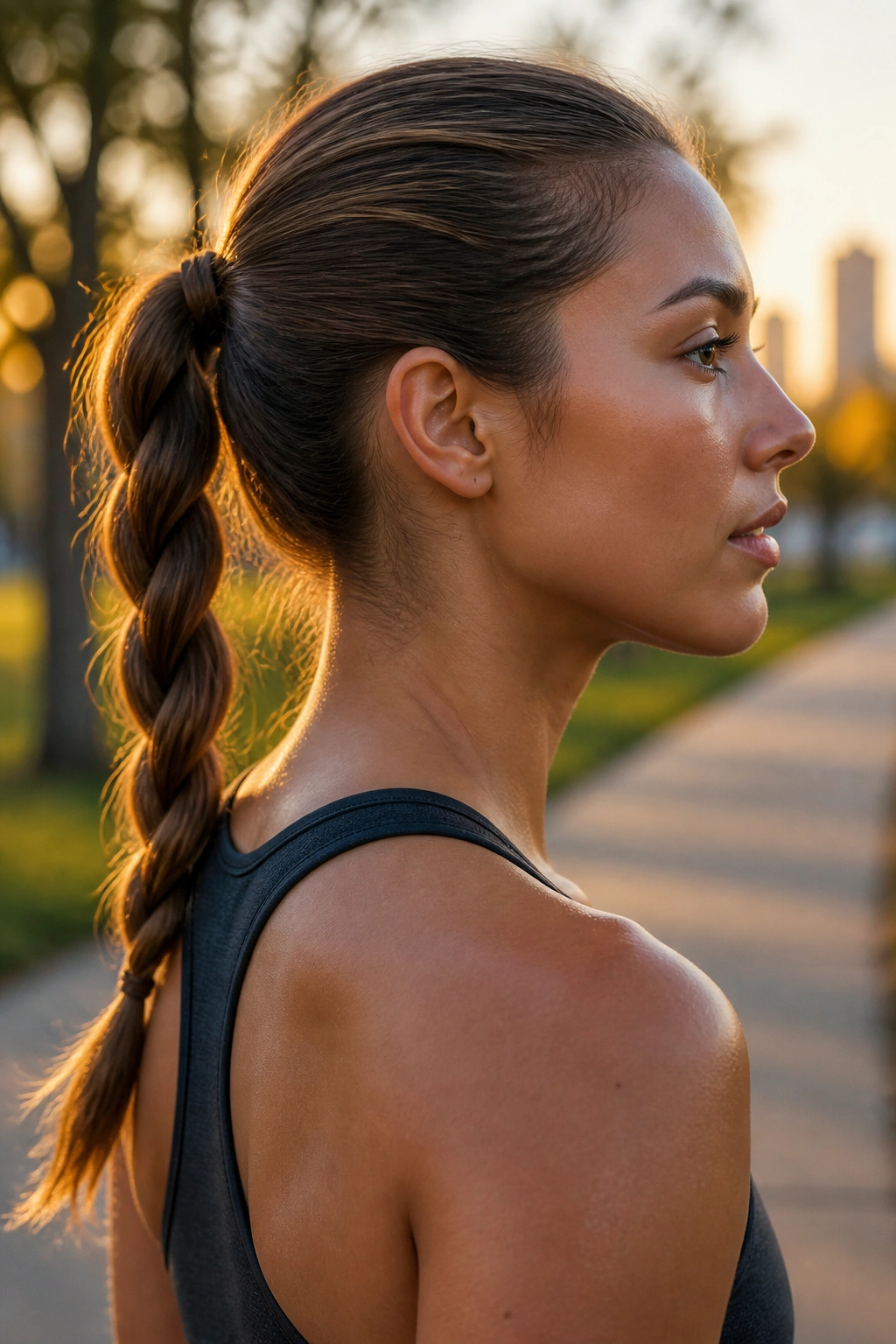
Unlike a three-strand braid, a rope-braid ponytail twists fast and looks especially neat on straight or silky hair. It has a tighter, polished shape that holds shine well and doesn’t take forever to finish.
The trick is directional. Split the ponytail into two sections, twist each section the same way, then wrap them around each other in the opposite direction. If that sounds fussy, it isn’t once you’ve done it twice. The twist wants to stay together.
Best Uses for a Rope Braid
This style is strongest on medium-length hair that slips out of ordinary braids. It is also a smart choice when you want less bulk at the back of the head. A rope braid sits flatter than a regular braid, which makes it nice for low-impact training, commuting, or wearing under a jacket hood.
Add a touch of leave-in conditioner or smoothing cream before twisting if the hair is coarse and frizzy. For very fine hair, a dry texturizing spray gives the rope enough grip to keep the twist from loosening.
It’s not the flashiest style on this list. It is useful, though, and useful hair styles deserve more credit.
13. Side Braid Into a Bun
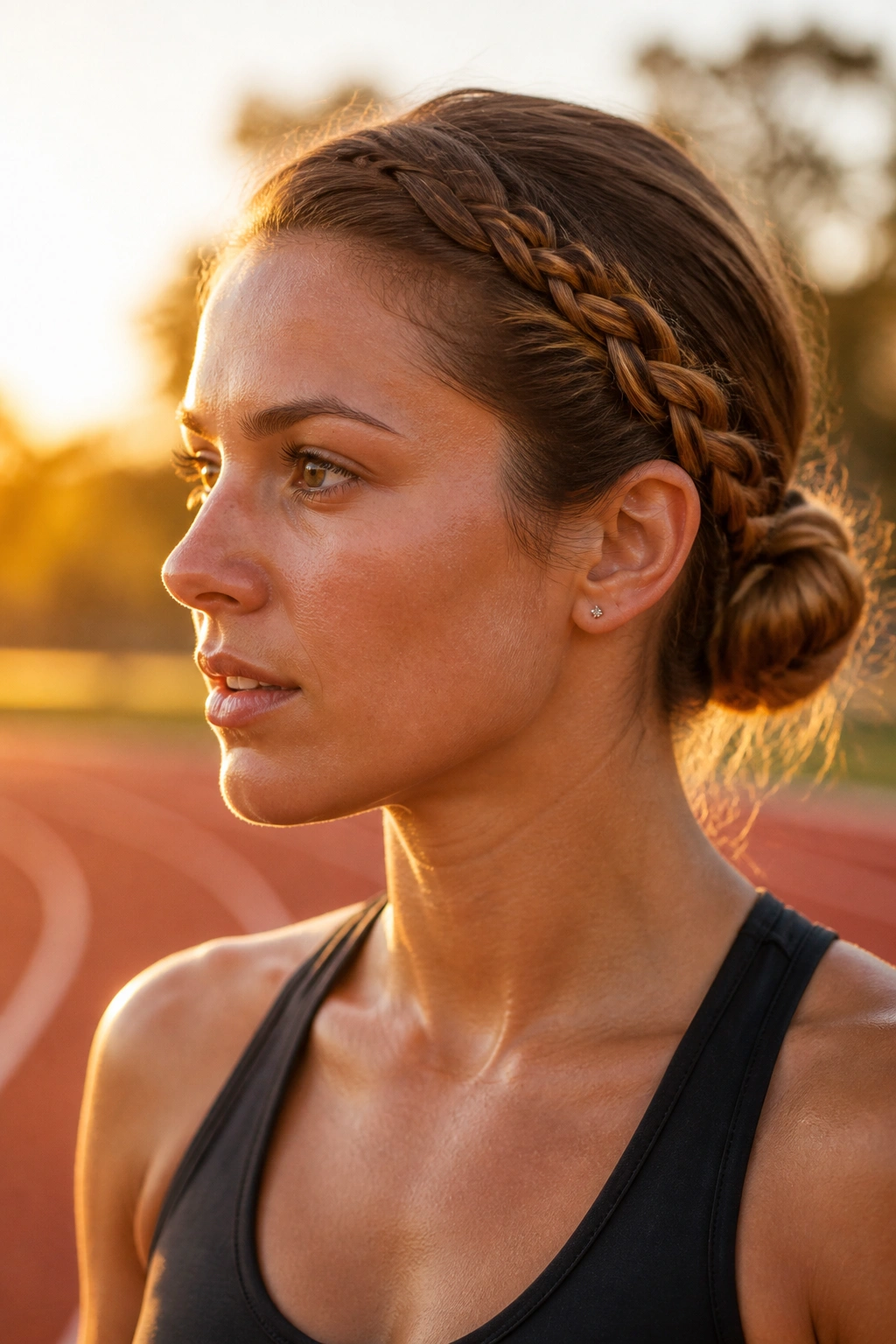
When you want the face-framing feel of a side braid without letting the tail swing around, a side braid into a bun makes a lot of sense. The braid gives the front a little visual shape, and the bun keeps the rest pinned safely away from your neck.
What Makes the Side Angle Helpful
Pulling the braid from one side softens the style a bit. That’s useful if you dislike the very centered, very rigid look of some sporty hairstyles. It also helps if one side of your hair grows out faster or sits flatter than the other; the braid can balance that out.
Start the braid near the heavier side of the part and work it down toward the ear. Gather the braid and the remaining hair into a low bun at the nape, then pin the bun flat. Two pins crossed near the base usually hold better than one pin shoved straight through the coil.
I like this one for days when I’m going from a workout to dinner or a quick meeting. It has enough structure to stay put, but it doesn’t look severe. That matters more than people give it credit for.
14. Low Loop Bun
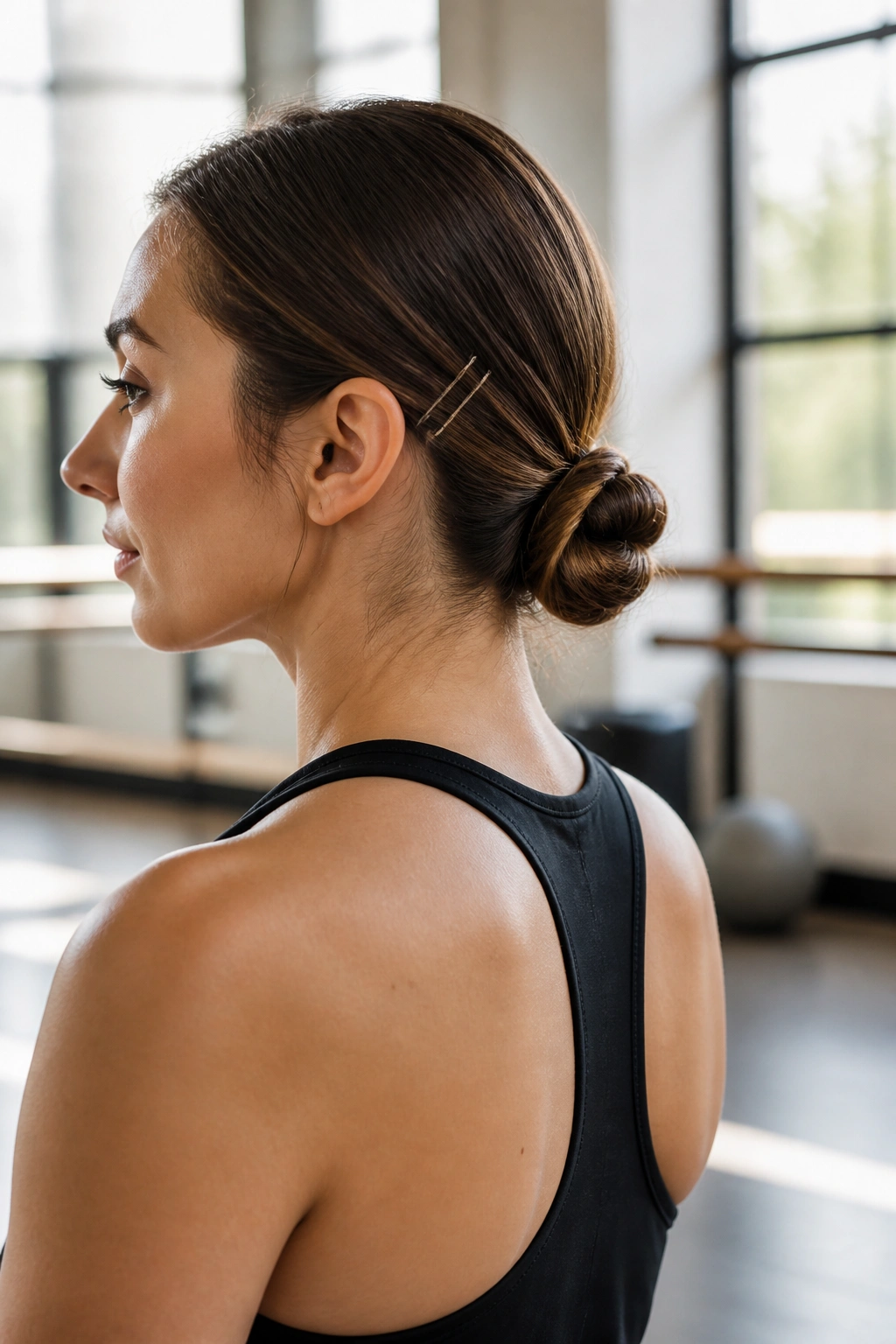
A low loop bun looks more polished than the effort it takes. That is probably why people keep coming back to it. It gives you a neat shape at the nape without forcing every strand into a tight knot.
The basic move is simple: tie a low ponytail, pull the hair partway through the elastic on the last wrap, and leave a loop instead of dragging the entire tail through. Then wrap the remaining ends around the base or tuck them under the elastic. If your hair is shoulder-length, leave a slightly smaller loop so the bun doesn’t stick out.
Who It Suits Best
This style is especially friendly for Pilates, barre, commuting, and desk days with a bit of movement in them. It doesn’t sit as high as a top knot, so it won’t press against a headrest or helmet. It also spreads the hair in a way that feels gentle on fragile ends.
Use two pins if your hair is fine and four if it is dense or layered. The bun should sit flat, not puff out like a donut. Flat is the goal here. Flat keeps it clean.
15. Braided Crown
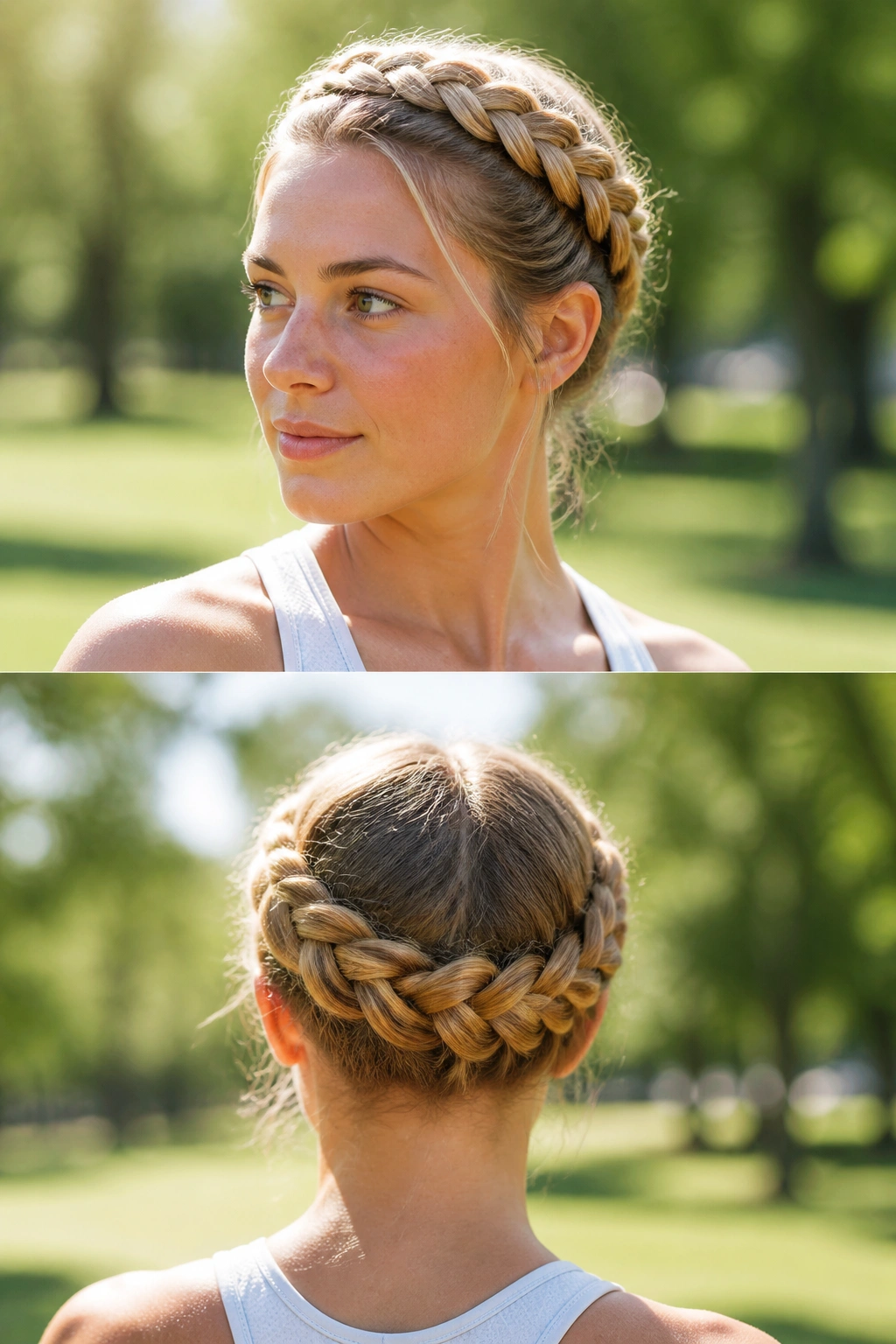
Need something that keeps hair off the neck without leaving a tail down your back? A braided crown does that job well. It wraps the braid around the head, so the whole style feels contained from the front and from behind.
How to Wear It Under a Hat or Visor
This style works especially well when you’re outdoors. A visor can sit over the front without crushing the braid, and a soft hat can cover the crown without making the style collapse. That makes it handy for hiking, long walks, or tennis days when the sun is doing its best to annoy you.
You can build the crown from one long braid that circles the head, or from two side braids pinned across the top. The second option is easier if your hair is layered or not quite long enough for one continuous braid. Use discreet pins that match your hair color if you want the front to look smooth.
The style has a little more ceremony than a ponytail. Still, it’s practical first. A braided crown keeps the face open, which is the whole point when you’re moving around for hours.
16. Mini Braids Into a Ponytail
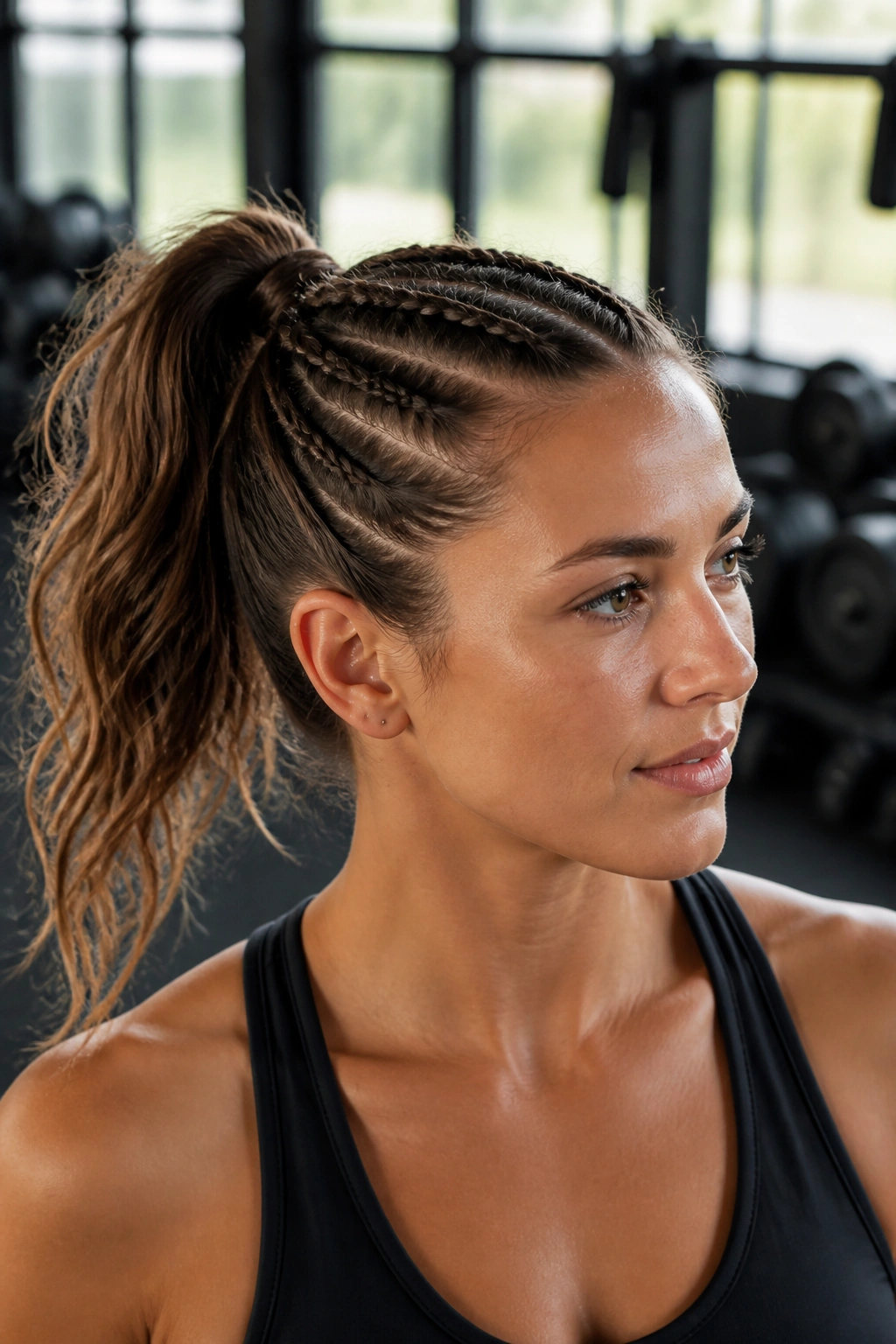
A ponytail with a few mini braids near the front can solve the annoying problem of short layers slipping loose. It’s a smart fix when the rest of your hair is long enough for a ponytail, but the fringe or top layers keep dropping into your eyes.
The mini braids give the front some structure before everything gets gathered back. That means fewer flyaways at the hairline and less touching during a workout, which is a bigger deal than it sounds. Constantly brushing hair off your forehead breaks your rhythm.
- Braid two to four small sections near the temples or hairline.
- Secure the braids with tiny clear elastics.
- Pull the rest into a mid-height or low ponytail.
- Add a little texture spray at the roots if the sections keep sliding.
- Pin any shorter front pieces flat before they escape.
This style works well for fine hair, growing-out bangs, and anyone who likes a ponytail but hates the front pieces that never stay where they should. It’s tidy without feeling overdone.
17. Space Buns
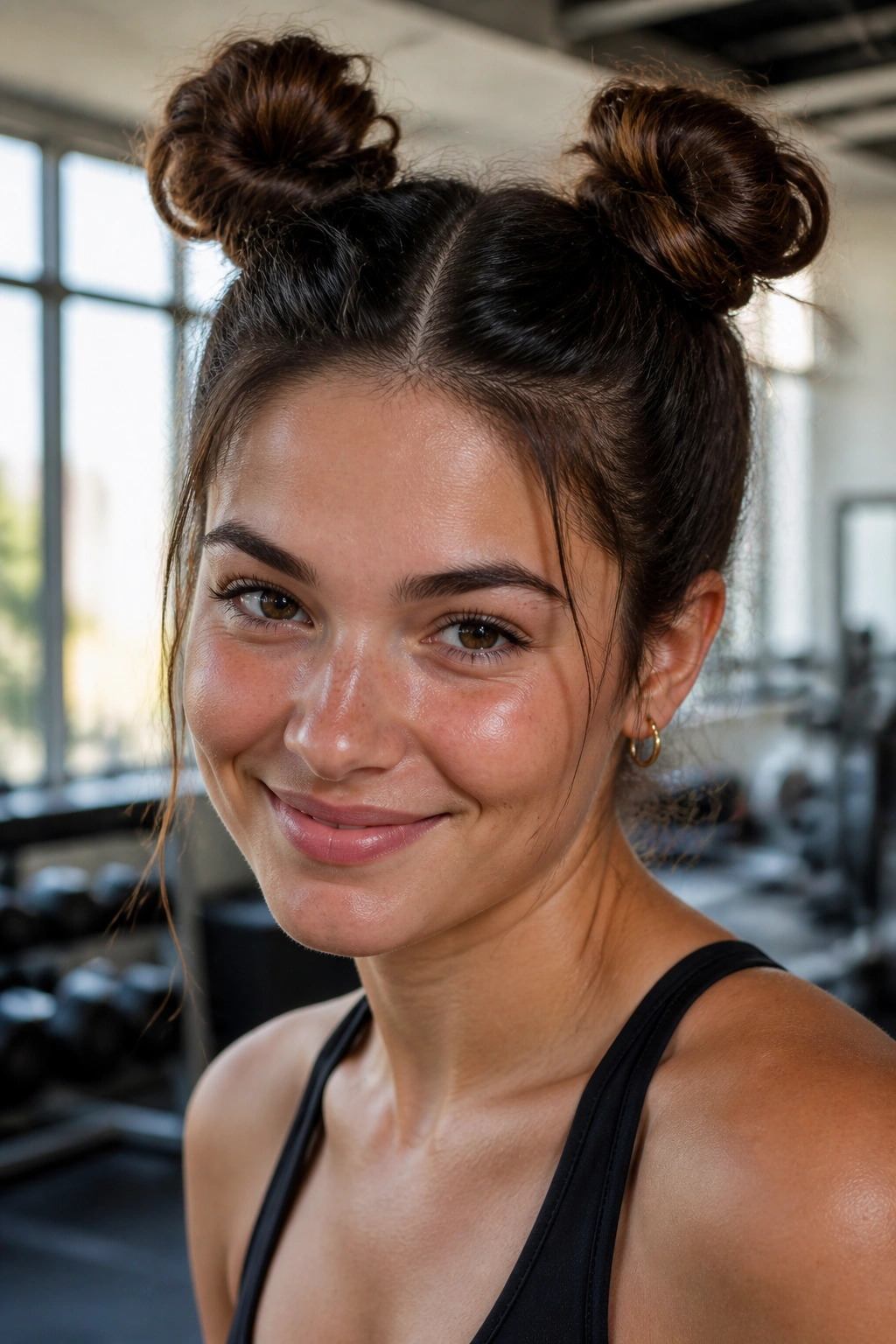
Space buns are not subtle. That’s part of the fun.
They split the hair into two sections and twist each side into a small bun, usually placed high or mid-height on the head. The result is playful, but there’s a practical side too: the hair stays lifted off the neck, and the two buns distribute the weight more evenly than one heavy knot at the crown.
For curly or wavy hair, space buns can look especially good because the texture adds shape without much effort. For straight hair, a little dry shampoo at the roots helps the buns stay put. Tie each side into a ponytail first, then twist the length into a bun and secure with a second elastic or a pin. If you want them to last through a long class, pin the buns in opposite directions so they don’t unwind together.
I’d wear these for dance, festival days, or a workout that leans more fun than brutal. They are not the most serious style on the list. They don’t need to be.
18. Claw-Clip Twist For Low-Impact Days
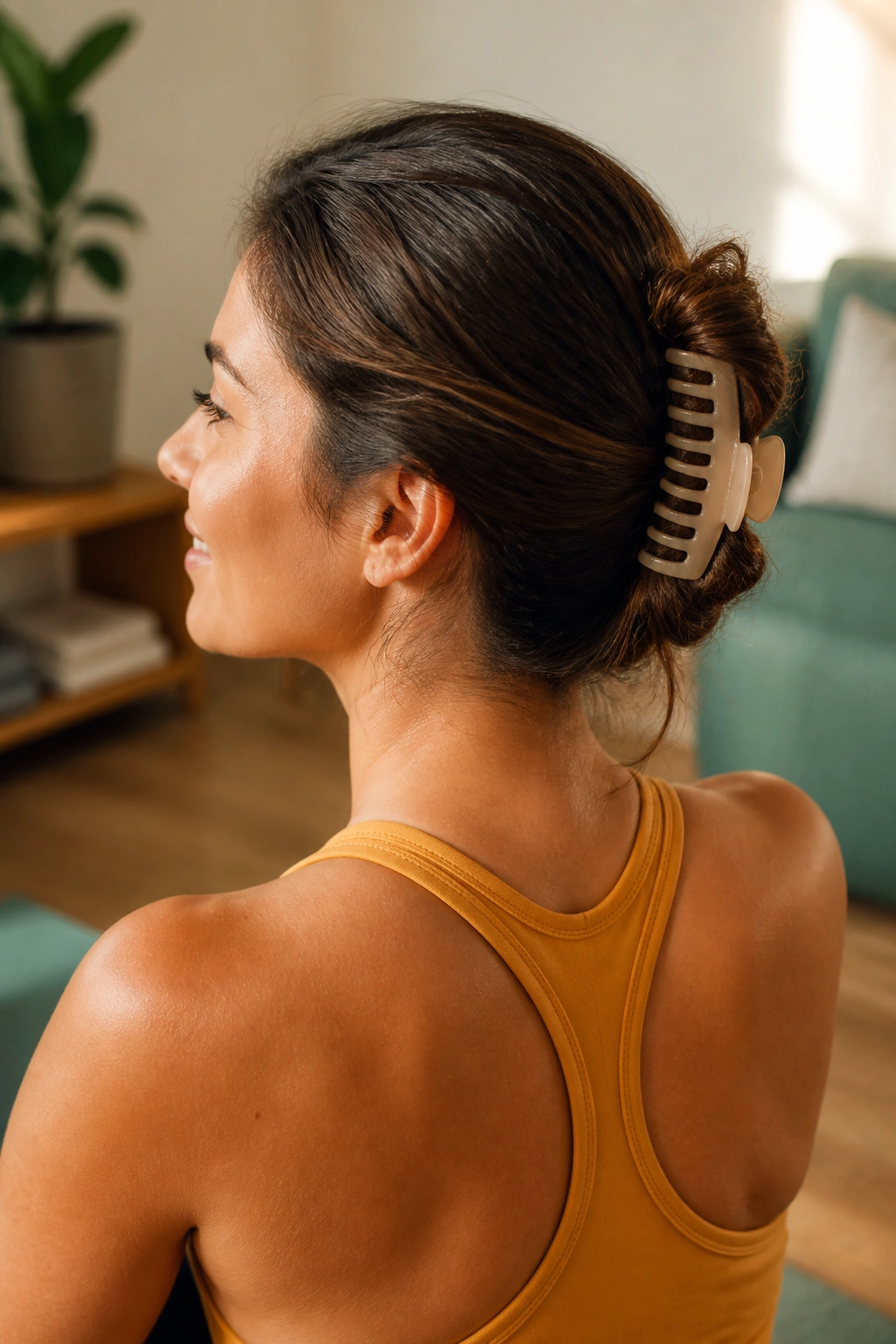
Unlike tight ponytails, a claw-clip twist gives your scalp a break on low-impact days. That alone makes it worth keeping in rotation. When your hair has been tied up hard all week, a clip style can feel like a relief.
The move is simple: gather the hair at the back, twist it upward, and fold the length into the clip so the ends tuck in. A strong clip with teeth is better than a flimsy decorative one that slides after ten minutes. If your hair is thick, pick a larger clip with a stronger spring; small clips snap shut and then pop open when they get overloaded.
This is the style I’d choose for walking, stretching, light yoga, or a day that starts with movement and ends at a desk. It’s not the answer for running or jumping. Too loose. Too easy to shift.
Still, there’s a place for easy hair. Not every active day needs a battle-ready braid.
19. Short-Hair Sporty Tuck
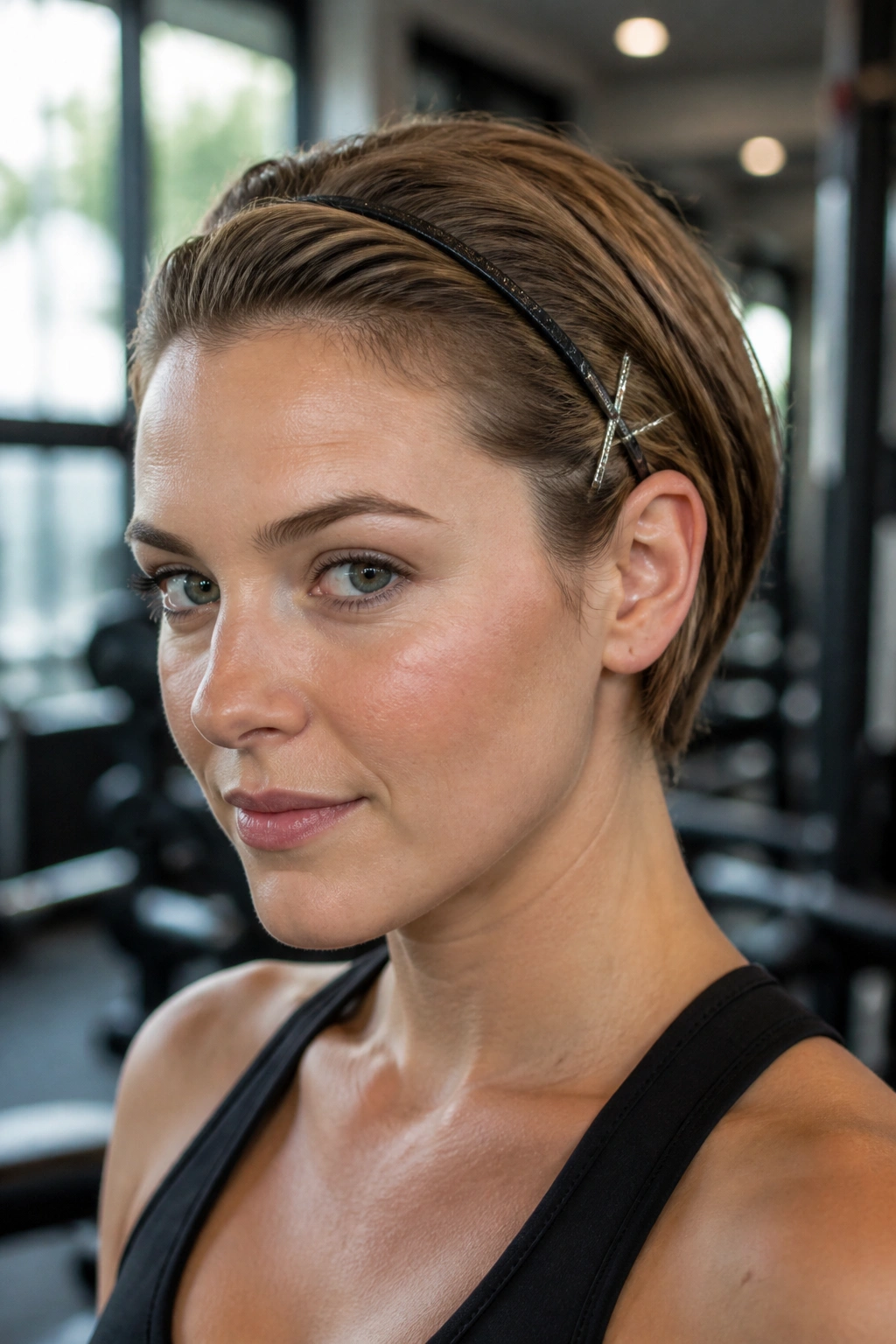
Short hair can do sporty just fine. It just needs a different plan. A bob, lob, or pixie usually benefits from tucking the sides back instead of trying to force the length into something it doesn’t want to be.
What to Pin and What to Leave Alone
A thin sports headband or sweatband helps keep the front clear, especially if the fringe falls into your eyes when you move. Then use two bobby pins crossed in an X on each side to tuck the shorter pieces back. If your hair is fine, a little styling wax or gel goes farther than you think. If it’s thick, use less product and more pinning.
The best sporty short-hair looks don’t try to fake length. They control the pieces that matter and leave the rest alone. A tiny side twist, a mini French braid at the temple, or a pinned-back fringe can all work without making the head feel overloaded.
I like this approach because it respects the cut. Short hair should not be bullied into acting like long hair. That is where people go wrong.
20. Crossed Braids Into a Low Knot
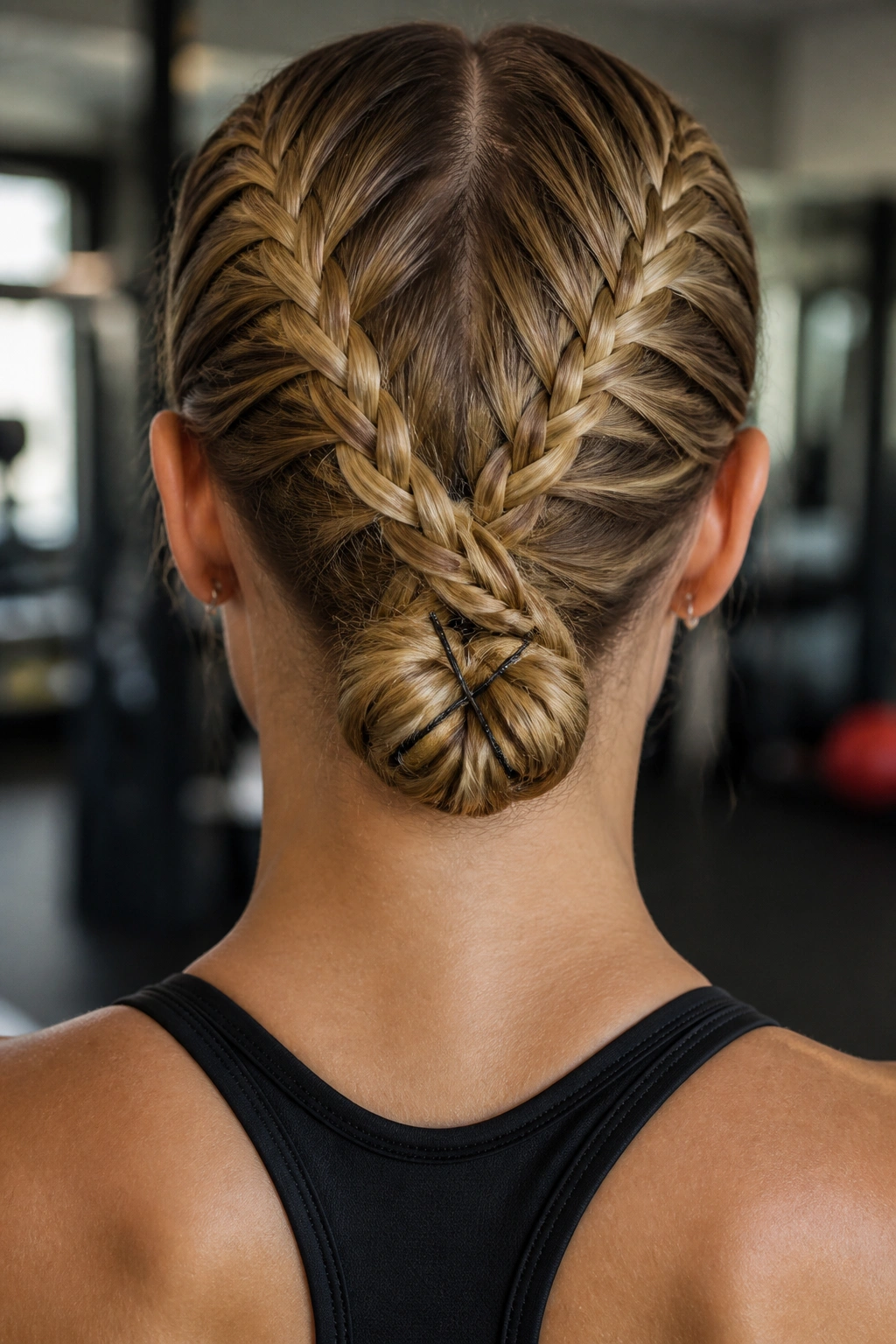
If you want one style that feels secure without looking stiff, crossed braids into a low knot are hard to beat. It has the stability of braids, the low profile of a knot, and enough shape to look deliberate after a long day.
Start with a center or soft side part. Braid each side down toward the nape, then cross the braids over each other and wrap them into a knot low on the head. Use four bobby pins in an X pattern if your hair is heavy; that holds better than stacking pins in the same spot. The goal is flat and anchored, not bulky.
This one is a strong choice for dance, travel, long walks, and days when you know you’ll be taking your hair down later and want it to look decent when you do. It also works well for thick hair that usually escapes from lower styles. The braids do the heavy lifting, which is the whole reason it lasts.
If you are choosing between two styles, pick the one you can redo with sweaty hands and a half-smudged mirror. That is usually the one you will actually wear.
