



Shoulder length hairstyles for thick hair can look expensive in the best way — or they can puff out at the sides and swallow your face. Thick hair gives you body most people would kill for, but it also fights back if the cut is too blunt, too short, or stacked in the wrong place. The sweet spot is usually somewhere around the collarbone and shoulder line, where you get movement without losing that full, heavy, healthy look.
The part people miss is this: thick hair is not just “a lot of hair.” It has weight, density, and its own personality. A cut that looks airy on fine hair can sit like a brick on dense hair. A style that seems low-maintenance on a photo board can turn into a halo of frizz by lunchtime if the bulk is sitting in the wrong spots. Small changes matter here. Half an inch. A hidden layer. A deep side part. Those little choices change everything.
That’s why the best shoulder-length looks for thick hair don’t all chase the same finish. Some should stay sleek and controlled. Others look better with a bend, a wave, or a little mess. The good news is that shoulder length gives you room to play without the daily drama of waist-length hair, and enough length to tuck, braid, twist, or flip when you want a change.
1. The Classic Blunt Lob with Soft Internal Weight
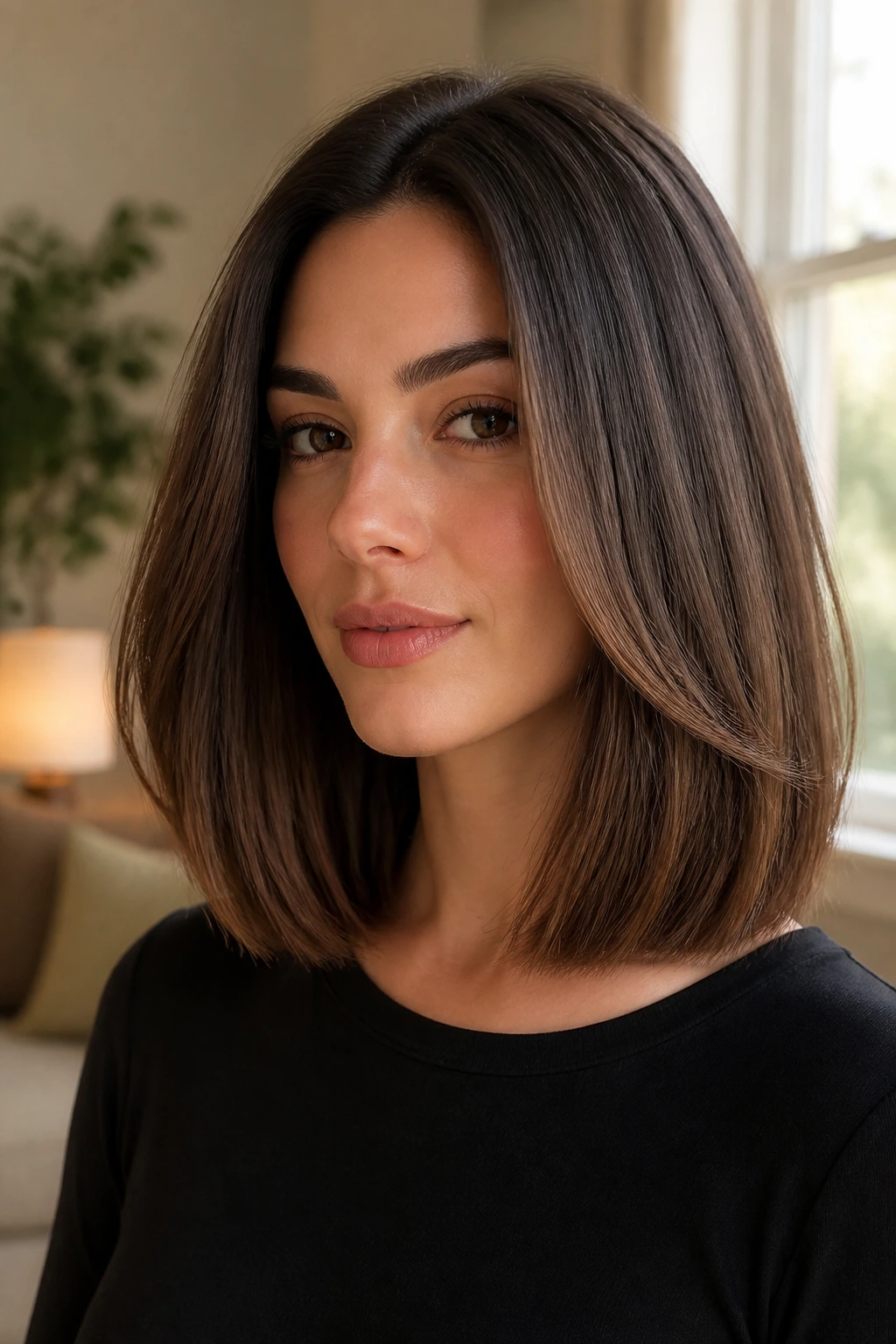
A blunt lob is the haircut that makes thick hair look intentional instead of overpowering. The outer line stays clean at the shoulders, but the inside gets a little weight removal so the ends do not balloon out like a shelf. That combination matters more than people think.
Why it works
A one-length perimeter gives thick hair a crisp shape. The hidden internal work keeps the haircut from feeling boxy. If your hair bends out at the ends every time it dries, this is the move. It sits neatly, grows out well, and looks polished with almost no styling.
Ask for collarbone length in front and a slightly longer back if your hair swings heavy at the nape. A round brush, a heat protectant, and a quick pass with a flat iron on the top layer are usually enough.
- Best for straight or softly wavy thick hair
- Needs only a trim every 8 to 10 weeks
- Looks especially good with a middle part
My blunt opinion: if you want thick hair to look rich, not puffy, start here.
2. Long Layers with a Middle Part

Long layers are the easiest way to make shoulder length hair move without losing the fullness people love. The middle part keeps the shape calm and balanced, which matters when your hair naturally has a lot of width.
The key is where the layers begin. Too high, and you get the old “chopped-up” look. Too low, and the cut stays heavy through the sides. A good stylist usually starts around the chin or just below it, then lets the layers fall softly toward the shoulders. That gives the face some length and keeps the ends from feeling blunt in a bad way.
This style plays nicely with a blow-dry brush or a big round brush. And if you air-dry? Fine. Use a light mousse at the roots, scrunch once or twice, and leave it alone.
3. Face-Framing Layers with Loose Waves
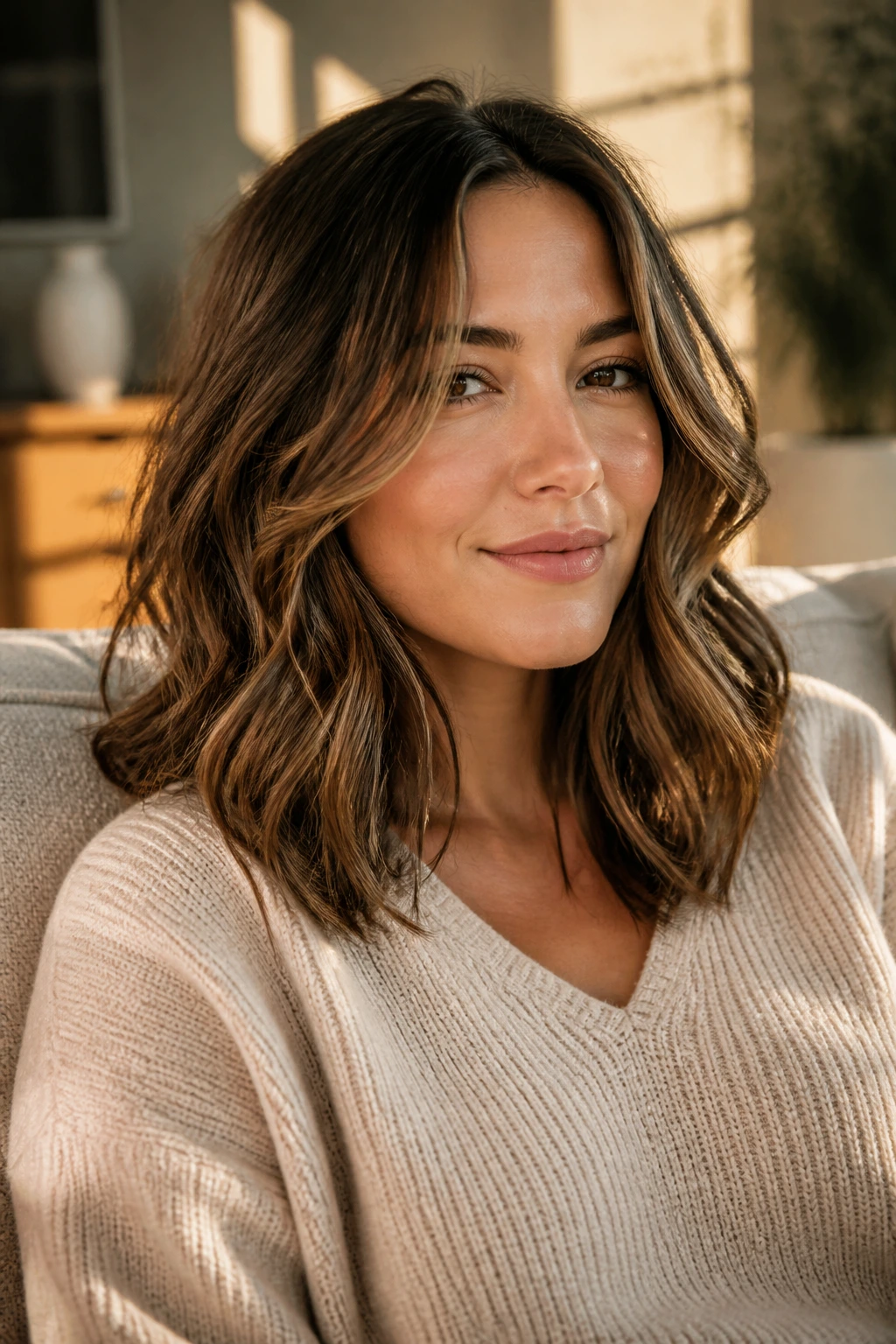
What if you want movement without a lot of obvious layering? Face-framing pieces are the answer. They carve shape around the cheeks and jaw, which is handy when thick hair tends to sit all in one heavy block.
How to wear it
Loose waves keep this cut from feeling too serious. A 1.25-inch curling iron works well, but don’t curl every strand the same direction. Alternate the wrap, leave the last inch out, and finger-comb the curls while they’re still warm. The result is softer and less “done.”
The best part is how forgiving this look is on day two. Thick hair holds a bend, so you can refresh with a mist of water, a little leave-in conditioner, and a few bends from a flat iron if needed.
What to ask for
- Pieces starting at the cheekbone
- Soft graduation, not sharp steps
- Ends that still feel full
It’s pretty hard to make this one look wrong.
4. The Shoulder-Length Shag for Thick Hair

A shag is a blessing if your thick hair keeps getting too wide. The layers are shorter and more piecey, which breaks up the bulk and gives the whole cut a little attitude. Not punk. Not costume-y. Just lived-in and cool.
I like this shape on wavy and slightly coarse hair, because the texture does half the work for you. Blow-dry the crown a bit, then let the rest air-dry with a curl cream or lightweight foam. If the ends look too fluffy, pinch in a touch of smoothing cream. Done.
- Best for people who hate heavy ends
- Looks stronger with a side part or off-center part
- Needs regular shaping to stay from turning shaggy in the bad way
A real shag is controlled chaos. That difference matters.
5. The U-Cut That Keeps the Ends Full

A U-cut sounds subtle, and that’s the point. The back falls in a gentle curve instead of a flat line, so the haircut keeps a soft, rounded shape when thick hair settles around the shoulders. It feels less severe than a blunt lob and less broken up than layered styles.
This one is especially good if you still want your hair to look thick at the bottom. The U shape leaves more weight at the perimeter, which gives the ends a healthy, plush look. If your hair has a naturally strong wave, the curve helps it fall more neatly.
Ask your stylist for
A clean U through the back, soft face-framing at the front, and only light internal removal if needed. Do not let anyone thin the ends too much. That’s how the shape turns stringy and sad.
This is one of those cuts that looks boring on paper and quietly excellent in real life.
6. Curtain Bangs with Shoulder-Length Layers

Curtain bangs can make thick hair feel lighter around the face without forcing you into a full fringe. They split in the middle and sweep outward, which means they blend into shoulder-length layers instead of sitting like a wall across the forehead.
The trick is density control. Curtain bangs should be thick enough to look deliberate, but not so heavy that they collapse into your eyes. On thick hair, that usually means a stylist should work them dry or nearly dry, because the natural shrink and bend can surprise you.
If you style them, a medium round brush and a quick blast from the dryer are enough. Keep the ends slightly tucked away from the cheeks. That soft bend is what makes them feel flattering instead of fussy.
Honestly, these bangs are one of the few fringe choices that can survive thick hair without becoming a daily project.
7. The Curly Shoulder-Length Shape Cut

Curly hair at shoulder length needs shape more than it needs “layers.” That distinction saves people from a lot of disappointment. Curl pattern changes where the hair sits, so a cut that looks even when wet can look lopsided once it dries.
What to look for
A dry cut, or at least a stylist who understands shrinkage. The outline should follow your curls rather than fight them. Thick curls usually do better with some internal shaping around the crown and sides, so the hair doesn’t spread out like a mushroom.
Use curl cream, a little gel, and a diffuser on low heat. Then stop touching it. Seriously.
- Best for 2C to 3C curls
- Needs curl-by-curl attention near the front
- Looks nicest when the ends are left soft, not blunt
When this cut is done well, it has bounce without bulk. That’s the whole game.
8. The Deep Side-Part Blowout Lob
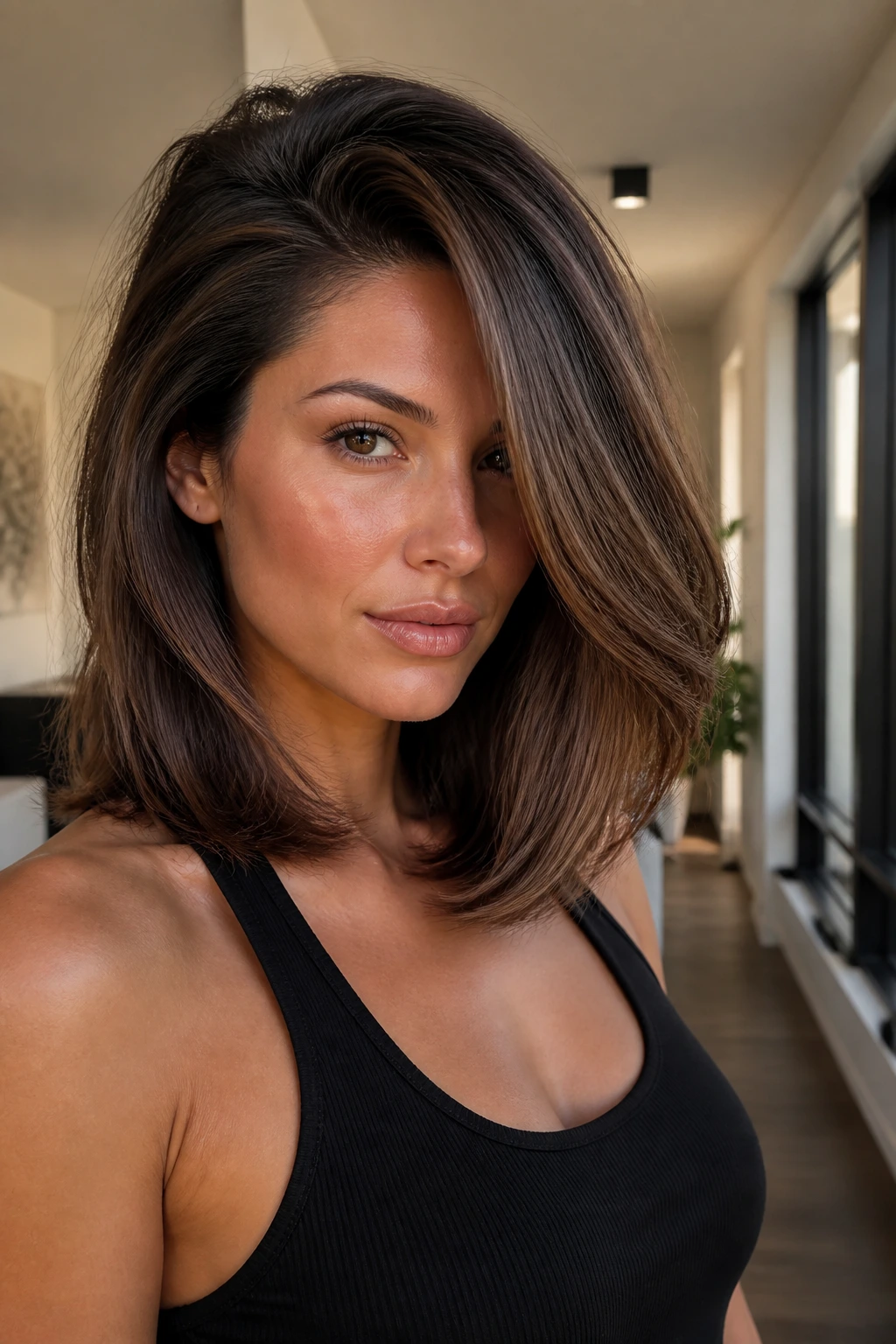
A deep side part gives thick shoulder-length hair instant drama, but the good kind. It lifts one side at the root and lets the other side fall in a heavy sweep, which makes the face look longer and the hair look fuller in a controlled way.
This style loves a blowout. Use a volumizing spray at the roots, then blow-dry with a medium round brush, lifting the heavier side away from the scalp for a second or two longer. The heat should go from roots to ends, not the other way around. That helps keep the surface smooth and the bend clean.
Quick styling notes
- Flip the part just above the outer brow
- Wrap the front sections away from the face
- Finish with a drop of serum on the ends
It’s a nice option when you want thick hair to feel glamorous without piling it all up.
9. Invisible Layers for Thick Hair

Invisible layers are one of those haircuts that sounds secretive and maybe a little silly, but the technique is useful. The idea is to remove weight inside the shape without creating obvious steps on the surface. So the haircut still looks full, only less bulky.
This is the best choice when you love your thick hair but hate the heaviness that shows up under the ears and around the shoulders. The outside line stays smooth. The inside gets relief. That means your hair can move without looking chopped.
It works especially well on straight and slightly wavy textures. You can still curl it, but you do not need to. A big brush blowout gives the cleanest result.
If you’ve had too many chunky layers in your life, this is the grown-up fix.
10. Flipped-Out Ends with a Soft Round Brush Finish
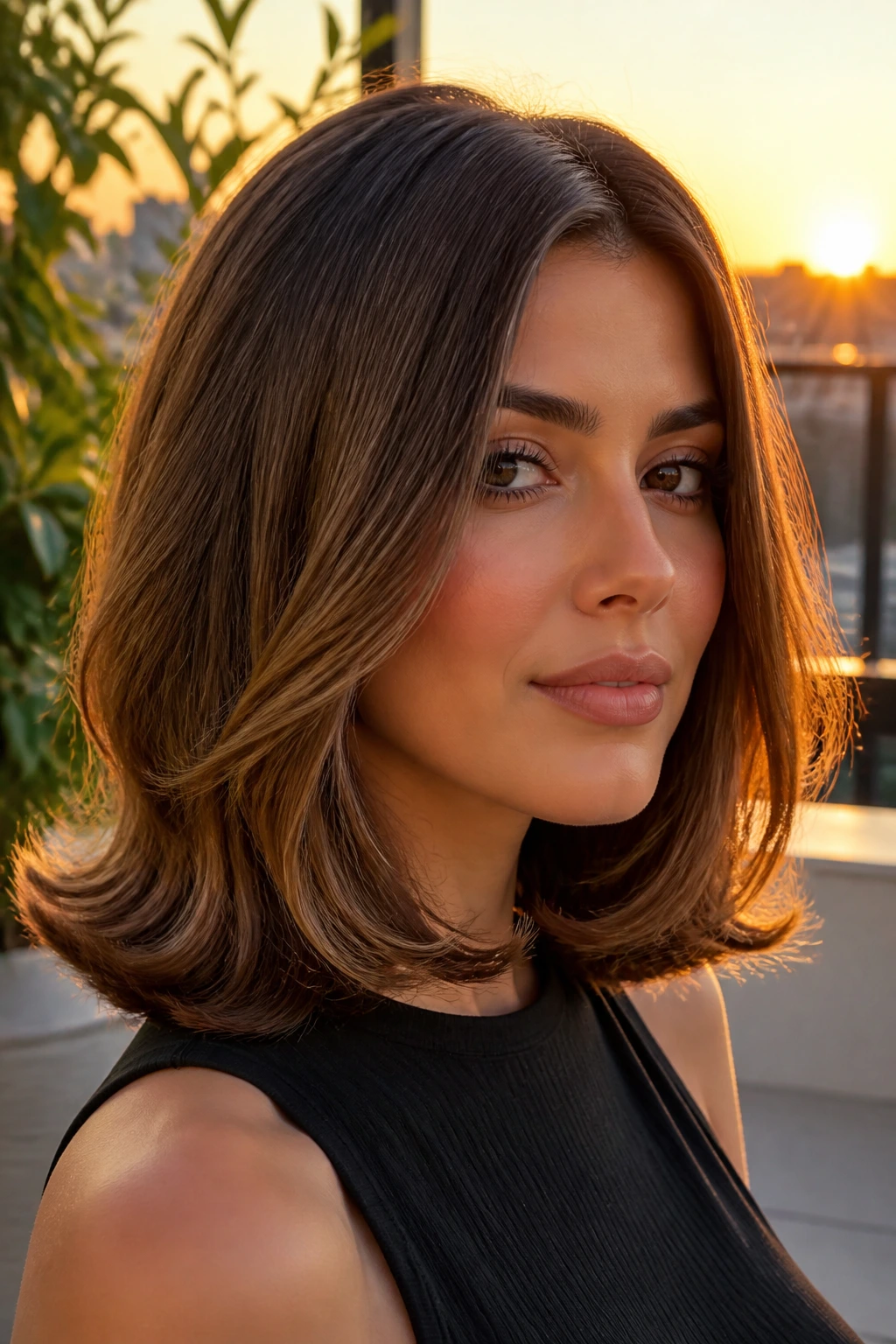
Flipped-out ends are having a good run because they make shoulder-length thick hair look playful instead of heavy. The shape is simple: the top stays smooth, and the ends flick outward just enough to catch the eye. Not retro costume hair. More like a polished everyday style with a wink.
You can get this with a round brush during blow-drying or with a flat iron on dry hair. Turn the wrist slightly outward as you pull through the last two inches. Keep the flip modest. If it’s too sharp, the style starts to feel dated in the wrong way.
This look works best when the cut has clean ends and maybe a little internal removal. Thick hair needs room to bend; otherwise the flip just sits on top like a hard edge. A light mist of flexible hairspray is enough. No helmet hair, please.
11. The Soft Wolf Cut for Shoulder-Length Hair
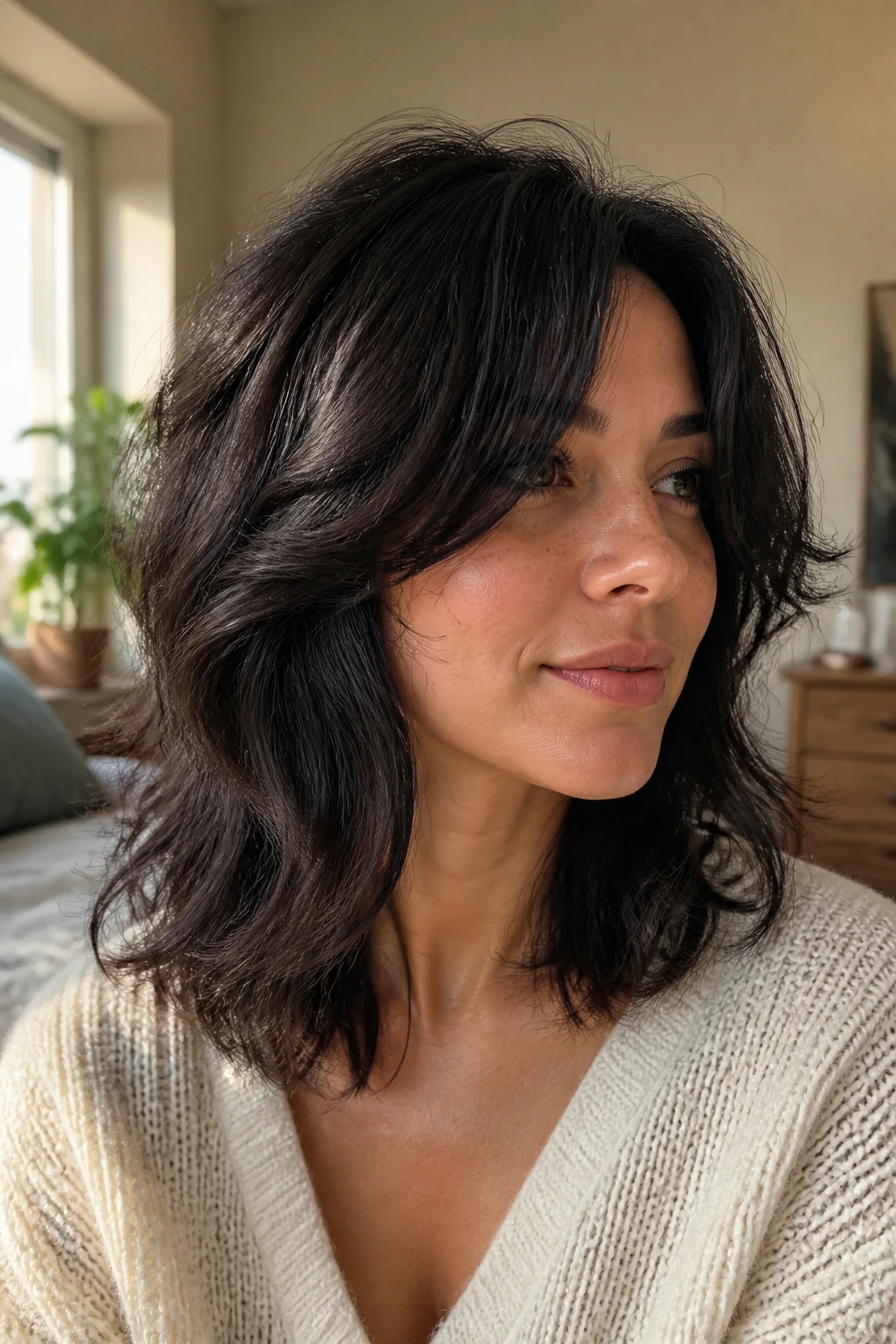
A soft wolf cut is a calmer version of the sharper, more layered wolf cut people sometimes overdo. On thick shoulder-length hair, that softness matters. You want movement at the crown and through the sides, but you still need the shape to feel wearable on a weekday morning.
The danger with this cut is going too far. Too many razored pieces, and thick hair can start to frizz out around the jaw. A gentler version keeps the top airy while leaving the length full enough to tuck behind the ears or wear loose.
Best use case
Wavy hair that wants texture without a full shag.
- Ask for shorter crown layers, not severe choppy ends
- Keep the perimeter near the shoulders
- Style with mousse and a diffuser or a rough blow-dry
It’s a good cut if you want edge but not chaos. There’s a difference.
12. The Sleek Center-Part Lob
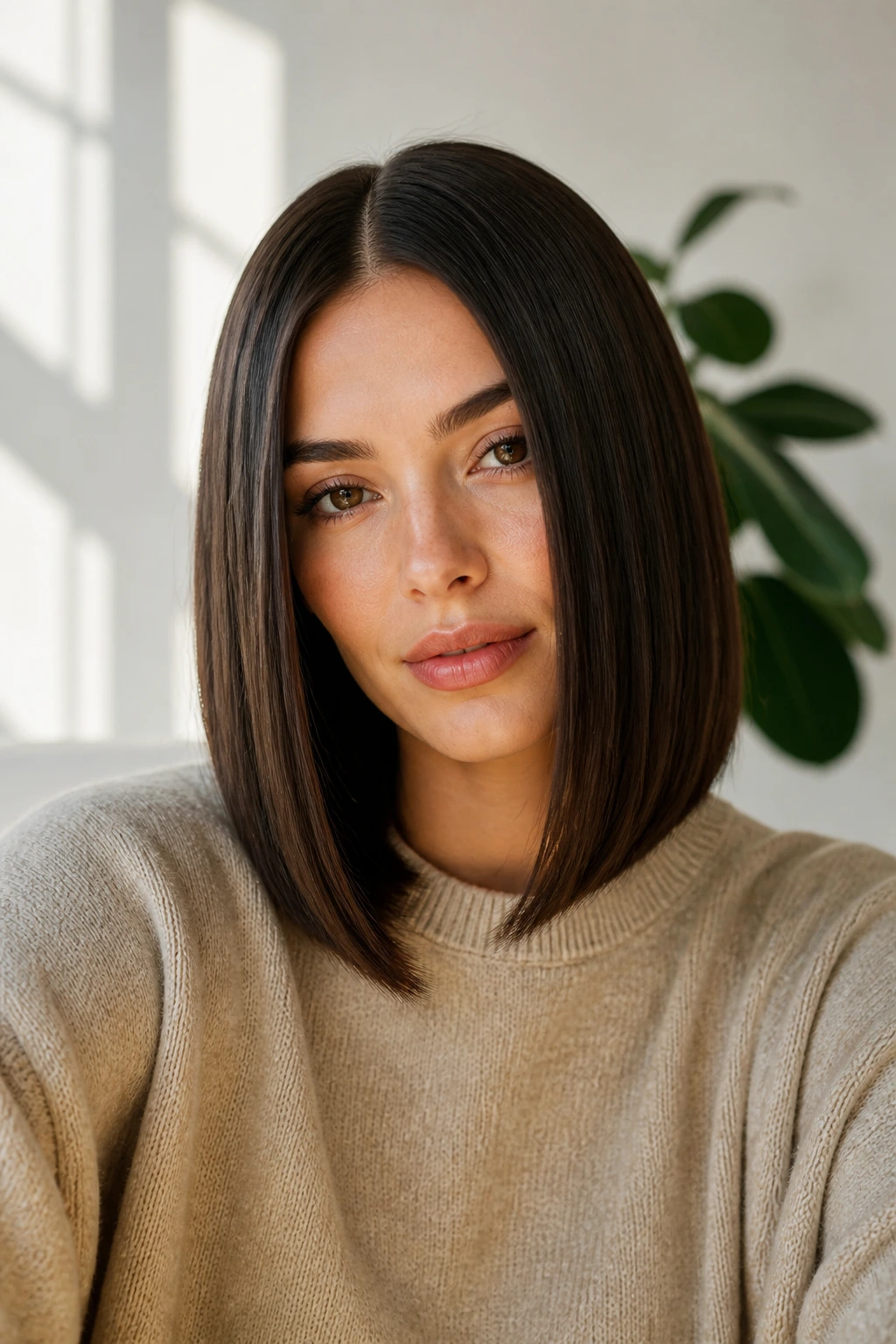
A sleek center-part lob is the haircut people choose when they want thick hair to look sharp, not soft. The center part creates symmetry, and the straight finish makes the whole shape read as deliberate. It is one of the cleanest shoulder length hairstyles for thick hair if you like a polished line.
The styling is simple, but the prep matters. Start with heat protectant, blow-dry smooth, then pass a flat iron over the mids and ends in small sections. Don’t over-straighten the roots unless your hair bends wildly there. A little natural lift looks better than pancake-flat hair.
This style is gorgeous with dark, glossy hair because the outline shows up well. It also pairs nicely with a strong brow or bold earrings. You know the type. The kind of hair that makes a turtleneck look expensive.
13. The Half-Up Twist for Busy Days
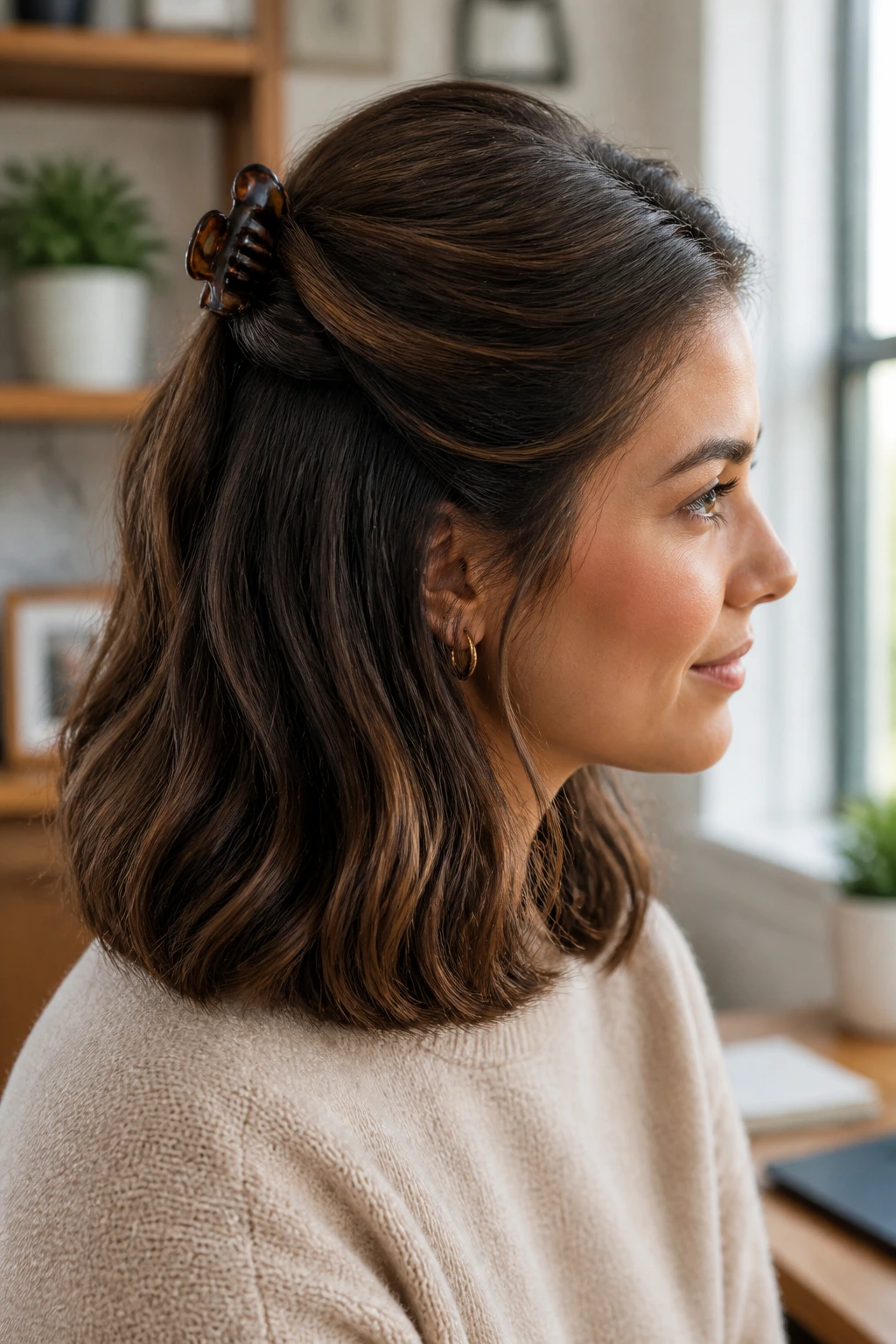
Some hairstyles are more about getting your thick hair out of your face without losing the shape. The half-up twist does that well. It pulls the top section back, leaves the bottom full, and creates lift at the crown without a full ponytail mark.
This style is a smart move on day two or day three hair, especially when your ends still look decent but the roots need help. Take a section from each temple, twist them back loosely, and pin or clip them together. If you want more height, tease the crown lightly before pinning.
A small claw clip works better than a tight elastic if your hair is dense. Tight elastics can leave a dent. No one needs that.
It’s not glamorous in a flashy way. It’s useful. Which, frankly, is better.
14. The Braided Crown on Thick Shoulder-Length Hair

Thick hair holds a braid with real authority, and shoulder length is enough to build a crown braid that actually stays put. That makes this style a favorite for humid weather, long days, or occasions where you want your hair off your neck but still styled.
A loose French braid starting from one side and circling the head works best when the hair has some grip. If your hair is freshly washed and too slippery, a little texturizing spray helps. Pull the braid apart gently after it’s secured so it looks fuller. Thick hair can handle that without collapsing.
Why it stands out
The braid gives shape to all that density instead of fighting it. The result feels tidy and romantic at the same time.
Add a few face-framing pieces if you want softness. Or keep it tight and clean if you like a more structured look.
15. The Low Twisted Bun with Loose Front Pieces

A shoulder-length cut can still make a good bun, as long as you stop expecting a giant ballet knot. Thick hair gives you enough substance for a low twisted bun that looks neat and compact at the nape. The loose front pieces keep it from feeling too severe.
Start by smoothing the top half back, then twist the lengths into a low coil and pin it with U-pins or a few strong bobby pins. Leave the ends tucked in rather than fighting to hide every strand. The goal is shape, not perfection.
This is a nice one when you want a dinner-friendly look that does not demand a lot of teasing or curling. A light mist of shine spray helps calm the top. A few wispy pieces around the face make the whole thing feel softer.
Not every thick-hair style needs to be big.
16. Rounded Layers That Follow the Head Shape

Rounded layers are a quieter answer to the “too much bulk” problem. Instead of creating sharp shelves, the cut follows the curve of the head and softens where the hair would otherwise build up at the sides. It keeps shoulder-length thick hair from flaring outward.
This shape is especially useful if your hair has a lot of volume at the ears and cheekbones. The roundness takes that side weight down a notch while still leaving the ends full. It’s a practical haircut, honestly. Not glamorous on the rack, but excellent when you live with it.
Styling ideas
- Air-dry with mousse for a soft bend
- Blow-dry with a round brush for a smoother curve
- Tuck one side behind the ear to show the shape
If your hair tends to grow into a triangle, rounded layers are worth a serious look.
17. The Asymmetrical Lob
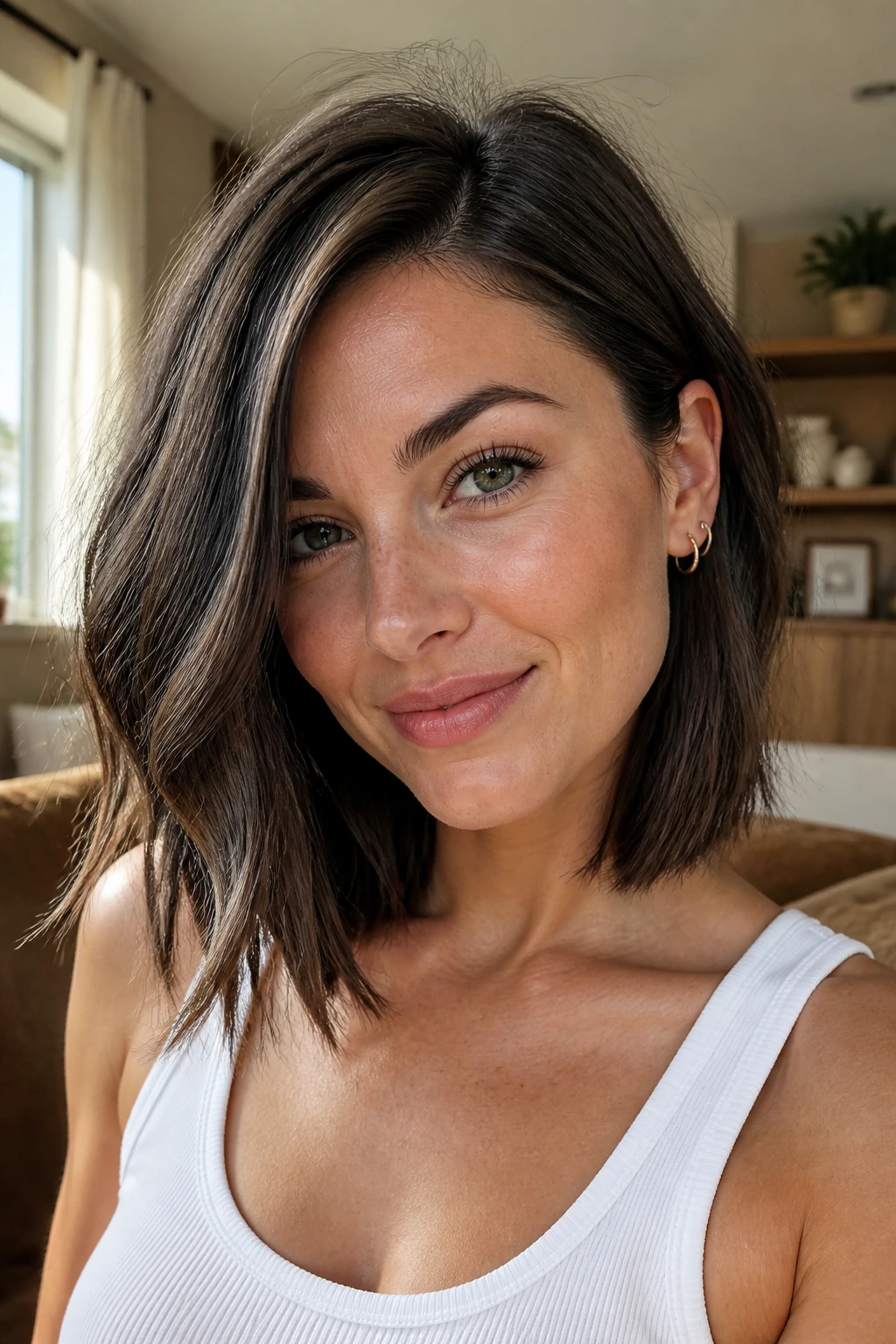
A slight asymmetrical lob — one side a touch longer than the other — can make thick shoulder-length hair feel sharp without trying too hard. The asymmetry draws the eye down one line, which breaks up the width that thick hair sometimes creates around the shoulders.
This one needs precision. If the difference is too subtle, it looks accidental. If it’s too dramatic, the cut starts wearing you instead of the other way around. The sweet spot is usually a small but visible shift, enough to feel modern when you move.
It’s good for straight hair, but wavy hair can wear it too. The main thing is balance at the chin and neck. A flat iron smooth finish shows off the line best, though a soft wave can make it feel less строг? no, scratch that — less rigid. Better.
The cut has attitude. Not shouting, just speaking clearly.
18. Bottleneck Bangs with a Shoulder-Length Cut

Bottleneck bangs sit between curtain bangs and full fringe. They’re narrower at the forehead and widen near the cheekbones, which makes them useful for thick hair that needs some face shaping without losing too much forehead space.
I like these bangs on shoulder length cuts because they don’t overwhelm the rest of the hairstyle. They blend into layers, soften the front, and add a little style even when the rest of the hair is loose and simple. They also tend to grow out better than straight-across bangs, which is a relief because bangs should not become a second job.
How to wear them
Blow-dry the bangs first, side to side, using a small round brush. That prevents the center from sitting flat and the sides from puffing out. The rest of the hair can stay wavy, sleek, or bent.
Thick hair with bottleneck bangs feels fresh without being fussy. That’s a rare balance.
19. Soft Curls with a Side Sweep

There’s a reason soft curls keep showing up on shoulder-length thick hair. They give the cut shape without adding extra bulk everywhere. A side sweep adds focus and keeps the volume from sitting evenly on both sides of the head, which can make thick hair feel too wide.
Use a 1.5-inch curling iron or hot brush, curl away from the face on the front sections, and brush the curls out once they cool. You want soft, touchable bends, not springy ringlets unless that’s the whole point. Pin the heavier side back with a simple clip if you want a little lift at the front.
This style works for events, sure, but it also works when you just want your hair to look done with minimal effort. Thick hair holds curl for hours, sometimes longer than you want, so a flexible-hold spray is enough. Heavy spray makes it stiff. Skip that.
20. The Tucked-Behind-Ears Lob

A tucked-behind-ears lob is nearly too simple to mention, which is exactly why it deserves a place here. Thick shoulder-length hair can look especially elegant when the front pieces are tucked back and the shape stays loose around the jaw. It shows the haircut off without a lot of styling theater.
This works best on hair that has a clean end line and maybe a slight bend through the mids. Use a little serum or cream to keep the front smooth, then tuck the pieces behind both ears or just one side. A side clip can hold the tuck if your hair likes to slip out.
One of the reasons I like this look is that it makes thick hair feel lighter without actually removing length. The neck stays visible. The hair still has body. Easy.
And yes, it can be the difference between “my hair is taking over” and “my hair looks deliberate.”
21. The Piecey Shoulder-Length Shaggy Lob
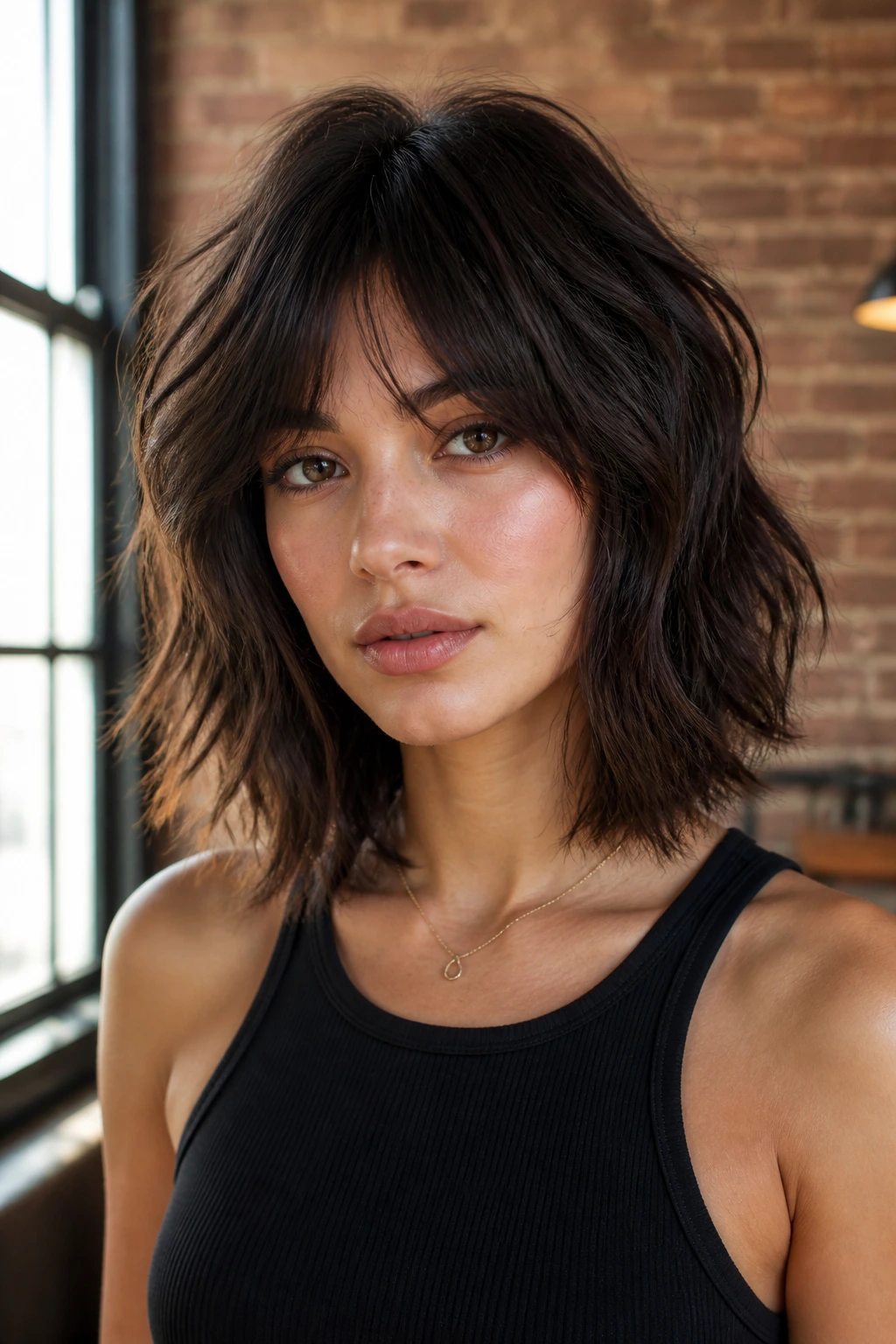
A shaggy lob is the rougher, more textured cousin of the polished blunt cut. It’s built for thick hair that wants separation and a little edge through the ends. The pieces should look broken up, not hacked at. That distinction matters more than anything else with this style.
A matte paste or light texture cream can help define the ends, especially if your hair gets fluffy after drying. Work a small amount through the mids and tips, then scrunch the front sections with your fingers. If the crown falls flat, a quick lift at the roots with a blow-dryer nozzle fixes it.
Quick reality check
This haircut looks best when it’s allowed to be a little messy. If you love perfect, smooth lines, skip it.
- Great for wavy, dense hair
- Needs shape trims more often than a blunt lob
- Can get frizzy if over-dried
It has personality. That’s the draw.
22. The Dry-Cut Curved Lob for Thick Hair

Dry cutting changes everything for thick hair because you can see how the hair actually sits. A curved lob cut dry lets the stylist follow your natural bend, weight pattern, and cowlicks instead of guessing from wet strands that will spring up later. That’s not a small thing. It’s the difference between a haircut that cooperates and one that argues.
The curved line usually sits a little longer in front and softer in back. Internal removal is done carefully so the shape doesn’t puff up at the sides. If you’ve ever had thick hair that looked fine leaving the salon and then behaved like a triangle at home, this technique is worth asking about.
Styling it is easy. Smooth the front with a round brush or flat iron, then let the rest fall naturally. The shape already does most of the work.
23. The Old-Hollywood Side Sweep

An old-Hollywood side sweep gives shoulder-length thick hair that movie-star curve people love, minus the overdone curls. The hair is parted deep on one side, shaped into a smooth wave, and pinned or tucked so the heavier side falls over the shoulder. It feels dressy without being stiff.
This style needs control at the roots and softness through the lengths. A strong blow-dry on the front sections helps. A large-barrel curling iron can add the wave, but brush it out after it cools so the shape becomes broad and fluid instead of tight. Thick hair holds this style well, which is half the battle.
A rhinestone clip, a plain barrette, or even one hidden bobby pin can finish it. That’s enough. The shape should do the talking. And if your hair has a little shine spray on it, even better.
24. The Micro Fringe with a Blunt Shoulder-Length Cut

Micro bangs are not for everyone, and I’m glad for that. They’re sharp, a little playful, and they make a blunt shoulder-length cut look fashion-forward fast. On thick hair, the contrast can be strong in a good way: heavy line below, short fringe above.
The fringe itself needs real upkeep. You cannot pretend micro bangs will grow out gracefully for months. They sit in the face, they show every cowlick, and they need regular trims. But when they work, they make the haircut feel bold without changing the length much.
Best pairing
A blunt or lightly layered shoulder-length cut with smooth styling.
If your hair is dense, ask for the bangs to be thinned carefully from underneath so they don’t sit like a solid shelf. Keep the rest of the hair sleek or softly bent. Too much texture elsewhere can compete with the fringe, and the whole look loses its point.
25. The Grow-Out Lob That Still Looks Finished
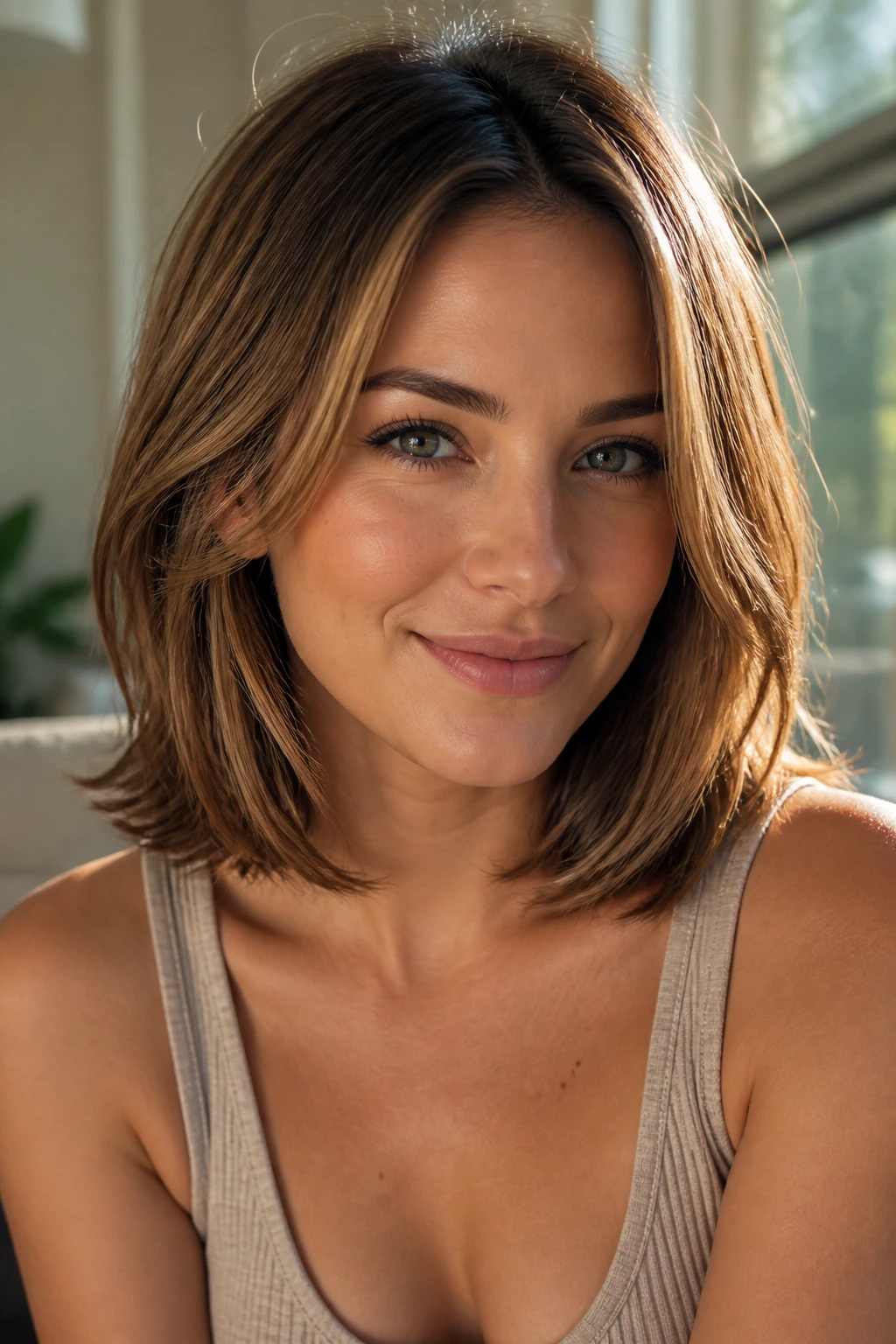
Some hairstyles are built to be maintained. This one is built to survive. A grow-out lob keeps enough shape at the shoulders to look deliberate while leaving room for a few months of life, ponytails, clips, and imperfect mornings. Thick hair benefits from that flexibility more than people admit.
The cut usually sits near the collarbone with soft interior shaping, not dramatic layers. That means the hair can flip, tuck, wave, or stay straight without looking like it needs rescuing. If you’re the kind of person who wants one haircut to move between polished and lazy in under five minutes, this is the one I’d point you toward.
Keep a few tools nearby: a smoothing cream, a medium round brush, and a couple of strong clips. That’s enough to turn a tired day into a decent hair day. Not every style needs a dramatic finish. Some just need to hold up when you do not have the patience to fuss with them.
When thick hair reaches shoulder length and the cut is right, it stops being a problem to manage and starts acting like a built-in accessory. That’s the whole sweet spot.
