



Long hair can do a lot of heavy lifting in queer style. It can read soft, sharp, romantic, defiant, genderless, or all of those in the same afternoon. For a lot of people, queer hairstyles for long hair are less about fitting a box and more about bending it until it fits you better.
That flexibility is the whole point. Long hair gives you room to braid, knot, clip, tuck, twist, and pin, but it also punishes sloppy technique fast. Pull too hard and the style looks stiff. Use the wrong elastic and it starts slipping by lunch. Leave the front pieces untouched when the rest of the hair is polished, and the whole thing can feel unfinished in a way that’s hard to explain until you see it in the mirror.
The good styles are the ones that leave room for contradiction. A half-up knot can look sweet on one person and a little rude on another. A slick ponytail can feel office-clean or almost punk, depending on how tight the part is and what you do with the ends. That’s why the best long-hair looks tend to be the ones with one deliberate move and one slightly messy move.
So I’m leaning practical here. Some of these are soft. Some are sharp. A few are loud in the best way. The first one is the sort of style I reach for when I want my hair to look intentional without spending half the morning fighting it.
1. Half-Up Knot With Face-Framing Waves
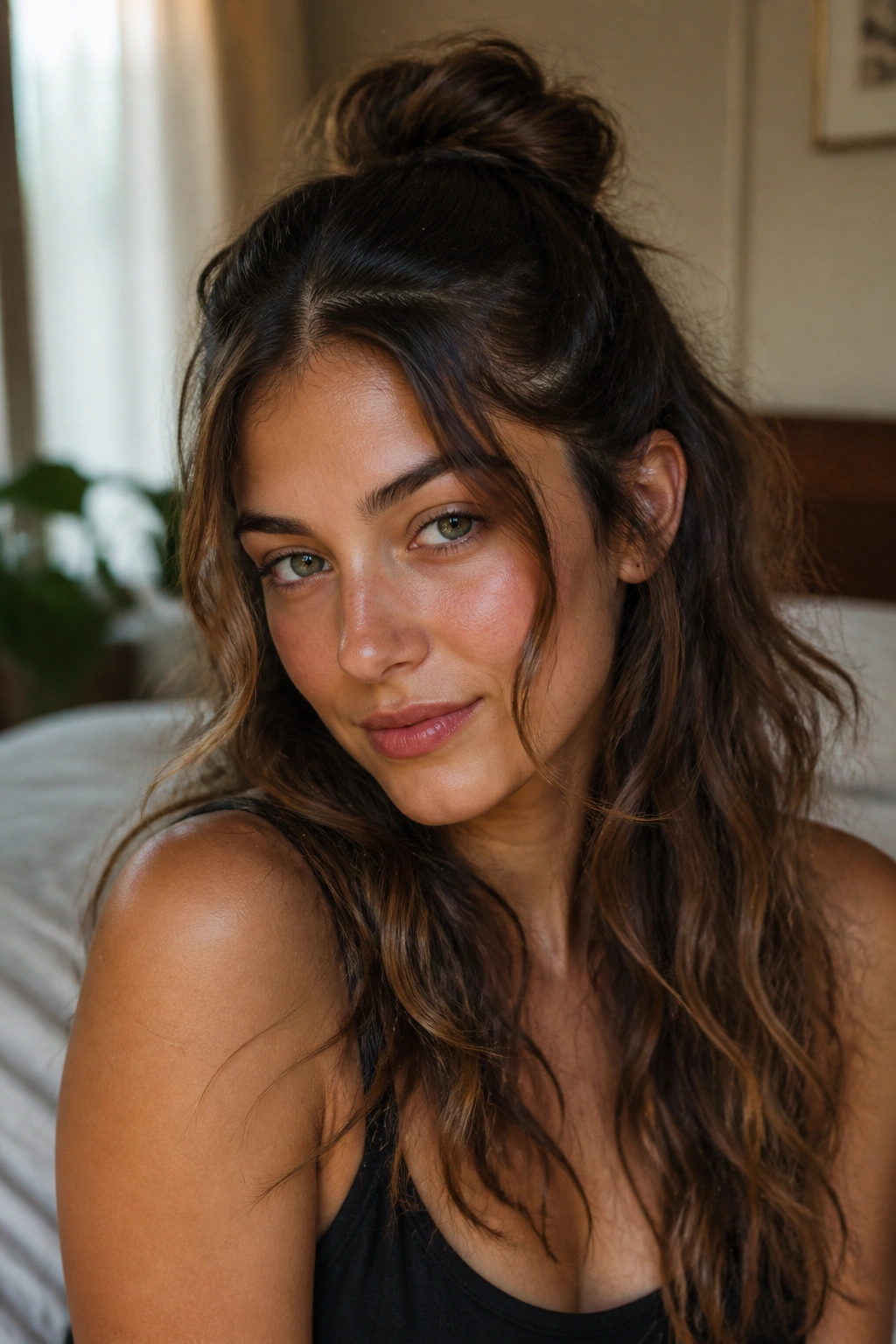
The half-up knot is the style I keep coming back to when I want my hair to look awake without looking overworked. It keeps the length visible, which matters if you’ve got long hair and you want people to see that you’ve got long hair, but it also clears the face enough to show your eyes, your earrings, or that slightly smug expression you get when the knot sits just right.
Why It Works
The shape does a neat little balancing act. Hair at the crown gets lifted, the sides stay soft, and the ends can stay loose and wavy instead of being dragged into a tight finish. That mix reads friendly, a little flirty, and not too precious.
It’s especially good for layered hair. Shorter pieces around the face keep the knot from looking too severe, and the loose bits near the temples break up the shape so it doesn’t feel helmet-like. On very straight hair, a quick bend with a 1-inch iron or a sleep-in braid wave helps the style hold a little better.
What to Watch For
- Use a small clear elastic or a mini claw clip for the knot.
- Leave 1 to 2 inches of hair out at each temple so the front doesn’t feel pulled tight.
- Mist the crown with light texture spray before twisting if your hair is silky.
- Pin the knot low enough that it sits like a shape, not a bump.
Best trick: loosen the knot after you secure it. That tiny step keeps it from looking too done.
2. Braided Crown With Soft Ends Left Loose
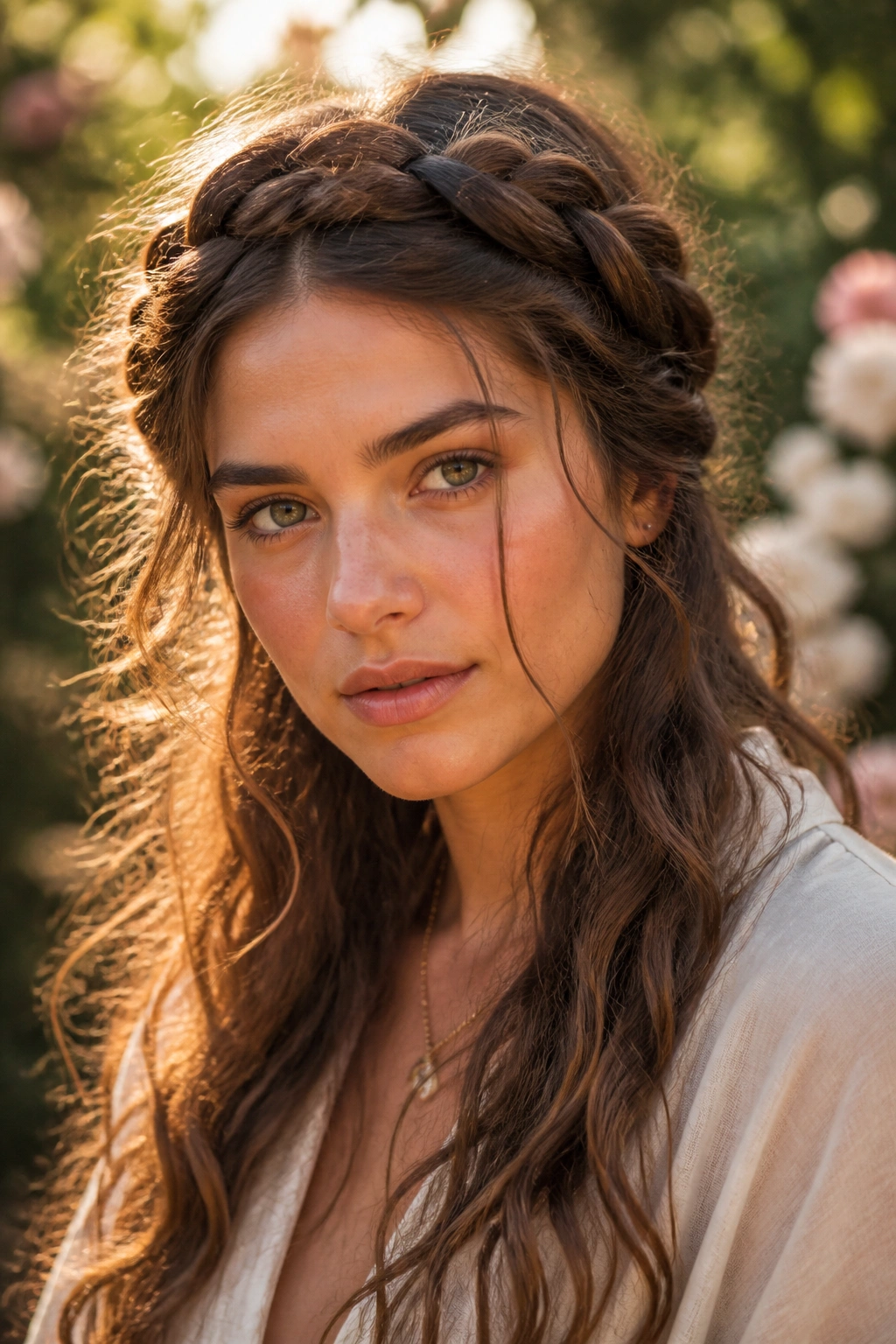
A braided crown can look formal fast, which is exactly why I like it. The trick is to keep it from sliding into costume territory. Leave the ends loose, keep the braid a little wide, and let a few face pieces drop where they want to.
This style has a nice old-world feel without being precious. If your hair is long enough to wrap from one side of the head to the other, the crown line creates a clean frame that makes the rest of your features stand out. It’s the kind of style that works for a dinner, a show, or a day when you want your hair to do more talking than your outfit.
The useful part is how stable it is. Once the braid is pinned, it stays. That makes it one of those queer hairstyles for long hair that looks like effort but doesn’t collapse the second you put on a jacket. Use small crossed bobby pins under the braid, not just through the top layer, and the shape holds better. If the braid feels too neat, pull a few loops wider with your fingertips. That little roughening makes all the difference.
3. Bubble Ponytail With a Clean Middle Part
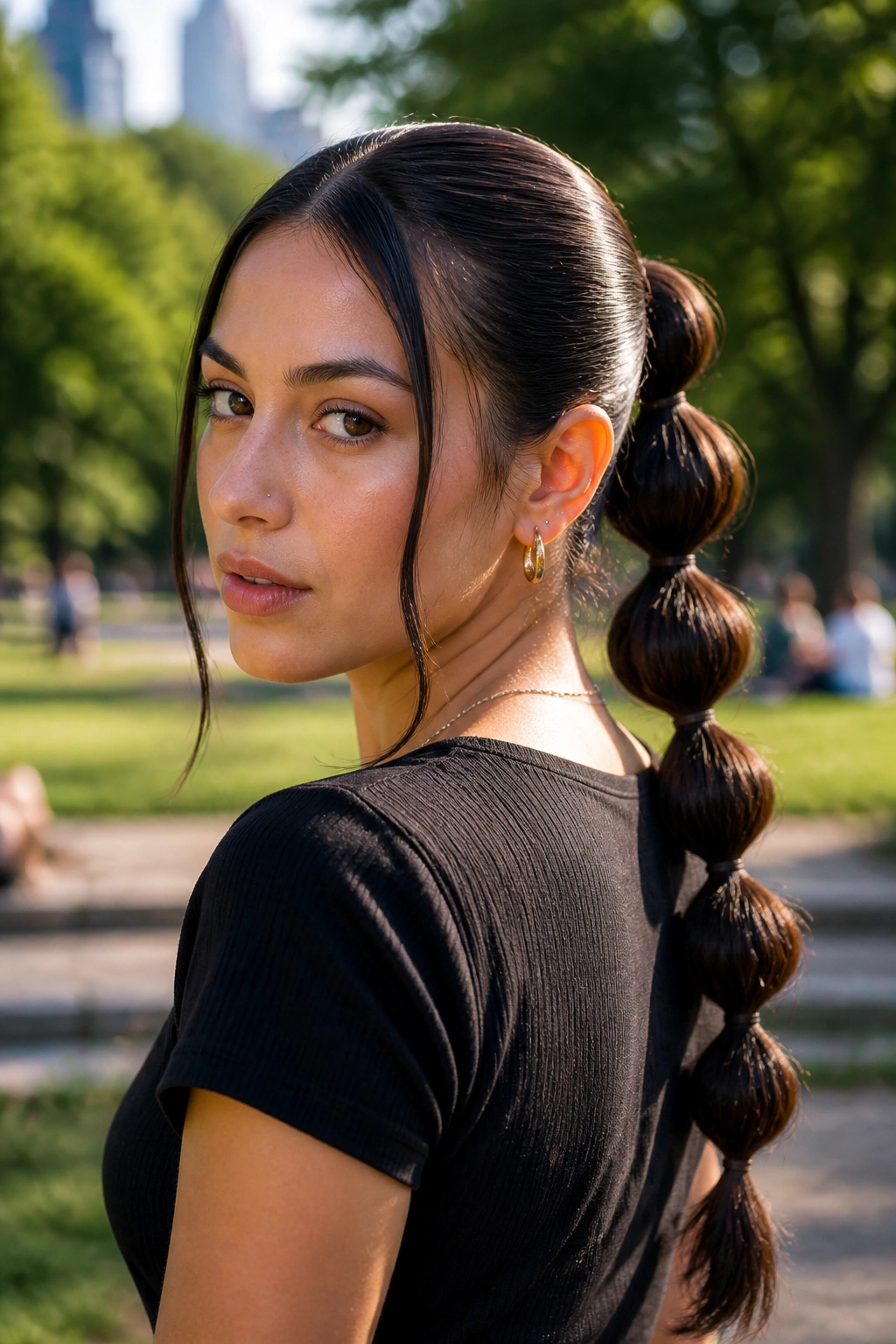
Why does a bubble ponytail work so well on long hair? Because it breaks all that length into sections your eye can actually read. A single long ponytail can look sleek, sure, but a bubble ponytail gives you rhythm. It feels playful, a little camp, and oddly polished at the same time.
How to Style It Without Guessing
Start with a middle part if you want a sharper look, or a slight off-center part if you want the shape to soften. Tie the hair into a low or mid ponytail, then add small elastics every 2 to 3 inches down the length. Tug each section outward so it puffs into a round bubble.
- Use clear elastics if you want the style to look clean.
- Use black elastics if your hair is dark and you want the sections to disappear.
- Use a touch of dry shampoo at the roots if the hair is too slippery.
- Wrap one thin strand around the base to hide the first elastic if you want a more finished look.
Fine hair needs a little grip. Thick hair needs patience. Either way, the style rewards a careful tug more than a strong one. Pull too hard and the bubbles go lopsided. Pull just enough and they look sculpted.
4. Two Long Braids With Loose Tendrils

Some days a single braid feels too tidy. Two braids change the tone fast. They can read sweet, sharp, sporty, or a little rebellious depending on how close they sit to the head and how much you let the front pieces fall.
That’s the thing I like most here: the symmetry does the heavy lifting. A clean center part and two braids can make long hair feel deliberate without making it stiff. If you’re dressing in a way that leans androgynous, this style has enough structure to anchor the look. If you’re leaning softer, leave the braids loose and a little uneven.
A Few Details That Matter
- Start the braids just behind the hairline if you want more face framing.
- Start them farther back if you want the part to stay the star.
- Keep the ends unbraided for the last 2 to 3 inches if you want a softer finish.
- Add small rings or thread wraps near the ends if you want more visual texture.
The best version isn’t perfect. It’s the version that still looks good after you’ve worn a hoodie, taken it off, and run your hands through it twice.
5. Sleek Center-Part Ponytail

A sleek center-part ponytail is plain only if you do it lazily. Done well, it looks clean, serious, and just a little bit severe in a way I love. The line through the middle does more than split the hair; it sets the mood. Suddenly the ponytail becomes about shape, not just convenience.
The roots matter most here. Smooth the hair back with a light gel or styling cream, then brush it flat with a boar-bristle brush or a fine-tooth comb. The crown should lie close to the head, almost cool to the touch, while the tail itself can stay soft and swinging. That contrast is what keeps the style from looking too corporate.
Keep the top flat.
That’s the whole game. If the crown is puffed up or frizzy, the style loses its edge. Wrap a thin strand around the elastic to hide it, then pin the end underneath with one bobby pin. If your hair is thick, split the ponytail into two sections before wrapping the strand; it sits neater and doesn’t collapse under its own weight.
This one looks best with a strong collar, a plain tee, or a jacket that has some shape.
6. Side Braid Into a Low Knot
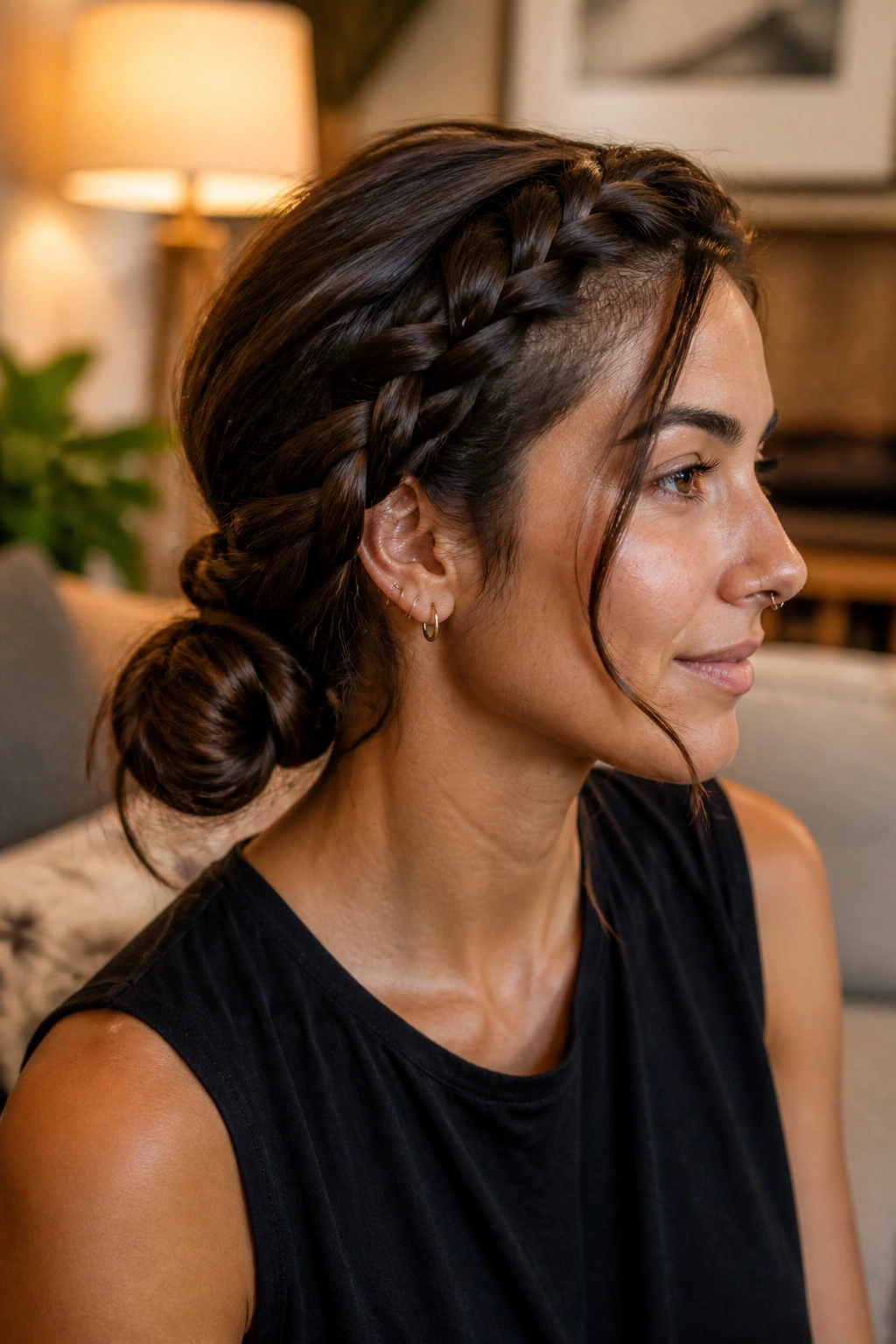
A side braid into a low knot gives you movement that a standard bun just doesn’t have. The braid creates a line across the head, then the knot gathers everything low at the nape so the style stays grounded. It’s tidy without being stiff, and it keeps enough texture to feel lived-in.
Unlike a plain low bun, this one shows the braid. That makes it a better choice when you want the hair to look styled even from the side. It also handles slightly oily second-day hair better than a sleek knot, because the texture helps the braid grip. If your hair slips out of buns all the time, this is the version worth trying.
Use a braid that starts from one temple or slightly above it, then sweep it across the back before twisting it into a knot. Pin the knot with two or three bobby pins, tucked in different directions. One pin almost never does enough. If the braid is too tight at the start, the whole look can feel pulled, so keep the first few passes a little loose. That’s the part people usually rush, and it shows.
7. Claw-Clip Twist With Loose Ends
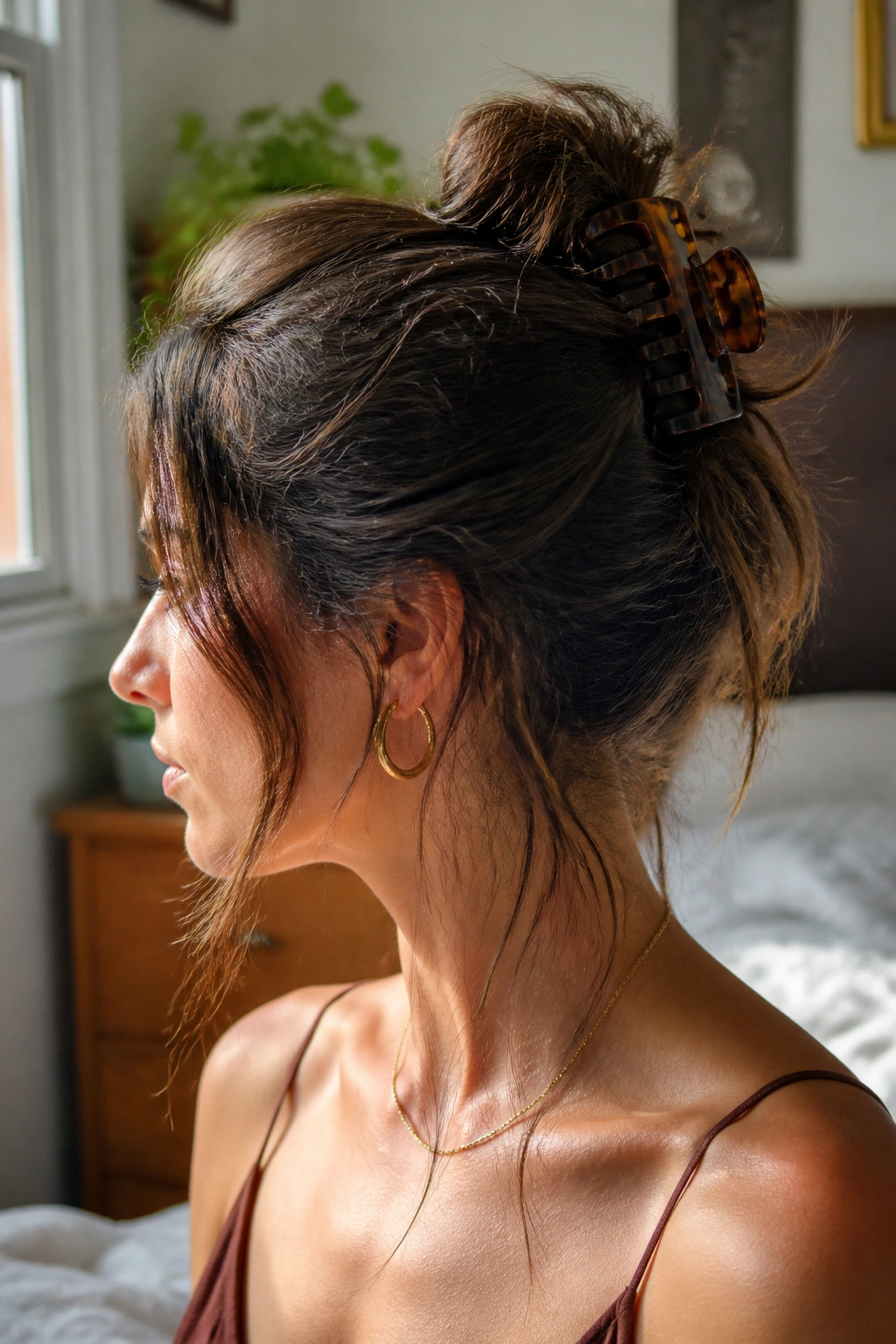
A claw-clip twist is one of those styles that looks casual until you notice how well it frames the head. On long hair, it can hold more shape than people expect. The twist gives you height, the clip gives you structure, and the loose ends keep it from feeling too rehearsed.
Why It Works With Long Hair
Long hair gives the clip something to grab. Shorter hair can slide around inside the teeth, but long hair can fold, twist, and tuck in a way that actually helps the hold. That’s why this style can feel sturdy even when it looks almost lazy.
- Use a medium or large claw clip with teeth that are at least 3 inches wide.
- Twist the hair once upward, then fold the length back on itself.
- Let 3 to 6 inches of the ends spill out for a softer finish.
- Leave a few strands loose at the neck if you want the style to feel less strict.
If your hair is heavy, cross two bobby pins under the clip. It feels fussy for about five seconds and then saves you an hour of redoing the whole thing. Small win. Big payoff.
8. High Bun With Underlayers Showing
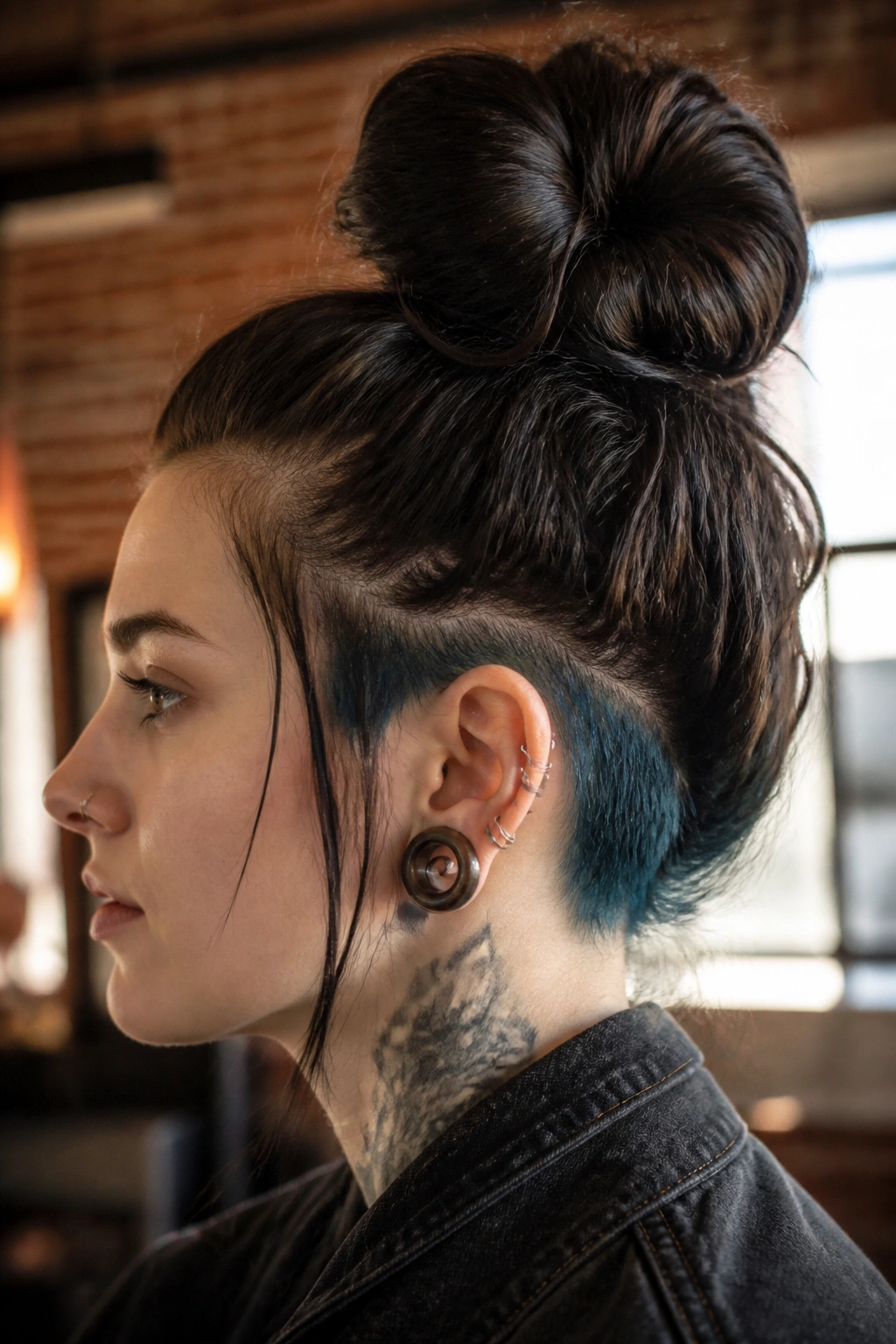
A high bun does not have to be neat to be powerful. In fact, the strongest version usually isn’t. When you let a lower layer show — whether that’s an undercut, a hidden wave, or just a few lengths escaping at the base — the bun gets personality fast.
That exposed contrast matters. A tightly wrapped bun can read formal or even severe, but a high bun with visible underlayers has a bit of edge. It says you knew exactly what you were doing and then left one part slightly unresolved on purpose. I like that. It feels human.
If all the hair goes into the bun, fan it around the base instead of stacking it in one lump. That keeps the shape wider and stops the top from becoming too tall. If your hair is thick, split it into two loops before pinning; the bun sits flatter and feels lighter on the scalp. If you’ve got a fade, an undercut, or a nape that you like showing off, this is one of the best queer hairstyles for long hair because it gives that detail room to breathe.
9. Ribbon-Wrapped Ponytail

What happens when a ponytail needs a little theater? A ribbon fixes that. Not a tiny one, either. A proper ribbon changes the whole read of the style, especially on long hair where there’s enough length for the tails to trail and move.
Choose a ribbon that feels right against the hair you’ve got. Satin gives a softer shine. Grosgrain has more grip and sits a bit firmer. Velvet works when you want the style to feel rich and weighted. A ribbon around 1/2 inch to 1 inch wide is usually enough for most ponytails without burying the shape.
How to Keep It From Slipping
Tie the ponytail first with an elastic, then wrap the ribbon around the base and knot it twice. If the ribbon is slippery, tuck one extra loop under the elastic so it anchors instead of sliding. Don’t tie it so hard that the hair bunches up at the crown. That’s the mistake that makes the style look fussy instead of easy.
The best part is how much color it puts near the face. A dark ribbon against light hair, or the reverse, changes the whole balance. It’s a small move. Feels bigger than it is.
10. Wet-Look Slick Back

There’s something sharp about a wet-look slick back that I never get tired of. It can look polished, cool, a little severe, or even glam depending on the rest of your outfit. And on long hair, the weight of the length helps the shape stay down instead of puffing up at the sides.
The key is dampness, not drench. Hair should feel cool and slightly wet, not dripping. Work a gel or strong styling cream from the hairline back through the crown, then comb it flat with a fine comb. A wide-tooth comb first can help distribute the product, but the fine comb is what smooths the surface. If you’re going for a true slick finish, don’t keep touching it. Every time you do, you break the line.
- Apply product from the hairline to the crown, not just on top.
- Use less at the ends so the tail doesn’t look greasy.
- Let the style set for 10 to 15 minutes before you move around too much.
- If your hair is curly or coily, slick the front and leave texture where it wants to live.
This style reads strong because it does not apologize for showing the face.
11. Messy Space Buns on Long Hair
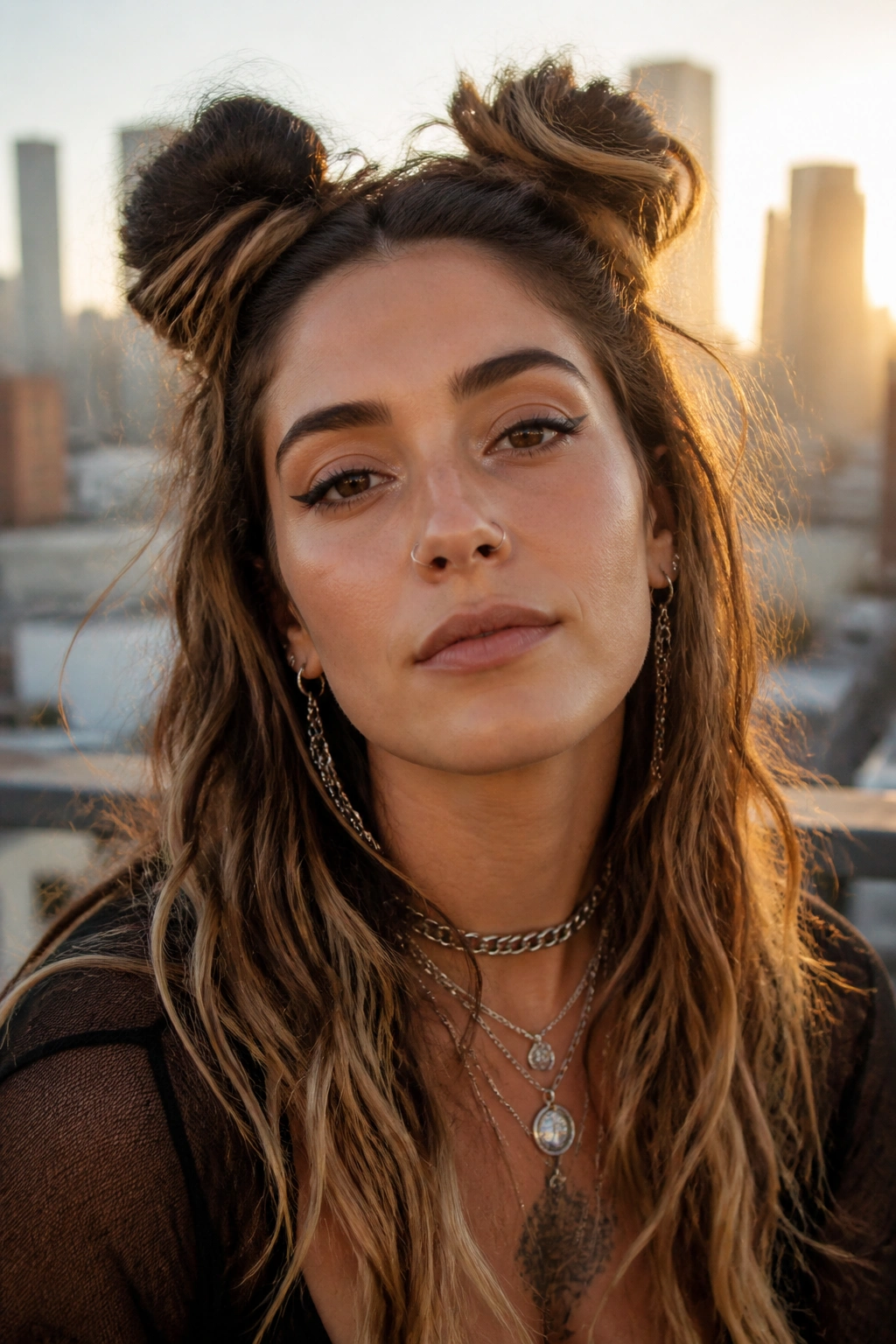
Messy space buns can go a lot of directions. Cute, punk, playful, odd in a good way, even slightly mythic if you make them high enough. Long hair gives the buns enough material to look full, and that matters because tiny space buns on long hair can feel like an afterthought. Full buns feel like a choice.
The trick is in the balance. Keep the parts fairly even if you want symmetry, or cheat them a little if you want the look to feel more relaxed. Twist each side into a bun, but leave the tail ends out if you want a looser finish. If the buns are too tight, they start to look like helmets. Nobody wants helmet hair unless that’s the point, and usually it isn’t.
A few face pieces help a lot here. So does a bit of texture at the roots. If your hair is slippery, rough it up with a little dry shampoo before you start. If it’s very thick, make two half-buns instead of forcing all the hair into tiny knots. That gives you a better shape and saves your scalp from complaining halfway through the day.
12. Faux Hawk Braid Down the Center
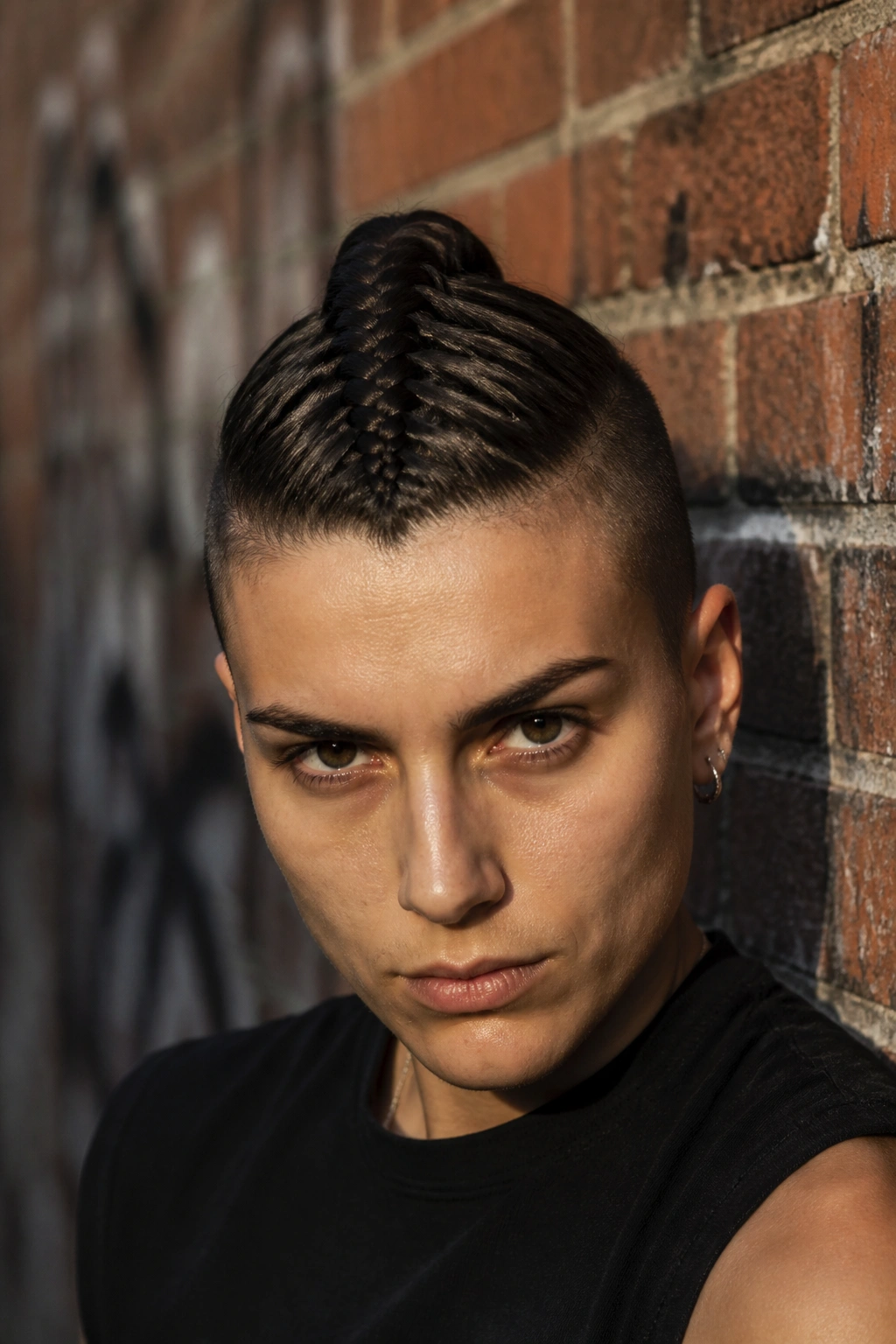
A faux hawk braid is the style I’d hand to someone who wants a sharper line without shaving the sides or changing the cut. Unlike a flat braid, this one lifts the center and lets the sides stay slicked back, loose, or pin-tucked. The result is longer, leaner, and a little more punk.
That raised middle line does a lot of visual work. It pulls the eye straight down the head, which makes the length look even longer than it is. If you want a queer hairstyle for long hair that reads bold without becoming costume-y, this is one of the strongest options on the list. It can lean masculine, feminine, or somewhere in between depending on how soft you keep the edges.
Pinch the braid outward once it’s done so it gets wider and more dramatic. That’s the move. A tight, skinny braid can disappear against long hair; a fuller one has presence. Use a bit of pomade at the sides if you want the under-hair to stay smooth, and secure the braid with a clear elastic at the base so the finish stays clean. It’s the kind of style that looks like you thought about it.
13. One-Side Tuck With a Statement Barrette

A one-side tuck is tiny work with a big payoff. You sweep one side behind the ear, pin it, and let the rest fall forward. Add a statement barrette and the whole style suddenly has a point of view. Not loud. Just pointed.
Why It Reads So Intentional
The asymmetry does the talking. One side opens the face while the other side keeps the length in view, so the style feels balanced without being symmetrical. That makes it useful when you want your hair off your face but you still want it down. It also gives glasses, earrings, and collars more room to show up.
- Use a barrette 2 to 3 inches long if you want it visible.
- Tuck the hair about 1 inch above the ear so the clip sits where the eye can see it.
- Choose a clip with some grip if your hair is fine and silky.
- Let the opposite side fall naturally instead of over-brushing it flat.
If you want the look to feel more queer and less princess-y, choose a barrette with a hard edge, matte metal, or a shape that looks a little architectural. That small detail shifts the tone fast.
14. Loose Scarf-Wrapped Ponytail
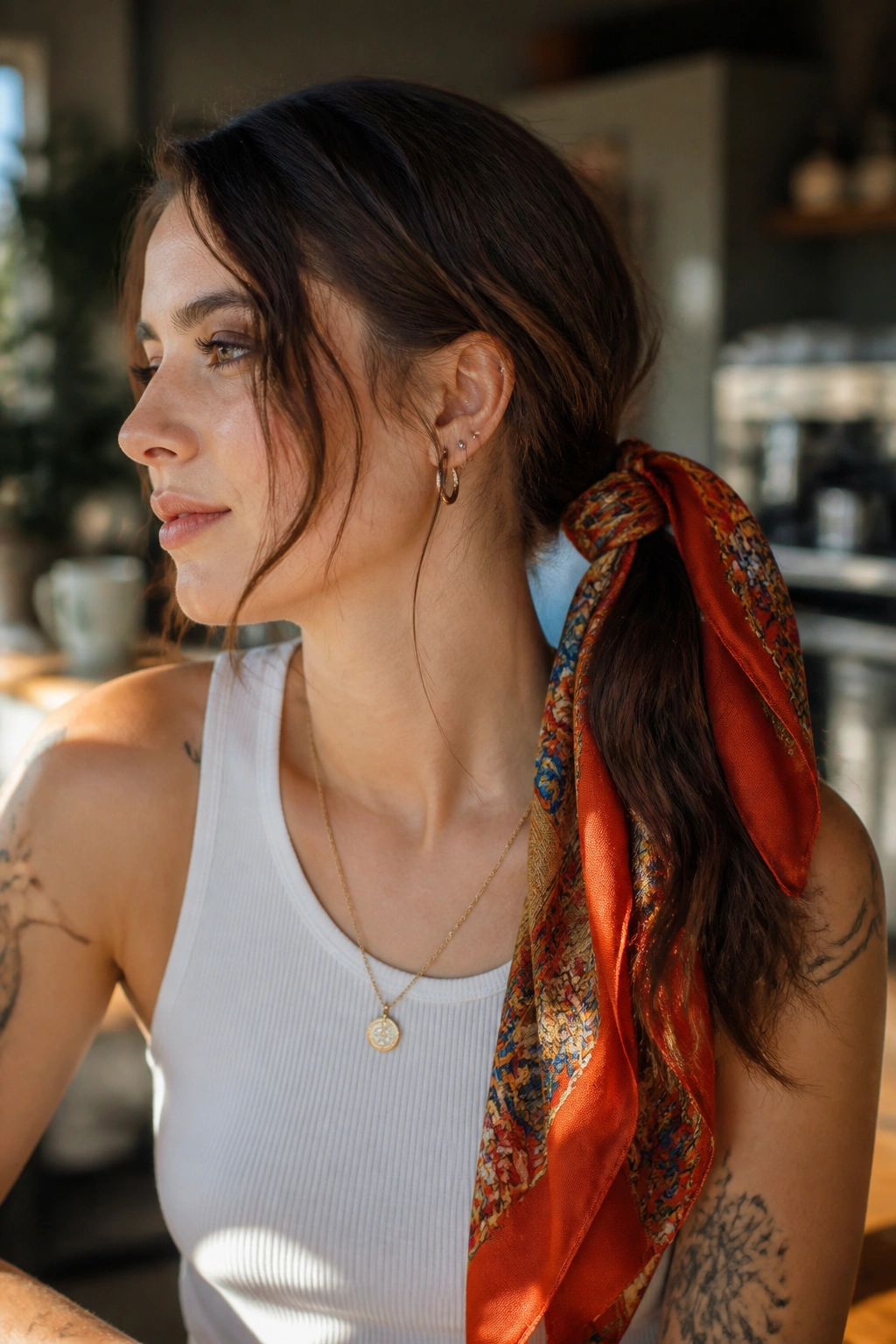
A scarf-wrapped ponytail is one of the easiest ways to make simple long hair look styled on purpose. The scarf does not need to match your clothes. In fact, it’s more interesting when it doesn’t. A strong print, a deep color, or even a plain black square scarf can change the whole read of the ponytail.
Unlike a ribbon, a scarf has body. It spreads across the hair, drapes more, and gives the style a softer outline. Fold it into a strip or use a small square folded into a band, then tie it around a low ponytail at the nape. Let the ends hang down with the hair or knot them off to one side if you want a little movement near the shoulder.
The safest fabric choices are cotton and cotton blends if you want grip. Silk looks gorgeous, but it slides faster. If your scalp is sensitive, the scarf can feel kinder than a tight elastic plus a stack of pins. That alone makes it worth keeping in the drawer. And if the hair is especially long, the scarf gives the style a bit of weight near the base so it doesn’t vanish into the rest of the length.
15. Long Hair Down With a Deep Side Part and Single Twist

Can leaving the hair down still count as styling? Absolutely, if you change the line and give it one small move. A deep side part with a single twisted section at the temple is quiet, but not boring. It lets the hair stay visible while giving the front enough shape to feel deliberate.
The twist can be tiny. One inch of hair, pinned back with two crossed bobby pins, is enough. If you want the style to lean softer, keep the front loose and tuck the twist under the longer layer so it disappears into the rest of the hair. If you want more edge, keep the twist visible and place it higher on the head. That shifts the whole energy.
How to Wear It
- Use a tail comb to make the side part clean.
- Twist the front section back toward the ear, not forward.
- Pin it with two bobby pins in an X shape so it stays put.
- Smooth the ends with a light cream if they frizz easily.
This is one of the calmer queer hairstyles for long hair, which is part of why I like it. It doesn’t shout. It just gives you enough shape to make the rest of the length feel finished.
Final Thoughts
Long hair gives you room to change your mind without changing your haircut. That’s the real advantage here. One day you can look crisp and sharp; the next, soft and a little unruly; the next, something in between that doesn’t have a neat name.
The styles that last are usually the ones that leave one thing imperfect on purpose. A loose strand. A slightly off-center part. A clip that shows. A braid that isn’t too tight. Small moves, but they matter.
Keep a tiny kit nearby if you wear long hair often: clear elastics, two good bobby pins, a medium claw clip, and one scarf. That covers more ground than most people think. If the style still feels like you after a full day, after a jacket on and off, after a quick walk, after a mirror check that turns into one more quick tug — that’s usually the one worth keeping.
