



Long hair gives braided half up hairstyles for long hair a real advantage: the braid has room to show off, and the loose length underneath keeps the whole look from feeling stiff. It also gives you more room to make a mistake, which sounds rude but is true. A half-up braid that looks tidy on shoulder-length hair can look droopy, twisted, or oddly bulky on waist-length hair if the anchor point is off by even an inch.
The good versions are easy to spot. They hold the hair away from your face, show off your length, and still leave enough movement at the bottom that the style doesn’t feel glued in place. The bad ones pull too much from the crown, flatten the top, or hide all the texture in a braid that’s too tight to breathe. Long hair hates that. It also hates tiny elastics that snag, because every snag shows up later when you take the style down.
A rat-tail comb, a few clear elastics, and a handful of bobby pins will take you farther than a drawer full of gadgets. A little dry shampoo helps if your hair is silky. A light mist of water or curl cream helps if your lengths frizz the second you touch them. None of that is fancy. It just makes the braid behave.
The trick is choosing the braid that fits the way your hair falls, not forcing one shape onto every head. Some styles want sleekness. Others look better when they’re a little loose and messy. And yes, a few of them are easier than they look.
1. Classic Three-Strand Half-Up Braid
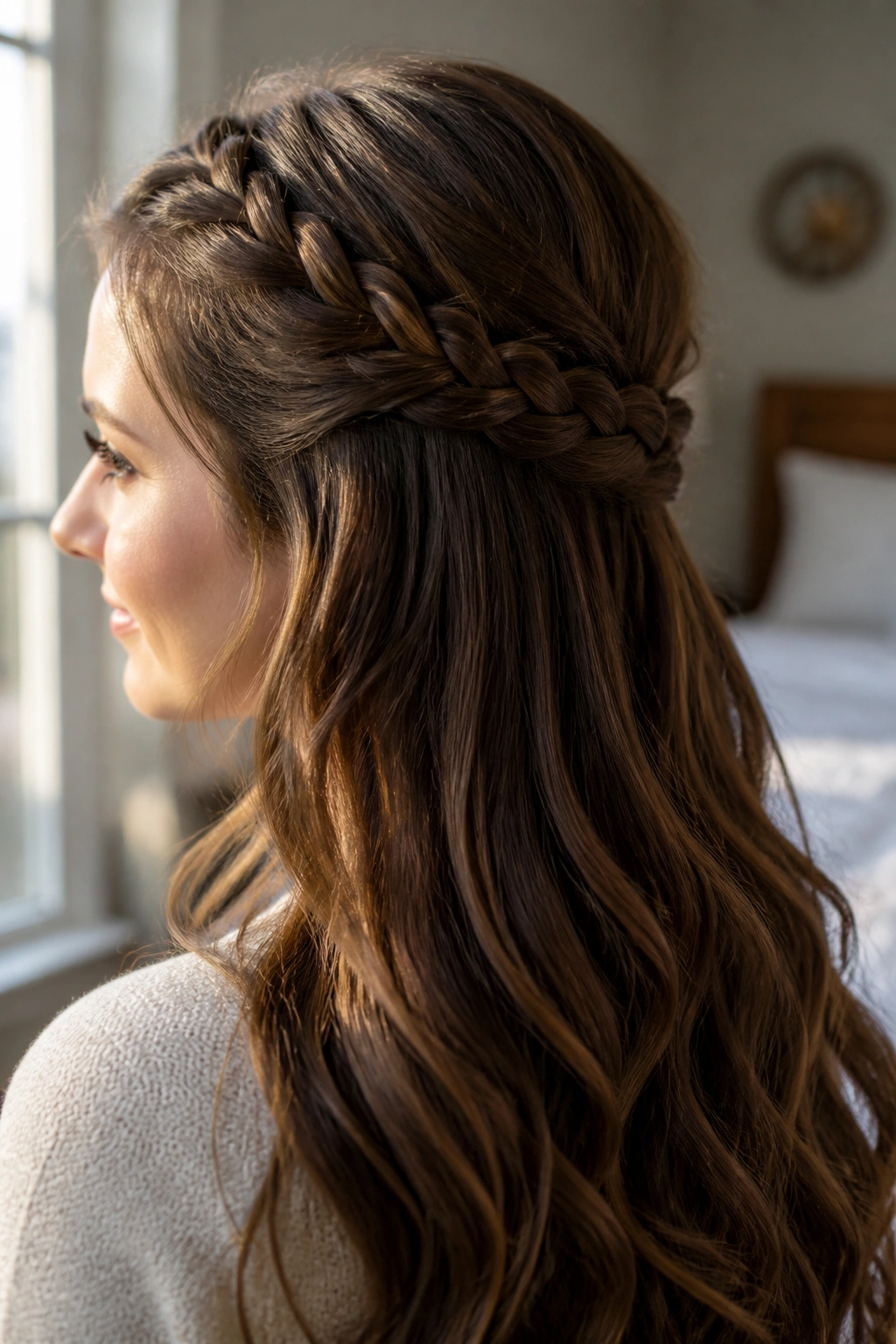
This is the calm, reliable option. No tricks. No drama. You gather the top section from temple to temple, braid it with a simple three-strand pattern, and let the rest of the hair fall free underneath.
On long hair, this style works because the braid has enough length to read clearly from the front and enough weight to sit flat without puffing out in strange places. It looks neat on straight hair, but it also behaves well on loose waves. If your ends are layered, leave the braid a little softer so the shorter pieces don’t poke out and fray the shape.
Why it works on long hair
A longer braid gives the top half a finished feel without hiding the rest of your length. That matters. If the braid is too short, the style looks like a half-finished ponytail; if it’s too tight, the crown can look strained.
Best for:
- Everyday wear when you want hair off your face
- Office days
- Straight, wavy, or lightly curled hair
- People who want the easiest possible half-up braid
Small tweak that helps: pull the braid gently at the edges after securing it. Not a lot. Just enough to make it look a touch fuller.
A single bobby pin hidden under the braid can keep it from sliding if your hair is fine. That tiny fix saves the whole style.
2. Dutch Braided Half-Up With Crown Lift
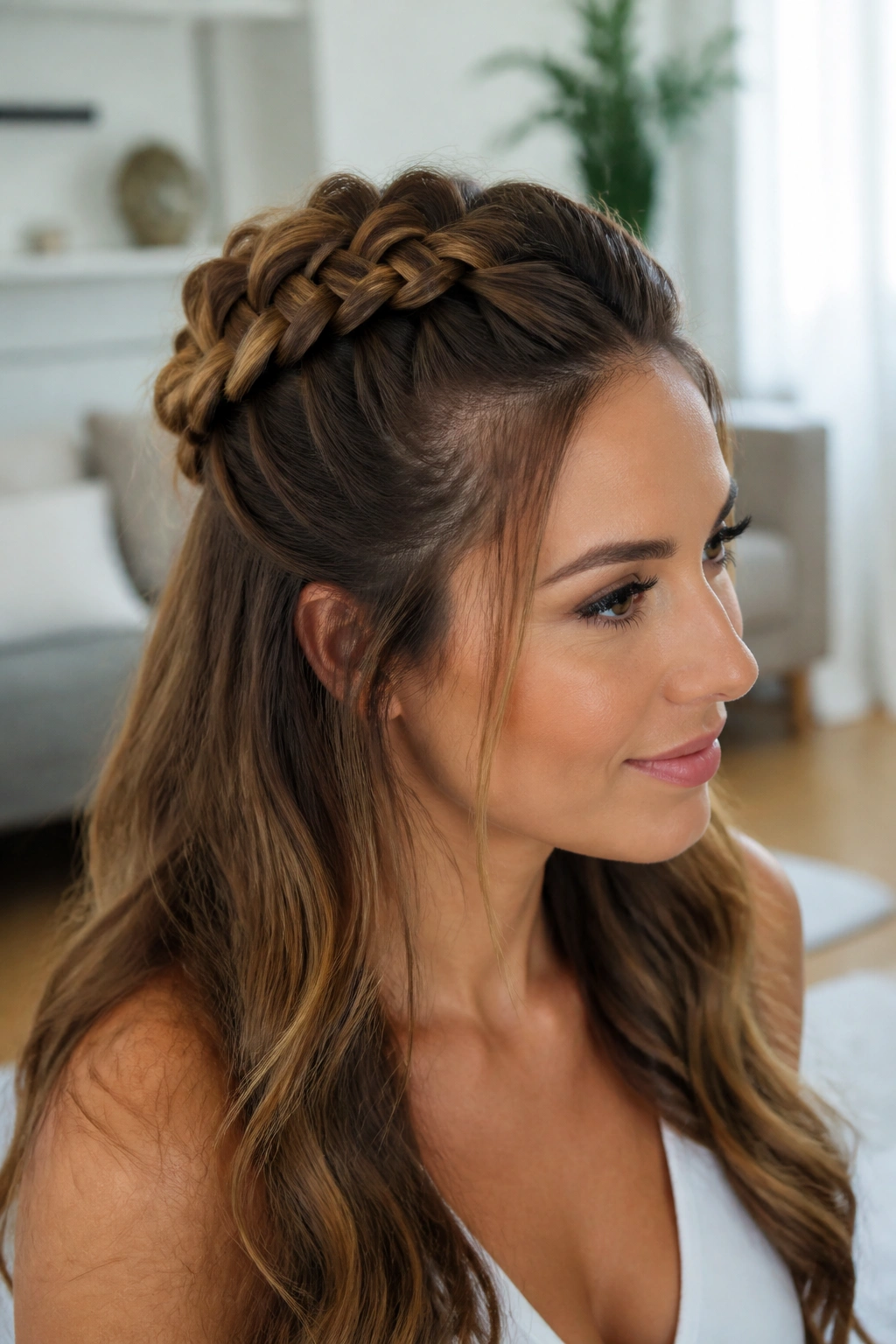
Want the braid to sit up a little more? Go Dutch. The Dutch braid flips the side strands under the middle instead of over it, which gives the braid that raised, rope-like look people notice from across the room. It’s a simple change, but it changes the whole mood.
On long hair, the raised shape keeps the braid from disappearing into the crown. That is the main reason I like it. A lot of half-up styles look flat from the front when hair is thick or heavy, and Dutch braiding solves that without needing extra teasing.
How to keep it polished
Start with a clean center part or a soft side part, then grab a top section and braid toward the back of the head. Keep the sections even. Not tight — even. Tight Dutch braids on the hairline can leave a ridge that looks harsh, especially if you wear your hair down a lot.
A little texture spray at the roots helps if your hair slips. And if you want more volume, gently widen the braid with your fingers once it’s secured. Do not yank the loops apart. That gives you a loose, fuzzy mess instead of the fuller braid shape you’re after.
This style is one of the better choices for thick long hair because it holds its shape. It also photographs cleanly, which is handy if you’re heading somewhere that involves more than a coffee run.
3. Fishtail Half-Up With Soft Waves

A fishtail braid is the easiest way to make a half-up look a little fancier without doing much more work. It uses only two sections, but the tiny over-and-under movement creates that tightly woven pattern people tend to associate with polished styling.
Long hair is where this braid gets interesting. The longer the section, the more obvious the weave becomes. On short hair, fishtails can look thin. On long hair, they get texture and presence.
The best version is not perfect. That surprises people. A fishtail that’s pulled so evenly that every strand behaves like a machine-made ribbon can look stiff. A slightly loosened one feels softer, especially if the bottom hair is waved or curled.
What makes it different
- The braid looks intricate without using three or four sections
- It works well on thick ends because the pattern can stretch over more length
- It holds up better when the loose hair underneath has a little texture
- It’s one of the better choices for balayage or highlights, since the weave shows off color shifts
If your hair is very smooth, mist the top section with dry shampoo first. That gives the strands a bit of grip, and you’ll fight less with flyaways. A fishtail doesn’t need much help, but slippery hair can make it unravel in your hands before you’re done.
4. Waterfall Braid Half-Up for Loose, Flowing Hair
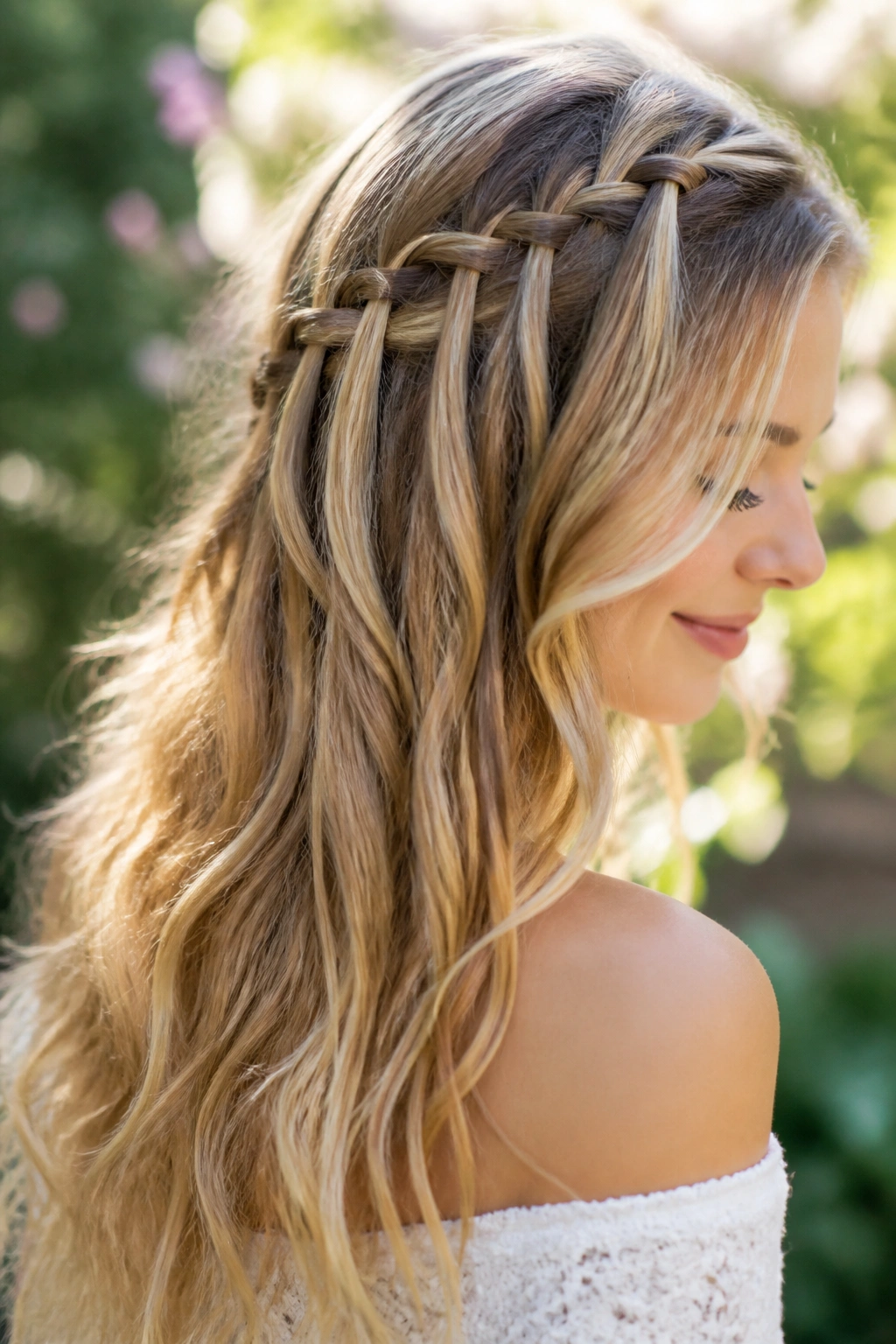
Picture soft hair falling through the braid like little drops. That’s the appeal here. A waterfall braid keeps feeding in new sections while letting one strand drop out each time, so the loose hair underneath stays visible and the braid feels airy instead of heavy.
This is one of the best braided half up hairstyles for long hair if you want movement. It flatters layers, waves, and curls because it doesn’t fight the shape already in your hair. In fact, if your hair has a lot of texture, this style can look even better because the loose pieces blend into the rest of the length instead of standing out like they’re supposed to be there.
A waterfall braid is also forgiving around the front of the head. You can begin near one temple and sweep across the back, or keep it short and subtle just above the ears. Both look good. Different vibe, same idea.
Best ways to wear it
- With soft waves for weddings or dinners
- On layered hair when you want the cut to show
- With a side part for a romantic look
- With curled ends if you want the loose pieces to read clearly
Use a small clear elastic or pin the end under a hidden section. The braid should look like it’s floating, not like it’s been trapped. That little distinction matters more than people think.
5. Rope Twist Half-Up When You Want Clean Lines
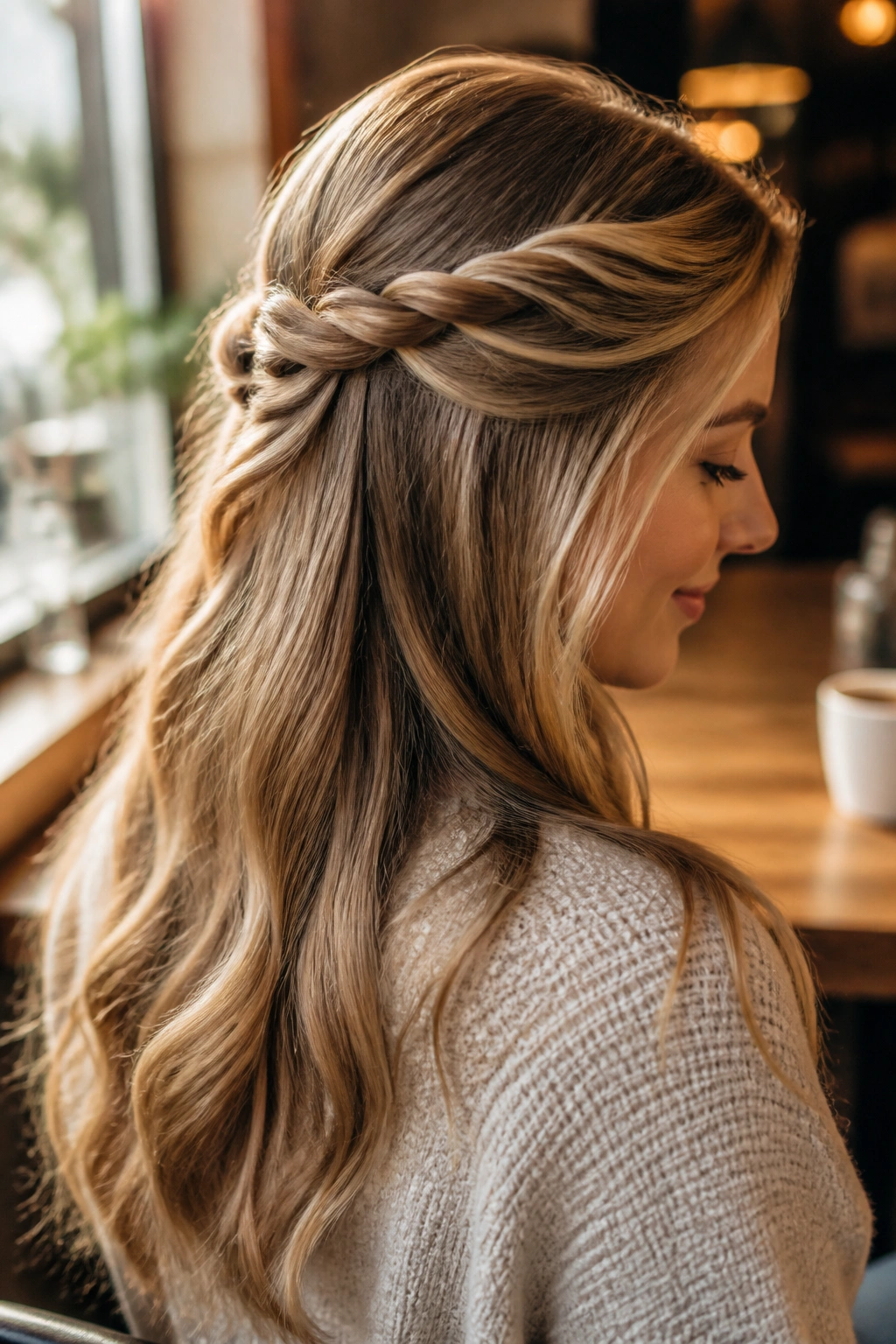
A rope twist is not technically a braid, and that’s part of its charm. It looks neat, fast, and slightly dressier than a standard twist because the two sections wind around each other in a tight spiral. If you’ve got long hair and not much patience, this one earns a place in the rotation.
Unlike a three-strand braid, the rope twist doesn’t require constant strand swapping. You split the top section in two, twist each piece in the same direction, then wrap them around each other in the opposite direction. That reverse motion is what keeps it from coming undone. Miss that part and it loosens fast.
This is a good choice for hair that’s smooth and heavy, because the twist shows clearly without getting bulky. It also works if your hair is a little dirty. Actually, maybe especially then. Freshly washed hair can be too slippery for this style.
A useful rule: keep the twist slightly loose through the crown and firmer through the ends. That keeps it from pulling your scalp while still giving the half-up section enough shape to stay put.
6. Pull-Through Half-Up Braid for Big, Full Length
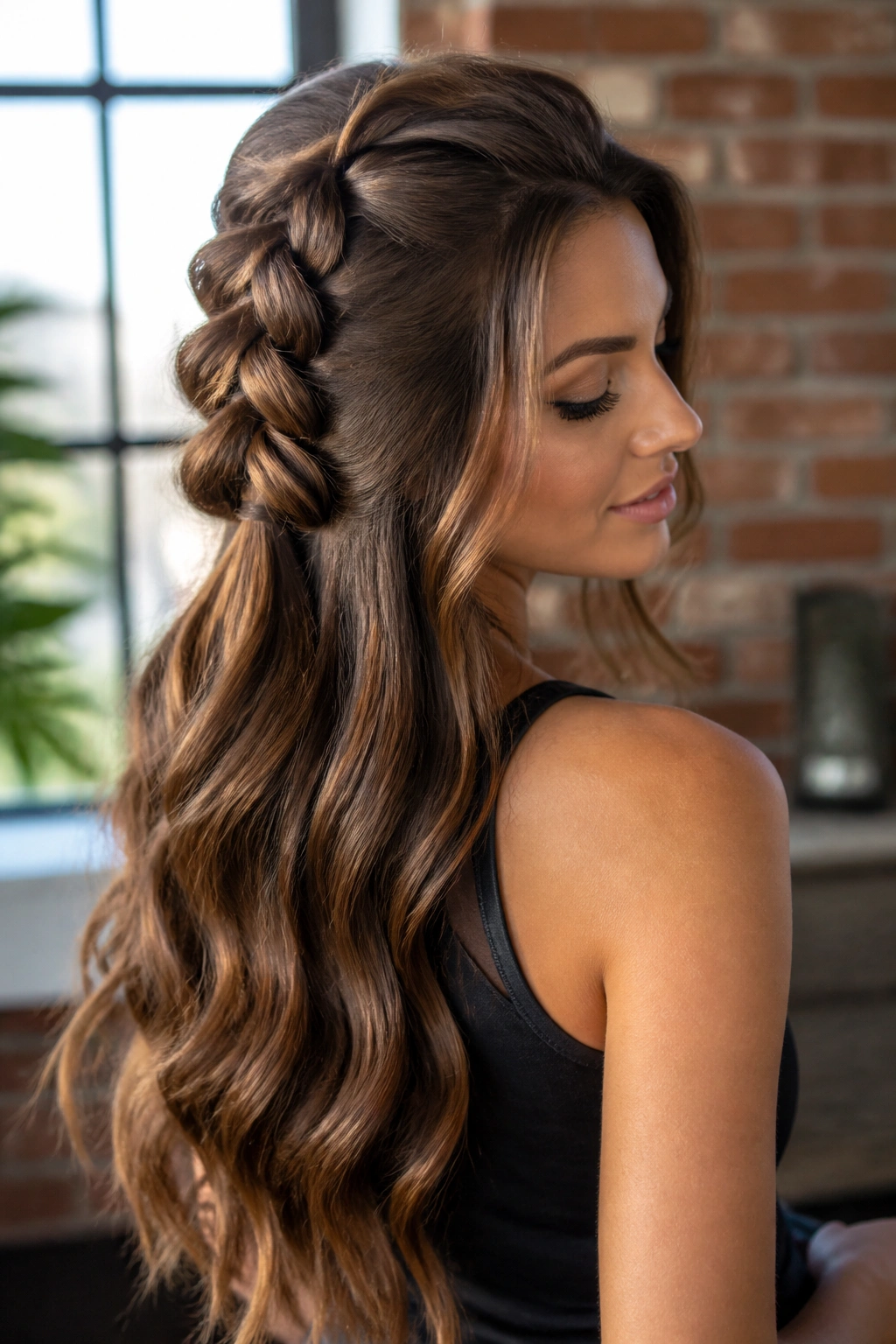
The pull-through braid is the style I reach for when someone wants braid drama without needing to learn braiding from scratch. It uses little elastics to build the look of a chunky braid, which means you get that thick, woven effect even if your hands are tired or your sections are uneven.
Long hair makes this style look especially full. That’s the whole point. The braid gets bigger as it goes, and the loose lengths underneath give the style a lot of presence from behind. If your hair is very thick, it can look almost sculpted.
What makes it different
This style does not rely on perfect hand coordination. That’s a relief. You make a series of ponytail-like loops, then split and pull the pieces outward so they stack into a braid shape. The result is softer than a tight braid and often more stable on heavy hair.
A few things to watch
- Use small elastics that won’t snag when you remove them
- Keep the first section secure at the crown so the whole style doesn’t slide
- Pull each loop gently; over-pancaking can make it collapse
- Finish with a light mist of flexible hold spray if your hair is smooth
If your arms get tired halfway through regular braids, this is your friend. Plain and simple.
7. Lace Braid Half-Up Along the Hairline

Do you want the braid to frame your face instead of sitting straight back? A lace braid does that beautifully. It’s a cousin of the French braid, but you only add hair from one side as you braid along the head, which creates a clean line that hugs the hairline.
On long hair, this is one of the nicest ways to control shorter layers around the front without pinning everything flat. It leaves plenty of length down the back while keeping the top section tidy. If your face-framing pieces tend to fall into your eyes, this style handles that without making the whole look severe.
Best placement
Start near the temple and follow the curve of the head toward the back. You can stop at the ear and pin the braid into the loose hair, or continue a little farther for a more wrapped look. Both versions work. The difference is how polished you want it to feel.
A lace braid does best when the sections are small and even. If they’re too wide, the braid loses its clean line. If they’re too tiny, it can look wiry. Middle ground is your friend here.
This is a strong pick for people with layered cuts. It keeps the front controlled while letting the rest of the hair behave on its own. Which is usually what we want.
8. Double Side Braids Into a Half-Up Knot

Two small braids can do a lot of work. Pull a section from each temple, braid them back toward the center, and tie or pin them together into a small knot, twist, or tucked loop. The style feels casual, but it still looks deliberate.
I like this one on long hair because it uses the sides instead of only the top. That spreads the weight out and keeps the crown from going flat. It also gives the style a little symmetry without needing a perfectly centered part.
If you’re in a rush, this is one of those looks that forgives uneven hands. Seriously. The braids do not have to match perfectly. In fact, tiny differences make it look less rigid.
Use it when:
- You want something quick for weekends
- Your hair is long enough to swallow small braids
- You like a low-key boho look
- You need something that sits comfortably under a jacket or scarf
A small knot at the back works better than a bulky bun here. The whole point is to keep the top controlled while letting the rest of the length stay loose and easy.
9. Bubble Braid Half-Up for a Playful Finish
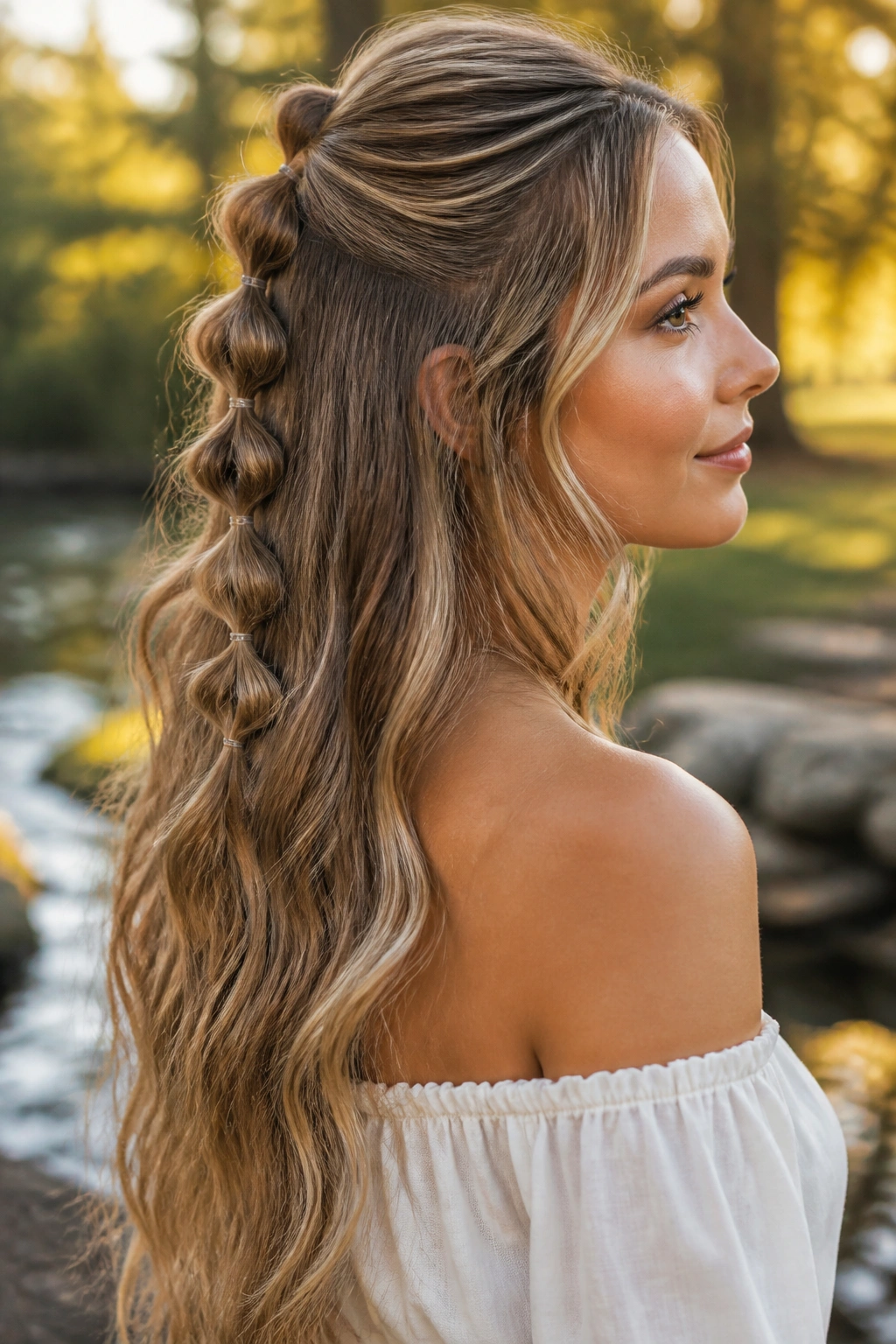
Not a true braid. That’s fine. The bubble braid scratches the same itch and takes less coordination than a woven braid, which makes it a useful option on long hair that’s slippery, thick, or just plain uncooperative.
Here’s the basic idea: gather the half-up section, secure it with a small elastic, then add more elastics every 1.5 to 2 inches down the length. After each elastic, tug the section gently so it rounds out into a bubble. The spacing matters. Too close, and the bubbles look cramped. Too far apart, and the shape gets saggy.
Why it works so well on long hair
Long length makes the bubbles read clearly. Short hair can look stubby with this style, but long hair gives you a clean line and enough room to build three or four sections before the braid ends. It’s also handy for thicker hair because the shape stays visible even when the strands are bulky.
A little smoothing cream on the top half helps if the hair frizzes around the elastics. You want each bubble to look puffy, not fuzzy. And yes, you can add a ribbon through the first elastic if you want a softer finish. It’s a small detail, but it changes the whole mood.
10. Braided Crown Half-Up With a Center Part
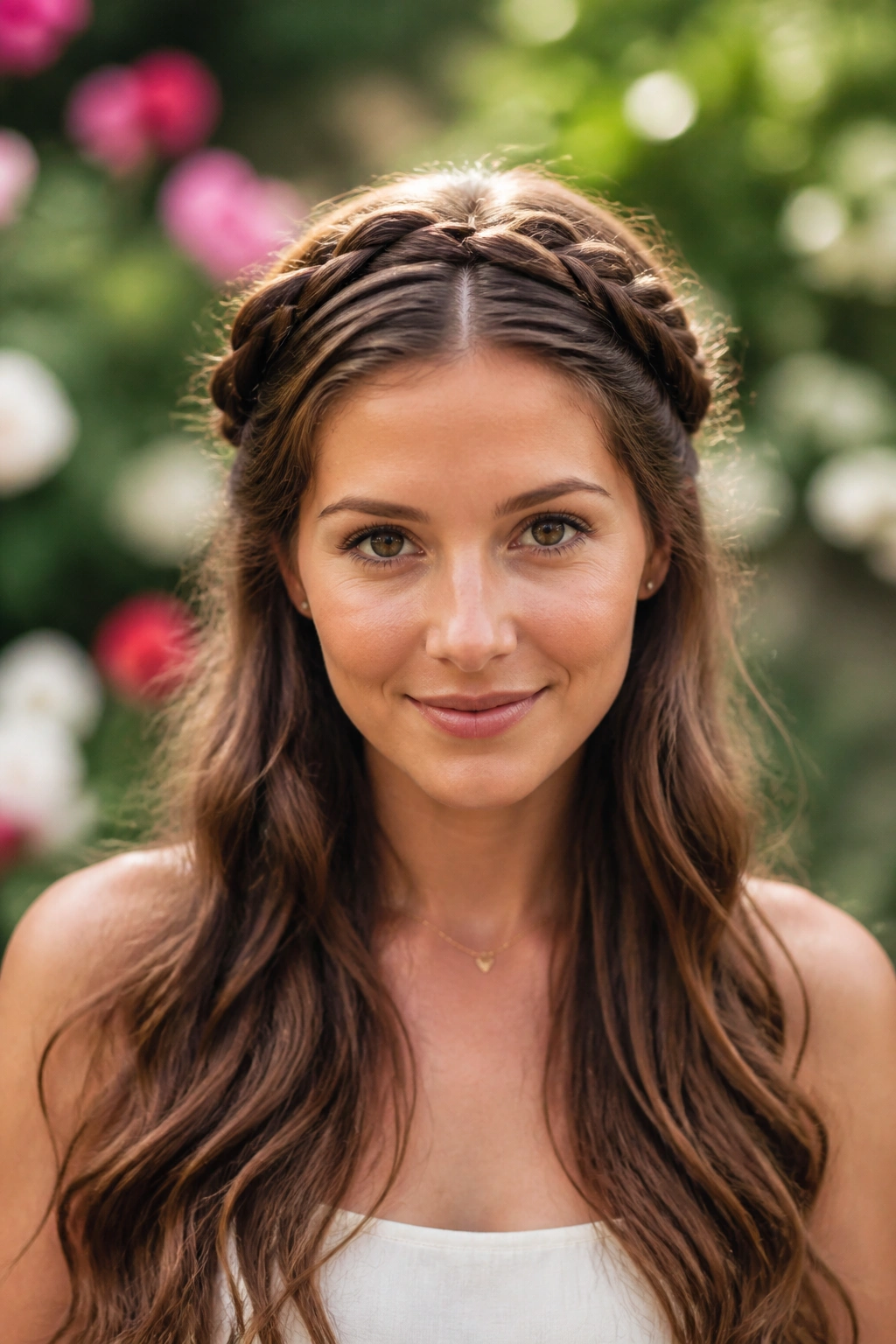
A center part gives this style a neat spine. Two braids start near the temples, sweep back, and meet at the center or just behind it, forming a small crown across the top of the head. It’s one of the more structured half-up braid looks, and on long hair, structure helps.
This is the style I’d pick if you need something that stays put for hours. The twin braids distribute the hold better than one wide braid, and the center part keeps the shape balanced. It looks especially good on thick hair because the braids have enough substance to sit visibly against the rest of the length.
How to keep it from slipping
Pin the braids with bobby pins crossed in an X under the join point. That little move is annoyingly effective. If your hair is silky, rough up the roots first with a bit of dry shampoo or a light texturizing spray.
You can keep the part razor straight for a formal feel, or soften it slightly if you want the style to read less rigid. Either way, this braid likes clean lines. It does not love chaos. Which, frankly, is part of its charm.
11. Boho Mini Braids With Loose Tendrils
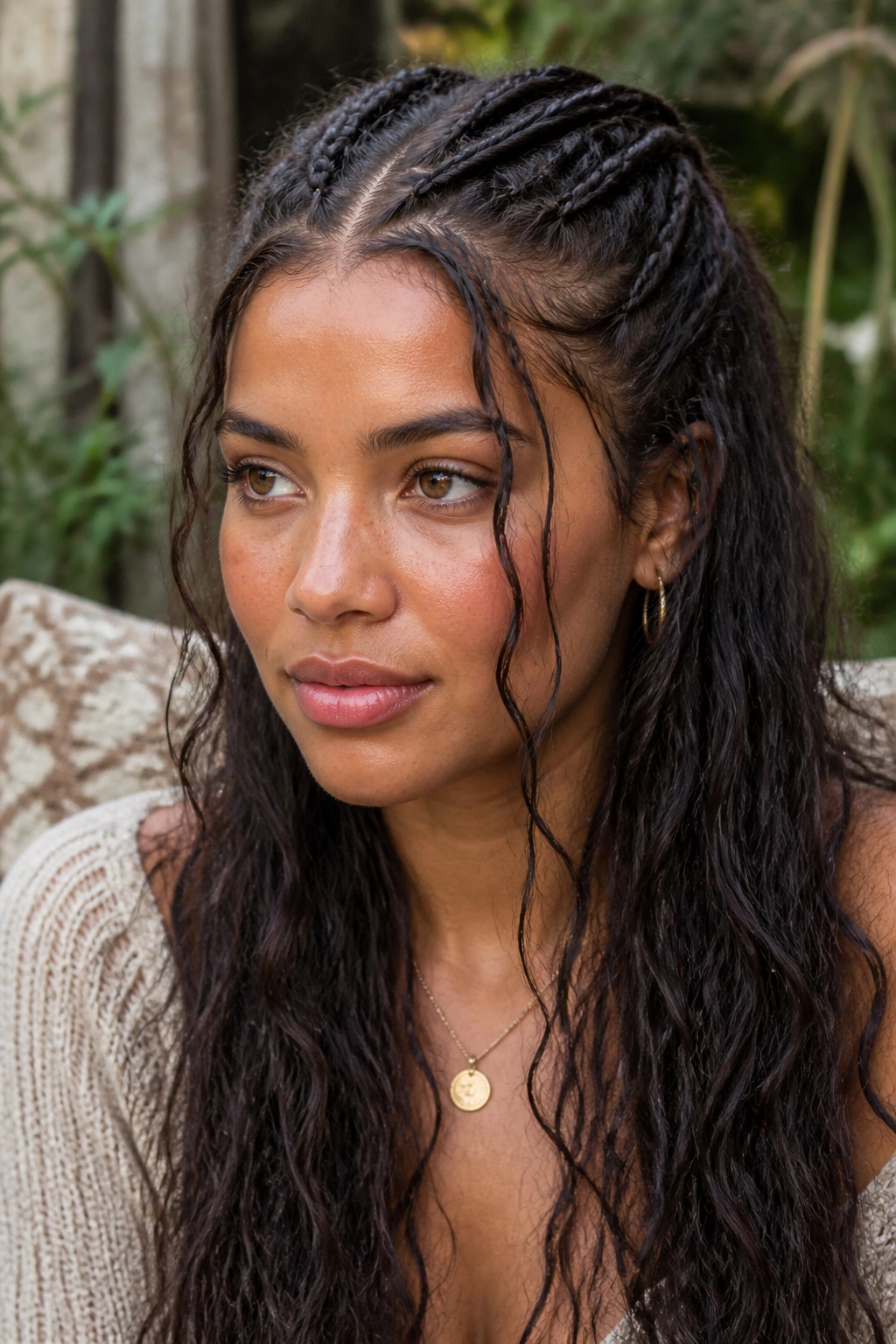
Three tiny braids can change the whole feel of long hair. That’s the magic of this one. You braid a few thin sections through the top half, leave the rest loose, and let small face-framing tendrils fall out around the cheeks and jaw.
It’s a relaxed style, but it still needs a little editing. Too many mini braids and the look starts to feel busy. Too few, and it can read like an accident. Two or three is usually enough. Add a couple of loose curls around the front and the whole thing softens fast.
This style likes texture. If your hair is pin-straight, a quick bend with a wand on the loose ends helps the braids sit better. If your hair already has wave or curl, skip that step and let the shape do its own work.
A few details that help
- Tiny gold cuffs or thread wraps work well here
- Keep the braids narrow so the loose hair still feels like the star
- A middle or off-center part both work
- This style is kinder to second-day hair than freshly washed hair
It’s one of the easiest ways to make a casual half-up look feel intentional without making it stiff.
12. Four-Strand Half-Up Braid for Extra Texture
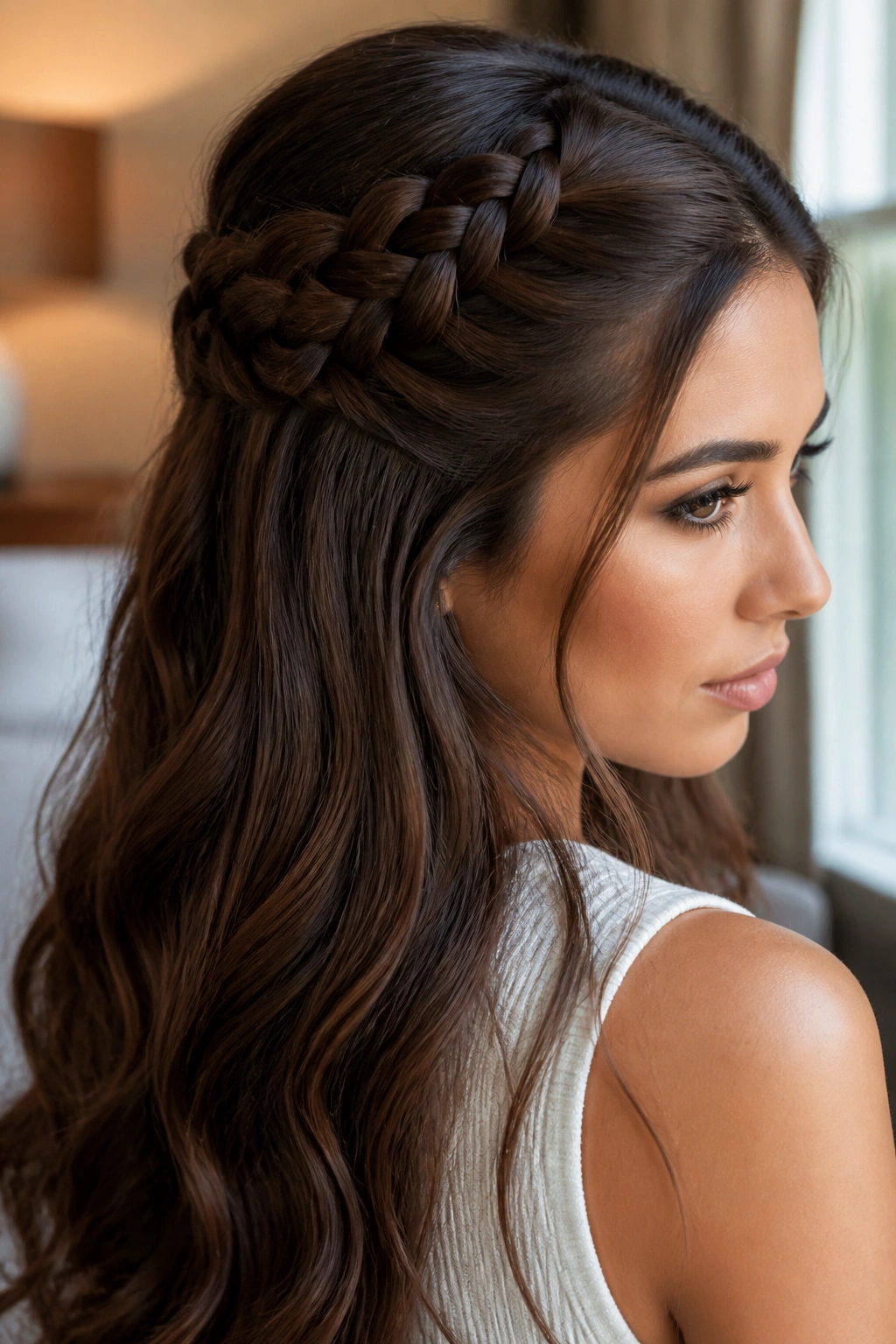
A four-strand braid gives you a more woven, ribbon-like pattern than a standard braid. It looks a bit more detailed because the strands cross over and under in a tighter rhythm, and long hair gives that pattern room to show off.
This one is a little more hands-on. Not impossible. Just more hands-on. If you’ve only ever braided with three strands, the fourth strand takes a minute to feel normal. Once it clicks, though, the shape is worth it, especially on long, one-length hair where the braid has enough length to show the pattern clearly.
What makes it a good pick
Unlike a regular braid, the four-strand version has more surface detail, so it looks fuller even when the half-up section isn’t huge. That makes it a smart option for hair that’s fine but long. It also works well on balayage, because the added crossings show off color shifts in a way that a simpler braid sometimes misses.
I would not call this the easiest half-up style. It isn’t. But if you want something that looks more intricate without adding a lot of accessories, this is a solid choice. Practice once in a mirror before trying it for an event. Saves frustration.
13. Braided Half-Up Bun for a Neater Finish
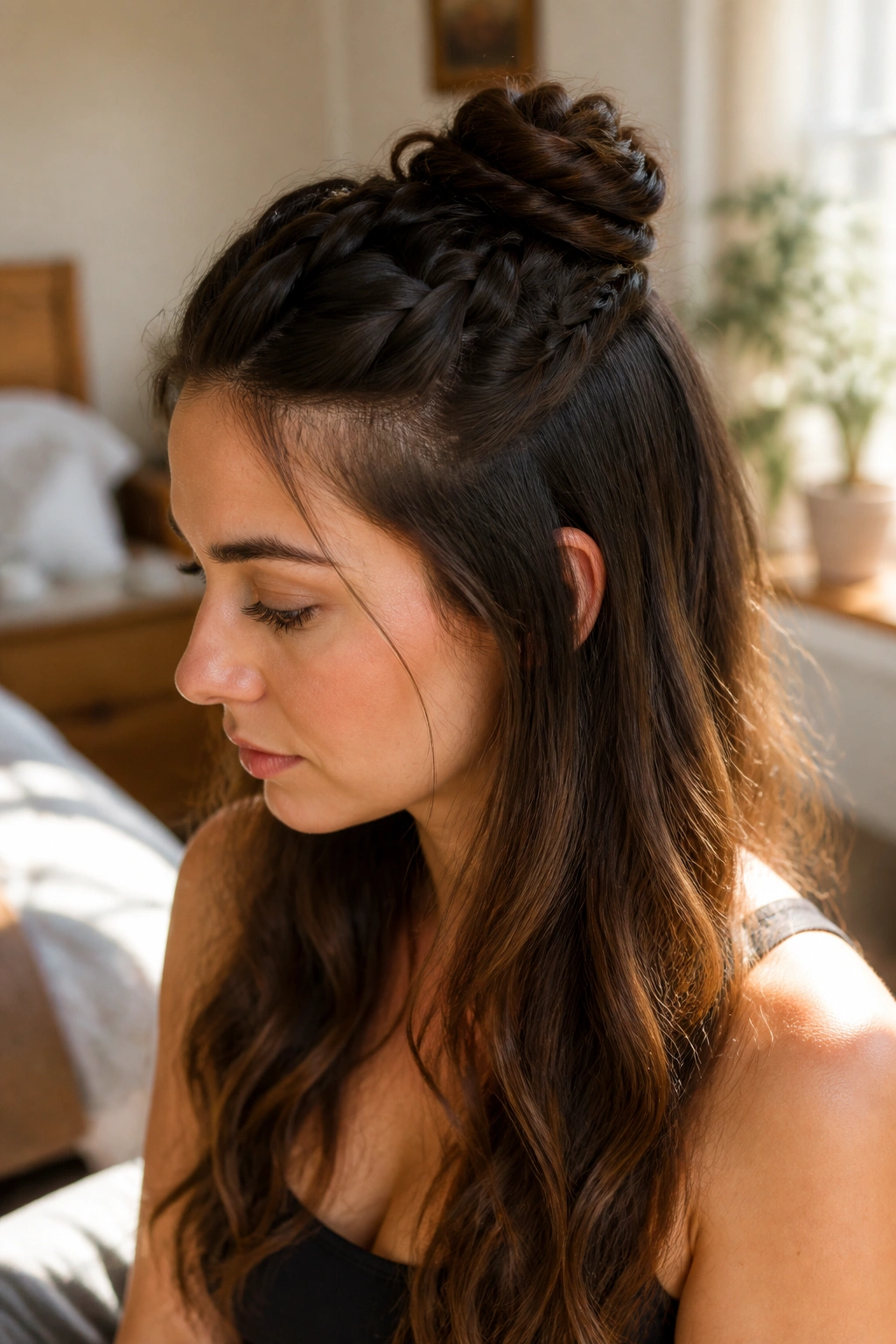
Sometimes you want the hair off your face more than you want it hanging down. A braided half-up bun sits right in that middle ground. You braid the top section, coil it into a small bun, and pin it so the lower lengths stay loose.
This is one of the most practical braided half up hairstyles for long hair because it controls the crown without forcing the whole head into an updo. If you’re working, cooking, or dealing with humidity, that matters. The bun keeps the top from slipping into your eyes while the rest of the hair still moves.
The bun doesn’t need to be tiny, but it should stay compact. A loose, floppy bun at the half-up point can pull on the braid and make the top sag. Better to wrap it once or twice, pin it securely, and leave the rest alone.
Where it shines
- Hot days when you want your neck freer
- Long, heavy hair that needs a break from loose styles
- Texture that frizzes when left totally down
- More polished outfits that still need a relaxed edge
A few bobby pins tucked from different angles hold better than one giant pin. Small tools, big difference. Annoying, but true.
14. Ribbon-Woven Half-Up Braid for a Finished Look
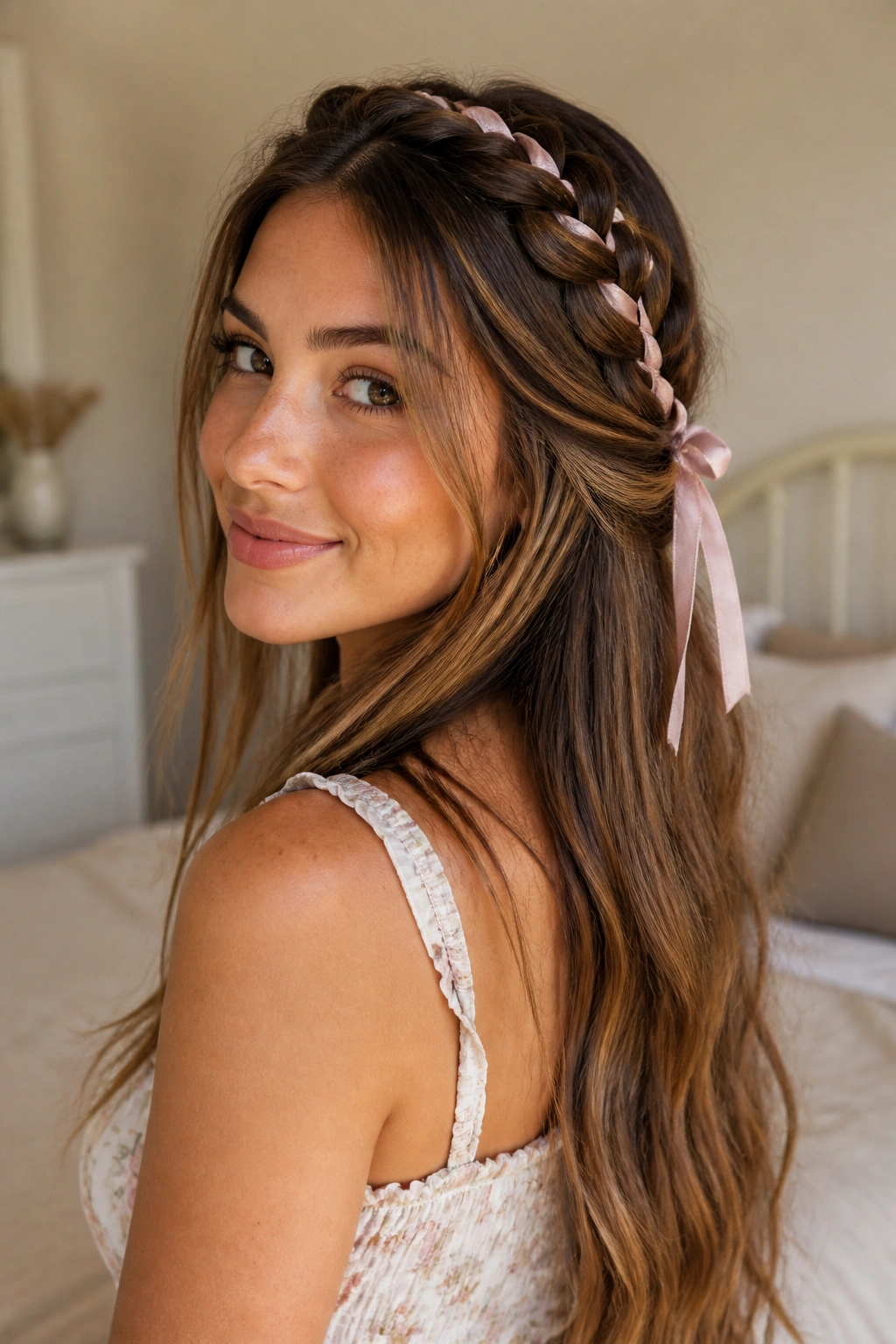
A ribbon changes the entire braid without changing the braid itself. That’s why I like it. You can take a very simple half-up braid and make it feel dressed up by weaving in a narrow ribbon or tying it at the base like a soft accent.
On long hair, ribbon works best when the braid has enough length to carry the color. A short braid with ribbon can look like a craft project. A long braid with ribbon looks intentional. Use a ribbon that’s about 1/2 inch wide for a classic finish, or a little wider if the hair is very thick and needs visual balance.
What to choose
- Satin ribbon for smooth, glossy hair
- Matte ribbon if the hair is textured or wavy
- A slim scarf if you want a softer, less formal feel
- Neutral shades for work or daytime
- Deep jewel tones for evening or events
This style is especially nice when you want one little detail that feels personal. The braid can be basic. The ribbon does the talking. Keep the ends tidy and secure them with a clear elastic so the whole thing doesn’t shift halfway through the day.
15. Twisted Braided Half-Up With Cascading Ends

If you only want one style to keep in your pocket, make it this one. It blends a twist, a braid, and loose length in a way that suits almost every kind of long hair. The top section gets just enough structure to stay under control, while the ends fall freely and keep the style soft.
I like this version because it doesn’t force your hair into one fixed shape. That matters more than people think. Some half-up styles look brilliant on dense hair and awkward on finer hair. This one bends with what your hair already does. A little wave? Fine. Straight lengths? Also fine. Layers? Still fine, as long as you keep the front sections controlled.
You can make it cleaner for a dinner, messier for a weekend, or add a small braid to one side if you want a little extra detail. No need to overhaul it. The basic shape is enough.
A few loose pieces around the face help the style breathe. Too much volume at the crown, and it starts to look overworked. Too little, and it can vanish into the rest of the hair. Find the middle. That’s where this one lives best.
And honestly, that’s the real advantage of braided half-up hairstyles for long hair. They let you decide how polished or relaxed you want to look without hiding the length you worked to keep. Pick the braid that fits your hair’s texture and your patience level, then make the tension a little softer than you think you need. Long hair usually looks better when it can move.
