



Thick hair and short cuts get along beautifully when the shape is built to shed weight. They fight when it isn’t.
A blunt, one-length cut on dense hair can puff out at the sides, sit heavy at the crown, and look strangely wider as it dries. A good messy cut does the opposite. It breaks up the bulk, lets air move through the shape, and gives you that lived-in, piecey finish that looks casual without looking careless.
That is the whole trick with short messy haircuts for thick hair: you are not trying to tame the hair into a helmet. You are giving it a smarter outline. Internal layers, point-cut ends, soft fringes, tapered napes, and a little asymmetry can make a huge difference, sometimes more than another inch off the length. Thick hair has its own personality. The best cuts work with it instead of arguing.
And yes, thinning shears can help, but they are not a plan on their own. I’d take a thoughtful layered shape over random thinning any day. A bad cut on thick hair grows out like a grudge. A good one grows out with manners.
1. Choppy Pixie With Piecey Fringe

Messy and precise can live in the same haircut. The choppy pixie proves it.
This is one of my favorite short messy haircuts for thick hair because it takes bulk off fast, but still leaves enough length on top to play with. The crown stays a little longer, the sides are shortened, and the fringe gets cut into soft, broken pieces instead of one heavy curtain. That matters. Thick hair can look boxy when the front is cut blunt, and piecey fringe keeps the whole thing moving.
Why It Works on Dense Hair
The shape does two jobs at once. It clears weight from the sides and nape, then keeps the top flexible enough to scrunch, separate, or sweep forward.
- Ask for point-cut ends through the fringe and top layers.
- Keep the top about 2 to 3 inches longer than the sides.
- Style with a pea-sized dab of matte paste on dry hair.
- Push the front around with your fingers, not a brush.
Best fit: straight to wavy thick hair that gets puffy when it’s all one length.
2. Textured French Crop

Why does the French crop work so well on thick hair? Because it gets straight to the point.
The sides stay short, the top stays compact, and the fringe sits forward without swallowing your face. On dense hair, that forward edge keeps the cut from ballooning outward. It also gives you a little structure on days when you don’t want to fuss. I like this cut on people who want something neat-ish but not polished to death.
The important part is texture. Not every French crop needs to be razor-light, but the top should not be left in one solid block. The barber or stylist should break up the upper section so the hair falls in little segments instead of one thick mat. That is what keeps it looking modern rather than severe.
If your hair stands up on its own, even better. If it doesn’t, a mist of sea salt spray and a rough dry with your hands is usually enough. Nothing fancy. The whole point is that it should look like you slept on it on purpose.
3. Messy Bixie With Soft Layers

A bixie is the haircut that sits between a bob and a pixie, and thick hair gives it some real personality.
This one is especially useful if you want short hair but don’t want the tiny, exposed feeling of a classic pixie. The extra length around the ears and nape softens the outline, while the layers through the crown stop the shape from getting bulky. It has that slightly rumpled, windblown feel that works whether your hair is naturally wavy or needs a bit of help.
What to Ask For
Ask for a bixie with internal layers, not just chopped ends. Those hidden layers matter more than they sound.
- Keep the nape tapered, not shaved, unless you want a sharper edge.
- Leave enough length around the cheekbones for soft framing.
- Add a little height at the crown so the cut doesn’t sit flat.
- Use a lightweight mousse on damp hair, then scrunch.
A bixie is also a good choice if you hate that awkward grow-out phase. It grows into a short bob rather gracefully, which is more than I can say for a lot of cropped cuts.
4. Jaw-Length Bob With Broken Ends

A jaw-length bob does not have to look neat. It can look lived-in, slightly messy, and a little cheeky if the ends are handled right.
Thick hair loves to misbehave at this length, which is exactly why this cut works so well when it’s textured. The bob sits just at or below the jaw, so the hair still has enough weight to hang, but the ends are broken up with a razor or point-cutting to keep them from forming that heavy shelf. That shelf is the enemy. It makes thick hair look stiff.
I prefer this version over a super blunt bob for dense hair because it feels lighter when you move. Tuck one side behind your ear. Let the other side fall forward. Add a bend with a flat iron if your hair is straight, or just diffuse if it already has wave. It doesn’t need to be perfect. In fact, perfection would ruin it.
A good jaw-length messy bob should skim, not cling. If the ends flip out a little, that’s fine. Sometimes that little bit of mischief is the best part.
5. Undercut Pixie With Lifted Crown
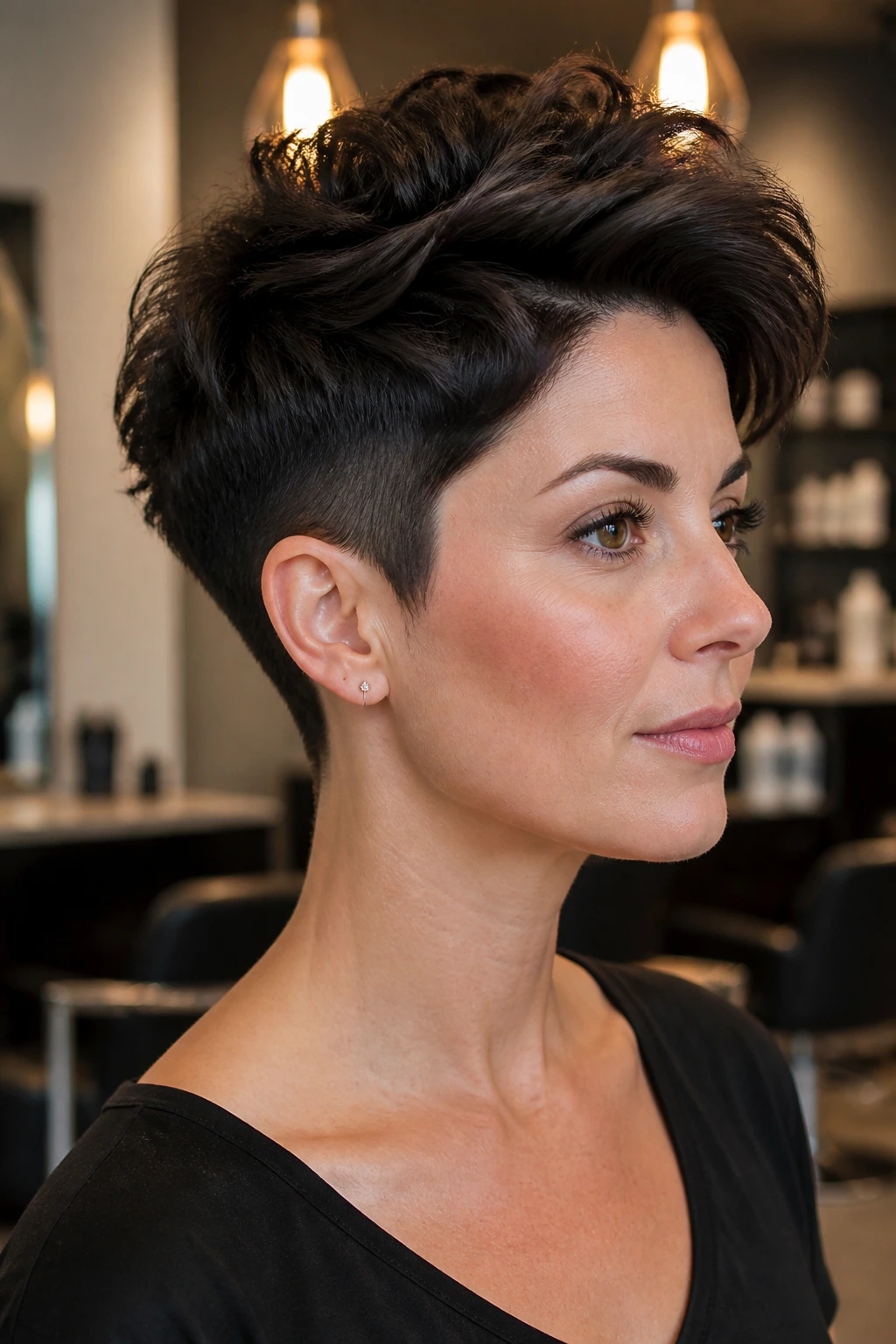
If your hair is dense enough to eat volume, the undercut pixie is the blunt fix.
This cut removes weight where thick hair tends to fight back the hardest: the nape and lower sides. What stays on top is enough length for lift, texture, and a bit of attitude. The result is clean at the base and messy where it matters. That contrast is what makes it work so well.
The Shape You Want
You are looking for a short undercut or tight taper under a longer crown. Not a buzzed scalp moment unless you really want that.
- Keep the crown roughly 3 to 4 inches if you want styling room.
- Ask for the sides to be cut close with a soft blend into the top.
- Blow-dry upward at the roots for a few minutes, then let the hair cool.
- Finish with a dry texture spray or a tiny bit of wax.
This cut can look sharper than the others on this list, which is why I like it for people who want short hair that still feels strong. It has a little edge. Not too much. Just enough.
6. Curly Crop With Airy Top

Air-dried curls should feel springy, not crunchy.
That’s why the curly crop is such a smart move for thick, curly hair that wants to stay short. The top is left long enough to keep the curl pattern intact, while the sides and back are trimmed tighter so the shape doesn’t turn into a triangle. Thick curls can pile up fast. This cut stops that before it starts.
A dry cut is usually the best way to handle this shape because curls shrink differently than straight hair. A stylist who understands curl pattern will leave room where the hair needs it and remove bulk where it swells. That is a very different job from just “making it shorter.” Those are not the same thing.
Use a curl cream or light gel on soaking-wet hair, scrunch once, then leave it alone. Seriously. Over-touching is how you lose the clean shape and get frizz instead. If the cut is right, the hair should look airy without losing its line.
7. Short Wolf Cut

Can a wolf cut work on thick hair that hates frizz? Yes, if the layers are controlled.
The short wolf cut takes the shag idea and pushes it a little messier. You get choppy layers through the crown, a bit of mullet-like length in the back, and face-framing pieces that keep the front from looking heavy. On thick hair, that layered architecture is a gift. It spreads the bulk around instead of letting it gather in one block.
What Makes It Different
The best short wolf cuts do not rely on wild, shredded ends alone. They use shape first, then texture.
- Ask for a shorter crown with disconnected layers.
- Keep the back slightly longer than the front.
- Leave the fringe soft, not blunt.
- Style with mousse and a diffuser, or air-dry with a touch of salt spray.
This cut is not for someone who wants tidy. It is for someone who wants movement and does not mind a little disorder. Thick hair gives it body; the layers give it attitude. That combination is the whole point.
8. Side-Swept Crop With Long Fringe

A side-swept fringe is the easiest way to break up a heavy front.
If thick hair tends to land in your face all at once, this crop gives you a cleaner fall line. The top stays short, but the fringe is left long enough to sweep across the forehead and soften the front of the haircut. That tiny diagonal shift makes a bigger difference than people expect. It takes the pressure off the face and keeps the shape from feeling blocky.
This works especially well if your hair grows in a strong cowlick or wants to fall forward. Instead of fighting that pattern, the cut uses it. The longer fringe can be tucked, flipped, or left loose depending on the day. No drama.
A light styling cream is usually enough. Work it through the fringe, then push the hair to the heavier side with your fingers. If it falls a little unevenly, good. That unevenness is what makes it look relaxed instead of overdone.
9. Feathered Crop With Tapered Nape
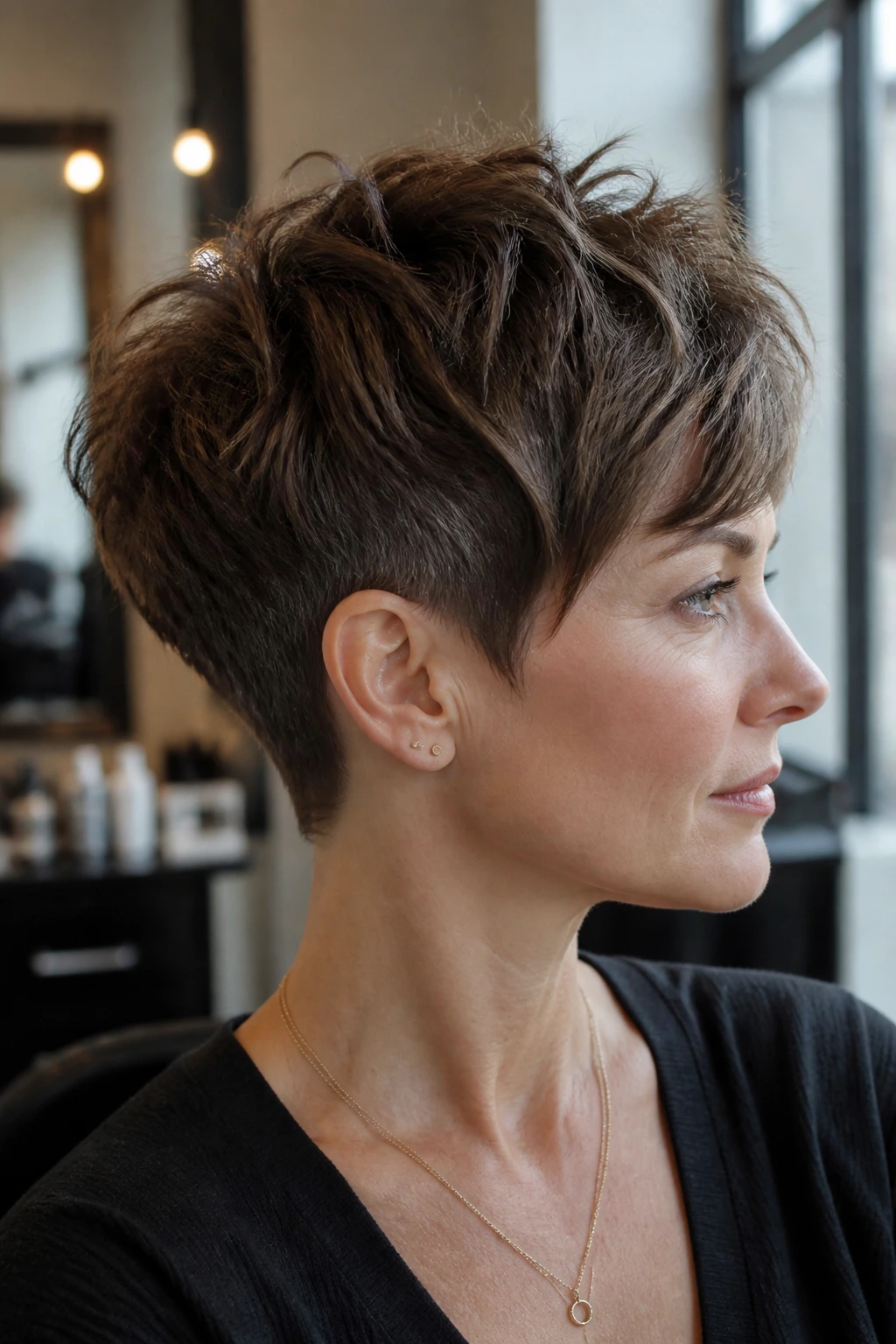
The first time someone asks for a feathered crop, they usually want less bulk around the temples.
That’s exactly where this cut earns its keep. The hair is kept close at the nape and sides, then softened through the top and around the front with feathering, which is just a softer kind of layering that makes the edges look lighter. On thick hair, that feathered finish keeps the cut from feeling square or heavy.
The Mechanic Behind It
The taper at the nape lowers the weight line. The feathering up top lifts the eye and gives the crop some motion.
- Ask for soft graduation through the back.
- Keep the temples slightly longer so the cut doesn’t look severe.
- Use a blow-dryer on low heat with a small round brush if you want lift.
- Finish with a flexible hairspray, not a shellacked one.
This is one of those cuts that can look polished one day and a little scruffed-up the next. I like that. Hair should be allowed to have more than one mood.
10. Messy Bob With Curtain Bangs

Curtain bangs on thick hair can look soft instead of bulky when the ends are broken up.
That’s the big difference between this and a heavy blunt fringe. The bangs part in the middle or just off center, then taper away from the face so they don’t sit like a curtain rod. The bob itself usually lands around the chin or just below it, which gives thick hair enough length to move but not so much length that it starts acting heavy again.
This cut is a good pick if you want something face-framing without a ton of maintenance. The bangs do need a quick blow-dry or a round brush bend now and then, but the rest of the style can stay loose. A little dry texture spray at the ends helps separate the shape.
The danger here is too much fringe. If the front gets cut too thick, the whole haircut starts to feel weighted. Thin the bang section with care. Better a little sparse at first than too dense and helmet-like.
11. Tapered Pixie With Crown Volume
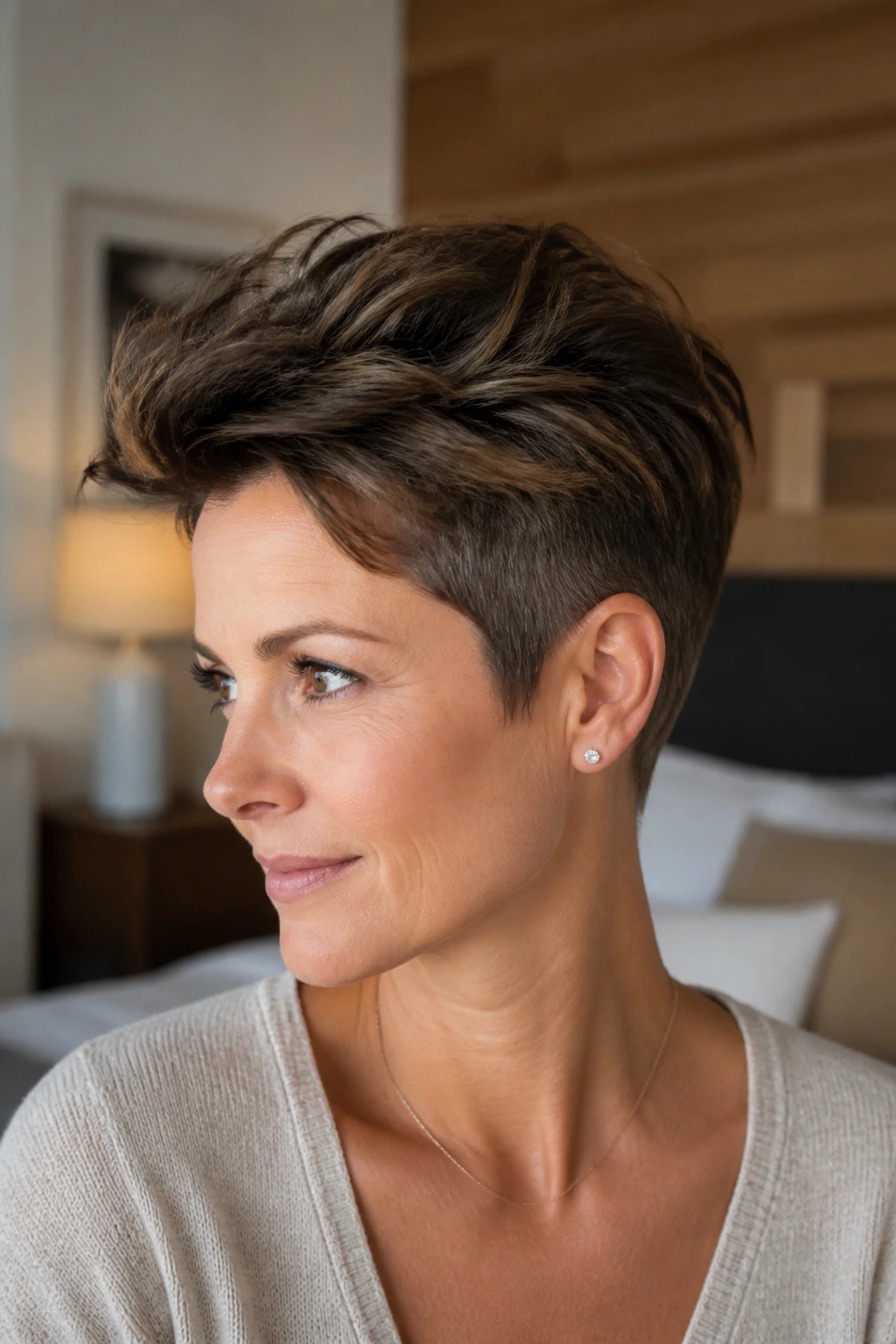
What happens when you keep the sides tight and the crown tall? You get a pixie that looks deliberate, not puffy.
This shape is wonderful on thick hair because it puts the volume where you want it. The sides and back are tapered close to the head, which removes the bulk that can make short cuts spread outward. The top is left taller, often with a bit of length at the front, so the hair can be pushed upward, forward, or slightly off to the side.
How to Wear It
The style needs a little lift at the roots, then a piecey finish.
- Blow-dry the crown first, directing hair upward.
- Pinch the top layers with a matte paste once the hair cools.
- Keep the sides neat so the top has something to contrast against.
- If your hair is coarse, use a smoothing cream only at the edges.
This is a sharp-looking cut without being severe. It has shape, but it still feels casual if you break the top apart with your fingers. Thick hair usually holds the volume well, which makes this one easier to wear than a skinny, limp pixie.
12. Asymmetrical Short Bob

One side grazing the cheekbone, the other tucking behind the ear. That tiny difference changes everything.
An asymmetrical short bob is a good option when thick hair needs a little tension in the shape. The uneven length makes the haircut feel less blocky, and the longer side gives you something to tuck or swing forward. It’s a nice answer for anyone who wants short hair but doesn’t want the same look from every angle.
I like this cut on thick, straight hair because it shows off the line. On wavy hair, the asymmetry looks softer and more relaxed. Either way, the key is not to bury the haircut in too many layers. A little texture is enough. You still want the uneven shape to read clearly.
Maintenance is the trade-off. You’ll probably want trims before the ends get too soft, because the whole point is the contrast between the two sides. If that contrast disappears, the cut loses some of its spark.
13. Modern Bowl Cut With Soft Texture

A modern bowl cut is not the helmet cut people picture.
On thick hair, it can actually be one of the smartest short messy haircuts because the shape uses density instead of fighting it. The outline is rounded, but the ends are softened and broken so the haircut doesn’t sit like a hard cap. The top and sides can be slightly disconnected, which keeps the shape from feeling old-fashioned or too perfect.
This cut shines when the hair has a little natural bend. Straight thick hair can wear it too, but the texture needs to be built in with a razor or point-cutting. The result is a shape that looks architectural one day and a little shaggy the next. I find that interesting. Not every haircut needs to behave.
If you choose this one, keep the styling simple. A touch of cream or wax on dry hair is enough. The haircut itself should do most of the work, which is exactly how short hair ought to behave when it’s cut well.
14. Ear-Grazing Shag

At jaw level, the shag starts to show its personality.
This version keeps the overall length short, often around the ears or just brushing the cheekbones, while using layers to create movement through the crown and sides. Thick hair loves the shag because it can hold shape without collapsing. The trick is to keep the layers airy enough that they don’t stack into a heavy puff. That is where a lot of bad shags go wrong.
The ear-grazing length is also practical. It opens up the neck, shows off earrings, and makes thick hair feel lighter the second you cut into it. On straight hair, the texture gives the cut some grit. On wavy hair, it becomes more romantic and less edgy. Same cut. Different mood.
I’d ask for soft, irregular layers rather than a uniformly chopped finish. Uniform layers can still look bulky on thick hair, especially if the texture is coarse. A little unevenness is your friend here.
15. Micro-Bang Crop

Micro bangs change the whole conversation.
If you like short hair that feels a little sharp, this crop brings the focus straight to the eyes and brows. Thick hair can actually make micro bangs easier to wear than fine hair, because there is enough density for the fringe to hold its shape. The rest of the cut stays short and slightly messy so the tiny fringe doesn’t look too precious.
The Detail That Matters
The bangs need to be piecey, not dense. That is the whole game.
- Keep the fringe slightly separated with a texturizing paste.
- Leave the sides soft so the bangs don’t feel like a hard line.
- Pair the fringe with a cropped nape or short bob.
- Trim the bangs carefully, because they show every millimeter.
This is not a timid haircut. It has attitude, and it suits someone who wants the front of the face to stand out. On thick hair, it can look bold without needing a lot of styling. A quick finger dry and a small amount of product is often enough.
16. Soft Mullet Crop
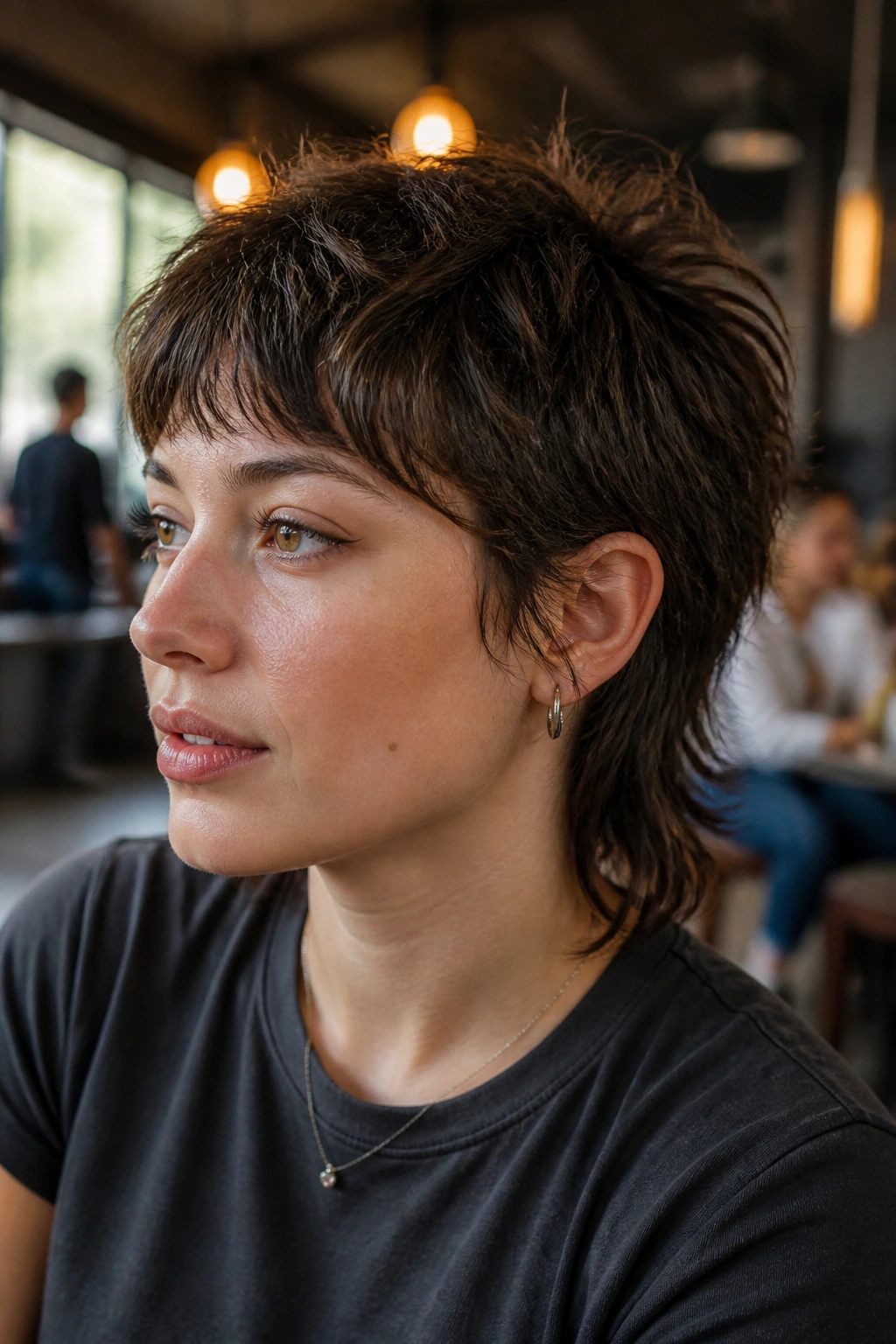
Is a soft mullet too much for thick hair? Not if the proportions are sane.
The best short version keeps the top and sides short, lets the back stay a little longer, and uses texture to blur the line between the sections. Thick hair is actually useful here because it gives the cut enough body to keep its shape. Without that body, a mullet can look stringy. With it, the cut looks full, messy, and alive.
What makes this version “soft” is the transition. There should be no abrupt cliff from short to long. The layers need to fold into one another so the whole thing looks lived-in rather than theatrical. Unless theatrical is what you want, in which case, go for it. But most people want a crop that feels wearable.
This one works best with matte styling products and a rough dry. If the ends are too shiny or too controlled, the cut loses its edge. A little mess is the point.
17. Tousled Curly Bob

On wavy or curly thick hair, a tousled bob lives or dies by the end shape.
If the outline is wrong, the hair turns into a square block. If the outline is right, you get a short bob that bounces, bends, and looks casually undone. The length usually sits between the chin and the top of the neck, which is short enough to feel fresh but long enough to keep the curl pattern from shrinking into a puff.
Styling Routine That Actually Helps
A curly bob needs moisture first, shape second.
- Work in leave-in conditioner on wet hair.
- Add a curl cream or light gel in sections.
- Scrunch, then diffuse on low heat if needed.
- Do not rake through it once it starts drying.
This cut often looks best the next day, after the curls settle. That sounds backward, but thick curls usually settle into a nicer pattern once the water leaves and the product has had time to hold the shape. If the cut is good, you shouldn’t need to fight it every morning.
18. Razor-Textured Pixie Bob

A razor-textured pixie bob needs the right hand. Otherwise, thick hair can go frayed fast.
When done well, though, it’s one of the best ways to shorten dense hair without losing movement. The pixie bob sits longer than a pixie but shorter than a classic bob, and the razor texture softens the perimeter so the ends don’t land like a heavy line. That broken edge is what gives the style its messy finish.
I like this option for people whose hair is thick enough to hold shape but not so curly that a razor would rough it up too much. On straight-to-wavy hair, it gives a little swing. On coarse hair, it can reduce bulk if the stylist is careful and doesn’t overdo the slicing. That last part matters. Too much razor work can leave the ends looking thin in a bad way.
Keep the styling light. A cream or paste is enough. If you need a lot of product to make the cut behave, the shape probably needs adjusting.
19. Cropped Shag With Side Bangs

A cropped shag and a classic shag are not the same animal.
This shorter version keeps the layers close to the head, which makes it easier to wear on thick hair that would otherwise get too wide at the sides. The side bangs help redirect the bulk and soften the forehead without creating a hard front line. It’s relaxed, a little punkish, and far easier to live with than people assume.
The strength of this cut is its messiness. You are not chasing symmetry here. You are building a shape that looks better when it’s slightly tousled, especially around the temples and crown. Thick hair helps because the layers do not collapse. They stay visible.
If your hair is naturally straight, a small bend from a flat iron can break the shape in the right places. If it’s wavy, use mousse and let it dry on its own. Either way, the cut should keep its outline even when the styling is minimal.
20. Grown-Out Short Crop

The grown-out short crop is for people who want movement without babysitting the mirror.
This is the easygoing end of the short messy haircut spectrum. The shape is still cropped, but the layers have enough length to soften the edges as they grow. Thick hair is useful here because it keeps the cut from looking too sparse as the months pass. In a strange way, a little extra density makes the grow-out look intentional.
That is why I recommend this cut to anyone who wants something low-maintenance but not boring. The crown can be textured, the sides can be softly tapered, and the front can fall wherever it likes without ruining the whole look. It is less about a strict silhouette and more about a controlled mess. A good one does not need daily rescue.
If you want the least fussy version, ask your stylist to preserve enough length on top to reshape with fingers alone. Then use a small amount of paste, or nothing at all on an especially good hair day. That freedom is the real appeal.
