



A short bob can be unforgiving. Add layers, and the cut starts doing real work: lifting the crown, softening the jawline, and keeping the ends from turning boxy.
That is why short layered bob hairstyles keep showing up in salon chairs. They can look sharp, soft, messy, polished, or a little of all three, depending on where the layers land and how much weight the stylist leaves at the perimeter.
Some versions are made for fine hair that flops flat by lunch. Others handle thick hair that goes triangular the second it hits the chin. A few are pure personality — the kind of haircut that makes a quick blow-dry or a finger-tousle look like a choice, not a rescue job.
The trick is picking the one that works with your texture, your face shape, and your tolerance for styling. That is where the good cuts live.
1. Chin-Grazing Short Layered Bob with Side Part
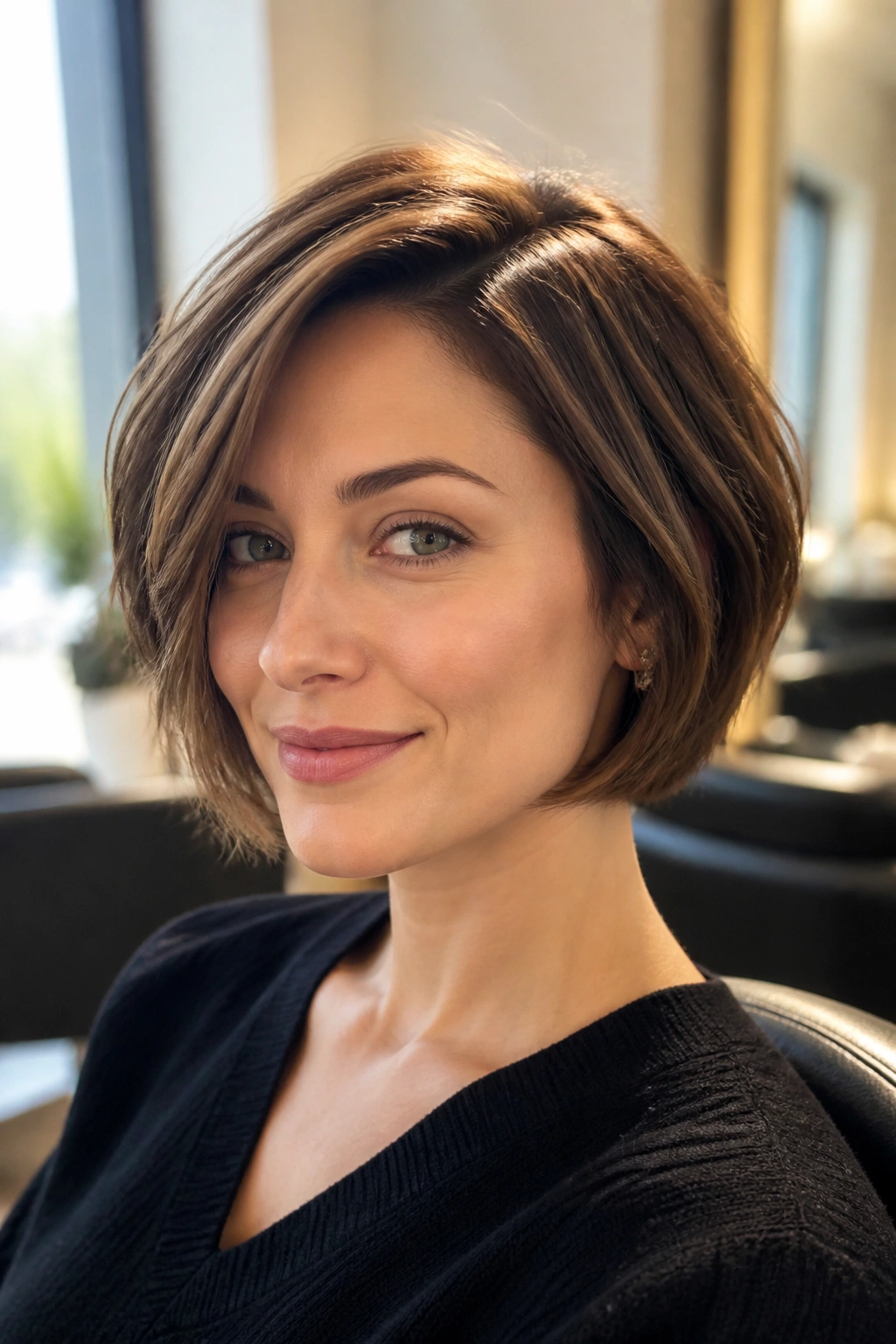
This is the bob I recommend when someone wants movement without losing shape. The cut sits right around the jaw, then uses soft internal layers to keep the sides from puffing out like a triangle. A side part gives it a little lift at the crown, which matters more than people think.
Why it flatters so many face shapes
A deep side part can change the whole read of the haircut. It shifts volume to one side, breaks up roundness, and gives the front a nice sweep without needing bangs.
It also keeps the bob from feeling too even. Too even can look stiff. Too stiff can look older than the person wearing it.
- Best for fine to medium hair that needs a little lift
- Nice on oval, round, and heart-shaped faces
- Works well with a round brush or a flat iron bend at the ends
- Ask for layers that begin around the cheekbone, not the chin
Tip: keep the part slightly off-center, not extreme. A tiny shift gives the cut more life than people expect.
2. Textured French Bob with Soft Ends

The French bob has attitude, but not the loud kind. It usually sits shorter, close to the cheekbone or just below it, and the ends are broken up enough to keep the line from looking hard. I like this one because it feels deliberate even when it’s a little undone.
The texture is the point. You want a haircut that can air-dry with some bend in it and still look finished. That means the layers should be light and the perimeter should not be over-thinned. If a stylist removes too much weight, the shape gets fuzzy fast.
This cut is especially good if your hair has a natural wave that shows up once it dries. A small amount of mousse at the roots and a quick scrunch at the ends is often enough. If you prefer polish, a 1-inch curling iron can add just one bend through the mid-lengths and leave the tips slightly bent under.
There is a sweet spot here. Too much styling kills the charm. Too little, and the shape can slide into bedhead in a hurry.
3. Stacked Bob with Subtle Graduation
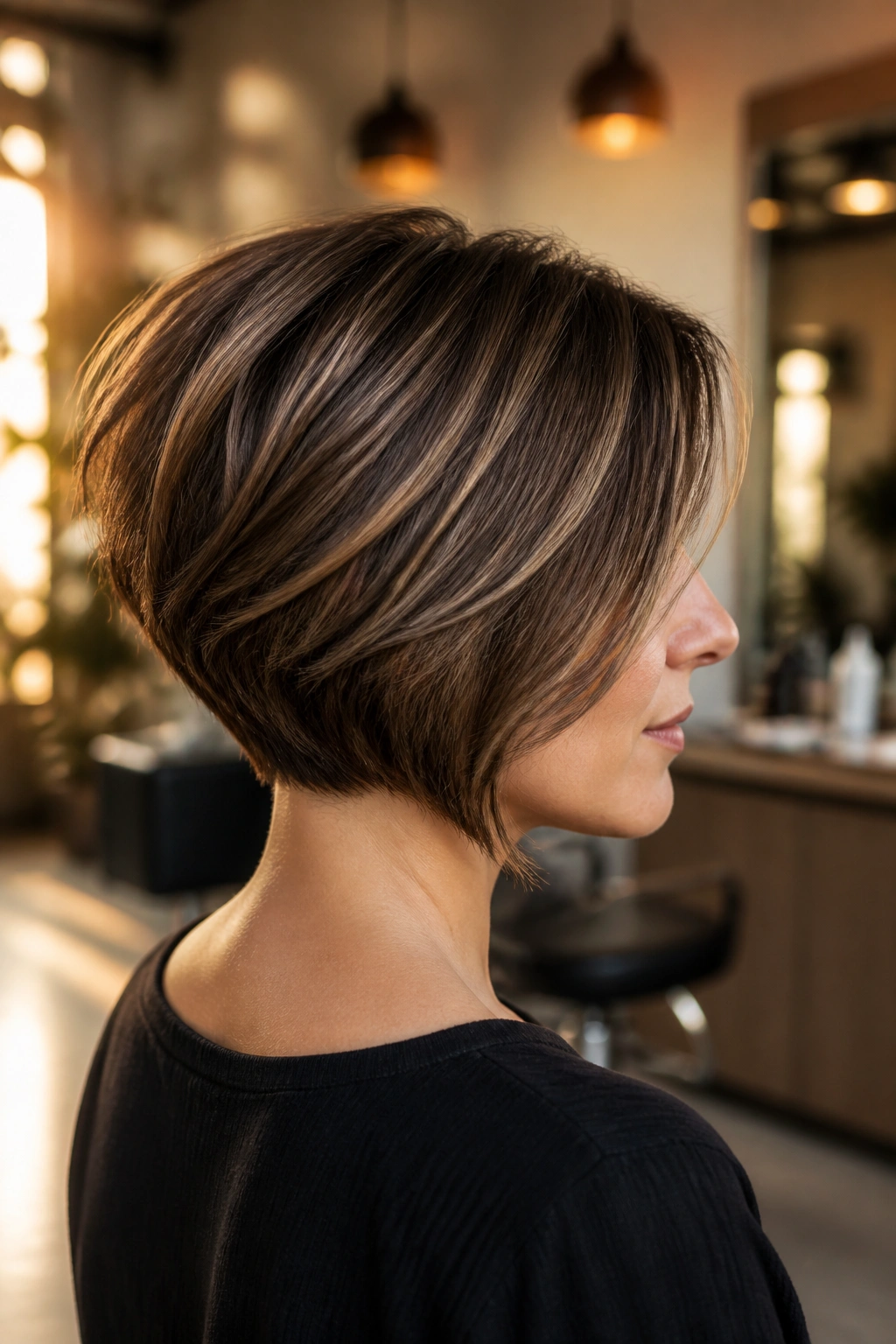
Why does a stacked bob make the back look fuller? Because the graduation removes weight from the nape while keeping the crown tucked and lifted. That gives the illusion of density where the hair usually looks flat.
This version is one of the smartest short layered bob hairstyles for fine hair that needs structure. The back is slightly shorter, the layers build gradually, and the front stays long enough to keep the shape modern. It is not dramatic in the way a sharply angled bob is dramatic. It is more controlled than that.
The best stacked bobs are not shaved tight at the neck. That is a mistake. You want softness at the nape and enough length on top to let the layers stack naturally, almost like the hair is folding over itself in a neat line.
If your hair collapses at the back of the head, this cut can fix that better than most. It also grows out in a decent way, which matters if you do not live for salon maintenance.
4. Piecey Bob with Curtain Bangs

A piecey bob with curtain bangs is for someone who wants softness around the face without drifting into frilly territory. The bangs split in the middle or slightly off-center, then open out toward the cheekbones. That gives the haircut a loose frame, not a heavy curtain.
Unlike a blunt bob, this version leaves air between the pieces. That air is what makes it feel lighter. It also gives you more room to play with styling — you can tuck one side behind the ear, blow the bangs away from the face, or rough them up with your fingers and go.
I like this cut on medium-density hair because the bangs and the layers can share the job of shaping the face. You do not need heavy fringe or a dramatic perimeter. A little movement is enough.
If you wear glasses, this one can be especially good. The fringe does not sit in a hard line against the frames, so the whole shape feels less crowded.
5. Tousled Wavy Bob
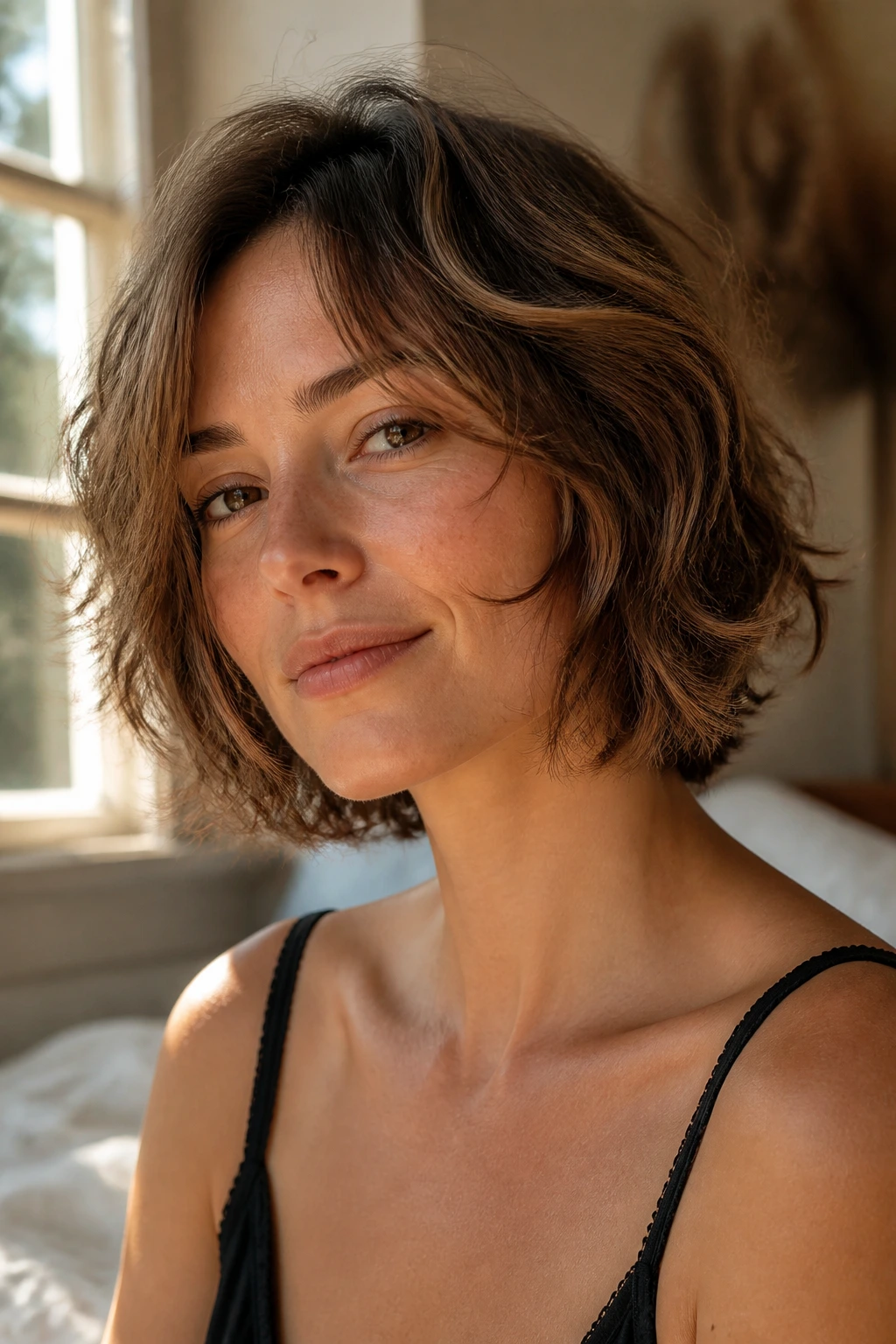
If you have ever rushed out the door with half-finished hair and thought, Well, this is going to have to do, this cut is for you. Tousled wavy bobs are built for that slightly messy, slightly expensive-looking finish that happens when the layers catch the wave pattern in the right places.
The real job of the haircut is to give the bend somewhere to land. Without layers, wavy hair can balloon at the bottom or hang limp at the roots. With a short layered bob, the wave has room to move and the outline still holds.
How to style it without making it crunchy
- Use a light mousse on damp hair, about a walnut-size amount
- Scrunch with a microfiber towel or old T-shirt
- Twist 1-inch sections around your fingers if the wave needs help forming
- Finish with a flexible spray, not a stiff one
The best part is that this bob forgives imperfect styling. If one side dries flatter than the other, that can still look intentional. Honestly, that is half the appeal.
6. Sleek Layered Bob with Tucked Ends

This is the version for people who like clean edges and a haircut that looks expensive even when the rest of the day is messy. The shape is smooth, the layers stay mostly hidden, and the ends curve inward just enough to keep the bob from looking severe.
I think this cut does especially well on straight hair because it respects the natural line of the hair instead of fighting it. The layers are usually placed inside the shape, so you get movement without obvious choppiness. That matters if you want polish and not fluff.
A paddle brush or a medium round brush is enough for styling. Pull the ends under while the hair is still warm from the dryer, then let them cool before touching them. That small pause helps the bend hold.
This bob is not the right answer if you want texture everywhere. It is the right answer if you want the sort of haircut that still looks tidy when it grows out half an inch. Sometimes that is the better deal.
7. Layered Bob with Micro Bangs

Can micro bangs work with a layered bob? Yes, but the haircut needs balance. The fringe is short and noticeable, so the body of the bob should stay soft enough to keep the whole thing from feeling too severe.
Micro bangs create a very specific line across the forehead. That line looks strongest when the rest of the cut has a little movement through the sides and crown. If everything is blunt, the haircut can tip into costume. If the bob has broken layers, it feels sharper and more wearable.
What to ask for at the salon
- A fringe that lands well above the brows, not just skimming them
- Soft layering through the mid-lengths
- A perimeter that stays neat around the jaw
- Texture, but not so much that the ends separate into frizz
This style suits people who like a bold haircut and do not mind a little upkeep. Micro bangs need trims more often than the bob itself, and there is no way around that.
But when they are cut well, they wake the whole face up. Fast.
8. Short Layered Bob for Natural Curls

Curly hair gets cranky in a blunt bob. It wants room to spring, and a short layered bob gives it that room without letting the shape turn into a triangle. The key is shaping the curls where they actually live, not where you wish they lived.
This cut should usually be worked dry or mostly dry, because curls shrink differently from one section to the next. A good stylist will check the curl pattern in the front, the crown, and the nape before deciding where the shortest point should fall. That detail matters. A lot.
How to style it
- Apply leave-in conditioner to soaking-wet hair
- Use a curl cream or gel in small sections
- Diffuse on low heat if you want more lift at the roots
- Stop touching the hair once the cast forms
The best short layered bob hairstyles for curls respect the curl shape instead of forcing it into a smooth shell. When that happens, the haircut starts looking airy instead of boxy. And airy is the whole goal here.
9. Asymmetrical Layered Bob
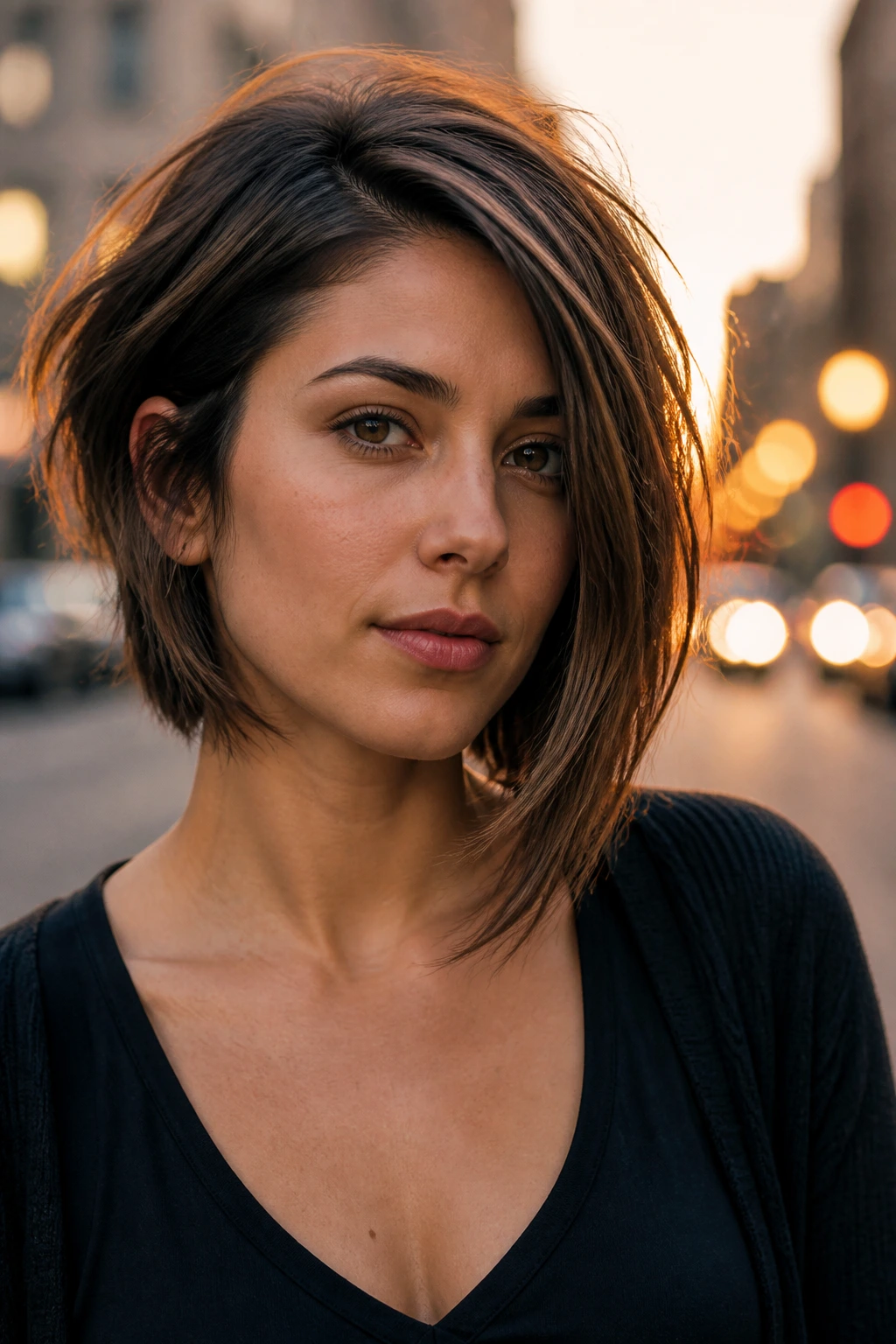
A small shift can change everything. That is the whole story with an asymmetrical layered bob. One side sits a little longer than the other, and the difference creates tension in the shape — enough to make the cut feel intentional, not lopsided.
This style works especially well if you like a side part, because the longer side can sweep forward and the shorter side can tuck behind the ear. That motion is what gives the haircut its edge. You do not need a huge angle to get the effect. Even a subtle difference in length can change how the light falls on the face.
The cut tends to flatter strong jaws and sharper cheekbones. It can also help soften a face that feels a little too square, especially when the front layers are kept feather-light.
It is not a lazy haircut. The lines matter, and the proportions matter even more. Still, if you want something with a little attitude that does not need a dramatic color to make a point, this one earns its keep.
10. Feathered Bob

Feathering is one of those techniques that can look old-fashioned in the wrong hands and fresh in the right ones. The difference is weight. A feathered bob should feel airy, not over-layered. The ends are softened, then the top layers are lifted just enough to create that brushed, floating look.
Where the feathering should live
- Around the cheekbones if you want more face movement
- Through the crown if you need volume at the top
- Near the ends if your hair gets too blunt
- Around the fringe area if you want a softer front
The style works especially well on medium-density hair because there is enough body to show the shape without turning it into fluff. I would avoid asking for too much feathering if your hair is already fine and fragile-looking. A little goes a long way.
What I like here is the softness. It can make a bob feel almost light enough to move when you turn your head. That sounds small, but small changes are what make a haircut live better in real life.
11. Shaggy Bob
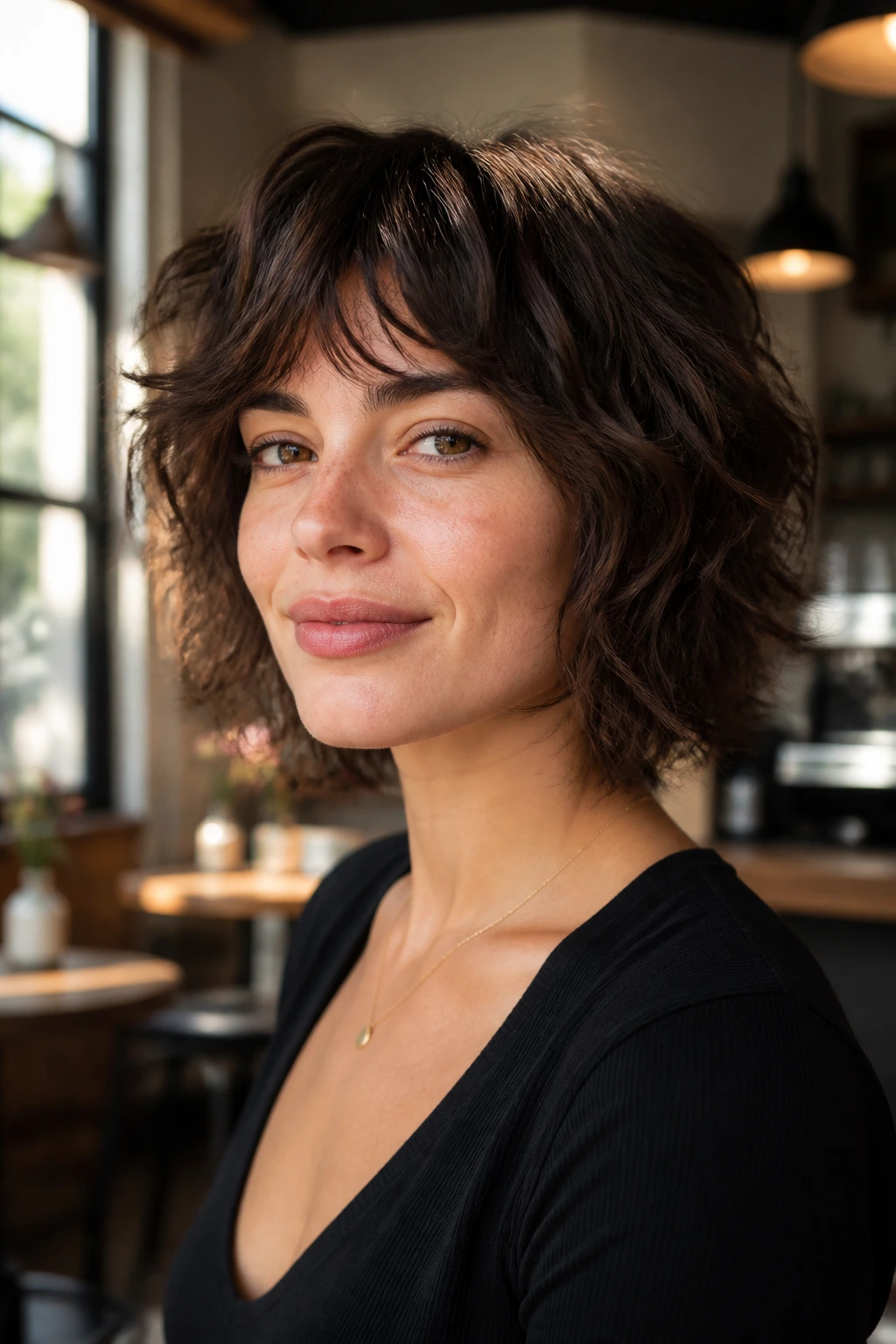
A shaggy bob is not neat. That is the point. The layers are choppier, the ends are more broken up, and the whole thing leans into movement instead of polish. If you want a haircut that looks best with a little mess in it, this is a strong pick.
People often confuse it with a shag haircut, and the overlap is real. The difference is that the bob still keeps a clearer perimeter around the jaw or neck, while the shag pushes the texture harder and farther out. So the bob version gives you edge without losing the shape completely.
This cut is especially nice for hair that has natural wave or a bit of rough texture already. Straight hair can wear it too, but it usually needs more product or a quick bend with a flat iron to keep the layers visible.
I would not choose it if you hate random pieces. You need to be willing to let some strands do their own thing. If that sounds annoying, skip it. If it sounds fun, this haircut can carry a lot of personality with very little effort.
12. Rounded Layered Bob

Thick hair can get bulky fast, and a rounded layered bob is one of the cleanest ways to control that. The shape follows the head a little closer, with layers that help the outline curve instead of splay outward. That keeps the bob soft around the sides and neat through the back.
If you have ever had a bob that turned into a shelf, you already know why this matters. A rounded shape removes that hard edge. It also keeps the cut from taking over the face, which is useful if your hair naturally expands in humidity or after a long day.
What makes it work
A rounded bob depends on balance. The stylist should leave enough length at the top and sides to keep the silhouette smooth, while removing just enough bulk underneath to stop the shape from ballooning. That is a careful job, not a heavy-handed one.
This style often looks best with a slight bend under at the ends. Not curled. Just curved. That tiny detail makes the haircut feel deliberate and complete.
13. Inverted Bob

An inverted bob earns its drama from geometry. The back is shorter, the front is longer, and the slope between the two creates a sharp, clean line that feels more tailored than playful. When the layers are cut well, the result looks crisp without looking harsh.
This shape is excellent if you want your short bob to do some visual lifting. The shorter back helps build height, while the longer front gives the face a little frame and keeps the style from feeling too compressed. It can also make fine hair look fuller at the crown, which is a nice trick.
The cut is strongest when the angle is obvious but not exaggerated. If the front is dragged too long, the bob stops being a bob and starts feeling awkward. If the back is cut too high, the neckline can look exposed. There is a middle path, and that is where the good versions live.
I like this one on people who want a haircut with structure. It has a bit of edge, but it is still practical. That combination is hard to beat.
14. Choppy Razored Bob

What does a razored bob do that scissors do not? It takes the ends down in a softer, airier way, which can give the cut a lighter finish and a more broken texture. The result is less blunt, less heavy, and a little more lived-in from the start.
This works especially well if your hair is dense and tends to keep too much weight at the bottom. A razor can remove bulk without making the bob look chopped to pieces, as long as it is used with restraint. Too much razor work and the ends can start looking fuzzy instead of piecey.
The styling side is forgiving. A touch of cream, a quick bend with a flat iron, or even a rough blow-dry can bring the texture to life. You do not need a perfect round-brush finish here.
One warning: if your hair is already fragile or prone to split ends, heavy razoring may not be your friend. A lighter hand is safer. Always.
15. Deep Side-Part Bob

A deep side part changes the whole face of a bob. It gives one side lift, lets the other side fall closer to the jaw, and creates a shape that feels a little more sculpted without needing more length. Simple trick. Big payoff.
This version is especially good for anyone with flat roots. The part creates instant volume at the crown, and the layers underneath stop the sides from looking too wide. If your hair naturally collapses in the same spot every day, this can be the easiest fix in the room.
Quick facts worth asking for
- A part that starts just above the arch of the eyebrow
- Layers that support lift at the root
- A front section long enough to tuck behind one ear
- Ends that stay blunt enough to hold the shape
I like this cut because it gives options. Wear it smooth for work, then rough it up later with a little dry texture spray. Same haircut. Different mood.
16. Short Layered Bob with Air-Dried Texture
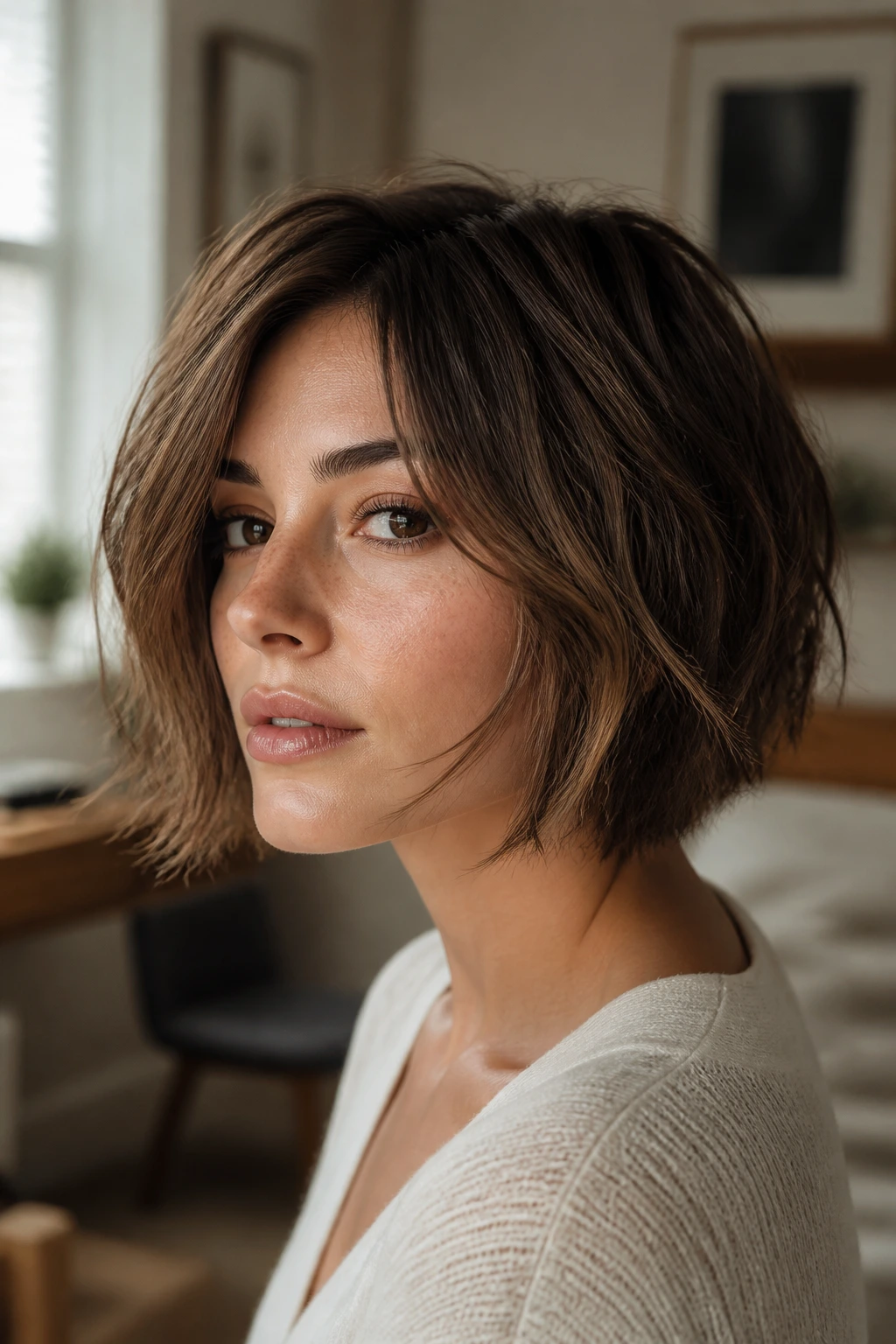
Air-dried hair does not have to look unfinished. A short layered bob with natural texture can look calm, easy, and expensive in the plainest sense of the word — no fuss, no overworking, no battle with the dryer.
The haircut has to do more of the styling work here. That means the layers should be placed where your hair bends naturally, not forced into a shape that only appears after 20 minutes with a round brush. If your hair is wavy, this cut can be a gift. If it is straight, it can still work, but the layers need a little more help from product.
I like a light leave-in, a small amount of cream, and then hands off. Really hands off. Once the hair starts drying, touching it too much tends to break up the natural clumps and create frizz where you did not ask for it.
This style suits people who want a bob that looks relaxed on purpose. That is a narrow lane, but it is a good one.
17. Bob with Wispy Fringe

Wispy fringe and curtain bangs are not the same thing. Curtain bangs split open and drape to the sides; wispy fringe sits softer across the forehead, with thinner pieces that let skin show through. That difference changes the whole mood of the bob.
A wispy fringe softens a short layered bob without making the face look crowded. It works nicely if you want the front to feel lighter, or if your forehead is broader and you want a little coverage without a full curtain of hair. It can also play well with glasses, because the fringe tends to stay airy instead of sitting heavy against the frames.
The rest of the bob should stay fairly clean. If both the fringe and the body are too fragmented, the haircut can lose its shape. A neat perimeter keeps the whole thing grounded.
I think this is one of the easiest ways to make a short bob feel a little more personal. Small detail. Big character.
18. Short Layered Bob with Tapered Nape

The tapered nape is the part people forget to notice, and that is exactly why it matters. When the hair hugs the neckline instead of kicking outward, the whole bob looks cleaner, slimmer, and better behaved.
This cut is excellent if you want a short layered bob that stays tidy from the back. The taper removes bulk where it usually causes trouble, while the layers above it keep the crown from falling flat. It is a smart shape for people who wear collars, sweaters, or anything that catches the hair at the neck.
A good tapered nape should not feel shaved or severe. The finish needs to be soft enough that the line disappears into the rest of the haircut. If you can feel the difference before you can see it, that is usually a good sign.
This is a quiet haircut. Not boring. Quiet. And sometimes that is the better move.
19. Short Layered Bob with Hidden Undercut
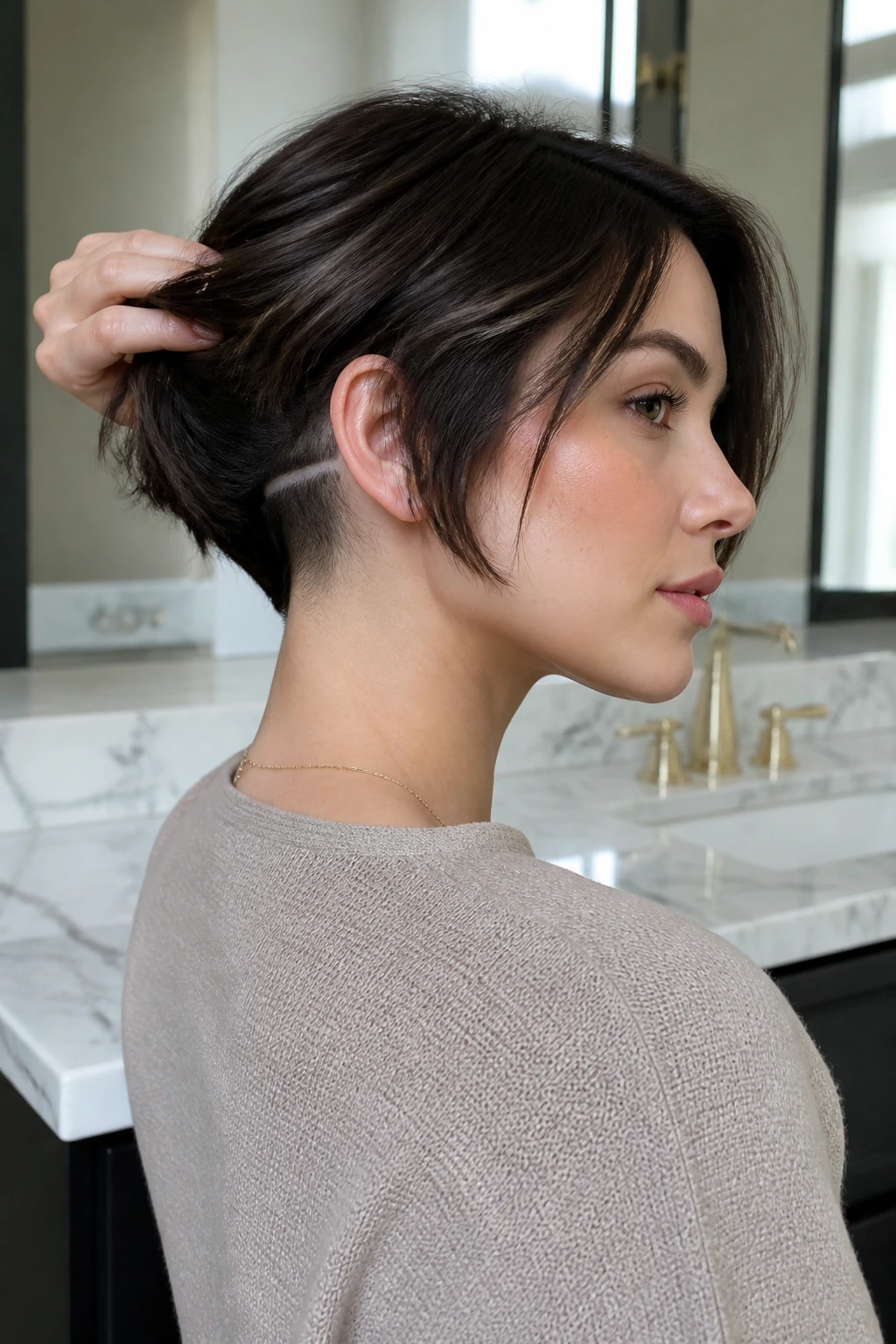
An undercut bob solves the thick-hair triangle problem faster than almost any other cut. By removing bulk underneath the surface layers, the stylist gives the top more room to fall instead of flaring out. The outer shape still looks like a bob. The inside just works harder than people realize.
What the hidden undercut changes
The neckline sits flatter. The sides stop puffing as much. Drying time usually drops, too, because there is less hair packed underneath the top layer.
That does not mean the haircut looks edgy from every angle. In a hidden version, the undercut stays tucked away unless the hair is lifted. So you get the practical benefits without giving up softness on the outside.
Who should consider it
- Thick, dense hair that gets wide at the bottom
- Wavy hair that traps too much bulk
- People who want a lighter feel without losing length
- Anyone tired of spending forever blow-drying the back
If your hair is fine, this may be too much. If your hair is heavy, it can be the difference between a bob you fight and a bob that behaves.
20. Short Layered Bob with Face-Framing Layers
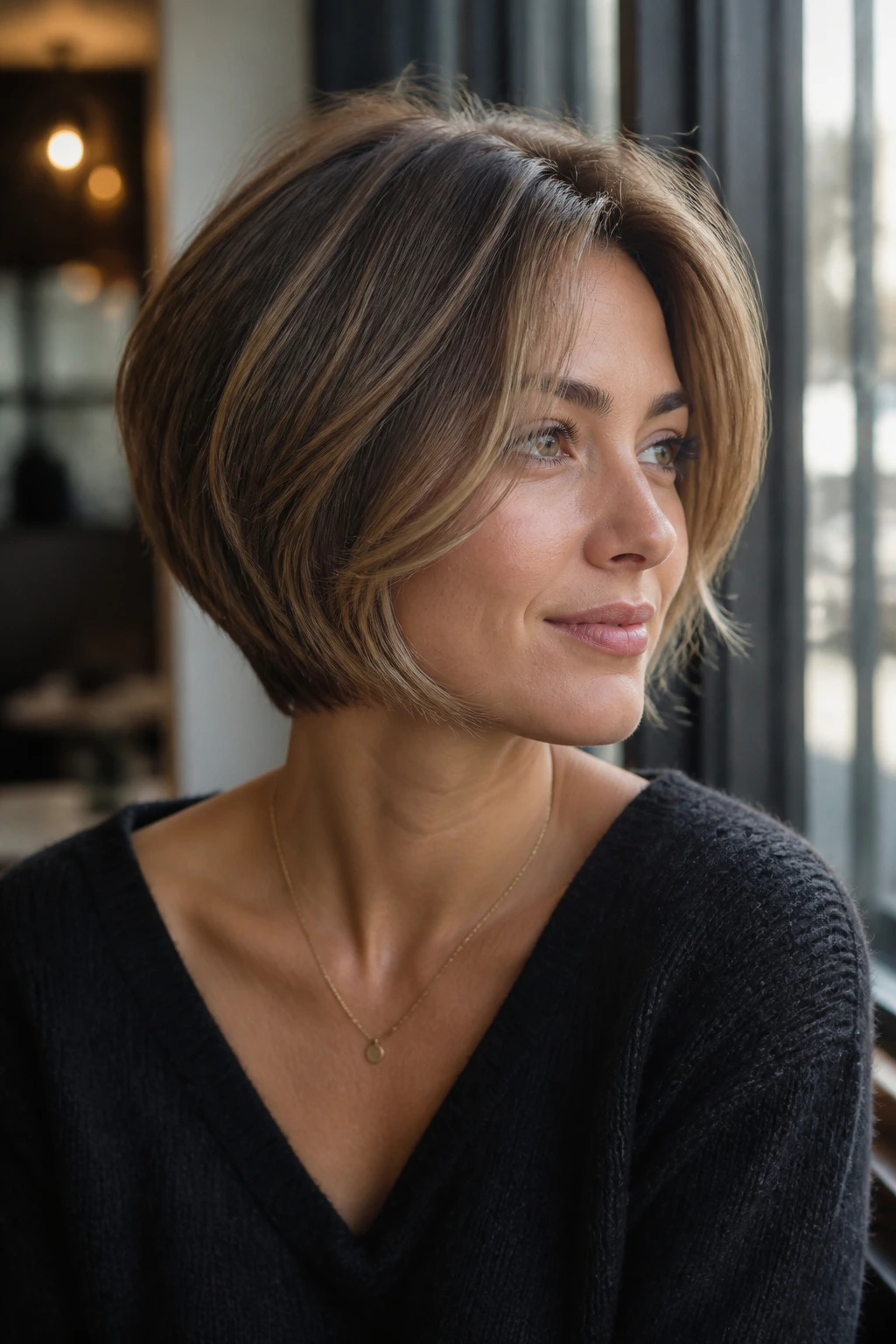
Face-framing layers are where a bob starts to feel tailored. These pieces usually begin near the cheekbone, jaw, or mouth, depending on what the face needs, and they guide the eye without stealing the whole haircut.
This is a strong choice if you want softness but not bangs. The front can open up the face, slim the sides, and give the bob a little motion every time you turn your head. It also grows out gracefully, which is a small thing until you live with the haircut for a few months.
The best version keeps the back neat and lets the front do the visual work. That contrast matters. If the layers are too heavy everywhere, the haircut loses its clean line. If they are too subtle, the framing disappears.
I like this one as a finishing move. It is the sort of detail that can turn a decent bob into one you keep touching in the mirror.
Final Thoughts
A good short layered bob is never only about length. It is about where the weight sits, where the movement starts, and how much shape you want to keep when the day gets long and the hair gets tired.
If you like polish, lean toward stacked, inverted, or sleek versions. If you want softness, French, feathered, or face-framing cuts usually feel easier. And if your hair has a mind of its own, the shaggy, curly, or air-dried styles are more forgiving than they look on a mood board.
The smartest thing you can tell a stylist is not “make it shorter.” Say where your hair gets bulky, where it goes flat, and whether you want the front to fall around the cheekbone or the jaw. That tiny bit of detail makes the cut much easier to live with.
