



Straight hair is honest. It shows every line, every angle, every mistake. That is exactly why short haircuts for straight hair women can look either crisp and expensive-looking or oddly flat, with very little in between.
The upside is huge. Straight hair does not hide shape, which means a good cut can look polished with almost no fuss. A blunt edge lands cleanly. A well-placed layer can give lift without turning into frizz. A bad cut, though, will sit there all day and announce itself from every mirror in the house.
I’ve always liked short cuts on straight hair because they reward good tailoring. A bob with the wrong weight line looks heavy. A pixie with too much bulk at the crown looks helmet-like. Get the proportions right and the whole head changes — cheekbones look sharper, the neck looks longer, the hair feels lighter.
The styles below move from clean and classic to a little bolder and more playful. Some need almost no styling. Some ask for a round brush, a dab of paste, or a more regular trim schedule. All of them can work beautifully on straight hair if the cut matches the way you actually wear it.
1. Blunt Chin-Length Bob
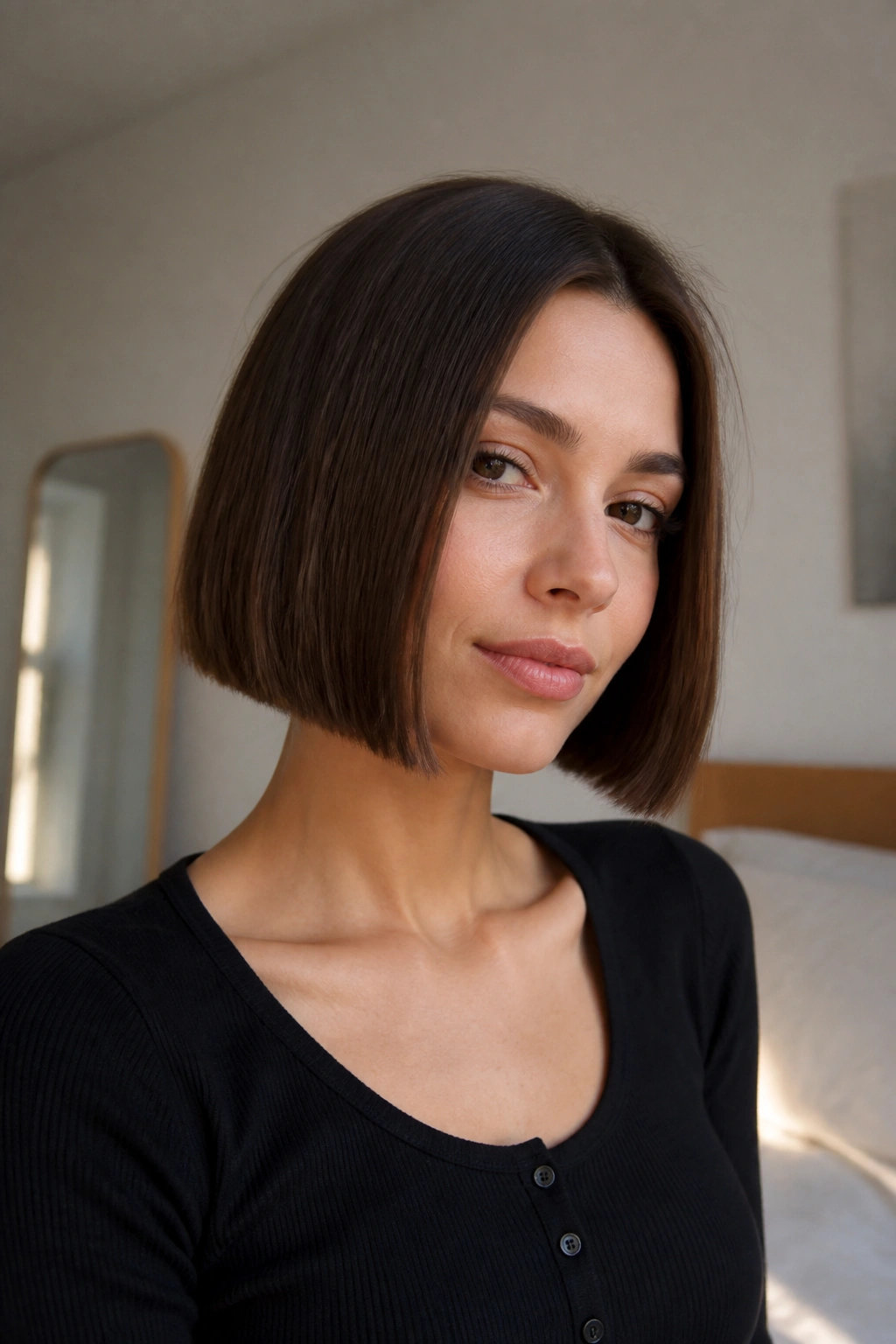
A blunt chin-length bob is the cleanest place to start. It gives straight hair a hard, tidy edge that looks deliberate, not fussy, and that matters more than people think. When the perimeter lands right at the chin, the whole face gets a neat frame.
Why It Works for Straight Hair
Straight hair shows off the line without much effort. There’s no curl pattern to soften the edge, which means the cut itself has to do the work. That sounds strict, but it’s actually useful: the shape stays readable from morning to night.
Ask for a one-length perimeter with minimal layering through the interior. If you want a tiny bit of movement, a slight bevel at the ends is enough. Too much texturizing will make the hem look thin, and that ruins the whole point.
- Best length: chin to a half inch below the chin
- Best for: fine hair, medium hair, oval faces, heart-shaped faces
- Styling note: blow-dry with a paddle brush for a flat, glossy finish
- Salon phrase: “Keep the weight line clean and blunt”
Pro tip: if you like tucking your hair behind one ear, leave the front pieces a touch longer so they don’t pop out awkwardly.
2. French Bob with Micro Fringe
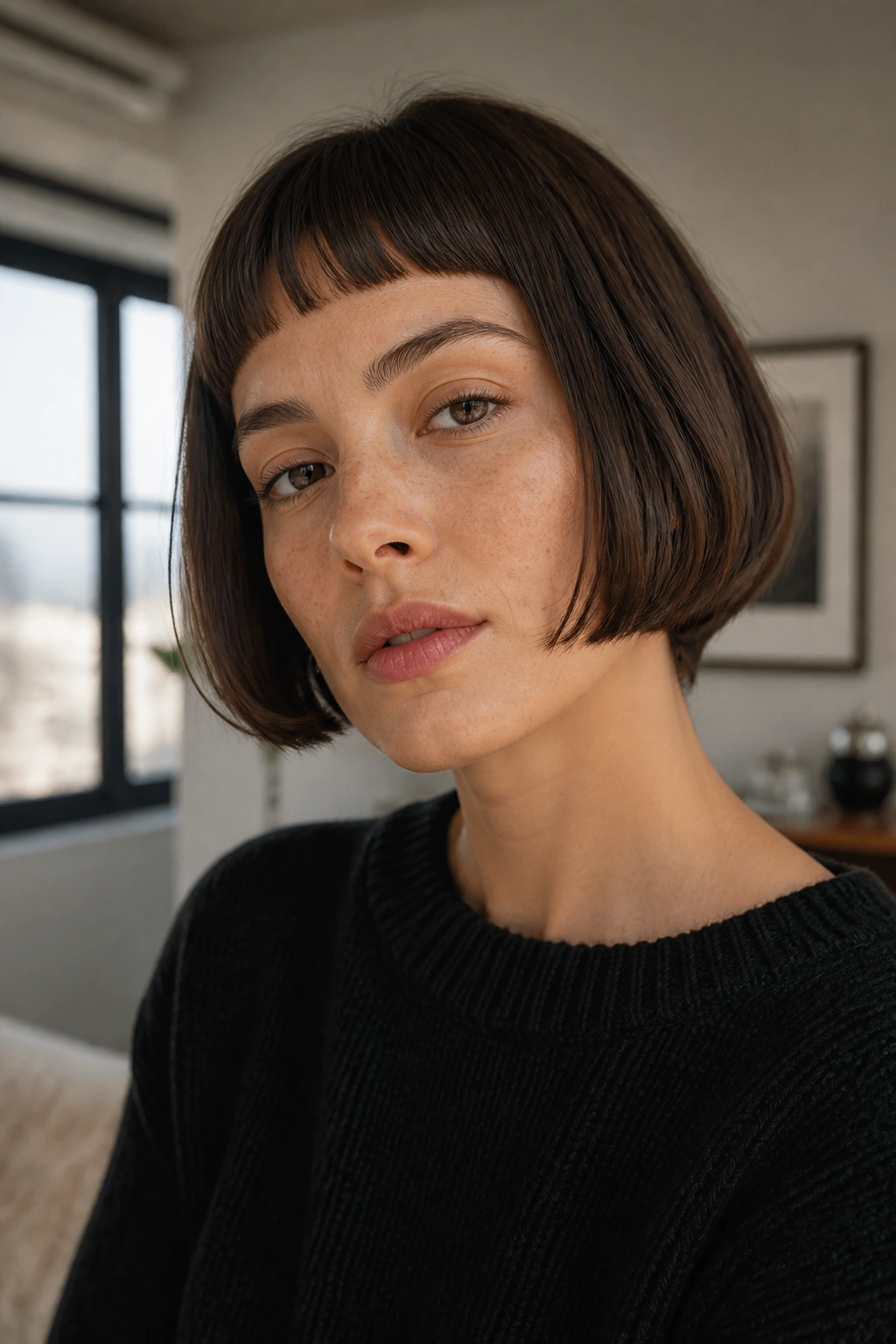
A French bob with a micro fringe has a little attitude in it. It sits shorter than a classic bob, usually around lip to cheek level, and the tiny fringe gives the whole cut a sharp, arty feel. Straight hair makes that precision easy to see.
The micro fringe is the part people hesitate over. Fair enough. It’s a commitment. But on straight hair, it lies neatly instead of puffing up, which is half the battle. If your brows are strong or your forehead is shorter, the look can feel very intentional without screaming for attention.
I like this cut on women who want something compact and low on bulk. It works especially well with a natural bend at the ends, but it does not need curling to make sense. A little shine serum and a quick flat-brush blow-dry are enough.
The catch? Fringe trims matter. Leave the bangs alone too long and the whole shape loses its crisp little punch.
3. A-Line Bob
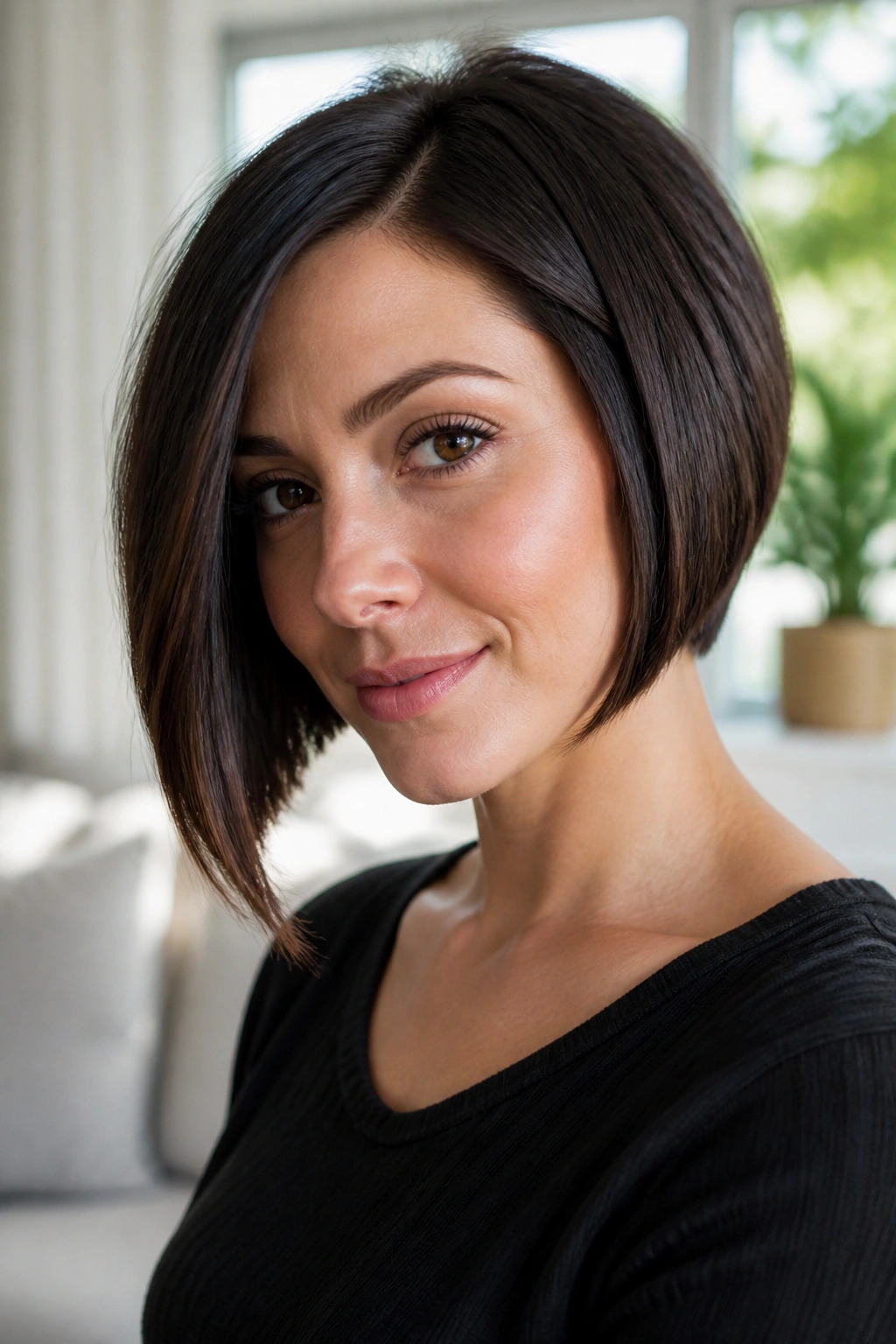
Why does the A-line bob keep showing up on straight hair? Because the angle is easy to read. Shorter in back, longer in front, it gives you a clean diagonal that straight hair holds without fighting.
Where the Angle Starts
The best version begins gently at the nape and slides forward to a point somewhere between the jaw and the collarbone. That difference does not need to be dramatic. In fact, too much length gap can look dated fast.
Straight hair makes the front panels behave like picture frames. That’s useful if you want to narrow a rounder face or soften a strong jaw. A middle part can make it look sleek; a slight side part makes it feel a touch softer.
What to Ask For
- Keep the back snug at the neck
- Let the front fall 1 to 2 inches longer than the back
- Avoid heavy layers that break the angle
- Ask for a soft bevel if your ends tend to flip
This cut is tidy, modern, and easy to grow out. It also avoids the “triangle” problem that some shorter bobs get when the bottom gets too wide.
4. Stacked Bob
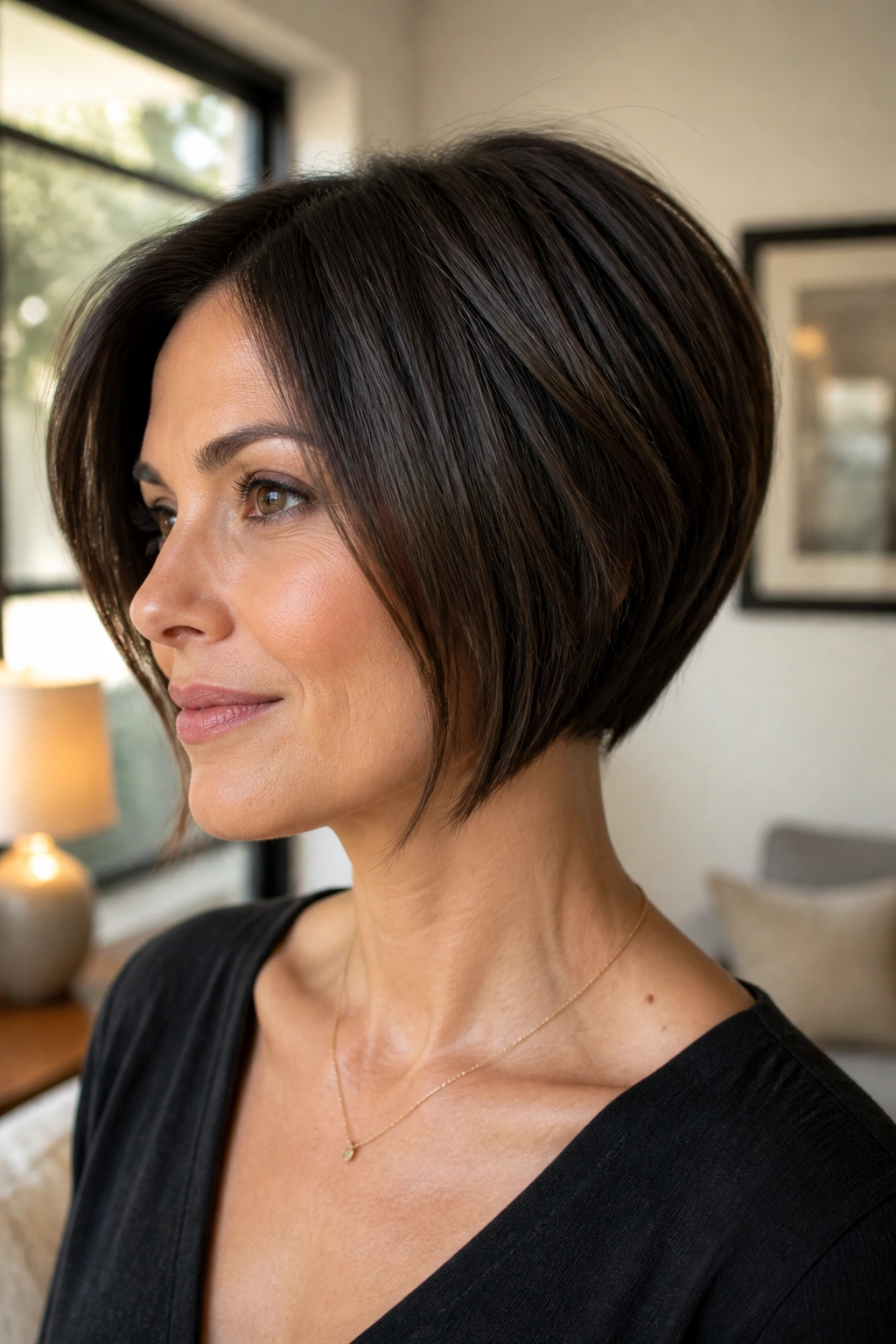
If your hair goes flat at the crown by lunchtime, a stacked bob can feel like a relief. The back is built with graduated layers, so the nape sits close and the crown gets a little lift. Straight hair shows that structure clearly, which is why the cut works so well on it.
The trick is restraint. A stacked bob does not need to look like a mushroom cap from the early haircut disasters people still remember. Keep the stack controlled and the top layers soft enough to blend. Too much graduation turns the silhouette stiff.
I’d call this one a smart pick for medium to thick straight hair. It removes some bulk in the back without making the whole head look thin. If you have fine hair, it can still work, but the stacking needs to be lighter so the ends don’t disappear.
A quick round-brush blow-dry at the crown makes a big difference. You do not need a salon finish every day, though. The cut itself should carry most of the shape.
5. Inverted Bob

An inverted bob is the more dramatic cousin of the A-line. The back is shorter and tighter, and the front drops more steeply toward the face. Straight hair makes that slope obvious, which is why this cut feels crisp instead of vague.
That sharp angle can be a gift if you like structure. It draws the eye down and forward, and it gives the back of the head a neat, lifted look. On women with square or strong jawlines, the longer front pieces can soften the face without hiding it.
The part that gets missed is weight control. If the front is too short, the cut can look boxy. If the back is too long, the angle loses its point. A good inverted bob lives in that middle zone where the neck stays clear and the front still skims the jaw.
I also like it because it behaves. Straight hair tends to sit where you put it, and this cut uses that to its advantage. A flat iron can refine the bend, but you rarely need to fight for the shape.
6. Soft Layered Bob

A soft layered bob is what I reach for when someone wants movement but hates choppy ends. The layers are there, but they’re quiet. They help the hair fall in pieces instead of a single heavy block, and that matters on straight hair.
How It Differs From a Choppy Bob
A choppy bob can look edgy, but it can also look scattered if the layers are too short or too many. A soft layered bob keeps the perimeter intact and adds longer interior layers, usually around the cheekbones and jaw. That gives shape without tearing the line apart.
This cut suits thick straight hair especially well. It takes some of the bulk out of the middle so the ends can move. Fine hair can wear it too, though the layers need to stay longer so the body is not lost.
I’d ask for slide-cut ends or gentle point cutting rather than hard slicing. The result should feel airy, not shredded. That difference is subtle in a photo and obvious in real life.
A little smoothing cream on damp hair, then a quick blow-dry with fingers, is often enough. It is one of those cuts that looks like you tried harder than you did.
7. Italian Bob
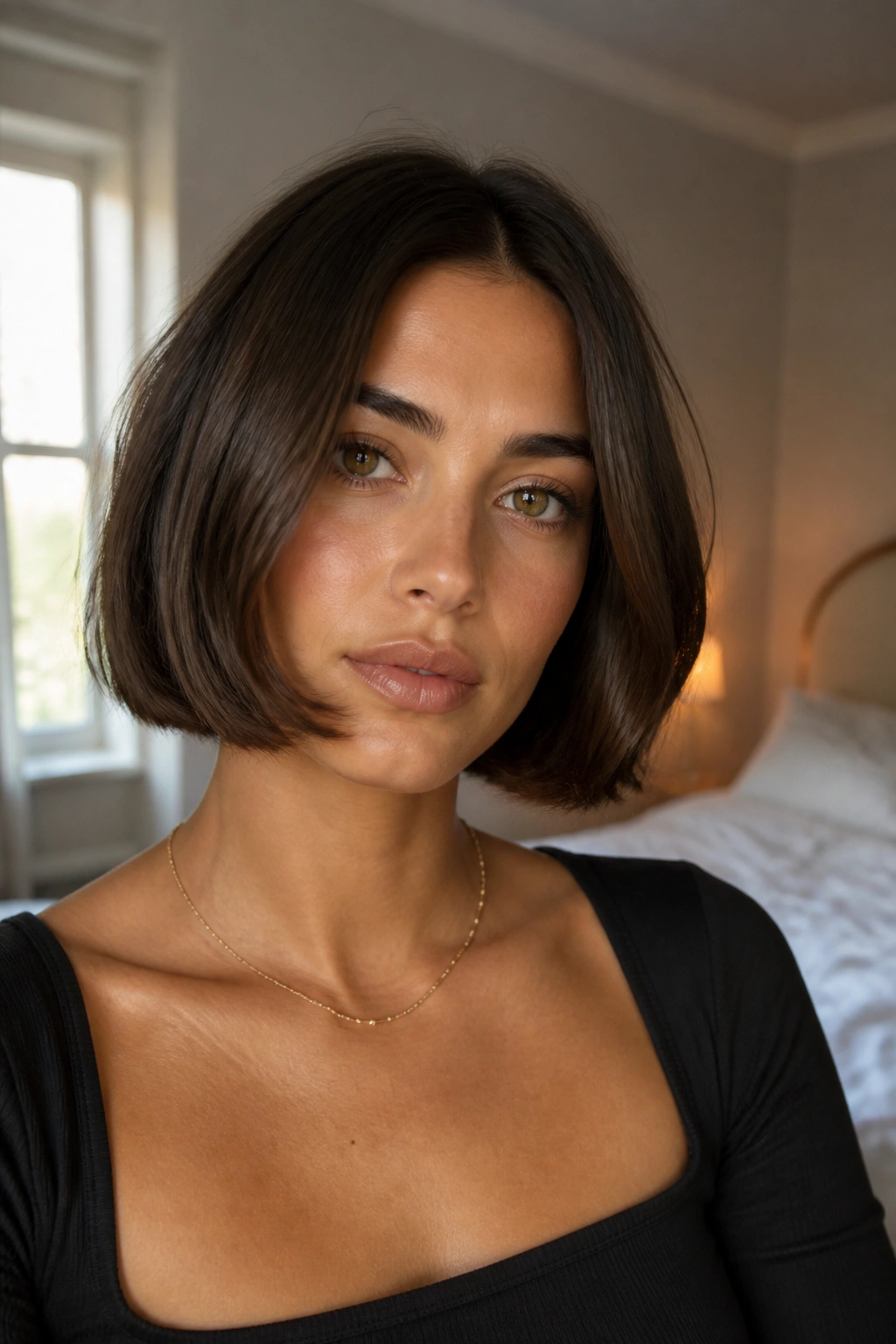
The Italian bob has a fuller, richer shape than a plain blunt bob. It usually sits around the jaw or just below it, with enough weight at the ends to give the hair a thick, plush look. Straight hair makes that fullness easy to see.
Unlike a very sleek chin bob, this one wants a bit more presence. The ends are dense, the shape feels rounded, and the whole cut reads as polished without being stiff. It is a good choice if your hair is straight but not wispy, because the density helps the silhouette hold.
I like this cut with a middle part and a small bend under the ends. It does not need curls. A big round brush or even a blow-dry brush can give the bottom enough curve so it sits cleanly against the neck.
This is the bob for someone who likes hair that feels finished even on a plain white T-shirt day. It has that quietly deliberate look, and straight hair carries it well.
8. Bixie Cut for Straight Hair
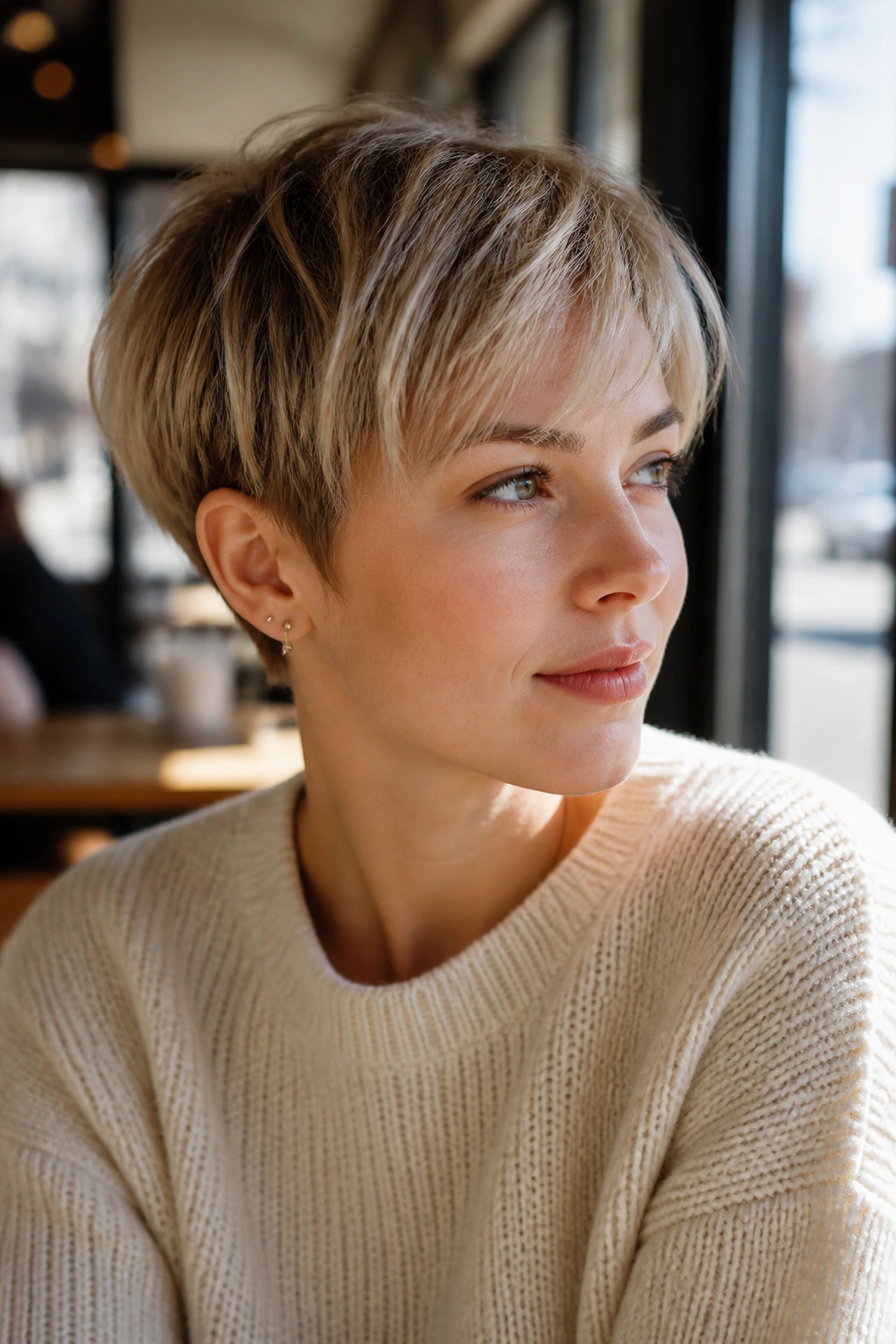
Want something shorter than a bob but not as bare as a pixie? The bixie lives in that in-between space. It borrows the softness of a bob and the cropped length of a pixie, which makes it a strong option for straight hair that needs shape without a lot of bulk.
The top stays a little longer, usually around the crown and fringe area, while the sides and nape are cut closer in. Straight hair shows every piecey detail, so the cut has to be precise. That is part of the appeal. It looks light, but not sloppy.
What Makes It Different
A bixie is easier to wear than a hard pixie and less formal than a classic bob. That middle ground is useful for women who want short hair but still like some movement around the face. A little matte paste on the ends is often enough.
- Good match: fine to medium straight hair
- Length zone: cropped at the sides, longer through the top
- Styling product: lightweight paste or cream
- Best vibe: relaxed, slightly undone, not overworked
It’s a good cut if you want change without jumping all the way to very short hair.
9. Long Pixie

The long pixie is for the person who keeps thinking about a pixie cut but wants a safety net. You still get the cropped neck and ears, but the top has enough length to sweep, tuck, or push to one side. Straight hair makes that movement look neat instead of puffy.
I like this cut because it gives options. On a rushed morning, you can smooth the top with a little cream and leave. On a day when you want more shape, a side part and a quick blow-dry create a sharper profile. The cut does not ask for much, which is part of the charm.
How to Ask for It
- Keep the top around 3 to 4 inches
- Let the fringe area stay long enough to sweep across the forehead
- Taper the nape so the back sits close
- Leave some softness around the ears if you wear glasses
This one works nicely on straight hair with a bit of density through the top. Too little hair and the shape can go flat. Too much and it starts acting like a mini bob.
10. Classic Tapered Pixie

A classic tapered pixie is neat, short, and a little bold without trying too hard. The sides and nape sit close to the head, while the top stays slightly longer so the shape does not feel clipped flat. Straight hair gives that clean taper a very crisp edge.
This is the cut for women who do not want to spend 20 minutes wrestling with a brush. A bit of styling cream or paste through the top, then fingers to lift the front, is usually enough. It can look polished in under five minutes, which is a real advantage if your mornings are already full.
The downside is maintenance. Short tapered cuts grow out fast around the ears and neckline, and straight hair makes regrowth obvious. Plan for trims every 4 to 6 weeks if you want the silhouette to stay sharp.
I also think this cut shows bone structure in a nice way. Cheekbones, jawline, and neck all get more visibility. That can be a selling point or a deal-breaker, depending on how you feel about being a little exposed.
11. Undercut Pixie
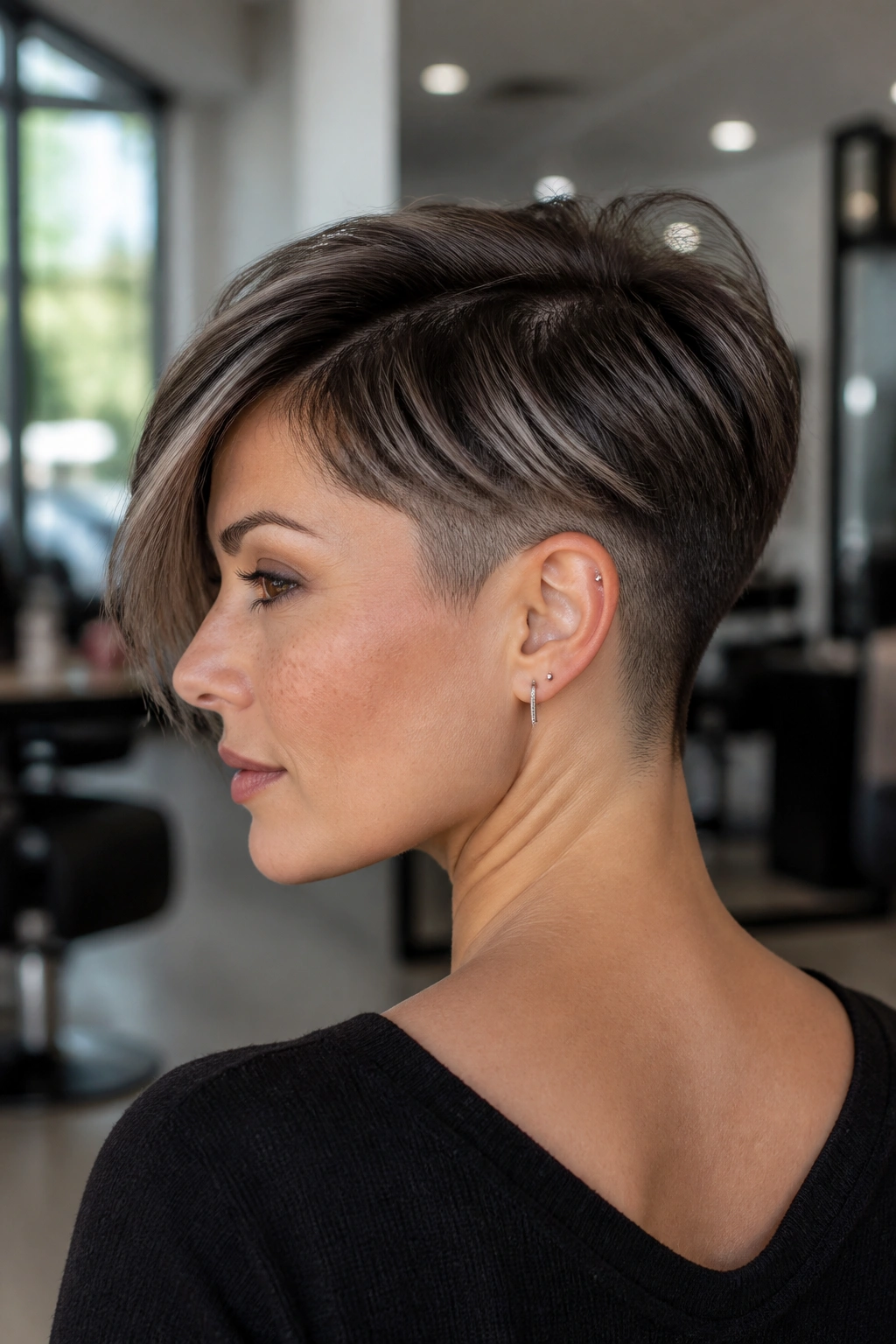
An undercut pixie does one very specific thing well: it takes bulk out of thick straight hair. Instead of fighting all that density, the cut removes some of it underneath and leaves the top longer and easier to shape.
That matters more than people expect. Thick straight hair can mushroom at the sides or puff around the ears, especially when the weather is humid or the blow-dry is rushed. An undercut fixes the heaviness at the base so the top can sit cleaner.
Where It Helps Most
- Thick straight hair that feels bulky at the nape
- Hair that flips out around the ears
- Short styles that need extra lightness
- Anyone who likes a sharper profile without a full buzz
The undercut does not have to be visible. Some women keep it hidden under a longer top layer so the cut still looks soft from the front. Others shave the nape for a cleaner line and a little edge.
If you like low volume at the bottom and more control up top, this one is worth the chair time.
12. Short Shag for Straight Hair
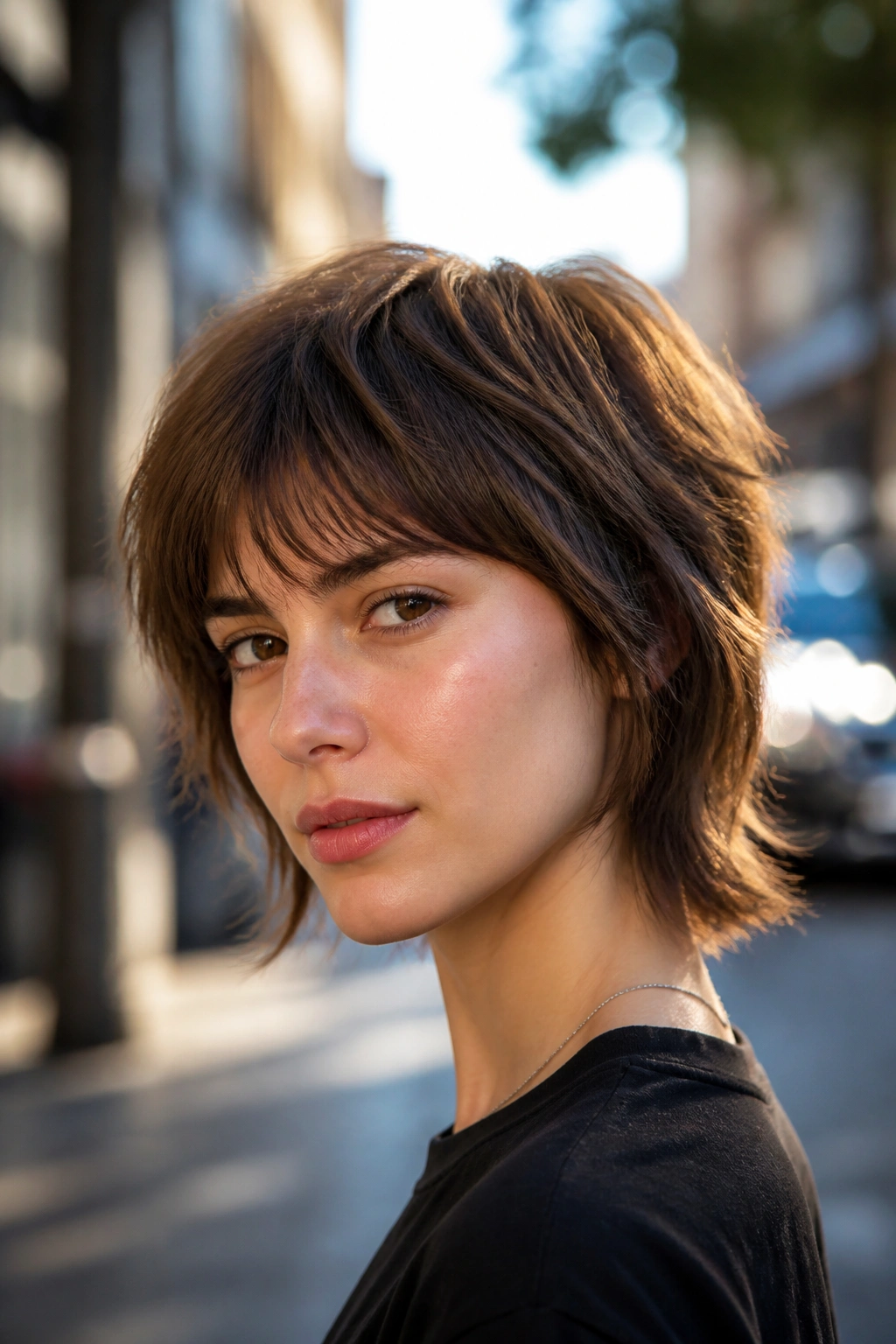
A short shag on straight hair is tricky in the right way. Too many layers and it falls apart. Too few and it loses the loose, piecey feel that gives the cut its charm. Get the balance right, and it brings movement to hair that might otherwise sit like a sheet.
The best version keeps the top a bit airy, with longer layers around the crown and face. The ends should look feathered rather than chopped. Straight hair benefits from that because the layers show up clearly instead of getting swallowed by curl or wave.
I’d recommend this cut to someone who likes a little undone texture and does not mind using a styling product. A light texturizing cream or a small amount of paste at the ends can separate pieces without making the hair crunchy. That crunchy finish is a dealbreaker here.
This is also one of the few short cuts that can look better with a little mess. Not chaos. Just a small bend, a few broken-up pieces, and some lift at the root.
13. Asymmetrical Bob

Why choose uneven lengths on purpose? Because straight hair makes the asymmetry visible in a clean, satisfying way. One side sits a little longer than the other, and the whole cut gains motion without needing heavy layers.
What to Ask For
Ask for one side to graze the jaw while the longer side falls 1 to 2 inches below it. That spread is enough to read as asymmetrical without looking extreme. A sharper side part helps the shape show up.
This cut works well if you want to shift attention away from one side of the face or soften a strong part line. It also pairs nicely with earrings, which sounds small until you try it. The longer side gives the neckline a little drama, and the shorter side keeps the head from looking weighed down.
One thing to watch: if the difference between sides gets too large, the cut starts to feel costume-like. Keep it wearable. That’s where the real strength is.
14. Pageboy Cut
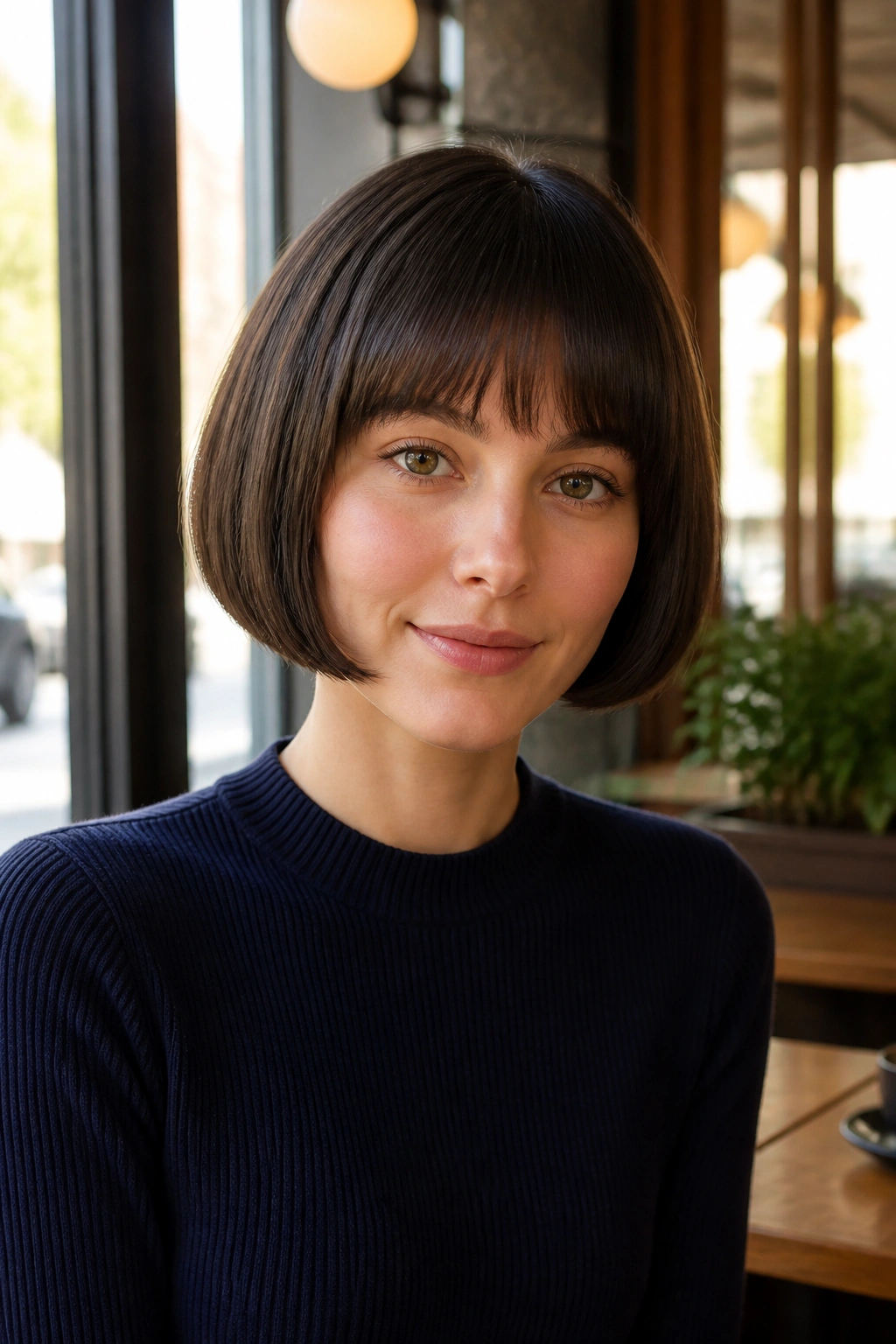
The pageboy cut has old-school roots, but on straight hair it can feel surprisingly fresh. The shape is rounded, the ends turn under, and the whole haircut sits close to the head in a tidy curve. It likes straight hair because straight hair holds that contour without a fight.
I tend to think of it as a bob with a little more personality around the perimeter. Some versions include a blunt fringe. Some leave the front open. Either way, the silhouette is smooth and disciplined, which is handy if you want structure but do not want a severe angular cut.
There’s a small risk here: if the hair is too flat or the ends are cut too blunt, the pageboy can look a bit heavy. A soft bevel at the edge solves most of that. It gives the bottom a gentle bend instead of a hard shelf.
This is a nice choice for women who like polished lines and do not mind a haircut with a little retro flavor. I happen to like that. It feels confident without being loud.
15. Micro Bob
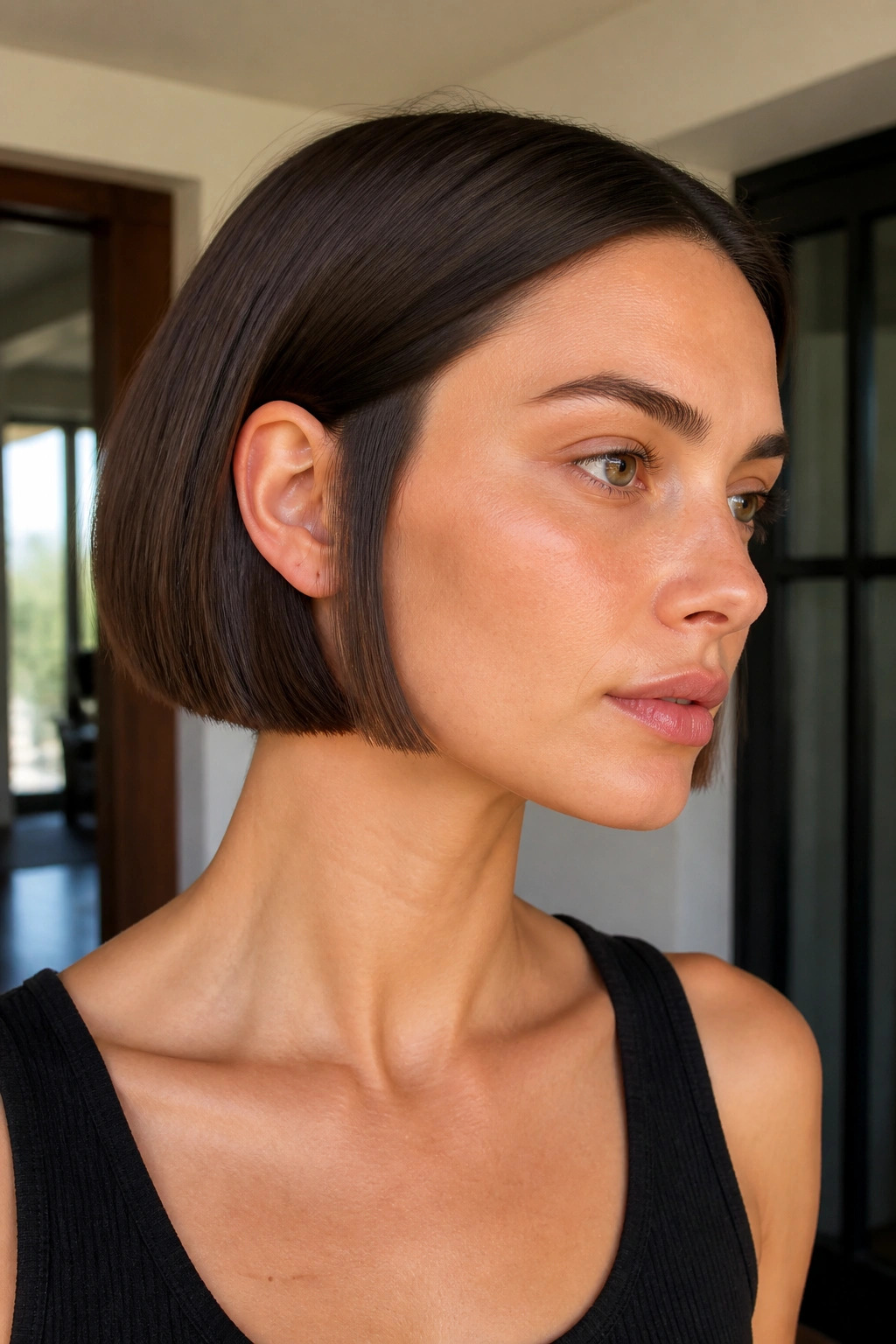
A micro bob sits at the short end of the bob family. Think ear-grazing to just below the ear, with a very clean outline and almost no extra length to hide behind. On straight hair, the shape looks graphic in the best way.
This is not a shy haircut. It puts the jaw, neck, and earrings front and center, so it suits someone who likes clear lines and a bit of edge. Straight hair helps because the cut keeps its form without needing a lot of brushing or product.
What Gives It Shape
- A tight neckline
- A blunt or slightly beveled edge
- Minimal layering through the sides
- Enough front length to tuck, if you want that option
Maintenance matters here. The shorter the cut, the faster it shows growth. Plan on trims every 4 to 6 weeks if you want the outline to stay neat.
I like a micro bob on oval and heart-shaped faces, but the real test is whether you enjoy seeing your features exposed. If the answer is yes, this cut can feel crisp and surprisingly easy to wear.
16. Curtain Bang Bob
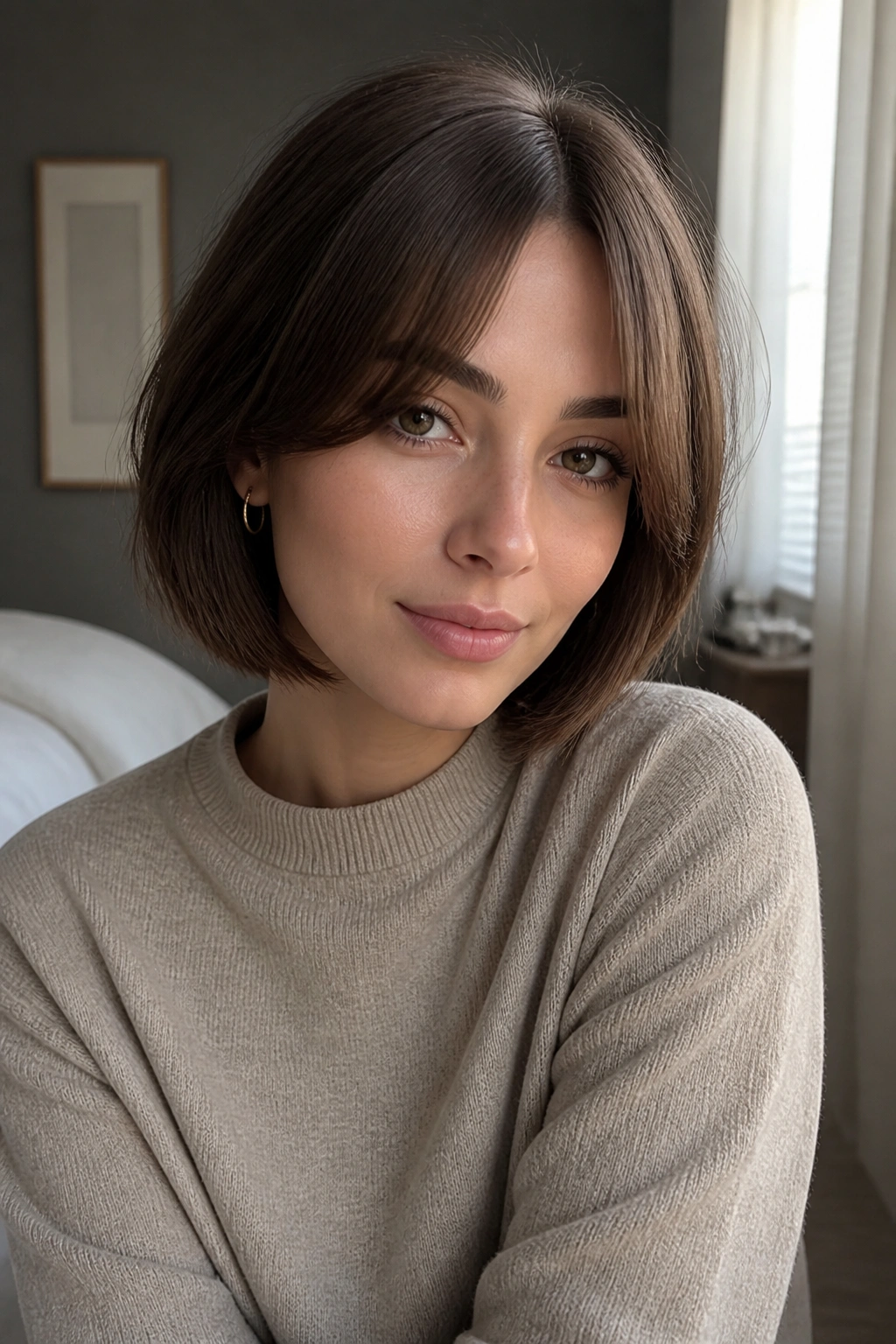
A curtain bang bob gives you face-framing without a full fringe commitment. The bangs part down the middle or slightly off-center and sweep away from the face, while the bob itself usually lands around the chin or a little below. Straight hair makes the bangs fall cleanly instead of puffing out.
This cut is useful if you want softness around the forehead and cheekbones. It breaks up a strong forehead, eases a long face, and keeps the overall look from feeling too severe. The front pieces need enough length to sweep back nicely — usually around cheekbone level when dry.
The styling is straightforward, though the fringe does need attention. Blow-dry the bangs first, directing them away from the face with a round brush or even your fingers. Let them cool in place if you want the bend to last longer.
I like this cut because it gives shape without hiding the whole face. That balance is hard to get right, and straight hair helps it along.
17. Jaw-Length Box Bob
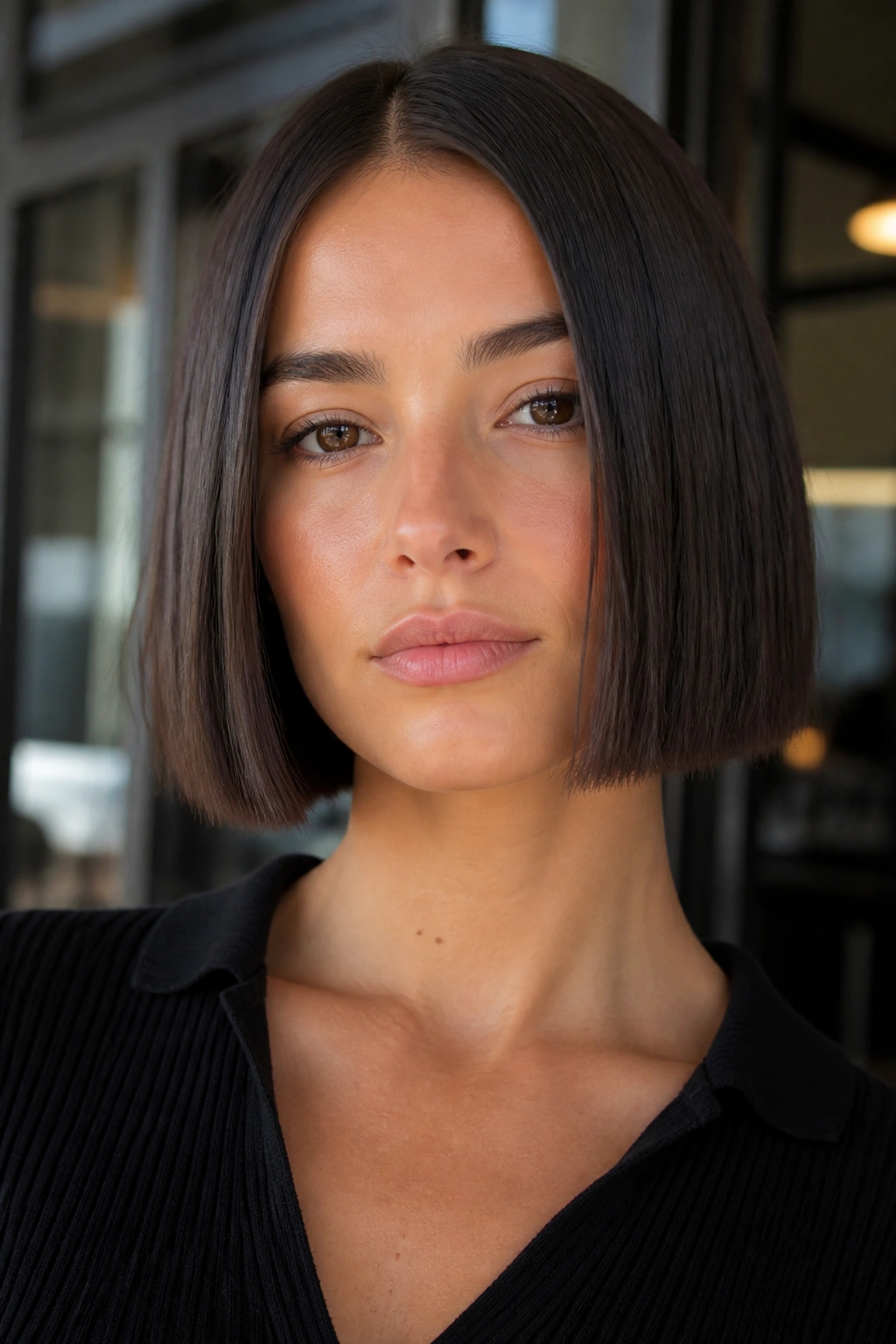
A jaw-length box bob is blunt, squared off, and a little architectural. The ends sit around the jaw line, and the sides stay more straight than curved, which gives the whole cut a boxy outline. Straight hair makes that shape look sharp and deliberate.
Compared with a softer curved bob, this one has less rounding through the bottom. That can be a good thing if you like clear lines or want the cut to sit close to the head. It also works well with dense straight hair because the thickness helps support the box shape.
If your hair is fine, ask your stylist to keep the ends blunt but not heavy. A tiny bevel can stop the perimeter from looking thin. That small detail matters more than people realize.
This is a strong choice for anyone who likes precision. It can look polished with a middle part, or a little more relaxed with one side tucked and the other left loose. Either way, it has presence.
18. Feathered Crop
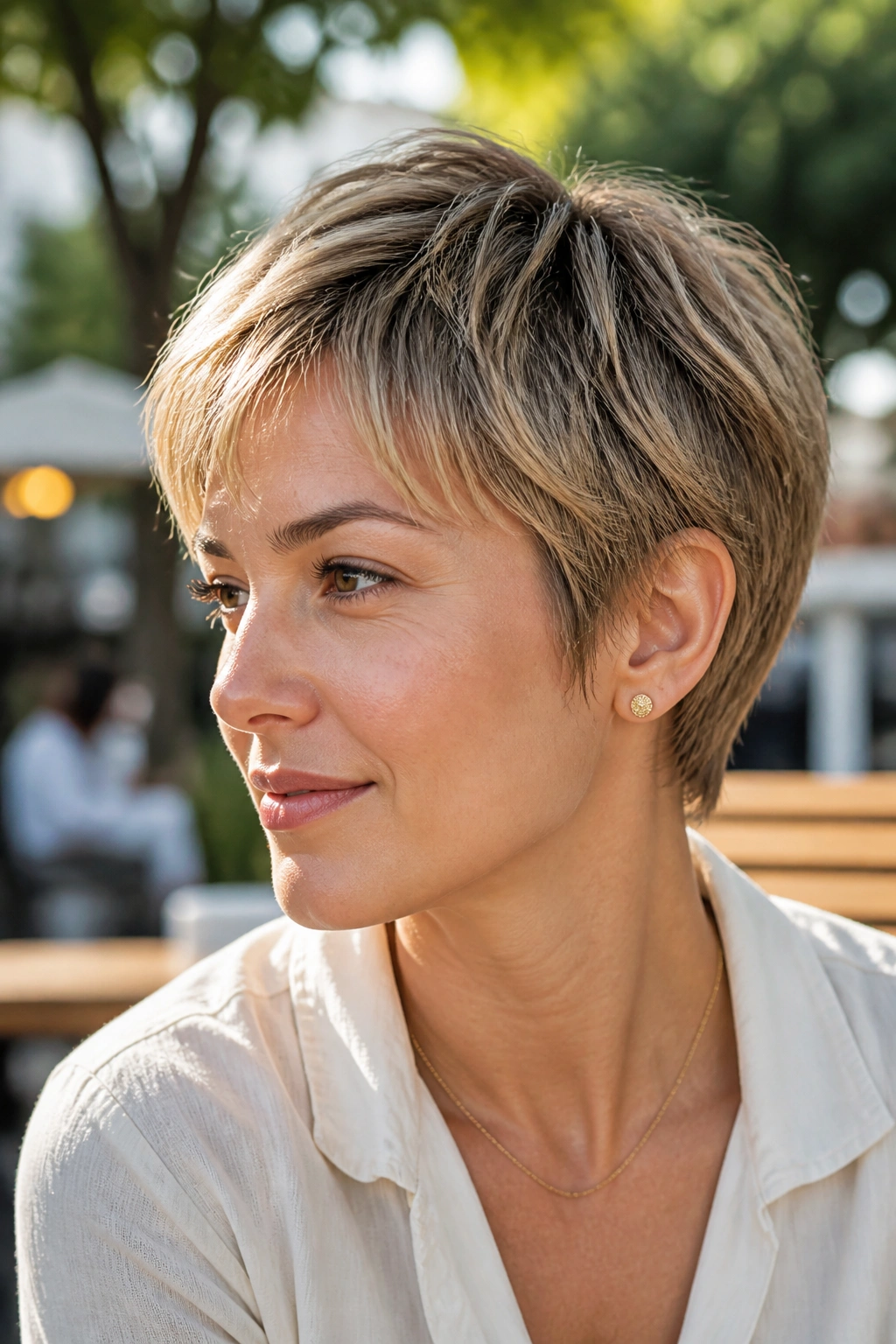
A feathered crop softens short hair without making it fluffy. The ends are light, the top has some lift, and the layers are cut to fall in fine, separated pieces. On straight hair, that feathering keeps the style from looking too solid.
How to Keep It Light
Ask for point-cutting or gentle texturizing through the ends, not aggressive thinning. Too much thinning can leave straight hair looking wispy in the wrong places. The goal is movement around the crown and sides, not see-through gaps.
This cut works especially well for women who want a short shape with less weight around the face. It can ease a strong jaw, soften a broad forehead, and make fine hair look airier. A little root lift spray and a quick finger-dry can be enough on most days.
I’d describe it as friendly. Not precious, not severe, not overly polished. It has enough structure to look intentional and enough looseness to feel easy.
19. Slicked-Back Crop
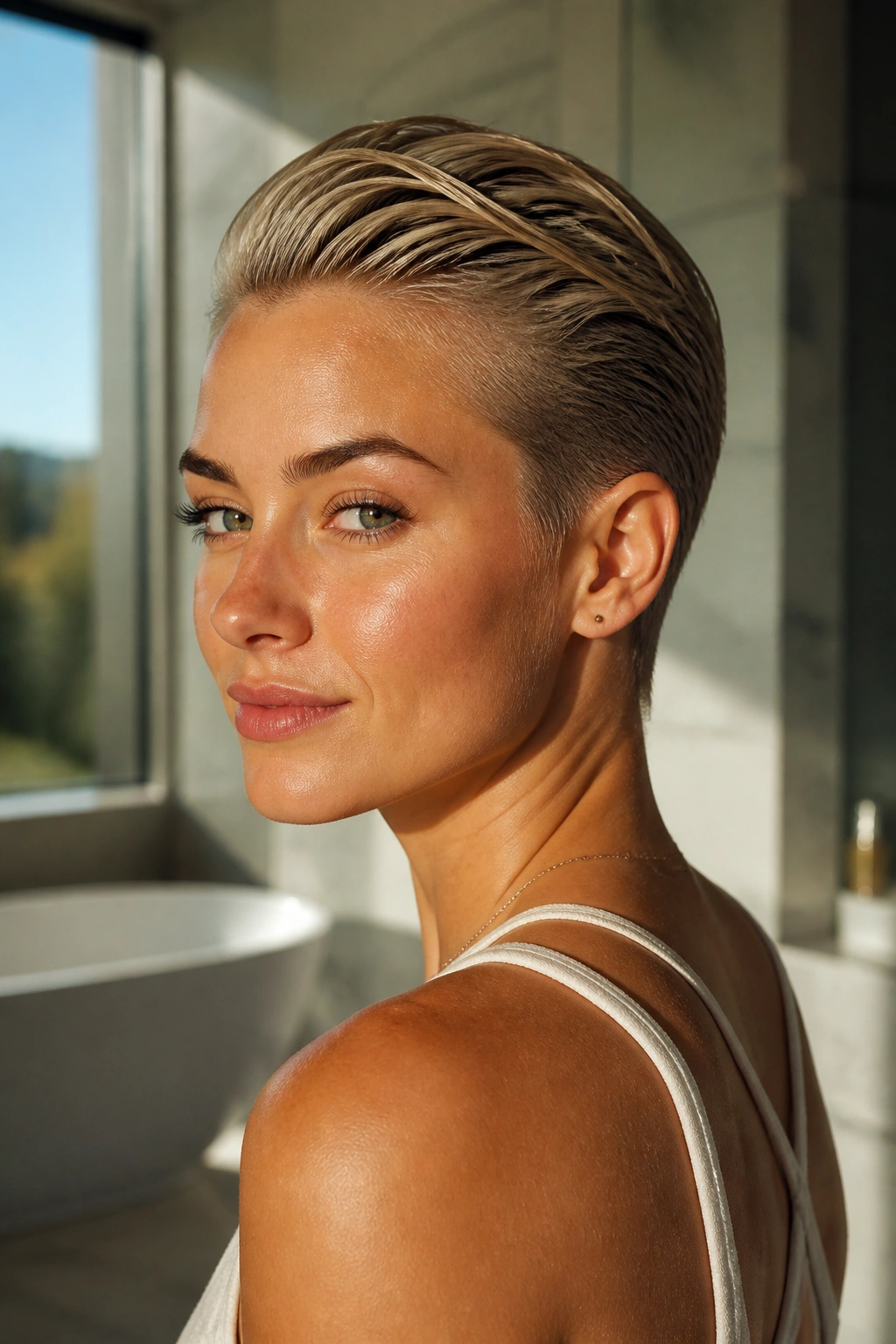
A slicked-back crop is the cleanest short style in the bunch. Hair stays short at the sides and back, with enough length on top to comb straight back or slightly upward. Straight hair makes the surface smooth, so the style can look glossy and controlled instead of bulky.
This cut has a clear mood to it. It’s confident, a little sharp, and very direct. If you like your hair away from your face and don’t mind showing your features, it delivers that in one move. A light gel or pomade gives the top control without making the hair feel hard.
What It Needs
- Short sides and nape
- 2 to 4 inches of length on top
- A product with hold, not too much shine
- A comb or fingers, depending on how neat you want it
The beauty of this cut is that it can be worn sleek or slightly broken up. You can smooth it for a cleaner look or push it back with a few loose ends at the front for something a little less strict.
20. Wedge Bob
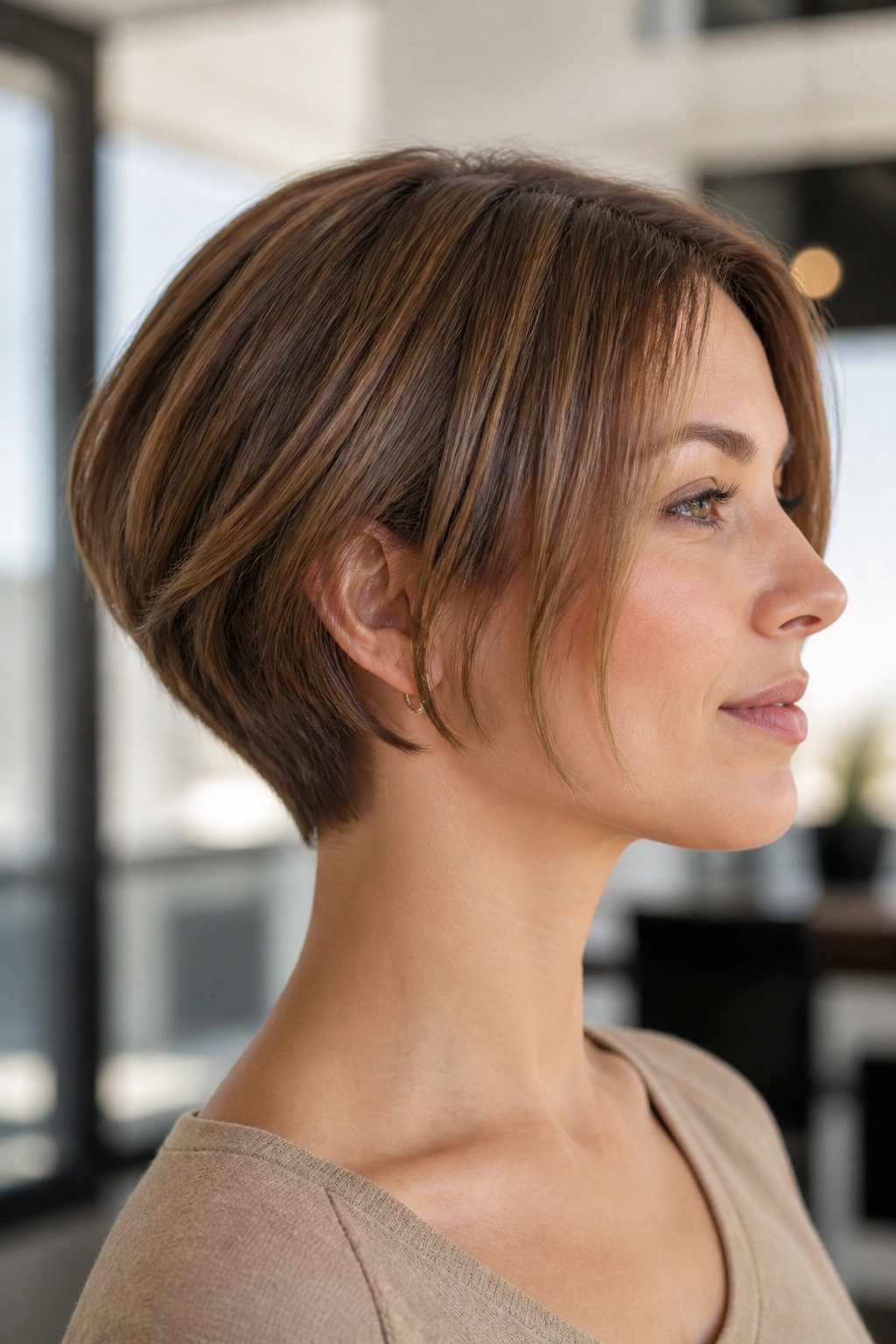
A wedge bob sits somewhere between a stacked bob and a rounded crop, but it has its own shape. The nape stays close, the back rises in a soft curve, and the sides taper forward in a way that gives the head a tidy, lifted profile. Straight hair shows that geometry clearly.
This cut can be a smart pick if you want volume without relying on layers everywhere. The angle builds body through the back while the front stays neat. On thick straight hair, it removes some of the weight that usually drags a short cut down. On finer hair, it can create the illusion of more shape than there really is.
It does need regular trims. A wedge loses its clean outline faster than a simple blunt bob, and straight hair makes growth obvious. That’s the tradeoff. You get structure in return.
I like this one for women who want something a little retro, a little tailored, and not at all lazy. It’s one of those cuts that looks like it has been thought through, which is usually the point.
Final Thoughts

Straight hair does not need a complicated haircut. It needs a cut that understands weight, line, and where the hair wants to fall when nobody is fighting it.
If you want the safest route, start with a blunt bob or a long pixie. If you want more shape, go toward stacked, inverted, or wedge styles. If you want something with a little more edge, the bixie, asymmetrical bob, or slicked-back crop will give you that without turning your mornings into a styling project.
One practical move saves a lot of regret: pin your hair up to the length you think you want, then check the profile in a mirror. The side view tells the truth fast.
