



Fine hair can be stubborn, and on a fuller face the wrong short cut will flatten at the wrong places. The best short hairstyles for fine plus size hair do the opposite: they give the crown a lift, keep the ends clean, and place the eye where you want it — up, not out.
That sounds simple, but the haircut math matters. Fine strands lose shape fast when they’re over-layered, and a lot of people get talked into too many razored pieces because they want “movement.” Usually, that just means airy ends and a flat top. Not a good trade.
What works better is shape with a little discipline: a blunt edge where the hair needs weight, soft layering where it needs bend, and a fringe or side part that breaks up width without swallowing the face. A good short cut can make hair look denser than it is. A bad one can make every scalp part show. You know the difference the second you dry it.
The cuts below are the ones I’d reach for first — the ones that give fine hair some backbone without making a fuller face feel boxed in.
1. Chin-Length Blunt Bob
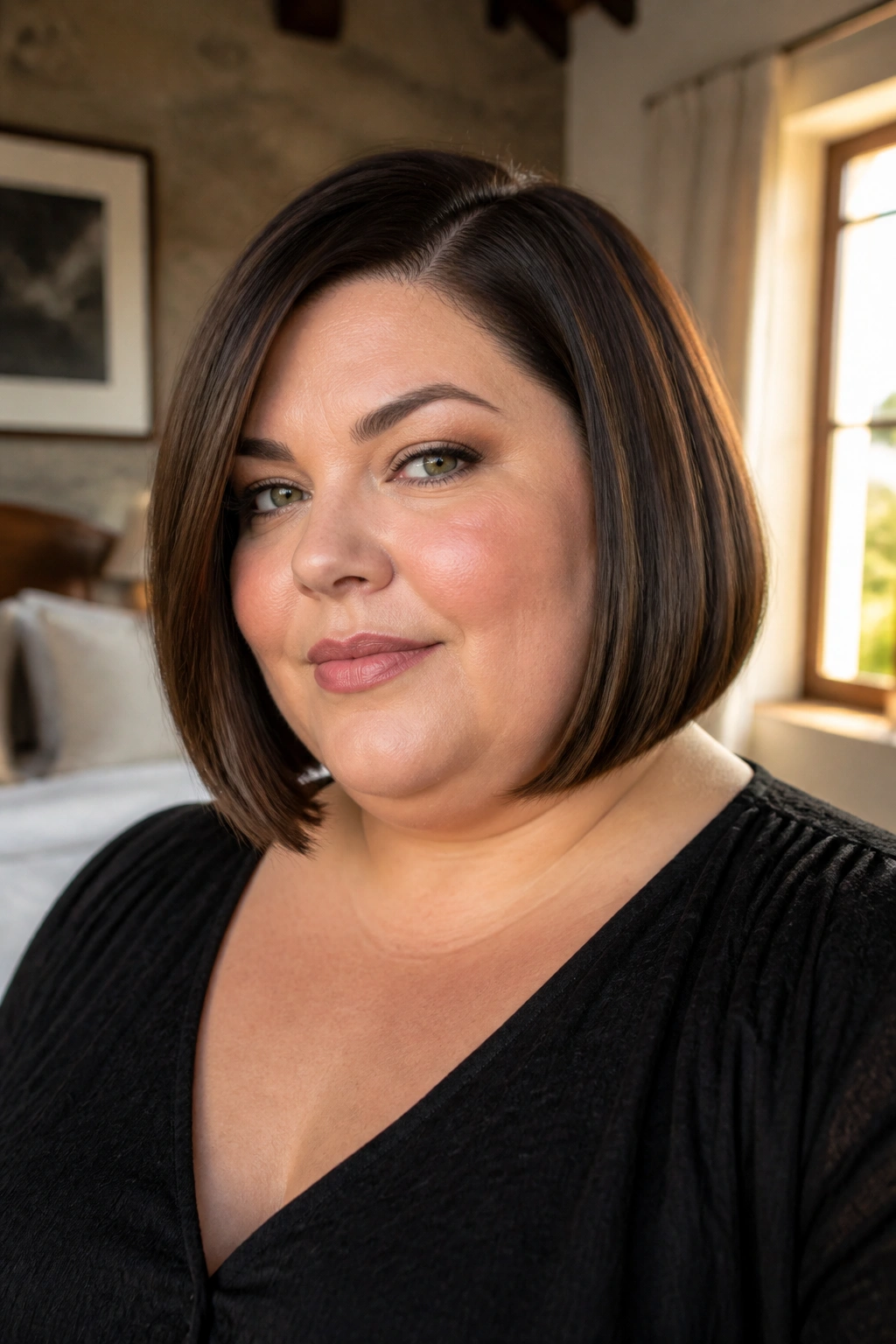
A blunt bob that lands right at the chin is one of the cleanest answers for fine hair. It gives the ends a solid line, and that line makes the hair look thicker than it is. When the perimeter is kept even, the whole cut feels denser and more polished.
The part matters here. A slight side part usually looks softer on a fuller face than a dead-center part, which can split the face in two and make the width feel stronger. Keep the ends tucked under a little, not curled into a helmet. That tiny bend keeps the cut modern.
I like this shape because it does not ask for much. A quick blow-dry with a medium round brush, a few clips at the crown while it cools, and you’re done. Fine hair often gets overwhelmed by fuss, and this cut has the good sense to stay simple.
One line can do a lot.
If your hair tends to go limp by lunchtime, ask your stylist to keep the bob blunt through the bottom and only add the lightest internal support near the crown. That gives lift without turning the ends see-through.
2. Layered French Bob
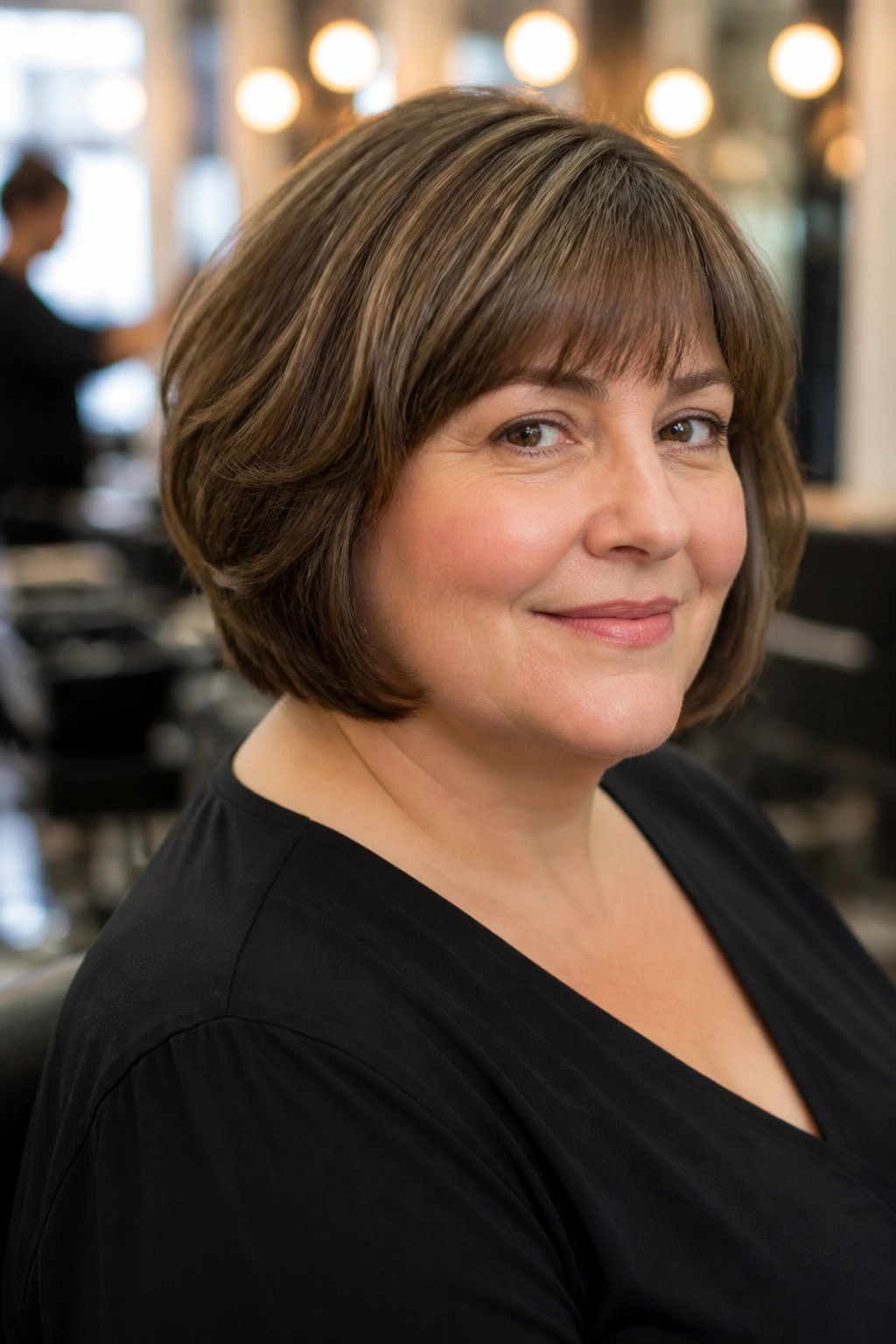
A French bob has a little attitude, and that helps. The cut usually sits around the jaw, sometimes a touch shorter, with soft movement and a fringe that grazes the brow or sits just above it. On fine hair, that shorter length keeps the shape from collapsing. On a fuller face, the soft edge avoids the severe feel a sharp bob can sometimes have.
What makes it work is the balance between crisp and loose. You want enough structure to keep the outline visible, but not so much layering that the hair starts to fray at the ends. I’d ask for light point-cutting only at the fringe and around the cheek line. Too much texture through the body of the cut will thin it out fast.
How to Style It
A small round brush and a blow-dryer do most of the work. Dry the fringe first, then bend the ends in just a little toward the face. If your hair is especially fine, a pea-sized amount of mousse at the roots will give it a better grip than heavy cream.
- Keep the fringe soft, not thick.
- Blow-dry the top section first so it does not stick flat.
- Use a 1-inch curling iron only on random face-framing pieces.
- Finish with a light mist of flexible-hold spray.
It’s the kind of cut that looks best when it is slightly imperfect. Too neat, and it can feel stiff. A little bend, a little separation, and it suddenly has charm.
3. Side-Swept Pixie
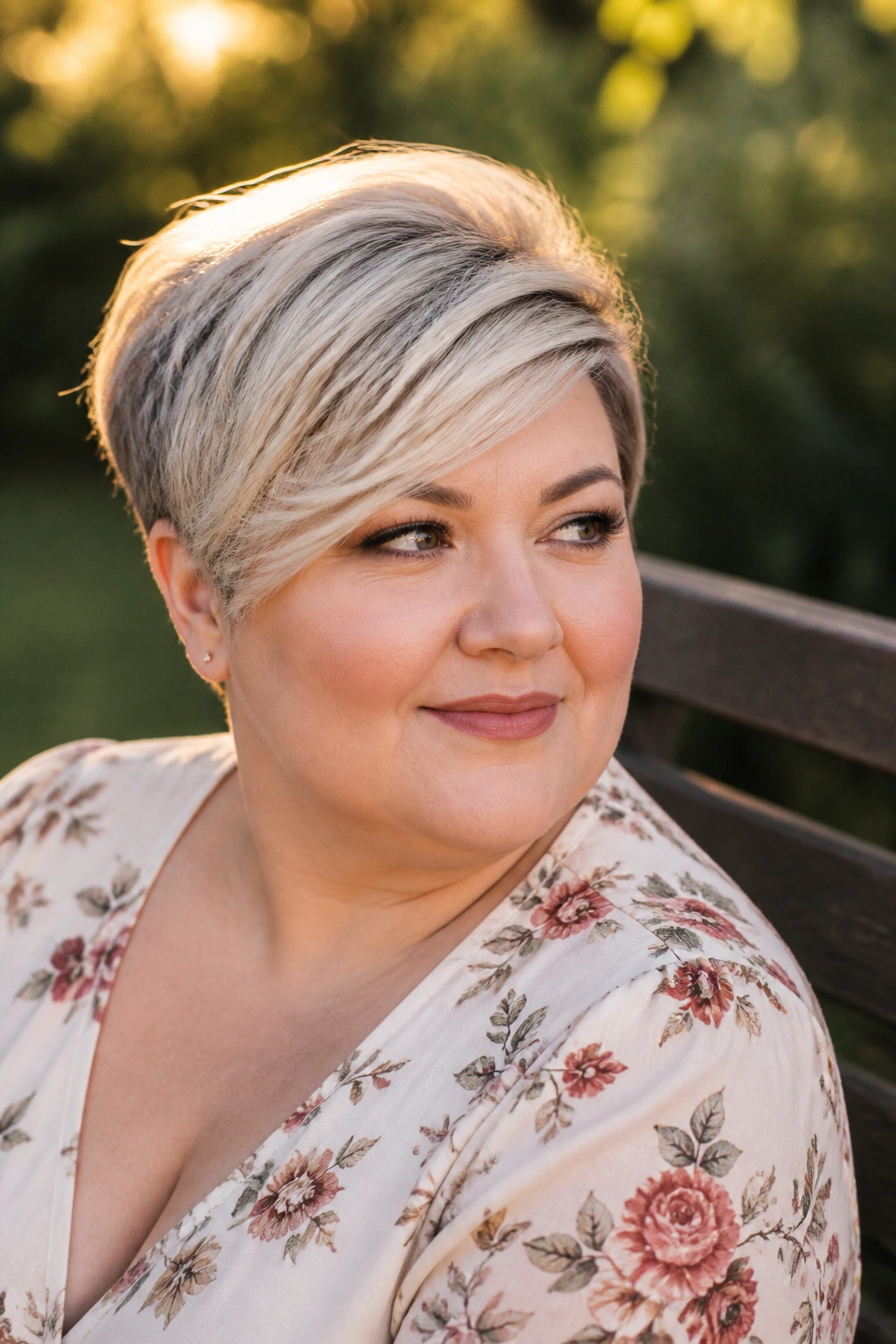
Picture a pixie that leaves the neck open, keeps the top long enough to move, and lets one side fall forward just a bit. That shape does a nice job of lifting the eye, which is exactly what you want when fine hair needs more presence without more bulk.
The side-swept fringe is the important part. It softens the forehead, breaks up roundness, and gives the cut a little diagonal line. Diagonals are kind to fuller faces. They create motion where straight-across lines can feel abrupt.
What to Ask For
- Keep the top around 2.5 to 4 inches long.
- Taper the nape close, but not shaved.
- Leave enough length in the fringe to sweep across the forehead.
- Use soft texturizing at the ends, not a heavy razor pass.
- Ask for a little crown lift so the top does not collapse.
A side-swept pixie is a smart pick if you hate spending 20 minutes styling your hair. A bit of root-lifting spray, a quick rough dry with your fingers, and a touch of paste at the front is usually enough.
The caveat? It needs regular trims. Let it grow too long in the sides and it loses the shape that makes it flattering in the first place.
4. Bixie with Soft Texture
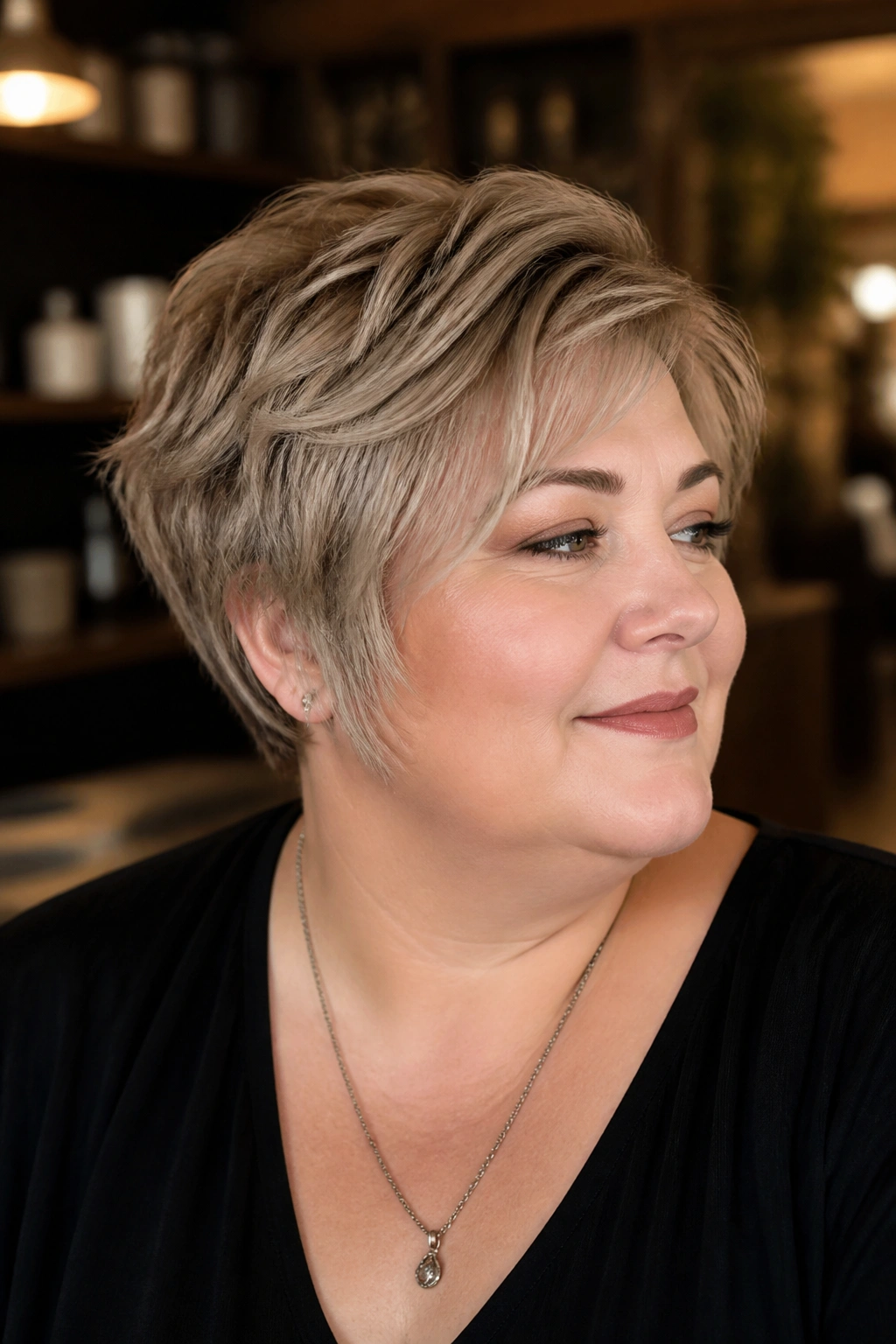
Not every short cut has to look severe. The bixie — that middle ground between a bob and a pixie — is one of my favorite shapes for fine hair because it keeps some softness around the face while still giving the back enough lift to feel light.
This cut is especially useful if you like the idea of short hair but do not want to go full pixie. Fine strands often behave better when they have a little length to grip onto, and the bixie gives you that without dragging the whole shape down. Keep the layers soft and spaced out. Choppy does not have to mean shredded.
A good bixie should have movement at the crown, a tapered nape, and face-framing pieces that skim the cheekbones. If the stylist takes too much weight out of the sides, the cut starts to look sparse. That is the trap with fine hair — more texture is not always more flattering.
It also wears well with glasses, which people often forget. A lot of very short cuts fight frames. The bixie usually does not.
A dab of lightweight cream through damp hair is enough. Let some pieces fall where they want, then direct the fringe with your fingers instead of forcing every strand into place.
5. Stacked Bob with Tapered Nape
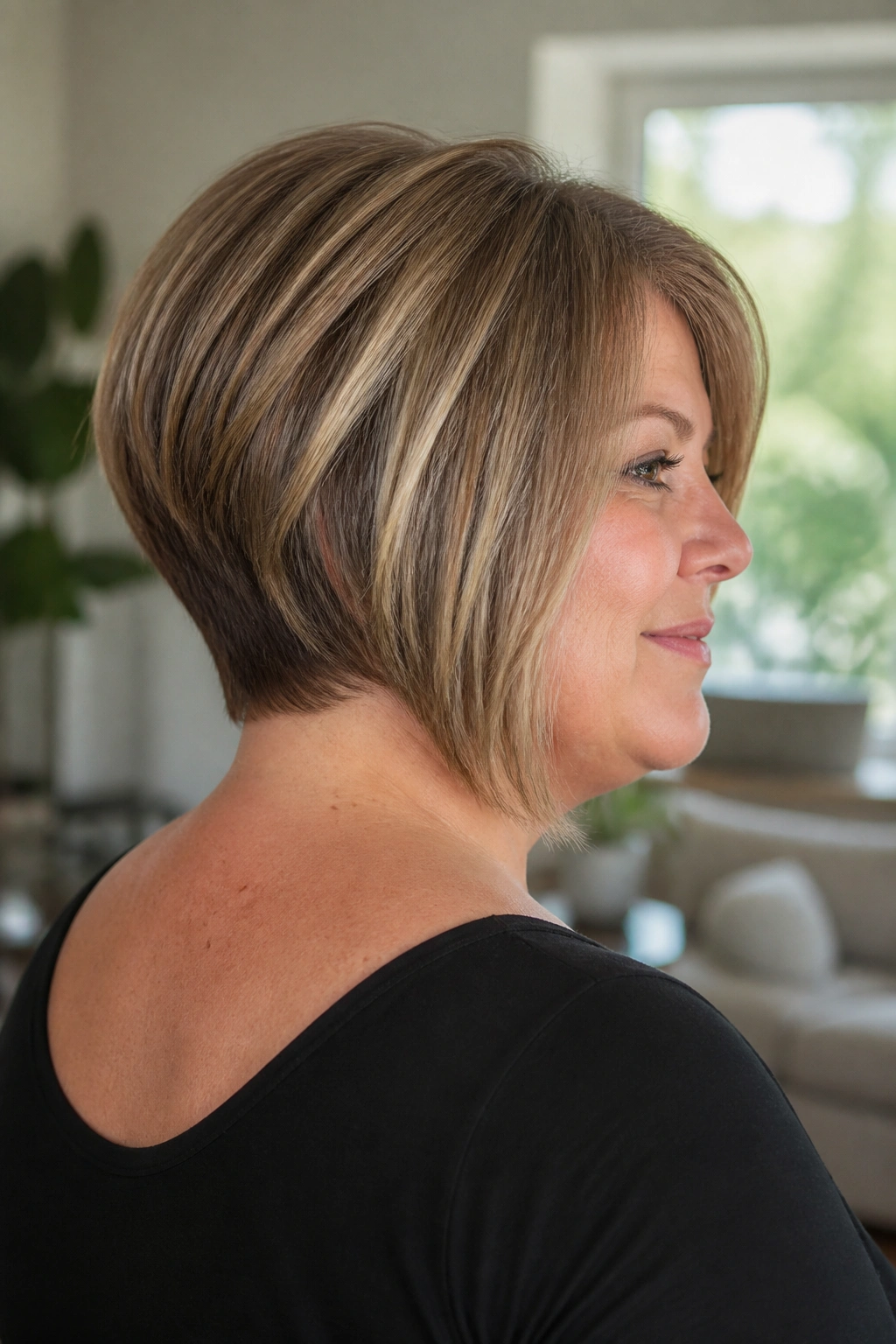
A stacked bob gives fine hair the lift it keeps begging for at the back of the head. The graduated layers in the rear create a little shelf of volume, while the front stays long enough to frame the face instead of pinning it open.
The nape is where this cut earns its keep. A neat, tapered back makes the neck look longer and keeps the shape from feeling heavy. That matters on a fuller face because extra bulk at the base can make the whole style feel square. You want the back controlled and the top alive.
I like a stacked bob best when it stops at the jaw or just below it. Any longer and the stack loses some of its punch. Any shorter and it starts drifting into helmet territory unless the styling is spot-on. There is a narrow sweet spot here, and it is worth respecting.
Ask your stylist to keep the stack soft, not dramatic. Too much graduation can make the cut feel old-fashioned and can expose the thin ends of fine hair. A gentle stack is enough.
This one usually needs a round-brush blowout or a quick root lift with clips while it cools. If you sleep on it badly, a little dry shampoo at the crown usually brings it back.
6. Asymmetrical Bob
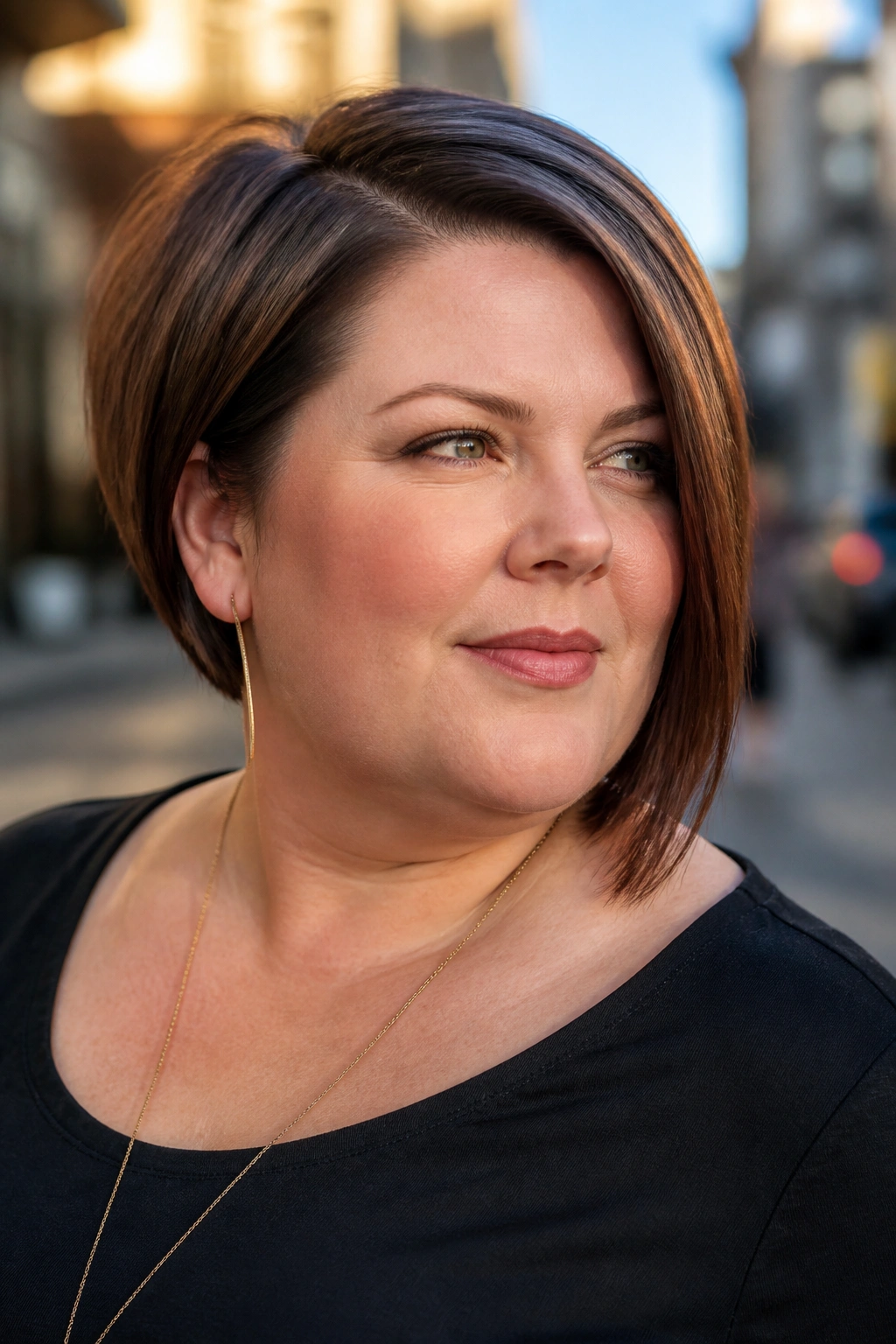
One side a little longer than the other can do a lot of visual work. The diagonal line of an asymmetrical bob pulls the eye downward and across instead of straight out to the widest part of the face. That makes it a nice option for fuller cheeks or a jaw that feels broad.
The difference does not need to be dramatic. An inch to an inch and a half is often enough. If the asymmetry is too extreme, the style starts to look gimmicky, and fine hair can’t always carry that kind of statement. Subtle is stronger here.
How to Ask for It
- Keep one side slightly longer, usually by 1 to 1.5 inches.
- Place the part a little off-center.
- Let the front pieces fall below the chin.
- Keep the back tapered so the cut does not swell out.
- Use soft beveling at the ends instead of heavy layering.
This cut shines when it is straight or just a touch bent at the ends. A flat iron set on low to medium heat can smooth the line, but don’t iron it pin-straight if the hair is fine and fragile. You want movement, not limpness.
What I like most is that it looks intentional even on day two. The slight mismatch gives it life. That helps a lot when your hair naturally loses shape fast.
7. Shaggy Crop with Wispy Bangs
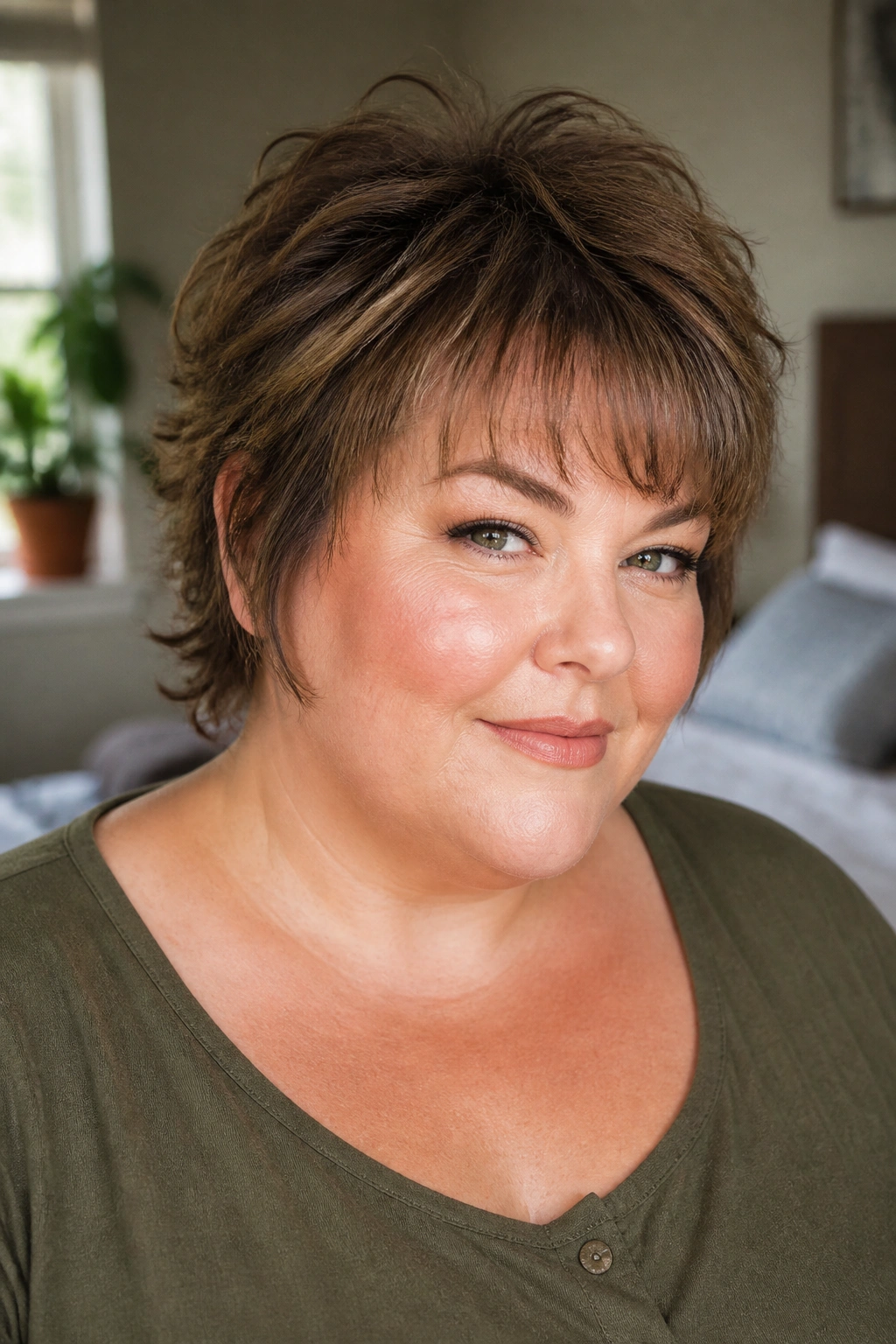
A shag can be tricky on fine hair, which is why this version needs restraint. The best shaggy crop is light around the top, airy through the fringe, and not overcut at the ends. You want the hair to look piecey, not scraggly.
Wispy bangs help a fuller face by softening the forehead without swallowing it. Thick bangs can feel heavy fast, especially on fine strands. A see-through fringe that lands between the brows and the lashes often works better because it gives coverage without cutting the face in half.
The big win here is texture. Fine hair often wakes up flat, and a shaggy crop gives it something to hold onto. It likes a little roughness. That said, the layers need to stay controlled. If you hear the word “lots of razoring,” ask more questions.
A small amount of mousse on damp hair, scrunched at the roots, can wake this cut up fast. Let it air-dry halfway, then finish with a diffuser if you have one. The slight mess is part of the charm.
This is a good choice if you do not want a polished look every day. It lives better a little undone.
8. Curved Jaw-Length Bob
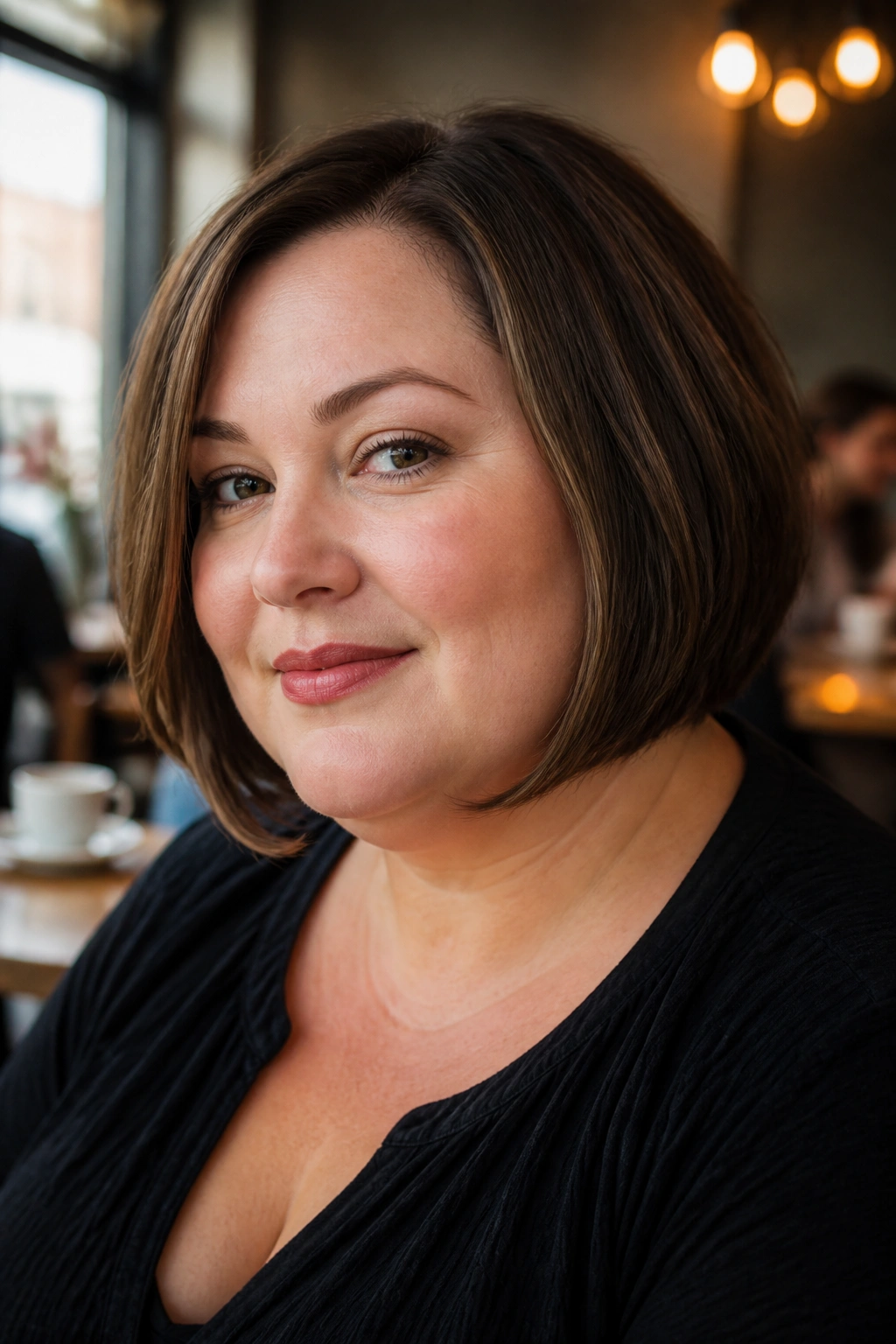
Why does a curve at the ends matter so much? Because fine hair needs a shape it can actually hold, and a slight inward bend at the jaw gives the whole cut a softer frame without relying on heavy layering.
The curved bob is a friend to square or round faces because it rounds off the hard edges without adding width. It also keeps the length in a place where the hair still feels full. If the bob hangs too far below the jaw, fine hair can start to look tired. If it sits too high, it can feel severe. Jaw-length is the sweet spot.
Styling Notes
- Blow-dry with a 2-inch round brush for a gentle bend.
- Direct the front pieces inward by wrapping them one full turn around the brush.
- Keep the crown lifted with clips while it cools.
- Finish with a light spray, not a sticky serum.
- Tuck one side behind the ear for a softer line.
I like this cut on people who want something tidy but not stiff. It has a bit of polish without reading as formal. And because the curve sits close to the face, it gives the illusion of density where fine hair usually needs it most.
9. Feathered Crop
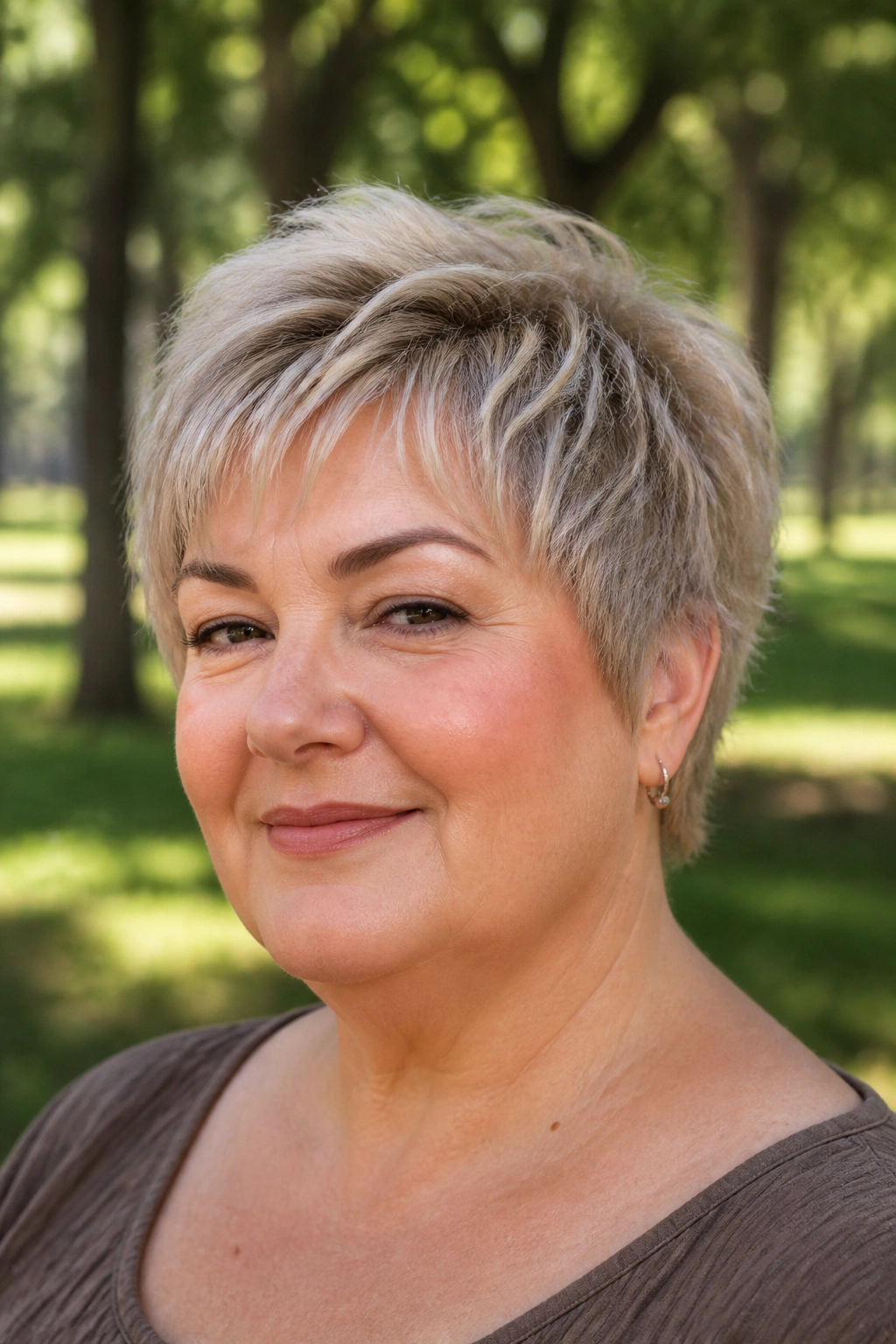
A feathered crop is different from a shag, and that difference matters. Feathering keeps the edges softer, but it does not shred the cut into tiny pieces. For fine hair, that means you get movement without losing the visible line that makes hair look fuller.
This is a good shape if your hair grows flat at the sides and puffs a little at the crown. Feathering the temple area and top helps release some weight while keeping the silhouette clean. The result feels light, but still shaped.
It suits women who want airiness without mess. That is the real appeal. A feathered crop can look neat enough for work and loose enough for a weekend without needing a full restyle. You can brush it forward, sweep it back, or let the front pieces break up around the eyes.
A light mousse or root spray works better here than wax, which can separate fine strands too much and make them look thinner. If you use heat, keep it gentle. A medium brush and a low-to-medium dryer setting are enough.
This cut is underrated. People think feathered means dated, but the modern version is cleaner and more useful than most salon photos give it credit for.
10. Tapered Undercut Pixie
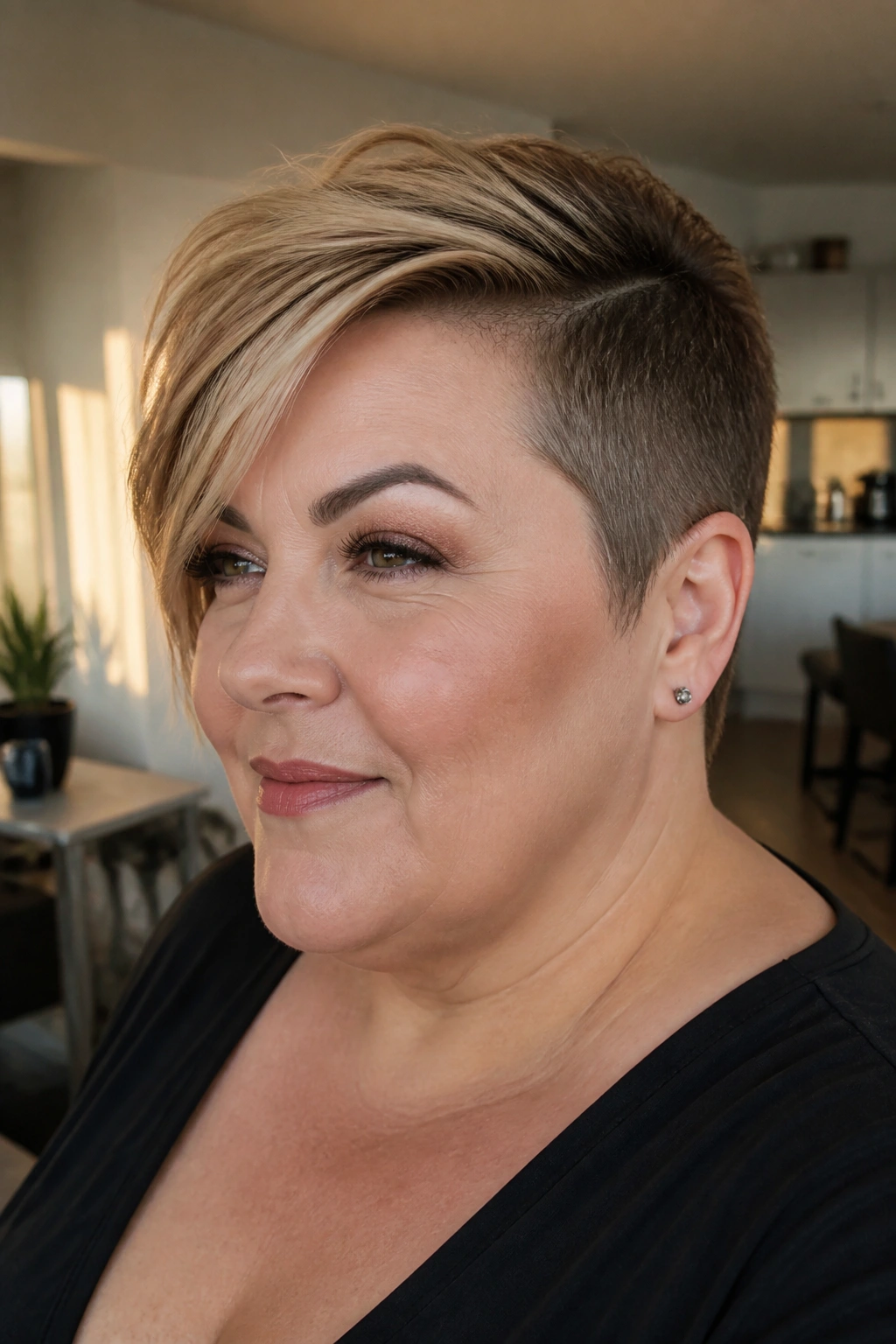
An undercut sounds bold, maybe too bold, until you see what a light version does for fine hair. By removing bulk underneath, the top can sit with more lift and less drag. That helps the hair look fuller where people actually notice it.
The important word there is light. You do not want a harsh shave unless that is your personal style. A subtle taper around the nape and above the ears can free the top layers without exposing too much scalp. Fine hair needs support, not a giveaway.
The best version keeps some length at the front — enough for a soft side sweep or a little fringe. That way the cut still frames the face instead of floating away from it. On a fuller face, that front length is what keeps the pixie from feeling too bare.
If you love low-fuss hair, this is one of the easiest cuts to live with. A pea-sized bit of paste or matte cream can push the top into place in under a minute. Day two hair usually works even better.
Just keep up with trims. Once the sides start thickening out, the whole effect disappears.
11. Curtain-Bang Bob
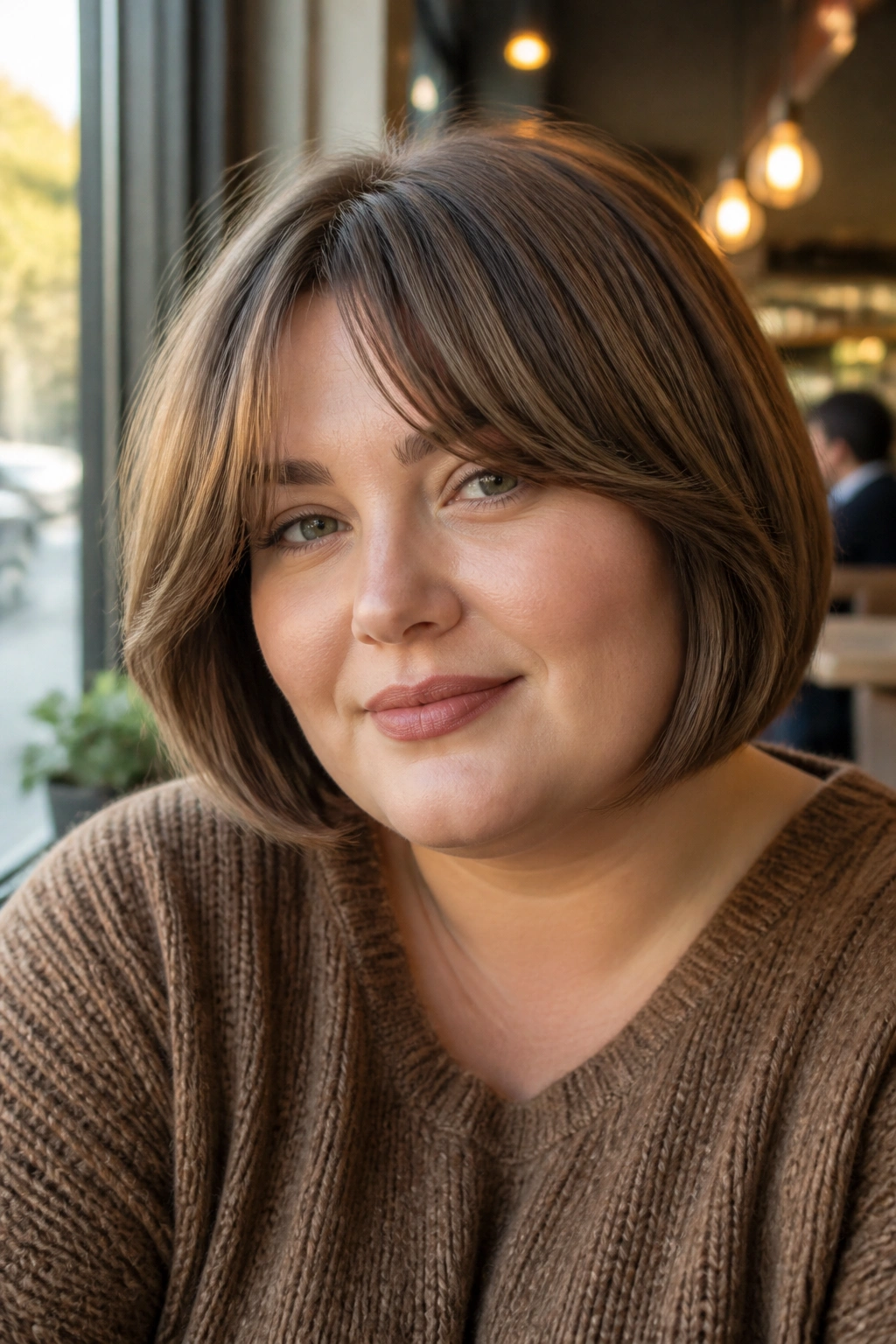
Curtain bangs can do quiet magic on a short bob. They split the forehead softly, drop a little length along the cheeks, and give fine hair a face-framing piece without making the fringe feel bulky. That is a nice combination when you want to soften fuller features without hiding them.
The bob itself can sit at the chin or just below it. I prefer a length that leaves enough hair to bend, because curtain bangs need a little body to blend well. If the whole cut is too short, the bangs end up standing apart from the rest of it. That looks fussy, and fine hair has enough trouble already.
What Makes It Work
- Start the fringe around the brow to cheekbone zone.
- Keep the middle shortest and let the sides angle longer.
- Blow-dry the bangs away from the face first, then guide them inward.
- Use velcro rollers for 5 to 10 minutes if your hair falls flat fast.
- Keep the ends soft so the fringe melts into the bob.
This is one of those cuts that looks casual but takes a little attention at the front. Worth it. The softness around the eyes and cheeks can make the face look more open without needing dramatic length.
12. Wedge Cut
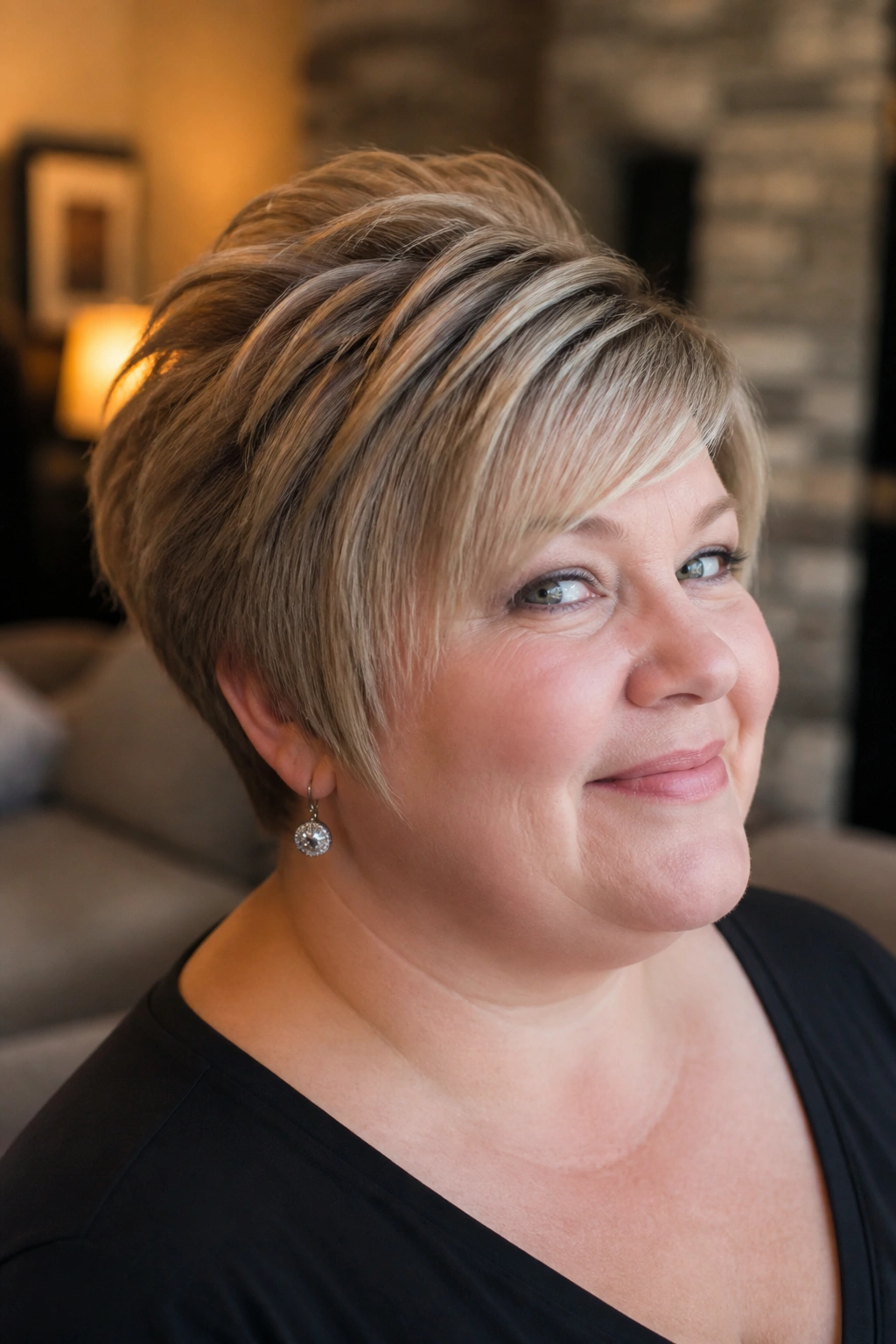
Old-school? Sure. Boring? Not if it’s cut well. The wedge cut has one job, and it does it well: it builds visible lift at the back while keeping the front sleek and directed. Fine hair loves that kind of structure.
The shape works because the cut angle gives the illusion of fullness where the hair usually caves in. At the same time, the front pieces stay a little longer and frame the face. That helps keep a fuller face balanced instead of boxed in. You get height at the crown, shape at the nape, and enough length around the cheeks to soften the overall outline.
A wedge cut needs precision. If the layers at the back are too aggressive, the style can look dated fast. Too little stacking, and you lose the whole point. A good stylist will keep the graduation smooth and make sure the sides blend cleanly into the front.
This cut is especially nice if you like a blowout look with very little daily effort. A round brush at the back, a quick pass through the front, and you’re done. It also holds well on day two, which is more than I can say for a lot of short cuts.
If you want something neat, smart, and not overfussy, this deserves a close look.
13. Choppy Crop with Long Fringe
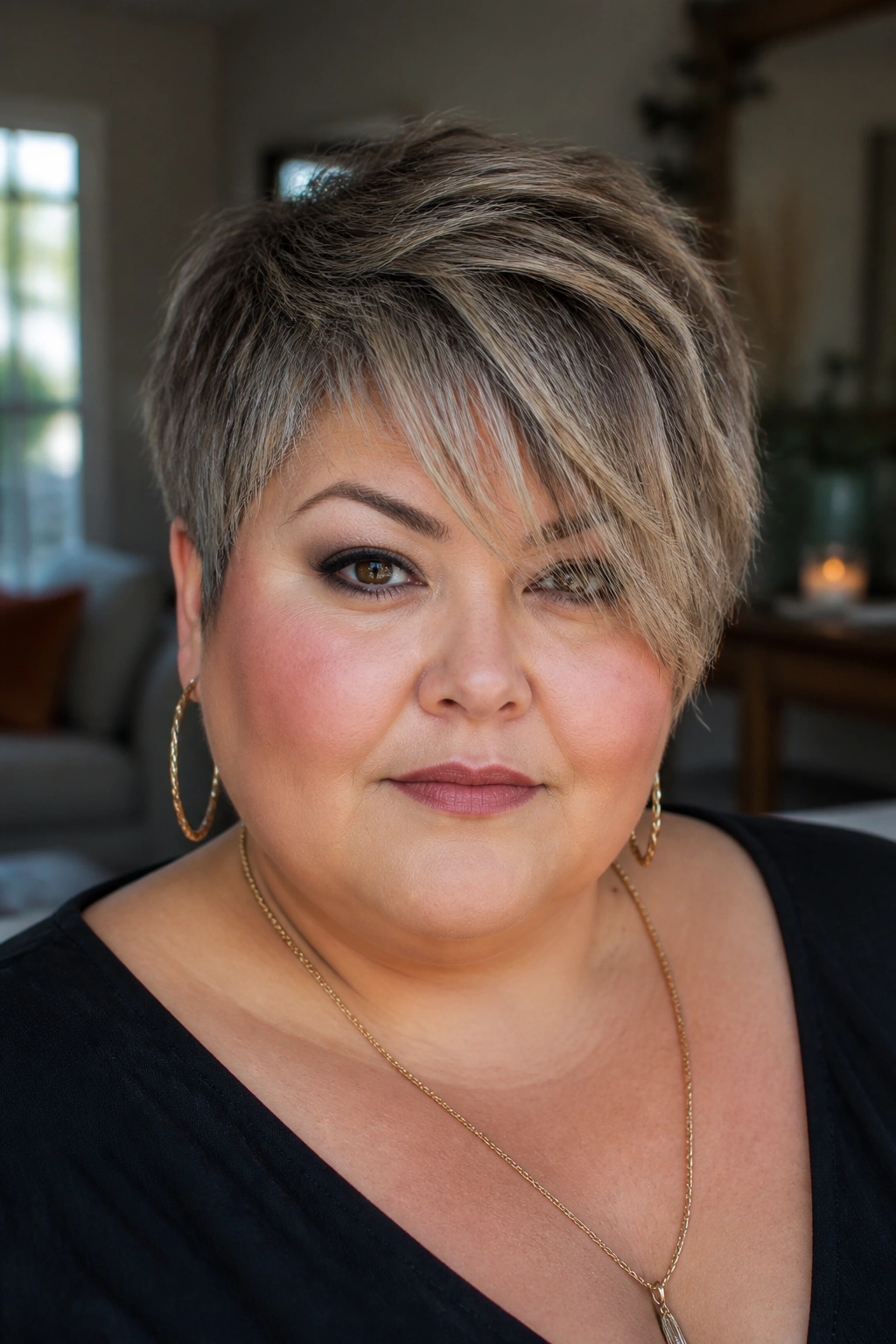
A choppy crop can work on fine hair when the choppiness stays controlled. You want the ends to look piecey, not broken. The long fringe helps by giving the front a bit of weight, which keeps the cut from feeling too wispy.
This style is a good fit if you like a little edge but still want softness around the face. The fringe can sweep sideways, split in the middle, or fall forward just enough to graze the brows. On fuller features, that front length helps the cut feel balanced and less open.
The crop itself should stay compact through the back and sides, with a little extra texture through the top. If the layers get too short, fine hair can begin to look sparse. That is the line you keep checking. Choppy is fine. Frayed is not.
A texturizing spray can help, but use it sparingly. Two or three light sprays at the root and crown are enough. Scrunching too much product into fine hair tends to make it separate in all the wrong places.
This is a strong choice if you like a low-maintenance shape that still has personality. It does not need to be perfect to look good. In fact, that is kind of the point.
14. Sleek Rounded Bob
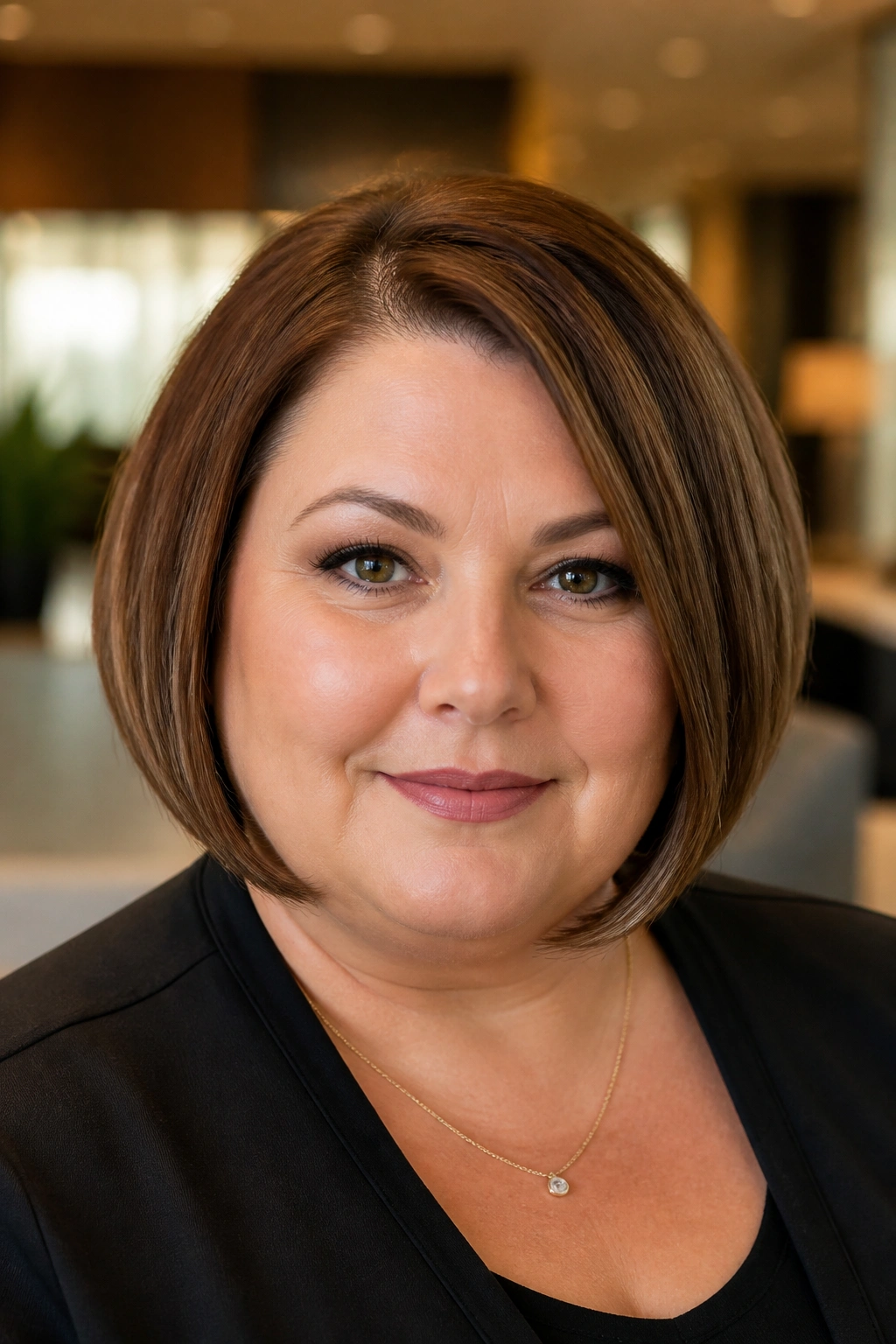
Can sleek work on fine hair? Yes — if the shape is rounded instead of flat. A rounded bob follows the line of the head a little more closely, which keeps the style soft while still giving it a tidy outline. That is useful when you want a polished look without flattening the hair even more.
The rounded edge matters around the jaw and cheek line. A straight, flat bob can sometimes feel boxy on a fuller face, while a gentle curve keeps everything moving. The hair should skim the face, not sit like a hard shelf.
I would keep the layering minimal here. Fine hair needs the weight left in place so the ends still look full. A side part can help the cut feel less severe, and a small bend at the front pieces can keep the shape from reading too stiff.
This is a nice option if you like a cleaner style for work or dressier days. It pairs well with earrings, strong brows, and anything that needs a neat frame around the face. It is not the most playful cut on the list, but it has range.
The better your blow-dry, the better this cut looks. That is the only real catch.
15. Soft Tapered Crop
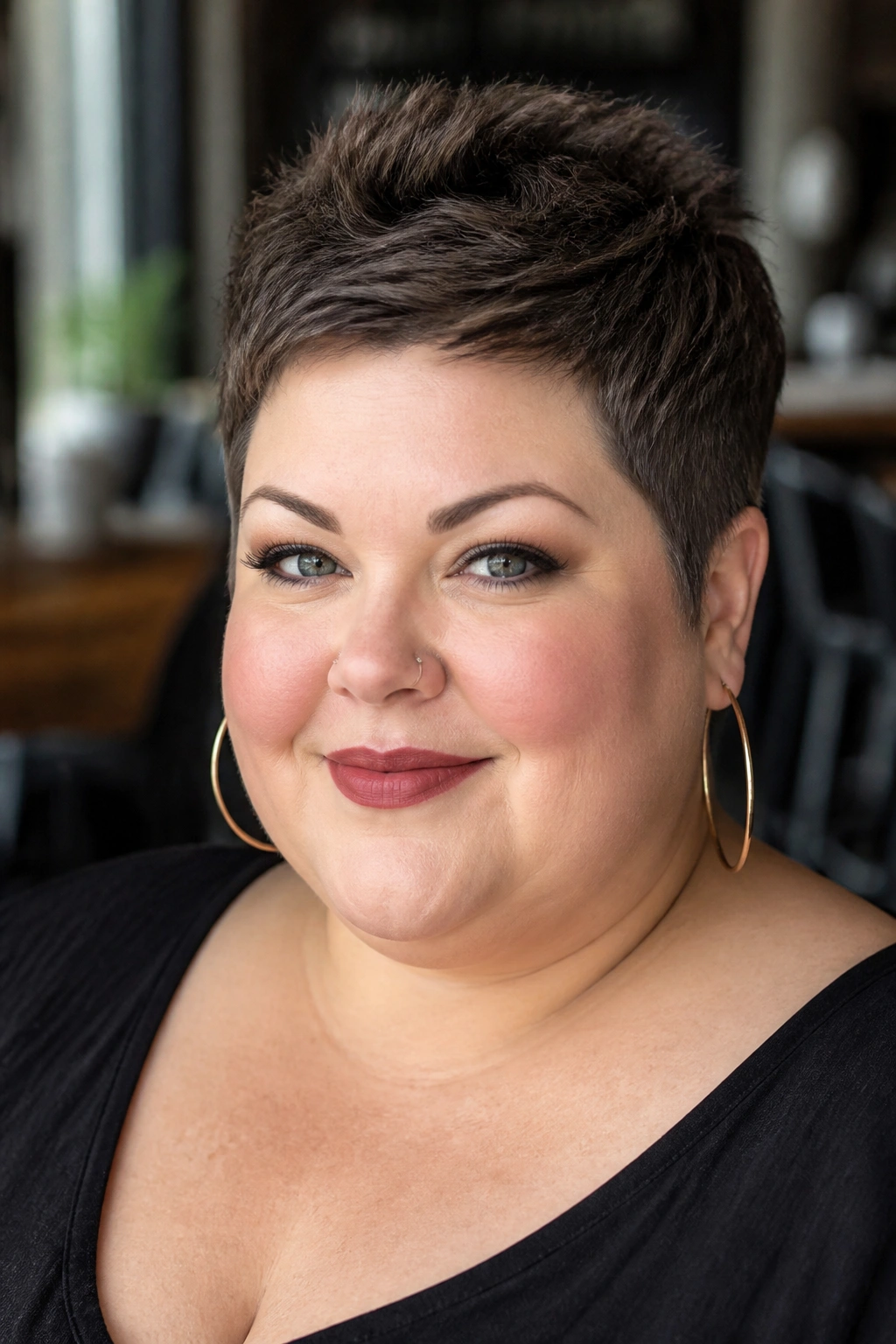
If I had to pick one short cut for a client who wants easy mornings and fine hair that still looks full, I’d start here. A soft tapered crop keeps the sides neat, leaves enough length on top for lift, and stops short of the severe lines that can make fuller features feel exposed.
The beauty of this cut is that it gives shape without asking for a lot of product. The crown gets a little height, the neckline stays clean, and the front can be brushed forward, side-swept, or left a little messy. That flexibility matters more than people think. A short haircut has to work on good days and lazy ones.
Ask for soft graduation at the back, not a hard stack. Ask for enough length on top to pinch up with your fingers — usually around 2 to 3 inches is plenty. And if your hair is especially fine, keep the texture light at the ends so the cut does not look frayed after one wash.
A tiny bit of mousse or root spray is usually enough. Air-dry some of it, then finish with your fingers instead of brushing it to death. That keeps the lift in place.
Among short hairstyles for fine plus size hair, this is the one that tends to age well, wear well, and forgive a bad hair day without making a scene.
