



Short bobs for curly hair live or die on one thing: the cut has to respect the curl pattern, not fight it. A bob that looks neat on a blow-dried head can puff, flip, or cave in once the curls dry, and then the whole shape disappears by lunch.
The sweet spot is smaller than most people think. A jaw-length line, a chin-grazing edge, a little stack at the nape, a dry cut that follows the spring of each curl — those details keep the silhouette readable even after a rough night’s sleep or a damp commute.
And that is the real difference between a curly bob that works and one that spends all day apologizing for itself. The good ones have a clear outline, a little breathing room, and enough weight in the right places to stop the ends from floating away. Not stiff. Not fluffy. Just controlled.
The styles below all do that in different ways. Some are blunt and compact. Some use angle, hidden layering, or a soft fringe to keep the shape from ballooning. The trick is choosing the one that fits your curl pattern, density, and patience level — because those three things decide more than face shape ever does.
1. Chin-Length Curly Bob With a Blunt Edge

A chin-length curly bob with a blunt edge is the cut I’d point to first when someone wants curls that look tidy without looking frozen. The blunt perimeter gives the curls somewhere to land, so the whole shape reads clearly instead of spreading out into a halo.
Why It Holds Shape
The blunt line acts like a fence. Curls still move, but they don’t wander too far because the ends all stop in roughly the same place.
That matters most for loose ringlets and medium-density hair. Too many soft layers can make this cut drift into puff territory fast. Keep the interior light, not shredded.
- Best for 2C to 3A curls that spring up a little after drying.
- Ask for the wet length to fall just below the chin, because curls shrink.
- Keep the perimeter clean with only a small amount of point cutting.
- Style with gel or foam and diffuse until the roots are about 80% dry.
Tip: If your curls are coarse, leave the front a touch longer than the back. It keeps the edges from kicking out and turning boxy.
2. Rounded Curly Bob That Follows the Jaw

Want a bob that hugs the face instead of fighting it? A rounded curly bob is a smart move when you want softness without losing the shape of the haircut. The curve follows the jawline, which keeps the silhouette looking intentional even when the curls expand a little.
The roundness is doing a lot of quiet work here. It lets the hair stack where it needs to, then tapers gently toward the sides so you do not get that wide, shelf-like effect some curly bobs pick up.
This cut is especially nice on curls with a little bounce but not a ton of weight. It gives the hair a clean outline, and that outline survives a lot better than a heavily layered shape.
If you like hair tucked behind one ear, this is a strong choice. The curve still reads. The shape does not fall apart the second you move.
3. Stacked Curly Bob With a Soft Nape
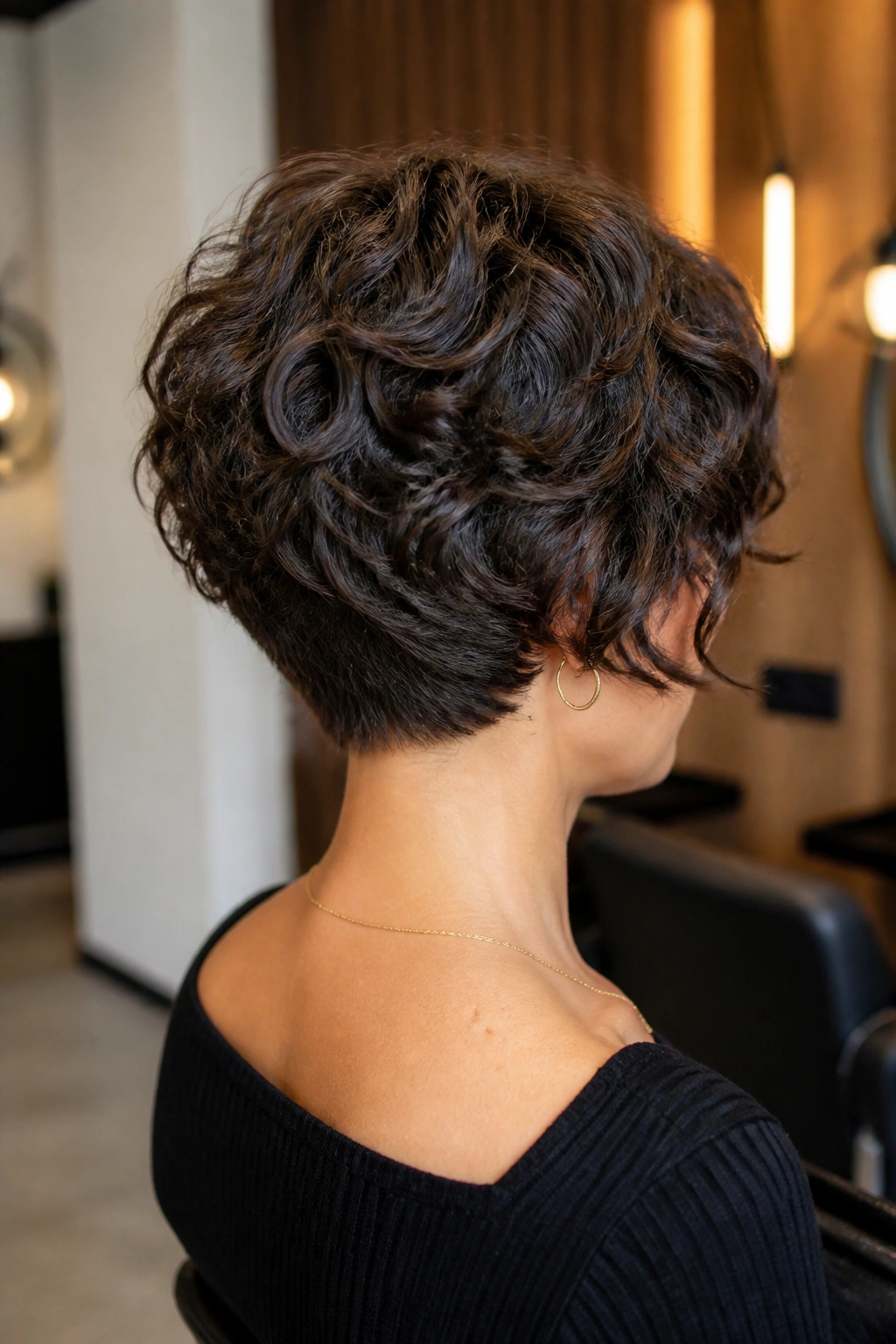
If the back of your hair puffs out first, a stacked bob can fix the problem fast. The short lift at the nape removes bulk where curls tend to swell, then the upper layers fall over it and keep the cut from looking choppy.
A lot of people hear “stacked” and picture a sharp, old-school wedge. That is not the move here. The softer version keeps the graduation gentle, so the bob still feels curl-friendly rather than helmet-like.
This works especially well for dense hair that wants to expand sideways. Shorter layers at the back create a narrower base, which makes the whole head look cleaner from the side.
- Ask for a subtle stack, not a steep one.
- Keep the crown long enough to cover the graduation.
- Best on thick ringlets and springy 3B curls.
- Dry with the head upright if your roots tend to collapse.
A little lift goes a long way here. Too much stacking, and the cut starts shouting.
4. French Bob With Brow-Grazing Fringe

Why does a French bob hold shape so well on curls? Because it leans into compactness. The cut is short enough to keep the outline tight, and the fringe adds a strong front edge that makes the whole haircut feel finished.
The brow-grazing fringe is the detail that changes everything. On curly hair, bangs shrink more than people expect, so the line needs to sit longer than it would on straight hair. That longer length keeps the fringe from jumping halfway to the forehead once it dries.
This cut works best when the curl pattern is loose enough to move, but not so loose that the shape falls flat. Think compact, cheeky, a little romantic, but not fluffy.
How to Ask for It
Bring the fringe reference in your natural texture, not flat-ironed. That matters more than most salon photos.
- Ask for the front to sit near eyebrow level when dry.
- Keep the sides around cheekbone to jaw length.
- Leave enough weight in the perimeter to stop the ends from fraying.
- Style the fringe first, then the rest of the bob, so the front does not dry in a weird shape.
The fringe can be high-maintenance. Still worth it.
5. Inverted Curly Bob With Longer Front Pieces
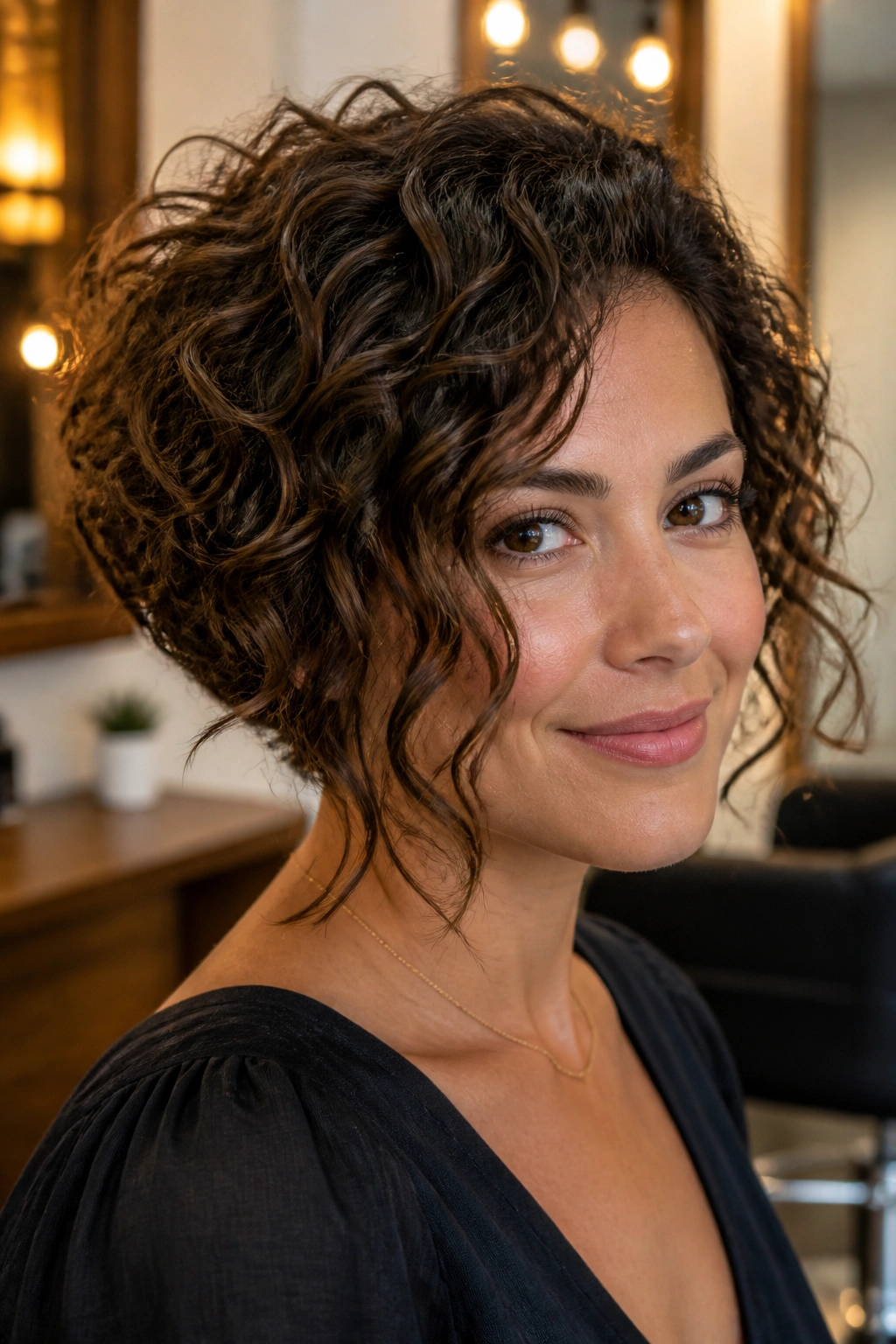
Unlike a one-length bob, an inverted cut gives the back a little lift without stealing length from the face. That is why it works so well for curls that need structure but still want some movement around the jaw.
The front pieces stay longer, often by 1 to 2 inches, which creates a clean diagonal from back to front. On curly hair, that angle helps the curls settle instead of mushrooming outward in every direction.
This is a strong pick if you like the neck to feel clear and the front to frame the cheekbones. It has a bit of drama, but not the fragile kind.
The trick is moderation. A steep inversion can make curly hair look stacked in a way that’s hard to style at home. Keep the angle visible, not aggressive. That gives you shape without a lot of daily bargaining with a diffuser.
6. Box Bob for Tight Coils
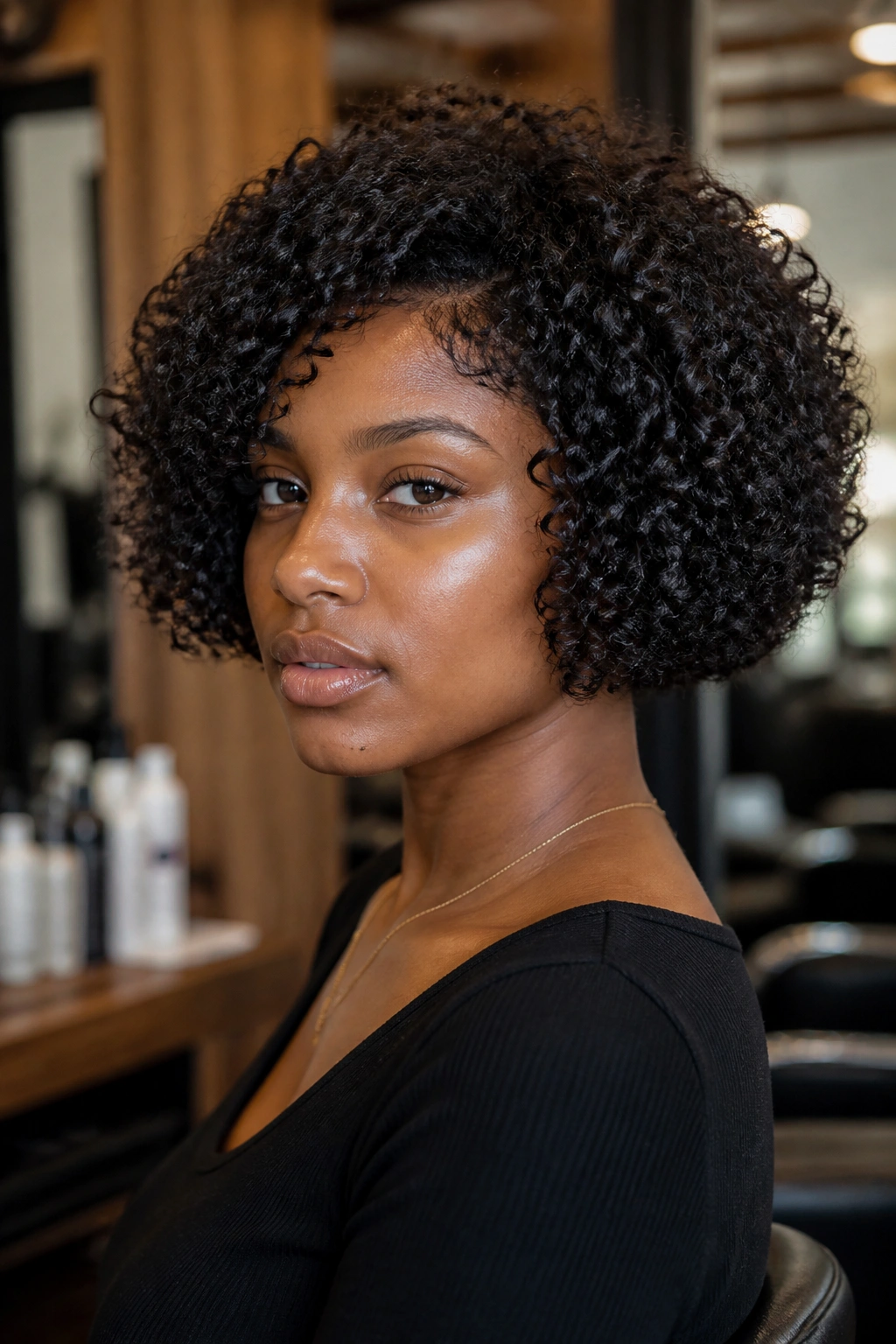
A box bob is not shy. It has a square edge, a straight outline, and a shape that says the haircut is in charge, which is exactly why it works for tight coils that like to spread outward.
The beauty of this cut is the geometry. Instead of chasing softness, it lets the curl pattern fill out a strong perimeter. The result can look polished, but not flat, because the curls themselves supply the texture.
Sharp edges matter here. If the bob is thinned too much, the whole thing turns wispy and loses the square silhouette that makes it interesting in the first place.
- Best for 4A to 4C curls with strong shrinkage.
- Keep the length around ear to jaw level for a neat outline.
- Avoid heavy thinning shears near the ends.
- Use a rich leave-in and a firm hold gel for the cleanest finish.
A box bob is one of the few short cuts that can look intentional even on day three. That is not an accident.
7. Layered Bob for Thick Ringlets
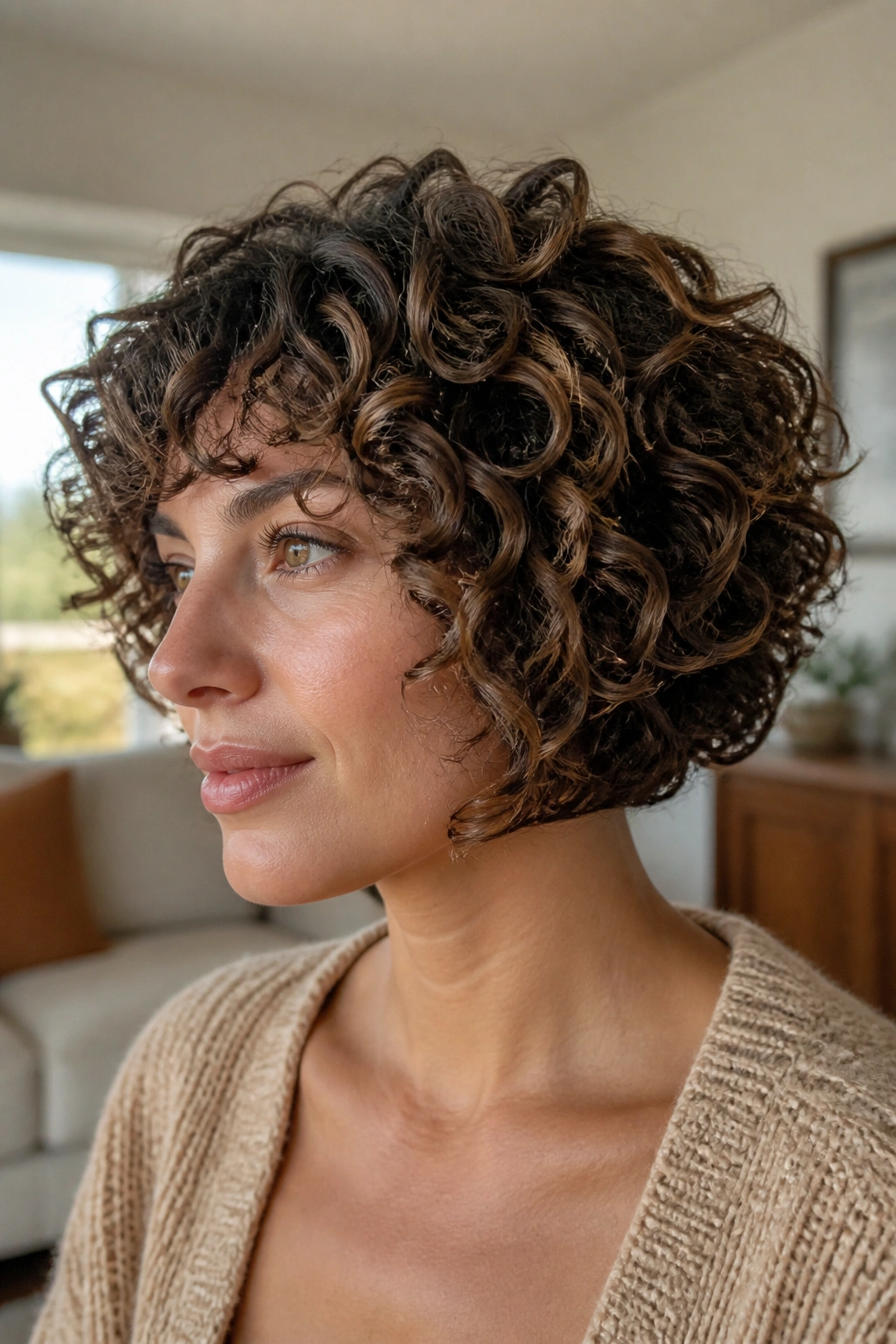
Thick ringlets need room, but they do not need to be chopped to pieces. A layered bob can hold shape beautifully when the layers are placed with a light hand and the perimeter stays strong.
The mistake people make is asking for “lots of layers” because they want movement. On dense curls, that usually creates frizz at the top and a soft, unpredictable bottom. Better to remove weight from the inside, then leave the outside line alone.
What to Ask Your Stylist For
A clean perimeter with controlled internal layers is the goal.
- Keep the bottom line blunt or nearly blunt.
- Place the shortest layers around the crown, not the ends.
- Ask for curl-by-curl shaping if the texture is uneven.
- Leave enough weight near the jaw so the bob does not puff outward.
This cut shines on ringlets that clump well. It also gives you a little more swing when you turn your head, which sounds minor until you realize that swing is what keeps the bob from feeling stiff.
8. Curly Bob With a Deep Side Part

A deep side part can do more for curly hair than a lot of people realize. It shifts the weight, gives the roots a lift at the crown, and keeps the bob from splitting into two flat sides that sit there doing nothing.
The shape feels more dramatic than a center part, but not in an overdone way. One side gets extra volume, the other side tucks in a little closer to the face. That contrast keeps the silhouette lively.
It is a strong choice if one side of your curls is flatter than the other. The side part can disguise that imbalance fast. It also helps when the cut needs a little edge without needing more length.
Diffusing with the part already set makes a difference. If you flip the part later, you are asking the roots to relearn their shape. They usually don’t like that.
9. Tapered Bob for Coily Hair

If your coils are dense, a tapered bob can be a gift. The back and sides are cut shorter so the outline narrows toward the neck, while the top keeps enough length to show off the curl pattern.
That taper matters because coily hair does not collapse in the same way looser textures do. It stacks. It expands. It holds air. A tapered shape works with that behavior instead of pretending it isn’t happening.
The result is a bob that looks shaped from every angle. From the front, it can feel soft and rounded. From the side, the nape stays neat and controlled.
- Best for hair that shrinks a lot.
- Ask for the nape to be shorter by about 1/2 to 1 inch.
- Keep the top layers long enough to avoid a boxy head shape.
- Use a pick only at the roots if you want lift without disturbing the curl clumps.
A tapered bob is not the fluffiest option. That is the point.
10. Bob With Invisible Internal Layers
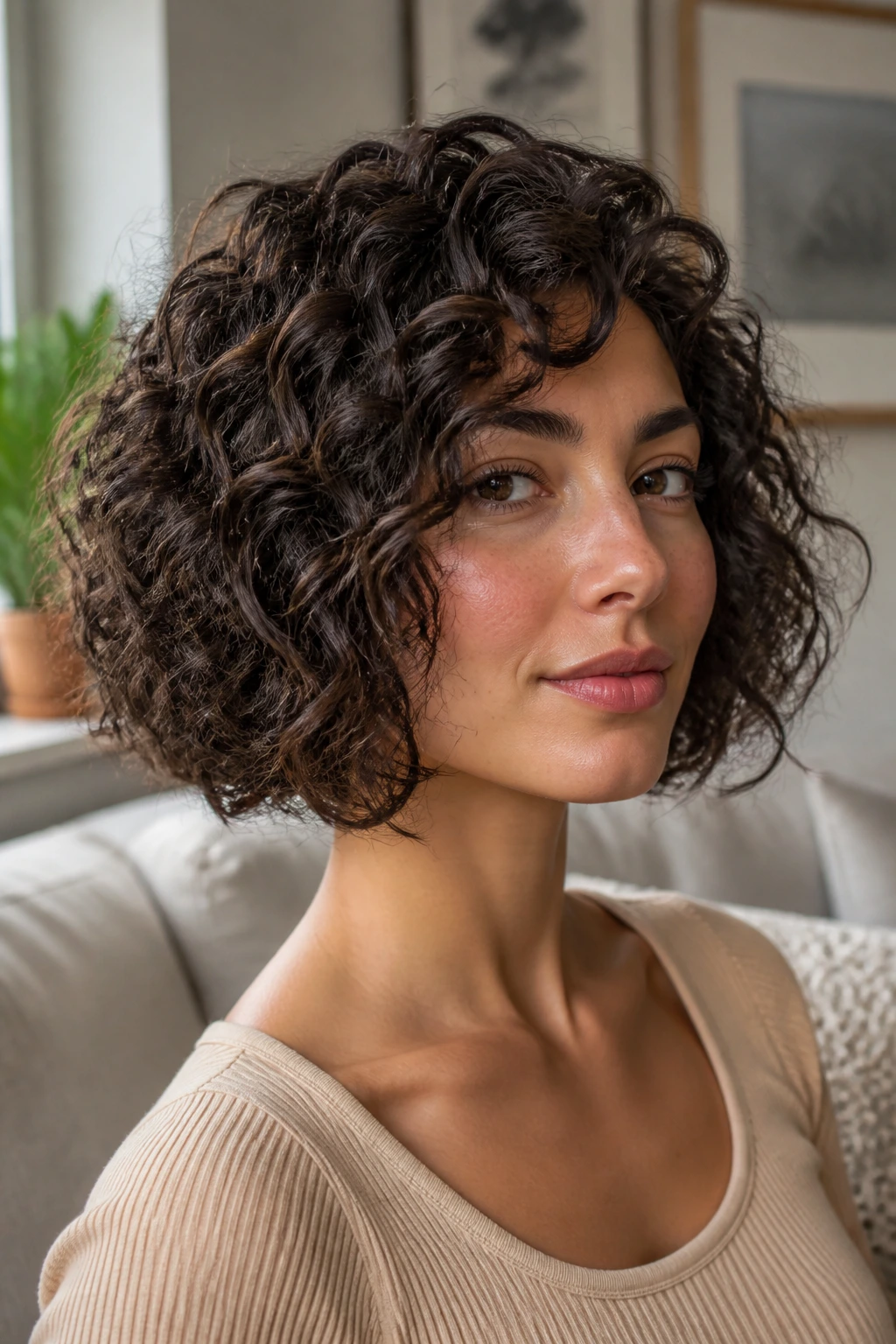
Can a bob have layers and still look full? Yes — if the layers stay inside the haircut instead of slicing through the outline. Invisible internal layers let the curls move without breaking the perimeter.
This is one of the smartest choices for medium-density curls that go flat when the cut is too blunt. The outer edge keeps the shape crisp, while the inside loses enough weight to stop the hair from ballooning.
The Science Behind the Shape
Curls stack on top of each other. If the interior is too heavy, the whole bob pushes outward. If it is too light, the ends fray. Invisible layers sit in the middle of that problem.
The goal is balance, not drama. A stylist might work in small sections and remove weight from only the densest spots, usually around the back and crown. That gives you movement without turning the silhouette into confetti.
How to Wear It
This cut does well with a middle or soft off-center part, and it loves a medium-hold gel. Scrunching too much can separate the curls more than you want, so I’d keep the hands off once it starts drying.
A neat little secret: this is one of the easiest bob shapes to grow out.
11. Asymmetrical Curly Bob With One Longer Side
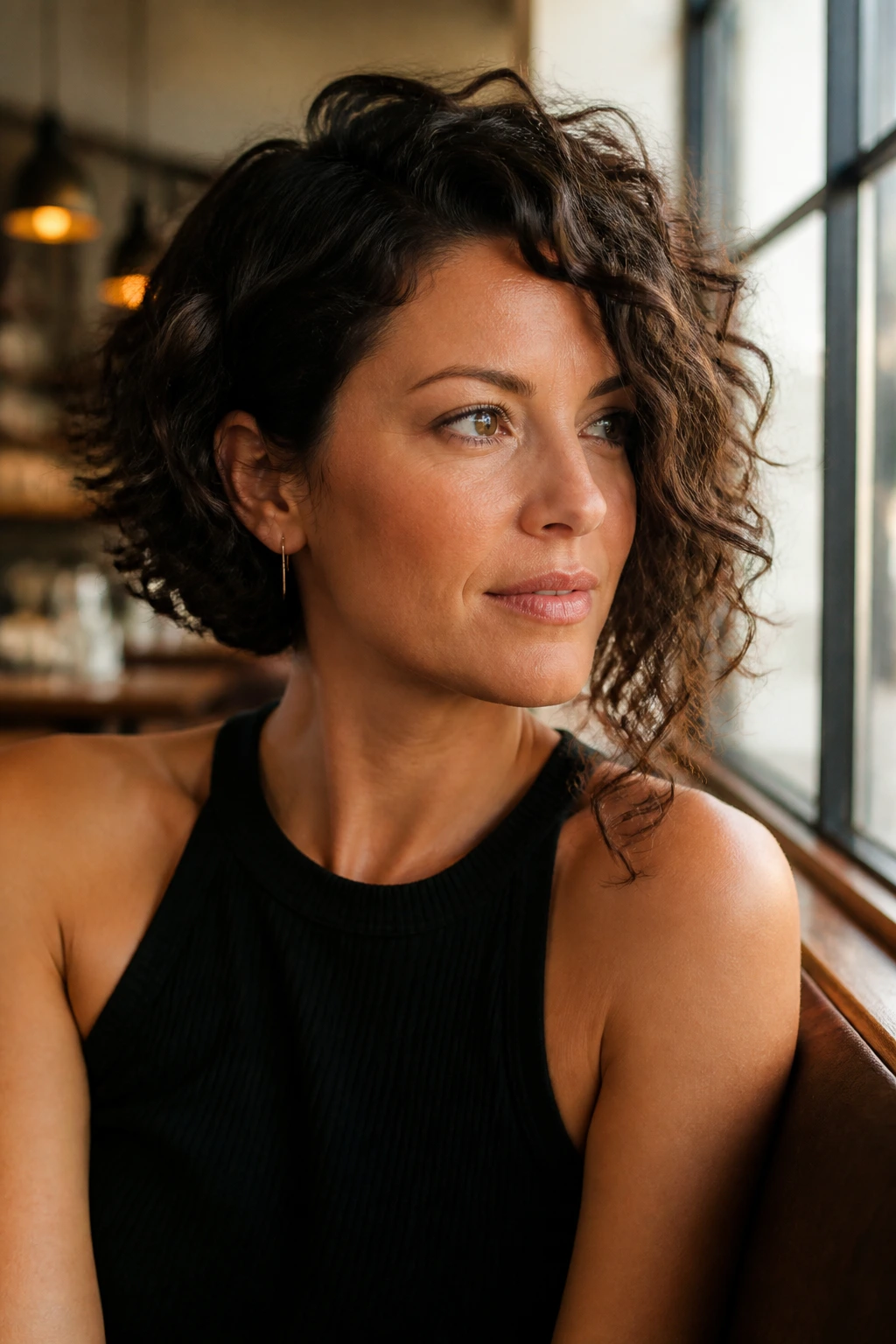
An asymmetrical bob has one job — make the cut look deliberate the second you walk in the room. One side sits a little longer, usually by 1 to 2 inches, and that unevenness gives curly hair a cleaner line than a cut that tries too hard to be symmetrical.
Unlike a classic bob, this shape uses imbalance on purpose. That works well with curls, which are never perfectly even anyway. Instead of pretending every coil behaves the same, the haircut borrows that irregularity and turns it into style.
It suits people who want a little edge without going full avant-garde. The longer side can skim the jaw, brush the collarbone, or tuck behind the ear, while the shorter side keeps the outline compact.
The main caution is shrinkage. If the difference is too dramatic when wet, the shorter side can end up much shorter than expected once dry. Keep the gap modest unless you like a sharper look.
12. Curly Bob With a Hidden Undercut

A hidden undercut solves the problem nobody likes to talk about: bulk underneath. You keep the outer bob visible and full, while the nape or lower back gets trimmed close enough to stop the cut from turning into a triangle.
That makes this style a favorite for thick curls that get hot and heavy fast. The undercut removes weight where the eye does not need it, so the visible part of the bob can sit neatly instead of fighting gravity.
The trade-off is grow-out. A hidden undercut is low-key only while it stays maintained. Once it grows, the back can start to feel bulky again, and the shape loses that crisp base.
Still, if you wear your hair up sometimes or live in a climate that makes dense curls feel like a wool hat, this cut earns its keep. It keeps the bob lighter without stripping away the visible fullness that makes curly hair look lush.
13. Jaw-Length Bob With Face-Framing Pieces

A jaw-length bob gives curls a strong, easy-to-read line, and the face-framing pieces keep it from feeling severe. That combination is useful when you want movement near the cheeks but still want the haircut to look like a bob, not a shag that got lost on the way home.
Why This Length Works
Jaw length is short enough to bounce, but long enough to keep curl definition from disappearing. The perimeter sits close to the face, which helps the shape stay visible even on humid days.
Face-framing pieces soften the front just enough to make the cut wearable. I like this detail better than a lot of extra layers, because it shapes the face without weakening the whole outline.
- Good for round, oval, and heart-shaped faces.
- Ask for the front pieces to land between cheekbone and chin.
- Keep the back clean so the bob still has a compact base.
- Style the front last, after the crown and sides are dry.
A small note: if your curls are springy, the front pieces should be cut a little longer than you think. They will bounce up.
14. Compact Curly Bob for Fine Curls
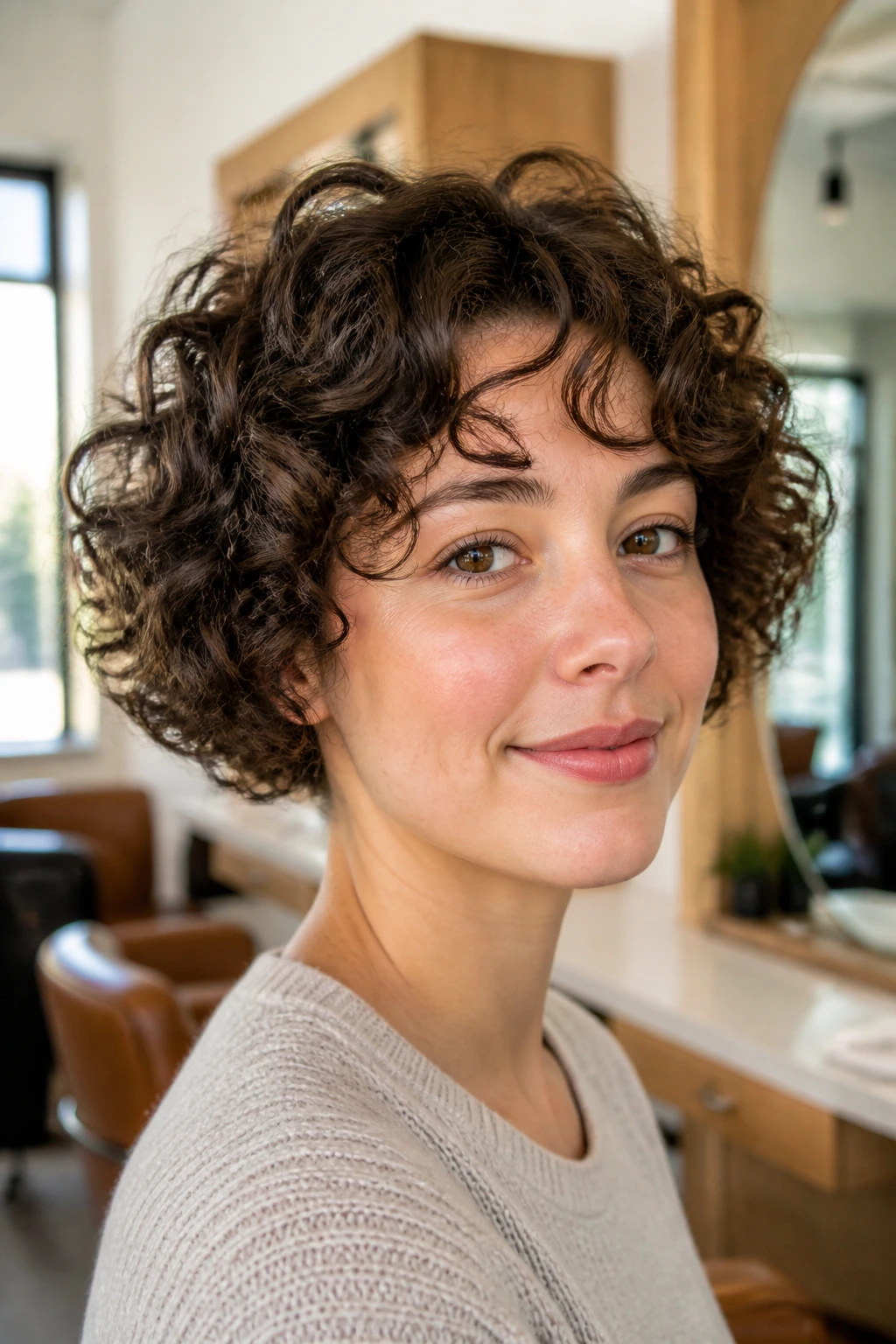
Fine curls need a different kind of help. Too much layering and the hair goes limp at the ends; too much length and the shape loses all of its bounce. A compact curly bob solves both problems by keeping the cut short, clean, and light enough to move.
The best version usually sits somewhere between ear level and just above the jaw. That sounds short — because it is — but fine curls often look fuller when they are cut a little tighter. The hair has less distance to fall, so it can hold a rounder outline.
One blunt perimeter near the ends helps a lot. It makes the bob look denser than it really is. That is one of those small salon choices that pays off every morning.
Skip heavy thinning. It can make the ends look see-through, and fine curls do not have much room to spare. A little root lift and a small diffuser attachment do more good than a pile of texturizing.
15. Shattered Curly Bob With Piecey Ends
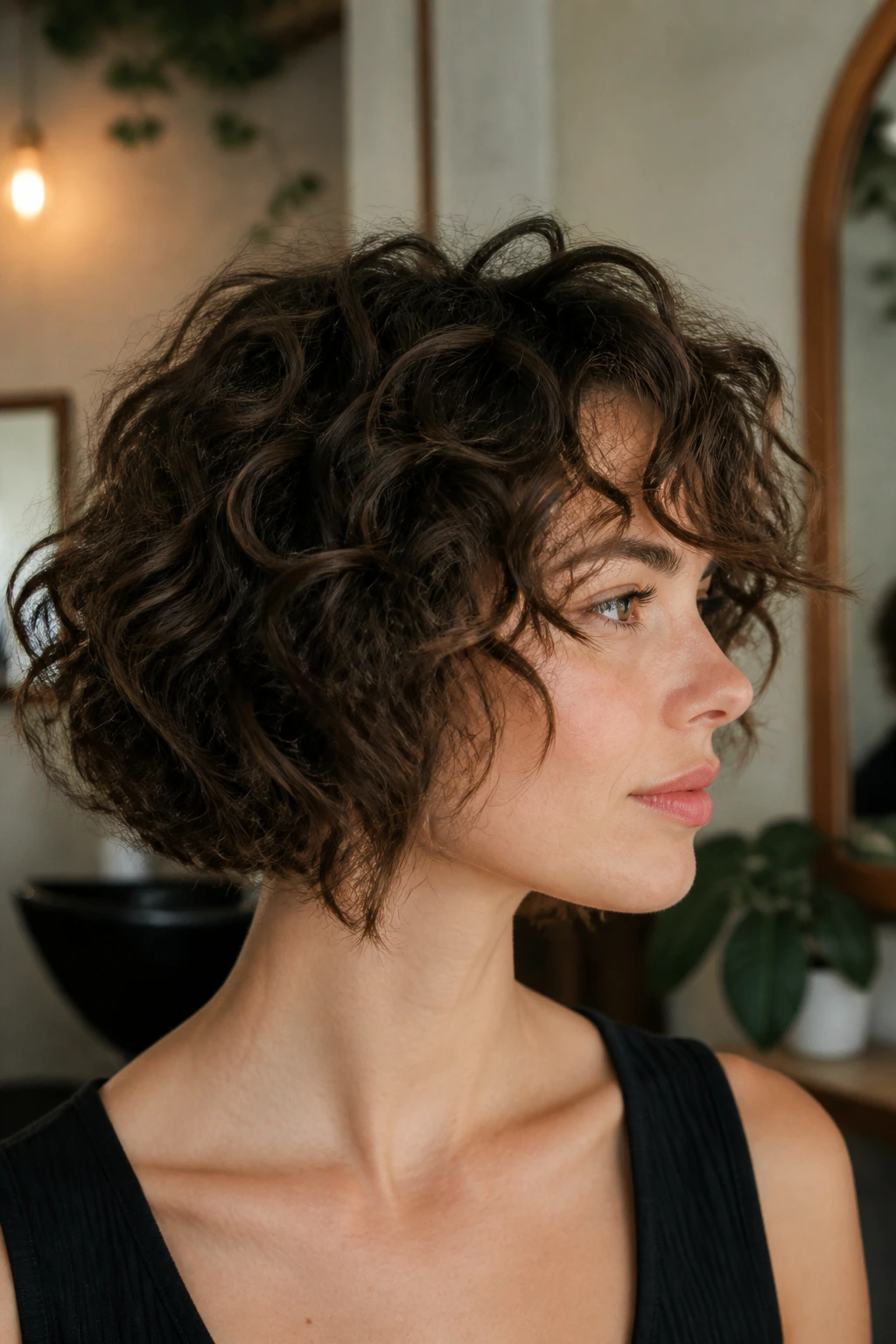
When curls clump too hard, a shattered bob can give them some air. The ends are lightly point-cut so the hair breaks into small pieces instead of forming one thick curtain.
That does not mean it should look ragged. It means the outline has little bits of movement built in, which helps loose curls and soft ringlets avoid the “helmet” effect that blunt cuts sometimes create.
This is a nice choice if your hair has a lot of softness but not much natural separation. The piecey finish gives the eye places to land.
Use it carefully, though. Too much shredding and the bob goes frizzy at the perimeter. One of the worst habits in curly cutting is over-texturizing just because the hair feels thick. Thick is not the same thing as heavy, and heavy is not the same thing as shapeless.
A light touch at the ends is enough. The haircut should still feel like it has a spine.
16. Curly Bob With Curtain Bangs

Can curly curtain bangs and a short bob work together? Absolutely, if the fringe is cut with shrinkage in mind. Curly bangs need more length than straight bangs, and curtain bangs give that extra room while still opening the face.
The reason this pairing works is simple: the bangs break up the front of the bob, so the haircut feels lighter around the eyes and cheeks. That makes the whole shape easier to wear, especially if you do not love hair sitting straight across the forehead.
How to Style It
The fringe needs its own attention. If you dry the bangs flat against your forehead while the rest of the bob dries loose, the front can end up crooked and annoying.
- Diffuse the bangs first, then move to the sides.
- Keep a small amount of curl cream in the fringe only.
- Ask for the shortest point to sit below eyebrow level when dry.
- Use a side part or soft center part, depending on how much lift you want.
This cut has charm. It also has opinions. That is part of why it works.
17. Mini Bob for Dense 3C Curls
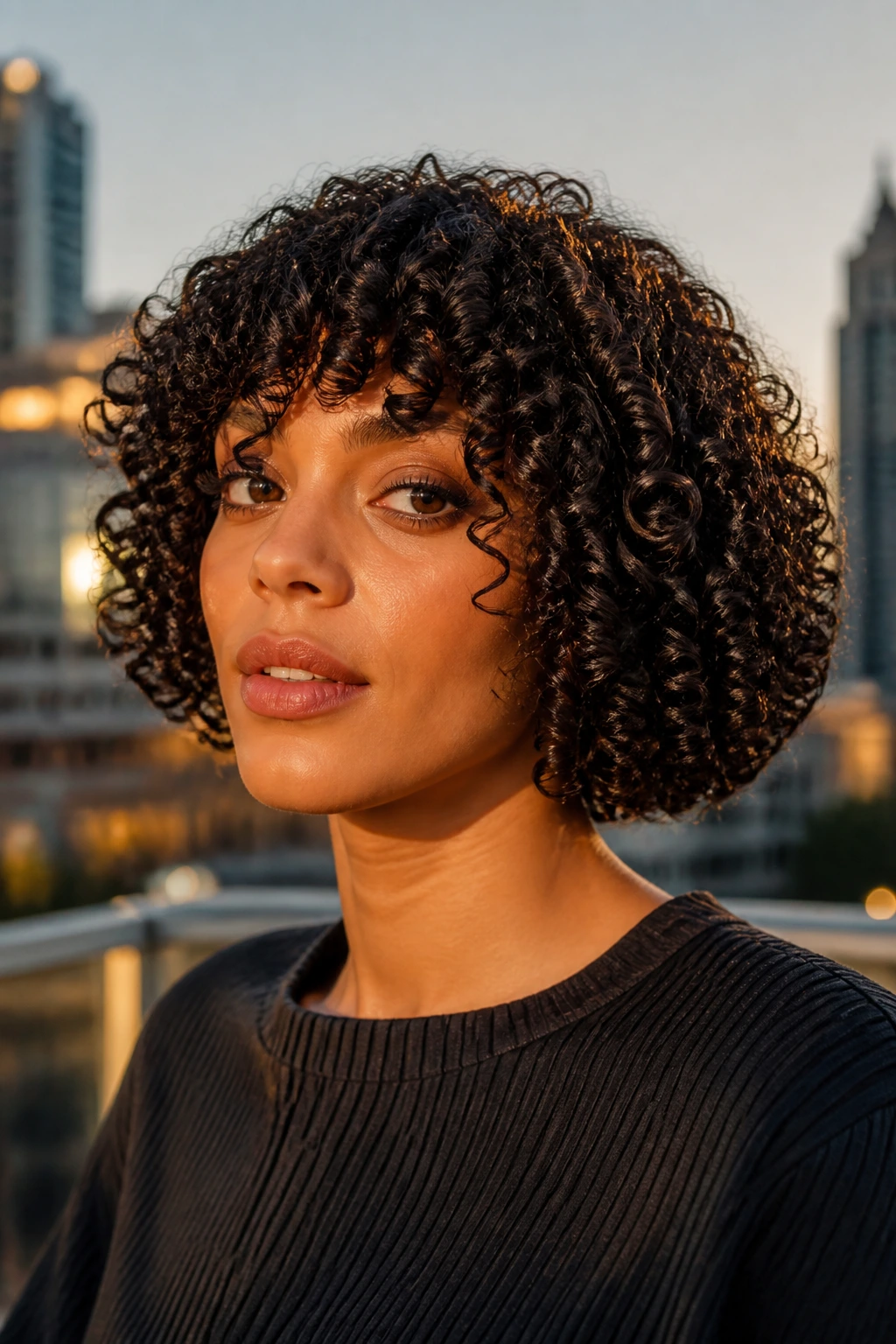
A mini bob is a bold little cut, and on dense 3C curls it can look sharp in the best way. The length sits short enough to keep the silhouette compact, but not so short that the curls lose their spring.
Dense 3C hair often wants to expand upward and outward. A mini bob gives that energy a boundary. The result is a head shape that feels neat, even when the curls are doing a lot.
The key is balance between the crown and the perimeter. If the top is cut too short, the shape can puff at the crown and collapse at the sides. Leave enough length on top to keep the silhouette rounded.
This is a good cut for people who want something easy to wash, quick to dry, and still clearly styled. It is not a shy cut. Fine. That is what makes it fun.
18. Rounded A-Line Bob for Wavy Curls
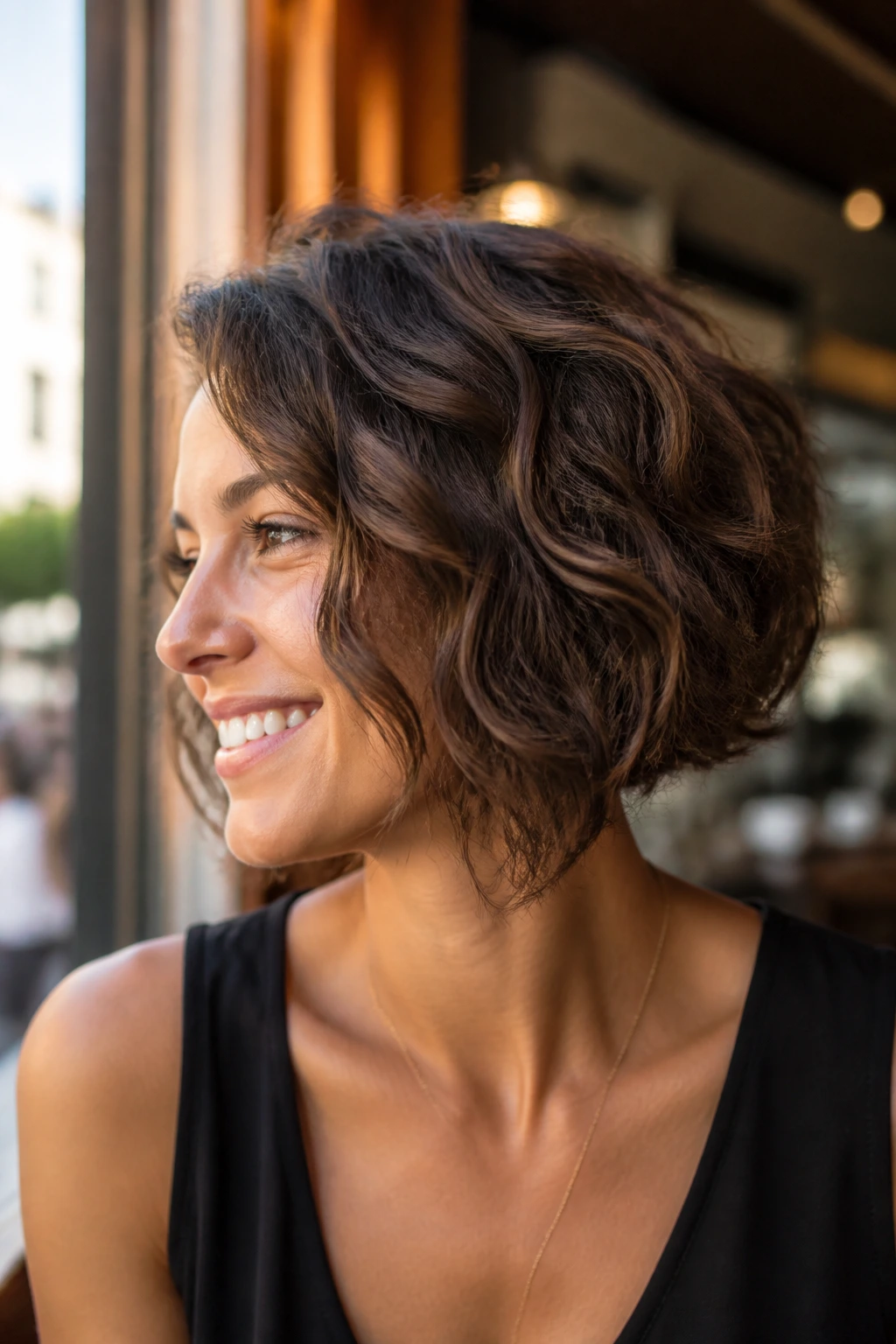
A rounded A-line bob gives wavy curls a little more direction than a plain one-length cut. The back is shorter by about 1 to 1 1/2 inches, and the front gets a soft diagonal that keeps the face line open.
That small angle makes a big difference on looser waves. Without it, the hair can hang straight down and lose personality. With it, the waves have somewhere to move, and the bob keeps a clear front edge.
Rounded is the word that matters here. If the angle gets too sharp, the cut starts looking stiff. A gentle A-line keeps the shape smooth and wearable.
The style works well if your waves alternate between bent and flat. The angle hides some of that inconsistency, and the rounded back prevents the cut from appearing boxy. It is a low-drama haircut with a little polish, which is a nicer combination than people give it credit for.
19. Curl-by-Curl Dry-Cut Bob
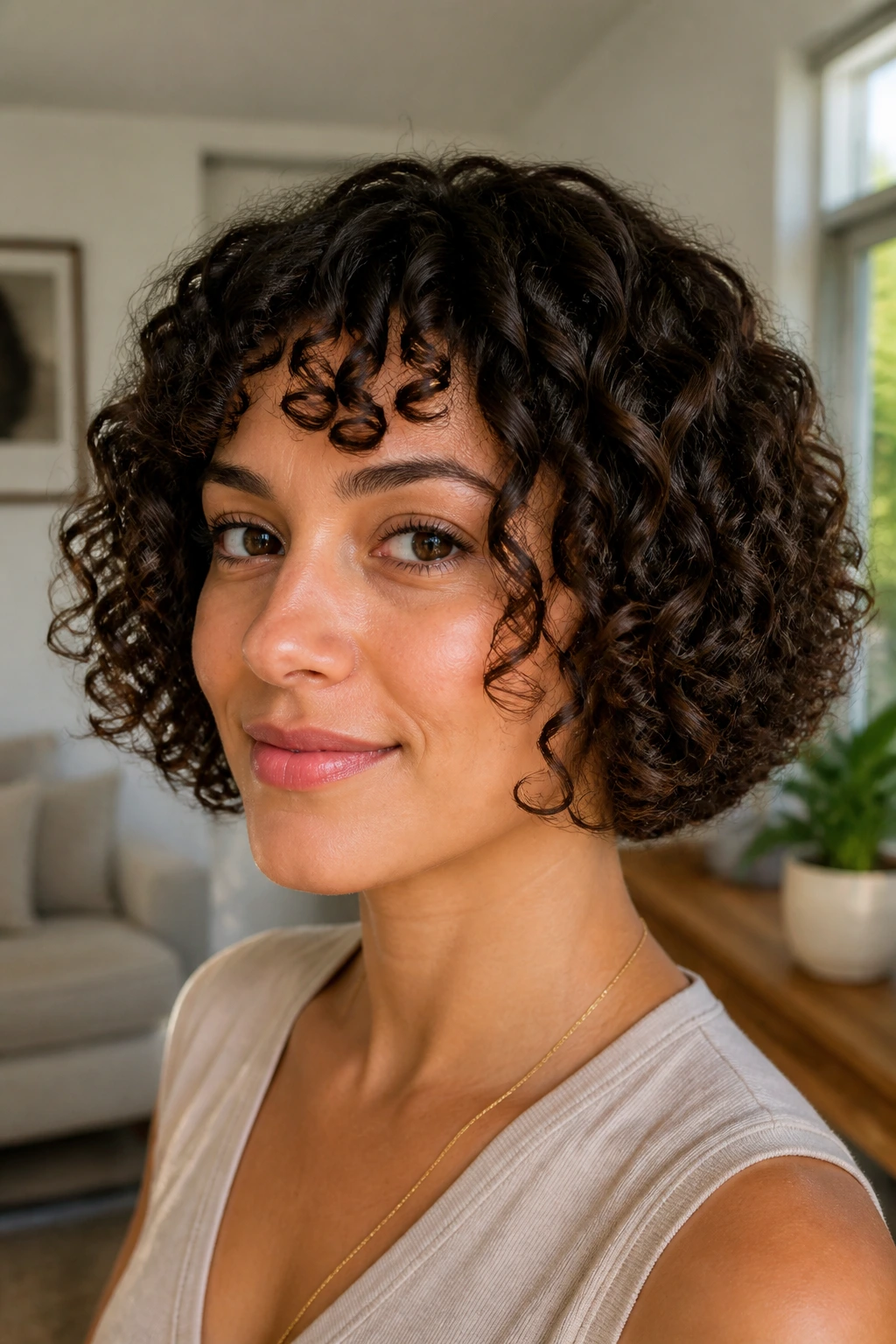
A curl-by-curl dry-cut bob is one of the most reliable ways to get shape that lasts. Instead of guessing where curls will land when wet, the stylist works with the hair in its natural dry state and cuts each section where it actually sits.
That matters because curly hair shrinks in uneven ways. One section may spring up 2 inches, while another only moves half an inch. A dry cut sees that difference and respects it, which is how you end up with a bob that looks balanced instead of lopsided.
What Makes It Different
The outline is built around the curls you already have, not the curls you hope will show up later. That means the perimeter often feels more personal and less cookie-cutter.
A good dry cut uses small sections, careful combing, and a lot of patience. The payoff is a bob that keeps its line without needing heavy styling tricks every morning.
What to Watch For
Not every stylist is eager to dry-cut, and some do it better than others. What you want is someone who understands curl pattern, density, and shrinkage — not someone who just happens to own a pair of shears.
Bring your hair as you usually wear it. Same part. Same product. Same texture. That gives the cut a real starting point.
20. Pixie Bob for Tight Curls

A pixie bob is the short, sharp cousin of the classic bob, and tight curls make it look especially clean. The back stays close to the neck, the top keeps a bit more length, and the overall shape sits somewhere between cropped and bobbed.
Unlike longer curly bobs, this cut gets its shape from contrast. Shorter sides and back keep the outline neat, while the top lets the curls pile up just enough to show off their texture. That contrast is what keeps it from looking like a standard short cut.
It is a strong choice if you want less hair on your shoulders and less time in the morning. It is also honest. A pixie bob does not hide bad cutting, so the shape has to be crisp.
Maintenance matters here more than in most of the other styles. A trim every 6 to 8 weeks keeps the back from puffing out and the top from losing its line. If you like low effort but still want a strong shape, this one delivers without acting precious.
Final Thoughts
The curly bob that holds shape is rarely the one with the most layers or the fanciest name. It is the one with a clean perimeter, a length that respects shrinkage, and enough structure to let the curls sit where they want to sit.
The best choice depends on what your hair does when it dries. Tight coils usually need a different outline than loose ringlets. Fine curls need more compactness. Dense hair often needs hidden weight removal, not more chopping on the ends.
Bring a photo, yes. Better still, bring a photo that matches your texture and density, not just the vibe. That saves a stylist from guessing, and guessing is where bad curly bobs are born.
