



Thick hair and a bob can be a gorgeous pairing, or a puffed-up mess, depending on where the weight lands. That’s the whole game. A good bob haircut for thick hair women doesn’t try to fight density head-on; it puts the bulk in the right place and lets the rest sit cleanly.
The cut matters more than the styling trick. A blunt edge can make heavy hair look sharp and controlled. A stacked back can lift the shape without making the sides balloon. A lob can keep enough length to calm coarse strands that refuse to lie flat. The wrong layers, though, can turn all that nice thickness into a triangle. Nobody wants that.
What I like about bob haircuts for thick hair is how different they can feel while still solving the same problem. Some are sleek. Some are airy. Some barely need a brush, which is a blessing on busy mornings. The best one for you usually has less to do with trends and more to do with how much neck you want to show, how much styling you’ll tolerate, and whether your hair behaves like silk, rope, or something in between.
1. The Chin-Length Blunt Bob for Thick Hair
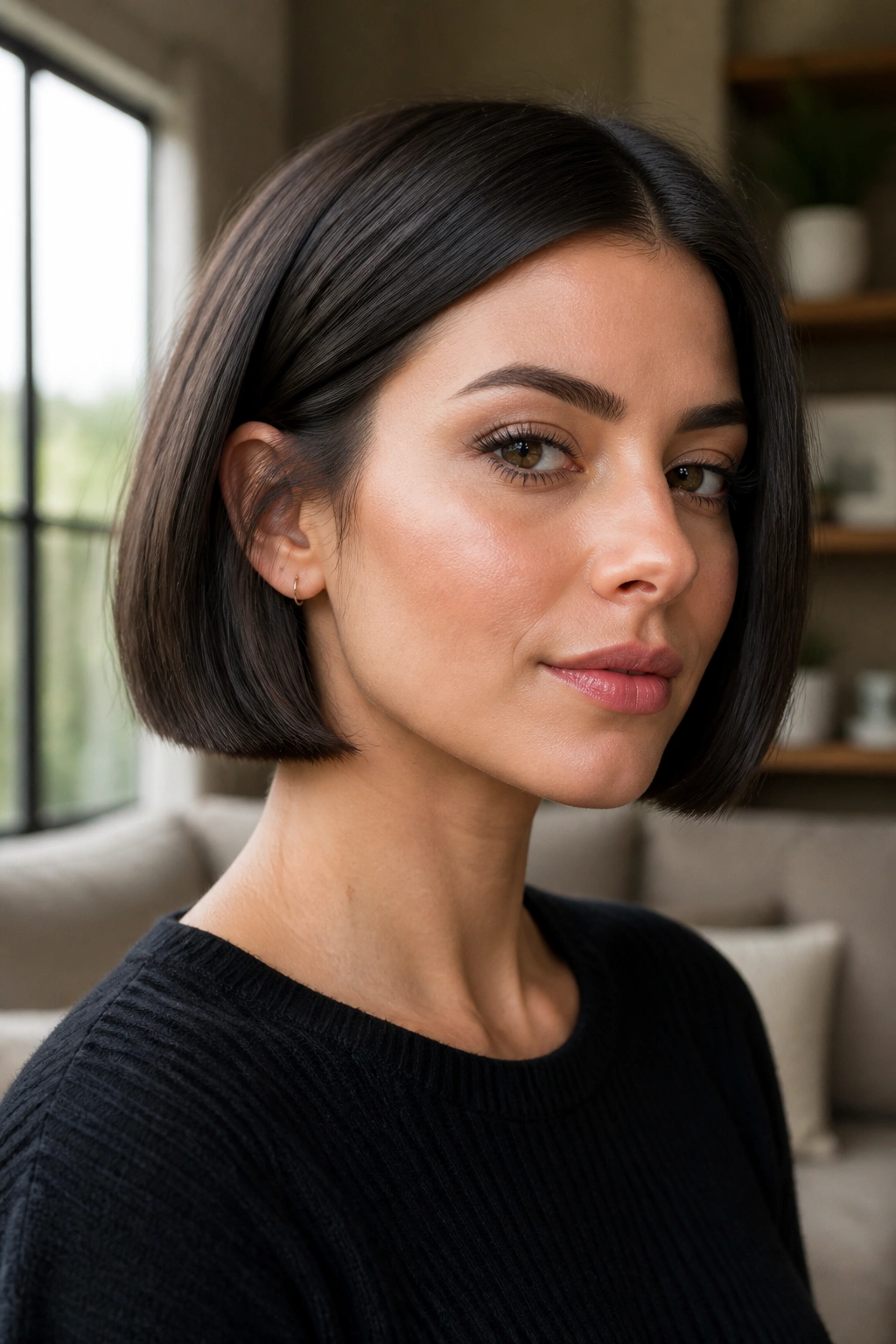
A blunt chin-length bob is the cleanest answer when thick hair starts to feel heavy. The straight edge gives the cut a crisp finish, and that edge does a lot of the work for you. No fuss. No soft excuses.
Why it works on dense hair
The trick is the perimeter. A blunt line holds the shape in a way that lighter, featherier cuts cannot. Thick hair has enough body to make the ends look full instead of stringy, so the bob reads as deliberate instead of weighed down.
If you want this cut to behave, ask for the length to sit right at the chin or a hair below it. Too short and it can flare out at the sides. Too long and you lose the sharpness that makes this version so satisfying.
- Keep the ends blunt, not wispy.
- Ask for minimal internal layering.
- Blow-dry with a flat brush or paddle brush for a smooth finish.
- Tuck one side behind the ear when you want a softer line.
Best for: thick, straight, or slightly wavy hair that needs shape without too much layering.
2. The A-Line Bob with Longer Front Pieces

An A-line bob is for the person who wants movement but does not want the back to feel bulky. The front stays a little longer than the back, so the shape tilts forward and gives the face a longer line. That tiny angle changes everything.
This cut is especially handy if your hair piles up at the nape. Keeping the back shorter removes some of that heaviness, while the longer front pieces let the bob swing when you walk. It’s one of those cuts that looks polished even when you do very little to it.
The angle does need control. If the front gets too long, the bob stops looking like a bob and starts reading as an awkward grow-out. Keep the difference subtle — about 1 to 2 inches from back to front is enough for most thick hair. Sharp enough to notice. Not sharp enough to shout.
3. The Stacked Bob That Lifts the Crown
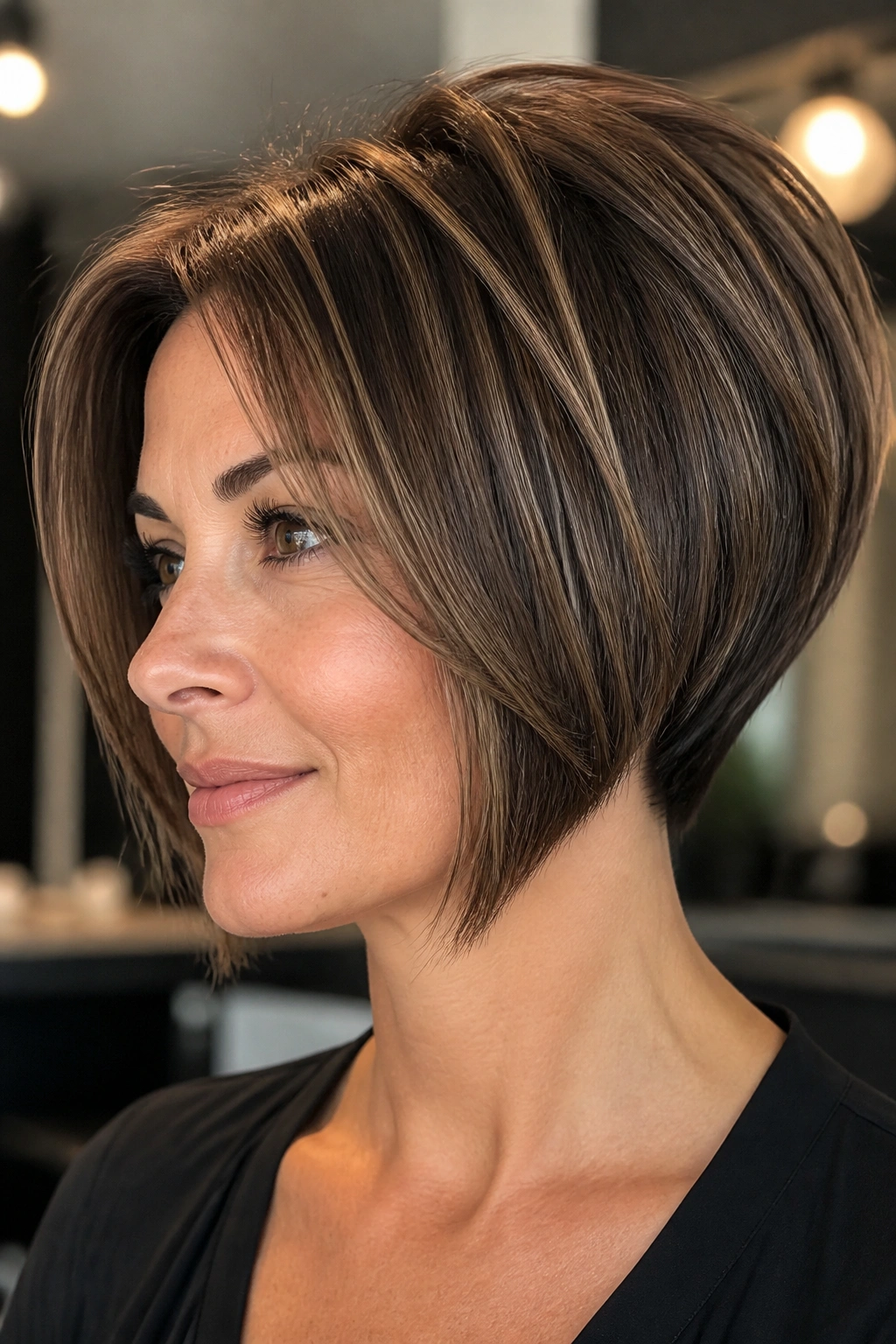
A stacked bob is the move when thick hair sits flat at the roots but gets wide at the sides. The back is cut with soft graduation, so the hair lifts at the crown and narrows toward the nape. That gives the head shape without making the whole cut bulky.
What to ask for in the chair
Ask your stylist for shorter graduation at the back and a clean, compact shape around the neck. If you say you want “lots of layers,” you might get a choppy mess. If you say you want the weight removed from the nape while keeping the sides controlled, that is a better starting point.
A stacked bob can feel wonderfully neat on thick hair. It opens the neck, gives the back some bounce, and makes the silhouette look intentional from every angle. It does ask for a bit of upkeep, though. The stack grows out fast if your hair is fast and dense.
If your hair is very curly or very coarse, keep the stack softer. Too much lift in the back can turn into a shelf. No one needs that.
4. The French Bob with a Soft Fringe
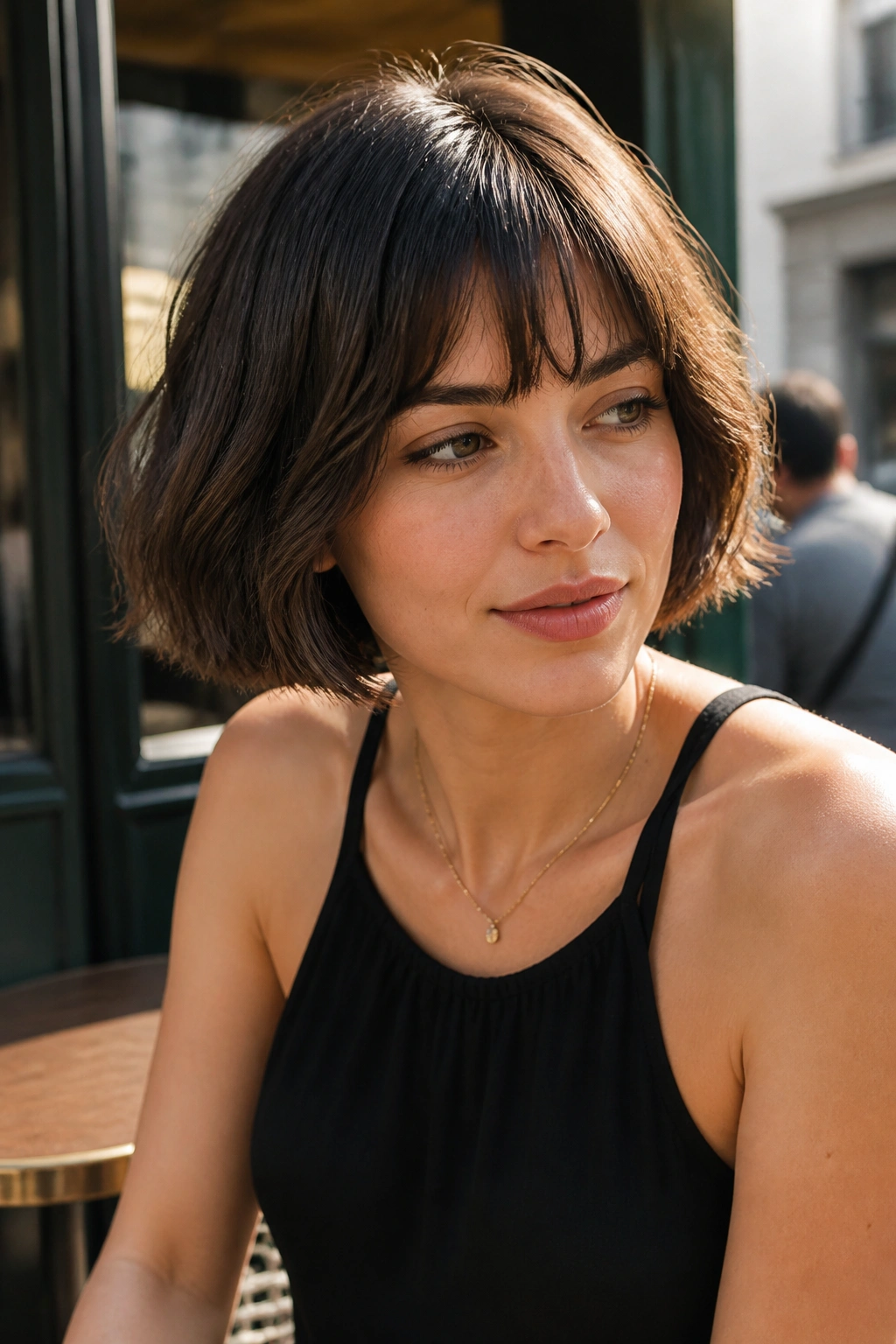
Why do French bobs keep showing up in style conversations? Because they solve a lot of problems at once. The length is short enough to feel fresh, but the soft fringe and easy shape stop thick hair from looking severe.
This cut usually lands around the cheekbone or just at the chin, with a fringe that skims the brows or breaks into pieces. On thick hair, that fringe matters. It takes some visual weight off the ends and draws the eye up, which is useful if your hair naturally expands outward.
How to wear it
The best French bob doesn’t look overworked. Air-dried texture suits it. So does a quick bend with a flat iron, if you like a little curve. Keep the front soft and the outline gentle. A hard, boxy fringe can make dense hair feel heavier than it needs to be.
- Ask for a fringe that can separate easily.
- Keep the length near the jaw or cheekbone.
- Use a little styling cream, not a pile of product.
- Let some piecey texture stay visible.
Best for: thick hair with a natural wave and anyone who likes hair that looks lived in, not lacquered.
5. The Soft Layered Bob with Internal Movement
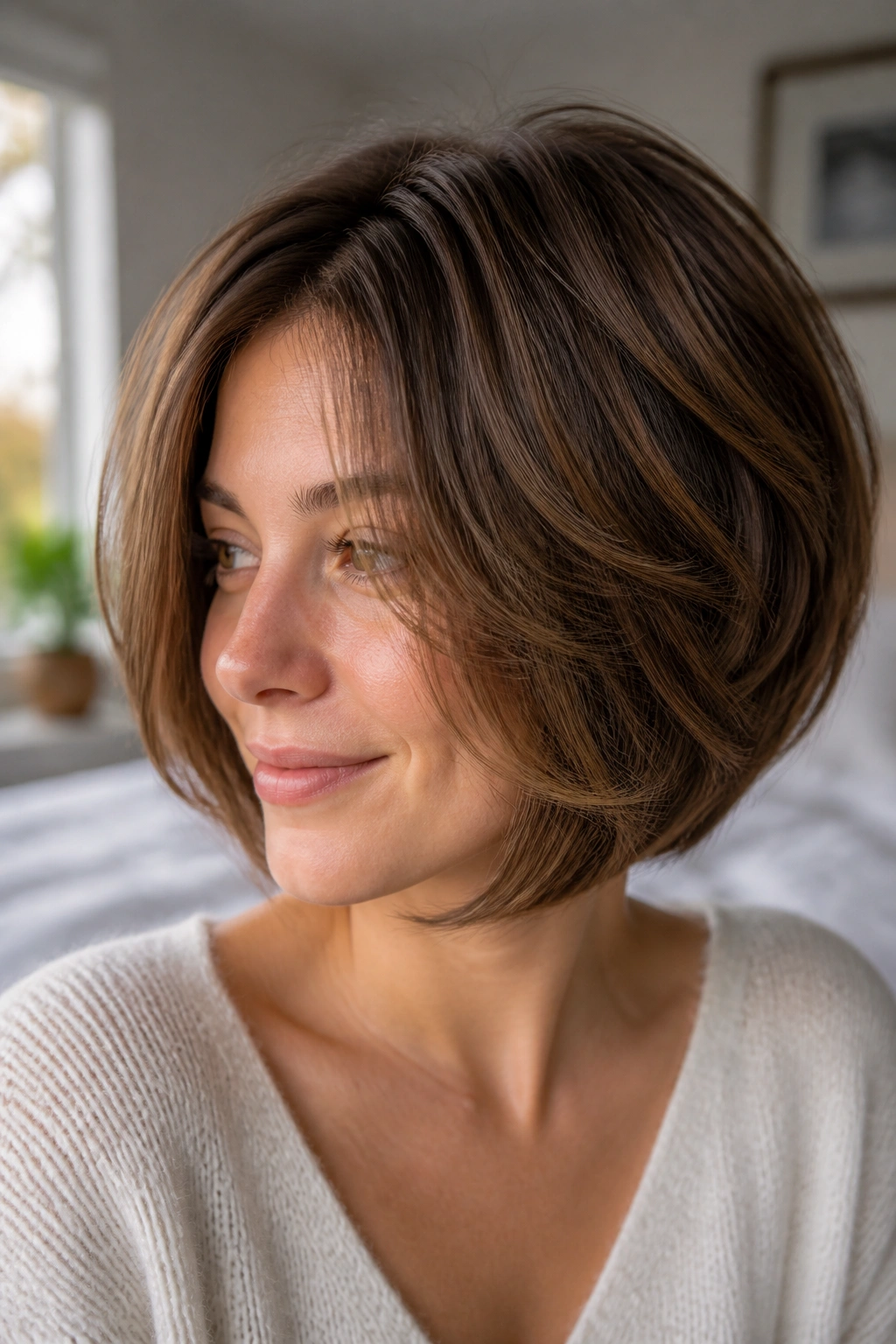
A layered bob can be a lifesaver on thick hair, but only if the layers are placed inside the shape instead of chopped all over the outside. That distinction matters more than most people think.
Internal layers remove weight where it’s hidden. The outer line still looks full, but the inside of the cut moves better and dries faster. On dense hair, that can be the difference between a bob that sits like a block and one that sways when you turn your head.
The biggest mistake is over-layering the top. Too many short pieces near the crown can make thick hair puff up like a mushroom. Keep the top longer, let the inside carry the weight removal, and avoid the urge to thin everything out. Hair that is already dense rarely needs to be attacked from every angle.
This is the bob I’d point to if you want softness without losing structure. It looks easy, but there’s real discipline in the cut.
6. The Collarbone Lob for Thick Hair
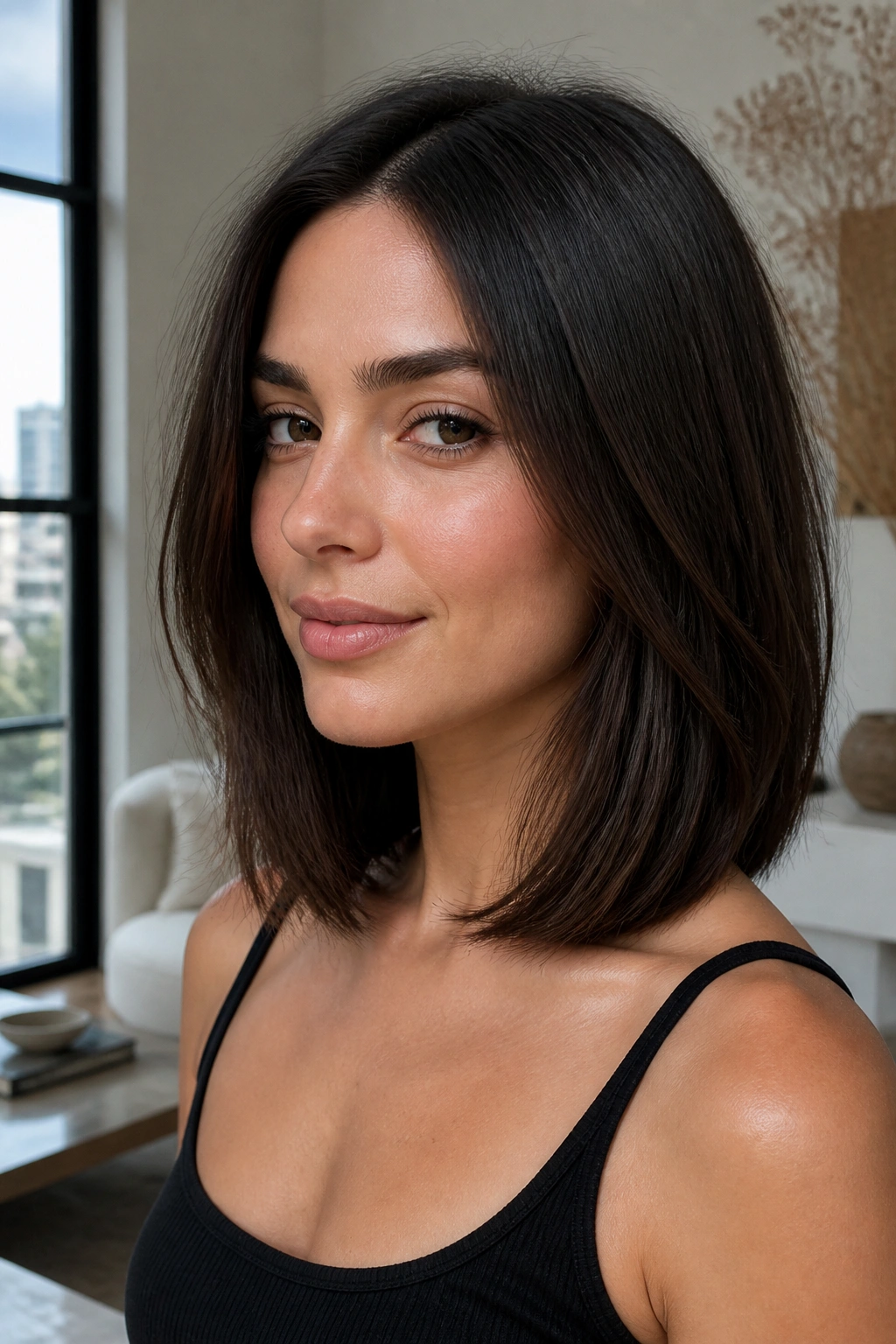
If a chin-length bob feels like too much commitment, the collarbone lob is the safer bet. It keeps the ends long enough to calm thick hair, but it still gives you that clean bob shape around the face and shoulders.
What I like here is the balance. The length sits where the hair can hang with more control, so you lose some of the puff that a shorter cut can create. That makes it a smart choice for coarse hair, heavy hair, or hair that grows out fast and stubbornly.
The lob also gives you room to play. You can tuck it behind one ear, clip it half back, curl just the front, or wear it straight with a center part. It’s not flashy. That’s the point. The cut carries itself.
If you want this to feel more like a bob and less like long hair with a trim, ask for a blunt perimeter with a little face framing. Keep the front pieces only slightly longer. Enough to soften. Not enough to disappear.
7. The Invisible-Layer Lob
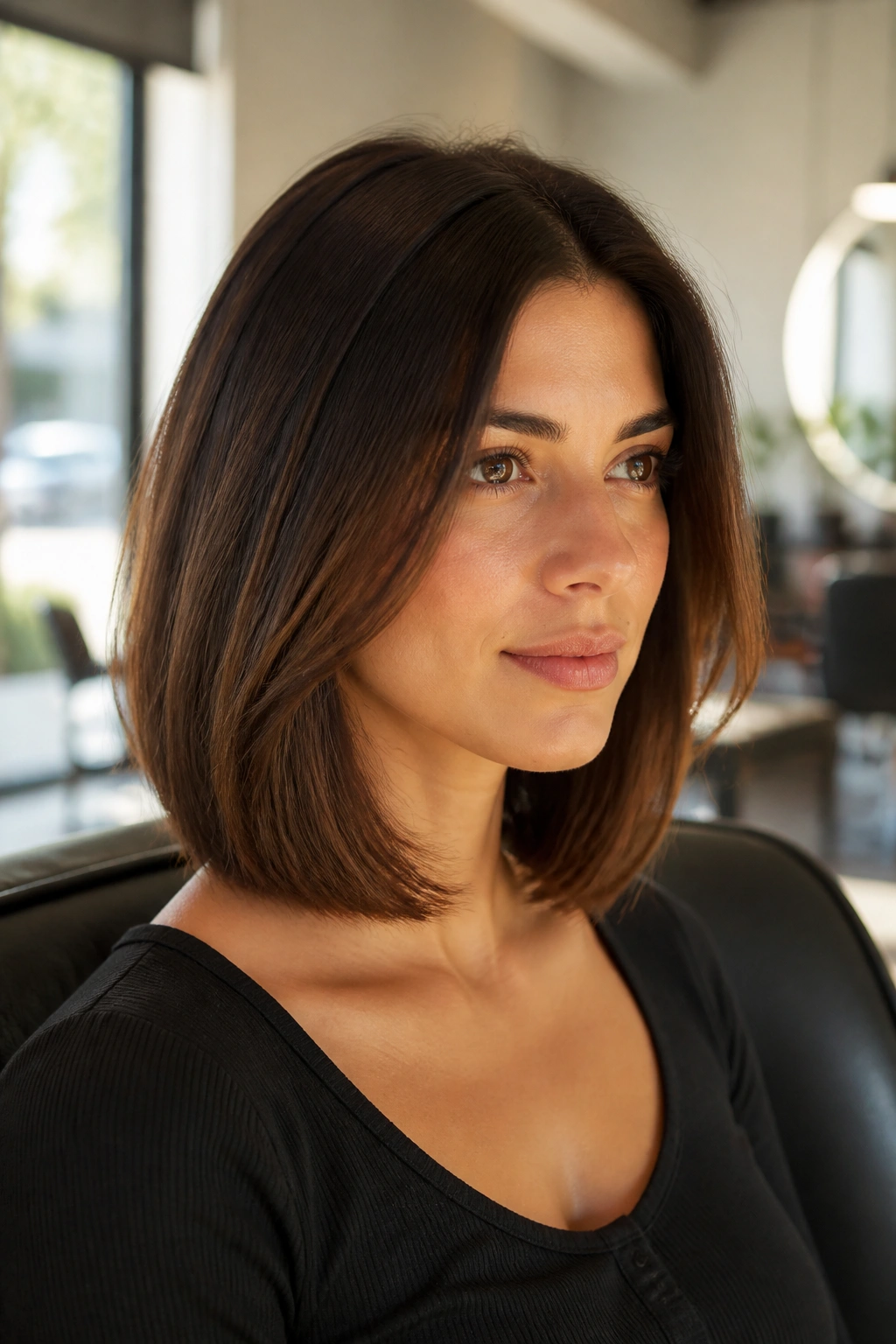
An invisible-layer lob is a sly little haircut. From the outside, it looks smooth and mostly one-length. Inside, though, the stylist has removed weight in a way that lets thick hair collapse into a cleaner shape.
That hidden structure is the reason it works so well. You keep the look of fullness at the edge, which thick hair does beautifully, but the inside stops feeling dense and boxy. It’s a good option if you hate seeing obvious layers or if your hair tends to separate into chunky shelves when it’s cut too much.
Where the weight comes out
The weight is usually lifted from the middle and lower interior, not from the visible top layer. That way the shape still looks polished when you tuck it behind your ears or wear it straight. It’s a practical cut, not a showy one.
- Ask for internal debulking, not a heavily layered finish.
- Keep the outer line blunt or softly rounded.
- Let the front fall just below the jaw or collarbone.
- Use a smoothing cream if your ends puff up.
A cut like this is especially good if you want your hair to look thick on purpose, not thick by accident.
8. The Deep Side-Part Bob That Gives Instant Lift

A deep side part can rescue a bob that feels too wide. Shift the part over, and the whole shape changes — more lift on top, more sweep through the front, less boxiness at the sides. It’s a small move with a big payoff.
Thick hair often sits heavy at the crown, especially if it grows in a strong middle pattern. A side part breaks that habit. It gives one side more height and lets the other side lie closer to the head, which creates shape without another trip to the scissors. Handy.
If you want the style to hold, set the part while your hair is still damp. Blow-dry the roots first in the opposite direction, then sweep it over once it’s about 80 percent dry. That little bit of resistance gives the roots a memory, and memory matters when your hair is heavy.
This bob works with blunt ends, soft layers, or a collarbone length. It’s more about distribution than length. And that’s a useful thing to remember.
9. The Curly Bob Shaped Around Shrinkage

Curly hair and thick hair often show up together, and that changes the whole bob conversation. If you cut curls like straight hair, the shape usually surprises you in the mirror for the wrong reason. Curls spring up. They need room.
A curly bob works best when the shape is built around shrinkage. That means cutting in a way that respects how much shorter the hair will look once it dries. Some curls need chin length in the chair to land at lip length afterward. Some need more. You have to look at the pattern, not the fantasy.
What to ask for
A dry cut or curl-by-curl shaping is often the smartest route. Ask for the outline to follow the natural curl pattern, not a ruler. The goal is a rounder, balanced bob that keeps the sides from flaring wider than the face.
- Cut with the curls dry or nearly dry.
- Keep the perimeter rounded, not square.
- Leave enough length for spring.
- Avoid heavy thinning shears near the top.
The good version of this bob feels lively. The bad version feels hacked up. That’s a real difference.
10. The Wavy Air-Dry Bob
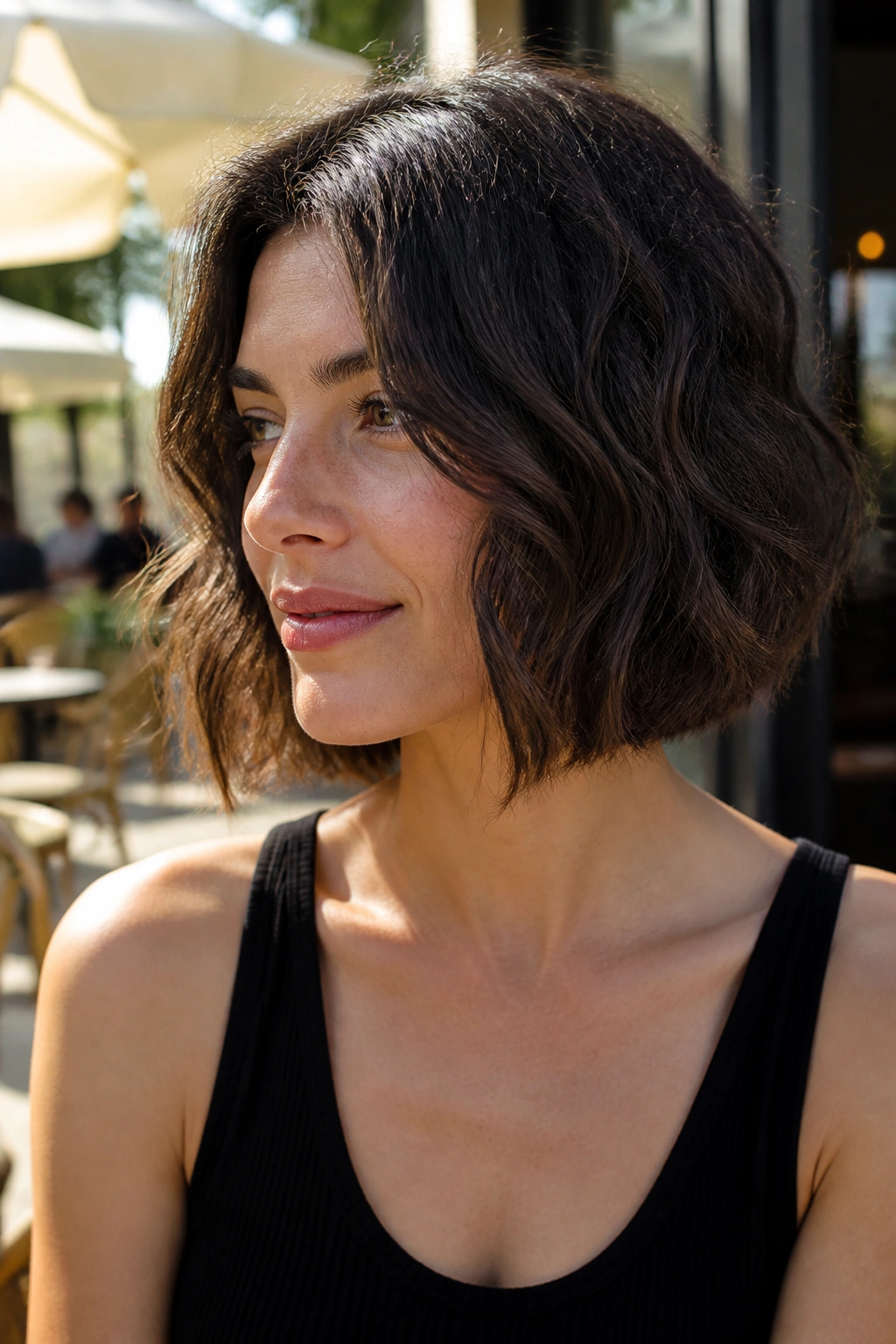
A wavy air-dry bob is for people who want the cut to do most of the styling. Thick hair with a natural bend can look fantastic in this shape because the movement keeps it from becoming too blocky. You get texture without having to curl every section.
The length usually sits around the jaw or just above the shoulders, where the waves can stack without turning into a triangle. Too short and the waves expand outward. Too long and the shape loses its bob feeling. The sweet spot is right where the hair can bend but still has enough weight to fall.
A small amount of styling cream or mousse is enough. Scrunch it in. Let the hair dry with a side part or a middle part, depending on where it wants to sit. If the ends go a little wonky, that’s fine. Wavy bobs look better with some movement than with stiff perfection.
This is one of the easier bob haircuts for thick hair women who prefer real life over flat-iron discipline.
11. The Hidden Undercut Bob for Thick Hair

Sometimes thick hair needs a secret. A hidden undercut takes out bulk underneath while leaving the top layer looking full and normal. From the outside, the bob still reads as polished. Underneath, there’s less hair fighting for space.
This is a smart choice if your hair feels heavy at the nape, around the ears, or at the lower sides. A small undercut there can make the whole bob sit closer to the head. It also speeds up drying time, which is one of those practical wins people do not talk about enough.
Where the undercut lives
Most of the time, the cut sits low at the nape or just behind the ears. That keeps the removal hidden unless you wear your hair up or twist it back. A good stylist won’t carve too much out at once. They’ll take a little, check the fall, then decide if more is needed.
- Best for very dense hair.
- Keeps the outline cleaner.
- Can reduce the mushroom effect at the bottom.
- Needs maintenance more often than a simple blunt bob.
If your hair is thick but fine in texture, go carefully. Too much removal can make the upper layer sit oddly. Slow is smarter here.
12. The Shaggy Bob with Choppy Ends
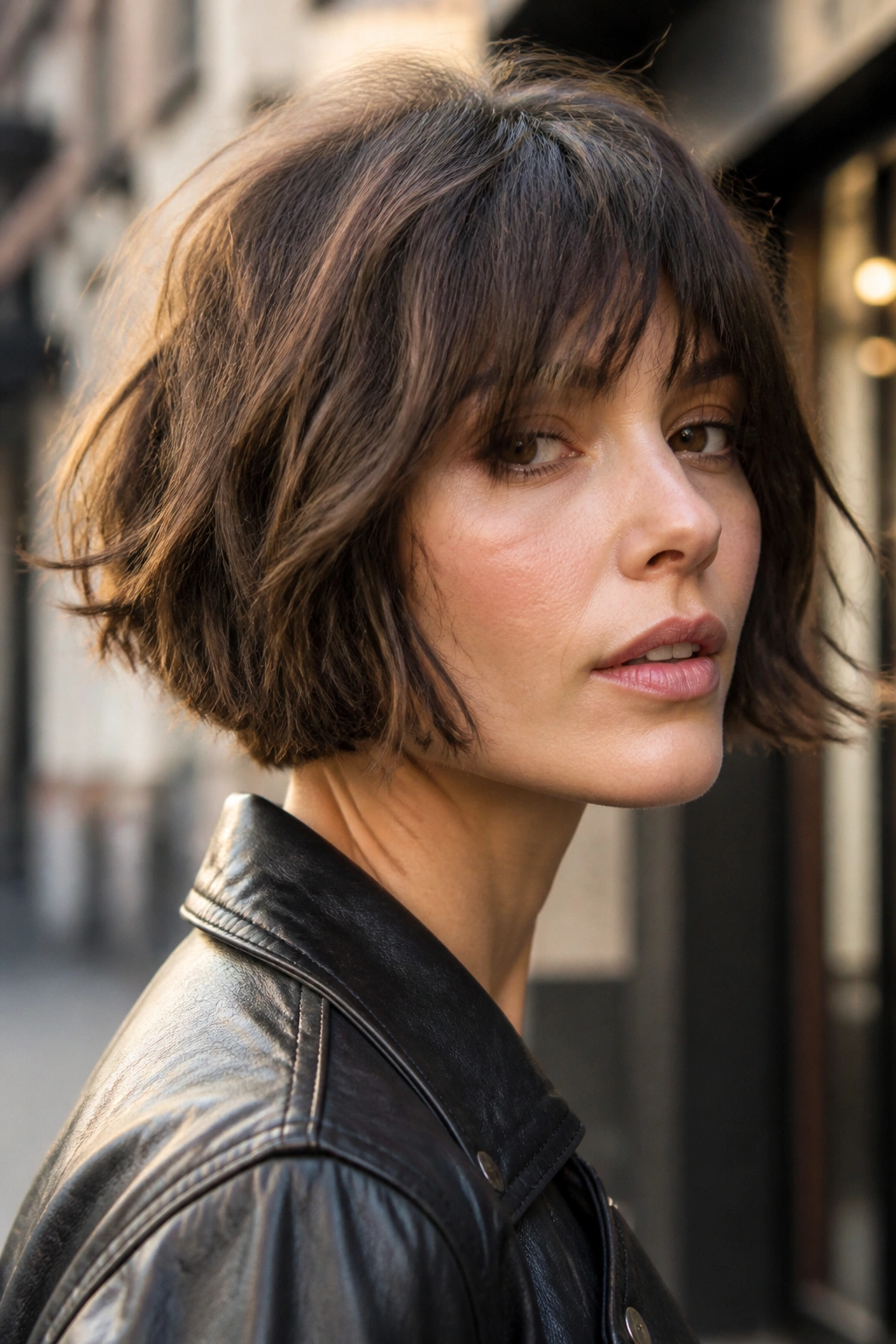
A shaggy bob is the cut for someone who likes a bit of attitude in the hair. It takes the basic bob shape and roughs it up just enough to make it feel less formal. On thick hair, that roughness can be a gift, because it breaks up the heavy wall effect that dense hair sometimes creates.
The ends are usually choppier, the layers more obvious, and the finish more piecey. That means it’s not the best choice if you love a crisp line. It is a good choice if your hair falls too neatly and you want it to move. Strange thing to say, maybe, but some thick hair does need permission to be messy.
This cut works well with a little wave spray or a rough blow-dry. Finger-combing is enough on some days. If you have a strong jaw or a wide cheek area, the broken texture can soften the line around the face without making the shape disappear.
It’s casual, but not careless. There’s a difference.
13. The Box Bob with Strong Geometry
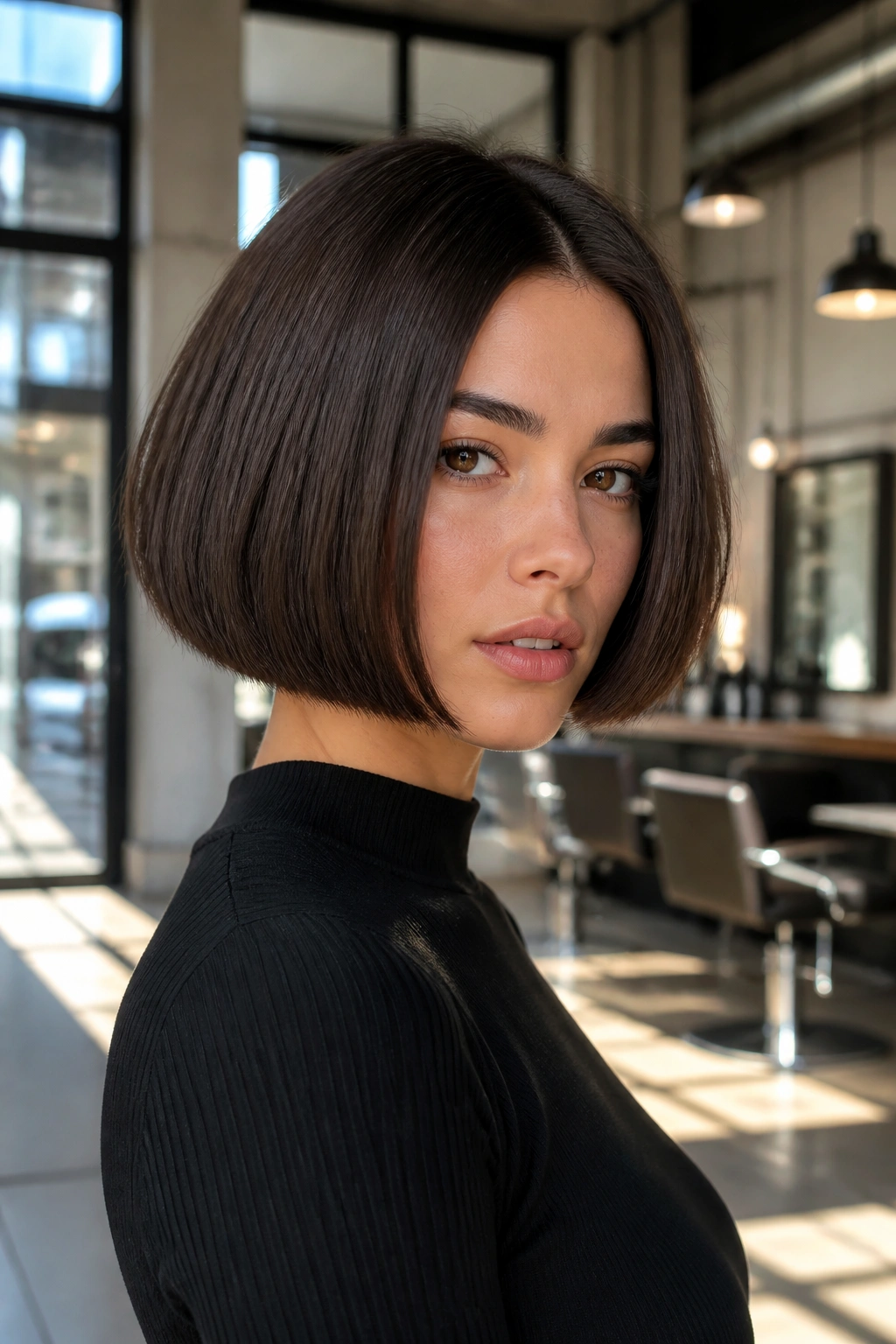
A box bob is exactly what it sounds like: a square, graphic shape with a firm edge. On thick hair, that geometry can look very sharp in a good way. The density gives the cut weight, so the line stands up instead of collapsing.
This is the bob for someone who likes structure. The length usually hovers around the jaw, and the ends stay mostly one length. There may be a tiny bit of internal adjustment, but the point is the silhouette. Straight sides. Clean corners. A finish that looks measured.
It does ask for regular trims. Thick hair grows out with opinions. If you let the line get fuzzy, the whole effect softens fast. Keep the edge clean, and the cut looks strong. Pair it with a middle part for a graphic feel, or a tucked side for a slightly easier read.
This one is not shy. Good.
14. The Inverted Bob with a Steeper Angle

An inverted bob is cousin to the A-line, but the angle is usually steeper and the back sits higher. That short back gives thick hair a lighter base, while the longer front pieces keep the shape from feeling severe. It has a bit more drama than a soft A-line, which is part of its charm.
The cut works best when the graduation at the back is smooth. If the stack gets too sharp, you can end up with a helmet effect. Nobody asked for that. The beauty of the inverted shape is that it lifts the neck and elongates the front without forcing the hair into a big rectangle.
Avoid this mistake
Don’t let the back get overbuilt. Thick hair already has enough body, so the angle should support the shape, not dominate it. Keep the transition smooth and the front pieces long enough to skim the jaw or cheekbone.
If you like a bob that feels polished from the side view, this is one of the strongest options on the list. It has movement, but it still knows where it’s going.
15. The Feathered Bob with Razor-Light Ends

A feathered bob takes some of the weight off the ends and gives thick hair a lighter finish. The word “feathered” can sound dated if you picture the old-school version, but done well, it just means the ends move instead of sitting like a brick.
Razor cutting can help here, though it needs a careful hand. On coarse or very thick hair, a stylist can use feathering to break up bulk around the perimeter and soften the outline. The goal is not to shred the hair. It is to give the ends a little air.
This cut is useful if your bob feels too blunt and heavy but you do not want a shag. It sits between those two worlds. More movement than a one-length cut, less chaos than a layered crop. That middle ground is where a lot of thick-haired people land once they get tired of fighting the shape every morning.
If your hair frizzes easily, ask how the stylist plans to texturize it. A little feathering is helpful. Too much is messy.
16. The Rounded Bob That Curves Under

A rounded bob has a softer silhouette than a boxy blunt cut. The ends curve inward a bit, which gives thick hair a polished shape instead of a hard shelf. If your hair naturally wants to bend under, this cut works with it instead of against it.
The roundness usually comes from the cut itself and a quick blow-dry with a round brush. That extra curve around the jaw can make dense hair feel more controlled. It also suits people who want a more classic look without going flat and stiff.
Why the shape matters
A rounded outline keeps the weight distributed evenly. Thick hair can handle that. In fact, it often looks better when the body is contained instead of pushed wide. The curve gives the bob a clean finish from the front and a neat edge from the side.
- Best at chin or jaw length.
- Works well with a side part.
- Needs a brush or smoothing tool for the curve.
- Looks especially good when the ends are trimmed cleanly.
This is one of those cuts that feels calm. No drama. Just shape.
17. The Asymmetrical Bob with One Longer Side

An asymmetrical bob gives you edge without forcing you into a totally wild haircut. One side is slightly longer than the other, and that subtle imbalance makes thick hair look deliberate. It’s a small twist, but it changes the silhouette enough to feel fresh.
The key is restraint. A dramatic difference can be fun, but a subtle one is easier to wear every day. Think half an inch to 1.5 inches longer on one side, not a huge swing. Thick hair shows the line clearly, which is part of why this cut works so well. The shape reads immediately.
This bob can be blunt, feathered, or slightly layered. It doesn’t need much else. If you wear simple clothes and want the haircut to carry a little personality on its own, this is a solid pick. It looks especially good when one side is tucked and the longer side falls free.
A haircut that looks slightly off-balance on purpose can be oddly elegant. Strange, but true.
18. The Bob with Curtain Bangs

Curtain bangs and thick hair get along better than many people expect. The center part opens the fringe away from the face, so the front does not feel heavy or boxed in. That makes a bob feel softer right away.
The bangs should blend into the sides, not sit like a separate little curtain hanging on top of the cut. On thick hair, that blending matters a lot. If the fringe is too blunt or too wide, it can overpower the whole bob. Keep it soft enough to split naturally, and the haircut stays light around the eyes.
How to keep it from getting bulky
Ask for the shortest point to sit around the brows or cheekbone, then taper the sides into the rest of the bob. You want movement, not a hard line. A little round-brush work at the fringe can help, but the shape should still hold if you air-dry.
- Keep the middle part visible.
- Blend the bangs into face-framing pieces.
- Avoid a heavy, straight-across fringe.
- Trim the fringe more often than the rest of the cut.
This is a good option if you want softness without losing the bob’s structure.
19. The Bob with Micro Bangs

Micro bangs are not for the shy, and I mean that in the best way. They make a strong statement, especially paired with thick hair, because the density gives the fringe enough presence to look intentional instead of wispy.
The rest of the bob should stay fairly simple. A blunt or slightly textured shape works best. If both the bangs and the bob are fighting for attention, the whole haircut can feel busy. Keep the lines clean and let the fringe do the talking.
This cut is a good match if you like contrast. Short on top, fuller around the jaw, maybe a little graphic and a little strange in the best sense. It can look amazing with a strong brow line or a longer face, but it does need upkeep. Micro bangs grow fast in appearance, even when they only move a little on the ruler.
Be honest with yourself here. If you do not like trimming bangs often, skip this one. The style is strong. The maintenance is too.
20. The Low-Maintenance Grow-Out Bob
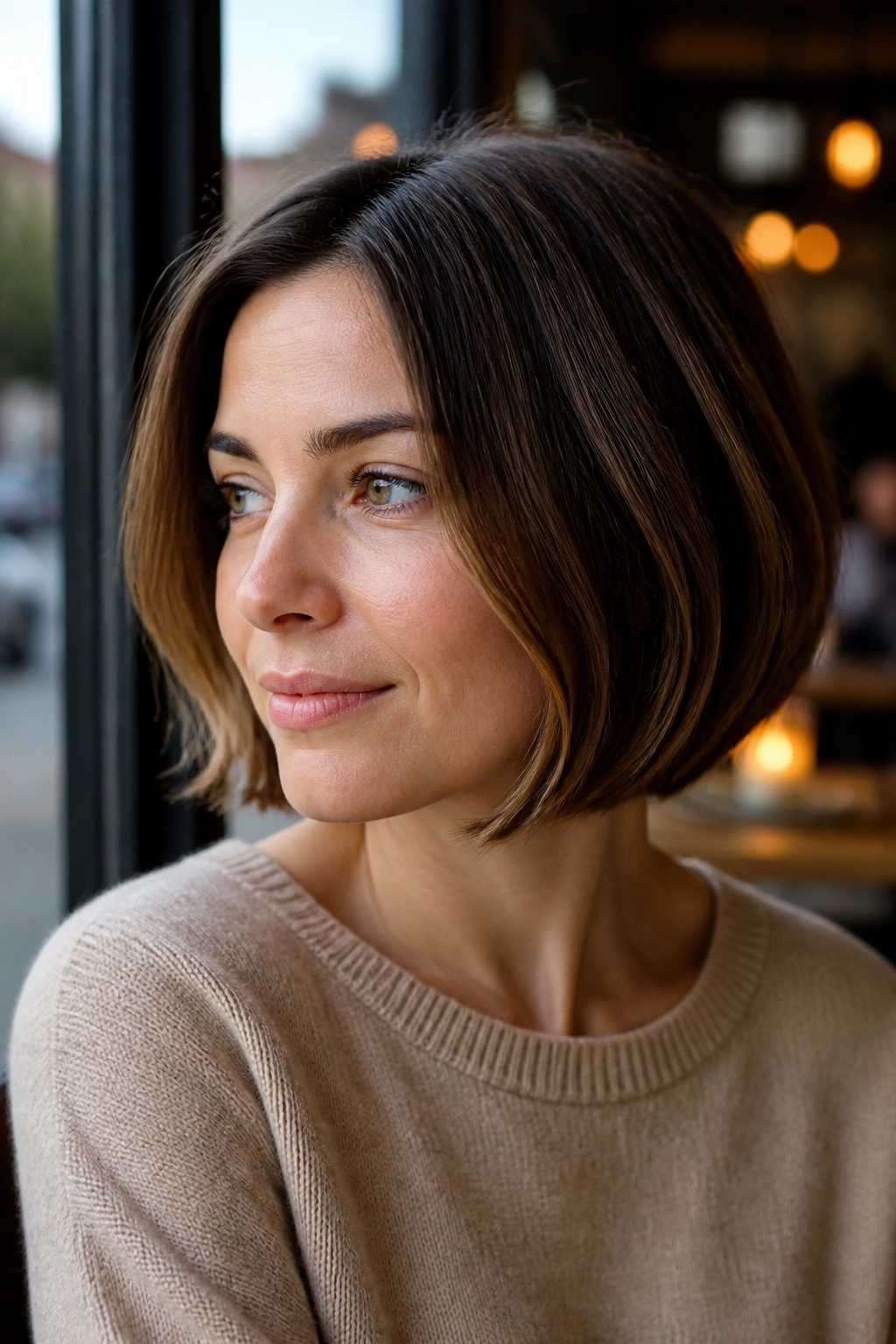
If you want a bob that still looks good when life gets busy, this is the one to keep in mind. A low-maintenance grow-out bob usually sits somewhere between chin and collarbone length, with a clean outline and just enough internal shaping to stop thick hair from turning into a block.
That combination matters because thick hair does not always need more drama. Sometimes it needs less interference. A strong perimeter gives you shape. A little invisible weight removal keeps it from swelling out. Then the cut can stretch a few weeks between trims without looking abandoned.
This is the bob I’d choose if you want polish on ordinary days and forgiveness on the messy ones. It works straight, wavy, tucked, clipped, or left alone after a quick blow-dry. The whole point is that it still looks intentional when it starts to grow. That is rarer than it should be.
Some cuts ask for a mood. This one asks for a trim.
