



Long curly hair has a funny habit of looking expensive and unruly in the same hour. One twist of the head and the whole shape changes. That’s half the charm, and half the headache.
The best curly hairstyles for long hair don’t fight that movement. They work with the weight, keep the top from collapsing, and leave enough shape around the face so the length still feels like a feature instead of a problem. That sounds simple. It usually isn’t, because long curls pull down at the root, dry out at the ends, and change shape depending on how much moisture they’ve got left in them.
What looks good on shoulder-length curls can go flat once the hair reaches the chest or lower. Layers, braids, ponytails, side parts, clips, and updos all change the balance in different ways, and that balance is what makes a style feel intentional instead of thrown together. I care about that more than whether a style sounds fancy on paper.
A good long-curly style should survive a workday, a windy walk, and a dinner that runs late. It should also be realistic on a Tuesday morning, because nobody has the patience for a style that needs a 40-minute battle with bobby pins before coffee. That’s where the useful options start.
1. Long Layered Curls With Face-Framing Pieces

Layers are not optional when long curls start to feel heavy.
Without them, the hair can fall into that odd triangle shape that makes the ends look big and the crown look tired. Long internal layers fix that by taking weight out of the middle of the shape while leaving the length intact, which is why this is one of the safest, most flattering curly hairstyles for long hair. A few face-framing pieces around the cheekbone or jaw also keep the style from feeling boxy.
Why the shape matters
If your curls are dense, the difference between “long and full” and “long and heavy” is usually only a few inches of layering. Ask for soft, blended layers rather than hard shelves. Hard layers can leave a choppy outline when the curls shrink.
This style works especially well if you like your hair down most days. The layers let the curl pattern stack better, so the shape looks alive instead of dragged downward.
- Keep the shortest face-framing pieces around the cheekbone or chin for a softer front line.
- Ask for interior layers if you want movement without losing too much length.
- Use a curl cream on damp hair, then follow with a medium-hold gel.
- Diffuse until about 70% dry, then let the rest air-dry so the curl clumps stay intact.
Tip: if your ends are getting fluffy and vague, a trim every 8 to 12 weeks helps the whole haircut hold its shape.
2. Curly Shag With Soft Fringe
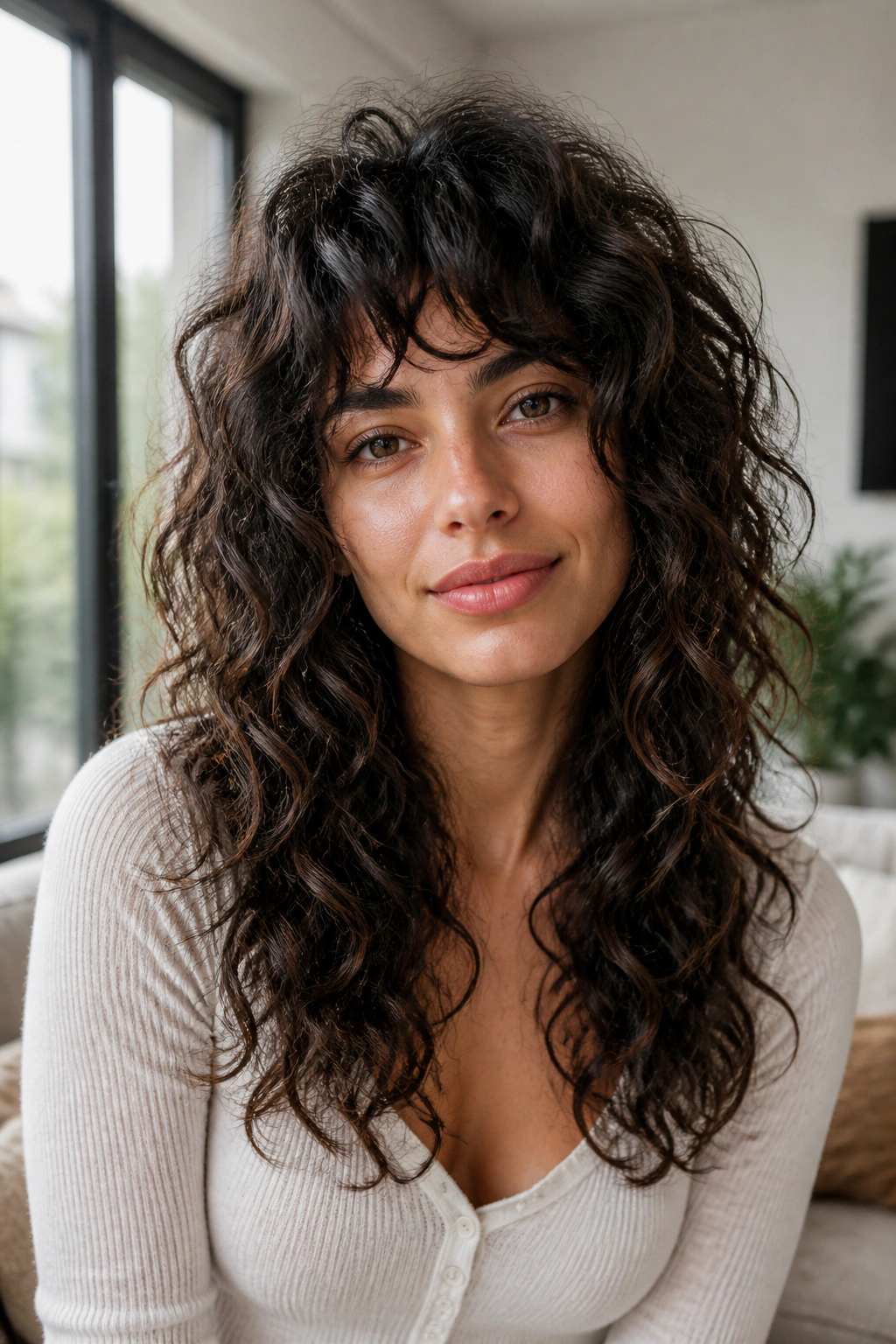
The shag is for the person who wants movement at the crown more than polished length.
It has that lived-in, airy shape that makes long curls look lighter and a little more rebellious. The soft fringe matters here. Too blunt, and the front can look stiff; too wispy, and it disappears into the rest of the hair. The sweet spot is a fringe that still moves with the rest of the curl pattern.
This cut is a good match for hair that goes flat on top by lunchtime. The shorter layers near the crown give the roots some lift, and the different lengths keep the silhouette from turning into one heavy curtain. That’s the whole appeal. It does the shaping work for you.
A curly shag also forgives imperfect styling, which is one reason people keep coming back to it. A little frizz does not ruin the look. It often helps.
3. Curly Wolf Cut With Extra Crown Texture
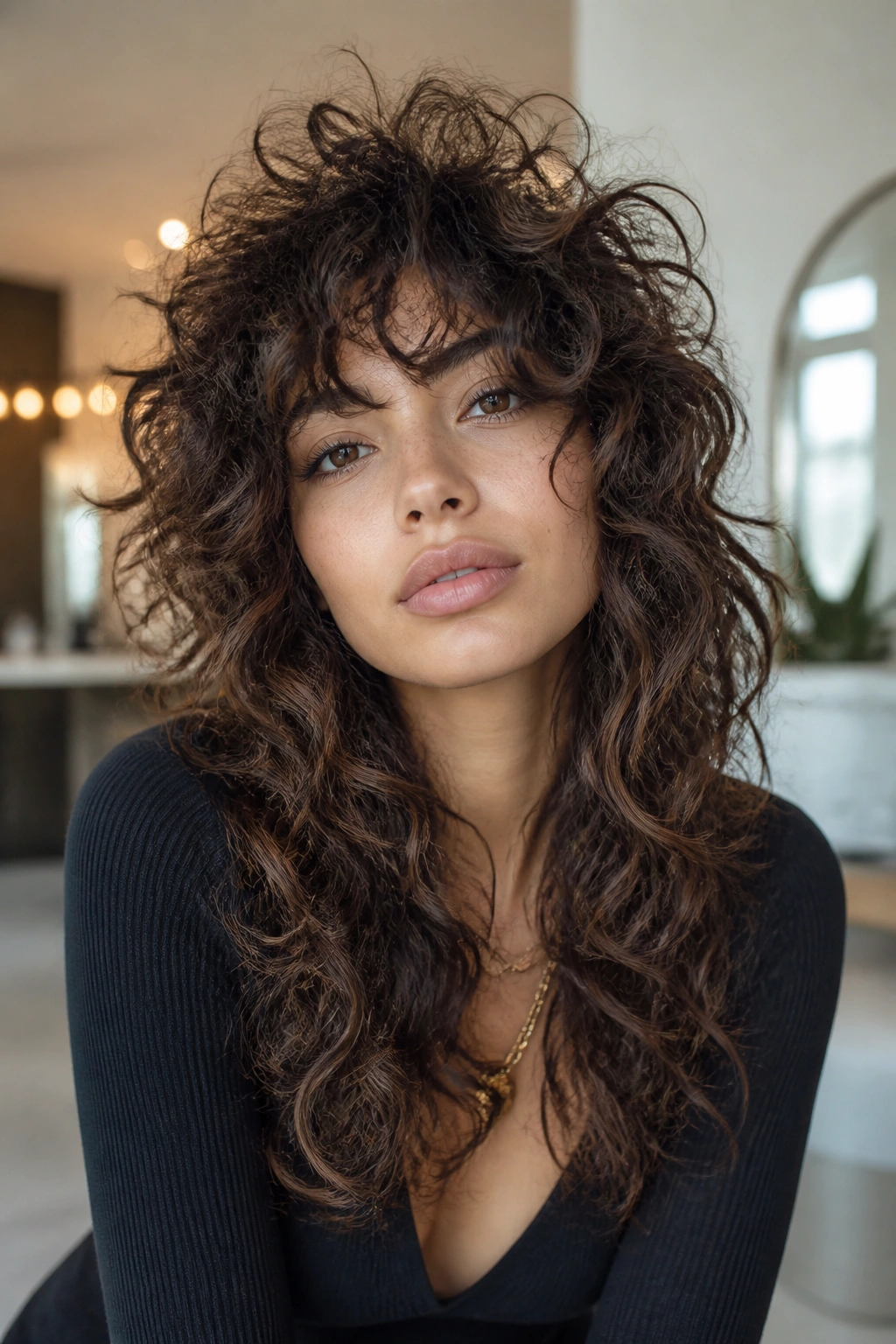
Picture a shag that got a little bolder.
The wolf cut keeps the same layered, choppy spirit, but it pushes more volume toward the crown and leaves the lengths a bit longer and looser. On long curls, that makes the hair look wild in a controlled way, which is a rare and useful trick. It’s not the style for someone who wants sleekness. It is the style for someone who wants shape.
The best version has a soft transition from crown to mid-lengths, not a harsh drop. If the top layers are cut too short, the curl pattern can stick up in a way that looks puffy instead of styled. That’s why the cut should be tailored to density, not copied from a photo without thinking.
- Best on hair that naturally has body at the root.
- Works well with curl patterns that hold a loose spiral.
- Looks strongest when the top is diffused upward and the ends are left a little undone.
- Needs a bit of mousse or foam near the roots to keep the lift from collapsing.
My take: if you like volume and hate hair that hangs straight down by day’s end, this one earns its keep.
4. Half-Up Half-Down Curls With Soft Height

Need your curls off your face but refuse to give up the length? This is the move.
A half-up half-down style gives you the best of both worlds: lifted roots in the front and full curls in the back. For long hair, it’s also a smart way to show off length without letting everything spread across your shoulders like a blanket. The trick is not pulling the top section too tight. That usually kills the shape.
How to keep the top from sagging
Gather the hair from temple to temple, then take a section from just above the ears rather than from the whole crown. That keeps the top section from getting bulky. A small claw clip or a soft elastic works better than a stiff tie because it bends with the curl instead of forcing it flat.
A little height at the crown helps this style look polished. You do not need a huge bump. A gentle lift is enough.
The best part is how flexible it is. You can wear it with loose tendrils for a casual feel or smooth the front back for something cleaner. Either way, the curls at the bottom stay visible, which is the whole point.
5. High Curly Ponytail With Root Lift

The high ponytail is the emergency exit for long curls.
It gets the hair off your neck, shows off length, and makes the whole head look taller. That said, the height matters. If the ponytail sits too low, it can drag the curls down and look sleepy. Set it at the crown or just above, where the shape still feels alive.
This style works best when you smooth only the top layer and leave the ponytail itself full. Use a soft brush on the front and sides, then stop. If you brush the ends too much, the curl pattern turns fuzzy fast. A wrapped strand around the elastic makes the whole thing look cleaner and hides the tie.
- Use a snag-free elastic.
- Brush only the perimeter, not the lengths.
- Wrap a 1/2-inch curl around the base and pin it underneath.
- Leave a few curls near the hairline if you want softness.
A high ponytail is never subtle. That is the point. It gives long curls a sharp shape and lets the ends bounce around in a way that feels energetic instead of messy.
6. Pineapple Ponytail for Loose, Preserved Curls

A pineapple is basically the lazy person’s best friend, and I mean that kindly.
It’s the high, loose ponytail that protects curls instead of flattening them, which is why people with long hair use it at night and also on days when they want a fast, casual style. The ponytail sits on top of the head, usually with a satin scrunchie, so the curls below stay in big, soft clumps instead of getting crushed.
This one is especially useful if your curls frizz the moment they touch a chair back, coat collar, or pillow. The high placement keeps the lower lengths free, and the loose tie keeps the root area from getting a dent. It’s not a sleek look. It’s a practical one.
One of the nice side effects is how much volume you get without extra effort. When you let the curls fall out of the pineapple later, they often keep their shape better than they would after being pulled into a tighter tie.
7. Side-Parted Hollywood Curls on Long Hair

The side part is not old-fashioned when the hair is long enough to move.
A deep side part gives long curls a little drama without needing a fancy updo. It shifts the weight to one side, opens the face, and makes the curl pattern look more deliberate. The style reads polished fast, which is why it keeps showing up at dinners, weddings, and any event where people want their hair to look finished but not stiff.
What makes the front section matter
The front pieces do most of the work here. If they sit too flat, the style loses its shape. If they’re too tight, the whole thing can look dated. The best version has soft lift at the roots and a smooth sweep across the forehead before the curls fall into place.
For looser curl patterns, a large-barrel iron or flexi rods can help set the front pieces if the hair needs a little training. For tighter curls, finger-coiling just the front section often does more good than brushing the whole head.
This is one of those styles that looks expensive without being fussy. That’s partly because the side part gives the hair a clear direction, and clear direction helps curls behave.
8. Low Curly Ponytail With a Wrapped Base

This is the cleanest long-curl style for interviews, dinners, and the days you want to look put together without trying too hard.
A low ponytail sits at the nape, where it keeps the length visible but stays calm and controlled. The crown is smoothed back just enough to look neat, and the curls in the ponytail still get to do the pretty part. That contrast is what makes the style work. Sleek on top, full at the bottom.
The wrapped base is worth the extra minute. Take a small strand from underneath the ponytail, wind it around the elastic, and pin it below the tie. That tiny move does a lot. It hides the elastic and makes the style feel finished without turning it into a formal updo.
If your curls are thick, use a strong elastic and pin the wrap strand twice. If they’re fine, one pin is usually enough. The goal is hold, not punishment.
9. Braided Crown With Loose Length

I keep coming back to this one because it solves the “hair in my face” problem without killing the shape.
Two loose braids run along the hairline and meet at the back, leaving the rest of the curls down. That means the front stays tidy while the length still shows off what it does best. It’s also one of the better curly hairstyles for long hair when you want a romantic look without spending forever in front of the mirror.
How to make it stay soft
Start the braids behind the temple rather than all the way at the front. That gives the style a little breathing room and keeps the hairline from looking too tight. Pin the ends under the back section with bobby pins that match your hair color or disappear into the braid.
If your hair is very dense, braid only the top layer on each side and leave some of the lower curls loose. That keeps the crown from getting bulky. It also makes the braid look more natural, which I prefer anyway.
The whole style depends on tension. Too tight, and it looks severe. Too loose, and it falls apart. Somewhere in the middle is where it lives.
10. Curly Space Buns With Loose Ends
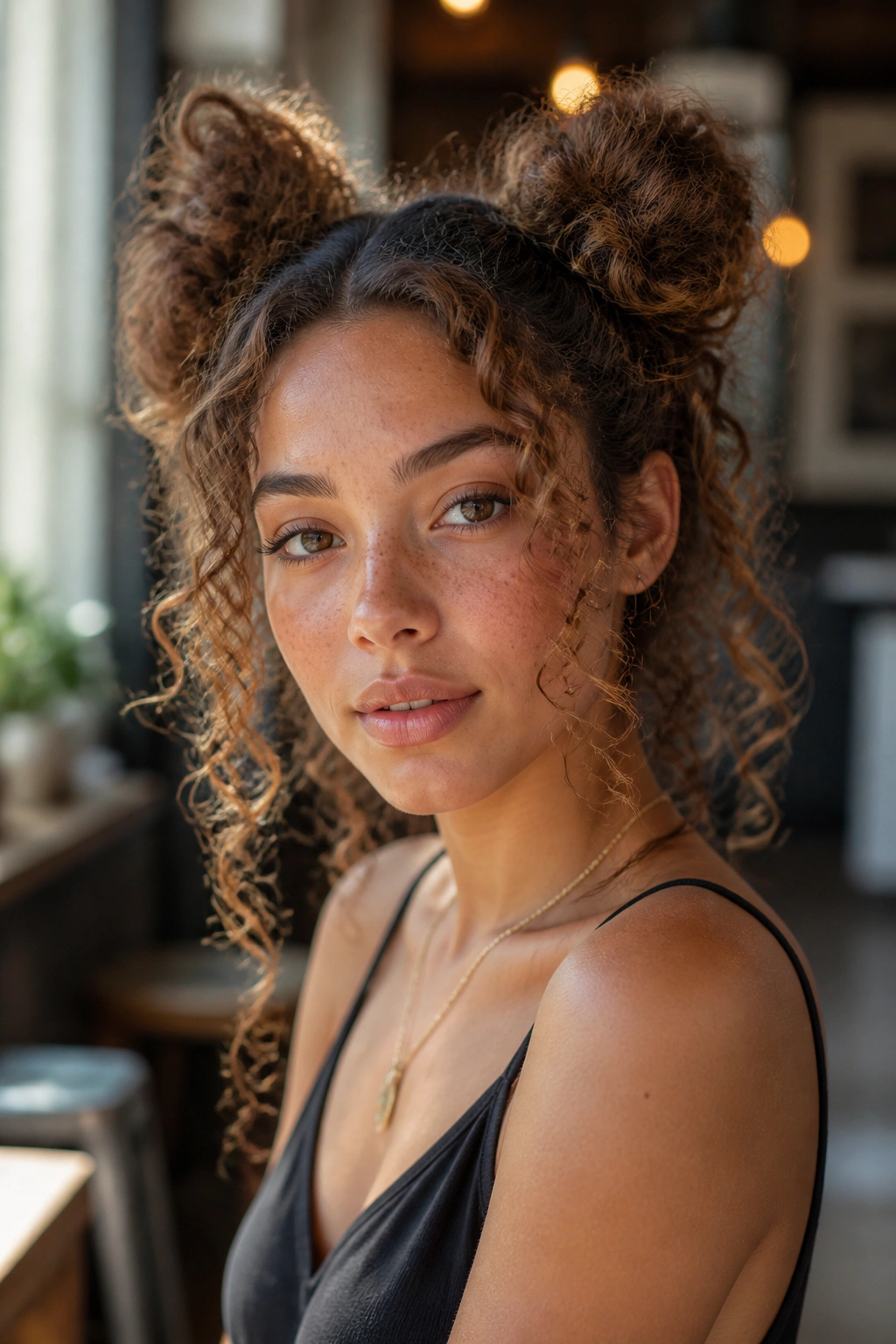
Space buns sound playful because they are.
On long curls, though, they do something more useful than look cute. They keep the weight off the neck, break up the length, and let the curl texture stay visible. You split the hair down the middle, twist or loop each side into a bun, and leave a few ends out if you want the style to feel softer.
This style can look neat or messy depending on how much you tuck in. If you tuck every end, the buns look cleaner and a little sharper. If you leave ends peeking out, the style gets looser and more casual. Both work.
The main mistake is pulling the buns too tight at the scalp. Long curls already carry weight, and a tight bun can give you a headache before lunch. A soft hold is enough. The buns should sit there, not fight your head.
11. Waterfall Braid Into Loose Curls

A waterfall braid does one thing long curls need: it keeps the top neat while letting the length stay soft.
The braid crosses the head and drops sections as it moves, which leaves some strands hanging through the pattern. That makes the hair look detailed without covering up the curls underneath. It’s a nice choice when you want something more interesting than a simple side braid but less formal than a full updo.
This works best when the hair has enough length to show the braid clearly. If the curls are very tight and shrink a lot, the braid can get swallowed by the texture. In that case, stretch the hair a bit first or braid a slightly larger section so it stays visible.
What helps the braid hold
- Start on dry or lightly damp hair, not soaking wet hair.
- Keep the braid loose so the curls don’t get crushed.
- Pin the braid with small grips hidden under the top layer.
- Add a touch of styling cream to the loose lengths if they frizz fast.
The braid is the frame. The curls are the picture.
12. Dutch Braids Into a Curly Ponytail
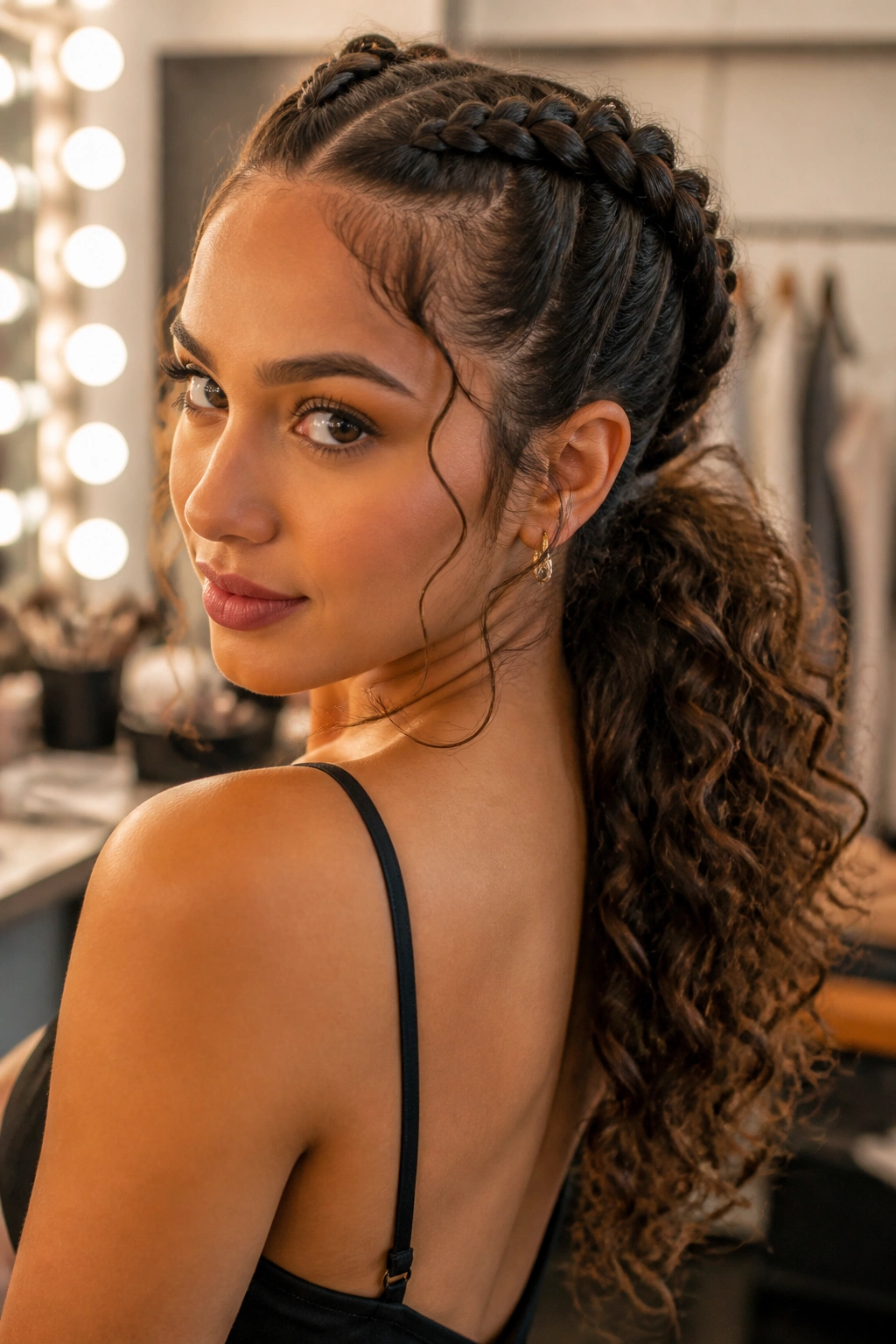
Two Dutch braids feeding into a ponytail are practical in the best way.
The braids keep the hairline secure, the ponytail keeps the length visible, and the whole style holds up when you’re active or simply tired of hair moving around your shoulders. I like this on long curls because it gives structure without pretending curls are going to behave like straight hair. They won’t. Better to work with them.
Start the braids at the front hairline and braid toward the nape, keeping the sections even. Then gather both braids and the remaining hair into one ponytail. If the ponytail feels thin, pull the braids outward a little to give them more width.
This is also one of the few styles that can survive a long day without looking worse by evening. The braids tighten the top half, and the curly ponytail does the rest.
13. Messy Top Knot With Face-Framing Pieces
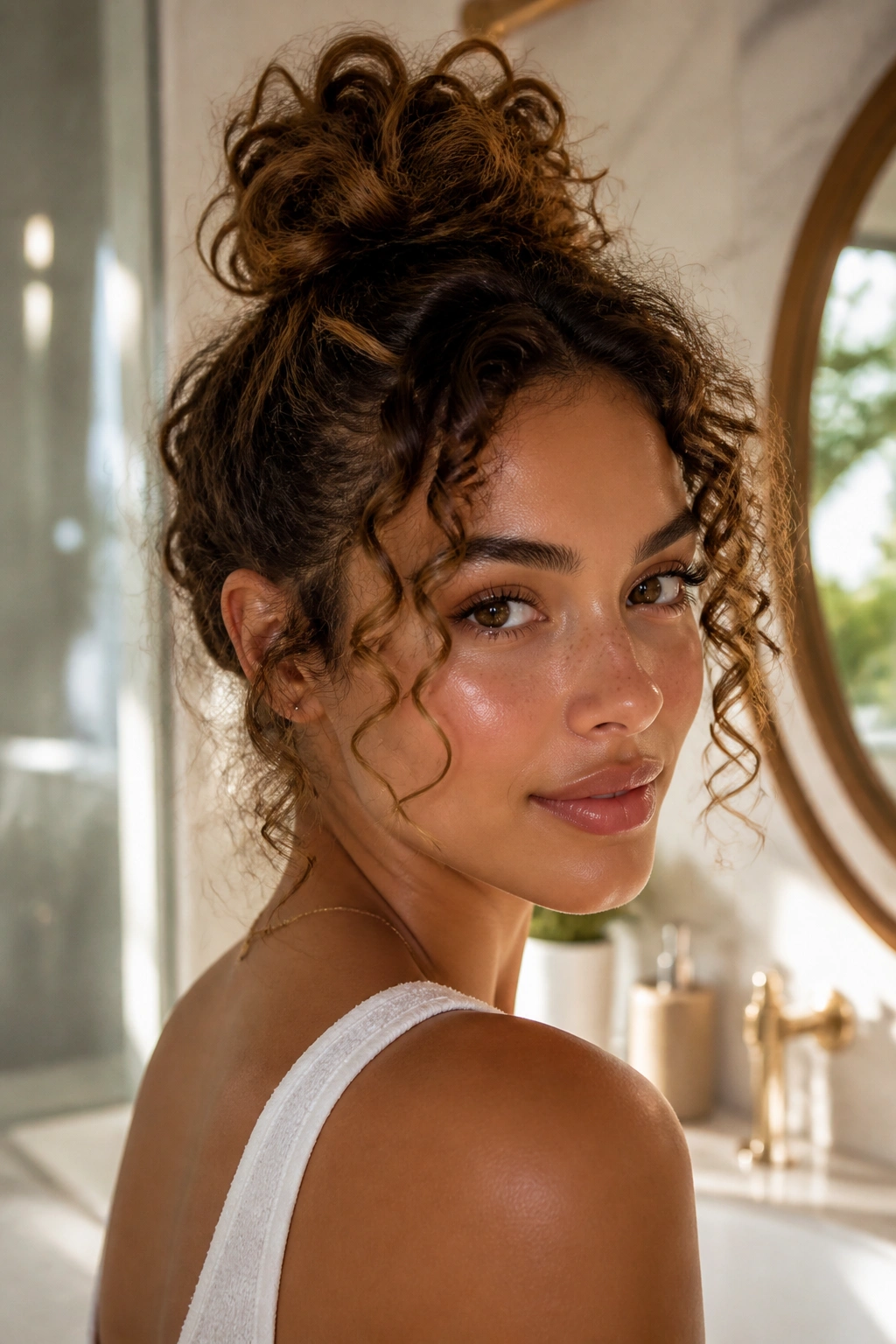
A messy top knot is the style you make when you’re not pretending to have endless time.
It works because long curls already have texture, so the knot does not need to be perfect to look good. Gather the hair high on the head, twist it into a loose knot, and let a few curls fall around the face. Those loose front pieces matter more than people think. They keep the style from looking severe.
If your hair is very long, do not try to force every inch into one tiny bun. That’s how you get a lumpy knot that fights back. Let some of the ends fan out. A few pins are enough to pin the knot down, and a soft elastic underneath keeps the base steady.
This style has a nice second-day quality to it. Curls that are a little flatter at the root often behave better here than they do when worn down.
14. Long Curly Hair With Curtain Bangs
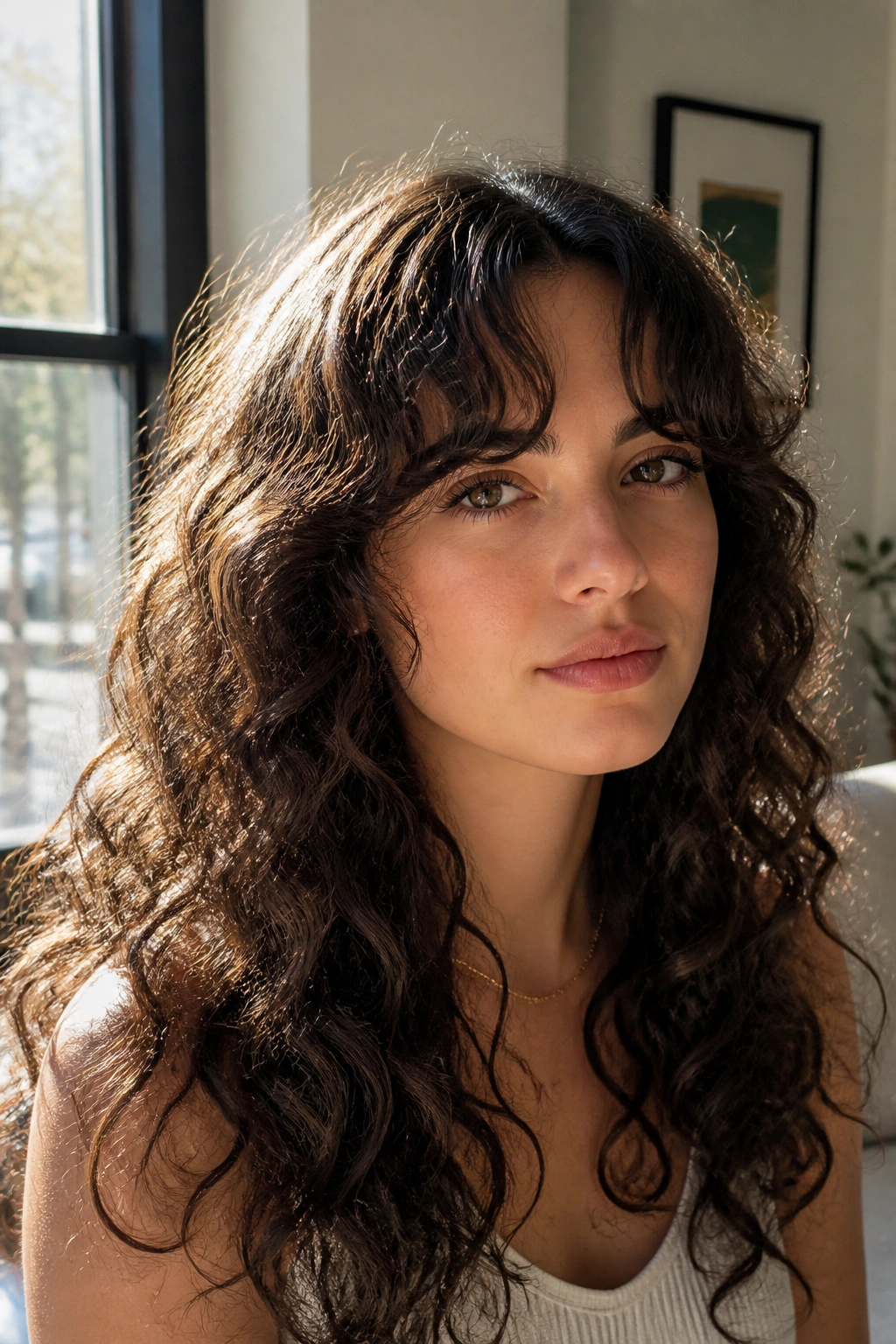
Can bangs work on long curls? Yes, if you treat them like their own small haircut.
Curtain bangs soften the front line, bring attention to the eyes, and stop long curls from feeling all one length. They also grow out in a pretty useful way, which matters because bangs that turn awkward after two weeks are not worth the trouble. Curtain bangs bend into the rest of the cut more naturally than blunt bangs do.
What to ask for at the salon
- Keep the shortest pieces long enough to fall past the eyebrows when dry.
- Cut them with the curl pattern, not against it.
- Leave the sides a little longer so they sweep into the cheekbones.
- Plan for shrinkage if your curls spring up hard once they dry.
This style needs a bit of separate attention on wash day. A tiny amount of leave-in or curl cream on the bangs keeps them from puffing up into a fuzzy fringe. They should frame the face, not sit there like a curtain rod.
The payoff is worth it. Long curls with curtain bangs look softer, richer, and more finished without losing the length people usually want to keep.
15. Face-Framing Layers With a Center Part

A center part sounds plain, but on long curls it lets the shape do the talking.
When the hair splits evenly down the middle, the eye sees the symmetry first and the curl pattern second. That makes the whole style feel calm and balanced. Face-framing layers help even more because they pull the front pieces inward instead of letting them hang like two heavy curtains. It is a simple change, but it changes a lot.
This style is especially good if your curls clump well and you like a clean line. The center part lets the curl groups fall where they want, and the layers keep the sides from building too much width near the jaw. If your face is narrower, that extra width can be useful. If your face is rounder, keep the front pieces a little longer so they taper down.
- Best when the curls are defined from root to end.
- Strong choice if you want to wear the hair down most of the time.
- Easier to refresh with a mist bottle and a little cream than with full restyling.
- Works well with both loose ringlets and tighter curls.
A center part is not flashy. It is reliable, and honestly, that counts for more than people admit.
16. Twisted Halo Updo for Long Curls
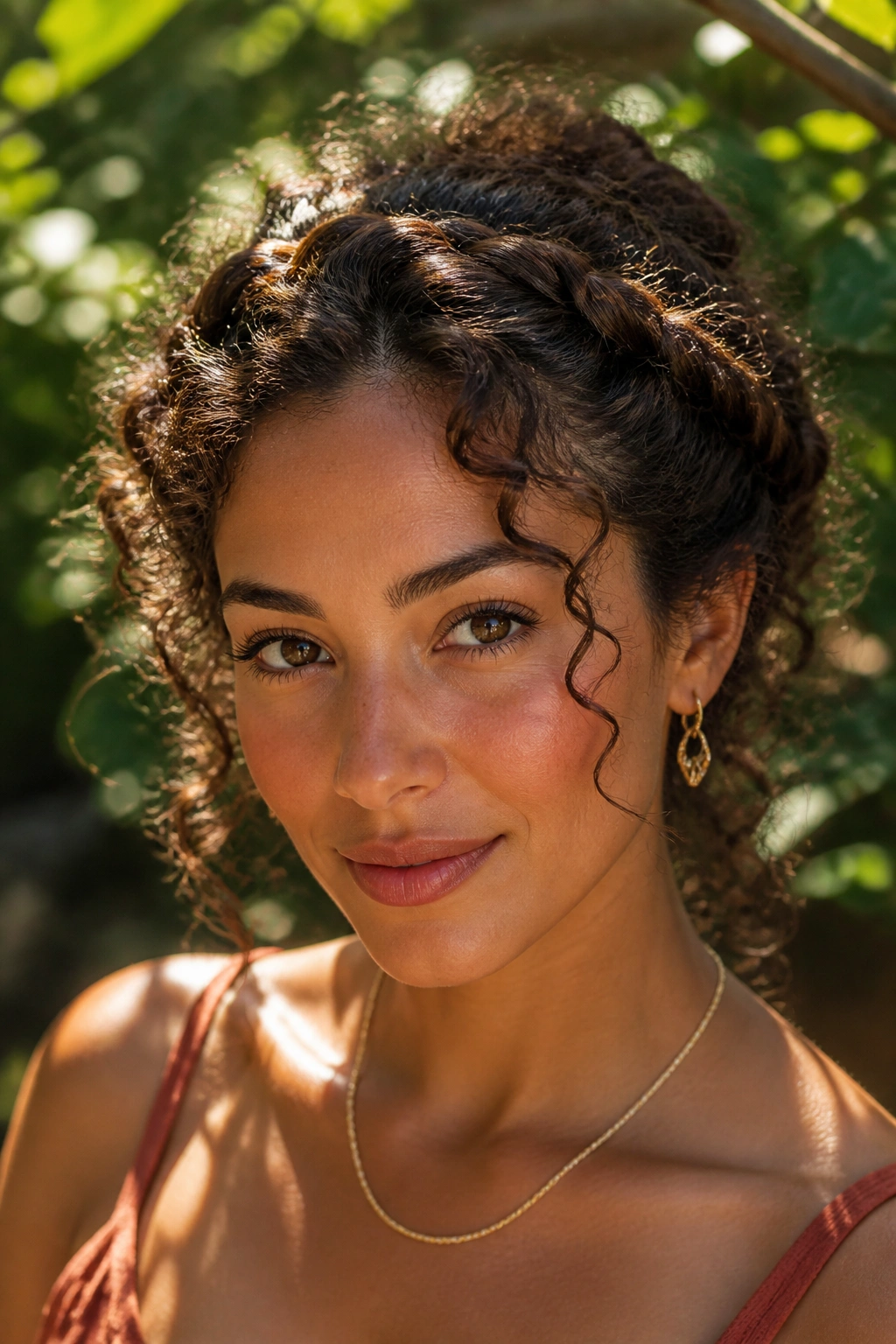
Twists around the hairline have a softer feel than braids.
A halo updo uses two twisted sections that travel from the temples toward the back of the head, where they’re pinned together or wrapped around the crown. The rest of the curls can be tucked under or left loose depending on how full you want the shape. For long hair, the style creates a neat frame without flattening the texture.
It also solves a common problem: you want your hair up, but you do not want the style to look hard or severe. Twists solve that better than a tight bun does. They let the curls stay visible while moving the hair away from the face and neck.
Use enough pins. That sounds obvious, but people still under-pin this style and then wonder why it slips. Long curls weigh more than straight hair does, and they need a little extra grip. Six pins is not excessive if the hair is thick. Sometimes eight is better.
17. Side Braid Draped Over One Shoulder
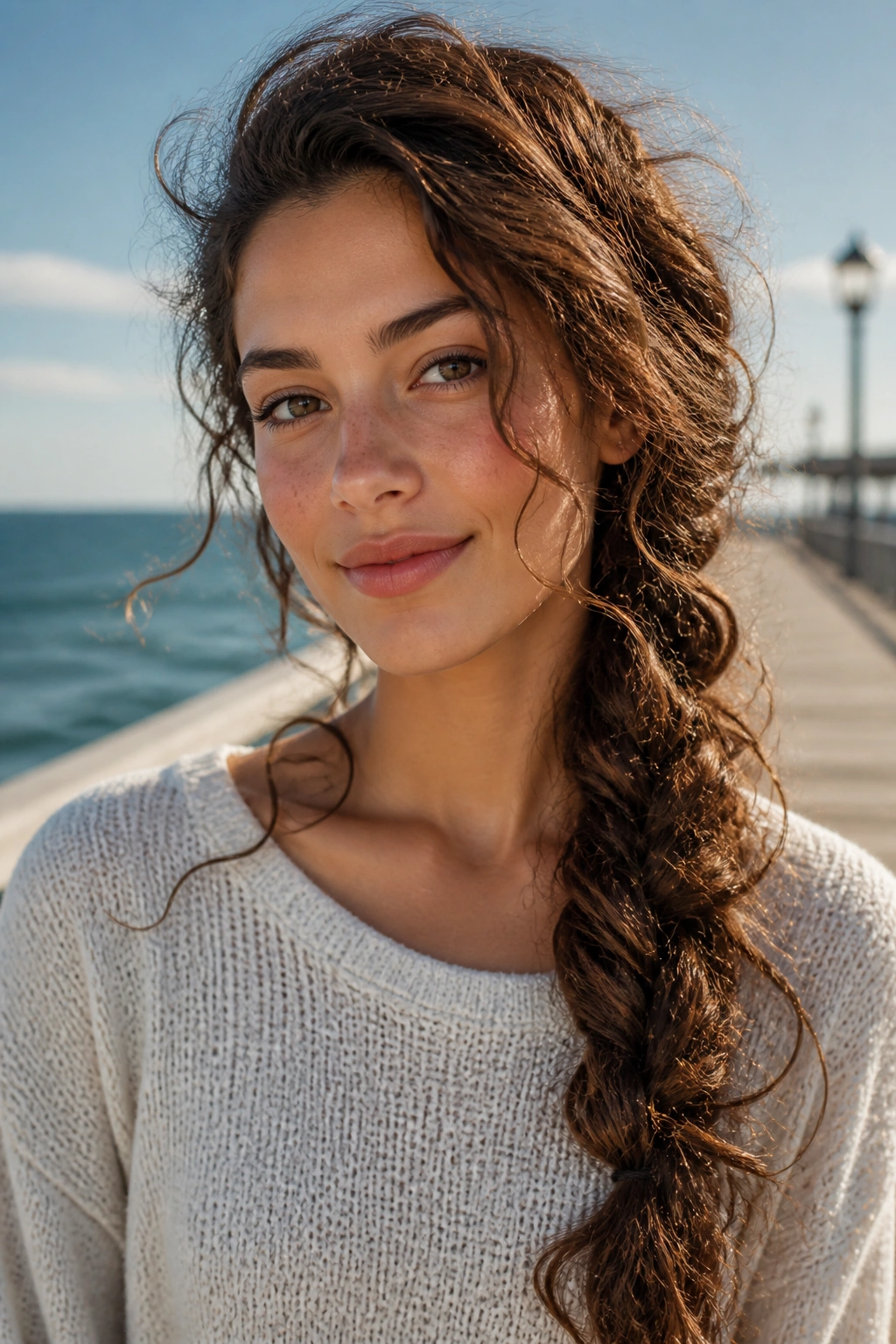
The side braid is the low-effort style people keep underestimating.
On long curls, it becomes a loose, textured shape that falls over one shoulder and keeps the hair out of the way without hiding the length. A simple three-strand braid works fine. A rope braid can look a little smoother. Either way, the point is not perfection. The point is control.
Braid the hair gently and stop before the ends get too thin. Leaving the last few inches loose lets the curl pattern show at the bottom, which keeps the whole thing from looking too compressed. If the braid starts to look flat, pull the edges out a touch with your fingers. Not too much. Just enough to give it some width.
This is the style I’d pick for travel, windy weather, or any day you need your curls to behave in a way that still looks like curls.
18. Claw Clip Twist-Up for Thick Curly Hair
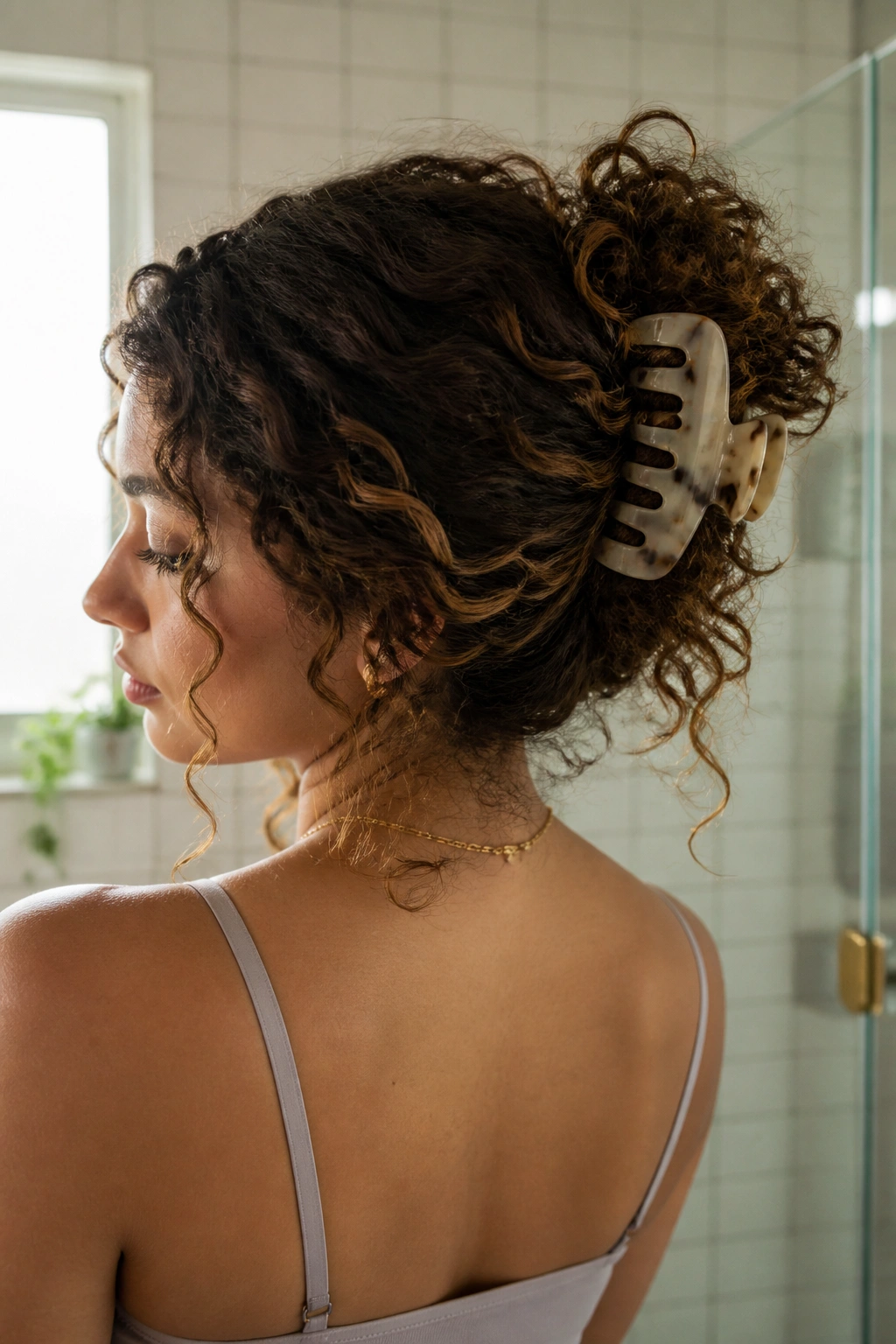
A good claw clip can save a lot of time.
The trick is finding one long enough to hold the full twist. For thick, long curls, a small clip just slides out and leaves you annoyed five minutes later. A larger clip with curved teeth tends to grip better, especially if the hair is gathered into a loose twist first and then folded upward at the back of the head.
What to look for in the clip
- A length of about 4 to 5 inches for dense hair.
- Rounded teeth that do not snag the curl pattern.
- Enough spring tension to hold the twist without pinching.
- A shape that curves with the head, not away from it.
This style works because it does not ask long curls to stay perfectly compressed. A few ends can peek out. A few pieces can fall loose. That is part of the charm. If the hair feels too heavy for one clip, use two smaller clips placed side by side instead of fighting the texture.
It’s fast, it’s practical, and it’s better than pretending every hairstyle needs a tutorial.
19. Long Mermaid Curls With Defined Curl Clumps
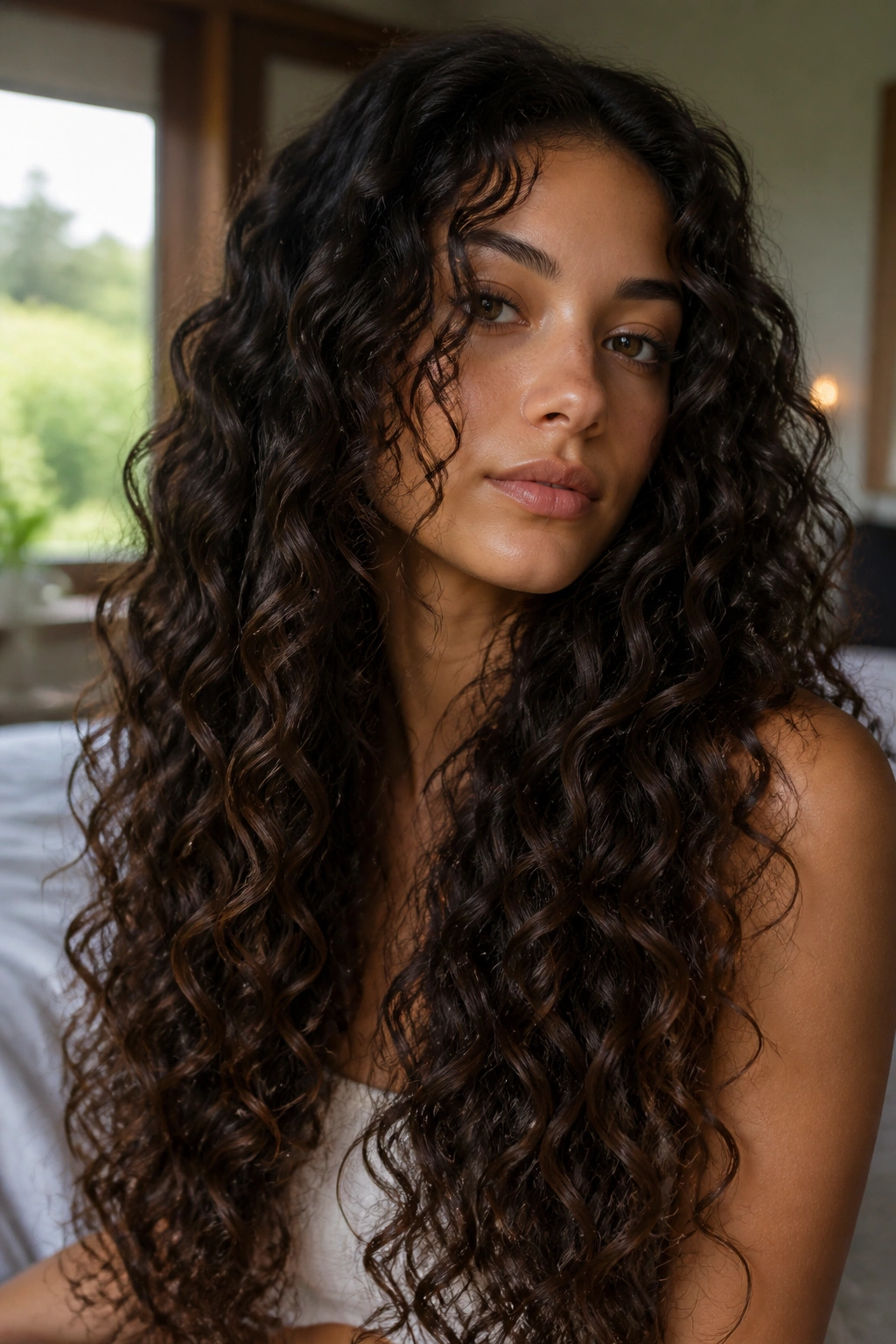
Mermaid curls are really about definition.
The length matters, sure, but the style only works when the curl clumps stay separate and glossy enough to read as a shape rather than a puff. Think long, soft spirals that keep their line from root to end. The texture should look touchable, not crunchy. That balance is the whole game.
The difference from brushed-out waves
Brushed-out waves spread. Mermaid curls stay grouped. That means less brushing once the hair is dry and more attention to how the curls are set while they’re still wet. A curl cream plus gel combo usually helps, especially if the hair likes to frizz at the ends.
Diffuse gently or air-dry with the roots clipped for lift. Once the hair is dry, scrunch out the cast if you used gel. That step matters. It softens the feel without destroying the shape.
This style is gorgeous when the ends are hydrated and the front pieces are allowed to fall naturally. It’s less about one dramatic trick and more about letting the pattern stay intact all the way down.
20. V-Cut Long Curls With a Deep Side Part
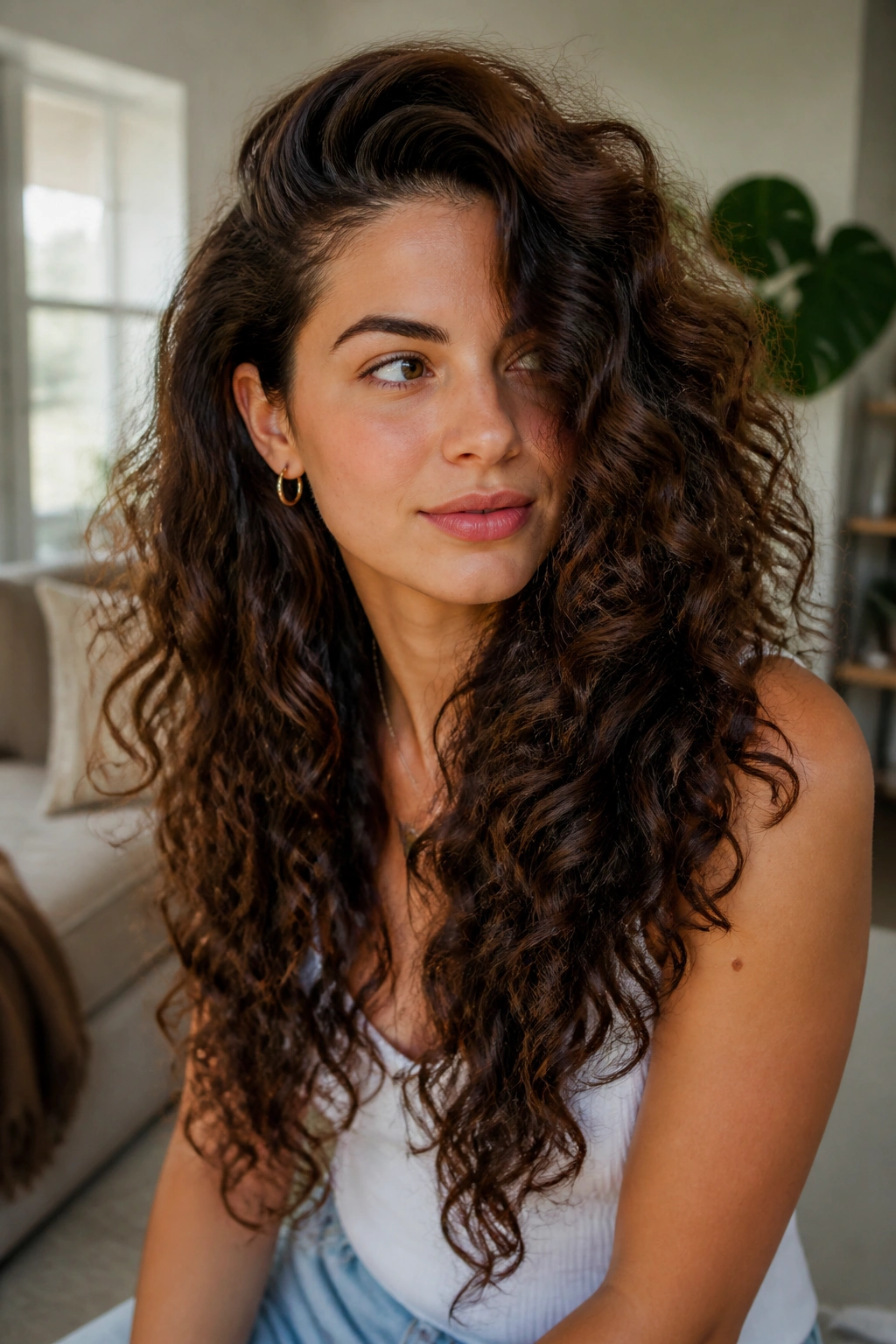
A V-cut is one of the best ways to give long curls movement without taking away the length people love.
The hemline drops in the center and angles down toward the sides, which keeps the bottom from looking blunt and heavy. On long curly hair, that shape helps the curls stack in a more interesting way. The deep side part adds lift at the root and gives the front a little asymmetry, which keeps the cut from feeling too tidy.
This is the style I’d hand to someone who says they want length, but they also want the hair to move. Both things can happen. They should happen. If your curls are thick, the V-cut stops the shape from turning into a block. If your curls are finer, ask for a softer V so the ends do not look too sparse.
A small note I keep coming back to: the best curly hairstyle for long hair is usually the one that keeps the silhouette readable from every angle. Not just the front. From the side, too. From the back, too. That is where this cut earns its keep, because the angles make the hair look intentional even when the curls themselves are doing their own thing.
If you only test one change first, try the part before you change the length. A deep side part or a center part can completely change the mood of long curls without touching the scissors. After that, the cut can do its part.
