



Medium length hairstyles for wavy hair sit in a sweet spot that long hair and short hair both miss. You keep enough length for movement, but you lose some of the extra weight that drags a wave pattern flat by the end of the day. That matters more than people think. Once hair lands around the shoulders or collarbone, the cut itself starts changing the texture story.
Wavy hair is picky in a way straight hair isn’t. A blunt edge can make loose waves look fuller, while the wrong layer placement can turn thick waves into a triangle or make finer waves disappear into the head. Bangs, side parts, face-framing pieces, and the way the ends are cut all change how the wave sits. Small details. Big difference.
The styles below lean into that. Some keep things polished and tidy. Some are lived-in and messy in the best way. A few are more dramatic than they first look, which is exactly why they work so well on medium length hair. The first one is the safest place to start.
1. Shoulder-Grazing Layers with Air-Dried Texture

Shoulder-grazing layers are the cut I recommend most often for wavy hair that wants movement without a lot of fuss. The length touches or barely clears the shoulders, so the wave pattern still has room to show, but it is short enough that the curl doesn’t get stretched out by its own weight. That keeps the shape soft instead of heavy.
Why it works on wavy hair
The best version starts with long layers placed 2 to 4 inches below the chin. That keeps volume from building too high around the cheekbones, which is where a lot of wave cuts go wrong. You want the hair to move, not puff out like a triangle.
- Ask for ends that are cut with a light point-cutting motion, not a blunt chop.
- Keep the front slightly shorter if you want the wave to flick away from the face.
- Diffuse for 5 to 7 minutes only if your roots need lift.
- Let the rest air-dry with a curl cream or light mousse.
Best tip: Let the hair dry halfway before touching it. That one habit stops a lot of frizz.
2. Collarbone Shag with Curtain Bangs

A collarbone shag with curtain bangs makes wavy hair look deliberate fast. It has enough structure to frame the face, but it still feels loose and easy. The shag shape takes away bulk where hair gets puffy, and the curtain bangs split the front so the wave pattern can fall naturally instead of fighting a heavy fringe.
The trick is balance. If the bangs start too high, you end up with a short curtain fringe that needs daily styling. If they start too low, they lose the whole face-framing effect. Ask for the bangs to open around the cheekbones and for the shortest layers to land near the lips or chin. That gives the cut lift without turning it into a mullet.
I like this shape most on hair that dries with a little bend on its own. It does not need perfect styling. A palmful of mousse, a rough dry, and a few finger twists at the front usually do the job.
3. Blunt Lob with Soft, Broken-Up Ends

Why does a blunt lob work so well on wavy hair? Because the clean edge makes the wave pattern look richer. When the ends are one even line, the movement stands out more. You don’t need a hundred layers to make it interesting. Sometimes the sharp line is the point.
That said, the cut should never feel hard. The best version has ends that are softened just enough to keep the shape from looking boxy. A stylist can do that with a tiny bit of point-cutting at the perimeter. If your waves are loose, this keeps the hair from sitting like a helmet. If your waves are stronger, it keeps the bottom from fraying.
How to style it
Use a 1-inch curling wand only on the pieces that fall flat around the face. Leave the rest alone. That keeps the texture from looking overdone.
- Part it in the middle for a sleek feel.
- Part it slightly off-center for a softer shape.
- Add a pea-sized smoothing cream to the ends.
- Skip heavy oils near the roots.
A blunt lob is one of those cuts that looks expensive even when you spend almost no time on it.
4. Deep Side-Part Waves with Cheekbone Pieces

Picture hair that looks flat on one side and puffy on the other by lunch. A deep side part fixes that faster than most people expect. It lifts the roots where the hair wants to lie down, and it gives wavy hair a little built-in drama without any extra cutting.
The face-framing pieces matter here. Keep them long enough to skim the cheekbones or jawline, not the chin only. That placement pulls the eye upward and makes the whole style feel sharper. If the front is too short, the wave can spring up in a weird little bend. Nobody wants that.
- Best for medium-density hair that needs root lift.
- Easy to refresh with a mist bottle and a few scrunches.
- Works especially well on day-two waves.
- Looks strongest when the heavier side is tucked behind one ear.
One small move changes everything: flip the part after your hair is half-dry. The roots will keep a bit of memory there.
5. Half-Up Twist on a Layered Lob
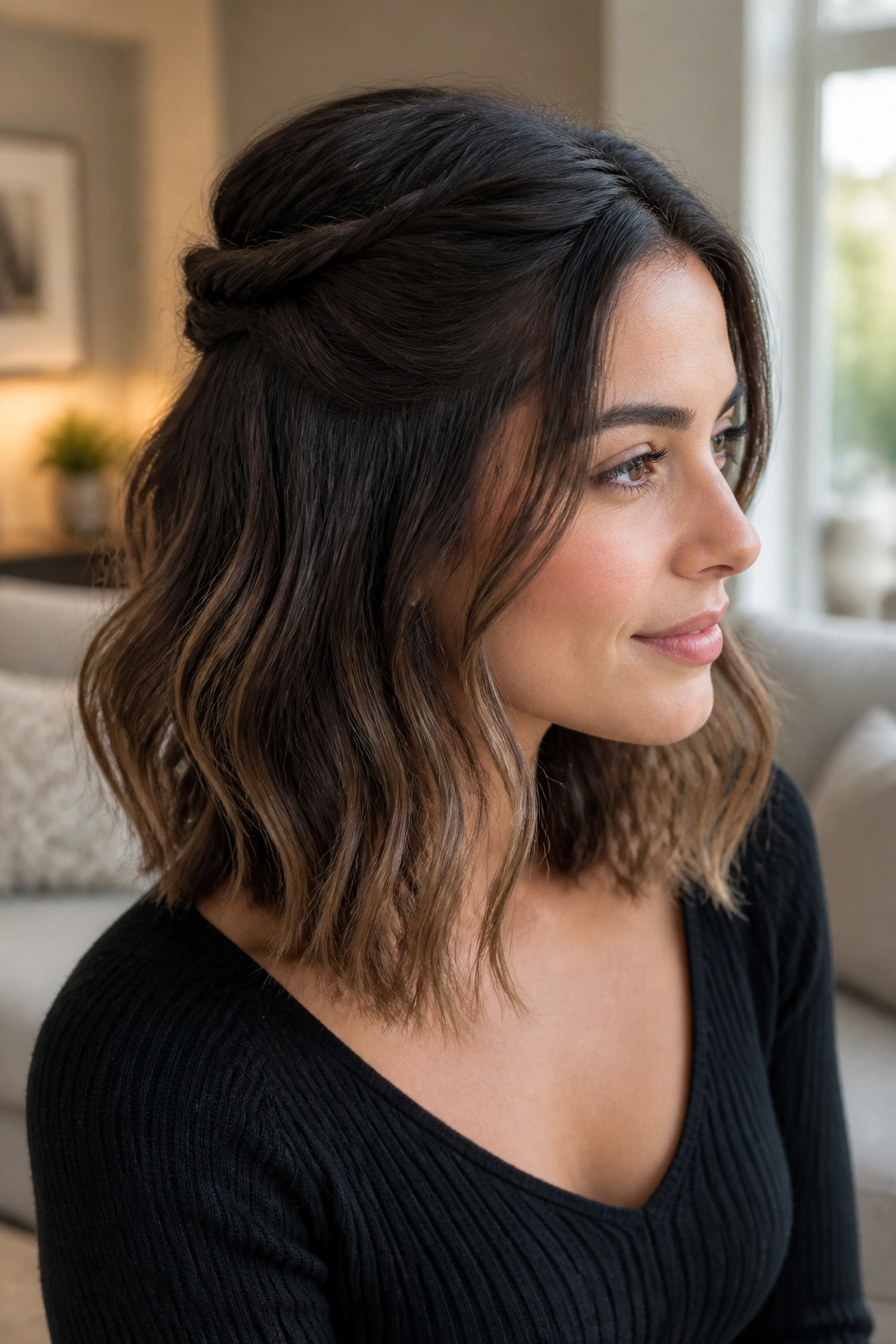
A half-up twist on a layered lob is the hairstyle I reach for when hair needs to look tidy but not stiff. The top section gets pinned back with a twist or two, and the lower waves stay loose around the shoulders. It’s casual, but not lazy. There’s a difference.
What makes this work on medium wavy hair is the contrast. The top gets control, while the bottom keeps movement. If your hair gets frizzy at the crown, this style hides it. If your ends are nice and textured, it shows them off. I prefer it on a lob that sits between the jaw and collarbone because the twist has enough length to hold without fighting the rest of the style.
The best version uses two small sections from just above the temples. Twist each one back, pin them flat, and leave a few thin pieces out near the face. It should look slightly undone. If it looks polished to the point of stiffness, you’ve pinned too much.
6. Butterfly Layers for Medium Waves
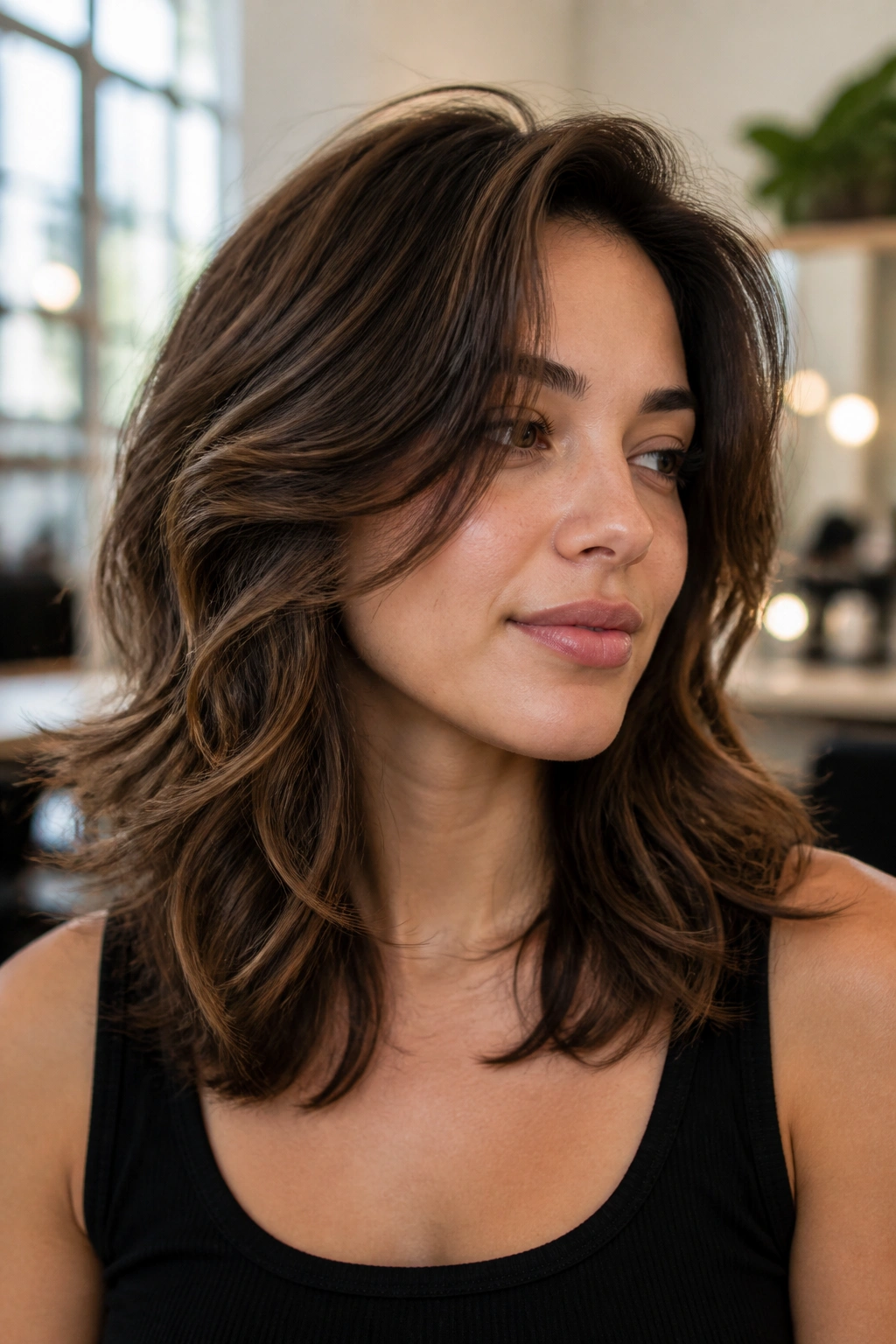
Butterfly layers are a smarter cut than people give them credit for. They create lift near the top while leaving the lower length intact, which is a nice fix for wavy hair that feels heavy at the bottom but flat near the crown. It’s a good middle ground when you want movement without giving up the feeling of length.
Unlike a one-length lob, butterfly layers let the top section move on its own. That means the waves around the cheekbones show up more clearly, while the ends still sit with some weight. The cut also helps if your hair gets pulled down by humidity, because the shorter internal layers keep the style from collapsing as fast.
This one is best if you like shape more than edge. It reads soft, not sharp. Ask for the shortest face-framing pieces to land around the cheekbone and for the longer layers to blend somewhere between the chin and collarbone. Too short, and the cut starts to look busy. Too long, and you lose the whole point.
7. Feathered Shoulder Cut with Airy Ends

A feathered shoulder cut is what I suggest when someone says their wavy hair feels too bulky, but they do not want a shag. The feathering softens the outline and lets the hair move in thinner pieces, which is especially useful if the wave pattern bunches up at the ends. The result feels lighter in the hand and on the head.
The shape should stay close to the shoulders, with the feathering concentrated around the mid-lengths and front. That keeps the bottom from flipping out in a chunky way. You want movement, not a stair-step effect. A razor can help here, but only if the stylist is careful. Too much razor work on wavy hair can make the ends fray.
This cut usually looks best with a side or soft off-center part. The feathering catches the line of the part and gives the style a little lift at the front. It’s one of those cuts that gets better with a bit of natural drying and a very small amount of styling cream.
8. Side-Swept Fringe and Loose Waves
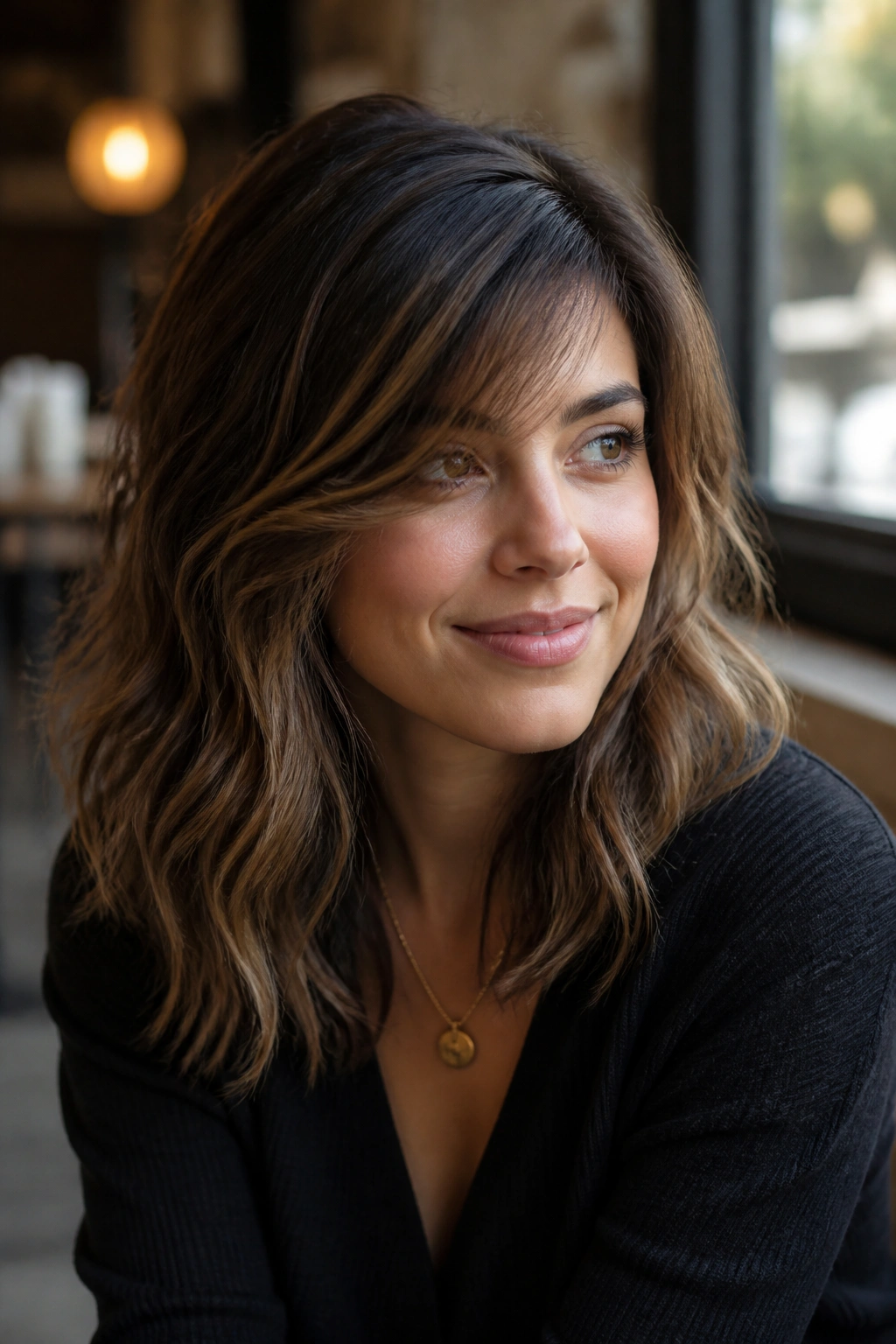
A side-swept fringe changes the whole mood of medium-length waves. It pulls the eye diagonally across the face, which is useful if you want softness without full bangs. The fringe can be long enough to tuck behind the ear on busy days, but it still gives the haircut a shape that feels finished.
The side sweep also helps waves behave better near the forehead, where hair often grows in different directions. Instead of forcing the front to split down the middle, you let the natural bend fall to one side. That usually means less fighting with cowlicks and less flatness at the root.
This is the cut for people who want motion but not a big styling commitment. Use a round brush only on the fringe if you need control. The rest can air-dry with a little scrunching. If the fringe starts to separate too much, a quick mist of water and a dab of foam usually brings it back.
9. Textured Midi Bob with Piecey Separation
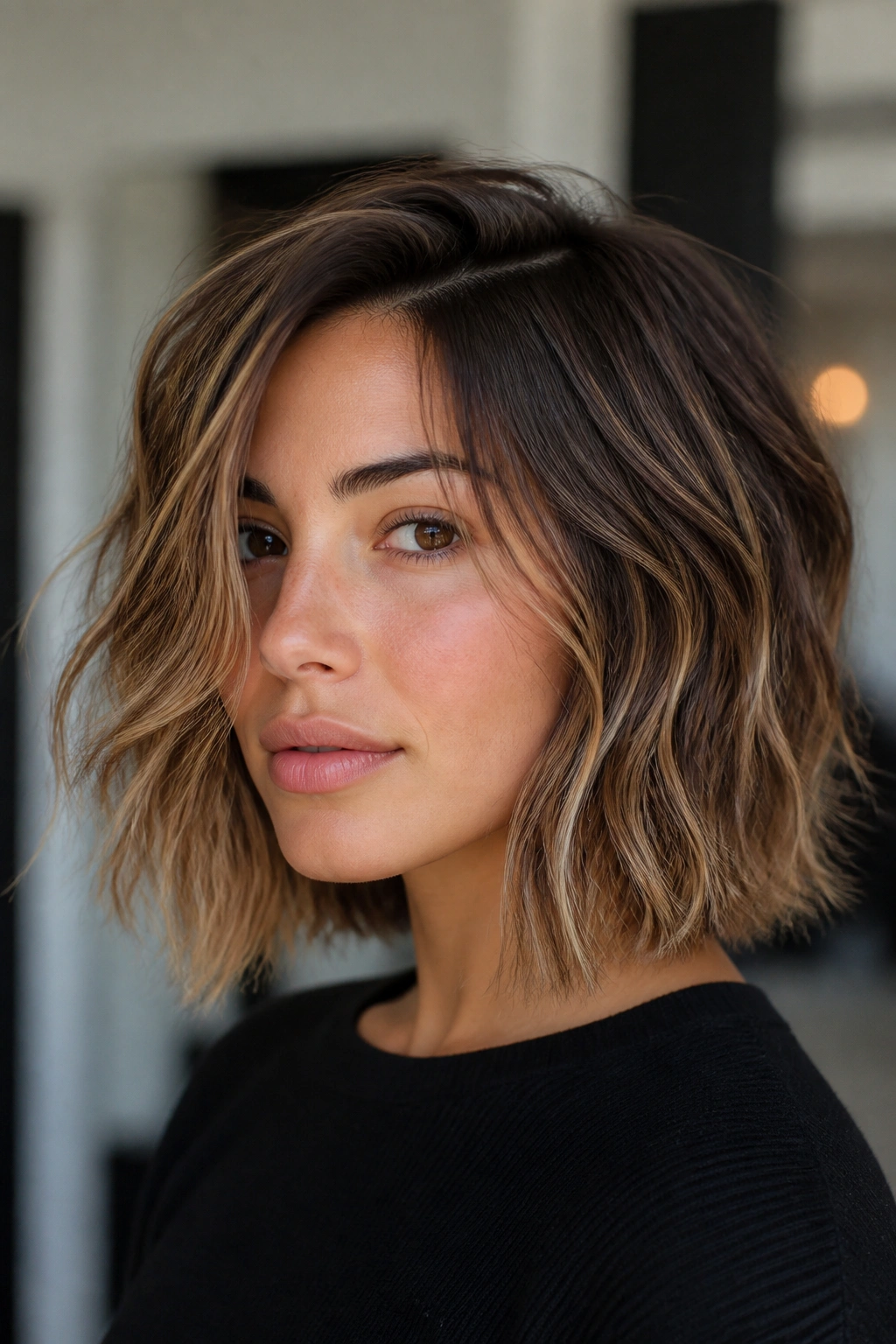
Why does a textured midi bob work so well on wavy hair? Because it keeps the outline compact while the texture does the talking. The shape usually lands between the jaw and collarbone, which is long enough to keep the wave pattern visible, but short enough that the hair doesn’t fall limp.
The piecey separation is the whole point. Ask for internal texture, not random thinning. Those are not the same thing. Internal texture gives the hair places to bend and break apart in a controlled way. Random thinning can leave wavy hair looking wispy in the wrong spots, especially around the ends.
What to ask for
- A length that sits just above the collarbone.
- Soft removal of bulk inside the shape.
- No heavy layering at the bottom.
- A side part if you want more volume at the roots.
This cut loves lightweight mousse and a diffuser on low heat. It is the kind of style that looks calm on purpose.
10. Waterfall Layers and Flipped-Out Tips
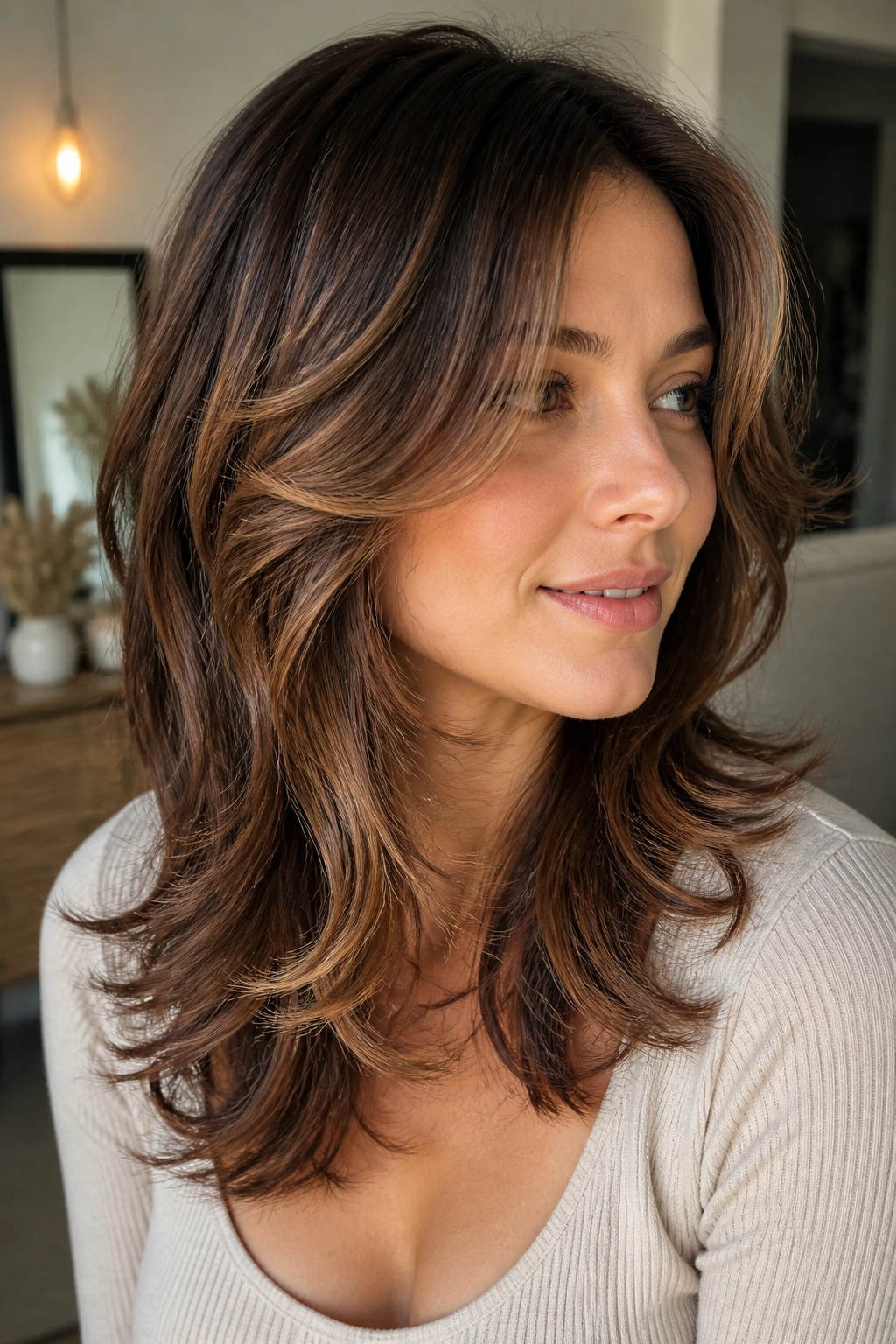
A waterfall layer cut gives wavy hair a cascading shape instead of one flat block. The layers fall in steps that are soft enough to blend, but still visible enough to create movement. If you like hair that looks light when you turn your head, this is a strong choice.
The flipped-out tips add a little bounce at the ends, which matters because medium-length waves can sometimes settle too close to the face. A round brush or a quick pass with a blow-dryer brush can flick the bottom 1 to 2 inches away from the neck. That tiny change makes the hair look more open.
I’d call this one a nice fit for hair that gets heavy fast. The layered structure reduces that weight, while the flipped tips keep the finish from feeling too serious. It works for dinner, work, and everything in between. Not a bad range.
11. Claw-Clip Half-Up with Loose Face Pieces

A claw-clip half-up style is one of the easiest ways to make medium wavy hair look styled without doing much at all. The top section gets lifted and clipped, the lower waves stay down, and the face pieces keep the look from turning too severe. It’s practical. It also looks better than a plain ponytail on most wavy textures.
The key is placement. Clip the hair at the crown or just behind it, not low at the nape. That keeps the silhouette lifted and avoids pulling the waves flat through the top. Leave the front pieces out in uneven lengths so the style feels relaxed. Perfect symmetry tends to make wavy hair look overworked.
I like this style on second- or third-day hair when the waves have settled into bigger bends. A tiny bit of dry texture spray at the roots helps the clip grip. If your hair slips out, twist the top section once before clipping. It holds better, and the shape looks more intentional.
12. Lob with Brow-Grazing Curtain Bangs
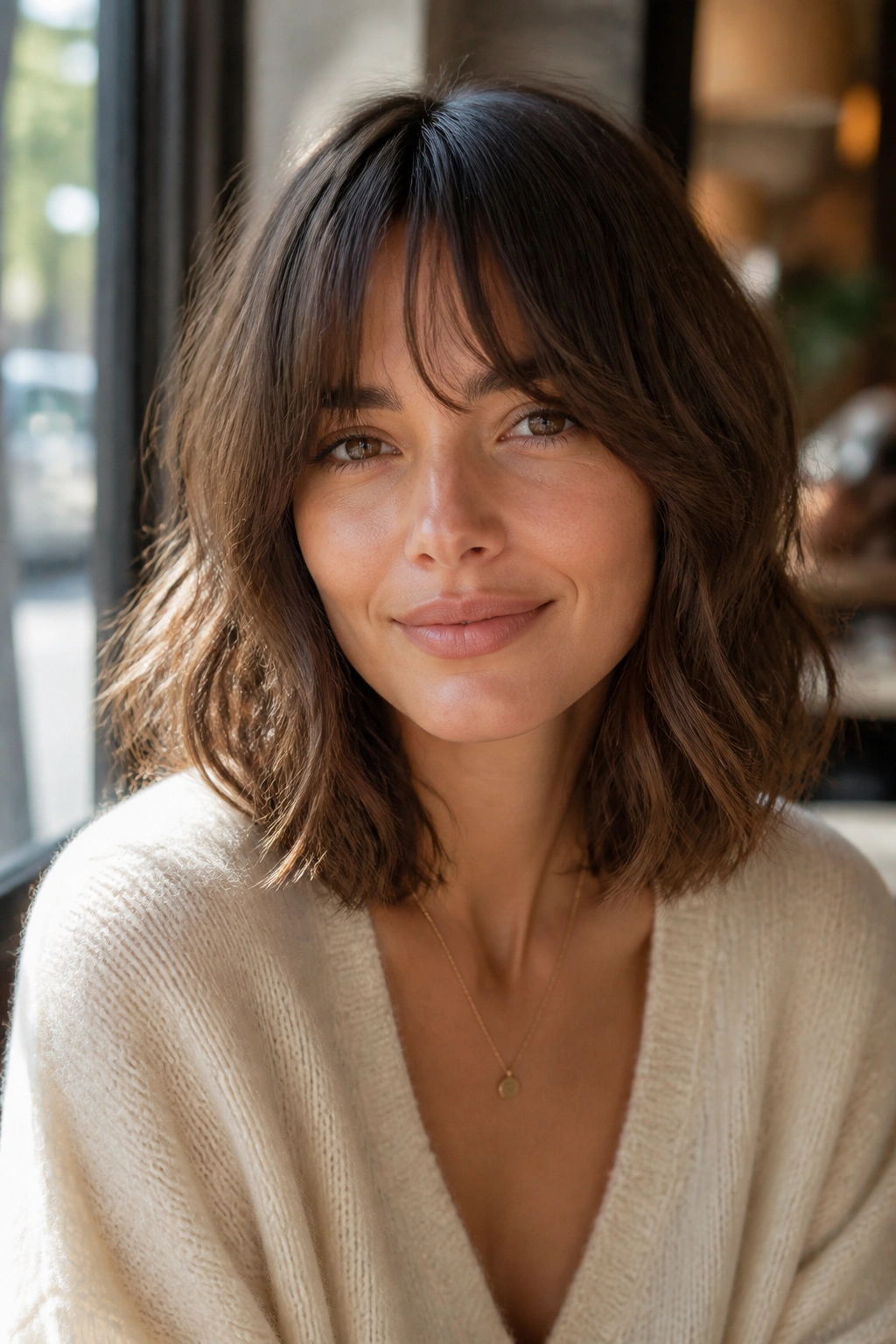
A lob with brow-grazing curtain bangs sits in that sweet spot between soft and structured. The bangs are short enough to matter, but long enough to grow out without panic. For wavy hair, that matters. You want the front to frame the face, not become a high-maintenance project.
Why the cut works
The lob gives the waves a clean base, while the curtain bangs break up the forehead area and keep the style from feeling too wide. If your face is fuller around the cheeks, this can help balance the shape. If your hair tends to puff at the sides, the bangs pull the attention inward.
How to style it
Use a small round brush or a flat brush with a bend at the ends just on the fringe. The rest of the hair can stay air-dried or lightly diffused.
- Dry the bangs first so they don’t split weirdly.
- Part them while damp, then let them fall away from the center.
- Keep the longest bang pieces around the cheekbone.
- Avoid heavy oil near the fringe.
This cut is a little fussy at first. Then it settles in and becomes easy.
13. Razor-Cut Shoulder Shag
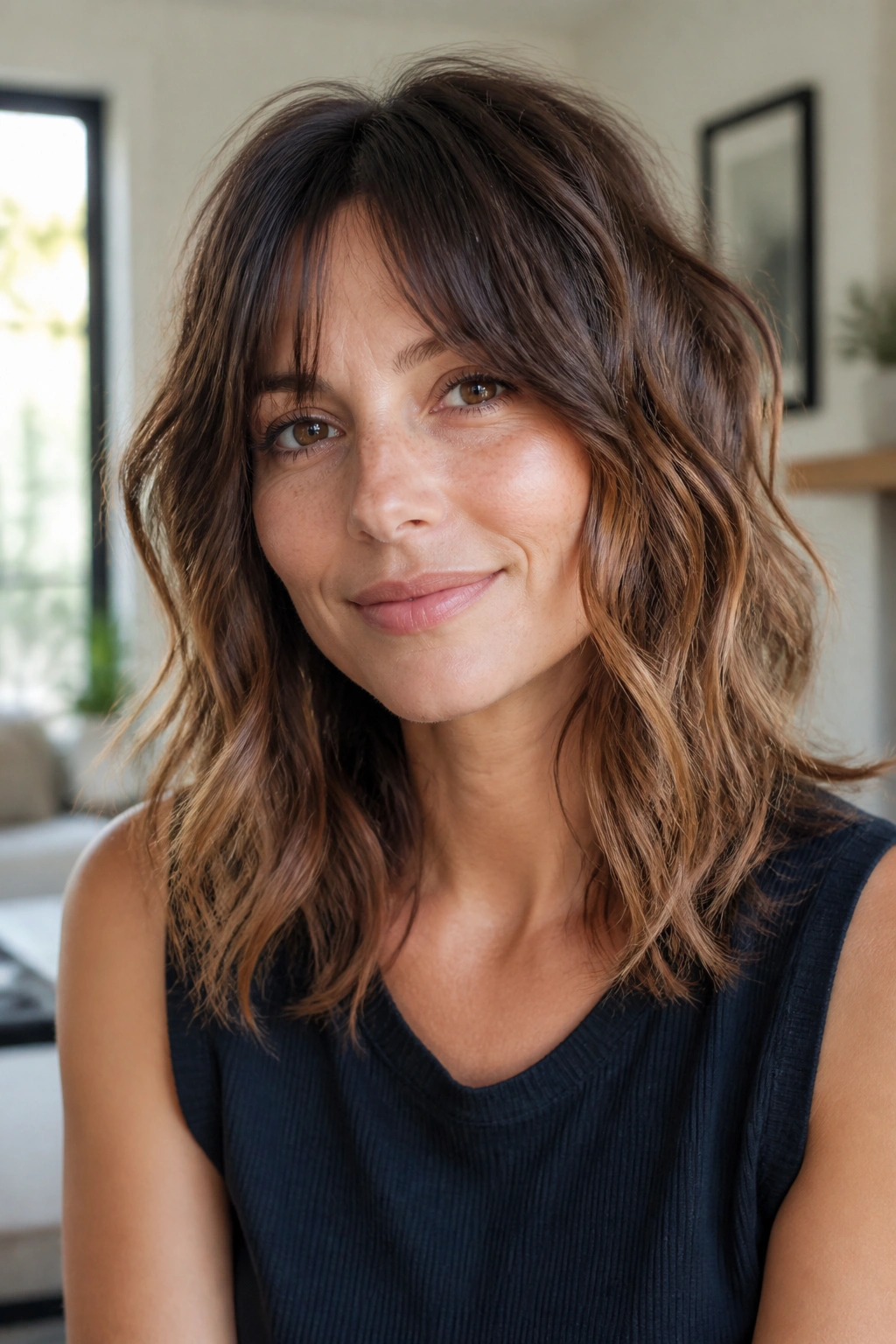
A razor-cut shoulder shag is for hair that needs air, not weight. The razor removes some of the bulk from the ends and creates that soft, broken edge that wavy hair tends to like. The shape should still sit around the shoulders, but it won’t feel dense or blocky.
What I like about this cut is the way it moves when the hair dries. The waves separate into thinner ribbons, which makes the style look fuller without needing extra products. That said, the razor has to be used carefully. Too much can leave the ends looking frayed, especially if the hair is fine.
If you want this cut, be direct about where the shortest layers should sit. Around the cheekbones is a good starting point. Around the chin is riskier unless you want more drama. A little mousse and a rough dry are usually enough. It’s one of those cuts that thrives when you stop fussing with it.
14. Low-Tension Braids That Set Soft Waves

Loose braids are not just a styling trick. On medium wavy hair, they can reshape the whole pattern overnight or during a lazy afternoon. The goal is not tight, crimped bends. It’s a soft wave that looks like it happened on its own. Two or three loose braids usually do the trick.
The scalp area should stay relaxed. Braid from about ear level down, and keep the tension low enough that the braid almost feels slack in your hands. If you braid too tightly, the wave gets sharp and awkward. If you braid too loosely, it won’t hold much shape at all. There’s a narrow middle ground here.
This style is useful when you want a haircut that also doubles as a setting method. A medium lob with light layers takes especially well to braiding because the shorter pieces catch the texture and the longer pieces keep the wave from becoming tiny. A little leave-in spray before braiding helps the hair keep its bend.
15. Polished Blowout Waves with Rounded Layers
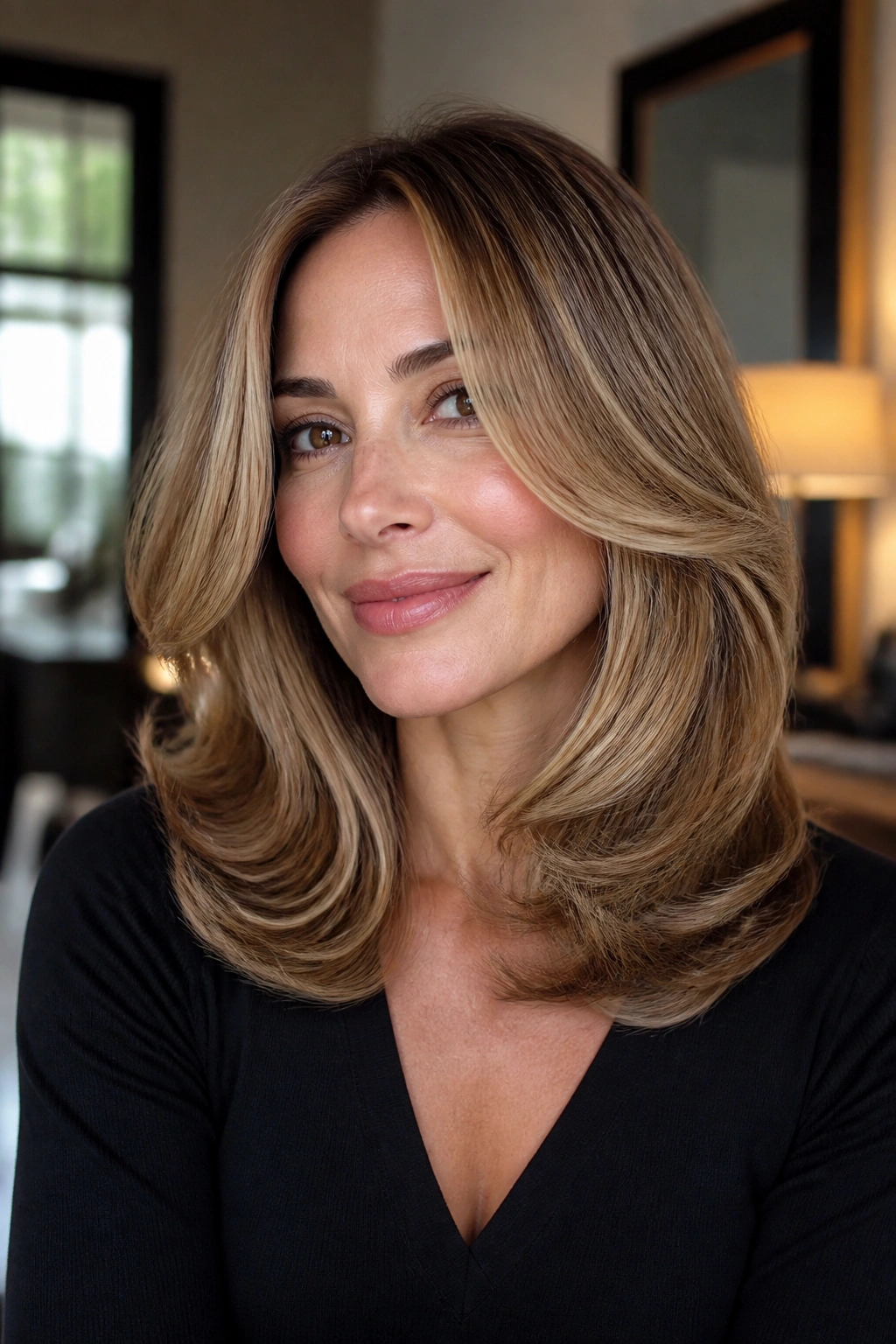
Polished blowout waves are the opposite of messy texture, and that’s why they work. Rounded layers keep the shape smooth at the ends while still letting the wave pattern move through the middle. The result looks controlled without turning stiff. It’s a cleaner finish than beach waves, and sometimes that’s exactly what the haircut needs.
The rounded layering matters because it stops the bottom from kicking out in random directions. If your waves have a strong bend, the layers should be soft enough to blend rather than stack. A blow-dryer brush or large round brush helps here. Use a medium heat setting and wrap each section away from the face for about 10 seconds.
This style suits medium hair that tends to frizz but still wants body. Add a small amount of smoothing cream from mid-length to ends, then set the front pieces with a cool shot. You do not need shiny, perfect curls. You need smooth movement with a little bend left in the shape.
16. Soft Mullet-Inspired Midi Cut

A soft mullet-inspired midi cut sounds more dramatic than it usually looks. The front and top stay a touch shorter, the back keeps a bit more length, and the whole thing falls into a lived-in shape that suits wavy hair surprisingly well. It has edge, but not the harsh kind.
The reason it works is simple: wavy hair already has uneven movement. A gentle mullet shape takes advantage of that instead of fighting it. The top gets lift, the sides stay soft, and the back keeps enough weight to avoid frizzing out. If the cut is done well, it feels modern without needing a lot of styling.
This is not the style for someone who wants invisible haircuts. It shows shape. It also grows out with a little personality, which is more useful than a cut that falls apart after six weeks. If you like a bit of grit in your look, this is a smart place to live.
17. Low Ponytail with Face-Framing Waves
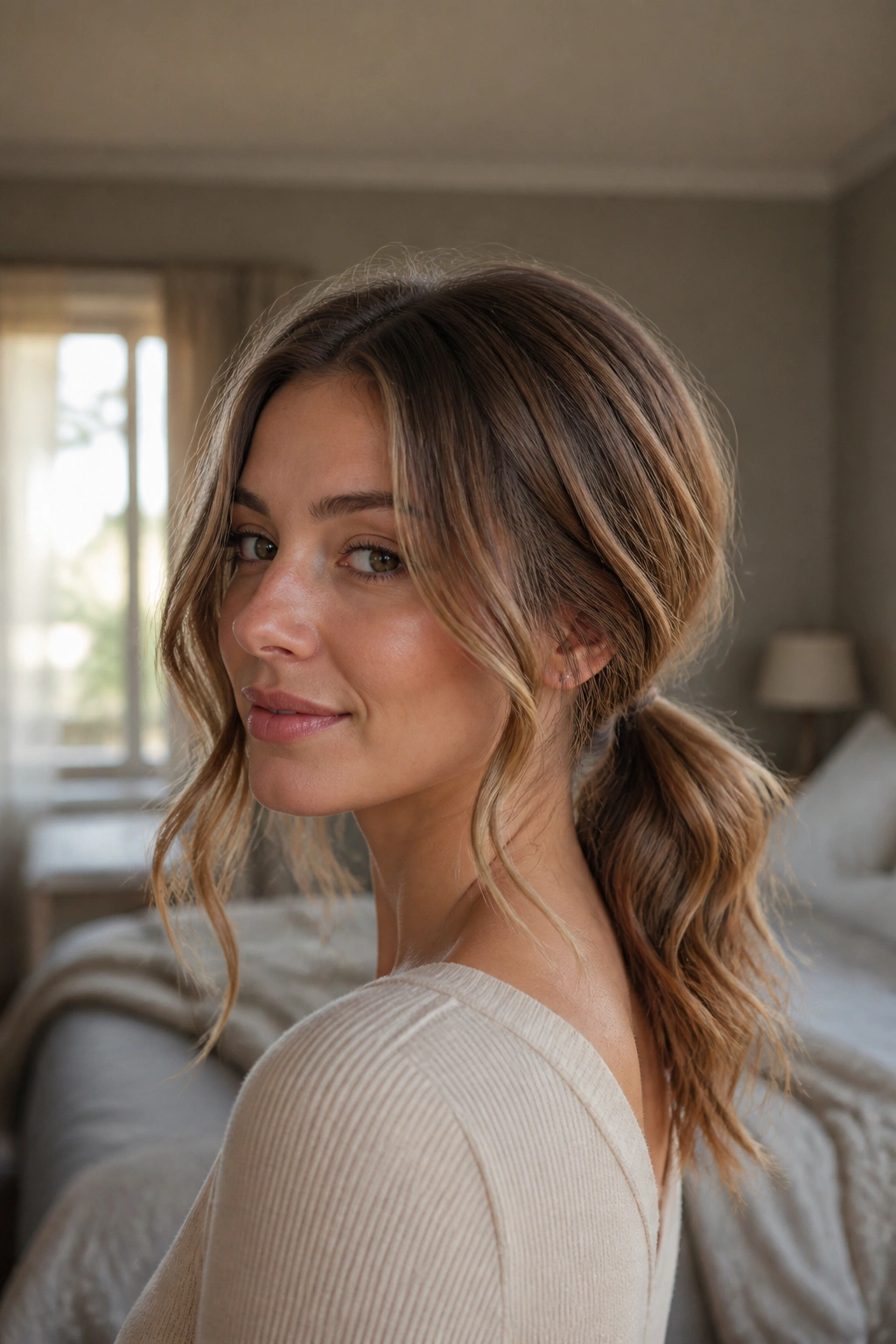
A low ponytail on medium wavy hair can look plain or polished, depending on the details. The difference is in the front. Leave out a few face-framing pieces, keep the ponytail low and loose, and let the wave pattern stay visible instead of smoothing everything into submission. That gives the style shape.
The best version sits at the nape, not mid-back. Too high, and the hair pulls awkwardly on medium layers. Too tight, and the crown flattens. If your hair has a bit of texture at the root, don’t fight it. A little lift there makes the whole thing feel softer.
This is a good everyday option when you need your hair out of the way but still want it to look intentional. Wrap a small section of hair around the elastic if you want a cleaner finish. Leave the ends loose and slightly bent. A low ponytail can be boring. It does not have to be.
18. Middle-Part Mermaid Waves at Collarbone Length
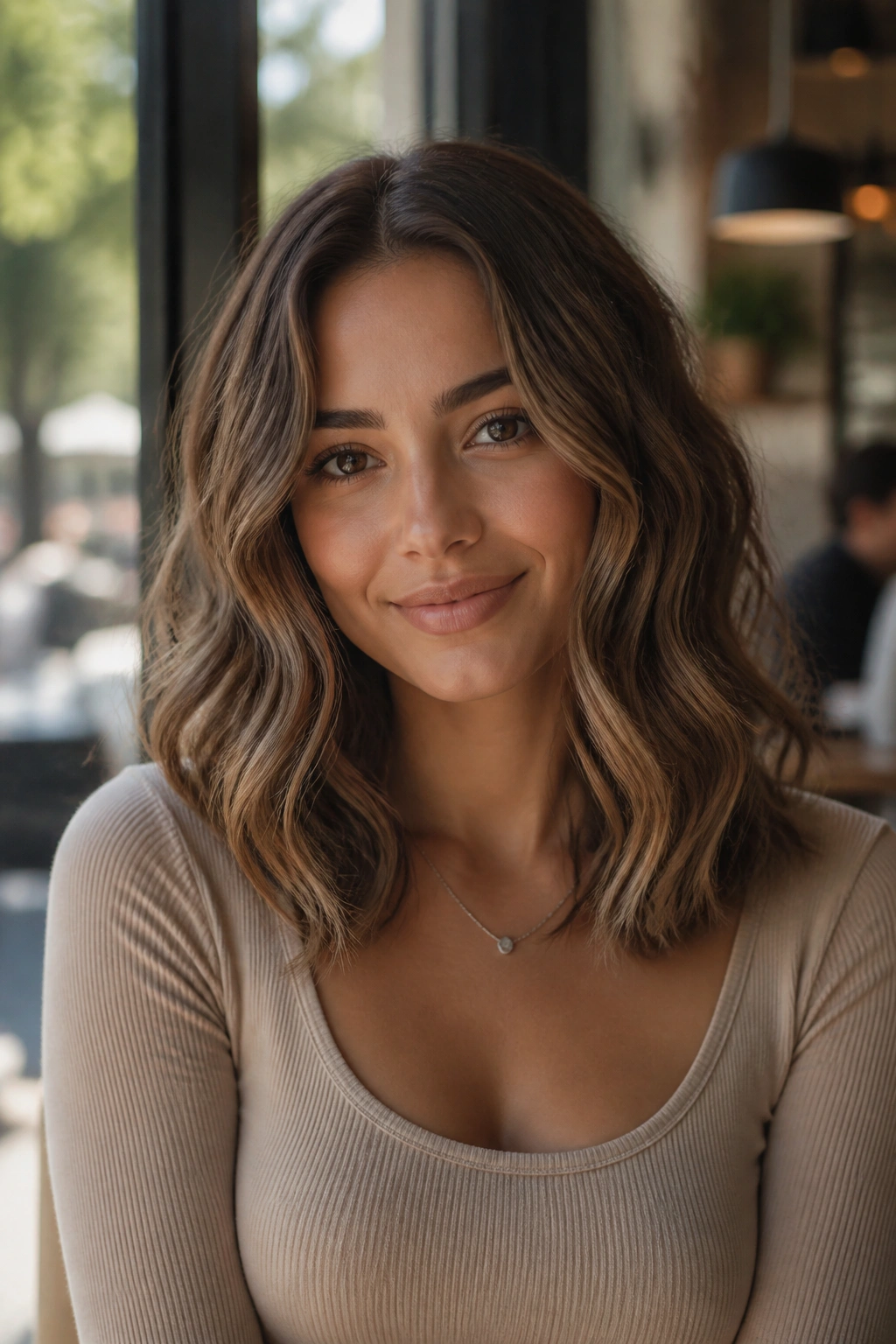
Middle-part mermaid waves are not only for long hair, and collarbone length proves it. On medium hair, the style looks lighter and less costume-like. The part down the center gives symmetry, while the wave pattern adds softness through the lengths. It’s neat without being severe.
Unlike a side-part style, the middle part puts the focus on balance. That makes the cut a good fit if your face is naturally even or if you want the hair to frame both sides the same way. The waves should be broad and loose, not tight curls. A larger barrel wand, around 1.25 inches, usually gives the right bend.
How to keep it from looking flat
- Start the waves below the ear for a longer shape.
- Alternate curl directions only through the mid-lengths.
- Leave the last inch or so straight.
- Comb the waves out with fingers, not a brush.
The style feels calm, clean, and a little romantic without crossing into fussy territory.
19. Twisted Crown Half-Up Style
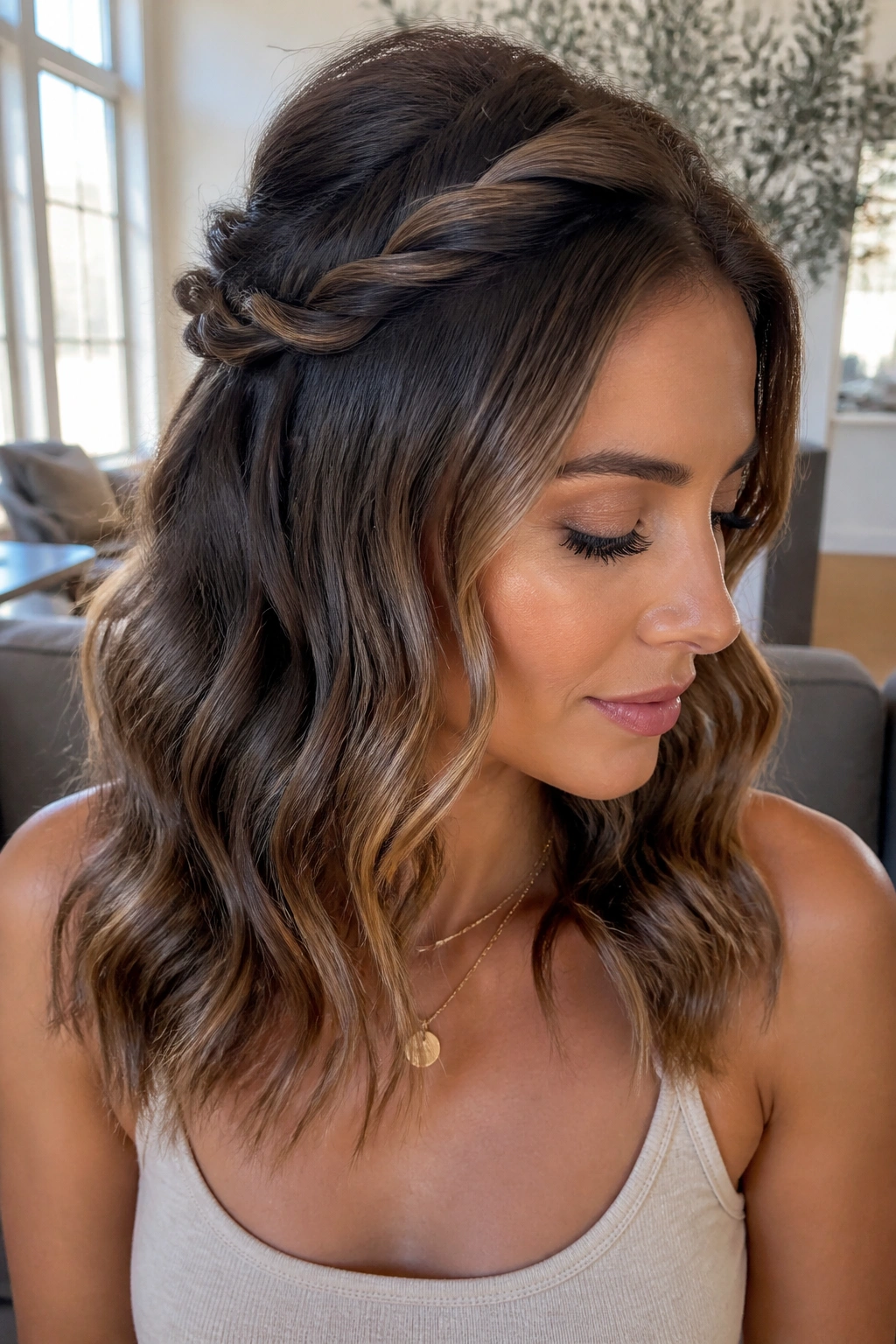
A twisted crown half-up style is a good fix when you want something prettier than a clip and less formal than an updo. The twist runs from one temple to the other, or from both sides toward the back, and the lower half stays loose. On medium wavy hair, that balance is the whole point.
What makes it work is how it handles texture at the front. The twisted sections keep shorter layers in place, while the waves underneath stay visible and soft. If your hair is the kind that falls into your face all day, this keeps it under control without hiding the shape. The style looks especially nice when the twist sits a little high, around the crown, so it lifts the face.
A few bobby pins are enough. You don’t need a lot of product, either. A light mist of hairspray on the twisted sections helps, but keep the ends free so the waves can move. That’s the part people notice.
20. C-Curl Lob with Interior Layers

C-curl waves are smoother than beach waves and easier to wear on medium length hair. They bend under in a soft arc instead of forming a full curl, which means the style looks neat even when it is a little undone. Interior layers help the movement stay inside the shape rather than puffing out at the ends.
This cut is especially useful if your wavy hair has a stubborn outward flip. The internal shaping encourages the hair to fold in a more controlled way. You can set the curl with a round brush, a blowout brush, or a medium-barrel iron if needed. Keep the bend loose. Tight curls fight the whole point.
It’s a strong choice for work settings, dinners, and anywhere you want polish without a heavy styling routine. The hair should look touched, not shellacked. That is the sweet spot here.
21. Rounded Layers for Thick Wavy Hair

Thick wavy hair needs shape control, and rounded layers do that better than a blunt edge alone. The roundness takes away the shelf effect that thick hair can get when it sits too wide at the sides. Instead of building out, the hair falls in a curve that follows the head.
Why does this matter so much? Because thick waves can look heavy fast. If the cut is too square, the hair can sit like a block around the jaw or shoulders. Rounded layers remove weight from the right places and keep the bottom from exploding outward. That gives the style a calmer outline.
If you have dense hair, ask for the longest layer to land below the collarbone and for the top to stay fuller near the crown. Avoid aggressive thinning shears. They can make thick wavy hair frizzier, not lighter. A soft blow-dry with a paddle brush usually brings the shape together.
22. Invisible Layers with Piecey Ends

Invisible layers are the sneaky cut people love once they see it on their own hair. From the outside, it looks almost like one length. Underneath, the hair has enough internal structure to move and separate. On medium wavy hair, that gives a cleaner shape than obvious layers while still stopping the ends from feeling heavy.
The piecey ends are what keep it interesting. Rather than a blunt line that sits like a shelf, the ends break into small sections when the hair dries. That gives the waves a softer edge and keeps the cut from feeling too polished. If your hair is medium density, this can be a nice middle path.
This style is best for someone who wants low drama. It doesn’t scream haircut. It quietly improves the shape. A little sea-salt spray or light mousse is enough to show off the layers, and the grow-out tends to be forgiving.
23. One-Sided Tucked Wave Style
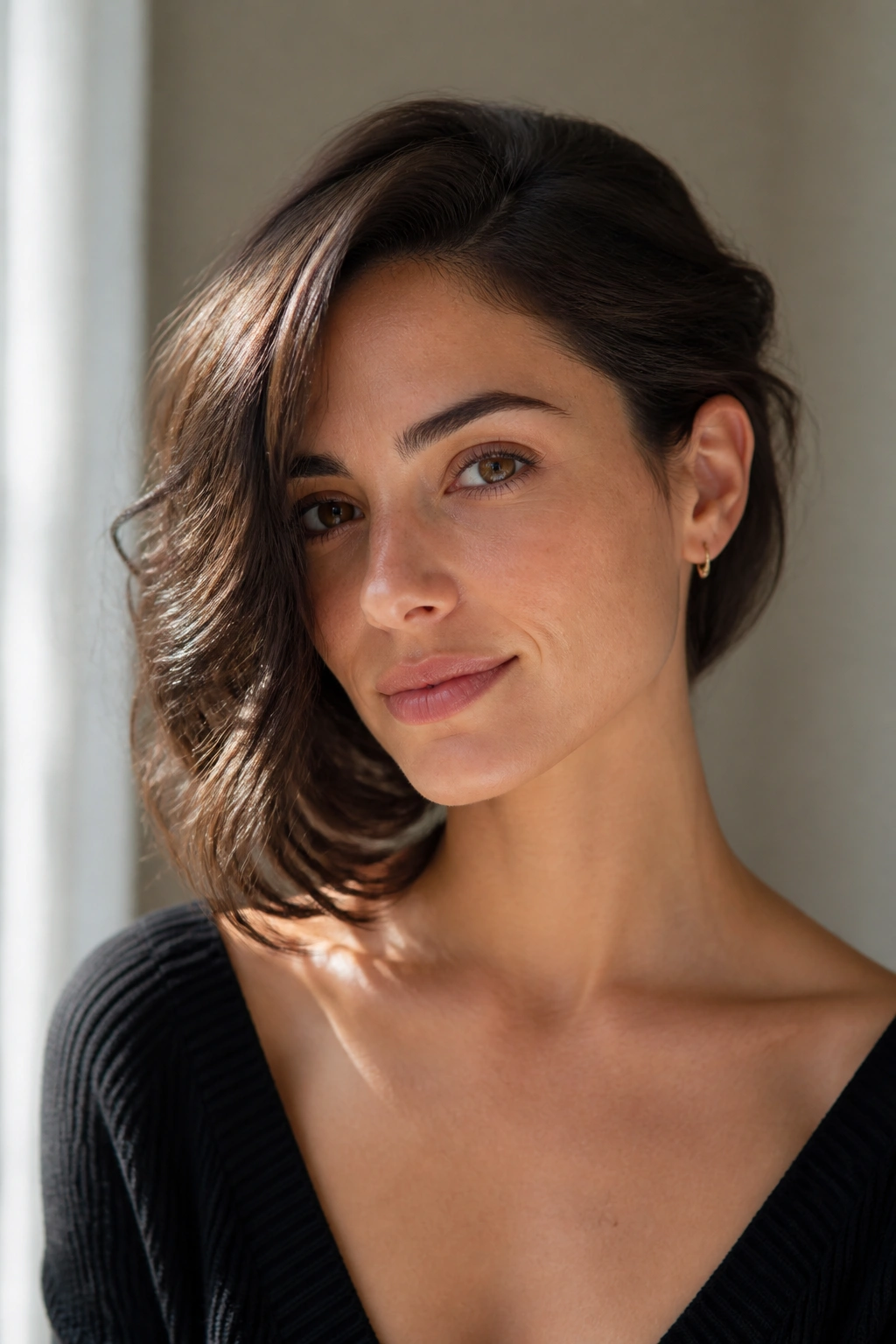
A one-sided tucked wave style is one of the easiest ways to make medium wavy hair feel dressed up with almost no effort. Sweep the hair to one side, tuck the heavier side behind the ear, and let the opposite side fall over the cheek and jaw. That asymmetry does most of the work.
The reason it looks good is simple: the tucked side exposes the neck and bone structure, while the loose side keeps the softness. Wavy hair is especially good at this because it doesn’t need to be perfectly smooth to look elegant. A slight bend in the front makes the whole style feel relaxed.
This works best when the hair has a side part or a soft center part shifted slightly off-line. Add one bobby pin under the tucked section if your hair is slippery. A touch of hairspray near the temple helps too. Tiny adjustments. Big payoff.
24. Disconnected Fringe Lob
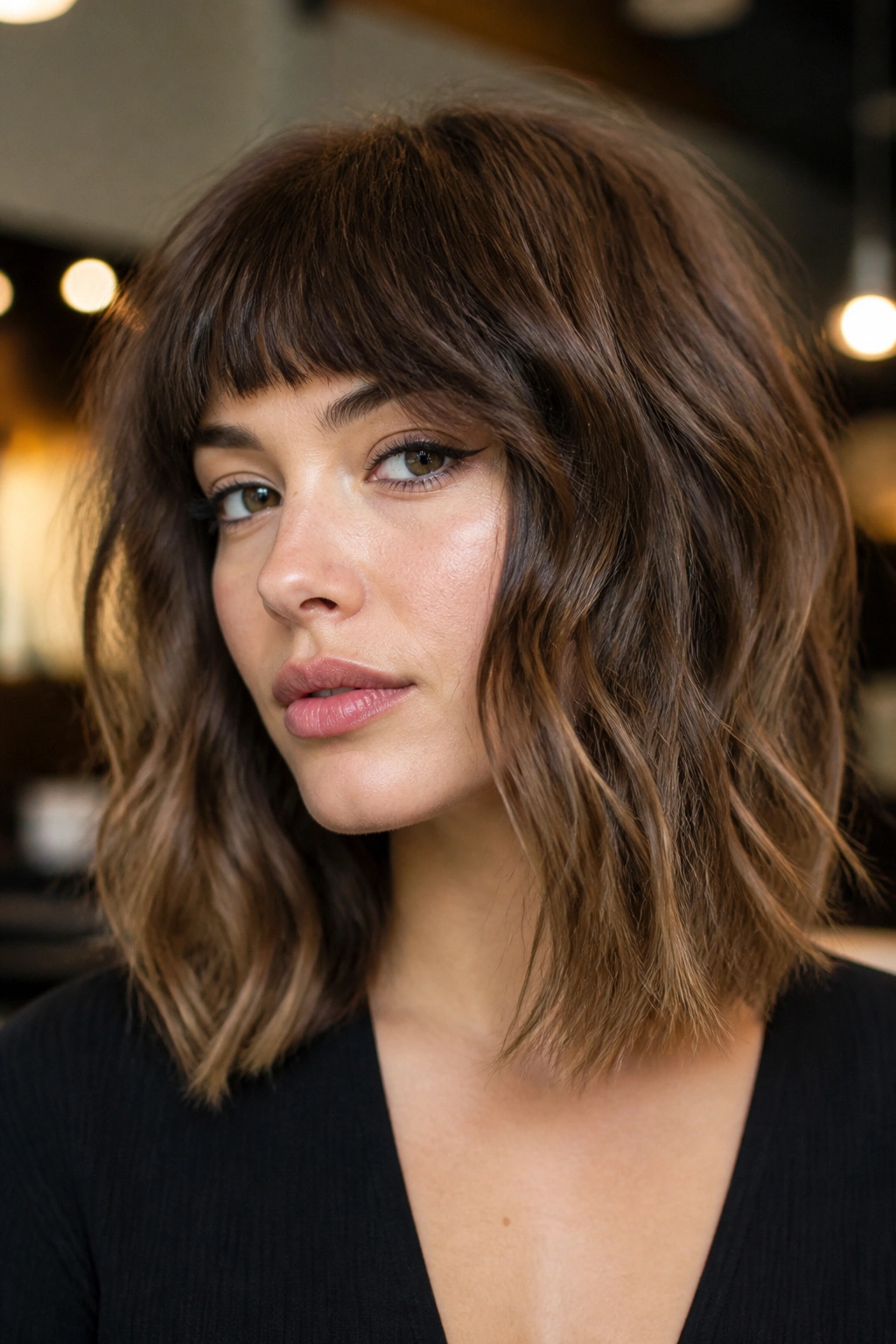
A disconnected fringe lob gives medium wavy hair a bit of edge without making the whole haircut feel heavy. The fringe stands apart from the rest of the shape instead of blending in completely, which creates contrast. That contrast is what makes the style interesting.
The important part is restraint. A disconnected fringe should be strong enough to notice, but not so thick that it overwhelms the face. It usually works best when the fringe ends around the brows or just above them, while the rest of the lob falls around the collarbone. If the fringe is too dense, it fights the wave pattern. If it is too wispy, the disconnect disappears.
This cut suits people who like their hair to have a point of view. It can be sharp, a little artsy, and a little rough in a good way. Keep the rest of the hair soft so the fringe can carry the attitude. Otherwise the whole style starts shouting.
25. Wet-Look Medium Waves
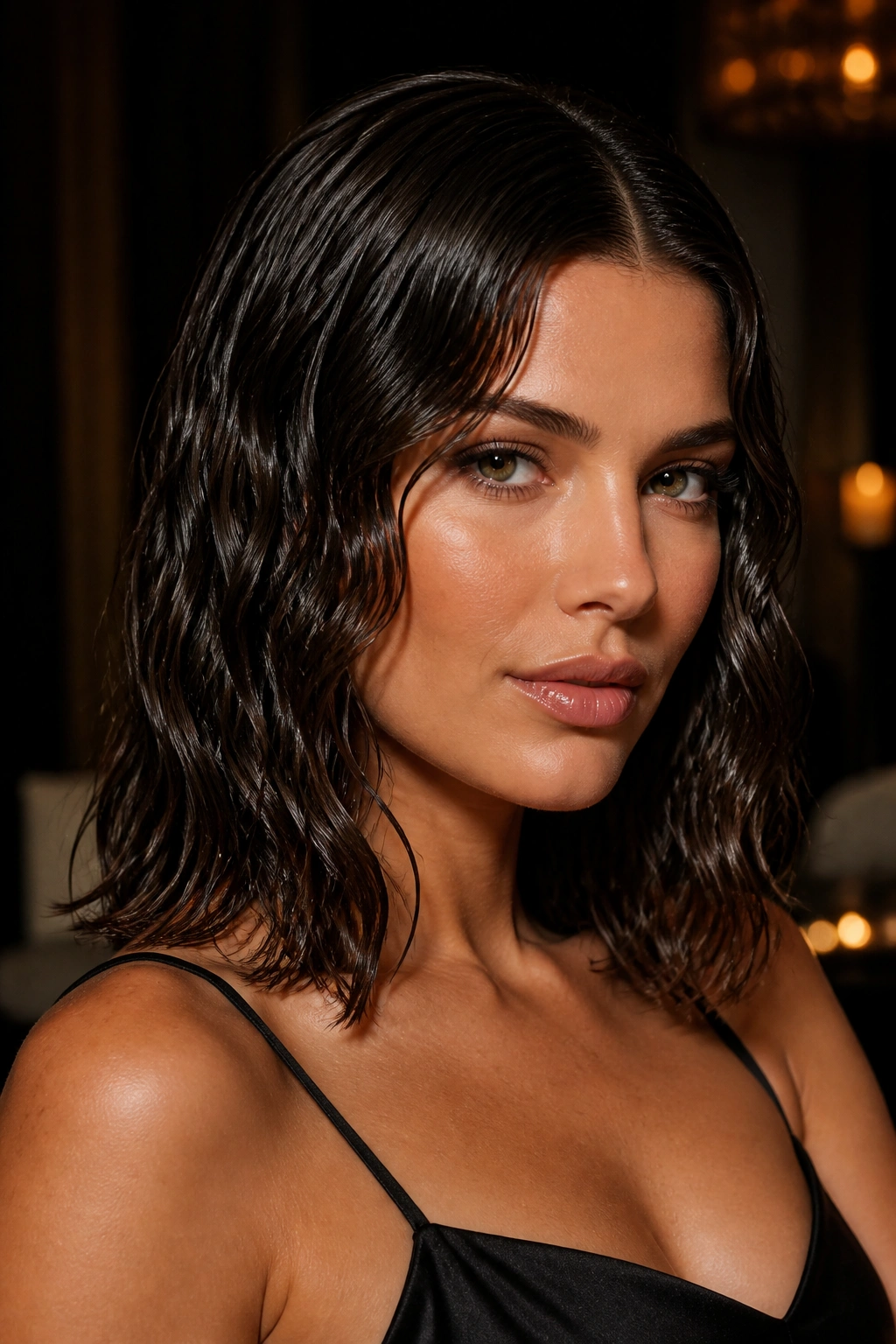
Wet-look waves are the slickest option on this list, and they work best when the cut already has shape. A medium-length wavy cut can take this style well because the waves give the gel something to grip, while the length keeps the finish from looking too severe. It’s a strong choice for evenings or any time you want shine to do the talking.
The trick is product placement. Use gel or a wet-look cream from roots to mid-lengths, then leave the ends slightly softer. If everything is coated the same way, the hair can look stiff. You want glossy definition at the top and movement at the bottom. That contrast is what keeps the style from feeling flat.
This look is not about volume. It’s about clean lines and visible texture. Comb it into a center or deep side part, then scrunch lightly and let it set without touching it much. A wet-look style on wavy hair has to look controlled. Messy defeats the point.
26. Boho Braid Accent with Loose Texture

A braid accent is a small detail that changes the whole read of medium wavy hair. You can braid one side near the temple, tuck it into the back, or weave a narrow braid into the top layer. The rest stays loose and textured. That little contrast gives the style a relaxed, handcrafted feel.
What I like here is how little you need. One braid can be enough. Two starts to feel busy unless the hair is very long in the medium range. The braid should be loose enough that you can still pull it apart a little with your fingers. That creates softness around the face and keeps it from feeling schoolroom neat.
This is a good style when your waves are behaving but not quite interesting enough on their own. It adds a focal point without asking for heat tools. A dab of cream on the braid’s tail helps it stay smooth. Leave the rest a little rough. That is where the charm lives.
27. Flip-Under Lob with Volume at the Crown

A flip-under lob is one of the easiest ways to make medium wavy hair look fuller without making it bigger everywhere. The ends curve under slightly, which gives the haircut a rounded, finished edge. At the crown, a little lift keeps the shape from looking heavy. That combination matters.
What to ask for
- A lob that hits just above the collarbone.
- Layers kept soft through the top.
- Ends cut to bend under, not stick out.
- A little more volume placed near the roots than at the jaw.
The style is especially useful if your hair tends to flip outward at the ends in a way you dislike. Instead of fighting that movement, the cut encourages a neater inward curve. A medium round brush or a blow-dryer brush can set the shape in a few minutes. The end result feels tidy, but not stiff.
28. Glam Side-Part Waves with a Gloss Finish
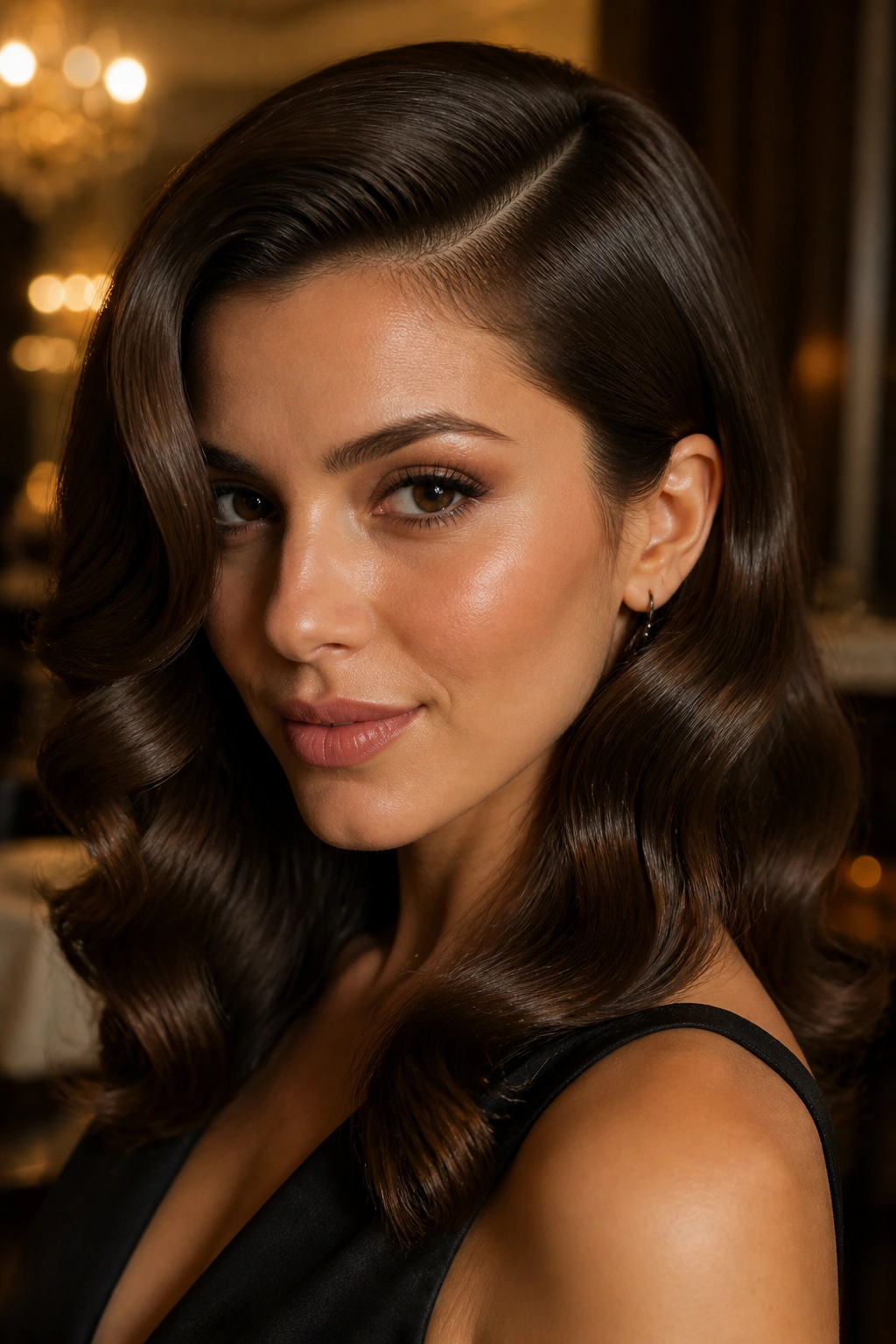
Why do glam side-part waves look so good on medium hair? Because the side part creates a dramatic line, and the waves bring softness back in. That contrast is the whole trick. Add a gloss spray or smoothing serum, and the style gets a richer finish without needing more curl.
The waves should be broad and deliberate here. Think smooth bends, not tight spirals. A larger barrel iron or a blowout brush can help create that polished movement. After styling, brush the waves out lightly with a soft bristle brush or your fingers. That breaks up the curl pattern enough to look expensive, if that word still means anything useful.
This style shines when the haircut already has solid structure. If the ends are uneven or too thin, the glam look can fall apart. Keep the shape clean, keep the part deep, and let the shine do some of the work. It’s elegant without being fussy.
29. Razor-Sharp Shaggy Bob-Lob
A razor-sharp shaggy bob-lob walks a line between neat and messy. The shape sits in the medium-length zone, but the ends are deliberately broken up so the waves can move through the cut. It has more attitude than a classic lob and less bulk than a full shag.
The razor work gives the hair a sharper edge, which helps if your waves are loose and need more definition. It also keeps thicker hair from ballooning at the sides. That said, this is not the cut to ask for if your ends are already fragile. A careful stylist matters here. Too much razor can leave medium wavy hair looking fuzzy instead of textured.
This style works especially well with a little grit spray or a matte cream. The finish should feel a touch imperfect. If the hair starts looking too clean, the cut loses its point. It’s one of the more personality-heavy options on the list, and I mean that in a good way.
30. Air-Dried Waves with a Long Fringe
Air-dried waves with a long fringe are what I’d pick for someone who wants the easiest medium-length style on the list. The fringe stays long enough to blend into the rest of the hair, and the waves are allowed to dry on their own. That means less heat, less fuss, and fewer chances for the shape to go weird.
Why it holds up so well
A long fringe softens the face while keeping the forehead open enough that the style does not feel heavy. The waves around it can fall wherever they want, which sounds chaotic, but usually isn’t. Medium-length wavy hair tends to behave better when it is not overworked.
How to keep it neat
- Put leave-in conditioner only on the mid-lengths and ends.
- Scrunch once, then leave it alone.
- Part the fringe while damp.
- Pin the front for 10 minutes if it wants to split.
This is the cut I’d hand to anyone tired of overthinking their hair. It grows out well, it styles fast, and it still looks like a real haircut. That matters more than the fancy stuff.
