



The best haircuts for long curly hair usually solve two problems at once: they keep the length, and they give the curls a shape worth looking at. If the cut misses either one, the hair can end up heavy at the bottom, wide at the sides, or flat where you want lift most.
Wet curls lie. They stretch, they sag, and they can fool even a decent stylist if nobody is paying attention to shrinkage. A curl that sits at the collarbone when wet may spring up two or three inches once it dries, and that gap is where a lot of awkward cuts are born.
Long curly hair needs more than “just a trim.” It needs balance. Some heads want soft layers that move. Others need a stronger outline, or a little weight removed around the crown, or bangs that don’t fight the curl pattern every time the weather shifts.
The cuts that work best are the ones that respect what your curls already do. Not what they do on a flat iron. Not what they do in a shampoo commercial. What they actually do, in real life, with a little humidity in the air and a regular weekday schedule.
1. Long Layers for Long Curly Hair

Long layers are the safest place to start if you want shape without losing the feeling of length. They take some of the weight out of the bottom half of the hair, so the curls don’t collapse into one heavy curtain, but they still leave enough fullness for the ends to look strong.
The sweet spot is usually somewhere around the chin or collarbone for the shortest visible layer. Any shorter, and the layers can jump up higher than you expected once the curls dry. That’s fine if you want a lot of movement. It is not fine if you’re attached to the length you’ve spent months growing.
What to ask for
- Keep the shortest face-framing layer around the chin or collarbone.
- Leave the longest length well below the shoulders.
- Cut with the curl pattern in mind, not against it.
- Keep the perimeter long enough that the ends still feel full.
Tip: If your hair is fine, ask for softer layers rather than a lot of short ones. Fine curls lose density fast when the cut gets too busy.
2. U-Shaped Curly Haircut

Want your length to stay visible from every angle? A U-shaped cut keeps the center back a little longer and curves the sides toward it, which makes the whole silhouette feel softer and more rounded. On curly hair, that shape is kinder than a hard straight line because the curls stack with more movement and less shelf-like heaviness.
The grow-out is usually forgiving. A U shape blurs nicely once the layers settle, and it looks especially good when you wear your curls half-up or pulled back loosely at the crown. There’s enough length to show off, but not so much bulk that the shape feels stiff.
This is one of those cuts that just behaves. Not flashy. Not fussy. If you like polished hair that still moves when you walk, a gentle U is hard to argue with.
3. V-Shaped Curly Haircut

When the back falls into a point, the whole cut gets a little more drama. A V-shape pulls the outer line downward in the center while the sides taper in, which gives long curly hair a sharper finish than a U-cut. It’s a smart move if your curls are dense and you want the length to show instead of just sitting there.
The catch is the ends. On fine curls, or on hair that separates easily, a sharp V can make the perimeter look stringy. That’s why a soft V tends to work better than a hard one. You want the shape to read from a few feet away, not look like someone took a triangle to the back of your head.
Ask for the back point to stay controlled—usually a few inches below the shoulder blades if you want everyday wearability. A dramatic point can look gorgeous in motion. It can also become a maintenance headache if the density at the ends is too thin.
4. Curly Shag With Soft Fringe

The shag is not a lazy cut. It is a volume cut. On long curly hair, it breaks up heavy mass with layers that live all over the head, so the crown gets lift and the sides stop bulking out into that classic triangle shape people complain about.
Why the shag breathes
- Shorter layers near the crown help the top sit higher.
- Longer face pieces keep the cut from looking too chopped up.
- A soft fringe can add shape without taking over the whole forehead.
This cut shines when you like texture more than perfect symmetry. It works on curls that want to spring outward and on hair that tends to flatten at the top but puff at the sides. Just don’t let the shortest pieces get so short that they turn into little corkscrews you didn’t ask for.
A good shag still needs restraint. The best ones look effortless, but the haircut itself is doing real work underneath.
5. Wolf Cut for Long Curly Hair

A wolf cut is a shag with more attitude. The crown is usually shorter, the layers are chunkier, and the overall shape leans a little messier in the best way. On long curly hair, that creates a lived-in silhouette with lift at the top and length left in the back.
It suits people who like piecey movement and don’t want every curl clumped into a neat, formal outline. Thick curls often handle it well because the extra layering stops the hair from feeling bottom-heavy. If your hair is already fine or airy, though, the wolf cut can get too thin at the perimeter fast.
Styling matters here. A curl cream or gel applied to wet hair helps the layers separate in a controlled way instead of frizzing apart. Diffuse if you want extra height at the crown. Air-dry if you prefer a softer, looser finish. Either way, this cut wants personality.
6. Butterfly Layers That Keep the Length

If you want your hair to look shorter around the face without sacrificing the long pieces down your back, butterfly layers are a clever move. The cut creates two zones: shorter layers around the face and upper sides, then longer hair underneath that keeps the overall length intact.
That split is what makes it feel light. The top section gets movement, the front opens up, and the lower length still swings when you turn your head. It can be a good fit if your curls feel flat around the cheeks but heavy at the bottom.
Keep the blending soft. On curly hair, the transition between the shorter top and the longer base should feel gradual, not like a visible shelf. A rushed butterfly cut can look patchy. A careful one looks airy.
7. Face-Framing Layers for Long Curly Hair

Small change. Big payoff. Face-framing layers are the easiest way to make long curly hair feel fresh without changing the whole shape of the cut. They pull attention toward the eyes and cheekbones, and they keep the front from hanging like one heavy sheet.
The nice part is how low-commitment they feel. If you’re nervous about layers, this is the soft entry point. You can keep the rest of the hair long and simple, then let just the front pieces do the talking. When they’re cut well, they grow out without making a mess of the rest of the haircut.
Ask for the shortest piece to land where you actually want movement—often at the cheekbone, jaw, or collarbone, depending on curl shrinkage. Too short, and they bounce up like bangs. Too long, and you barely see the shape.
8. Rounded Curly Cut
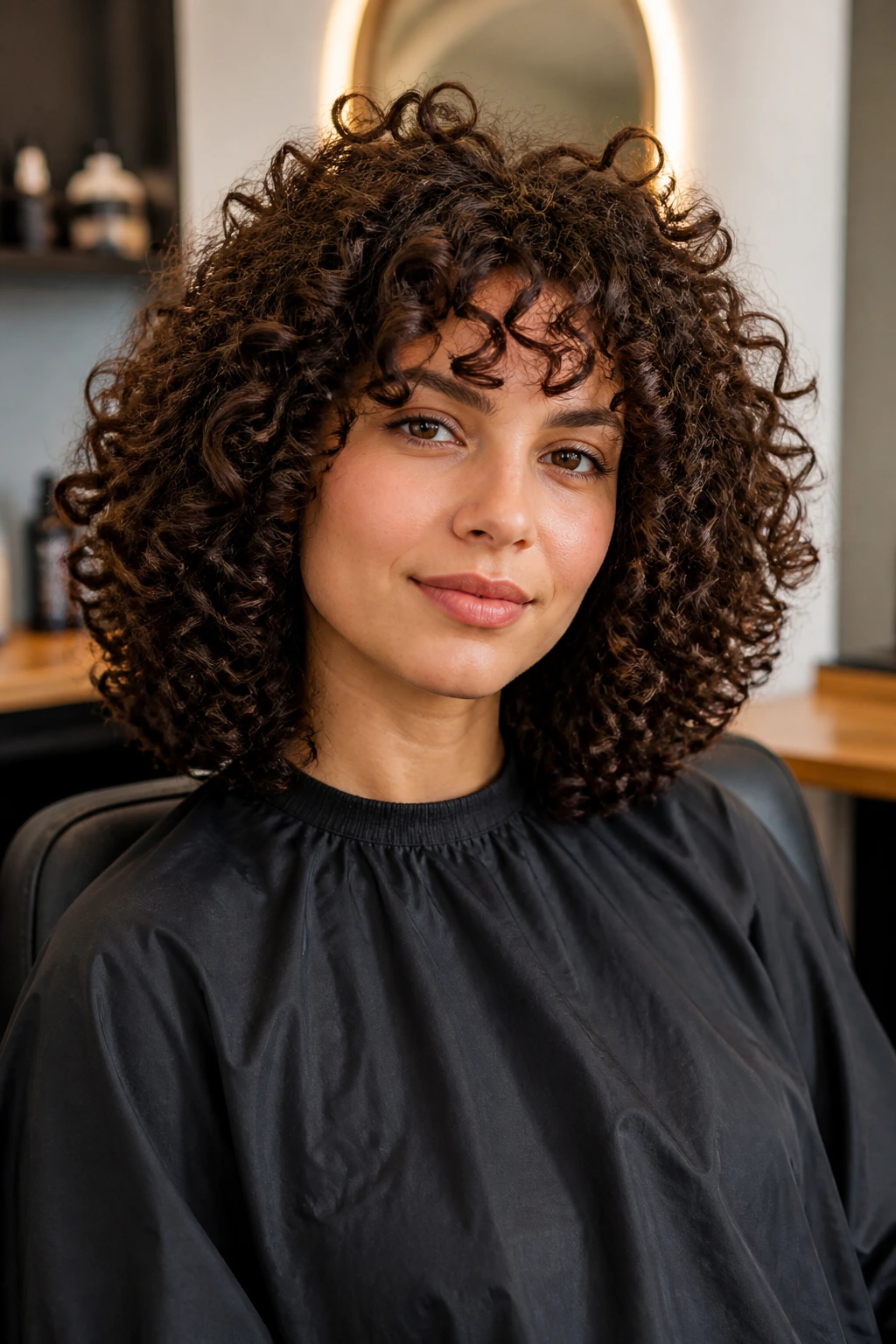
Round beats triangle. That’s the whole reason this shape works so well on dense curls. A rounded cut follows the curve of the head and keeps the silhouette full where it should be full, instead of letting the lower half balloon out wider than the top.
Who it flatters
- Dense curls that puff at the sides.
- Coils that want height without a hard edge.
- Hair that looks boxy when cut straight across.
The rounded cut is especially helpful if you hate the “helmet” look. It lets the curls nest into one another in a smoother shape, which makes the whole head feel more balanced. It can be very flattering on tighter curl types, but it also works on looser curls when the hair has a lot of density.
This cut needs a stylist who understands shape, not just length. The wrong version can turn too spherical. The right one looks clean, full, and easy to wear.
9. Invisible Layers Inside the Hair

Invisible layers are one of my favorite tricks for long curly hair because they do the hard work without shouting about it. The outer shape stays long and fairly smooth, while the weight is removed from the inside of the haircut. You get movement without the obvious step-like look that some layered cuts leave behind.
That matters if you love length but your hair feels thick and slow at the ends. Internal shaping can make the curls springier and lighter without making the outline look thin. It’s a quiet cut, which is exactly why it works.
The downside? It needs a careful hand. If too much is removed from the inside, the hair can develop holes or weird pockets of volume. A good invisible layer cut looks simple from the outside. That’s the whole trick.
10. Deva Cut for Long Curly Hair
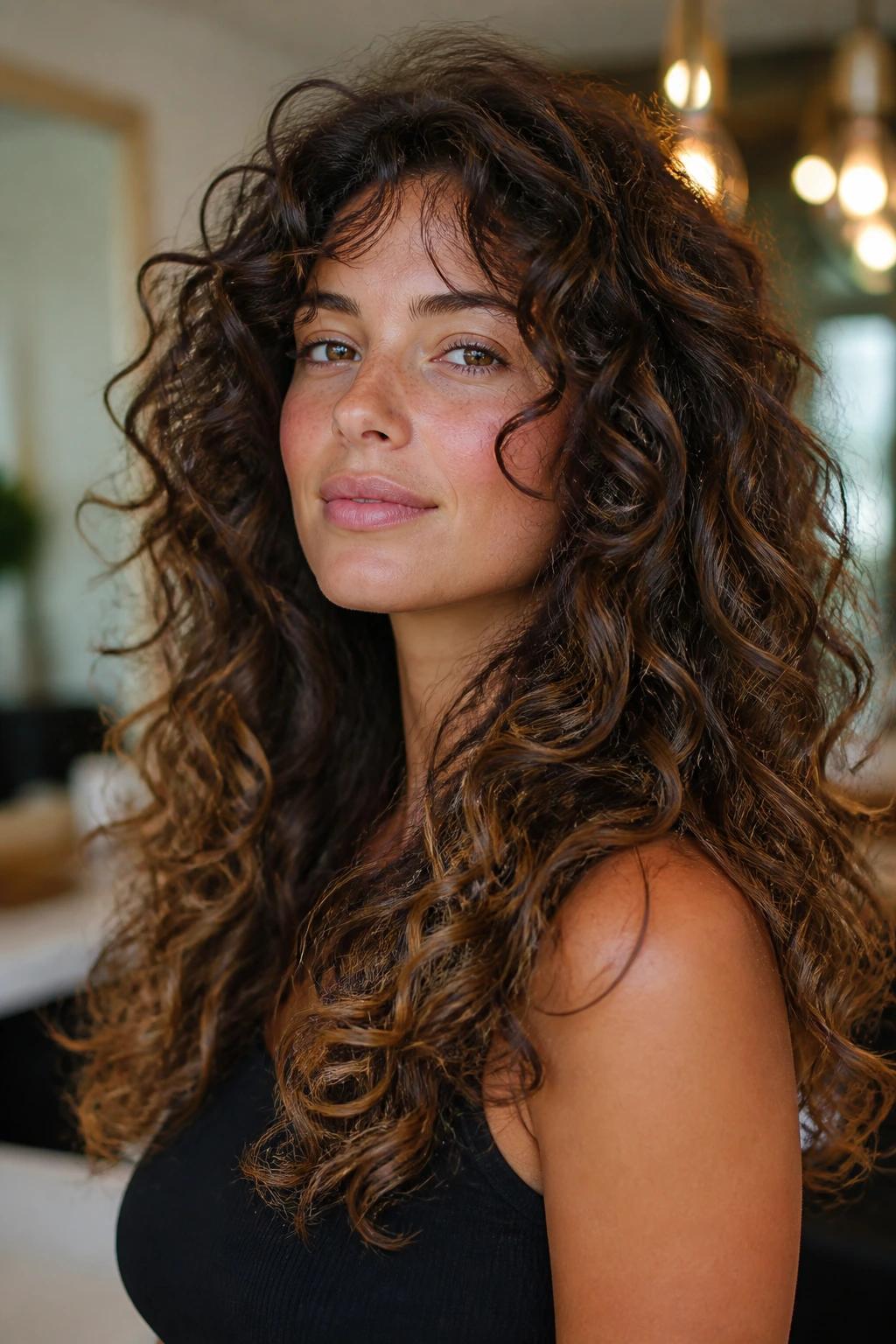
A Deva Cut is built around your curls on their own terms. The hair is usually cut dry, curl by curl, so the stylist can see exactly where each curl lands and how much it springs up. That makes a huge difference on long curly hair, where wet length can be misleading.
How the dry cut changes the shape
A dry cut shows the real outline. It also shows the weird spots: the curl that hooks forward, the section that shrinks more than the rest, the patch that needs weight removed near the cheek. Those things are easy to miss when hair is wet and stretched straight.
This method works best when your curl pattern is uneven or when the front and back behave differently. If your curls have a mind of their own, that’s not a problem here. It’s the whole reason to do it.
Not every salon handles dry cutting well, though, and that’s worth saying plainly. The method matters less than the eye behind it.
11. Rezo Cut for Mixed Curl Patterns
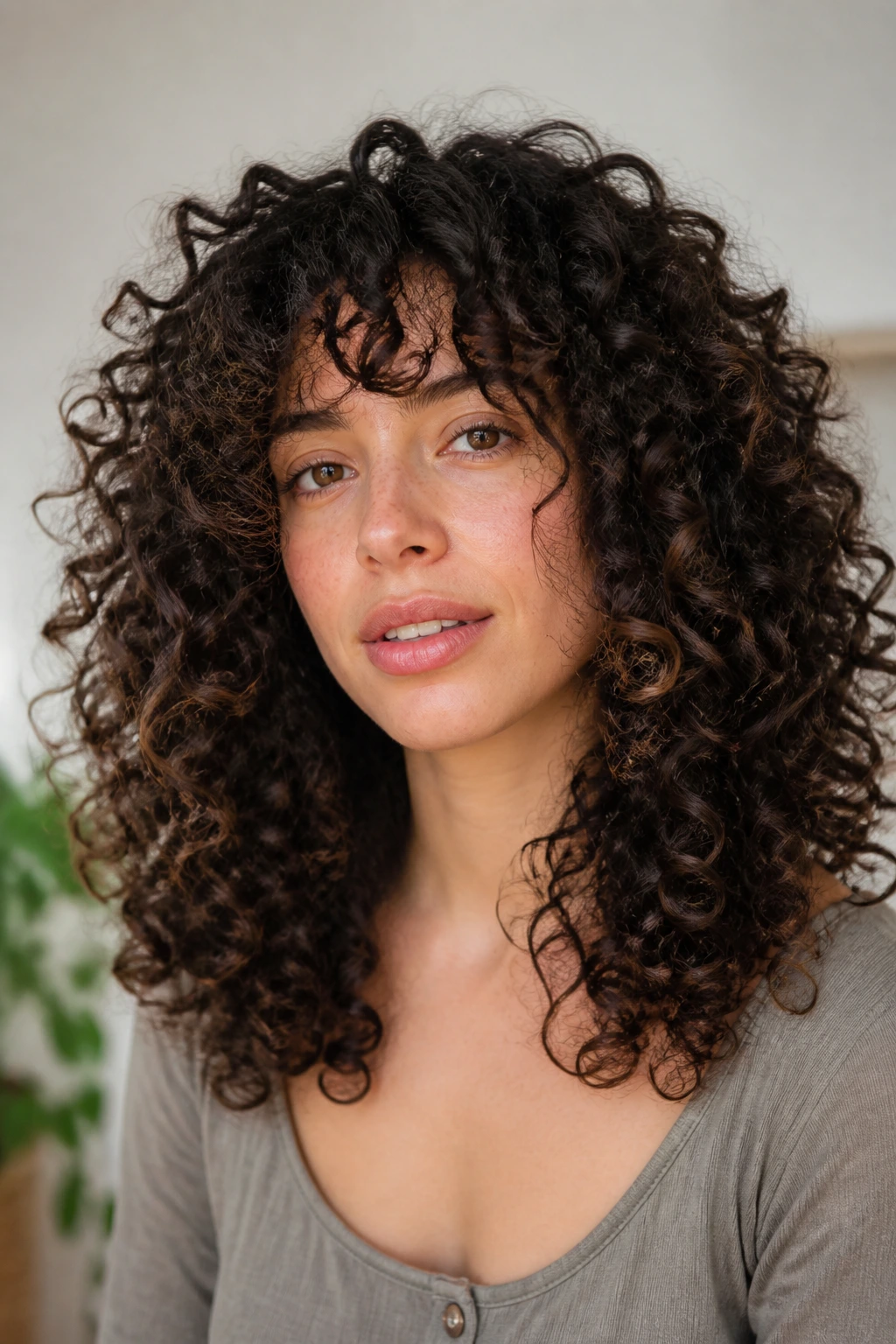
Where a Deva Cut pays close attention to each curl, a Rezo Cut leans into overall balance. The shape is usually more circular and even around the head, which helps if you have mixed curl patterns or different densities from front to back. It keeps the length while opening up the hair so it doesn’t feel stuck to one side.
This cut can be a relief for people whose curls behave one way in the front and another way in the back. Instead of forcing every section into the same look, it tries to create a shape that still reads well from a distance. That sounds simple. It isn’t. Done well, though, it gives long curls a smooth, airy outline.
Best for mixed patterns
- Hair that tightens more at the nape than around the face.
- Curl types that need a balanced silhouette.
- People who want length without heaviness.
If your hair has sections that always misbehave, this is the kind of cut that can calm the whole head down.
12. Curtain Bangs With Long Curly Hair
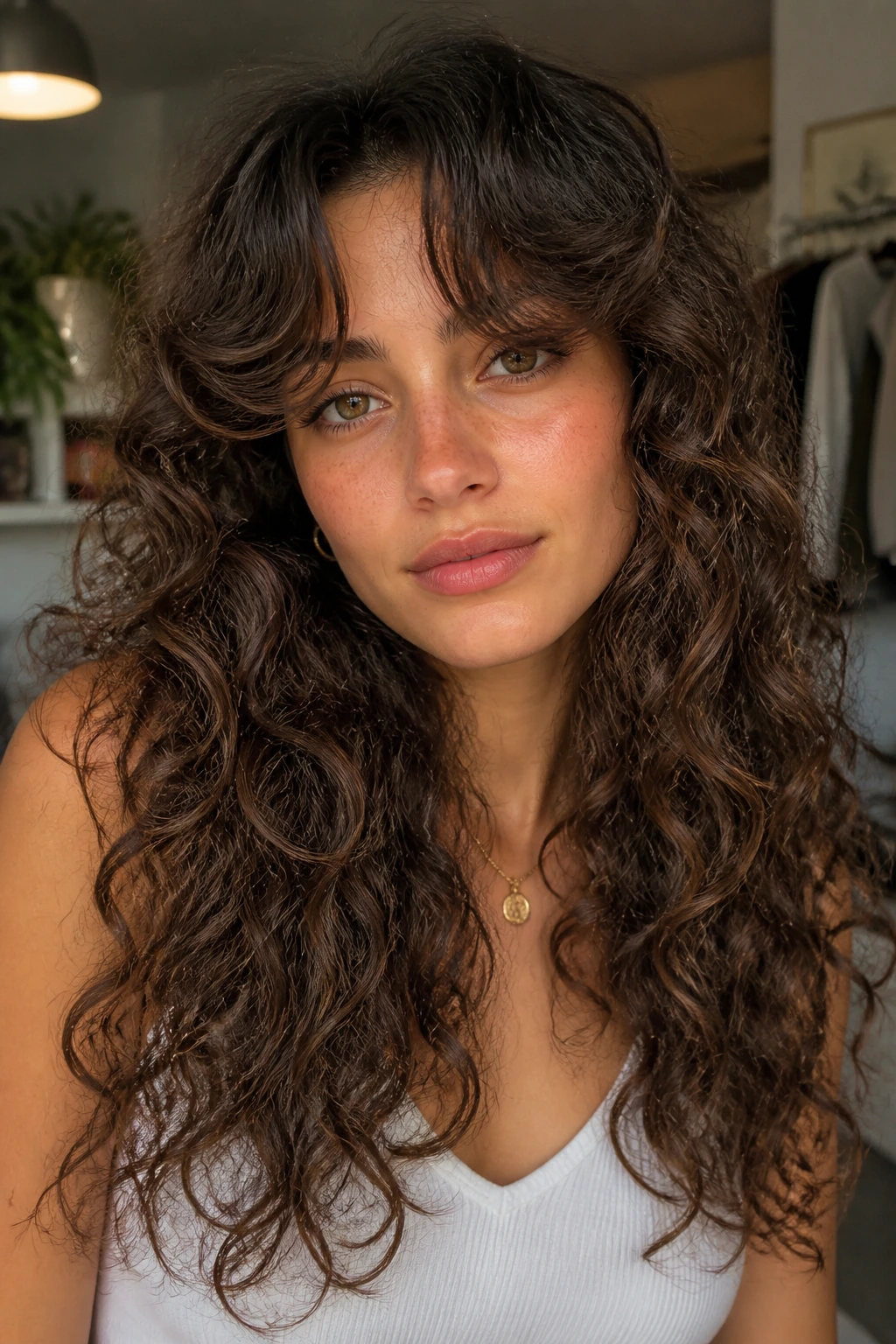
Curtain bangs can be a smart way to add shape without going all the way to a full fringe. They split at the center, fall softly to either side, and blend into the rest of the haircut instead of sitting in one blunt block across the forehead. On long curly hair, that softness matters.
The key is length. Curly curtain bangs need to be cut longer than straight ones because they jump up when they dry. Most people are happier when the shortest point lands somewhere around the cheekbone or upper lip while the hair is still wet. That feels long in the chair, then lands right where it should once the curls settle.
They’re especially nice if you like to change your part. Push them open. Let them fall. Pin them back. They grow out with less drama than many fringe styles, which is one of the reasons I trust them.
13. Bottleneck Bangs With Length

Bottleneck bangs are a little more sculpted than curtain bangs. They start narrower in the center, then widen and lengthen toward the temples, which creates a soft frame around the eyes without putting too much hair directly on the forehead. On curly hair, that shape can look especially flattering because it echoes the natural curve of the face.
The style has a gentle taper that feels deliberate. Not heavy. Not blunt. It’s a good fit if you want fringe but worry about it taking over your whole look. The side pieces are long enough to blend into face-framing layers, so the haircut still feels connected from front to back.
They do need a little attention when styling. A quick finger twist or a dab of curl cream is usually enough, but if you let them dry in random directions, they can lose the shape that makes them work.
14. Side-Swept Layered Cut
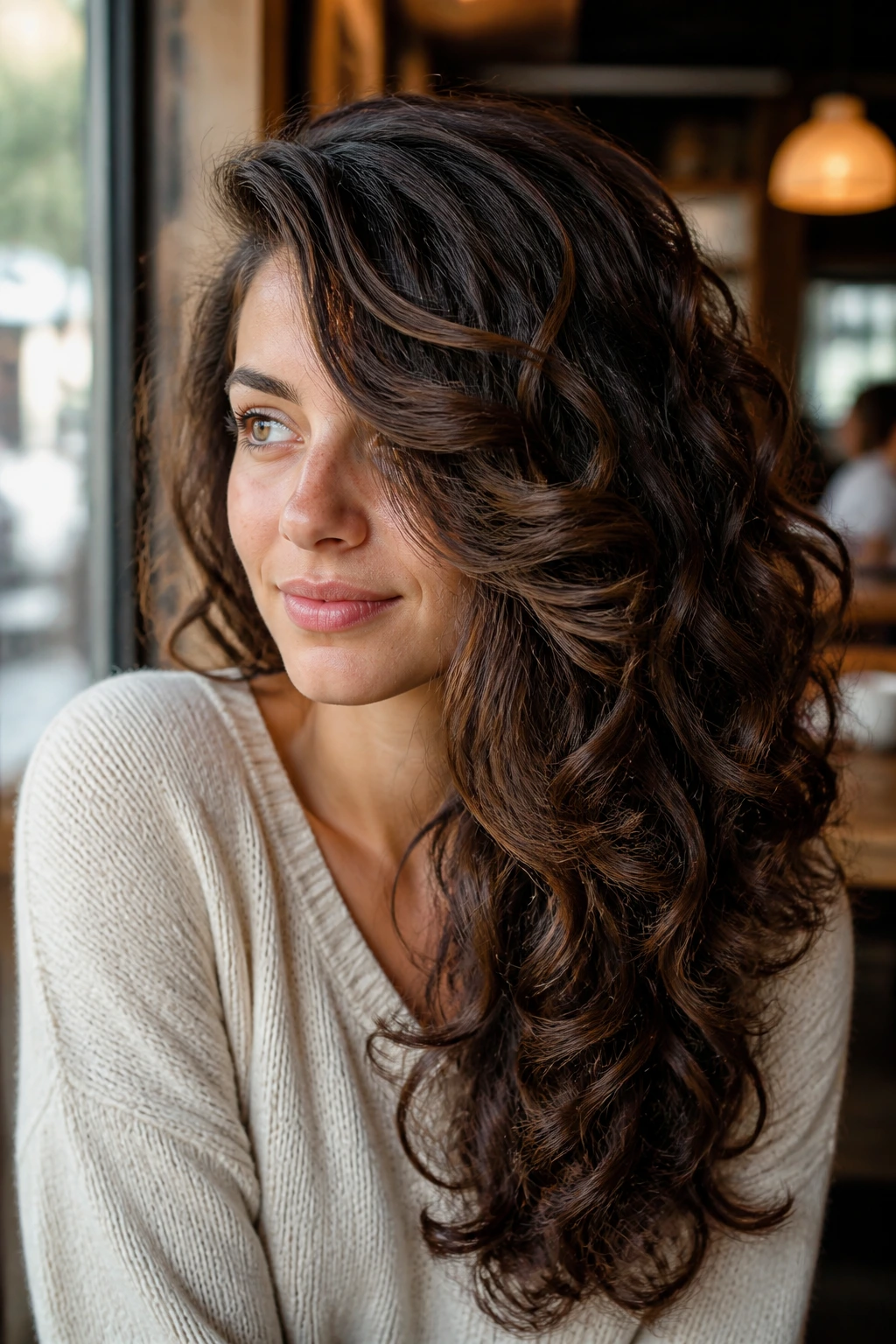
Middle parts are not a law. A side-swept layered cut gives long curly hair a softer, more directional shape by shifting the weight to one side and letting the front fall diagonally across the face. It can be flattering if you want one side to feel fuller and the other to feel more open.
This kind of cut is also useful when your curls naturally fall off-center anyway. Instead of fighting the part, you build the shape around it. That makes the grow-out easier and the styling faster. It’s a good answer for people who get tired of making the hair sit symmetrically every single morning.
The result can be elegant or a little edgy, depending on how strong the side sweep is. Either way, it makes long curls feel intentional without needing a dramatic chop.
15. Tapered Ends for Dense Curls

Dense curls often look best when the ends are tapered a little. Not thinned to death. Tapered. That means the perimeter narrows softly instead of staying as heavy as the rest of the head, which helps long curly hair move instead of sitting like a solid block.
The line to watch
If the taper goes too far, the ends can turn wispy and see-through. That’s the part people regret. A good taper removes just enough weight to keep the bottom from puffing outward, but not so much that the ends lose shape.
This cut is useful when your hair feels bulky even after layering. It can make wash day easier too, because the hair dries with less mass to hold onto. Ask for slow, controlled weight removal, not aggressive thinning shears all over the place. Those can shred the ends and leave curls looking tired.
Dense hair loves a little editing. It does not love being chopped into confetti.
16. Blunt Perimeter on Loose Curly Hair

Sometimes blunt is the smartest move. On looser curls and waves, a blunt perimeter can make long curly hair look fuller, cleaner, and more deliberate because all the ends sit in one strong line. The shape feels modern without trying too hard.
This works best when the hair is healthy and the curl pattern isn’t extremely tight. Loose curls tend to show off a blunt edge better because they still have movement, even with less layering. If your ends are already sparse, a blunt line can make the whole head look thicker.
The trade-off is weight. Too much bluntness on thick curls can create a shelf at the bottom, which is not the same thing as fullness. If you want this cut, ask for a soft blunt line with maybe a touch of invisible shaping inside. That keeps the perimeter strong without making it boxy.
17. Hidden Undercut for Thick Curls

If your hair feels heavy by noon, a hidden undercut is worth thinking about. It removes bulk underneath the visible top layers, usually at the nape or lower interior, so the haircut sits lighter without looking obviously shaved when you wear it down.
This is especially useful for thick curly hair that takes forever to dry. Less bulk underneath means the hair can move more freely, and the crown often sits better because the bottom isn’t dragging everything down. It can also make ponytails less bulky and easier to pin up.
Where the undercut hides
- At the nape, under the top layers.
- Behind the ears, if you want less width.
- Lower inside the crown for extra relief.
The cut does need maintenance. As it grows, the hidden part can start to show through, especially if you wear your hair up often. Still, for the right head of hair, it’s a very practical fix.
18. Crown-Volume Layers

Flat roots are annoying. You can have plenty of curl and still end up with hair that lies close to the scalp at the top while the ends do all the work. Crown-volume layers solve that by shortening and shaping the top area so the crown lifts a little instead of collapsing.
This is not the same thing as a shag. A shag spreads layers all over the head. Crown-volume layers are more targeted. They focus on the part of the haircut that needs help most and leave the lower length relatively calm.
How to keep the top from falling flat
A stylist can place the shortest support layers near the crown and keep the sides longer so the volume rises instead of spreading out. That helps if your curls need height but you hate a wide silhouette. It also plays well with diffusing, since the top has room to dry with a bit more air between the strands.
If your hair always looks heavier near the ears than at the crown, this cut can rebalance the whole head.
19. Waterfall Layers

Waterfall layers are softer than they sound, which is a relief. The idea is to let the layers cascade gradually from the top toward the bottom, creating a flowing shape instead of a choppy one. On long curly hair, that means movement without obvious steps.
The cut works well when you want the hair to feel romantic and loose rather than textured and messy. It’s a nice middle ground between a U-shape and a shag. You still get dimension, but the overall outline stays elegant and blended.
This style is good for curls that clump well and don’t need a lot of aggressive weight removal. It can also make long hair look lighter around the face while preserving length everywhere else. If you like your curls to fall in soft ribbons, this is one to ask about.
20. Asymmetrical Curly Cut

Middle parts are not the only way to wear long curls, and an asymmetrical cut proves it. One side stays a little longer or sits at a different angle, which gives the hair a more sculpted shape and can help balance a face that feels wider on one side or narrower on the other.
The style is bolder than a standard layered cut, but it doesn’t have to look extreme. A mild asymmetry can be enough to change the whole feeling of the haircut. It also keeps long curly hair from looking too expected, which some people love and some people definitely do not.
The strongest version of this cut works when the curls already have some movement. If the hair is very fine or very tight, too much angle can get lost. A subtle asymmetry usually lands better than a dramatic one unless you want the cut to announce itself.
21. Internal Debulking Cut

Internal debulking sounds technical, but the idea is simple: remove weight from inside the haircut instead of hacking away at the perimeter. That keeps the outline long while making the curls easier to wear day to day.
What to watch for
- The exterior length should still look full.
- The interior layers should not create holes.
- The stylist should remove weight slowly, not aggressively.
This is one of the better answers for very dense curls that feel huge when dry and heavy when wet. The trick is precision. Too much debulking turns into frizz and uneven pieces fast. Too little and you might not feel much difference at all.
A good internal cut makes the hair swing. It also makes wash day less exhausting, which matters more than people admit.
22. Soft Curly Mullet

A soft curly mullet is much better than its old reputation suggests. When it is done with restraint, it can look stylish, balanced, and surprisingly wearable on long curly hair because it keeps the back long while giving the crown and sides some lift.
The front and top are usually shorter, the back stays longer, and the transition is softened so it doesn’t feel harsh. That shape works well if you like personality in a haircut and don’t want the whole head to sit in one uniform curtain. It also gives curls room to spring up around the face, which can make the whole style feel alive.
This is not the cut for someone who wants quiet hair. It’s a little more expressive than that. But if you want movement, shape, and a little edge without sacrificing the length in back, it earns its place on the list.
Final Thoughts
Long curly hair looks best when the cut respects the curl pattern instead of pretending the hair is straight and obedient. That means paying attention to shrinkage, density, and where the hair actually needs weight removed. Tiny changes in placement can make a huge difference.
If you want the safest route, start with long layers, a U-shape, or soft face-framing pieces. If you want more character, the shag, wolf cut, rounded shape, or a soft mullet will give you more attitude and more movement.
Bring photos. Better yet, bring two or three and say what you like about each one. The useful part is not copying the picture exactly; it is pointing out whether you want the crown higher, the ends fuller, or the front lighter. That one conversation usually saves a lot of regret later.
