



Baby curls do something blunt cuts and stiff blowouts rarely manage: they soften the face before anyone has time to notice the rest of the hair. A good baby curl hairstyle keeps the curl pattern loose enough to move, but controlled enough that the front pieces still frame the eyes and cheekbones instead of puffing out like a cloud.
The trap is overworking it. Heavy cream, too much brushing, or a tight clip at the crown can flatten the roots and steal the airy shape that makes curly and wavy hair look sweet instead of crunchy. A soft finish usually comes from small choices—where the part sits, how much hair you pull back, and whether you leave a few strands free around the temples.
Less force. Better shape.
The styles below lean on that idea in different ways, from quick fixes you can do with a couple of pins to more polished looks that still let the curls breathe.
1. Center-Parted Baby Curl Wash-and-Go
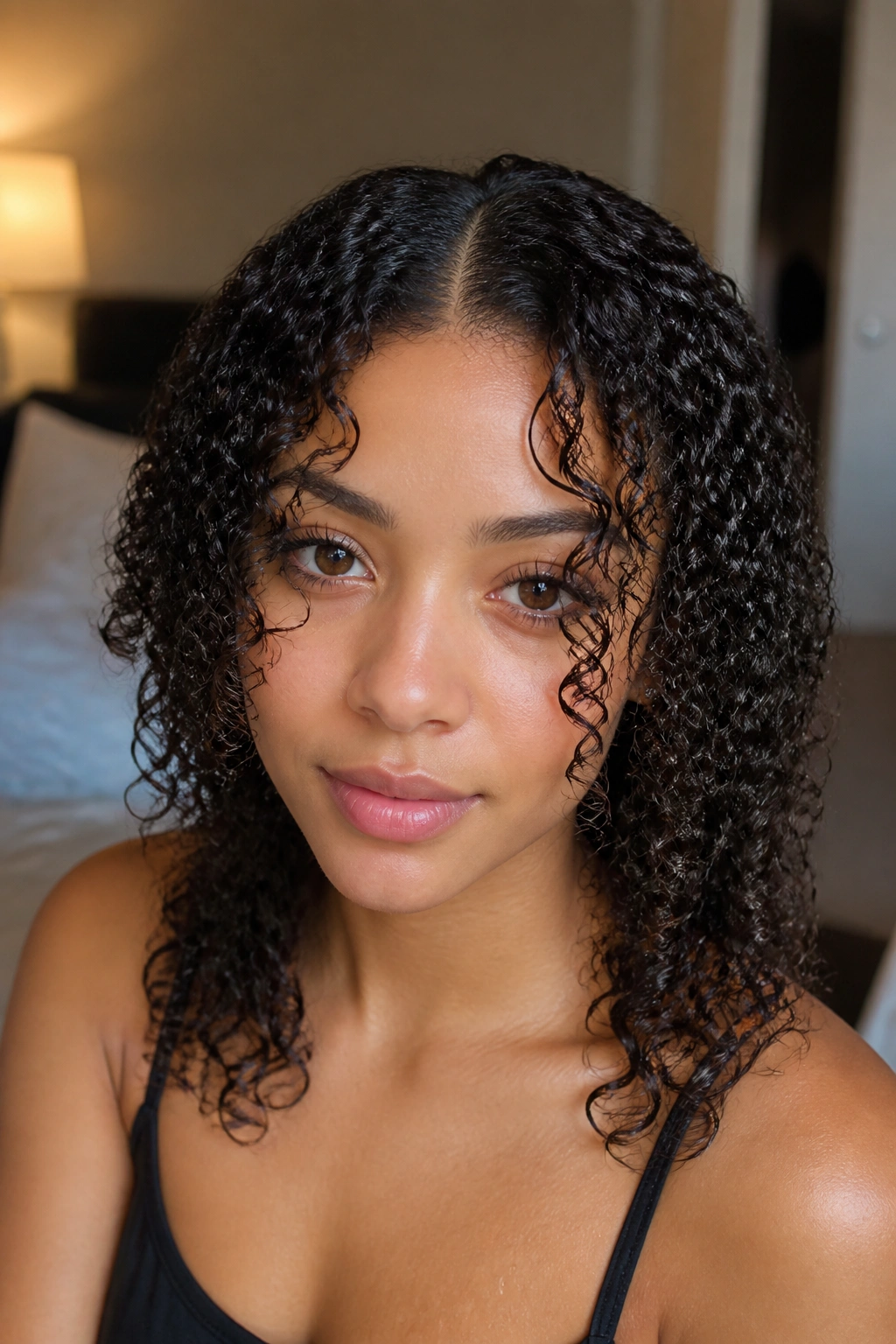
A clean center part is the easiest way to make baby curls look intentional without making them stiff.
Why It Works
A middle part gives loose curls a calm, even frame. The hair falls in two soft halves, and that symmetry keeps the style from feeling heavy on one side or fussy on the other. It also lets the curl pattern do the work on its own, which is half the point.
For this look, start on damp hair, not soaking wet hair. Use a light leave-in, then a mousse or foam that won’t weigh the roots down. If the hair is fine, keep the product amount modest; if it’s denser, you can go a little richer at the ends and still keep the crown light.
Quick Details
- Best for curls or waves that form loose clumps
- Works well on chin-length to shoulder-length cuts
- Use a wide-tooth comb only at the very beginning
- Diffuse on low heat and low speed
- Separate the front pieces only after they’ve set
Do not rake your fingers through once the gel starts drying. That’s where a soft curl shape turns into frizz fast.
2. Side-Swept Curly Bob
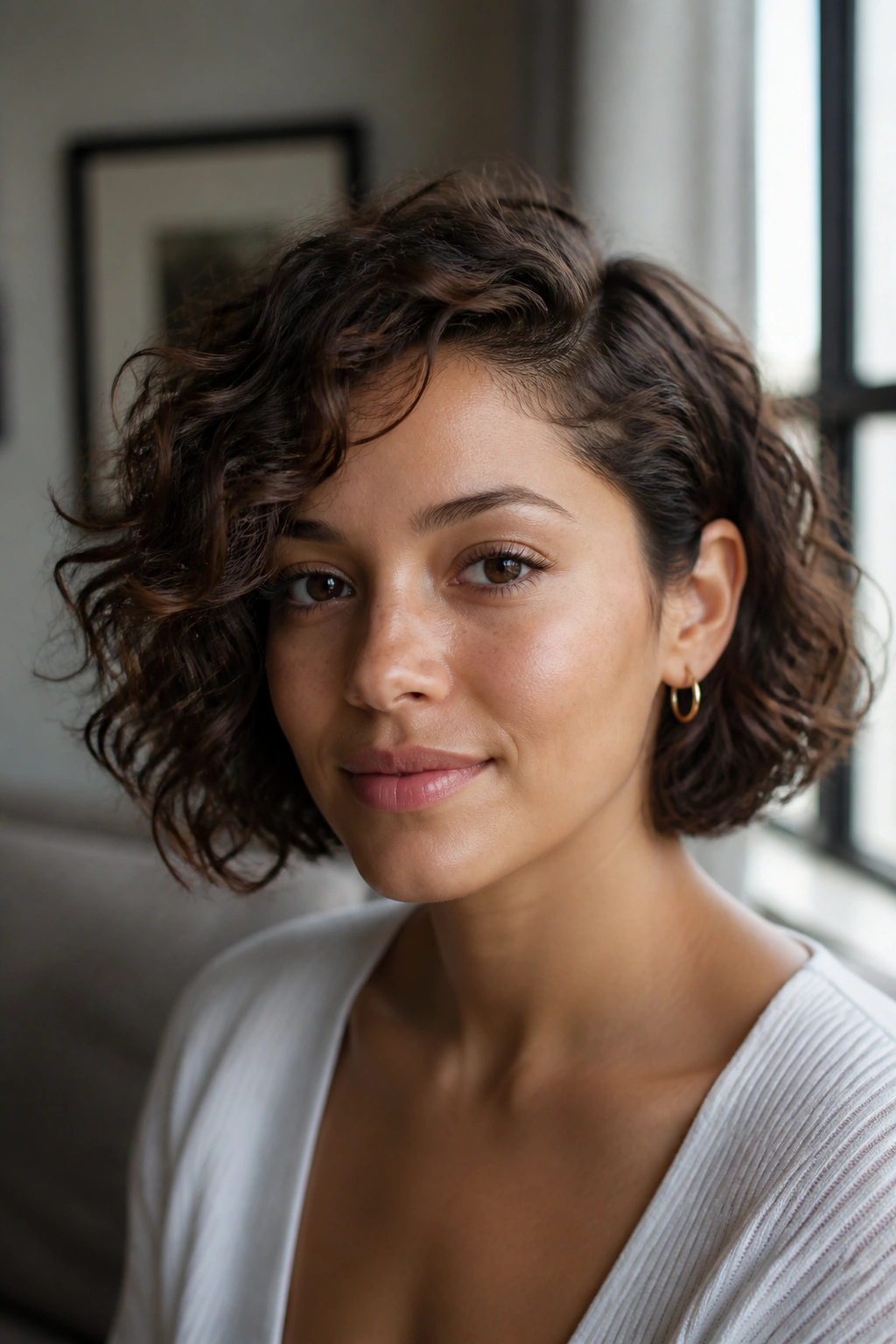
Can a bob feel soft instead of boxy? Absolutely, if the side that gets tucked is the side with the least volume near the cheek.
A side-swept bob works because it gives the face a diagonal line instead of a straight frame. That diagonal is gentler. It makes the curl pattern feel relaxed, and it keeps short hair from sitting too close to the jaw in a way that can look sharp or severe.
I like this best on a chin-skimming or jaw-skimming cut, where the curls have enough length to bend without hanging flat. Tuck one side behind the ear, let the other side fall forward a little, and leave the crown with a touch of lift. If you want extra softness, twist the front section around a finger while it’s damp, then let it dry that way.
The nice part is that it does not need much. A drop of curl cream on the ends, a side part that starts above the brow, and a little patience while the hair air-dries. That’s enough.
3. Half-Up Crown Puff
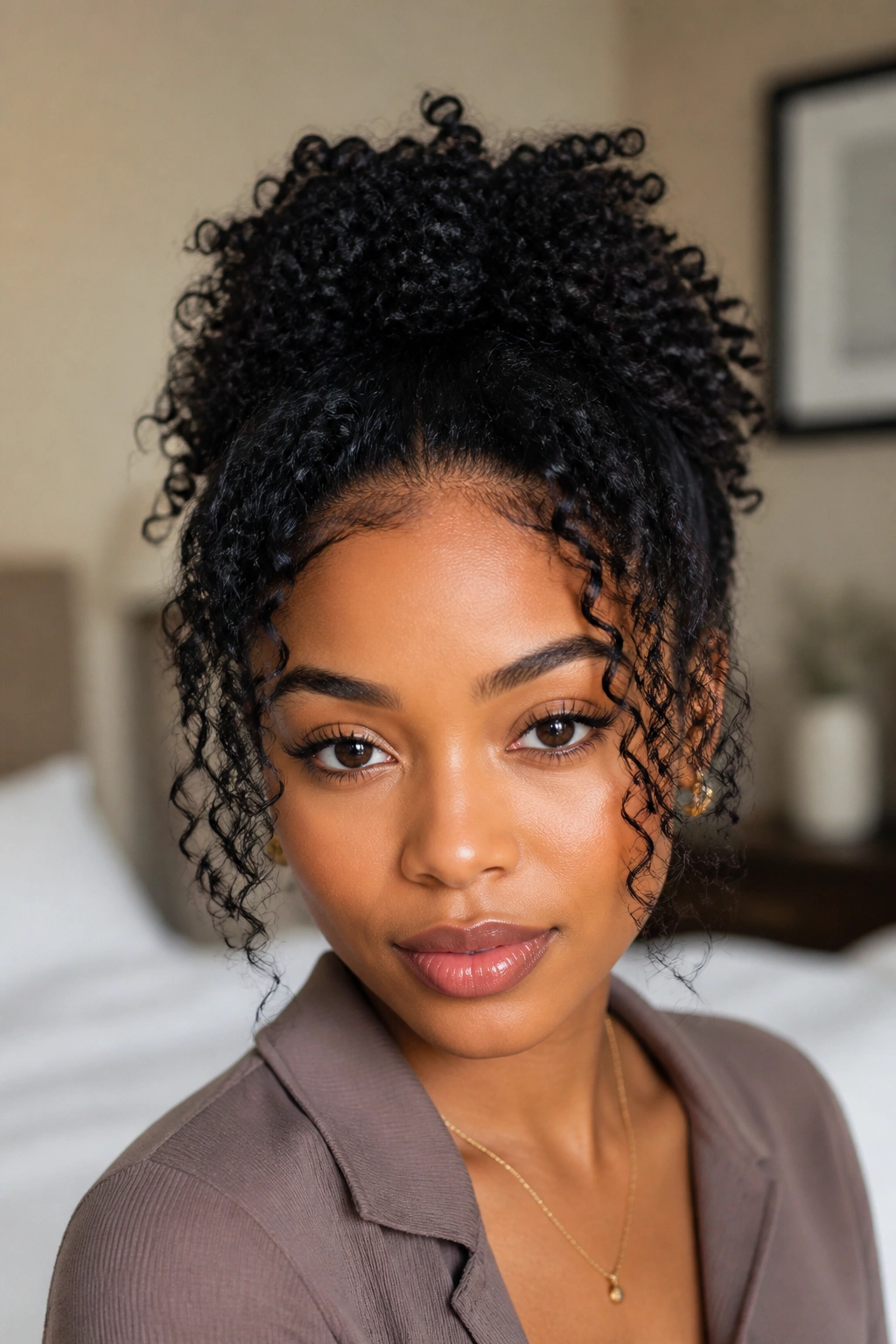
How do you keep the top controlled without pinning down the length? Pull up only the upper third and let the rest stay loose.
A half-up crown puff is one of those styles that looks done without looking strict. The trick is volume at the crown, not tension. Gather the top section loosely, secure it with a soft elastic or a small claw clip, then ease the roots forward a little so the lift stays rounded instead of flat.
How to Keep It Airy
- Section from temple to temple, not from ear to ear
- Leave two face-framing pieces out on each side
- Use a soft elastic that won’t leave a ridge
- Tug the crown up by about half an inch after securing it
If your curls are tighter, this style is even better with a tiny bit of slip in the front so the puff doesn’t grab and frizz. And if your hair is wavy, the same shape works with a looser twist and a little texture spray at the roots.
4. Curly Shag with Soft Fringe
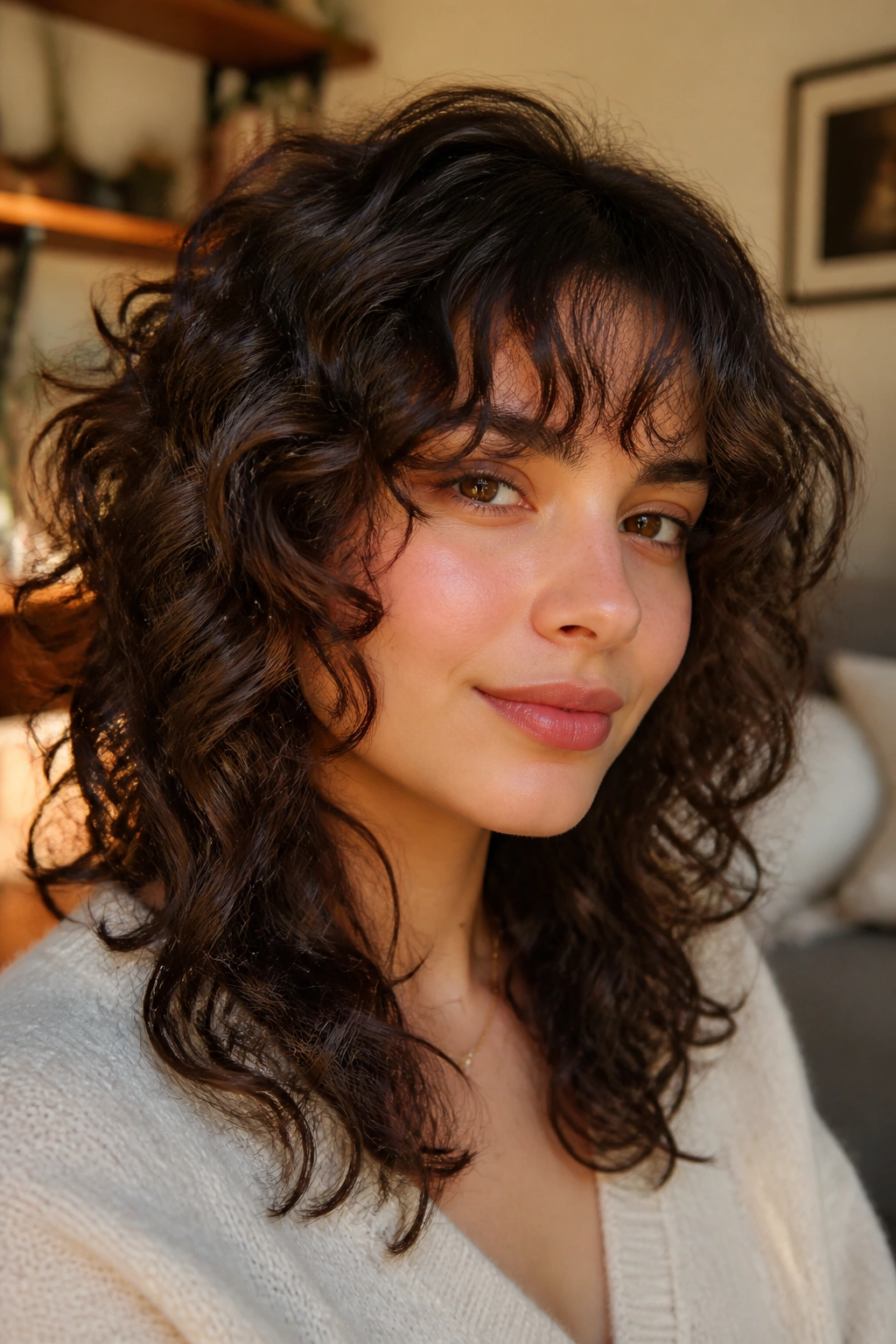
A shag can go harsh fast, which is why the soft version depends on the fringe more than the layers.
The best curly shag keeps movement around the face and avoids those blunt, heavy shelves that make curls look chopped in a bad way. A soft fringe should sit around the browbone or a touch below it, then break up naturally as the curls dry. That bend is what makes the haircut feel easy.
Ask for layers that start lower than the cheekbones if your hair is fine. If it’s thick, the stylist can take out bulk inside the shape, but the ends should still hold enough weight to fall in soft pieces. Point-cutting the fringe helps too. Straight scissor lines fight curls; softer ends let the hair settle.
- Fringe length: browbone to just below it
- Layer placement: below cheekbone level
- Best styling tool: diffuser on medium-low heat
- Finish: a small amount of curl cream scrunched into the ends
If you want a soft look with a little attitude, this is the one. It has personality without looking sharp.
5. Loose Pineapple Updo
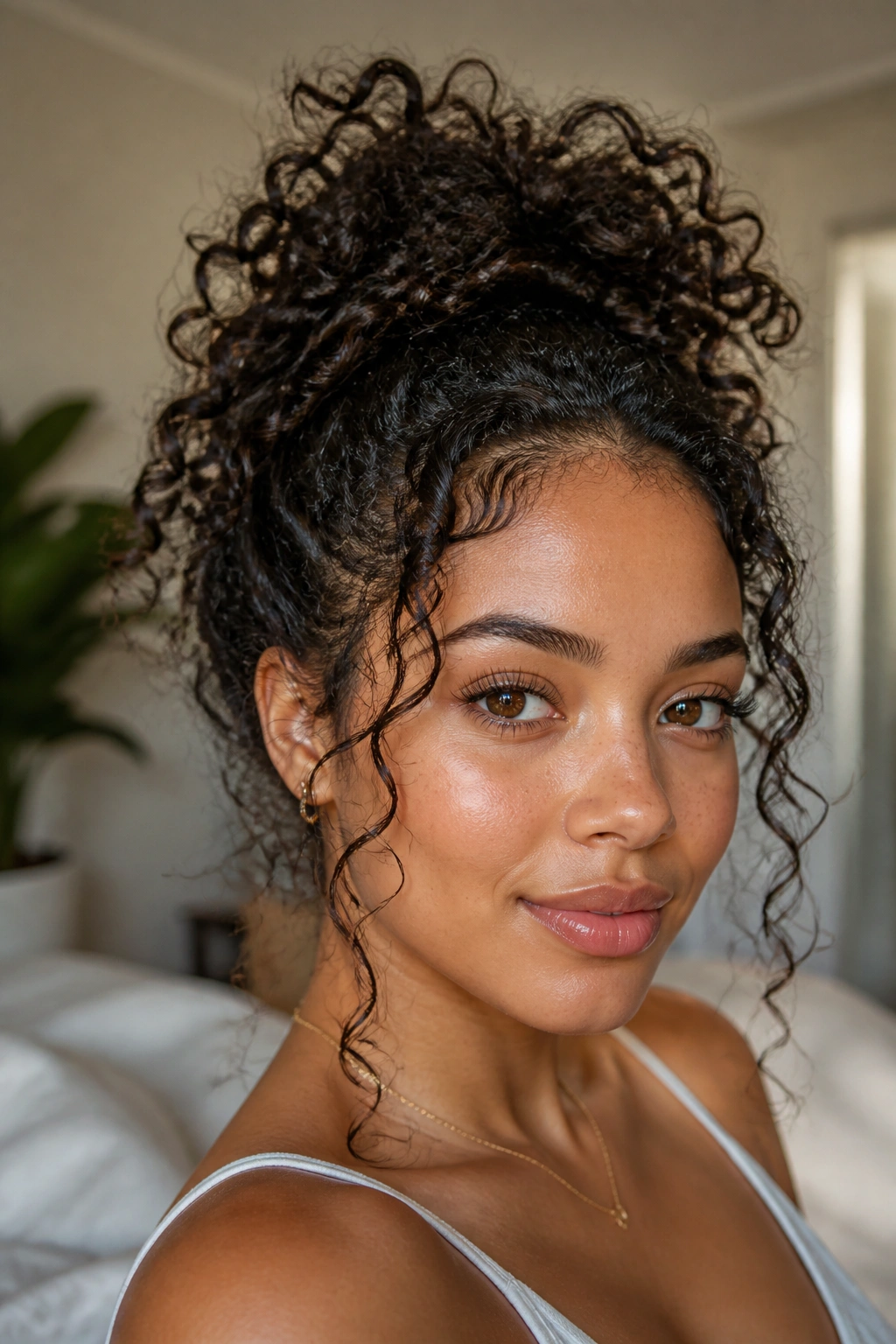
The crown should stay loose.
That’s the whole idea here. A pineapple updo sits high enough to lift the curls off the neck, but not so tight that it stretches the root or steals the bounce from the hairline. It looks especially good on second-day curls, when the pattern still has shape but needs a little rescue.
Gather the hair very loosely at the top of the head and secure it with a satin scrunchie or soft elastic. Then pull a few curls free around the temples and the nape. Those stray pieces matter. They keep the style from looking like a gym tie-up and give the face a softer edge.
This one also doubles as a good overnight protective style, which is handy. If you sleep on a satin pillowcase and pin the top in place loosely, you can wake up with hair that needs only a quick refresh with water and a mist of leave-in.
I’d use this anytime you want height without a hard line at the back.
6. Low Twisted Bun with Face-Framing Spirals
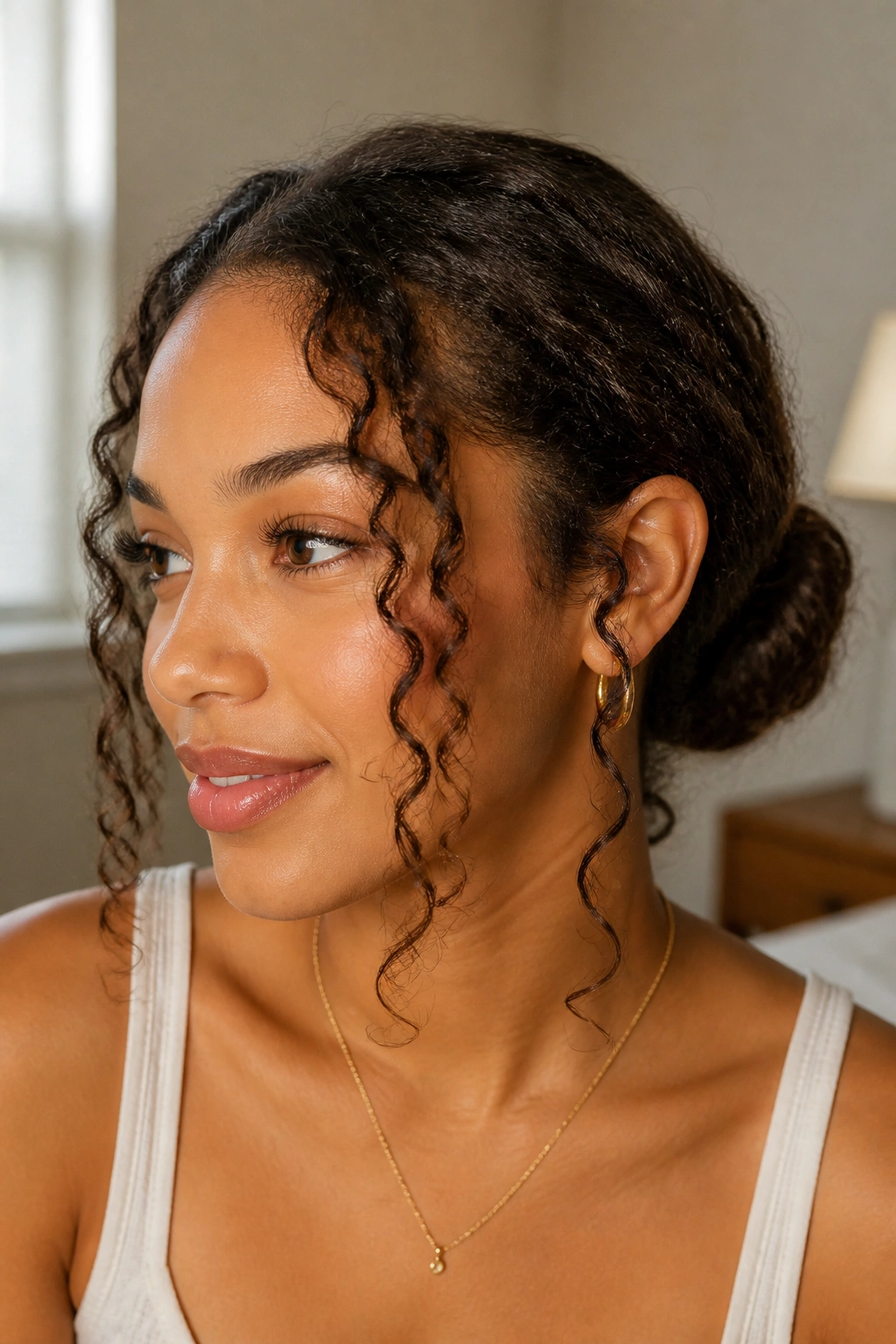
Unlike a sleek chignon, a low twisted bun keeps a bit of movement around the jaw.
That makes a bigger difference than people expect. A straight, polished bun can look elegant, sure, but it can also make the face feel exposed. A twisted version softens the edges by letting the side sections curl into the bun instead of disappearing into it.
Start with a center part or a slight off-center part. Twist each side section loosely back toward the nape, then gather the rest into a low bun and pin it with two crossed bobby pins for hold. Leave out a couple of spirals at the front so the style bends around the cheekbones instead of cutting straight across them.
This is the style I’d pick for dinners, weddings, or any day when you want the hair out of the way but still want it to look human. Clean, yes. Severe, no.
If your hair is shoulder length, this one is even better because the pieces have enough length to twist without needing a lot of pins.
7. Baby Curl Crown Braid
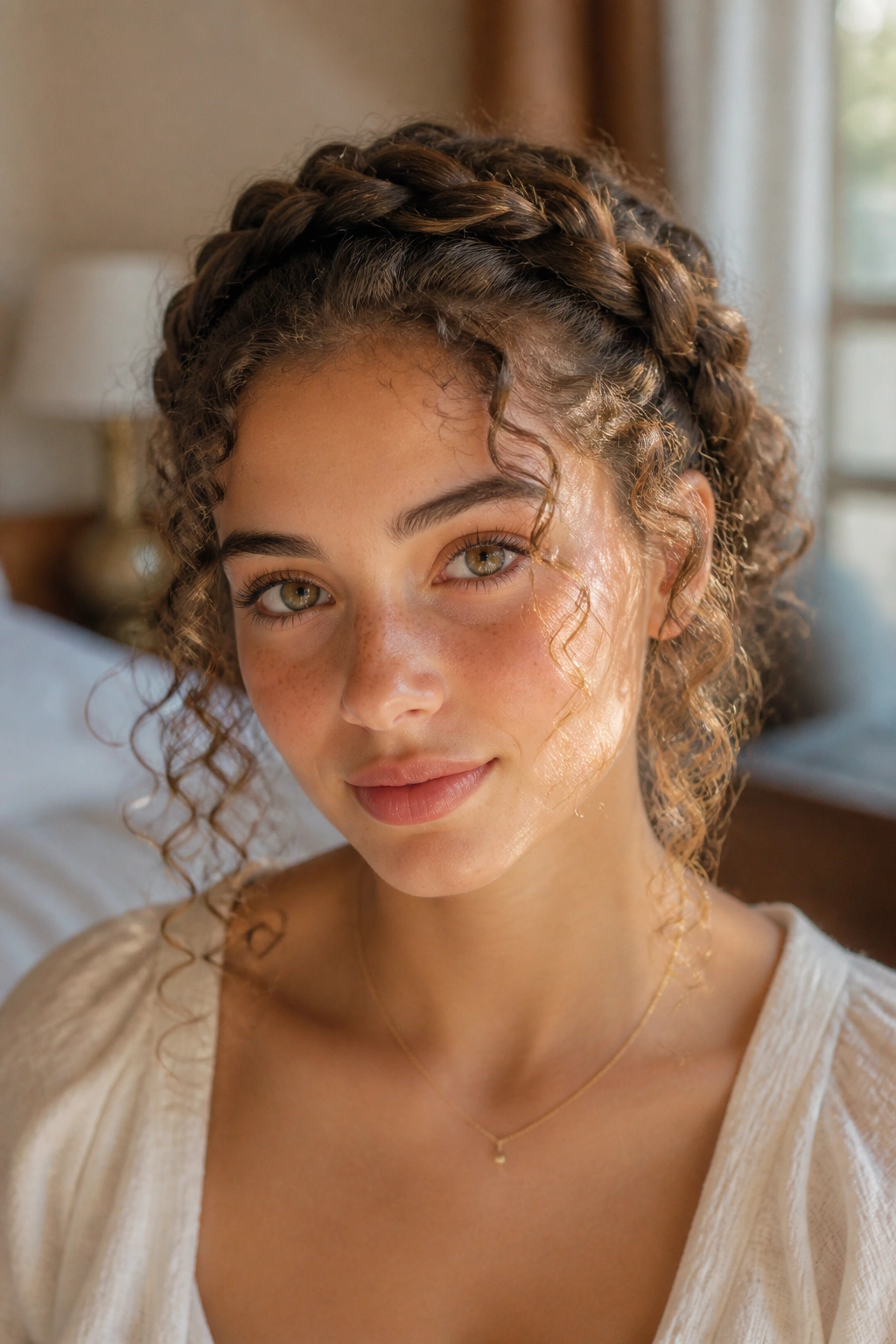
A crown braid gives baby curls a soft frame that feels a little romantic without leaning too formal.
Why It Works
The braid acts like a border, but a gentle one. Instead of pulling all the hair off the face, it guides the front curl pattern around the hairline and leaves the rest of the texture loose. That mix of control and softness is what makes the style so useful.
Keep the braid loose. Tight braiding flattens the roots and can make the finished shape look stiff. A soft braid should sit just above the hairline and curve from temple to temple, or from one side of the part to the other if you want a less symmetrical look.
Quick Details
- Use small sections so the braid hugs the head
- Keep tension light at the temples
- Pin the braid with 3 or 4 hidden bobby pins
- Leave the ends of the curls loose at the back
The braid should feel like a frame, not a helmet. If it starts to tug at the edges, loosen it before you finish.
8. Clipped-Back Front Pieces
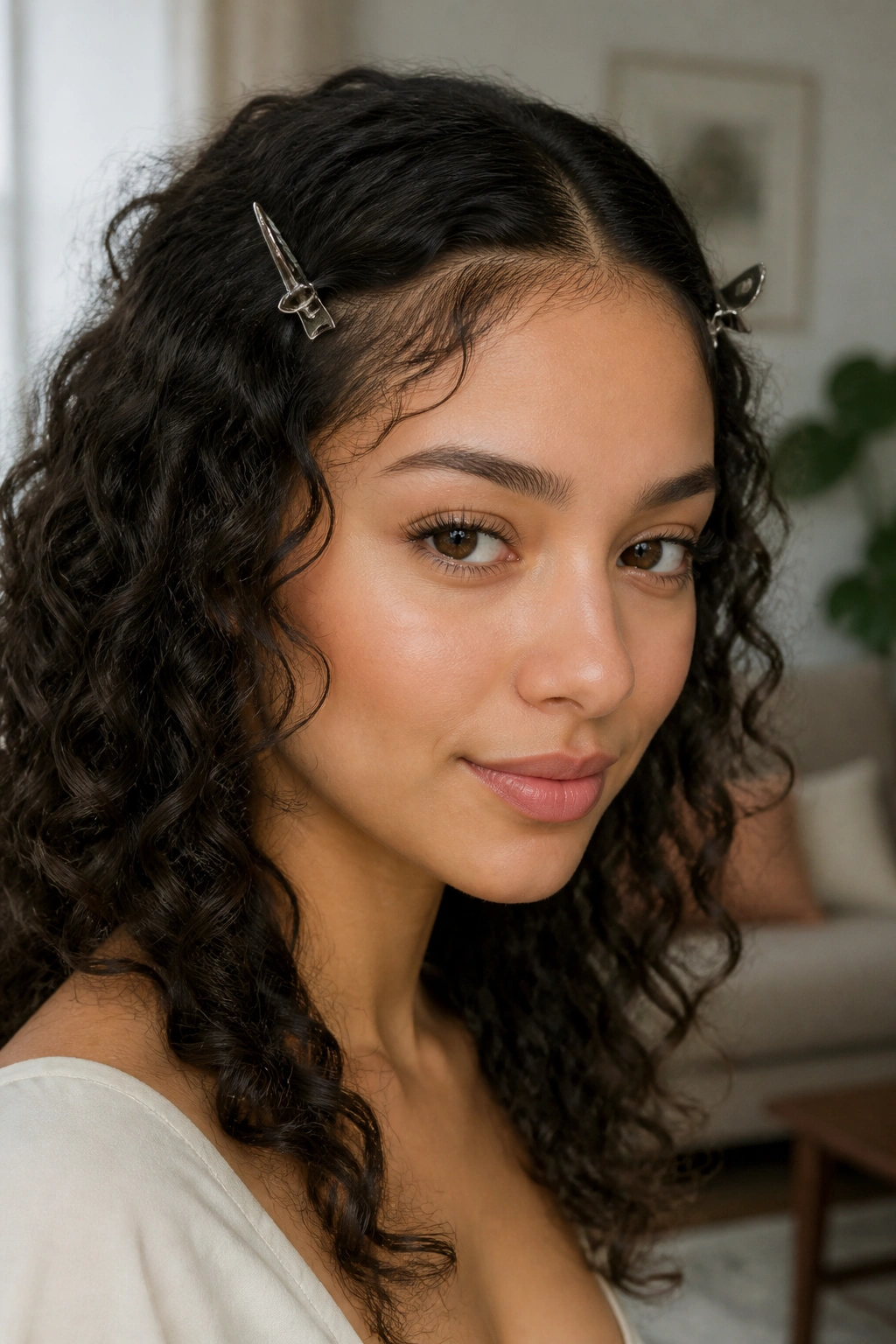
Sometimes the softest style is two clips and a good part.
That’s it. No elaborate shaping, no heavy styling, no need to remake the whole head of hair. Clipping back the front sections opens the face while letting the rest of the curls stay loose and touchable. It’s one of the easiest ways to get that easy, pretty look without making the hair feel overdone.
The best version uses small matte clips, pearl barrettes, or tiny jaw clips placed just above the temple rather than all the way back at the ear. That placement matters. Too far back, and the hair starts to look pulled tight. Too close to the hairline, and the clips don’t hold enough to matter.
I reach for this on day-two curls, when the top needs a reset but the ends still look good. A little water mist at the front, a quick scrunch, and two clips can turn the whole shape around in under five minutes.
If your hair tends to puff at the sides, this is a neat fix. Not fussy. Just neat.
9. Deep Side Part with Tucked Ear Side
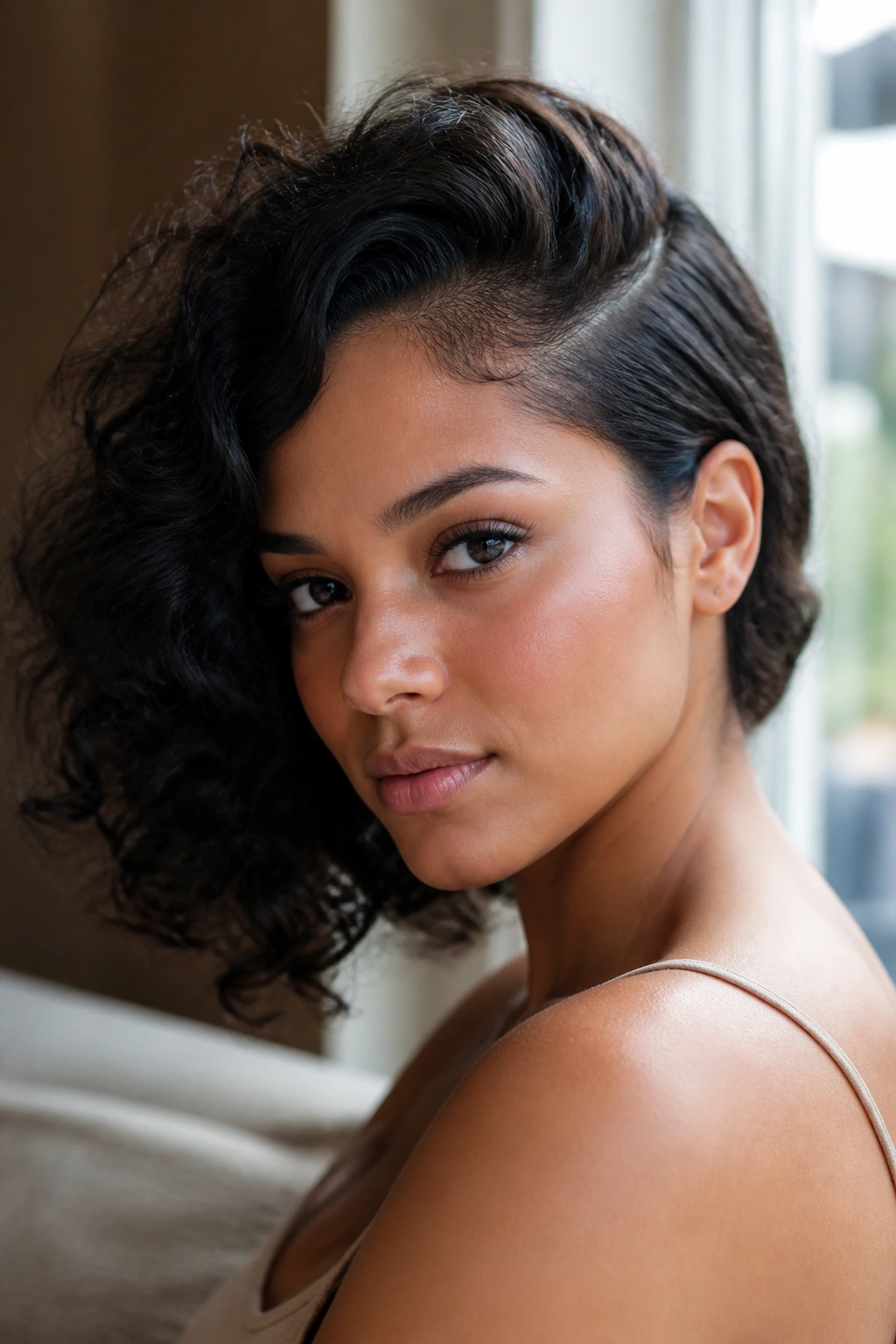
Why does a deep side part make curls look gentler? Because it breaks the face into softer lines and lets one side fall with more weight.
A center part can be lovely, but a deep side part has a quieter kind of softness. The hair sweeps across the forehead a little, one side sits lower, and the whole shape feels less rigid. That works especially well for loose curls and waves that need direction but not much forcing.
How to Wear It
Start the part above the arch of one eyebrow, then use your fingers rather than a comb if you want the line to stay a little imperfect. Tuck the smaller side behind the ear and let the larger side fall forward with some lift at the root. If the front keeps collapsing, clip the root for ten minutes while the hair dries.
This style is good when you want to look put together but not polished to the point of stiffness. It also helps if one side of your hair naturally lays flatter than the other. The deep part gives the fuller side room to show off and lets the other side sit quietly.
A tiny change. Big payoff.
10. Soft Curly Ponytail
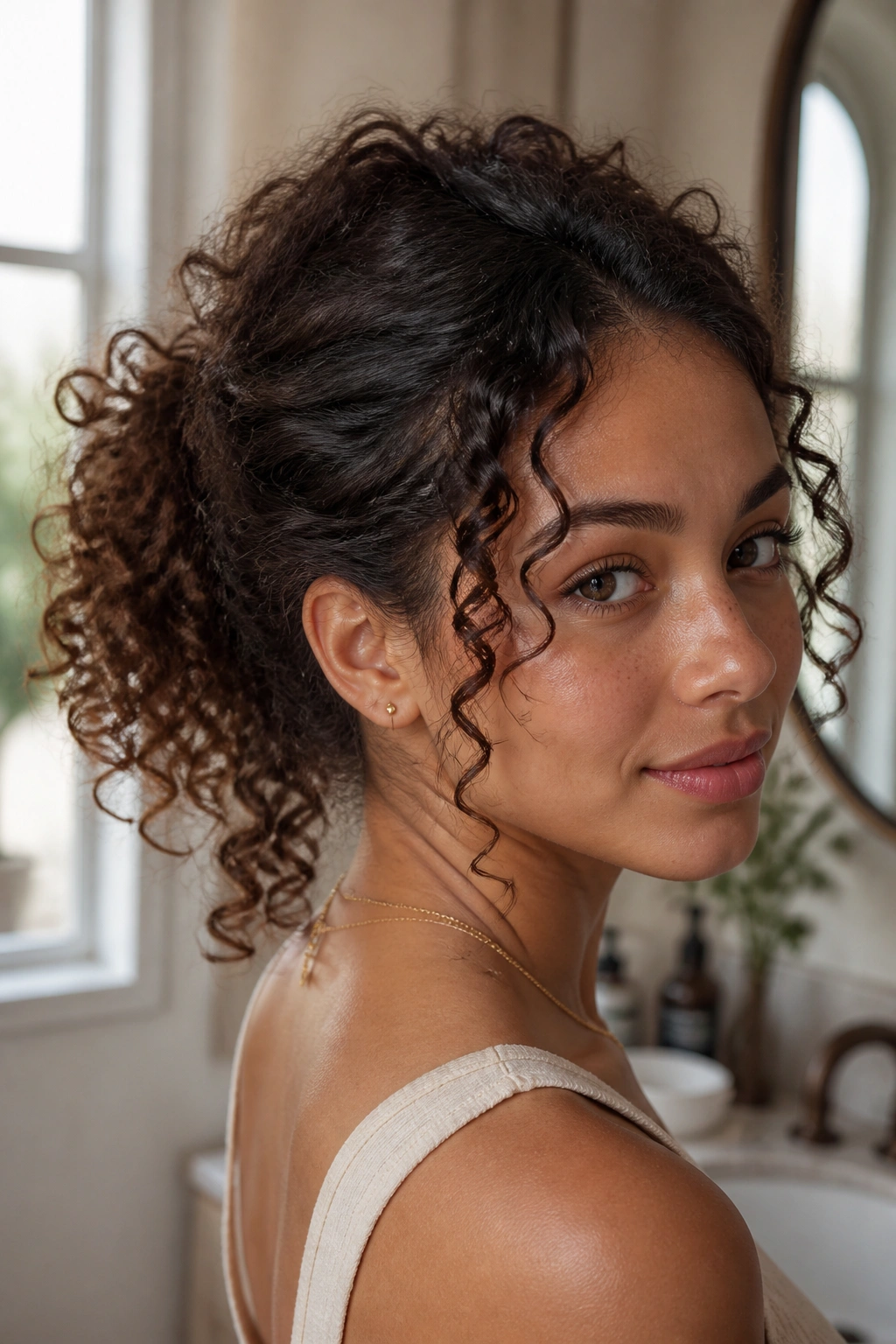
A ponytail looks severe when the crown is pulled smooth.
That’s the part to fix. Keep the ponytail low or mid-height, leave a little volume at the roots, and let a few curls escape near the temples. When the hair is too slicked back, the whole style loses the softness that curly hair gives you for free.
- Place the ponytail at the nape or just above it
- Leave about 1 inch of lift at the crown
- Wrap one curl around the elastic to hide it
- Pull two front pieces loose with your fingertips
This style works on wash day and on day two, which is why I keep calling it one of the most useful options. It also takes well to texture, so if your curls are a little uneven, that’s fine. Uneven can look softer than perfectly matched.
The goal is not a tight sphere of hair. It’s a relaxed line from forehead to nape, with the curls doing their normal thing at the ends.
11. Bubble Ponytail on Curls
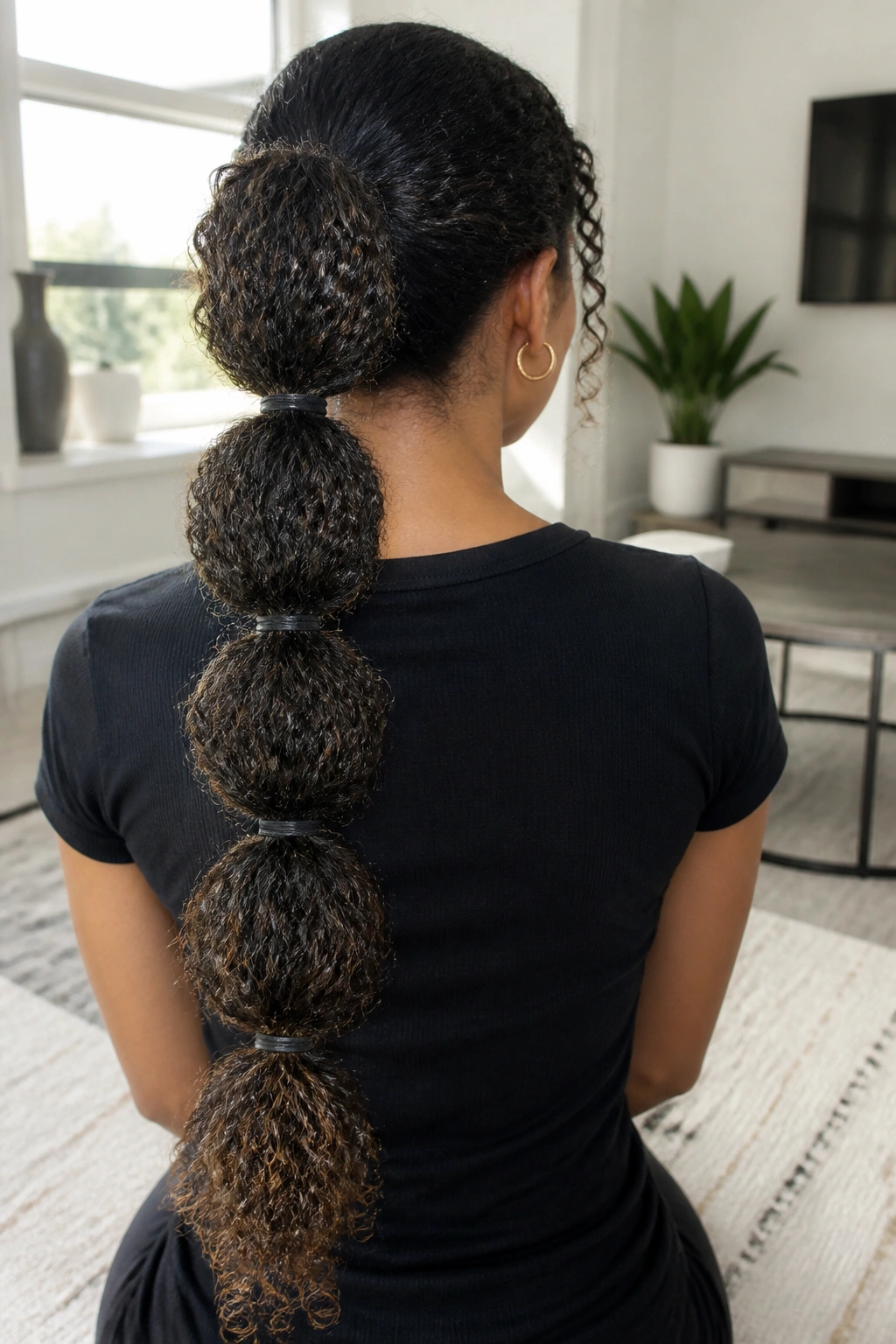
It looks playful, not messy, when the bubbles are spaced with a little air between them.
A bubble ponytail uses clear elastics or small ties every 2 to 3 inches down the length of the ponytail, then you gently tug each section outward so it rounds out. On curly hair, the bubbles blend into the natural pattern in a way that feels soft and a little unexpected. On wavy hair, the shape gives the ponytail enough structure that it doesn’t collapse by noon.
The nicest part is that this style makes long hair feel lighter without taking away length. You still see the curls. They’re just grouped into sections that read as intentional. If you want a more relaxed finish, let a few face pieces fall free and keep the top slightly puffed instead of flat.
I’d use this for long days, casual events, or any time you want movement with a bit more shape than a basic ponytail gives you. It can read dressed-up or low-key depending on the tie you choose. A matte elastic makes it casual. A satin ribbon changes the mood fast.
Do not make every bubble identical. That’s the mistake.
12. Curly Pixie with Baby Bangs
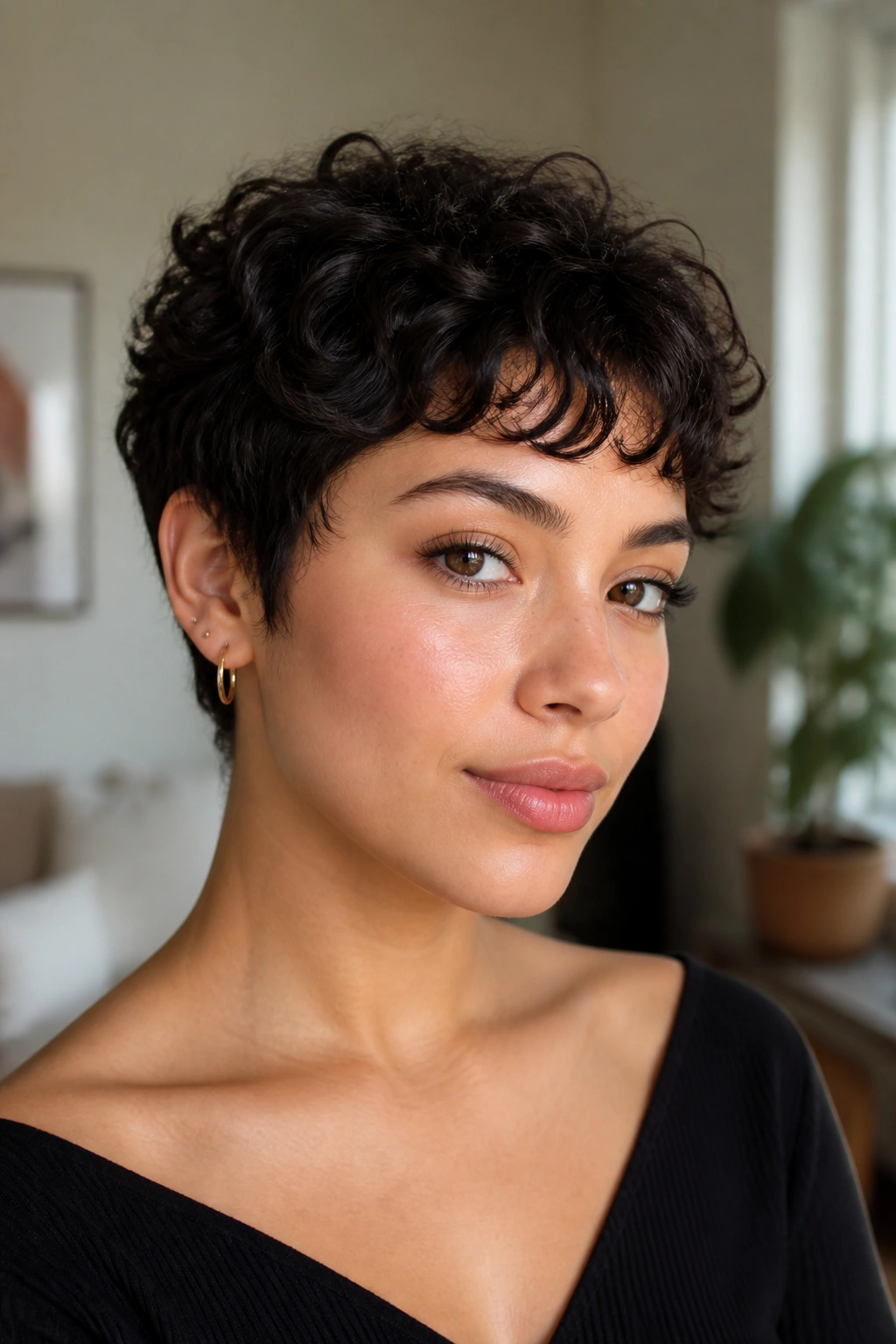
Unlike a sharp pixie, this version keeps the top a little longer and lets the fringe bend instead of sit flat.
That small shift changes the whole mood. A sharper pixie can feel crisp and edgy, which is a look. A curly pixie with baby bangs feels softer because the curls still round out at the forehead and crown. The fringe doesn’t cut straight across; it breaks into tiny pieces that move when you walk.
This is a strong choice if you like short hair but don’t want the face fully exposed. Ask for enough length on top that the curls can curl forward, and keep the sides clean without shaving them too tight unless that’s part of the shape you want. The soft part comes from contrast: a neat outline with a bendy, touchable top.
It does need regular trimming to stay shaped. Not every few days, obviously, but often enough that the fringe doesn’t lose its line and start hanging in your eyes. A little mousse at the roots helps the curls stand up without spiking.
If you want soft but short, this is one of the best bets.
13. Messy Half Bun with Tendrils
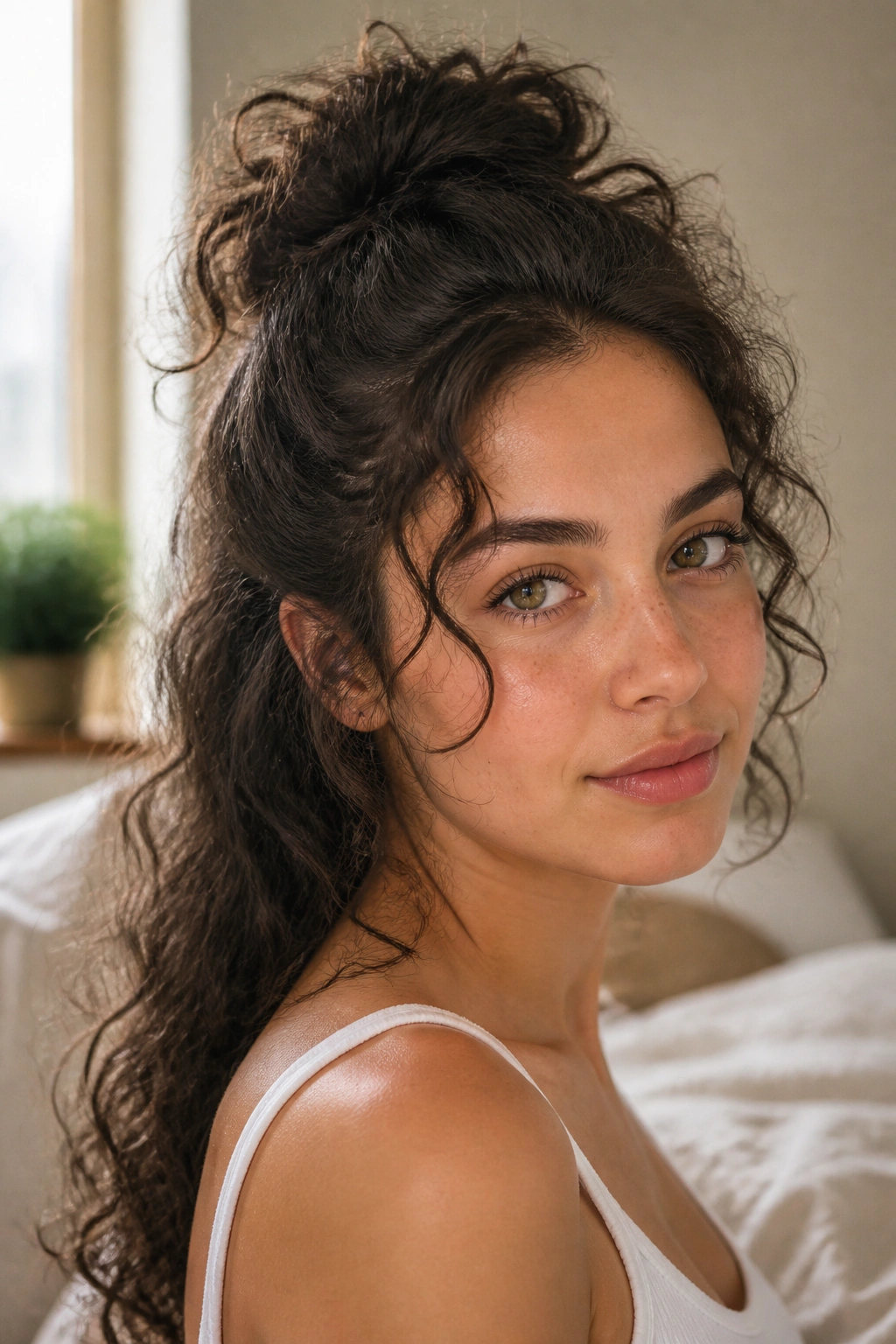
A messy half bun works because it keeps the crown up and leaves the rest of the curls to do their own thing.
Why It Works
The half bun pulls attention upward without taking away the frame around the face. When you leave tendrils at the temples and near the ears, the style stops looking pulled back and starts looking airy. That’s the whole trick.
Keep the bun at the crown or just behind it, not all the way on top of the head. Too high, and it turns into a tight knot with a stretched line at the hairline. Too low, and you lose the lift that makes the shape interesting. A medium placement gives you the softest result.
Quick Details
- Gather only the top third of the hair
- Twist once or twice before pinning
- Pull out two tendrils about 1/2 inch wide
- Use a matte pin or small claw clip instead of a hard elastic
Leave the bun a little imperfect. A few bumps are what make the style feel relaxed instead of glued down.
14. Soft Baby Curl Ponytail with Ribbon
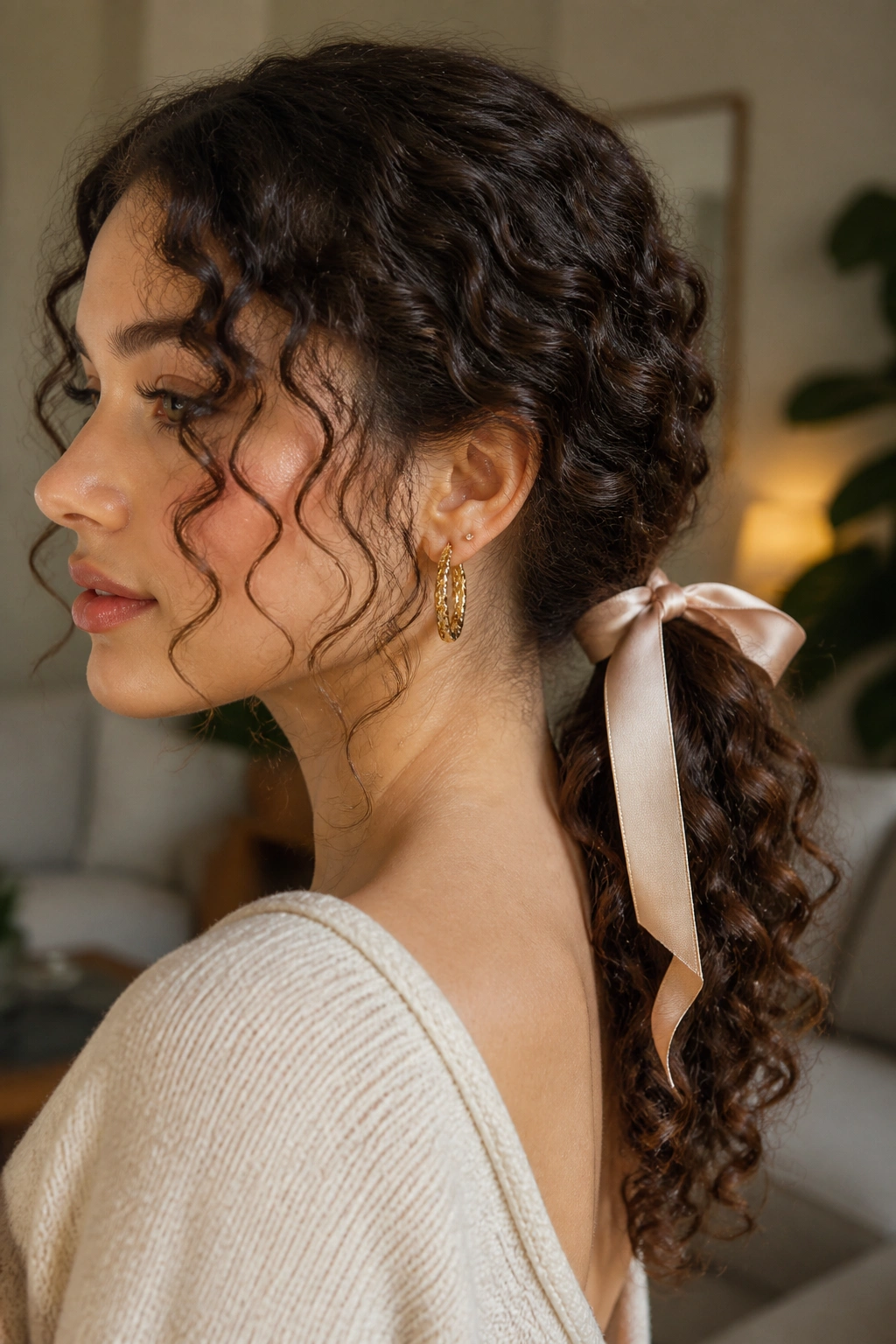
A ribbon changes a ponytail faster than another product ever will.
That’s because the ribbon breaks up the elastic line and gives the base of the ponytail a softer finish. Satin or silk works best, especially if your curls already have a bit of shine. Tie it under the elastic, let the ends hang a few inches, and the whole style gets gentler at once.
I like this on a low ponytail where the curls fall over one shoulder. It reads neat, but not stiff. If you want more softness, leave a narrow face-framing section out on each side and curl those pieces around your fingers while they’re damp so they hold a quiet bend.
The ribbon can sit in a bow, a knot, or a long tie-down depending on the mood you want. A black ribbon looks more grown-up. A cream or blush ribbon makes the style feel lighter. Either way, the curl pattern stays the star.
One small detail does a lot of work here.
15. Shoulder-Length Layers with Diffused Volume
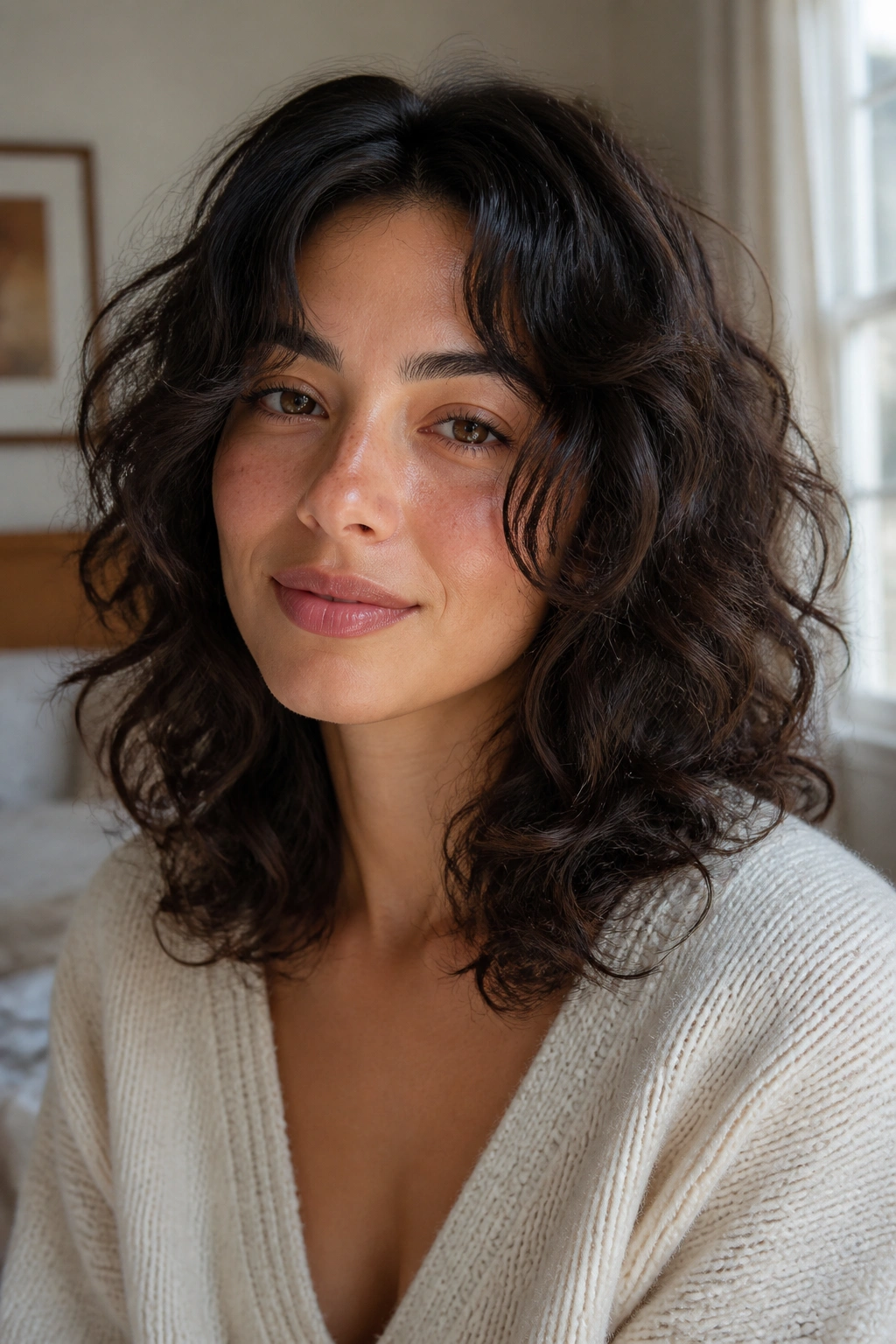
What if the softest look comes from the cut, not the styling?
Shoulder-length layers do that job well. They keep the curls from stacking into one heavy block and let the hair move in pieces instead of one thick curtain. The result feels loose and touchable, which is exactly what people usually mean when they ask for a soft curly style.
How to Ask for It
Ask for layers that start below the cheekbone if your hair is fine, or a little higher if your curls are dense and need more lift. Face-framing pieces should curve into the jaw rather than stop straight at it. That small shift helps the hair fall around the face instead of sitting on it.
When styling, use a diffuser on low heat and keep your hands out of the hair once the curl pattern starts to set. A few minutes upside down can build root volume, but do not rough-dry the ends. That’s where the softness gets lost.
This is a low-drama choice, and I mean that in the best way. The haircut does the work so you don’t have to.
16. Defined Finger-Coil Bob
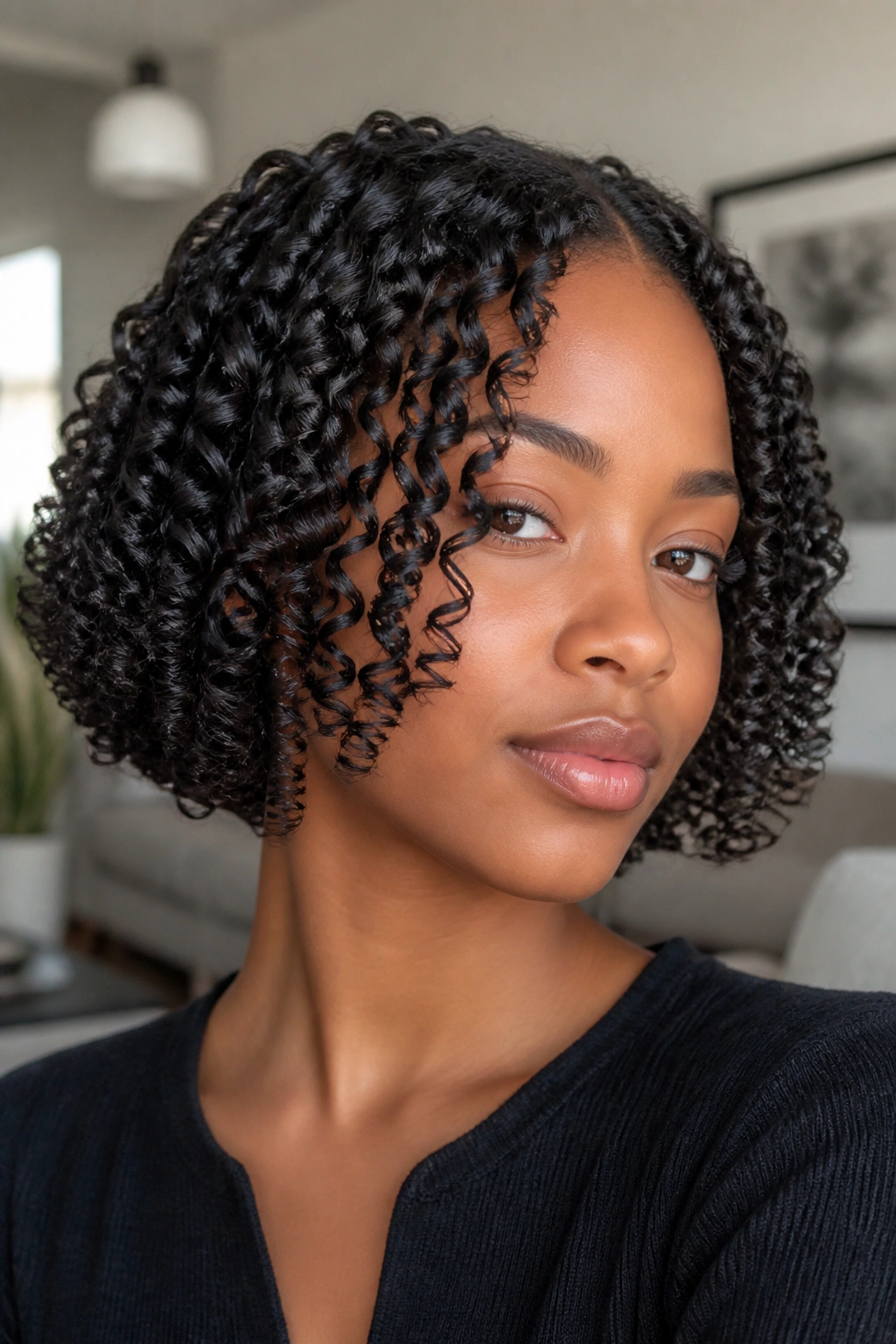
On a bob, finger coils can look precious or fussy depending on how many you do.
The soft version uses restraint. You coil enough pieces to define the shape, not every single strand on the head. A few well-placed coils around the hairline, through the crown, and near the ends can make the bob look plush and deliberate without turning it into a stiff set.
- Work in 1-inch sections
- Use a pea-size amount of gel per coil
- Twist each section around your finger 2 or 3 turns, not six
- Let the hair dry fully before separating anything
That last part matters. If you pull the coils apart too soon, they lose the smooth curve and start to frizz at the edges. Wait until they’re dry and cool to the touch, then separate only the pieces that feel too rope-like.
I like this style for short curls that need structure but still want a soft outline. It’s neat, but not hard. That balance is hard to fake.
17. Curly Crown Twist with Loose Ends
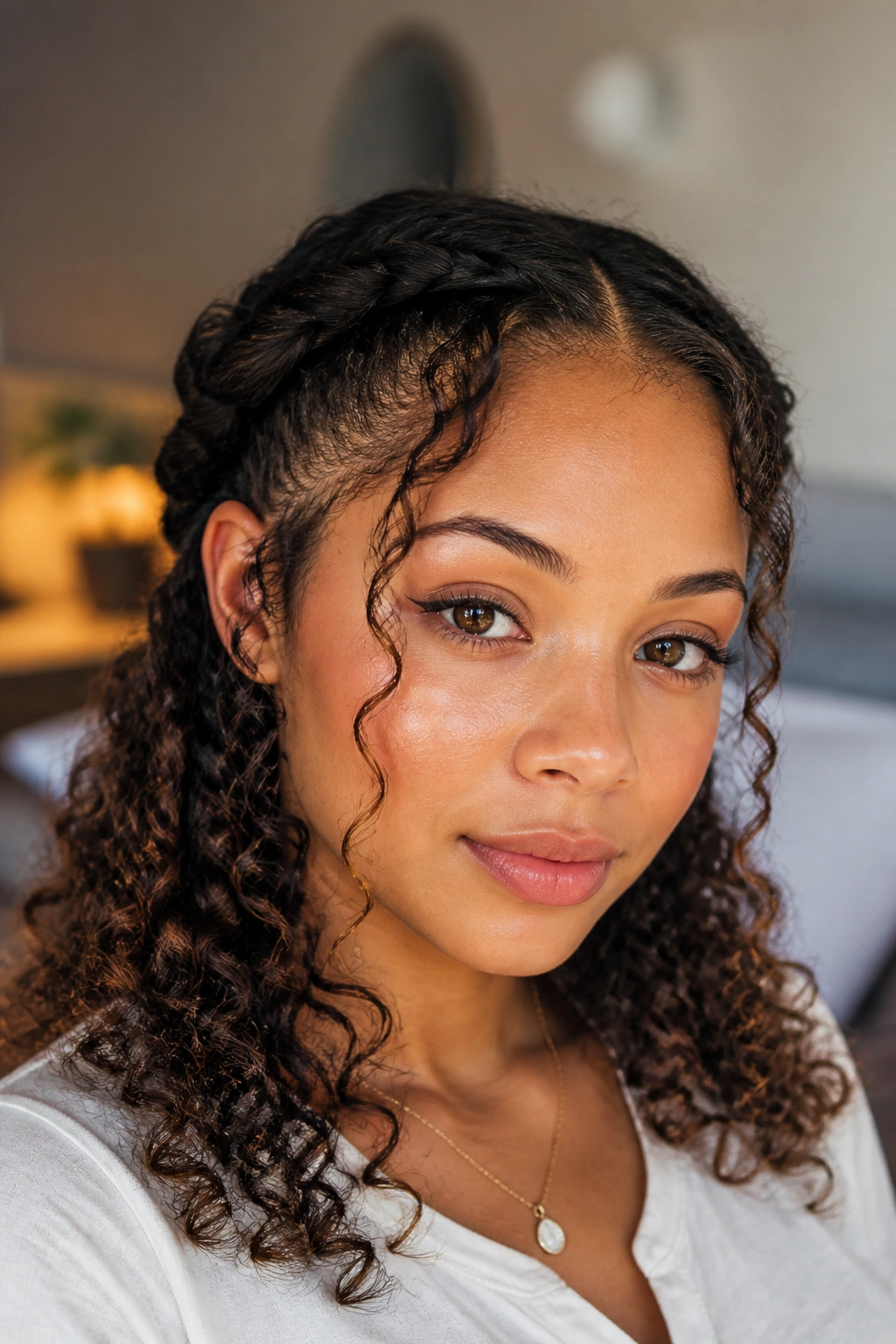
The trick is restraint.
A crown twist can look formal fast, so the soft version keeps the twist close to the head and lets the ends stay curly instead of hiding them completely. Twist each front section from the temple back toward the crown, pin them where they meet, then leave the remaining length loose or gather it low at the nape.
The style works because it creates a gentle line around the face without locking every curl into place. You still see texture. You still get movement. The twist just guides the eye upward a little, which makes the whole look feel light.
This is a good option when you want something that looks more finished than a ponytail but less rigid than a full updo. It suits medium and long curls especially well, since there’s enough length for the twist to hold without needing a pile of pins.
A soft finish here depends on one thing: don’t over-tighten the twist at the temples. That’s where the face starts to look pulled. Keep it loose and the shape stays flattering.
18. Curly Lob with Scarf Tie
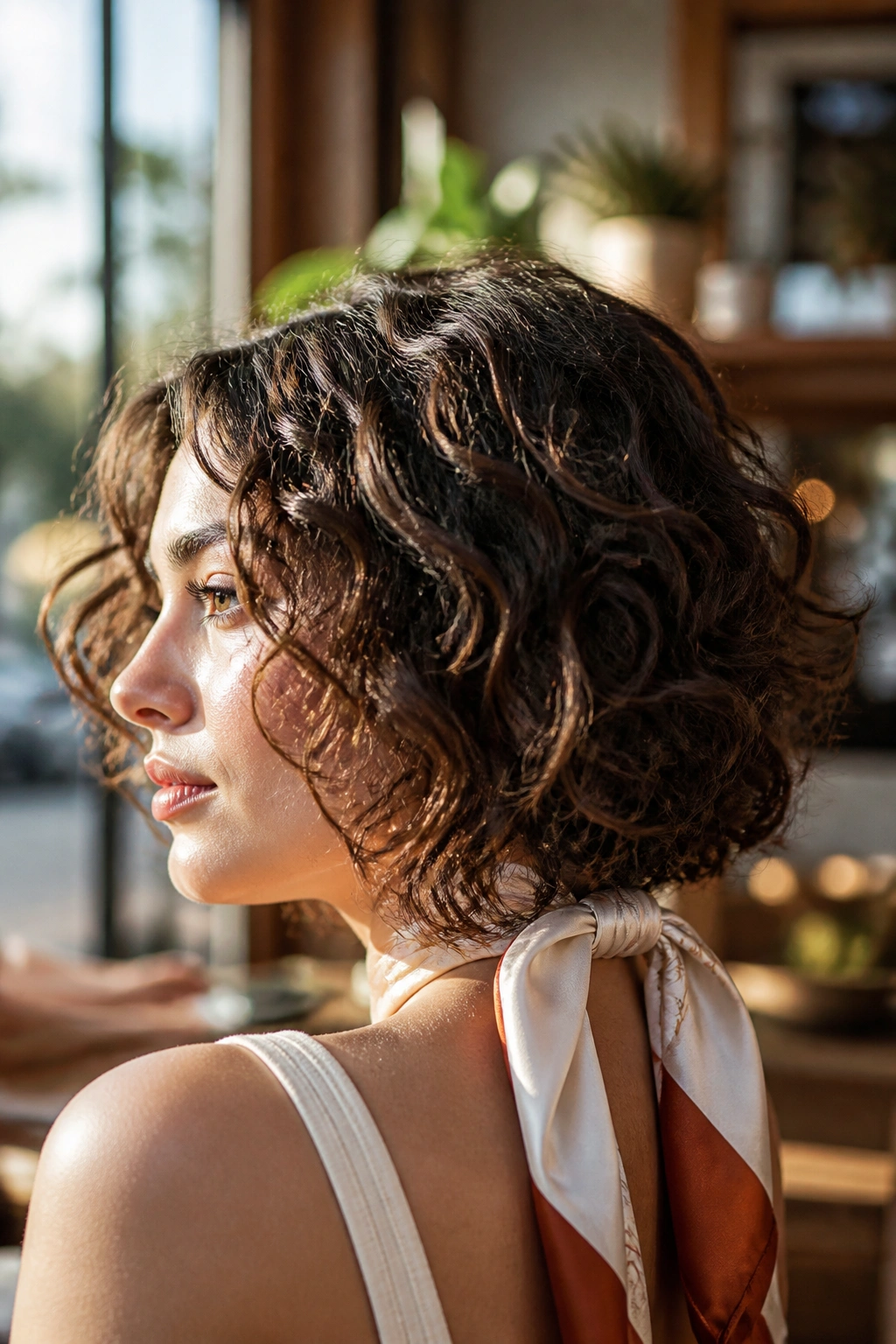
Unlike a bare lob, a scarf tie gives the whole look a softer finish at the neckline.
That’s the real appeal. A long bob already has nice movement, but adding a silk scarf or thin satin tie changes the mood without changing the cut. Tie it at the nape, or slightly to one side under one ear, and let the curls fall over it. The fabric softens the bottom line of the style and makes even a simple lob feel intentional.
This works especially well if your curls are loose or wavy and tend to lose shape near the ends. The scarf gives the eye something to land on, so the hair does not need to be perfect. I’d use a scarf about 1 inch to 2 inches wide when folded, not a giant wrap that overwhelms the head.
It also solves a boring problem: the lob can sometimes sit in that awkward zone where the ends flip out in a way that feels a little blunt. The scarf breaks that up. Plain hair, but better.
If you want a soft look that still feels polished, this is one of the easiest wins.
Final Thoughts
The softest baby curl hairstyles usually share the same formula: a little lift at the crown, a gentle frame at the face, and enough slack that the curl pattern can still move. When you force the hair too hard, the whole thing loses its charm.
Start with one detail. A part, a clip, a braid, a ribbon, a twist. That’s often all you need.
Then leave the rest alone. Let the curls fall where they want to fall, clean up only the pieces that matter, and stop before the style starts looking overbuilt. That restraint is what keeps the finish light, and it’s the difference between hair that looks styled and hair that looks easy.
