



Going lighter is never just about making hair blonde. It’s about choosing how bright you want to go, how much grow-out you can live with, and whether you want your hair to read soft, icy, warm, or sunlit from across the room. The best blonde hair ideas for women going lighter are the ones that match the starting color on your head, not the photo you saved three months ago.
Brassy hair happens fast when the lift is too aggressive or the toner is wrong. So does breakage. Hair has to pass through red, orange, and yellow before it gets pale, which is why a level-6 brunette usually looks better with ribbons, a root shadow, or foilyage than with a single all-over bleach appointment that tries to do too much in one sitting.
And if your ends already feel dry, a pale blonde that ignores hair health will show it. The smoother route is usually the smarter one: keep some depth at the root, brighten the face, and choose a tone that works with your skin instead of fighting it. A blonde can be soft and still feel fresh. It does not have to look stripped.
1. Soft Champagne Blonde With a Root Shadow
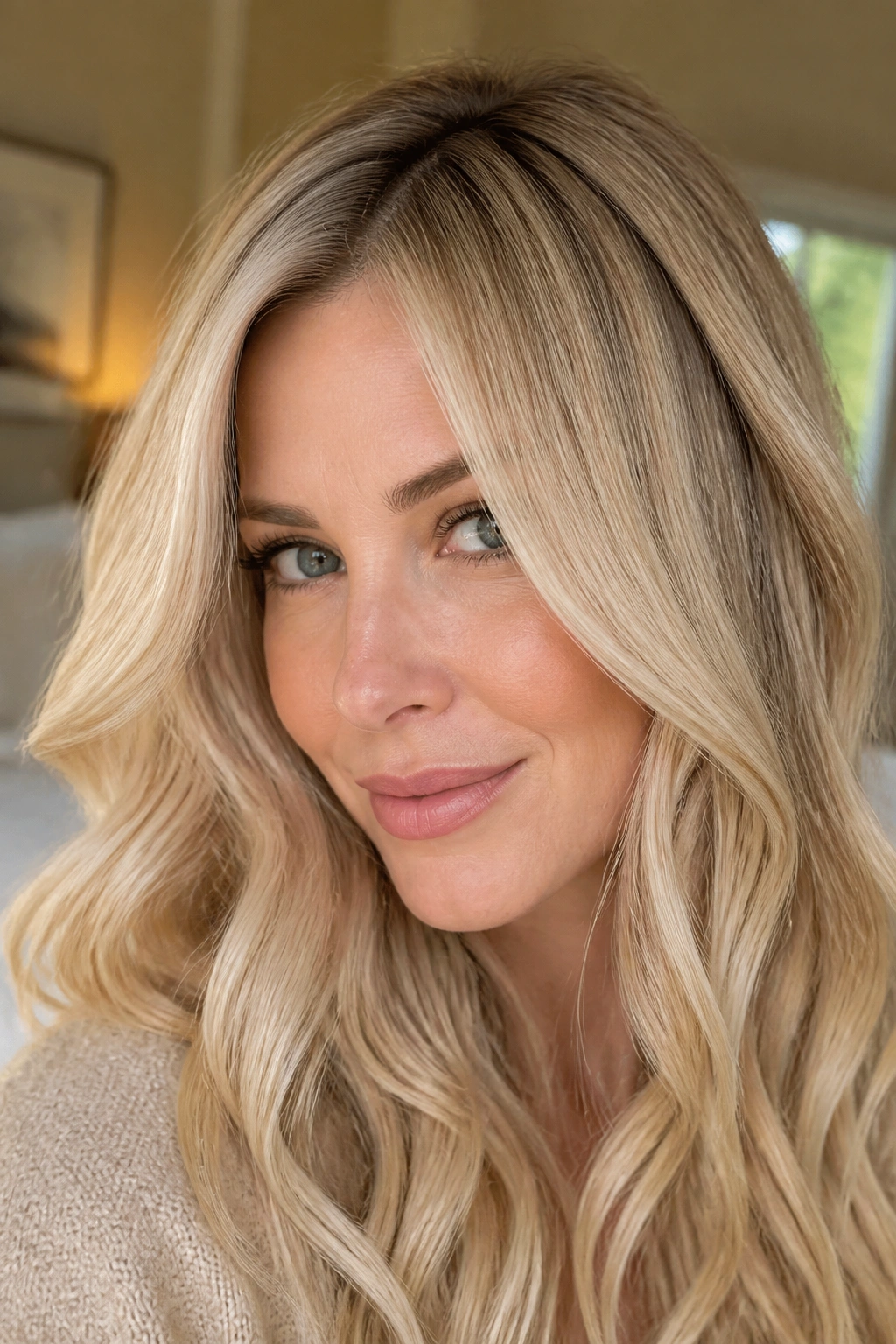
Champagne blonde is the move when you want brightness without that flat, over-bleached look. The tiny bit of root shadow keeps the grow-out soft, so your color still looks deliberate when it starts to shift.
Why This Blonde Works So Well
Champagne sits between beige and gold, which gives it warmth without tipping into yellow. That matters more than people think. A cool pale blonde can look sharp on one person and harsh on another; champagne usually lands in a friendlier middle.
A root shadow 1 to 2 levels deeper than the lightest pieces keeps the whole color from looking stripey. It also buys you time between salon visits, which is worth its weight in gold if you hate a hard regrowth line.
- Best for base colors from level 5 to 7
- Ask for babylights through the crown and top sides
- Finish with a neutral-beige gloss, not a bright gold toner
- Keep the root shade soft, never inky
Pro tip: ask for the darkest area to sit right at the scalp, then blur it down 1 inch. That little fade makes champagne blonde look expensive without trying too hard.
2. Honey Beige Balayage
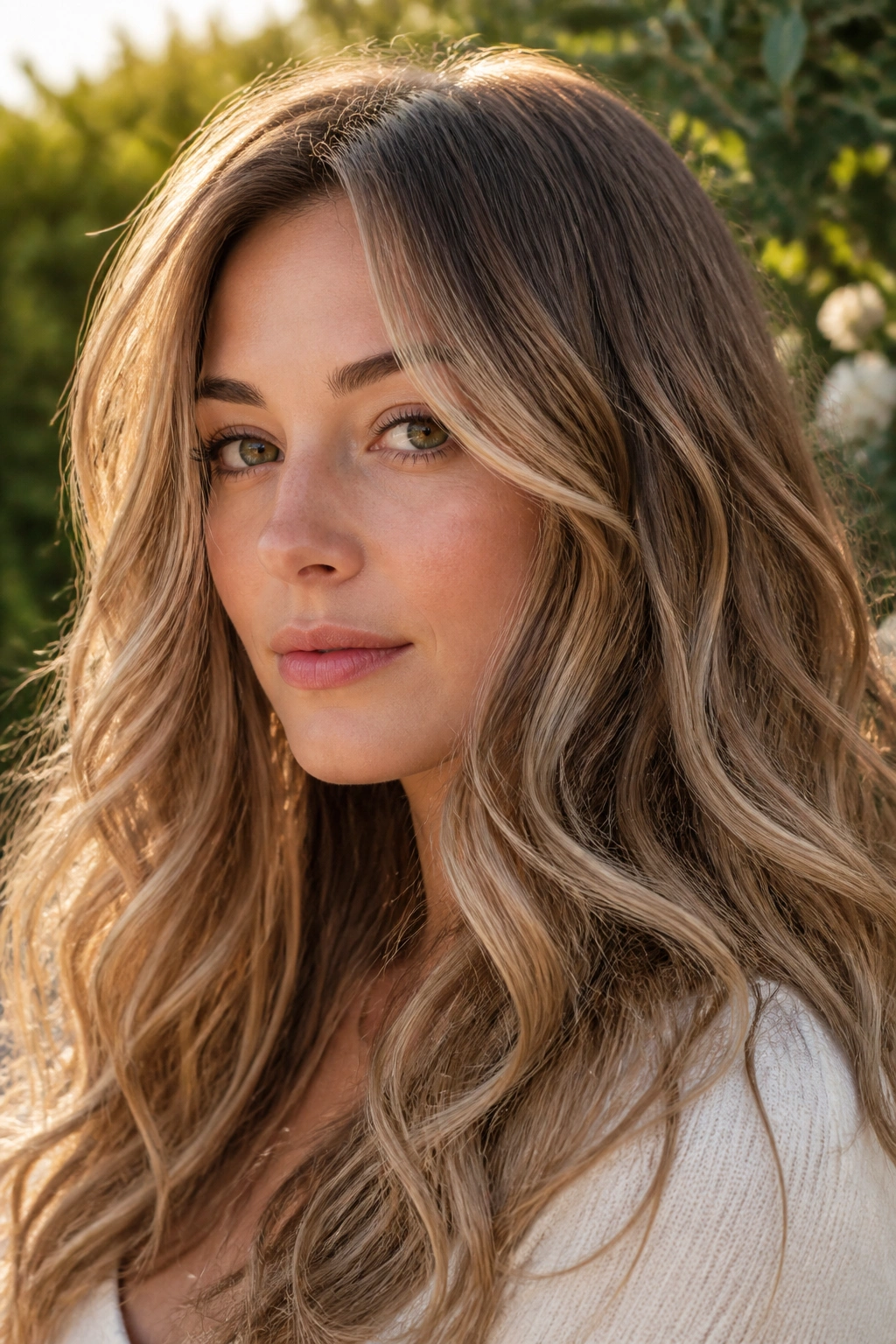
Honey beige balayage is what I recommend when someone says, “I want to go lighter, but I do not want to look bleached.” That sentence comes up all the time, and honestly, this is the answer more often than not.
The color stays warm, but not orange. It has that soft honey glow you notice in natural sunlight, with beige running through the mids so the finish does not get sticky or brassy. On medium brown hair, it looks especially good because the darker base gives the blonde something to sit against.
You also get a nice grow-out pattern. The painted pieces soften the transition at the root, and the ends can go a touch lighter than the rest without making the whole head look disconnected. It grows out kindly.
If your skin leans cool, keep the honey muted and ask your colorist to leave a little depth around the face. If your skin runs golden or peachy, you can push the warmth a bit more. Either way, balayage is the reason this blonde stays wearable instead of loud.
3. Creamy Vanilla Blonde With Face-Framing Pieces
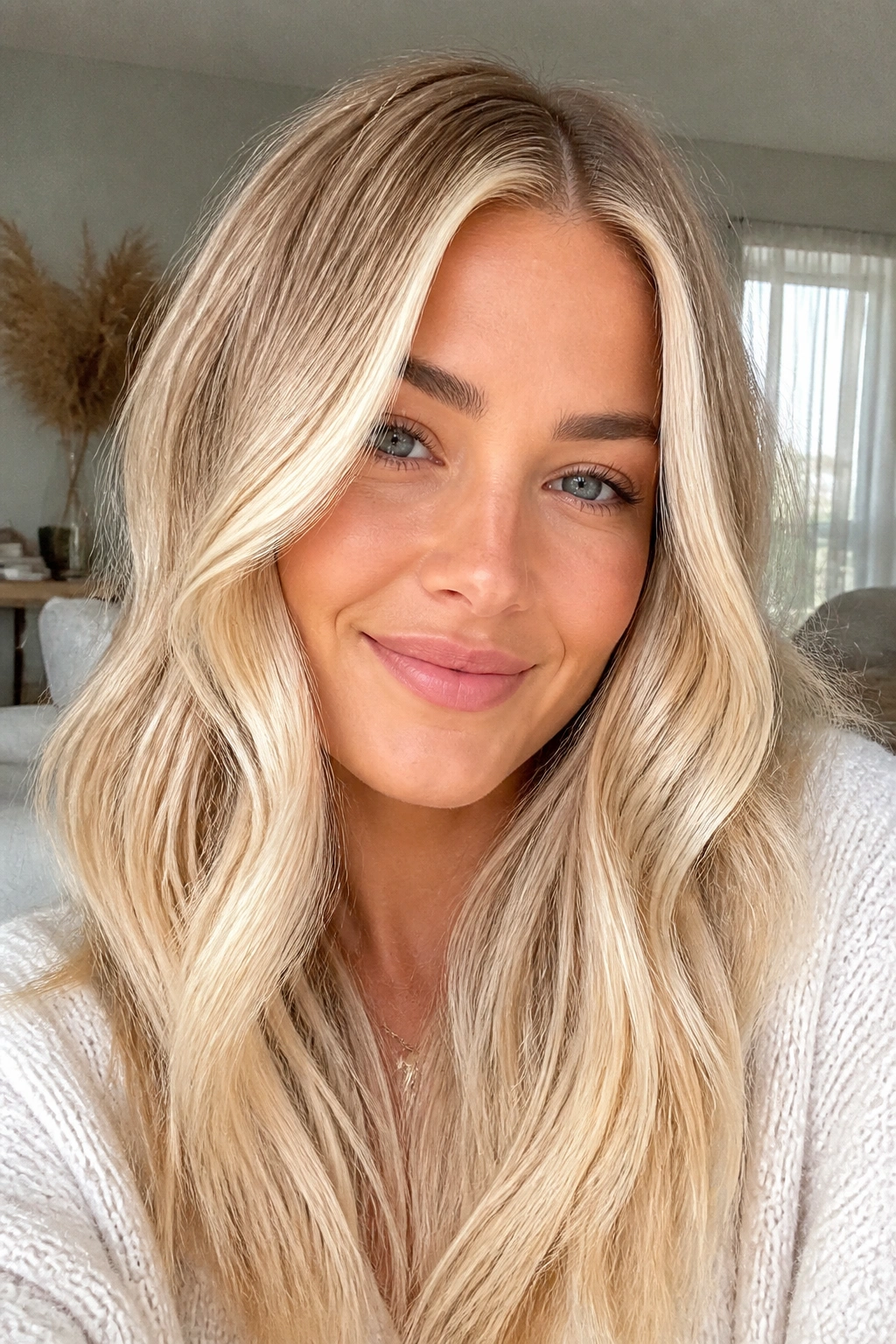
Why does creamy vanilla look so clean on long layers? Because it brightens the face without blasting the entire head to the same pale level. That contrast matters. It gives the hair shape.
The creamier the blonde, the less likely it is to read chalky. Vanilla sits in that pale, soft zone where the color looks light but still has a little depth. Around the face, those brighter pieces act like a soft frame, especially if the hair falls in waves or has a bend at the ends.
How to Wear It
Ask for the front sections to be a touch brighter than the rest, then keep the back and underneath pieces one shade deeper. That keeps the color from looking washed out under overhead light.
- Works well on long layers, curtain bangs, and collarbone cuts
- Looks good with a center part or a soft off-center part
- Needs a gloss every 6 to 8 weeks to stay creamy
- If your hair is thick, ask for micro-babylights so the brightness spreads
A lot of people want one solid pale blonde. This is better. The texture reads richer, and the grow-out is more forgiving.
4. Mushroom Blonde Melt
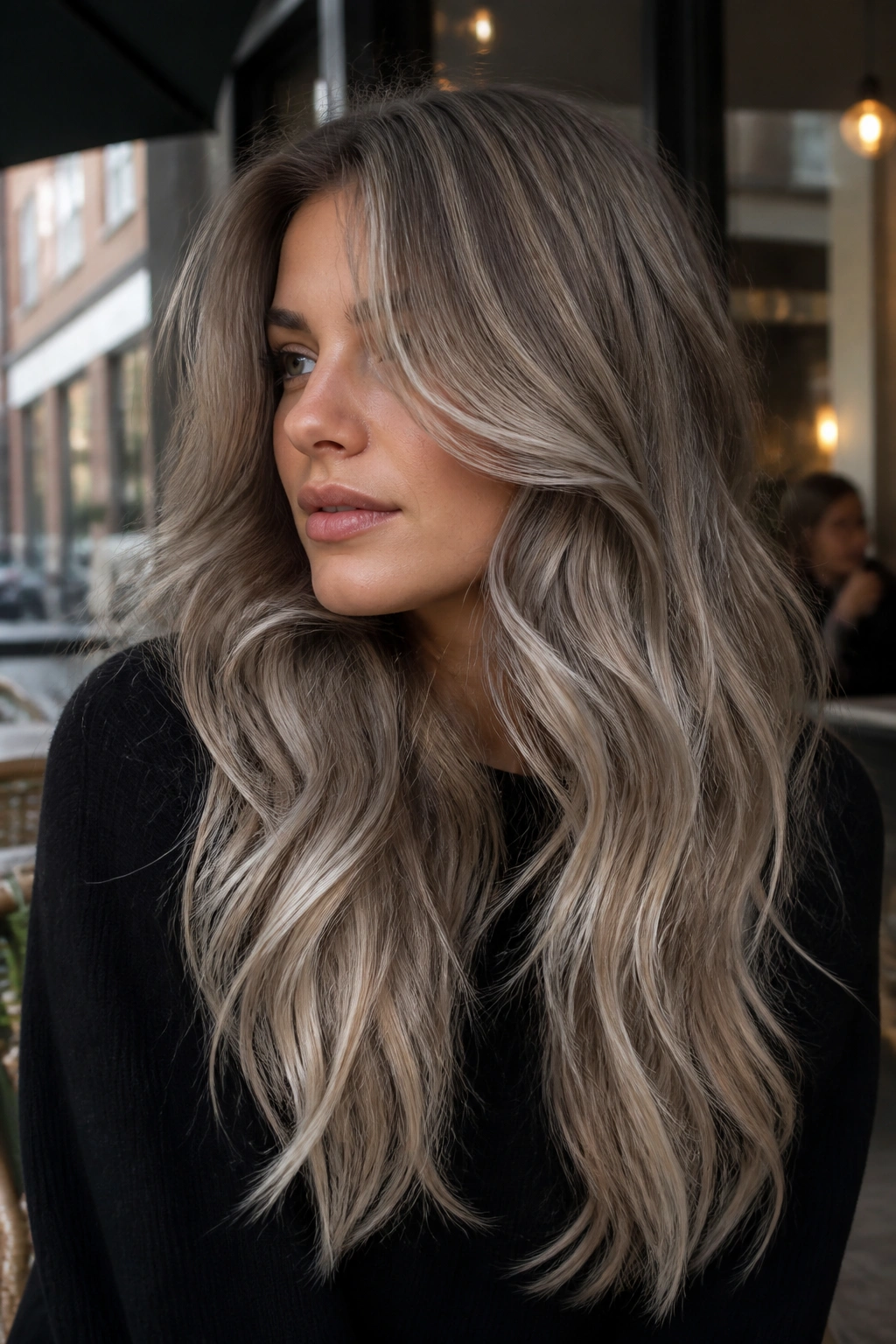
If you hate stripey blonde, mushroom blonde is your friend. It leans cool, taupe, and beige at the same time, which gives the hair a soft, smoky look instead of a yellow one.
This color works especially well when you are moving out of brunette territory and do not want a dramatic jump. The melt between root, mids, and ends is the whole point. No hard line. No chunky highlights. Just a slow fade from deeper ash-brown into sandy blonde.
It also flatters layered cuts because the movement shows off the dimension. On straight hair, the effect feels polished; on waves, it looks almost feathered. The trick is not to over-lighten the ends. If they get too pale, the whole thing loses the mushroom softness that makes the color interesting.
One sentence says it all: this blonde grows out beautifully. Not flashy. Not fussy. Just easy to wear.
5. Buttery Money Piece Blonde
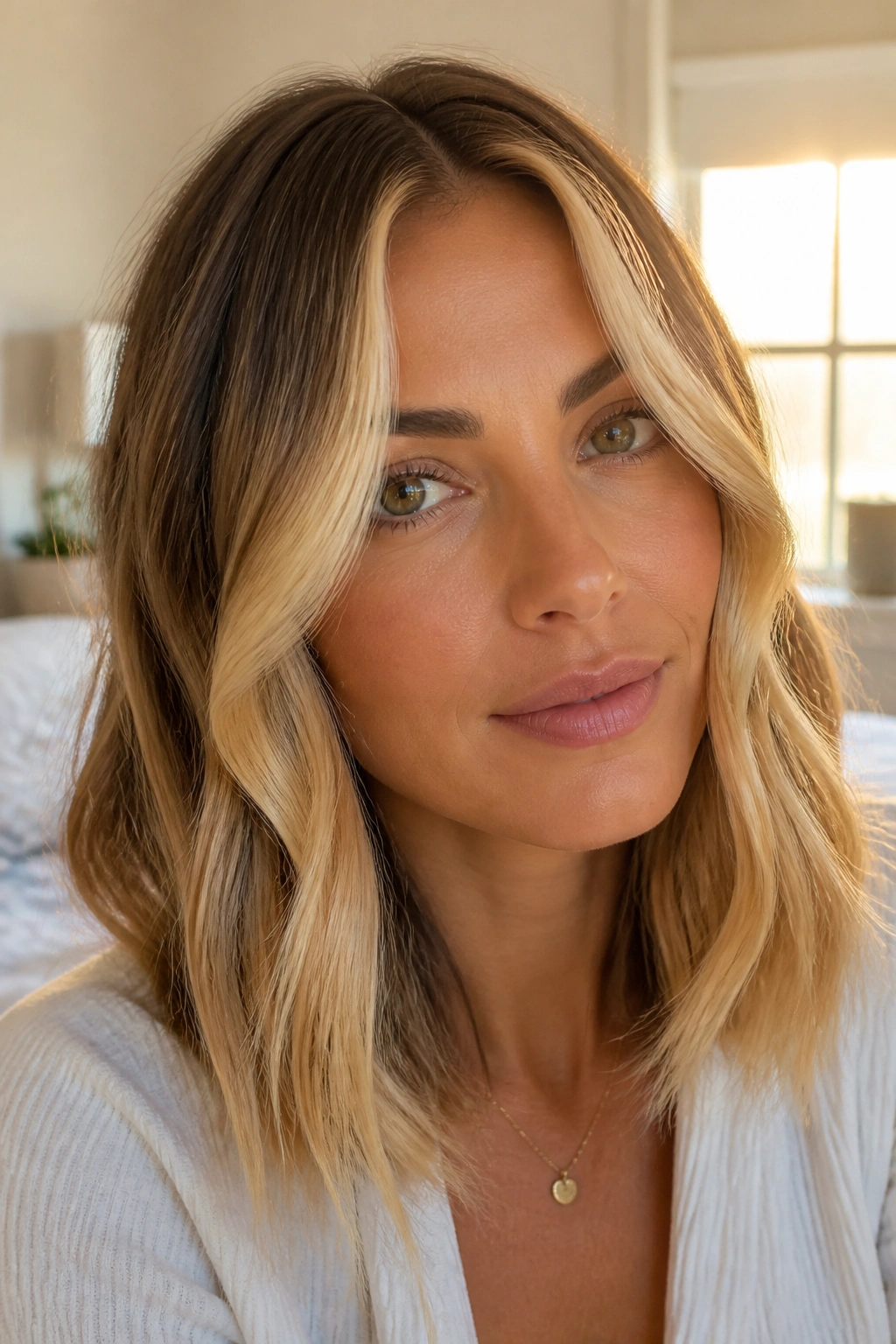
A bright money piece can change your whole face before the rest of the hair catches up. That is why buttery blonde around the front is such a smart choice if you want to go lighter without committing to a full head of brightness right away.
The front panels do the heavy lifting. They sit near the cheekbones, temples, and part line, so even a subtle lift there makes the whole haircut feel fresher. I like this idea most on shoulder-length hair and longer, where those brighter strands can fall forward and do their job.
There’s a catch, though. If the face frame is too thin or too pale, it can look skunky by week four. Keep the width moderate — about ½ inch to 1 inch per panel — and ask for soft blending at the root so the streaks do not read as hard stripes.
Warm butter tones are especially flattering if your skin has peach, gold, or olive in it. They add light without turning brassy.
6. Pearl Blonde Bob
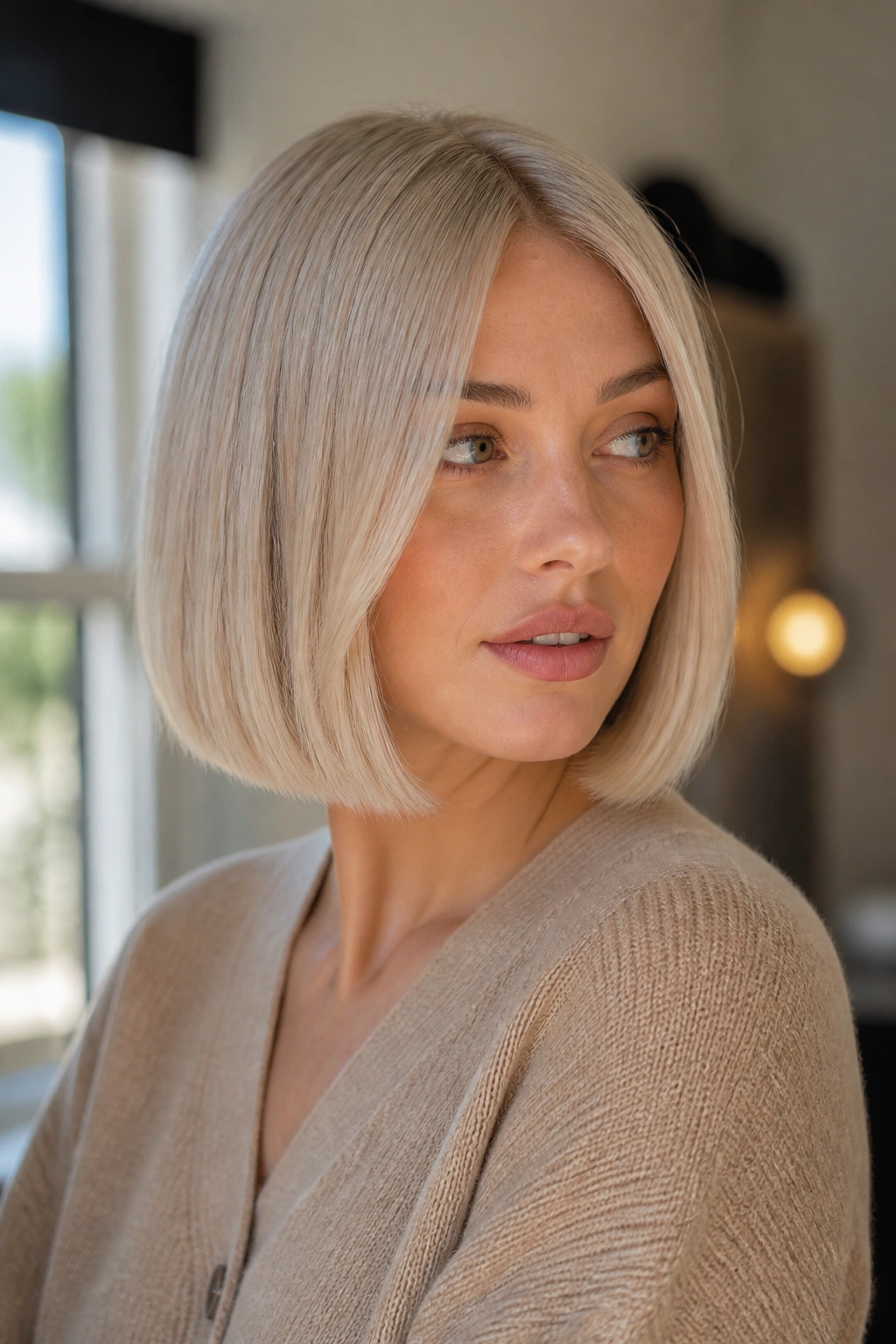
Pearl blonde is softer than icy blonde, and that softness matters on a bob. A blunt or slightly angled cut already has shape built in, so the color does not need to fight for attention.
Unlike a stark platinum, pearl has a thin veil of beige over the pale base. That keeps the tone from looking flat under indoor light, which is where a lot of blondes lose their charm. Under daylight, the finish still looks bright. Under office lights or in the kitchen mirror, it stays calm instead of glaring back at you.
A bob is also a good match because the shorter length helps the hair look healthy even when it has been lifted. The cut keeps the ends neat, which makes the color seem cleaner. If your hair is fine, this is one of the safest light blonde ideas because the shape does half the work.
Ask for a soft pearl gloss rather than a blue-white toner. The goal is sheen, not frost.
7. Golden Apricot Blonde
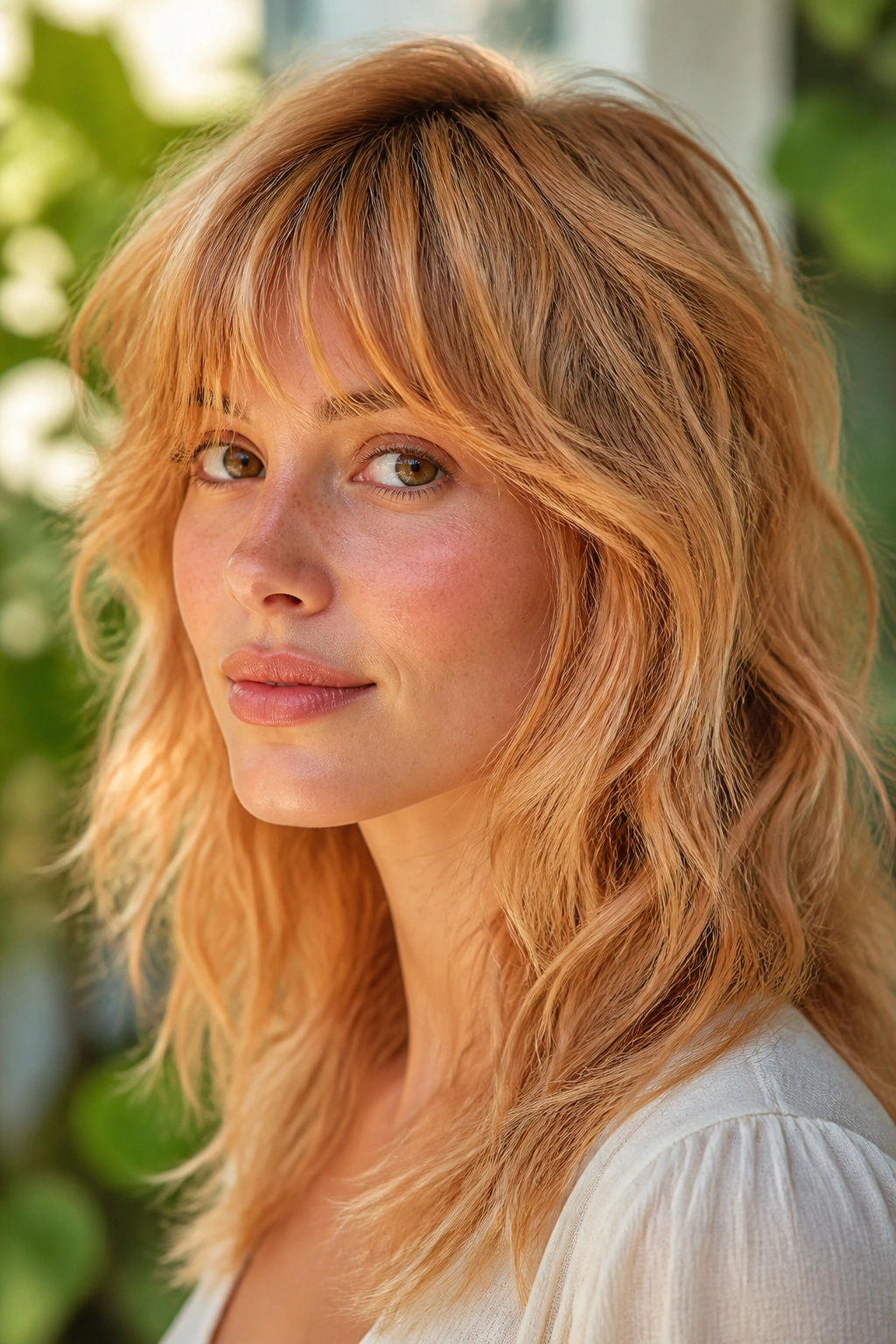
Golden apricot blonde is warm in a way that feels alive, not orange. That’s the difference. Orange can get loud fast. Apricot stays softer, with a peach-gold glow that looks especially good on freckles, warm skin, and layered cuts that need a little warmth to keep from looking flat.
What to Ask For
Tell your colorist you want a gold-based blonde with a soft peach cast, not copper. That one detail changes everything. Too much copper pulls the color into red territory, and that is a different look entirely.
- Best on medium brown or light brown bases
- Works well with shag cuts, curls, and airy layers
- Needs a gloss that deposits warmth, not a fiery tint
- Looks nicest when the root stays slightly deeper
This is one of those blondes that makes makeup easier. Peach blush, neutral lips, and a little mascara are usually enough. The hair already brings its own color to the face.
8. Scandinavian Platinum Pixie
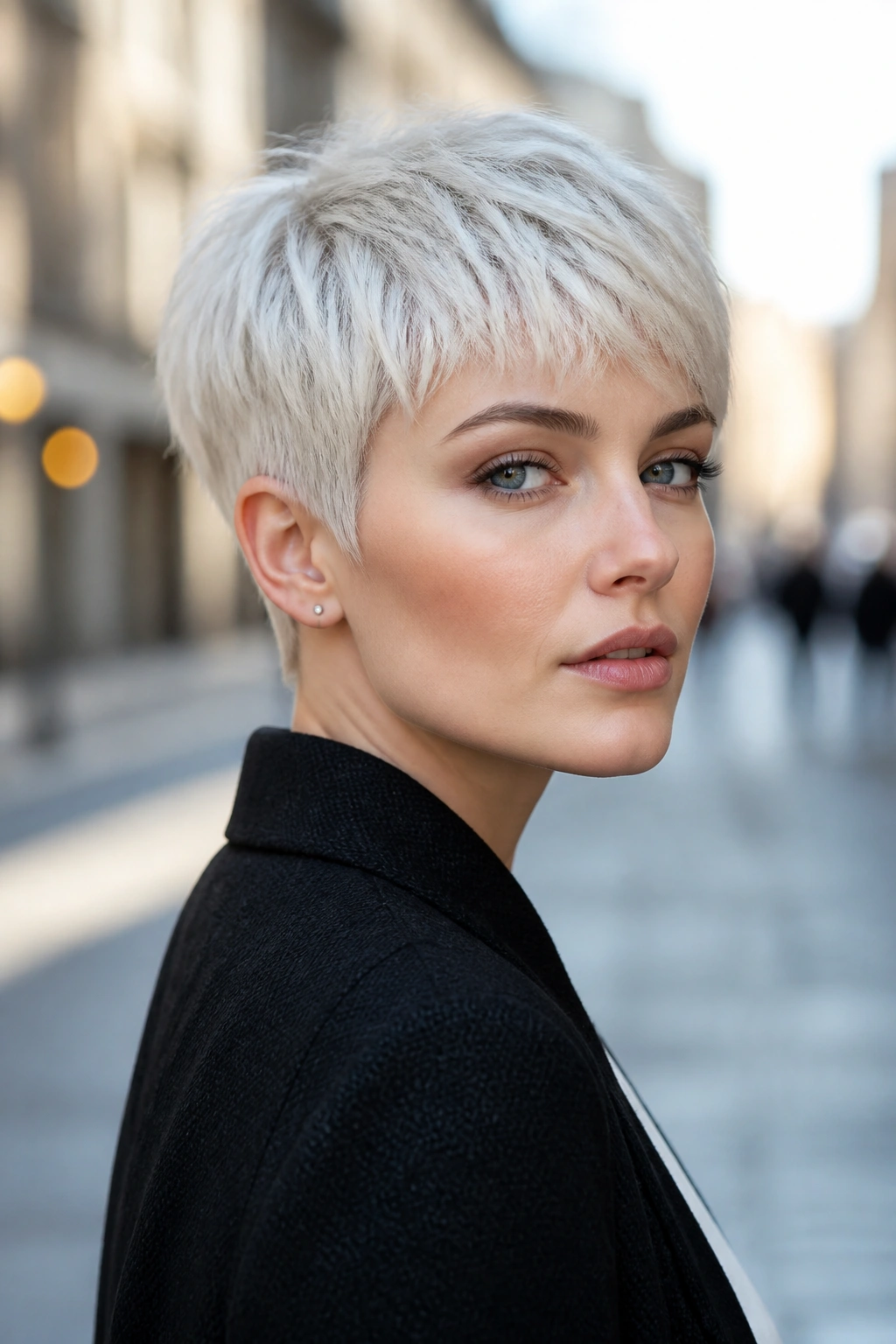
Short hair can handle more lift, and that’s why a Scandinavian platinum pixie is such a strong choice for women who want to go all the way light. The cut keeps the look sharp; the color does not have to do every bit of the work.
The bonus is practical. There’s less length to dry, fewer fragile ends, and less chance of the hair looking stringy once it’s been lifted. But the downside is just as clear: regrowth shows fast. A platinum pixie needs trims and touch-ups more often than a longer, softer blonde.
If your hair breaks easily, this is not the first stop. Get the health part sorted out first. If the hair feels sturdy, though, a short platinum cut can look clean and strong in a way long hair sometimes cannot.
Short hair helps. That’s the whole story here. Less weight, less fuss, more room for the color to shine.
9. Sandy Bronde-to-Blonde Ribbon Highlights
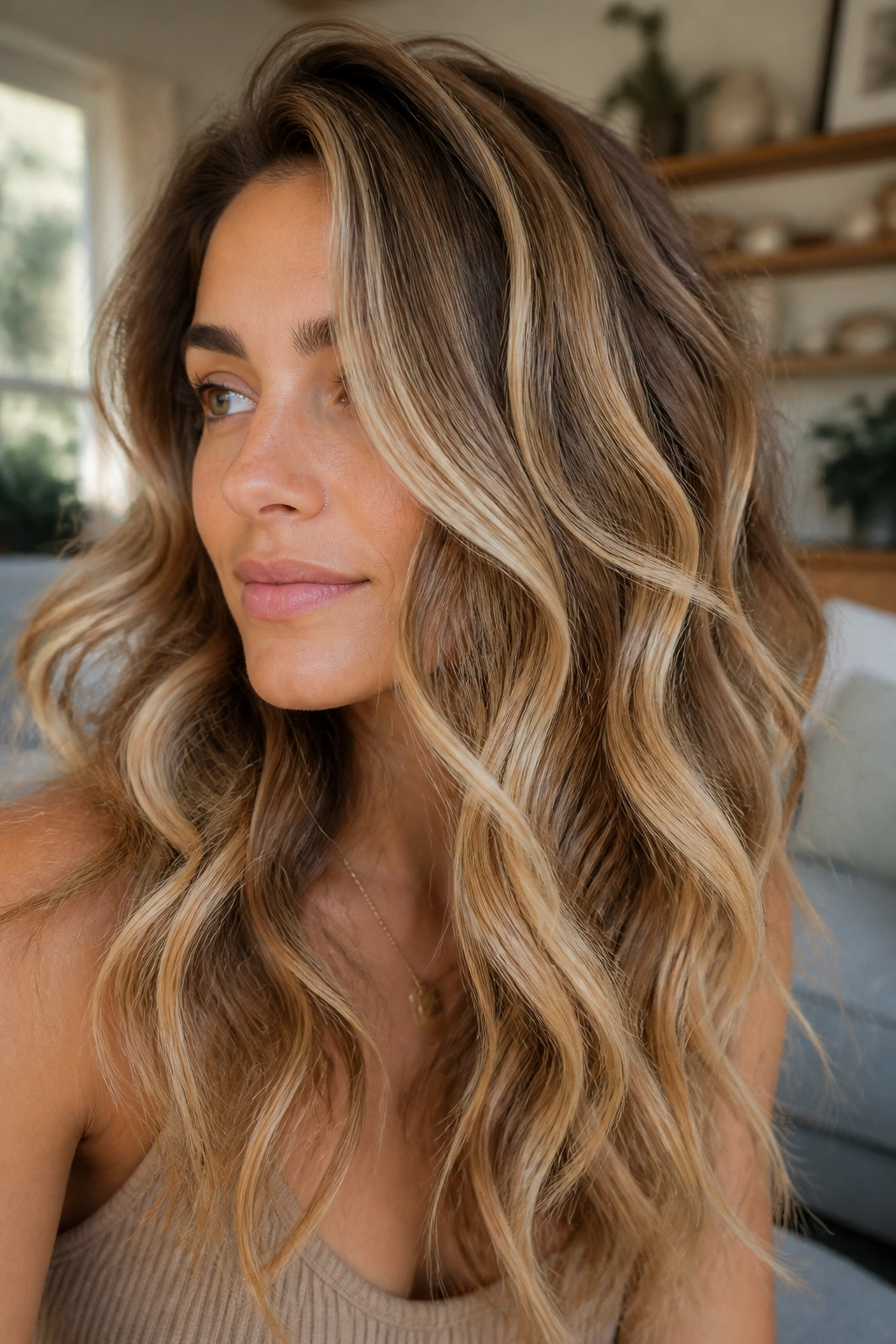
If you are not ready to give up brunette depth, ribbon highlights are the smartest bridge. They thread blonde through sandy brown hair in wide, soft pieces, so the result feels lighter without looking like a total bleach job.
The beauty of this look is movement. The lighter ribbons catch on bends, curls, and layers, which keeps the hair from going one-note. A dark base still gives the color depth, so even the blonde pieces look richer than they would on a blank canvas.
Key Details That Matter
- Keep the root area natural or softly glazed
- Ask for ribbons instead of tiny all-over highlights
- Brighten the top layers first, then the ends
- Leave the underside a touch deeper for contrast
This is a strong option for women who want to go lighter in stages. It also makes future appointments easier because the base already has multiple tones. You are not trying to force one color to do everything.
10. Icy Pearl Lob With Soft Ends
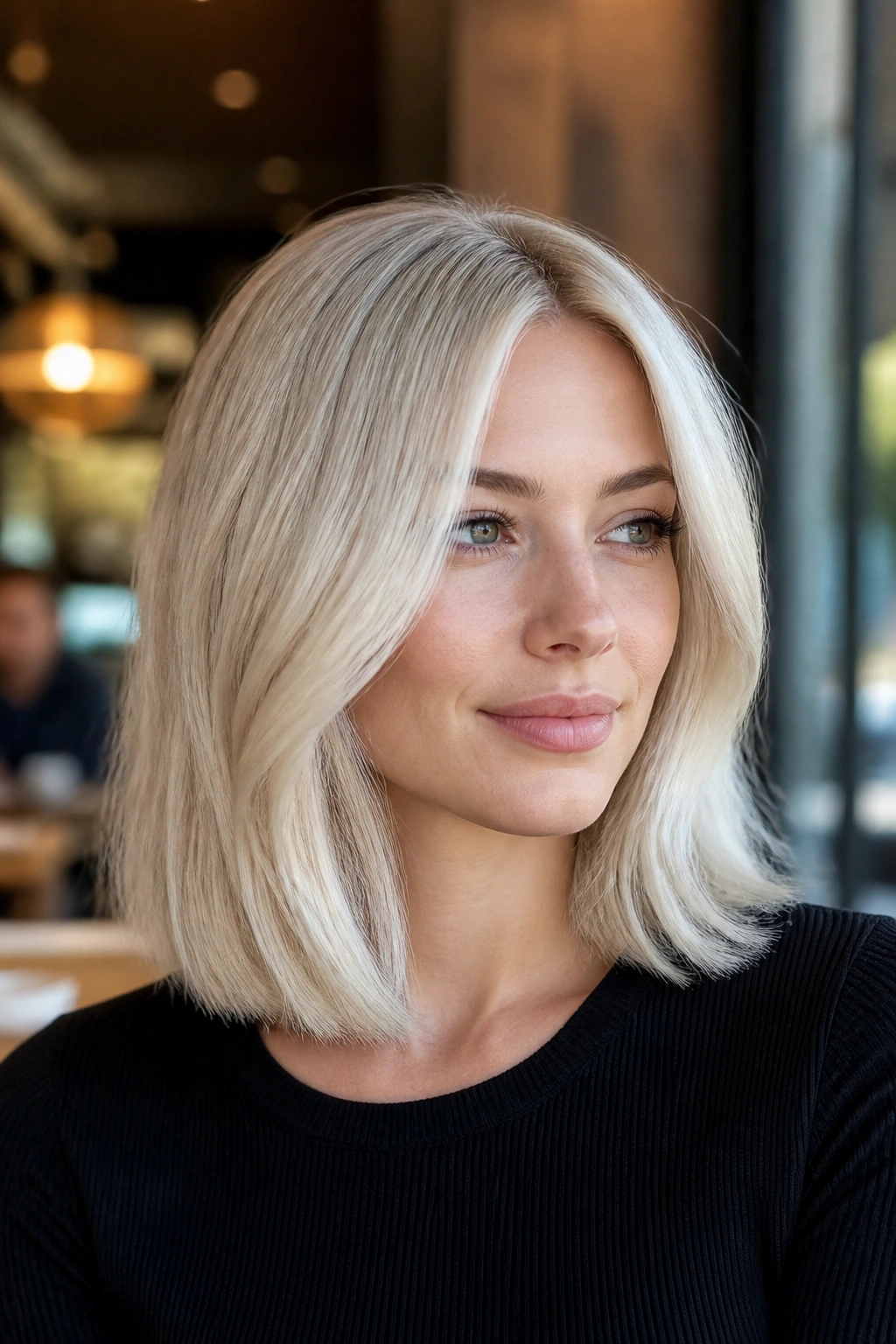
A lob gives icy blonde room to breathe. On long hair, that much pale color can start looking heavy or overworked, especially if the ends are thin. On a collarbone-length cut, the whole look feels cleaner.
The real trick is keeping the ends soft, not wispy. If they get too see-through, the blonde can look dry even when the tone is perfect. A blunt enough perimeter helps hold the shape, while fine internal layers keep the lob from feeling boxy.
Icy pearl is cooler than champagne and less beige than mushroom blonde. It sits in that high-light zone where the hair looks reflective, almost glassy, but not flat-white. That is a fine line. Pulling the toner too far ash can make the color dull, especially on porous ends.
Use heat styling sparingly, and always with protectant. Pale blonde shows damage fast. One flat iron pass too many can make the ends look fried before you even notice what happened.
11. Beige Blonde Curly Layers
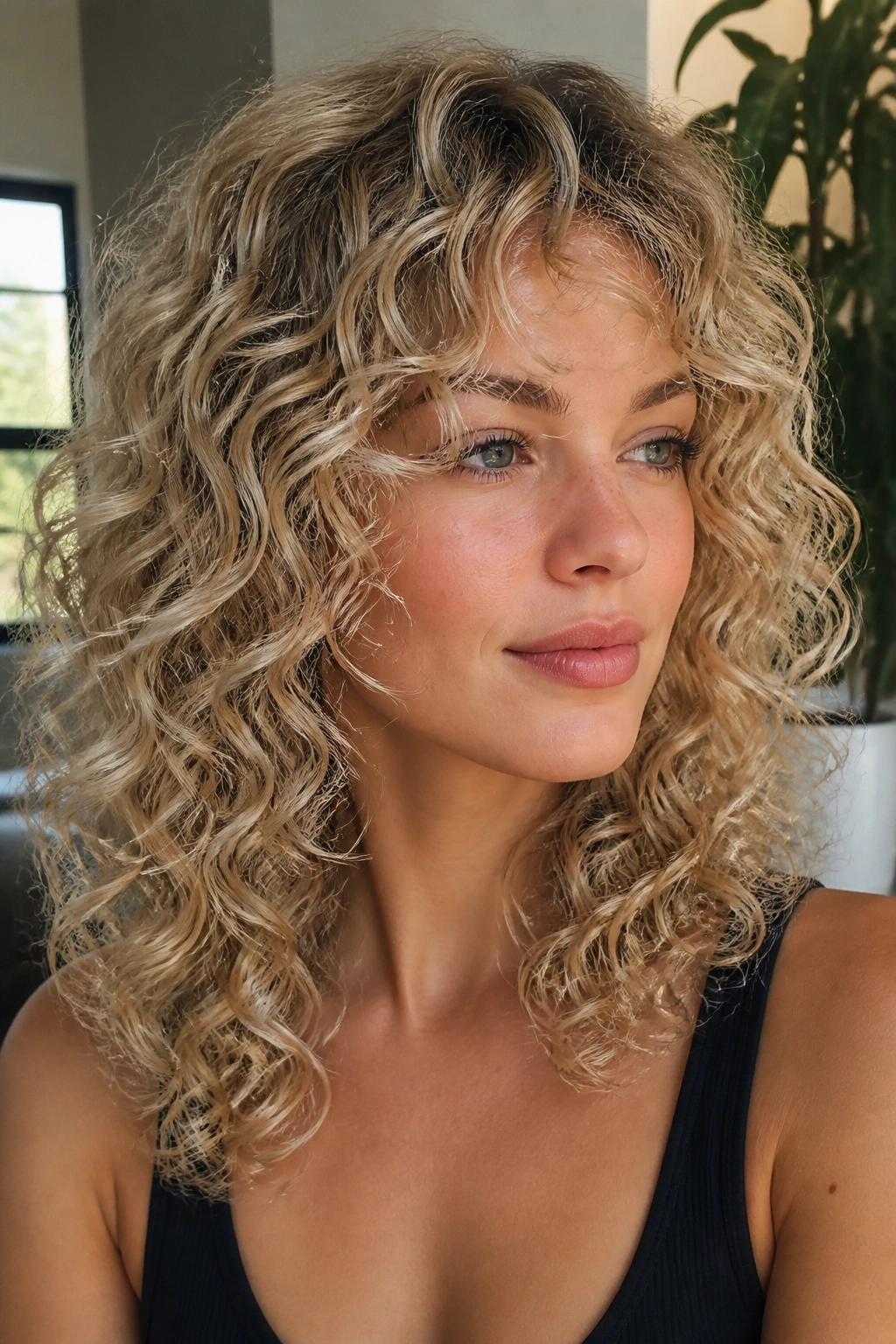
Curly hair does not need to be blasted into one pale shade to look lighter. In fact, that usually makes the curls lose shape. Beige blonde works better because it lets the curl pattern keep its depth and shadows.
The lighter pieces can sit on the outside of each curl clump, while the inner parts stay a little darker. That gives the hair dimension from root to tip. On 2B through 3C curls, the effect is especially good because beige blonde shows off movement instead of flattening it.
What to Tell Your Stylist
Ask for soft, spaced-out highlights rather than dense foil work. The goal is brightness with room between the pieces. Curls need that breathing room or they turn puffy.
- Keep the tone beige, not ash-heavy
- Brighten around the face and crown first
- Avoid overprocessing the ends of high-porosity curls
- Diffuse on low heat so the color stays glossy
Curly blondes often look best when they are a little warmer than expected. Not yellow. Just warm enough to keep the shape alive.
12. Sunlit Foilyage on Dark Hair
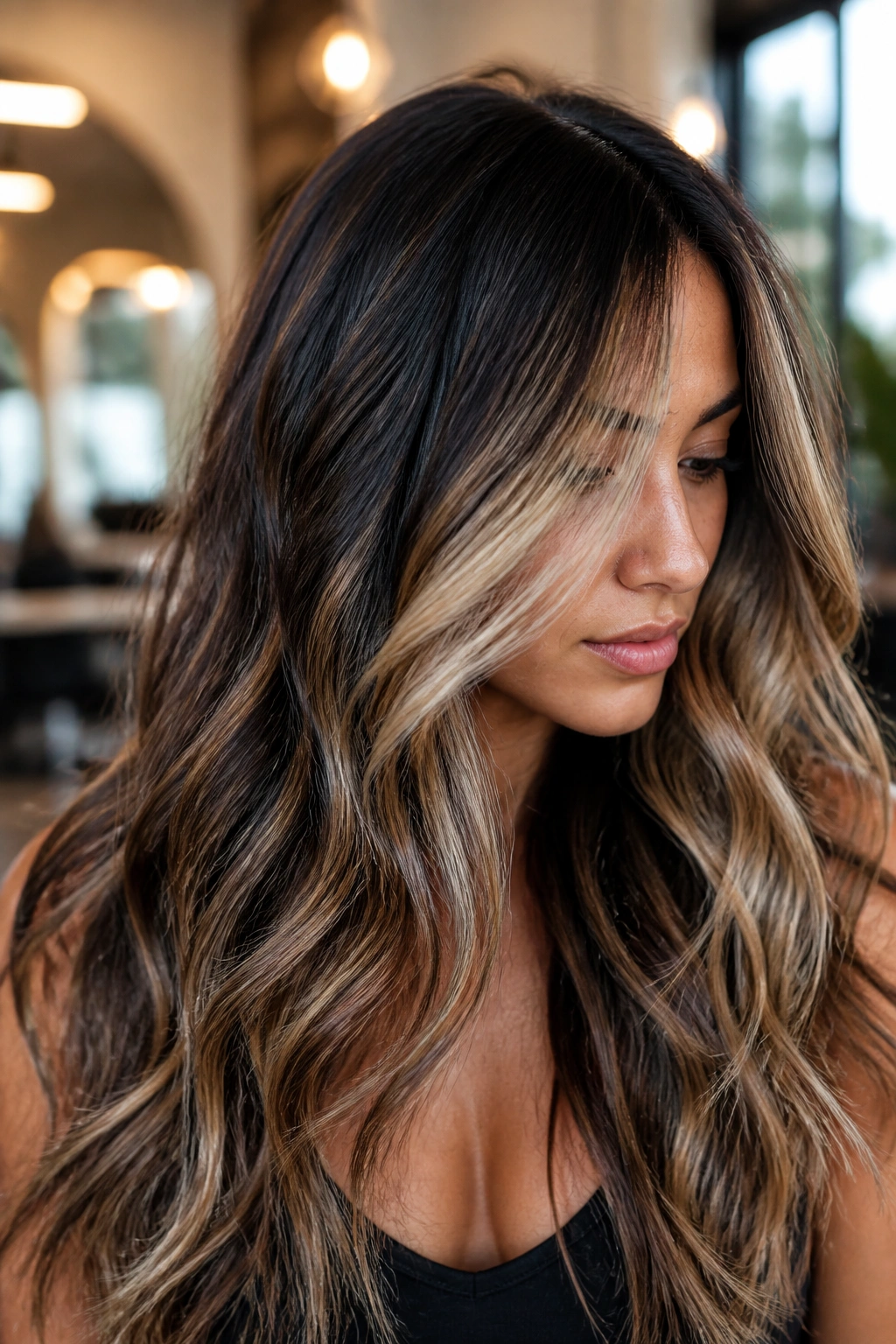
Foilyage is the smart move when your base is dark and you want real brightness without a giant leap. The technique combines painted pieces with foil, which gives the hair more lift where it needs it and a softer edge where it doesn’t.
That matters on darker hair because open-air painting alone can leave the lift too subtle. Foils trap heat and push the blonde farther, so you get those brighter ribbons that read sunlit instead of murky. Around the face and crown, that extra lift makes the whole style wake up.
Why It Works
The contrast stays controlled. Your roots can remain deep, while the mids and ends carry most of the brightness. That keeps the color dimensional and easier to maintain than a full blonde overhaul.
- Best for level 4 to 6 starting hair
- Ask for brighter pieces at the top and around the part
- Leave some deeper color underneath for body
- Finish with a beige or neutral gloss
Do not chase evenness everywhere. The scattered lightness is what makes foilyage look rich instead of flat.
13. Strawberry Blonde With Peachy Warmth
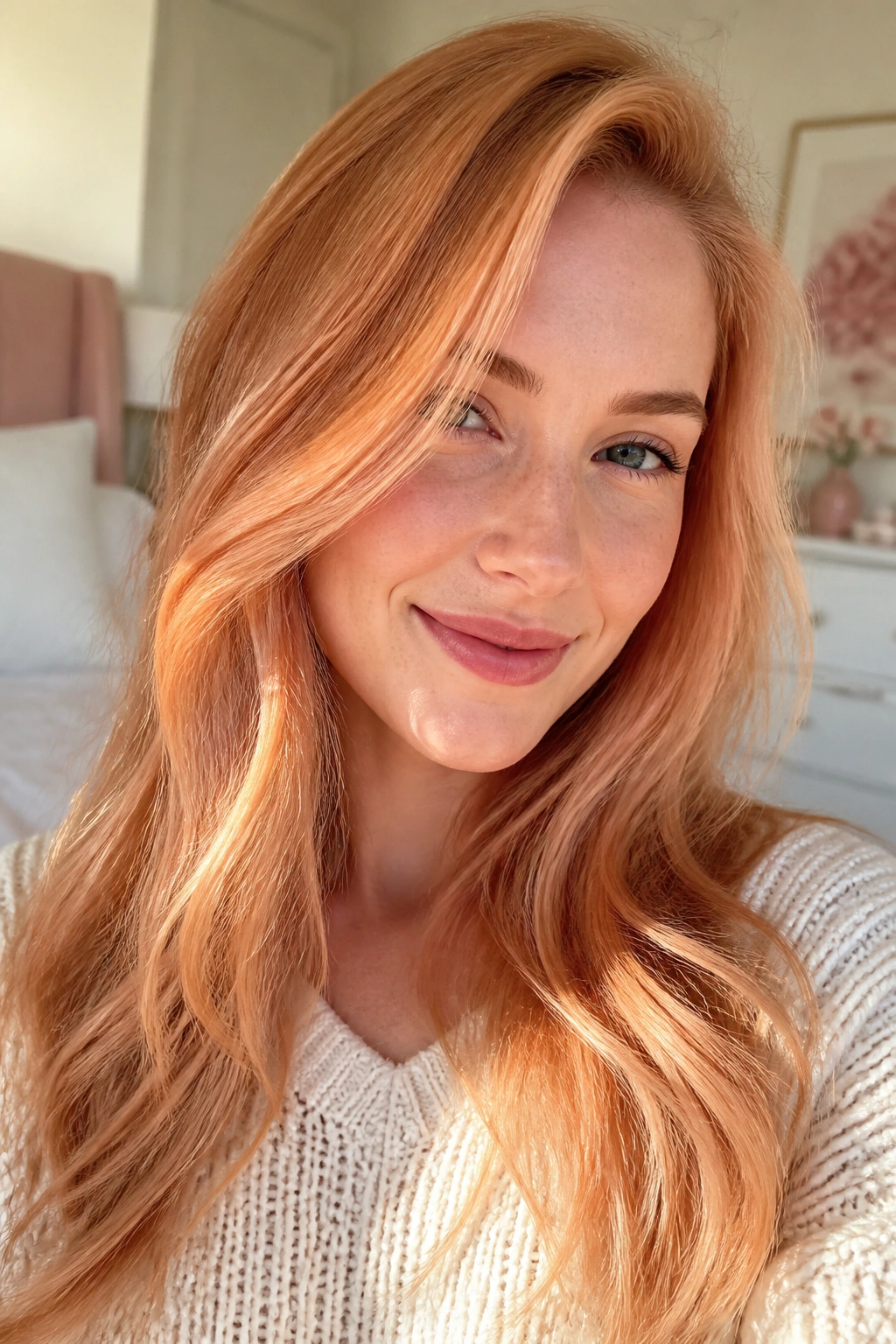
Strawberry blonde is not just for natural redheads, and I wish more people would stop treating it that way. On the right base, it can be a soft way to go lighter while keeping some warmth in the hair.
The peachy side is what keeps it from reading too coppery. You want a blonde that has a blush of rose-gold in it, not a bright red tone that fights with your skin. This works especially well if your eyebrows are dark and your complexion has freckles, pink cheeks, or a little warmth already built in.
A lot of blondes can wash out the face. Strawberry blonde does the opposite. It brings life back into cheeks and lips, especially when the finish is glossy rather than matte.
Ask for a gold-and-peach glaze over a light blonde base. That keeps the color soft and wearable. The result feels gentler than a copper red, but still warmer than beige.
14. Ash Blonde With a Shadow Root
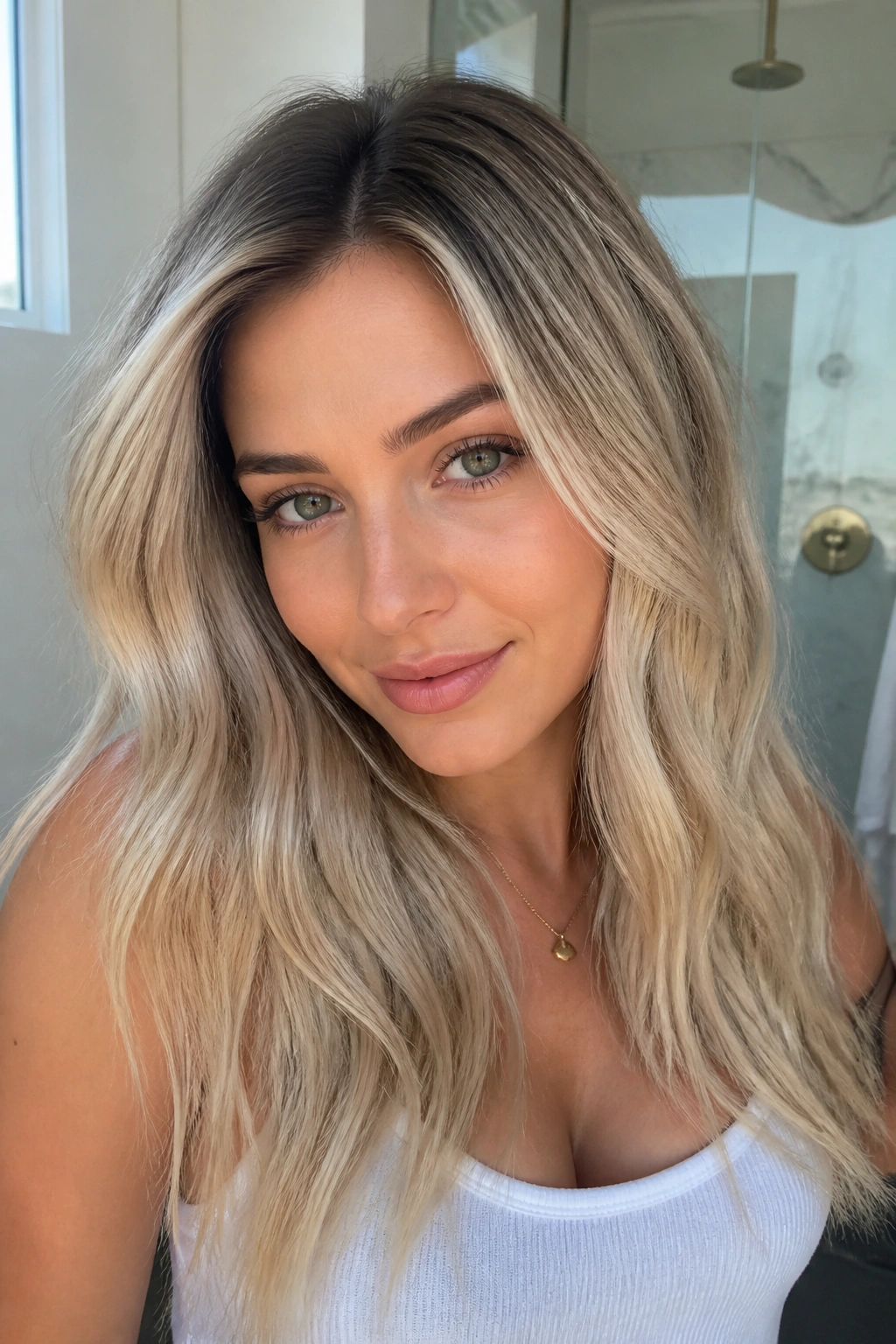
Why do some ash blondes look polished while others look flat and dusty? The answer usually comes down to depth. Ash needs contrast, or it starts to collapse visually.
A shadow root gives ash blonde the dark anchor it needs. Without that anchor, pale ash can wash out the face and make the hair look one-dimensional, especially if the ends are porous and grab too much toner. With the root in place, the lighter pieces have something to sit against.
How to Keep It from Going Muddy
Ask for the ash to stay mostly on the mids and lighter areas, not dragged all the way through the ends if the hair is already dry. Over-toning is the enemy here. It can turn a cool blonde into a gray haze fast.
A few practical rules help:
- Use violet shampoo sparingly, not every wash
- Keep the root a soft neutral brown or beige-brown
- Refresh the gloss before the tone turns dull
- Trim dry ends so the color reads clean
Ash blonde can look sharp and modern. It just needs discipline.
15. Champagne Money Piece on Long Waves
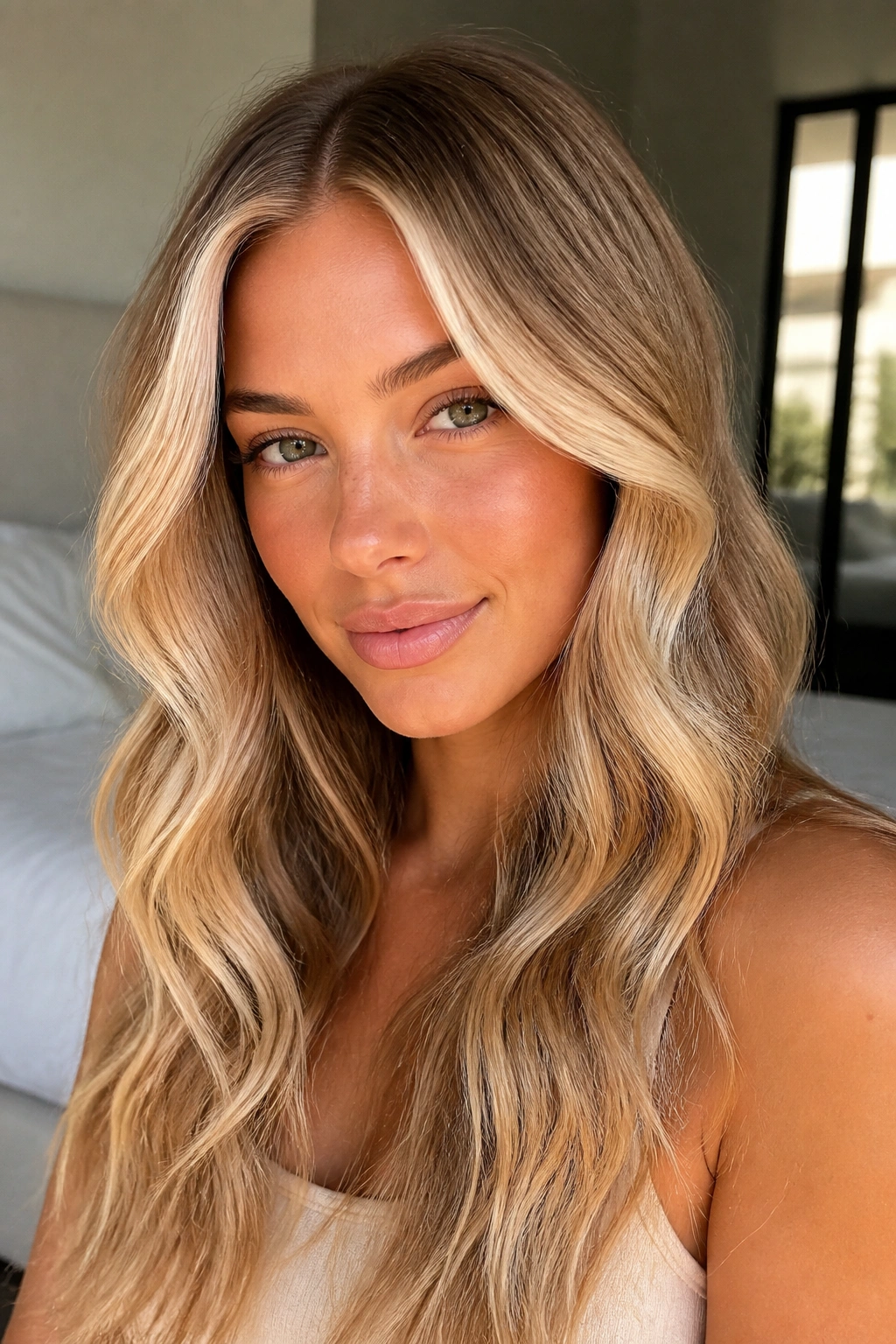
Long waves and a bright money piece are a useful combination if you want visible change without a full head of pale blonde. The front pieces do the talking, and the rest of the hair can stay softer and deeper.
That contrast is why the look photographs so well in real life — not because it’s flashy, but because the front brightness defines the face. When the waves move, the lighter pieces fold in and out of view, which makes the color feel more expensive than a single flat tone ever could.
A middle part can make this effect stronger, but a soft off-center part works too. If you usually wear your hair down, a brighter money piece gives you the most payoff for the least commitment.
What to Watch For
- Keep the lightest section near the temples and cheekbones
- Ask for a soft blend into the mid-lengths
- Leave enough depth underneath so the waves still look full
- Use a gloss if the front starts to go too yellow
This is one of the easiest ways to test blonde. You get impact without surrendering the whole head.
16. Buttercream Bob
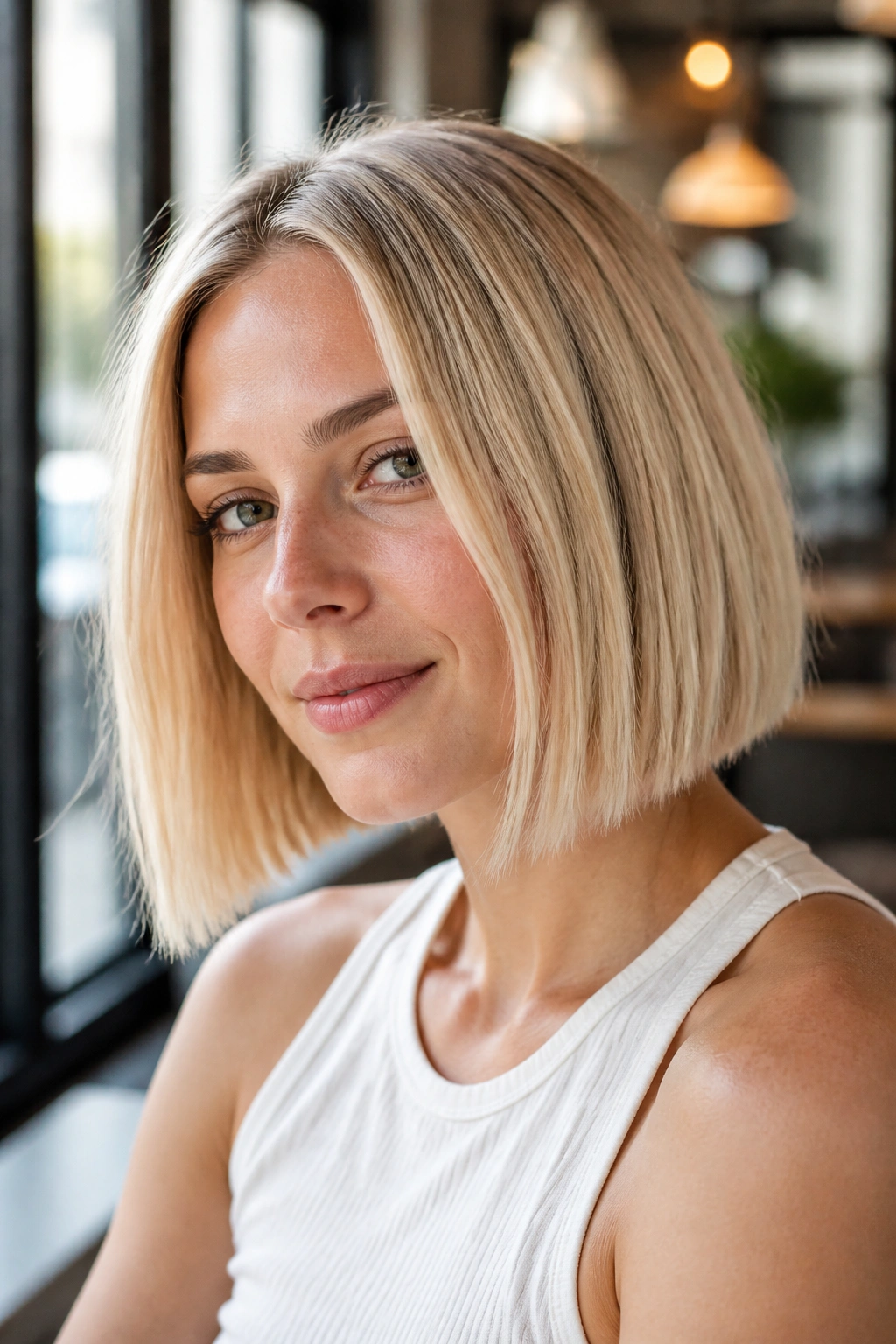
Buttercream blonde on a bob has a quiet kind of confidence. It is creamy, warm, and clean, and the shorter cut keeps the color from looking too heavy. On longer hair, buttercream can sometimes blur together. On a bob, it reads crisp.
The best version keeps the ends blunt enough to hold the shape. That little bit of structure matters because pale cream tones can expose thin or scraggly ends fast. A neat perimeter makes the whole style look fresher, even if the color is soft.
I like this shade most when the highlights are spaced with intention. Not too dense. Not too sparse. Just enough to make the bob move when you turn your head. The tone should stay in the cream-beige family, with enough warmth to avoid a stark white cast.
If you want a blonde that looks polished without looking severe, this is a strong pick. It feels light, but not fragile. That’s a nice balance.
17. Honeyed Balayage for Gray Blending
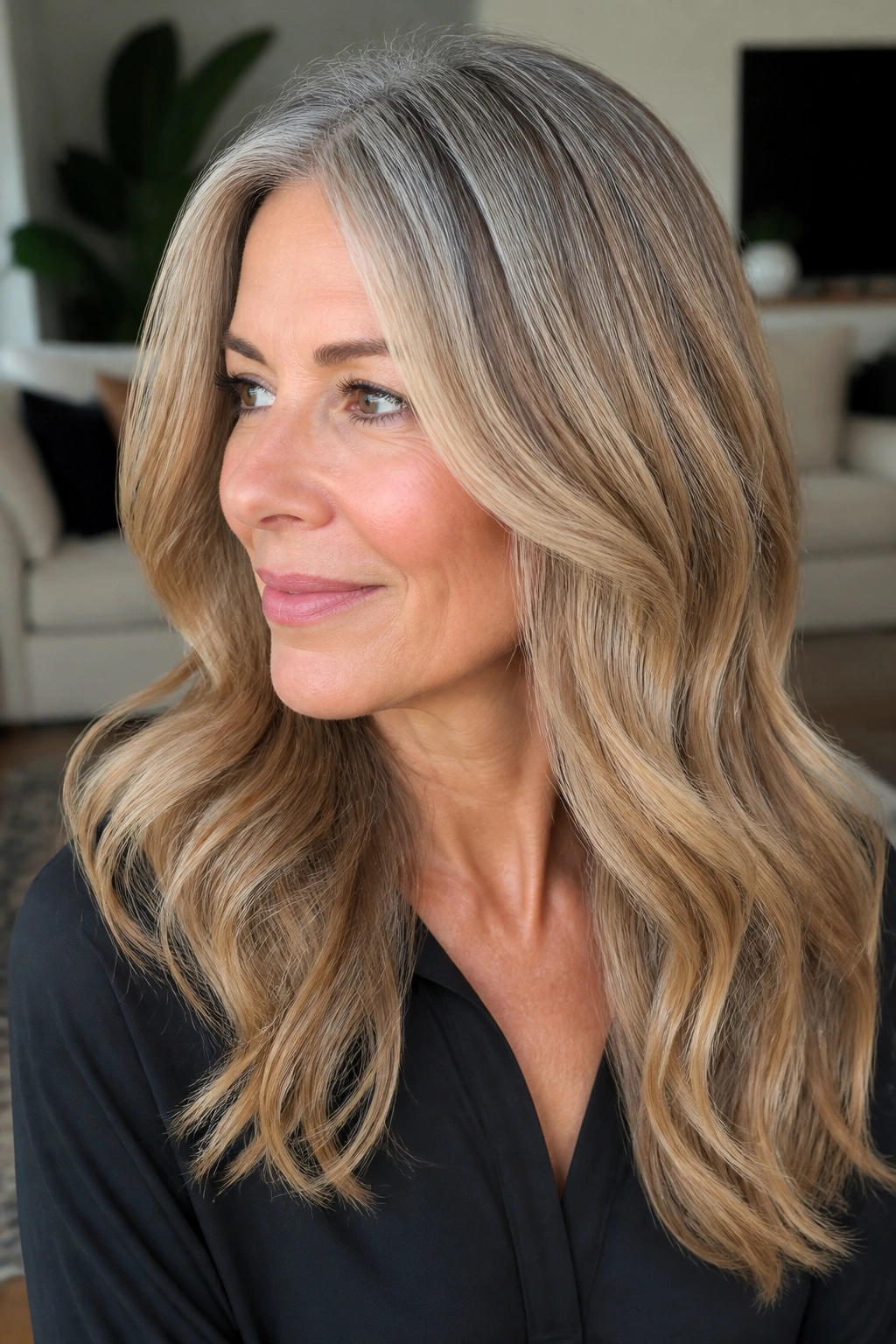
Gray blending gets a lot easier when the blonde has warmth in it. Honeyed balayage lets gray and silver live inside the color story instead of trying to cover every strand in one flat shade.
That’s the key difference from full coverage. You are not hiding the gray. You are folding it into a softer palette that makes the regrowth less obvious. On temples and part lines, this matters a lot. The grow-out looks gentler, and you can stretch the time between appointments without the color turning harsh.
Why This Approach Helps
A few honey ribbons around the face can soften the silver line without making the hair look painted. Add some lowlights through the underside, and the blend becomes even more natural.
This is the kind of color that works well for women who want lighter hair but do not want to chase perfect coverage every few weeks. It also tends to flatter mature skin because the warmth keeps the complexion from looking washed out.
If the gray is resistant or coarse, a colorist may need to adjust placement rather than push the lift harder. That’s usually the smarter fix.
18. Ice-Cream Swirl Dimensional Blonde
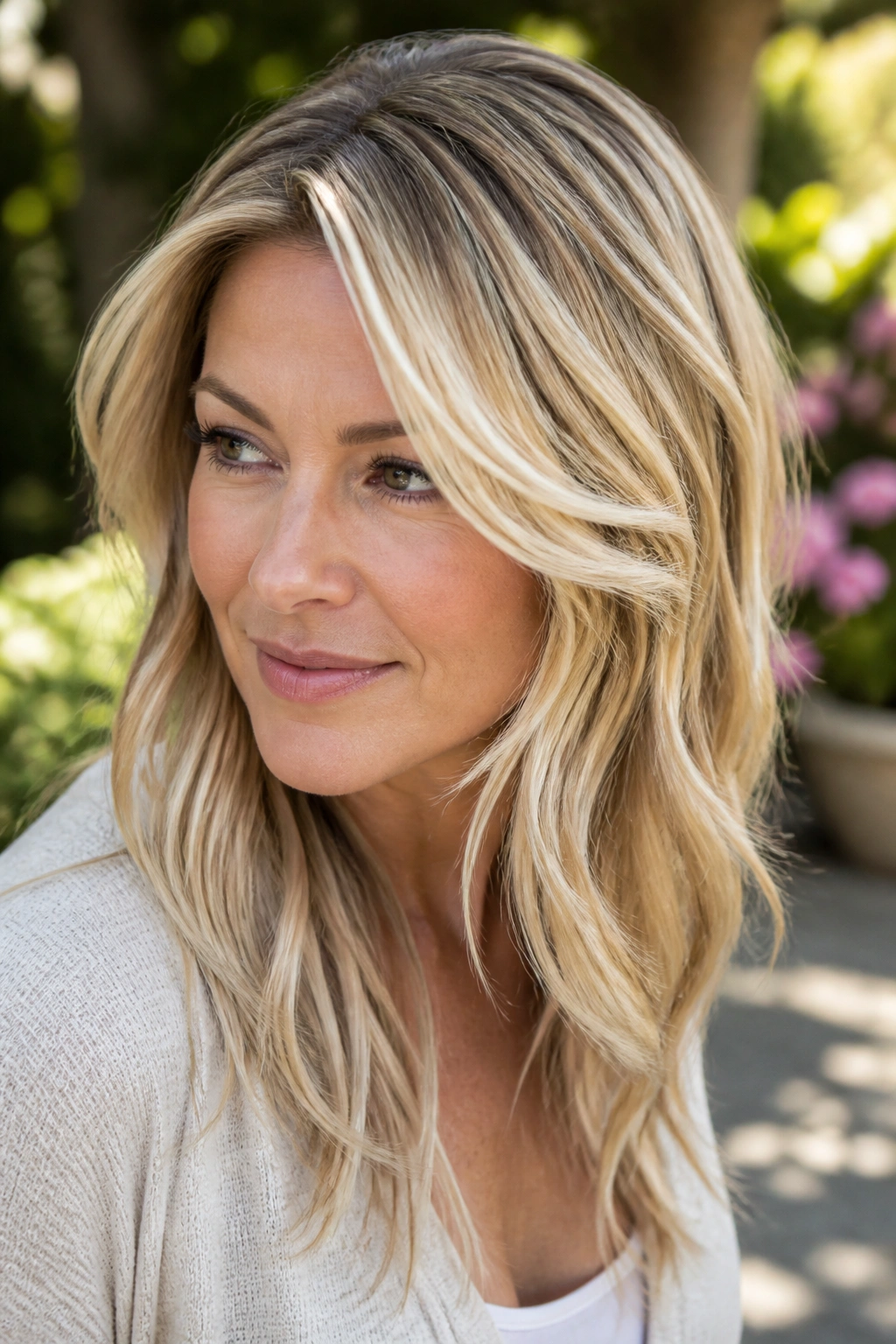
If one shade bores you, this is the answer. Ice-cream swirl blonde mixes cream, beige, and a few warmer ribbons so the hair keeps moving from root to end.
The best part is that the tones do different jobs. The pale pieces brighten. The beige pieces keep the color from going brittle. The warmer ribbons stop the whole look from feeling icy or flat. On layered hair, the mix is especially effective because each layer catches a slightly different tone.
Where the Dimension Comes From
Ask for a color placement that leaves some pieces more subdued underneath and brighter ones on top. That layer-on-layer contrast is what creates the swirl effect.
- Best on medium to long layers
- Works well with loose waves or a round-brush blowout
- Needs a gloss to keep the cream tones soft
- Looks strongest when the highlights are not all the same width
Do not flatten this with a single toner. The mix is the whole point.
19. Cream Soda Blonde Pixie-Bob
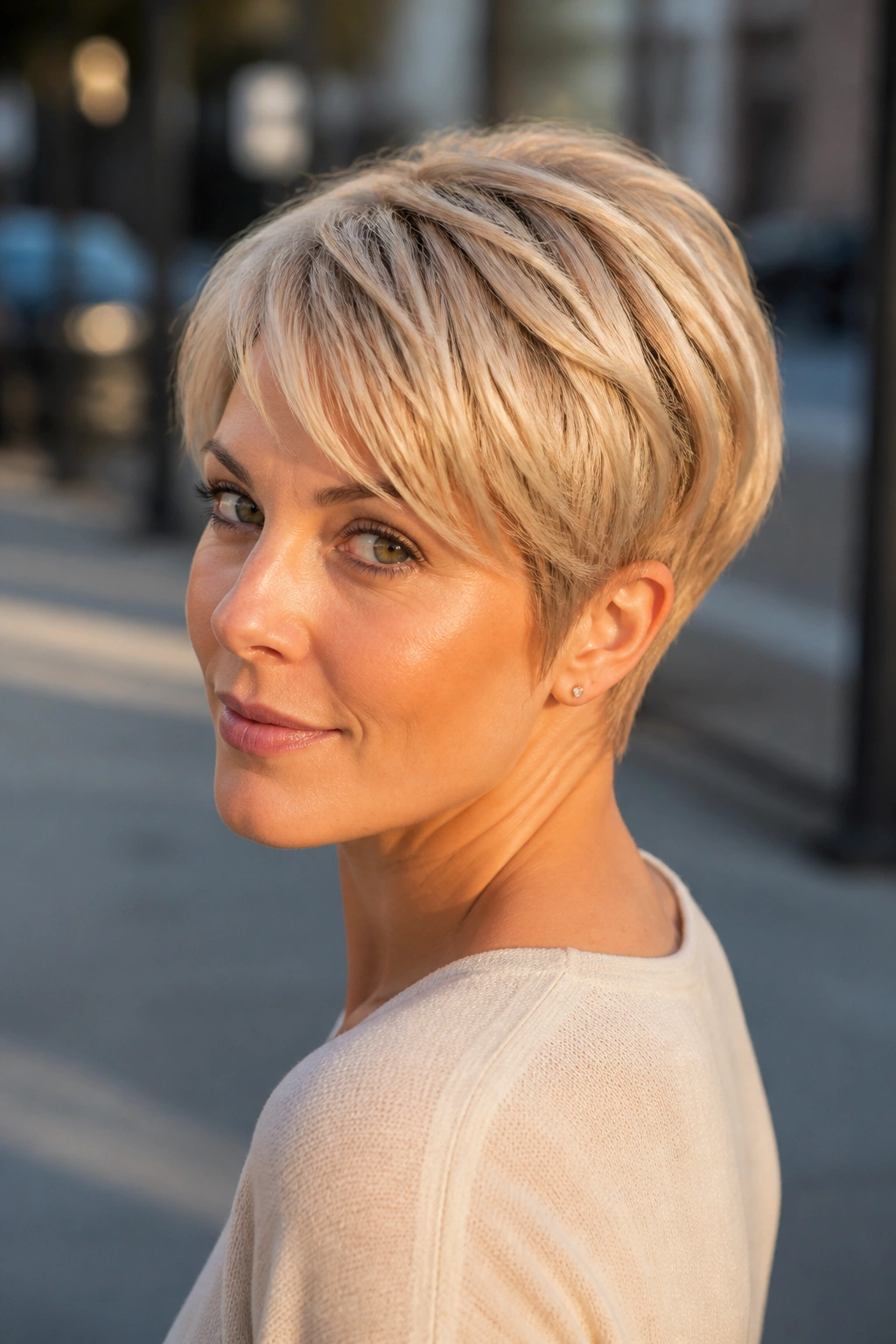
A pixie-bob gives cream soda blonde a little swagger. The cut is short enough to feel light, but long enough to show off texture at the crown and around the ears.
Cream soda sits in that beige-gold lane where the color feels airy rather than washed out. On a pixie-bob, that softness keeps the cut from looking too severe. The shorter shape also lets the blonde reflect light in a tighter space, which makes the color seem brighter than it is.
This is a smart choice if you like easy styling. A quick round-brush bend or a finger-dried finish is usually enough. Because the shape does so much, the color can stay softer around the nape and underneath without losing impact.
If your hair is dense, ask for some internal lightening so the cut does not look blocky. If it is fine, keep the lift gentle and the tone creamy. Either way, the shape and color need to work together. One without the other feels unfinished.
20. Soft Beige Blonde With a Bright Face Frame
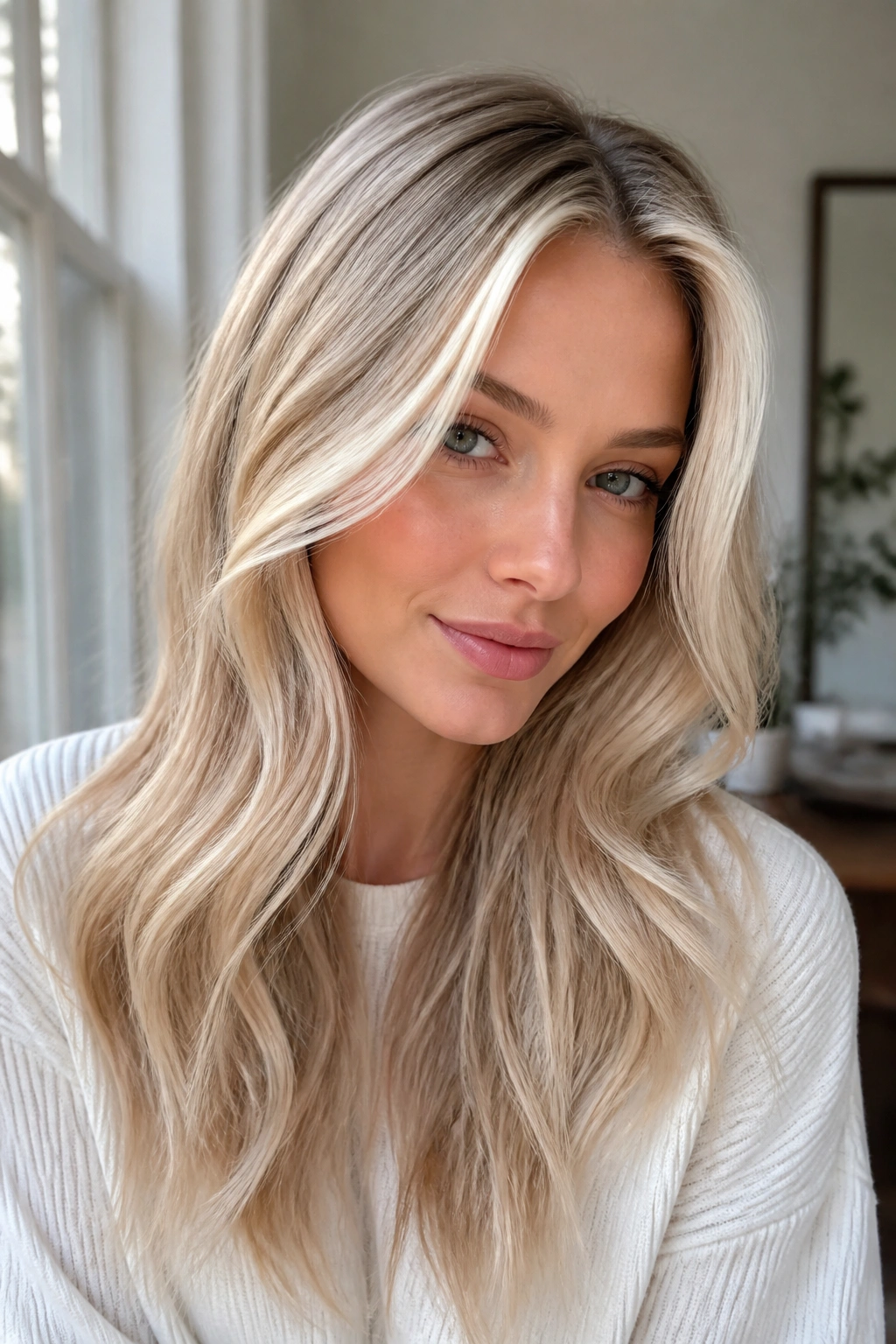
What if you want one blonde idea that is easy to wear, easy to grow out, and easy to take lighter again later? Soft beige blonde with a bright face frame is the one I’d point to first.
The beige base keeps the color calm. The brighter face frame gives you the lift people notice right away. Together, they make a blonde that feels modern without being fragile. It is not trying to be platinum. It is not trying to be honey. It sits in the middle and uses placement to do the heavy lifting.
How to Ask for It
Tell your colorist you want soft beige through the lengths with a brighter frame around the face and part line. If your hair is darker, a few lighter ribbons through the top layers will help the front brightness make sense.
- Keep the base one to two levels deeper than the face frame
- Use a neutral-beige toner to avoid brass
- Leave the underside softer so the color does not get overworked
- Trim the ends before you lighten, not after
If you are unsure where to start, start here. It leaves room for more brightness later, and that flexibility is half the point.
