



Grey hair highlight ideas for women over 50 work best when they stop trying to hide the silver and start using it. That sounds like a small shift, but it changes everything. The right highlights can soften a hard part line, brighten the face, and make a haircut look fresh without turning the whole head into a maintenance project.
Grey hair is not one texture, and that’s where a lot of color advice falls apart. Some strands are coarse and stubborn. Some are fine and porous. A few go bright white at the temples while the back still holds on to darker pigment. Thin strands need thin work. Blunt, heavy color looks fake fast.
What usually looks best is a mix of placement and tone. Not every silver needs to be covered. Not every blonde needs to be bright. Sometimes the smartest choice is a cool beige ribbon through the top, or a soft champagne veil around the face, or a few deeper lowlights that make the grey strands pop instead of disappear.
And yes, the haircut matters too. A layered bob, a shaggy lob, a pixie, even a long blunt cut will all take highlights differently. The same color formula can look polished on one head and stripy on another, which is why the best ideas are the ones that respect texture, skin tone, and grow-out.
1. Silver Babylights Through Natural Grey
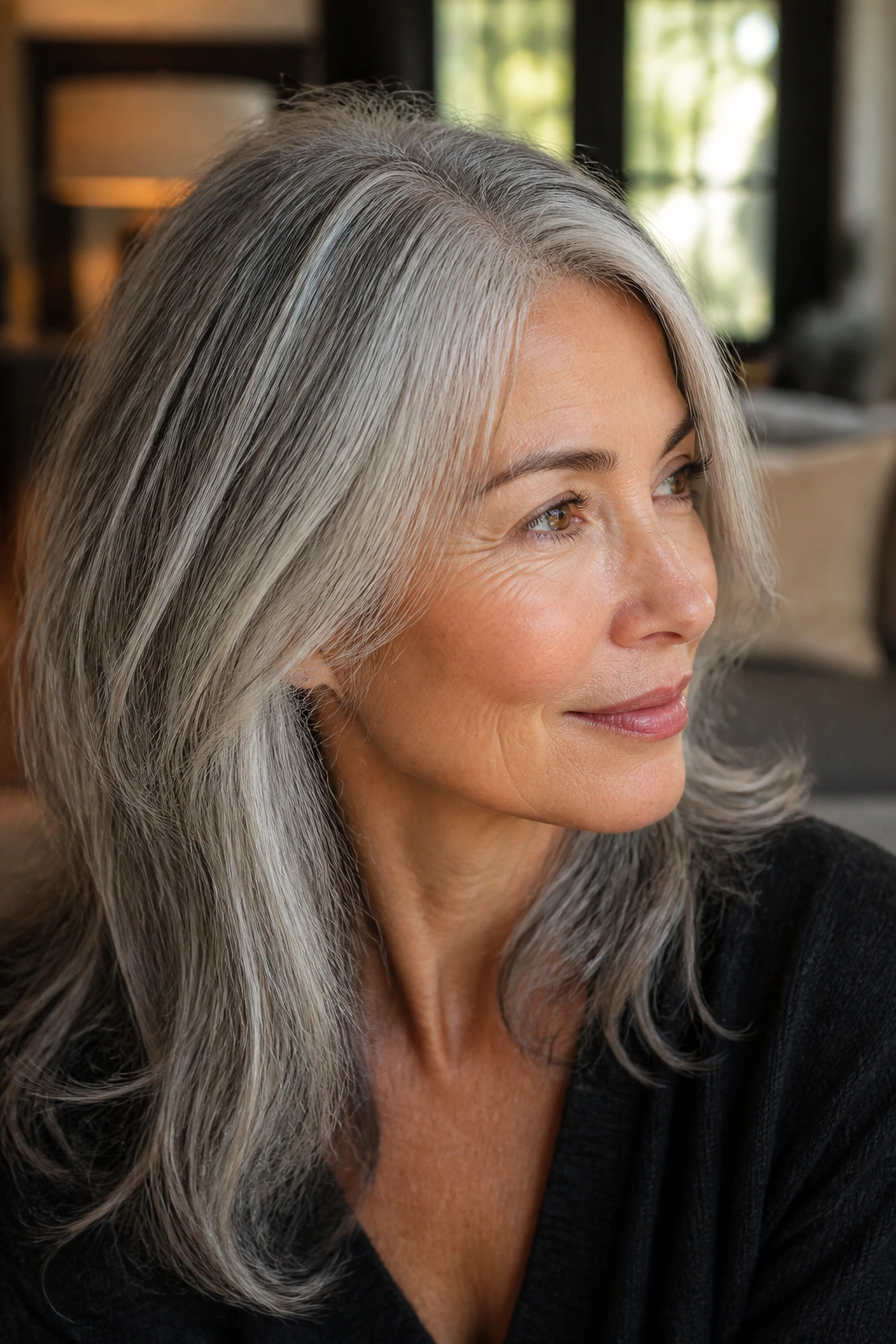
Silver babylights are the easiest way to make grey hair look intentional instead of accidental. The trick is tiny placement. Think thread-thin sections, not obvious stripes, so the silver and the highlighted hair blend into one soft surface.
Why It Works
Babylights mimic the kind of fine light strands you’d see in younger hair, only here they’re used to polish what’s already there. On women over 50, that matters because grey hair often shows texture changes first. A tiny lightener pattern keeps the hair from looking overworked.
The best version is cool, not icy. Ask for a pearl or soft silver toner rather than a flat purple rinse. Too much violet can leave hair looking dull and smoky instead of bright.
- Best for bobs, lobs, and layered cuts.
- Ask for 1/16- to 1/8-inch weaves around the crown and temples.
- Keep the lightening mostly on the top half of the head.
- Refresh with a gloss every 6 to 8 weeks.
My favorite part: it grows out quietly, which is half the battle.
2. Soft Champagne Blonde Weave
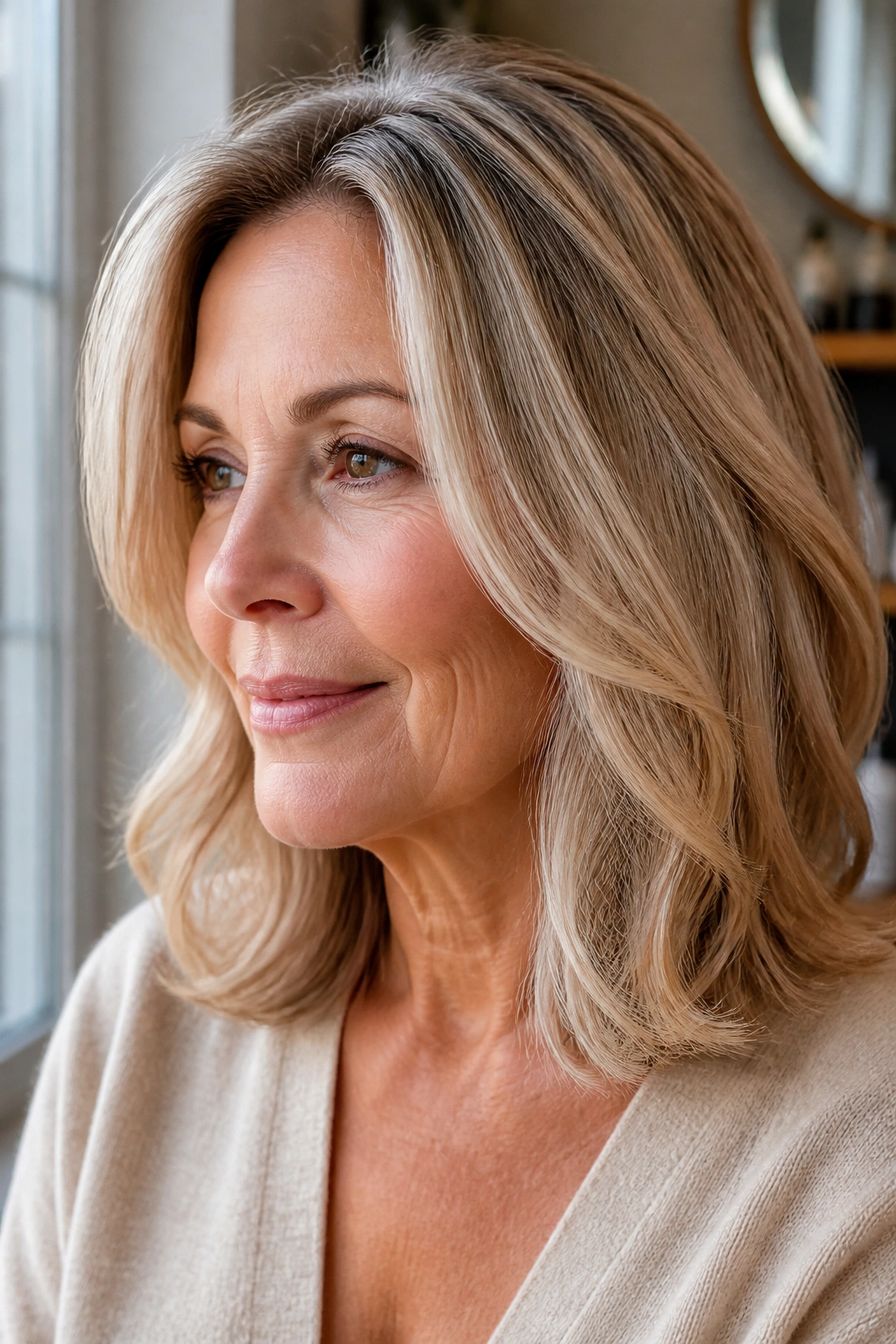
Champagne blonde is one of those shades that flatters a lot of faces because it lives between gold and beige. It has enough warmth to keep mature skin from looking washed out, but not so much gold that it tips into brass.
That balance matters more than people think. Grey hair can make the skin around it look paler, and a strong warm blonde sometimes makes the contrast feel harsh. Champagne softens the edge. It gives the hair a little glow, not a loud bleach job.
I like this shade on shoulder-length hair, especially if the cut has movement around the face. A few finely woven foils through the top layer, plus a soft root shadow, can make the whole style look fuller. Keep the ends a touch brighter than the roots. That little shift gives the hair shape.
The sweet spot is a soft, reflective finish. Not matte. Not brassy. Just hair that looks like it has clean light in it.
3. Pearl Money Pieces Around the Face
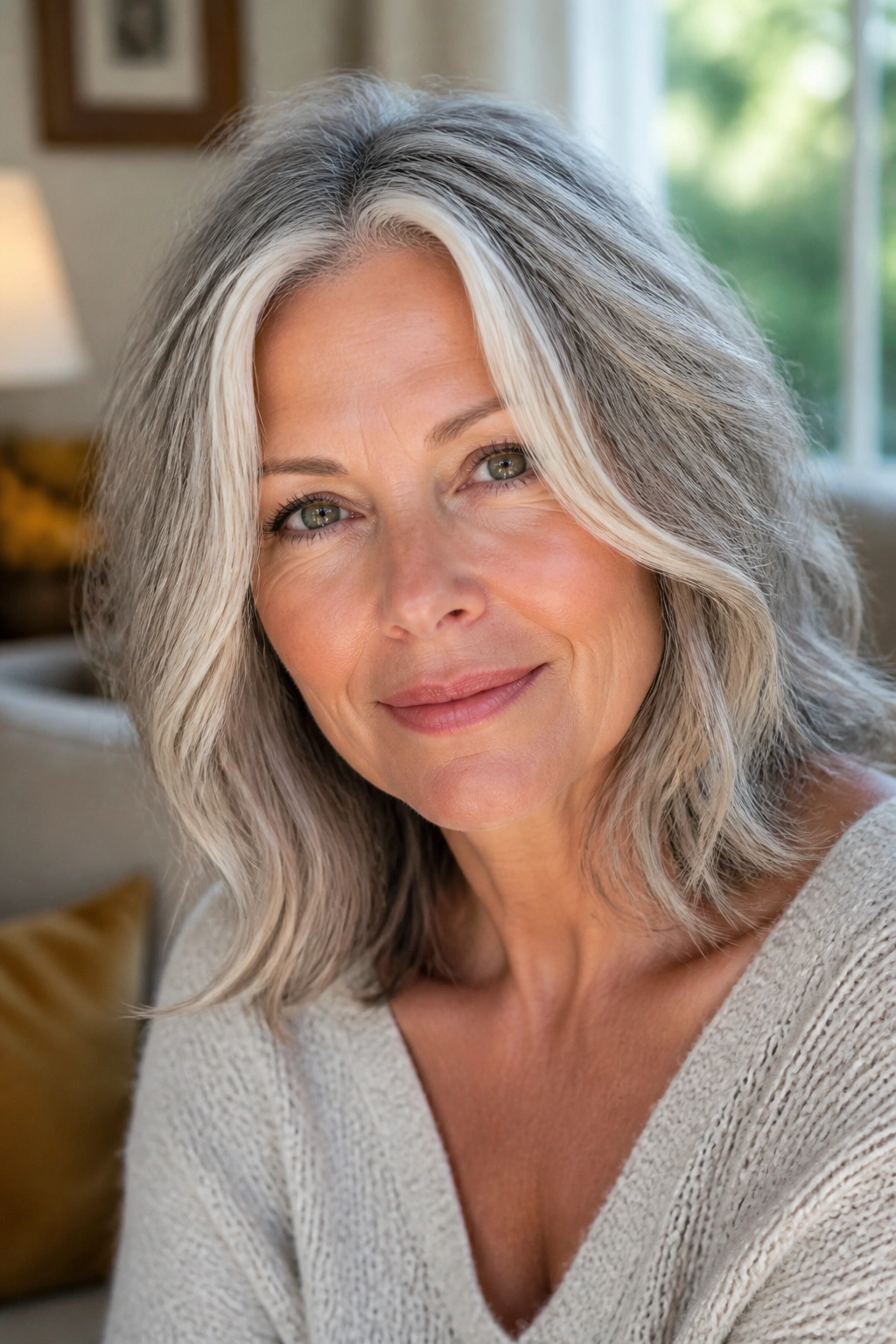
Why do money pieces look so fresh on older hair? Because they put the brightness exactly where the eye goes first. Around the eyes, along the cheekbones, near the part. It is a simple trick, but it works.
A pearl blonde money piece is especially nice when the rest of the hair is softly grey or salt-and-pepper. You don’t need a full highlight job to wake up the face. Two narrow panels at the front can do a lot, provided they’re blended properly into the top section.
How to ask for it
Ask for face-framing lightness that starts about an inch back from the hairline and fades into the front layers. I’d keep the brightest pieces around 1 to 1.5 inches wide, depending on density. Wider than that, and it starts to look theatrical.
The toner matters here. Pearl reads cooler and cleaner than beige, which is useful if your natural grey has a silver cast. It’s also a good choice if your haircut has fringe or curtain bangs, because the highlight catches the movement instead of sitting flat.
One warning. Don’t let the front pieces get too white if the rest of your hair is still dark. You want glow, not headlights.
4. Cool Beige Highlights on a Dark Blonde Base
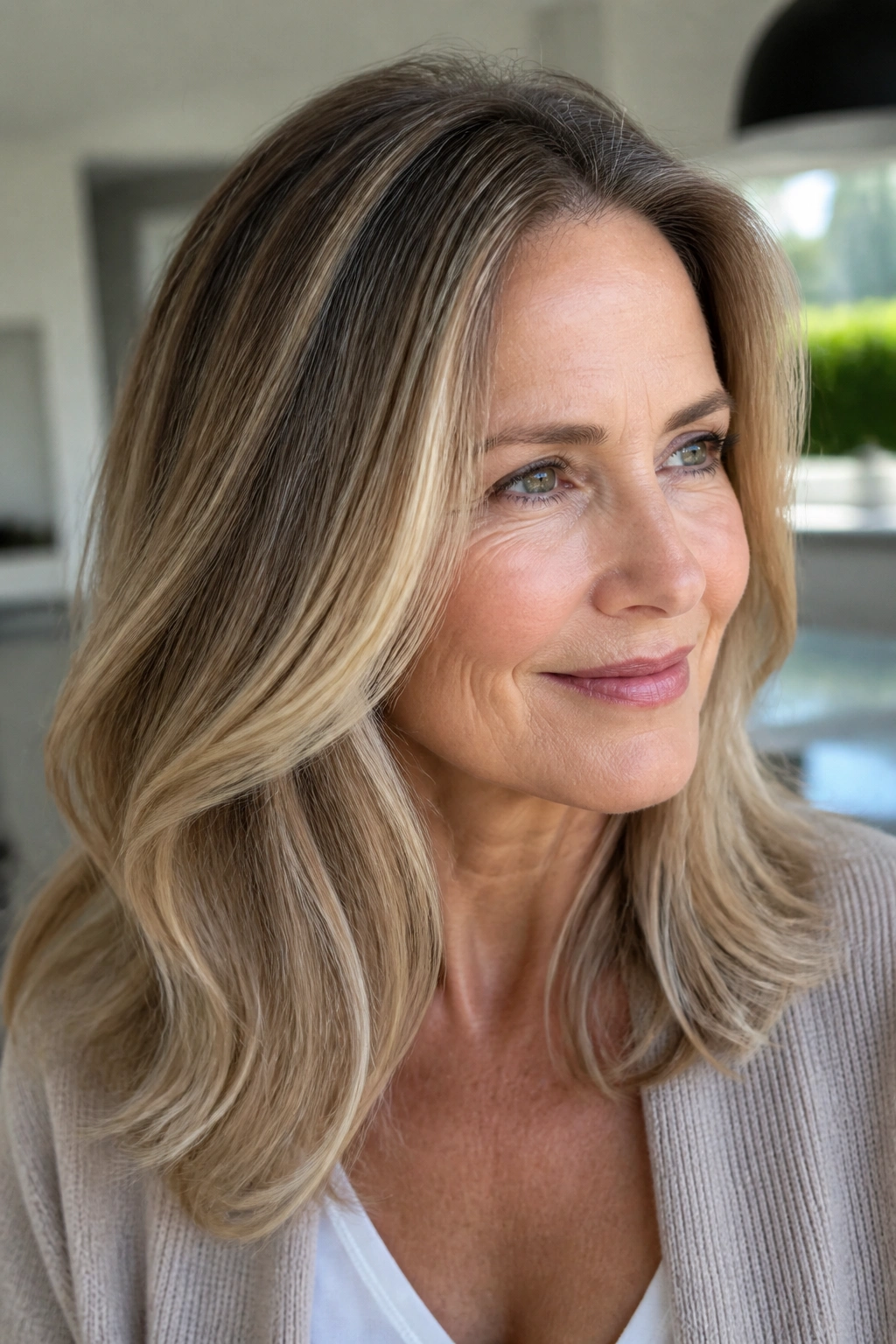
I keep coming back to cool beige when the base is dark blonde and the first grey strands are only starting to show. It’s one of the least fussy options out there, which is probably why so many stylists reach for it.
The shade sits in a useful middle ground. It brightens without screaming “highlighted,” and it doesn’t fight with grey roots the way golden blonde often does. The result is softer, less striped, and easier to live with between salon visits.
- Use it when your natural base is level 6 or 7.
- Place it mostly on the outer layers, not the underlayer.
- Pair it with a slight shadow at the root for depth.
- Keep the toner cool enough to stay beige, not yellow.
What I like most is how it works with layered haircuts. Beige adds light, but the layers do the heavy lifting. The color simply follows the cut. That’s the part a lot of people miss.
5. Smoky Brunette with Ashy Ribbons
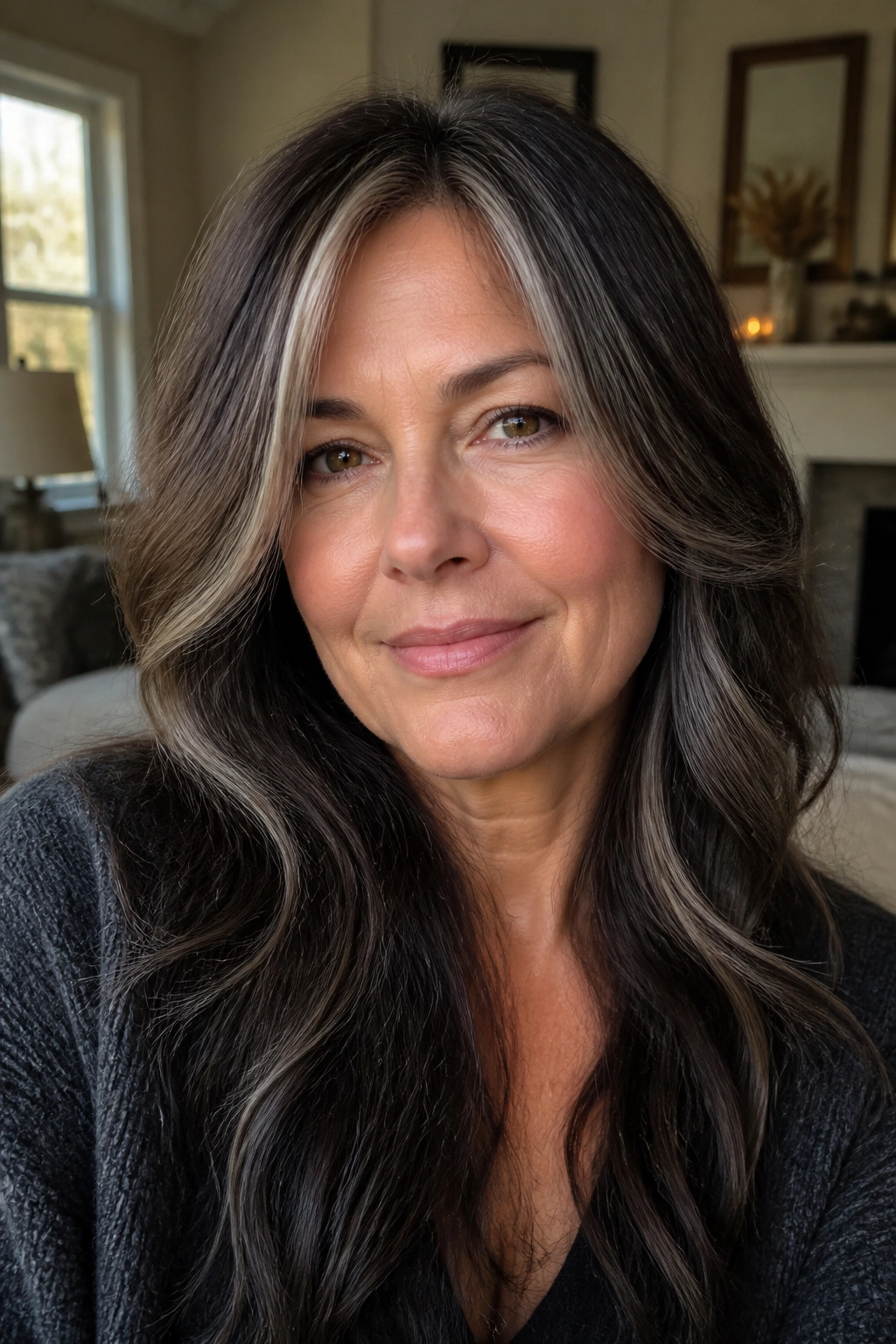
Smoky brunette with ashy ribbons is the color I reach for when someone likes depth and hates a stripey grow-out. It keeps the base rich, but breaks it up with cooler pieces that sit somewhere between taupe and muted bronze. The effect is calm. Not boring. Just calm.
This is not the place for warm caramel. If you put gold on top of a dark brunette base, grey regrowth can look harsher a few weeks later. Ashy ribbons soften the contrast and make the silver strands feel built in.
The best version usually starts with a gloss at the root and a few hand-painted pieces around the face and crown. You don’t need full foils everywhere. In fact, too much lightness can flatten the richness that makes this look work in the first place.
Muddy brown is the enemy. Keep the brunette glossy, keep the ribbons cool, and let the contrast do the work. It’s a strong choice for women who like polished hair but do not want to babysit it every three weeks.
6. White-Blonde Highlights for High Contrast
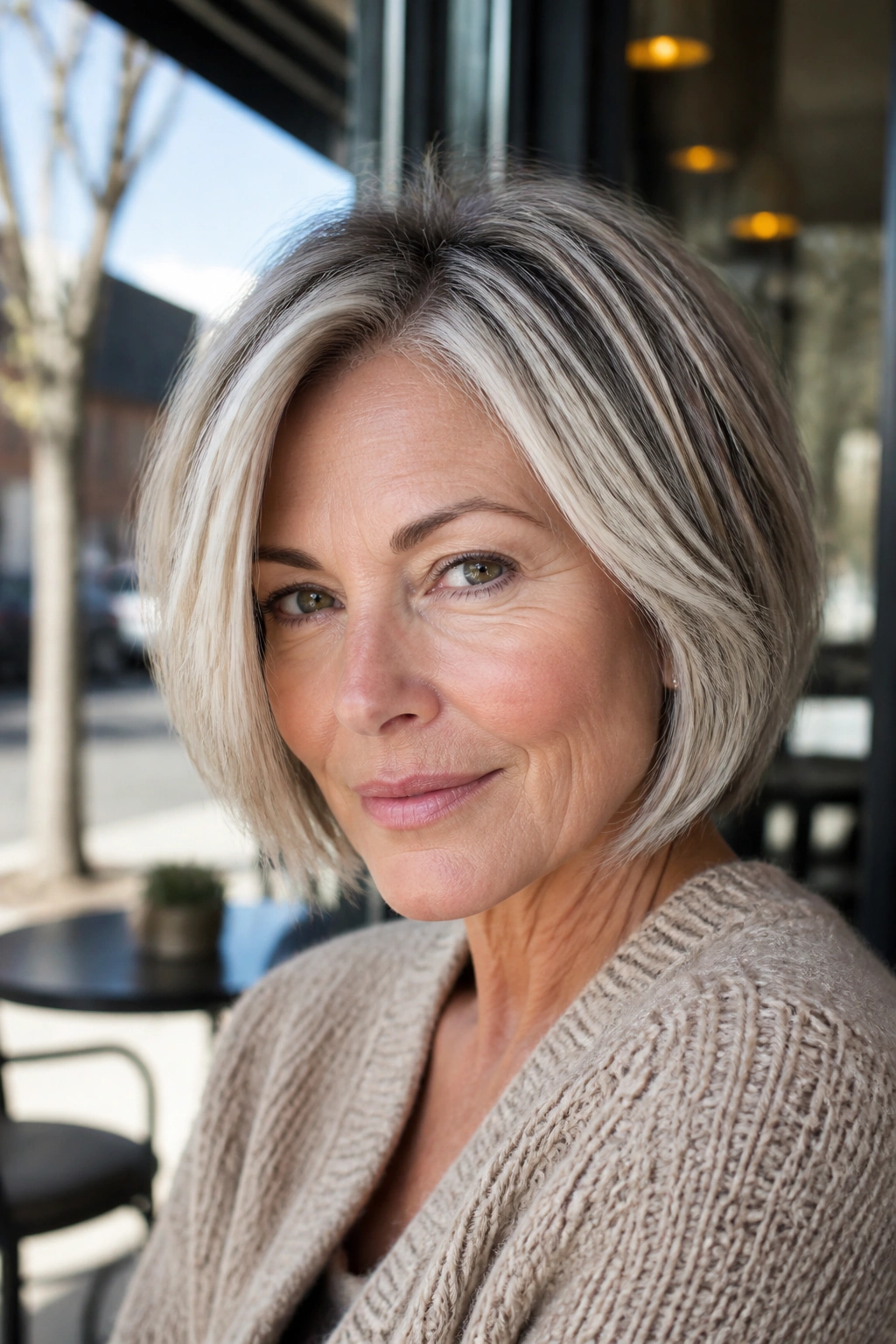
Unlike warm blonde, white-blonde highlights make the silver part of the design. That’s the whole point. Instead of blending grey away, they turn it into a bright, deliberate feature.
This style suits women who like contrast and don’t mind a bolder finish. It works especially well on short bobs, pixies, and cropped layered cuts where the highlight pattern can move around instead of sitting in one flat sheet. On long hair, white-blonde can sometimes look too uniform unless it’s broken up with deeper lowlights.
The important detail is tone control. White-blonde should still have a faint pearl or silver base so it doesn’t go chalky. Hair that is naturally coarse or resistant at the crown often needs a careful lift there, then a strong toner to even out the color.
Not every woman wants this much brightness. That’s fair. But if you like a sharp, clean look and your haircut has structure, it can look striking without feeling fussy.
7. Caramel Lowlights Under Silver Highlights
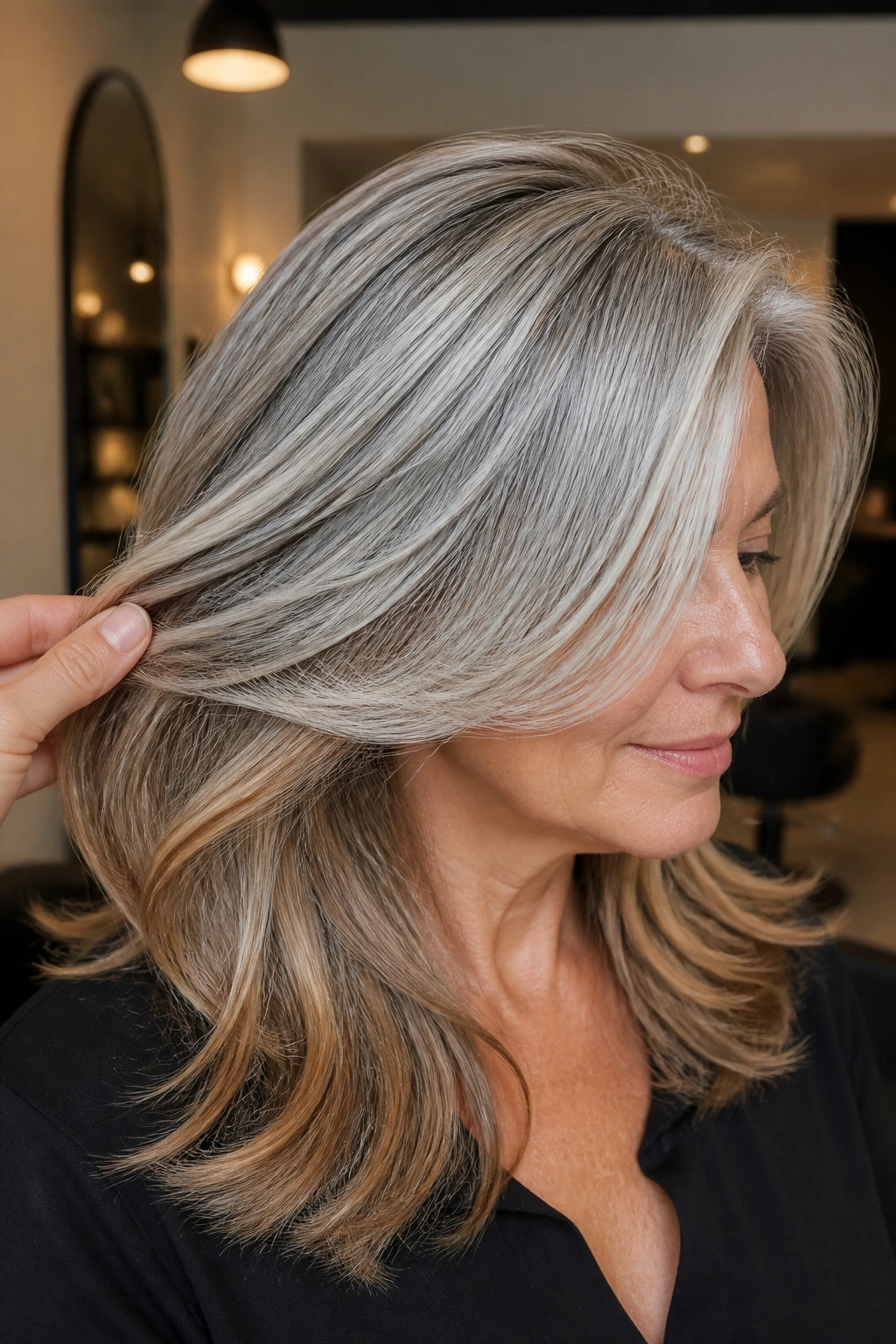
Caramel lowlights do one job especially well: they make silver highlights look brighter. It sounds backward, but that little bit of warmth underneath the lighter strands gives the whole head depth. Without it, some grey-blonde blends go flat in a hurry.
Where to place them
Keep the caramel lowlights under the top layer and around the mid-lengths, not over the crown. That way they act like shadow, not a blanket of warmth. I like them best when they peek out in movement rather than showing everywhere at once.
A good caramel lowlight on mature hair should be soft, not orange. Think toasted almond, not toffee candy. If the shade is too rich, the grey pieces stop looking crisp and the whole style can veer brassy.
This idea works well for women who want dimension but don’t want a dramatic change. It’s also smart if your natural hair has both silver and darker brunette strands. The lowlights help hold the pattern together.
Small tip: if your hair is fine, keep the caramel pieces sparse. Too many lowlights can make fine hair feel crowded.
8. Foilayage with a Soft Root Shadow
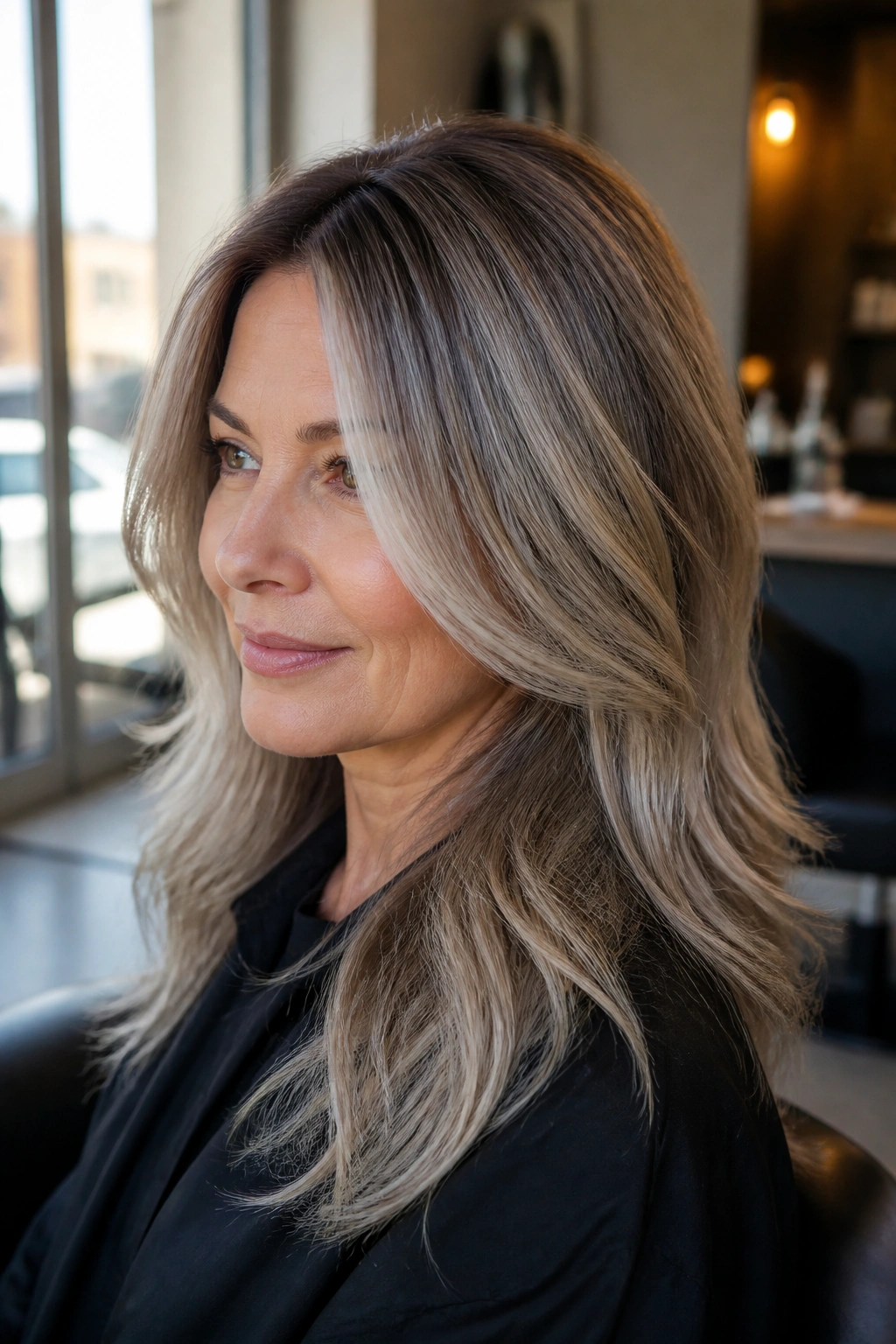
If you hate the grow-out line, this is the smartest move. Foilayage gives you the lift of foils with the softer sweep of balayage, and a root shadow keeps the top looking blended even as the hair grows.
The best part is the movement. Foilayage does not sit like a solid block of color. It lets the lighter pieces land where the hair naturally bends, which is especially good around the hairline and through the top layers. Grey hair with strong regrowth patterns can benefit a lot from that softer transition.
What to ask for
- A root shadow one to two shades deeper than the highlight tone.
- Lightening concentrated around the crown, face frame, and surface layers.
- Soft ends, not a harsh line at the bottom.
- A gloss that ties the warm and cool pieces together.
This is a good choice for women who want salon results without obvious regrowth in three weeks. It’s also a smart option if your hair has some porosity, because the shadow root disguises uneven lift better than a flat all-over blonde ever could.
9. Chunky Ribbon Highlights for Curly Hair
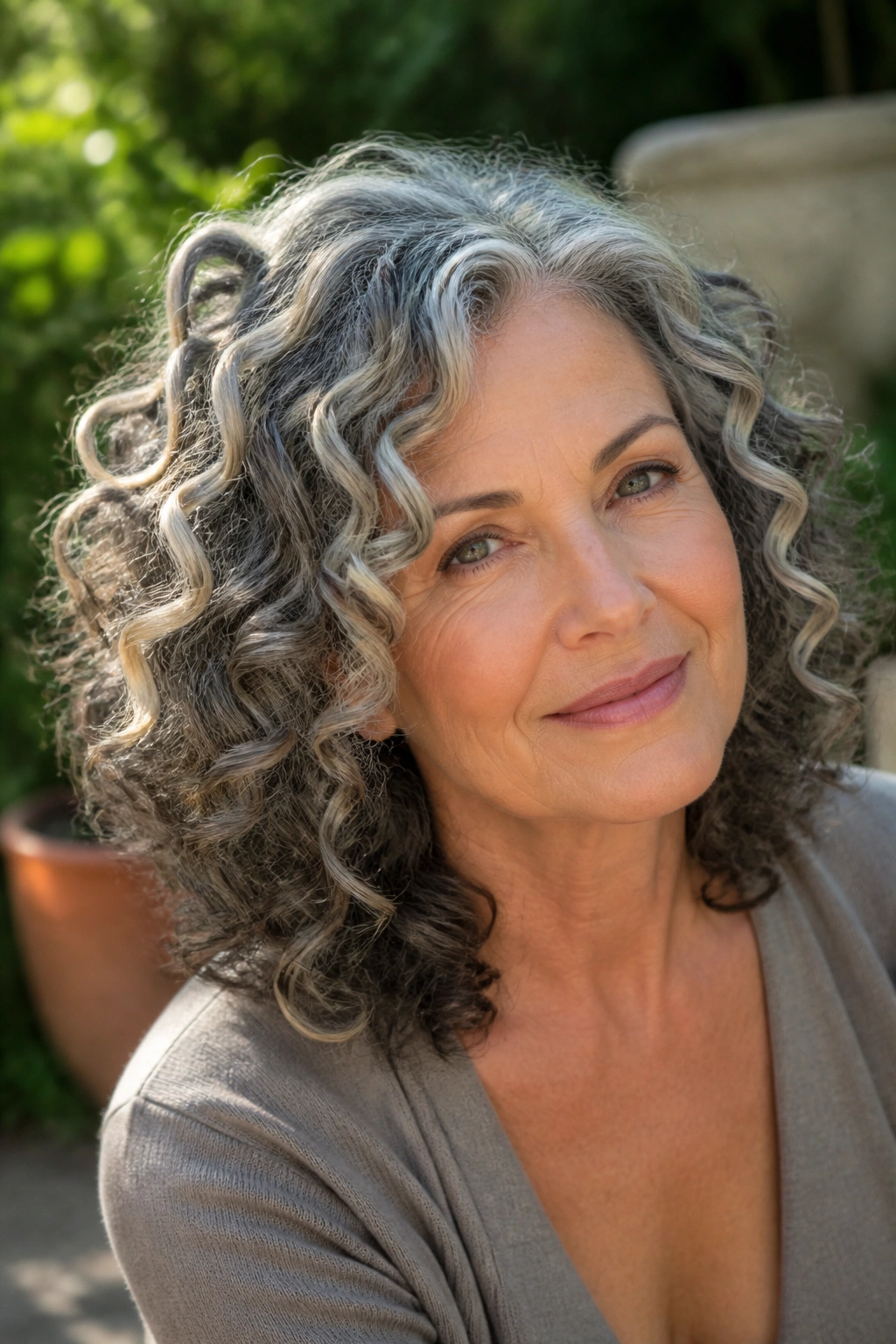
Can curly hair handle chunkier highlights? Yes. Better, in a lot of cases. Curls need a little width in the color pattern because tight curls blur tiny pieces together. If the highlights are too fine, they disappear and the whole job looks dusty.
Chunky ribbons give the curl pattern something to show off. Each bend catches light a little differently, which makes the color feel alive instead of painted on. On grey hair, that movement is useful because it keeps silver strands from looking like random sparks.
How to ask for it
Ask for 1/2-inch to 3/4-inch ribbons, placed mostly around the top, face frame, and outer curl clusters. The stylist should avoid flooding the ends, especially if they’re already dry. Curly hair usually needs protection more than it needs extra lift.
This look is strongest on layered shags, curly bobs, and shoulder-length cuts with shape. It’s not about neatness. It’s about rhythm. The larger sections let the curls do what they already do best.
One warning. Overprocessing curly hair is a mess to fix. If the curls feel stretchy when wet after coloring, the lightener went too far.
10. Mushroom Brown and Silver Blend
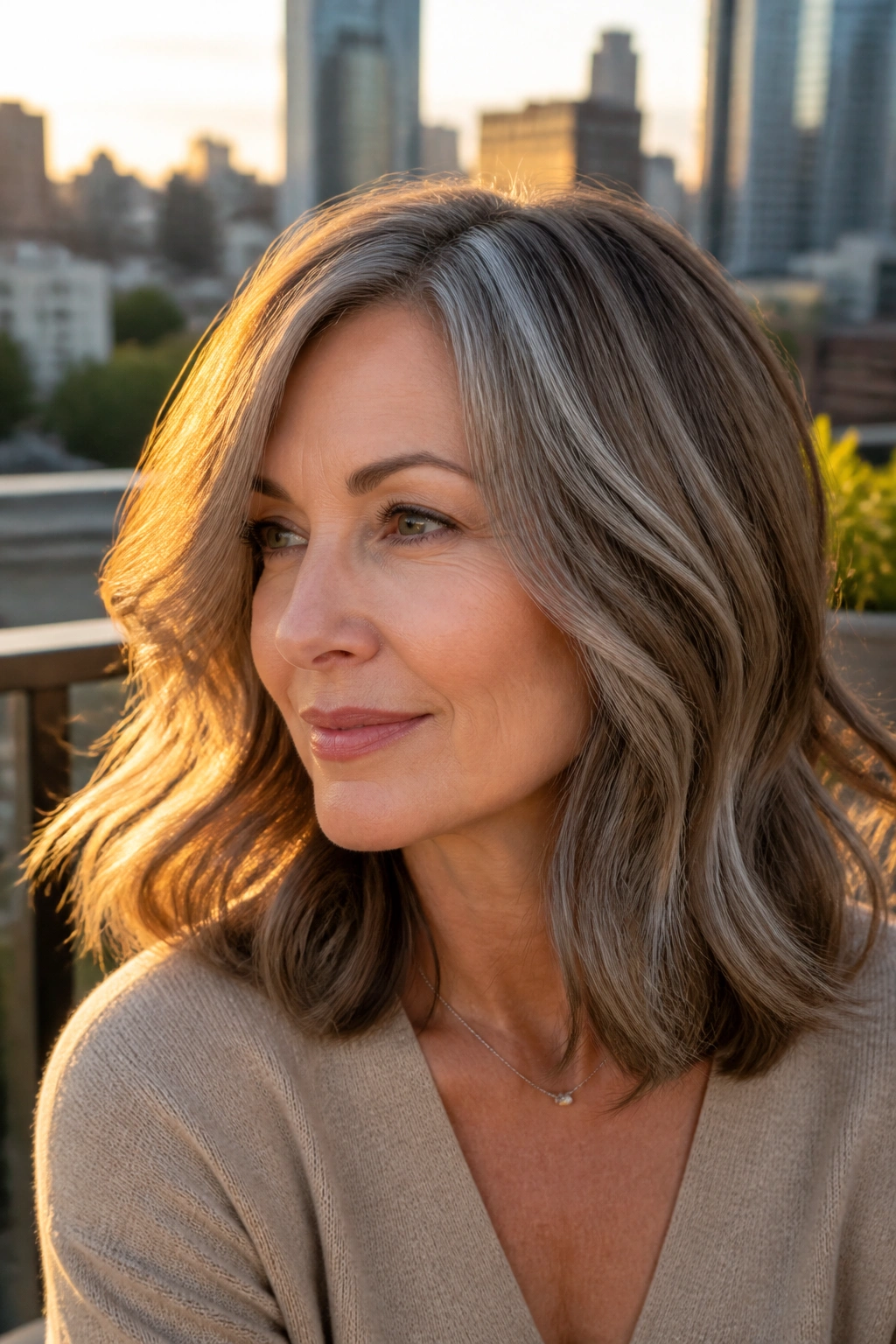
Mushroom brown is one of those tones that makes grey look intentional instead of accidental. It sits in the cool taupe family, so it has just enough brown to keep the hair grounded and just enough grey in it to echo the natural silver.
That makes it especially good for women who do not want a blonde result. Not everyone does. Some people want dimension without ever crossing into lighter territory, and mushroom brown handles that beautifully. It’s soft on the eye and easy on the grow-out.
The finish should look smoky, not flat. That means a mix of deep ash lowlights, muted beige pieces, and a glossy surface. If the color gets too brown and too solid, it loses the whole point.
I like this on shoulder-length layered cuts because the movement keeps the cooler pieces from looking dense. It’s also a sensible pick if your hair has salt-and-pepper at the temples but still darker lengths underneath. The variation helps the whole head feel balanced, which is what most people are after even if they don’t say it out loud.
11. Sandy Blonde Highlights for Warm Skin
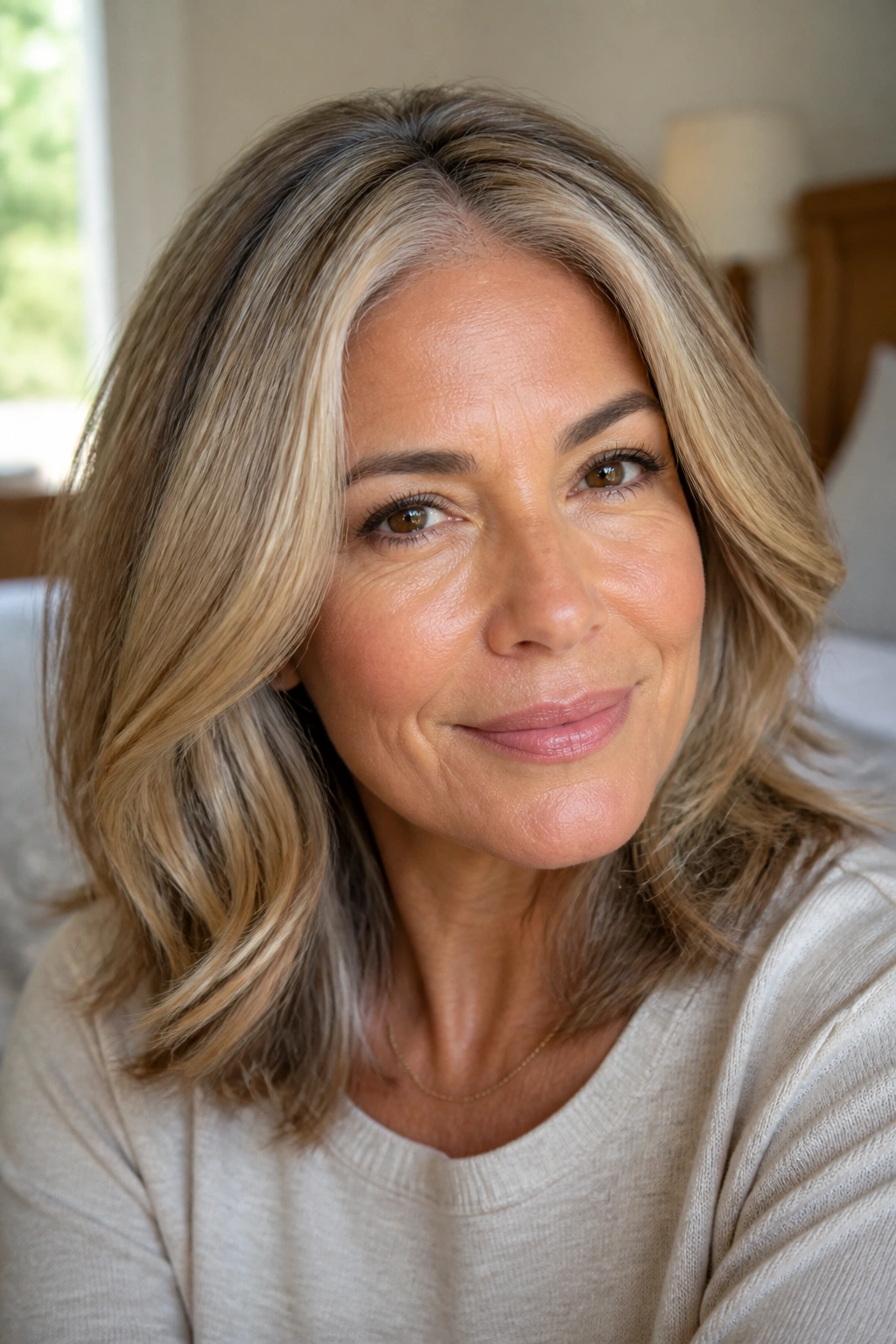
Sandy blonde is warmer than ash, but it is not brassy. That distinction matters. On skin with golden, peach, or olive undertones, a sandy tone can make the face look awake in a way cooler blonde sometimes cannot.
This is a softer version of blonde highlighting, and I like it when the grey is only partly through the hair. The shade bridges the gap between natural pigment and silver in a way that feels friendly, not severe. A few sandy pieces through the mid-lengths and around the part can brighten the style without making the roots scream for attention.
The best version avoids strong yellow. Think beach sand after it’s been rinsed, not a bright summer blonde. A beige-gold toner usually keeps it in the right lane.
If your skin flushes easily or leans warm, this idea tends to sit well. If your complexion is cooler, the result can look a little sunny. That’s not bad, but it changes the mood of the cut, and the mood matters more than people admit.
12. Platinum Peekaboo Panels
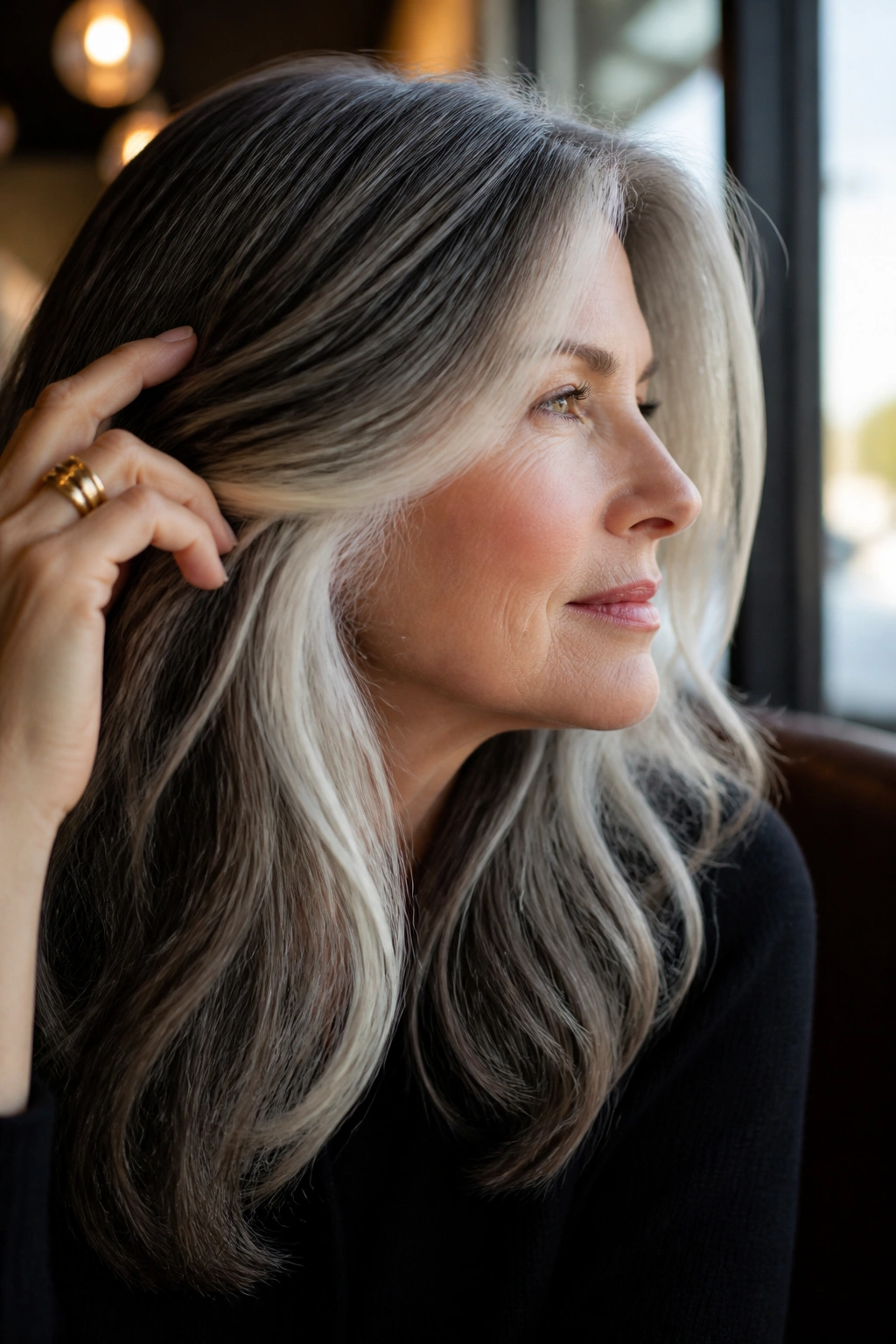
Platinum peekaboo panels are the sneaky option for women who want brightness without bleaching the whole head. The lighter pieces sit under the top layer, so they show when the hair moves, tucks behind the ear, or flips at the collar.
That hidden placement is the whole appeal. You get contrast and shine without committing every strand to the same level of lift. On grey hair, peekaboo panels can make the natural silver look more deliberate because the brightness appears in flashes rather than all at once.
Best cuts for it
- Angled bobs.
- Layered lobs.
- Pixies with longer top sections.
- Shoulder-length cuts with internal layers.
Platinum should be used carefully on mature hair, though. It needs enough lift to read clean and not yellow, and that can be rough on already fragile ends. I prefer it when the brightest panels stay away from the very tips and live more in the mid-lengths.
This one feels playful, but it still needs precision. Too much platinum and the hair starts looking patchy. Just enough, and it looks sharp.
13. Salt-and-Pepper Micro-Highlights
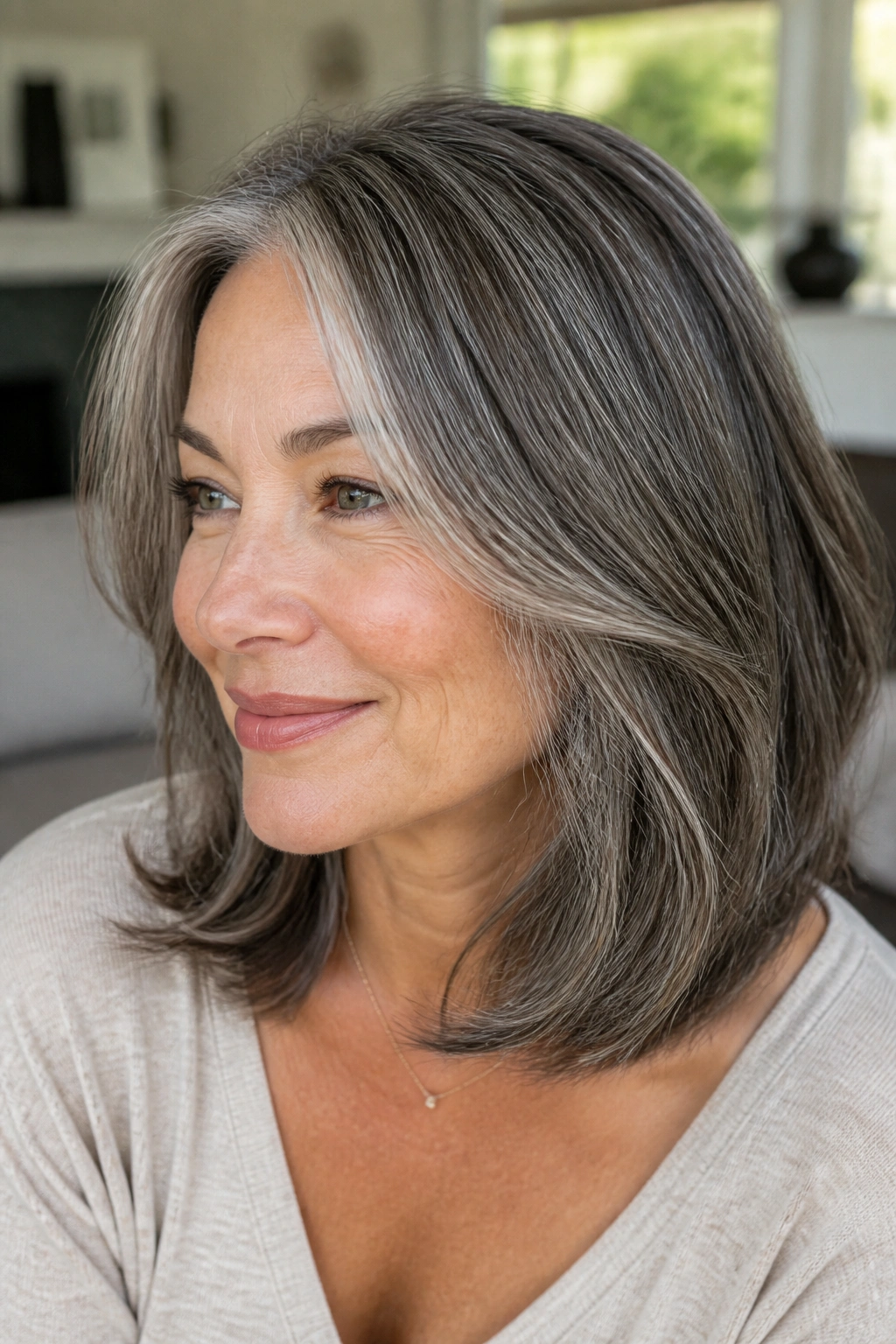
Sometimes the best color job barely looks like one. Micro-highlights are tiny, near-invisible lightened pieces scattered through salt-and-pepper hair to polish the grey instead of hiding it.
This is the move for women who already like their natural color mix but want a little more shine and softness. The placement is subtle. Very small sections, very light lift, and a toner that keeps the contrast in the same family. No chunkiness. No obvious streaks.
The benefit is that the hair keeps its character. Salt-and-pepper can look gorgeous when the silver is brightened just a bit. Micro-highlights help the grey reflect light more evenly, especially on wavy or coarse textures where individual strands can look dull in certain spots.
Use this if you want refinement, not reinvention. That’s the whole point.
It also wears well between appointments because the regrowth is less obvious than with traditional highlights. If you already get compliments on your natural grey pattern, this kind of polish is often enough.
14. Honey Bronde for Soft Warmth
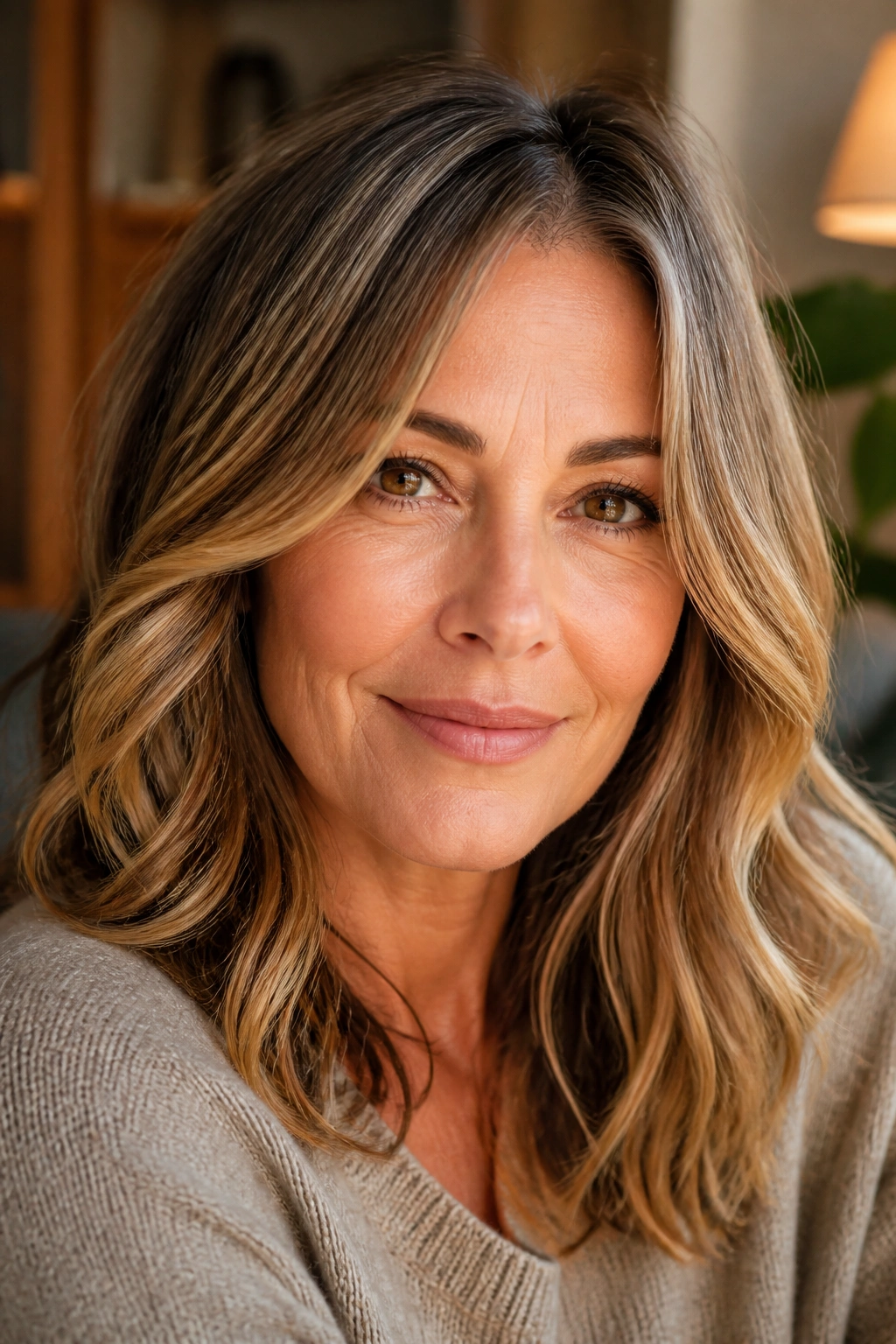
Honey bronde sits in the middle lane between brunette and blonde, and that is exactly why it softens grey so well. The mix gives the hair warmth without pushing it into a solid golden block, which can look heavy around the face.
This shade works beautifully when the base is medium brown or dark blonde. The grey pieces blend into the lighter honey ribbons instead of standing apart. It’s a friendly, easygoing look that suits layered lobs, long layers, and softer shags.
What makes it different from a plain blonde highlight is the depth. You still see the darker pieces underneath, which keeps the color from looking overprocessed. That’s useful if your hair has changed texture over time and needs a bit more visual weight.
For many women, honey bronde is the sweet spot between maintenance and brightness. It grows out with less drama than lighter blonde, but it still gives the face warmth. If you like hair that looks lived-in rather than sharp-edged, this is one of the smartest options.
15. Steel Grey and Charcoal Dimension
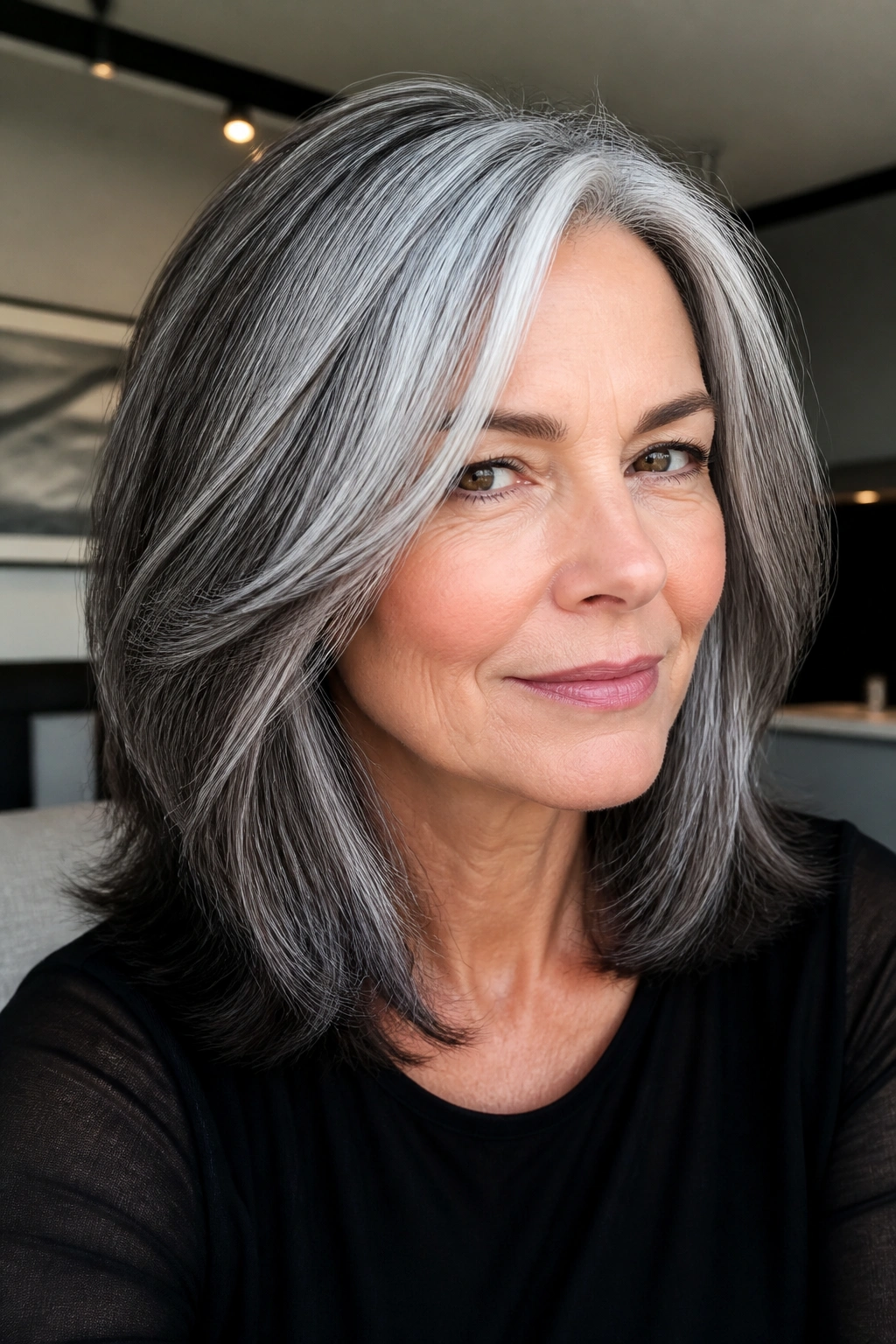
Steel grey and charcoal dimension is not for women who want softness. It’s for women who like a cooler, sharper finish and don’t mind a little edge. The look uses deeper charcoal lowlights under metallic grey pieces, which gives the hair a polished, graphic feel.
How to keep it from looking flat
- Keep the charcoal only one or two levels deeper than the base.
- Place the darkest pieces underneath, near the nape, and around the interior layers.
- Leave the brightest silver on top and around the part.
- Finish with a glossy toner, not a matte ash wash.
The biggest mistake here is going too dark. Charcoal should frame the silver, not swallow it. If the lowlights are too heavy, the whole thing starts to look muddy and the grey loses its shine.
This idea works especially well on sleek bobs, blunt cuts, and short layered styles. The shape gives the color room to look deliberate. On soft curls, it can still work, but the contrast needs to be handled carefully or the pattern gets busy fast.
16. Beige Balayage on Fine Hair
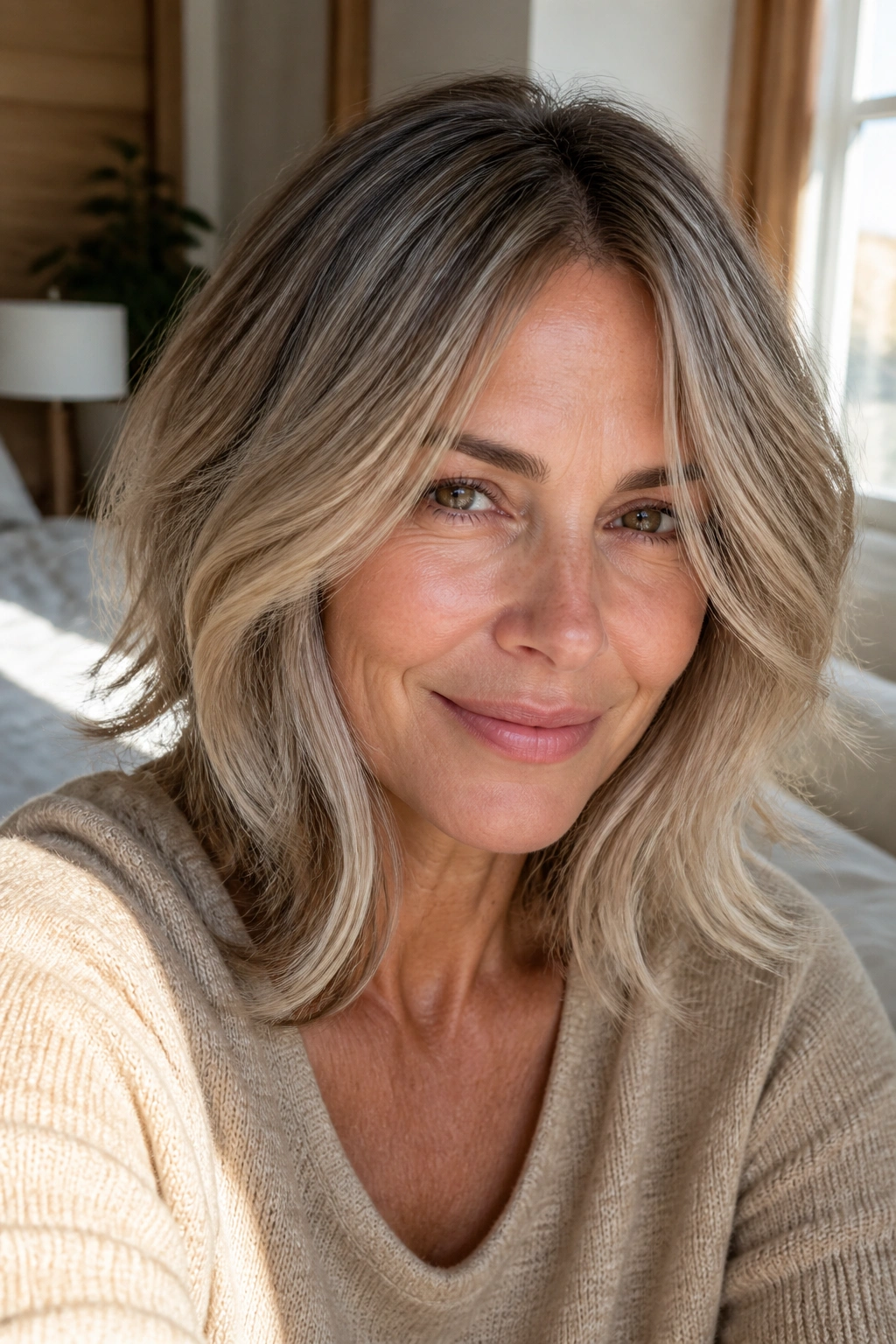
Why does beige balayage work so well on fine hair? Because it adds light without stealing density. Fine hair can look see-through if the highlights are too bright or too chunky, and beige balayage avoids that problem by keeping the lightening soft and airy.
The hand-painted placement helps too. Instead of foiling every inch, the colorist paints the surface where the sun would hit naturally: the outer layers, the face frame, the top of the crown. That gives the hair dimension without exposing too much scalp or separating the strands visually.
I like this idea on women whose grey is coming in at the roots but who still have a fair amount of darker blonde or light brown left underneath. Beige tones bridge the gap nicely. They do not scream for attention. They just make the hair look fuller and cleaner.
A root shadow can help, but keep it light. Fine hair does not need a heavy base. It needs lift, movement, and a tone that stays soft when the hair swings.
17. Champagne Money Piece with a Shadow Root
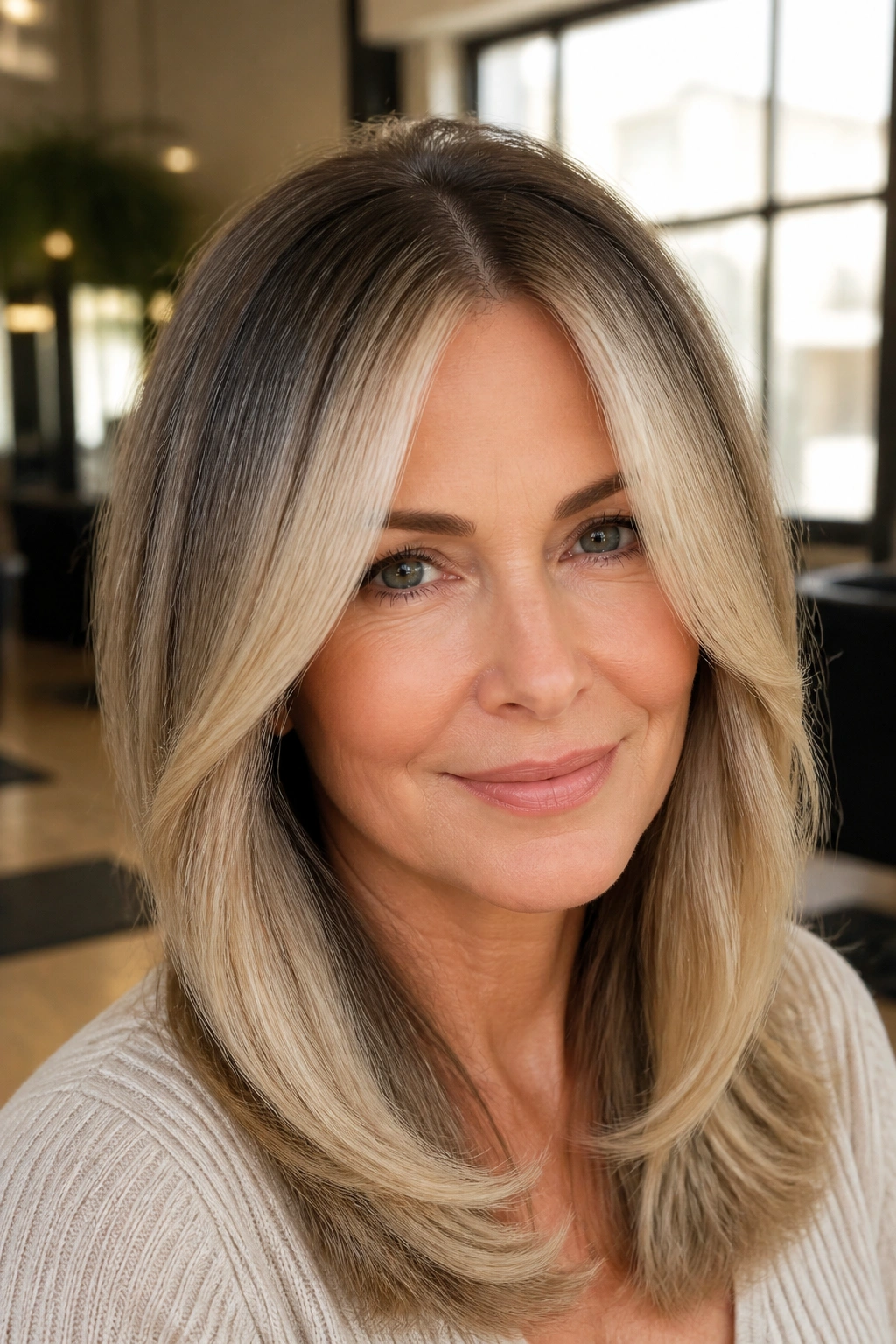
A champagne money piece with a shadow root gives you brightness at the front and peace at the part line. That is a combination worth paying attention to, because the front matters more than people realize. It’s where the eye lands first, especially when grey is popping at the temples.
The champagne tone keeps the face-framing pieces bright without turning them icy. The shadow root softens the transition from your natural color into the lighter front panels, which helps when the grey is mixed unevenly through the top. You get contrast where you want it and softness where you need it.
This is a strong choice for women who wear side parts or curtain bangs. The front pieces can be widened just enough to sit beside the eyes and cheekbones, but the root stays deeper so the style keeps its shape as it grows out.
If you’ve ever felt like face-framing highlights were too harsh, this is the version to try. The root shadow takes the edge off. The champagne keeps it pretty. That balance does a lot of work.
18. Frosted Tips on a Layered Cut
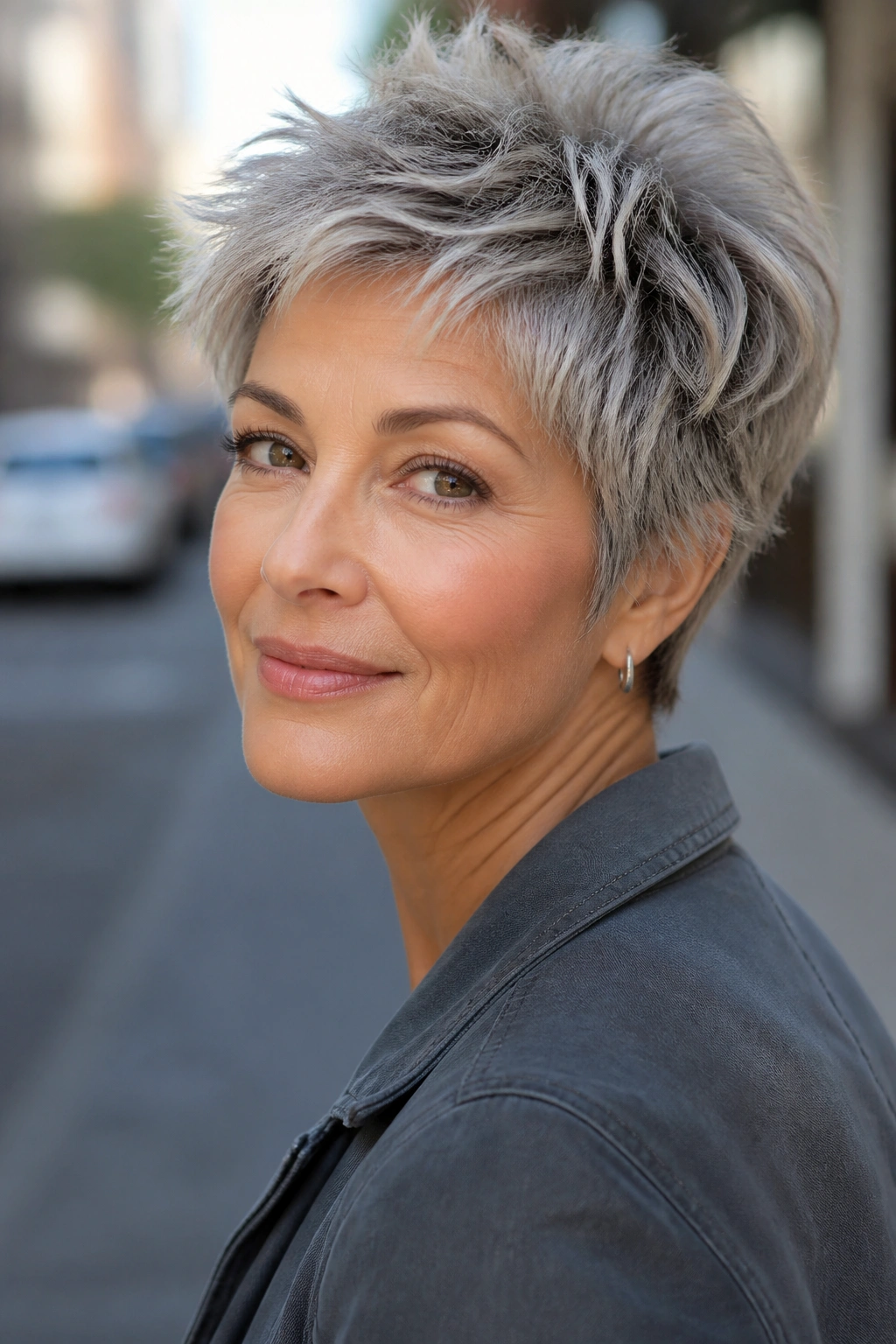
A layered pixie or short shag can carry frosted tips better than a lot of longer cuts, and that surprises people. The reason is simple: the shape already has movement, so the lighter ends read as texture instead of old-school streaking.
The trick is restraint. Frosted tips should live on the outer edges, around the crown pieces, and at the ends that naturally flip or bend. You want light catching the movement, not a helmet of bleach.
Where it works best
- Layered pixies with longer top sections.
- Short bobs with choppy ends.
- Shags with face-framing pieces.
- Cuts that use texture spray or a light cream finish.
This is a good choice if you want a modern, slightly edgy look and you’re comfortable with a little contrast. It also works well when the natural grey is strong at the roots, because the lighter ends keep the whole cut from looking too dark or heavy.
The one thing I would watch is dryness. Short hair gets fried fast when the lightener is pushed too far, and there is no hiding it. Keep the ends healthy or skip the idea entirely.
19. Copper-Softened Grey Transition Highlights
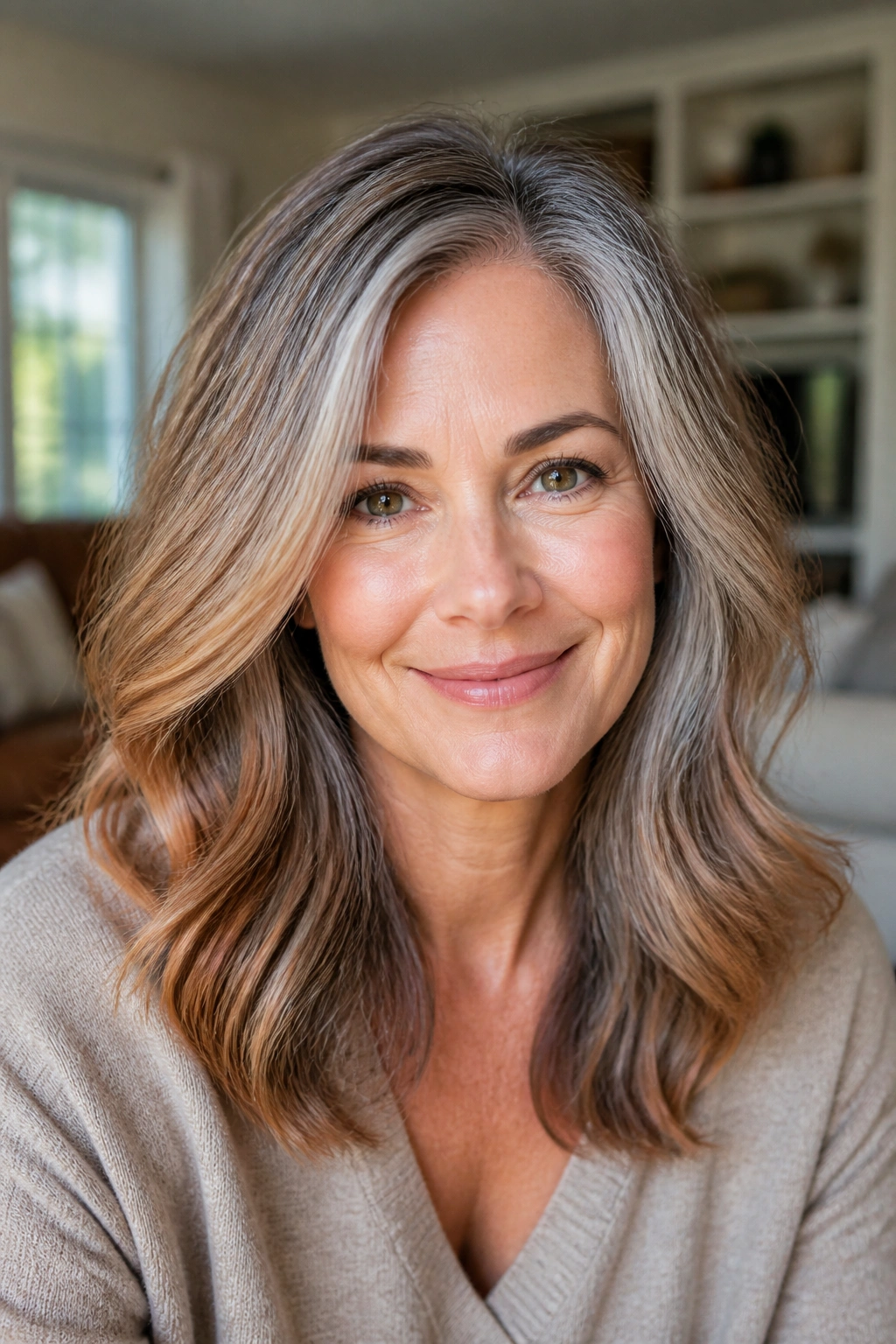
Copper-softened grey transition highlights are for the woman who wants the grow-out to look warm, not stark. A little copper or apricot glaze can make the shift from darker root to silver mid-lengths feel smoother, especially when the natural base is brown or deep blonde.
The tone needs to stay soft. I am not talking about bright copper. I mean a muted, warm glaze that adds a hint of glow around the face and through the surface layers. Done well, it makes the hair look richer and the skin look less tired.
Cool shampoo fans, skip this one. Copper leans warm, and warm is the point. It’s especially flattering on skin that handles peach, gold, or terracotta tones well.
This idea also works nicely when you are early in the grey transition and not ready to lean all the way into silver. A few copper-tinted highlights can bridge the gap while the grey grows in. It feels intentional. That matters when you are trying to make the transition look like a choice, not a pause.
20. All-Over Silver Gloss with Brightened Ends
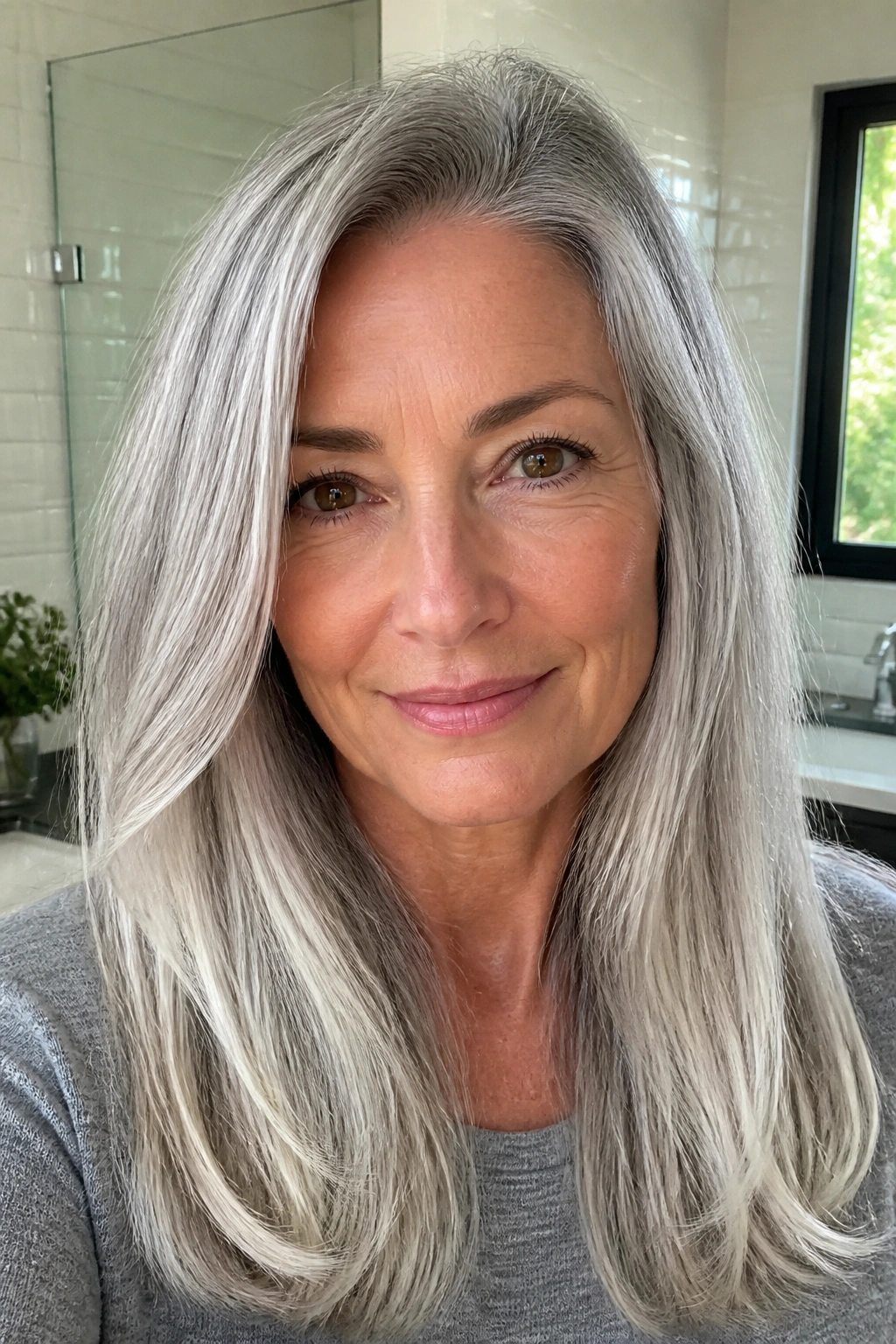
All-over silver gloss with brightened ends is the cleanest way to keep grey hair looking polished. It does not fight the silver; it sharpens it. The gloss evens out tone from root to mid-lengths, and the brighter ends give the cut a little lift so it does not fall flat.
This idea is especially good if your natural grey is already strong and you do not want a heavy highlight pattern. A gloss can make the silver look reflective, while a few softly brightened ends keep the style from turning one-dimensional. It is a simple move, but simple is not the same as boring.
I like this most on sleek bobs, straight lobs, and layered cuts that need shine more than color drama. It also suits women who like a neat, well-kept look and do not want the maintenance of a full highlight schedule. The grow-out stays soft because the hair is working with its own color family.
If you are unsure where to start, start here. Then adjust. Sometimes the best grey hair highlight ideas for women over 50 are the ones that leave the silver in charge and just clean up the edges a little.
