



A French bob with a side part does something a center part often refuses to do: it gives the cut a clean line without making it feel strict. The shape still has that cheekbone-skimming, slightly Parisian looseness people love, but the off-center part adds lift, polish, and a little bit of attitude. Small shift. Big difference.
That shift matters more than people think. Move the part a half inch and the whole haircut changes mood. A touch deeper and it feels sharper and more glamorous; a touch softer and it reads relaxed, almost effortless, without looking unfinished. The cut itself can be blunt, curved, feathered, wavy, or curly. The part is what decides whether the final result feels sleepy or styled.
I’ve always liked this combination because it solves a common problem. A French bob can sometimes sit too neatly and lose its shape, especially on fine hair or hair that wants to lie flat at the crown. A side part fixes that fast. It gives you root lift, a bit of asymmetry, and just enough face framing to keep the style from feeling boxy.
These 15 versions show how far that idea can go. Some are sleek. Some are airy. Some are soft enough to wear with barely any styling at all. And some are the sort of cut you ask for when you want people to notice your hair without being able to explain exactly why.
1. Chin-Grazing French Bob With a Deep Side Part

A chin-grazing French bob with a deep side part is the quickest way to make the cut look polished without making it stiff. The length sits right at the jawline or just below it, which keeps the shape crisp, while the deeper part creates a little sweep across the forehead and cheek. That one move gives the haircut a built-in sense of direction.
Why the shape works
The deep side part draws the eye diagonally instead of straight across the face. That matters because straight lines can make a bob feel blunt in a heavy way, while a diagonal line feels softer and more deliberate. If your hair falls flat on top, this is one of the easiest ways to fake lift.
Ask for a blunt perimeter with very light internal texture. You want the edge to look clean, not choppy. If the ends are over-layered, the whole haircut starts to puff out and lose that French bob calm.
- Keep the length around the chin, not the collarbone.
- Part the hair about 1 to 1½ inches off center.
- Blow-dry with a medium round brush to encourage a slight bend under.
- Tuck the heavier side behind one ear for a sharper finish.
Best on straight to softly wavy hair, especially if you want a neat shape that still feels relaxed. The side part does most of the work here. The rest is just keeping the cut honest.
2. Sleek French Bob With Tucked Ends

A sleek French bob with tucked ends looks more refined than people expect, and the side part is the reason it doesn’t tip into severe territory. The hair skims the jaw, then curves under just enough to show the shape of the neck. It’s tidy. Clean. A little bit sly.
The trick is to keep the finish smooth without flattening the roots. That’s where this style gets tricky. If you press everything too close to the scalp, the bob can start looking helmet-like, which is exactly what nobody wants. Leave some lift at the crown, then smooth the lengths with a brush or a flat iron only on the final inch or two.
A light serum on damp hair helps, but don’t drench it. Two drops, maybe three if your hair is coarse. Work it through the mids and ends, then blow-dry the front section in the direction of the part so it falls with control instead of fighting you. The side part should still look soft enough to move.
This version is especially good if you like a bob that pairs well with sharp collars, hoops, or a simple white shirt. There’s a reason it feels polished fast. It’s the clean line at the bottom, then the slight asymmetry up top. Nothing fussy. Nothing overworked.
3. Wavy French Bob With an Airy Side Sweep

Why does a soft wave make a side part look more expensive? Because the movement keeps the asymmetry from feeling forced. A little bend in the hair breaks up the line of the cut, and the side part gives those waves a place to fall. The whole thing looks more natural, less arranged.
Start with hair that’s about 80 percent dry. Twist the front sections away from the face with a 1-inch curling wand, then alternate the direction on the middle pieces so the wave doesn’t become too perfect. You want loose S-shapes, not springy curls. A flat brush at the roots keeps the top smooth while the ends stay bendy.
How to wear it
- Set the part before you dry the hair fully.
- Curl the front pieces away from the face.
- Leave the ends slightly straight for a fresher finish.
- Mist lightly with flexible-hold spray, not a stiff lacquer.
The best part is how forgiving this cut is. On second-day hair, it often looks better than it did on day one. A side part helps the wave fall into place instead of puffing outward. And if a little frizz shows up around the crown, good. That makes it feel lived-in rather than dressed up for a catalog.
4. Curly French Bob That Falls Softly to One Side

Picture curls cut to lip or chin length, with one side just a touch higher than the other. That’s the charm here. The side part keeps the shape from ballooning into a triangle, which is the thing curly bobs tend to do when the balance is off.
This version works best when the stylist cuts with the curl pattern in mind, not against it. A dry cut or a mostly dry cut is often smarter than cutting soaking-wet curls and hoping they spring up where you want them. The side part should be placed where the hair naturally wants to separate, or you’ll spend all morning fighting it.
A French bob on curly hair can look soft and expensive when the perimeter is kept full and the interior is trimmed just enough to remove bulk. Too much layering around the crown makes the shape frizzy. Too little makes it heavy. There’s a narrow sweet spot, and when you hit it, the result is beautiful in a very quiet way.
- Keep the length near the chin for a rounded silhouette.
- Leave enough weight at the sides so the curls do not explode outward.
- Use a cream or gel on soaking-wet hair, then scrunch once.
- Diffuse on low heat if you need more definition.
The side part gives the curls a direction. That alone changes the whole haircut.
5. Blunt French Bob With a Long Side Fringe
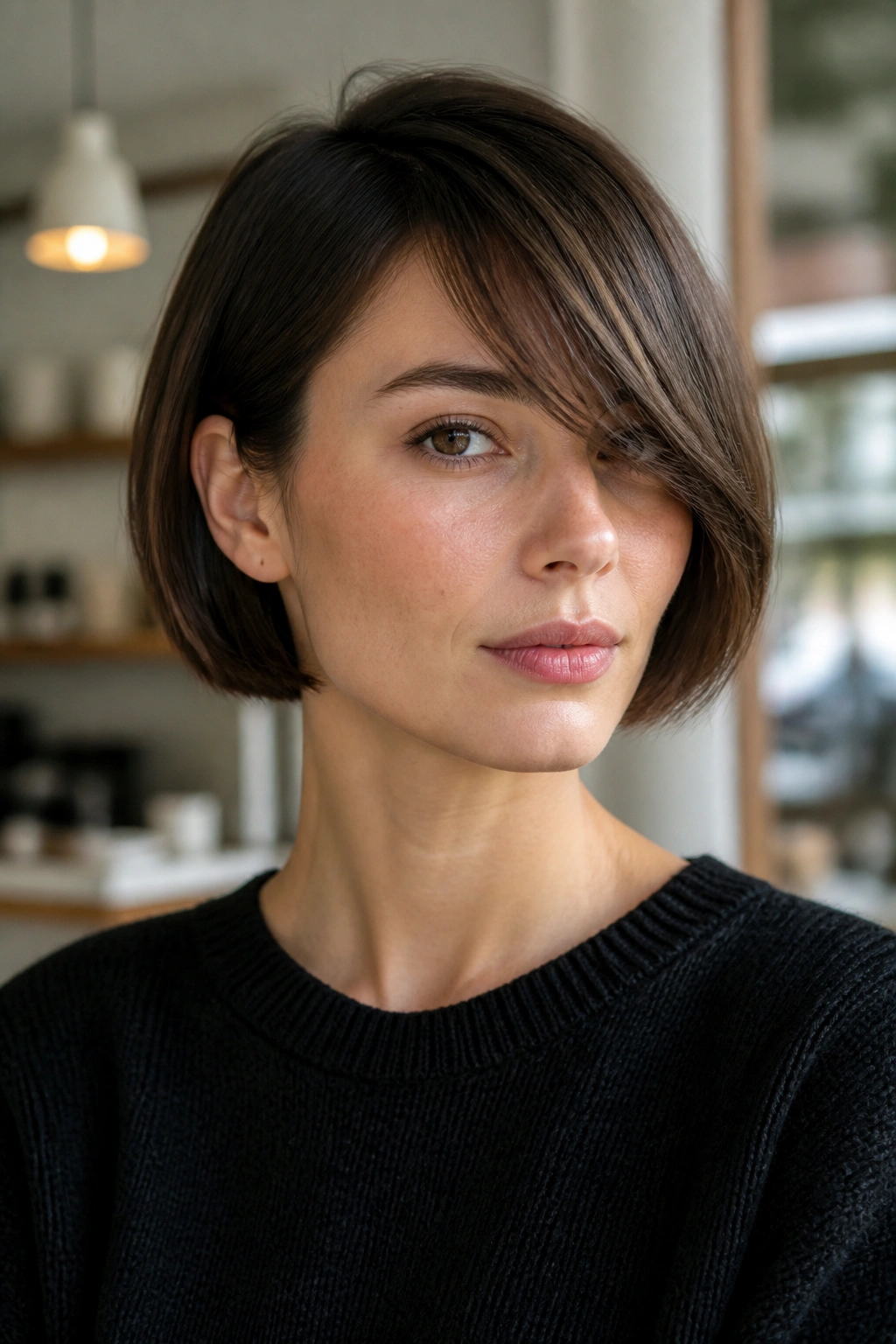
A blunt French bob with a long side fringe is the version I reach for when I want the haircut to look deliberate from every angle. The edge is straight and clean, but the fringe swings across the face with enough length to soften the line. It’s a good balance. Sharp at the bottom, fluid at the top.
The fringe matters more than it sounds. A short, choppy fringe can make a bob feel edgy in a very specific way, but a longer side fringe reads more polished. It gives the eye something to follow, and it makes the side part feel integrated instead of pasted on. That’s a small distinction, and a very real one.
This is especially good for straight or slightly bent hair. On very curly hair, you can still make it work, but the fringe needs more planning because shrinkage changes everything. On straight hair, though, the cut almost styles itself if the ends are kept blunt and the front is blow-dried with a slight curve away from the cheekbone.
One thing I like here: it grows out gracefully. The fringe blends into the front length rather than hanging around awkwardly. If you want a French bob that stays graceful between salon visits, this is one of the smarter picks.
6. Collarbone-Grazing French Bob With a Side Part
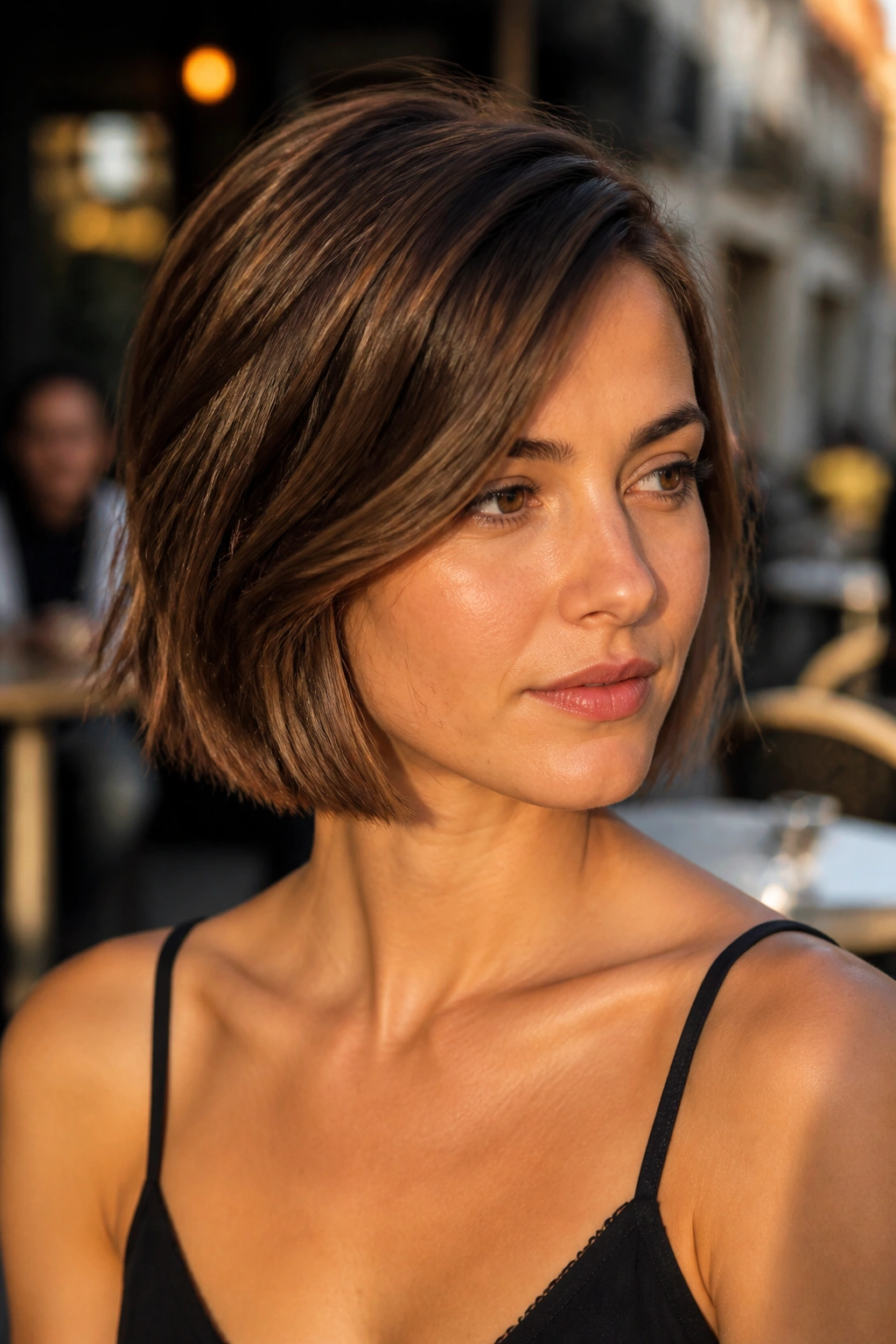
This one sits between a classic French bob and a lob, and that middle ground is the whole point. The collarbone length gives you a little extra swing, a little extra styling room, and more room to tuck it back when you’re tired of dealing with it. The side part keeps it from sliding into “just long hair.”
Unlike the chin-length versions, this cut has a softer fall through the front. The side part creates a longer diagonal line, which helps the shape look polished even when the ends are loose. If you want a bob that can survive an air-dry and still look like it meant to be that way, this is a smart choice.
Who it flatters best
- People who want to keep enough length for a small bun or clip.
- Anyone whose hair gets puffy when it’s cut too short.
- Faces that like a bit of length beside the jawline.
- Hair that bends easily and doesn’t need much coaxing.
There’s a subtle luxury to this version. It doesn’t shout bob. It just looks neat, flattering, and a little French without trying too hard. That’s a useful thing when you want polish but do not want the haircut to feel precious.
7. Feathered French Bob With Soft Ends
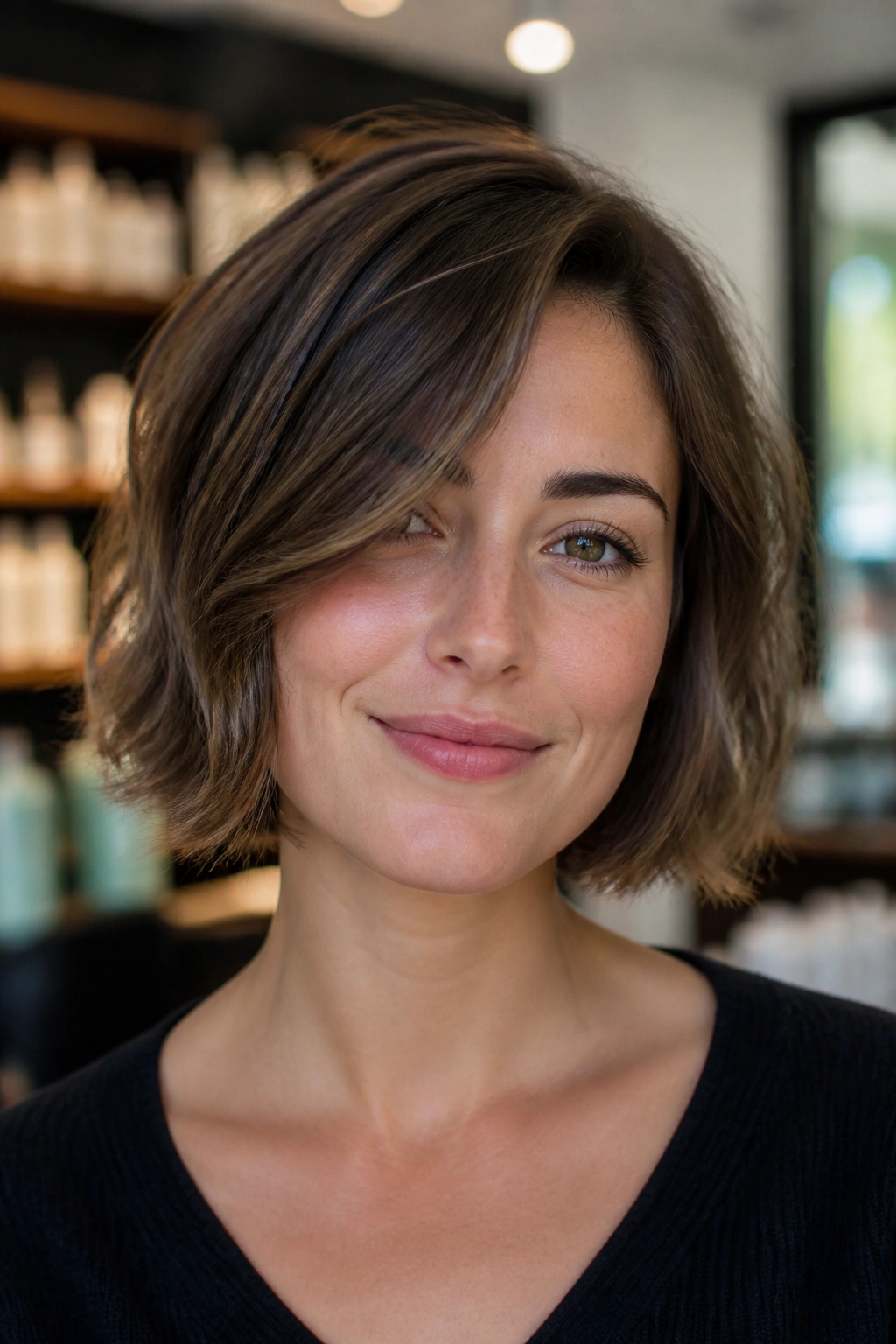
If blunt lines feel too hard on you, feathered ends can make a French bob side part feel much lighter. The trick is not to thin the hair to death. That’s where people go wrong. You want soft movement at the perimeter, not wispy ends that disappear when the hair dries.
A feathered bob works because the side part gives the top a little structure while the ends stay relaxed. The shape moves around the face instead of sitting like a cap. On hair that tends to look flat at the sides, this is a nice change of pace.
What to ask for at the salon
- Soft point cutting at the very ends, not aggressive texturizing.
- Slightly longer pieces in front to frame the cheekbones.
- A clean part line that sits off center.
- Light interior shaping only where the hair feels bulky.
This version is good when you want softness but still want to look neat. It’s one of those cuts that reads casual from far away and carefully planned up close. And honestly, that’s the sweet spot for a lot of people.
8. French Bob With a Side Part and Micro Fringe

Can a side part and a micro fringe work together? Yes, but only if the fringe stays narrow and the rest of the bob is kept tidy. Otherwise the style starts to fight itself. Done well, though, the contrast is lovely. The side part softens the cut, and the tiny fringe adds a little bite.
The key is balance. A micro fringe already pulls attention to the eyes and forehead, so the bob itself should stay relatively simple. Keep the perimeter clean, and do not overload the sides with too much layering. You want the fringe to feel like a detail, not a separate haircut living on top of the bob.
This look suits people who like a little edge but still want the haircut to feel polished. It’s not loud. It’s precise. And precision is what stops micro fringe from looking costume-like.
One good move: keep the side part shallow rather than dramatic. A deep part can make the fringe feel disconnected, while a gentler off-center part ties the whole thing together. Tiny detail. Huge payoff.
9. Tousled Air-Dried French Bob
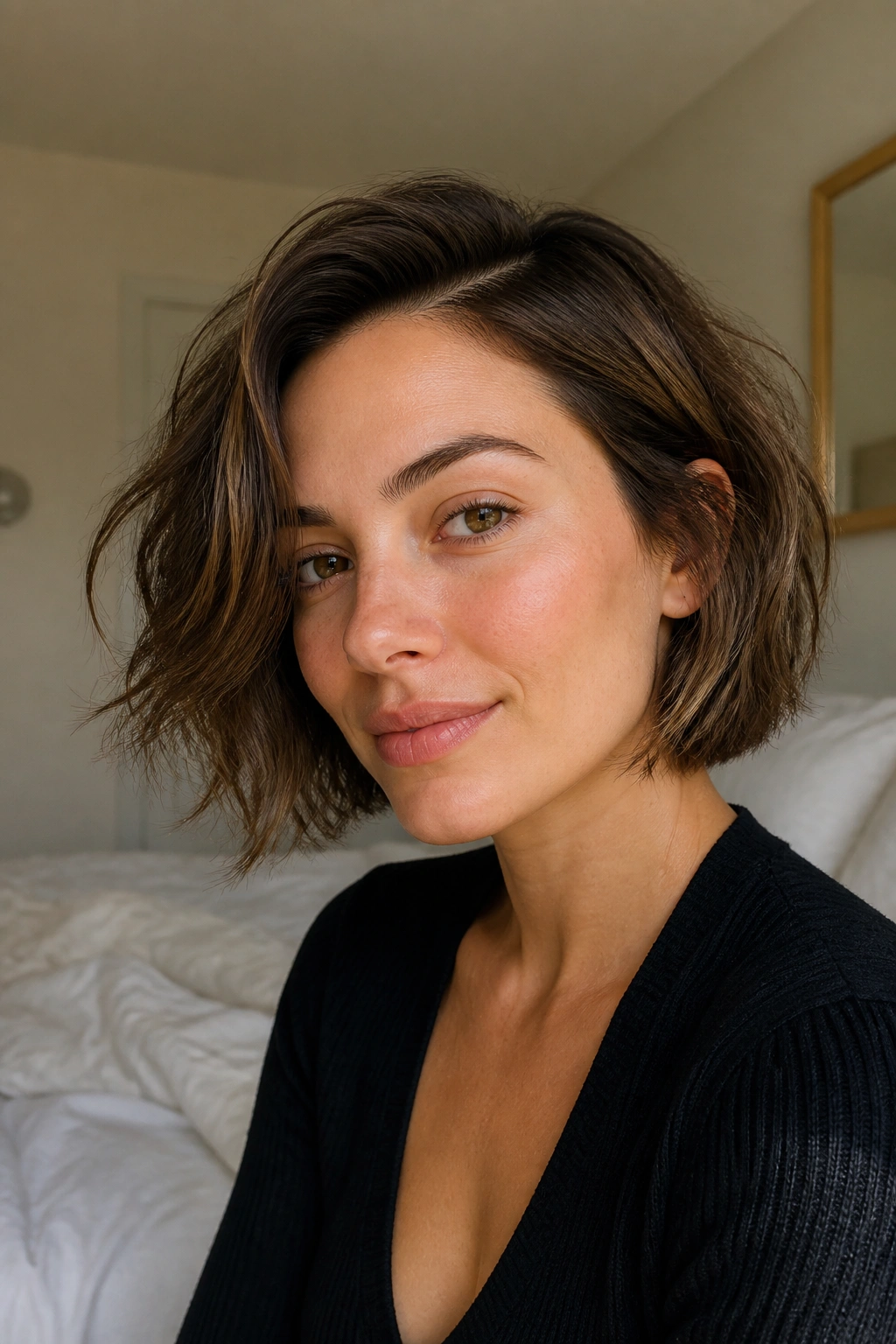
You wash your hair, squeeze in a little cream, make a side part with your fingers, and walk away. That’s the dream here. A tousled air-dried French bob works because the cut is doing the work, not the styling tools.
The side part gives the hair a direction before it dries, which helps the front pieces fall with a little bend instead of sticking straight out. If your hair has some natural wave, this cut can be almost stubbornly easy. If it doesn’t, you still get a loose, casual shape as long as the ends are cut with enough movement.
The little things that matter
- Blot hair with a towel instead of rubbing it.
- Put the part in while the hair is wet or damp.
- Scrunch once at the ends, then leave it alone.
- Use a cream, not a crunchy gel, if you want softness.
There’s a reason air-dried bobs often look better on people who have had them cut well. The outline is clear even when the texture is imperfect. That’s the real job of a good French bob. It should still look styled when you barely touch it.
10. Thick-Hair French Bob With Controlled Volume

Thick hair can wear a French bob beautifully, but only when the cut respects weight. Too much bulk and the style turns triangular. Too much thinning and it turns fuzzy. The side part helps by pulling volume to one side and breaking up the mass at the crown.
Compared with a shaggy bob, this version keeps more structure. That’s the point. You want controlled volume, not a halo of layers flying every which way. Ask for internal debulking only where the hair piles up, usually through the back and just behind the ears, while keeping the outer line strong and clean.
A medium-hold blow-dry cream works well here because it keeps the hair in place without killing the shape. Dry the roots in the opposite direction of the part for lift, then set the part back where you want it and smooth the top layer. That little flip at the root makes a bigger difference than people expect.
This is one of the best versions if you like a bob that feels substantial. It has presence. It doesn’t collapse by lunchtime, which is a blessing if your hair tends to expand instead of settle.
11. Fine-Hair French Bob With Root Lift

Fine hair usually looks better in a French bob when the part is off-center, not dead in the middle. A side part gives the roots somewhere to rise, and that lift makes the cut look fuller without adding fake bulk. That’s the whole game here.
Keep the ends blunt. Really blunt. Thin ends on fine hair can vanish, and then the bob loses its shape the minute you step outside. A clean perimeter gives the illusion of density, while the side part stops the top from lying flat against the head.
A small root spray at the crown helps, but the technique matters more than the product. Dry the roots in the opposite direction of the part for a few minutes, then swing the hair back into place and let it cool there. That simple move creates bend without making the style feel stiff. If you use a round brush, keep it medium-sized so you don’t curl the ends too much.
This is the version I’d pick for anyone who wants the haircut to look fuller without looking over-styled. It’s neat, lifted, and easy to keep fresh with a quick root refresh on day two.
12. Razored French Bob With Soft, Broken Ends
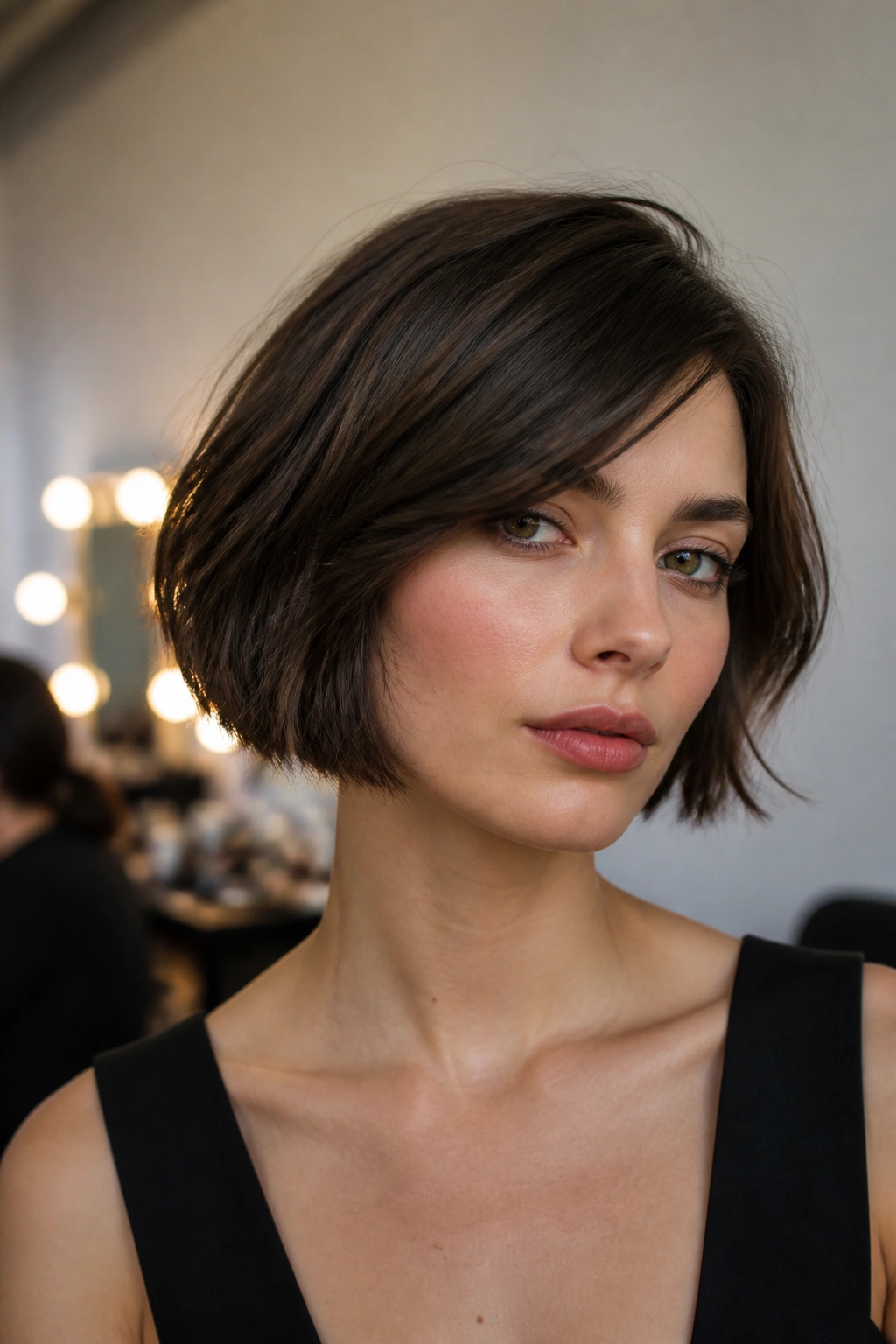
A razored French bob is a good idea when the hair is thick, straight, or resistant to movement. The razor takes the edge off the weight, and the side part keeps the shape from looking too soft or over-thinned. Used well, it gives you a lighter finish without losing the line.
The catch is that a razor can make fragile hair look frayed if the stylist gets too eager. So the cut should be focused and careful, not shredded all through the ends. You want broken-up texture, not a wispy halo. There’s a difference, and it’s a big one.
What to avoid
- Too much razor work near the perimeter.
- Heavy layering around the crown.
- A part that sits so deep it exposes the scalp too much.
- Overusing matte paste, which can make the hair feel rough.
A good razored bob looks airy, not damaged. It should still have shape when it air-dries. If the ends split into a thousand directions, the cut has gone too far. Keep it soft, not shredded, and it holds up much better in daily wear.
13. French Bob With Cheekbone-Framing Side Sweep

A cheekbone-framing side sweep gives the French bob a little more elegance than a blunt face frame does. The front section drapes across the cheek at a gentle angle, which softens the jaw and draws attention upward. It’s one of the most flattering ways to wear a side part if you want the haircut to feel polished without being severe.
The beauty of this version is that it changes with the way you tuck or flip the front section. Leave it down and the cut looks romantic. Tuck it behind the ear and the cheekbone sweep becomes the star. Either way, the bob keeps its structure underneath.
One thing that helps: ask for the front to be cut just a touch longer than the back. Not dramatically. Just enough to make the diagonal line visible. If the front and back are exactly the same, the side sweep loses that sense of motion.
This style is a good choice when you want face framing without layers everywhere. It gives shape where you can see it and leaves the rest clean. That restraint is what makes it feel expensive.
14. Salon-Ready French Bob You Can Ask For By Name

The best French bob side part is usually the one your stylist understands in one minute, not one hour. So the haircut description needs to be clear. Bring a photo if you have one, but also say what you care about most: the length, the weight line, and the kind of finish you want.
A good salon conversation sounds specific. “I want the length at the chin, maybe a little below.” “I want a side part that gives lift at the crown.” “I want the ends blunt, but not heavy.” Those phrases are useful because they describe the shape, not just the vibe.
Helpful phrases to say out loud
- “Keep the perimeter clean and strong.”
- “Give me a side part with soft root lift.”
- “I want movement in the front, not all over.”
- “Leave enough weight so the bob doesn’t puff out.”
Also say what you do not want. Too many bobs go sideways because nobody names the bad outcome. If you hate triangle hair, say that. If your hair frizzes when it’s thinned too much, say that too. Haircut language gets better when you name the problem plainly. Strange but true.
15. Glossy French Bob for Evenings Out
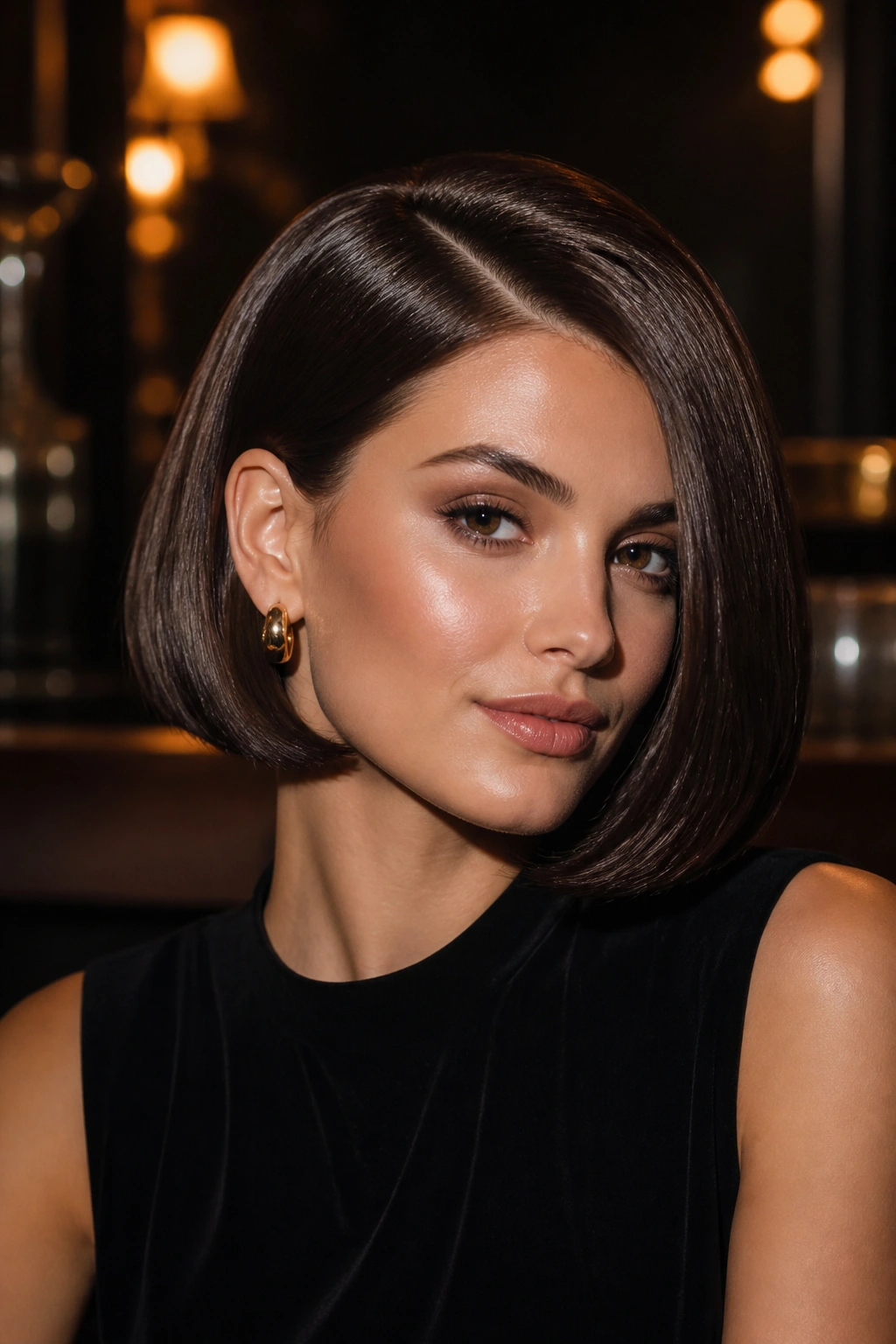
A glossy French bob with a side part is the polished version that still feels easy to wear. The hair sits smooth, the part is clean, and the ends curve just enough to catch the jawline. It’s the kind of cut that looks finished even before you touch it with a tool.
This version loves shine products, but lightly. A pea-sized amount of cream or a few drops of serum on the ends is enough. If the hair gets oily fast, keep the product below the ear line. The side part should stay clean at the root so the whole style doesn’t collapse into slickness.
A quick blowout with a paddle brush or a round brush is all it usually needs. Focus on the front section first, because that’s where the shape lives. If you want a sharper mood, tuck one side behind the ear and leave the other loose. If you want something softer, let both sides fall naturally and let the part carry the shape.
That’s the charm of this whole haircut, really. The side part does not just sit there. It controls the tone. And when the bob is cut with enough precision, the result looks calm, clean, and a little bit composed without trying to perform for anyone.
