



A medium length bob has a special kind of pull. It sits in that sweet spot where hair still feels easy, but it no longer behaves like a short cut that needs constant babysitting. For a lot of women, that middle ground is the whole point: enough length to tuck behind an ear, enough shape to look deliberate, and enough movement that it doesn’t collapse into one flat line by lunchtime.
The best versions of medium length bobs do one thing well. They make the hair look more expensive, even when the styling took ten minutes and a mediocre blow-dry brush. A clean collarbone cut can make fine hair look thicker. A layered lob can take the weight out of dense hair without turning it into a frizzy halo. A soft, face-framing bob can do more for cheekbones than a heavy contour ever will.
Length alone is not the trick. Shape is. A bob that hits at the jaw can sharpen the face; one that grazes the collarbone can soften it. Add a side part and the whole mood changes. Add curtain bangs and the haircut becomes friendlier. Leave the ends blunt and you get density. Feather them out and you get swing. Same general haircut, completely different energy.
That is why medium length bobs keep showing up in salons. They are not one haircut. They are a whole family of haircuts, and the difference between a so-so cut and a really good one often comes down to the smallest choices: where the line sits, how the layers are handled, and whether the ends are crisp or soft.
1. Blunt Collarbone Bob

A blunt collarbone bob has one job: make the hair look fuller without asking for a lot of fuss. The straight edge creates a clean visual line, and that line gives fine hair more presence right away. When it lands right at the collarbone, it feels modern but not severe. Sharp. Simple. Good in real life.
This is the cut I’d point fine-haired women toward first, especially if they’re tired of styles that look great in the chair and limp by the time they get home. Ask for one solid perimeter line with minimal internal layering. That keeps the ends thick, which matters more than people think.
- Best for: fine to medium hair that needs more body
- Ask for: a blunt line that hits just above or at the collarbone
- Style with: a round brush or a quick flat-iron bend at the ends
- Trim schedule: about every 6 to 8 weeks to keep the edge crisp
Skip heavy layers here. They can make the cut lose its whole point.
2. Soft Layered Lob

If you want movement without giving up length, this is the cut that keeps making sense. A soft layered lob is still long enough to tuck, clip, and braid, but the layers take the weight out of the midsection so the hair can move instead of hanging there like wet rope. It’s one of those cuts that looks relaxed even when it’s carefully done.
The key is restraint. The layers should start low enough that they don’t steal density from the crown. A good stylist usually keeps the top smoother and lets the shape build through the lower half, which keeps the cut from turning fluffy. That part matters more on thick hair, where too many short layers can puff out fast.
This is also a nice option if your hair bends naturally at the ends and you want to work with that instead of flattening it into submission. A little mousse at the roots, a medium round brush, and a fast bend through the last inch can be enough. Nothing fussy. Nothing overworked.
3. French Bob With Grown-Out Ends
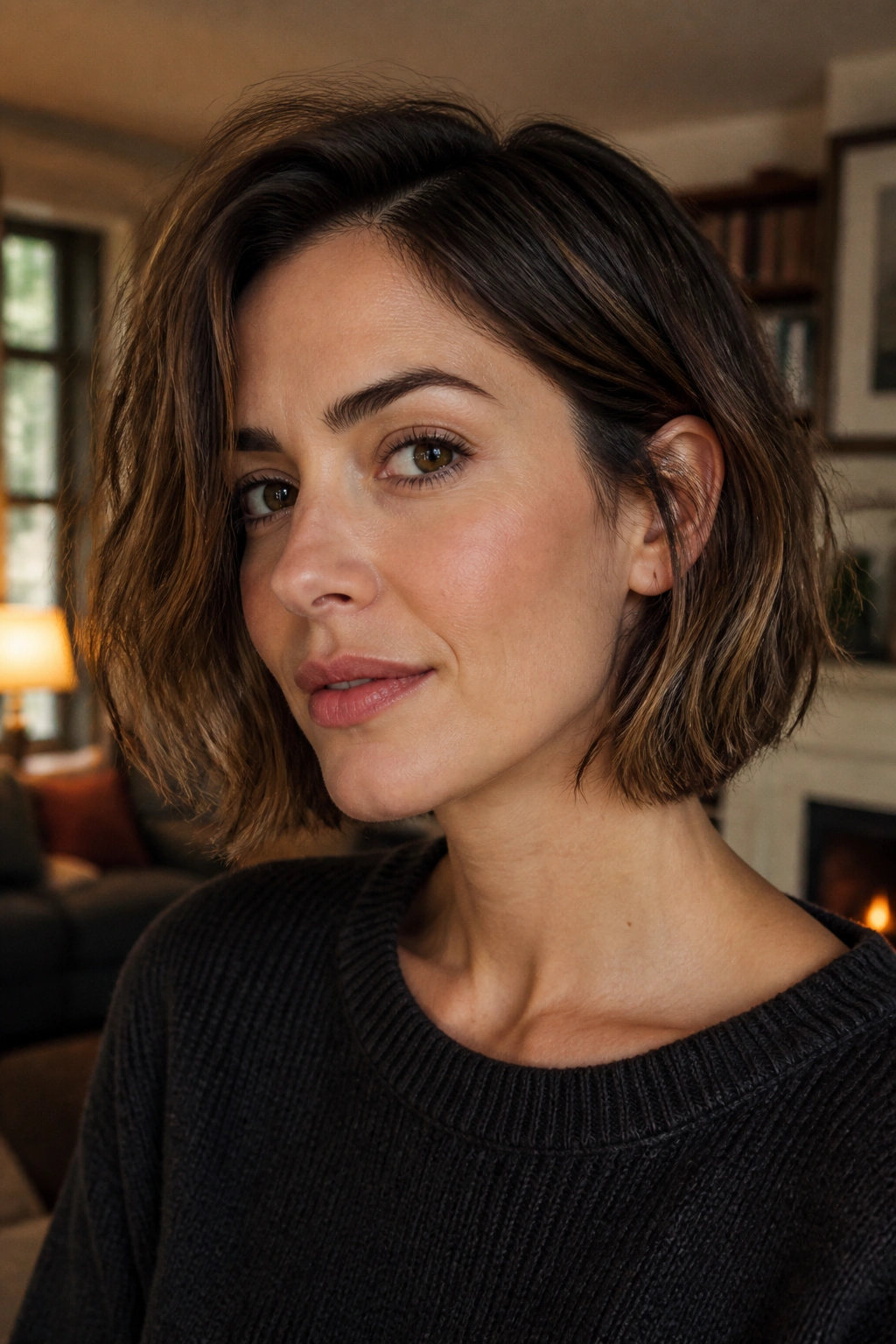
Why does the French bob keep coming back? Because it has attitude without looking like it tried too hard. The grown-out version keeps the spirit of that cut — cheeky, airy, a little undone — but stretches it into medium length territory so it works for more people. The ends usually sit near the jaw or just below it, and that little extra length makes it easier to wear every day.
What makes this version nice is the softness around the face. The outline is still clear, but the texture keeps it from feeling rigid. If you have straight or slightly wavy hair, it can look especially good with a light bend and a side part that’s not too neat. If your hair is very curly, the shape needs a stylist who understands shrinkage. Otherwise the cut can jump too short.
How to style it
- Rough-dry the roots first so the hair gets a little lift.
- Bend the ends with a 1-inch iron, but leave the last inch straighter.
- Finish with a pea-sized amount of cream, not a heavy serum.
- Tuck one side behind the ear for that easy, lived-in feel.
4. Shaggy Lob With Choppy Ends

A shaggy lob is what happens when a bob gets a little edge and a lot more movement. It works because the choppy ends break up the line, which keeps thick hair from looking like a helmet and gives straighter hair some texture to hold onto. On a flat morning, this cut has enough built-in texture to save you from starting over.
The thing I like about this style is that it does not need to be perfect. In fact, perfection ruins it. The layers should feel airy rather than sliced to death, and the ends should have a soft, uneven finish. That unevenness is what gives the cut its swing when you move.
- Good for: wavy, dense, or medium-to-thick hair
- Best styling product: a light texturizing spray or salt spray
- Avoid: heavy oils near the roots, which can flatten the whole thing
- Maintenance: around 8 weeks if you want the texture to stay clean
This is not the cut for someone who wants polished and glossy every day. It wants grit.
5. Italian Bob

The Italian bob has a little drama in it, but the good kind. It’s fuller through the body, usually a touch longer than a classic chin bob, and it tends to be styled with smooth volume instead of loose mess. Think shine, swing, and a shape that sits neatly around the jaw and neck without feeling stiff.
What makes it stand out is the balance between weight and movement. The cut keeps enough bulk at the ends to look rich, which is why it suits thicker hair so well. On hair that is naturally straight or just slightly bent, it can look almost sculpted. On hair with texture, it needs a blowout or a brush-and-dry routine to keep the outline clean. Otherwise it can go puffy.
I’d call this one a power haircut without the hard edges. It looks good with big earrings, a neat middle part, or a soft side part that shifts the volume. If you want a bob that feels dressed up even in a plain T-shirt, this is one of the strongest bets.
6. A-Line Bob

The A-line bob earns its place by doing something simple and useful: it gives you length in front without letting the back drag. Shorter at the nape, longer near the face, it creates a diagonal line that can sharpen soft features and make the neck look longer. That angle is the whole point.
Compared with a blunt bob, this one feels a bit more shaped and a little less boxy. Compared with a stacked cut, it is less dramatic and easier to grow out. That middle ground is why a lot of women like it. It gives the illusion of movement even when the hair is mostly smooth and straight.
This cut works especially well when the front pieces skim the collarbone while the back stays neat and tucked. If your hair is thick, the angle keeps it from ballooning. If your hair is fine, ask for a gentle A-line rather than a steep one, or you may lose too much fullness in the back. Clean shape first. Drama second.
7. Curtain Bang Bob

Does a bob need bangs to feel fresh? Not always. But curtain bangs can change the whole haircut in one shot. They soften the forehead, pull attention toward the eyes, and give a medium bob more shape around the face without chopping off much length. It’s one of the easiest ways to make a bob feel less severe.
The bang length matters a lot here. Too short, and the cut starts to read retro in a way that can be tricky to style. Too long, and they blur into the rest of the haircut. The sweet spot is usually around the cheekbone or a little below, where the pieces can part and sweep back naturally.
What to ask your stylist for
- Face-framing bangs that open in the center
- A medium bob that still holds some weight at the ends
- Soft transition pieces so the bangs don’t look pasted on
- A blow-dry direction that keeps the fringe from splitting weirdly
If you hate daily bang work, think twice. Curtain bangs are friendly, but they still want attention.
8. Side-Part Bob With Ear Tuck

A side part does more than shift hair to one side. It changes the mood of the whole cut. On a medium bob, it creates instant asymmetry, which is especially useful if your face feels long, narrow, or a little too centered by a middle part. And the ear tuck? That’s the quiet detail that makes the style feel finished.
This version works beautifully when one side of the bob is tucked behind the ear and the other side stays fuller and loose. The contrast gives the cut shape without making it fussy. It also lets earrings or a strong brow line do more work. Small thing. Big effect.
For fine hair, a side part can build lift at the root faster than heavy layering. For thicker hair, it helps break up the bulk near the temples. Keep the ends blunt or softly beveled so the shape stays neat. A little root spray at the crown and a quick pass with a round brush is usually enough. You do not need a complicated routine here.
9. Beach-Wave Lob

A beach-wave lob sounds casual, and it is, but the best versions are more controlled than people assume. The waves should be loose enough to move and irregular enough to avoid that crimped, over-curled look. When the pattern is right, the cut feels easy and a little cool without looking messy.
This is a strong option if your hair falls flat when it’s cut too blunt. The waves create air between the strands, which makes the shape feel lighter. The length is handy too, because it gives the wave room to bend without springing too short. I’d especially point this out to anyone with medium-density hair that needs body but not frizz.
Styling details that matter
- Use a 1-inch curling iron or wand.
- Leave the last inch of each section out.
- Brush the waves out once they cool.
- Finish with a dry texture spray at mid-length only.
The biggest mistake is making every wave the same. Uniform curls kill the laid-back feel fast.
10. Curly Medium Bob

Can curly hair wear a medium bob without turning into a triangle? Absolutely, but only when the shape respects the curl pattern. The best curly bob is cut with shrinkage in mind, usually on dry or mostly dry hair so the stylist can see where each curl actually lands. Otherwise the result can come out shorter than expected and oddly wide.
The goal is to build a shape that follows the curl’s own movement. That usually means removing bulk where the hair stacks too much and leaving enough weight at the perimeter so the ends don’t fray into fluff. A curly medium bob should bounce, not expand in every direction.
How to keep the curl shape
- Use a leave-in that adds slip, not a heavy butter.
- Diffuse on low heat until the curls are set.
- Scrunch only after the hair is fully dry.
- Trim the ends before they start to go fuzzy and uneven.
This cut gets better when it is maintained with small trims. Curly ends show wear fast.
11. Feathered Bob
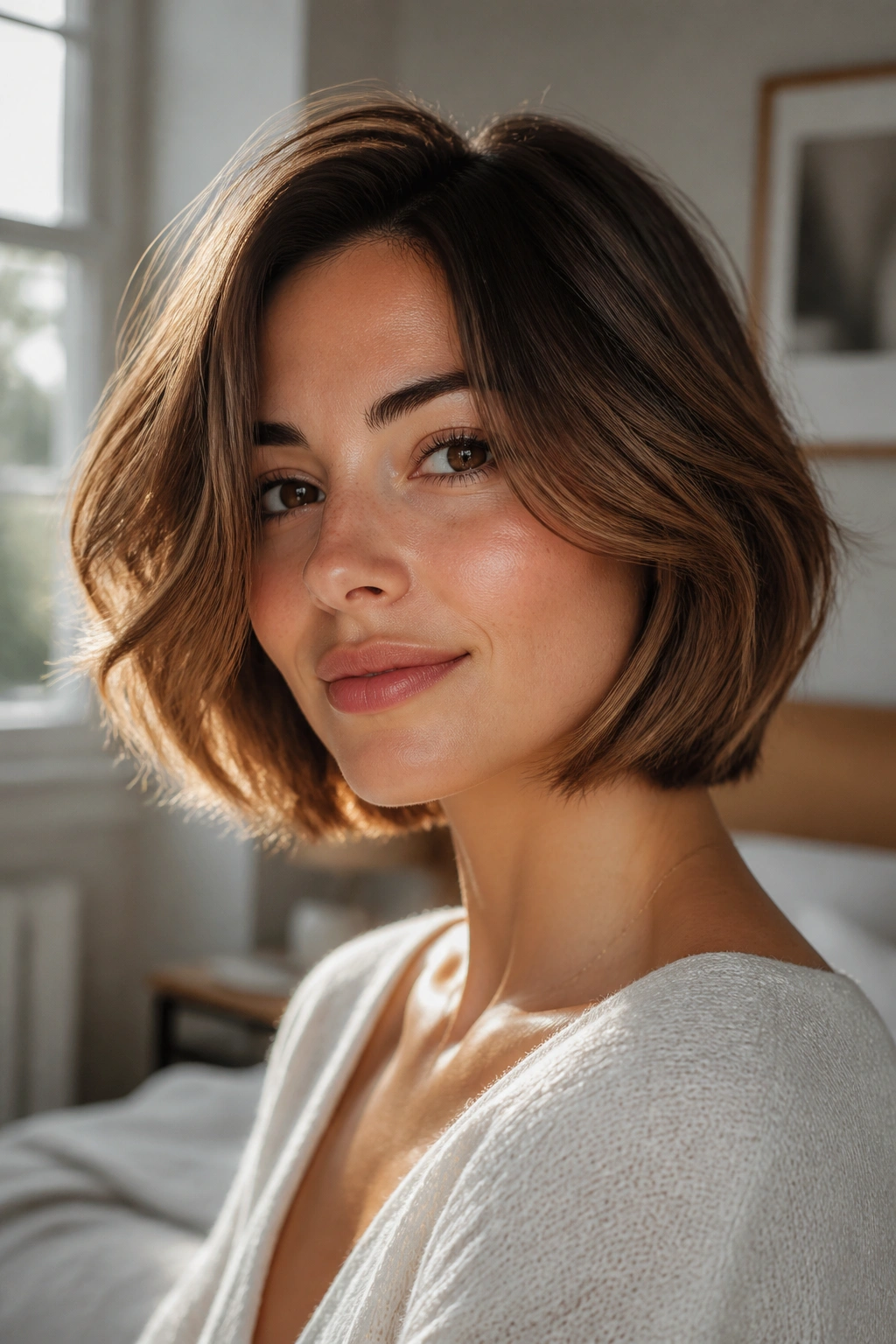
A feathered bob feels softer than a blunt one, but it is not messy. The trick is in the ends. They are lightly tapered and softened so the hair moves away from the face instead of sitting in one hard wall. That gives the cut a lighter look, which can be flattering if your hair is dense or if you want something gentler around the jaw.
I like feathering for women who want body without harsh lines. It has enough structure to look intentional, yet it doesn’t have the heavy, straight-across feel that can make a bob look boxy. Around the face, the soft taper can be especially nice if your jaw is broad or your cheeks are full.
A round brush helps here, but not in the giant, overdone way people used to do it. A medium brush, a bit of lift at the roots, and a curve through the mid-lengths is enough. If the ends flick out a little, that’s fine. That slight movement is part of the charm. Over-smoothing it usually makes the cut less interesting.
12. Razor-Cut Lob

A razor-cut lob is not the same as a layered lob, and that distinction matters. The razor softens the ends and removes bulk in a more broken-up way, which is why the cut looks airy and slightly edgy. It works best on straight to wavy hair that can handle a piecey finish without turning frizzy at the first sign of humidity.
Compared with a scissor-cut bob, this one feels lighter and a little less formal. The line is still there, but it doesn’t hit you over the head. If your hair is dense and you’re tired of ends that feel thick and blunt in a bad way, this can be a smart choice. It creates movement without chopping the shape into visible steps.
I would not use it on hair that is already fragile or split at the ends. A razor can make damage look worse, not better. Ask for a stylist who cuts it dry or near-dry, because the texture changes a lot once hair is fully dry. That’s where the real shape lives.
13. Inverted Bob
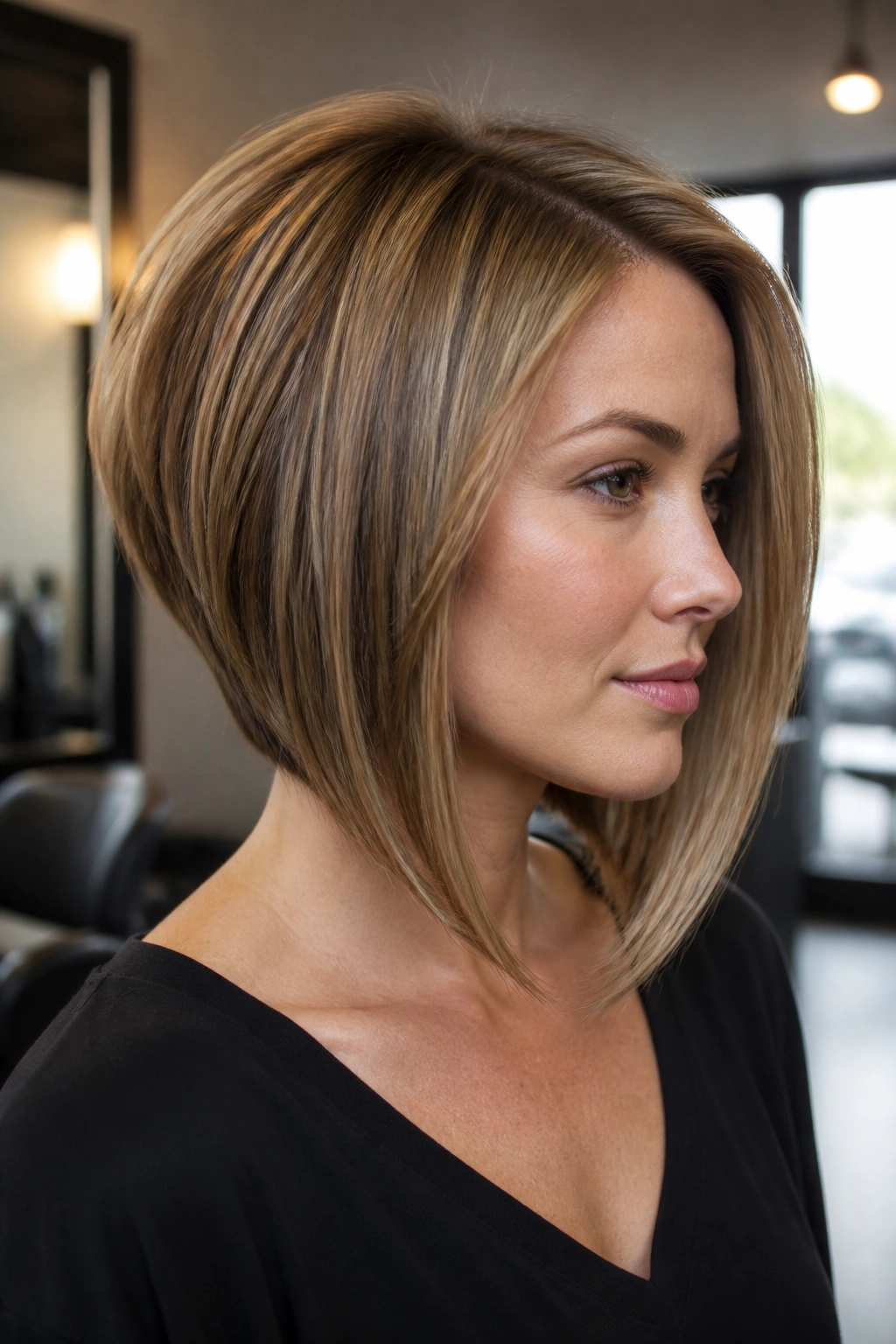
An inverted bob does one thing very well: it creates lift at the back while keeping some length through the front. That angled silhouette gives the illusion of a fuller crown and a neater neckline, which is useful if your hair tends to lie flat against the head. It also gives the face a slight forward frame that can feel clean and sharp.
This cut can be flattering on fine hair because the stacked shape in the back gives the illusion of density. But the stack should be controlled. Too much stacking and the cut starts to look dated fast. Too little, and you lose the point of the silhouette. The sweet spot sits between those two extremes.
- Ask for a soft stack, not a hard wedge.
- Keep the front long enough to brush the collarbone.
- Blow-dry the back with a small round brush for lift.
- Use a light mousse at the roots if your hair falls flat.
The best inverted bobs look clean from every angle, especially the side view. That side view matters more than people admit.
14. Box Bob
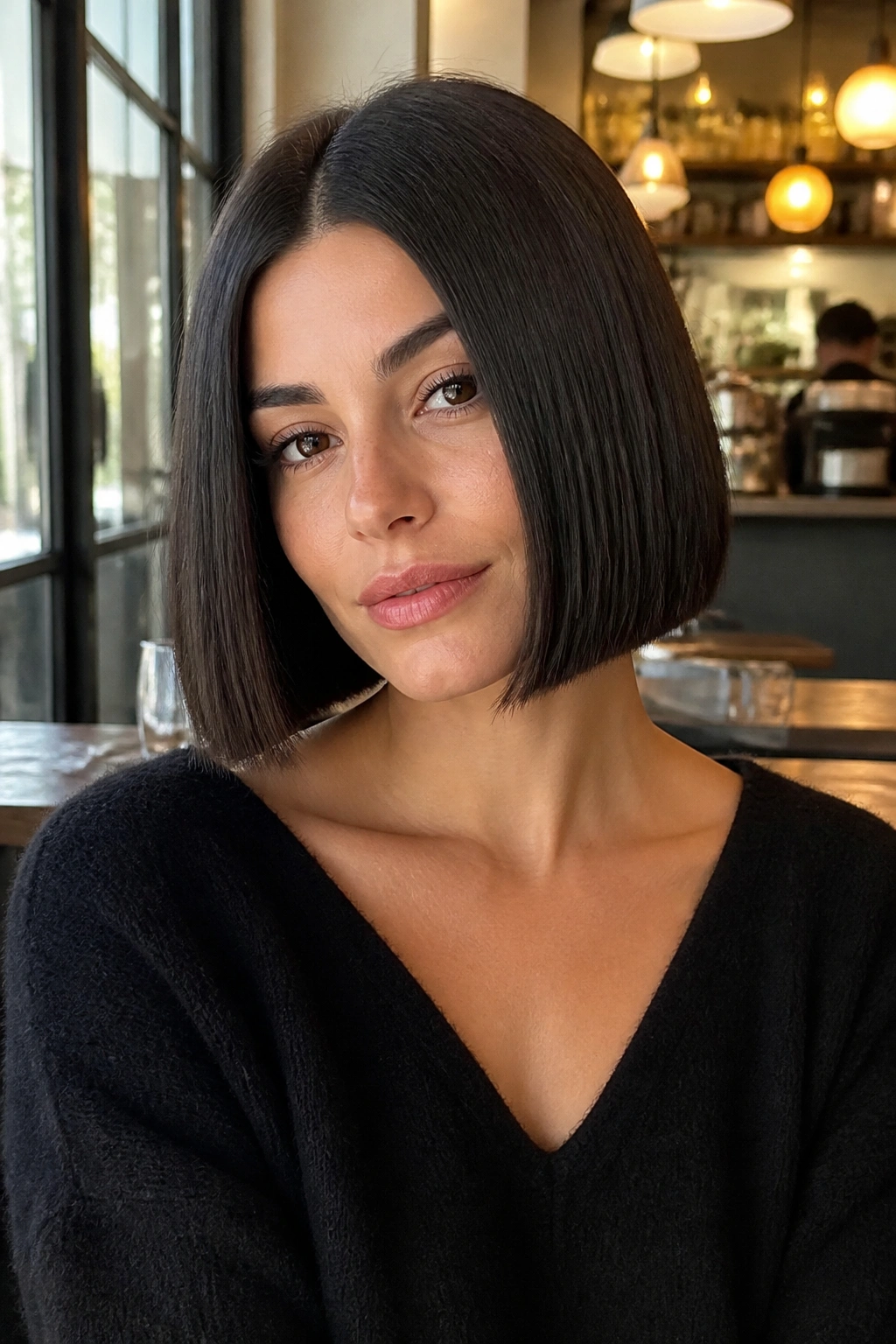
A box bob is for women who like a haircut with presence. The shape is fuller through the sides, the perimeter is blunt, and the overall silhouette reads square rather than curved. It sounds severe, but in the right hands it looks bold and polished, not stiff. The line gives the haircut its strength.
This cut is especially good for fine hair that needs a sense of density. The strong outline makes the hair look more substantial without adding extra length. On thick hair, it can be striking too, but the inside may need some weight removal or the whole thing can sit too heavy around the jaw.
The styling is straightforward. Smooth it with a paddle brush, not a giant round brush, and leave a slight bend at the ends so the shape doesn’t look like a ruler. A center part tends to emphasize the box shape, while a side part softens it a little. If you want a bob that looks modern without relying on texture spray, this is a strong candidate.
15. Flipped-End Bob
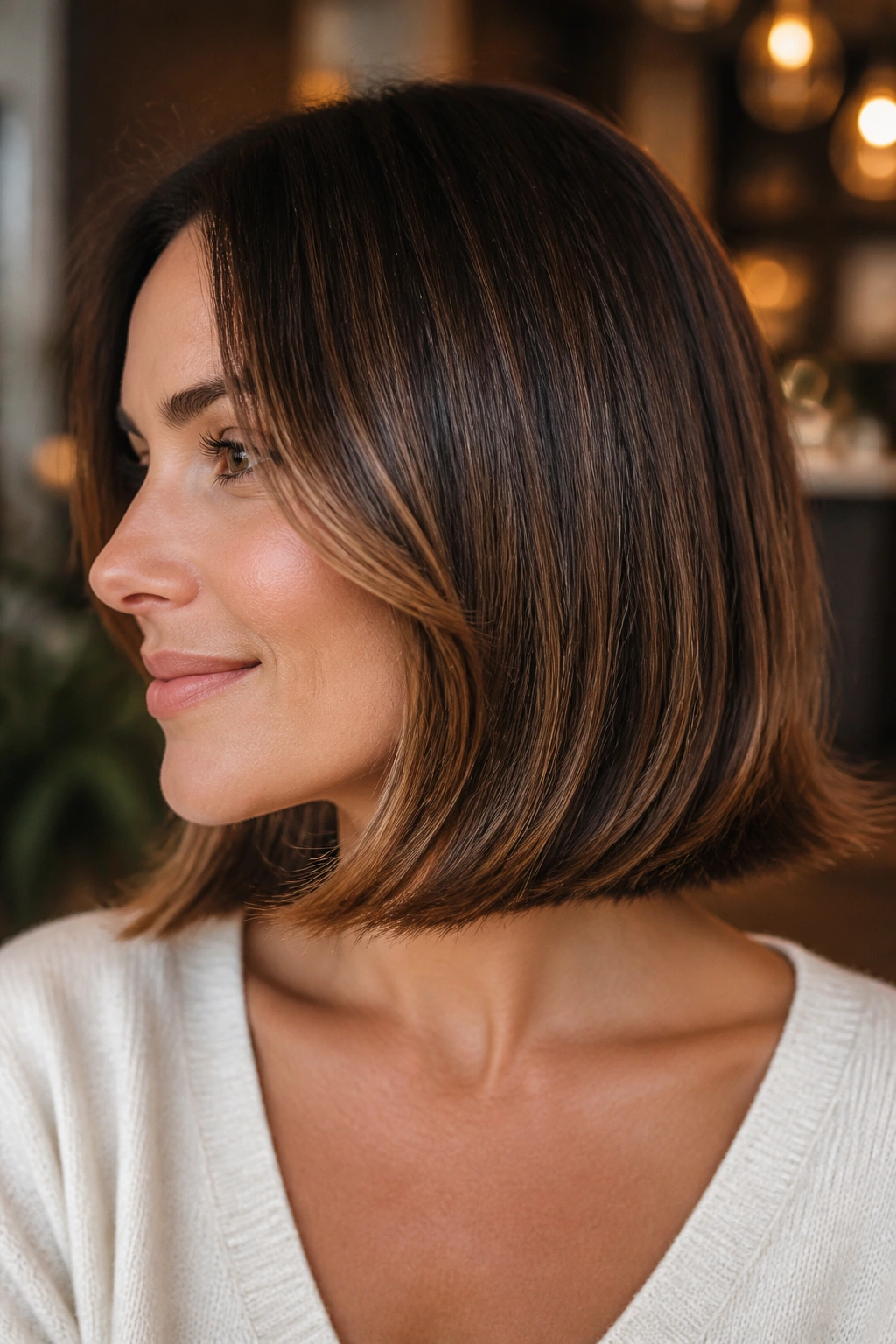
A flipped-end bob has a little retro energy, but not in a costume-y way. The ends turn outward just enough to suggest movement, which makes the haircut feel lively even when the rest of the hair is kept simple. It is especially nice on straight hair that needs a small visual lift at the bottom.
The flip works best when it starts low, near the last inch or so. If the bend begins too high, the haircut can look dated fast. That tiny outward turn at the ends is what keeps the style feeling fresh. It also makes the collarbone length feel a touch lighter, which is handy if your hair tends to sit flat.
A medium barrel brush or a 1.25-inch round brush can create the shape, but don’t chase a perfect curl. You want a bend, not a spiral. That distinction matters. Add a small amount of shine spray through the mid-lengths and leave the roots clean. Too much product at the top can make the flip collapse.
16. Face-Framing Bob

What makes a face-framing bob so useful is that it can be adjusted without changing the whole haircut. The base stays medium length, but the front pieces are cut to flatter the cheekbones, jaw, or chin depending on what you want to show off. That flexibility is why so many women keep asking for some version of it.
The shortest pieces should not be random. If they hit too high, the face can look chopped up. If they sit too low, the framing disappears. For most people, the best placement lands somewhere around the cheekbone down to the corner of the jaw, with longer pieces blending into the rest of the cut.
Where to place the shortest pieces
- Cheekbone level for more lift
- Jaw level for softness
- Slightly below the chin if you want length around the face
- Always blend them into the side lengths so the cut stays smooth
This is one of those cuts that looks more expensive when the front is precise. Sloppy framing shows fast.
17. Polished Straight Bob
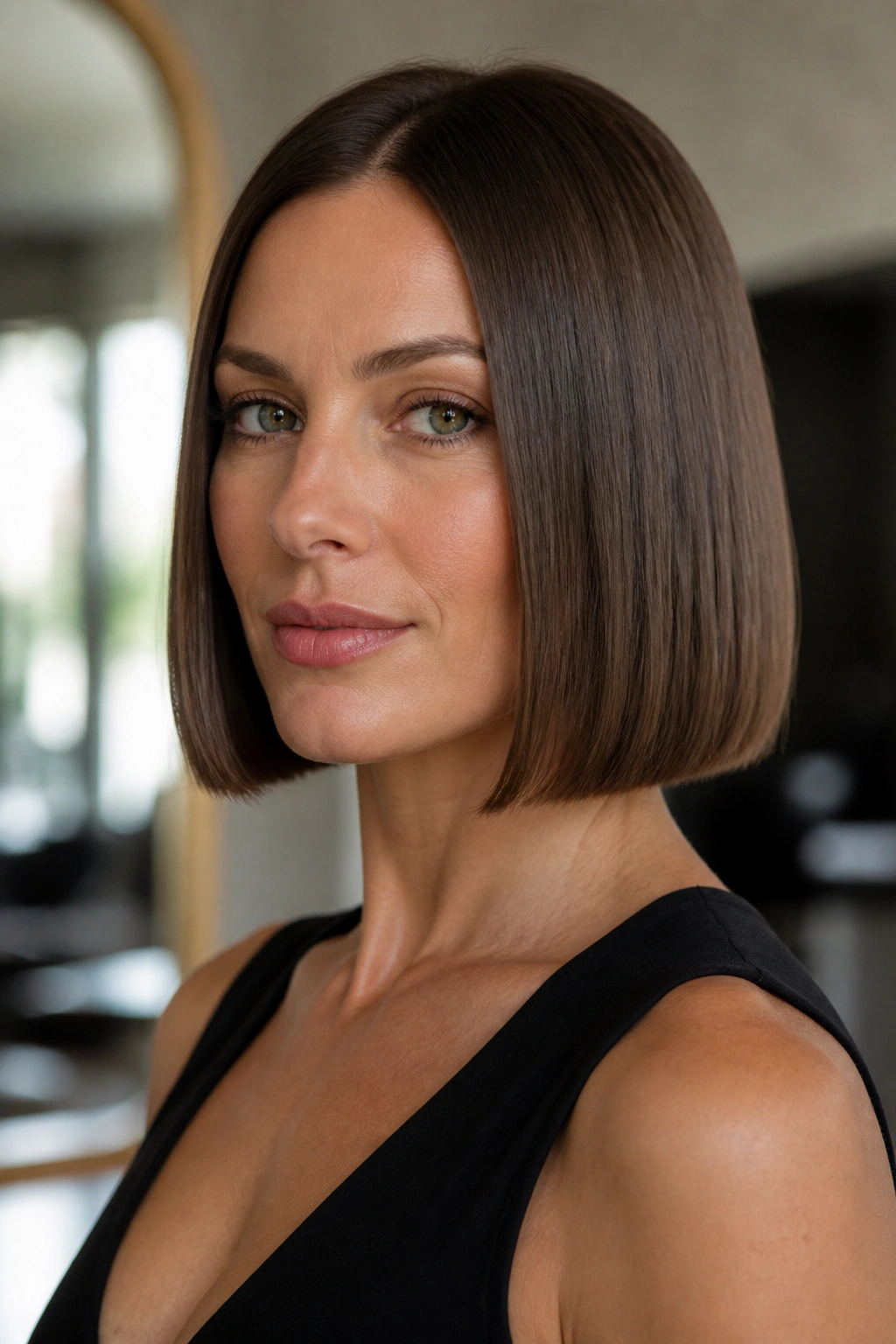
A polished straight bob is the opposite of a texture-heavy cut, and that is exactly why some women love it. It gives you one clean shape, one clear line, and a finish that looks deliberate even when the styling time was short. On straight hair, it can be gorgeous because the hair itself helps the cut hold its outline.
Compared with a shaggy or beachy lob, this one is more formal. Not boring. Just cleaner. The end line usually sits at the collarbone or just above it, and the cut works best when the strands are all given enough room to lie flat without fighting each other. That means no bulky layers and no wild texturizing through the bottom.
Use a heat protectant, a flat brush or paddle brush, and a very small amount of serum at the ends only. That last part matters. Too much serum and the hair loses the crispness that makes this cut work. If your hair frizzes easily, this style can be a relief because it has a simple shape that stays readable even when the weather is not cooperating.
18. Deep Side-Part Wavy Lob

A deep side-part wavy lob brings volume where you want it and softness where you need it. The deep part lifts the heavier side of the hair, while the waves keep the length from feeling too flat or too symmetrical. It’s a strong pick for anyone with a narrower face or a crown that tends to lie close to the scalp.
This version is a little more grown-up than a beach-wave lob. The part shift changes the balance, and the longer length helps the waves fall in a more relaxed way. I like it especially when the hair has some natural bend, because the shape doesn’t need to fight the texture. It can work with a quick curl, a brush-out, and a side sweep that falls naturally.
One smart move here is to change the part now and then. Hair gets trained. If you wear the same side part all the time, the root starts to collapse in that direction, and the lift disappears. A small shift can wake the whole style back up. Tiny habit. Big payoff.
19. Micro-Layered Bob
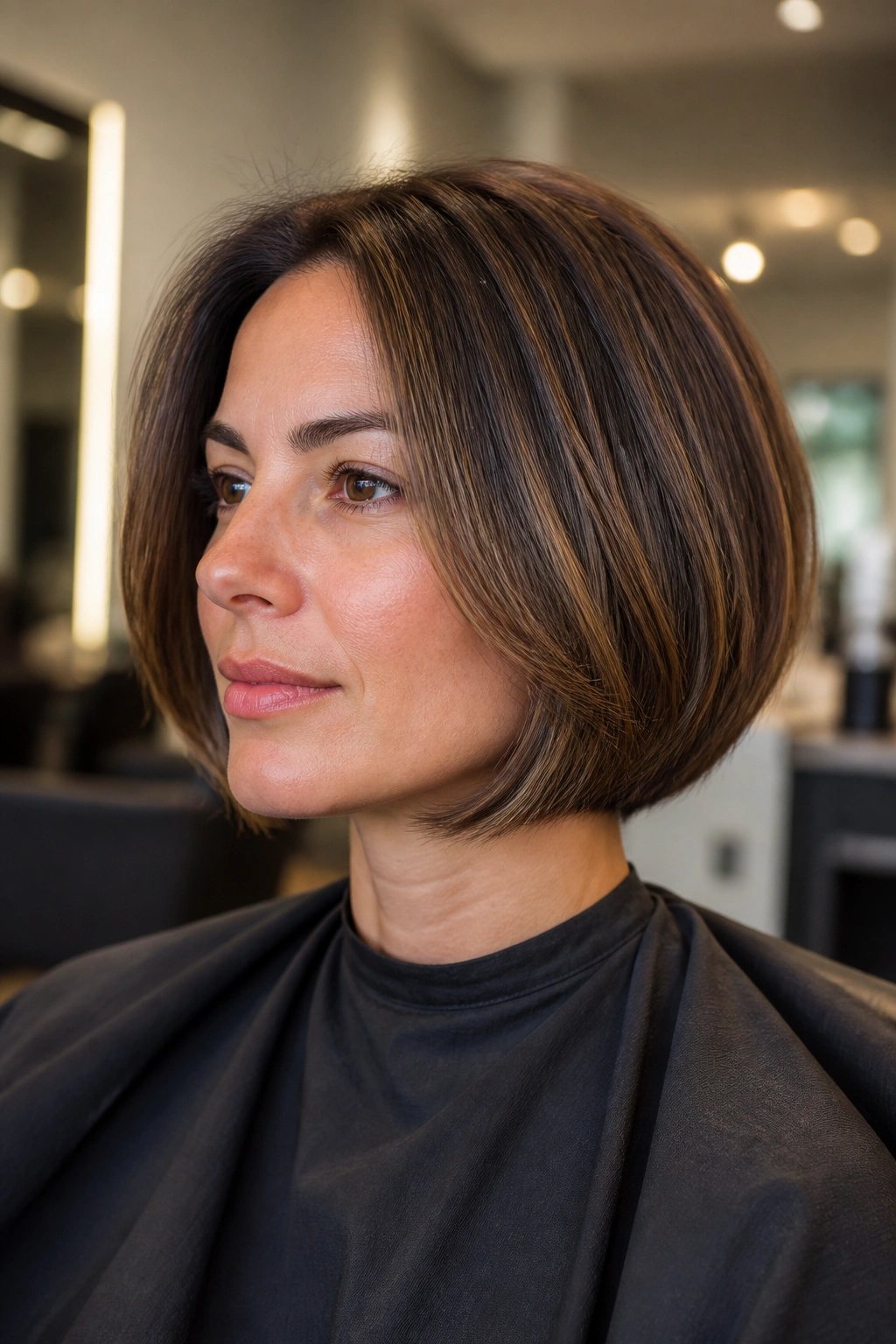
A micro-layered bob is not a shag, and it is not a soft layered lob either. The layers are tiny, tucked inside the shape, and used to remove bulk without making the haircut look choppy from the outside. That makes it a very useful option for thick hair that needs air but still wants a clean outline.
The cut looks simple until you wear it for a few days. Then the benefit shows up. The hair dries faster, the ends stop kicking out as hard, and the whole shape sits closer to the head without losing movement. It’s the kind of haircut that behaves well once it has been tailored properly.
Why it stays light
- The layers live inside the bob, not all over the surface.
- The perimeter still looks full from the outside.
- Thick hair loses weight without losing its shape.
- Styling is easier because the hair has less resistance.
How to ask for it
Tell the stylist you want hidden, small layers for weight removal, not a visible shag. That wording helps more than people expect.
20. Grown-Out Bob With Soft Ends

A grown-out bob with soft ends is for women who want length without losing the bob shape. It sits in that easy middle zone where the hair still has structure, but the edges are softened enough that it can grow out gracefully. Honestly, that matters. A lot of cuts look good only during the first two weeks. This one can keep working longer.
The soft ends stop the haircut from looking blunt or boxed in as it grows. That makes it useful if you like to tuck your hair behind your ears, clip it back, or throw it into a low knot on lazy days. It still reads as a bob, but not one that feels overly maintained.
This cut also suits people who want less drama around the neckline. The softness keeps it casual, and the longer shape gives you a little more to work with on days when your styling time is near zero. Add a light cream, air-dry it half the way, and let the shape settle on its own. Sometimes that’s the whole trick.
Final Thoughts
The best medium length bobs are not the loudest ones. They are the ones that match your hair texture, your face shape, and the amount of effort you’re actually willing to spend in the morning. That sounds simple, but it is where a lot of haircuts go wrong. People ask for a photo, not a shape they can live with.
If your hair is fine, clean edges and controlled volume usually win. If it is thick, movement and weight removal matter more than a trendy label. And if your hair has a mind of its own, the smartest bob is the one that works with the bend you already have.
Bring photos, yes. Bring one realistic sentence too: how you wear your hair on an ordinary Tuesday. That sentence tells the stylist more than the inspiration board ever will.
