



Some haircuts look polished only after a long session with a round brush, three products, and a mirror that tells lies. A good varsity bob haircut shouldn’t ask for that much work. It should feel crisp, athletic, and a little preppy — the kind of bob that looks at home with a varsity jacket, a button-down, or a plain T-shirt that somehow still looks put together.
What makes the varsity bob so useful is the shape. It usually sits somewhere around the jaw or chin, keeps the outline clean, and leaves enough movement that the haircut doesn’t harden into a helmet. That balance matters. Too soft, and it loses the sporty edge. Too stiff, and it starts to feel dated fast. The sweet spot is a cut that looks neat even when it’s not perfectly styled.
I like this kind of bob because it gives you options without getting sloppy. You can wear it straight, bend the ends, tuck one side, add bangs, or let it go a little wavy. The haircut does not need a huge personality to work; the personality is in the line, the part, and the way it sits against the neck and cheekbones.
The trick is choosing the version that fits your hair density, face shape, and tolerance for styling. Some versions want a quick blow-dry. Others are happiest air-dried. A few need trims more often than people want to hear. Still, if you pick the right one, a varsity bob can make getting dressed in the morning feel easier, which is probably the whole point.
1. Clean Side-Part Varsity Bob

A clean side part does more work than most people realize. It shifts the weight of the haircut, opens up the face, and gives the whole bob a sharper, more intentional line without adding a single extra inch.
Why the side part does the heavy lifting
This version works best when the hair is cut with a softly blunt perimeter at the jaw or just below it. The side part creates a little lift at the roots, which keeps the bob from lying flat across the crown. That lift is what gives the cut its sporty feel. It looks neat, but not frozen.
I like this shape on hair that’s straight to slightly wavy, especially if the strands have enough body to hold a side sweep. Ask for a subtle bevel at the ends so they curve inward instead of flaring out. A tiny bit of internal point-cutting near the cheekbones helps the front move without breaking the line.
A center part can feel polished too, but a side part has more attitude. It looks like you meant to wear the haircut, not just let it happen.
- Best length: chin to one finger below the jaw
- Best part placement: about 2 to 3 inches off center
- Best styling tool: paddle brush or vent brush
- Best finish: light cream or soft-hold spray
Pro tip: keep the side with less hair tucked slightly closer to the ear. That small trick makes the whole cut look cleaner.
2. Chin-Length Blunt Varsity Bob
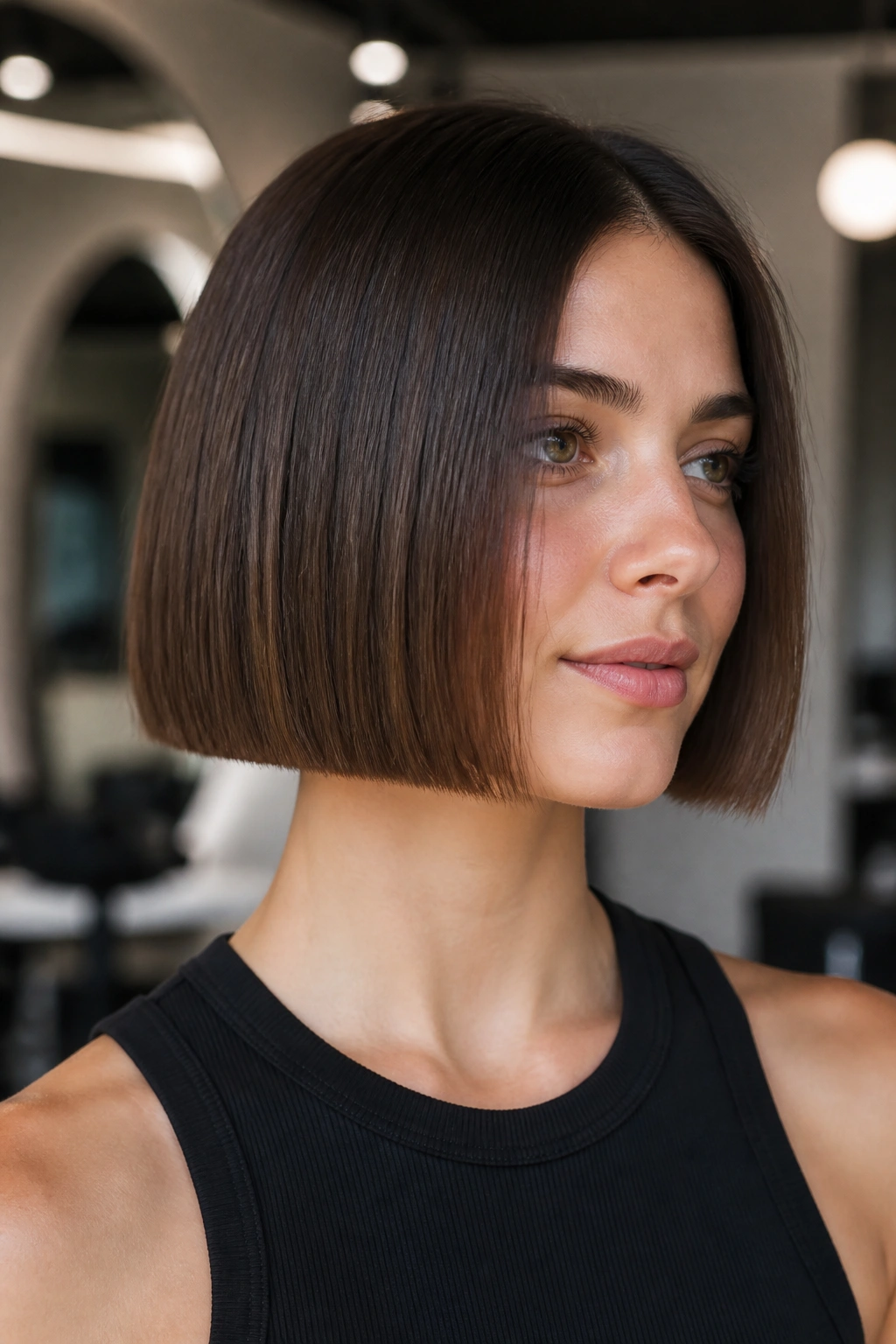
Blunt cuts are unforgiving. That is exactly why this one works.
A chin-length blunt bob gives the varsity idea some backbone. The line is firm, the shape is easy to read, and the haircut has that crisp, school-uniform neatness that makes the style feel sharp even when you barely touch it. If your hair is fine, this cut can make it look denser. If your hair is thick, it can look expensive in that quiet, no-nonsense way.
The main thing to watch is the ends. Too much layering and the blunt line disappears. Too much weight and the bob starts to balloon at the bottom. A good stylist will keep the perimeter clean and remove bulk only where the hair actually needs relief, usually a bit under the crown or around the nape.
That’s the appeal. One line. No fuss.
This version likes a straight blowout, but it also holds up if you let the ends dry naturally and smooth them later with a flat iron on low heat. Keep the heat protectant on hand, because blunt lines show damage fast. Split ends are rude like that.
3. Tucked-Behind-the-Ear Varsity Bob

Why does tucking one side behind the ear change the whole haircut? Because it exposes the line, the jaw, and the neck in a way that feels deliberate rather than fussy.
This bob needs a little extra length around the temples so the tuck has somewhere to live. If the front is cut too short, the style keeps popping free. If it’s cut with a slight forward angle, the tuck stays put and the haircut gets that neat, preppy finish people love on sharper bobs.
How to ask for the shape
Ask for a bob that sits just at the jaw or slightly below it, with the front left long enough to slide behind the ear without fighting back. Sideburns should be blended softly, not chopped off. A tiny taper around the ear helps the tuck look clean instead of accidental.
This is the kind of cut that looks especially good with glasses, hoops, or a strong brow. It frames the face without crowding it. And when you want the hair down, you still get movement from the front pieces.
A tucked ear can feel plain in photos. In real life, though, it looks tidy, easy, and a little smart — which is a nice mix.
4. Curtain-Bang Varsity Bob

When the front pieces hit the cheekbones and split open, the whole cut softens. That is where curtain bangs earn their keep.
A varsity bob with curtain bangs keeps the shape clean at the back while loosening the front enough to avoid a too-serious look. The bangs should start somewhere between the brow and cheekbone, then fall away from the center in a gentle frame. If they are cut too short, the bob turns cutesy fast. If they’re too heavy, the face gets swallowed. Neither one helps.
This version works especially well if your face is longer or if your jawline is sharp and you want to soften the edges. It also behaves nicely on hair with a bit of wave, because the fringe doesn’t need to lie perfectly flat to look right. A little bend in the front pieces is fine.
A round brush and a quick blow-dry at the roots make a difference here. Aim the bangs away from the center, then let them cool before you touch them again. That cooling part matters more than people think. Hot hair lies. Cool hair tells the truth.
This is a softer varsity bob, but it still has structure. That balance is the whole point.
5. Feathered-Ends Varsity Bob
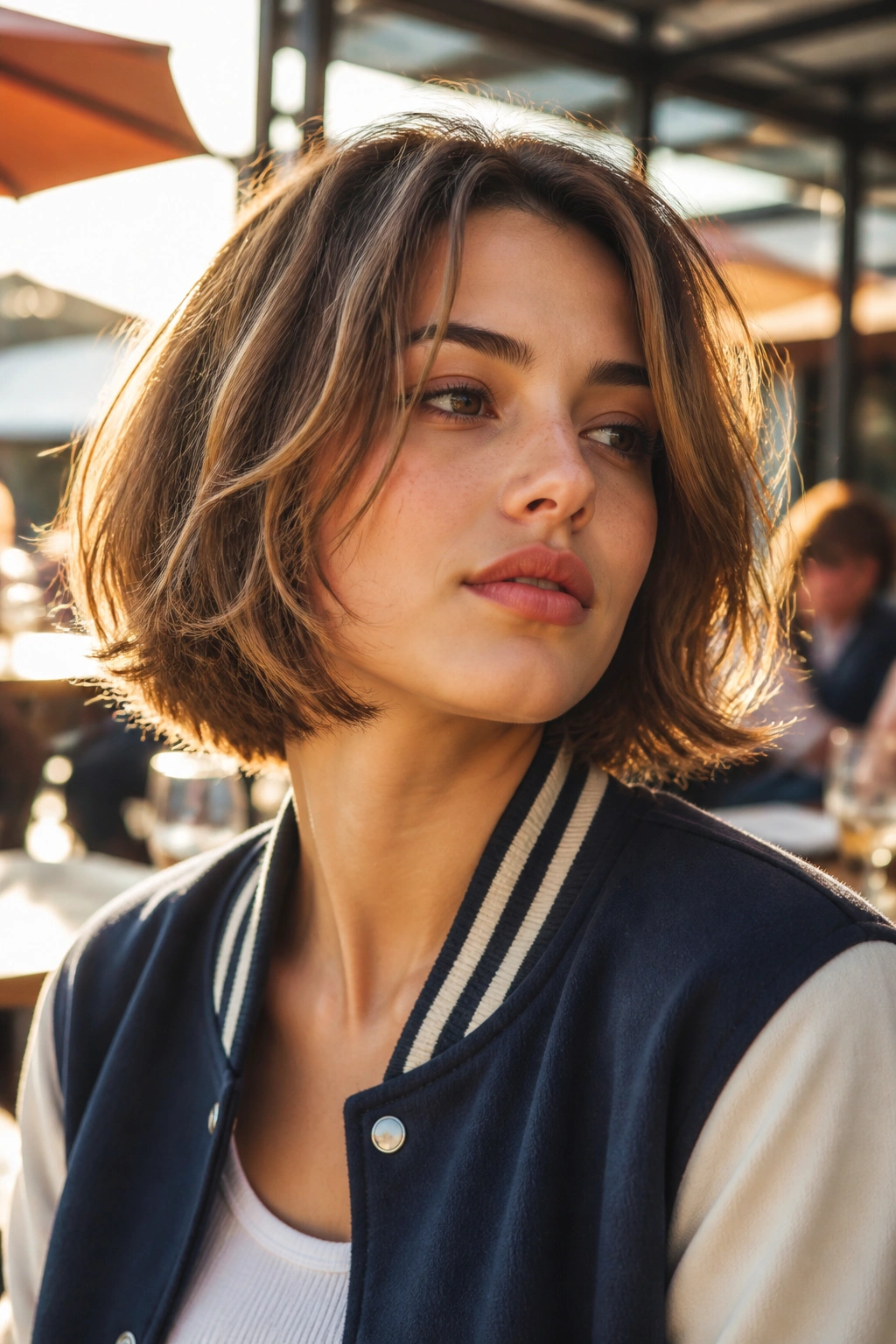
If you want movement without turning the whole haircut into a shag, feather the ends instead of layering everything to pieces.
Feathering works best when the stylist softens just the last half inch to an inch of the perimeter. The result is airy, not ragged. The bob still keeps its outline, but the bottom edge has a bit of life in it. On medium-thick hair, that can stop the haircut from sitting like a block. On finer hair, it keeps the shape from looking too severe.
I prefer this look when the style needs to survive a little humidity. Hard edges can puff. Softened edges bend more easily. That does not mean they disappear. It just means the haircut breathes a little.
A 1.25-inch round brush or a medium-barrel brush will help if you want the ends to curve under. If you like a more lived-in finish, finger-dry the roots, then twist the ends with a bit of cream while they’re damp. The key is to soften the perimeter, not shred it.
Too many feathered layers can make the bob feel dated. A small amount goes a long way.
6. A-Line Varsity Bob
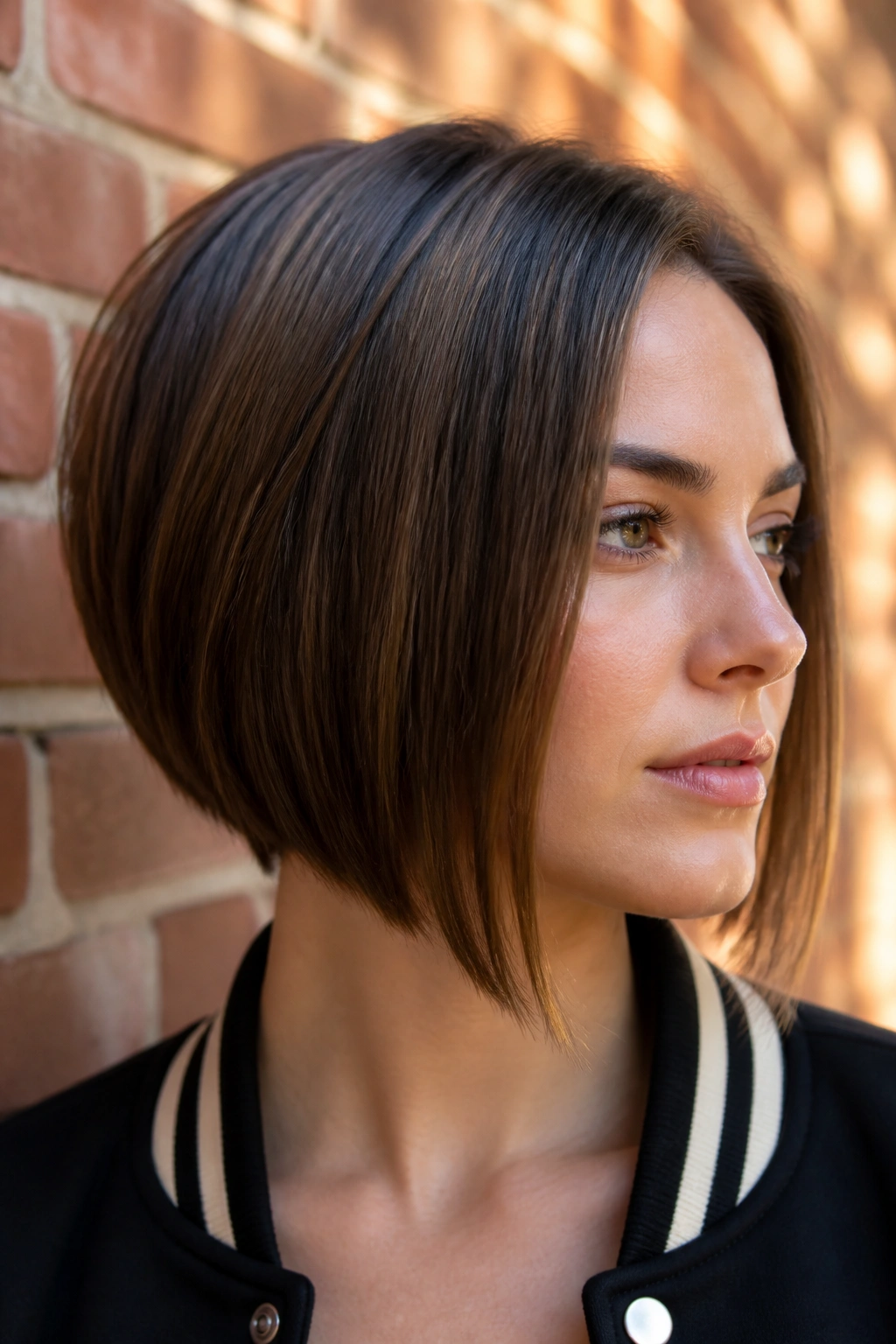
Unlike a one-length bob, this one gives you a clean sweep toward the face. That little angle changes everything.
An A-line varsity bob is shorter in the back and gradually longer in the front, usually by half an inch to an inch and a half, depending on how dramatic you want it. The front pieces skim the jaw or collarbone, while the back stays tidy and slightly lifted. It’s a strong shape, but not a loud one.
The angle that matters
The mistake most people make is asking for too much angle. Once the front gets too long, the haircut starts to feel like a different decade. Keep the slope subtle unless you want a sharper fashion look. A soft A-line is easier to wear, easier to style, and easier to grow out.
This cut is good for round faces, because the front pieces lengthen the line of the face. It also works on thick hair that needs a controlled perimeter. The shape gives the hair direction, which is useful if your ends tend to kick out on their own.
Ask for the back to be clean at the nape, with the front left long enough to move. That keeps the sporty vibe intact.
7. Stacked Nape Varsity Bob

The back should lift off the neck, not hug it. That tiny difference gives a stacked bob its shape.
A stacked nape varsity bob uses short, graduated layers at the back to build volume right where the head curves. It’s a smart move for fine hair that falls flat by noon. The stacking creates the illusion of fullness without relying on heavy styling products, which is a relief if you hate that coated feeling.
This cut can look sharp or stiff depending on how hard the stack is. I prefer a moderate stack, not the dramatic kind that shoots up and out. You want lift, not a triangle. The top layer should still be long enough to smooth over the back rather than revealing every internal layer.
If your hair is dense, this cut can remove some weight from the nape and make the shape sit closer to the head. That matters more than people expect. Hair that sticks out at the back ruins the whole line.
A root-lifting spray at the crown and a quick blow-dry with a small round brush are enough for most days. The haircut does the heavy lifting. That’s the appeal again.
8. Soft Wavy Varsity Bob

Air-dried waves can look lazy in the best possible way when the cut is right. That is not a contradiction. It’s the point.
A wavy varsity bob should sit a touch longer than a blunt straight bob, because waves shrink and puff in ways that straight hair never will. Chin to slightly below chin usually works well. The layers should encourage a bend, not slice the shape apart. If the cut is too heavy, waves spread out. If it’s too layered, the ends frizz before the top settles.
A little mousse on damp hair goes a long way here. Scrunch it in, twist a few pieces around your fingers, and diffuse on low heat until the roots are dry and the ends still have some softness. Or let it air-dry and then break it up with a drop of serum. Both ways work. Both look lived-in rather than overdone.
This version feels sporty because it doesn’t try too hard. It moves when you move. It still reads as a bob, but not the kind that needs constant flattening and rescue work every morning.
A wavy varsity bob is especially nice if your hair naturally has an S-pattern and you’re done fighting it.
9. Curly Varsity Bob
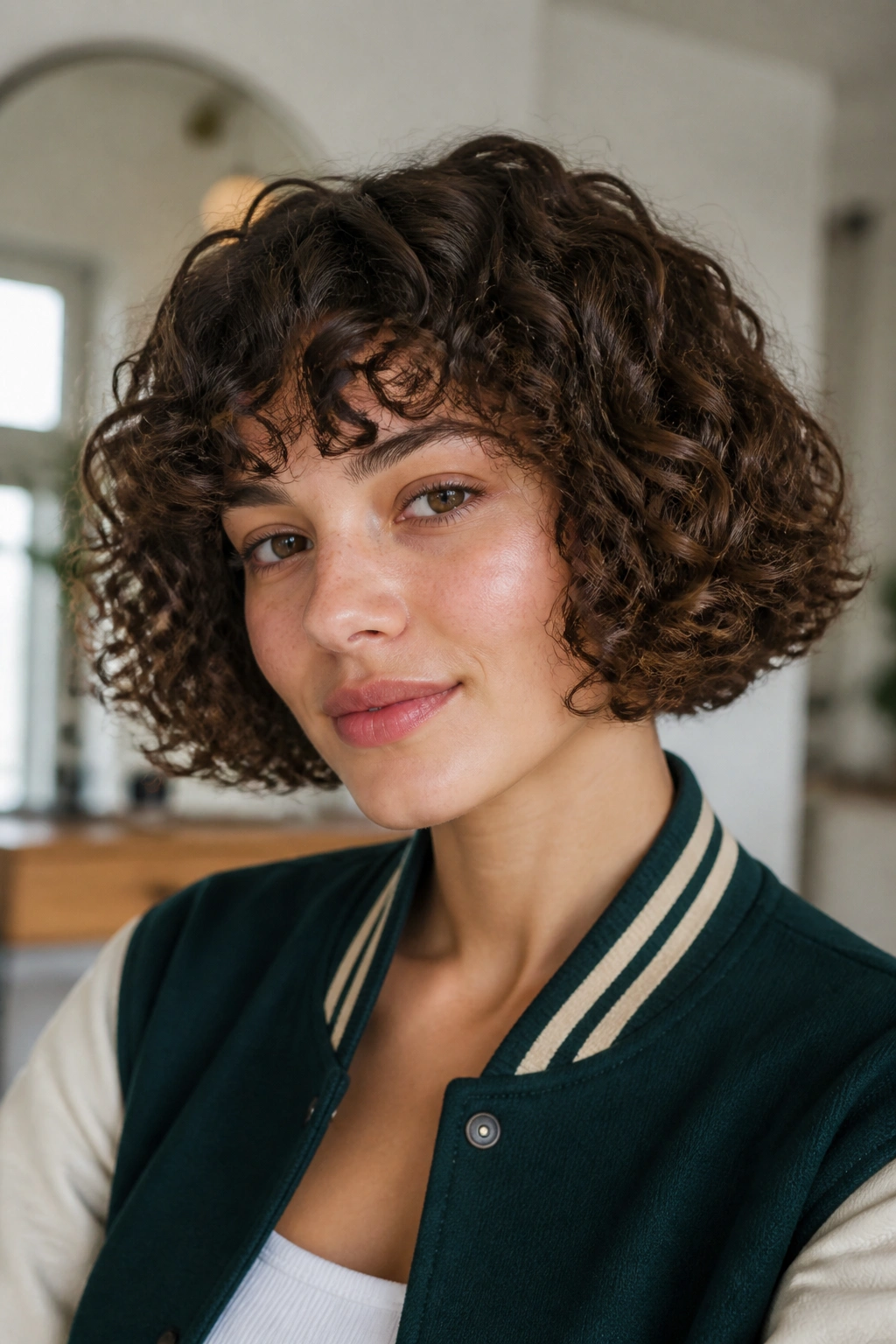
Can a bob still feel neat when the hair is curly? Absolutely, but the cut has to respect the curl pattern.
A curly varsity bob should be shaped with shrinkage in mind. A wet cut can be useful, but a dry curl-by-curl trim often gives better results because you can see where each curl lands. The goal is a rounded, balanced shape that sits near the jaw or slightly under it, depending on how much your curls spring up.
The front matters a lot here. If the curls are tighter around the face, the shape can look fuller on one side without meaning to. A stylist who understands curl balance will leave a little more length where needed and remove bulk carefully so the sides don’t mushroom.
Bring your hair in its natural state. Not blown out. Not ironed flat. That sounds obvious, but people skip it all the time and then wonder why the cut feels wrong at home.
A leave-in conditioner, a light curl cream, and a diffuser are enough for most curly versions of this style. Keep the product weight low. Heavy creams can drag the curls down and flatten the varsity shape you actually want.
10. Micro-Fringe Varsity Bob

Micro bangs are not subtle. That is the whole attraction.
A varsity bob with a micro fringe looks sharp, a little academic, and a little bold without losing the clean shape that makes the bob work in the first place. The fringe should sit well above the brows, usually in that short, straight line that shows off the forehead and makes the eyes do more of the talking.
What to watch for
- Ask for the fringe to be cut dry or nearly dry so the length doesn’t shrink too much.
- Keep the bob itself simple and blunt, so the bangs stay the focal point.
- Make sure your stylist checks the fringe against your brow line and cowlicks.
- Trim the bangs every 2 to 3 weeks if you want them to stay crisp.
This cut looks best when the rest of the hair behaves. A messy perimeter fights the fringe and makes the haircut feel confused. Keep the bob tidy, and the bangs can do the interesting part.
I would not call this low-maintenance. It isn’t. But if you like a haircut with a little nerve, this is one of the most distinctive ways to build a varsity bob without making the length itself dramatic.
11. Asymmetrical Varsity Bob

Uneven does not have to mean edgy in a loud, nightclub sort of way. Sometimes it just means the line moves a little, and that’s enough.
An asymmetrical varsity bob keeps one side slightly longer than the other, usually by half an inch to three quarters of an inch. That small shift creates motion and keeps the haircut from reading too rigid. It also helps if one side of your hair grows heavier or sits flatter than the other. The longer side gives the eye something to follow.
The shape should still feel balanced from the front. That matters. If the difference is too obvious, the bob stops feeling clean and starts looking like a correction. A subtle asymmetry is easier to wear and easier to explain at the salon.
This cut suits someone who wants a little interest without bangs or layers. It has personality, but not drama for drama’s sake. I like it with a side part, because the part and the asymmetry can work together instead of competing.
If you want a haircut that looks a little custom without losing its bob identity, this is a good place to land.
12. Deep Side-Sweep Varsity Bob

If you like hair that falls across one eye and still looks polished, this is the move.
A deep side-sweep varsity bob uses a heavier part and a longer front section to create a soft sweep over the forehead. It feels more romantic than a hard side part, but it can still keep the clean bob outline underneath. The secret is not letting the sweep get too thick. It should glide, not block.
This style works well on straight or slightly wavy hair with enough density to hold the shape. If the hair is too fine, the sweep can collapse unless you build some root lift first. A bit of mousse at the roots and a large round brush at the front usually does the job. Pull the hair up and away from the face as it cools. That cooling step helps the sweep stay in place.
It’s a smart choice if your forehead feels wider than the rest of your face or if you want to soften a strong brow. It also looks good with a clean neckline, because the contrast keeps the haircut from getting too soft overall.
This one has a bit of old-school charm. Not costume-y. Just enough.
13. Collarbone-Length Varsity Bob

Some people want the bob feeling without the neck exposure. Fair enough.
A collarbone-length varsity bob gives you more room to play while keeping the cut tidy. It still counts as a bob in spirit because the perimeter stays clean, the ends stay controlled, and the overall feel is preppy rather than beachy. But it gives you the safety net of a little extra length.
This is a strong pick if you’re growing out a shorter bob or if you want a cut that can still be pinned, tucked, or half-pulled back on busy days. The line should stay blunt or lightly beveled, with very little layering. Too many layers at this length can make it look like you were trying to reach a lob and stopped halfway.
I like this version for people who live in sweaters, blazers, and high collars. Shorter bobs can fight with neckline-heavy clothes. A collarbone bob sits a little easier against those shapes and still looks neat.
It’s not the most dramatic option on the list. It is, however, one of the most practical.
14. Hidden Undercut Varsity Bob
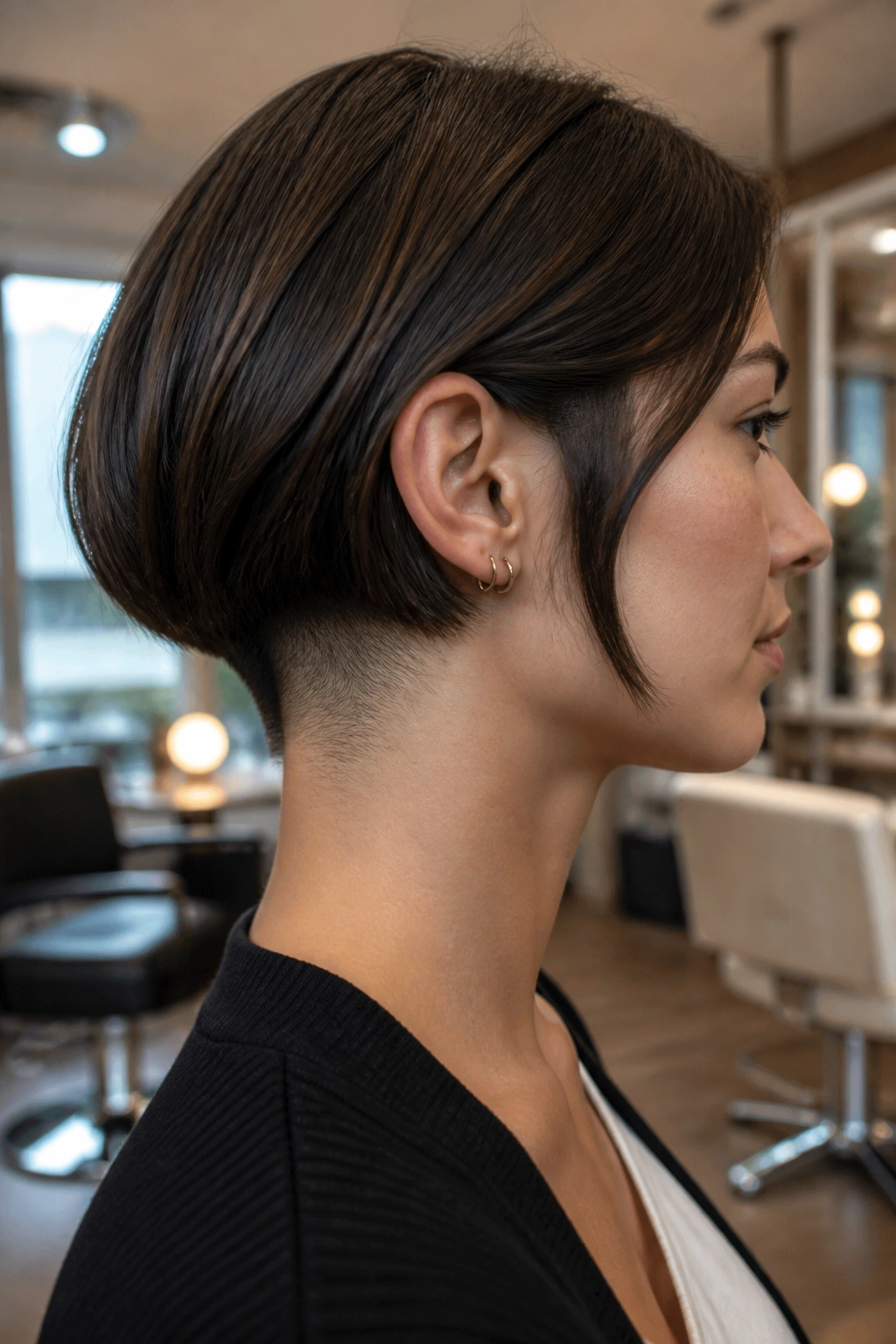
Thick hair sometimes needs less hair. That sounds blunt because it is.
A hidden undercut varsity bob removes bulk underneath the visible top layer, usually at the nape or behind the ears. The cut still looks like a bob from the outside, but the shape lies flatter and dries faster because there’s less weight pushing it outward. That can be a lifesaver if your hair is dense, coarse, or puff-prone.
Where the undercut helps most
- At the nape, if the back keeps kicking out
- Behind the ears, if the sides feel bulky
- Under the crown, if the top collapses under its own weight
The key is to keep the undercut hidden unless you want a stronger edge. A small removal zone is usually enough. You do not need a giant shaved strip unless you actually want that look. Start small. You can always take more off later, but you can’t put it back.
This version is especially good if your hair takes forever to dry or if humid air makes it swell. That said, it’s not the best choice if you like a plush, full bob. The point here is control, not softness.
15. Flip-End Varsity Bob

A little bend at the ends makes the whole haircut feel cared for. Not fussy. Just looked after.
A flip-end varsity bob borrows from old-school blowout styling, where the ends turn under or softly flick out instead of hanging straight. The bob itself can be chin length or just a touch longer, but the finish is what gives it the sporty-preppy mood. It feels neat, almost uniform-like, without becoming stiff.
How to get the bend right
Use a heat protectant, then blow-dry with a medium round brush or a flat brush plus a quick pass of a flat iron at the ends. The movement should live in the last inch or so of hair, not halfway up the shaft. If the flip starts too high, the haircut looks overstyled. If it’s too wide, it gets theatrical fast.
I like this version on hair that already has a smooth texture, because the bend shows up cleanly. It can also help straight hair feel less flat. A light mist of flexible hairspray at the end keeps the flip from collapsing without making the bob crunchy.
This is one of those cuts that looks simple in motion and slightly more polished than people expect when they see it still. That’s a nice trick to have.
Final Thoughts
The best varsity bob haircut is not the shortest one or the trendiest one. It’s the one that fits your hair’s natural habits without making you fight the mirror every morning. That might mean a blunt chin-length line, a soft curtain bang, or a longer collarbone shape with a clean finish.
If you’re choosing between two versions, pick the one that matches your growth pattern and density first. Fashion comes second. A bob that sits well after a regular shampoo and a rough blow-dry will serve you better than a more dramatic shape that only looks good in perfect lighting.
Bring photos, yes, but bring one photo of something you don’t want too. That saves a surprising amount of awkward back-and-forth. And if your stylist knows you want the haircut to stay neat with minimal fuss, say that out loud. A good varsity bob should make the rest of getting dressed easier. That’s the win.
