



A round face and a bob can work together, but only if the cut gives the eye somewhere to go. The best asymmetrical bobs for round faces use angle, not bulk, to make the face look longer without turning the haircut stiff or fussy.
I’m picky about this shape. If the shortest piece ends right at the fullest part of the cheek, the whole cut can puff out where you least want it; if the longer side drops below the jaw or brushes the collarbone, the face gets a cleaner vertical line and the cut feels more deliberate.
Texture changes the game. Fine hair needs a little lift at the crown, thick hair needs weight taken out of the back, and curls need room to spring without ballooning sideways. None of that is hard, but it does mean the same bob cannot be cut the same way on every head.
The 15 cuts below solve that problem in different ways, from sharp and sleek to soft and lived-in. Some are low-maintenance, some ask for a flat iron or a round brush, and a few are better if you like your hair to move a little when you walk.
1. Angled Bob With a Clean Side Part

Picture a bob that starts shorter in the back, then slides forward in one clean diagonal line. That shape does a lot of quiet work on a round face because the eye follows the angle instead of sitting on the widest part of the cheeks.
The side part matters just as much as the cut. A center part can work on some people, but a side part usually gives this style more lift at the crown and a bit of visual length through the face. Tiny change. Big payoff.
What to ask for at the salon
- Keep the nape neat and close to the neck.
- Let the longer side fall just below the chin.
- Ask for a side part that lands about 1 to 1½ inches off center.
- Keep the front pieces blunt enough to hold the line.
The clean version of this cut is best when you want shape without a lot of layers. It also behaves well if your hair is straight or only slightly wavy, because the angle stays obvious instead of getting swallowed by texture.
My one gripe: if the front ends land right at cheek level, the cut can widen the face instead of lengthening it. Push the longer side lower. That small adjustment changes everything.
2. Deep Side-Part Bob That Skims the Jaw

A deep side part does more for a round face than another inch of length. It shifts volume off the center line, opens up one side of the face, and lets the bob fall in a diagonal sweep instead of a flat curtain.
That sweep is the whole point. When the heavier side bends across the cheek and the other side stays tucked closer to the neck, the haircut stops reading as “all one width.” It feels leaner, sharper, and a little more grown-up.
I like this version on hair that has some natural body, because the roots can take the lift without collapsing by midday. If your hair is fine, use a root spray at the crown and blow-dry the part in the opposite direction first. Then flip it back. Old trick. Still works.
The finish can be smooth or slightly bent, but the crown should never go flat. Flat roots make the face look broader, especially in a bob that already sits near the cheeks. A round brush or a big roller at the top helps keep the line moving upward before it travels down.
This is the cut I’d hand to someone who wants a bob that feels polished without looking severe. It’s also one of the easiest ways to soften a round face without adding bangs.
3. Blunt Asymmetrical Bob With a Longer Front Panel
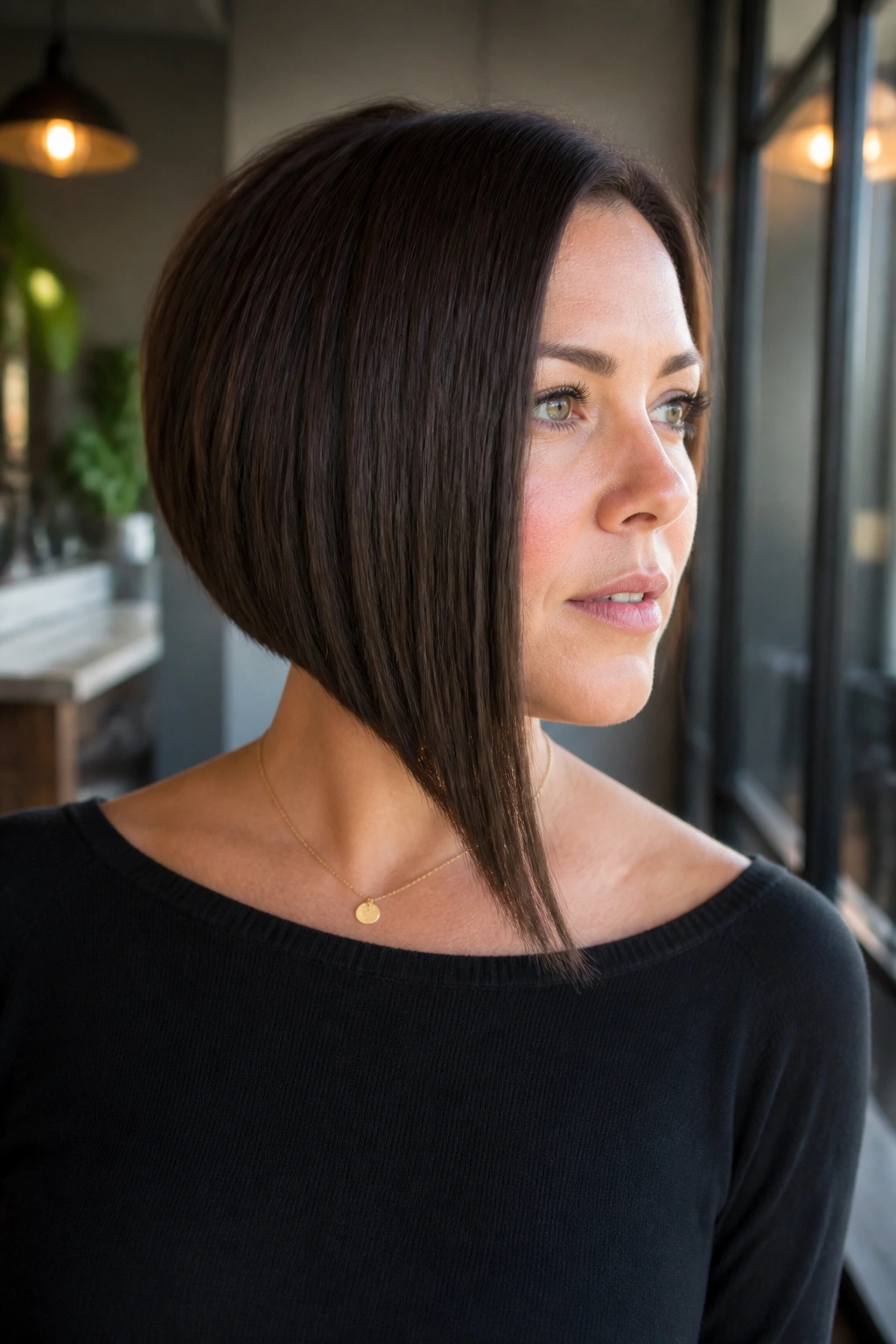
Unlike a chin-length blunt bob, this version gives you room at the front. The back stays compact, the line stays clean, and the longer front panel keeps the face from feeling boxed in.
That longer front section is the detail that saves it. If the front falls 1½ to 3 inches below the chin, the haircut creates a vertical drop on each side, which helps the face look less wide. If it stops too short, the whole thing can feel square.
This shape works best on straight to slightly wavy hair, especially if you like a crisp edge. The ends should look deliberate, not wispy. I’d avoid heavy internal layers here, because they can break the line and make the bob lose its structure.
The other thing I like about it: it grows out well. After a few weeks, the angle softens into a neat lob instead of turning into a mess. That matters if you don’t want to be in the salon every other minute.
If you’re trying to choose between a classic bob and something more directional, this is the safer bet. It still feels sleek, but it gives a round face enough length where it counts.
4. Feathered Asymmetrical Bob With Soft Layers

Why do feathered ends work when blunt ones can feel boxy? Because they break the perimeter just enough to keep the cut from sitting like a hard shelf around the face.
The trick is to keep the layers light and placed low. You want movement at the ends, not choppy volume through the cheeks. If the top gets too layered, the crown can puff out and the roundness comes right back. That part is annoying, and it’s easy to do by accident.
How to wear it
- Blow-dry with a small dollop of mousse at the roots.
- Use a medium round brush to bend the front away from the face.
- Finish with a light cream, not a heavy oil.
- Keep the longest side grazing the jaw or just below it.
This shape looks especially good on hair that tends to feel heavy at the bottom. Feathering takes some of that weight off, so the bob moves instead of sitting stiffly. It also helps if your hair has a little natural wave, because the texture shows off the layers without needing much styling.
I’d call this one practical, not precious. It softens a round face without trying too hard, and it has enough texture to feel modern even when you air-dry it.
5. Wavy Bob With Bent Ends and Loose Texture

A wavy asymmetrical bob does not need perfect symmetry to look finished. In fact, the slightly uneven texture is what makes it work. The longer side can skim the cheek and the shorter side can tuck closer to the neck, and the wave ties it all together.
What I like here is the casual feel. You do not need a precise blowout every time. A 1-inch curling wand, a flat iron bend, or even a careful air-dry with a little cream can create the kind of shape that gives the face more movement than width. That’s useful on a round face because hard horizontal lines can feel heavy fast.
This cut also handles second-day hair well. A little dry shampoo at the roots, a mist of texture spray through the mid-lengths, and a quick finger-shake are often enough. The wave breaks up the outline, so the asymmetry stays visible even when the style gets a little messy.
I’d skip heavy oils here if your hair is fine. They can collapse the bend and make the front pieces hang in a straight, dull line. On thicker hair, though, a small amount of cream on the ends can keep the wave from looking frizzy.
There’s something easy about this shape that I keep coming back to. It doesn’t fight the face. It just gives it more room.
6. Sleek Glass Bob With a Sharp Diagonal Line

A sleek glass bob is all about shine, tension, and a very clean finish. On a round face, the diagonal line matters more than the gloss, but the gloss helps because it makes the cut look controlled instead of fluffy.
The shape detail that matters most
- The back should sit close to the nape.
- The front should drop at least to the jaw, often below it.
- The longer side needs a clear difference of about 1 to 2 inches.
- The ends should look blunt, not thinned out.
That structure is why this cut reads so well in photos and in real life. The eye goes down the angled front rather than straight across the cheeks. It’s sleek without being flat, and that balance is harder to get than people think.
If you want this shape to hold, prep matters. Use a heat protectant, dry the hair fully before flat-ironing, and pass the iron through the front pieces in one smooth motion instead of bending them under at the jaw. Do not flip the ends inward too much. That can make the face look wider.
This is a strong choice for anyone who likes a low-frizz finish and doesn’t mind taking a few extra minutes to smooth the surface. It looks especially sharp with a crisp side part and a tucked-behind-one-ear moment.
7. Asymmetrical Bob With Curtain Bangs

A lot of people think bangs and round faces are a bad match. Not true. The wrong bangs are a bad match. Curtain bangs, when they’re cut with enough length and softness, can make an asymmetrical bob feel lighter around the cheeks.
The fringe should open from the middle and fall away from the face, not sit as one thick block across the forehead. That little gap in the center creates space, and the longer sides of the bangs connect to the front pieces of the bob so the whole shape feels intentional.
For round faces, I like curtain bangs that hit somewhere between the brow and the cheekbone, then taper into the longer side of the bob. If they’re too short, they can make the face look shorter. If they’re too dense, they can crowd the forehead and fight the asymmetry.
What to ask your stylist
- Keep the center of the fringe light.
- Blend the sides into the front lengths.
- Let the longest fringe pieces hit around cheek level.
- Avoid a thick, heavy curtain that hides the face.
This cut works best when you’re willing to give the bangs a quick blow-dry with a round brush or a paddle brush. They do not need much. Just enough bend to keep them off the center of the face.
It’s a softer look, but not a weak one. The bang softens, the angle shapes, and the round face gets a little more vertical pull.
8. Curly Asymmetrical Bob That Keeps Its Shape

Can curls and asymmetry work together on a round face? Absolutely, if the cut is shaped for shrinkage instead of fighting it.
That is the part people miss. Curly hair lifts and tightens as it dries, so the longer side has to be cut with that in mind. If you cut it too short when wet, the front can spring up and sit right at the cheek, which is not the effect you want. A good curly asymmetrical bob usually leaves the front pieces longer than you think they need to be.
How to use it
- Ask for the cut dry or nearly dry if your curl pattern is loose to medium.
- Keep the longer side close to the chin or collarbone once dry.
- Use curl cream first, then a light gel for hold.
- Diffuse on low heat and stop touching it once the cast forms.
This shape is especially good if your curls have a lot of personality but not much length. The asymmetry creates direction, and the curls keep it from feeling too rigid. A round face benefits from that vertical movement, especially when the curls fall in separated ringlets instead of one big puff.
If your curls are tight, the difference between sides can be subtle. That’s fine. Subtle asymmetry still changes the outline, and often that’s all you need.
9. Stacked Asymmetrical Bob With Crown Volume

A stacked bob is one of the easiest ways to add height where a round face needs it most: at the crown. The back is graduated a little shorter, so the head looks lifted before the longer front pieces take over.
Unlike a flat one-length bob, this shape keeps the back from clinging to the neck and cheeks. That matters on thicker hair, which can balloon out if the weight line sits too low. The stack gives the hair somewhere to sit, and the asymmetry pulls the eye forward.
The danger is overdoing the stack. If the back is too short and the front is too long, the shape can turn triangular in a hurry. That’s not the goal. You want lift, not a helmet.
I like this cut on hair that naturally wants body. It’s also good if your roots collapse fast, because the structure in the back helps the style keep some shape between salon visits. A blow-dry with a vent brush or a small round brush is usually enough to show the graduation.
If your hair is very fine, ask for a softer stack and less layering through the crown. Too much removal can make the head look narrow on top and wide at the cheeks. The sweet spot is controlled volume, not a spiky silhouette.
10. A-Line Lob That Brushes the Collarbone
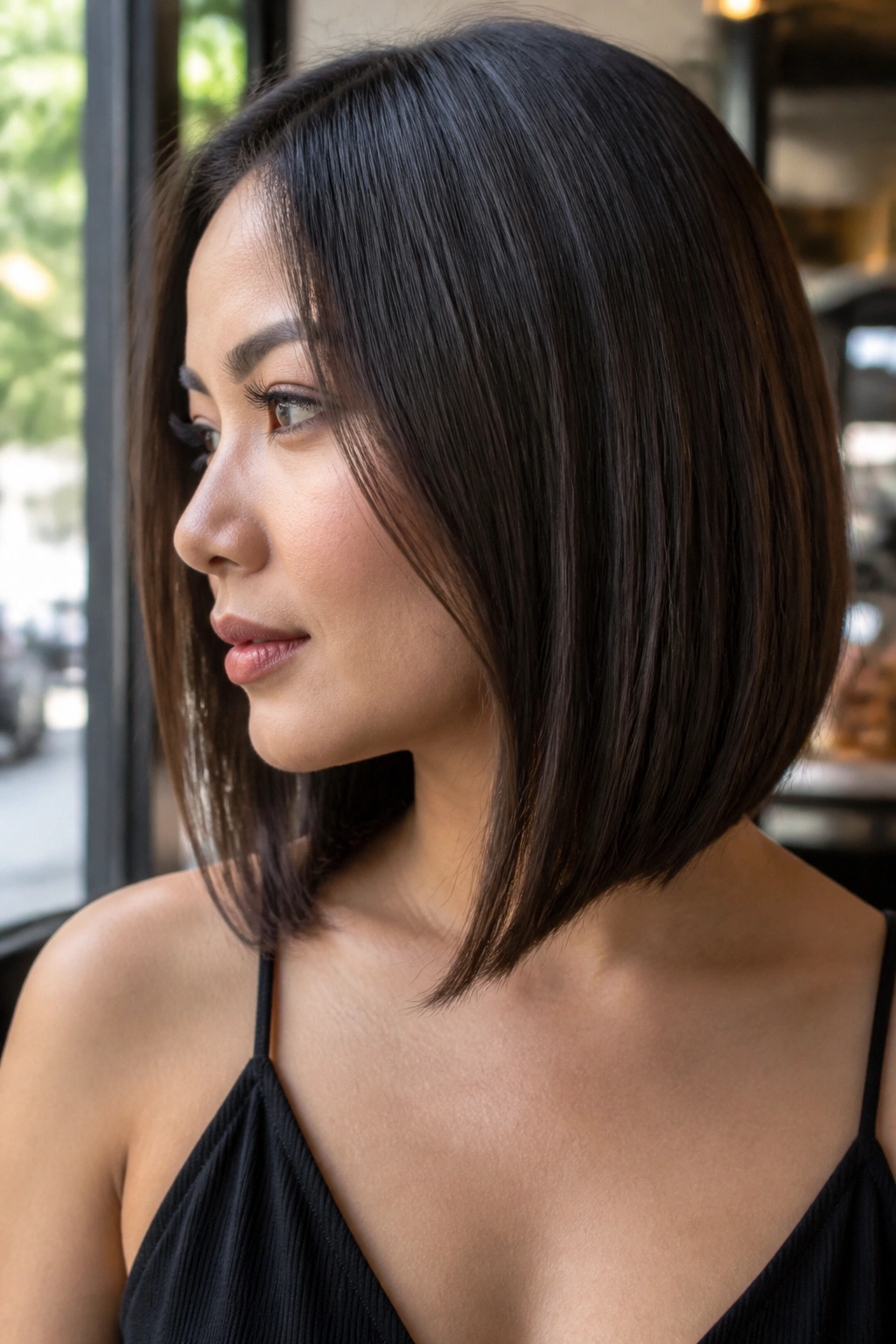
If you want the easiest version to live with, this is the one. An A-line lob gives you the length of a bob with a little breathing room, and on a round face that extra length can make the whole cut feel calmer.
The front pieces should brush the collarbone or sit just above it, while the back stays a few inches shorter. That difference gives the face a longer frame without committing to a dramatic short cut. It also means you can tuck the front, wave it, or wear it smooth depending on the day.
This is the haircut I tend to recommend to people who are nervous about going too short. It still has shape. It still has attitude. But it doesn’t sit so close to the cheeks that it starts competing with them.
A-line shapes also grow out nicely, which is worth saying plainly. A lot of bobs go awkward before they go long; this one usually just turns softer. That makes it a smart choice if you want something that lasts through a messy schedule.
The cut works with straight hair, loose waves, and even thicker textures if the ends are cleaned up well. If your face is very round, keep the front a little longer than you think. That inch or two matters.
11. Asymmetrical Bob With an Undercut

An undercut is not the first thing everyone thinks of, but on thick hair it can be the cleanest fix. The back loses bulk, the bob stops puffing out, and the longer front pieces swing instead of fighting the shape of the head.
That swing is what makes this version flattering on a round face. The side lengths create a strong diagonal, while the undercut keeps the silhouette close and controlled. You get a sharp outline without the heaviness that thick hair sometimes brings.
Best if you want:
- Less bulk through the nape and lower back.
- A bob that dries faster.
- More movement in the longer front panels.
- A shape that stays neat even when the weather turns humid.
The downside is obvious. You have to keep up with it. An undercut grows out faster than people expect, and if you like to tuck your hair behind both ears, the hidden short section can get annoying. I would not recommend it for someone who wants to forget about maintenance entirely.
Still, when it works, it really works. The shape looks cleaner, the neck feels lighter, and the asymmetry comes through without any extra styling tricks. If your hair is dense enough to feel heavy by noon, this cut can be a relief.
12. Choppy Piece-Y Bob With Razor-Soft Ends
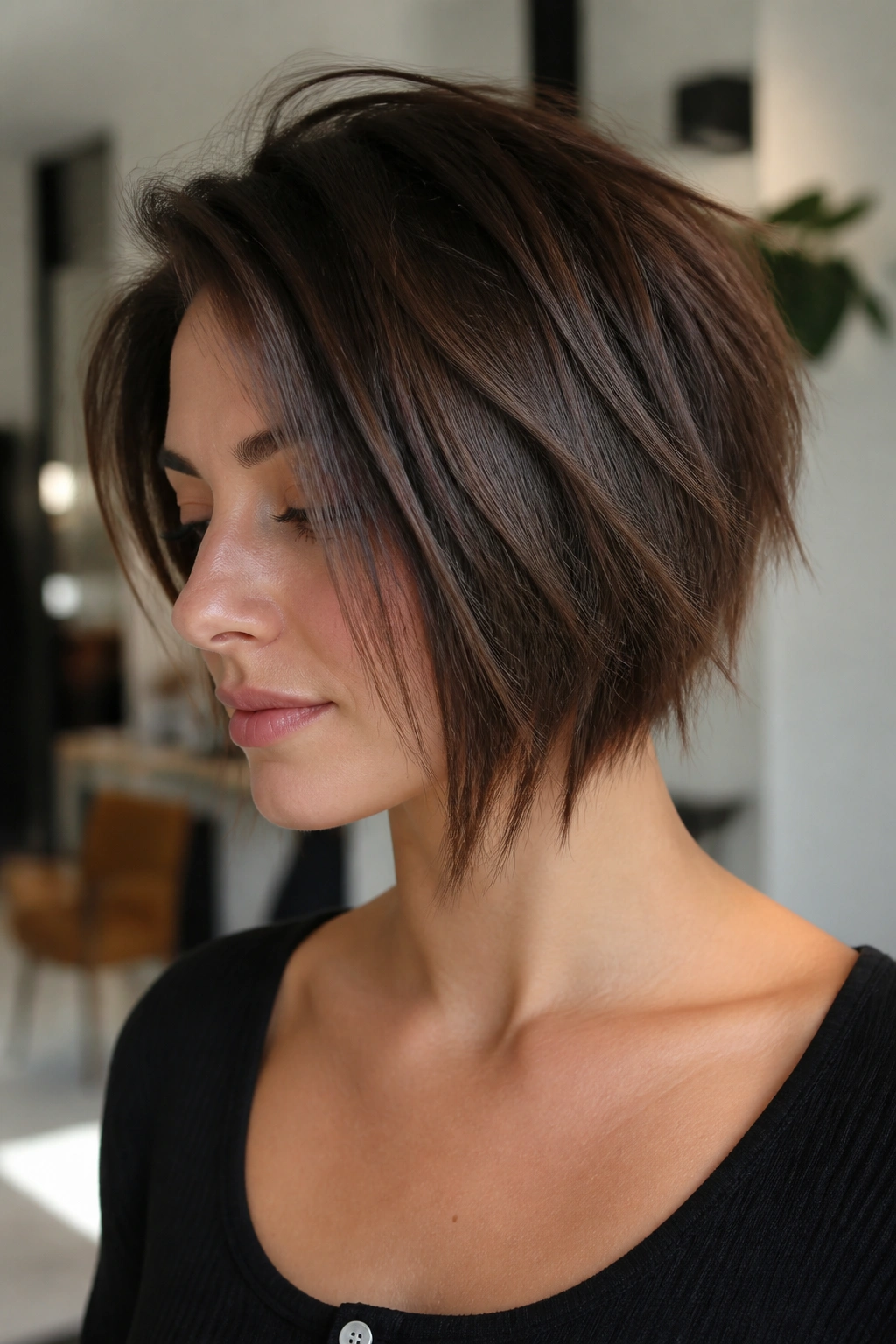
What if you want movement, not polish? Then the choppy bob is worth a look, as long as the pieces are placed with some control.
The texture here is more deliberate than random. You want soft, broken-up ends that let the front fall in separate pieces instead of one solid wall. That breaks the width around a round face and gives the cut a little edge. Not a lot. Just enough.
How to style the texture
- Rough-dry the hair until it’s about 80% dry.
- Bend random 1-inch sections with a flat iron or wand.
- Work the longer side away from the face.
- Finish with a pea-size bit of paste on the ends.
The piece-y finish is especially helpful if your hair is fine and tends to lie flat. It creates the sense of fullness without making the cut heavy. On thicker hair, though, you need to watch the cheeks. If the shortest bits land right there, the texture can widen the face instead of slimming the outline.
I prefer this version when the bob is meant to feel a little undone. It’s not a formal haircut. It’s the one you wear when you want shape but don’t want to spend 20 minutes polishing every strand into place.
13. Collarbone-Skimming Bob With Micro Asymmetry

A tiny asymmetry can be smarter than a dramatic one. If you only shift one side by half an inch to an inch, the haircut still feels balanced, but the eye gets enough movement to avoid that heavy, even line that can make a round face look broader.
This is the cut for someone who likes subtlety. The front pieces skim the collarbone, the back stays a touch shorter, and the difference between sides is there only if you’re looking for it. That makes it easy to wear in workplaces where a very sharp bob might feel too loud.
It’s also a good choice for fine hair, because the minimal difference keeps the ends from looking thin. You still get direction. You still get shape. But you do not lose density chasing a big contrast that the hair texture cannot support.
I like this version paired with a soft side part and a smooth bend through the front. If the hair is straight, the asymmetry shows up as movement. If it’s wavy, it shows up as a gentle swing. Either way, it keeps the face from reading as perfectly round and perfectly even.
Some cuts are about drama. This one is about control. That can be the better choice.
14. Inverted Bob With Gentle Graduation

A soft inverted bob can give a round face more shape than a sharp angle if the back stays controlled. The graduation at the nape creates lift, and the longer front pieces draw the line downward without making the cut feel severe.
The key is “gentle.” Too much stack in the back and the whole thing starts to look dated fast. Too little and you lose the lift that makes the cut useful. The sweet spot is a clean curve from short to long, with no hard corner where the line changes direction.
Watch the angle
- Keep the back close to the neck, not puffed out.
- Let the front sit below the jaw.
- Avoid over-thinning the ends.
- Ask for a smooth transition, not a dramatic shelf.
This shape is good for straight hair and medium-thick hair that needs structure. It gives the crown some life, which helps a round face feel a little more elongated from top to bottom. It also looks neat when tucked behind one ear, which is a nice bonus if you like easy styling.
I would not push this too short on the front unless the face is already long. For a round face, the longer front is doing real work. Leave it room.
15. Razor-Cut Asymmetrical Bob for Easy Styling
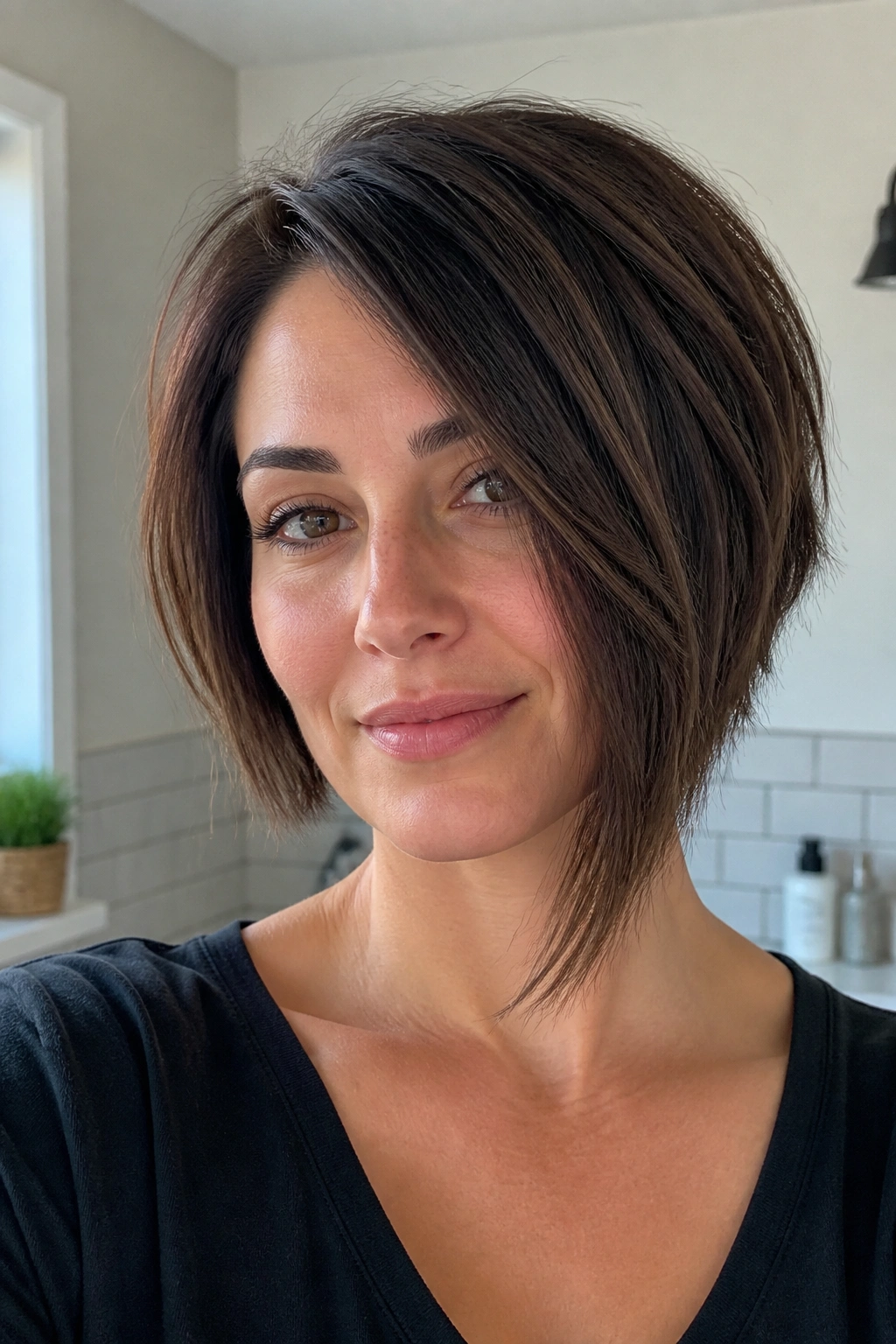
If your mornings are chaotic, the razor-cut version is the one that usually behaves. The razor softens the line, takes some weight out of thick hair, and lets the longer side move instead of hanging like a solid block.
That softness matters on a round face because the haircut stays lively without turning blunt in the wrong place. You still want a clear length difference, but the ends can be airy enough to keep the shape from feeling boxy. It’s a nice middle ground between sleek and messy, and I have a soft spot for cuts that do not need perfect weather or perfect timing to look decent.
This version works best when the stylist keeps the razor off the very bottom of fine hair. Too much slicing can make the ends look ragged. On thicker hair, though, a razor can remove enough bulk to keep the bob swinging instead of puffing out around the cheeks.
If you want the easiest version to wear, ask for the longest point to fall near the collarbone, the shortest point to stay close to the nape, and the ends to stay soft rather than chopped to bits. A little smoothing cream, a quick blow-dry, and you’re done.
Some haircuts ask for a mood. This one mostly asks for a good cut and a decent brush. That’s why I keep coming back to it.
A round face does not need to be hidden under layers of hair. It needs a cut with direction, and asymmetry gives you that direction fast. The real trick is choosing how much contrast you want: a half-inch of shift, a full diagonal, a stacked back, or a wavier finish that moves around the face instead of sitting on it.
If you remember one thing, make it this: the best asymmetrical bobs for round faces create length where the face wants length and keep width away from the cheeks. That sounds simple because it is. The haircut just has to do the right job.
And once it does, everything else gets easier. Styling takes less guesswork. The silhouette looks cleaner. The bob starts working with your face instead of arguing with it.
