



Thick straight hair at medium length can look expensive fast—or it can turn into a wide, heavy block that eats up your jawline. The difference usually comes down to one thing: the cut has to respect the density. A strong medium hairstyle for thick straight hair needs shape, not just length.
The sweet spot is often somewhere around the collarbone. Go too short and the bulk can pop out at the sides. Go too long and the weight pulls everything flat, which is its own kind of problem. Straight hair already lies close to the head, so when there’s a lot of it, the outline matters more than people think. A clean line can look sharp. The wrong line can look boxy in a hurry.
What I like about this hair type is that it can carry structure better than most. Thick strands hold their shape, shine well, and make simple cuts look deliberate. The catch is that you can’t be lazy about where the weight sits. A good cut keeps the perimeter neat and either removes bulk from the inside or builds movement in a controlled way—no wispy nonsense, no over-thinned ends that fray out by the second week.
Some of the best medium hairstyles for thick straight hair are almost boring on paper. That’s the fun part. Once they’re cut well, they stop being boring on the head. They sit right, move when you walk, and still look polished after a long day. Let’s start with the shapes that do the most work with the least drama.
1. Blunt Collarbone Lob With a Center Part

A blunt collarbone lob is the easiest cut to get right when you want thick straight hair to look deliberate instead of bulky. The line lands where the neck starts to open up, so the hair falls with purpose instead of fanning outward. That clean edge also gives you the kind of finish that looks sharp in daylight and still holds up when the air gets a little dry.
The key is restraint. You want one solid perimeter and only a light touch of face framing, if any. Too many layers on this cut can make the ends look thin while the body stays heavy, and that is a messy combination. The best version feels dense, smooth, and almost architectural.
What to Ask For
- A blunt cut that sits right at the collarbone
- Soft dusting only, not heavy thinning through the ends
- A middle part if your face can handle it, or a slightly off-center part if you want a softer line
- Micro-trims every 8 to 10 weeks to keep the edge crisp
My favorite detail: ask your stylist to keep the weight line clean through the back. That one request keeps the lob from flipping out in odd spots.
2. Soft Long Layers That Remove Weight

What if your hair feels too heavy but you still want movement? Soft long layers solve that better than almost any other option. They take the pressure off the ends without hacking the shape apart, which matters a lot on thick straight hair because the hair can lose its clean look fast if the layers are too eager.
The trick is placement. The shortest pieces should usually begin below the cheekbones, often near the mouth or collarbone, so the front opens up without making the top half look choppy. You still keep length. You just stop the hair from acting like a single slab.
Why They Work So Well
- They shift bulk away from the bottom edge
- They let the hair fall in a softer curtain when worn down
- They’re easier to blow-dry than one heavy, one-length cut
- They grow out neatly, which is a blessing if you hate awkward phases
A cut like this is a quiet one. It does not shout. But when you turn your head, the movement is there. And that little swing changes everything.
3. Curtain Bangs With a Sleek Mid-Length Cut

Curtain bangs are one of those styles that sound like a trend until you see them on thick straight hair and realize they’re actually practical. The fringe breaks up the front so the whole cut feels lighter, and the rest of the length can stay sleek instead of overworked. If your face shape gets swallowed by a solid block of hair, this fixes that.
The bangs should stay long enough to tuck into the sides. Short curtain bangs on thick straight hair can feel too puffy at the roots unless the hair is very cooperative. Longer pieces, though, fall with a soft bend and skim the cheekbones in a way that looks intentional.
How to Style It
- Blow-dry the fringe forward first, then split it down the middle
- Use a medium round brush, not a tiny one
- Finish with a drop of smoothing cream on the ends
- Keep the rest of the cut blunt or lightly layered so the bangs remain the focus
This is a good cut if you want the face to open up without giving up that dense, healthy look. It’s flattering. It also takes heat well, which thick straight hair usually does.
4. Off-Center Part With Face-Framing Layers

A center part is not the only clean option. Sometimes a slightly off-center part does more for thick straight hair because it shifts the bulk and stops the shape from reading too symmetrical. Symmetry can be a little unforgiving when the hair is dense. A small shift in the part can make the whole cut feel easier on the eyes.
Face-framing layers make this even better, but they have to start high enough to matter. If the shortest layer begins at the chin, the front can feel too heavy. Starting around the cheekbone or just below it gives the cut some lift without turning it into a blowout-only style.
The best version of this look feels casual in a polished way. Not fussy. Not flat. The hair moves away from the face, then settles back in place without needing a full round-brush session every morning.
One more thing: if your hair is very thick at the temples, ask for a little weight removal there. It keeps the front from puffing out under a ponytail or clip.
5. Shoulder-Length Italian Bob

There’s a reason the shoulder-length Italian bob keeps showing up in salon chairs. On thick straight hair, it gives you structure without starving the hair of its natural body. The ends sit near the shoulders, so they have a place to bounce instead of hanging limp. That tiny bit of resistance is what makes the cut feel lively.
The shape should be full, not puffy. Think polished and dense, with a slight bend at the bottom. If the bob gets cut too short at the neck, thick straight hair can kick out weirdly. If it’s too long, it starts acting like a heavy medium cut with no personality. The shoulder line is the sweet spot.
Best Styling Tools
- A medium round brush for a soft inward bend
- Heat protectant with a light silicone base
- A paddle brush for smoothing before blow-drying
- A flat iron only for the front pieces if they flip out too much
This cut suits people who want a little style without daily effort. It looks especially good with earrings, clean necklines, and jackets with a strong collar. Small things. Big payoff.
6. U-Shaped Cut With Polished Ends

A U-shape is one of the most underrated medium hairstyles for thick straight hair. It keeps some length in the back while the sides fall a touch shorter, so the outline feels soft instead of square. That shape matters when the hair is dense, because a straight-across hem can make the head look wider than it really is.
The U should be subtle. Not dramatic. The curve is there to guide the eye, not to create a loud shape. From the back, the line should look smooth and rounded, almost like the hair naturally wanted to sit that way. That’s the goal.
This is a good choice if you like wearing your hair down most of the time but still want the front to frame the face a little. It also grows out kindly. Even when the cut gets a little longer than planned, the rounded shape usually still looks neat.
A flat iron can polish this cut fast, but it does not need bone-straight styling every day. Thick straight hair already has the texture for this one. The cut is doing most of the work.
7. Textured Lob With Invisible Layers

Why do invisible layers work so well on thick straight hair? Because they move the bulk around without advertising themselves. The top still reads as smooth and clean, but the inside has just enough removal to stop the cut from feeling heavy at the bottom. That makes a big difference if your hair tends to sit like a curtain.
This style is especially good if you like a lob but hate the feeling of all that weight gathering at the perimeter. The texture stays hidden until you turn your head or tuck one side back. Then you notice the swing. That small change is what keeps the cut from feeling stiff.
How It Differs From Regular Layers
- The surface stays mostly smooth
- The weight is removed inside the shape
- The ends keep their blunt-looking fullness
- The cut still looks neat on day three, not just on wash day
This is the kind of haircut that rewards a good stylist. You won’t see the work right away, and that’s the point. The payoff shows up in how the hair falls.
8. Flipped-Out Ends at Medium Length

If your straight hair likes to kick outward when it brushes your shoulders, stop fighting it for a second. A flipped-out medium cut can look sharp, playful, and a little retro in the best way. Thick hair gives the flip enough body to stay visible instead of disappearing into a weak bend.
The cut itself should sit somewhere between the collarbone and the shoulders, with ends that are slightly softened so they don’t look blunt and stiff. The styling is where the personality comes in. Dry the ends outward with a round brush or a blow-dry brush, then set the finish with a cool shot. That little bit of direction makes the flip hold.
A cut like this is especially good for people who like movement but don’t want layers all over the place. It gives shape without turning the whole head into a feathered mess.
Styling Notes
- Work with 1.5-inch sections for a cleaner bend
- Keep the roots smooth and let the ends do the talking
- Use a light spray, not a crunchy one
- Flip only the last 1 to 2 inches for the neatest result
It’s a fun look. And yes, it can still be polished.
9. Modern Shag With Controlled Choppiness

A shag on thick straight hair sounds risky until you see the right version of it. The modern shag is less about chaos and more about controlled roughness. The layers bring air into the shape, which stops dense hair from sitting like a heavy sheet. Done well, it feels cool without looking battered.
The mistake people make is going too short in the crown or too thin at the ends. That turns thick straight hair into an awkward halo with see-through points. The better version keeps the layers long enough to fall, especially around the face and upper sides. You want texture. You do not want a haircut that feels feather-light where it should still feel full.
This cut works best when you like a bit of edge in your style. It pairs well with a natural bend, a loose wave, or even just a rough blow-dry with fingers. If you want something sleek and tidy every single day, skip it. If you like a little movement with attitude, it’s a strong option.
10. Internal Debulking Cut

There’s a big difference between taking weight out and shredding the shape apart. An internal debulking cut keeps the outside looking smooth while removing some of the mass from the inside, which is exactly what thick straight hair often needs. If your hair feels heavy at the bottom but you still want the outline to stay full, this is the move.
A stylist can do this with careful point-cutting, internal layering, or controlled slide work, depending on the hair. The key is precision. Too much thinning in the wrong place leaves ends that look frayed and dry, even when the hair itself is healthy. That look is hard to fix.
What to Ask Your Stylist
- Keep the perimeter blunt or softly rounded
- Remove bulk from the mid-lengths, not the very ends
- Leave enough density at the bottom so the cut still looks full
- Avoid aggressive thinning shears all over the head
This is a very practical haircut. It solves the “my hair feels like a blanket” problem without turning you into a layered person if that’s not your thing. Nice, clean, useful.
11. Half-Up Knot Friendly Cut

Some cuts look good down but fall apart the second you twist the top section up. Thick straight hair needs a medium length that can handle both. A half-up knot friendly cut gives you enough length to pull the crown back cleanly, while the lower half still hangs with enough weight to look deliberate.
The best version usually keeps the layers below the ear line and avoids too much shortening around the crown. That way, the top section doesn’t escape in short little pieces when you tie it up. You know the look. It’s not cute. It’s chaos.
A medium cut like this is useful if you live in clips, scrunchies, and quick styles. It gives you options without forcing you to choose between long and short hair. You can wear it sleek, half-up, tucked behind the ears, or pinned back for a workout.
One small thing matters here: the back should not be so heavy that the half-up style drags. If the lower section feels like it pulls at the scalp, ask for a tiny bit of internal weight removal.
12. Deep Side Part With Long Sweep

A deep side part can rescue thick straight hair that feels too flat on top. The shift in part gives instant lift, and the larger sweep of hair across the forehead softens the face without needing bangs. It also changes how the bulk sits, which matters more than people think when the hair is dense.
This style works especially well with medium-length cuts that are blunt at the ends. The part creates motion up top; the solid edge keeps the bottom from getting flimsy. That contrast is the whole trick. Without it, thick straight hair can feel a little too even and heavy.
If you like tucking one side behind your ear, this is a strong one. The exposed side creates shape, and the heavier side gives you that swoop that looks a little old-school in a good way. Not fussy. Just enough drama to matter.
A deep side part is one of those things that sounds minor until you try it. Then you realize how much it changes the whole cut.
13. Soft Wolf Cut for Thick Straight Hair

Can thick straight hair pull off a wolf cut? Yes, but the soft version is the one to ask for. The aggressive, high-contrast version can make dense straight hair look too puffy at the crown and too thin at the ends. A softer wolf cut keeps the shaggy idea while leaving enough length for the hair to still feel full.
The safest shape keeps the crown layers long, the face-framing pieces gradual, and the back long enough to avoid that choppy mullet effect unless you want it. On thick straight hair, the goal is movement with a little edge—not a haircut that looks like it was cut in a hurry.
The Version to Ask For
- Long crown layers, not short ones
- Face framing that starts around the cheekbone
- A medium-length perimeter with some blunt weight left in place
- Light texture only, especially near the ends
This cut suits someone who likes a relaxed look and does not mind a bit of irregularity. It’s not the neatest style on this list. It may be the most interesting one.
14. Micro-Layers at the Crown

Tiny layers near the crown can make a surprisingly big difference on thick straight hair. The point is not to create a shaggy top. The point is to stop the roots from collapsing under the weight of the rest of the hair. A little lift there keeps the cut from feeling helmet-like.
This is a smart option if your hair is dense on the sides and a little flat on top. The micro-layers open the shape up just enough so the crown sits higher when you blow-dry it, but the bottom still stays full. That balance is rare. And useful.
You need a careful hand for this one. Too many short pieces and the hair starts standing up instead of flowing down. Too few, and you won’t notice much of a change. The sweet spot is subtle. Maybe even boring in the chair. Then you style it and it makes sense.
A round brush helps here, but so does a quick root clip while the hair cools. That tiny pause can make the lift last longer than you’d expect.
15. Rounded Layers With a Blowout

Rounded layers are for people who want their medium hair to feel soft around the face and shoulders. The cut follows the shape of the head instead of fighting it, which is ideal for thick straight hair that tends to sit wide when left blunt. With the right layering, the ends still feel full, just less boxy.
This look shines when you style it with a blowout. The brush bend at the ends gives the hair a gentle curve, and the layers help that bend happen without too much effort. Thick hair often holds a blowout longer than finer hair does, so this style gets a nice return on the time you put into it.
Styling Steps That Matter
- Start with a heat protectant that has some slip
- Rough-dry until the hair is about 80 percent dry
- Use a round brush to turn the ends under slightly
- Let the sections cool before touching them
It is a soft, polished shape. Not rigid. Not hard-edged. If you like hair that looks finished without looking frozen, this one deserves a serious look.
16. Bottleneck Bangs With a Medium Cut

Bottleneck bangs are a smart fringe choice for thick straight hair because they give you shape without dropping a heavy curtain over your forehead. They’re narrow near the center and open wider toward the temples, which softens the front of the haircut without making the fringe feel bulky.
On thick straight hair, that matters. A blunt full fringe can look dense and heavy fast. Bottleneck bangs keep the center light enough to move, while the longer sides blend into the rest of the cut. The result feels softer and easier to grow out.
They work especially well with medium-length cuts that stay sleek through the ends. You get structure up front and a clean line below. That mix is the reason the style looks good even when the rest of the hair is barely styled.
Best For
- Foreheads that need a little coverage without a heavy bang
- Thick hair that holds a shape well
- People who want face framing without long layers everywhere
- Cuts that sit around the collarbone or shoulders
A good fringe can do a lot of work. This one does it with less fuss than most.
17. Sleek One-Length Cut Tucked Behind the Ears
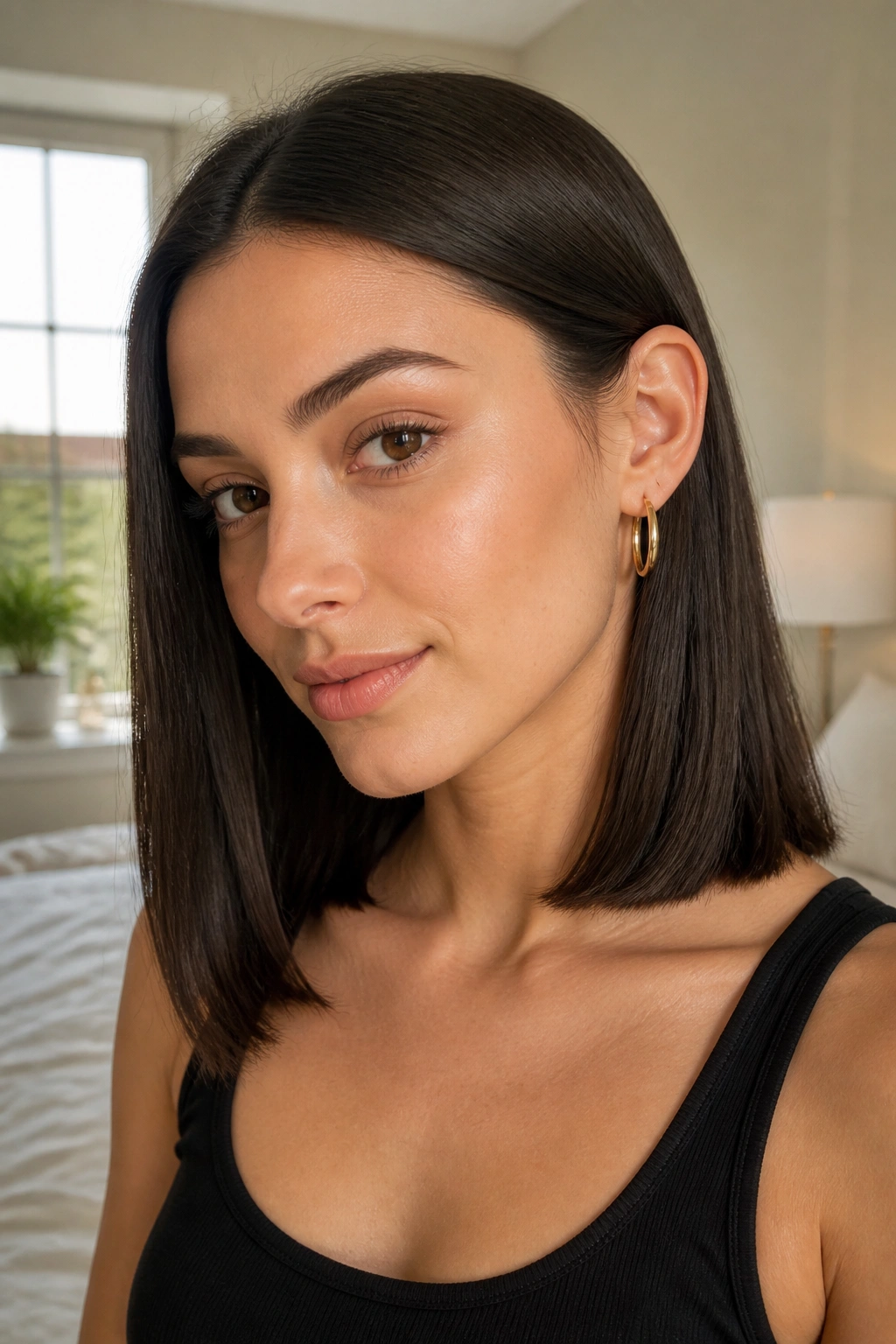
Not every thick-haired person needs layers. There, I said it. A sleek one-length medium cut can look striking when the hair is truly dense and healthy, because the fullness becomes the point. The shape feels modern in a direct, almost strict way.
The secret is the edge. If the ends are blunt, even, and sitting at a length that brushes the shoulders, the whole cut reads as polished. Tuck one side behind the ear, and you get an instant change in shape without doing much at all. That tucked side reveals the jawline; the other side keeps the density. Nice contrast.
This is a good option if you like clean lines and want the hair to do its own thing. It also works when you don’t want to spend time styling layers into place every morning. The cut gives you a strong base. That’s enough.
One caution: a one-length cut is only as good as the condition of the ends. If the hair is dry or snapped at the bottom, this style will show it fast. Healthy ends matter here more than anywhere else on the list.
18. Razor-Soft Ends for Thick Straight Hair

A razor can be a good tool on thick straight hair, but only when it’s used with judgment. The point is to soften the ends so they don’t feel heavy and blunt, not to create a fuzzy halo of broken-looking tips. If your hair is coarse, dense, and resistant to movement, a carefully done razor cut can make the shape feel lighter.
The catch is that this technique is easy to overdo. Too much razor work on already dry or fragile hair can leave the ends rough, especially on straight hair that shows every uneven edge. This is one of those cuts that should never be rushed. If a stylist talks about taking out bulk all over with a razor, I’d be cautious.
What to Watch For
- The ends should still look full, not wispy
- The cut should keep a clear perimeter
- Razor work should be limited to the right sections
- The hair should feel softer, not shredded, when you run your fingers through it
If done well, the cut feels airy without losing its strength. That’s the whole appeal. Soft, but not weak.
19. Long V-Cut Through the Back

A long V-cut is a solid choice if you want your medium hair to lean a little longer without giving up shape. The back tapers into a soft point, which helps thick straight hair release some of its weight while keeping length through the center. It’s a good compromise for people who like a bit of drama but not a shag.
The front pieces can stay a little shorter, which keeps the cut from feeling heavy around the face. From behind, the shape looks neat and directional. From the front, it still feels wearable. That balance is the reason this cut stays useful.
This is also a good style if you wear your hair in clips, half-up styles, or low ponytails. The taper in the back gives those styles a cleaner drop. Without it, thick hair can look like a wide wall when pulled back. With it, the shape narrows just enough.
It is not the most subtle haircut on the list. But it is practical, and that matters.
20. Air-Dried Mid-Length Cut With Soft Layers
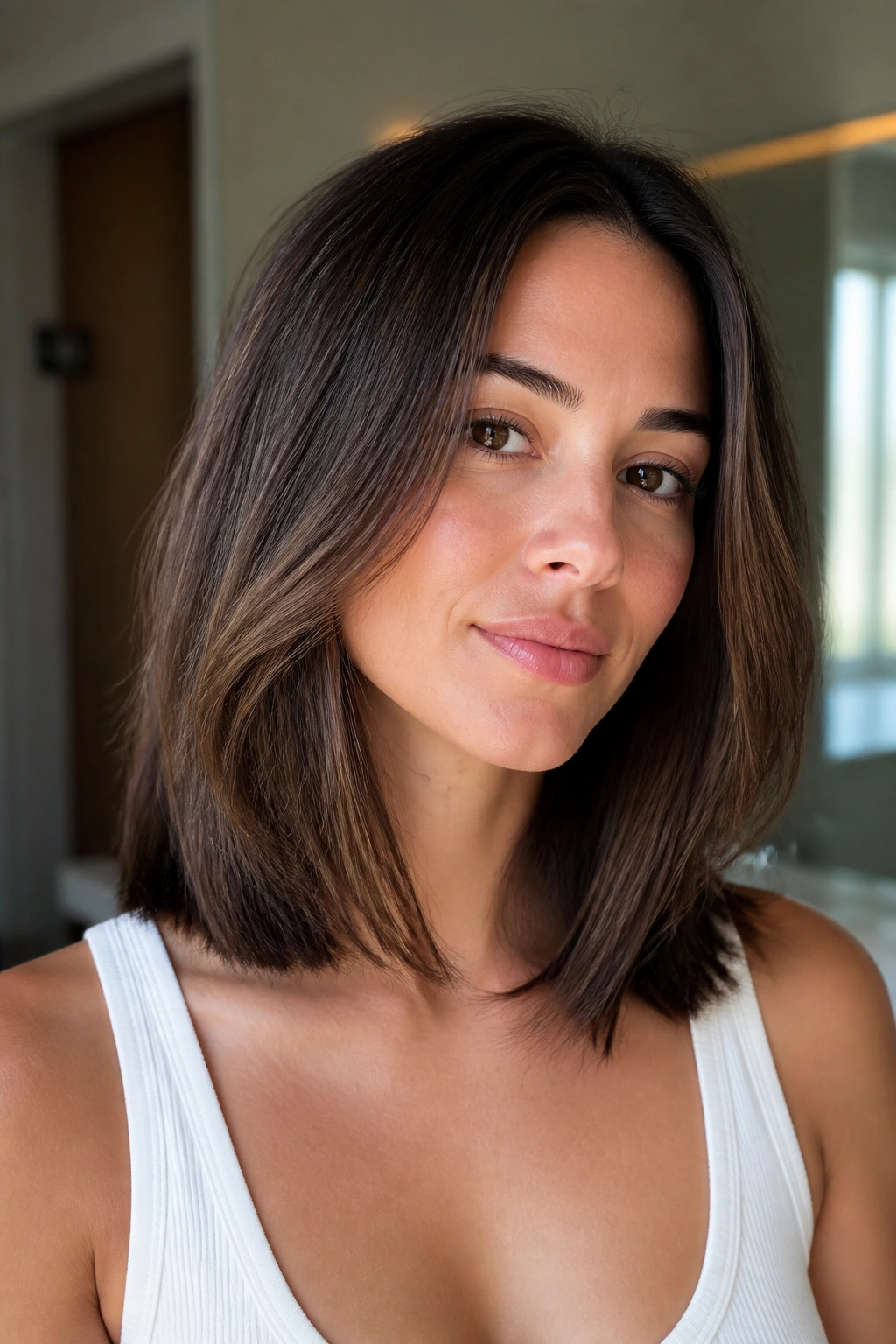
If heat styling is not your favorite thing, a soft layered mid-length cut can make thick straight hair behave better on its own. The layers should be gentle and placed where the hair needs movement, not everywhere at once. That lets the hair dry into a natural shape instead of puffing into an awkward triangle.
The perimeter can stay fairly full. What changes is the inside balance. A little internal shaping around the mid-lengths helps the hair settle against the head more cleanly, while the ends keep enough weight to look healthy. That matters on air-dried hair, which can go fluffy fast if the cut is too light.
Best Products for This Look
- A leave-in conditioner with light smoothing power
- A small amount of cream through the mids and ends
- A wide-tooth comb for even product distribution
- A soft towel or T-shirt to blot out water, not rough it up
This cut is for people who want their hair to look good with very little effort. Not zero effort. Let’s not pretend that exists. But close enough to make mornings easier.
Final Thoughts
Thick straight hair does not need to be “fixed.” It needs a cut that knows where the weight belongs and where it should be nudged out of the way. That’s why medium lengths work so well here: there’s enough hair for shape, but not so much length that the density starts dragging everything flat.
The smartest move is to bring a photo and then explain what you want the hair to do, not just what you want it to look like. Say you want the ends to stay full, the sides to sit closer to the head, or the front to move away from your face. Those details help more than vague words ever will.
And if your first attempt is almost right, do not panic. Medium hair grows with you. A small trim, a better part, or a cleaner line can change the whole thing.
