



A long mullet hairstyle for men lives or dies on weight. Leave too much bulk through the crown and the cut falls flat; remove too much and the back turns thin and stringy. The good versions feel deliberate: a little lift up front, length at the nape, and sides that still look shaped.
That balance is why this cut keeps getting borrowed by different types of guys. Straight hair shows the lines, curly hair adds body, and wavy hair gives you movement without much work. The haircut can look rough, sharp, or laid-back, but it only works when the layers are placed with some care. No random trimming. No guesswork.
Barbers usually think about three things here: how much weight sits at the crown, how the sideburn area connects to the back, and whether the neckline should be clean or soft. Get those wrong and the cut reads like a grow-out. Get them right and the whole thing has a shape you can live with. The first version is the plainest one, and that is exactly why it matters.
1. Classic Long Mullet With Tapered Sides

The classic long mullet is the one that makes the whole style make sense. It keeps the silhouette clear: shorter on the sides, controlled at the top, and long enough in back to show that this is a mullet on purpose. Nothing feels overworked, which is part of the appeal.
Why the Shape Holds Up
The tapered side keeps the haircut from ballooning around the ears. That matters more than most people think. If the sides are left too heavy, the back starts to feel like an afterthought instead of the point of the cut.
A good classic long mullet usually has 2 to 4 inches on top and enough length at the nape to brush the collar. The exact numbers shift with hair texture, but the proportions stay the same. Clean sideburns help, too.
- Best on straight or slightly wavy hair
- Ask for a low taper near the ears
- Keep the neckline soft, not boxed off
- Style with a light matte cream or a tiny bit of paste
Tip: if the back starts to flare out at the ends, trim only the bottom edge. Do not take length off the whole section unless you want to lose the mullet shape fast.
2. Curly Long Mullet With Defined Shape

Curly hair makes a long mullet look fuller, not messier, when the cut respects the curl pattern. That is the whole trick. Curls already bring body, so the haircut should work with that shape instead of fighting it with blunt lines and heavy thinning.
The smartest version keeps the top long enough to show the curl and the back long enough to bounce instead of collapse. If a barber cuts curly hair too short when it is wet, the final result can spring up much higher than expected. That is how you end up with a mullet that looks cropped instead of long. Nobody wants that.
A better move is to let the curls sit where they naturally fall, then trim for shape and control. A leave-in conditioner and curl cream usually do more here than a heavy wax ever will. If you diffuse, keep the heat low and stop when the hair still feels a little damp. Curls finish better that way.
This version works especially well if your hair has medium to tight curl and you want the back to feel full without needing daily battle. It looks lived-in. It also looks expensive when the curls are cut right.
3. Shaggy Long Mullet With Heavy Layers
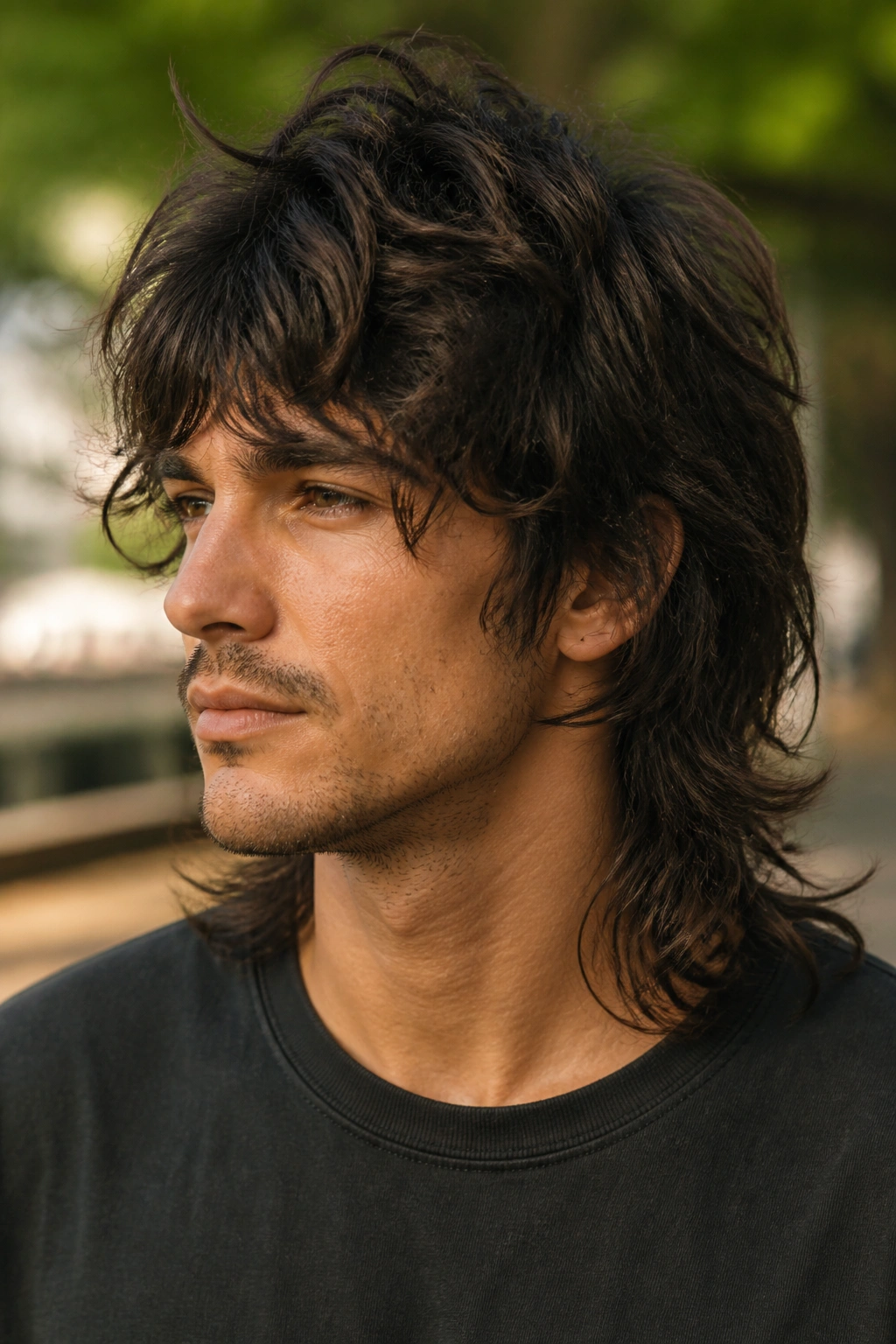
Why does the shaggy version look easier to wear than a neat one? Because the mess is built in. The shape already expects movement, so you do not have to force every strand into place before you walk out the door.
How to Ask for It
Tell the barber you want heavy layers through the crown and mid-lengths, then keep the ends feathered. That phrase matters. If the layers sit only on the top, the back can turn into a blunt tail. If they run through the whole cut, the mullet keeps that loose, shaggy swing.
A shaggy long mullet usually looks best on thick hair that wants to puff out. The layers remove weight without making the hair look over-cut. A little sea salt spray helps, but the real work happens in the cut itself.
- Ask for point cutting, not a flat blunt line
- Keep the perimeter soft around the nape
- Blow-dry with fingers instead of a brush
- Finish with a matte product, never a greasy one
One thing to watch: if your hair is fine, too many layers can make the whole style look sparse. In that case, keep the cut looser and let the texture come from styling, not from aggressive thinning.
4. Fade-Sided Long Mullet

A guy with thick hair and a sharper wardrobe often lands here first. The fade gives the mullet a cleaner frame, and that makes the longer back feel intentional instead of rebellious-for-the-sake-of-it. It is a good compromise, honestly.
The fade can start low, mid, or skin-tight, depending on how much contrast you want. A low fade keeps the style a little softer. A skin fade makes the back read longer and the top feel more dramatic. Both work. The main thing is keeping the transition smooth around the temple and above the ear.
A fade-sided long mullet is also one of the easiest versions to keep looking neat between cuts. The top may grow out, but the faded sides keep the outline from getting heavy too fast. That is a practical advantage, not just a style choice.
- Low fade for a cleaner, quieter look
- Mid fade for stronger contrast
- Skin fade for the sharpest edge
- Taper the nape so the back does not feel disconnected
The cut looks best with a bit of bend in the hair. Flat hair can make the fade feel too hard unless you add some texture with a dryer and a small amount of paste.
5. Straight Long Mullet With Curtain Bangs
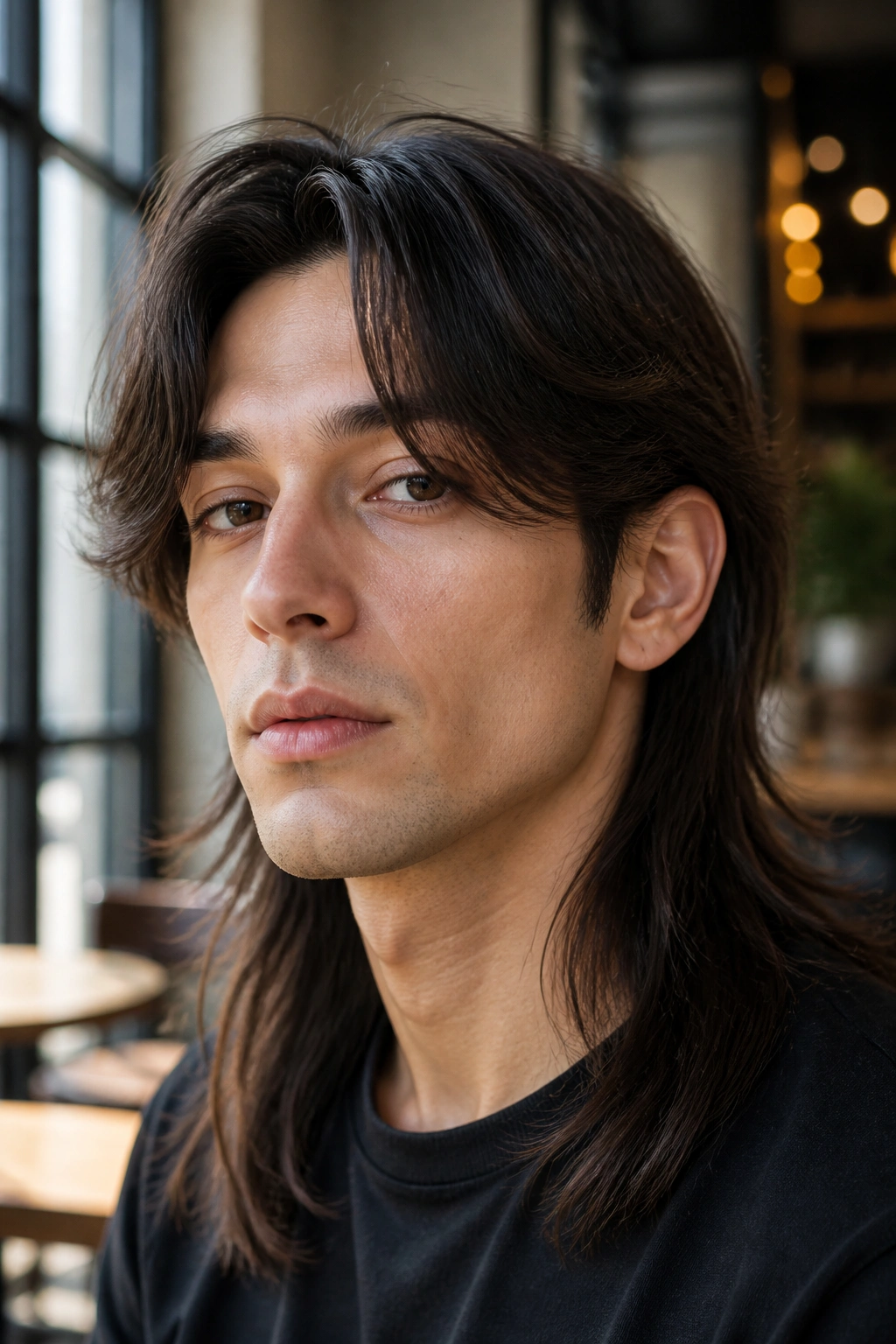
Straight hair shows every line in the cut, which is a blessing and a problem. If the shape is off by even half an inch, you see it. If the shape is right, though, the whole thing looks clean and deliberate in a way that a lot of shaggy styles never quite manage.
Curtain bangs soften the front and stop the haircut from looking too severe. They also help balance a longer face, because they break up the vertical line between forehead and chin. Keep the front pieces long enough to part from the center or slightly off-center, then let them fall with a little movement rather than pressing them flat.
This version depends on a good blow-dry. Use a round brush or your fingers, aim the airflow backward and slightly outward, and keep the heat medium, not scorching. A pea-size amount of light cream is usually enough. Too much product makes straight hair hang like wet rope.
It is a sharp style without being loud. That combination is the reason it keeps working. If your hair is naturally pin-straight, this may be the cleanest long mullet to start with.
6. Wavy Surfer Long Mullet

Wavy hair does half the styling for you. That is why this cut feels easy even when it looks layered and full of movement. The wave pattern gives the back swing, and the top gets enough lift that you do not have to force volume into it every morning.
Unlike a curly mullet, this version should not be over-cut. Wavy hair can collapse when the layers are too short, especially if the density is medium or low. Keep the ends a little longer than you think you need. The haircut should move when you turn your head, not puff out at the first gust of wind.
A sea salt spray on damp hair works well here, but only in a small amount. Rough-dry it with your hands, then stop before the wave gets frizzy. A matte cream can finish the job if the ends need a bit of control. Nothing heavy. The point is to keep the soft bend.
This is the cut for guys who want a long mullet but do not want to spend ten minutes building shape every morning. It looks relaxed because it is built around the hair you already have.
7. Wolf Cut Mullet for Men

The wolf cut mullet sits right on the edge between messy and styled. That edge is the appeal. It mixes shaggy layers up top with a longer back, but the crown stays a little more lifted and broken up than in a classic mullet. The result feels younger, rougher, and more lived-in.
What makes it work is the split between volume and length. The top wants movement. The back wants flow. If one side of that equation gets ignored, the cut starts to feel like a bad grow-out from two different haircuts stitched together. Keep the layers feathered and the perimeter soft, and it holds together.
This version likes matte products. Pomade will make it too slick. Heavy cream can make it droop. A dry paste or clay gives the texture enough grip without turning the hair shiny and stiff. You can also rough-dry the roots for extra lift.
It suits guys who like a little chaos in the shape but still want the haircut to have structure. Not neat. Not sloppy. Somewhere in the middle, and better for it.
8. Business-Ready Long Mullet

Can a mullet look office-safe? Yes, if the edges are disciplined. The trick is not to hide the mullet shape, because that usually makes it worse. Better to keep the length, clean up the sides, and let the haircut read as a refined version of itself.
What to Tell the Barber
- Keep the sideburn area tapered and tidy
- Leave enough top length to comb flat or back
- Trim the back so it sits below the collar but does not flare
- Clean the neckline without shaving it too high
That combination makes the haircut look deliberate with a button-down shirt or a jacket. It is still a mullet. It just behaves better.
This version works especially well for men with straight or slightly wavy hair and a decent beard or strong jawline. The beard, if you wear one, gives the haircut more structure at the bottom half of the face. Without it, the cut can feel too top-heavy unless the side taper is crisp.
I like this version because it proves the style does not have to be theatrical. It can be sharp, grown-up, and still have enough length in back to keep the attitude intact.
9. Punk Long Mullet With Choppy Ends
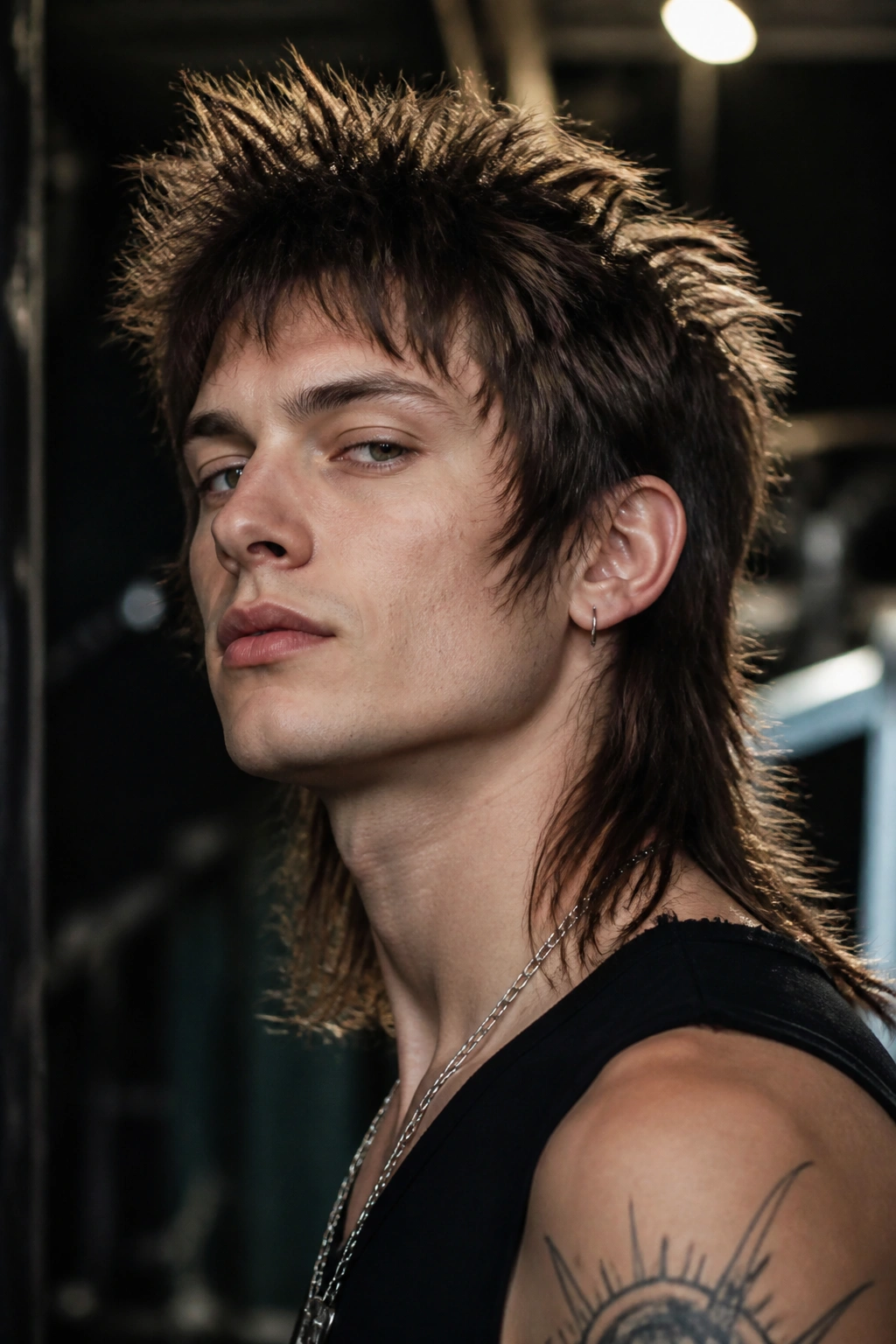
This is the version for guys who want the haircut to look a little fought-with. The ends should not sit politely in a straight line. They should look chopped up, broken apart, and touched with some roughness. Not damage. Texture. There is a difference.
A punk long mullet works best when the perimeter is cut with a razor or point-cutting scissors, then styled with a dry product that leaves the hair separated. The top can be pushed up, forward, or even slightly off to one side. The shape matters less than the attitude. That sounds vague, but it is true here.
If your hair is thick, this cut can look fantastic because it breaks up the bulk without killing the length. If your hair is fine, keep the texture lighter. Too many aggressive cuts can make the ends look thin and stringy instead of sharp.
A small amount of wax rubbed through the tips is usually enough. Run it through dry hair, pinch the ends, and leave some pieces uneven on purpose. That imperfect finish is the whole point.
10. Permed Long Mullet
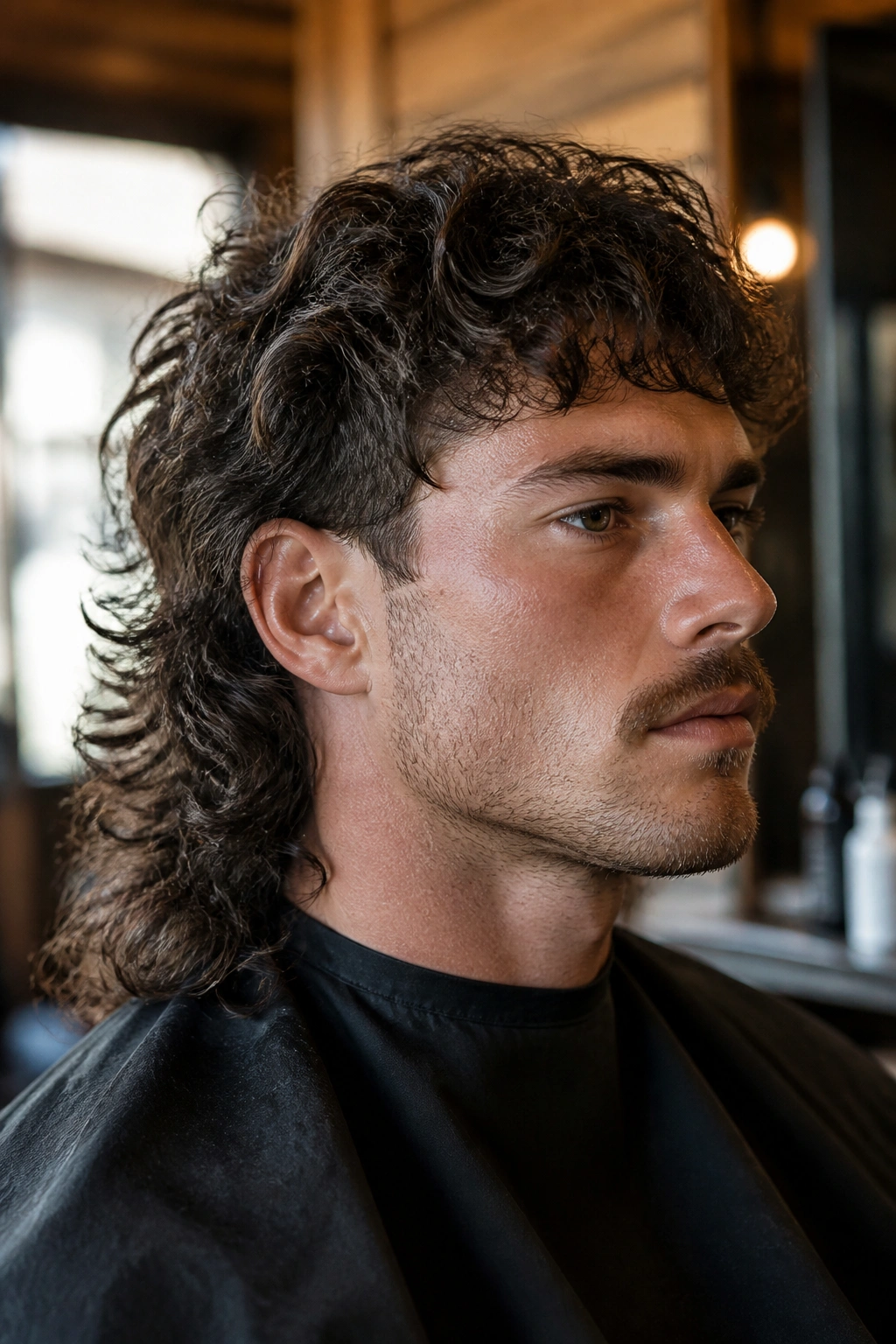
A perm gives a long mullet shape before the styling even starts. That is the reason people keep coming back to it. The curls or waves build lift through the back and crown, which means the haircut looks full even on days when you barely touch it.
The catch is care. Permed hair wants moisture, but it also wants restraint. Heavy products can weigh it down, and rough towel drying can turn the shape frizzy fast. A gentle leave-in and a light curl cream usually cover most of the job. If you shampoo too often, the curl can lose its spring quicker than you expect.
This style is not the one to chase if your hair is already damaged or very dry. Chemical processing adds stress. That is not drama; that is reality. A barber who understands curl patterns and strand strength is worth more here than someone who only wants to sell you volume.
The good version has bounce without puffiness. It feels soft, not crunchy. And when the back moves, it moves in a way a naturally straight mullet can only fake with extra work.
11. Long Mullet With Beard Balance

A long mullet changes the lower half of the face, and a beard changes it again. Put the two together without thinking about shape, and the result can feel top-heavy or bottom-heavy. Put them together well, though, and the whole look settles into place.
Matching the Beard
A short beard keeps the haircut lighter and cleaner. That works if you want the mullet to stay the star. A medium beard gives the strongest balance for most men because it fills out the jaw without swallowing the haircut. A full beard can look excellent, but the sideburn connection has to be tidy or the whole thing gets bulky fast.
- Keep sideburns blended, not chopped off abruptly
- Match the beard line to the neckline style
- Leave the mullet back long enough to clear the beard shape
- Trim the cheek line often so the face does not blur into one block
The key is weight distribution. A long mullet plus a dense beard can look rugged and very strong, but only if the sides stay controlled. If the hair at the temple area and the beard both go wild, the look turns muddy. Clean sideburns fix that fast.
This is one of my favorite pairings for men who want the haircut to feel grounded rather than trendy. It has structure. It has shape. And it makes a lot of face shapes look more solid.
12. Undercut Long Mullet

An undercut long mullet is blunt about contrast. The sides are taken down much shorter, sometimes disconnected from the top, and that makes the back feel even longer by comparison. If you like sharp lines and a harder edge, this is the version that says it first.
The haircut works because the eye reads the difference in length right away. Short sides, long back, a top that can be pushed forward or back depending on mood. Simple. Clear. Almost severe, if the fade or undercut is high enough. That severity is the appeal for a lot of guys.
There is a trade-off, though. The grow-out can get messy if you leave it too long between cuts, and the contrast makes any unevenness obvious. If your hairline is receding or very thin at the temples, the undercut can expose more than you want. That does not mean it is off-limits. It just means the haircut needs honest framing.
Best move: keep the top textured and the back long enough to avoid a choppy step. The cut should look intentional from every angle, not only from the front.
13. Razor-Layered Long Mullet
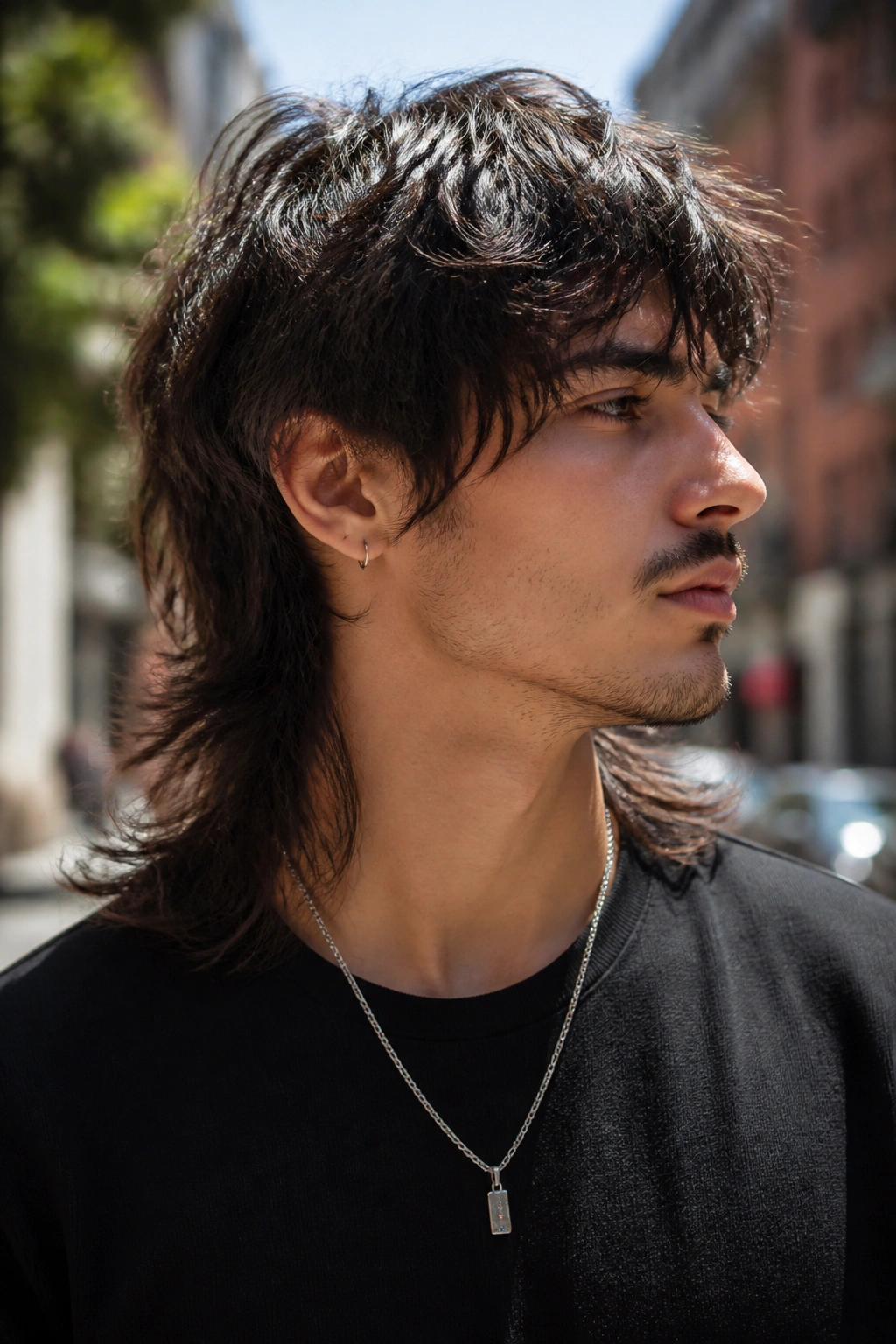
Why does a razor cut move differently than a scissor cut? Because the edge of the hair is softened instead of left blunt. That softer edge makes the ends swing and separate more easily, which is perfect if you want a long mullet with air in it.
The razor-layered version is a little tricky. On the right hair, it looks light and feathered. On the wrong hair, it can fray the ends and leave them wispy. Fine or brittle hair usually needs caution here. Thick, healthy hair handles it better, especially when the barber uses the razor only in controlled sections instead of going after the whole head like a hedge trimmer.
This style works well with a bit of bend through the top and a looser back. It does not want hard product or stiff shaping. Use a light cream or a small amount of matte paste, then push the hair with your fingers rather than a brush. The hair should still look touchable.
The razor finish gives the cut a softer silhouette. If you want movement without a shaggy mess, this is a smart lane.
14. Long Mullet With Fringe and Flow
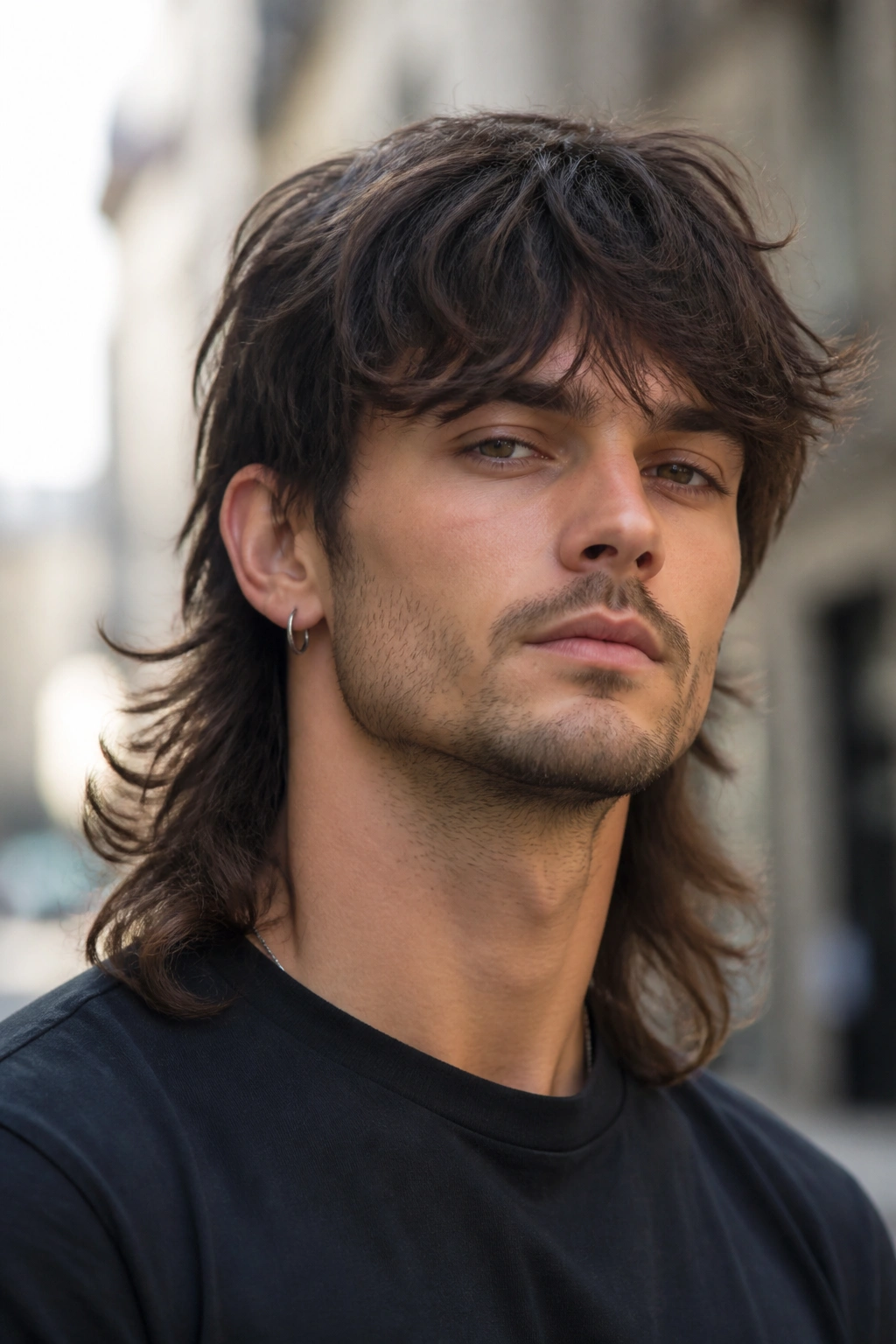
A fringe changes the whole balance of a mullet. It shortens the front visually, which helps if you do not want the style to expose too much forehead or feel too open on top. Then the longer back keeps the mullet identity in place. Nice contrast. Clean, too.
This cut is especially useful for men with a cowlick, a wider forehead, or a face that needs a little break across the top third. Keep the fringe textured rather than blunt. A straight blunt bang can make the haircut feel too heavy. A broken, piecey fringe gives more movement and grows out better.
- Round faces usually benefit from a longer fringe that falls slightly off-center
- Longer faces can use a shorter, lighter fringe that does not swallow the brow
- Strong cowlicks need extra length so the fringe can sit where it wants
- Thick hair should be point-cut to keep the front from puffing up
The styling is simple: blow the fringe in the direction you want first, then let the back fall into place. If the front is right, the rest of the haircut gets easier. That little bit of balance matters more than people admit.
15. Mullet With Hard Part and Low Fade

A hard part makes the haircut look precise. A low fade keeps the sides neat without erasing too much length too high up the head. Put them together and the long mullet gets a more tailored edge, which is useful if you like crisp lines but still want the movement in back.
This version is not subtle. The part draws a line, and the fade keeps that line from being swallowed by bulk. If your hair is dense or naturally wants to fall across the forehead, the hard part gives it direction. That can be a relief if you are tired of fighting the same flop every morning.
It suits men who like a sharper wardrobe, cleaner shoes, or just a haircut that behaves under a hat and still looks finished when the hat comes off. A medium-hold cream or light pomade is usually enough. Comb the part while the hair is damp, then set it with a dryer for a few seconds.
The back can stay long and a little textured. That contrast is the selling point. Clean on top, long in back, and tidy enough to avoid looking like you slept through your own haircut.
16. Braided Long Mullet

Braids make a long mullet behave in a different way. Instead of letting the length hang loose, you can turn the back into a single braid, twin braids, or a few small accent plaits that keep the hair controlled. It is practical, and it looks intentional.
For men with shoulder-length or longer hair, the braid keeps the back from tangling under jacket collars, backpack straps, or helmet padding. That is not a small thing. Anyone who has had long hair snagged at the nape knows exactly how annoying that gets. A braid solves the problem while keeping the mullet shape visible.
- Single braid for the cleanest line
- Twin braids for a tougher, more styled look
- Small accent braids if you want texture without full control
- Loose braid ends if you want some movement at the bottom
Pulling the braid too tight is the mistake to avoid. Tension on the scalp gets uncomfortable fast, and it can flatten the top. Leave some room at the crown so the haircut still has shape. A touch of oil on the ends helps if the hair is dry.
This one is not for everyone. But on the right head of hair, it is sharp and practical at the same time.
17. Wet-Look Long Mullet
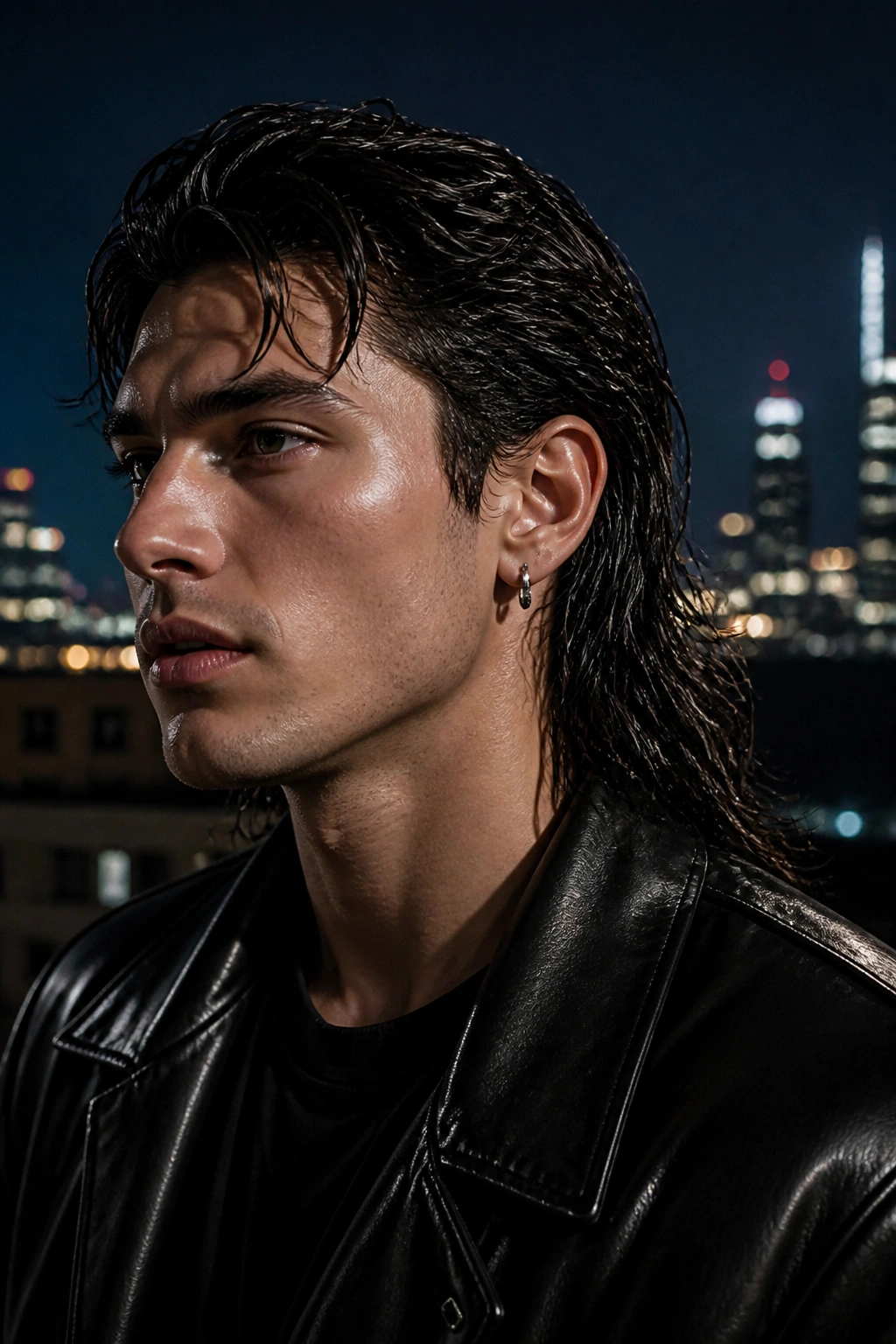
The wet look turns a long mullet into a deliberate style instead of a haircut that happened to dry in place. That is the appeal. Shine, control, and a slightly sculpted finish give the shape a more dramatic feel without changing the actual cut.
The product choice matters. Water-based gel gives the strongest hold and the most obvious shine. A medium-hold pomade gives less stiffness and a softer finish. Start on damp hair, not soaking wet hair, and work the product from the front through the crown before smoothing the back into place. If you load too much onto fine hair, it can collapse into a sticky sheet. Too little, and it looks accidental.
This style works best when the mullet already has good structure. If the haircut is uneven, the shine will show every flaw. If the cut is clean, though, the wet finish can look striking in a way matte styles never quite match.
I like it for evening wear or any time you want the haircut to feel more dressed up. It is a little sharper. A little slicker. And yes, it asks for confidence.
18. Thick Hair Long Mullet With Debulking
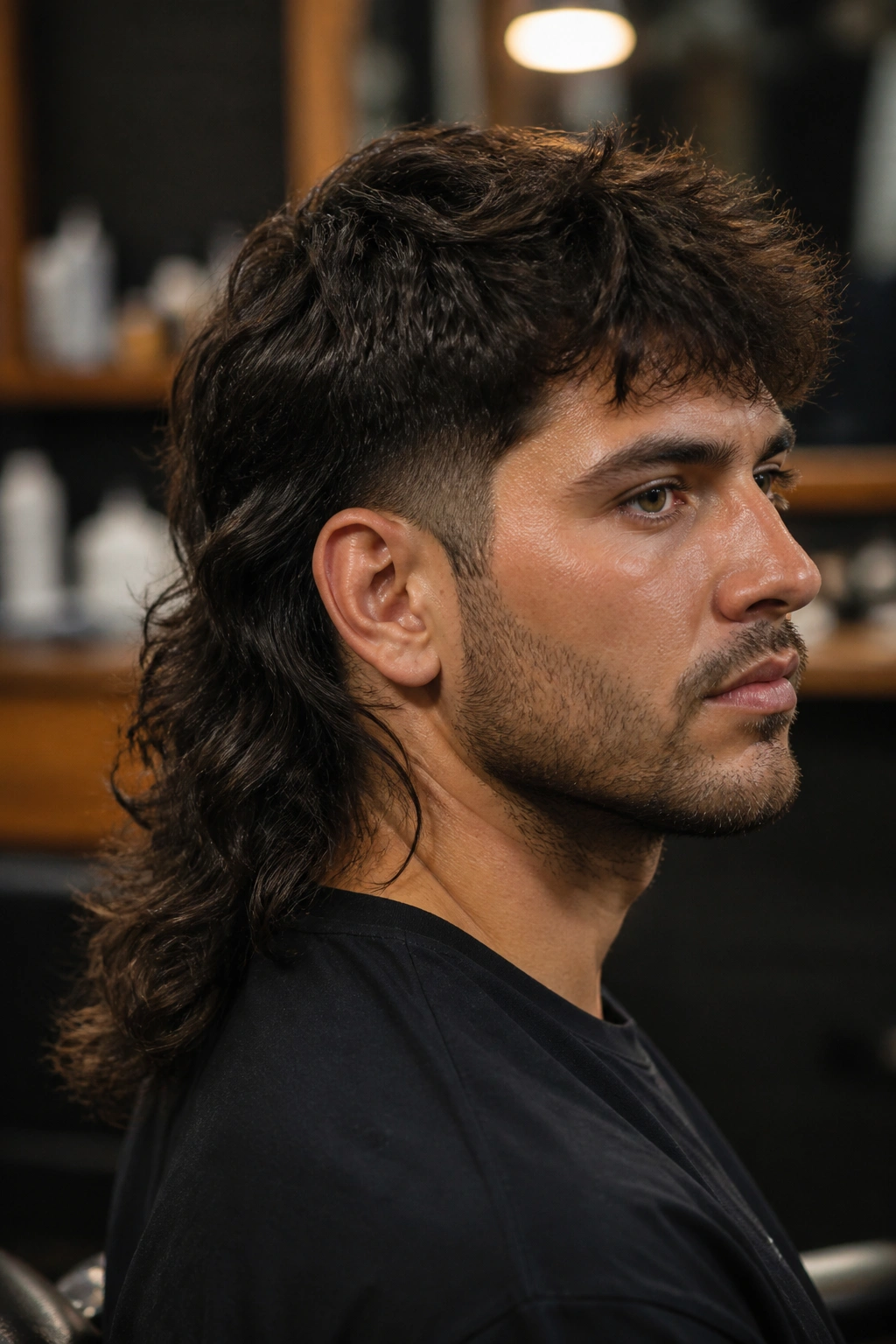
Thick hair needs a different approach. If you just let it grow, the sides puff out, the crown lifts like a helmet, and the back turns into a heavy curtain. Debulking solves that, but only if the barber takes weight out in the right places.
How Thick Hair Should Be Removed
The best move is usually internal layering and point cutting around the crown, mid-lengths, and behind the ears. That breaks up bulk without shredding the outside shape. Thinning shears can help in small doses, but using them everywhere often leaves thick hair frayed and puffy. That is the mistake.
Tell the barber you want the silhouette kept long, but the weight reduced where the hair stacks up. The occipital area matters a lot here. So does the area just above the ears. If those spots stay too dense, the whole cut expands outward instead of flowing down.
- Remove bulk in sections, not all at once
- Keep the outer perimeter long enough to show the mullet line
- Use a low taper to control the sides
- Dry the hair fully before judging the final shape
This version is one of the most satisfying when it is done well. Thick hair has the size and texture to make a long mullet look strong, but it needs restraint. A little debulking goes a long way. Too much, and the shape falls apart.
19. Fine Hair Long Mullet With Lift
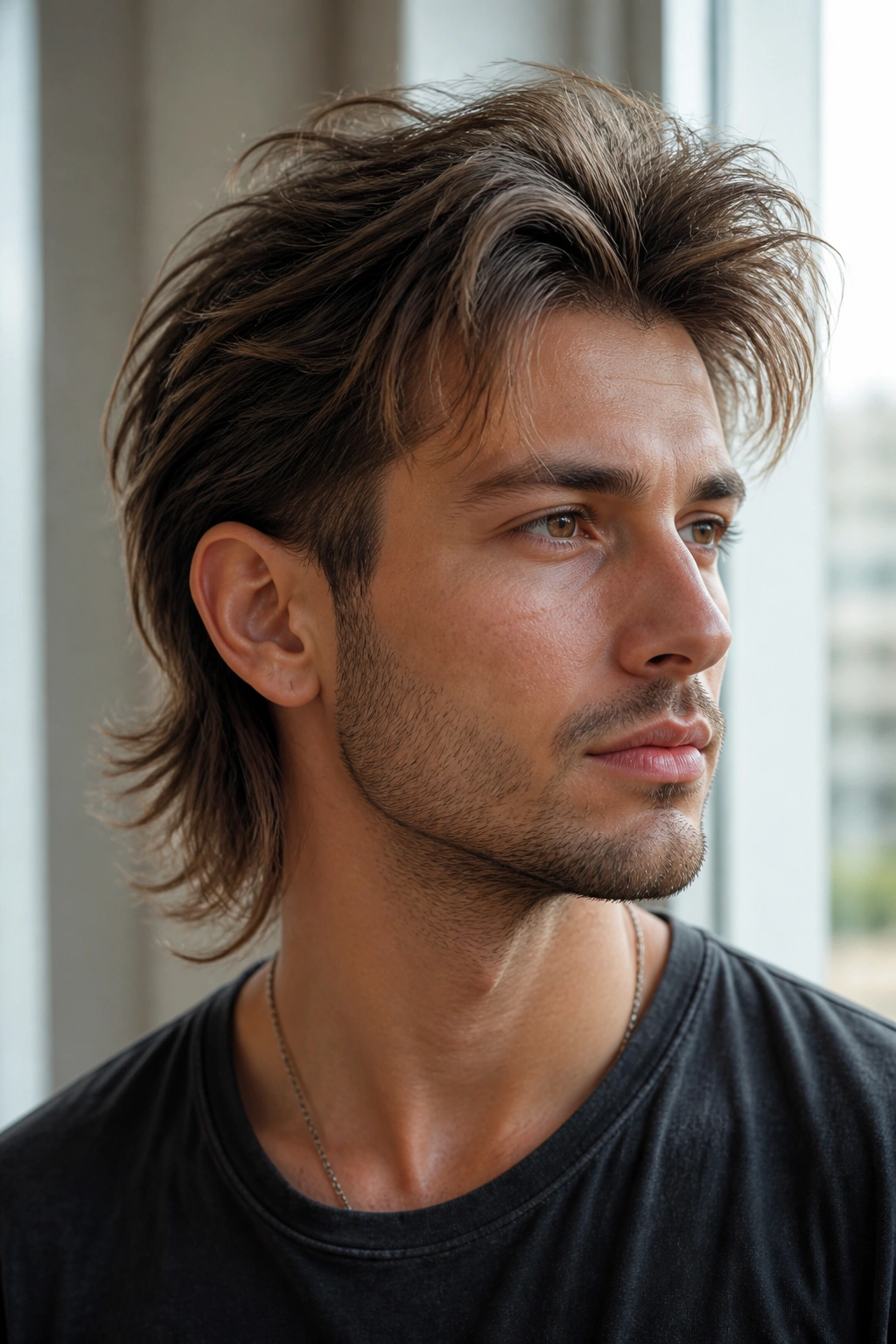
Fine hair can wear a long mullet, but the cut has to stay light on its feet. Too much length everywhere makes the style droop. Too much texture makes it look patchy. The sweet spot is a little lift at the root, a controlled top, and a back section that stays airy instead of heavy.
A root spray or mousse on damp hair helps more than a rich cream ever will. Blow-dry the front and crown in the opposite direction of the way the hair wants to fall, then finish by pushing it back into shape with your fingers. That creates height without needing a ton of product. Dry shampoo also helps fine hair hold grip, especially if it gets too soft by midday.
Keep the top a bit shorter than you would with thick hair. That sounds backward, but it works. Fine hair needs support, not too much drag from extra length. The back can still be long enough to read as a mullet; it just should not be overloaded.
- Use lightweight mousse, not heavy wax
- Keep layers soft and moderate
- Blow-dry from the roots
- Trim before the ends start to look wispy
This is a smart cut for men who want texture without bulk. It is not the loudest version, but it can look clean and sharp when it is maintained properly.
20. Soft Long Mullet With Clean Neckline
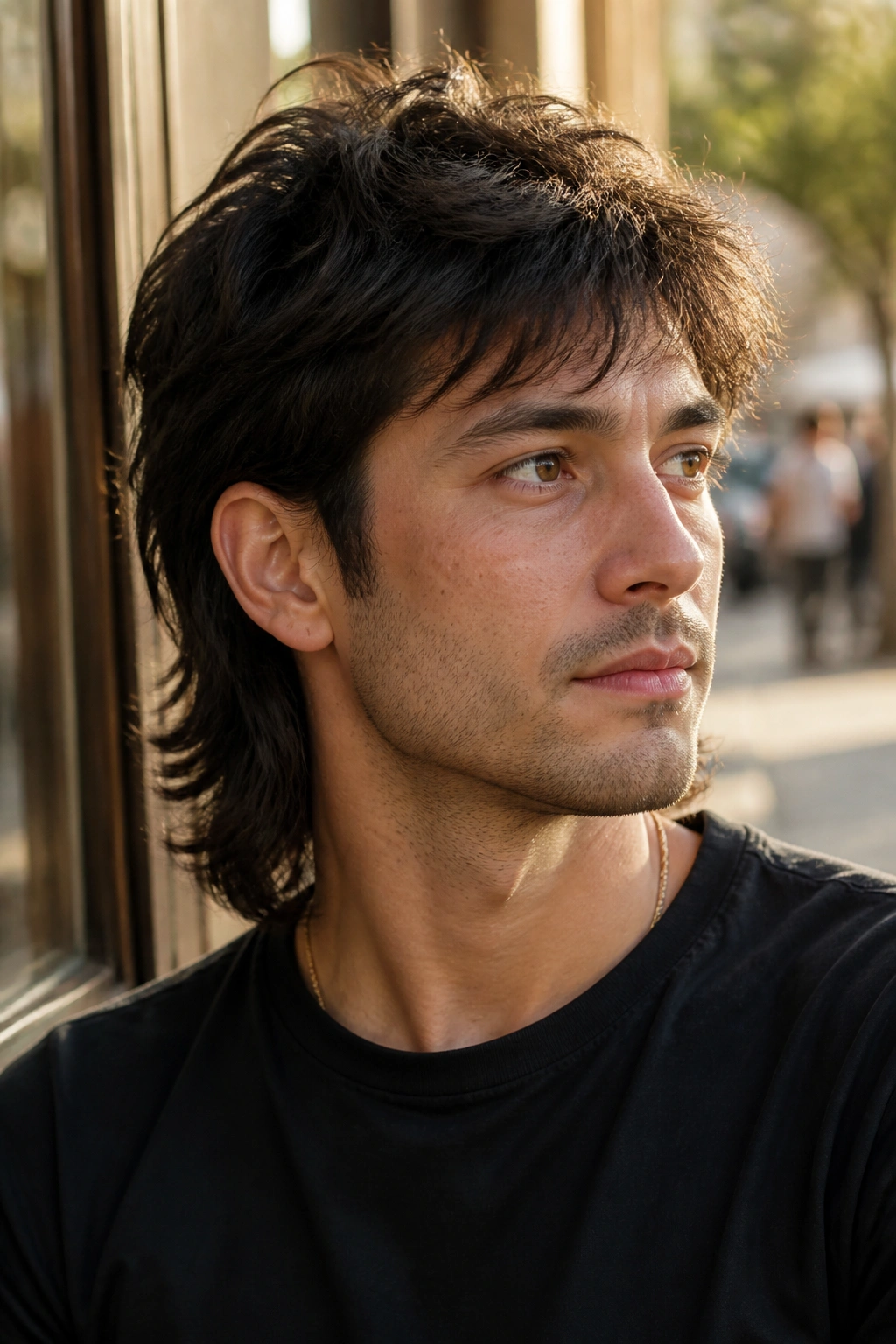
If you want the shape without the shout, this is the one I’d hand to most guys first. The soft long mullet keeps the length, keeps the attitude, and drops the hard edges that can make the haircut feel too aggressive.
The clean neckline is doing a lot of work here. It keeps the back from looking like a grow-out and gives the style a neat finish when the hair brushes the collar. Up top, the layers stay soft and movable. Around the ears, the shape stays controlled but not boxed in. That balance makes the haircut easier to live with between cuts.
This version suits men who are trying a mullet for the first time, or men who already know they like the shape but do not want it screaming for attention. It also grows out better than the more extreme versions. That matters. A lot of haircuts look great for a week and then turn into a project. This one stays manageable longer.
Keep the styling simple. A little matte cream, a quick finger-style, and you are done. Start soft, wear it for a bit, then decide how much edge you want to add later.
