



A good Viking inspired haircut is not a costume piece. It’s a mix of length, weight, and clean edges, with enough roughness left in the hair that it feels lived-in instead of staged.
That balance matters more than people think. A lot of men ask for “Viking hair” and end up with a messy undercut that looks like it was done by accident. The better versions have shape. They use the beard, the sides, and the top as separate parts of the same look, which is why they can feel hard-edged without looking sloppy.
The modern version borrows the visual language, not the archaeology. Braids, knots, shaved sides, long waves, blunt fringe, heavy texture — all of it can work, but only if the cut fits the hair you actually have. Thick hair behaves differently from fine hair. Straight hair sits differently from curls. And if your beard is strong, that changes the whole read of the cut.
Some styles here are loud. Some are clean enough for a suit. A few are easier to live with than they look. The first one is the cleanest place to start.
1. The Classic Viking Inspired Haircut With Shaved Sides
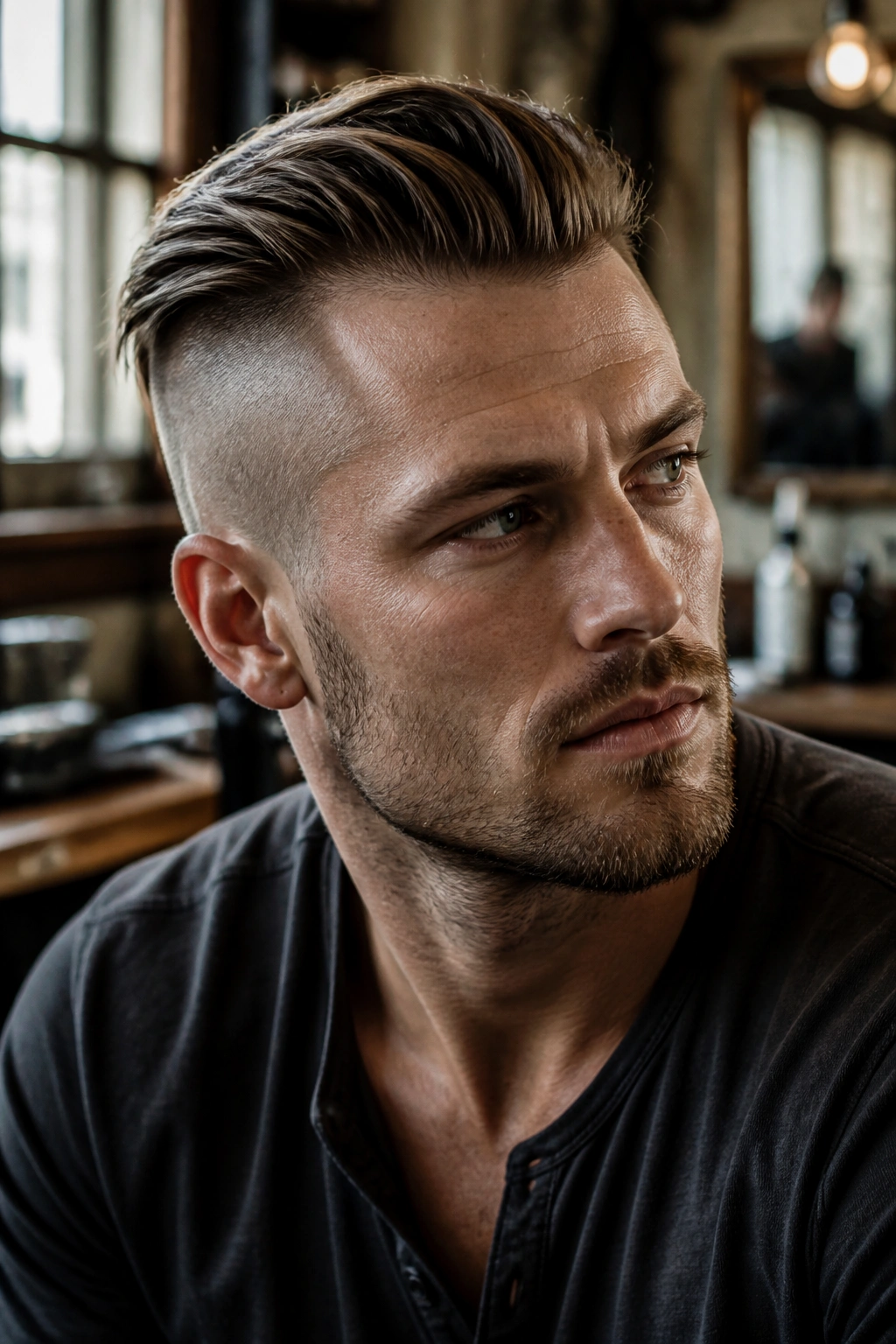
This is the easiest Viking look to wear, and it still carries the attitude. The shaved or tightly clipped sides do the heavy lifting, because they keep the shape sharp and stop the top from turning into a puffball. Keep the top around 4 to 6 inches if you want enough length to push it back, part it, or tie a tiny knot on stronger hair days.
Why It Works
The contrast is the whole trick. Long top, short sides, solid beard if you wear one. That split creates the rugged look without asking you to grow out your entire head for a year.
It also suits men with thicker hair and stronger jawlines, because the clipped sides stop the head from looking too wide. If your hair grows out fast around the ears, this style gives you a clean outline for about two weeks before it starts looking fuzzy.
- Ask for a disconnected undercut if you want a harder edge.
- Ask for a low or mid fade if you want the grow-out to look softer.
- Use a matte clay on the top, not shiny gel.
- Book a cleanup every 2 to 3 weeks if you want the sides to stay tight.
Pro tip: leave a little texture in the top. Perfectly smooth hair can look too polished for this cut.
2. Shoulder-Length Waves With Rough Ends

Long hair changes the whole mood. Instead of looking sharpened, this version feels windblown and heavy in a good way, especially when the ends are left blunt rather than thinned to death. Hair that sits around the shoulders gives you movement, and movement is what sells this style.
If your hair has even a little wave, let it do the work. A rough dry with a touch of sea salt spray is often enough. Straight hair can wear this cut too, but it usually needs a bit of bend from a blow dryer or a loose braid overnight to keep it from hanging flat like curtains.
The biggest mistake is over-layering. Too many layers make the ends look thin, and that kills the Viking feel fast. You want weight. You want the hair to swing, not float.
A beard helps, but it is not mandatory. If you keep the face clean, make sure the neckline is sharp. Otherwise the whole thing drifts into “I forgot to get a trim” territory.
3. The Braided Top Knot

A braid leading into a knot gives the top of the head a cleaner line than a plain bun ever will. That’s why I like it. The braid does the visual work first, then the knot keeps the length out of the way without making the style look soft.
This one wants at least 6 inches on top, and 8 inches is better if your hair is thick or a little coarse. The braid can be narrow and tight, or wider and looser, depending on how formal or rough you want the result to feel. Tighter braid, sharper read. Looser braid, more casual energy.
The sides matter here, too. Keep them clipped or faded enough that the braid stands out. If the sides are too bulky, the knot starts looking lost.
How to keep it steady
- Tie the braid with a small elastic before you twist it into a knot.
- Use a little leave-in cream if your hair frizzes easily.
- Don’t pull the knot too high unless your hairline sits low enough to handle it.
- Keep the beard trimmed close around the cheeks if you want the braid to stay the main feature.
One bad move: making the knot perfect. A little mess belongs here.
4. Long Undercut With a Full Beard Fade
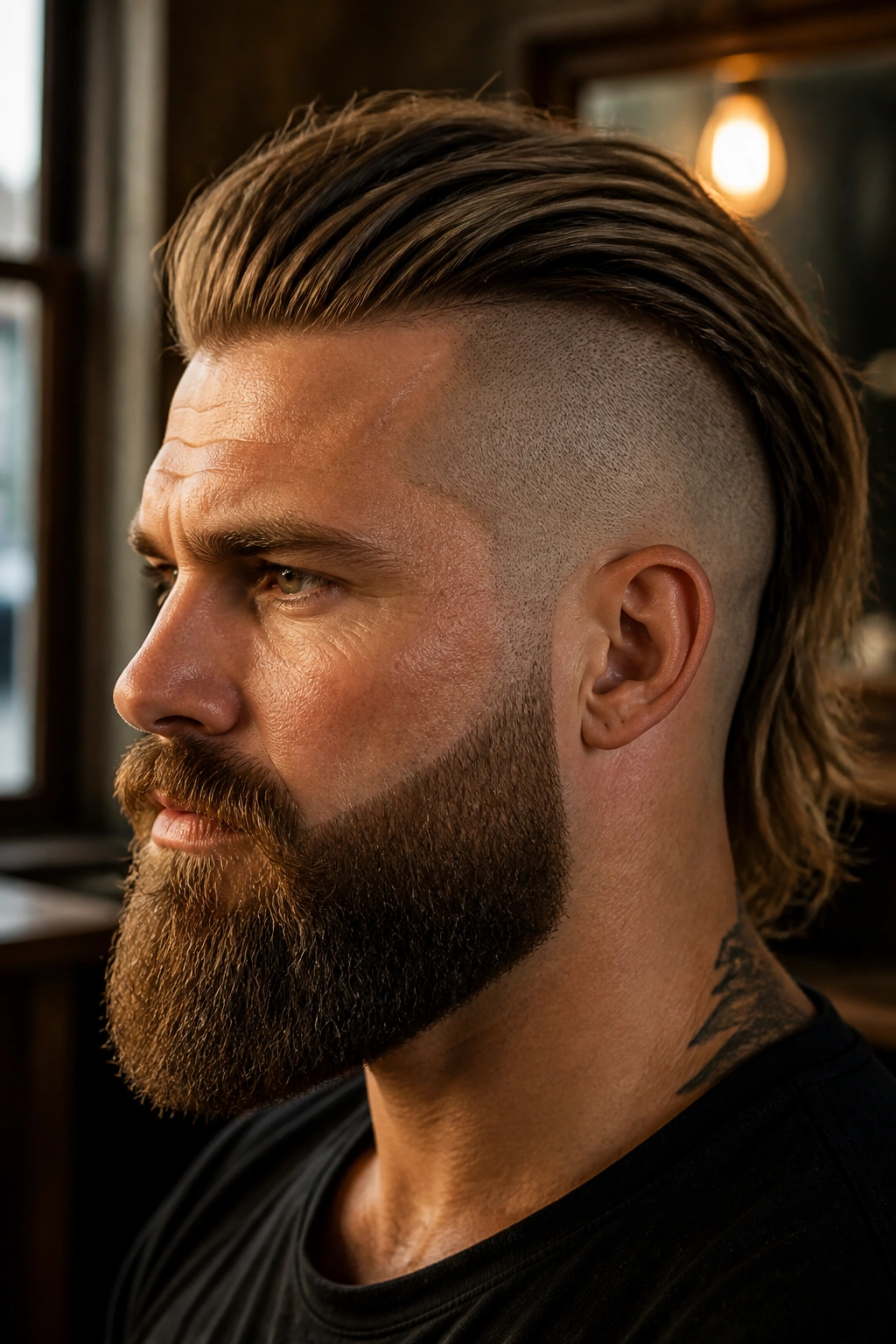
This cut looks serious because it controls two big shapes at once. The undercut removes width from the sides, while the beard fade brings the face into a cleaner frame. Together, they create that heavy, armored feel people usually want from Viking inspired haircuts for men.
The top should stay long enough to brush back, tuck behind the ear, or tie low. I like 5 to 7 inches for this version. Anything shorter can look stiff. Anything longer needs more care or it starts slipping into full long-hair maintenance, which is a different deal entirely.
The beard fade is where this style gets expensive-looking without actually needing a lot of product. Keep the sideburns blended into the beard, then let the jaw carry more weight. The face ends up looking stronger because the shape narrows and expands in the right places.
This is a good style if your hair is dense and your beard connects well. If the beard is patchy, keep the fade lighter and avoid making the gap obvious.
5. The Fishtail Braid With Tapered Sides

Why does a fishtail braid read so different from a standard three-strand braid? Because it looks denser and a little more intricate, even when the actual work is the same amount of effort. That tighter pattern gives the top of the head a woven feel, which pairs nicely with tapered sides that keep the whole look from getting too heavy.
This style needs length. Eight to 10 inches is the sweet spot if you want the braid to sit properly and hold its shape. Hair that is too short slips out, and hair that is too layered gets frizzy at the edges.
How to wear it
- Start with slightly damp hair, not soaking wet.
- Use a small amount of light styling cream to tame flyaways.
- Keep the taper low if you want the braid to stay dominant.
- Finish with a tiny elastic and pinch the braid apart a little for thickness.
It looks best on straight or wavy hair. Curly hair can do it, but the braid usually turns more textured than defined, which is not a bad thing if you like a rougher finish.
6. The Side Part Viking Cut

The side part is the easiest way to make a rough style look controlled. That does not mean neat in a boring way. It means the cut has direction, which makes it easy to wear with a jacket, a black tee, or a beard that’s been trimmed to a solid outline.
Ask for a clean part and keep the top long enough to push over, usually around 4 to 5 inches. The barber should leave the top with texture instead of making it flat. If the hair is too glossy or too perfectly combed, the cut loses its bite.
I like this option for men who want a Viking look but don’t want braids or knots. It feels closer to a warrior version of a classic gentleman’s cut. That makes it useful for workdays, dinners, and anywhere you need the style to behave a little.
A matte paste is usually better than a pomade here. You want separation, not shine.
7. The Mohawk Hawk

Want something louder without going full theater? The mohawk hawk gives you height down the middle and short sides that keep the profile sharp. It’s edgy, but not cartoonish if the length is controlled.
How to keep it wearable
Keep the center strip around 3 to 4 inches at the tallest point. That gives you lift without forcing the hair straight up like a punk revival experiment. The sides can be faded or clipped close, but I prefer a softer fade because it makes the grow-out less annoying.
Use styling clay or a dry texture powder. Heavy gel makes this look too stiff, and stiffness is not the point. You want movement at the top and a little grit through the front.
- Best for thick or medium-thick hair.
- Works well with a beard that has some width.
- Needs a trim about every 2 weeks if you want the shape to stay crisp.
- Less friendly to very fine hair unless you blow-dry it first.
The whole style depends on the front staying high and the sides staying honest. Let either one drift, and the shape falls apart fast.
8. The Braided Ponytail
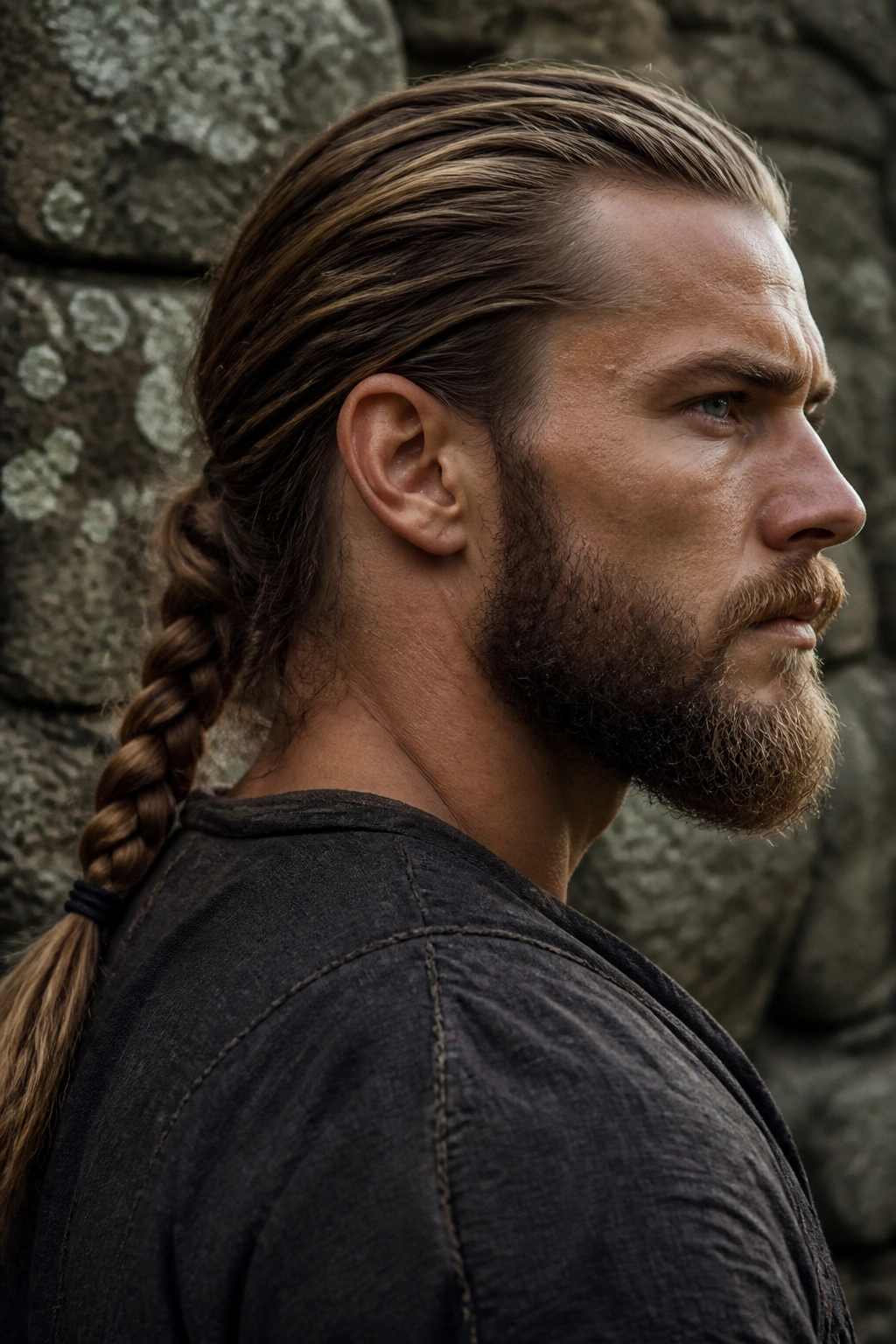
A braided ponytail is one of those cuts that looks more complicated than it is. Pull the length back, braid it, tie it low, and keep the sides clean enough that the braid gets to speak for itself. The result is practical, but it still has that rough, battlefield feel people chase with Viking inspired haircuts for men.
This works best with 8 inches or more at the crown and back. Less than that, and the braid turns stubby. If your hair is thick, the braid can sit low and heavy, which looks good. If it is fine, the ponytail needs a little prep with cream or texture spray so it does not collapse halfway through the day.
Don’t yank the ponytail too tight. A low, secure tie at the nape usually looks better than a high, stiff one. It feels less polished and more natural.
A beard balances this style well, but a clean jawline can work too if you keep the braid the main event.
9. Thick Fringe With Shaved Sides

This is the cut for men whose hair wants to fall forward no matter what. Instead of fighting that, the style uses it. The fringe sits heavy across the forehead, the sides are shaved or clipped short, and the result feels a little wild in a controlled way.
The fringe should be textured, not blunt like a bowl cut from a bad memory. Ask for point cutting or soft texture through the front so the ends move instead of sitting like a shelf. If your hairline is high, this cut can be tricky. You need enough density to cover the forehead without making the top look flat.
Use a blow dryer on low heat and push the fringe forward with your fingers, then add a small amount of matte cream. Too much product makes the front piecey and greasy. That ruins the whole mood.
This style works especially well on straight or slightly wavy hair. Curly hair can do it, but the fringe becomes a textured curtain rather than a clean line.
10. Viking Inspired Haircuts With a Temple Fade and Top Knot

A temple fade is the cleaner cousin of the full undercut. It keeps the edges around the temples tight, but it does not erase all the softness at the sides. That matters if you want a Viking inspired haircut that grows out without looking harsh after a week.
The top knot sits higher here, usually with 5 to 7 inches on top. Because the fade is limited to the temples, the cut feels less severe than a skin-tight undercut. I actually prefer that for men with narrow faces, because it stops the head from looking too long.
What to ask your barber for
- A fade that starts at the temples, not all the way around.
- Enough length on top to tie a knot without strain.
- A clean neckline, since the knot draws the eye upward.
- A little texture at the crown so the bun does not look like a helmet.
If you like clean edges but hate the look of a full shave, this one sits in the sweet spot. It still reads rugged. It just does it with a little more control.
11. The Messy Man Bun and Beard Combo
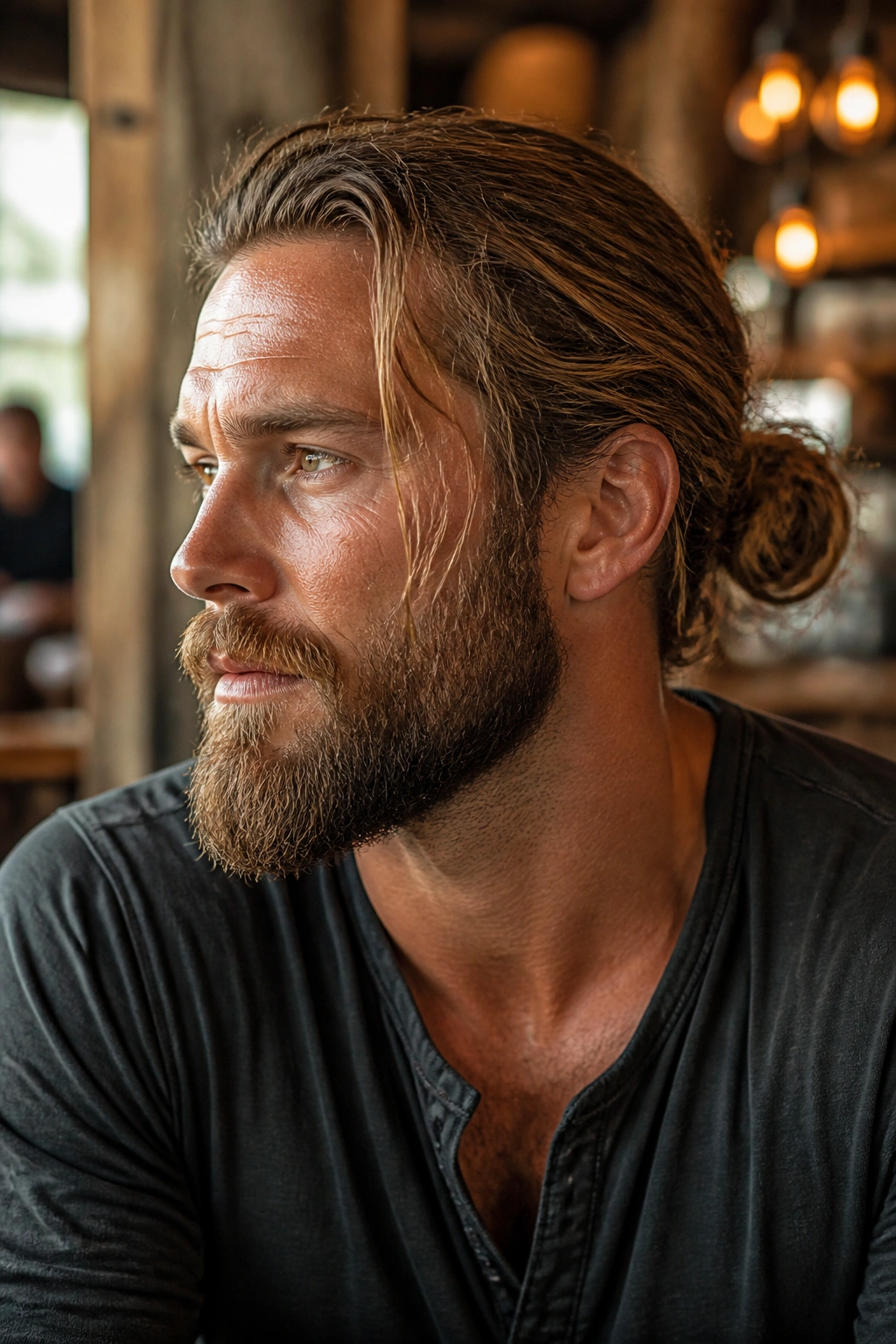
The man bun only works here when it looks slightly untidy. Too neat, and the whole thing starts leaning corporate. A true Viking feel needs a little looseness, a few escaped strands, and a beard that does some visual balancing instead of disappearing into the neck.
The bun should sit low or mid-low, not all the way at the crown. That lower placement keeps the silhouette grounded. Pull the hair back with your fingers rather than a comb if you want more texture. Then leave a couple of front pieces loose near the temples. Not every strand needs to obey.
The beard should feel connected to the haircut, even if it is short. That means a clean neckline, a defined cheek line, and enough bulk through the chin to stop the face from looking narrow.
This style is easy to overdo. If you add too much shine or tie the bun too tight, it looks like a yoga class. Keep it rough. That’s the point.
12. The Short Warrior Crop
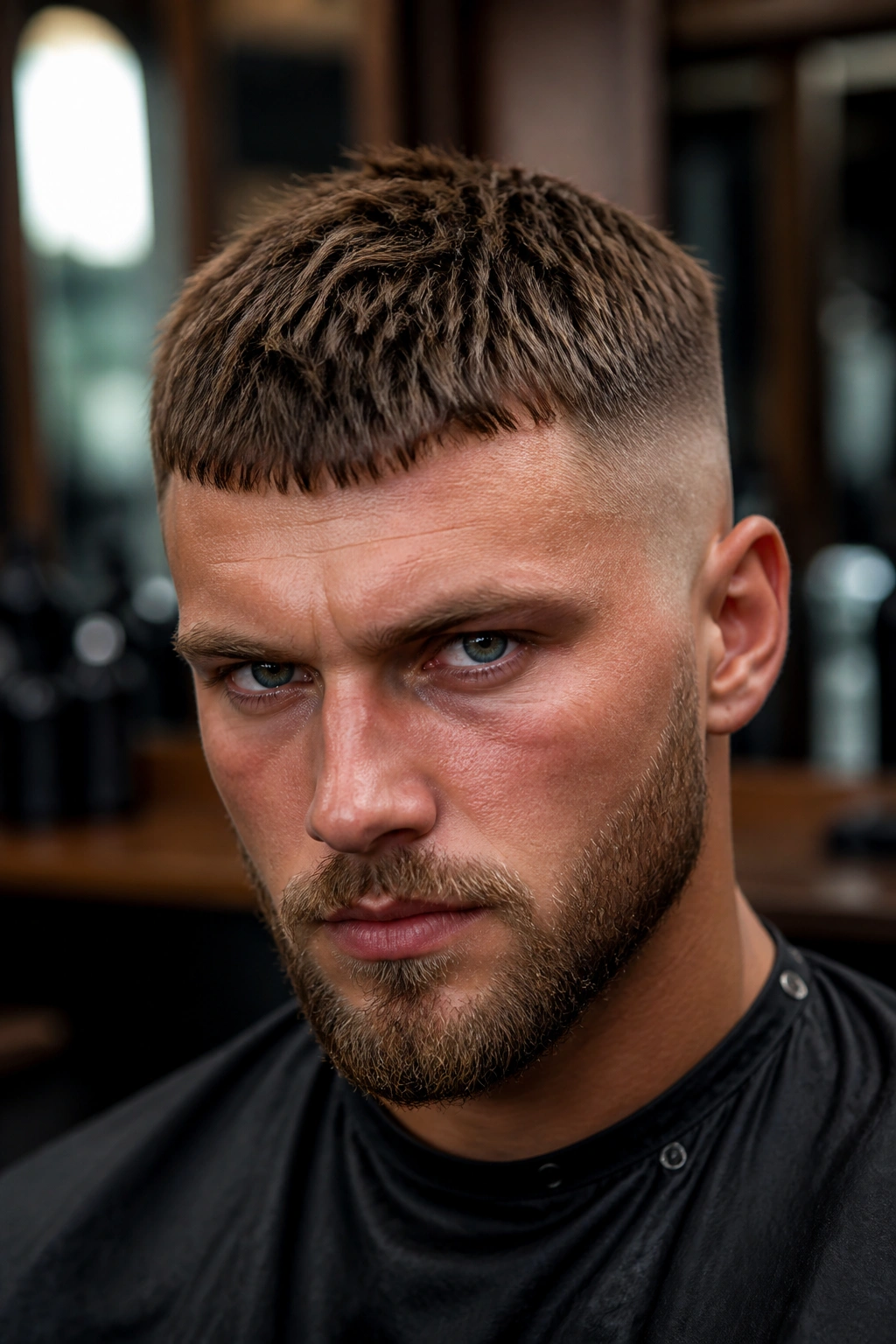
Short hair can still carry the Viking look. It just has to do it with texture, not length. The warrior crop keeps the top around 1.5 to 2.5 inches, clips the sides short, and leaves the front a little choppy so the cut feels blunt and hard-edged.
This is the style I’d point to for men who want the energy without the upkeep. It is fast in the morning. Water, a little texture powder, maybe a pea-sized bit of matte paste, and you are done. No braids. No knot. No elastic disappearing into the bathroom sink.
- Works well on thick hair.
- Good for active routines and humid weather.
- Easier to maintain than longer Viking styles.
- Needs a barber who knows how to leave texture, not just buzz everything down.
It does not look ceremonial. That’s the appeal. It looks practical, which may be the most Viking thing about it.
13. The Crown Braid

Can a braid around the head feel masculine? Absolutely, if the rest of the cut is handled with restraint. The crown braid is one of the more dramatic Viking inspired haircuts for men, but it stops feeling fussy when the braid stays narrow and the sides are not overstyled.
You need length here. Ten inches or more gives you the best chance of getting the braid to sit flat and hold shape. Thicker hair usually behaves better, though fine hair can work if it has enough grip from day-old texture.
How to wear it without looking theatrical
Keep the braid close to the scalp and avoid making it oversized. A bulky crown braid can tip into costume territory fast. Taper the sides lightly or keep them natural, depending on how bold you want the final result. A trimmed beard helps anchor the look and keeps the face from disappearing under all the hair.
This is a good style for men who like braids but want something more finished than a single plait. It also has a nice effect on facial proportions, because the braid frames the head instead of just sitting on top of it.
14. Long Flow With an Undercut Nape
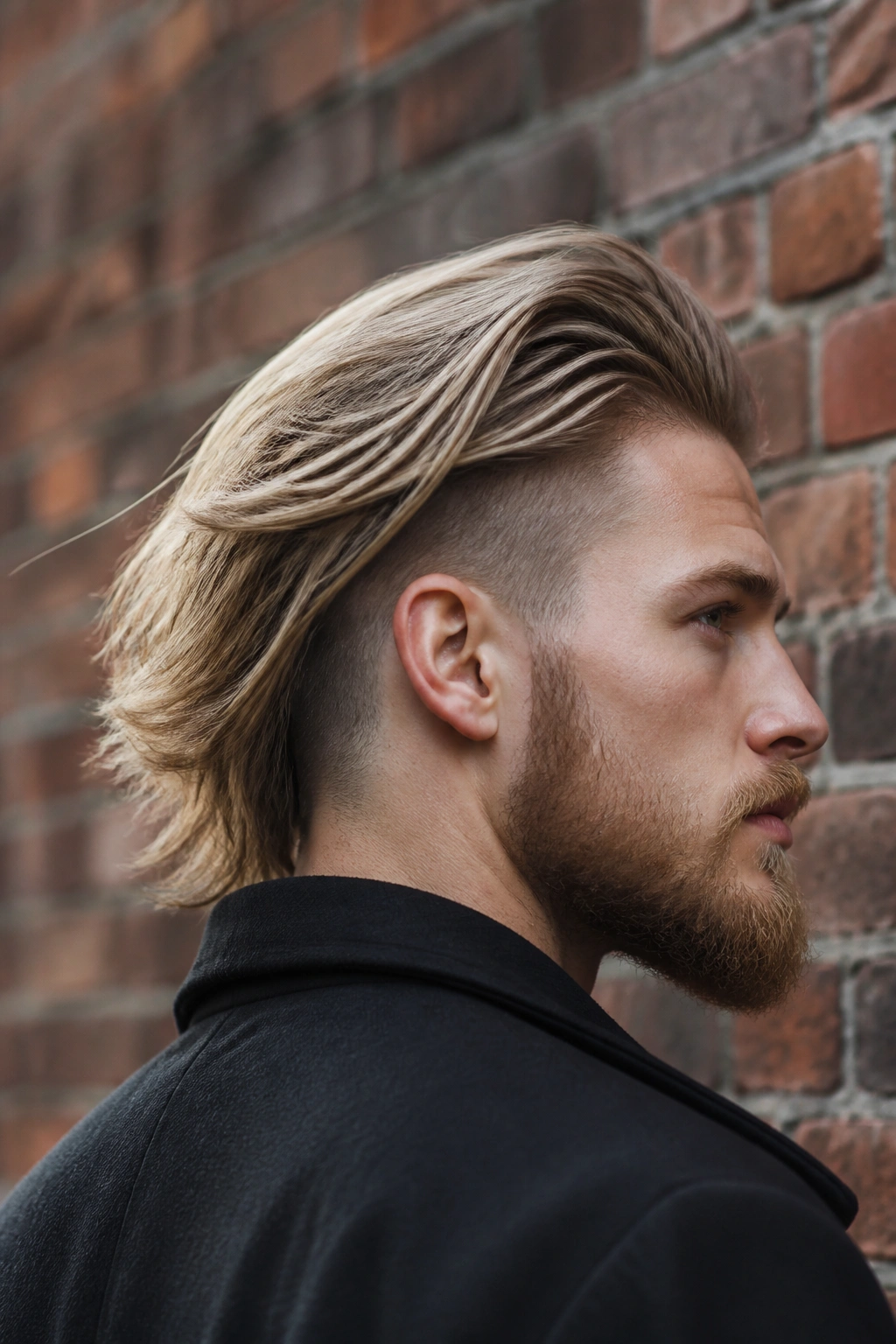
A long top with a clean nape is a smart move. The undercut at the back removes the awkward bulk that often shows up when long hair grows into the collar, while the rest of the length keeps the movement and weight that make this look feel strong.
This cut works best when the top and back are long enough to fall naturally, usually 6 inches or more. If the hair is layered too heavily, the flow gets stringy. If it is too blunt everywhere, it can feel like a curtain. The barber needs to cut with the hair’s movement in mind, not just with scissors.
The details that matter
- Keep the nape cleaned up every 3 to 4 weeks.
- Leave the top long enough to tuck behind the ears.
- Use a light leave-in if your ends get dry.
- Avoid heavy pomades, which make long hair collapse.
This one is especially good for wavy hair. The movement gives the style life. Straight hair can do it too, but it usually needs a little help from a blow dryer and a rough-dry finish.
15. Slicked-Back Shield Cut
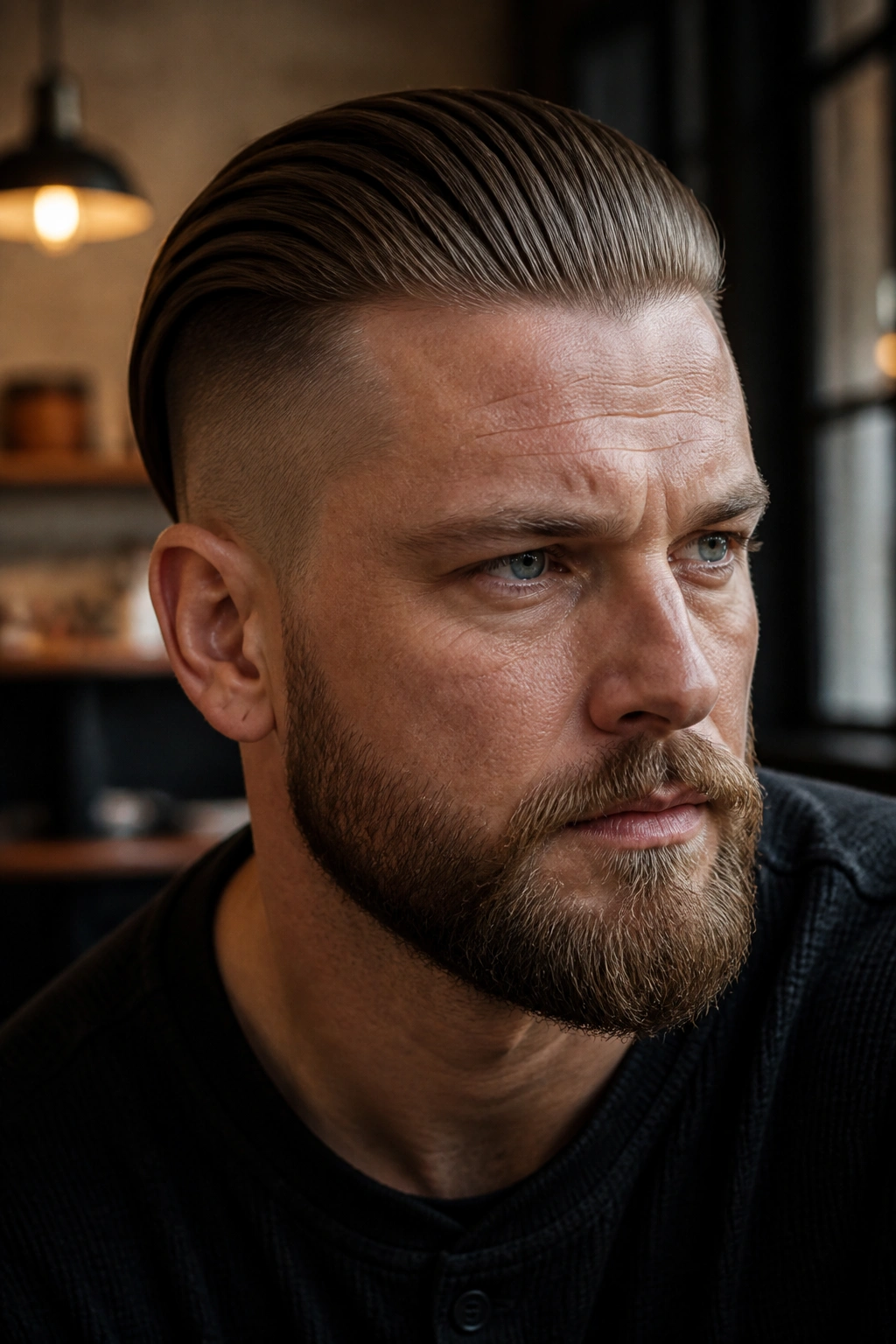
Slicked-back hair can look very Viking when it isn’t glossy. That’s the mistake most people make. They reach for too much shine, and suddenly the cut feels like a boardroom style with a beard attached. Keep it matte, keep it tight, and the whole thing changes.
This cut works best on straight or medium-straight hair with enough density to stay back. Ask the barber to keep the sides short and the top long enough to push straight back, around 4 to 6 inches. The front should have enough weight to stay in place, but not so much that it flops over after an hour.
The product choice matters more than people expect. A matte pomade or cream gives control without making the hair look wet. If your hair is fine, use less. Too much product will expose the scalp and make the cut feel thin.
It pairs well with a full beard, especially if the beard is trimmed square through the chin. Clean line, hard face, no shine. That combination does the job.
16. The Dreaded Viking Look
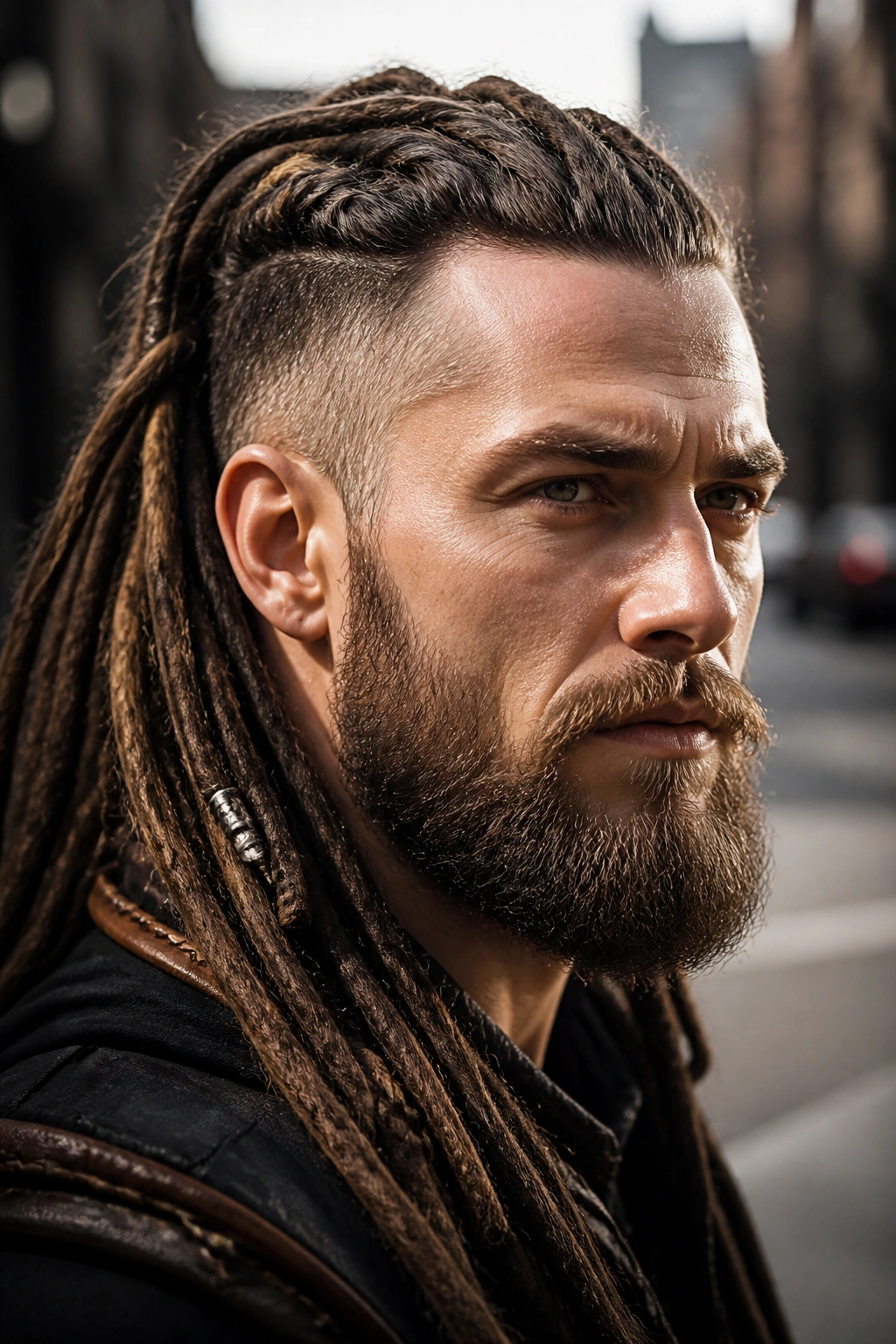
Locs and dreads can carry a Viking-inspired shape with real presence. The style is not about pretending every texture is the same. It’s about letting the hair hold structure in a way that feels heavy, intentional, and strong.
Ask for clean parting, tidy roots, and a taper or fade around the edges if you want the whole look to stay sharp. The beard can be short or full, but the neckline should stay clean. That keeps the style from losing shape around the jaw and neck.
There are a few things to watch. Dryness shows fast in locs. Loose edges can make the cut look unfinished. And if the roots get messy, the whole style starts to blur. Regular palm rolling, retwisting, or the maintenance method your hair needs keeps it from drifting into chaos.
This is a powerful look when it is done well. It has weight, history, and personality. It also asks for discipline, which feels fair.
17. The Short Textured Nordic Crop
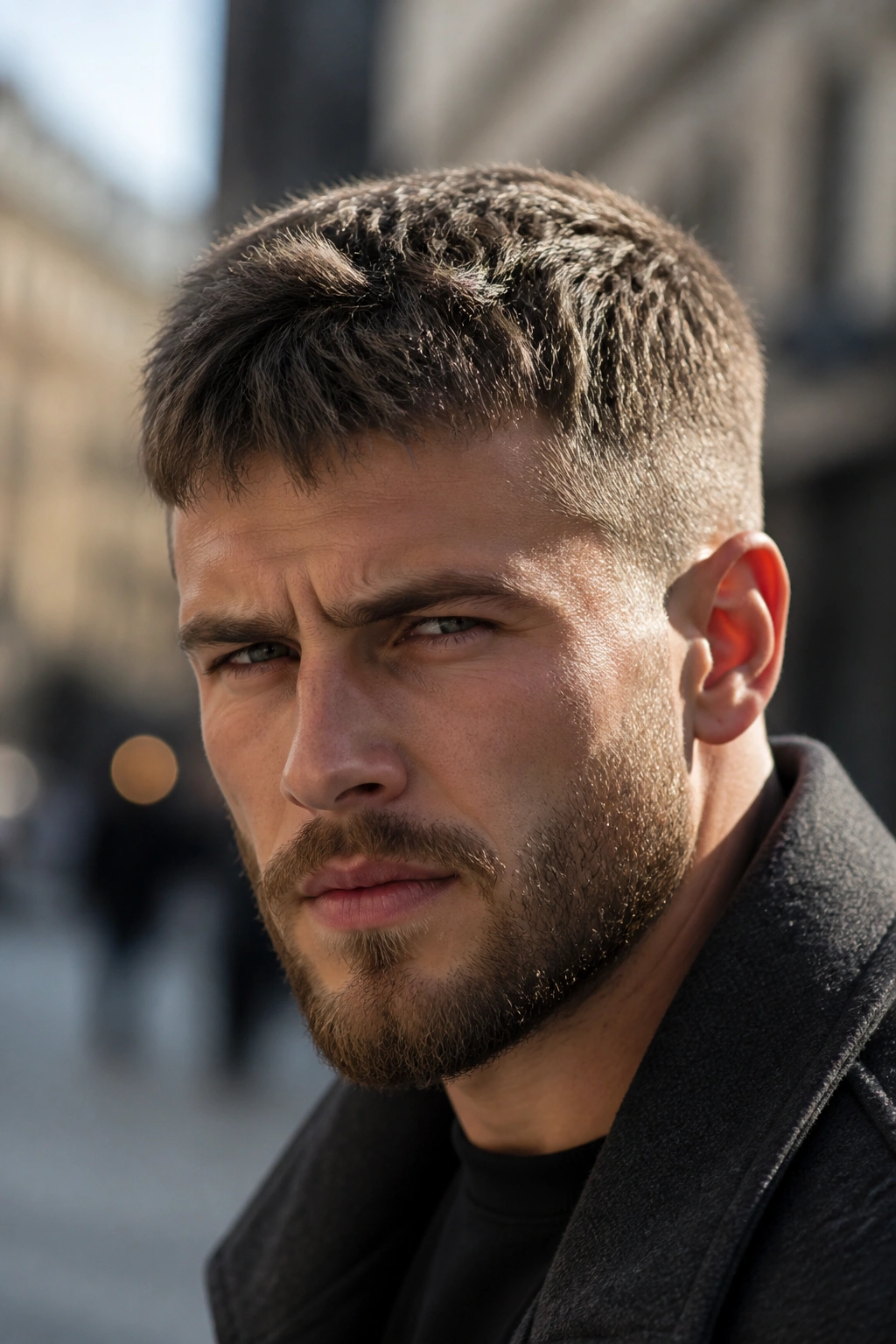
This is the smartest choice for men who want the feeling of a Viking cut without the length. The top stays short, the texture stays rough, and the sides are clipped close enough to keep the shape clean. Nothing hangs around long enough to become annoying.
The cut usually works best with 1 to 2 inches on top, a light taper on the sides, and a messy forward push or slight side sweep. That’s enough length to create movement, but not enough to demand a full styling routine. A dab of clay, a quick rake with the fingers, done.
The big win here is honesty. The style does not try to be more than it is. It borrows the hard edges and the rugged attitude, then keeps the maintenance low. Men with thick hair will like how it holds shape. Men with fine hair will like that it does not collapse under its own weight.
If your mornings are rushed, this cut makes sense. Not glamorous. Useful.
18. The Braided Mohawk

Want a braid and a mohawk at the same time? Fine. Just keep the central strip controlled so it does not turn into a spiky mess. The braided mohawk is sharper than the braided ponytail and more aggressive than a standard mohawk hawk, which is why it stands out in a room.
The top needs enough length to braid cleanly, usually 6 to 8 inches. The sides can be faded tight or clipped close, but leave the central ridge thick enough that the braid sits proud rather than sunken. A little texture spray helps the braid grip, especially if the hair is slippery.
How to make it hold
- Start with hair that is dry or only slightly damp.
- Braid from the front hairline back toward the crown.
- Secure the braid before the loose tail becomes too heavy.
- Keep the sides clean so the shape stays readable from a distance.
This one is bold. That’s the whole point. It works for men who like their haircut to do a little talking before they do.
19. The Rugged Wolf Cut
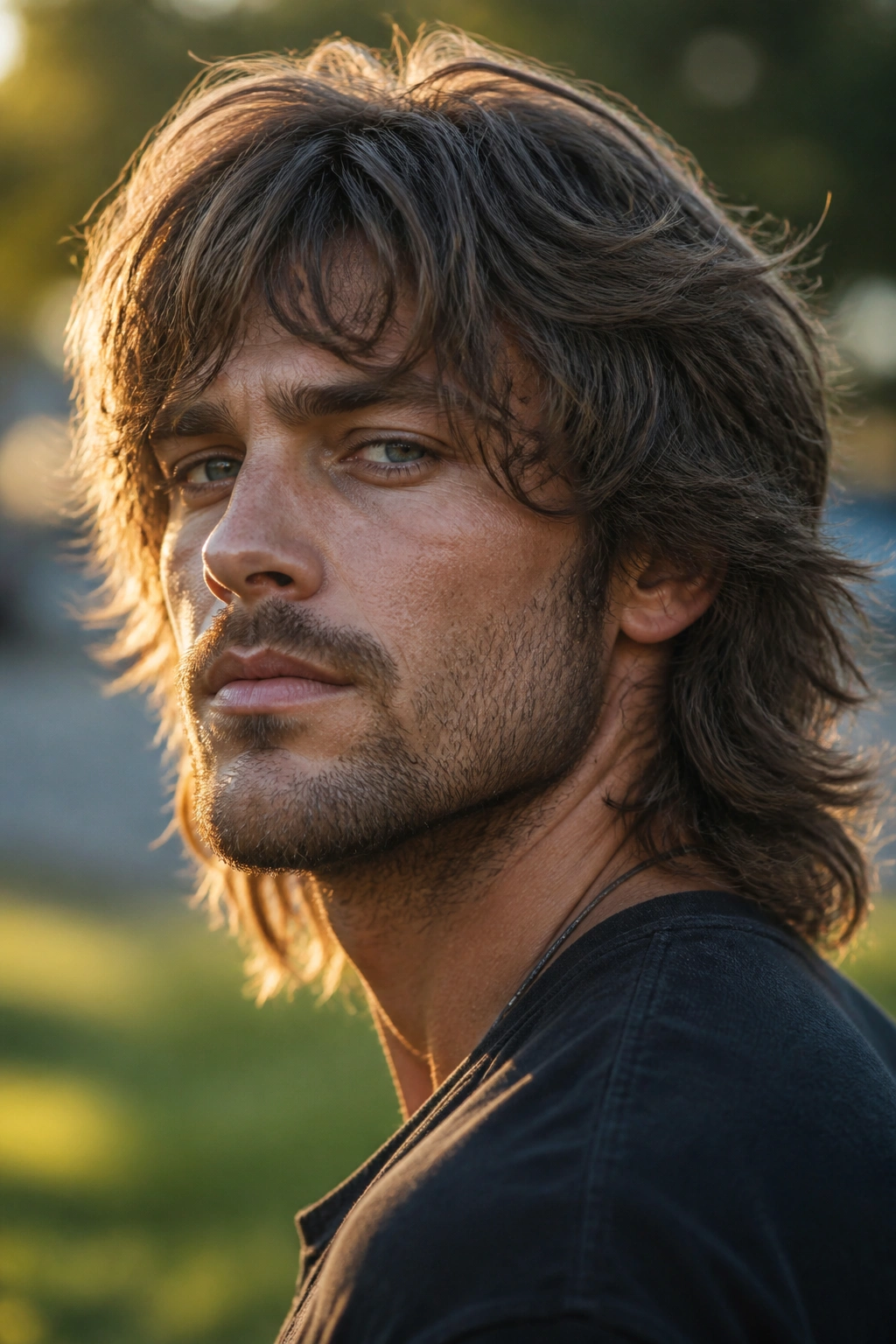
Not every Viking-inspired haircut has to look historically tidy. The wolf cut leans into layers, shag, and movement, which gives it a wild feel that fits the mood even if it is not the most literal interpretation of the style.
This version works best on wavy or thick hair because the layers need body to show up. The crown stays fuller, the ends stay longer, and the overall shape feels a little untamed. That untamed part is why it belongs in this list. It has attitude. It just does it with less polish and more swing.
The key is not to overthin the ends. If the hair gets too wispy, the cut loses its weight and the whole thing reads like a failed mullet. Keep the layers soft, keep the texture chunky, and use a small amount of styling cream to separate the top.
Best for men who want movement more than precision. If you like a haircut that looks slightly better when it’s been lived in for a day, this one earns its place.
20. The Salt-and-Pepper Viking Classic

Gray hair makes this style better, not worse. The salt-and-pepper version of a Viking cut has texture baked in, because the contrast between silver and dark strands creates depth even before you add product. That’s one reason I like it so much. The haircut does not need to shout when the hair already has character.
Keep the top long enough to push back or tuck behind the ears, and keep the sides clean enough to stop the silhouette from turning wide. A beard with some gray in it helps, but a short beard can work too if it is lined up well. The point is control, not youth.
This is a strong look for men who want something masculine without pretending to be 25 forever. That pretend-youth thing ruins more haircuts than bad clippers do. A bit of silver gives the style weight.
Use a light cream or matte paste, and let the texture sit where it wants to. If the cut has shape, the color does the rest. And honestly, that is the cleanest kind of Viking look there is.
