



Thick hair has opinions. It brings volume, shine, and a kind of built-in drama that fine hair can only fake on a good day. It also gets heavy, puffs up in the wrong places, and can turn a simple haircut into a triangle if the shape isn’t handled well.
Long hairstyles for thick hair work best when they give the weight somewhere to go. That might mean long layers, a softer outline, a braid that tames bulk, or a ponytail that keeps the whole thing from swallowing your head shape. The point is not to fight your hair. The point is to aim it.
I’ve always had a soft spot for styles that look good at 8 a.m. and still make sense after a windy lunch break, a long train ride, or a nap you did not plan on taking. If a style only works after forty minutes, three hot tools, and a prayer, it’s not an everyday style. It’s a project.
So the picks below lean practical. Some are cuts that make thick hair behave better. Some are simple styles that use the fullness instead of arguing with it. A few are polished enough for work or dinner, but none of them ask your hair to become someone else.
1. Long Layers with a Soft Blowout

Long layers are the safest place to start if your hair feels heavy at the ends. They remove bulk without stealing length, and a soft blowout lets thick hair move instead of sitting there like a curtain.
Why it works
Ask for layers that begin below the chin and build gradually toward the ends. That keeps the top from getting too short and avoids the chopped-up look that thick hair can get when the layering is too aggressive.
A 1.5-inch round brush, a blow-dryer with a nozzle, and a little root lift spray are enough. The ends should curve softly under or away from the face, not flip into a hard pageant curl.
- Best when the hair is all one density and feels bulky through the mid-lengths.
- Works well with side parts or center parts.
- Looks especially good on hair that has a natural bend.
Pro tip: blow the top section forward first, then switch it back. You’ll get a smoother crown and less puff around the part.
2. Face-Framing Layers with a Center Part

Why do some center parts look flat and others look expensive? The difference is usually the front shape. Face-framing layers give thick hair movement right where the eye lands, so the style feels lighter without losing that long, full look.
Keep the shortest pieces around the cheekbone or jaw if you want softness. If they start too high, the front can feel disconnected from the rest of the length. Thick hair does better when the front pieces blend all the way down into the sides.
This one is easy to live in. Air-dried, blown out, or tucked behind one ear, it still reads as intentional. It’s also one of those styles that forgives a slightly messy finish, which is useful because thick hair rarely behaves like a salon poster for long.
3. The U-Cut for Easy Swing

A blunt cut on thick hair can feel boxy. A U-cut gives the back a rounded curve, so the length drops in a softer shape and the hair moves when you walk.
That curve matters more than people think. Thick hair can hold a shape well, but it can also look dense in a way that hides its texture. A U-cut keeps the outline full while making the bottom edge less heavy. The result is a style that looks polished without feeling stiff.
What to ask for
- A gentle curve, not a steep scoop.
- Long internal layers if the hair feels bulky underneath.
- Clean ends that still look thick, not wispy.
This is one of my favorite cuts for people who like simple styling. You can let it air-dry, wrap it around a big brush, or wear it in a low ponytail and still get a nice shape when it comes down.
4. Butterfly Layers with Lots of Movement

Butterfly layers are built for hair that needs shape but still wants to stay long. The shorter top layers create that lifted, airy feel, while the bottom length keeps the whole style grounded. Thick hair loves the contrast.
A lot of people think butterfly layers are only for a blowout, and that’s not true. They look especially good when the hair has a bit of bend and the shorter pieces around the face are tucked back. The layers make the hair feel lighter through the mids, which is where thick hair often feels most stubborn.
How to wear them
- Blow-dry the top layers with a round brush for lift.
- Let the bottom length stay straighter for contrast.
- Curl the front pieces away from the face for a softer frame.
The only catch is upkeep. If the layers grow out unevenly, the shape can lose its floaty look fast. Still, when it’s cut well, this is one of the easiest ways to make thick hair feel airy without making it look thin.
5. Curtain Bangs with Long Length

Curtain bangs can change thick hair in a way that feels bigger than the actual cut. They break up a heavy front, soften the face, and stop all that density from sitting in one solid sheet.
The best version doesn’t end at the eyebrows and then stop. It blends into long face-framing pieces, so the bangs feel like part of the haircut instead of a separate event. That blend matters. Thick hair shows every hard line.
The maintenance reality
Curtain bangs need a quick round-brush or blowout at the front, especially if your hair likes to dry with a cowlick. Two velcro rollers for ten minutes can do more than a full wrestling match with a flat iron.
They’re not low effort, but they are forgiving. Even when they grow out, they usually fall into a face-framing layer instead of turning awkward overnight. That’s why I like them on long thick hair more than blunt short bangs.
6. Sleek Straight Hair with Blunt Ends

Sometimes thick hair looks best when you stop trying to soften it. A sleek, straight finish with blunt ends gives the length a clean edge, and thick hair has the density to make that edge look full rather than thin.
The trick is prep. Start with heat protectant, rough-dry the hair until it’s mostly dry, then use a flat iron in small sections. The goal is glassy, not pinched. If the ends look too sharp, run a small amount of serum through the last inch only.
This style works because the weight of thick hair keeps the line from looking stringy. It’s sharp. It’s simple. And it’s a nice break from all the layering people push on dense hair. Sometimes one strong shape beats five little ones.
7. Loose Beach Waves

Beach waves on thick hair are less about being perfect and more about creating movement through the middle and ends. Thick hair already has body, so the wave just needs to break up the mass a little.
A 1-inch wand usually works better than a huge barrel. Wrap sections away from the face, leave the last inch out, and let a few pieces fall straighter so the style doesn’t look too set. Thick hair can take a lot of heat, but it does not need it.
Quick details that matter
- Clip the top layer out first.
- Mist each section lightly, not heavily.
- Let the curls cool in your hand before touching them.
The finished look should feel loose and touchable. If it turns into uniform ringlets, it loses that easy movement that makes thick hair look so good in the first place.
8. Air-Dried Natural Waves

Air-dried waves are a gift when your hair has a natural bend and a mind of its own. Thick hair usually has enough structure to hold shape without much coaxing, which means you can get a good-looking finish with a leave-in, a light gel, and some scrunching.
The secret is not overhandling it while it dries. Once the product is in, leave it alone. If you keep touching thick wave pattern hair, you’ll get frizz at the top and flatness underneath, which is a frustrating combo.
This style is one of the best for everyday life because it doesn’t ask for much. Wash, apply product, clip the roots if needed, and move on. A diffuser can help if you’re impatient, but if you like a softer, less uniform texture, let the air do its thing.
9. Half-Up Claw Clip Twist

Half-up claw clip styles are having a real moment because they make thick hair look neat without pulling all of it away from the shoulders. That matters on heavy hair. Your scalp gets a break, but the length still gets to show off.
The best way to do it is to twist the top third of the hair into a loose coil and clamp it high enough that the ends don’t drag. A large clip is not optional here. Small clips break, slip, or open under the weight.
What to watch for
- Use a clip with a strong spring.
- Gather more hair from the sides than the top if you want a softer shape.
- Leave a few face pieces out for a relaxed finish.
This one is practical, fast, and easy to refresh. If your hair gets frizzy in the back by midday, the clip hides it better than a full down style does.
10. Low Ponytail with a Wrapped Base
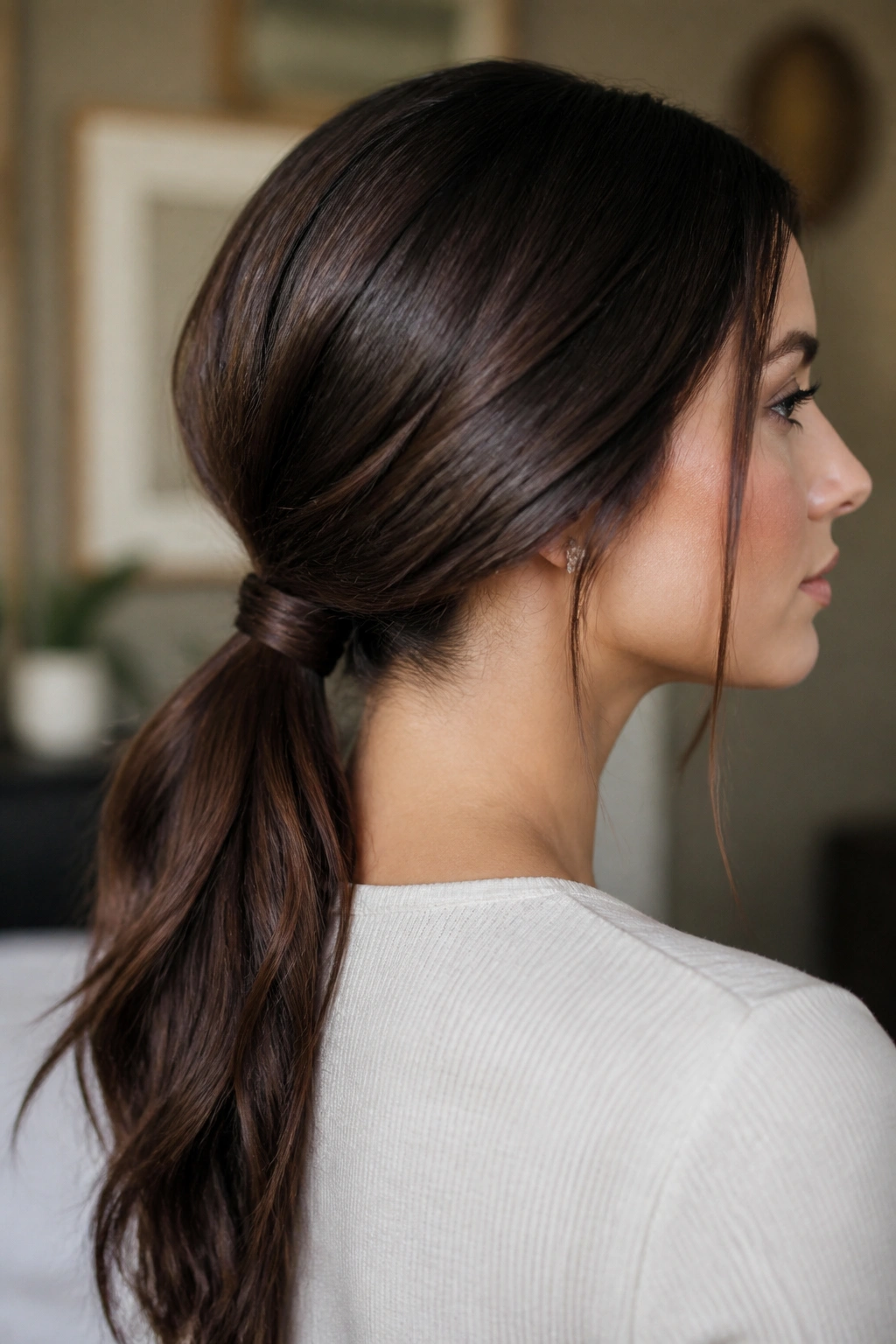
A low ponytail sounds plain until you give it a wrapped base and a smooth crown. Then it starts looking like a deliberate choice instead of a backup plan.
Thick hair makes a low ponytail better because there’s enough density for the ponytail itself to look full. Wrap a small section of hair around the elastic to hide it, then pin the end underneath with a bobby pin. That tiny move changes the whole thing.
This style is one of those rare ones that works for work, dinner, and second-day hair. If the roots are a little puffy, brush a light smoothing cream over the top before you gather the hair. The finish should feel tidy, not crunchy.
11. High Ponytail with Crown Lift

Can a high ponytail hold thick hair without drooping by noon? Yes, if you build the crown properly. Thick hair has enough weight to make the ponytail look lush, but that same weight can drag the style down if you rush the prep.
Lift the crown slightly with a soft backcomb or a bit of root spray, then secure the pony at the center back of the head. If you want more height, split the pony in two and pin the lower section under the top before wrapping the elastic. Sneaky, but effective.
I like this style when the hair is extra full and needs to be off the neck. It looks sharp, it stays put, and it makes thick hair look athletic in the best way.
12. Bubble Ponytail
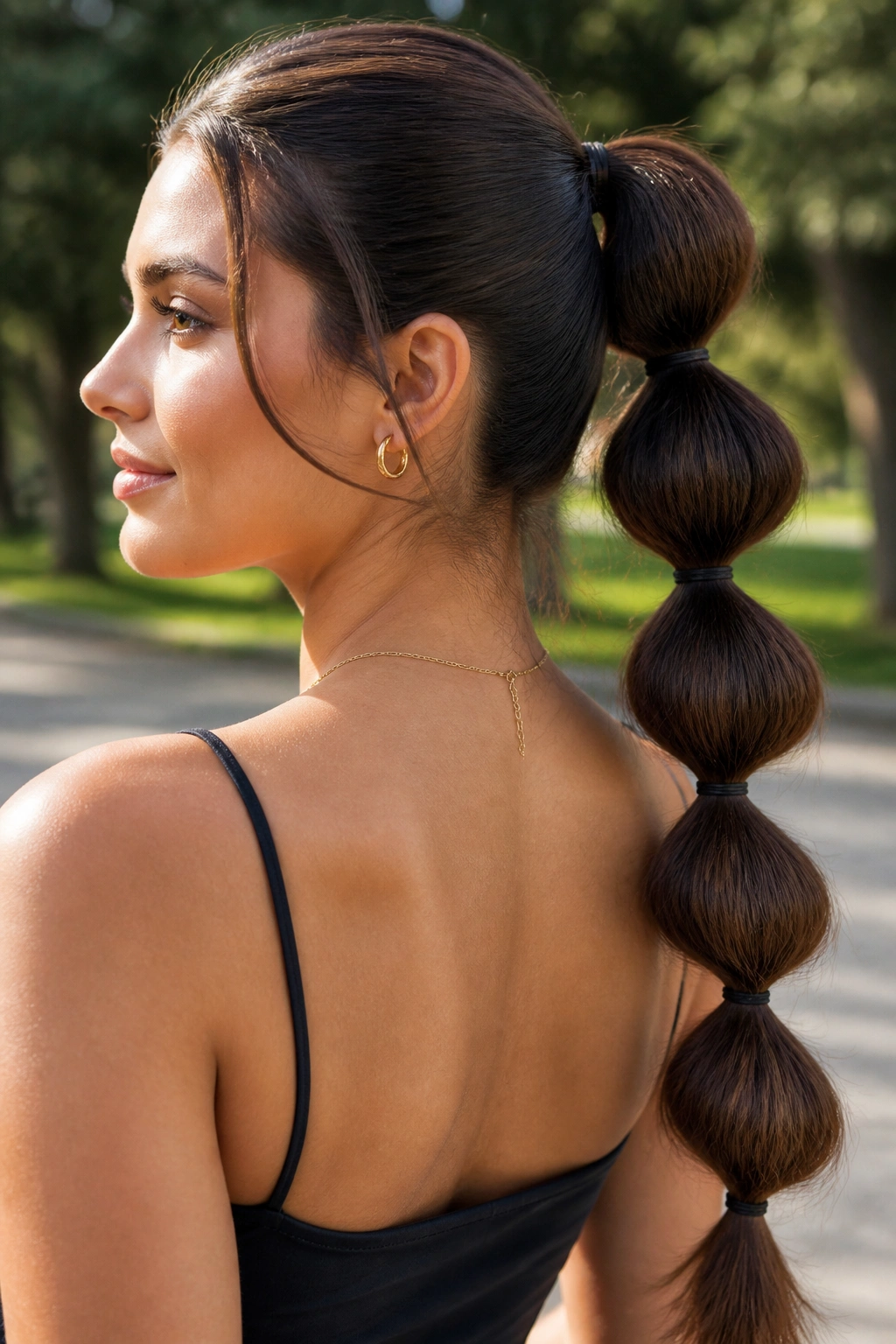
Bubble ponytails work because they turn length into shape. Thick hair gives each bubble more fullness, so the style looks playful instead of flimsy.
Start with a standard ponytail, then add clear elastics every 2 to 3 inches down the length. Gently tug each section outward until it forms a rounded bubble. The trick is to loosen the sides evenly so the shape looks balanced all the way down.
This is a fun one for days when you want something more interesting than a regular ponytail but don’t want braids. It also stays neat for a long time because the elastics distribute the weight. Thick hair helps here, no question.
13. Braided Ponytail
A braided ponytail gives thick hair a cleaner line and a little more control. It’s one of the easiest ways to make a long ponytail look finished without changing the whole style.
Tie the hair into a ponytail first, then braid the tail all the way down and secure it with a small elastic. If your hair is extremely dense, a three-strand braid is usually enough. You do not need to make it fancy for it to work.
The nice part is how steady it feels. Thick hair can swing hard in a loose ponytail, especially when it’s windy. A braid keeps the ends together and makes the shape look sharper. I’d call this a quiet workhorse style. Not flashy. Very useful.
14. Dutch Braid into a Long Tail
A Dutch braid looks like it sits on top of the hair, which is why it reads so well on thick lengths. The braid has depth, and thick hair gives it the fullness to stand out.
The braid should start at the hairline and move straight back, then stop at the nape and leave the rest in a long tail. That contrast is the whole point. The top stays secure; the length stays free.
How to get the most from it
- Keep the braid tight at the scalp.
- Pull the braid edges slightly once it’s done for more width.
- Use a smoothing cream on the tail if the ends puff up.
This is the braid I’d pick for a day with lots of movement. It stays close to the head and won’t unravel easily, which is a real gift when the hair is thick and hard to tame.
15. Fishtail Braid Down the Back
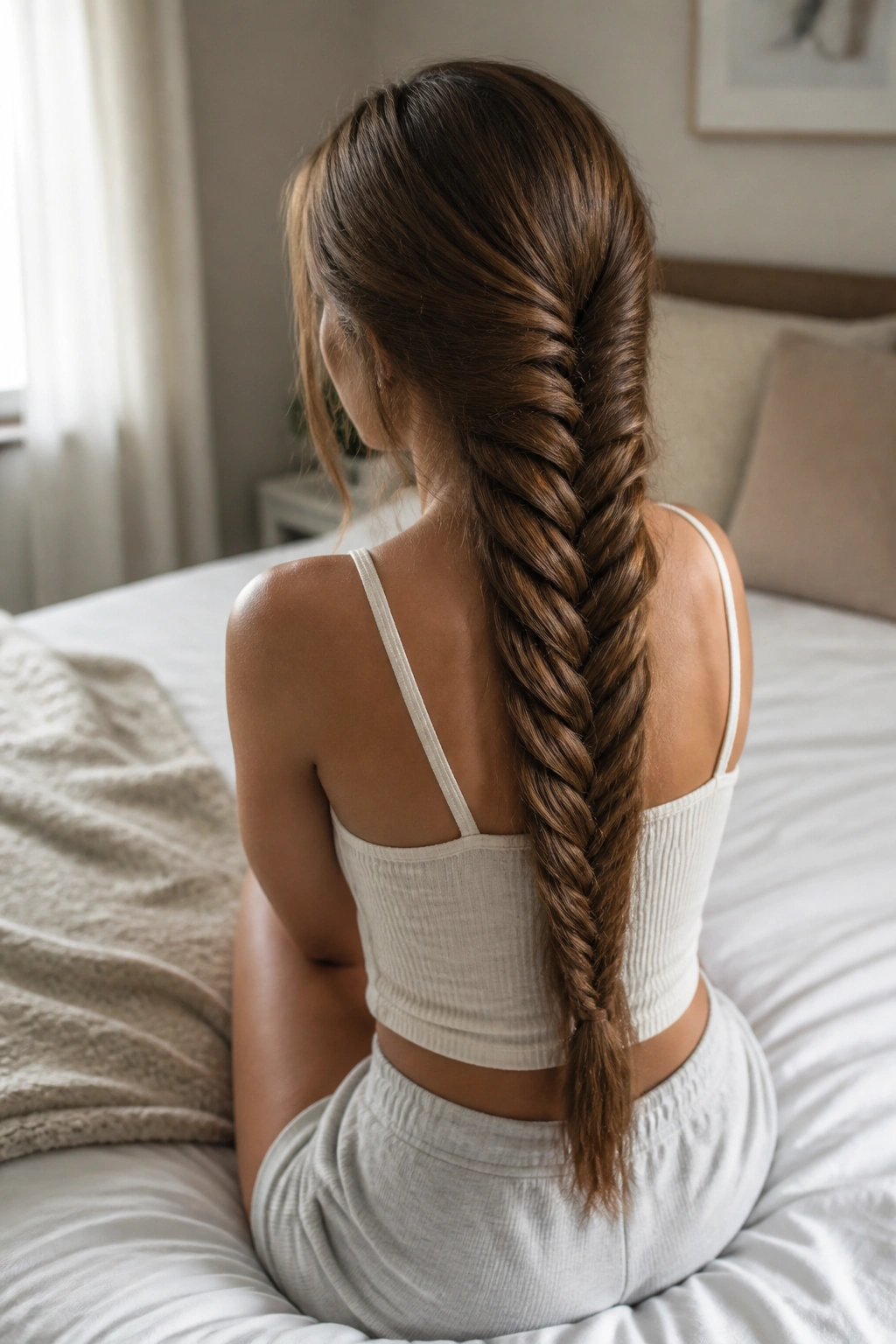
Fishtail braids can look delicate, but on thick hair they read as textured and full. The smaller weaving pattern shows off the density instead of hiding it.
The braid takes a little longer than a basic three-strand braid, and that’s part of why it looks special. Thick hair makes the weave more obvious, especially if you gently widen the braid once it’s secured. Don’t tug too hard. You want volume, not collapse.
This style is good when you want the hair down but not loose. It keeps the back neat, works with natural texture, and looks especially nice with a middle part or slightly undone front pieces. It’s one of those styles that gets comments without trying to be loud about it.
16. Rope Braid Ponytail
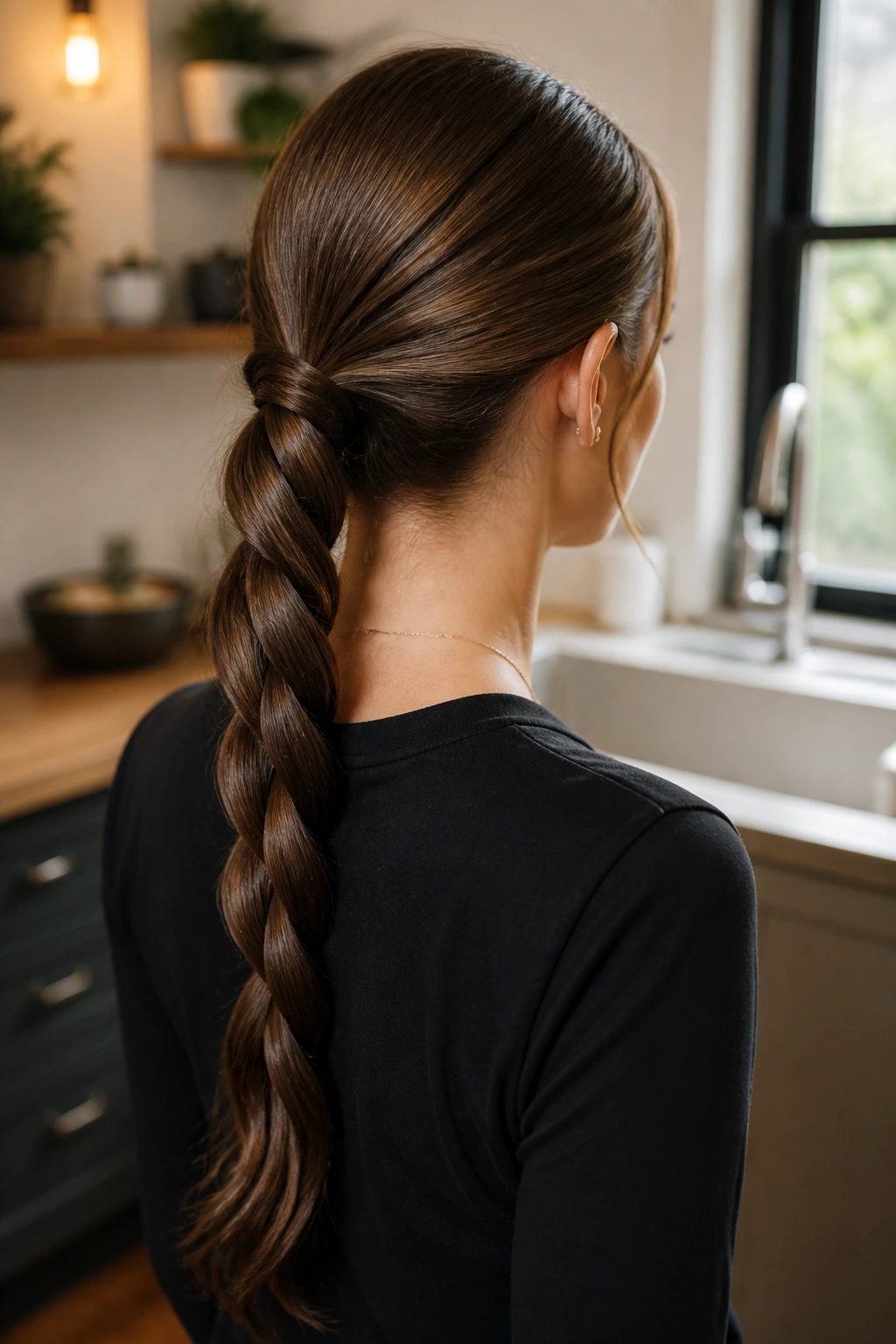
A rope braid is fast, clean, and a little underrated. It’s made by twisting two sections around each other, which gives thick hair a sleek look with very little effort.
Start with a ponytail, divide it into two pieces, twist each piece in the same direction, then wrap them around each other in the opposite direction. Secure the end with a small elastic. If the twists feel too loose, re-twist the sections before crossing them. That keeps the braid from unraveling.
I like rope braids when the hair is too heavy for a loose style but I don’t want the more intricate feel of a fishtail or Dutch braid. It’s simple. It stays neat. And thick hair makes the twist look fuller than it would on finer strands.
17. Waterfall Braid
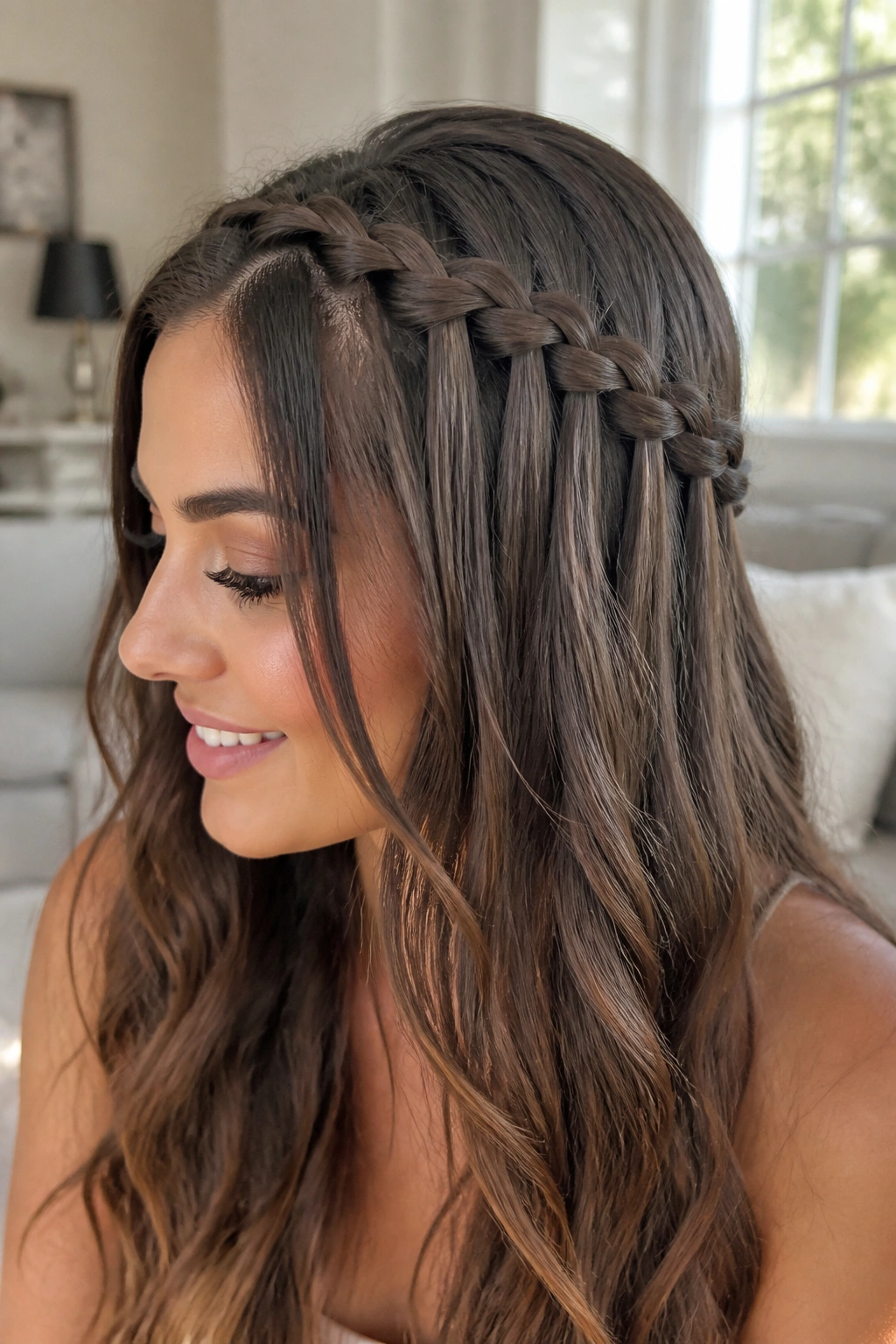
Waterfall braids are one of those styles that look harder than they are, which is part of the charm. Thick hair gives the braid a lush, layered look because the dropped pieces still have enough body to stay visible.
The style works best when the hair has some smoothness at the top. You braid across the crown, dropping one section each time and replacing it with a new piece from above. The loose strands create the waterfall effect. With thick hair, those strands fall with enough weight to look intentional instead of wispy.
What makes it different
- It keeps length down while opening up the face.
- It works well with curls, waves, or straight hair.
- It looks strongest when the sections are even and the braid sits close to the head.
This is a good pick for events, but it’s also nice on a regular day if you want your hair partly down and partly controlled. That balance is the appeal.
18. Crown Braid with Loose Ends
A crown braid gets thick hair off the face in a way that feels softer than a bun. The braid wraps around the head, so the volume becomes part of the design instead of something you fight.
Leave the ends loose if you want it to feel less formal. That little bit of movement at the back keeps the style from becoming too polished. Thick hair helps because the braid itself looks substantial. Thin hair can get lost here. Thick hair does not.
This style is useful when you want your hair to stay put through a long day. It’s also good for hot weather, gym-to-lunch situations, or any time you want to look like you put in more effort than you actually did.
19. Low Chignon with Face-Framing Pieces

A low chignon is one of the few buns that can make thick hair look elegant without flattening it. The trick is leaving a little softness around the face so the style doesn’t turn severe.
Twist the hair into a loose knot at the nape, then pin it in place with strong pins rather than one giant elastic. Thick hair needs support. If the bun feels too bulky, split it into two loops before pinning. That spreads the weight and makes the shape easier to hold.
I like this style for dinners, weddings, and all the moments when a ponytail feels too casual. The face-framing pieces keep it human. Too tight and it turns formal in a bad way. Looser is better.
20. Messy Top Knot with Length Left Out
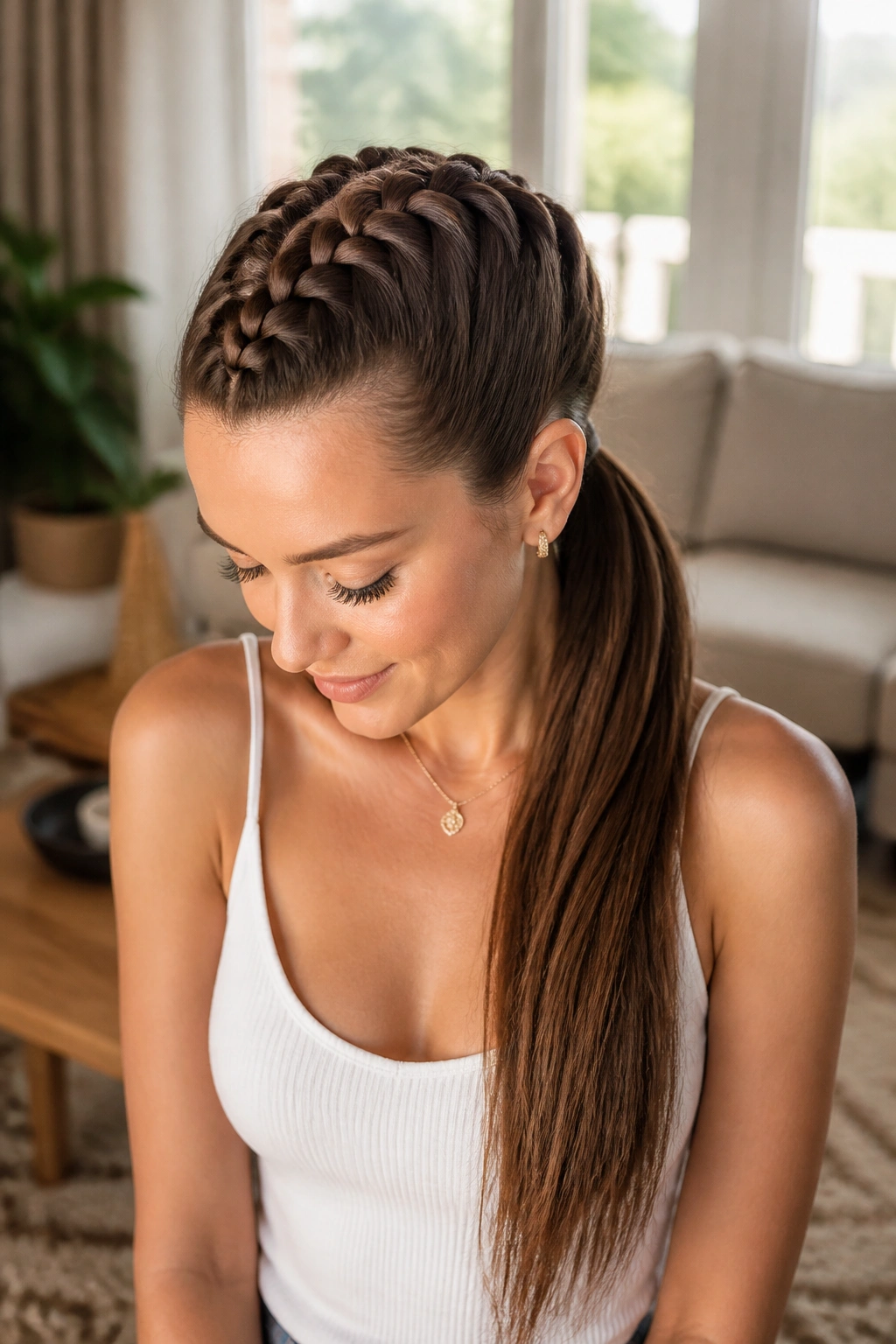
A top knot can be a rescue style, but on thick hair it can look intentional if you leave some length dangling. That contrast keeps it from reading like a rushed gym bun.
Gather the top half or top two-thirds of the hair, twist it into a knot, and let the bottom lengths stay down. If your ends are frizzy, curl them lightly or smooth them with cream. The whole thing should look airy at the top and fuller below.
This is one of my favorite everyday styles because it solves a real problem: thick hair gets hot. Fast. A top knot takes weight off the scalp while leaving enough hair down to feel styled, not stripped.
21. Half-Up, Half-Down Twist
A half-up twist gives thick hair shape without taking away the part you probably like best: the length. It’s softer than a ponytail and less fussy than a braid.
Take two sections from the front, twist them back, and pin or tie them at the back of the crown. That’s the basic version. If the hair is very dense, use a small clear elastic before pinning so the twist doesn’t slide. Thick hair can be slippery in ways people forget about.
The style is easy to wear with waves, curls, or straight hair. It keeps the front away from your face, shows off the back, and gives you that balanced look where the hair feels styled but not overworked.
22. Long Shag with Feathered Ends
A long shag can save thick hair when the ends feel too heavy and the top sits too flat. The layers break the bulk into pieces, which gives the hair more air and a little edge.
Feathered ends matter here. They stop the cut from looking blocky and help the hair swing rather than sit. Thick hair can handle a shag better than fine hair because the density keeps the layers from disappearing.
Why people keep coming back to it
- It adds movement without sacrificing much length.
- It works with waves and texture instead of fighting them.
- It looks better a bit undone than too perfect.
This is the cut for someone who likes a little shape with their length. It’s not delicate. It has attitude, and thick hair is one of the few hair types that can wear it without collapsing.
23. V-Cut for a Sharp Finish

A V-cut is for thick hair that wants drama at the back. The center falls longer than the sides, which gives the whole shape a sharper point and makes the length look more pronounced.
Compared with a U-cut, the V-cut feels more defined and a little bolder. I like it when the hair is extremely dense at the bottom and needs a stronger outline. If the hair already has a lot of layers, though, the V can start looking choppy. That’s where restraint matters.
The payoff is movement. The ends swing with more shape, and the cut looks especially good when the hair is worn straight or in loose curls. It’s not the quietest option on the list. It does make a statement.
24. Slicked-Back Low Bun
A slicked-back low bun can be a lifesaver on thick-hair days when the roots are doing too much. It pulls everything cleanly away from the face and makes the whole head shape look deliberate.
Use a smoothing brush, a little gel or cream, and strong pins. Thick hair needs the hold. Gather it low, twist it into a bun, and press the surface smooth with your hands before it sets. If you rush this, the bun puffs at the sides and loses the clean line.
This style is strong and practical. It handles humid air, second-day texture, and long hours without asking for much touch-up. I reach for it when I want my hair out of the way and I do not want to think about it again.
25. Voluminous Side Ponytail
A side ponytail can feel old-school in the wrong hands. On thick hair, though, it becomes soft, full, and a little glamorous if you keep the part deep and the base low.
Sweep the hair to one side, secure it near the nape or just below the ear, and tug the crown gently for lift. Thick hair gives the ponytail enough mass that it doesn’t disappear into the shoulder. That’s the whole appeal. You get fullness plus movement.
It’s also surprisingly good for framing the face. The side placement opens one cheek and softens the profile. If you want to make it feel less formal, curl the tail in loose bends instead of tight spirals.
26. Scarf-Tied Ponytail
A scarf-tied ponytail is one of the easiest ways to make a simple style look finished. The scarf adds color and a little structure, and thick hair gives the whole thing enough volume to keep it from looking flat.
Tie the ponytail first, then knot the scarf around the base or weave it through the length. A medium-width silk or cotton scarf works best; too wide and the fabric starts to overwhelm the hair. If your ponytail is thick, the scarf also helps keep the elastic from vanishing into the mass.
This is a good style for casual weekends, travel, or a plain outfit that needs one extra detail. It’s simple, but not boring. And honestly, that’s harder to find than it should be.
27. Heatless Curls Overnight
Heatless curls work well on thick hair because the hair holds shape once it’s been set. You can wrap it around a robe tie, a soft flexi rod set, or large fabric rollers and wake up with movement that doesn’t rely on a hot tool.
The important part is section size. Thick hair needs pieces that are not too big, or the curl falls out in the middle and stays straight at the bottom. A little leave-in conditioner before wrapping helps the ends glide and keeps the finish smoother.
How to make them last
- Start with hair that is about 80 percent dry.
- Use tension, but not a tight pull.
- Let the curls cool completely before taking them down.
This style is one of the most forgiving on the list because it gives you texture without heat damage. The result is often softer than hot curls, which I think looks better on dense hair anyway.
28. Long Curls with a Deep Side Part
A deep side part can make long curls feel bigger, softer, and more deliberate all at once. Thick hair loves the asymmetry because it gives the volume somewhere to lean.
Curl the hair in sections with a 1.25-inch iron or large rollers, then shift the part far over to one side. The lift at the front does a lot of work here. It keeps the style from sitting too heavy around the cheeks and gives the curls a cleaner shape from the side.
This is a good choice when you want the hair to feel dressed up without being stiff. Thick hair already brings fullness; the side part turns that fullness into structure. Easy trick. Big payoff.
29. Polished Air-Dry with Tucked Ends
A polished air-dry is for the person who wants to use their natural texture but still look neat. Thick hair can dry into a frizzy cloud if you leave it alone with no plan, so the trick is to guide it a little while it sets.
Use a light cream or leave-in, comb the hair into your chosen part, and tuck the ends behind your shoulders while they dry so they fall in a cleaner line. If the front pieces puff up, clip them back for the first hour. That small step changes the result.
I like this style because it looks modern without trying too hard. You get the shape of your own hair, but with a cleaner outline. That balance is hard to beat on thick lengths.
30. Side-Swept Waves for a Soft Profile
Side-swept waves are what I reach for when I want thick hair to look softer around the face and fuller through the length. The side part breaks up the density at the top, and the waves keep the body moving all the way down.
Curl the hair away from the face on the heavier side, then pin the front back for a few minutes so it sets with lift. When you let it down, brush the waves lightly with your fingers instead of a brush. Thick hair can go from soft to puffy fast if you overwork it.
This style has a nice calm to it. Not fussy. Not flat. It works for dinners, photos, or a plain day when you want the hair to feel finished without looking like it spent an hour under a curling wand. And that, to me, is the sweet spot for long hairstyles for thick hair: enough shape to feel intentional, enough ease that you’ll actually wear it.
