



A choppy bob haircut has a very specific kind of attitude. The shape can still be neat, but the ends look broken up, separated, and touched by scissors in a way that makes the whole cut feel alive. Choppy bob haircuts work because they take the clean outline of a bob and rough it up just enough to keep it from feeling stiff.
That little bit of roughness matters more than people think. A blunt bob can look polished and expensive, sure, but a choppy one has movement built into it. You get texture without having to fake it with a mountain of product, and that makes a huge difference on mornings when you do not want to stand in front of the mirror for 20 minutes wrestling with a round brush.
The tricky part is that “choppy” does not mean “random.” A good cut still has shape, balance, and a reason for every angle. Too much thinning, or layers cut without respect for density, can leave the hair looking wispy at the ends and puffy at the crown. That is not edgy. That is just a bad haircut with a confident name.
So the best versions feel deliberate. They have a clean jawline, a sharp corner, a shaggy fringe, or a stacked back that gives the bob some bite. Start with the version that matches your hair type and your tolerance for upkeep, because the difference between cool and awkward is often just a half inch.
1. Jaw-Length Choppy Bob With Razor-Cut Ends
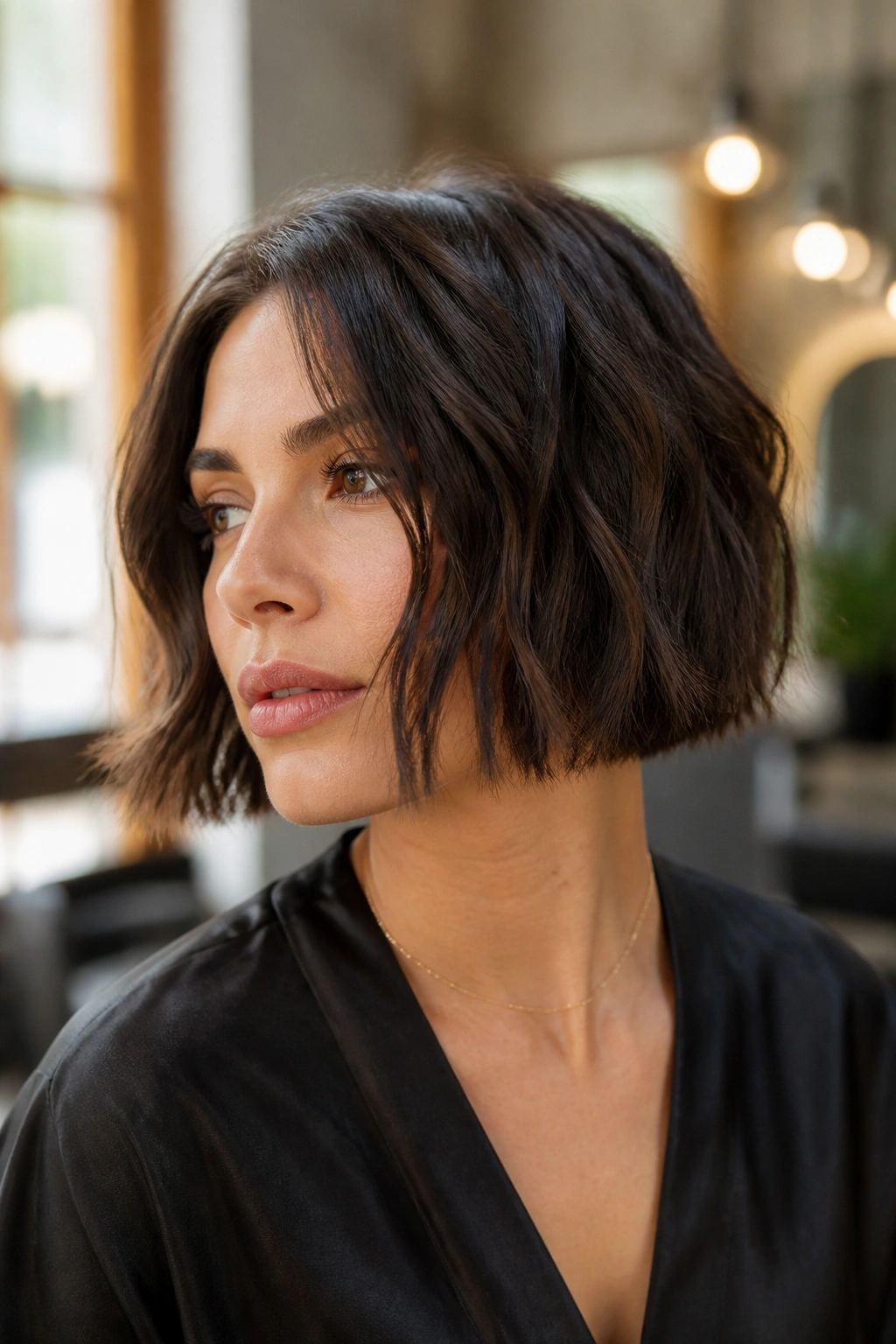
This is the cut people notice first. It sits right at the jaw, which gives the face a hard edge, and the razor-cut ends keep it from reading too neat. If you want a bob that looks like it has opinions, this is the one.
What makes it work is the contrast. The line is clear enough to frame the face, but the ends are feathered and broken up, so the bob moves when you turn your head. It looks especially strong on straight hair and loose waves that bend just enough to show the texture.
Why It Reads So Sharp
Ask for a bob that hits right at the jawline, with razor-cut or point-cut ends instead of a blunt perimeter. If your stylist starts carving too much into the top, you lose that crisp outline. The edge should stay visible.
Styling Notes
- Blow-dry with a flat brush for a smoother finish.
- Tap a pea-sized amount of paste into the ends for separation.
- Skip heavy oils; they flatten the texture fast.
- If your hair is fine, keep the layers light so the shape does not go see-through.
That last point matters. A jaw-length bob has no place to hide, so every snip counts.
2. Curtain-Bang Choppy Bob That Frames the Cheekbones

Want edge without going full graphic? This is the easier entry point. Curtain bangs soften the front, while the chopped ends keep the rest of the cut from feeling sweet or safe.
The reason this style keeps showing up is simple: it flatters a lot of faces. The middle part and face-framing fringe pull attention to the cheekbones, and the choppy length below keeps the haircut from drifting into basic territory. It feels relaxed, but not lazy.
This version is especially good if you like your hair to grow out gracefully. Curtain bangs can be pushed aside on busy days, and the bob itself still reads as intentional even when it has a little extra movement. That flexibility is the real win.
A small note from experience: do not let the fringe get too dense. Curtain bangs need air around them. If they are cut too heavy, the whole shape turns boxy at the front, which kills the softness that makes this haircut work.
3. Asymmetrical Choppy Bob With a Long Front Corner
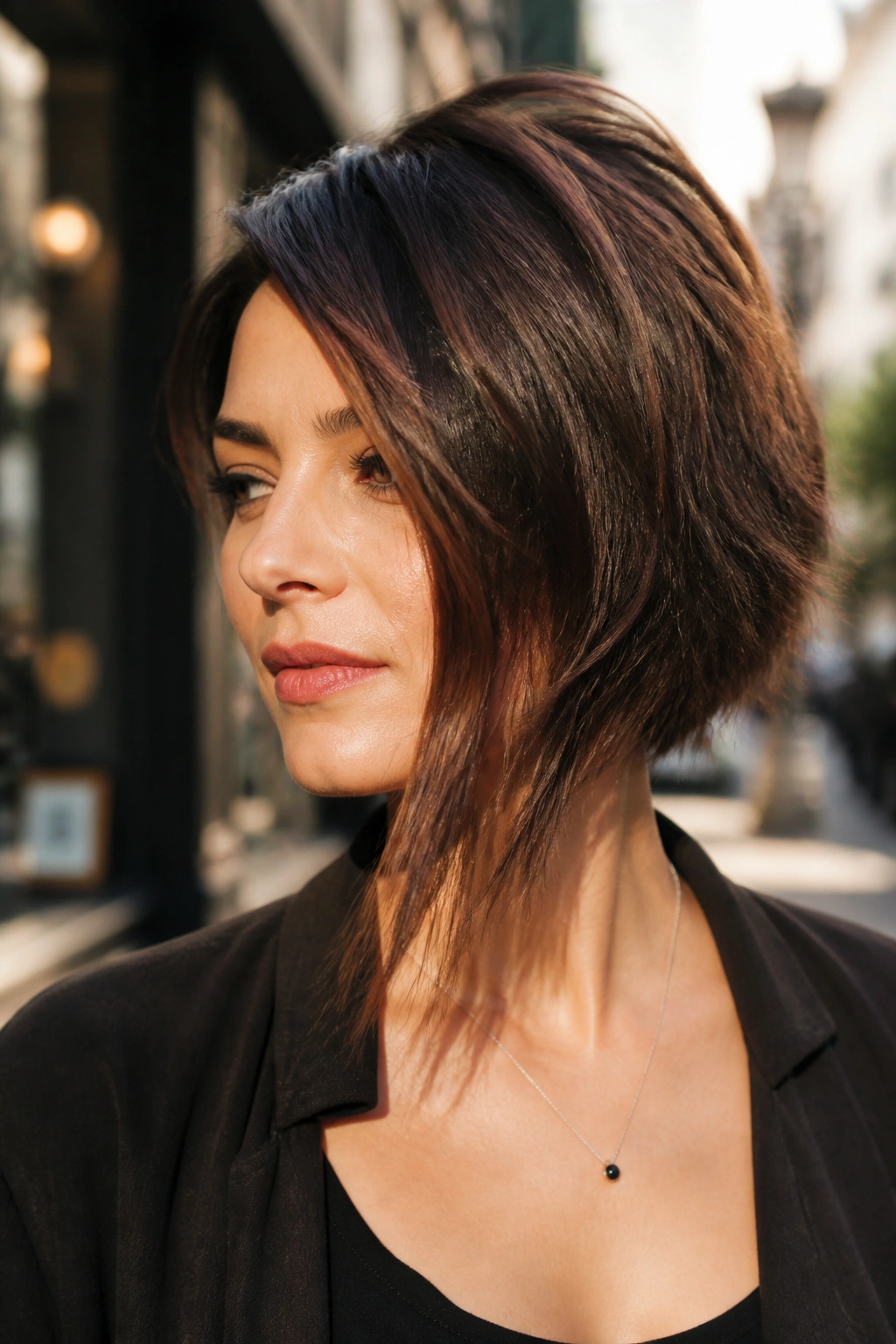
One side longer, one side shorter. Simple idea, big attitude.
An asymmetrical choppy bob works because the eye can never settle in one place. The longer front corner pulls the shape forward, while the shorter side keeps the cut from feeling heavy or dated. It has a little swagger to it, which is exactly why people still ask for it when they want something sharper than a standard bob.
The best version keeps the back compact. If the back gets too bulky, the asymmetry starts looking accidental instead of designed. Ask for a difference of about 1 to 2 inches between the sides, not a wild gap that screams for attention before the haircut even suits your face.
Best for: strong jawlines, oval faces, and anyone who likes a little drama without committing to a full pixie.
Watch out for: overly choppy layers on very fine hair, since the asymmetry can start to look stringy if the ends are too sparse.
Style tip: tuck the shorter side behind the ear and let the longer side fall loose. That tiny move changes the whole mood.
4. Stacked Choppy Bob With a Lifted Back
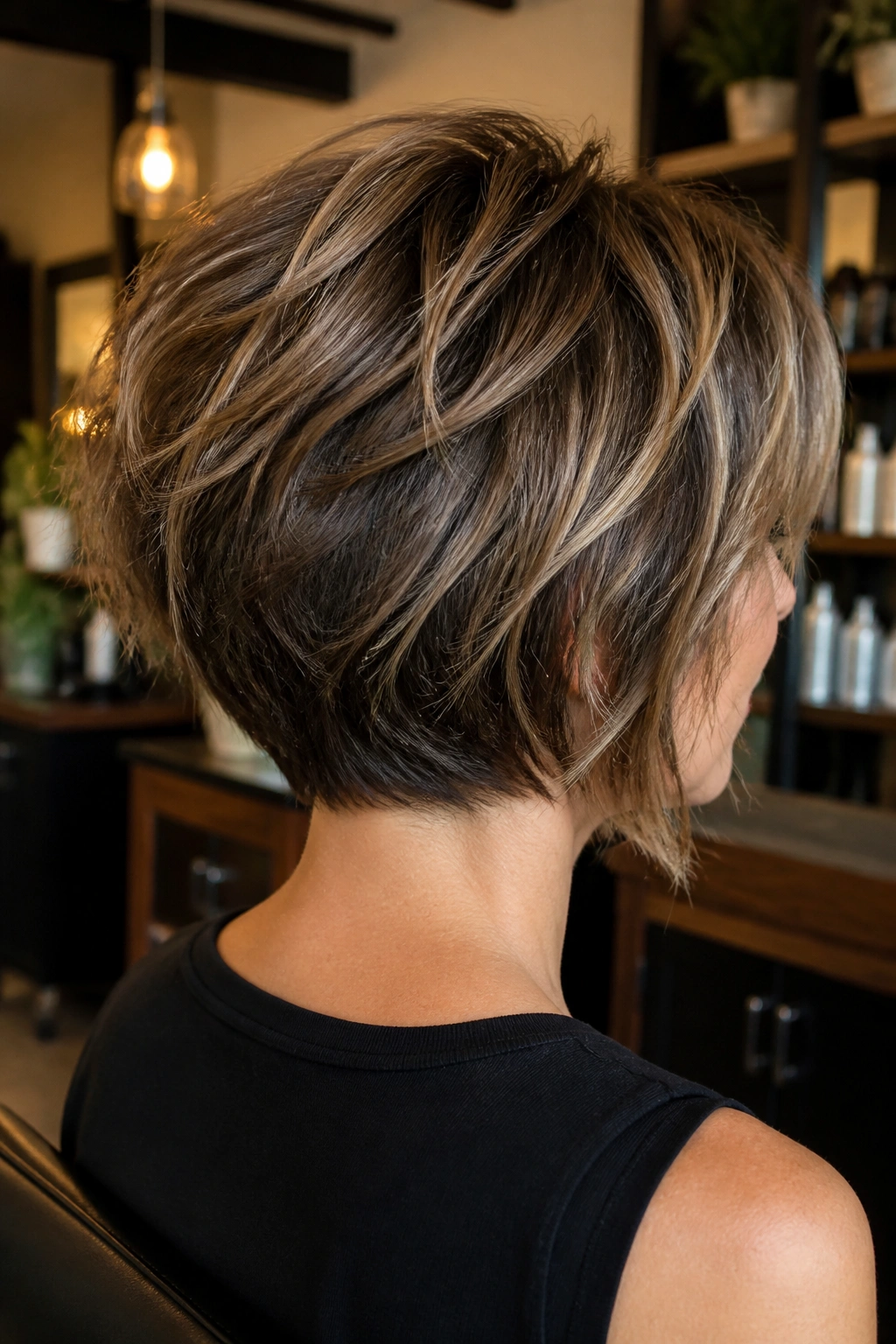
The stacked bob is the one that makes the back of the head look fuller without making the whole haircut puff up. Add choppy texture on top, and the shape gets a little rougher in the best way.
This cut is a favorite for fine to medium hair because the stacking builds volume where you want it, right at the crown and upper nape. The layers are shorter underneath and gradually lengthen toward the front, which gives the bob lift and a nice curve through the back. A few broken-up pieces on top stop it from looking too tidy.
Why the Shape Works
The stack gives structure. The choppiness gives movement. Put those together and you get a bob that feels more alive than a clean one-length cut, but still looks controlled when you blow it out.
What to Ask For
- Shorter graduated layers in the back.
- Light point-cutting through the top.
- A front length that stays at chin level or just below.
- No aggressive thinning at the ends if your hair is already fine.
This cut can look a little old-school if it is over-polished. Leave a bit of grit in the finish.
5. Micro Choppy Bob That Skims the Jaw

Short bob lovers, this one is for you. The micro choppy bob sits just below the ears or right at the jaw, and the short length makes every texture choice feel louder. There is nowhere for the haircut to hide.
That is exactly why it looks so cool. A shorter bob makes the neck look longer, the jawline look cleaner, and earrings suddenly matter again. The choppiness keeps the style from becoming severe, which is a real risk with cuts this short.
The catch? Cowlicks show up fast. If your hair kicks out at the nape or splits at the front, the shape has to be cut with that in mind. Otherwise, you spend every morning fighting one corner that refuses to lie flat.
A micro bob is best when the texture stays light and deliberate. A dab of styling cream, a quick pass with a flat brush, and a touch of matte paste at the ends is usually enough. More product than that can make the whole thing look sticky instead of sharp.
6. Shaggy Choppy Bob With Wispy Fringe
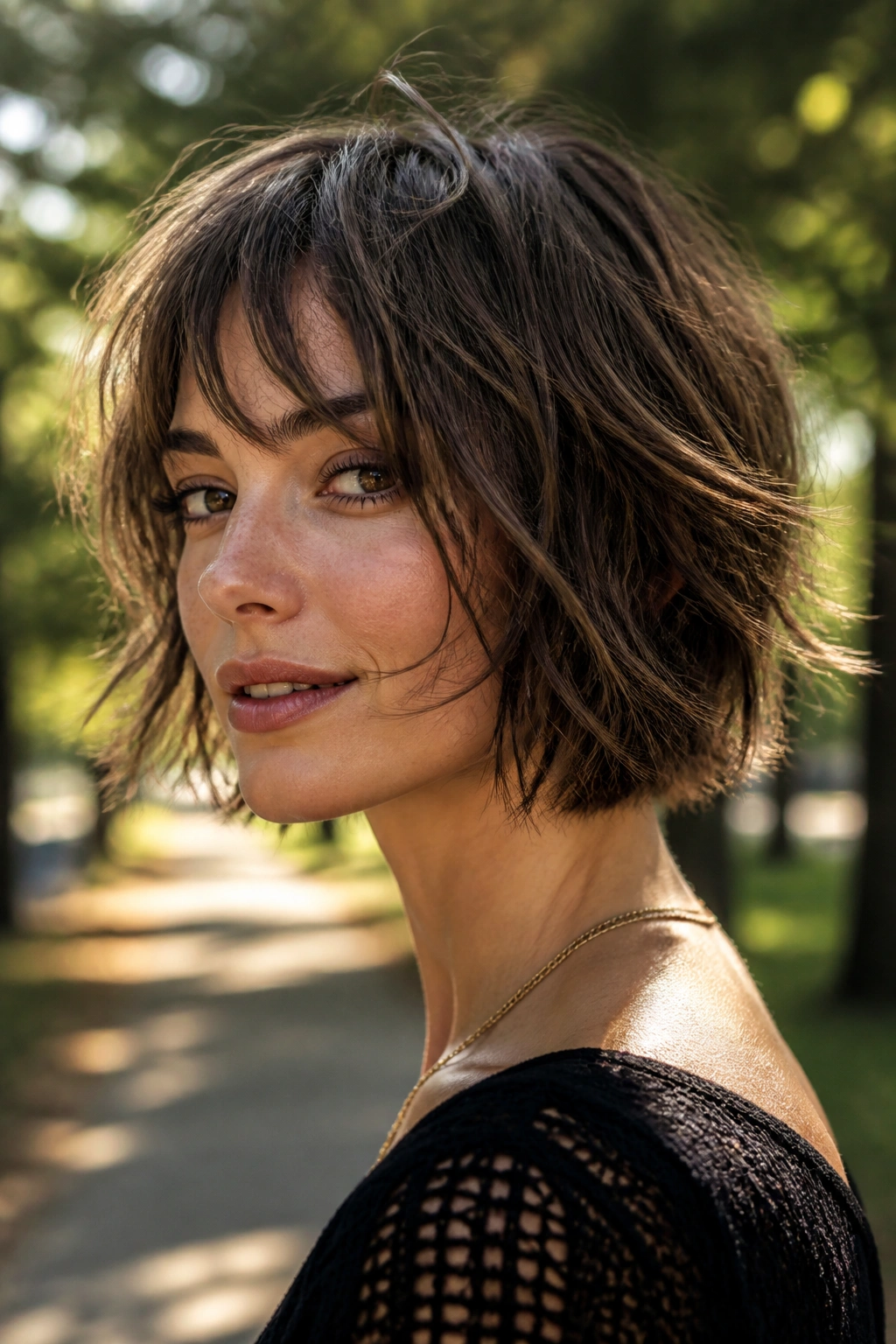
This is the bob for people who want their hair to look like it moved around a little, even when it didn’t.
The shaggy choppy bob borrows from the shag, which means the haircut relies on layers, air, and broken-up ends rather than a solid line. Add a wispy fringe and the whole thing gets looser, softer, and a little more rock-and-roll. It works especially well on hair that already has some natural bend.
Why It Feels Less Formal
The fringe breaks the forehead line. The layers remove weight from the sides. The ends are piecey instead of clean-cut. That combination keeps the bob from turning stiff, which is a problem with many shorter cuts once they are styled too neatly.
How to Wear It
- Air-dry with a light cream if your hair waves on its own.
- Scrunch in a texture spray on damp hair.
- Use a diffuser if you want the fringe to stay airy instead of flat.
- Ask for point-cutting through the bangs so they do not sit like a helmet.
Tiny warning: this cut can look fantastic on day one and a little mushy by day four. It likes a refresh with dry shampoo or a quick mist of water.
7. Choppy Bob With an Undercut at the Nape
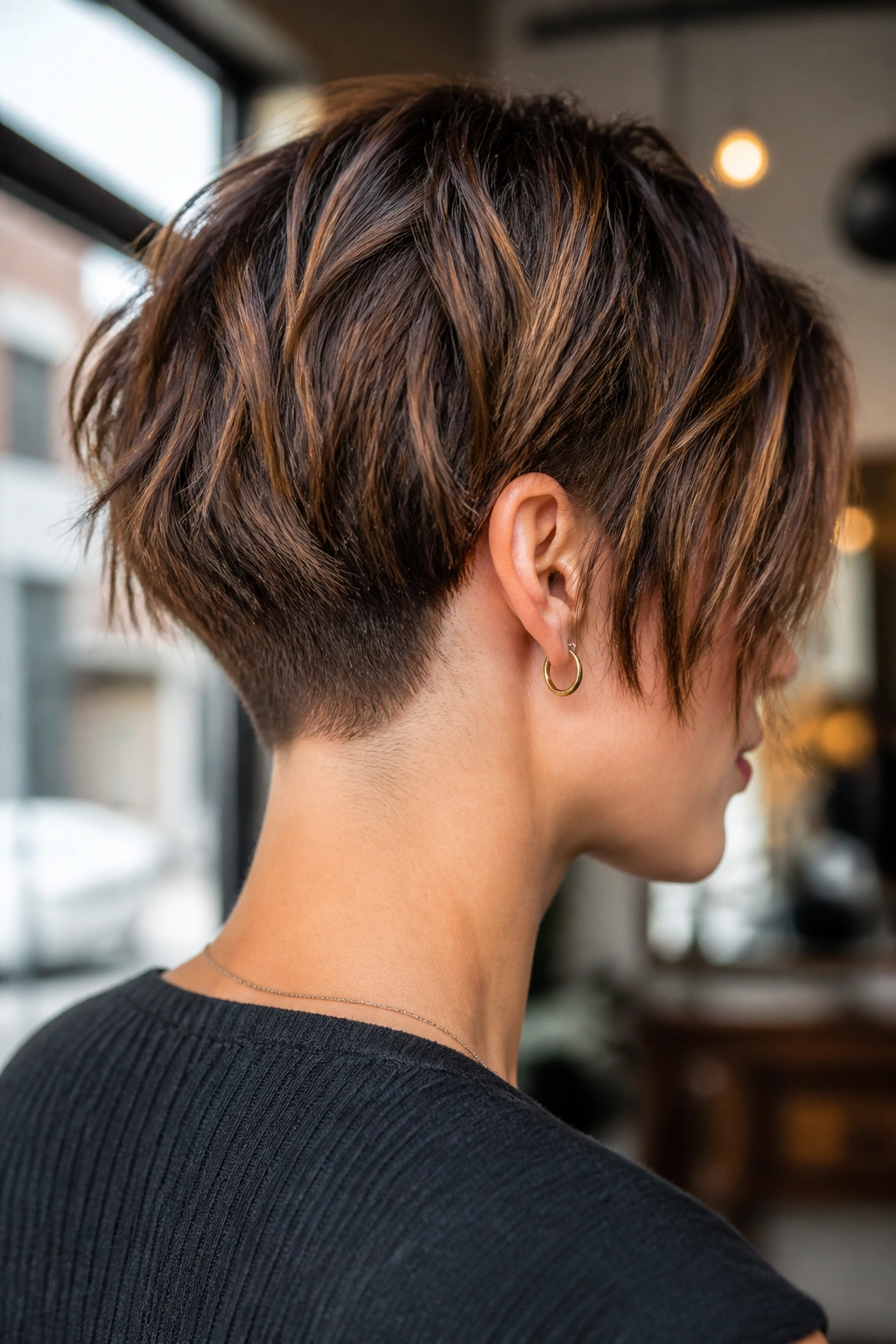
A hidden undercut is one of those things people do not notice until they do. Then they cannot stop looking at it.
This version works especially well for thick hair, because the undercut removes bulk right where bobs tend to balloon out. The top still falls into a bob shape, but the nape sits flatter and cleaner. That makes the choppy surface texture easier to see, rather than buried under a lot of density.
I like this cut because it solves a real problem. Thick hair can turn a bob into a triangle if the bottom gets too heavy. The undercut prevents that, and the choppy top layers keep the finish from looking severe. You get shape and movement instead of a helmet.
Maintenance is the trade-off. The hidden section grows out faster than people expect, especially if your hair grows fast at the nape. Plan on tidy-up appointments every 4 to 6 weeks if you want the silhouette to stay crisp.
8. Wavy Choppy Bob for Naturally Textured Hair

Natural wave and a choppy bob get along beautifully because the haircut does not have to fight the texture. It just has to make space for it.
The best versions of this style keep the perimeter soft and the internal layers light. Too much cutting into the wave pattern can leave the ends frayed, so the goal is movement, not shredding. A choppy bob on wavy hair should look piecey when it dries, not frizzy.
A lot of people over-style this cut. They blow it straight, then curl it back into submission, then wonder why it feels lifeless. Skip that. Let the wave do half the work, add a curl cream or lightweight mousse, and scrunch gently while the hair is still damp.
Best for: 2A to 2C hair, or straighter hair that bends easily with a bendy iron.
Not ideal if: you hate texture and want a glassy finish every day.
Smart move: ask for the cut to be shaped where the wave naturally falls, not just cut wet and hoped for.
9. Inverted Choppy Bob With a Clean Angle
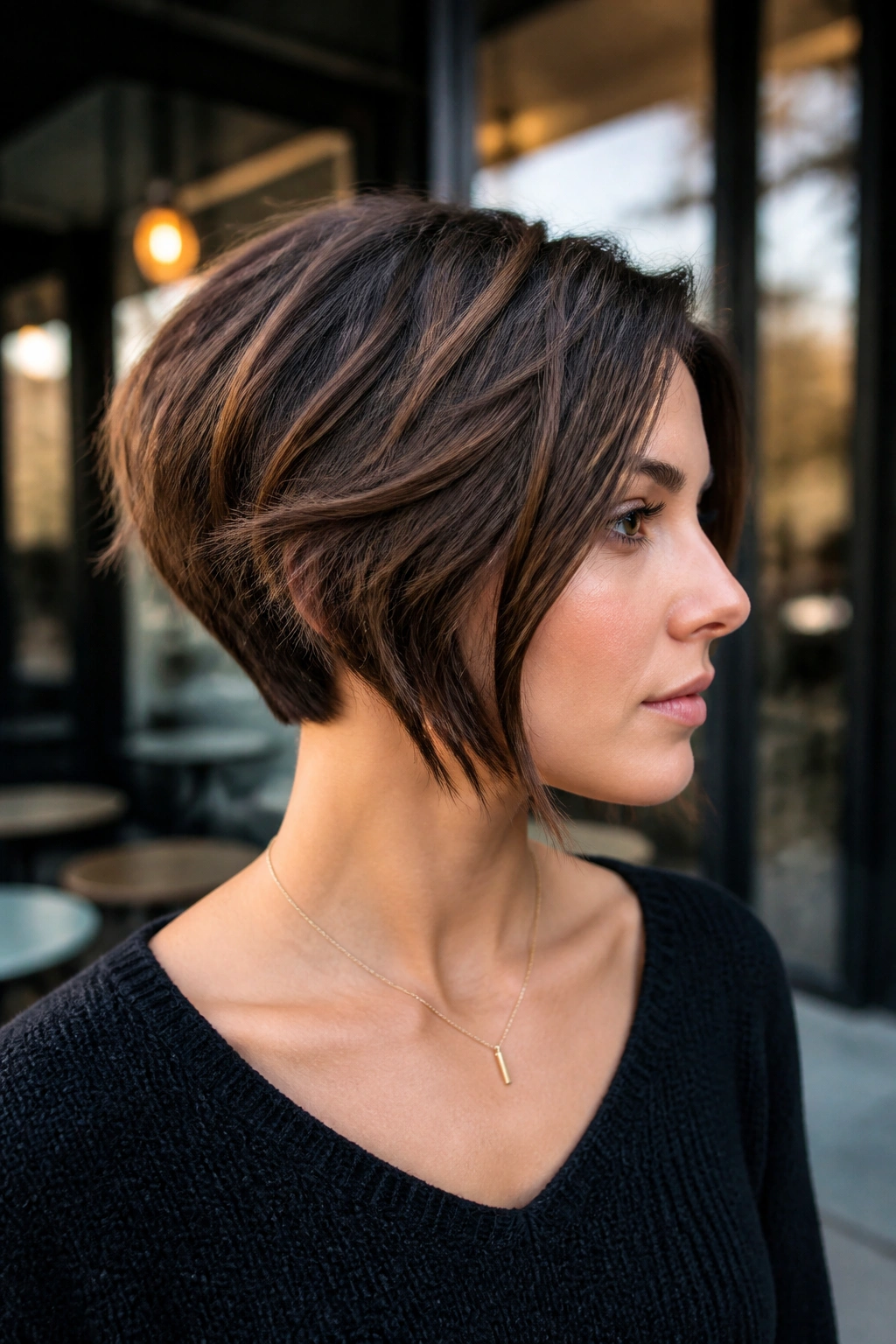
This one has a strong silhouette. The back sits shorter, the front lengthens toward the chin, and the angle gives the bob a clean, sharp sweep.
What keeps it from feeling too rigid is the surface texture. Choppy layers through the top soften the line just enough that the haircut looks modern rather than formal. A fully smooth inverted bob can feel polished in a very specific way; a choppy one has more grit.
The inverted shape is good if you want your neck to look longer and your profile to feel more sculpted. It also flatters hair that needs a little lift at the crown, because the shorter back naturally pushes the shape upward. That visual lift is doing a lot of work here.
Ask for the angle to be clear but not extreme. When the front gets too long compared with the back, the cut loses bob energy and starts drifting toward a lob with a mood problem. The line should still feel balanced from side to side.
10. Piecey Choppy Bob With Baby Bangs
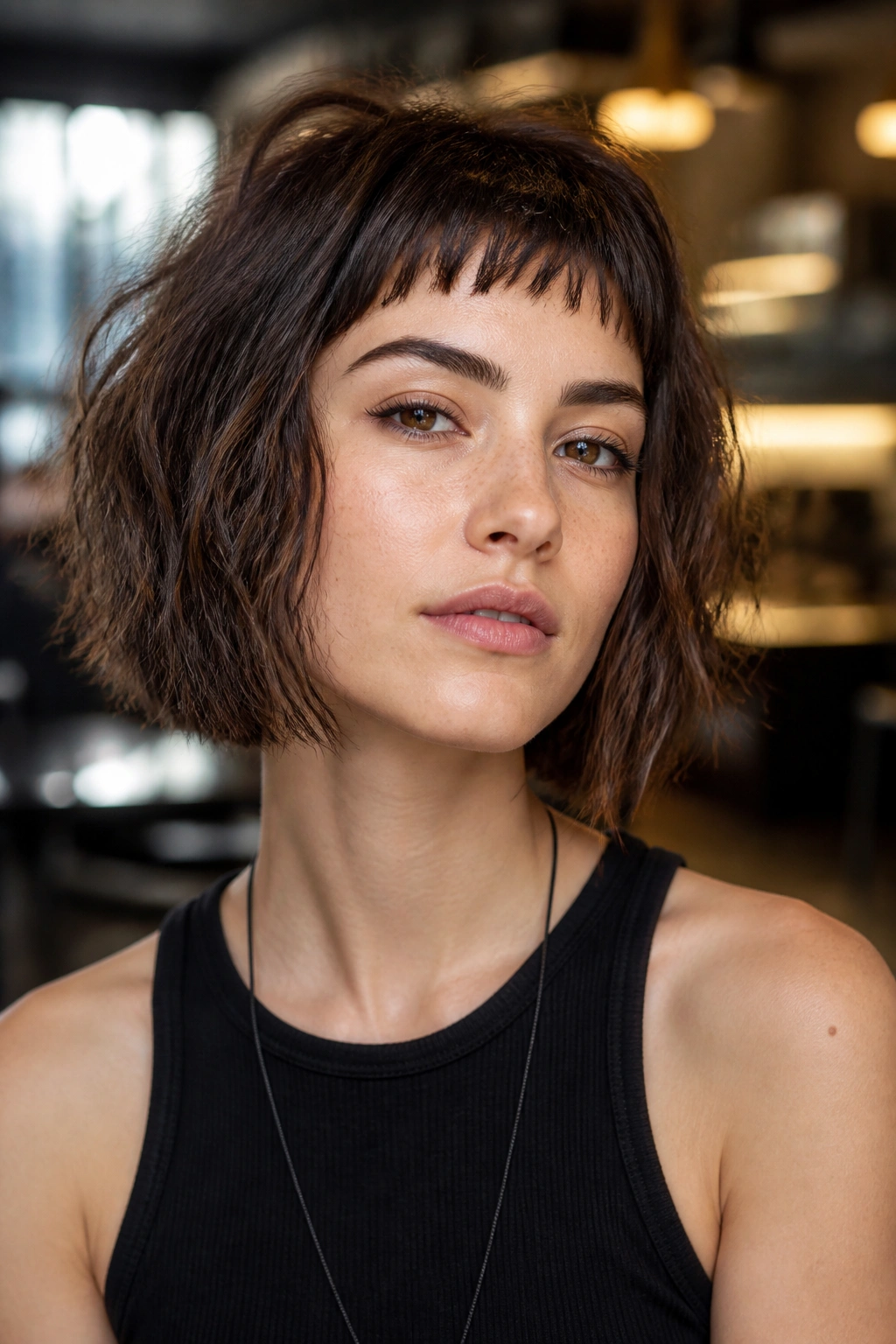
Baby bangs are not for everyone, and that is part of their charm. They make a haircut look bolder immediately.
Pair them with a choppy bob and the result feels cheeky, a little punk, and surprisingly wearable if the rest of the cut stays balanced. The short fringe opens up the face and makes the eyes stand out, while the bob below keeps the look from becoming costume-y. That balance matters. A lot.
What Makes It Different
Unlike curtain bangs, baby bangs do not soften the forehead. They draw a hard line. That means the rest of the cut has to carry some texture and movement so the whole look does not feel too severe.
Good Fit For
- Straight to slightly wavy hair.
- Small foreheads or medium foreheads.
- People who like regular trims.
- Anyone who wants the haircut to do the talking.
The upkeep is real. Baby bangs need trimming more often than people expect, and they can dry out fast if over-styled. Keep them light, keep them piecey, and do not pile on heavy cream at the front.
11. Collarbone Choppy Bob With a Deep Side Part
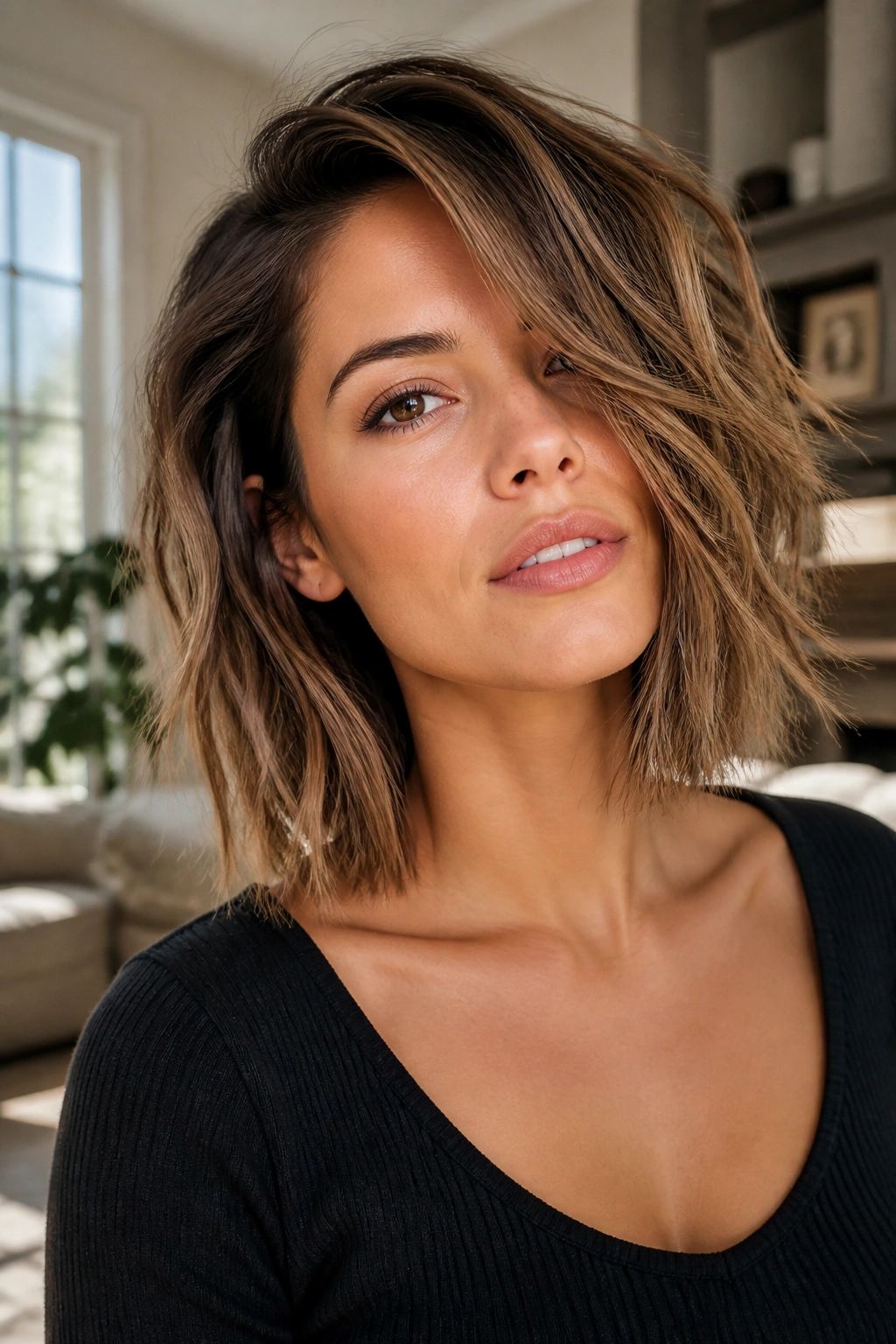
This is the safer-looking cousin of the shorter choppy bob, but safer is not the same as boring.
A collarbone-length bob gives you more swing, more styling options, and more room to play with shape. Add choppy ends and a deep side part, and the haircut suddenly gets a little theater in it. The part creates height on one side, which gives the style a built-in lift without needing much product.
It is a nice choice if you are growing out a shorter cut and want something that still feels deliberate. The collarbone length catches the hair when it moves, so the cut looks good both tucked behind the ear and worn loose. That makes it one of the easiest choppy bob haircuts to live with.
A side part also helps if your face feels too open with a center part. The sweep across the forehead brings the eye diagonally instead of straight down, which can soften sharper features or add balance to a longer face.
12. Wet-Look Choppy Bob for Nights Out

Some cuts want shine. This one wants attitude.
The wet-look choppy bob uses gel, cream, or a shine product to create a slick finish, but the choppy cut underneath keeps the style from looking flat. The broken-up ends still show through the gloss, which is what makes it interesting. A sleek bob can feel elegant. A wet choppy bob feels intentional and a little dangerous.
It works best when the haircut itself is already strong. A clean jawline, a good shape in the back, and visible texture through the top all help. If the cut is too soft, the wet look just turns into damp hair with styling product on it. No one wants that.
For a solid finish, apply gel to damp hair, comb it into place, and let the ends keep a little separation. Do not smooth every strand into submission. A few wisps around the face are what keep this from looking too severe.
13. Choppy Bob With Flipped-Out Ends

Flipped ends can feel playful, but on the right haircut they also read as sharp and modern. The trick is to keep the flip controlled.
A choppy bob with flipped-out ends works especially well on hair that holds a bend. The top stays textured, the shape around the face stays clean, and the ends flick outward just enough to break the line. It has a lively feel without needing curl all over the place.
What Makes the Flip Work
The ends should not curl like a prom style. They should turn out only slightly, almost like the haircut decided to shrug. A round brush, a flat iron, or even a quick bend with a blow-dryer nozzle can create that finish.
Useful Details
- Keep the flip at the last 1 to 2 inches.
- Use a medium-hold spray to lock the shape.
- Let the top stay piecey, not stiff.
- Best on bob lengths that hit the chin or slightly below.
The flip is a little retro, yes. That is part of the appeal.
14. Airy Razor-Cut Bob for Fine Hair
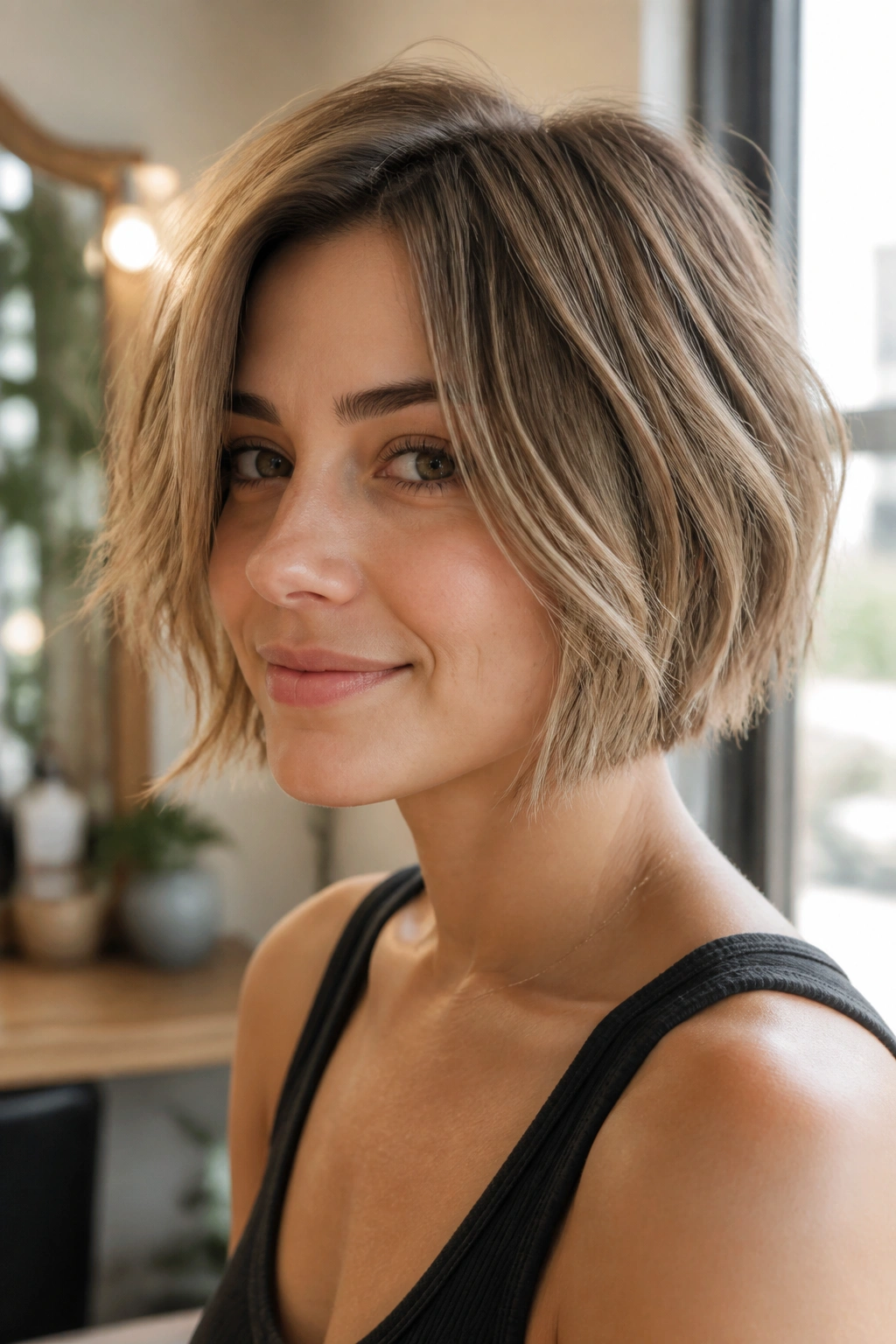
Fine hair and choppy cuts can be tricky. Go too hard on the layers and the ends start to look sparse. Go too blunt and the hair can collapse. The airy razor-cut bob sits in the middle.
The idea is to keep enough density at the edge so the hair still looks full, while using light razor work or soft point-cutting to create movement inside the shape. This is the version that gives fine hair some grit without making the perimeter look thin. That balance is the entire haircut.
Ask for soft internal texture, not a heavy layered chop. The stylist should remove weight in a controlled way, especially around the mid-lengths, and leave the outer line strong enough to hold its shape. If the ends look see-through in the mirror before you leave the salon, that is a bad sign.
A tiny amount of mousse at the roots and a light spray through the ends is usually enough. Fine hair gets overwhelmed fast, so lighter is better here.
15. Thick-Hair Choppy Bob With Hidden Weight Removal
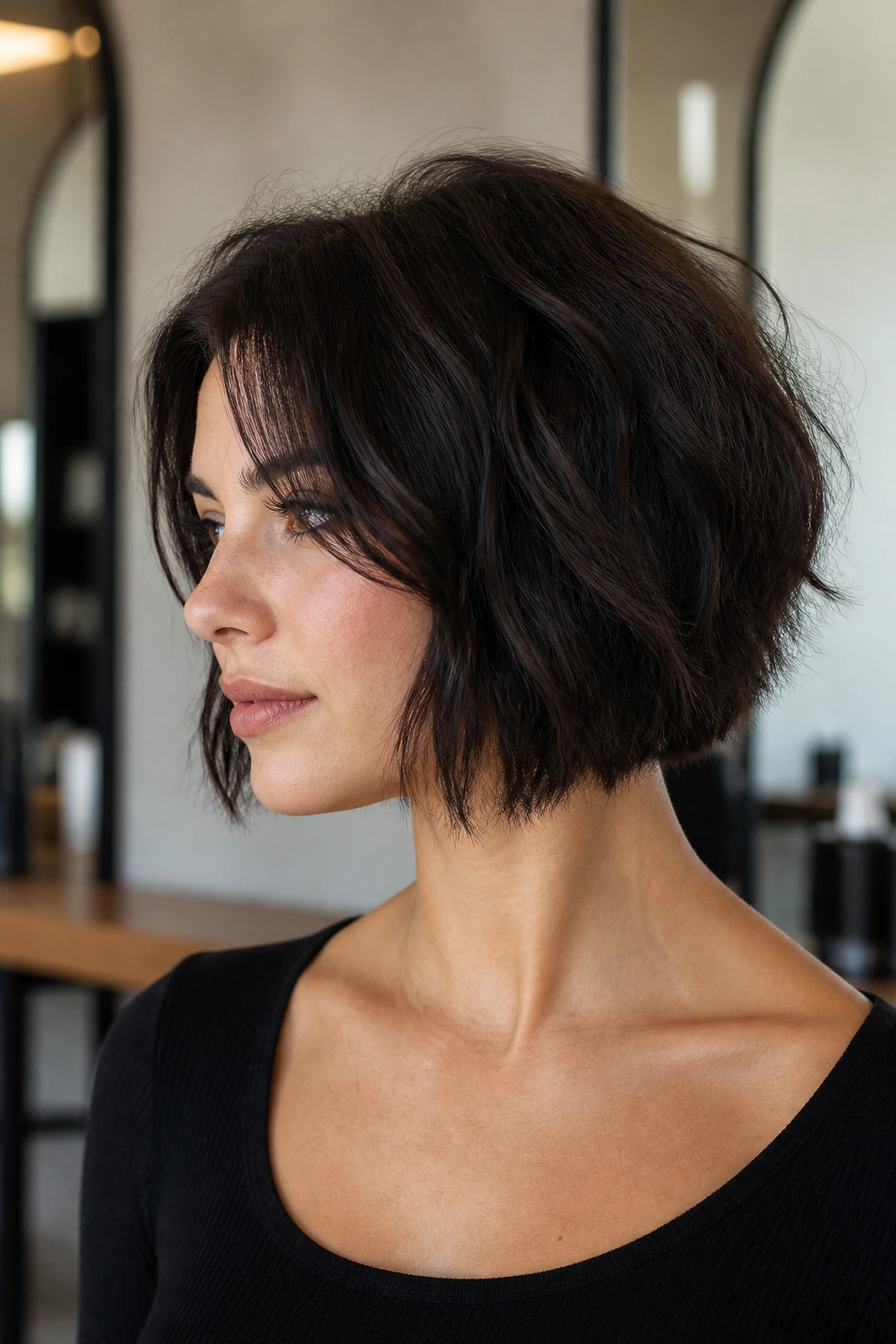
Thick hair loves a bob, but only if the bulk is handled with care.
This version uses internal weight removal so the bob sits closer to the head instead of ballooning out at the sides. The choppy surface keeps it from looking blunt or boxy, while the underlying structure prevents the haircut from feeling heavy. It is one of the most practical choppy bob haircuts for people with coarse or dense hair.
What to Ask Your Stylist
- Remove bulk underneath, not just at the surface.
- Keep the perimeter strong.
- Build texture through the mids so the ends do not puff.
- Avoid over-thinning the top, or the cut can frizz outward.
That last point deserves emphasis. Thick hair often needs less hair removed than people think. It needs the right hair removed. There is a difference, and it shows the first time you air-dry it.
A blowout with a paddle brush can make this shape sit beautifully. Even a rough dry works, though, because the texture is already built in.
16. Curly Choppy Bob With a Rounded Shape
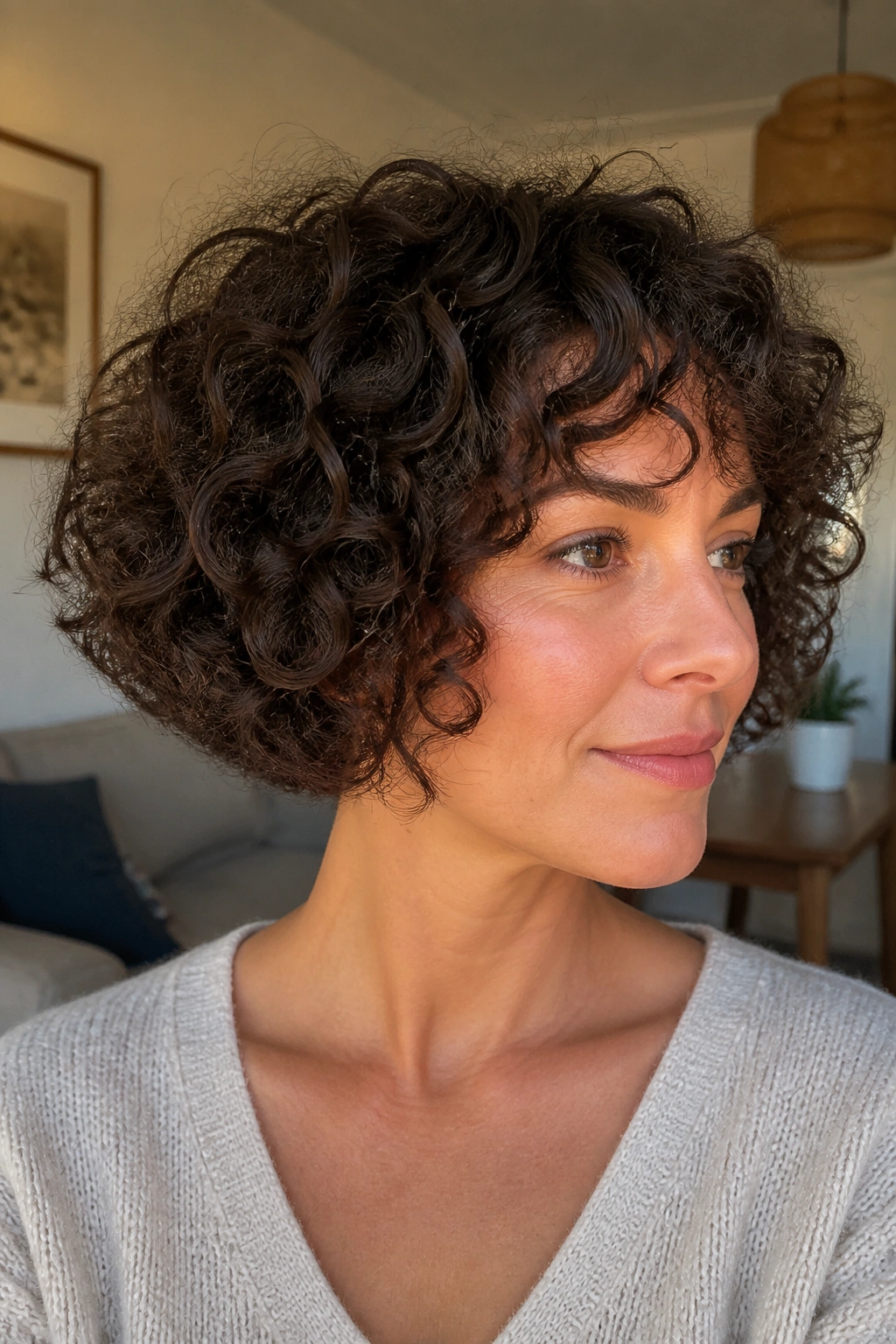
Curly hair changes the rules. A choppy bob on curls should support the curl pattern, not fight it.
The best curly bob has a rounded outline, with enough layering to let the curls stack and fall naturally. Choppiness here comes from the movement of the curls and the way the ends are shaped, not from carving random chunks out of the head. That distinction matters. Bad curl cutting can leave holes. Good curl cutting gives the shape breathing room.
A dry cut, or at least a cut done with the natural curl pattern in mind, usually gives the most honest result. Curls shrink, bend, and spring in their own way, so the haircut has to respect that. If you cut curly hair wet and treat it like straight hair, the result can be off by an inch or more once it dries.
Use a curl cream, scrunch gently, and leave the curl clumps alone as much as possible. A rounded choppy bob should look soft around the edges, not overly separated.
17. Blunt-Base Choppy Bob With Jagged Surface Layers
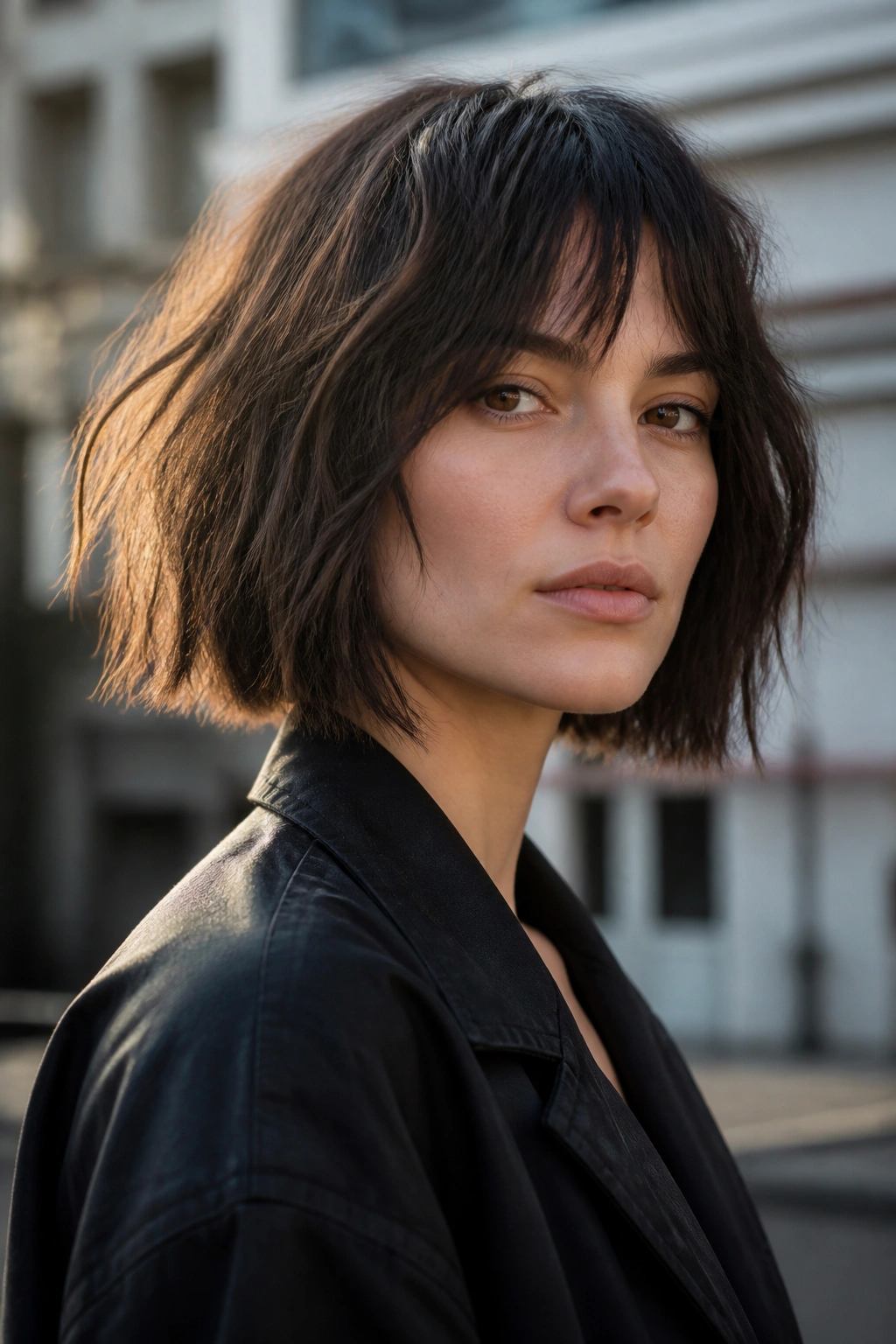
Here is the contradiction that actually works: a blunt base and a choppy top.
The bottom line stays clean and solid, which gives the haircut weight and a strong frame. On top of that, the stylist adds jagged surface layers or point-cut texture so the finish feels rougher and more interesting. That combination is useful if you like a bob that still looks expensive but does not feel precious.
I like this style on straight hair because the strong bottom line keeps the shape anchored. The texture above does the edgy part, while the blunt edge keeps the bob from looking stringy. It is sharper than a soft layered bob and less severe than a fully blunt cut.
If you want the clean line to stay visible, keep the texture on the surface rather than shredding the ends all the way through. Too much chopping can blur the base, and then the whole point is gone. You want tension, not chaos.
18. Mullet-Inspired Choppy Bob With a Tapered Neck
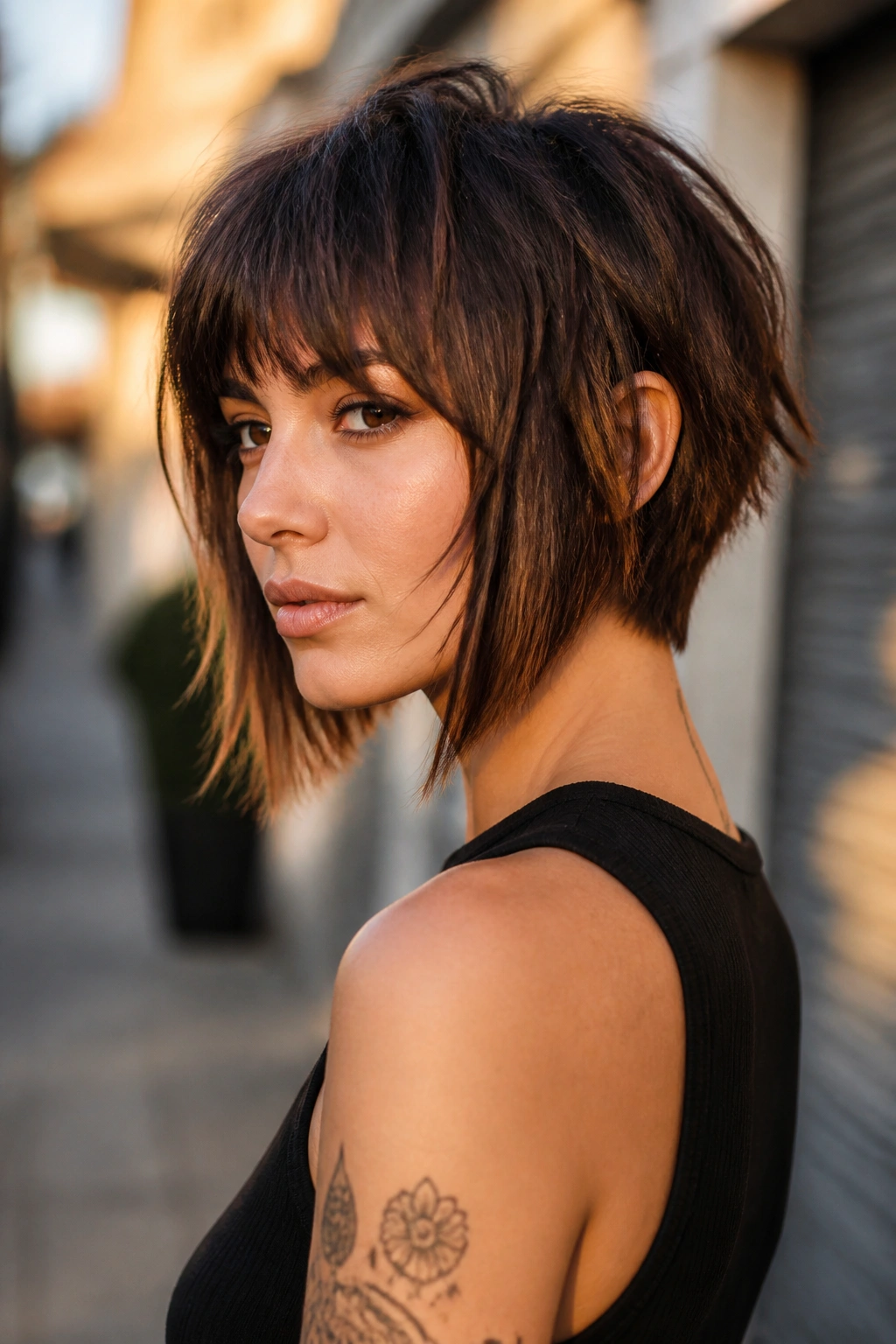
This one is for people who like their haircut a little off-center in the best way.
The mullet-inspired choppy bob keeps the front and sides bob-like, but the back gets more taper and lift through the nape. It is edgier than a standard bob, less severe than a true mullet, and surprisingly wearable when the proportions are right. The shape can feel fashion-forward fast.
A tapered neck keeps the back from looking bulky, and the choppy layers through the crown stop the cut from collapsing into a flat cap. The front pieces can stay longer, which helps balance the shorter back. If that sounds like a lot of moving parts, it is. That is why this cut depends so much on the person cutting it.
Best on hair that has some natural texture or a willingness to be styled. A little texture spray and a few bent pieces at the ends go a long way. Keep the whole thing a touch imperfect. If it gets too smooth, the personality disappears.
19. Side-Swept Choppy Bob With Long Face-Framing Pieces
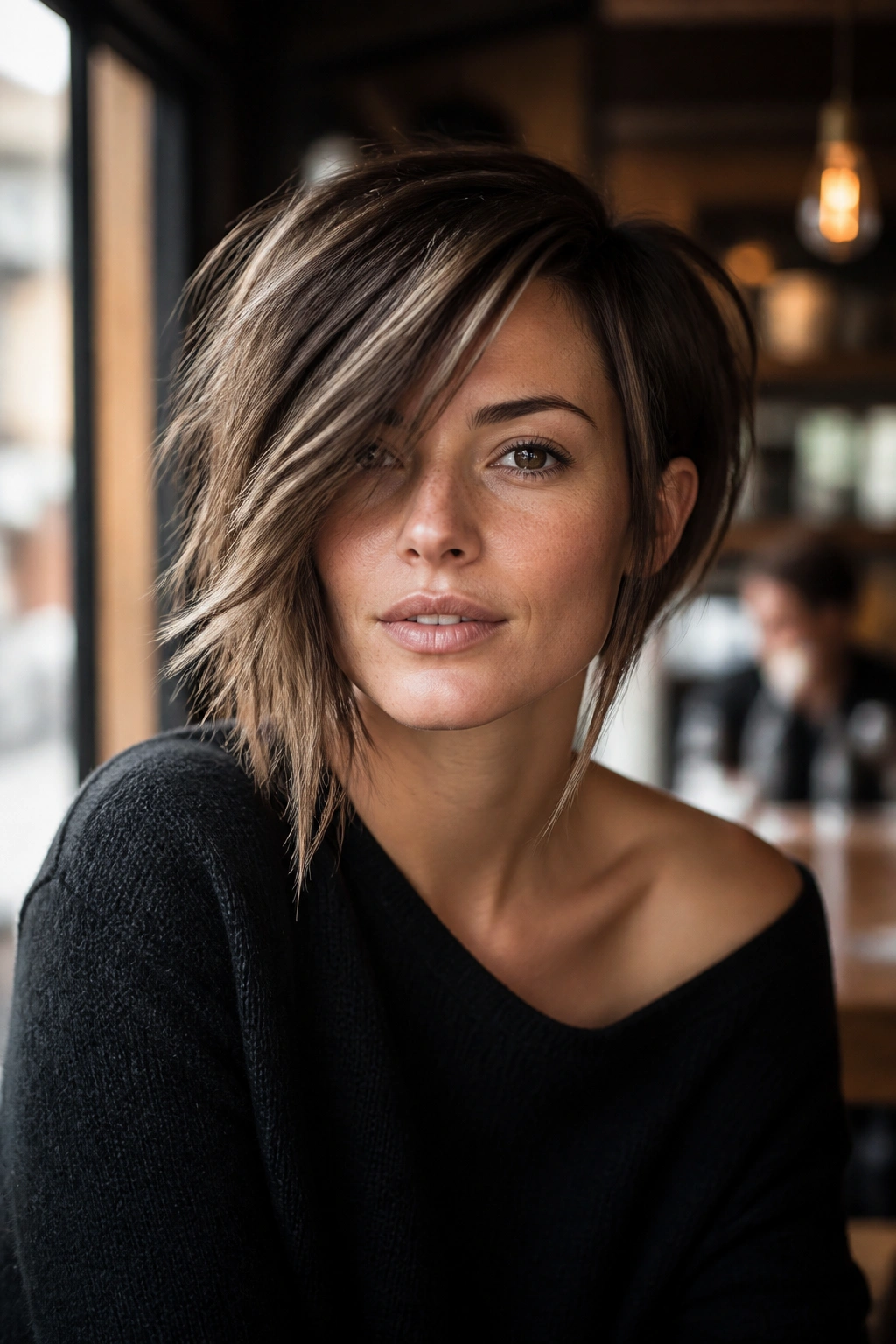
A side-swept bob has a built-in sense of motion. Add choppy ends, and the haircut suddenly looks less like a standard salon bob and more like a style with direction.
The long pieces in front soften the face and give you room to tuck, sweep, or pin one side back. The opposite side can stay shorter and more broken up, which creates a nice visual imbalance without making the cut feel lopsided. It is a smart option if you want edge but still need something you can wear to work without side-eye from the office.
This shape flatters a lot of face types because the long front pieces can be adjusted. Ask for them to fall near the chin or just below it if you want more framing. Shorter pieces can work too, but longer ones give more flexibility on days when you want to shift the part around.
A side sweep also helps if your hair grows out awkwardly at the front. Instead of fighting the grow-out, the cut uses it.
20. Long Choppy Bob With Soft, Ragged Ends
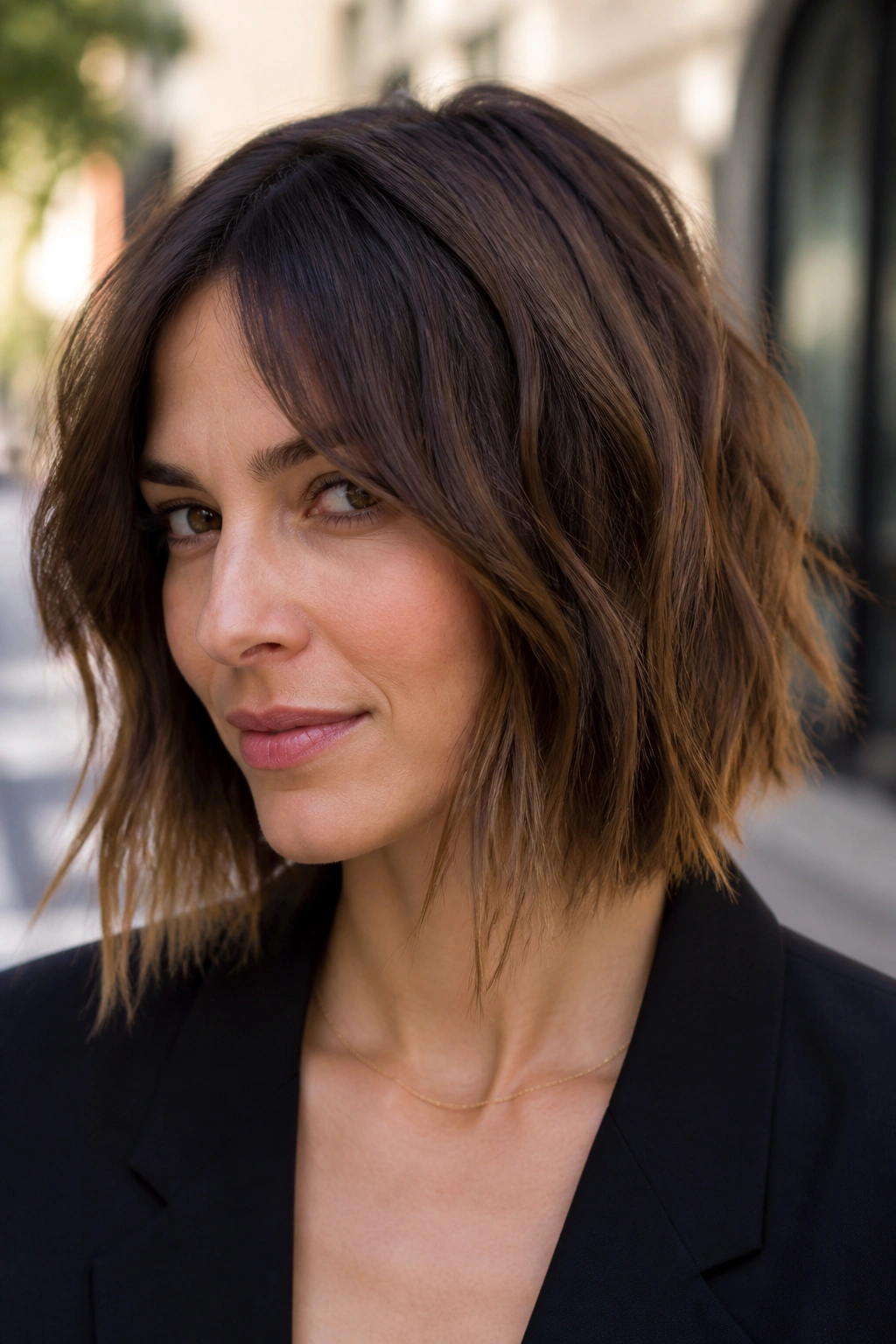
If you want the easiest version of the look, start here.
The long choppy bob, often called a lob, keeps enough length to pull back, tuck behind the ears, or twist into a small knot on busy days. The ends stay ragged and separated, so the haircut still has bite. It is less aggressive than the chin-length versions, but it keeps the same energy.
This is the cut I would hand to someone who says they want something edgy but not dramatic enough to regret. The length gives you safety. The texture gives you personality. And the soft, uneven ends keep it from looking like a cautious compromise.
A long choppy bob is also easy to refresh at home. A quick wave with a flat iron, a mist of texture spray, and a finger-comb through the ends usually does the job. No fussy routine needed. The haircut does most of the work for you.
And that is the real lesson with choppy bob haircuts: the best ones do not shout. They move.
