



A chin-length French bob can make fine hair look fuller, thick hair look sharper, and a tired haircut look awake again in about ten minutes. The catch is the line has to land in the right place. Half an inch too long, and the shape goes limp. Half an inch too short, and it can turn severe fast.
That’s why the best chin-length French bob ideas are not all the same cut in different clothes. Some sit right on the jaw, some curve under, some lean hard into fringe, and some work because the texture is a little undone on purpose. The nicest versions rarely look overworked. They look like someone understood where the cheekbone ends and the neck begins.
If you have ever left the salon with a bob that looked adorable in the chair and oddly boxy at home, you already know the problem. A French bob depends on movement, but movement can come from blunt ends, a soft bend, or a bit of lift at the crown. It is more about shape than length.
These 20 chin length French bob ideas are built around that difference. Some are sharp, some are airy, some are lush and curly, and a few are gloriously low-effort. The right one makes your face look more awake without asking you to become a round-brush person every morning.
1. Blunt Chin-Length French Bob with Airy Ends
This is the version I’d hand to someone who wants the French bob feel without fuss. The shape is clean at the perimeter, but the last half inch at the ends is softened so it does not sit like a helmet.
What to Ask For
Ask your stylist for a one-length base that hits right at the chin, then a tiny bit of soft texturizing at the very ends. That keeps the line crisp while letting the hair move when you turn your head. A little undercutting is fine, but not so much that the bob starts collapsing in the back.
- Length: chin level or just skimming the jaw
- Perimeter: blunt and even
- Ends: lightly point-cut for a softer finish
- Fringe: optional, but a short brow-grazing fringe suits this shape well
Why It Works So Well
The blunt line gives the haircut weight, which is gold for fine hair. The airy ends stop it from looking too hard. That mix is the whole trick.
One quick note: do not over-layer this cut if you want it to keep that French feel. Too many layers and the bob loses its neat edge. A light blow-dry with a 1-inch round brush is usually enough. If your hair bends naturally, even better.
2. Chin-Length French Bob with Micro Fringe
Micro fringe changes the whole mood. It makes a chin-length French bob feel sharper, a little more graphic, and a touch daring without needing a dramatic cut everywhere else.
The magic is in the contrast. The bob itself stays compact and soft at the jaw, while the fringe sits higher and breaks up the forehead in a very deliberate way. It suits people who like seeing their features, not hiding them. Strong brows, a clean cheekbone line, and a straight or slightly wavy texture all play nicely here.
I like this version on short foreheads and balanced face shapes, but it can work on rounder faces too if the fringe is kept piecey instead of heavy. Heavy micro fringe is where things go sideways fast. It starts looking stiff, and that is not the goal.
Styling is easy enough: a smoothing cream through the lengths, a light bend at the ends, and a dab of paste just on the fringe tips. That little bit of separation keeps it from looking too cut-out. Short bangs need air. Too much product makes them look pasted on.
3. Curved-Under Chin-Length Bob That Hugs the Jaw
Why does a curved-under bob look so polished? Because the shape follows the face instead of fighting it.
A chin-length French bob with a gentle bevel at the ends creates a soft frame around the jawline. That tiny curve matters more than people think. It gives the haircut a finished look even if you only rough-dry it and tuck one side behind the ear. On hair that tends to puff out, the inward bend keeps the shape controlled without making it flat.
How to Style It
Use a small round brush or a flat brush with a curved blow-dry at the ends. You do not need a huge blowout. Just turn the last inch under and hold the nozzle there for a few seconds. A light styling cream is enough for most hair types.
This version is especially good if your jaw is a little narrow or if you want the chin area to look fuller. It also behaves well on medium-density hair, which can be a blessing. The cut does the heavy lifting, so your morning routine stays short.
Skip heavy texture spray on this one. It fights the clean curve. Keep the finish smooth and let the shape do its job.
4. Tousled French Bob with Broken Waves
Picture hair that looks like it dried in a breeze and then got a little help from a flat iron. That’s the feeling here.
This is the most forgiving chin-length French bob idea on the list, and it is a good one for anyone who dislikes precision styling. The waves are not polished curls. They are broken, loose, and slightly uneven in the best possible way. That looseness makes the cut feel relaxed rather than sweet.
Key Details to Ask For
- Keep the base around the chin
- Add soft internal shaping, not obvious layers
- Leave the ends a little blunt so they do not fray
- Use a light fringe or no fringe at all, depending on your forehead
The style works best when the wave pattern is random. Curl one section away from the face, the next toward it, and leave the ends out of the iron on purpose. Then shake it apart with your fingers, not a brush. A dry texture spray at the roots can keep it from falling flat by lunchtime.
The big mistake is making every wave the same size. That turns the look stiff. Messy is the point.
5. Side-Part Chin-Length French Bob with Cheekbone Sweep
A deep side part changes the whole geometry of a French bob. The haircut becomes a little softer, a little more grown-up, and a lot better at bringing attention to the eyes and cheekbones.
I reach for this shape when someone wants movement but does not want bangs. The side part gives you that diagonal line across the face, which can soften a square jaw or balance a fuller cheek area. It also gives the bob some natural lift on one side, which is handy if your hair likes to collapse at the roots.
The length should still hit around the chin, but the side with more volume can sit a touch higher. That tiny difference keeps the cut from looking too even. Very even bobs can feel severe. A side part breaks that up.
Style it with a root lift spray at the part, then direct the hair away from the face with a blow-dryer and paddle brush. If your hair is straight, a quick bend through the ends with a flat iron is enough. If it is wavy, even better. The shape already has something to work with.
6. Curly Chin-Length French Bob with Soft Shape
Curly hair and French bobs get along better than people expect, as long as the cut respects the curl pattern. The secret is shape, not flattening.
Unlike straight bobs, a curly chin-length French bob needs to be cut so the curls stack without making the sides explode outward. That means asking for a dry cut or a curl-by-curl shape if your stylist works that way. The outline should still feel full around the chin, but the silhouette needs room to breathe.
This is the right choice if you want a bob that looks alive on its own. A good curly French bob does not need much more than leave-in conditioner and a curl cream. Scrunch it, diffuse for a few minutes, and stop before it gets crunchy. Crunchy curls ruin the mood fast.
A small warning: too much thinning on curly hair is a trap. It can create frizz and little puffy triangles at the sides. Keep the perimeter strong, let the curls do the movement, and the haircut will look intentional even on day three.
7. Fine-Hair French Bob with a Blunt Perimeter

Flat hair hates too many layers. This cut gives it a backbone.
If your hair is fine, a chin-length French bob with a blunt perimeter makes the ends look fuller than they are. The line sits right at the chin, the edge is clean, and the overall effect is denser without needing a ton of styling. That blunt bottom line is the bit that earns its keep.
What Makes It Different
The important part is what you leave out. No choppy crown layers. No over-thinned ends. Just a solid outline and maybe a whisper of face framing in the front. Fine hair needs weight to look thick, not a bunch of gaps.
Styling Notes
- Use a volumizing mousse at the roots only
- Blow-dry with a small round brush for lift at the crown
- Keep serum off the bottom half if you want the ends to stay plump
- Refresh day-two hair with dry shampoo at the part, not all over
This version can look especially good with a short fringe or no fringe at all. What it does not like is too much oil. Fine hair shows every bit of heaviness, and the bob goes limp fast. Keep it light. Keep it clean.
8. Thick-Hair French Bob with Hidden Internal Layers
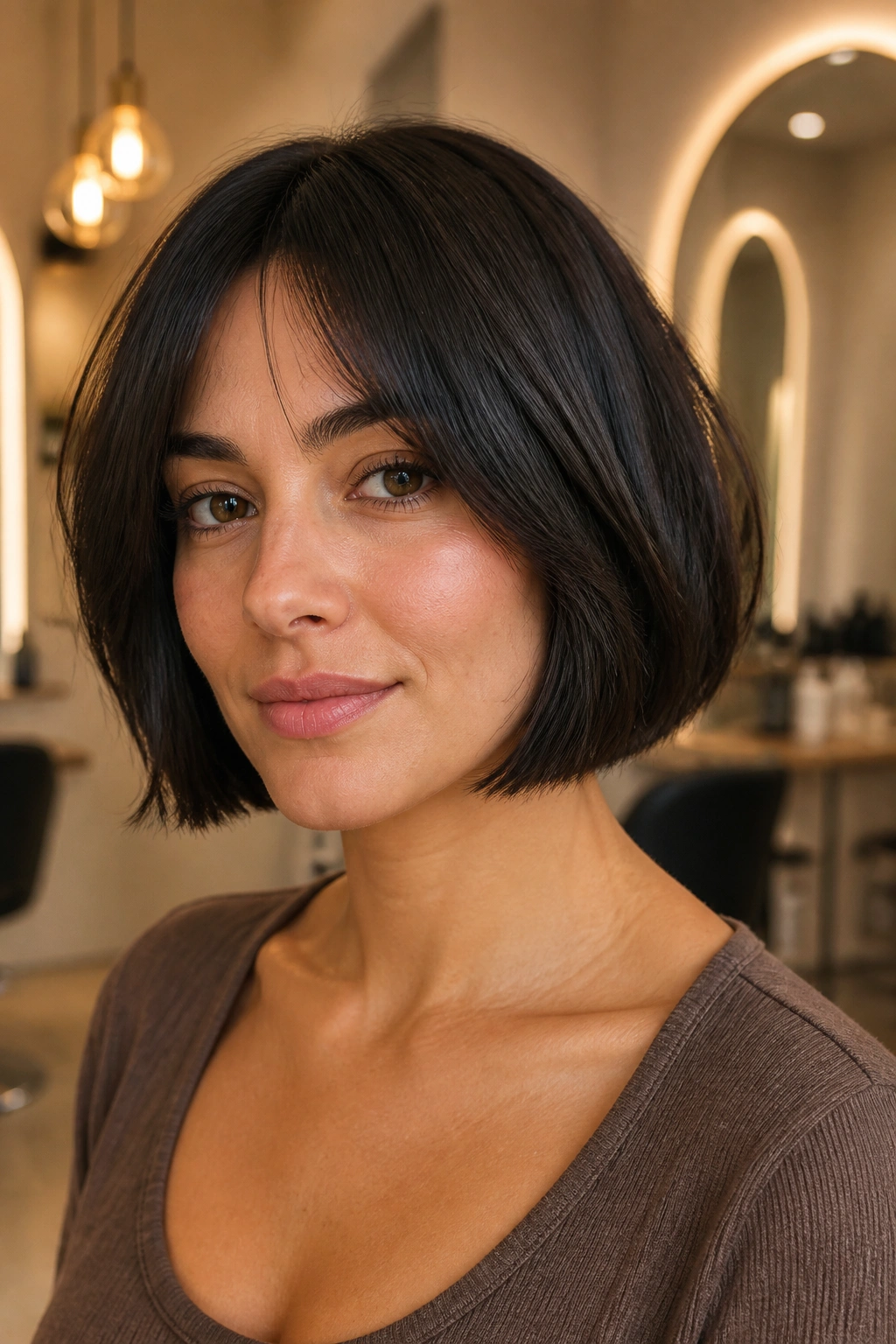
Thick hair can wear a bob gorgeously, but only if the cut removes bulk in the right places. Otherwise you get a triangle. Nobody wants that.
This version keeps the outside line chin-length and neat while the inside carries hidden layering to release weight. You do not see the layers from the front, which is exactly the point. They live underneath, where they stop the haircut from feeling bulky at the cheeks and neck.
The result is a French bob that moves without puffing out. It works especially well if your hair has a strong wave or a dense, coarse texture. The outline stays sharp, but the body of the cut feels lighter when you turn your head.
A good stylist will usually cut this with internal point-cutting or carefully placed texturizing, not random thinning shears all over the place. There is a big difference. The wrong thinning can make the ends frizz and separate. The right kind gives shape and keeps the bob from swallowing your face.
You will still want a smoothing cream or lightweight oil on the mid-lengths. Not much. Just enough to keep the finish controlled.
9. French Bob with Curtain Bangs

Can a chin-length French bob still feel soft if you want bangs? Absolutely, and curtain bangs are the easiest way to make that happen.
They open away from the face instead of sitting across the forehead in a solid block. That means the bob gets a little movement at the front without losing its neat shape. Curtain bangs also help if you want to ease into fringe without committing to a blunt line right away.
How to Keep Them Looking Good
The trick is length. Curtain bangs for a French bob should usually land around the cheekbones or just below, so they can sweep back and blend into the rest of the cut. If they are too short, they start to feel disconnected. If they are too long, they can drag the whole style down.
I like this version on oval, heart, and longer face shapes. It also helps if your forehead feels larger than you want it to, because the parted fringe gives the eye somewhere to land. Blow-dry the bangs forward first, then roll them away from the face with a round brush. That keeps them soft instead of stringy.
A little styling cream at the ends helps. A lot of cream makes them collapse. Tiny difference. Big effect.
10. Sleek Chin-Length French Bob Tucked Behind the Ears
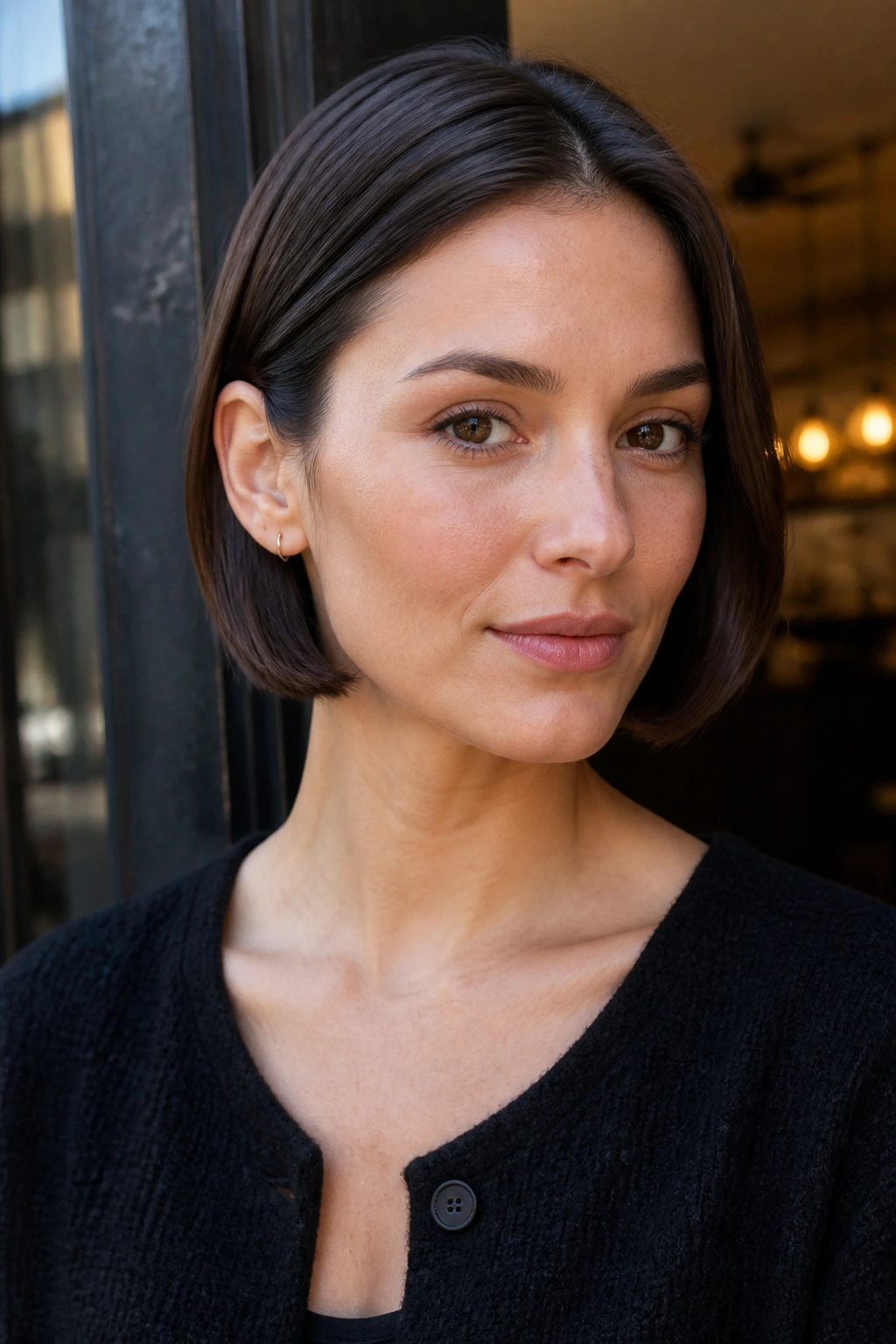
Sometimes the chicest bob is the one that looks almost too simple. Almost.
A sleek, tucked-behind-the-ears French bob is sharp, modern, and easy to wear with earrings, glasses, or a clean neckline. The haircut itself stays chin-length with a smooth outline, but the styling pulls the sides back so the face opens up. That little tuck changes the mood from soft to crisp in seconds.
Best Features to Ask For
- A slightly longer front angle if you want room for the tuck
- Clean edges at the nape
- Minimal layering so the ears can hold the shape
- A side part if your hair likes volume, or a middle part if you want symmetry
This is a good option when you want your features front and center. It also suits straight hair really well. A flat iron pass through the ends, a pea-sized amount of smoothing cream, and one or two bobby pins hidden near the ears are often enough.
One thing: do not make the tuck too tight unless you want the cut to feel severe. Leave a little softness near the temples. That keeps the style from looking like office armor.
11. Shaggy French Bob with Razored Ends

A shaggy chin-length French bob has a different personality altogether. It is looser, faster, and a little rebellious without crossing into full mullet territory.
The razored ends are what change the feel. They break the edge of the bob so it falls with a lighter, more lived-in texture. On wavy hair, this can look especially good because the natural bend and the razor work together. On straight hair, it creates that bit of friction that keeps the cut from looking flat and neat in a boring way.
This shape is a good fit for someone who likes a jacket-and-jeans haircut. Easy, a little cool, not precious. It does not need a polished finish every day. A salt spray through damp hair, a rough dry, and maybe a quick bend with a wand on a few pieces will do most of the work.
One caution: if your hair is already frizzy or very porous, razor work can make the ends feel fluffy. In that case, ask for soft point-cutting instead. Same idea. Less risk.
12. Jaw-Skimming Bob with a Deep Center Part
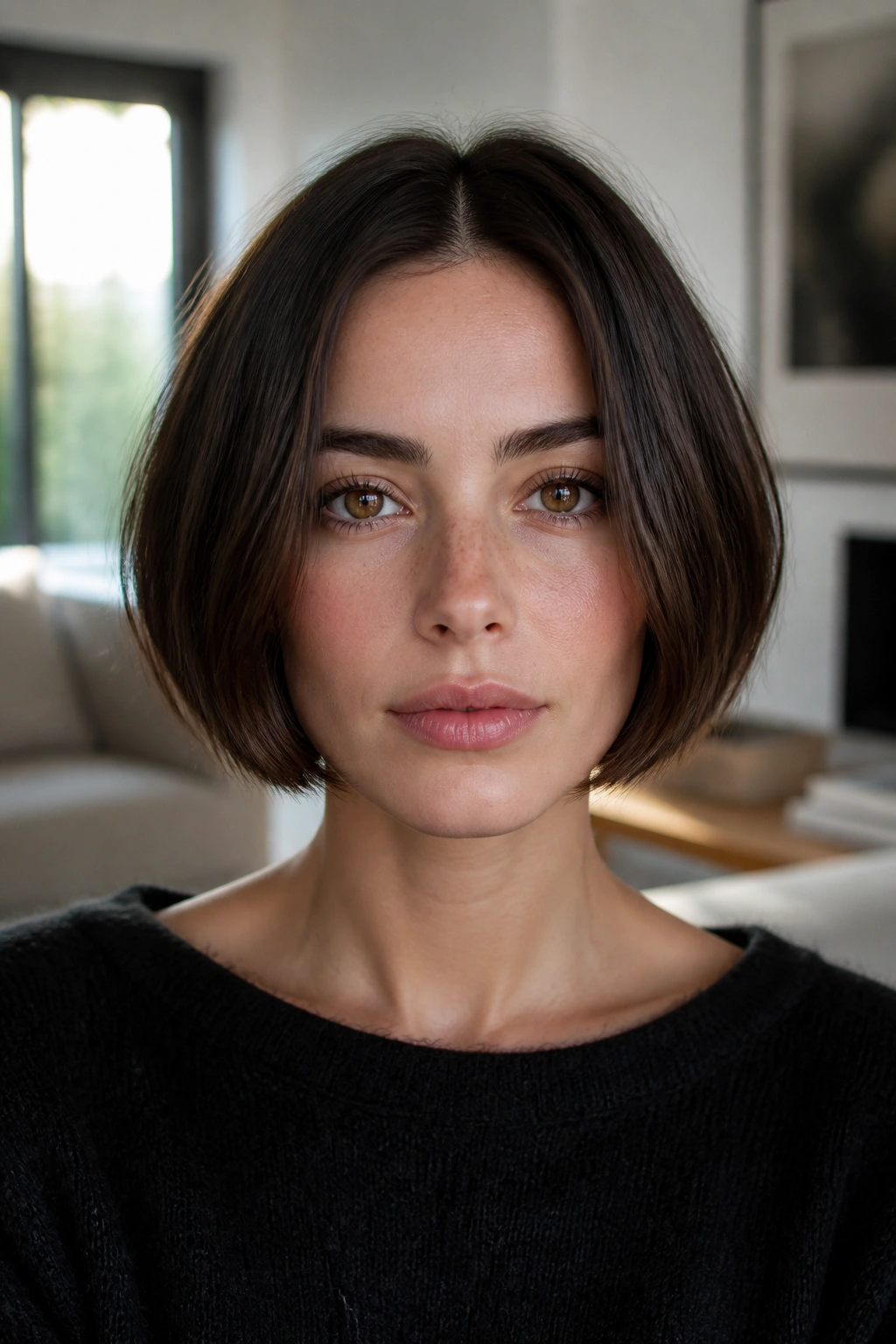
Why do center parts keep coming back? Because they make a bob feel longer, cleaner, and a bit more architectural.
A jaw-skimming French bob with a deep center part is one of the more balanced versions of the cut. Both sides mirror each other, which can be lovely on faces that are already angular or narrow. The line at the chin gives the jaw more definition, while the part stretches the face visually. It is tidy without being stiff.
I like this on straight or slightly wavy hair, especially if the ends have a small bevel. That little bend inward keeps the line from looking blunt in a harsh way. If you wear glasses, this shape can be a nice one because it frames the face without crowding it.
The downside is simple. Center parts show everything. Cowlicks, uneven density, and a lazy blow-dry all become obvious. So if you pick this version, give the part a proper root lift and dry it in place from the start. A half-dry center part is a stubborn little thing.
Still, when it works, it looks clean in a way that never really gets old.
13. French Bob with Soft Bevel and Face-Framing Pieces
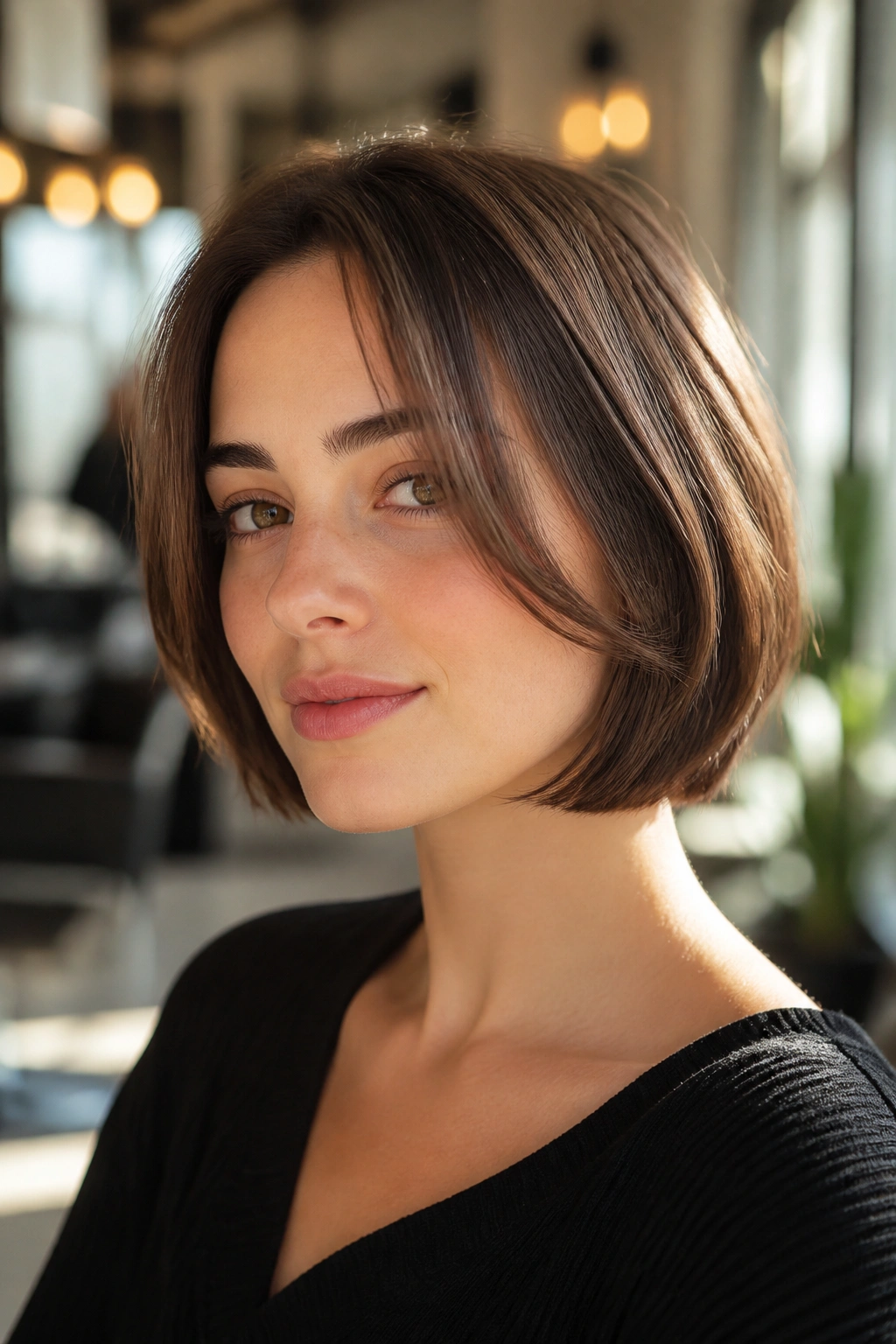
This is the bob I suggest when someone wants softness around the face but does not want full bangs.
The base stays chin-length and fairly tidy, while the front carries a couple of delicate face-framing pieces that start around the cheekbone and taper toward the jaw. That subtle difference is enough to soften strong features or bring some shape to a rounder face. It does not need to be dramatic. In fact, the less obvious it is, the better it usually looks.
How to Describe It at the Salon
Ask for a soft bevel at the ends and a light frame around the face, with the shortest front pieces kept just below cheek level. If the framing is cut too high, it starts behaving like bangs. Too low, and it disappears.
Why It’s Easy to Wear
The frame gives you options. You can tuck it behind the ear, let it fall forward, or bend it slightly away from the face with a brush. That flexibility is nice on days when you do not want the same look twice.
This style is especially friendly to medium-density hair. It keeps movement without scattering the shape. And if you like low-maintenance haircuts that still look considered, this one is a quiet winner.
14. Wet-Look French Bob with Glossy Finish
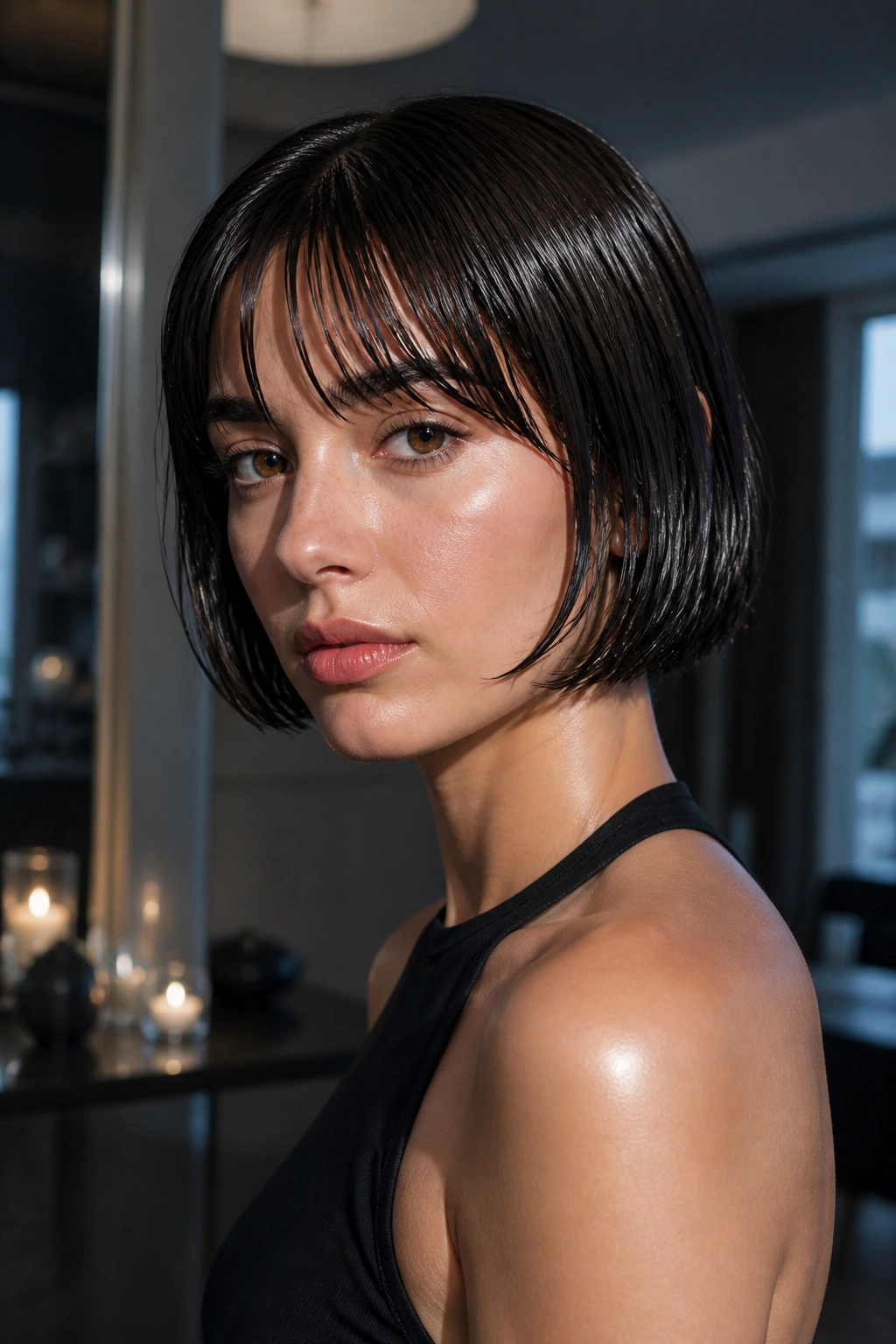
A wet-look bob is not for everyone, and that’s exactly why it works.
The chin-length French bob becomes sleek and a little dramatic when the hair is combed into place with gel or a strong cream, then left with that damp, glossy finish. It feels cleaner than a fluffy blowout and much cooler than a textured wave. On sharp bone structure, it can look almost sculptural.
This version is especially good for nights out, events, or those days when your hair just will not behave and you decide to lean into it. Straight hair usually takes to it easiest. Slight waves can work too, but the product needs to be spread evenly so the finish does not clump.
Use a wide-tooth comb or fingers to place the hair, then smooth the top layer with a small amount of shine serum. Too much product turns glossy into greasy fast, so start small. You can always add more at the ends.
The thing I like here is the confidence of it. No fake softness. No trying to be casual. Just a sharp bob that knows what it is.
15. Rounded French Bob for Narrow Faces
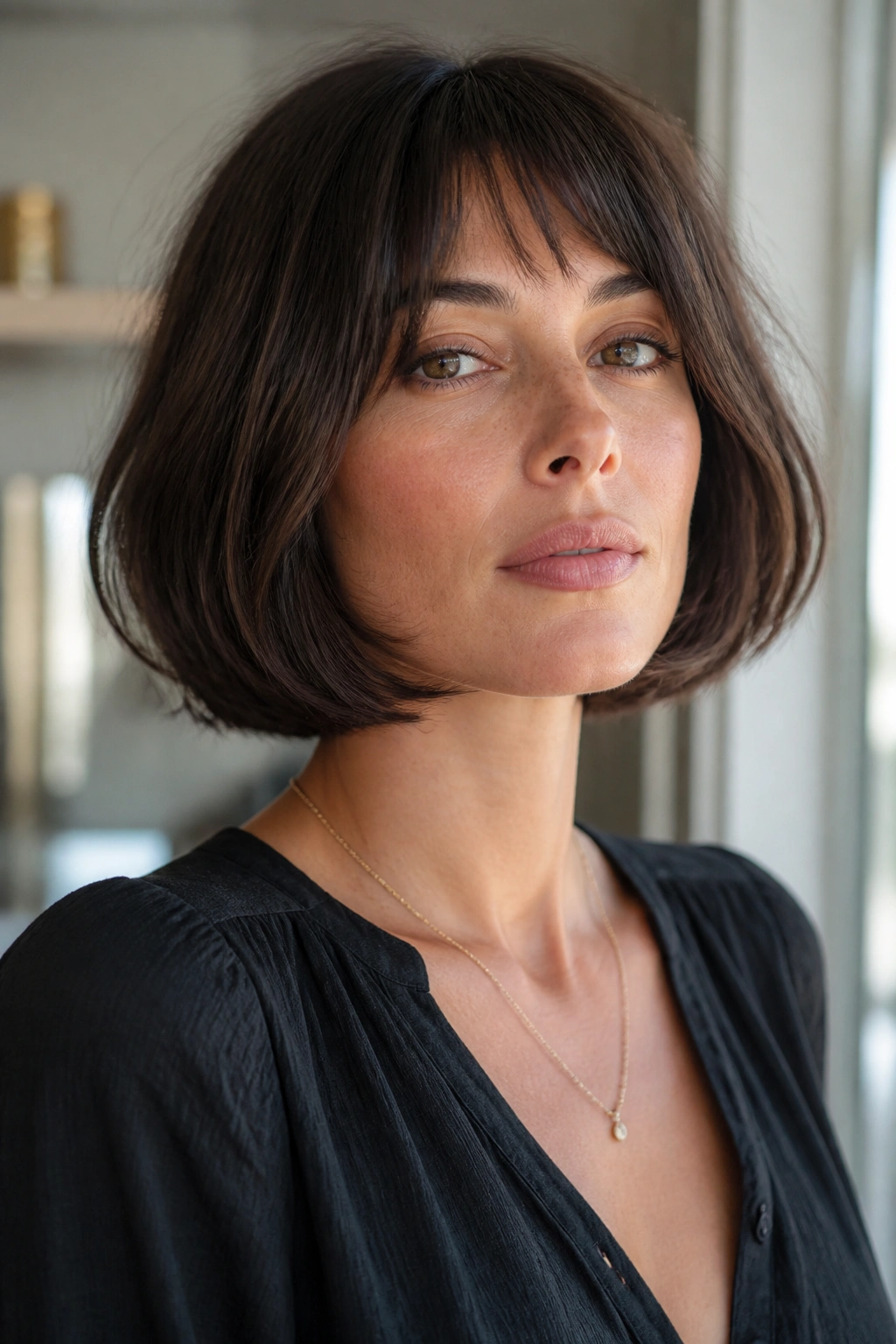
Can a chin-length French bob add width where you want it? Yes, if you shape it round instead of flat.
A rounded bob curves slightly outward at the sides and keeps some softness through the crown, which gives a narrow face a little more balance. The shape lands at the chin, but the outline feels fuller across the cheek area. That can be a very good thing if your face is long, slim, or naturally angular.
How to Get the Most From It
Ask for a bob that is slightly fuller through the middle section, not pinched tight behind the ears. A tiny bit of volume at the sides helps the shape read as round rather than narrow. A soft fringe can help too, especially if it does not sit straight across the forehead.
This version looks especially good with a round-brush blow-dry or velcro rollers at the sides for a few minutes. You are aiming for lift, not curl. A root spray at the crown keeps the shape from dropping.
The only thing to watch is over-tucking. If you keep the sides too close to the head, the face can start looking longer instead of softer. Leave the bob some room. It needs air.
16. Asymmetrical Chin-Length French Bob
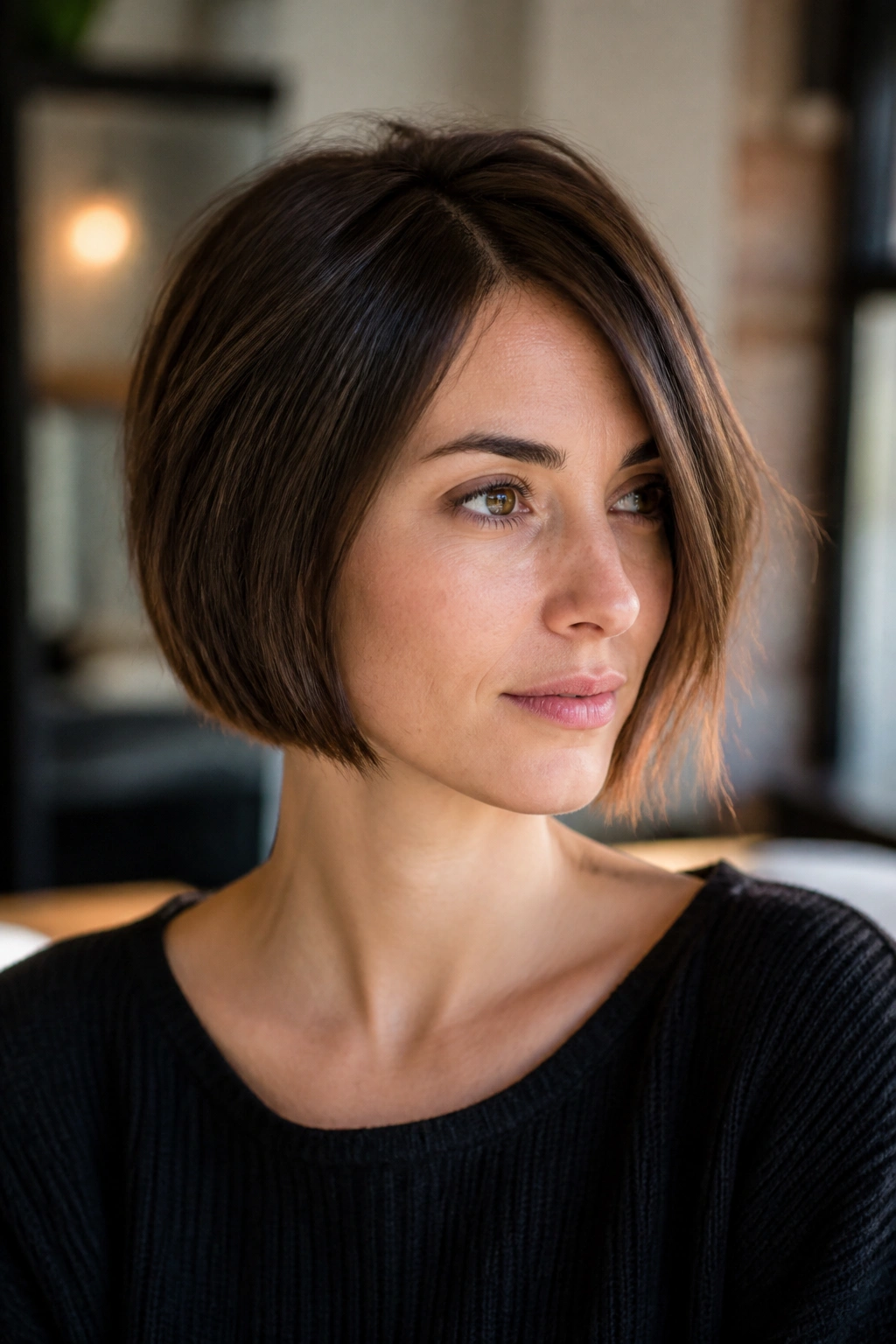
A tiny asymmetry can make a bob look more interesting without screaming for attention.
This is not a dramatic one-side-longer situation. The difference is subtle — one front edge may skim just a little lower than the other, or the part may sit off-center enough to make the outline feel slightly off-balance in a good way. That small shift gives the haircut movement even when the hair is straight.
I like this on people who want a French bob but worry about looking too neat. The asymmetry takes the edge off. It also helps if one side of your hair naturally falls differently from the other, because the cut can work with that instead of fighting it.
Good Reasons to Try It
- Softens strong symmetry in the face
- Makes straight hair look less flat
- Helps disguise a slightly fuller cheek on one side
- Adds interest without needing bangs
The best asymmetrical bobs still look intentional from every angle. That means the longer side should not feel accidental. It should be measured, even if only by a small amount. Keep the finish smooth and let the line do the talking.
17. Air-Dried French Bob with Natural Texture

Airdried hair can be a nuisance, or it can be the whole point. Here, it’s the point.
This chin-length French bob is built for natural texture. The cut should encourage your hair’s own bend, whether that is loose wave, soft curl, or a little bit of frizz that you decide not to fight every morning. The shape still sits near the chin, but the vibe is relaxed and touchable.
The best thing about this version is that it rewards honesty. If your hair bends left, the bob can bend left. If one side has a little more wave, the cut can handle it. That makes it one of the easiest styles to wear day to day.
A Simple Routine
- Work a light curl cream or styling milk through damp hair
- Scrunch once or twice, not twenty times
- Leave the crown alone so it does not puff up
- Let it dry without touching it until it’s about 80% dry
If you want a little more polish, tuck one side behind the ear after it dries. That tiny change is enough. This style is not about force. It’s about letting the haircut look like your hair, only better arranged.
18. French Bob with a Subtle Nape Undercut
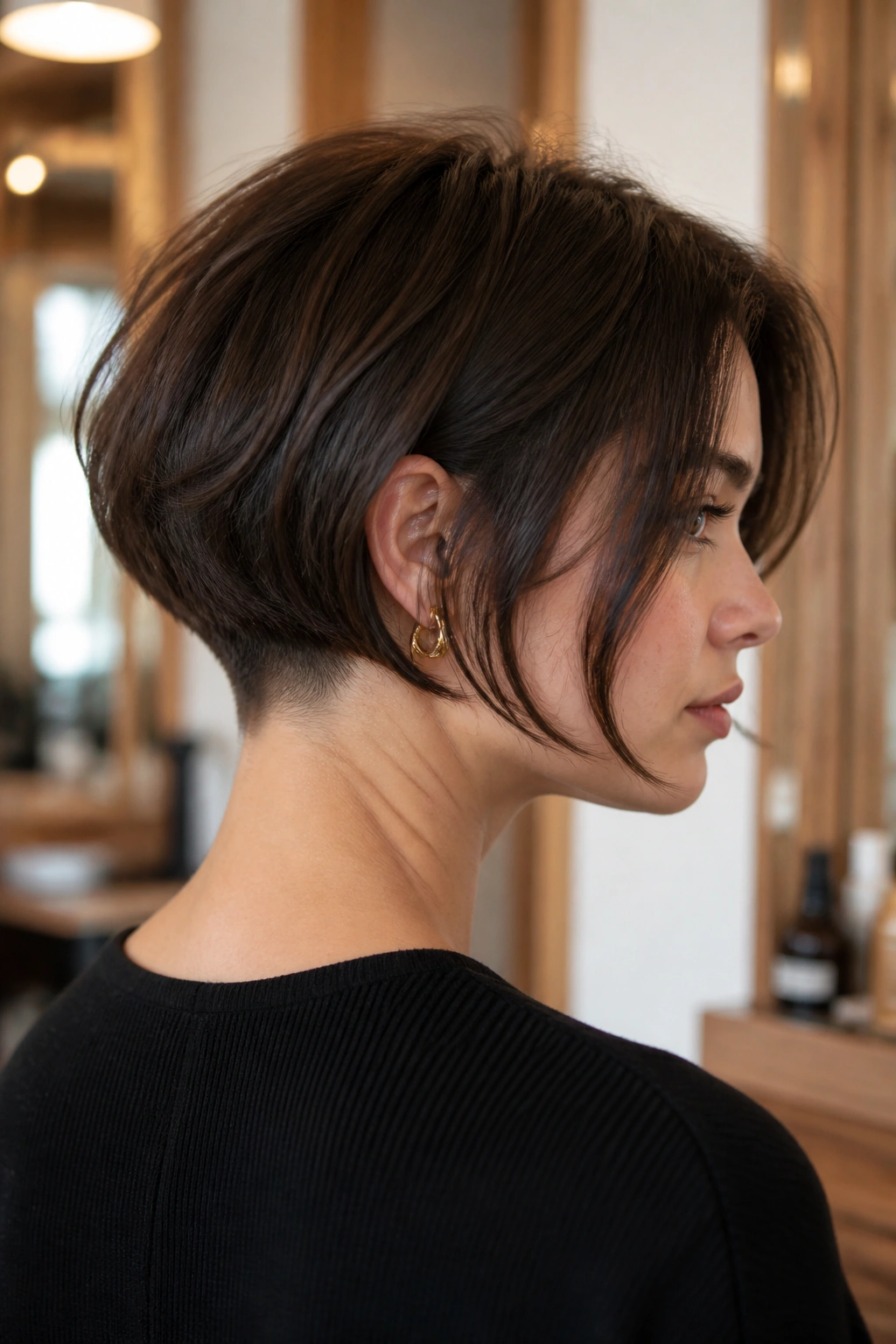
Bulk in the back can ruin a bob faster than almost anything else. A subtle nape undercut fixes that quietly.
This version keeps the top and sides full enough to look like a proper French bob, but removes a small amount of weight from the nape so the cut sits closer to the neck. That helps thick or heavy hair fall cleanly instead of sticking out like a shelf. From the front, you may barely notice the undercut. From the side and back, the shape lands much better.
The nice part is that it keeps the bob wearable for people who love chin-length hair but hate the maintenance that thick hair usually demands. You get less bulk, quicker drying time, and a cleaner line at the jaw. The look stays soft. It just behaves better.
This is not a choice for everyone. If your hair is already fine, you do not need hidden removal at the nape. But if your hair grows dense around the neckline, this little adjustment can save the whole haircut. It sounds small. It isn’t.
19. Chin-Length French Bob with Flipped-Out Ends
The flipped-out bob has a little retro energy, and I mean that in a good way.
Instead of curving under, the ends kick slightly outward at the bottom edge. That tiny flip gives the haircut a playful shape and keeps it from feeling too serious. At chin length, it can look especially good because the outward movement opens the jawline instead of closing it in.
How to Style It
Use a small round brush or a flat iron to flick just the last inch or so away from the face. Do not flip the whole section. That looks costume-y. The goal is a quiet bend that shows up when you move, not a hard curl. A little shine cream on the ends helps the flip stay smooth instead of frayed.
This version suits straight and slightly wavy hair best. It also works well with a fringe, though I’d keep the fringe soft if the ends are going outward. Too many strong shapes at once can feel busy.
The upside is simple: it brings a little lift to the haircut and makes the bob feel lighter. Sometimes that’s all a style needs.
20. French Bob with Invisible Layers and a Soft Bend
Some chin-length French bob ideas look special because they are loud. This one looks special because it is quiet.
Invisible layers keep the bulk from building up in one place, while a soft bend through the ends prevents the cut from sitting flat against the neck. From the outside, the bob still reads as clean and compact. Inside, it moves better than a one-length cut and needs less pushing around with your hands during the day.
This is the version I’d recommend to someone who wants a bob that behaves in real life, not just in salon lighting. It works on straight hair that needs a bit of motion, on wavy hair that needs shape, and on fine hair that wants lift without losing density. The styling is mild: a round brush, a quick bend, a touch of cream. That’s enough.
No dramatic fringe. No heavy layering. No strange angles. Just a chin-length French bob that sits nicely, softens the jaw, and keeps its line even when you skip a perfect blow-dry. That last part matters more than people admit.
