



A sleek ponytail can fix a messy hair day faster than almost anything else. Long hair gives the style weight, shine, and movement, but it also makes every little flaw show up fast — a puffy crown, a crooked part, a sagging elastic, and the whole thing starts looking tired.
That’s why sleek ponytail hairstyles for long hair keep hanging around. They’re simple on the surface, but the best ones have a lot of small decisions baked in: where the part sits, how flat the root area is, whether the tail is wrapped, braided, bubbled, or left straight. Get those details right and a ponytail stops looking like a backup plan.
I like these styles because they work with long hair instead of fighting it. A good sleek ponytail uses the length, shows off shine, and keeps the shape clean enough to wear with a T-shirt or a dress that needs a little more polish. The trick is matching the ponytail to the hair you actually have, not the one you wish you woke up with.
1. Center-Part Low Sleek Ponytail
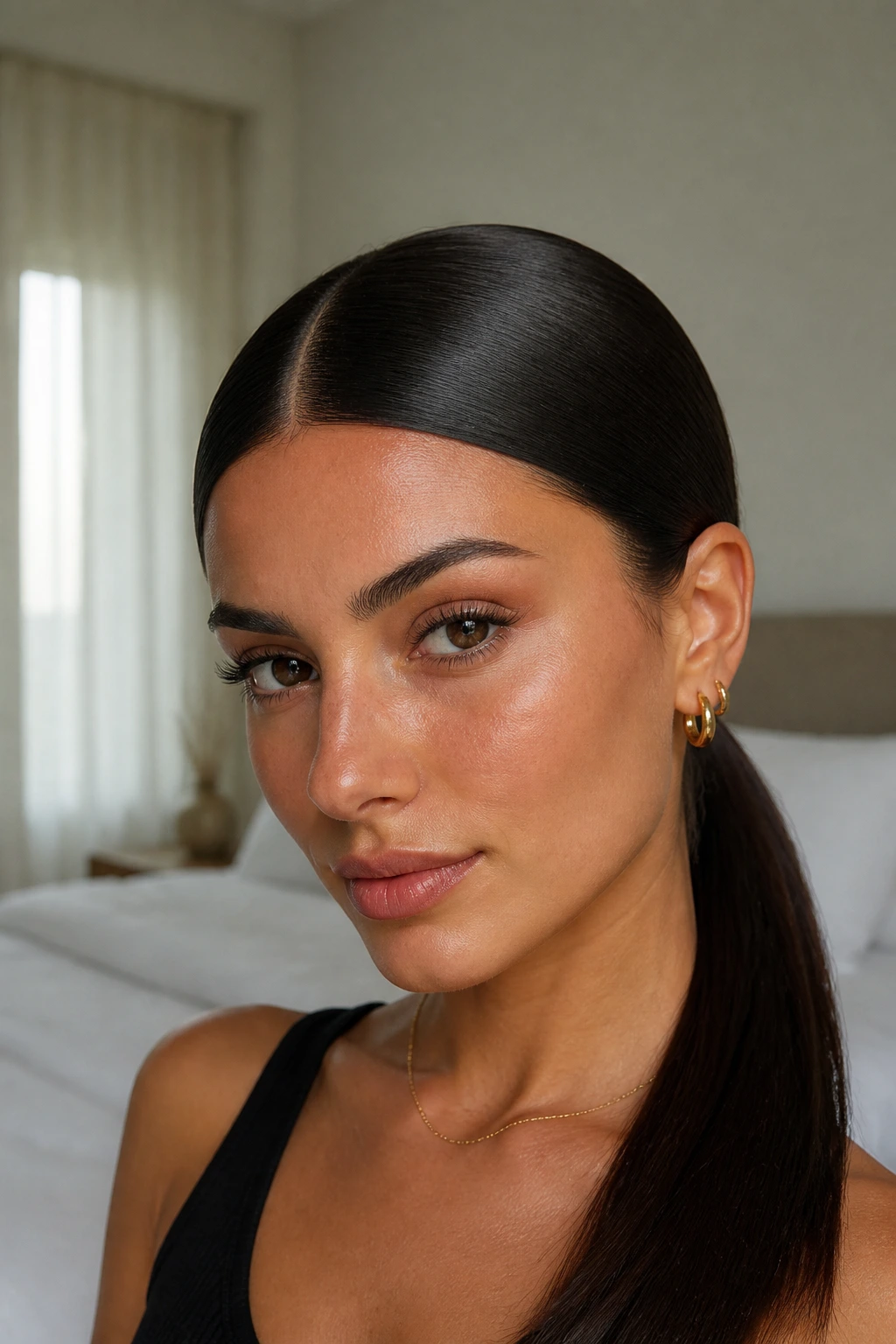
A center-part low sleek ponytail is the one I reach for when I want the cleanest possible line. It’s simple, but not boring. The middle part gives long hair a neat frame, and the low placement keeps the whole style calm and grounded.
Why It Looks So Sharp
The best thing about this version is the way it controls weight. Long hair can drag a ponytail down and make it feel sloppy, but a low anchor point at the nape keeps everything tidy. The center part also helps the style feel balanced, especially if your hair is thick and likes to puff at the crown.
How to Get the Part Right
A tail comb makes a bigger difference than people think. Draw the part first, then smooth each side back with a brush before you touch the elastic. If the roots keep splitting, mist the hairline with water or a light styling lotion and press it flat with the flat side of the brush.
- Best on straight, blown-out, or lightly heat-smoothed hair
- Use a clear elastic or a slim covered band
- Wrap a 1-inch strand around the elastic for a cleaner finish
- Keep the tail low enough that the crown does not lift
My favorite detail: the hair should feel flat at the roots but not stiff. That balance matters.
2. Deep Side-Part Sleek Ponytail
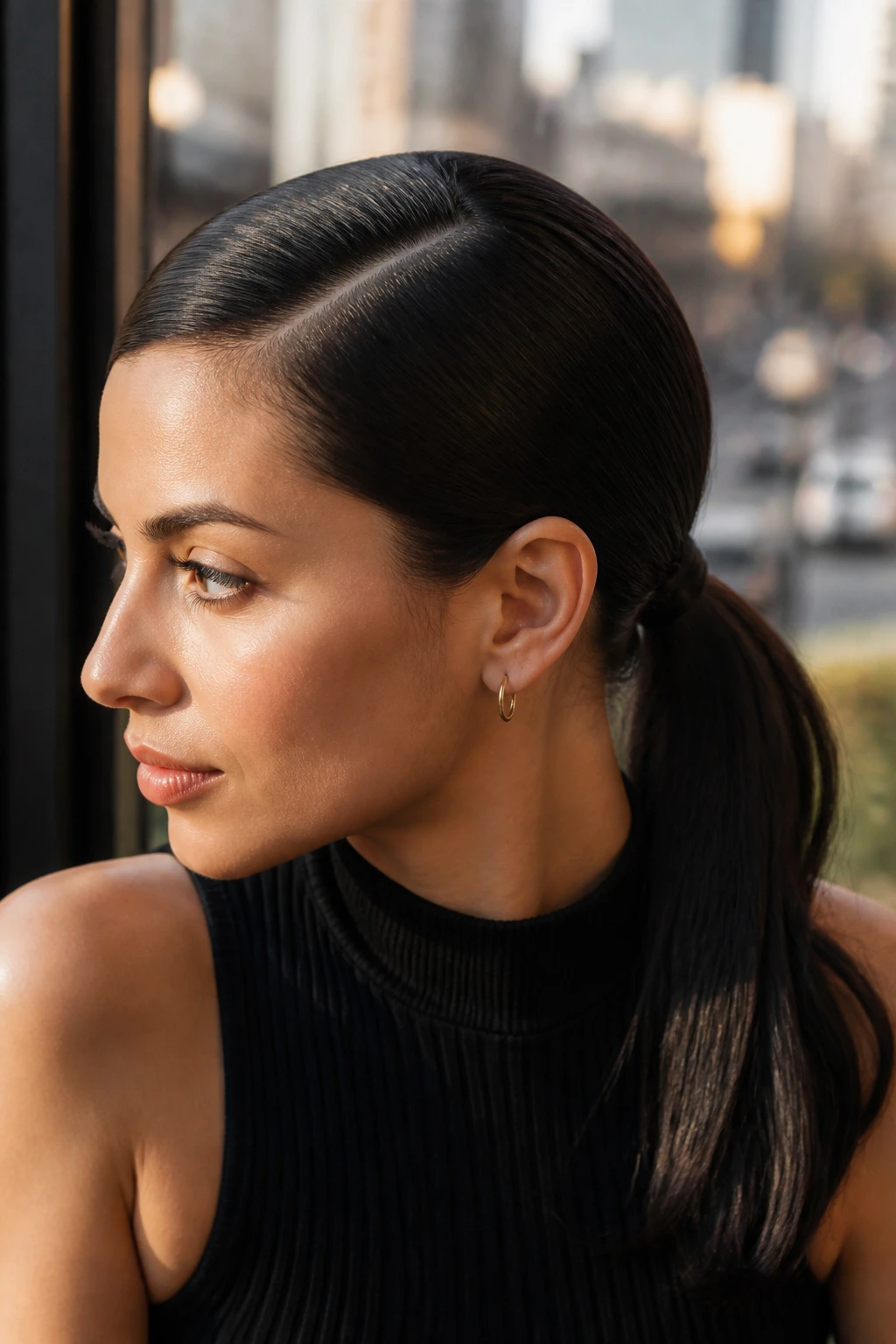
A deep side-part ponytail changes the mood fast. The style still feels smooth and controlled, but the off-center part softens the look and gives the face a little more shape. If a middle part feels too severe, this is the smarter move.
The side part also helps long hair fall in a more relaxed way. One side naturally frames the cheekbone while the rest sweeps back, which means the style looks a touch more dressed up without needing curls or volume. It’s a good choice when your hair is heavy and a center part makes it go flat in a way that feels severe.
I especially like this version with a low ponytail and a smooth side tuck behind the ear. The result is neat, but not strict. If you want it even cleaner, use a dab of gel along the part and brush the hair back in sections so the front doesn’t puff up later in the day.
3. Mid-Height Sleek Ponytail
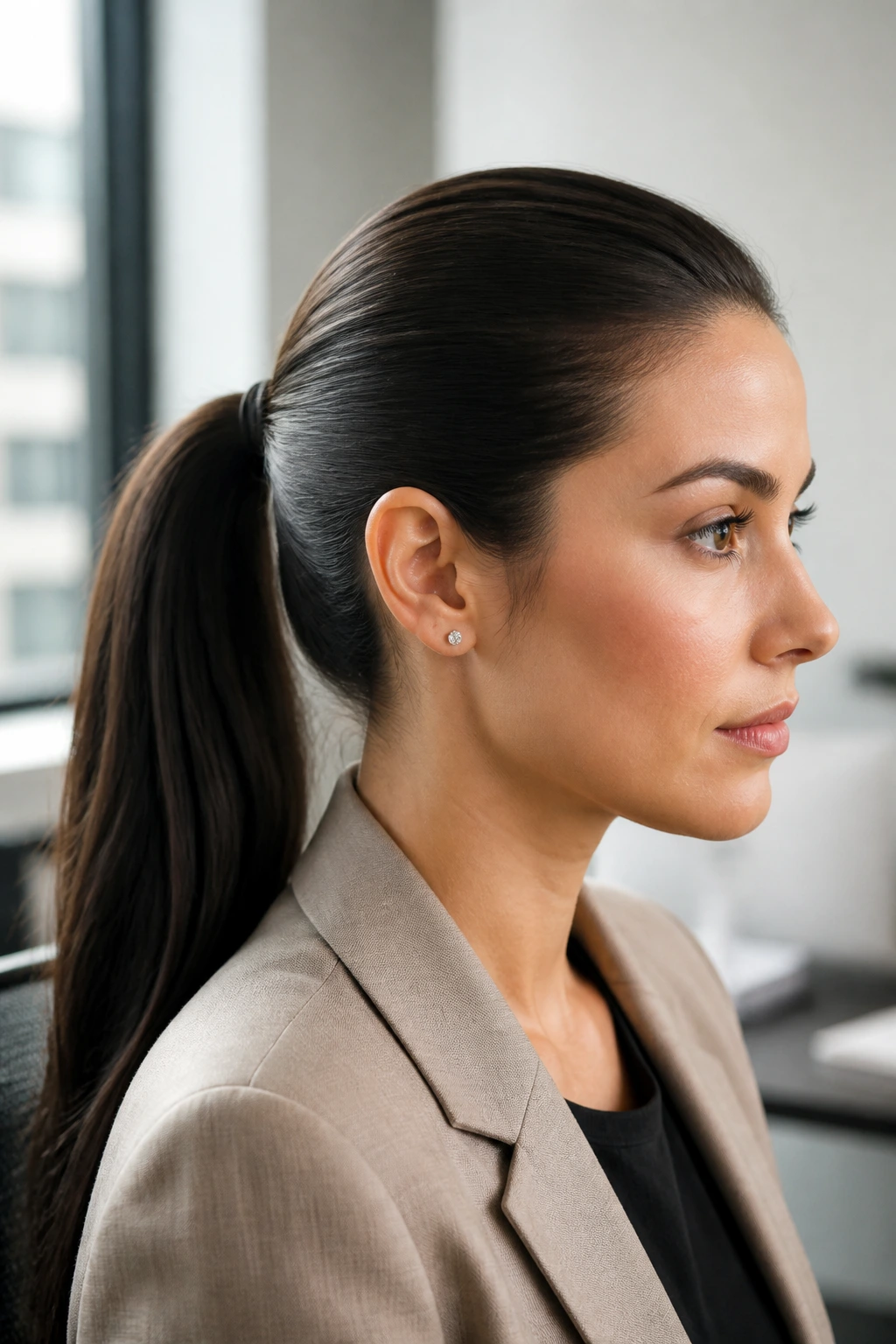
Why does a mid-height ponytail work so well on long hair? Because it sits in the sweet spot between casual and formal. It lifts the face a bit, keeps the neckline open, and still lets the tail hang with enough length to feel intentional.
The height matters more than people admit. Too low and the style can drag. Too high and it starts fighting the weight of long hair, which can make the base look strained. Mid-height stays steadier, especially if your hair is thick or layered.
How to Set the Height
Place the elastic around the upper part of the back of the head, roughly in line with the tops of your ears. That gives the tail enough lift without making the crown look pushed up. If your layers slip, pin the short pieces under the elastic before you wrap the base.
When It Works Best
- Office days
- Dinner plans
- Blazer-and-hoop-earring outfits
- Hair that needs a clean shape but not a severe one
A quick mist of strong-hold spray at the roots keeps the front smooth. Don’t drown it. A little goes a long way.
4. High Wrapped Ponytail
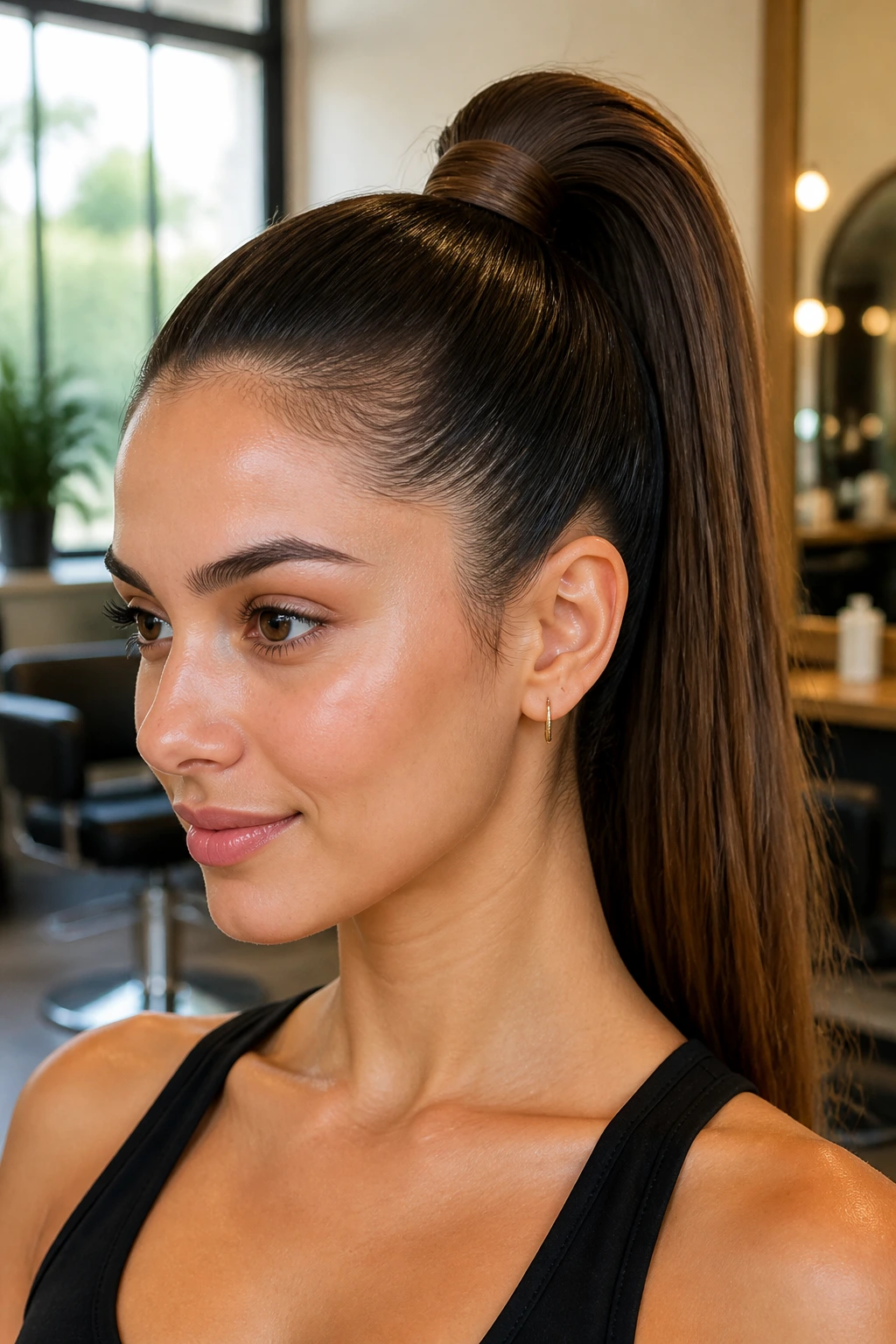
Picture long hair pulled high enough to clear the face, then wrapped so the base looks finished instead of gym-ready. That’s the appeal here. A high ponytail gives energy and lift, and the wrapped base keeps it from reading too casual.
This style shines when you want the face open and the neck visible. It also does a nice job of showing off shine because the hair is pulled tight from root to tail. If your hair tends to droop during the day, this is the version that holds its shape better than a loose high ponytail.
A few small details make a big difference:
- Brush the hair upward in sections, not all at once
- Secure it with a tight elastic first, then add a second one if the hair is heavy
- Wrap a thin strand around the base and pin it underneath
- Use a strong brush to smooth the sides before the elastic goes in
The style can feel bold, but it is not fussy. That’s why it works.
5. Bubble Ponytail
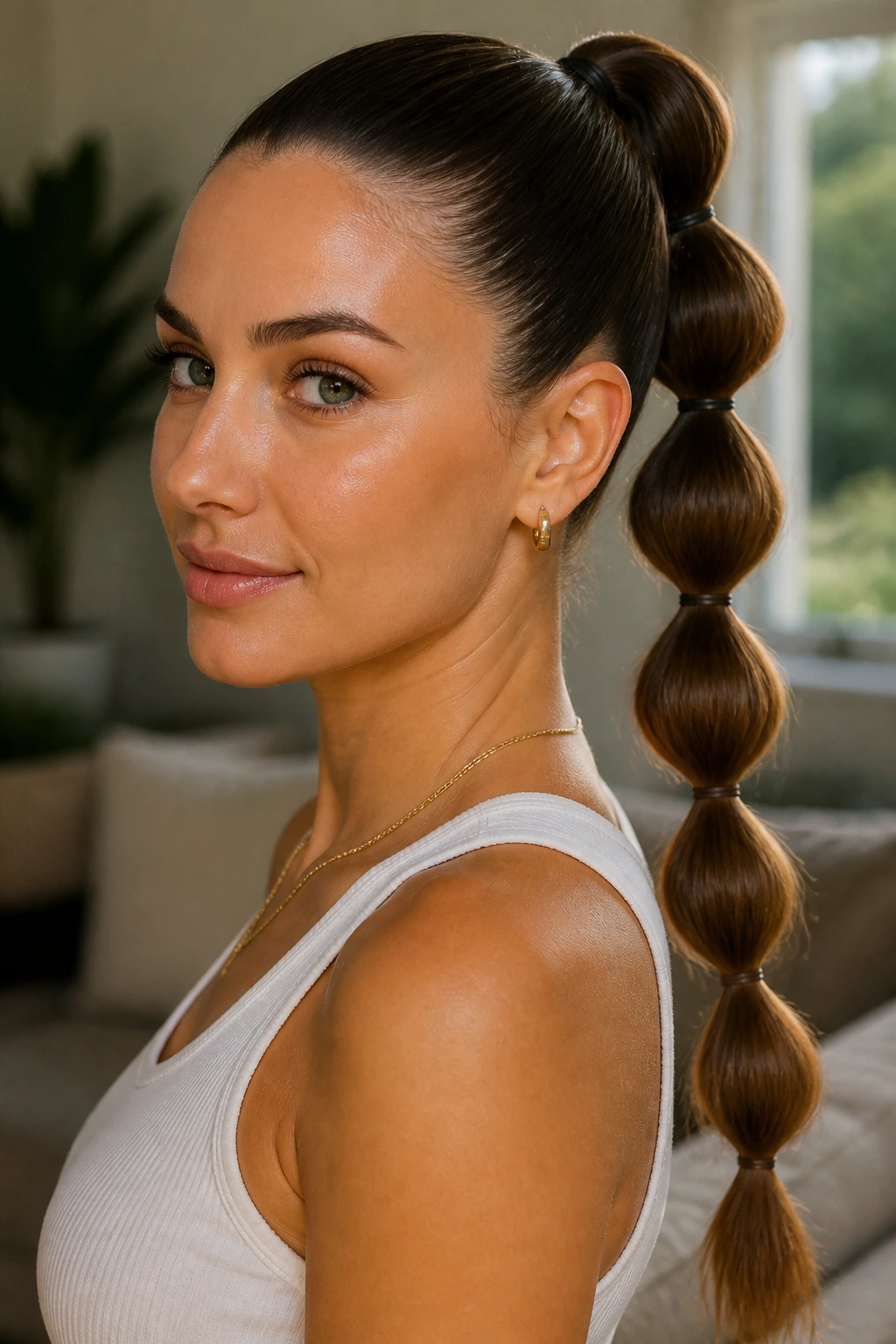
A bubble ponytail is what happens when a sleek ponytail gets a little personality. The crown stays smooth and polished, then the tail gets broken into rounded sections with elastics spaced a few inches apart. On long hair, that shape looks especially good because the bubbles have room to show up instead of looking cramped.
I like this one when plain straight lengths start feeling flat. The bubbles create structure without needing curls or a lot of teasing, which keeps the style cleaner than you might expect. Use small clear elastics or slim bands and gently pull each section outward after you tie it. That soft tug gives the bubble its shape.
The spacing matters. On very long hair, place the elastics about 2 to 3 inches apart. Closer together and the bubbles look tiny. Too far apart and the tail starts losing its rhythm. Keep the first section nearest the base slightly tighter than the ones below it so the whole ponytail doesn’t sag.
It’s a playful look, sure. But on long hair, it still feels deliberate.
6. Braided Base Ponytail
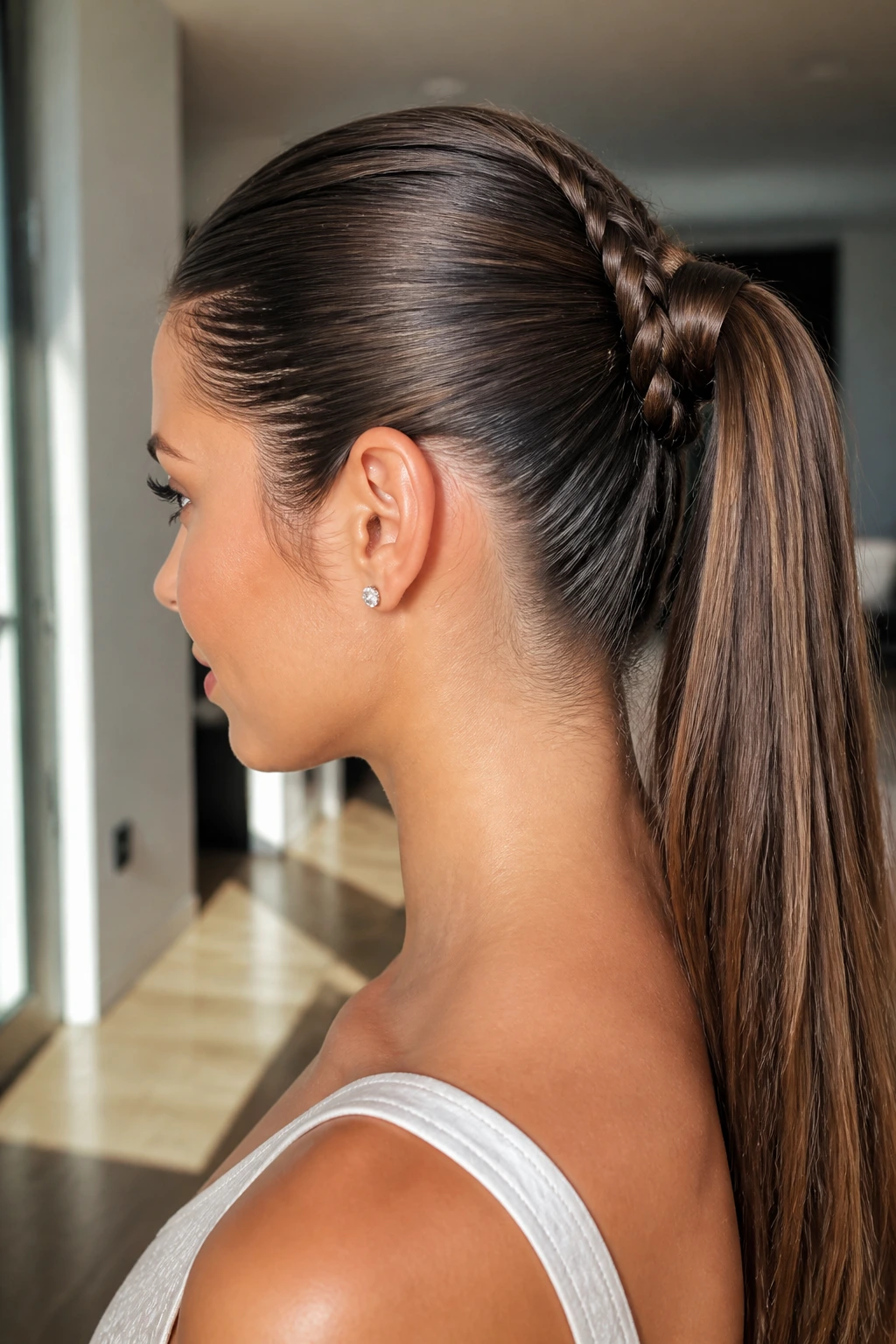
Unlike a plain ponytail, a braided base ponytail keeps the tail from looking too loose at the end. That’s the whole point. The crown stays sleek, while the length either starts with a braid right below the elastic or gets fully braided for a more controlled finish.
This style is especially good if your hair is thick, slippery, or one of those textures that looks smooth for ten minutes and then starts escaping. A braid gives the tail a little more grip. It also makes long hair feel lighter visually, which can be useful if you have a lot of it and want the shape to look less heavy.
Where It Fits Best
- Workouts that still need a neat look
- Long workdays
- Heatless styling days
- Hair that tangles easily at the ends
A French braid feeding into a ponytail looks more structured. A simple three-strand braid started at the elastic looks softer. I tend to prefer the second one if the rest of the style is very sleek, because it keeps the finish from getting too busy.
7. Wet-Look Ponytail
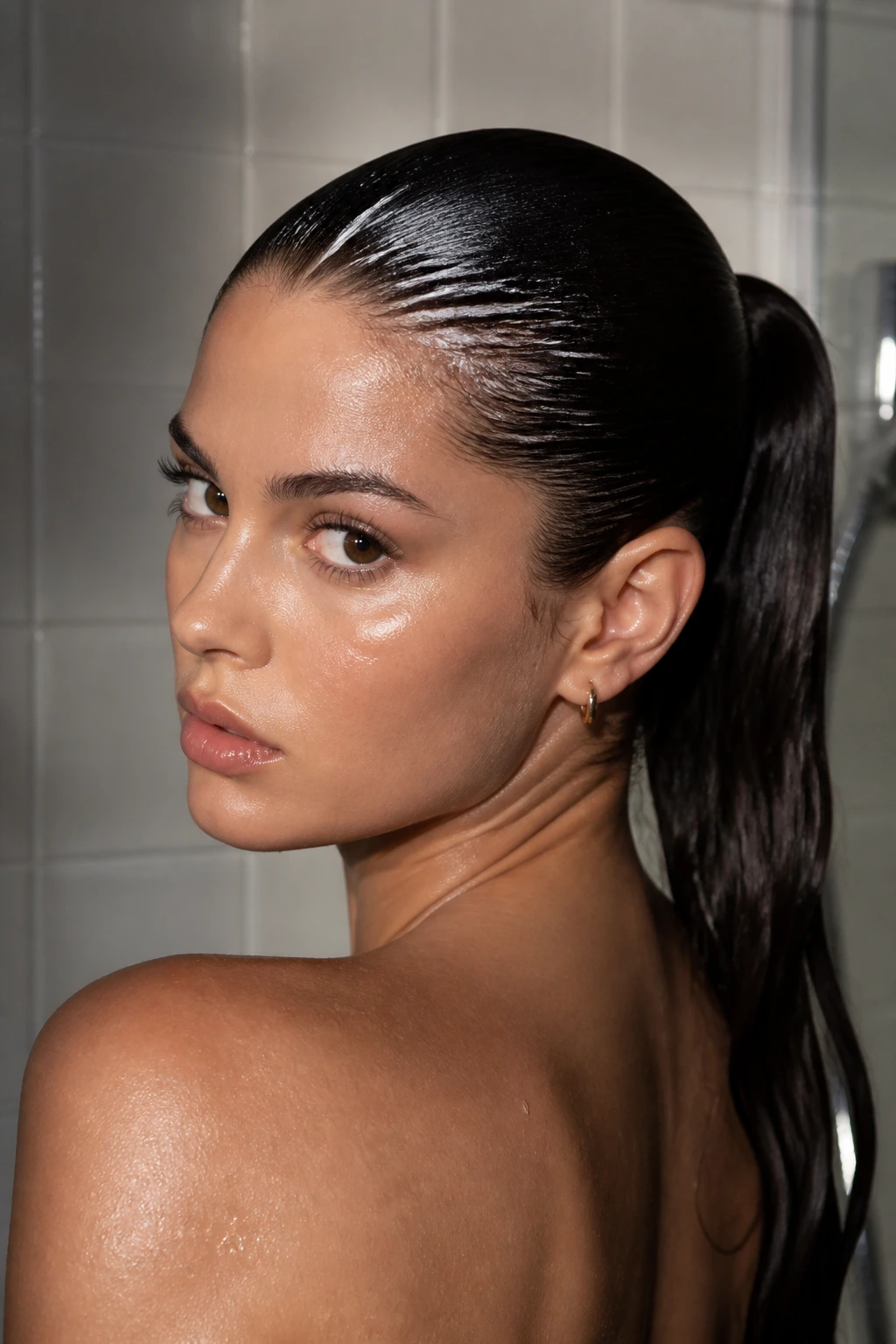
A wet-look ponytail is sleek ponytail styling turned all the way up. The shine is the point. The hair looks damp, glossy, and tightly controlled, which gives long hair a dramatic edge that plain smoothing cream can’t quite match.
But this style has a trap. Too much product and the hair turns stringy or flakes at the hairline. Too little and it loses the wet effect. The sweet spot is usually a thin layer of gel at the roots and a lighter shine product through the tail, with most of the product concentrated near the crown and temples.
What to Watch For
- Choose a gel that dries clean, not chalky
- Brush the product in with a dense bristle brush
- Keep the ends a little softer than the roots
- Wipe stray product off the skin before it sets
The look works best when the ponytail itself is straight and compact. If the tail is frizzy or the part is fuzzy, the whole thing falls apart fast. This one rewards careful brushing.
8. Side-Swept Sleek Ponytail
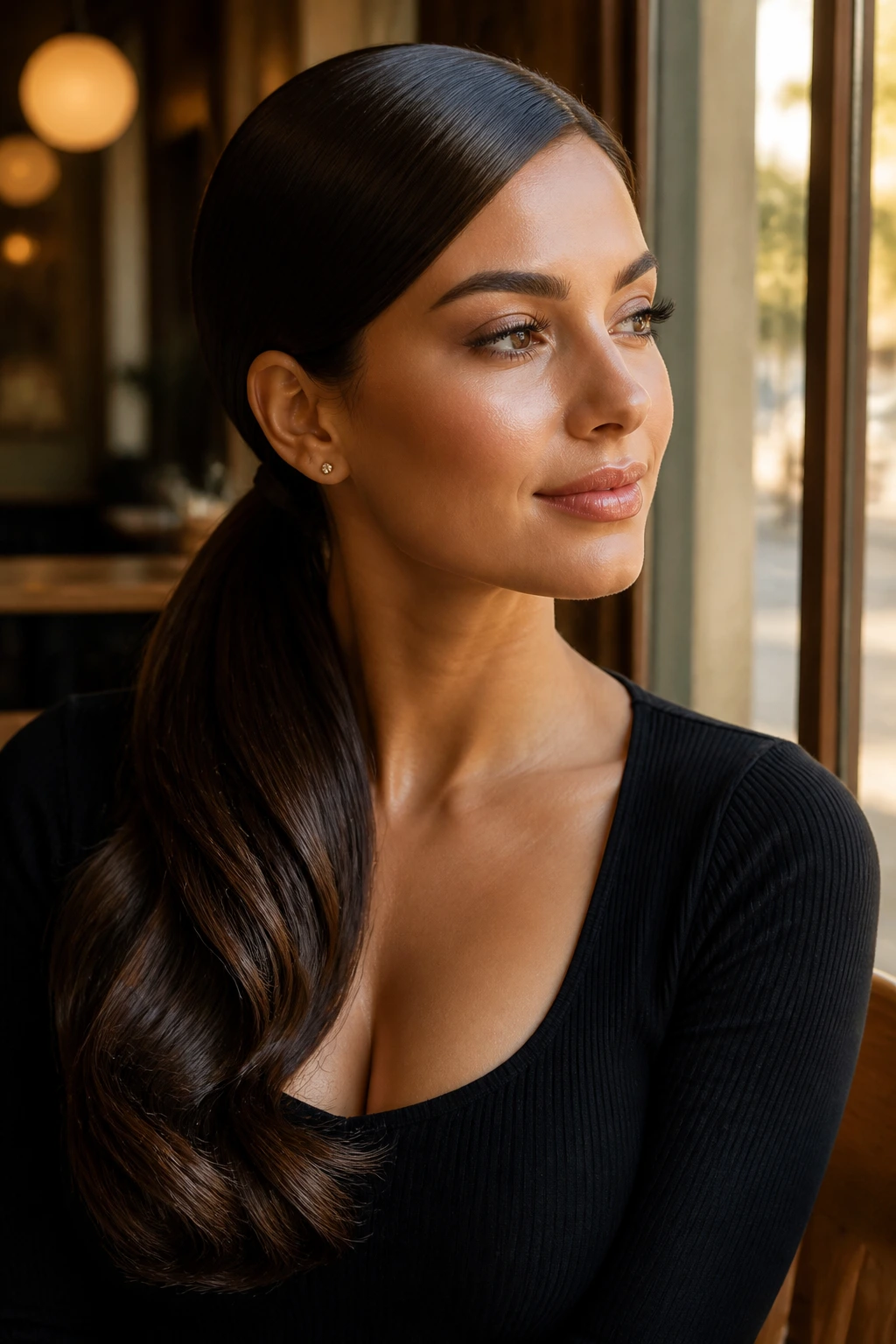
Can a ponytail look soft and formal at the same time? Absolutely. A side-swept ponytail proves it. The style keeps the crown smooth, then gathers the hair low and to one side so the length falls over one shoulder instead of straight down the back.
That angle changes everything. Long hair gets a little more movement, and the style feels less rigid than a center-back ponytail. It also works well with earrings, high necklines, and tops that already have a strong shape at the collar. You do not need a lot of volume here. The clean sweep is enough.
If you want it to stay neat, anchor the ponytail just behind the ear on the lower side of the head. Then brush the opposite side flat and pin any shorter front pieces under the tail if they keep slipping. A light mist of hairspray along the part helps the style stay put without making it crunchy.
It’s graceful without being precious. I think that’s why it keeps working.
9. Half-Up Sleek Ponytail
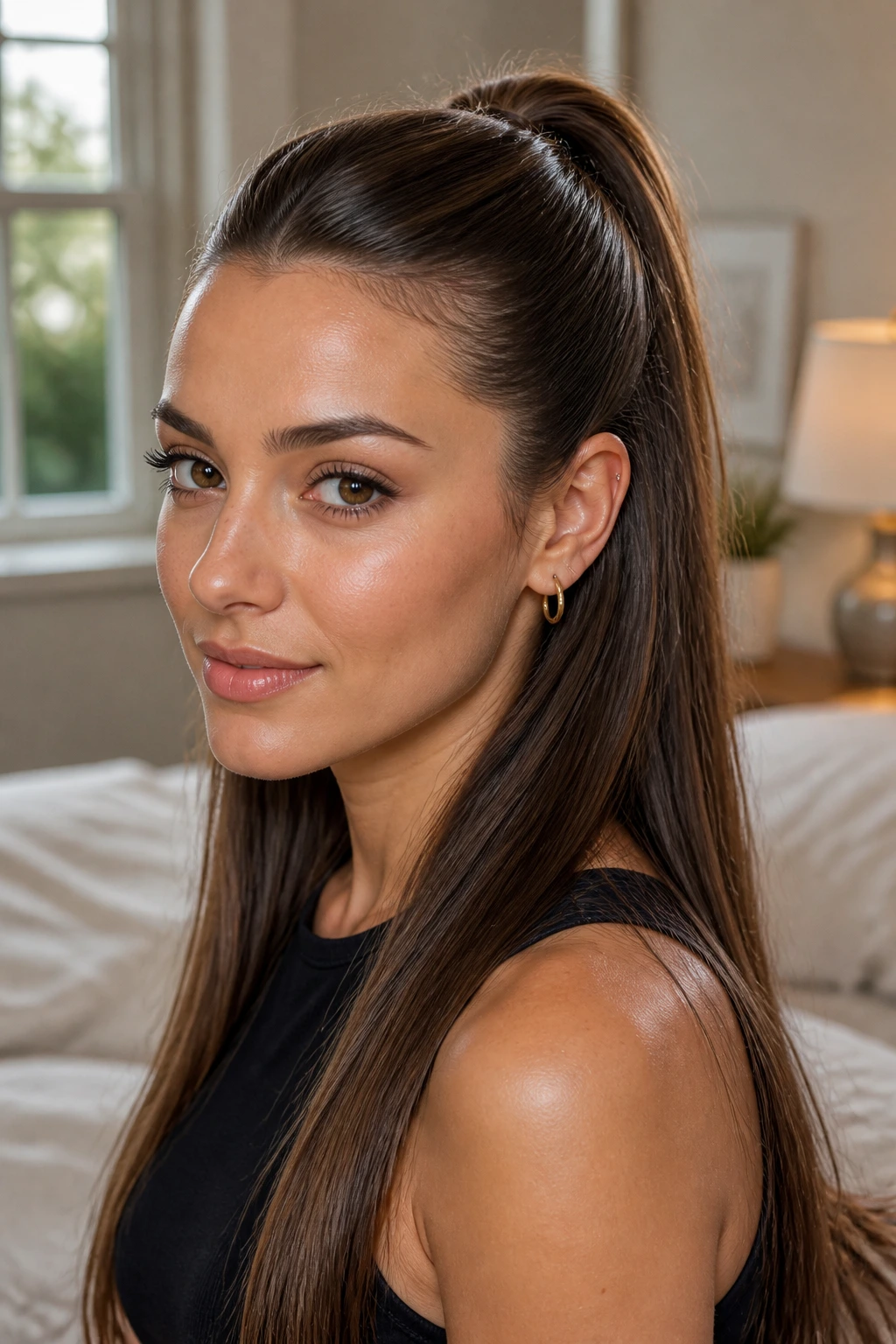
Long hair can get heavy. Sometimes you want the face lifted without pulling every strand back, and that’s where the half-up sleek ponytail earns its place. The top section gets smoothed and tied off, while the rest of the length stays down and free.
The effect is clean at the front and softer everywhere else. It’s a good choice if your hair is layered, because the lower section can keep its movement while the upper portion holds the shape. It also helps if you like sleek styling but don’t want the full tension of a ponytail sitting at the scalp all day.
A few practical reasons people keep coming back to it:
- It stops hair from falling into the eyes
- It shows off the length without flattening everything
- It works with straight, wavy, or blow-dried hair
- It’s easier on the scalp than a full tight ponytail
Keep the top section narrow if you want a delicate look, or take more hair from the crown if you want stronger lift. Both work. The mood changes fast depending on how much you pull back.
10. Twisted Low Ponytail
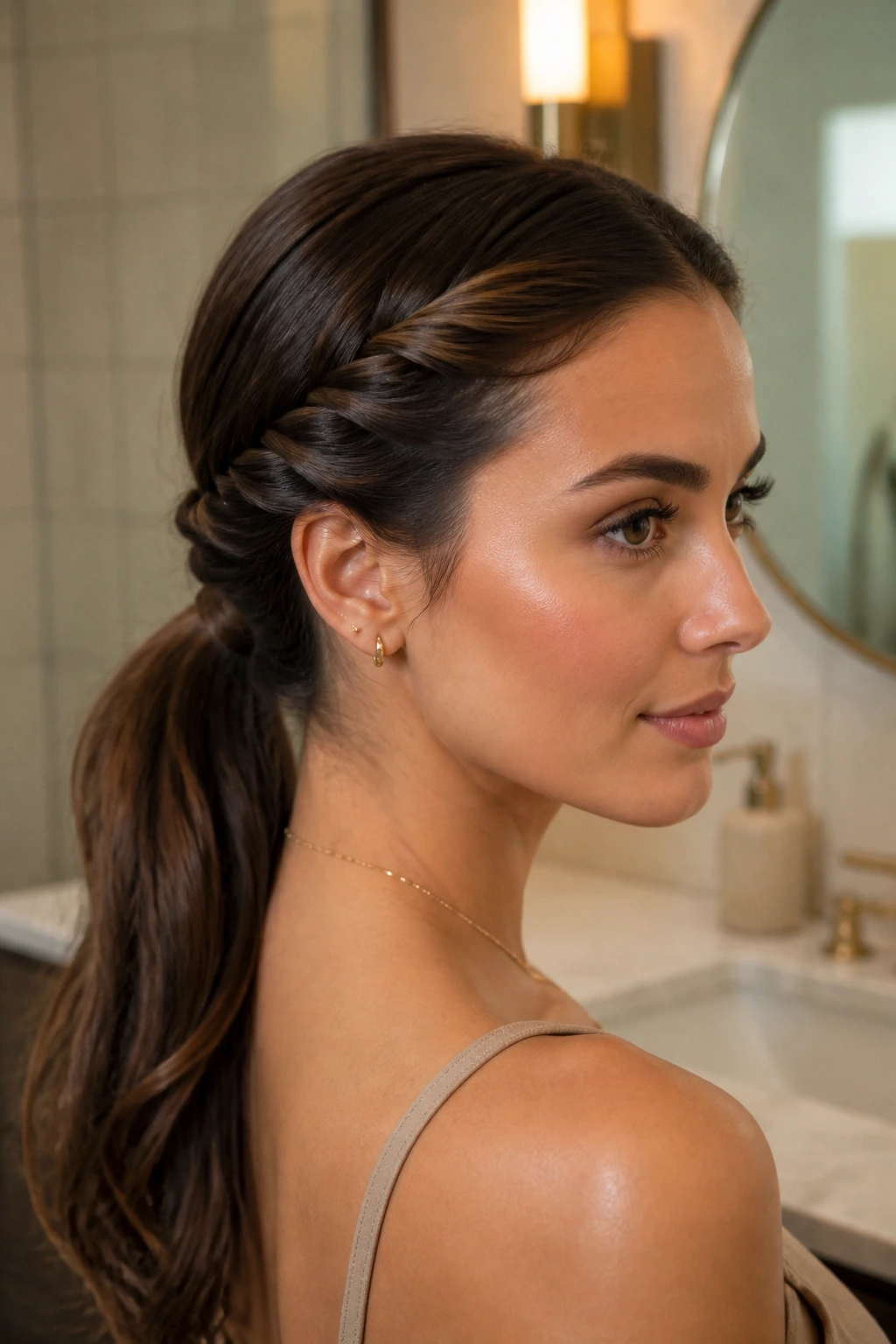
A twisted low ponytail looks simple from the front, then gives you that little twist detail at the sides that makes the style feel more considered. Two sections are rolled or twisted back from the temples before they join the ponytail, which keeps the crown smooth and helps hide shorter layers.
I like this one for long hair that has grown out in stages. The twists make the front look neat even when the hair underneath isn’t perfectly uniform. They also help if the hairline tends to puff at the temples, because the twisting motion presses everything back into place.
The base should sit low and secure. After that, twist the side sections tightly enough that they hold shape, but not so tightly that the hair starts to kink. A couple of bobby pins tucked behind the elastic can keep the twist from loosening.
It’s a small detail. Still, it changes the whole ponytail.
11. Rope-Braid Ponytail
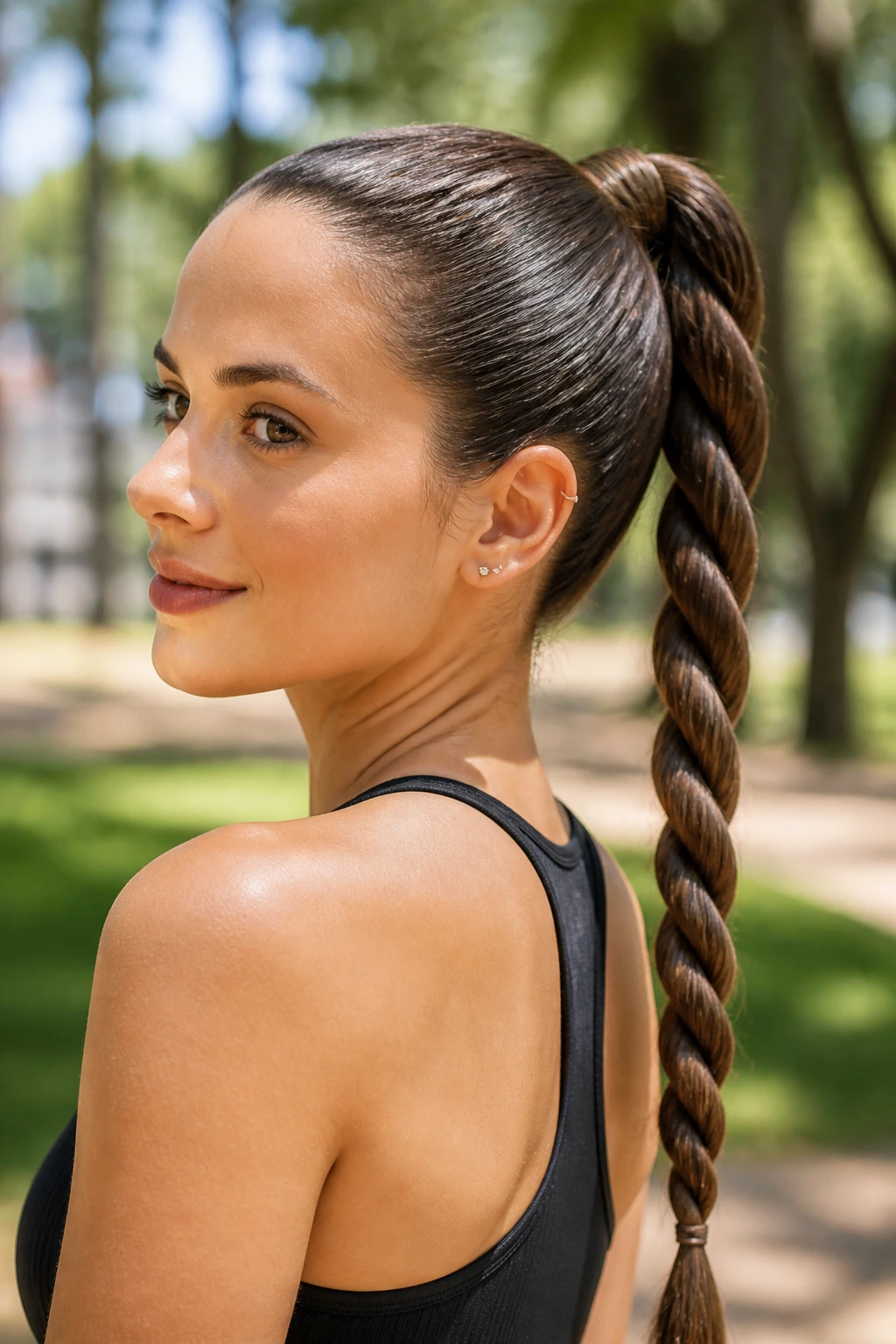
A rope-braid ponytail looks cleaner than a traditional braid on very long hair, which is why I keep coming back to it. The hair is divided into two sections, twisted in one direction, then wrapped around each other in the opposite direction. The result is slim, neat, and a little more sculpted than a regular three-strand braid.
That shape matters when the tail is heavy. A rope braid holds the length close to itself, so the style doesn’t puff out the way some braids do. It also shows off shine well because the twist catches the light differently on each turn. If your hair is straight or blown smooth, the effect is even sharper.
It works especially well if you want a ponytail that won’t tangle easily while you move around. The braid keeps the ends contained and stops the whole tail from getting frizzy by lunch. That’s a small thing, but anyone with long hair knows how fast a loose tail can turn into a nest.
A narrow elastic at the end helps the rope braid stay crisp. Tiny detail. Big payoff.
12. Curled-End Sleek Ponytail
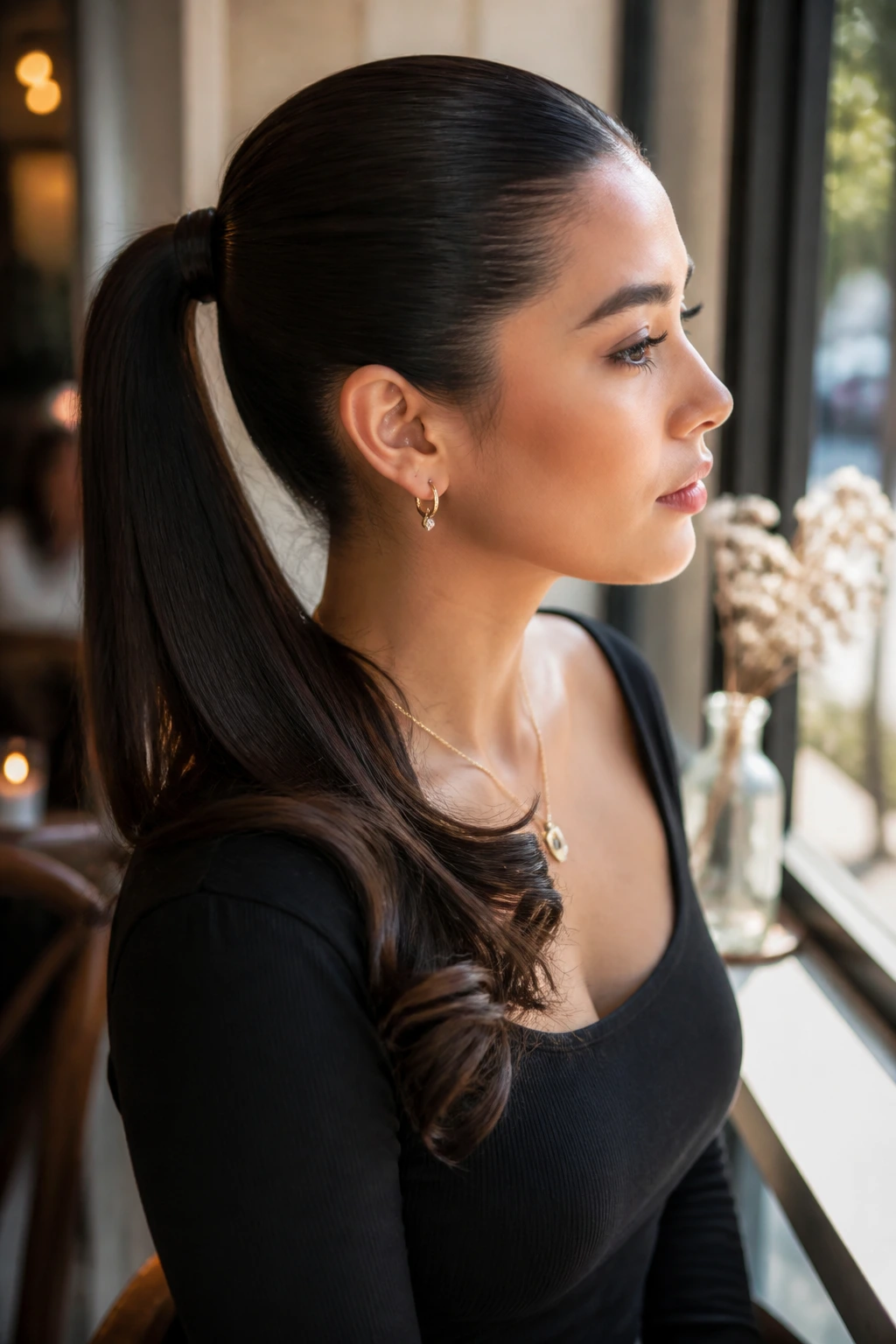
A straight, sleek base with curled ends gives long hair a stronger finish than a tail that hangs dead straight. The contrast is the point. The crown stays smooth and controlled, then the last section of the ponytail gets a bend or a curl so the style doesn’t feel too strict.
This is one of my favorite ways to dress up a ponytail without changing the whole shape. Curling only the bottom half of the tail keeps the root area neat while adding movement where long hair naturally wants to fall flat. It also helps the ends look thicker, which matters if your hair tapers a lot.
How to Keep the Curl Soft
Use a 1-inch curling iron or wand and wrap 1.5-inch sections around it for a few seconds at a time. Let the curls cool before you brush them lightly with fingers or a wide-tooth comb. A flexible hairspray is better than a heavy one here. Hard spray makes the ends look stiff, and that kills the effect.
This version looks especially good with a clean middle part or a sleek side part. It gives the whole ponytail a little finish without making it overworked.
13. Extension Ponytail
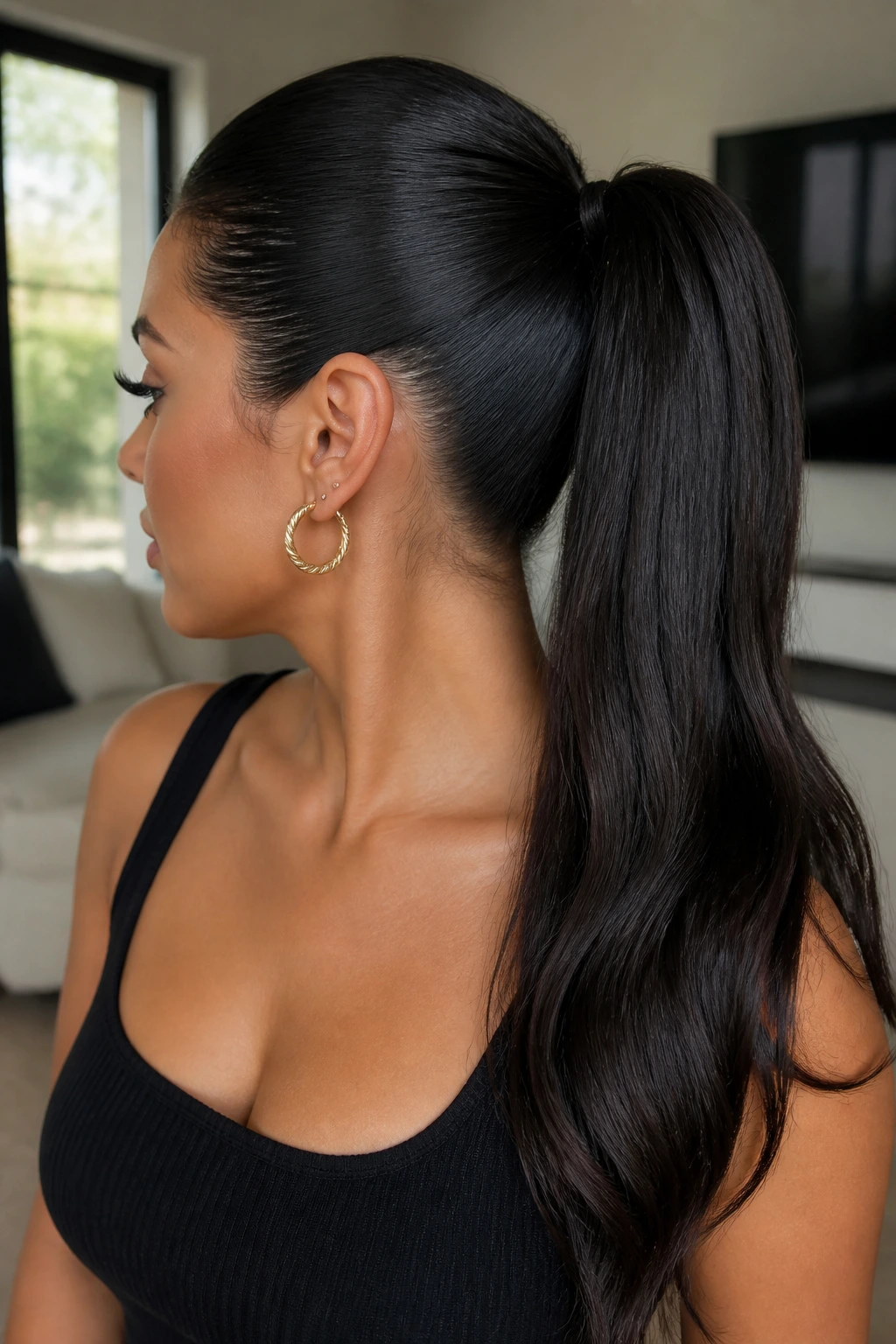
If your own hair does not give you the length or thickness you want, a ponytail extension can make the style look full in seconds. The important thing is choosing one that matches the texture of your hair, not just the color. A close color match matters, sure, but a shiny extension on matte hair or a coarse extension on smooth hair will still look off.
The best clip-in or wrap-style ponytails disappear when the base is tight and the attachment sits flat. That means your own ponytail needs a solid anchor first. I usually like to secure the natural hair with two elastics crossed over each other if the hair is heavy, then attach the extension over that base. It holds better and keeps the weight from dragging the style down.
What Makes It Look Real
- Match the sheen, not just the shade
- Smooth your natural ponytail before attaching anything
- Hide the join with a wrapped strand or built-in wrap piece
- Brush the finished tail together so your hair and the extension blend
A good extension ponytail should move with the rest of the style, not sit there like a separate object. That’s the difference people notice.
14. Loop-Through Ponytail
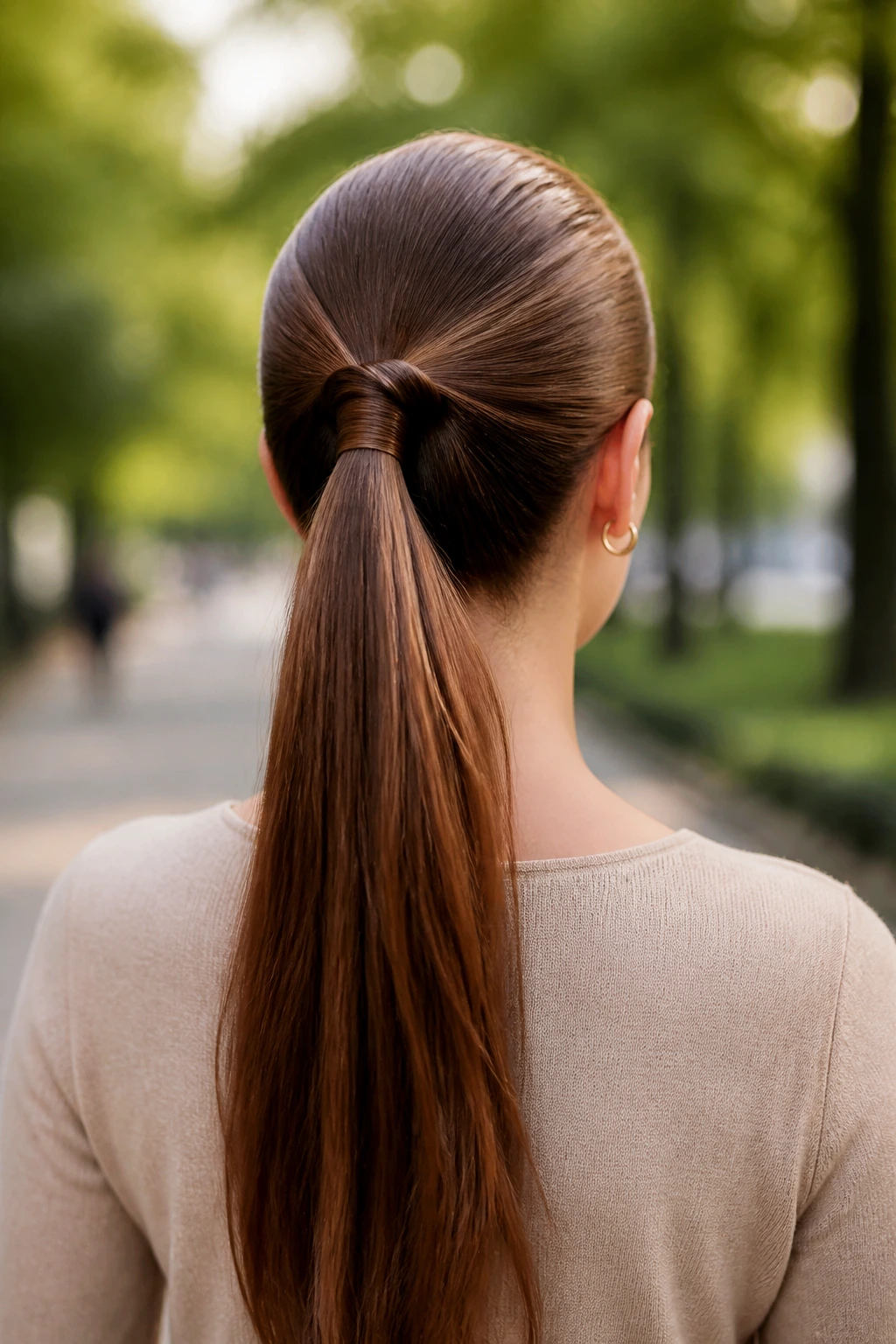
A loop-through ponytail gives long hair a neat shape with almost no drama. The style starts like a regular ponytail, then the tail is passed through a small opening above the elastic to create a tucked, twisted look. Some people call it a topsy-tail, and that old-school name still fits.
I like it because it makes a basic ponytail feel finished without requiring braids, hot tools, or a pile of product. The loop creates a clean fold at the base, which can be helpful when the hair is a little layered or when the elastic itself tends to show. On long hair, the twist gives the tail a little visual structure before it drops down.
It works best when the section above the elastic is smooth and the opening you make is neat. If the gap is sloppy, the whole look gets messy fast. Keep the twist centered and pull the ponytail through in one steady motion. Then tighten the elastic a touch and smooth the surface with your fingers.
Simple. Clean. Fast. Sometimes that’s enough.
15. Scarf-Wrapped Ponytail
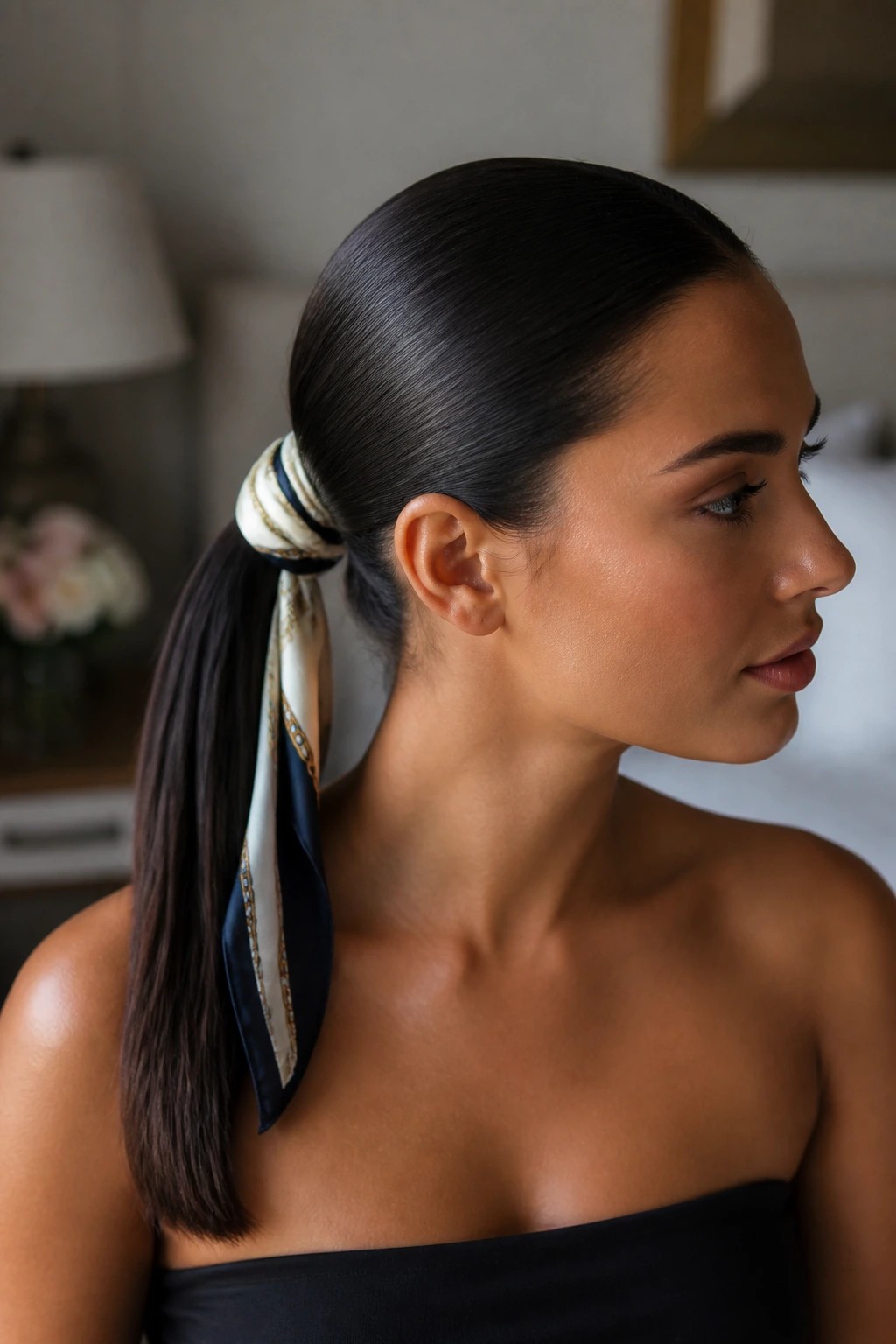
A silk scarf against sleek hair changes the whole mood of a ponytail. The surface looks smoother, the base feels more finished, and the color or print of the scarf gives the style some personality without making it fussy. It’s a smart way to dress up long hair when you want the ponytail to do more than sit there.
The scarf can wrap the elastic, trail down with the tail, or knot just under the ponytail for a softer accent. I like a thin scarf best because a bulky one can make the base look oversized. Fold it into a narrow band, tie it under the elastic, and keep the knot flat so it doesn’t poke out under your hair.
This style also helps break up a heavy stretch of straight hair. Long lengths can sometimes look too uniform, and the scarf gives the eye a place to stop. That small interruption makes the whole ponytail feel less plain.
Choose a scarf that feels slippery and light. Stiff fabric tends to bunch.
16. Braided Crown into Ponytail
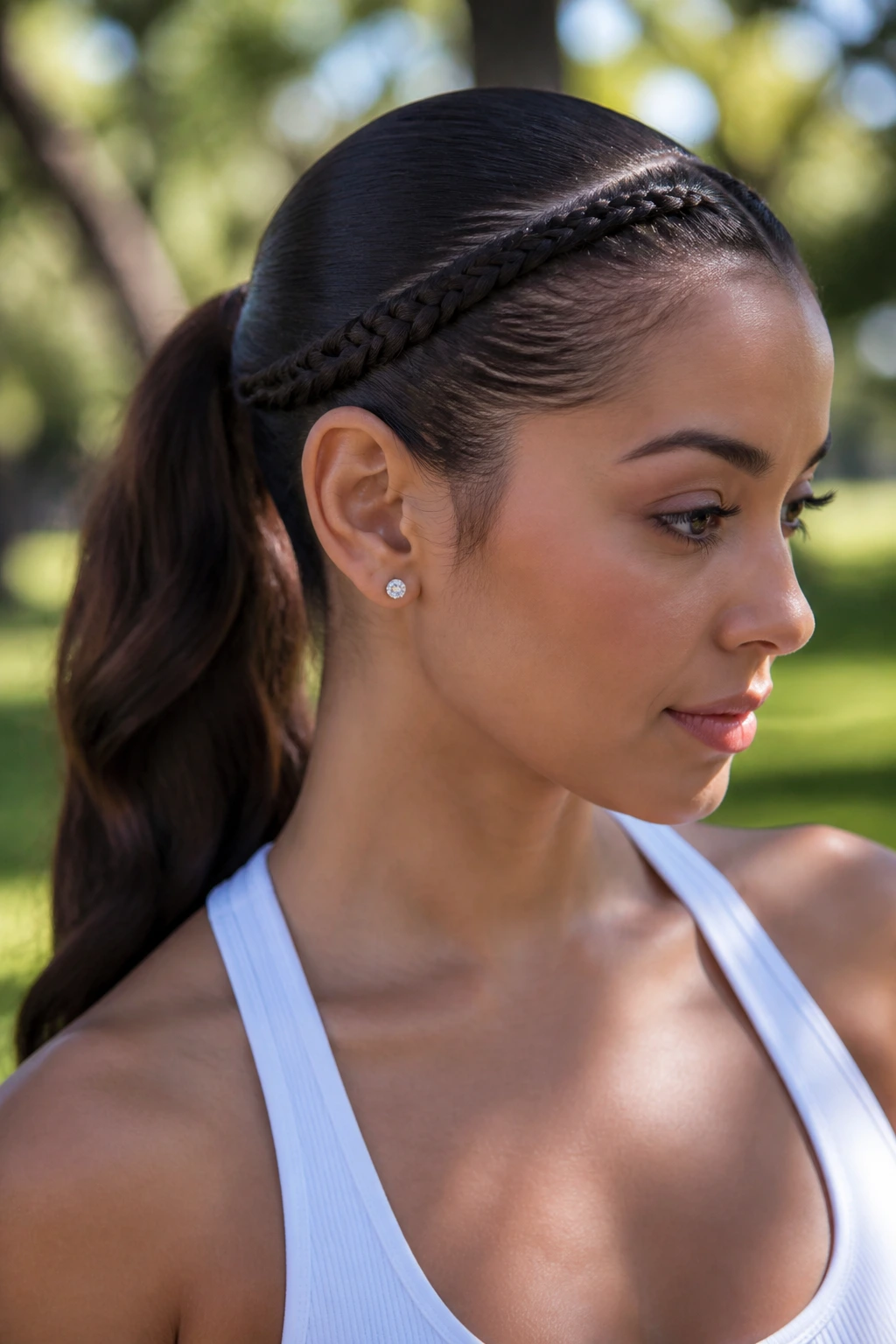
A braided crown feeding into a ponytail is one of the best ways to make the front of the style look finished from every angle. Instead of relying on a plain slick-back, a thin braid travels along the hairline or part and joins the ponytail at the back. The result is clean, controlled, and a little more detailed without being busy.
I especially like this when the hairline has short layers that refuse to stay flat. The braid tucks them in. It also gives the style more shape from the front, which matters if the ponytail will be seen head-on in photos or in a room where you’re not always facing away from people.
Where It Helps Most
- Grown-out bangs
- Fine baby hairs that keep slipping out
- Long hair that needs a secure front
- Days when a plain ponytail feels too plain
You can keep the braid thin and subtle or make it wider if you want it to stand out more. Either way, it should feed smoothly into the ponytail rather than sitting on top of it like an afterthought. That smooth join is the whole trick.
17. Face-Framing Sleek Ponytail
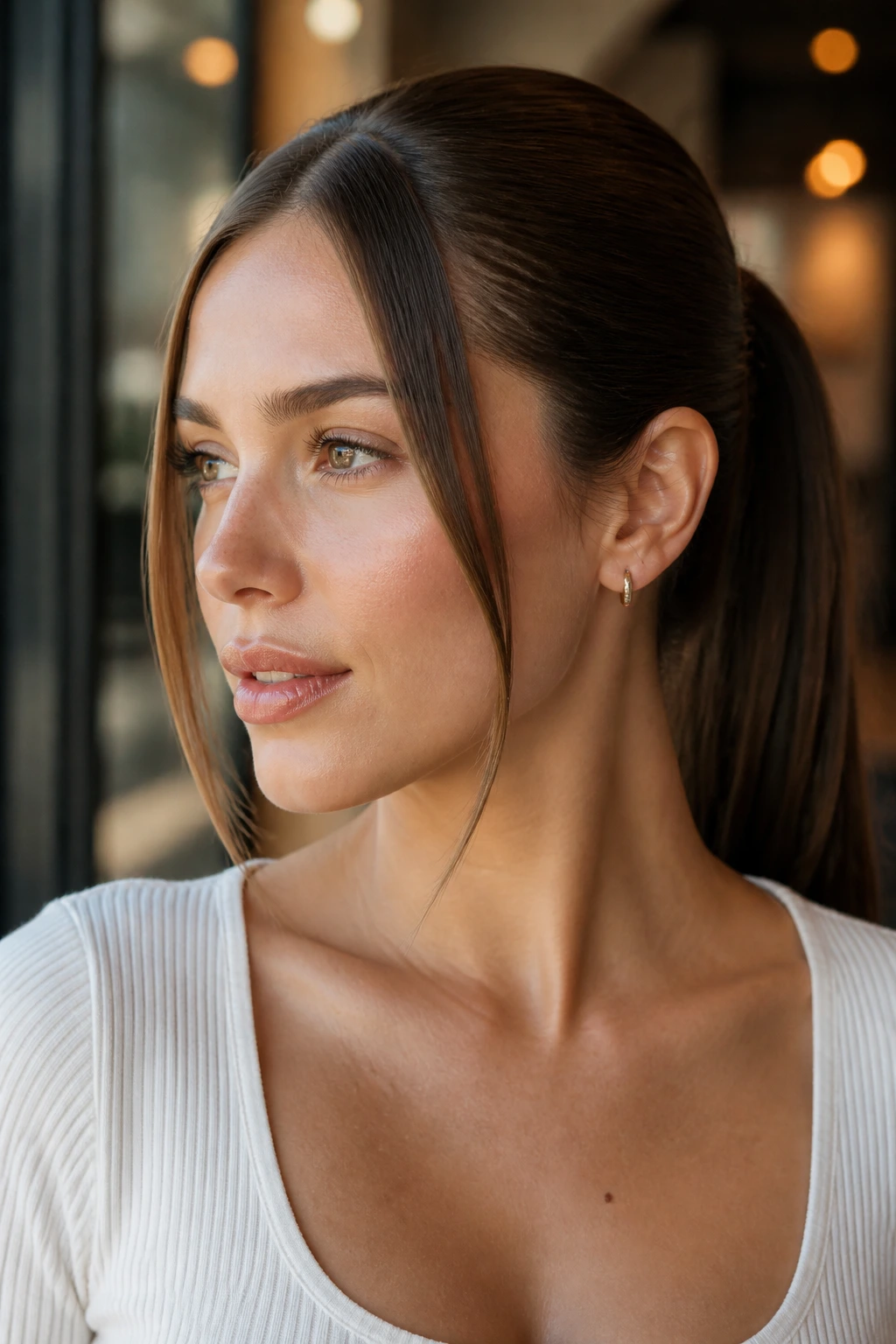
Unlike a fully pulled-back ponytail, this version leaves two slim pieces near the face and keeps everything else sleek. It softens the look without making it loose. On long hair, that matters because a strict ponytail can sometimes feel too heavy or too bare around the face.
The front pieces should be intentional. Too thick and they start looking like you forgot to tuck the hair back. Too thin and they disappear. I usually like strands that are about 1/4 to 1/2 inch wide, flat-ironed lightly so they bend instead of curling out. If the rest of the hair is very smooth, a slight curve at the front keeps the style from feeling harsh.
This version is also good with earrings because the sides stay open enough to show them off. That might sound like a small thing, but it changes how the whole hairstyle sits with the rest of the outfit. A strong neckline, a clean ponytail, and a pair of earrings can do a lot with very little effort.
It’s a tiny bit softer. That’s the point.
18. Sculpted Low Knot Ponytail
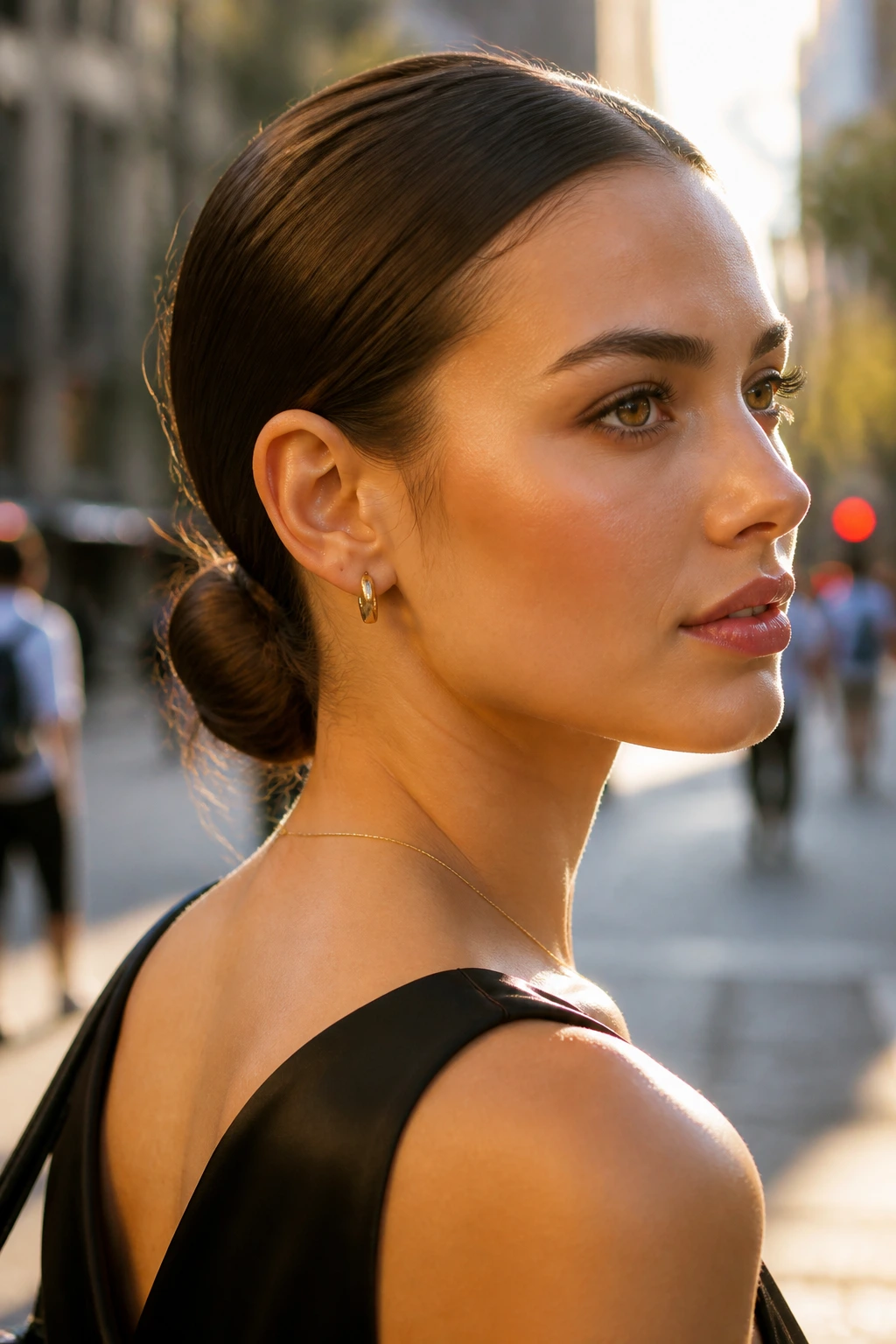
Long hair does not always need to swing free to feel polished. A sculpted low knot ponytail takes the tail, folds it under, and secures it close to the nape so the shape looks compact and deliberate. It’s still a ponytail at heart, just tucked in a way that feels a little more dressed up.
This is a smart move when the tail is so long that it starts looking stringy at the ends. Folding it once or twice makes the length feel controlled instead of overwhelming. It also keeps the ends from brushing against collars, which is a small mercy on windy days or with high-neck tops.
I like this style because it has a nice tension to it. The crown stays slick, the base stays low, and the folded tail adds shape without extra volume. If you have thick hair, use a couple of bobby pins in an X under the knot so it doesn’t sag. If your hair is fine, a textured spray at the tail helps it hold the fold a little better.
There’s something satisfying about a ponytail that stays close to the head. It feels calm. It also lasts.
Long hair gives you room to play, and that’s the real advantage here. You can keep the base plain and change the mood with one small move — a braid, a wrap, a twist, a scarf, a curve at the ends. That’s why sleek ponytail hairstyles for long hair keep working across different outfits, events, and hair types. The bones of the style stay the same. The finish is where the personality shows up.
And once you’ve got the root area smooth, the rest gets easier than people expect. The elastic matters. The part matters. The way the tail hangs matters too. Get those three things right and the ponytail does a lot of heavy lifting on its own.
