



A work ponytail has a small job to do: look neat at 8 a.m., survive a desk chair, and still feel like you after lunch. The best simple ponytail hairstyles for work do that without turning your head into a helmet of hairspray.
That sounds fussy, but it really isn’t. A ponytail can look polished with three tiny decisions: where you place it, how you finish the base, and whether you leave a little softness near the face. Miss one, and the style can slide from clean to careless. Hit all three, and even a five-minute ponytail can look deliberate.
I like ponytails for office days because they work on straight hair, wavy hair, curls, and the mornings when your hair refuses to cooperate. They also play nicely with second-day texture, which is a gift if you do not want to wash and blow-dry every morning. A boar-bristle brush, a few bobby pins, and a pack of snag-free elastics go farther than most people think.
Some of the best office hairstyles are the quiet ones. The trick is choosing a ponytail that fits your hair density, your workplace dress code, and how much time you actually have before you run out the door. Start with the low sleek version; it is the backbone of the whole group.
1. Low Sleek Ponytail
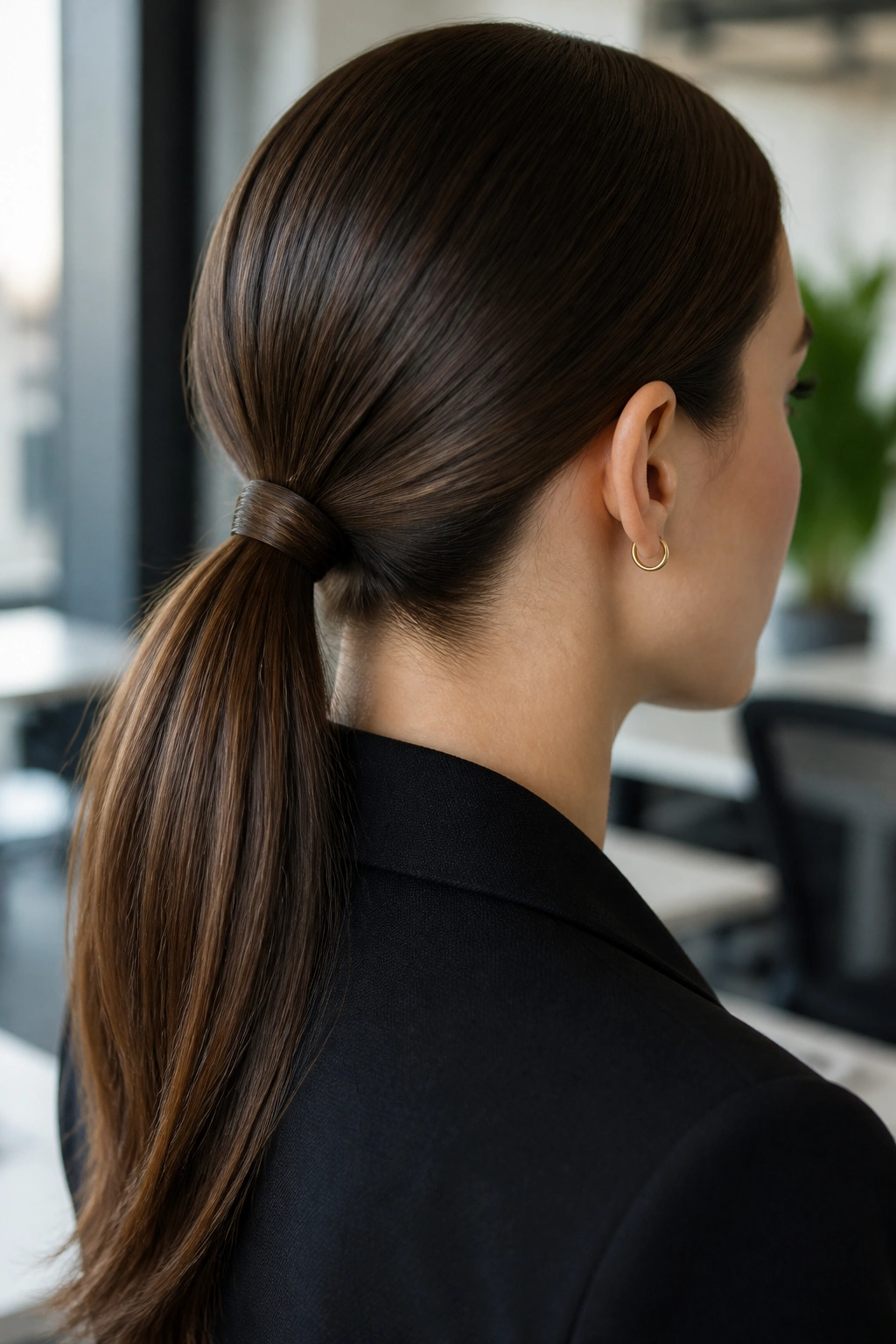
This is the office ponytail I reach for when I want my hair to look calm, not styled-to-death. It sits near the nape, which keeps it tidy under blazers, cardigans, and collar-heavy shirts. If you want a clean, no-drama look, this is the one that behaves.
Why it works
A low placement softens the whole shape of your face and keeps the style from looking sporty. It also stays put better than a high ponytail if you spend hours leaning over a laptop or turning your head during meetings.
Use a fine-tooth comb or a soft brush to smooth the surface first. Then gather the hair at the nape, secure it with a snag-free elastic, and tap a tiny bit of styling cream over flyaways. Do not pile on product; roots that look greasy at noon were usually overdone at 8:10.
- Best for straight to slightly wavy hair
- Uses only one elastic and a small amount of smoothing product
- Looks sharper if the part is clean and deliberate
- Works with center parts, side parts, or no part at all
Tiny fix that matters: wrap a thin strand around the elastic and pin it underneath. That one move makes the whole style look more finished.
2. Wrapped Low Ponytail
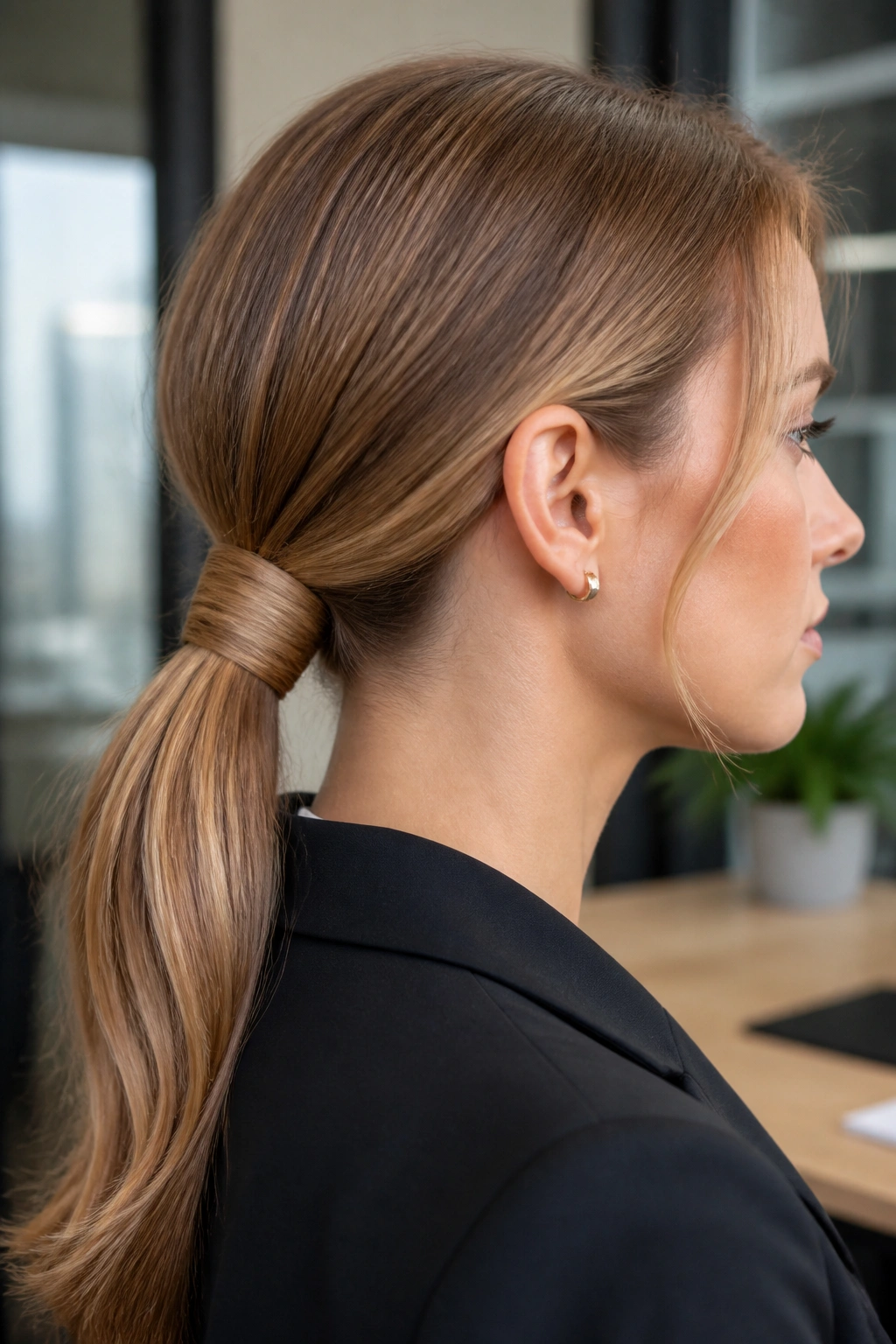
If you want a ponytail that looks more expensive than the effort behind it, wrap the base. That is the whole trick. It turns a plain office pony into something that looks chosen, not rushed.
This style starts the same way as a low ponytail, but the elastic disappears under a strand of your own hair. Take a piece about 1/2 inch wide from the underside of the ponytail, wind it around the elastic, and pin the end underneath with a bobby pin. Keep the wrap snug. Loose wrapping looks like the strand is trying to escape.
The reason this style reads so well at work is simple: it hides the messiest part of the ponytail, which is usually the elastic and the little bump behind it. You still get speed, but you lose that blunt gym-hair finish.
Best with medium to thick hair, though fine hair can wear it too if you use a small clip instead of a bulky pin. A little shine spray on the wrapped section helps, but only one mist. More is not better here.
3. Deep Side-Part Ponytail
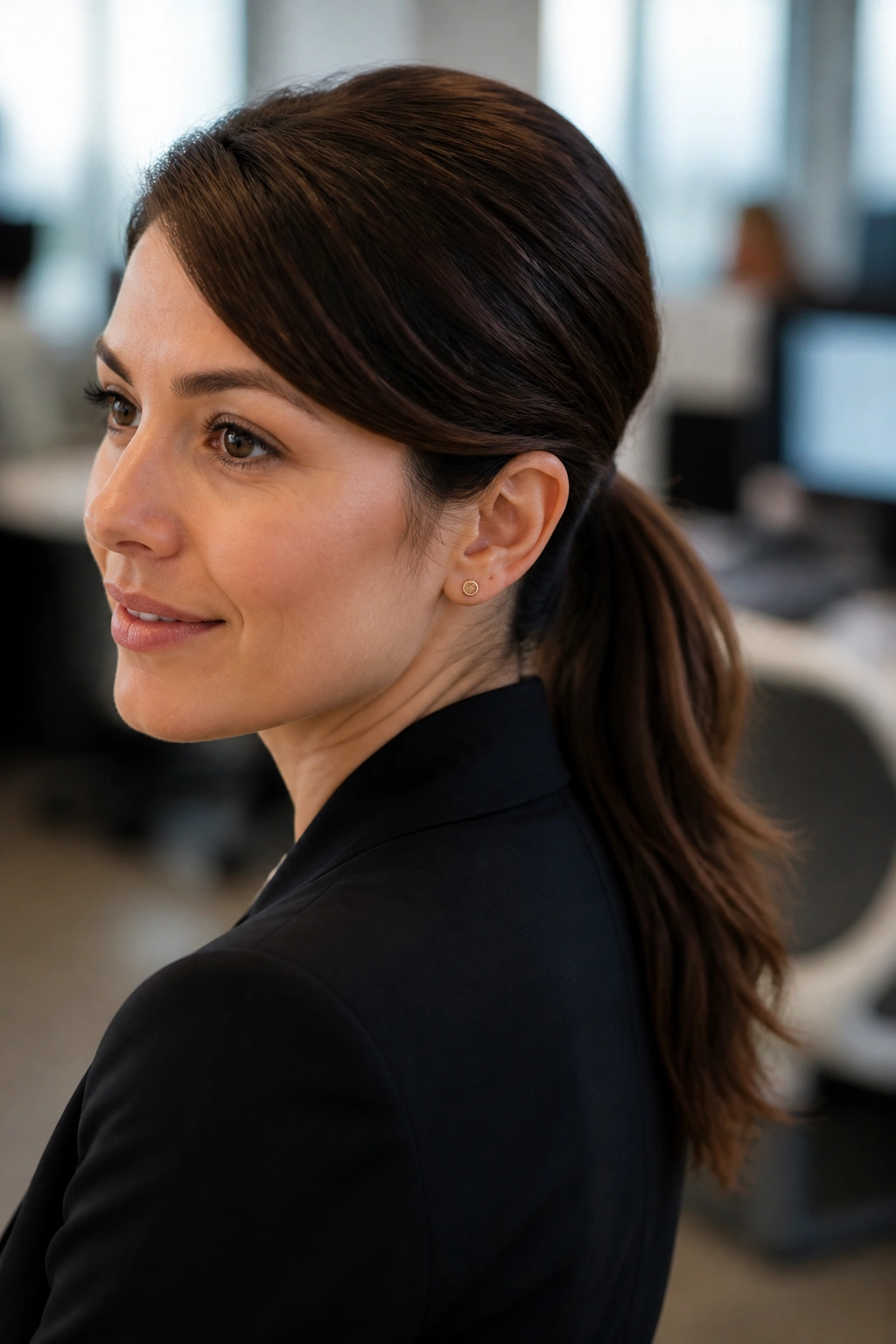
Why does a side part change the whole mood of a ponytail? Because it breaks the symmetry. A center part can look crisp and serious; a deep side part feels softer and a little less rigid, which is useful when your work clothes already lean structured.
This version is a good pick when you want your hair up but not severe. It works especially well if your face shape likes a bit of diagonal movement near the forehead. The part itself does a lot of the work, so you do not need much else. Keep the pony low or mid-height, smooth the top with your palms, and let the side part fall naturally instead of combing it into a perfect helmet.
How to wear it to work
A small side twist near the heavier side of the part can keep shorter layers from slipping forward. That helps if your hair is layered around the cheeks.
- Use the arch of your brow as a rough guide for the part placement
- Brush from the part back toward the ponytail in short strokes
- Keep the crown flat, not pressed into your scalp
- Leave the ends loose if your hair has a natural wave
Best use case: days when you want your ponytail to look a little softer than the usual straight-back version.
4. Bubble Ponytail
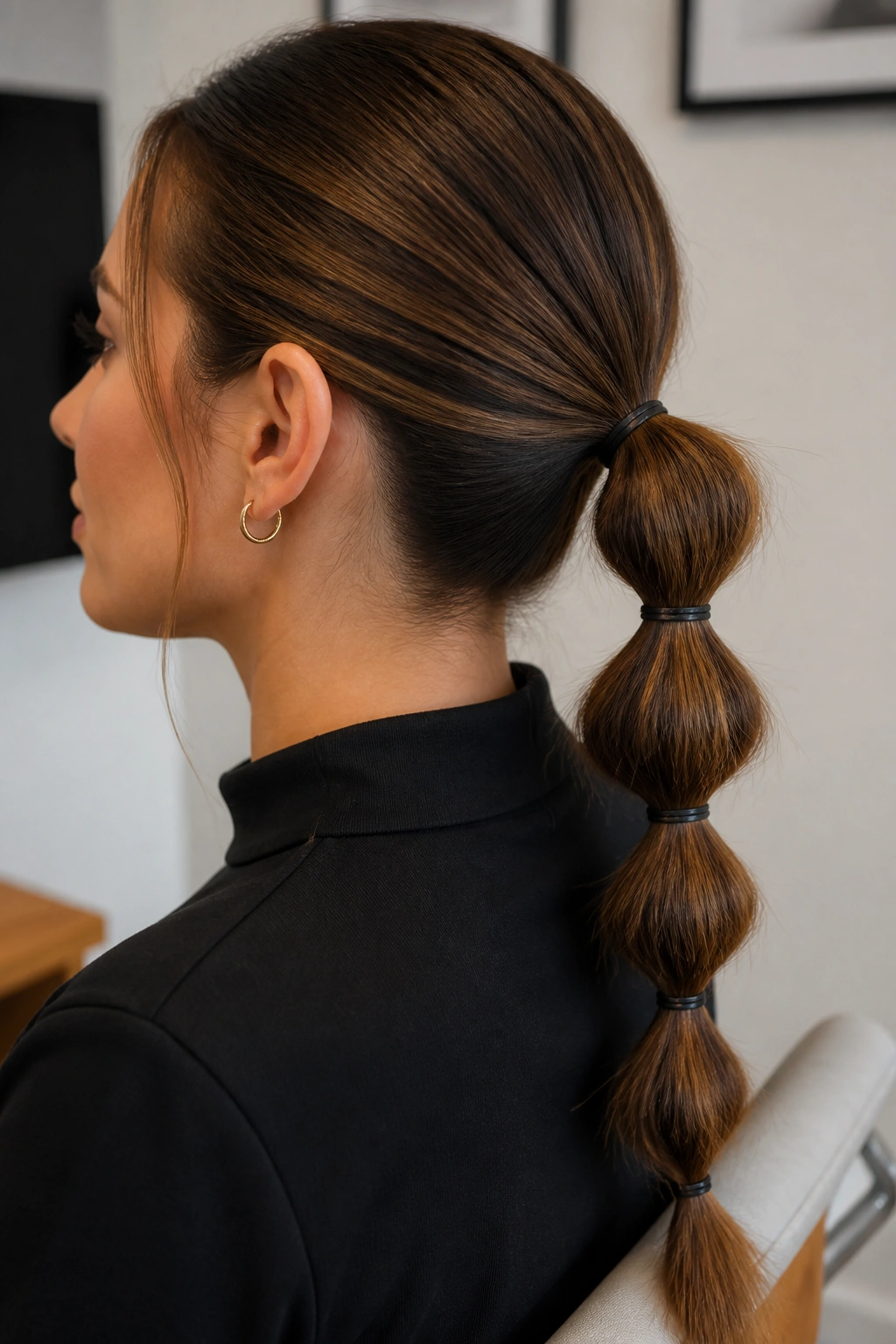
A bubble ponytail sounds playful, and it is, but make the bubbles small enough and it can still work for a polished office dress code. The style is especially useful on long hair that tends to flatten out by midmorning. The sections hold shape better than a loose tail.
I think of this as the ponytail for the day when you want something neat but not boring. Pull the hair into a low or mid ponytail, then place small clear elastics every 2 to 3 inches down the length. After each elastic, tug gently on the section between bands so it rounds out. That tiny puff is what creates the bubble.
The key is restraint. Huge bubbles look costume-like in a workplace setting, especially if your office leans formal. Smaller, evenly spaced bubbles read cleaner.
- Use 3 to 5 mini elastics for shoulder-length hair
- Keep the bubbles fairly even
- Smooth the crown first so the top does not look messy
- Pull the sides outward with your fingertips, not hard enough to stretch the elastic
One neat detail: if your hair is fine, a little dry shampoo at the roots gives the whole style more grip.
5. Twisted Low Ponytail
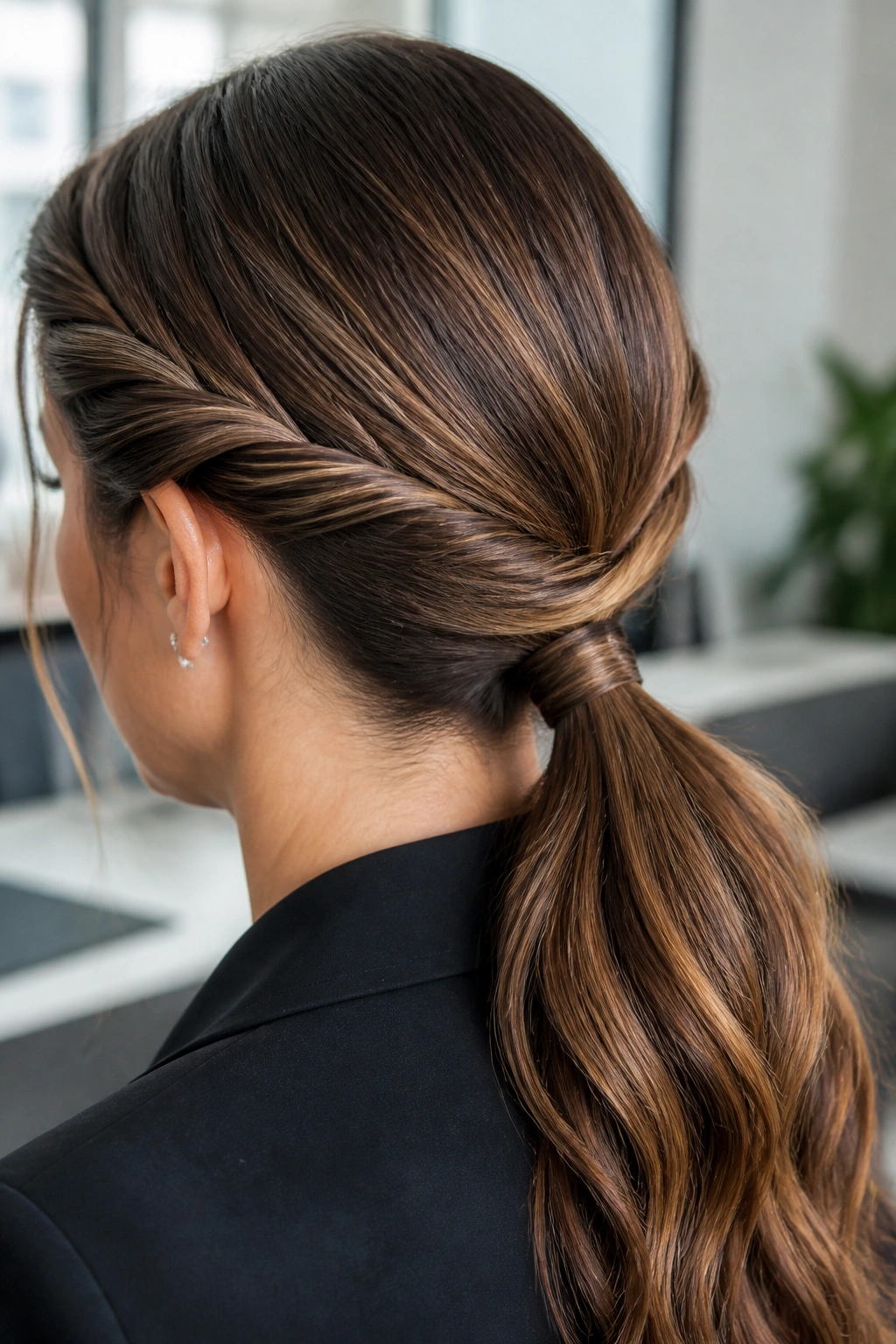
A twisted low ponytail is one of those styles that looks more complicated than it is. That is the appeal. You get the polish of a pulled-back style, but the twist gives it movement so it does not feel flat by lunchtime.
Start by taking one section from each temple, about 1 inch wide on each side. Twist them back toward the center, cross them over the ponytail base, and secure them with the rest of your hair at the nape. If you want more grip, twist the strands away from your face first, then bring them together. The direction matters. A sloppy twist tends to unravel.
It works on medium and long hair, and it is especially friendly to hair that has a little texture. Very silky hair can slip, so use a pin or two under the base if you need support.
The finish should feel soft, not rope-tight. If the twist starts looking too neat, loosen it one notch with your fingertips. That gives the style a more natural fall and keeps it from looking formal in a stiff way. It is the kind of ponytail that can go from desk to dinner without much fuss.
6. High Polished Ponytail
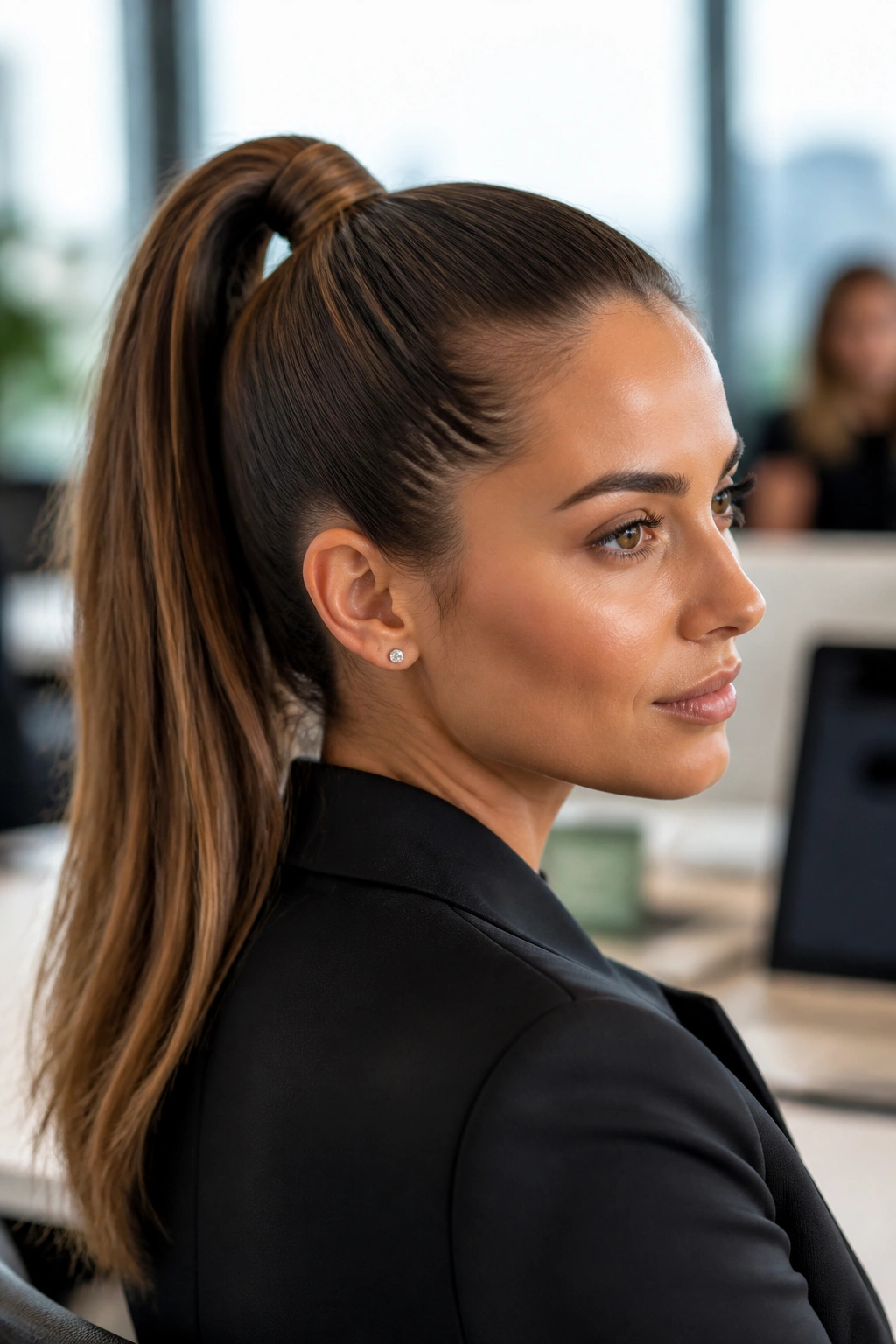
A high ponytail has a sharper edge than a low one. It lifts the face, shows off earrings, and makes a plain button-down look more pulled together. It can also turn severe fast, so the finish matters more here than it does with a low style.
The best version starts with a smooth crown and a pony placed at the top-back of the head, not all the way on top unless you want a cheerleader shape. Brush the hair upward in sections, secure it firmly, then cover the elastic if you like. If your hair is thick, use two elastics stacked close together; one elastic alone can sag by noon.
This style is useful on days when you want a clean line around the face. It pairs well with straight hair, but waves can wear it too if the front is smoothed and the tail itself stays slightly textured. That contrast keeps it from looking too flat.
I prefer a high pony for presentations or days with a lot of face-to-face time. It gives energy. It does not whisper.
7. Braided-Base Ponytail
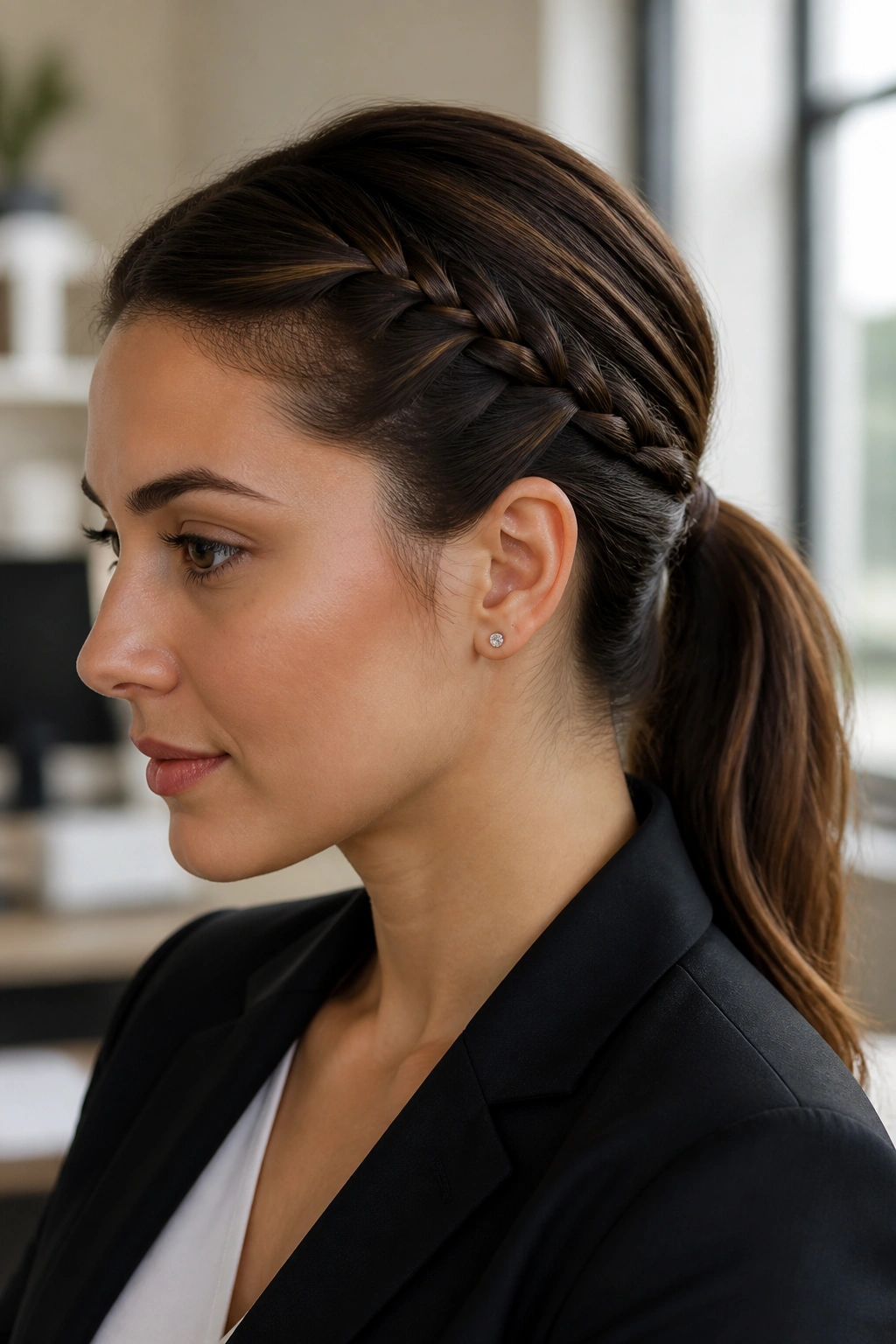
Can a braid make a ponytail feel work-appropriate without making it fussy? Yes, if the braid stays small and close to the head. The braid acts like a built-in detail, which means the rest of the ponytail can stay simple.
Try a narrow braid from one temple or a tiny braid on both sides that meet at the base. Secure the braid into a ponytail at the nape or mid-height, then let the length fall loose. You are not building a full boho style here. Keep the braid thin, neat, and anchored near the scalp.
What to watch for
A chunky braid can tip the look into weekend territory. A small braid reads cleaner and keeps more of the hair looking like a normal office style.
- Braid a section no wider than 1 inch
- Keep the braid close to the scalp
- Hide the elastic under a strand if you want a smoother finish
- Use a light mist of spray only on the braid itself
If your hair is layered, braid the longest front pieces only. That keeps shorter layers from poking out and makes the style easier to manage.
8. Soft Wavy Ponytail

A soft wavy ponytail is the answer for hair that never wants to be pin-straight anyway. Instead of fighting the wave, use it. The style looks relaxed in a good way, not lazy, when the surface is controlled and the ends still move.
The trick is to shape the top and leave the length alone. Smooth the crown with a brush or your hands, gather the hair low or mid-height, then keep the tail loose. If your hair has natural bends, do not brush those out. They give the ponytail life. If your hair is straight, bend the ends with a 1-inch iron or sleep in loose braids, then finger-comb them in the morning.
This version works especially well with second-day hair. Freshly washed hair can be too slippery and too soft, which makes it hard to hold a ponytail without constant fixing. A little texture gives the style some backbone.
One honest note: this is not the ponytail to choose if you want a sharp, boardroom-clean look. It is better for creative offices, casual Fridays, or any day when you want to look put together without seeming overdone.
9. Knotted Ponytail
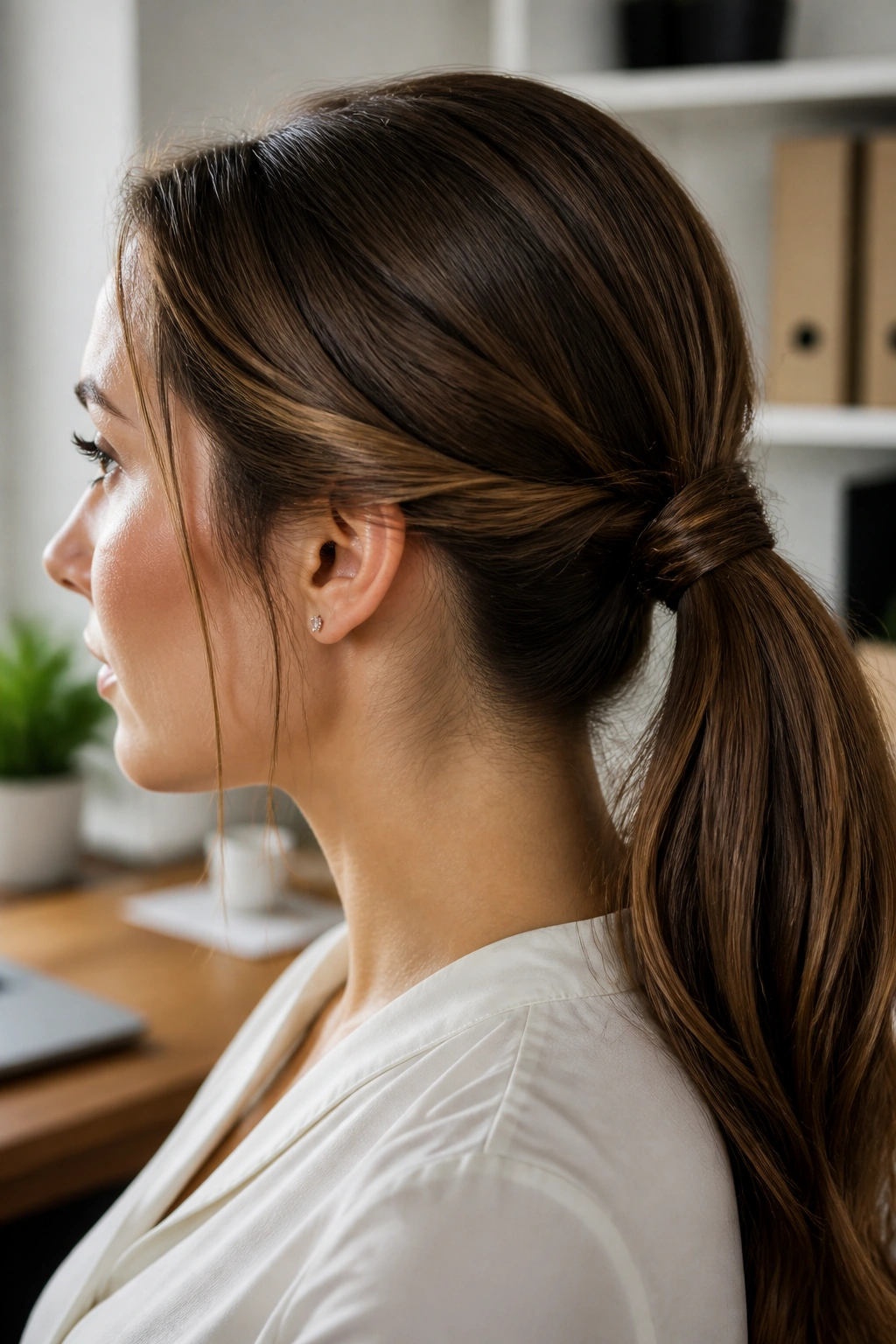
A knotted ponytail looks like you spent more time on it than you did. That is why people keep coming back to it. The knot becomes the focal point, so the rest of the hair can stay plain and easy.
Pull two side sections from behind the ears, bring them together at the back, and tie them once like a loose knot. Then gather the remaining hair with the knotted pieces into one ponytail and secure it. If your hair is very long, you can do a second knot right above the elastic for a little more detail, but one is enough for most workdays.
The shape works best when the knot is snug but not tight. If you pull too hard, it flattens the crown and makes the front look strained. Leave a touch of softness near the hairline.
- Good for medium-length hair that needs something more than a basic tie-back
- Works best with a hidden elastic under the knot
- Fine hair may need one bobby pin to keep the knot from shifting
- Thick hair can handle a larger knot without looking bulky
Small warning: if your layers are short, keep the knot lower so you do not spend the whole day tucking pieces back in place.
10. Rope-Braid Ponytail
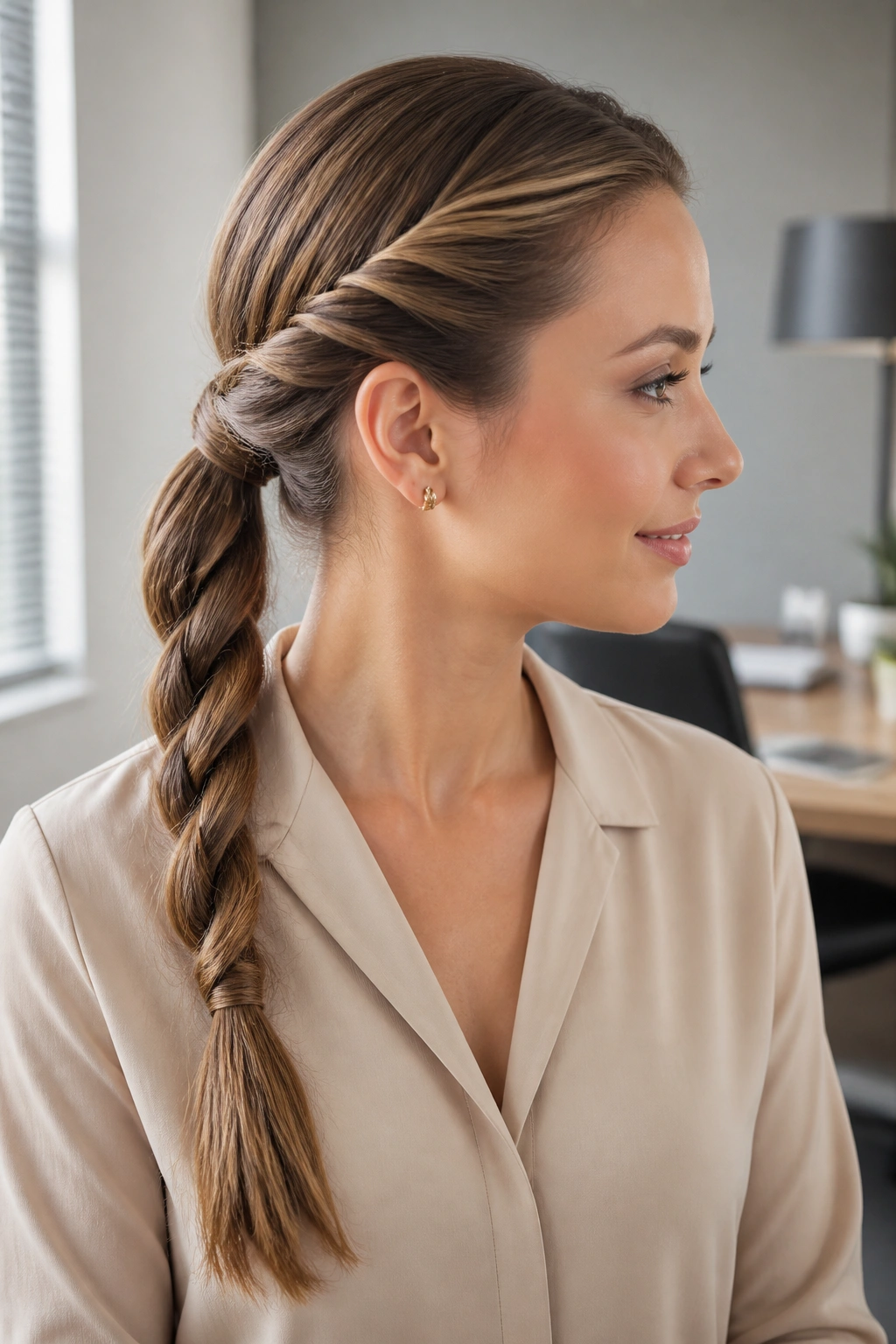
A rope-braid ponytail is a clean alternative when a regular braid starts feeling too expected. It has a tidy twist pattern and a sleeker look, which makes it a nice fit for office settings. The best part? It holds up well.
To make it, gather the hair into a ponytail, split the length into two sections, twist each section in the same direction, then wrap the sections around each other in the opposite direction. That opposite twist is what keeps the braid from collapsing. If your hair is slippery, secure the end with a tiny clear elastic.
Compared with a classic three-strand braid, this version looks smoother and a little more modern. It also takes less finger work once you get the motion down. I like it on days when I want the tail itself to be the feature, not the base.
Best for medium to long hair, especially hair with some thickness. Very fine hair can wear it too, but keep the twists tight so the braid does not unravel halfway through the afternoon. A light mist of hold spray on the tail—not the crown—can help.
11. Clipped-Back Ponytail
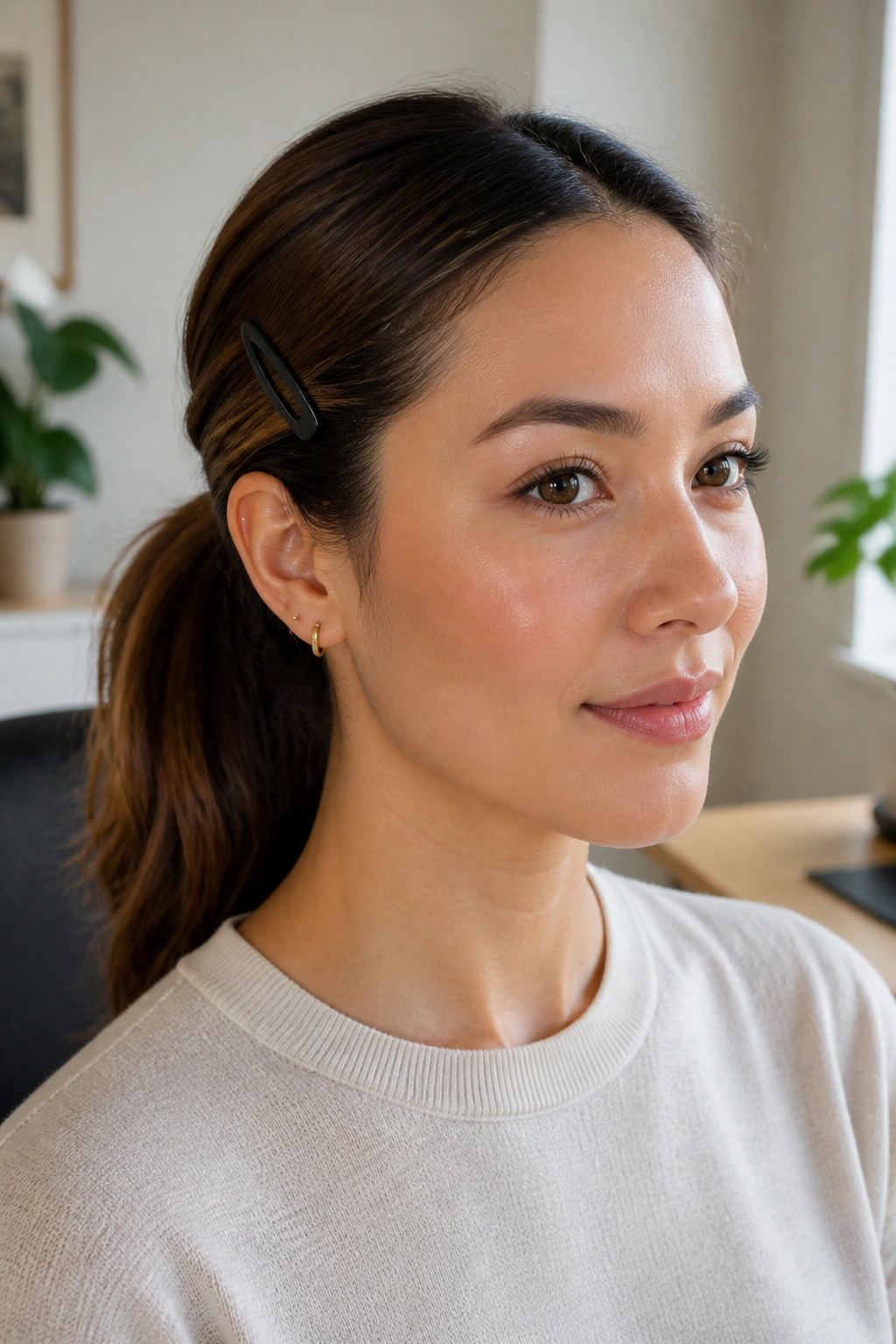
Sometimes the front pieces are the whole problem. A clipped-back ponytail solves that fast. It gives you the security of a ponytail and the neatness of a pinned style, which is useful when you are growing out bangs or dealing with little face-framing layers that refuse to stay down.
The setup is plain: part the hair, smooth the front sections back, and secure them with a flat clip or two just behind the temples before gathering the rest into a ponytail. Choose a clip that sits close to the head. Bulky claw clips can fight with collars and headset bands.
This works well when you need a tidy style for video calls. The face stays open, the hairline looks deliberate, and the clip adds structure without forcing the whole look into a severe shape.
A small detail that helps
Match the clip finish to your outfit. Matte black, tortoiseshell, or brushed metal tend to read more office-ready than glittery or oversized pieces.
If the clip keeps slipping, spray a little dry texture spray underneath the top section before you pin it back. That gives the hair more grip without making it stiff.
12. Center-Part Sleek Ponytail
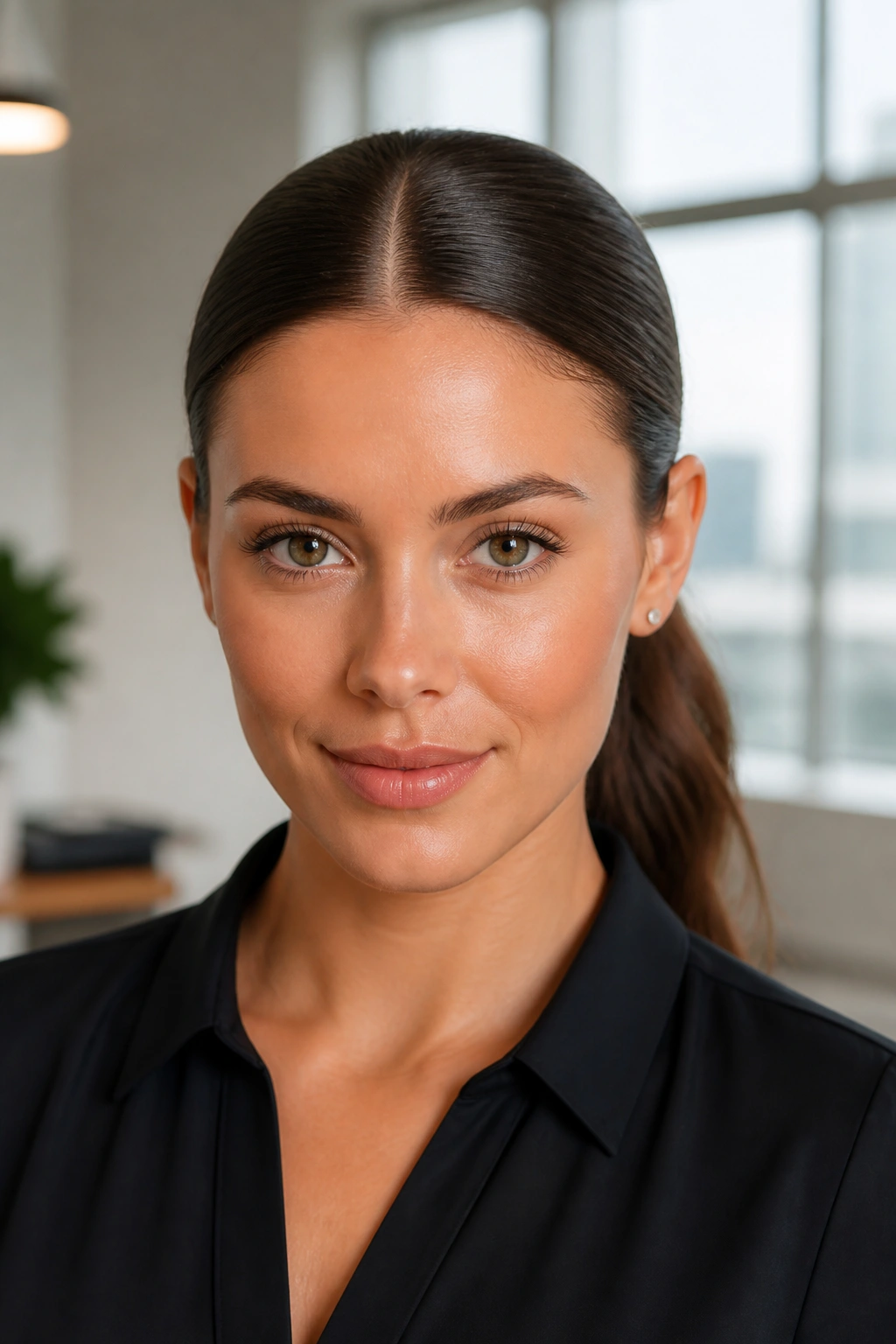
A center part changes everything. It gives a ponytail a straighter, cleaner line and makes even a basic low tail look edited. If your face likes symmetry, this is one of the easiest office styles to keep in rotation.
The trick is precision at the start. Use the tip of a comb to draw the part, then smooth both sides back evenly. Gather the ponytail low or mid-height, depending on how formal you want it to feel. The top should lie flat, but not so flat that it looks painted on.
I like this style on straight hair because the contrast between the smooth top and the moving tail feels sharp. Wavy hair can wear it too, though you may need a little cream at the roots and a few extra passes with the brush.
A center part can also make a ponytail look more intentional with a suit jacket or a crisp shirt. It feels precise. Not stiff, if you keep the finish soft. Just precise.
13. Voluminous Crown Ponytail
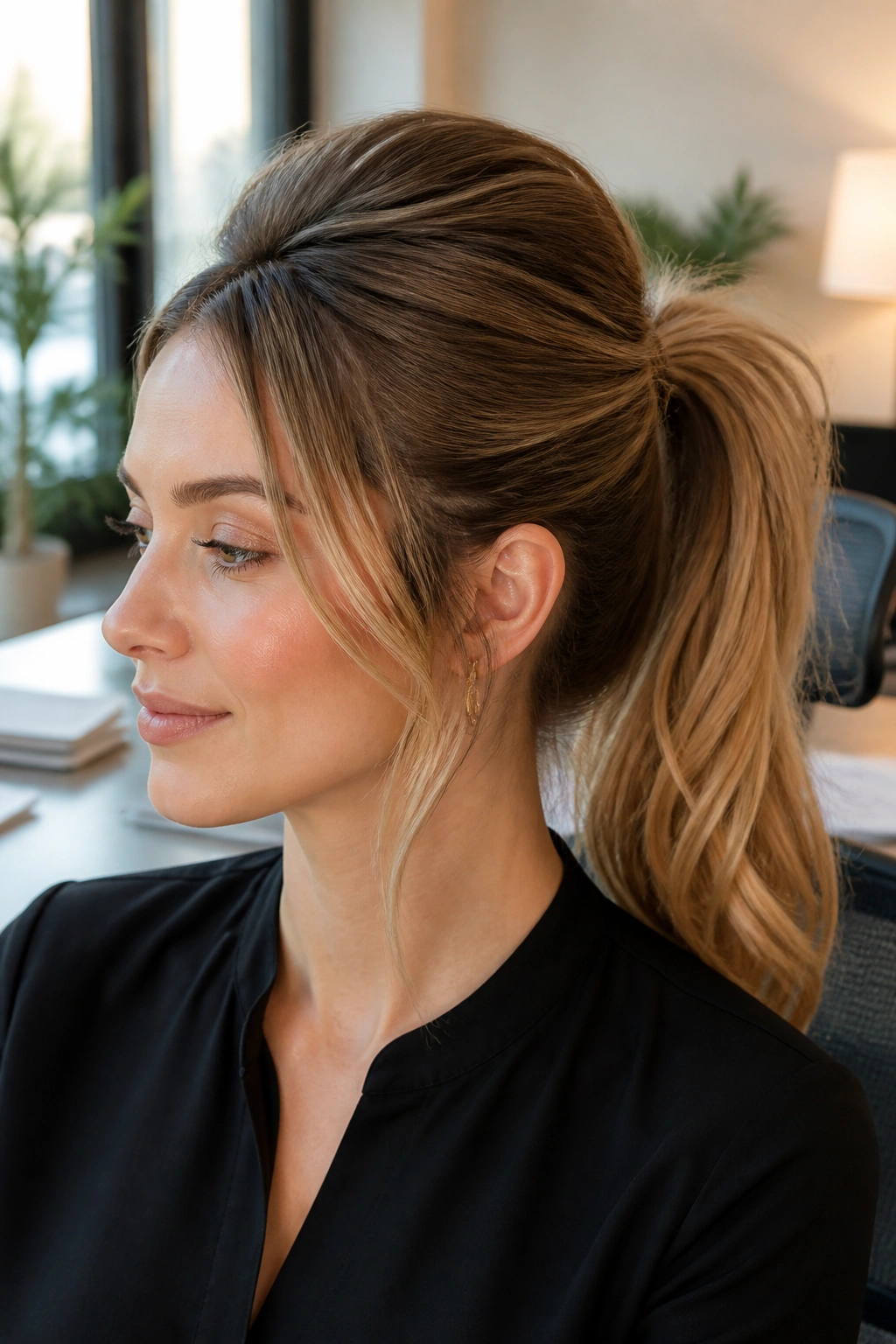
A little lift at the crown can save a ponytail that would otherwise sit too close to the head. This is the version I use when the hair at the top looks limp or when I want the style to feel a bit less flat from the side.
How to build the lift
Tease a 1-inch section at the crown very lightly, then smooth only the top layer over it. Secure the ponytail just below the lift so the shape stays visible. Finish with a flexible-hold spray, not a crunchy one. You want the hair to move.
- Backcomb the crown in short strokes
- Smooth only the outer layer, not the whole section
- Place the elastic where the lift settles naturally
- Keep the tail itself tidy so the volume looks deliberate
This style works well on fine hair, because the extra height gives the illusion of density. Thick hair can wear it too, but keep the lift moderate or it can start to look like you are heading to a party, not a meeting.
My opinion: this is one of the most useful office ponytails, because it fixes a common problem without needing extra accessories.
14. Tucked-Under Ponytail
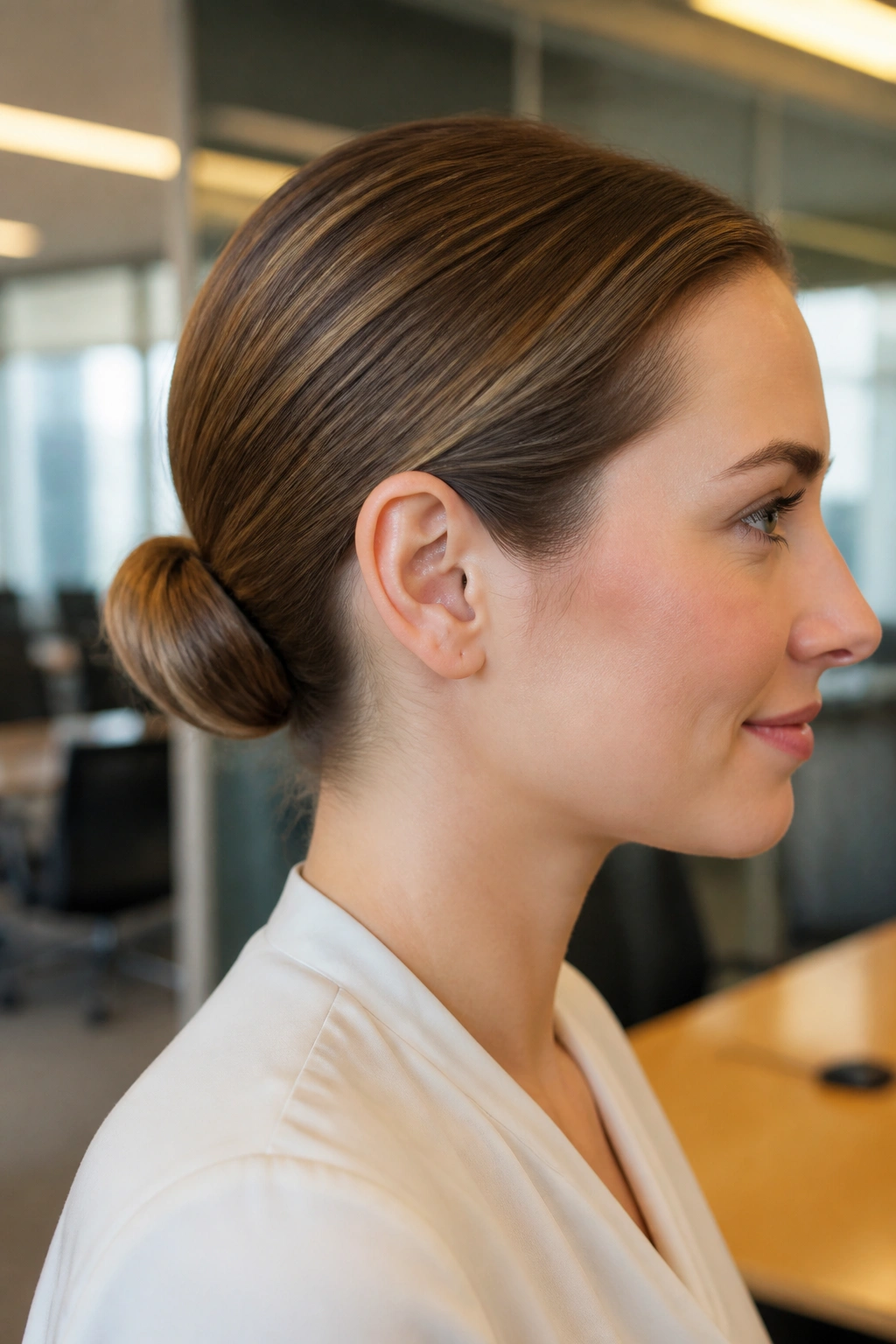
A tucked-under ponytail has a neat, almost architectural shape. The ends are folded under and pinned, so the finished style sits closer to the head than a normal tail. It is elegant without trying too hard, and it is a good option when your hair is a bit too short for a long hanging ponytail.
Pull the hair into a low ponytail, then fold the length upward and tuck the ends under the base. Pin them flat underneath, using two or three bobby pins depending on thickness. The result is a rolled shape that looks tidy from the side and back.
This one is handy on humid days, because the tucked ends are less likely to frizz all over the place. It also works well if your ends are dry and you would rather hide them than fight them.
Compared with a standard ponytail, this style looks more controlled. It is a cleaner choice for formal offices, interviews, or any day when you want the hair to stay close to the head. No loose ends bouncing around. No fuss.
15. Half-Up Ponytail

A half-up ponytail is the compromise that actually makes sense. You get hair off your face, keep some length down, and avoid the too-tight feeling that full-up styles can create by midafternoon.
This works best when the top section is small and neat. Take hair from above the temples, smooth it back, and secure it at the crown or a little lower. Leave the rest loose and tidy. If the top section is too large, the style starts looking casual in a way that may not suit a stricter office.
Where it shines
It is a strong choice for medium-length hair, layered cuts, and days when you want your shoulders to feel less crowded. It also keeps headphones, glasses, and earbuds from tangling with front pieces.
The finish matters more than the size. A small, clean section looks professional. A puffed-up half pony can look like you ran out of time halfway through. Keep the crown smooth and let the rest of the hair do its own thing.
16. Curly Ponytail
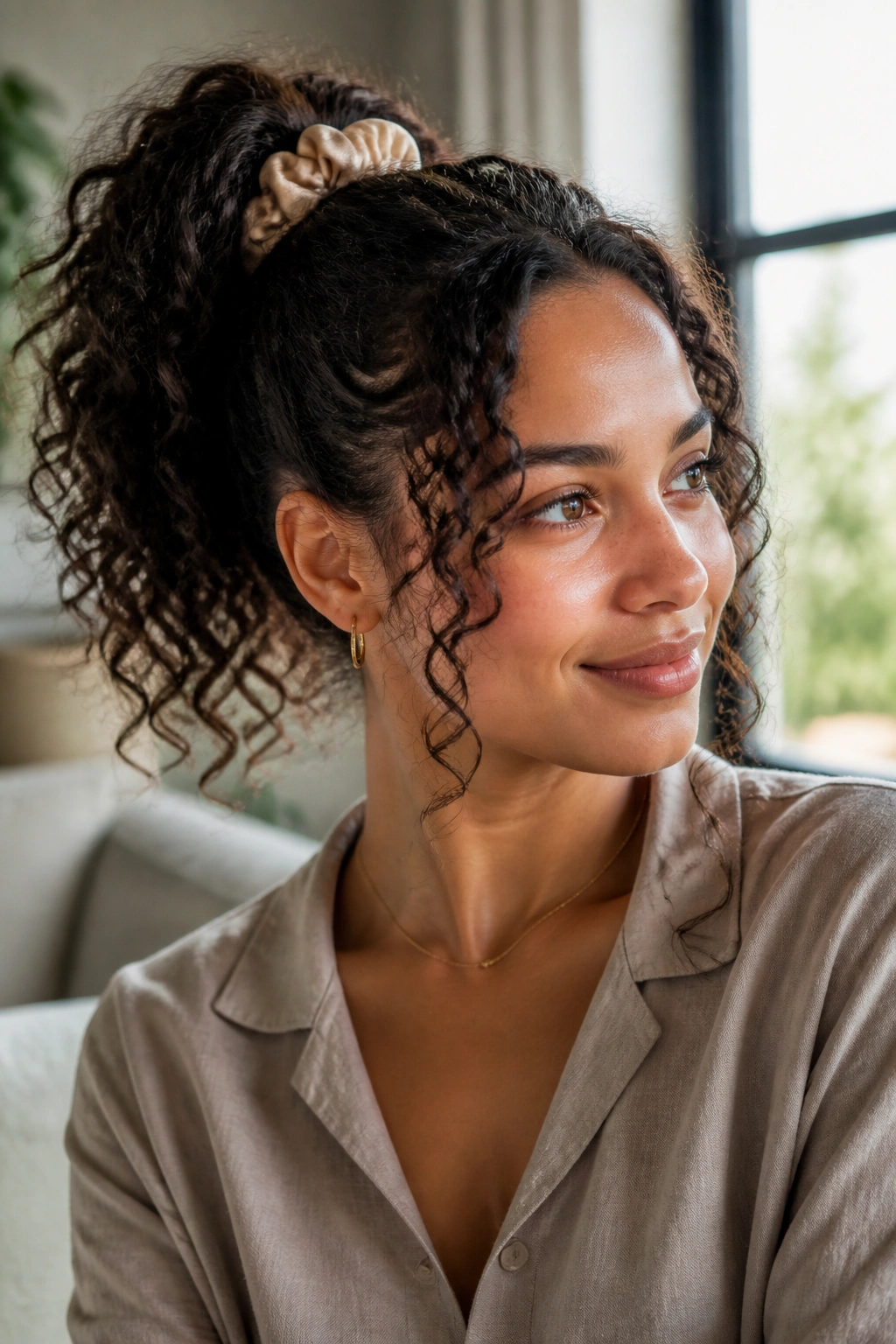
Curly hair does not need to be forced into the same sleek finish as straight hair. That usually makes it look dry. A curly ponytail works better when the curls stay defined and the base looks neat.
Start by refreshing the curls with a little water or leave-in spray, then smooth the top with your hands and gather the hair where it feels natural. Use a satin scrunchie or a soft elastic so the curls are not crushed at the base. If you want extra shape, pull a few curls forward near the temples and let them frame the face.
The best curly ponytail has a clean root area and a living, springy tail. You want definition, not helmet hair. A tiny bit of curl cream on the outer layer helps the curls hold together without turning sticky.
- Refresh with water rather than piling on more product
- Use a scrunchie if your hair breaks easily
- Keep the base smooth, but do not brush the curls out
- Fluff the ponytail from underneath to keep the shape round
That balance matters. Too much smoothing kills the curl. Too little and the style looks unfinished.
17. Ribbon-Tied Ponytail
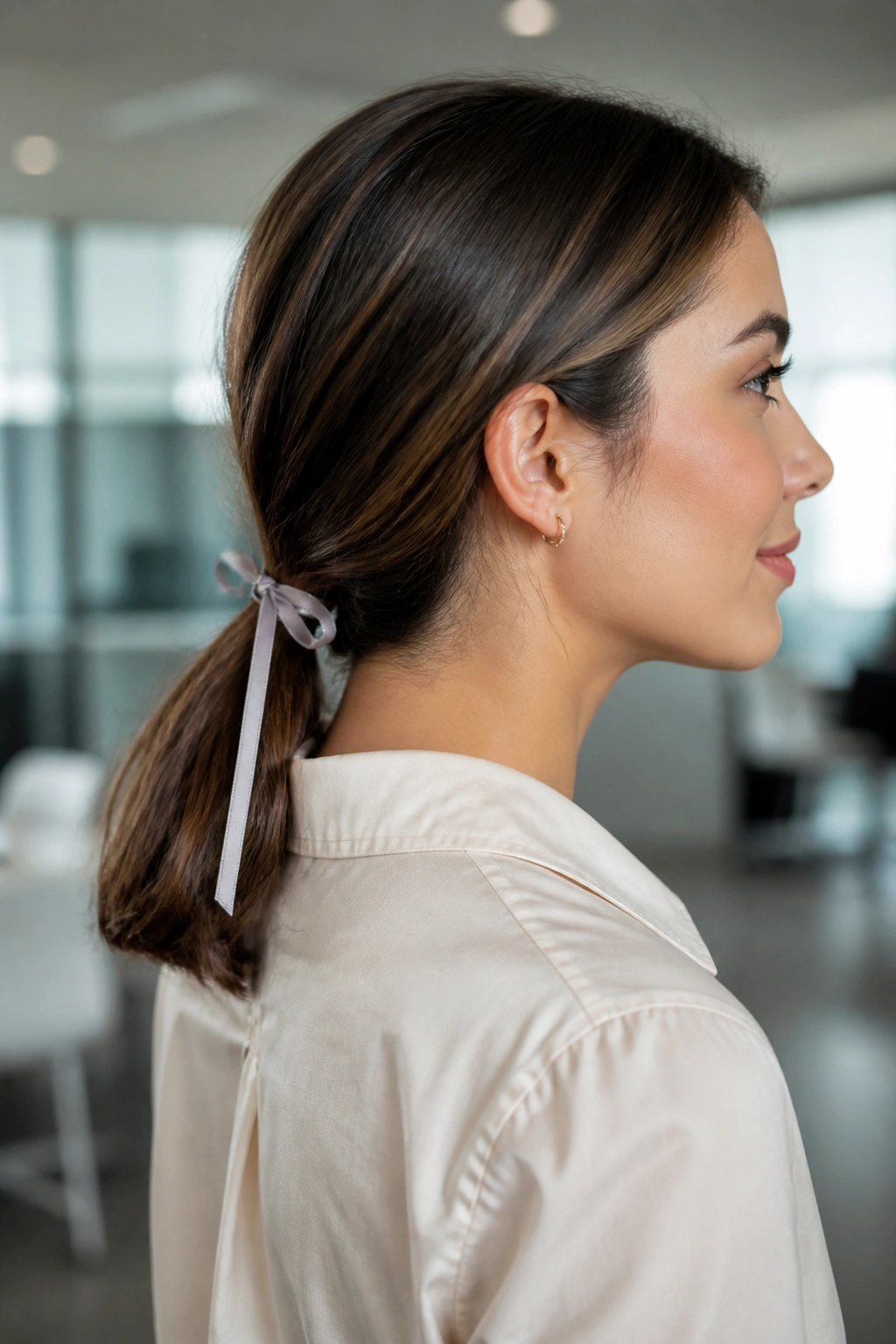
A ribbon-tied ponytail can look office-appropriate if you keep the ribbon narrow and the color muted. Think black, navy, deep green, or a soft neutral. A wide satin bow can feel sweet in the wrong way, but a slim ribbon at the base feels sharp and intentional.
This style works best with a low ponytail. Tie the hair with a simple elastic first, then cover it with a ribbon knot or a small bow. Keep the tails short if your workplace leans formal. Long streamers can look fussy, and there is no need for that.
I like this option for meetings, lunches, or days when you want the hairstyle to do the talking so the rest of the outfit can stay simple. It adds a little polish without needing curls, braids, or volume tricks.
A ribbon also hides a messy elastic well, which is useful when your hair was not exactly cooperative in the morning. One thing, though: choose a fabric that stays put. Slick ribbon can loosen, and then you spend the day adjusting it. Not ideal.
18. Face-Framing Low Ponytail
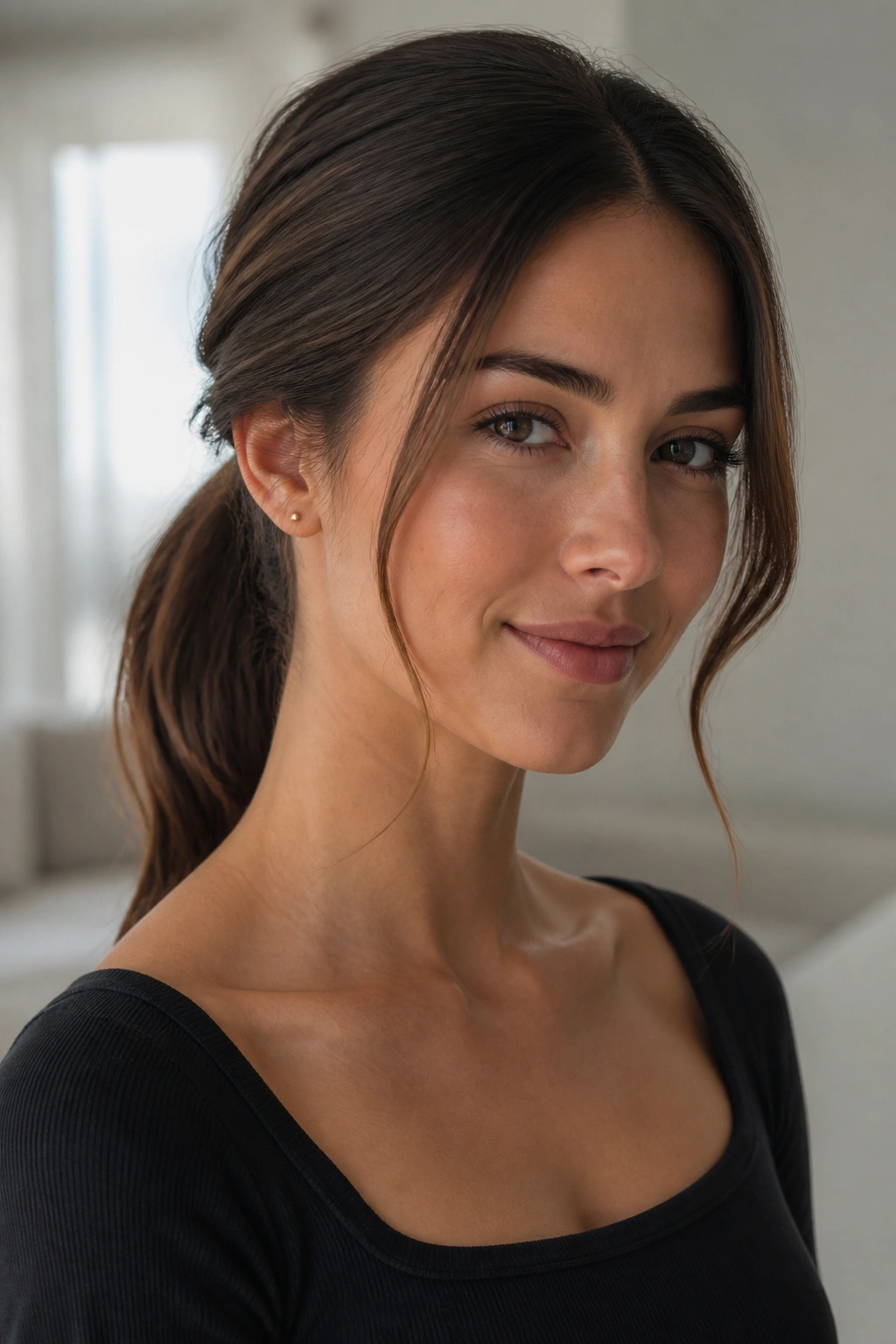
This is the ponytail for people who like a tidy look but do not want their face fully pulled back. Leave two small sections out near the temples, then gather the rest into a low ponytail. The loose pieces soften the shape and make the style feel less strict.
I usually keep the face-framing pieces narrow—about 1/2 to 1 inch wide. That way they add shape without turning into side bangs. You can leave them straight, bend them slightly with a flat iron, or tuck the ends under with a round brush if you prefer a smoother line.
Unlike a fully slick ponytail, this one gives you a little movement around the face. That helps if you wear glasses, have strong jawline angles, or just do not love seeing every hair pulled away from your cheekbones. It also works nicely with a center part or a soft side part.
If you want the style to stay work-friendly, keep the loose pieces neat. Frizzed-out tendrils can make the whole look feel accidental, and that is the part worth avoiding. The ponytail itself should still do most of the heavy lifting.
Final Thoughts

The best ponytail for work is rarely the fanciest one. It is the one that survives your day without needing constant rescue, and that usually means paying attention to the base, the part, and the finish.
A small change can shift the whole mood. A wrapped elastic, a side part, a little crown lift, or two face-framing pieces can turn a standard ponytail into something that feels thought through without eating up your morning. That is the sweet spot.
Choose the version that matches your hair texture and your office, then keep a couple of bobby pins in your bag. That tiny habit saves more bad hair mornings than any fancy styling trick ever will.
