



Fine thick hair can be a blessing and a headache in the same mirror. The strands are fine, so they can go flat at the roots. The density is thick, so the ends can pile up and feel bulky if the cut gets too heavy or too choppy. That odd mix is exactly why some haircuts make this hair type look expensive and full of movement, while others make it sit there like a helmet.
The right shape does two jobs at once. It gives the eye a clean line to follow, and it keeps the bulk from swallowing the face, the neck, or the shoulders. A blunt edge can make the ends look denser. Long layers can stop the whole head from turning into a triangle. Bangs can be a gift or a headache, depending on where they land and how much hair they take with them.
What usually goes wrong is simple: too much thinning, too many short layers, or a stylist treating fine strands like they need “more texture” everywhere. They usually do not. Fine, thick hair tends to look better when the perimeter stays solid and the movement is placed with care, not chopped in from every direction.
What Fine Thick Hair Needs from a Haircut

The sweet spot is usually a haircut with shape at the edges and control in the middle. Fine strands need enough structure to keep the ends from looking wispy, but thick density needs enough release that the whole cut does not puff out like a bell. That balance is the whole game.
A lot of people ask for layers when what they actually need is a cleaner outline. Others go for a blunt cut and then wonder why the sides feel boxy. Both instincts make sense. Both can miss the mark if the cut is not adjusted to your face shape, your growth pattern, and whether your hair bends straight, waves a little, or has a stubborn cowlick in the crown.
What to ask for at the salon
- Keep the perimeter strong if your ends tend to look see-through when they are over-layered.
- Use long layers, not short chopped ones, when you want movement without losing density.
- Leave some weight near the corners of the jaw if your hair spreads out too wide at the sides.
- Point-cut or slide-cut only where needed, because aggressive texturizing can make fine ends fray fast.
- Bring photos from the front, side, and back, since the shape changes a lot once the cut is seen in motion.
A good stylist will talk about balance, not just length. That matters more than the haircut name. A blunt bob on one person and a butterfly cut on another can both work beautifully if the distribution of weight makes sense.
And yes, styling matters. But the cut does the heavy lifting. If you start with the wrong shape, no amount of round-brush optimism will fix it.
1. Blunt Bob
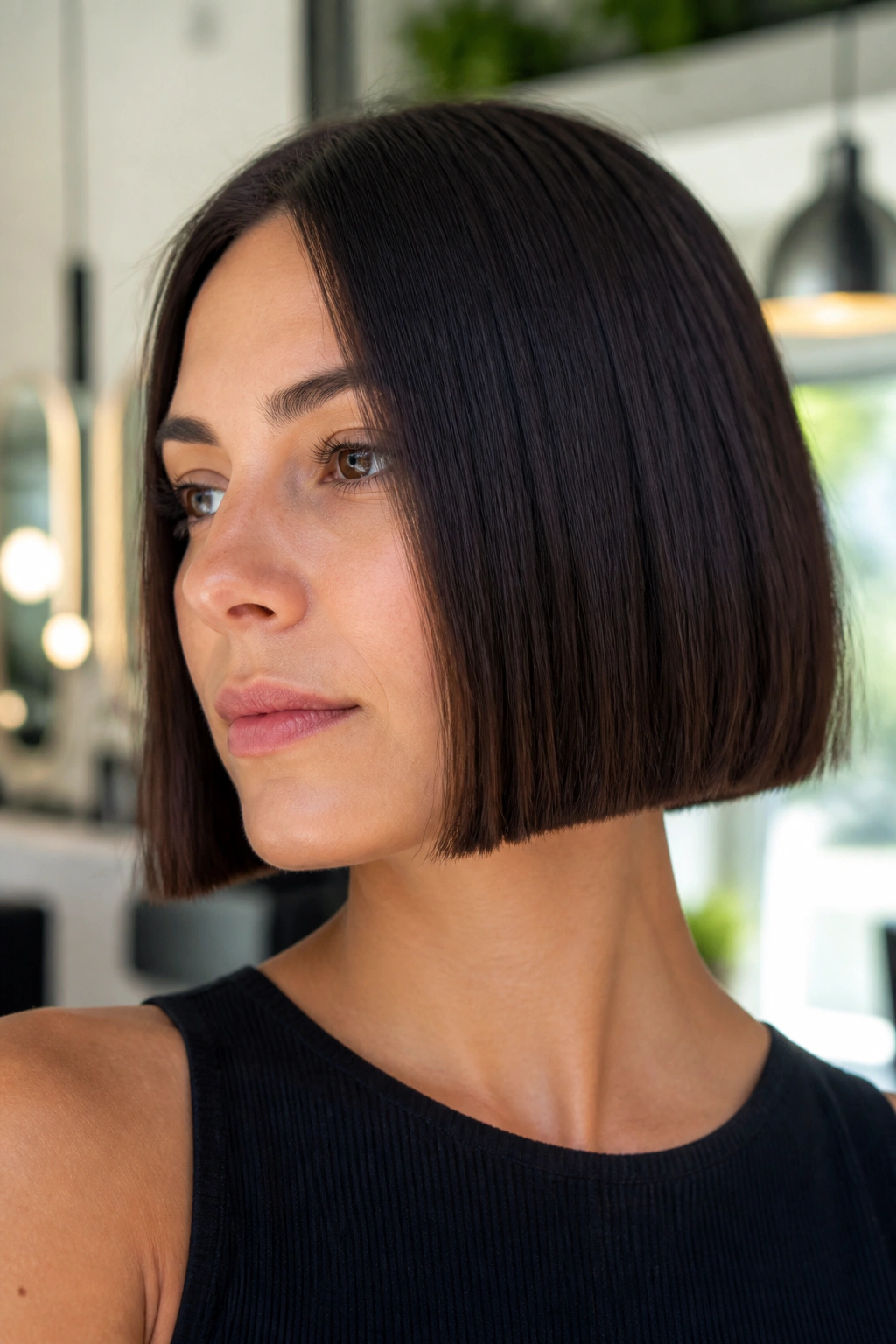
A blunt bob is one of the cleanest answers for fine thick hair. The line at the bottom does something useful: it makes the ends look heavier and denser than they really are. That trick matters when fine strands tend to go soft and feathery at the tips.
The length can sit anywhere from the chin to just below the jaw, depending on how much neckline you want to show. Shorter reads sharper. A little longer feels softer. Either way, the secret is restraint. Too many short layers at the interior and the bob loses its punch.
Why it works
The perimeter creates the illusion of a thicker edge. Fine hair likes that. It gives the whole cut a sense of weight without needing a lot of product. If your hair is dense, a blunt bob also keeps the sides from ballooning outward.
Ask for minimal internal layering and a clean, even finish. If you wear a side part, let the stylist build the shape around that part so the bob does not tip or collapse on one side. A quick blow-dry with a paddle brush or round brush usually finishes the job. No drama.
Best for: straight to slightly wavy hair that puffs when it gets too many layers.
2. French Bob

Why does the French bob work so well on dense, fine strands? Because it takes a little weight off without turning the whole head into a fluff cloud. The cut usually lands around the jaw, sometimes a touch shorter in front, with a soft fringe or a broken-up edge near the cheeks.
That shorter length keeps the silhouette neat. It also puts the movement right where people actually notice it: around the face. The result feels light, but not wispy. That distinction matters. Fine hair can go stringy fast if the ends are shredded too much.
A French bob is at its nicest when it looks slightly imperfect. A little bend. A little tuck behind one ear. A little softness around the fringe. If your hair has a natural wave, this cut can look nearly effortless. If it is poker-straight, a round brush at the ends and a dab of cream is enough.
What to ask for
Ask for a jaw-skimming bob with soft, not chopped, edges. If you want bangs, keep them light and slightly piecey so they do not take over the face. The fringe should frame, not fence you in. That is where a lot of French-bob versions go wrong.
It’s a charming cut, but it is also practical. That combination is rare.
3. Collarbone Lob
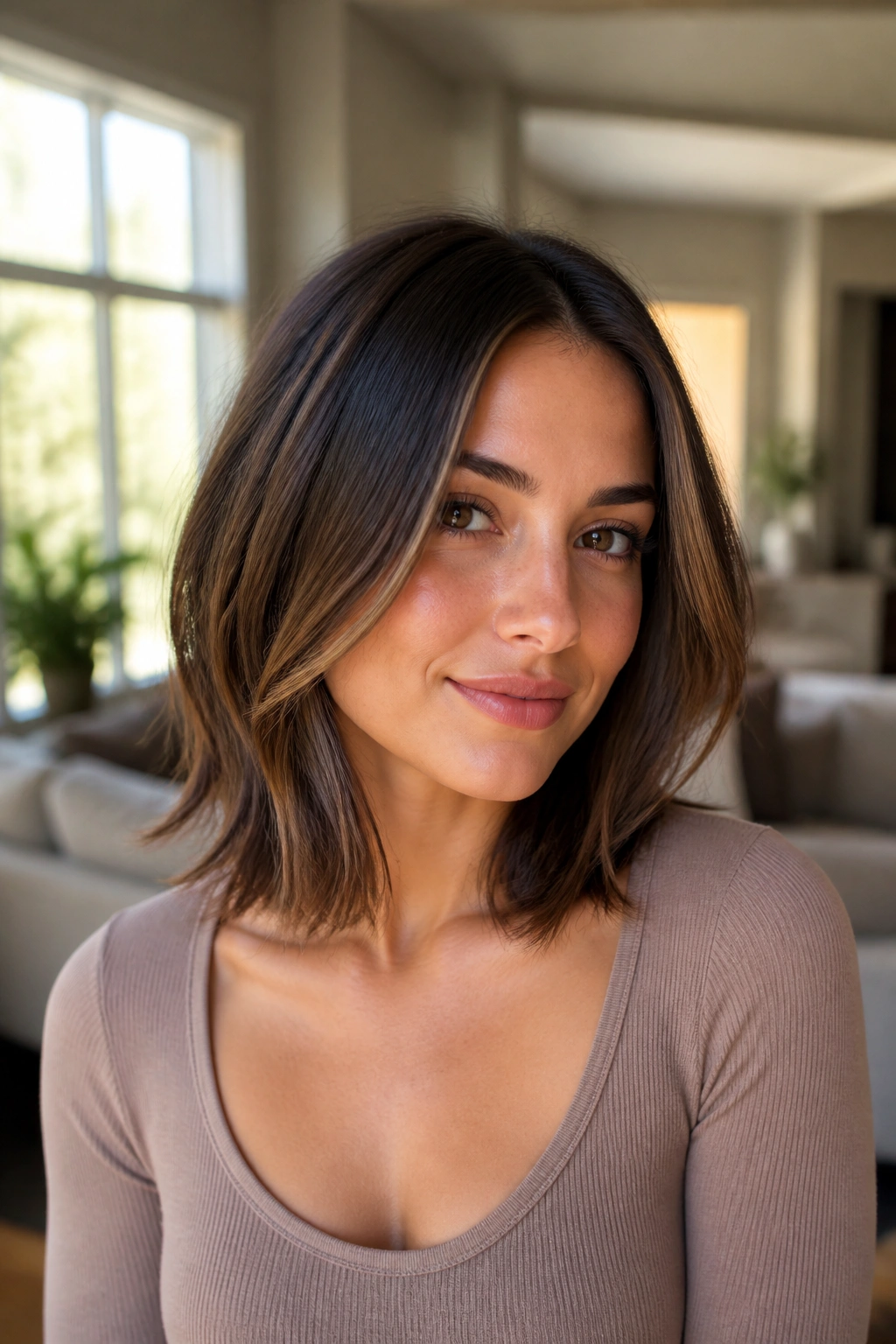
The collarbone lob is the haircut people choose when they want movement but are not ready to part with length. It sits right at that sweet spot where hair can still be tied back, tucked into a jacket, or worn straight without dragging the whole look down. On fine thick hair, that matters because the extra length can help the hair lie more smoothly.
A lob at the collarbone also gives you room to keep the perimeter full. The ends stay dense. The shape stays relaxed. And because the hair is not so long that it collects all its weight at the bottom, the cut tends to move better than waist-length hair with the same density.
If you want this cut to behave, ask for long, soft layers only near the front. Too many layers in the back can make the hair kick out in weird places, especially if your hair has a bend at the nape. A slight bevel at the ends can help the cut curve inward instead of hanging like a blunt sheet.
A center part makes it read modern and clean. A deep side part gives it more lift. I usually prefer the side part for this hair type when the roots are flat. It cheats in a good way.
4. Butterfly Cut

The butterfly cut is not about losing length. That’s the first thing to get straight. It keeps the bottom layer long while lifting the front and crown with shorter pieces that fall away like wings. On fine thick hair, that can be a clever move because the hair gets shape near the face without sacrificing the thicker looking bottom.
Where the layers should start
The shortest pieces usually need to begin around the cheekbone or just below it. Any higher and the cut can get airy in a way that feels flimsy. Any lower and you lose the visual lift that makes the style work in the first place.
This cut gives you movement at the front and a softer fall through the back. It’s one of the few layered styles that can make dense hair feel lighter without stripping the ends bare. But the details matter. Ask for long, blended layers rather than choppy steps. The transition should look smooth when the hair is down and still make sense when it’s tied back.
A big round brush or a hot brush brings the face-framing pieces forward and lets the longer layers sit underneath. If you air-dry, use a curl cream or light mousse just at the mid-lengths. Too much product at the roots kills the lift.
It’s a flattering cut, yes. More than that, it gives you shape without taking away the feeling of hair.
5. Soft Shag
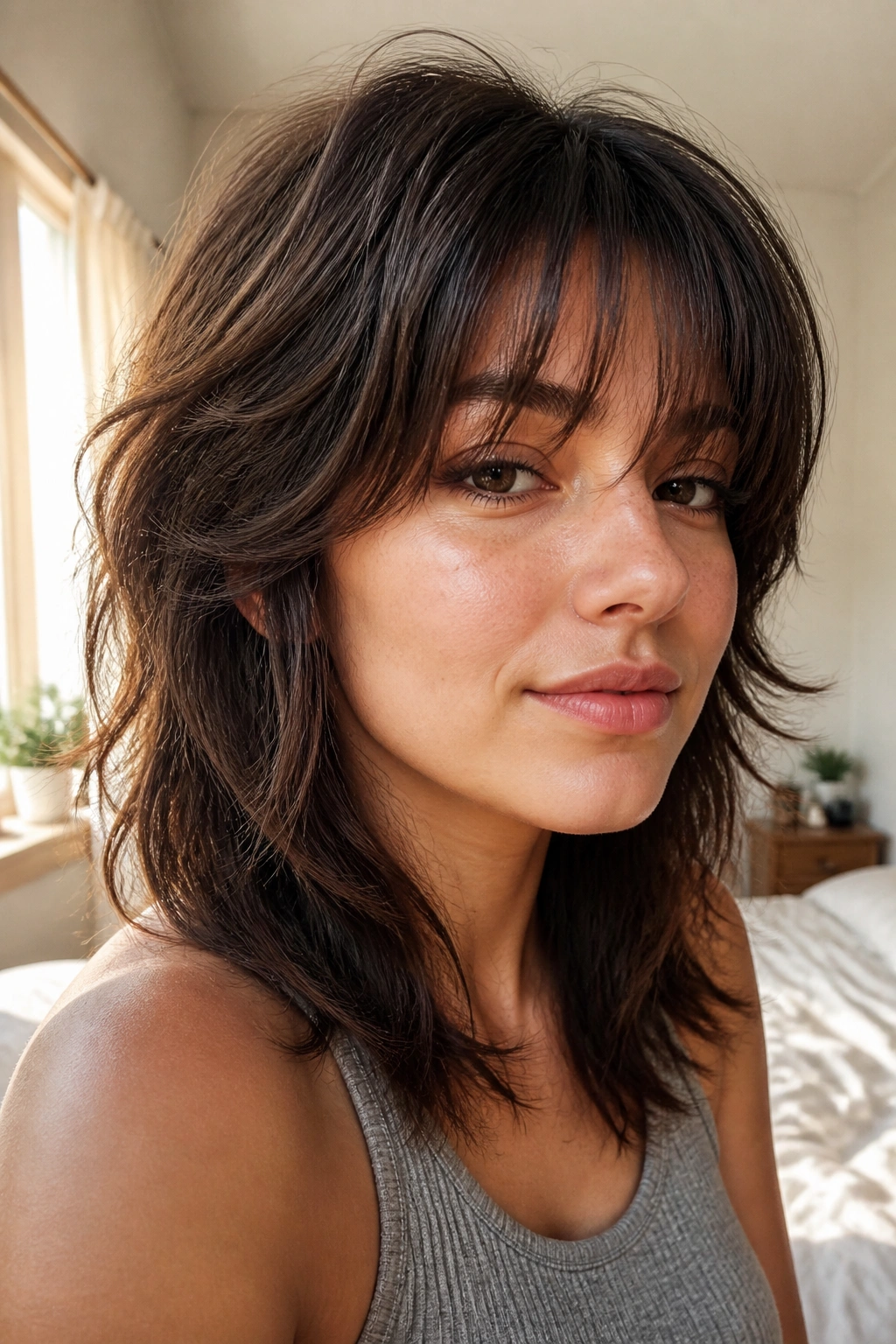
Not the crunchy shag. That one can get ugly fast on fine hair.
A soft shag is different. It uses layers to make the hair move, but the layers are blended and controlled instead of hacked through the ends. On fine thick hair, this matters because the density can take a little disruption, while the fine strands still need enough length left at the bottom to avoid see-through points.
The best version has a little piecey texture around the crown and face, then a more grounded perimeter underneath. That combination keeps the cut from looking flat at the scalp or overgrown at the ends. If your hair has a natural wave, this style can feel almost lazy in the best way. If it is straight, you may need a quick bend with a flat iron or a diffuser to get the shape to show.
What to avoid
- Too much razor work through the bottom third of the hair.
- Short, disconnected layers that make the ends look thin.
- Heavy thinning shears in dense areas that already lose strength fast.
- A fringe that’s cut too bluntly if your hairline is soft or uneven.
The soft shag works because it keeps the hair from sitting like one big block. It still needs shape, though. No one wants a shag that looks like it was done in a hurry.
6. Textured Pixie
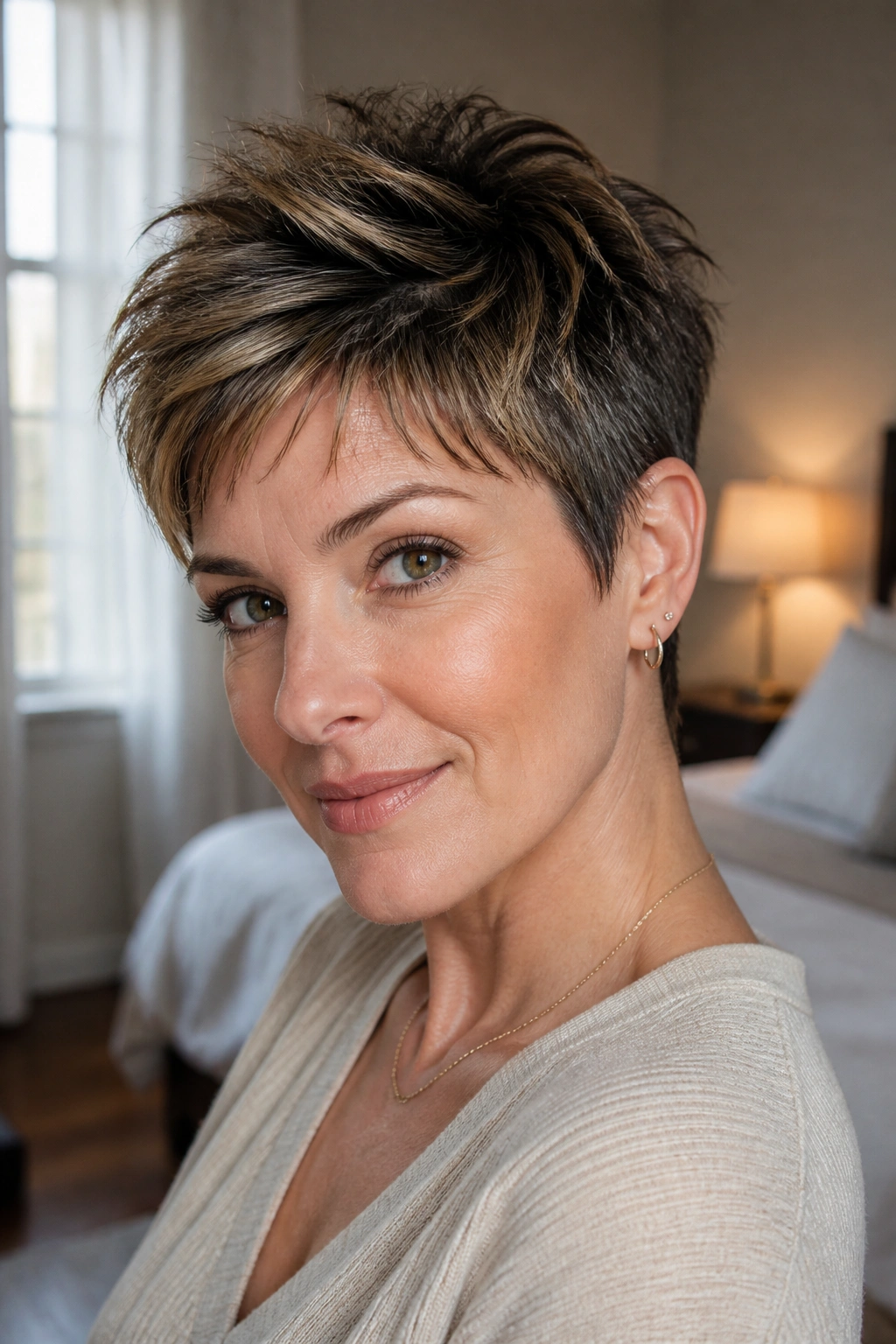
A textured pixie is one of the smartest short haircuts for fine thick hair because the density gives it body while the short length removes weight. That sounds obvious, but plenty of short cuts fail because the stylist leaves too much bulk on the sides or trims the crown without giving the top any room to stand up.
This cut is all about control. Keep the nape tapered. Leave more length on top. Let the front fall forward or sweep slightly to one side. You want pieces, not fluff. Fine strands are good at that if they are not over-cut.
How to make it sit right
Use a small amount of matte paste or light cream, then work it through dry hair with your fingers. That gives the top some separation without making it greasy or stiff. A blow-dryer aimed at the roots for 30 to 60 seconds can help if your crown lies flat. Short hair like this either needs a little lift or it needs to be cut with enough shape to stand on its own.
This is also one of the easiest cuts to wear if your hair grows thick around the ears or nape. A good pixie clears all that out. It feels neat. It feels fast. And it can look a lot fuller than longer hair that is weighed down by its own length.
7. Bixie
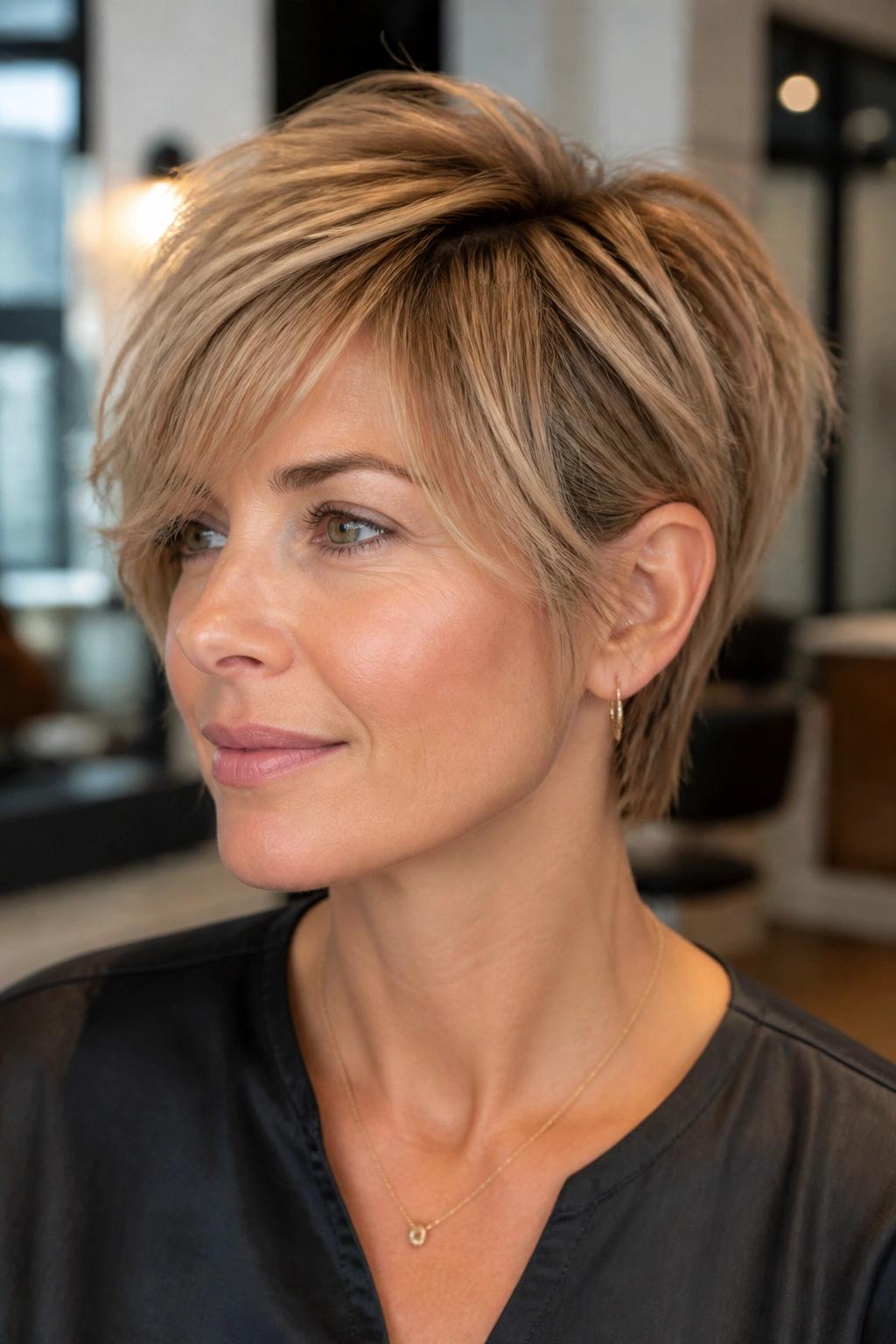
What do you get when you want short hair, but not too short? A bixie. It sits between a bob and a pixie, which is exactly why it suits fine thick hair so well. You keep a little softness around the jaw, a little length on top, and enough shape around the ears that the cut never feels severe.
The bixie is friendly to people who are nervous about going full pixie. That hesitation makes sense. The pixie is confident and specific. The bixie gives you room to adjust. You can wear the top tucked, flipped, side-swept, or slightly messy. The density in fine thick hair gives the style a cushion, so it rarely looks sparse unless it’s cut too short in the crown.
If you want this cut to work, ask for a longer top, soft sideburns, and a tapered neck. Those three details keep it from looking boxy. A little texture through the top adds lift, but do not let the stylist thin out the whole head. The shape should have body.
It’s one of those cuts that looks casual on purpose, which is harder to pull off than people admit.
8. Long Layers with Face-Framing

If you’re keeping the length, long layers with face-framing can be the safest place to land. Safe does not mean boring. It means the haircut respects the fact that fine thick hair can look lush when the ends stay full and the front has enough movement to keep the face from disappearing inside the hair.
The trick is keeping the layers long enough that they blend, not float. Short layers on dense hair can pop out in odd places and make the whole cut feel overworked. Long layers sit down better. They also let the hair fall in clean sheets when it’s straight, while still moving a little when it bends.
Ask for this shape
- Long layers that begin below the cheekbone
- Face-framing pieces that start near the jaw or collarbone
- A full perimeter through the bottom
- No heavy thinning at the ends
That last point matters. Fine strands break down visually fast if the ends are chewed up by aggressive texturizing. You want movement, not fray.
This cut works especially well if you like a blowout look. The front pieces can be wrapped away from the face with a round brush, and the back can stay smooth. It’s polished without being stiff. A bit predictable, maybe. Useful, absolutely.
9. Angled Lob

The angled lob does a nice job of making thick density feel lighter without sacrificing that solid feeling at the ends. Shorter in the back, a little longer in front, it creates a diagonal line that pulls the eye downward and forward. That line matters more than people think. It gives the hair motion even when the hair itself is sitting still.
For fine thick hair, the angle helps the cut escape that boxy, shoulder-brushing shape that can make midlength hair feel heavy. The front lengths skim the collarbone or just below it, which is flattering and practical. The back can sit a touch higher so the nape does not feel crowded.
A strong angle works best when it is clean, not extreme. You are not after a dramatic wedge. You are after a subtle slope that makes the hair swing. If your hair is straight, this shape is especially nice because the line shows clearly. If it is wavy, the angle can still hold, but the texture will soften the edge a bit.
I like this cut for people who want an easy middle ground. It has enough structure to feel intentional, and enough length to stay flexible.
10. Curtain Bang Cut
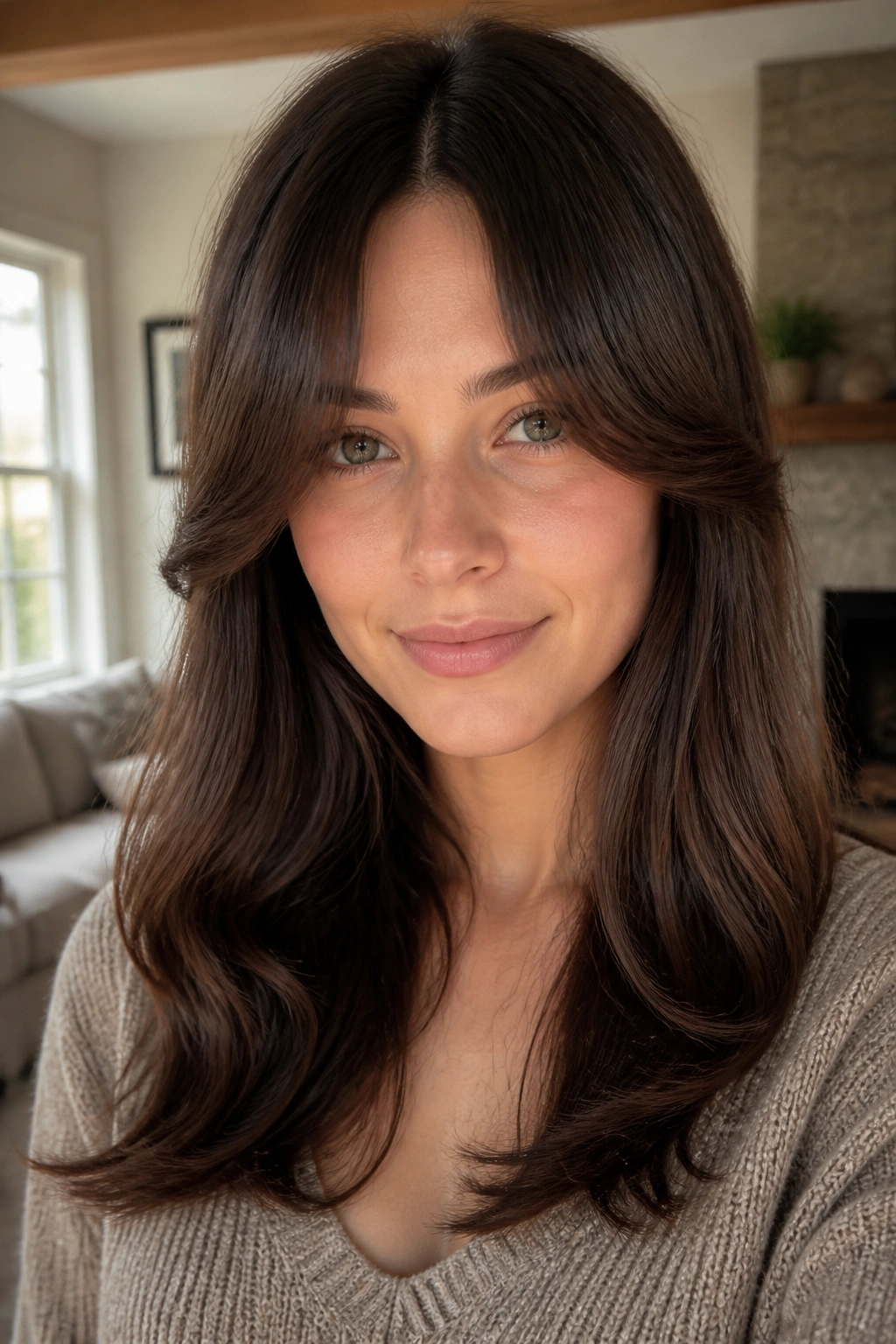
Curtain bangs can be a brilliant move on fine thick hair. They break up the front without demanding a full fringe, and they let the rest of the hair keep its density. That’s the appeal. You get face framing without having to sacrifice the whole length or chop a blunt line across the forehead.
The bangs need to be cut with restraint. Too thick, and they sit heavy. Too short, and they can kick up in a weird way. The sweet spot is usually somewhere between the cheekbone and the lip, depending on your face shape and how your hair dries. A little longer is safer than too short. Always.
How to get the bang length right
Ask for bangs that can split in the center and sweep open without fighting the rest of the haircut. If your hairline is cowlick-heavy, the stylist should leave enough length to let the fringe settle. A tiny bit of round-brush styling at the roots can make a huge difference here. Ten seconds under tension is often enough.
Curtain bangs work well with bob lengths, lobs, and longer cuts. They are not locked to one silhouette. That flexibility is why they keep showing up. They soften strong cheekbones, balance a heavier jaw, and make a straight cut feel less rigid. Just be honest about maintenance. Bangs need trimming. They grow fast. That part is a nuisance, but it’s the price of the look.
11. Choppy Shoulder Cut

A shoulder-length cut with soft choppy ends can be a lifesaver for fine thick hair that refuses to behave at one exact length. Shoulder cuts sit right in the zone where the hair has enough weight to calm down, but not so much that it drags itself flat. Add a little piecey texture at the ends and the whole shape wakes up.
The key is softness, not shredding. A choppy shoulder cut should feel lived-in, not damaged. That means point-cut ends, a few gentle interior layers, and enough fullness at the hem that the hair still looks deliberate from the back. If the ends are too broken up, fine strands start to look thin. That is the line you have to watch.
This cut is especially good if you wear your hair tucked behind your ears, clipped back half the time, or air-dried with a wave. It gives you room to do less. And on busy mornings, that matters more than a pretty promise from a haircut photo.
A small bend with a 1-inch iron or a fast blow-dry with a vent brush can sharpen the shape. But the cut itself should already have enough character to stand on its own.
12. Rounded Midlength Cut

A rounded silhouette sounds old-fashioned until you see it on fine thick hair. Then it starts making sense. Instead of leaving the hair boxy at the sides, the cut curves gently around the head, usually grazing the shoulders or sitting just above them. That curve helps dense hair sit close instead of jutting out where it pleases.
The rounded midlength cut is a quiet fix for people who feel their hair gets wide at the bottom. Straight across can look bulky. A rounded edge softens that bulk without draining the ends. It’s especially useful if you have a bit of wave or bend, because the curve builds on what the hair already wants to do.
What makes this haircut useful is the absence of drama. No short layers flying around. No harsh angle fighting the natural growth pattern. Just a controlled outline and some carefully placed movement near the face. It can look almost minimal from the front, which is part of its charm.
If you want volume at the crown without puff at the sides, this is one of the calmest ways to get it. Calm is underrated.
13. U-Cut

The U-cut keeps length at the center and slightly shorter pieces along the sides, which gives the whole hairstyle a soft curve when viewed from the back. On fine thick hair, that shape can be easier to wear than a straight blunt line because it eases some of the heaviness while still protecting the look of density.
I like this cut for anyone who keeps their hair long but feels the bottom gets too heavy and stiff. The U shape releases some of that weight without taking the whole thing shorter. The face can still be framed with a few long pieces, but the overall look stays full. That is the point.
This cut also behaves well in a ponytail. The shorter front edges fall around the face instead of being left in one awkward thick sheet. When the hair is down, the curve gives a little movement. When it is tied up, the shape still looks intentional. That’s rare enough to matter.
Ask for a gentle U rather than a dramatic one. A deep curve can look dated fast. A subtle one reads softer and more modern, and it holds up better once the hair grows out a little.
14. Shullet

The shullet is the one I’d recommend to someone who likes a little edge and does not mind hair that looks a bit undone on purpose. It blends shag and mullet ideas, so the crown and face get more texture while the back keeps some length. On fine thick hair, the density can actually help this cut work better than people expect.
It is not a cut for everyone. Not even close. If you want clean symmetry and neat lines, skip it. But if your hair has wave, if it gets flat at the roots, or if you like styles that look lived-in even when they are freshly cut, the shullet has a real place.
Who it suits
- People with natural bend or loose wave
- Anyone who wants volume near the crown
- Those who prefer air-dried texture over a polished blowout
- Anyone willing to style the front pieces with a little grit
The important thing is control. A good shullet should feel deliberate, not accidental. The layers should be placed where they create lift, and the back length should stay full enough to keep the shape from collapsing. If the cut goes too thin, the whole thing turns scrappy instead of cool. And that is a bad trade.
15. Asymmetrical Bob

An asymmetrical bob can be a sharp answer for fine thick hair because the uneven line gives the cut motion without asking for a lot of layers. One side usually sits a little longer than the other, often by just an inch or two. That small difference changes the way the hair falls and makes the shape feel more alive.
The beauty of this cut is that it uses geometry instead of volume tricks. The eye follows the longer side, then settles into the shorter side, and the whole style feels more sculpted. Fine strands like that kind of structure. Dense hair likes the cleanup. You end up with a bob that looks deliberate from every angle.
This is a strong choice if you wear a side part or if one side of your hair grows flatter than the other. The asymmetry can help balance that. It also gives you a nice place to tuck one side behind the ear without losing the line of the haircut. Tiny detail. Big payoff.
If you want it to read modern rather than severe, keep the angle subtle and the ends blunt. A soft bevel at the front can take the edge off without ruining the shape. Clean, not fussy. That’s the balance.
Final Thoughts
The smartest haircuts for fine thick hair do not fight the hair’s structure. They work with it. Solid ends, controlled layers, and a shape that respects density usually beat trendy chopping every time.
Bring photos, yes. But also bring a little honesty about your routine. If you air-dry, say so. If you hate round brushing, say that too. A good cut should still look like itself when you do less to it, which is where the real test starts.
And if your hair has been acting difficult for years, the problem may not be your hair at all. It may be the shape sitting on top of it.
