



If your morning starts with dry shampoo in one hand and a hair tie in the other, you already know the truth: the best low maintenance hairstyles are the ones that stop hair from bossing your day around. They do not need perfect blowouts, a shelf full of products, or twenty minutes of wrestling with a round brush before coffee. They need to look decent fast.
That is the real bar for busy women. Not “looks flawless in a studio.” More like: looks intentional after a school run, a commute, a grocery stop, and a gust of wind that would have ruined a fancier style. A good easy hairstyle earns its keep when your hair is not freshly washed, not freshly cut, and not in the mood to cooperate.
And that’s where people waste time. They chase styles that are pretty on day one and annoying by day three. Better to pick cuts and styles that hold shape, hide a little mess, and let you move on with your life. Some of them are sharp and polished. Some are soft and barely styled. A few are old favorites for a reason.
1. Low-Maintenance Air-Dry Bob
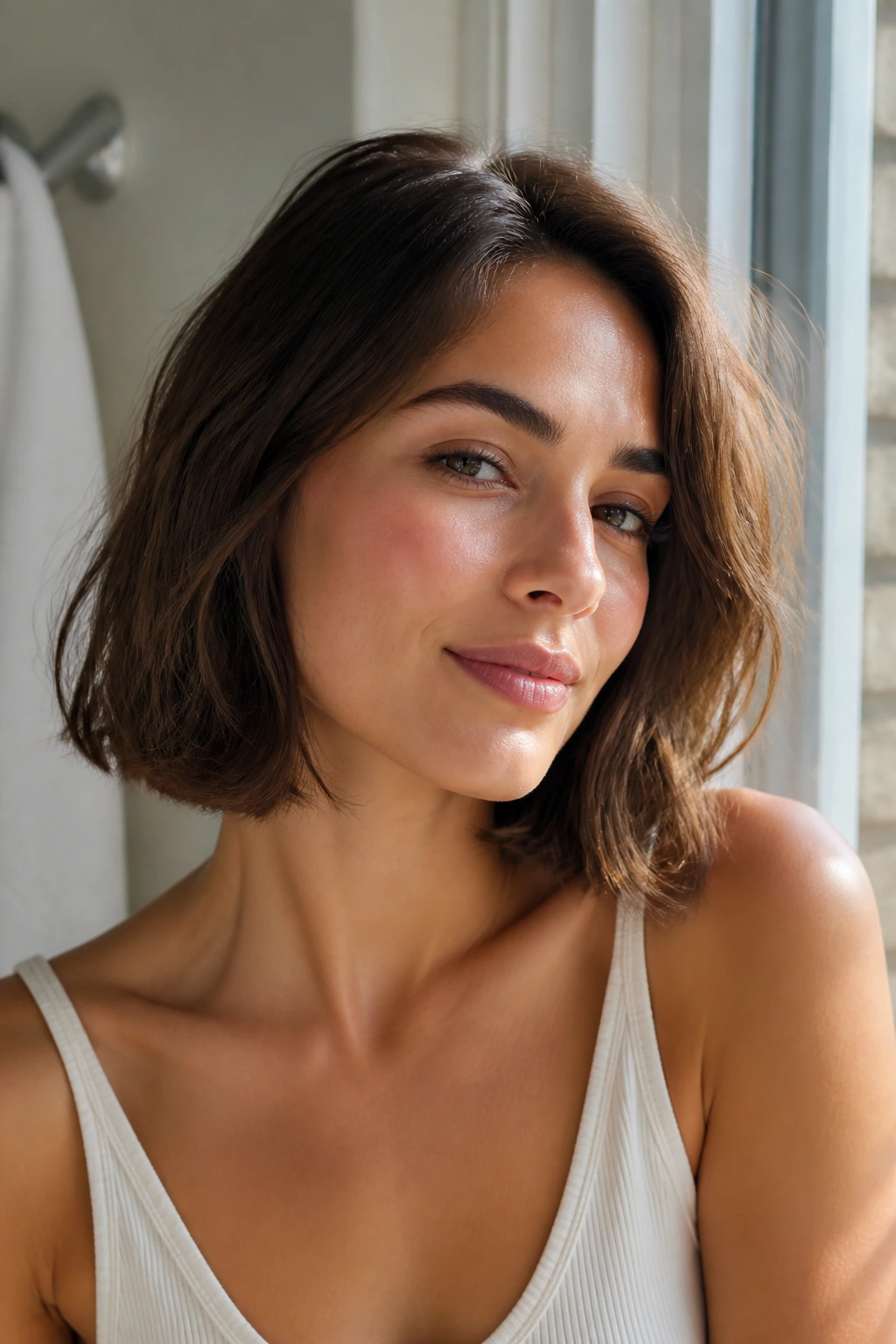
A bob that looks better less styled is one of the smartest hair choices out there. The trick is in the cut: ask for a blunt or slightly textured bob that lands somewhere between the jaw and the collarbone, depending on how much length you want to keep. That length gives you shape without forcing you into daily heat styling.
Why It Works So Well
A good air-dry bob has enough structure to fall into place on its own, which is half the battle. If your hair is straight or softly wavy, a touch of leave-in conditioner and a small amount of mousse can be enough to keep it from puffing out weirdly. If your hair is thicker, a lightweight cream through the ends helps the shape stay smoother.
The best part is how little attention it asks for once the cut is right. Wash it, scrunch it, clip one side back if needed, and go. Done.
- Best for: straight, wavy, or fine-to-medium hair
- Styling time: about 5 to 10 minutes
- Ask for: a clean perimeter with soft interior texture
- Avoid: heavy layering that makes the ends flip in odd directions
Pro tip: if your bob hits right at the chin, it can kick outward. A cut that lands just below the chin usually behaves better.
2. The Shoulder-Length Lob That Grows Out Gracefully
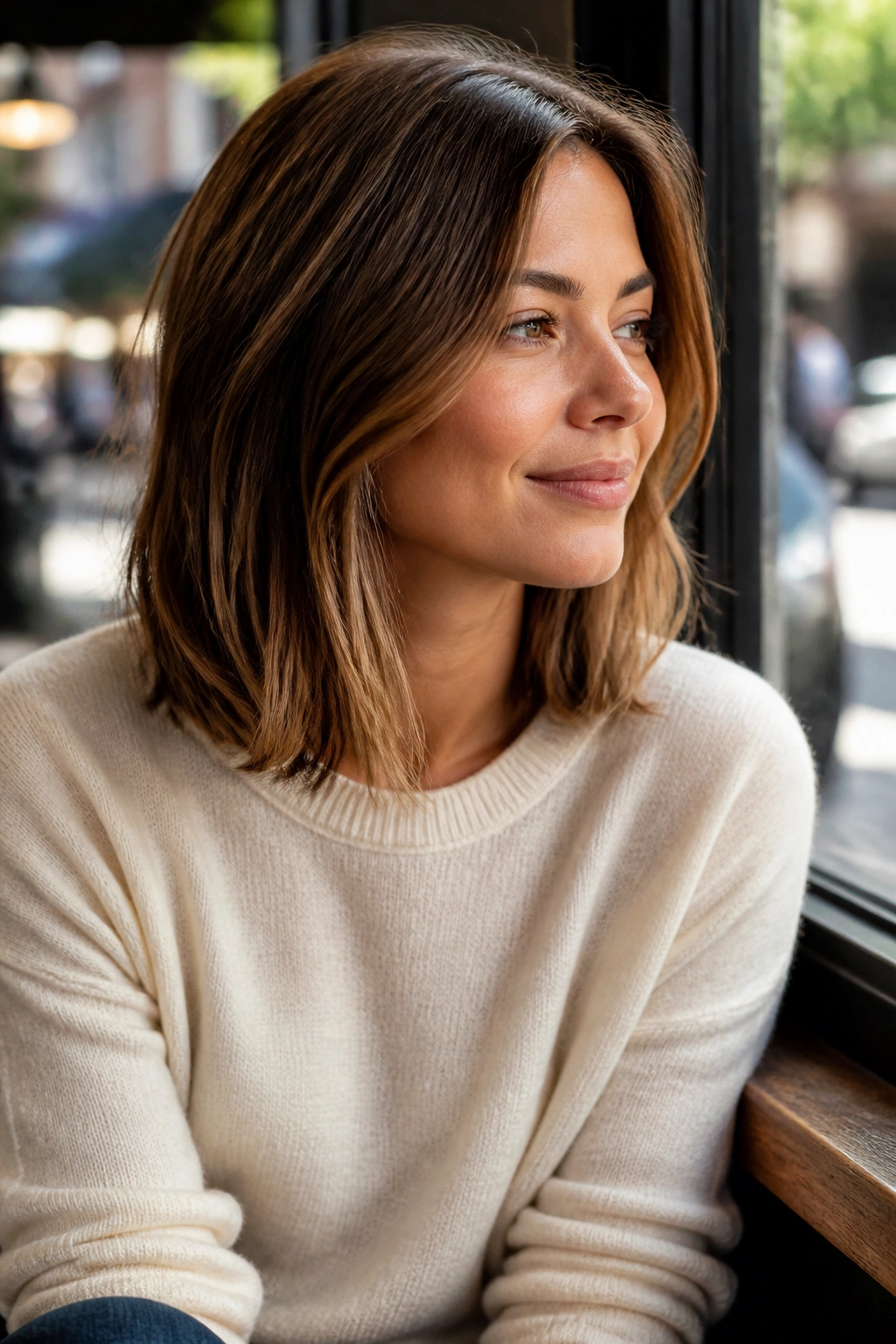
A shoulder-length lob is the style I recommend when someone says they want something easy but still wants options. It is long enough to tuck behind the ears, short enough to dry faster, and forgiving enough to survive a skipped wash day without looking ragged.
What makes this cut so useful is the range. You can wear it straight, air-dried, curled just at the front, or thrown into a low tie when you are in a rush. It also grows out in a way that does not feel awkward after two weeks. That matters more than people admit.
A lot of busy women get stuck with hair that is too long to manage quickly and too short to do much with. The lob sits in the sweet spot. It still has movement, but it does not demand constant shaping. Keep the layers soft, not choppy, and you get a cut that plays nicely with a flat iron one day and a claw clip the next.
If you only want one haircut that can survive the whole week with minimum fuss, this is a strong contender. Not glamorous. Just practical. And practical wins.
3. The Claw-Clip Twist
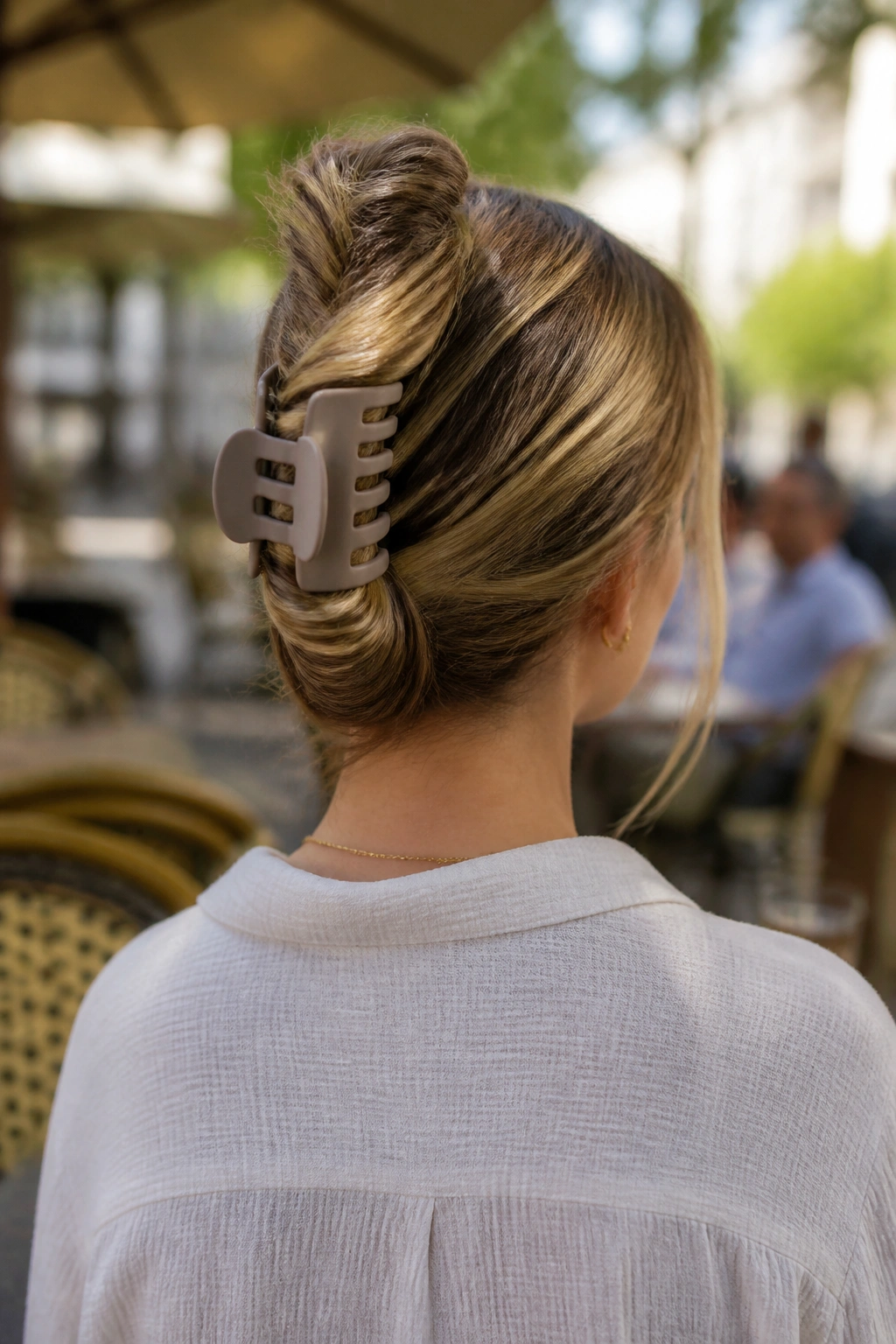
Why does this style show up everywhere? Because it solves a problem in about 15 seconds. Twist the hair up, secure it with a large claw clip, and you have a look that feels cleaner than a ponytail but takes less effort than a bun.
How to Make It Look Intentional
Start with hair that has a little grip. Day-two or day-three hair holds better than freshly washed, silky hair. Gather the hair at the back of your head, twist upward once or twice, then clip it so the ends point either up or down, depending on the shape of the clip. The goal is not perfection. The goal is stability.
A matte or acetate clip usually grips better than a slippery plastic one. If your hair is thick, use a clip with wide teeth and a strong spring. If your hair is fine, a smaller clip can keep the twist from sagging.
- Best for: medium to long hair
- Best hair texture: wavy, straight, or slightly curly
- Time needed: under 2 minutes once you get the hand of it
- Works best when: hair has some grit from dry shampoo or texturizing spray
One caveat: very layered hair can slip out at the crown. A few pins fix that fast.
4. The Low Sleek Bun
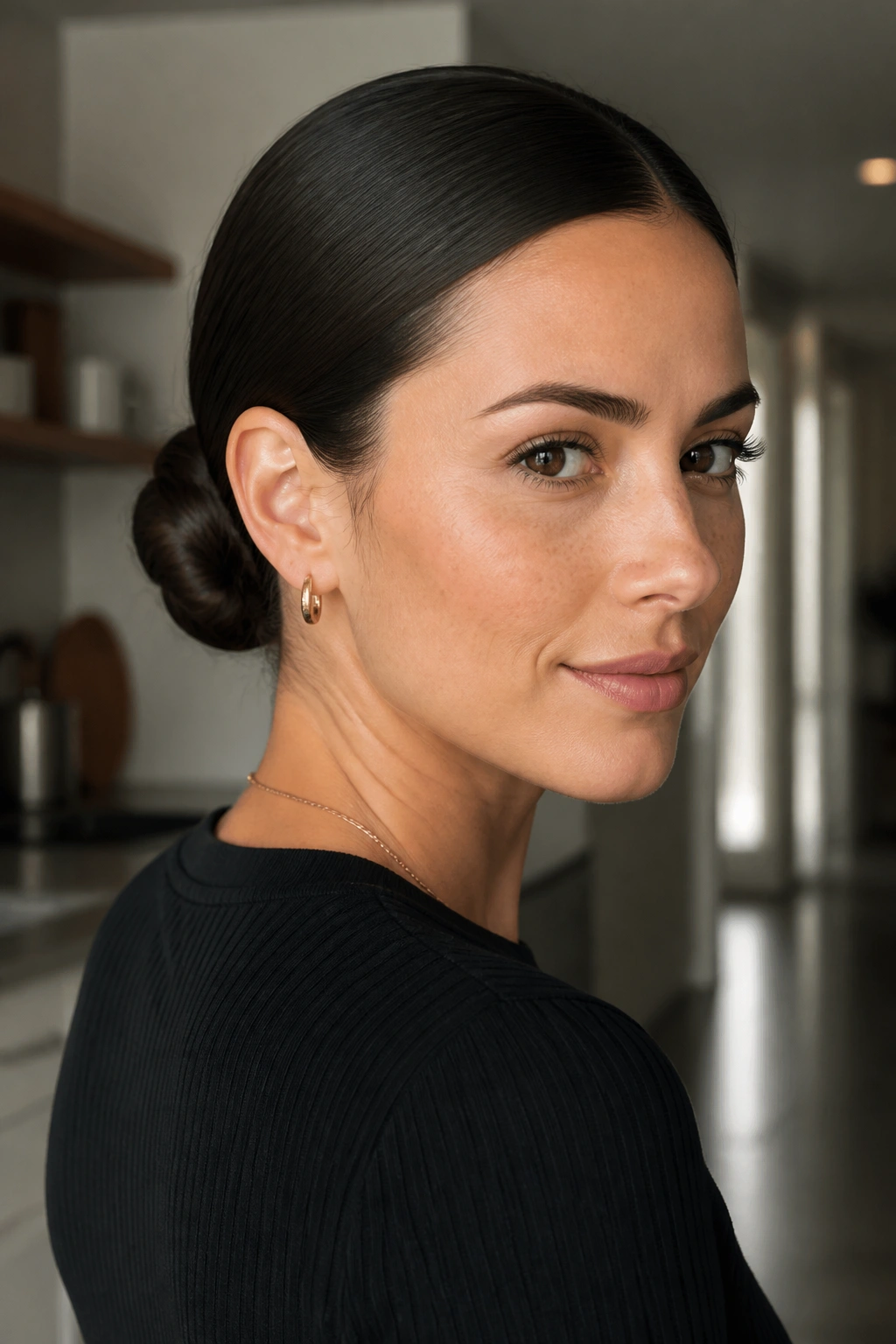
A low sleek bun is what you wear when you want to look put together and do not have the energy to argue with your hair. It is clean, compact, and one of the easiest ways to turn “I got ready in a hurry” into “I meant to look like this.”
Picture a morning with ten different demands and exactly zero patience. That is bun territory. Brush the hair back, smooth the top with a little cream or gel, and secure it low at the nape. Twist the tail around itself, pin it, and stop fussing once it feels secure.
What Makes It Better Than It Sounds
A sleek bun is not only for formal days. It is excellent for errands, office work, and any situation where frizz would otherwise make you feel like hiding. Keep the bun low and neat if you want it polished. Leave a few fine pieces loose around the temples if you want it softer.
The biggest mistake is overloading the hair with product. Too much gel makes the front look crunchy instead of smooth, and that is not the vibe. Use enough to tame flyaways, not enough to glue every strand in place.
A low bun also protects the ends of your hair from constant rubbing against scarves, coat collars, and purse straps. That sounds boring. It isn’t. Hair that stays tucked away tends to behave better.
5. The Messy Top Knot
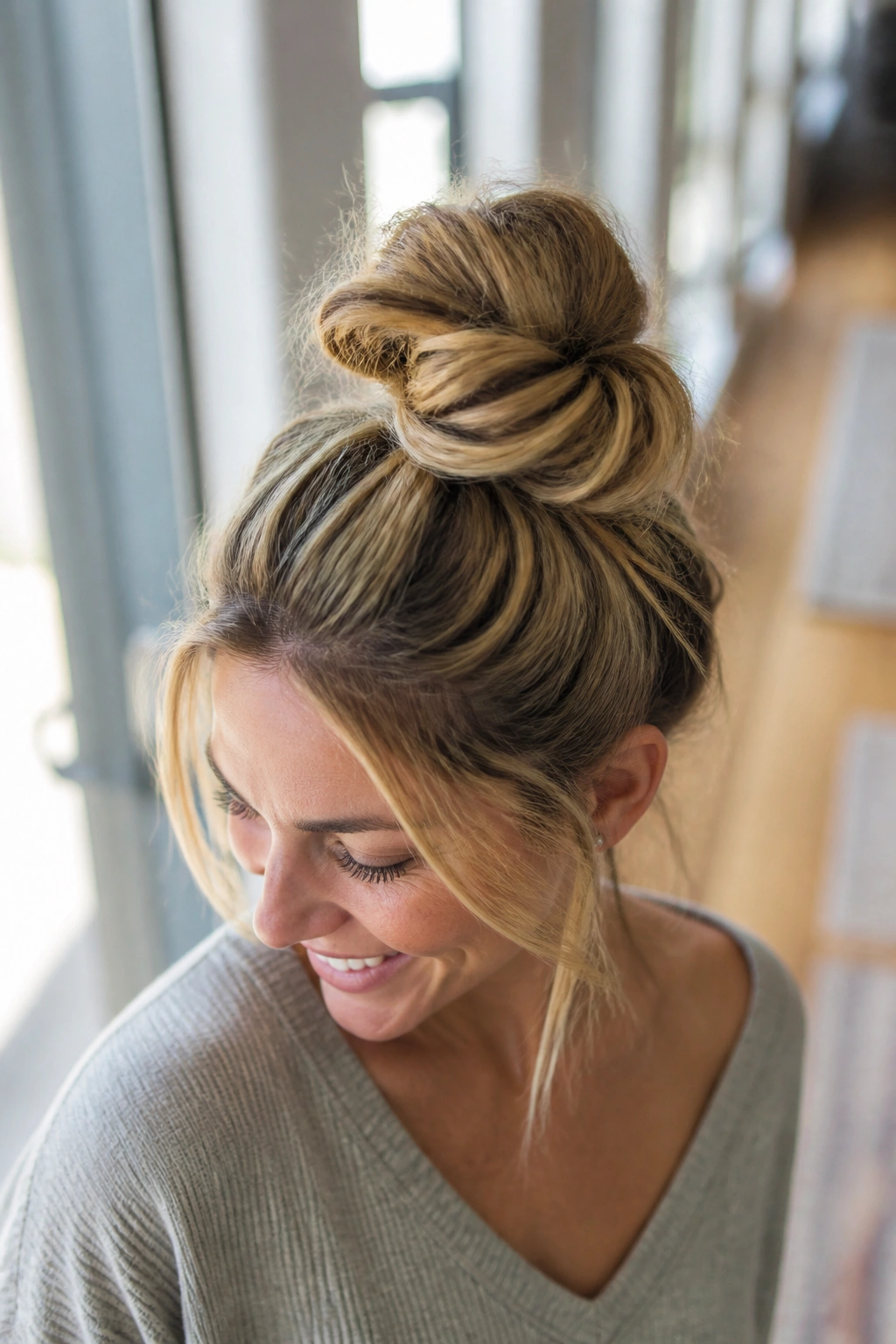
Some styles are “messy” in the wrong way. This one should not be. A good top knot looks casually tossed up, but it still has shape, balance, and a few strands left out on purpose. That difference matters.
A top knot is a favorite because it gets hair off your neck, keeps it out of your face, and works on hair that is clean, slightly dirty, or somewhere in between. If your hair is medium length, flip it upside down, gather it high, twist once, coil, and pin. If it is longer, you may need a second elastic before you wrap it.
The sweet spot is a knot that sits high enough to feel effortless but not so high that it pulls at your scalp. Too tight, and it gives you that little headache that sneaks up by lunchtime. Too loose, and it collapses. There is a middle ground, and once you find it, you will probably wear this style more than you expect.
A few loose pieces around the face keep it from looking severe. Use them sparingly. Two is enough. Six starts to look like indecision.
It is the kind of style that saves you on the mornings when your hair refuses to be a team player. That is enough of a reason.
6. The Half-Up Clip Style
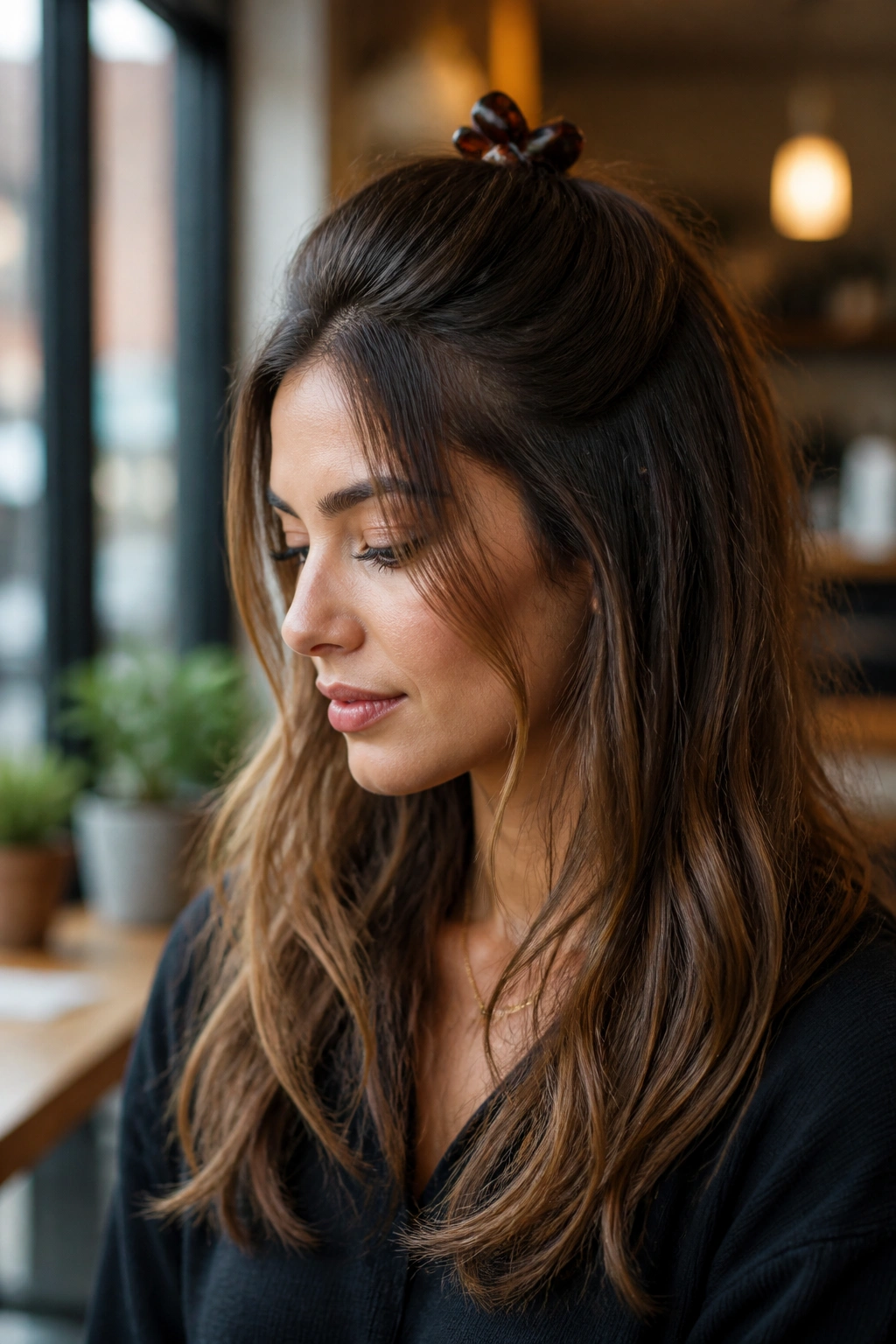
Half-up hair is the compromise style people ignore until they realize how useful it is. You keep some length visible, clear the front of your face, and avoid the commitment of a full updo. For many busy women, that is the whole point.
Unlike a ponytail, the half-up clip style does not yank all the hair back. Unlike a bun, it still gives you movement. It works especially well if your hair is layered, because the shorter pieces around the face can stay loose while the top section stays controlled. That means less redoing.
If you want it to feel neat, gather the top section from the temples back to the crown and secure it with a small clip or a short elastic. If you want it softer, twist the section once before clipping. That little twist helps the style stay in place and makes it look like you made an actual decision, which is underrated.
This is a smart pick for medium and long hair, and it is one of the easiest ways to stretch a wash day. The lower half can be a bit frizzy or wavey without ruining the whole look. In fact, that texture often helps.
7. The Classic French Braid
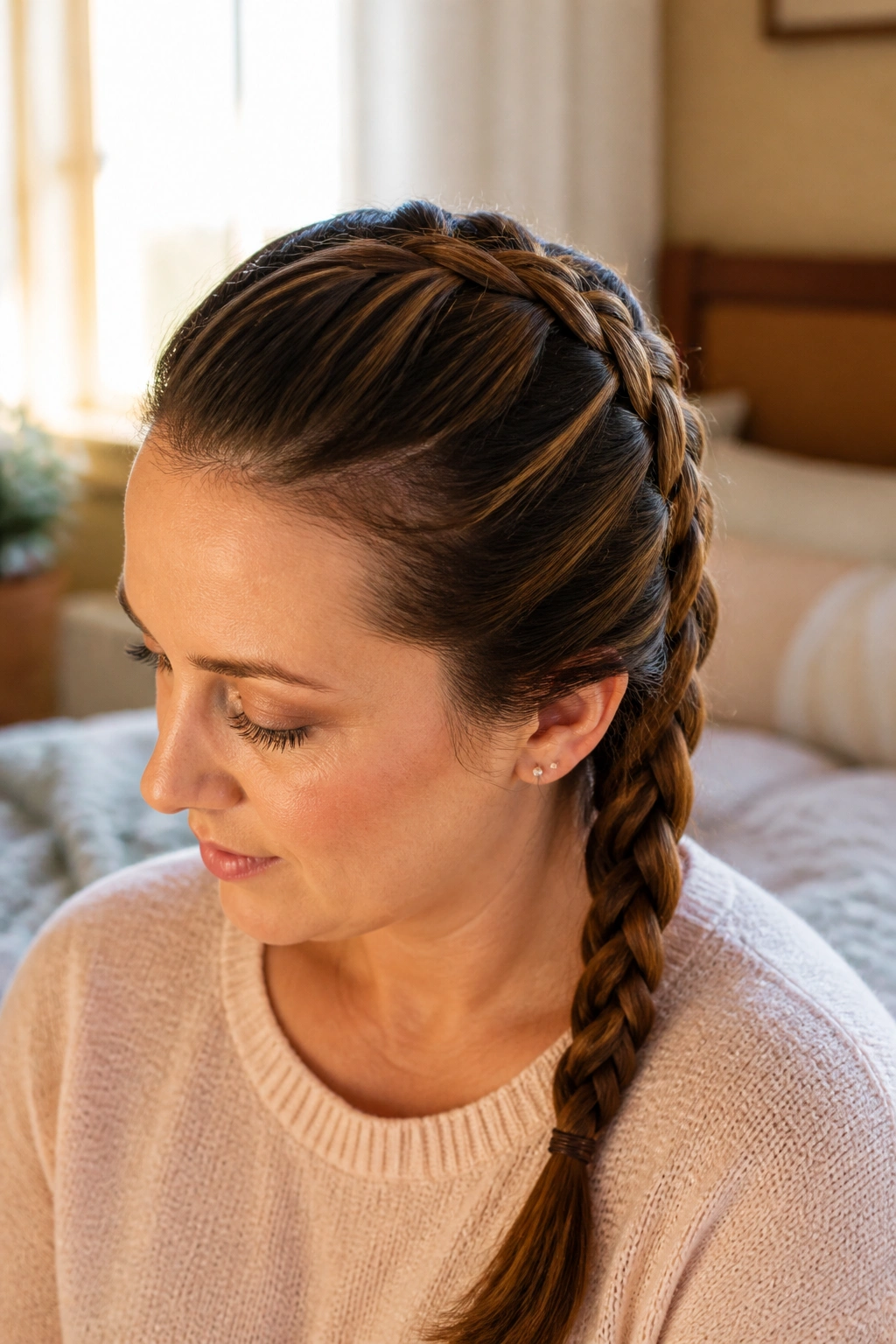
A French braid is one of those hairstyles that looks like it should take forever but becomes a time-saver once you get decent at it. It keeps the hair contained, holds up well through a long day, and does not fall apart the second the wind shows up.
Why It Still Earns Its Place
The braid starts at the crown and feeds in hair as you move down, which means the roots stay close to the head. That makes it more stable than a loose braid and better for days when you need your hair to stay out of the way. It also works on slightly dirty hair better than freshly washed hair, because the strands have more grip.
If your arms get tired halfway through, that is normal. Braid tension is a skill. The more you do it, the neater it gets. Keep the sections even, pull each pass snug, and stop once you reach the nape or the ends, whichever suits your length.
How to Wear It
- Wear it centered for a clean look.
- Start it off to one side if you want a softer feel.
- Finish in a low tie and tuck the tail under a coat collar.
- Sleep in a loose braid for gentle waves the next day.
One good braid can buy you a full day of peace. That’s the deal.
8. The Dutch Braid Ponytail
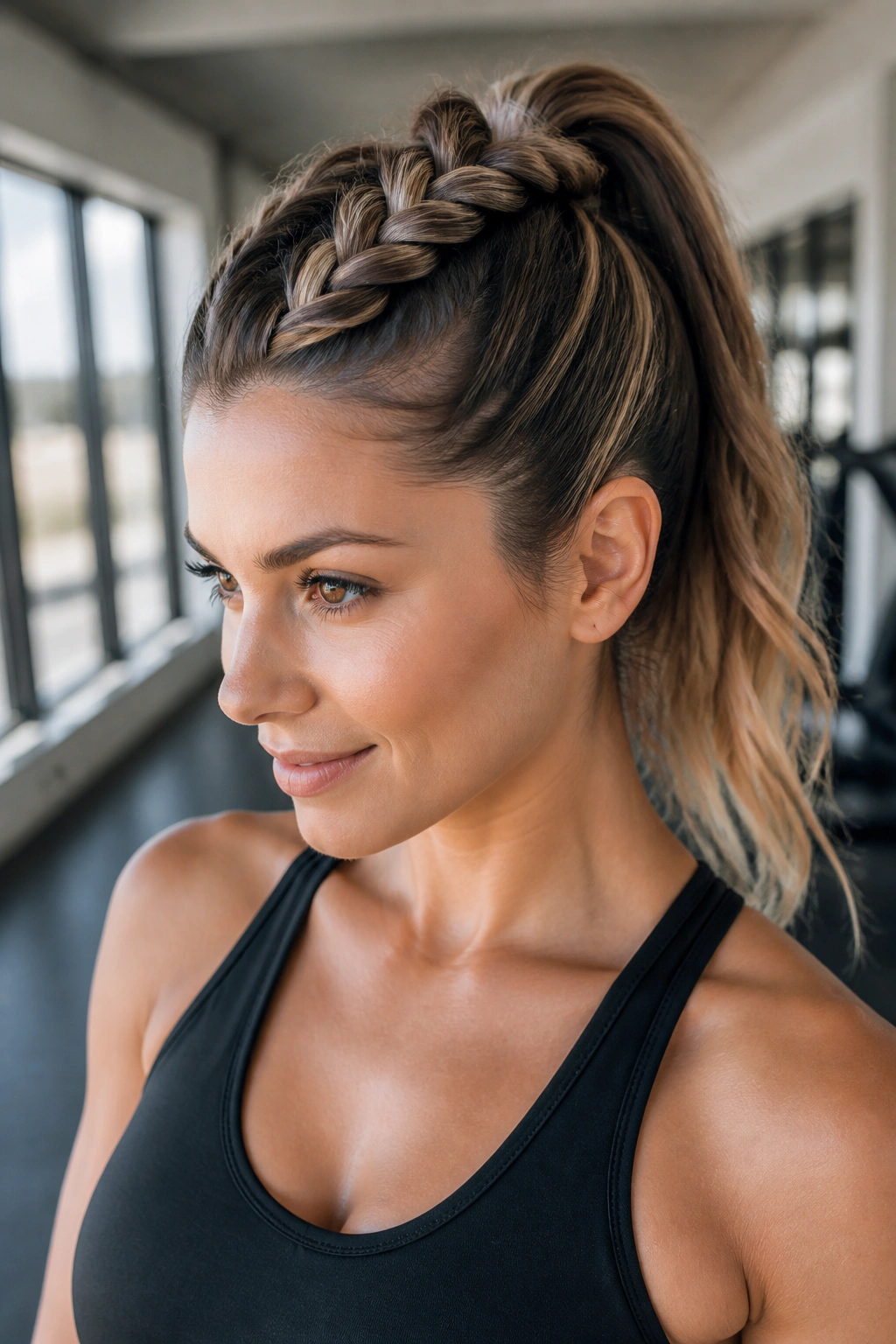
A Dutch braid ponytail is what happens when you want control at the top and simplicity at the bottom. The braid sits raised above the scalp, which gives it a little more shape than a French braid, and the ponytail keeps the rest fast and easy.
I like this style for gym days, long shifts, and travel days because it holds up when the schedule turns rude. Start with a Dutch braid from the hairline back to the crown, then gather the remaining hair into a ponytail. If you want it to look fuller, wrap a small strand of hair around the elastic at the base. That tiny detail changes the whole mood.
The raised braid gives the front of the style enough structure that you do not need to smooth every strand. Good news. The ponytail part does not have to be perfect either. A little movement actually helps.
Use a texturizing spray before braiding if your hair is slippery. Thin hair can look fuller with this style, and thick hair gets the benefit of being pulled back without feeling mashed flat. It is one of the more practical quick hairstyles for women who need something that can handle a long day and still look decent at hour ten.
9. The Wrapped Low Ponytail

A low ponytail can look plain or polished. The difference is usually one strand of hair and about 30 extra seconds.
Here’s the move: smooth the hair back, secure it low at the nape, then take a small section from underneath the ponytail and wrap it around the elastic. Pin the end underneath. That one detail turns an ordinary ponytail into something cleaner and more finished.
It works because the wrapped section hides the elastic and makes the base of the ponytail look intentional. The style is especially good for straight hair, but it can work on waves too. If your hair frizzes easily, add a little smoothing cream only along the top and sides, not through the ends. The ends need to keep their shape.
This is a strong office hairstyle, but it does not feel stiff. That balance matters. You can wear it with a blazer, a knit dress, or a plain T-shirt and still look like you meant business.
If your hair is very fine, tease the crown slightly before smoothing it back. A small amount of lift keeps the ponytail from collapsing by lunch.
10. The Wash-and-Go Curls
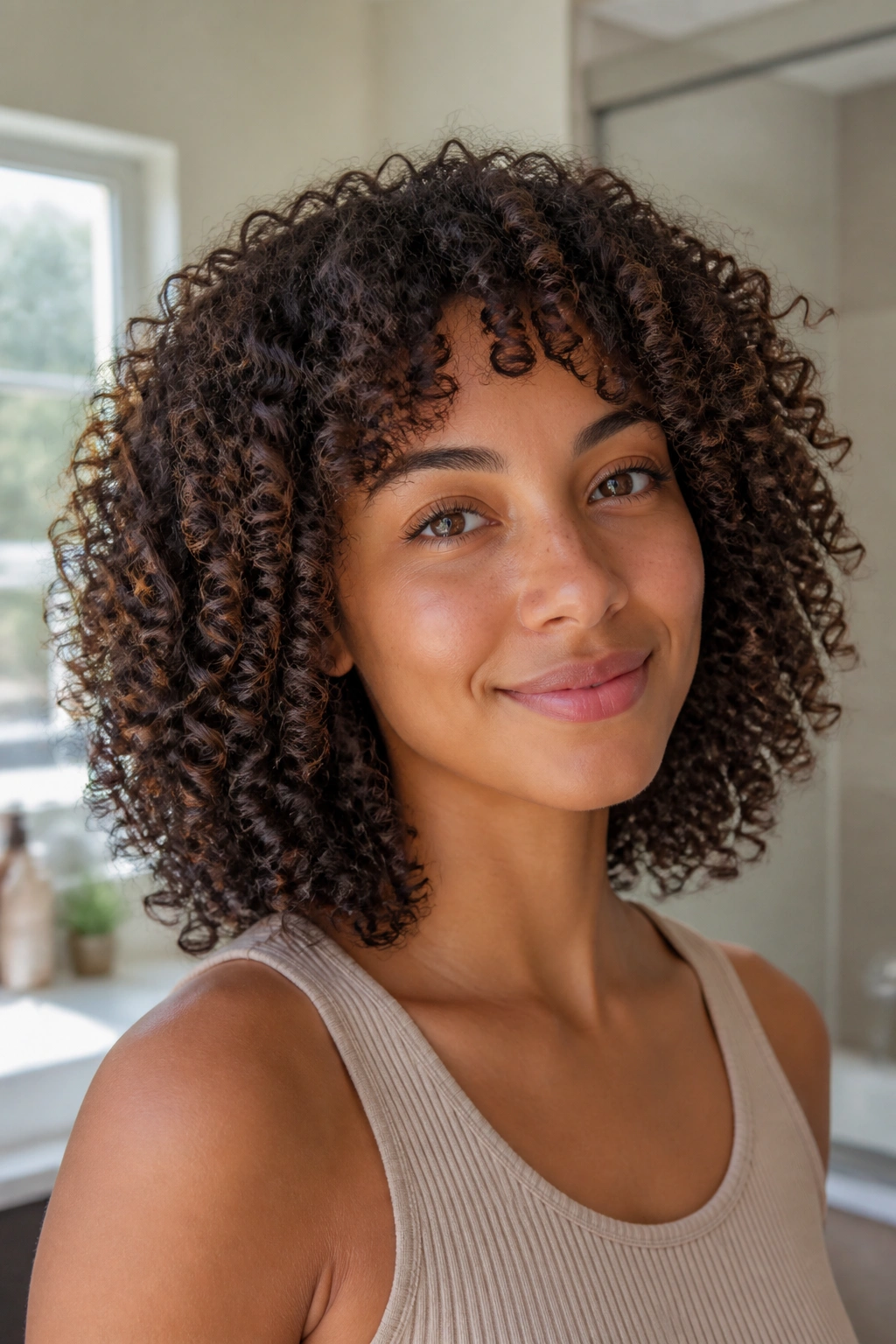
For curly and coily hair, a good wash-and-go is one of the best low maintenance hairstyles around. The key is not speed. The key is the right cut, the right moisture, and enough hold to keep the curl shape from turning fuzzy before noon.
The Cut Matters More Than People Think
A wash-and-go only looks easy when the haircut supports it. Layers should be shaped so curls stack nicely instead of hanging in a triangle or puffing at the sides. If your curls are loose, shoulder-length layers often help the shape move. If they are tighter, a rounded shape near the crown can keep the silhouette balanced.
After washing, work in leave-in conditioner while the hair is damp, then add a curl cream or gel in sections. Scrunch upward or rake the product through depending on how defined you want the curls to be. Air-dry or diffuse on low heat until the hair is fully dry. Do not touch it while it is drying if you want definition.
What Makes It Busy-Woman Friendly
- Cuts down on daily styling
- Lets you stretch wash day for several days
- Works with your natural texture instead of fighting it
- Can be refreshed with water and a little leave-in the next morning
The best wash-and-go feels like your hair, only more cooperative. That is a good trade.
11. The Braided Crown
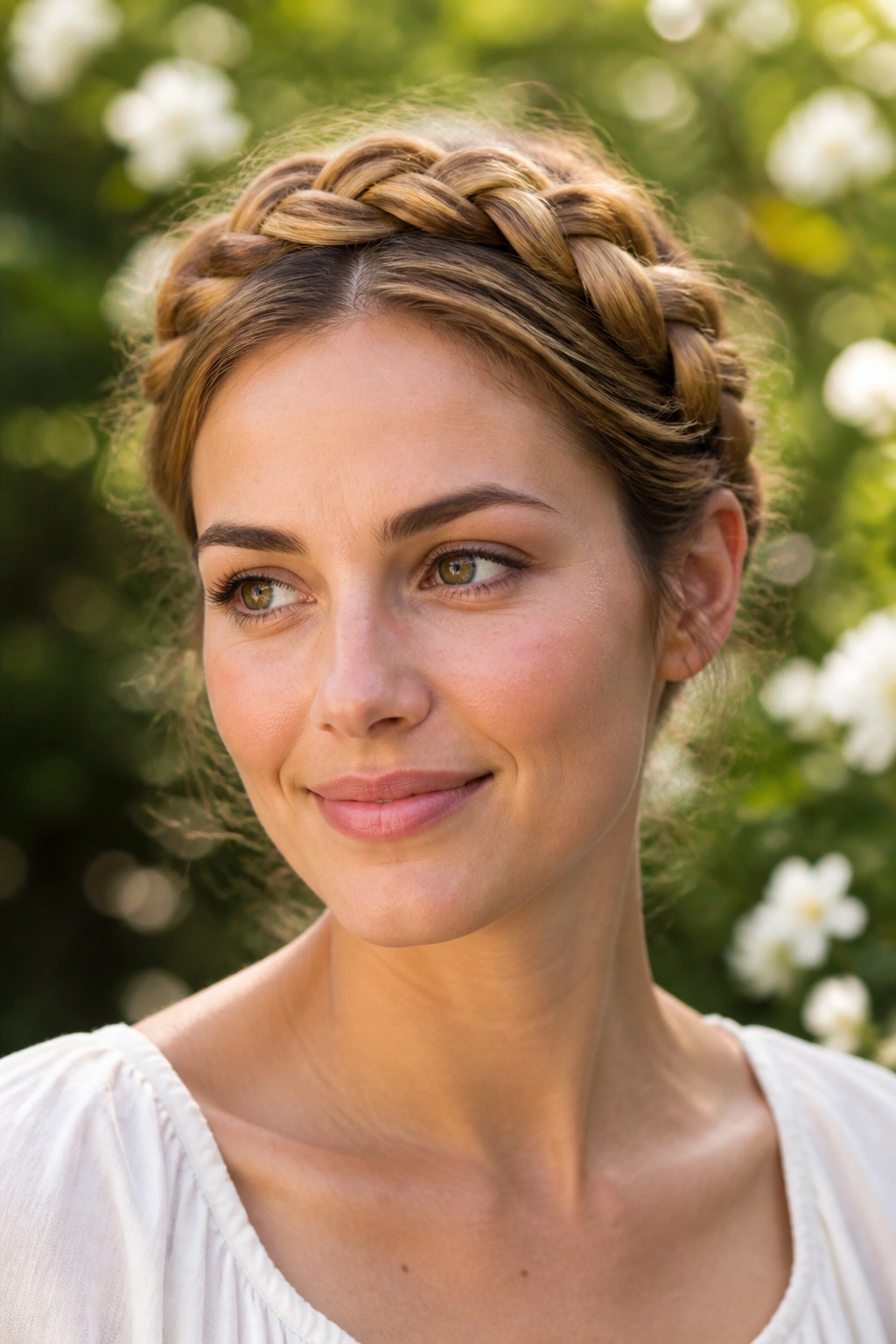
A braided crown is one of those styles that looks more complicated than it is. Once you know the basic motion, it becomes a steady go-to for days when you need your hair contained and out of the way without resorting to the same old bun again.
The braid wraps around the head like a halo, which makes it useful for long hair that would otherwise swing into your face or get caught on everything. It also lasts well through the day because the braid sits close to the head and does not rely on volume to stay put. That part is practical, not just pretty.
A slightly off-center part can make the style feel softer. A perfectly centered part gives it a cleaner, more formal look. Either works. What matters is tension: keep the braid snug enough to stay in place but not so tight that it pulls hard at the hairline.
This one can take a bit longer the first few times. Fine. That does not make it a bad low maintenance hairstyle. It means you invest a little time once and buy yourself a style that holds up for hours.
12. The Shag Cut with Soft Layers
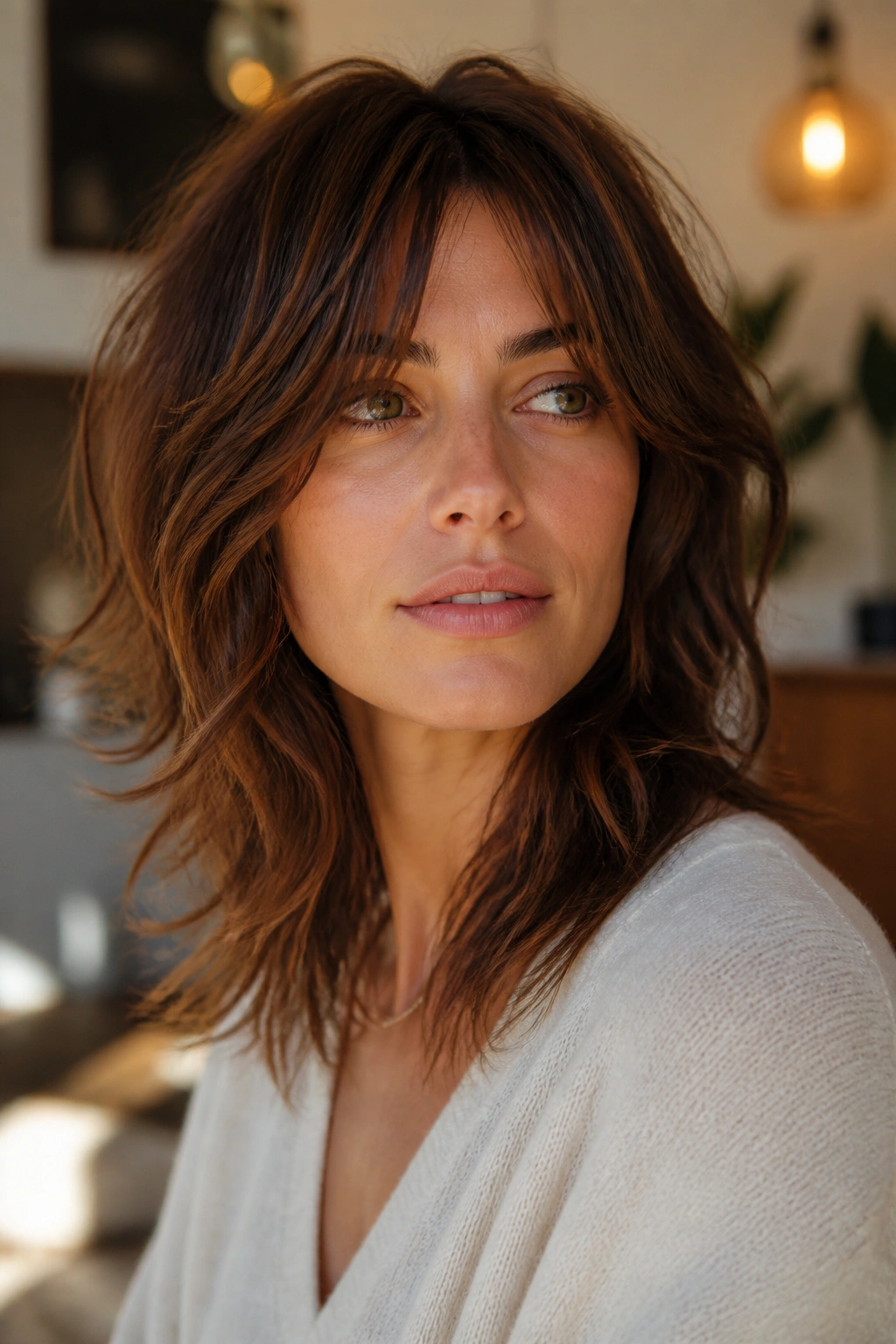
A shag cut is not the same thing as “a lot of layers.” That is where people go wrong. A good shag has softness around the face, movement through the ends, and enough shape to look deliberate as it grows out. A bad one just looks choppy.
Compared with a blunt cut, the shag is easier if you hate the feeling of hair sitting heavy and flat. It gives straight hair a bit of lift and helps wavy hair fall in a more natural pattern. The face-framing pieces do a lot of the work, which means you do not need to style every section of your hair to make the whole thing look finished.
This is a haircut for women who want shape without strict upkeep. Air-dry it. Scrunch it. Rough-dry the roots. Done. The shag does not beg for perfection, and that is why it works.
It also grows out with less drama than some sharper cuts. A few extra weeks between trims do not wreck the line. That matters if your schedule is messy and your beauty routine has to stay mercifully simple.
If you want a cut that feels a little cool without needing daily effort, this is one of the better bets.
13. The Pixie Cut with Textured Fringe

A pixie cut is the answer for women who want hair off their neck, off their shoulders, and off their to-do list. It is not zero maintenance—nothing is—but it is fast in a way longer styles can’t match.
What to Know Before You Go Short
The best pixie for busy women is usually not the stiff, helmet-like version. Ask for texture on top and a fringe that can be swept forward or to the side. That gives you options without adding work. A matte paste or a pea-size amount of styling cream is often enough to shape the top with your fingers.
The upside is obvious: quick drying, little tangling, and no long blow-dry sessions. The downside is also obvious: it needs regular shaping to stay sharp. If you hate salon upkeep, that part may annoy you. If you hate spending 30 minutes on your hair every morning, it may be worth it.
- Best for: straight to wavy hair, though texture helps either way
- Daily styling: 2 to 5 minutes
- Useful product: matte paste or light wax
- Good habit: finger-comb instead of brushing it flat
A pixie suits women who like clean lines and do not mind a little edge. It is efficient. That alone makes it appealing.
14. The Chin-Length Blunt Bob

A blunt bob at the chin can look sharp, modern, and very easy to live with. The clean line does a lot of the work, so you do not need heavy styling to make the cut look complete. That is the selling point.
With fewer layers, the bob usually behaves better in everyday life. It air-dries faster than longer hair, tucks under jackets cleanly, and can be flipped into a side tuck, clip, or low tie without much drama. If your hair is fine, the blunt line can make it look fuller. If your hair is thick, the weight helps keep the shape from puffing out too much.
The one thing to watch is length. If it sits too close to the jaw, it can end up flipping outward or feeling fussy. A chin-length bob that lands slightly below the chin often moves better and is easier to smooth.
This is a style for women who want a little polish built into the cut itself. You are not relying on tricks every morning. The haircut is doing the heavy lifting, which is exactly what a low maintenance hairstyle should do.
15. The Side-Parted Low Bun

Why does a side part change so much? Because it breaks the symmetry just enough to make a plain bun look thought through. It also helps hide flat roots on one side, which is handy when your hair is a little tired and you are not in the mood to start over.
A side-parted low bun works especially well on second-day hair. Start the part where you usually do, or move it half an inch farther over if you want a softer shape. Brush the hair into a low ponytail, twist it into a bun, and pin it low at the nape. Let the side part show. That is the point.
This style feels a little more relaxed than a sleek center-part bun. Less severe. More wearable for everyday life. If you want it cleaner, smooth the top with a small amount of cream and use a fine-tooth comb. If you want it softer, leave a few fine pieces loose near the ears.
It is a smart choice for work, dinner, or any day when your hair needs to behave but you do not need it to be fancy.
16. The Bubble Ponytail

A bubble ponytail looks like a detail-heavy style, but it is one of the easiest ways to make a ponytail feel different. That makes it useful on days when you want something fun without spending forever in front of the mirror.
Gather the hair into a high or mid ponytail. Then place small elastics every 2 to 3 inches down the length, gently pulling each section outward to create rounded “bubbles.” That is the whole trick. The shape does the styling for you.
What Makes It Stand Out
The bubble effect adds body, which is nice if your hair is fine or medium thickness. It also keeps the ponytail from looking limp at the end of a long day. If your hair is very long, you can do more bubbles. If it is shorter, two or three sections may be enough.
A quick mist of hairspray helps the bubbles hold their shape, especially if the weather is humid or your hair is slippery. Do not over-tighten the elastics. You want a little give so the sections can puff out properly.
This is a good style for women who want something playful that still gets hair off the neck. It looks more deliberate than a plain ponytail, and it takes less time than a braid. That’s a useful middle ground.
17. The Mini Braids Into a Bun

Small braids tucked into a bun are a nice option when you want your hair contained but do not want the same basic bun again. The braids add texture at the front or sides, and the bun takes care of the rest.
A simple version works like this: part off two small sections near the temples or front hairline, braid them down, then gather the rest of the hair into a low or mid bun. You can pin the braids into the bun or let them frame the face and disappear behind the ears. Both versions work.
This style is useful because it disguises slightly messy roots while still keeping everything controlled. It also plays well with hair that has a few days of wear in it. Freshly washed hair can be a bit too slippery, so day-two texture usually helps.
If your hair is thick, keep the braids narrow so the bun does not get bulky. If your hair is fine, a little texturizing spray at the roots gives the braids more grip. Tiny adjustments, big difference.
It is not a speed record. It is just a clever way to make a simple bun look more finished.
18. The Headband Tuck

A headband tuck is one of those styles people overlook until they need a fast fix for hair that is halfway cooperative. It is especially useful for medium-length hair, layered hair, or hair that needs to stay off the face during a long day.
The structure is simple. Slide on a soft headband, then tuck the ends of the hair up and under the band, rolling them inward as you go. The result looks neat and almost retro, but it takes only a few minutes. A fabric headband usually feels more comfortable than a tight plastic one, especially if you wear it for hours.
Compared with a bun, the headband tuck keeps more of the hair hidden and protected. Compared with a ponytail, it feels softer around the neck. That makes it a nice pick for days when you want something tidy but not severe.
It works best on hair that has a little texture or product in it. Too-slick hair slips. If your hair is fine, a mist of dry shampoo can give the tuck enough grip to stay put. If your hair is curly, the style can be very pretty with the natural shape left a little loose at the front.
19. The Twist-Out on Natural Hair
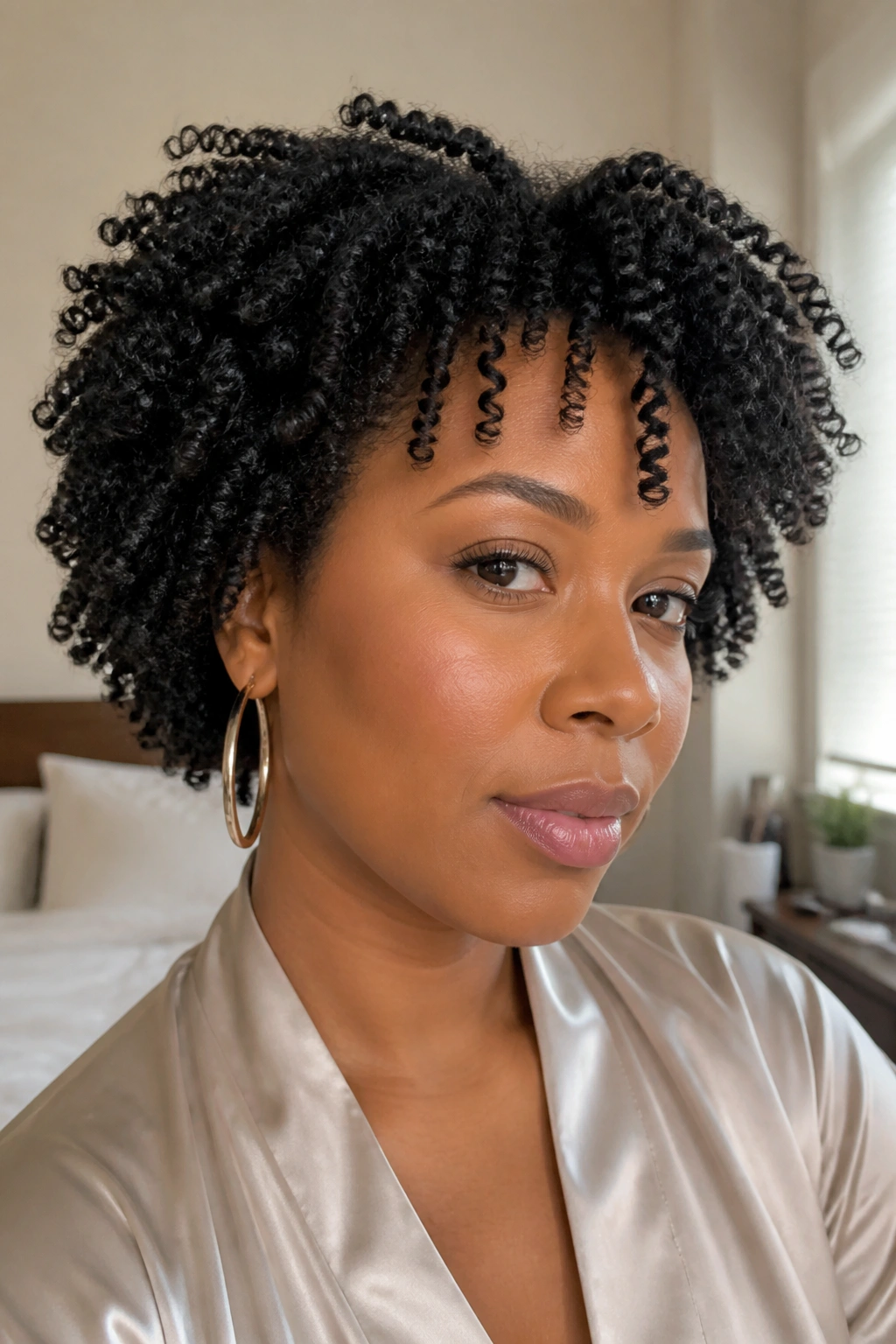
A twist-out is one of the most useful low maintenance hairstyles for natural hair because it gives you shape, definition, and stretch without daily heat. The basic idea is simple: twist damp hair in sections, let it dry fully, then separate the twists for soft, defined texture.
How to Get a Good Result
Start with clean, moisturized hair. Apply leave-in conditioner, then a curl cream or styling gel to each section before twisting. The sections should be even enough to dry at the same pace. If one part stays damp while the rest is dry, the results get fuzzy fast.
Drying fully is the part people rush, and that is where the style falls apart. Air-dry overnight or use a diffuser on low heat until every twist feels dry from root to tip. Then oil your fingers lightly and separate the twists gently. No rough pulling. That creates frizz you did not ask for.
A twist-out can last several days, which is the whole point. At night, pineapple the hair loosely or cover it with a satin bonnet to preserve the pattern. In the morning, fluff the roots a little with your fingers and go.
The real appeal is control without stiffness. You get movement, volume, and shape, but the hair still feels like hair.
20. The Silk Scarf Ponytail
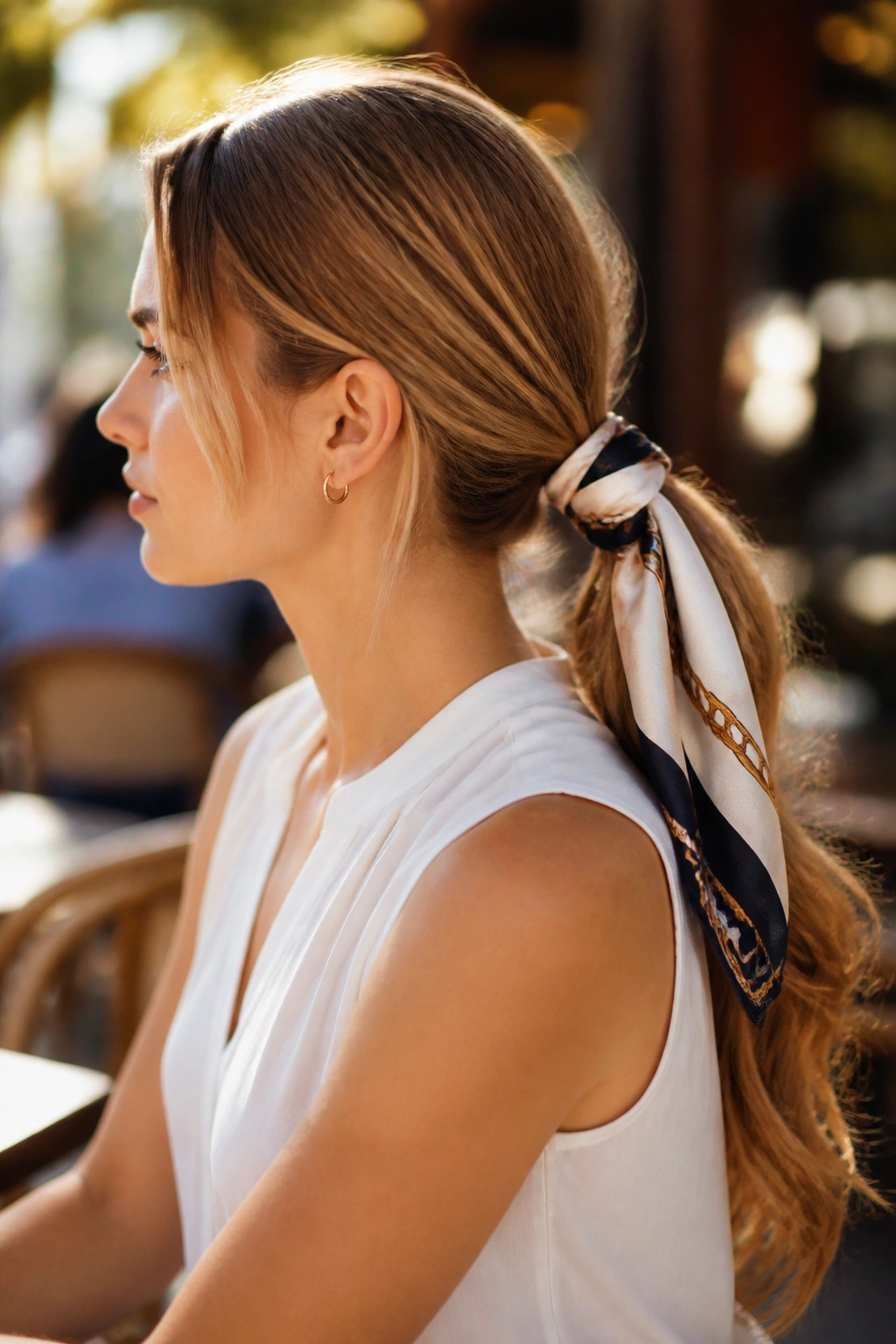
A silk scarf ponytail is a small trick that changes a basic style into something a little more refined. It works when you are short on time, when your ends need some help, or when your hair looks a touch plain and you want a fast fix.
Tie the hair into a low or mid ponytail, then wrap a silk or satin scarf around the base and let the ends hang, knot, or tuck depending on the look you want. If the scarf is narrow, it can hide an elastic neatly. If it is wider, it can cover more of the top and make the whole style feel softer.
This is a good choice for hair that is in between wash days. A scarf can distract from frizz near the crown and give the style a finished look without needing more heat or product. It also protects the front sections a little, which is nice if your hairline gets battered by constant styling.
One smart move: match the scarf to your outfit when you can, but do not overthink it. A plain neutral scarf works with almost everything. A printed one makes the style feel more personal. Either way, the ponytail stays easy. That is the point.
Final Thoughts
Busy hair does not need to look busy. It just needs a plan. The best low maintenance hairstyles are the ones that match your actual life: the haircut that air-dries decently, the braid that lasts through a long day, the bun that looks clean even when you made it in a parking lot.
Shorter cuts can save time. Braids can stretch a wash day. Clips, scarves, and simple twists can rescue hair that would otherwise be shoved into the same tired ponytail again. None of this has to be dramatic. In fact, the less dramatic the routine, the more likely you are to keep using it.
Pick one style that suits your hair texture and your mornings. Then make it yours. Repetition is underrated.
