



Fine wavy hair can look airy in the mirror and flat by lunch. Annoying.
The problem usually isn’t the wave pattern itself. It’s weight, shape, and the way the cut sits against the head. A little too much length and the bends drop. A little too much layering and the ends start to look wispy instead of full. Fine wavy hair has a narrow sweet spot, and when you hit it, the whole head looks bigger without needing a helmet’s worth of product.
The good news is that volume does not have to mean frizz or teasing every inch of your crown into a sad little nest. The right hairstyle can make fine wavy hair look denser by keeping the strongest pieces in the right places: around the cheekbones, through the crown, and at the ends where the eye wants to see thickness. A smart cut can do more than a gallon of mousse ever will.
Some styles are better for air-drying, some need a round brush or a diffuser, and some work because they break up the silhouette just enough to fool the eye. That’s the fun part. Shape matters. A lot.
1. The Collarbone Lob With Invisible Layers

A collarbone lob is one of those cuts that keeps showing up for a reason: it gives fine wavy hair enough length to move, but not so much that the waves go limp from their own weight. The collarbone hits are a useful landing spot because the hair can still swing, and swing matters when you want volume. Heavy ends drag; lighter ends bounce.
Invisible layers are the trick here. They’re cut so the inside of the shape gets some movement without turning the outer line into a choppy mess. The result is a lob that looks clean at first glance, then opens up once the hair dries and the waves separate a little. That hidden lift is what keeps the style from falling flat around the jaw.
The best version usually sits one to two inches below the chin and grazes the collarbone at the longest point. That tiny difference changes everything. Too short and the wave can puff out; too long and the weight starts winning again.
A soft side part makes this cut look even fuller. It tips the whole shape off-center and creates a little rise near the roots, which is where fine hair often needs the most help.
2. The Deep Side Part That Gives Roots a Lift

Why does a deep side part make fine wavy hair look fuller in about five seconds? Because it stops every strand from lying in the same direction. That break in direction creates lift at the root, and lift at the root is what your eye reads as volume.
This style works especially well if your waves fall a little too neatly when you wear a middle part. Flip the heavier section to one side, let the shorter side skim the temple, and tuck the longer side behind one ear if you want even more height up top. The imbalance looks intentional, not messy.
How to wear it
- Part the hair about 1.5 to 2 inches off center while it’s still damp.
- Blow-dry the roots in the opposite direction for 30 to 45 seconds before letting them fall back.
- Clip the flatter side at the crown for 10 minutes while you do makeup or get dressed.
- Finish with a light mist of root-lift spray at the part line, then scrunch once and stop.
What to watch for
Too much cream near the scalp will kill the lift fast. Keep heavier styling products from the first inch of hair, or the whole point of the side part gets buried under weight.
3. Curtain Bangs With Shoulder-Length Waves

Curtain bangs are one of the easiest ways to fake density. They split the front of the hair into two soft panels, which makes the rest of the wave pattern look fuller by contrast. Fine wavy hair often needs that little bit of framing so the whole head doesn’t read as one smooth sheet.
The sweet spot is a bang that starts around the cheekbone or just below it, then opens toward the jaw. Too short and the bang can spring up in odd ways. Too heavy and it behaves like a curtain that drags the front of the style down. The airy version is better. Always.
What I like most about this look is the way it keeps the eye moving. Your forehead gets a soft frame, the wave pattern gets a place to break, and the hair around the crown doesn’t have to do all the work. A shoulder-length cut with curtain bangs can feel fuller than hair that’s technically longer, because the front pieces create a little illusion of bulk where you see it first.
If your waves are loose, blow the bangs forward with a small round brush, then sweep them apart with your fingers. Do not overthink the finish. Curtain bangs look best when they look touched, not forced.
4. The Soft Shag That Never Sits Too Flat

A soft shag is what I suggest when someone says their fine wavy hair goes limp the second it dries. Not a harsh, chopped-up shag. A soft one. The difference matters more than people think.
The shape uses shorter internal layers through the crown and around the sides, which means the hair doesn’t have to hang from one heavy line. That gives the wave room to spring up on its own. The ends stay loose, and loose ends are a big part of the fullness story here. They stop the shape from reading as thin and stringy.
Where the volume lives
- At the crown: short interior layers keep the roots from lying flat.
- Around the cheeks: face-framing pieces break up the outline.
- At the ends: wispy tips keep the cut light enough to move.
- In the drying pattern: a diffuser on low heat helps the wave keep its bend instead of stretching out.
A shag can go bad fast if the layers are too aggressive. Then the hair starts to resemble pieces instead of a style. Keep the razor away from the whole head unless your texture can take it.
5. The Blunt Bob With Hidden Texture

A blunt bob sounds almost too simple to work for fine wavy hair, which is exactly why it does. A clean line makes the ends look thicker than they are, and that thickness at the bottom gives the whole style more visual weight. Fine hair often loses density at the perimeter first, so preserving that edge is a smart move.
The catch is that the bob cannot be dead-straight and stiff. It needs just enough hidden texture inside the shape so the waves don’t collapse into a dull shelf. The outside line stays blunt. The inside gets a little movement. That combination keeps the bob from feeling boxy.
This is a good choice if your waves are loose and your hair leans toward fine but not fragile. It reads polished without being fussy, and it can handle both air-drying and a quick bend with a flat iron. A chin-length bob can look sharp, but a bob that sits just below the jaw tends to feel fuller because the hair has a touch more room to curve.
One thing I’d avoid: too many short layers around the face. They can make the front look airy in a bad way, which is not the same as volume. It’s a thin line.
6. Long Layers With Face-Framing Pieces

Long layers are the move when you want to keep your length but stop your wavy hair from hanging like a curtain. The layers should start low enough that the bottom still looks dense, usually somewhere below the chin. Higher than that, and the ends can start to look see-through.
The face-framing pieces are the part that gives this style its lift. They pull attention upward, add motion around the cheekbones, and stop the overall shape from feeling heavy. Fine wavy hair can get swallowed by length, so you want pieces that bend away from the face instead of sitting there like a flat sheet.
I like this cut best when the wave pattern is uneven in a nice way. A few stronger bends in the front make the layers show up. If your hair dries almost straight at the root and wavier at the middle, the face-framing layers help the whole style look deliberate.
A quick middle part and a little scrunching at the ends is often enough. No need to force the wave all over. Leave the top soft, let the lower half do the work, and the hair looks thicker than it really is.
7. The Cropped Pixie With a Lifted Crown

Short hair can be the easiest route to volume, and a cropped pixie with a lifted crown proves it. Fine wavy hair usually benefits from a little height on top, and a pixie gives you that height without asking the hair to carry much weight. Less length, less drag. Simple.
What to ask for
- Keep the top about 2 to 3 inches longer than the sides.
- Use tapered sides so the shape doesn’t balloon out at the ears.
- Ask for point cutting on the top pieces if your wave is soft.
- Leave enough length at the crown to push forward, back, or slightly to one side.
The lifted crown is the whole point. If the top is too short, the hair can stand up in awkward little flips. If it’s too long, the top falls over and kills the shape. That middle ground is where the style gets its energy.
This cut suits people who like a bit of edge and do not want to spend ten minutes reworking their hair every morning. A pea-size dab of mousse or paste is usually enough. More than that and the waves lose their airy finish.
8. The Half-Up Crown Lift
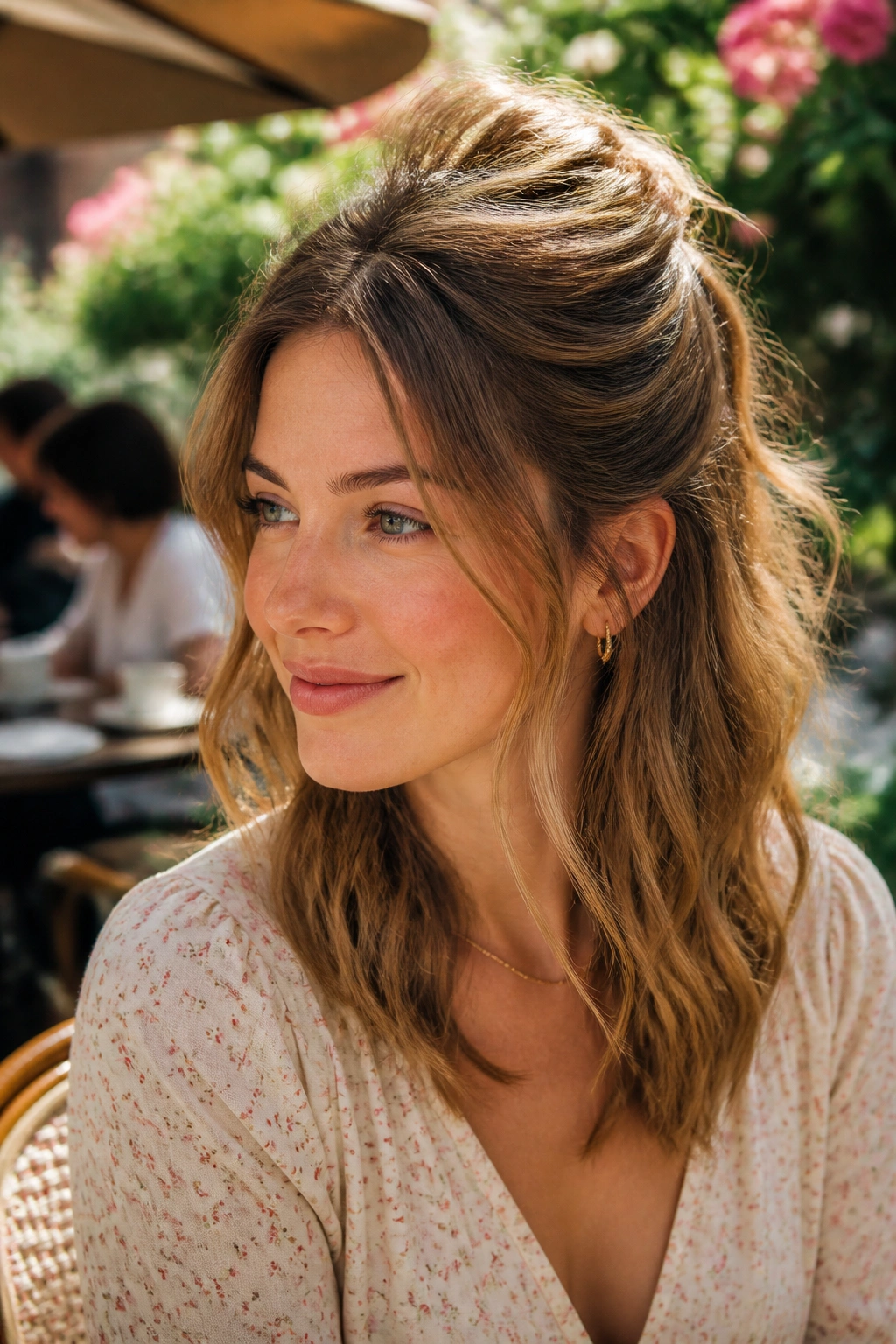
Need volume without giving up your length? The half-up crown lift is the easy answer, and it works on fine wavy hair because it separates the hair into two jobs. The top section gets height. The bottom section keeps the softness and movement.
The trick is not pulling the top section tight. Gather it loosely from just behind the temples, lift it a little before pinning or clipping, and let the lower half stay loose around the shoulders. That little bit of slack creates air at the crown. Tight half-up styles can look neat, but neat is not the goal here.
The small detail that matters
Place the clip or elastic about 1 inch above the crown, not flat against the head. That tiny gap gives the top a rounded shape instead of a compressed one.
A few face-framing strands help too. Keep them soft around the cheeks so the lifted top doesn’t make the style feel severe. If the hair is clean and slippery, a touch of dry texture spray on the top section gives the pins something to hold onto. Otherwise the whole thing slides down by noon.
9. The Claw-Clip Twist
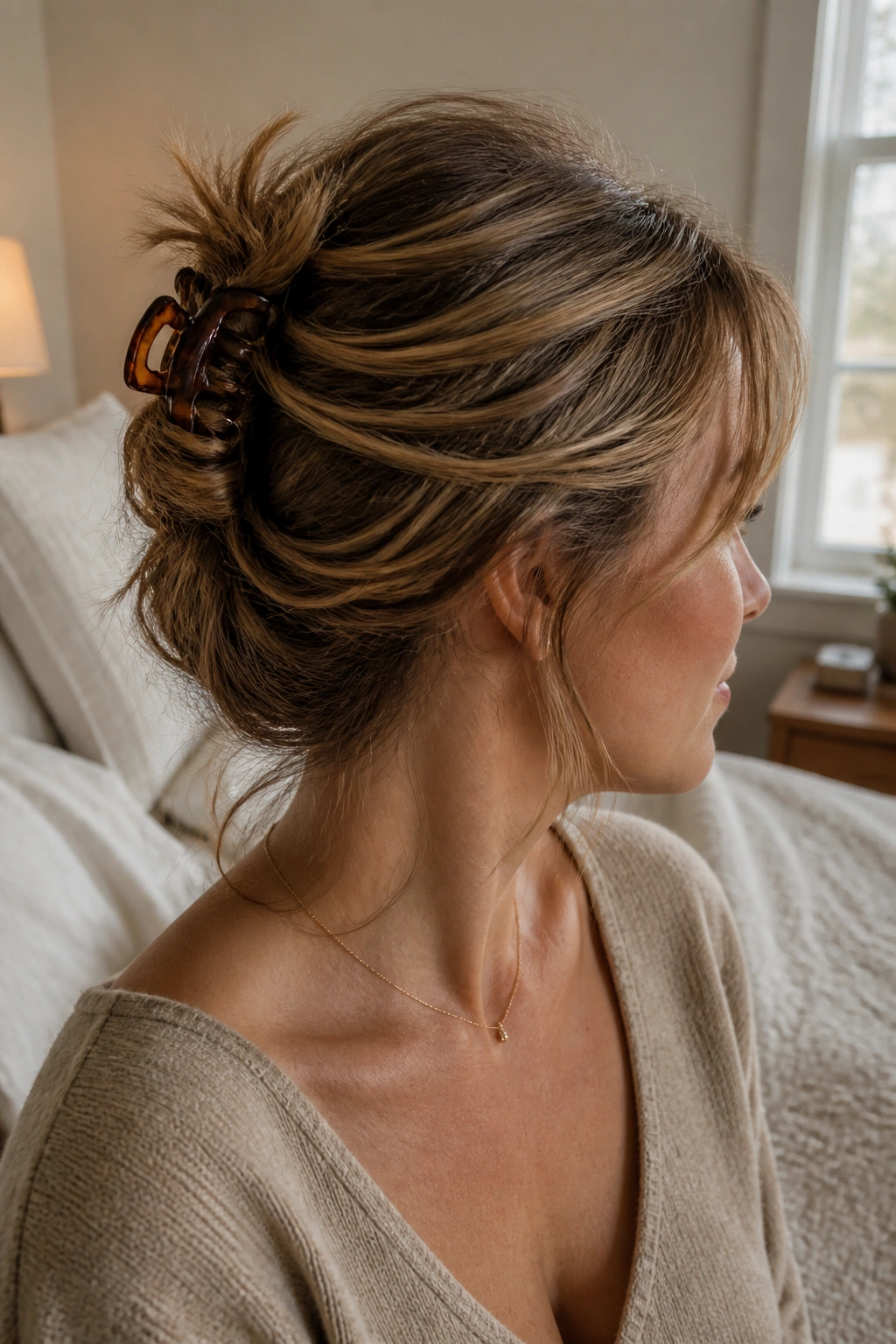
There’s a reason claw clips keep hanging around. They’re fast, and on fine wavy hair they can create a shape that looks fuller than a tight tie ever will. A loose twist at the back leaves the crown a little puffier and lets the ends spill out in a way that feels airy instead of stiff.
The key is to twist the hair only once or twice before clipping. Don’t wind it into a compact rope. The more you compact it, the flatter the top gets. Leave some bend at the sides, especially if the waves are soft and tend to disappear when pressed too hard.
Key details
- Clip the twist slightly high on the back of the head for more lift.
- Leave the ends to fan out or tuck them under loosely.
- Pull a few strands free near the temples.
- Use a clip with strong teeth if your hair is fine and slippery.
This style is a winner on second-day hair, which already has a little grip. Freshly washed hair can work too, but it needs texture spray or a touch of mousse first. Otherwise the clip does all the holding and the hair looks too smooth.
10. The Bubble Ponytail
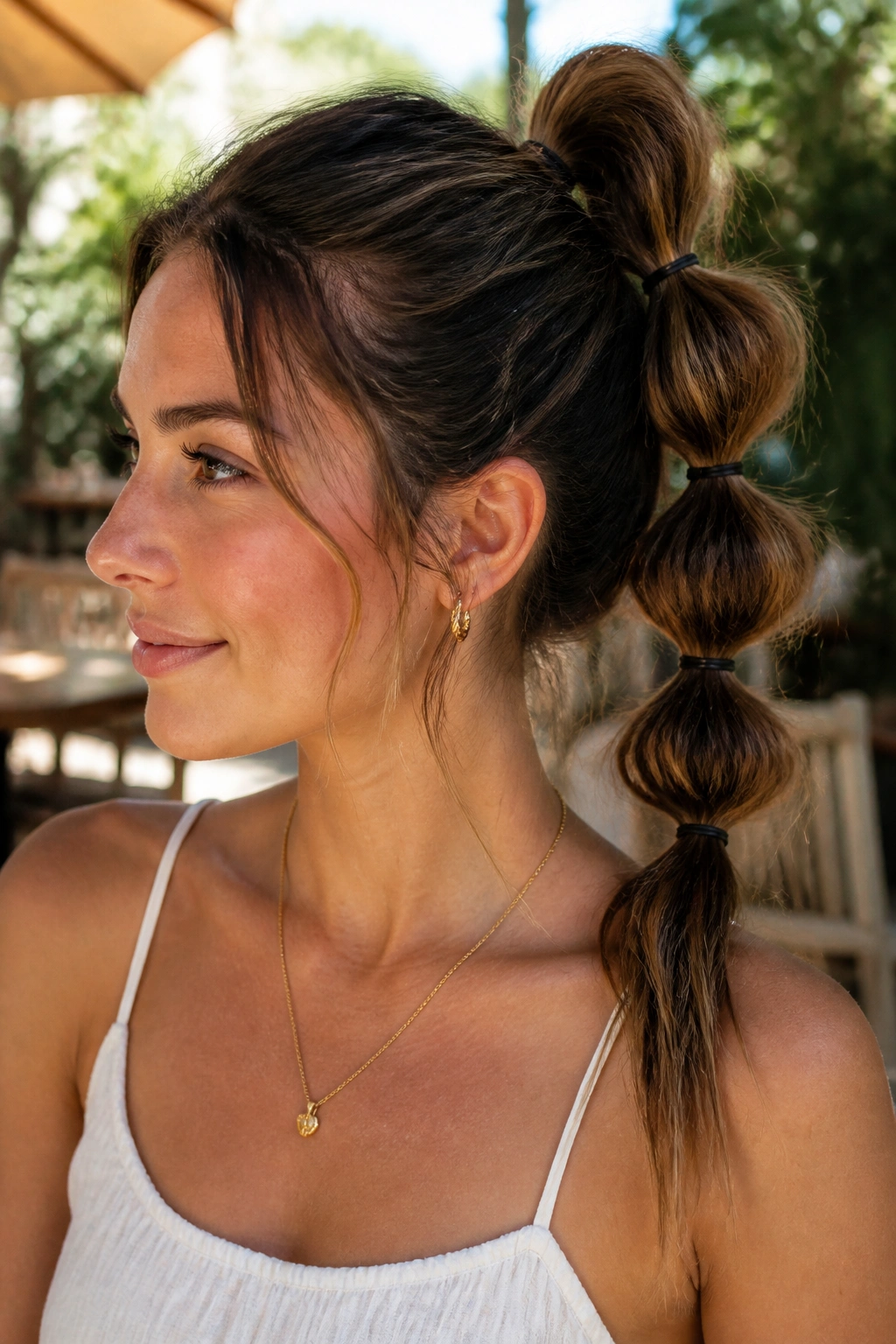
A bubble ponytail makes fine hair look fuller because it breaks one long line into smaller puffy sections. That segmentation tricks the eye into seeing more hair than is really there. A sleek ponytail can look elegant, sure, but on fine wavy hair it often exposes the exact thing you’re trying to hide: a narrow tail.
This style is especially useful when you want your hair off your neck but still want volume. Put the ponytail at mid-height, not too high and not too low. Then add small elastics every 2 to 3 inches down the length and tug each section gently until it rounds out. The little bubbles should look soft, not stiff.
How to make the bubbles
- Start with a ponytail that sits around the back of the head, not at the nape.
- Add elastics 2 to 3 inches apart depending on hair length.
- Pinch each section outward with your fingers until it looks full.
- Wrap one small strand around the first elastic if you want a cleaner finish.
This is one of those styles that works better when the hair has a bit of natural wave left in it. Too straight, and the bubbles can look forced. With some bend, they look almost casual on purpose.
11. The Braided Crown With Loose Ends

Why does a braided crown add volume to fine wavy hair? Because it builds width around the head instead of length down the back. The braid itself becomes the structure, and the loose ends keep the rest of the hair from looking too controlled.
A crown braid also gives you a place to use your natural texture. You do not need a tight, perfect braid here. A slightly loose braid with pulled-apart edges looks fuller and sits softer against the head. That softer edge matters. Tight braids can flatten fine hair in a way that is hard to recover from once they come down.
How to keep it full
- Braid on hair that has light grip, not freshly silk-straight hair.
- Pull the braid apart gently after securing it, starting at the outer loops.
- Leave the lower lengths wavy and loose.
- Use two bobby pins crossed at the nape if the braid wants to slip.
This look works well for events, but it is also good on days when you want the hair out of your face without losing body. The crown detail brings the height. The loose lengths keep it from feeling overdone.
12. The Messy Low Bun With a Teased Crown
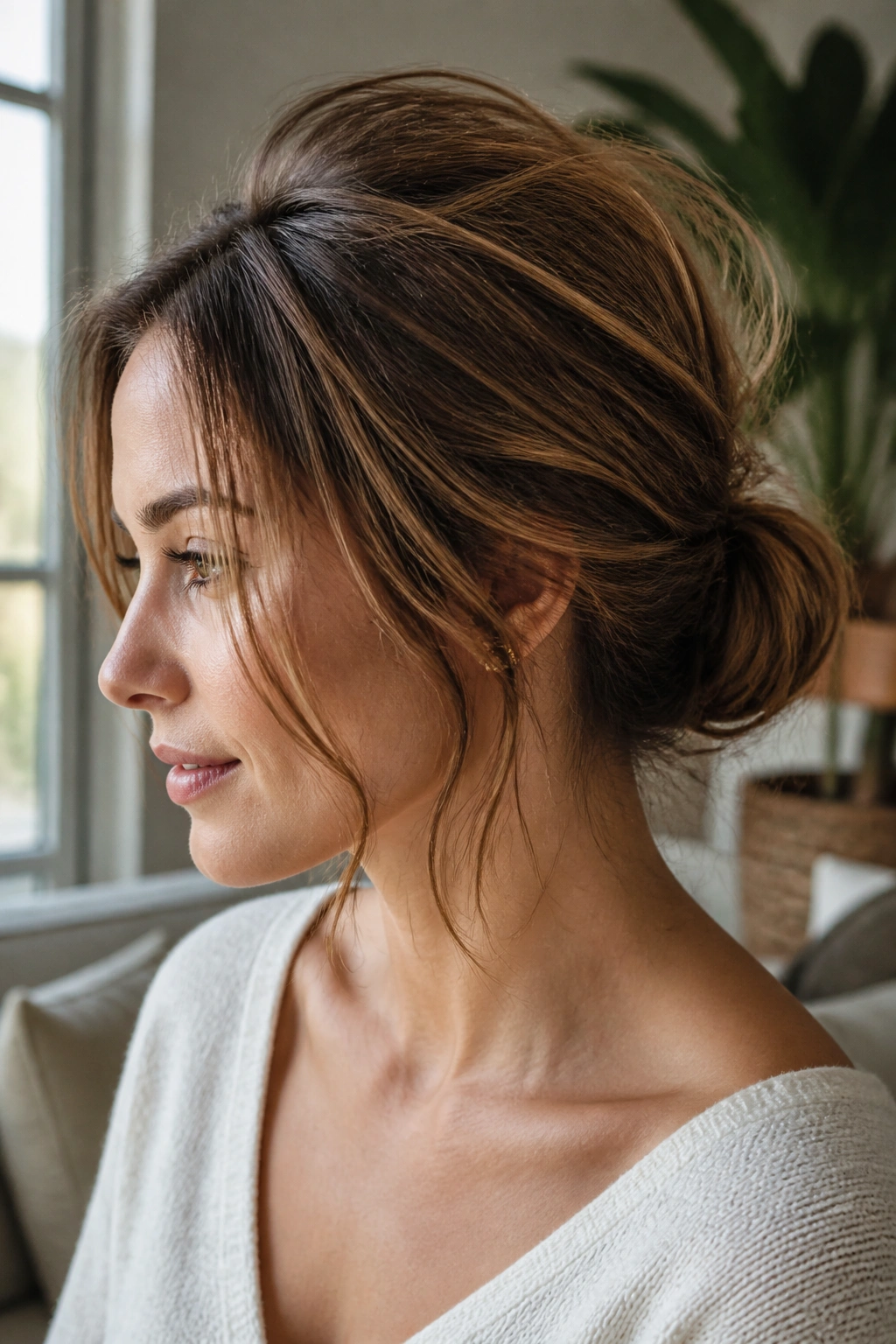
A low bun does not have to be flat. That’s the mistake people make. If you build a little height at the crown first, a low bun can look soft and full instead of pinned to the skull like a ballet rehearsal gone wrong.
Start by lifting the top section with your fingers and lightly teasing just the roots at the crown. Nothing wild. A few careful strokes with a fine comb is enough. Then gather the hair low at the nape, twist it into a relaxed bun, and leave a few wavy ends out if your length allows it. Those little loose pieces make the bun feel bigger because the eye sees movement around it.
The best part is how easy it is to make this style look intentional. Pull one side slightly looser near the temples, then tuck a few face-framing pieces behind the ears. That gives the top a little shadow and the bun a little softness. Fine hair tends to benefit from these tiny interruptions in the shape.
This one is especially good on hair that has already been worn once or twice. The texture gives you more grip, and the bun holds without feeling stiff.
13. The Textured French Bob

A French bob can be a volume trick if you keep it textured and soft. The cut usually sits around the cheek or jaw, which lets fine wavy hair keep some bounce near the face. Shorter than a lob, less severe than a blunt chin cut, it has a little attitude without being hard.
What makes this version work is the texture in the finish, not a pile of layers. The ends should move. A soft bend through the middle gives the bob enough lift that it does not cling to the jawline. If the hair is cut too neatly and then left to air-dry on its own, it can sit heavy. A touch of scrunching or a diffuse dry keeps the shape open.
I like this style on people whose waves live mostly from mid-length down. The French bob lets that bend show up where it counts. It also opens up the neck and cheekbones, which makes the whole head look lighter and more lifted.
A tiny side part can help here too, but the main event is the shape itself. Short, airy, and a little irregular. That’s the sweet spot.
14. Side-Swept Glam Waves
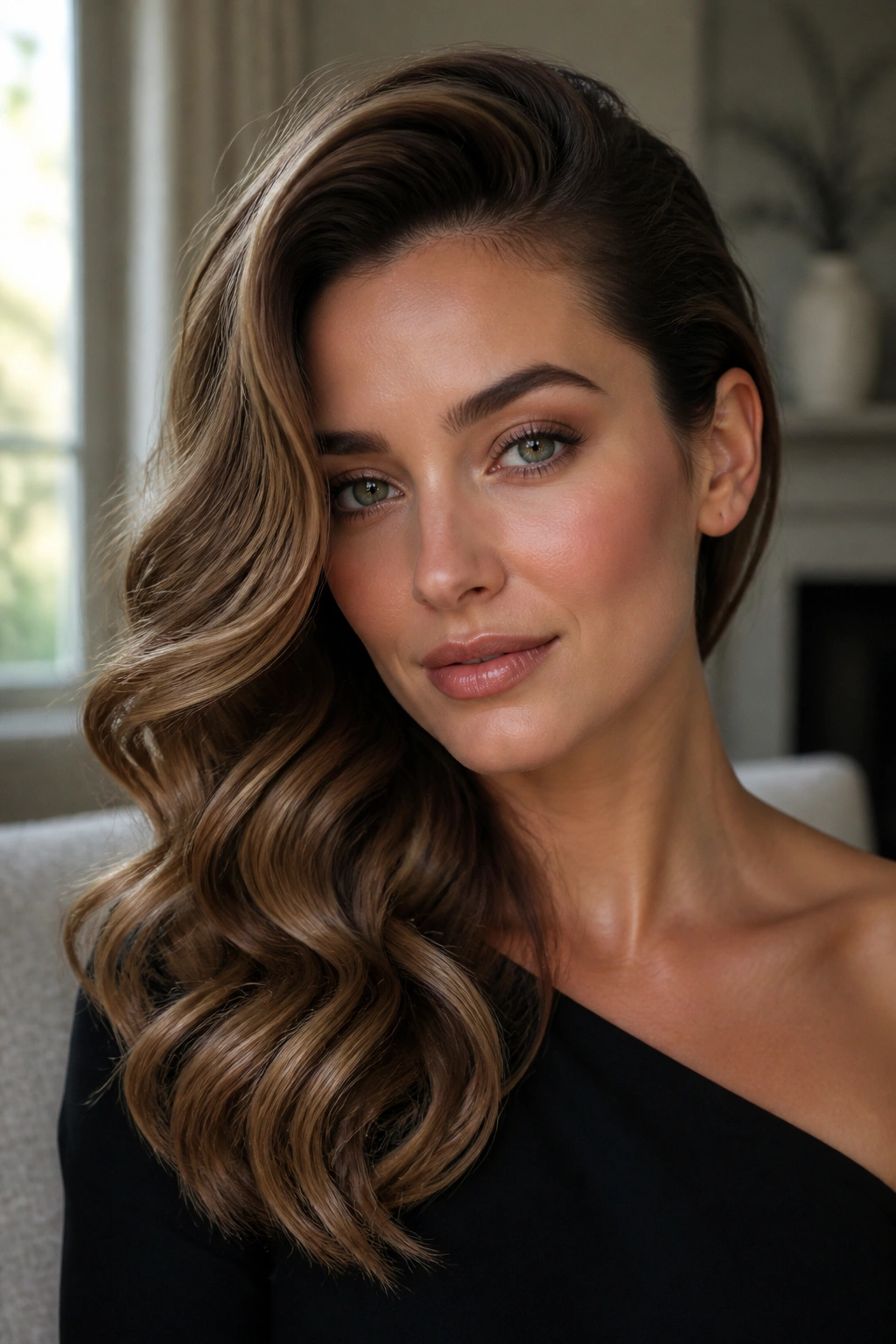
The hair should feel full at the root and almost springy through the middle before it ever gets brushed into place. That’s the difference between side-swept glam waves that look lush and side-swept waves that collapse into a flat ribbon.
This style works because the sweep builds a big shape on one side of the head while letting the other side stay tucked and controlled. The contrast makes the volume look bigger. If you set the waves with a 1.25-inch iron or a large hot roller, let them cool completely before brushing them out. Warm waves fall too soon.
A strong side sweep also gives fine hair some drama without requiring a lot of actual hair. One side can be pinned behind the ear or clipped low at the nape, which leaves the crown open and tall. If the front pieces are left a little loose, the whole style looks softer and fuller.
A light mist of flexible hairspray is enough. Heavy spray turns the ends into a shell, and shell-like hair has no business pretending to be voluminous.
15. The Mini Space Buns With Soft Ends
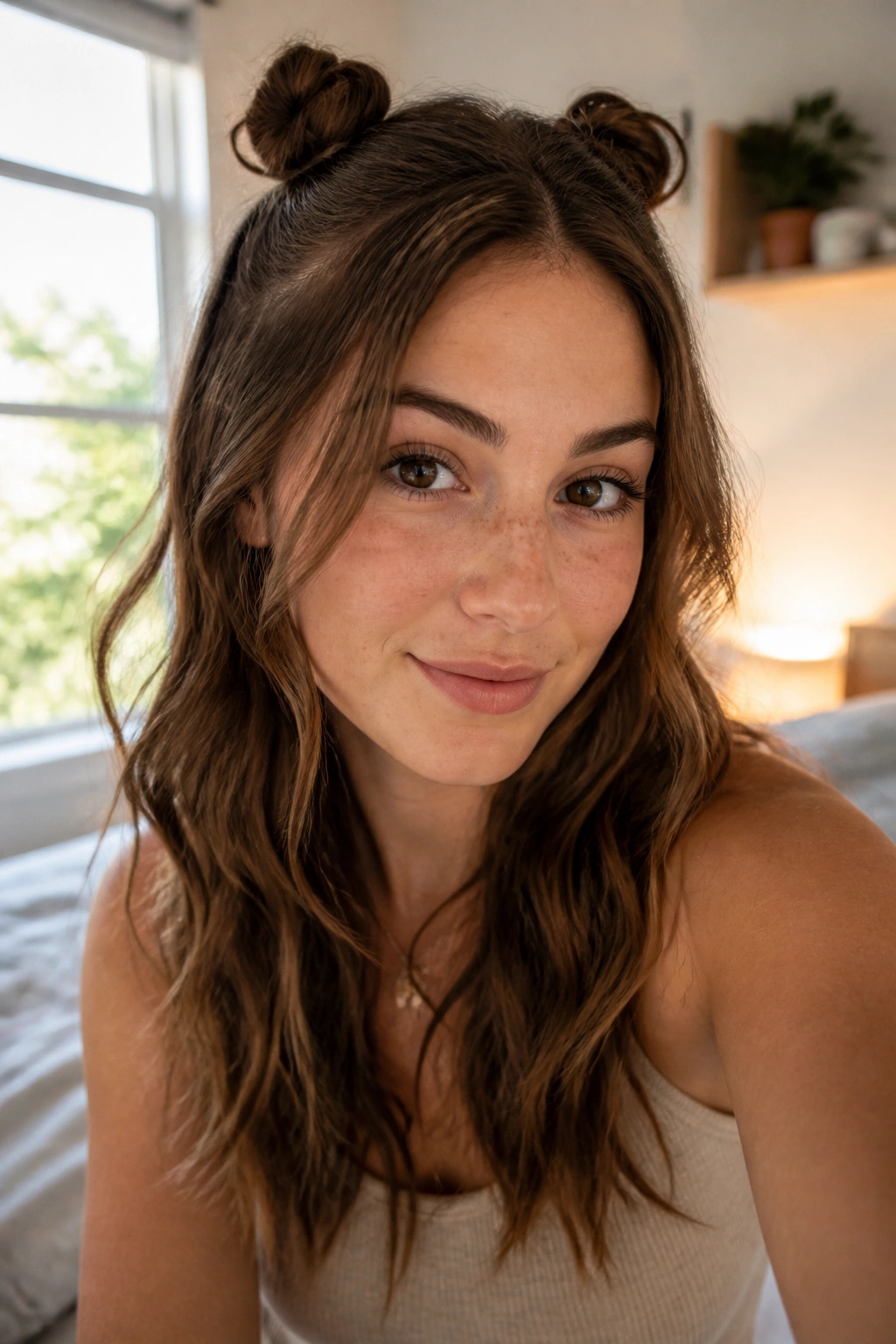
Mini space buns are a clever option when you want volume at the top but don’t want all your hair committed to an updo. They lift the eye upward, and on fine wavy hair that lift matters. Even a small bun can make the head look broader and the crown look taller.
The style works best when the buns are placed a few inches apart near the upper back of the head. Keep them small. If they get too big, the fine hair has to stretch too far and the buns can look scrappy. Leave the rest of the length down and wavy so the style keeps some softness.
What makes them work
- Part the hair cleanly down the middle.
- Gather each top section just above ear level.
- Twist loosely before wrapping into the bun.
- Pull a few ends free around the face for softness.
This is one of those hairstyles that can look playful without looking childish if the buns stay small and the waves are still visible underneath. It’s also a useful way to hide flat roots on day two hair. A little dry shampoo at the roots helps, but the structure does most of the work.
16. The Half-Up Top Knot With Loose Ends
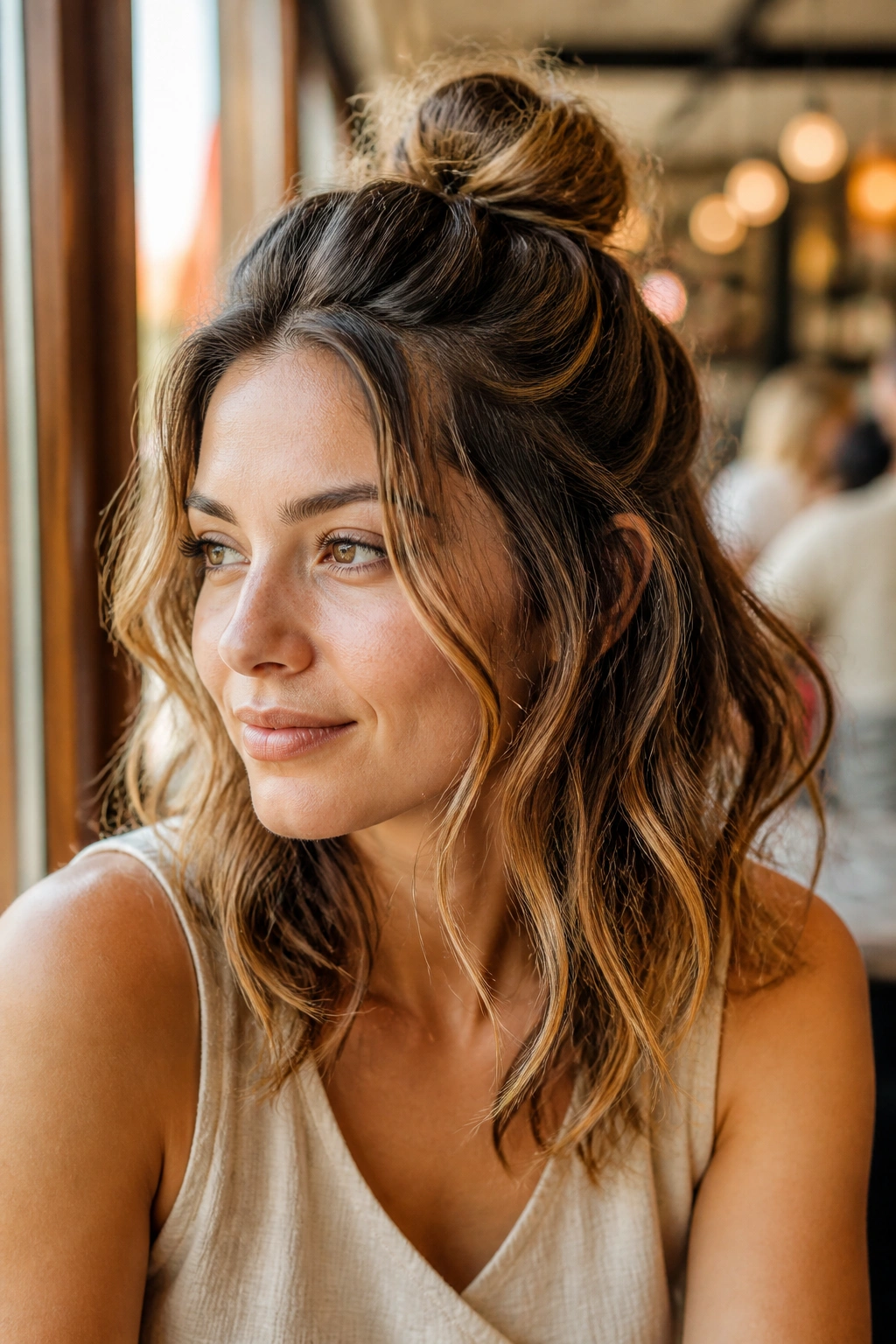
The half-up top knot is different from the crown lift because the knot sits higher and gives a stronger visual pop at the top of the head. That height can be a lifesaver for fine wavy hair. It draws the eye up before the flatness at the sides has a chance to matter.
The trick is to take only the top third of the hair, not half the head. If you gather too much, the knot gets heavy and starts dragging. Leave the bottom loose and wavy, and keep the knot small enough that it sits like a puff rather than a lump. That shape is what keeps the style light.
How to keep it from sagging
- Use a small elastic first, then pin the knot into place with two bobby pins.
- Tease the crown lightly before tying it up.
- Let a few front pieces fall free if your face shape likes softness.
- Finish with a touch of texture spray at the knot base.
This style has a casual feel, but the volume comes from placement. High enough to lift, not so high that it starts looking stiff. That’s the line.
17. The Razor-Cut Midi

A razor-cut midi can be gorgeous on fine wavy hair, but only when the cut is light-handed. Razor work removes weight from the ends and adds an airy finish that lets the wave move. Too much razor, though, and the ends can fray. So the point is restraint.
The midi length is useful because it sits between short and long enough to keep the wave pattern visible without burying it. If your hair tends to go flat when it gets too long, a midi cut often solves that better than endless layering does. The outline stays clean enough to look thick, while the ends stay soft enough to bend.
This style also gives you room to shape the front. A few short face-framing pieces can keep the hair from hanging like one straight block. But the real work happens in the last two or three inches. That’s where the air lives.
If your hair is delicate, ask for light razor work only at the ends, not through the whole head. That keeps the wave from looking shredded. You want movement, not damage disguised as texture.
18. The One-Side Pinned Style

A one-side pinned style sounds almost too simple, which is why people skip it. Bad idea. On fine wavy hair, moving most of the hair to one side can create instant volume because the opposite side gets visual space and the pinned side gains lift at the temple.
The shape is easy: tuck one side behind the ear, pin it with two bobby pins if needed, and let the bulk of the waves fall to the other side. That asymmetry makes the hair look thicker because the wave pattern is no longer trying to sit evenly across the whole head. It’s a small shift, but the result is noticeable.
Details that matter
- Pin a section just above the ear to keep the side smooth.
- Leave the top a little loose so the crown stays round.
- Use a soft wave, not a tight curl, on the loose side.
- Add a single decorative pin if you want the style to stay in place longer.
This is a good dinner-out style when you want to look done without spending much time on your hair. It also works with day-old wave better than freshly washed hair, because the natural grip makes the pins behave.
19. The Wrapped-Base Wavy Ponytail
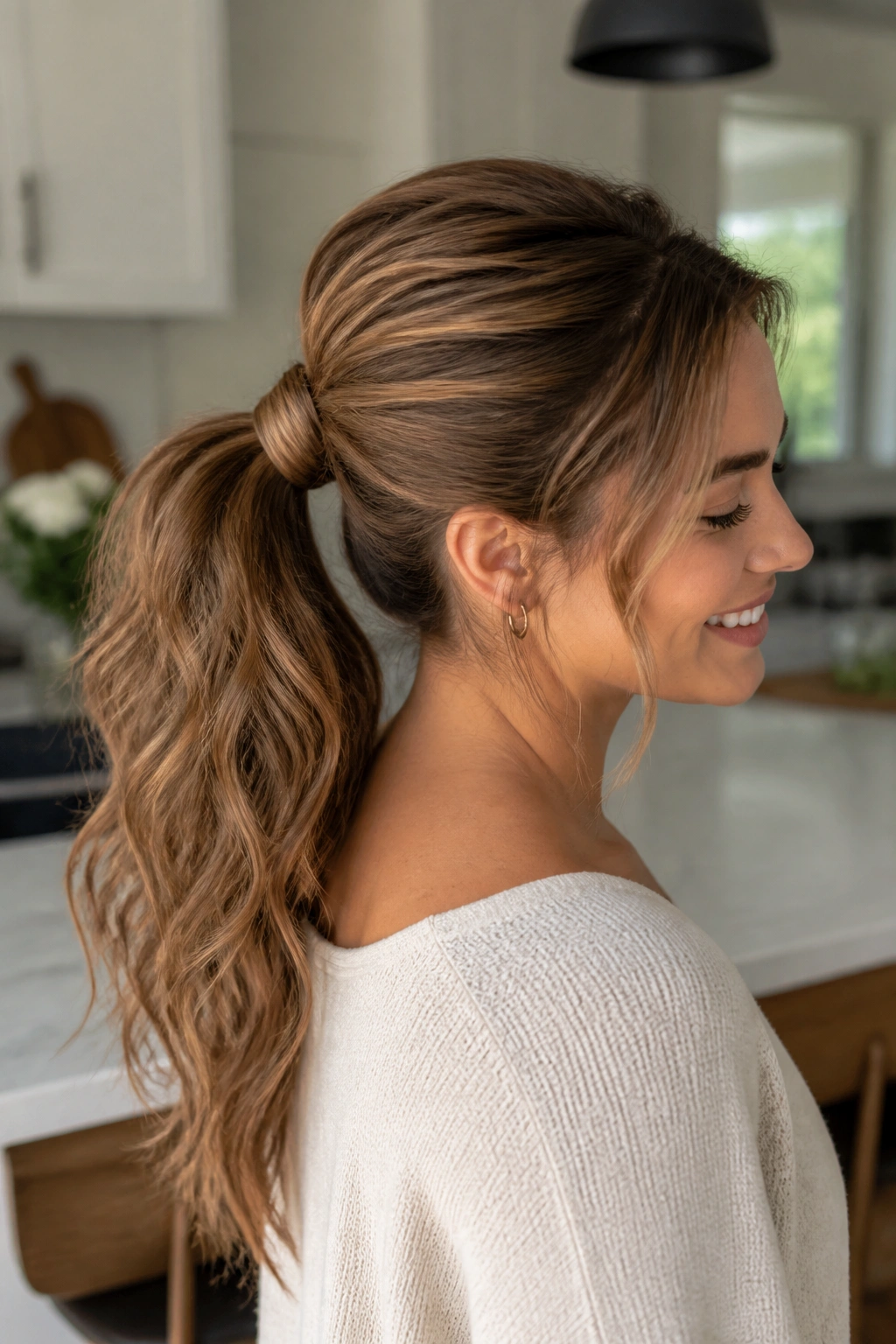
A wrapped-base ponytail is a cleaner version of a casual pony, and on fine wavy hair it can look surprisingly full. The wrap hides the elastic, which makes the style feel finished, but the real volume comes from where you place the ponytail and how loosely you pull the crown.
Put the ponytail at mid-height, then gently tug a few sections at the top to create a little roundness near the scalp. Do not flatten the crown with the brush. That’s the fastest way to make a fine ponytail look thin. Keep the waves in the tail itself and wrap a small strand around the base to hide the tie.
A wrapped base also stops the style from looking too sporty. It gives the ponytail a little polish without turning it into a slick office style. That matters if your hair is fine and you want the pony to seem fuller than it is.
If the tail feels too narrow, split the bottom half into two loose sections and twist them together lightly before wrapping the base strand. It adds a touch of body down the length without needing extensions or heavy product.
20. The Shoulder-Grazing Wolf Cut

A shoulder-grazing wolf cut can be a very good match for fine wavy hair, but only if it stays soft. The shape leans on shaggy layers at the crown and longer, feathered lengths through the bottom. That contrast gives the illusion of more hair because the top looks lifted and the ends don’t hang in one flat line.
This style works well when you want movement all over, not just at the ends. The shorter pieces around the face keep the front alive, while the longer back pieces stop the cut from looking too chopped. Fine wavy hair often needs that balance. Too much layer, and it turns airy in the wrong way. Too little, and it slumps.
The best wolf cut for fine waves is not the aggressively shredded version you see in dramatic photos. It should feel wearable. The crown needs enough lift to create shape, but the ends still need enough length to look full. A good stylist will usually keep the disconnection subtle and watch how your waves sit when they dry.
If you want one style that can handle a little mess and still look intentional, this is it. It likes texture. It likes imperfect drying. And it rarely asks for a full redo when the day gets long, which, honestly, is half the appeal.
