



The best haircuts for curly hair women will love do one simple thing: they keep the curl pattern intact while taking the weight off the wrong places. Cut curls badly and you get a triangle, a puff ball, or a flat crown with sad ends. Cut them well and the whole head wakes up.
Curly hair does not behave like straight hair, and anyone who has watched a wet shoulder-length curl jump up three inches after drying knows the drill. That shrinkage matters. So does density, because a thick curl can hide heavy layers while fine curls can go limp if the cut is too aggressive.
A good curly haircut is less about chasing a trend and more about solving a shape problem. Do you want height at the crown, a cleaner jawline, a softer front, or less bulk at the bottom? Those are different jobs, and the right cut answers the one your hair is actually asking for.
That’s the part too many salon conversations skip. The cut should work with the way your curls live on a Tuesday morning — not just the way they look after a perfect diffuser session.
1. Long Layers That Keep Length and Remove the Triangle Shape
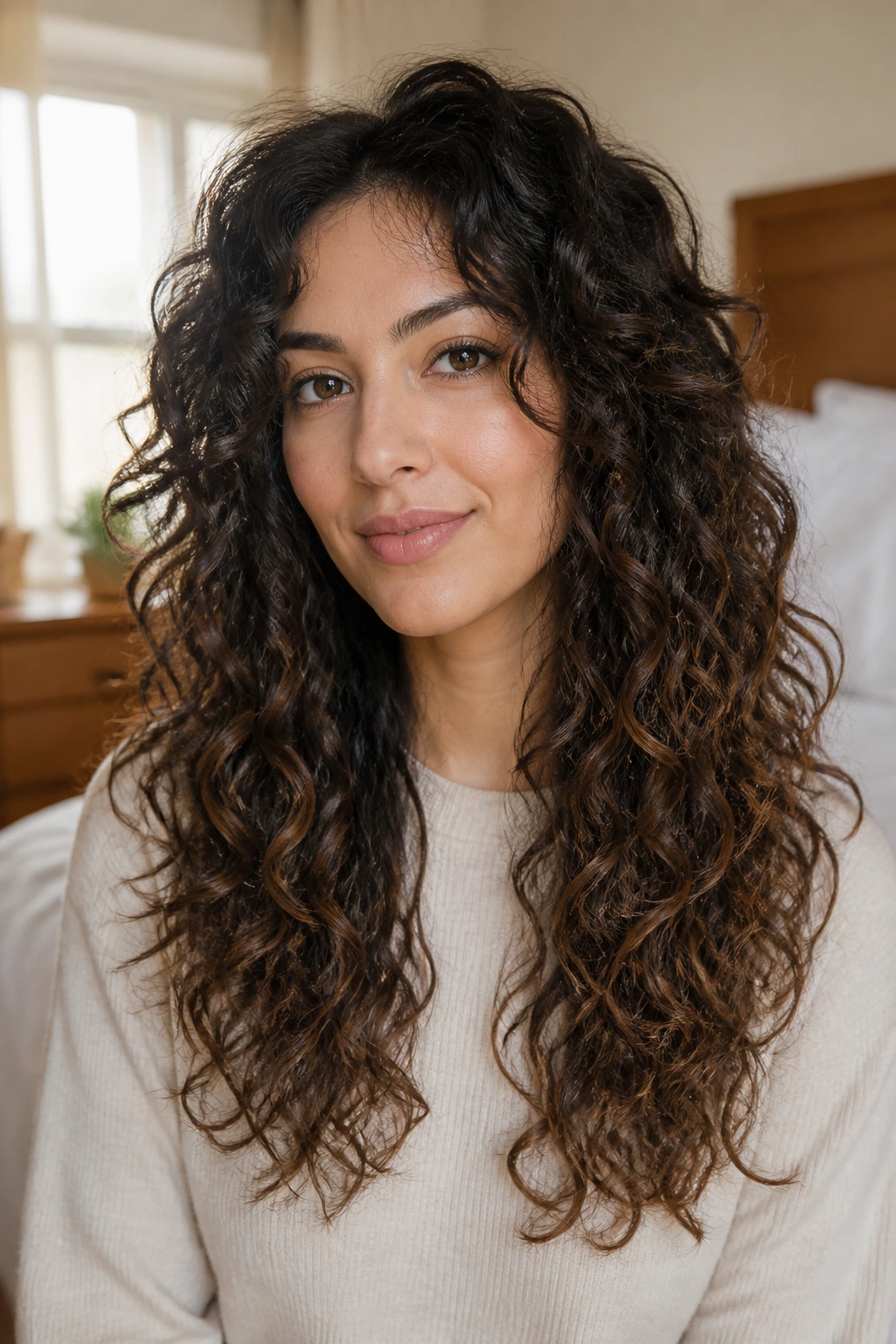
Long layers are the workhorse cut for curls that need movement without losing length. If your hair feels heavy at the ends but you do not want a dramatic change, this is usually the smartest place to start.
Where the shortest layer should land
The first real layer often works best somewhere between the chin and collarbone, depending on density. Thick curls can handle a shorter lift through the middle; finer curls need a softer hand so the ends do not turn wispy. The goal is to let the curls stack with each other instead of hanging in one thick curtain.
What to ask for
- Keep the perimeter long enough to preserve weight and length.
- Remove bulk through the middle, not only at the very bottom.
- Check the shape after the hair dries, because curl pattern changes the outline.
- Skip heavy thinning shears if your hair already frizzes at the ends.
One crisp rule: tell the stylist you want the shape to follow the curl, not fight it. That one sentence saves a lot of awkward aftercuts.
This cut works especially well if you wear your hair down most days and want ponytail length at the same time. It is not dramatic. It is useful, which is better.
2. The Curly Shag That Builds Lift at the Crown
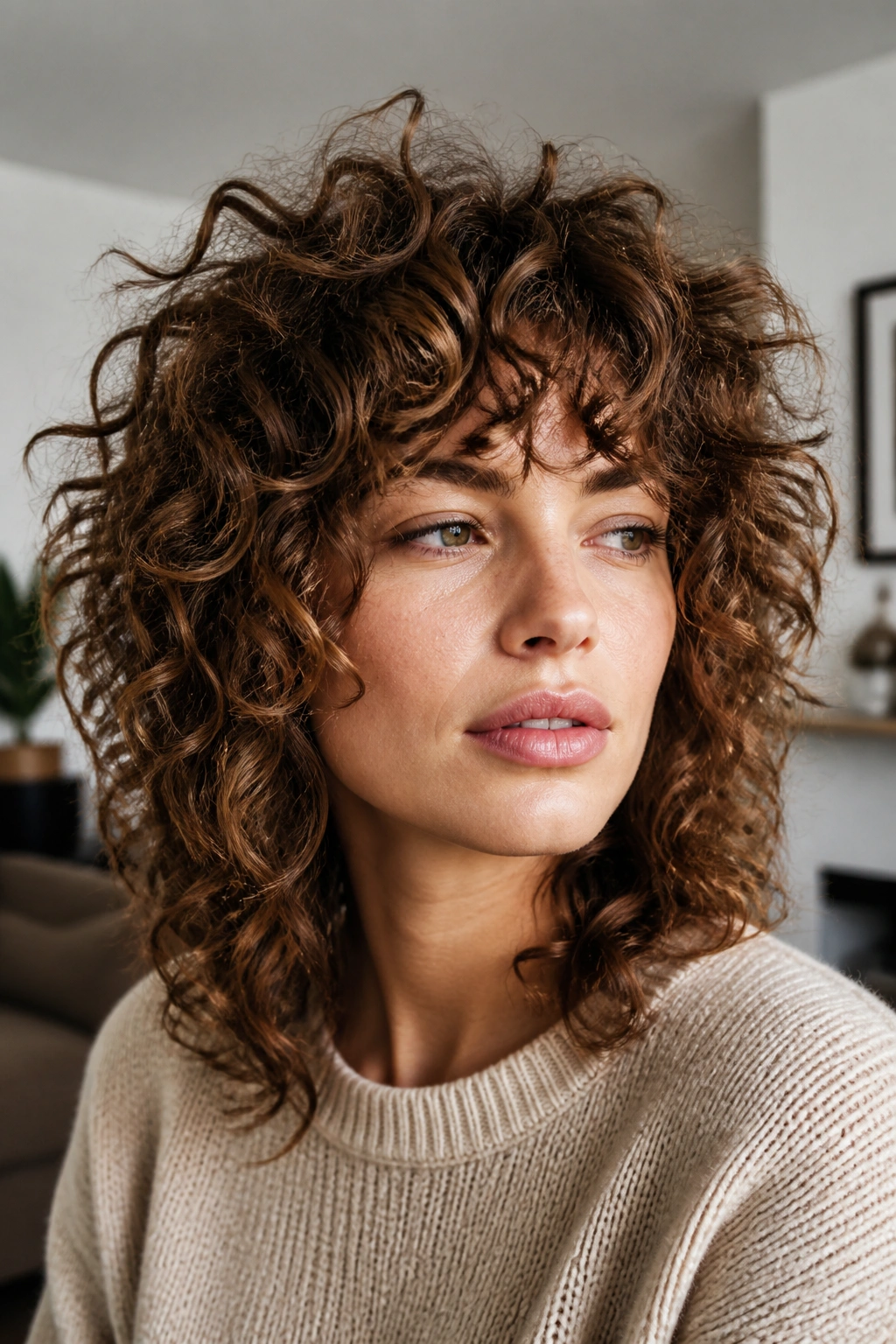
A curly shag is what happens when curls get permission to have some attitude. It gives the crown lift, movement around the face, and a little air between the layers, which is exactly why it keeps showing up on hair that wants volume without stiffness.
What makes it different
The shag relies on shorter top layers, broken-up lengths, and a slightly lived-in outline. On curly hair, that usually means the crown sits lighter and the sides do not balloon out into a perfect round mushroom. If your roots collapse the second your hair dries, this cut can make a real difference.
The catch is that the layers need control. Too many short pieces, and the cut can look ragged instead of shaggy. Too little layering, and you lose the point of the whole thing.
Best curl types
- Loose 2C waves that need more body.
- 3A and 3B curls that fall flat at the roots.
- Dense textures that can handle shorter interior layers.
A shag is not for someone who wants tidy, even hair. It is for someone who likes their curls to move when they turn their head. That’s the whole appeal, honestly.
3. A Rounded Bob That Makes Tight Curls Look Plush
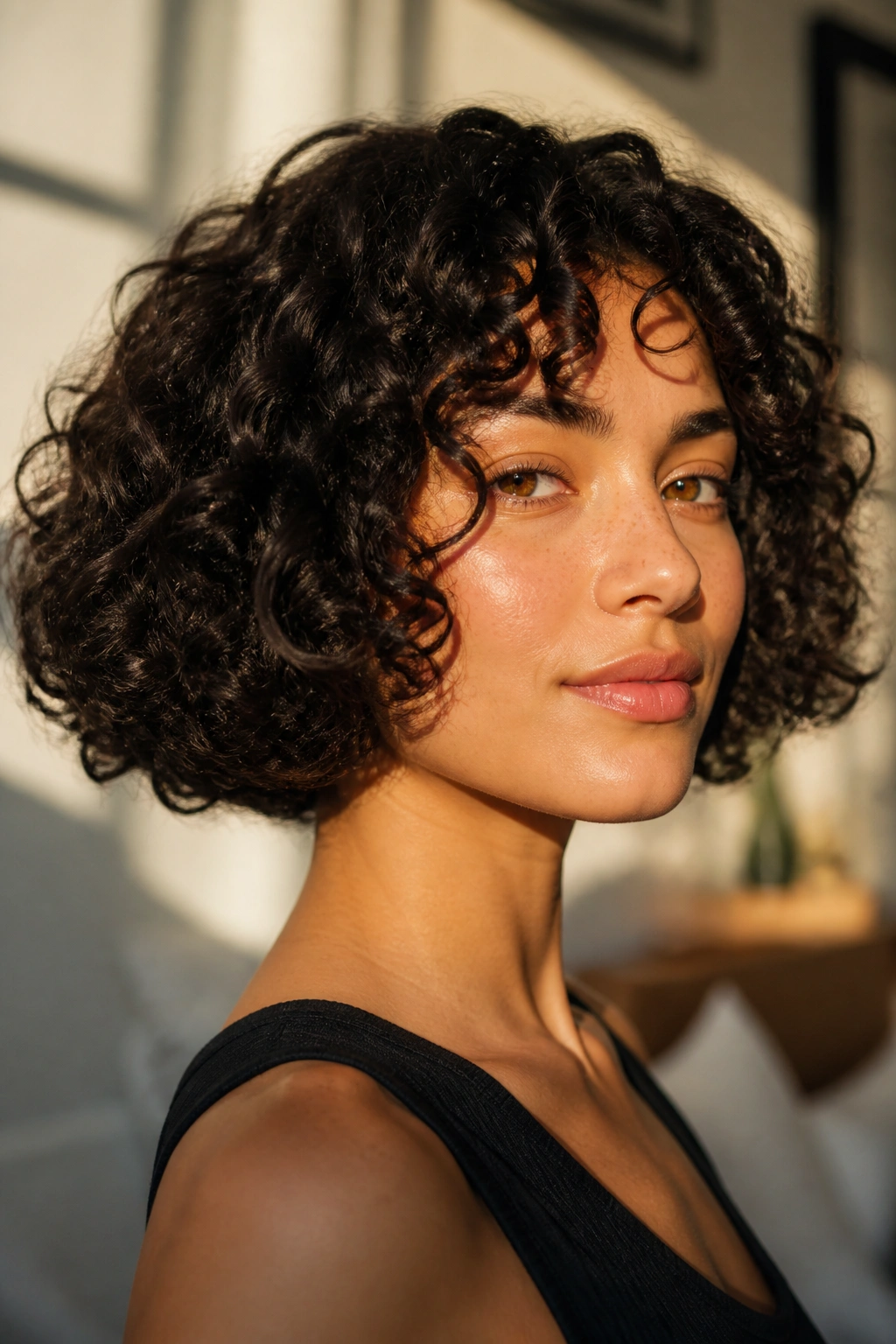
Picture a chin-length bob that curves with the head instead of hanging in a boxy line. That is the difference between a curly bob that looks full and one that looks like it was chopped with no plan.
A rounded bob makes tight curls look intentional. The edges are shaped to follow the curve of the head, which lets the curls form a soft dome instead of exploding outward at the sides. It is a strong choice for 3B to 4A textures that hold shape well.
The shape details that matter
A bob like this usually lands around the jaw or just below it. The perimeter stays soft, but the interior can have a little movement so the shape does not become too heavy. If the cut is too square, the curls puff at the cheeks and neck in a way that feels blunt. Rounded corners fix that fast.
Watch for these
- The back should not be stacked so high that it turns helmet-like.
- The front should graze the jaw, not cut into it harshly.
- Dry checks matter more than mirror checks while the hair is wet.
This one looks especially good on people who want definition with very little styling. A little gel, a diffuser, and you are done.
4. The Curly Lob That Sits at the Collarbone

A lob is not boring when the shape is right. On curly hair, collarbone length is one of the most forgiving places to land, because it gives the curls enough weight to calm frizz while still leaving movement around the shoulders.
Why does it work so well? Because the collarbone catches the hair in a useful spot. The curls can bounce above the shoulders instead of getting trapped under coats, scarves, or shirt collars. That sounds minor. It isn’t.
A curly lob also gives you choices. You can wear it center-parted, tuck one side behind the ear, or pin half of it back without fighting a short bob’s limits. If you are growing out a shorter cut, this is usually the part where hair starts feeling easy again.
A good lob has three things
- A length that sits at or just below the collarbone when dry.
- Soft layers around the face, not a giant stack of short pieces.
- Enough weight in the ends to keep the silhouette clean.
This is the cut I’d point to for anyone who wants versatility without endless maintenance. It behaves.
5. A Tapered Cut That Keeps the Sides Clean
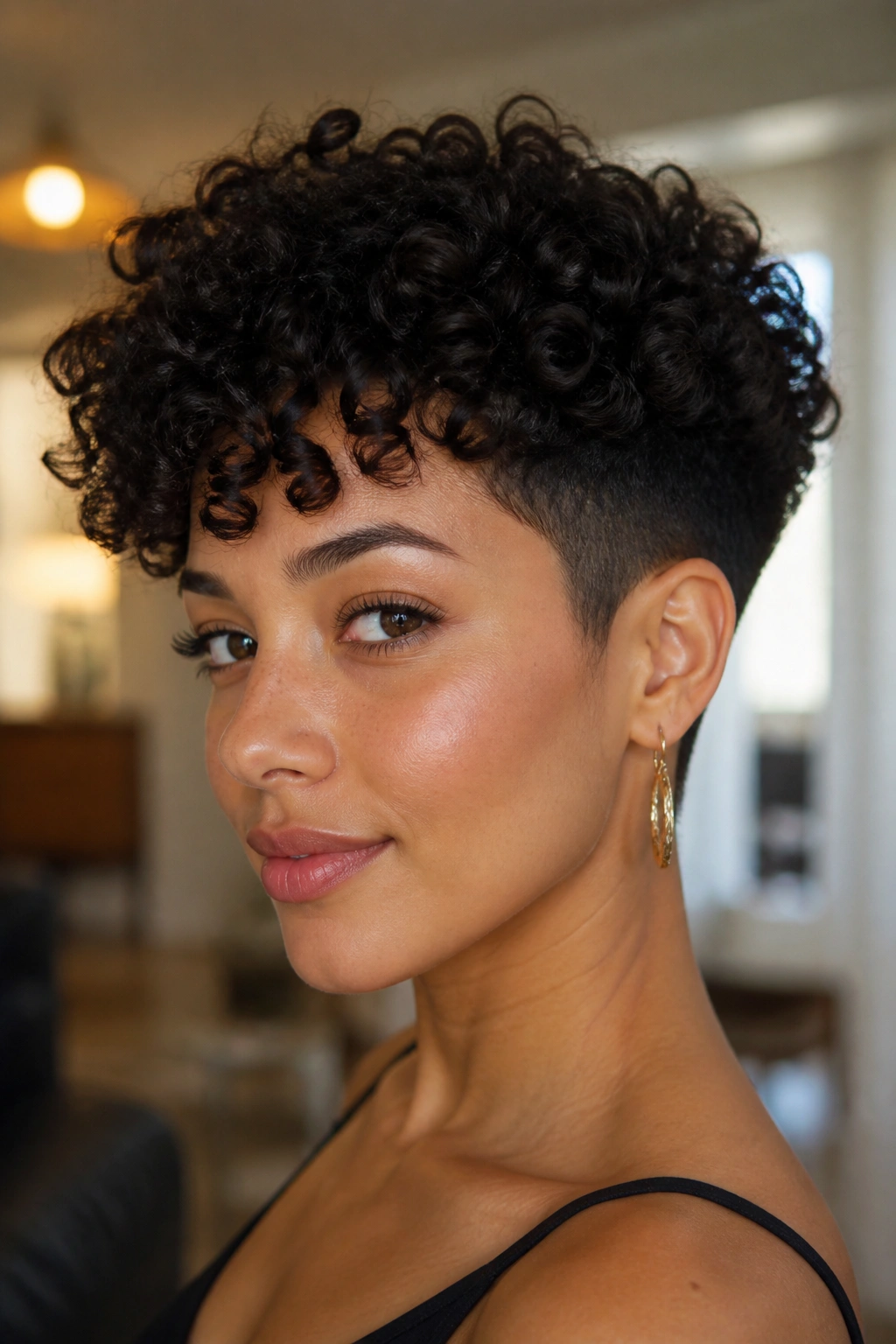
If your curls grow wide before they grow long, tapering solves the problem. A tapered cut narrows the sides and back while leaving volume where it looks best, usually higher on the head and a little longer toward the top.
This shape is especially useful for coily and tightly curled textures. It keeps the neckline neat, stops the sides from flaring out, and gives the cut a cleaner profile from the front and the back. The result feels sharper, but not severe.
What to tell the stylist
Ask for a gradual taper at the nape and around the ears, then more length through the top and crown. That keeps the haircut from turning into a flat helmet. If you want softness, leave the outline rounded. If you want more edge, clean up the sides a little more.
A tapered cut is also one of the few curly styles that can look polished with almost no daily fuss. A small amount of curl cream, a pick at the roots, and that’s about it. The shape does a lot of the work for you.
Best for
- Tight curls and coils with high density.
- People who want a neat neckline.
- Hair that needs less bulk on the sides.
6. The Pixie Cut With Soft Curl on Top
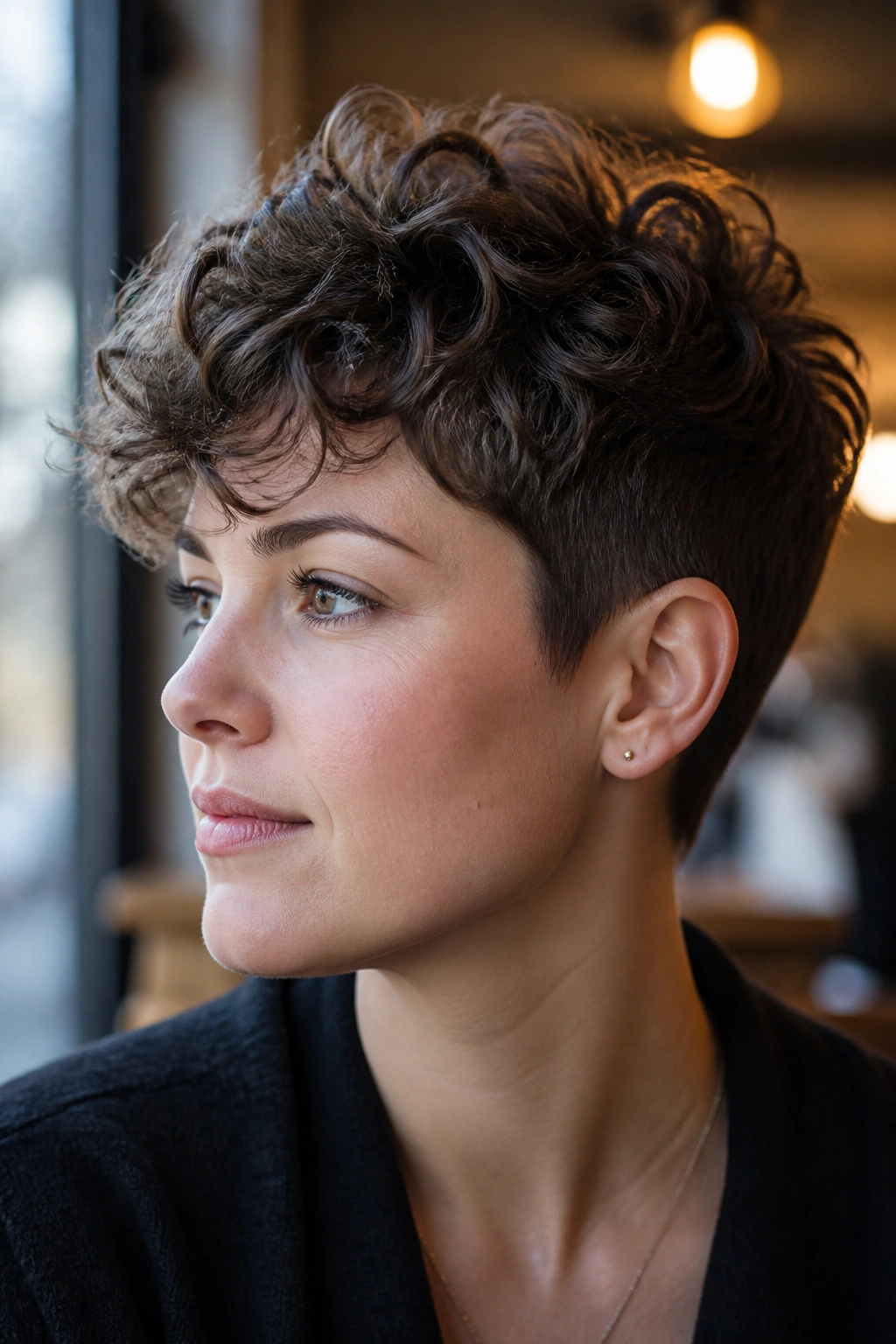
Short hair and curls can be a brilliant match. A curly pixie works when the top keeps enough length for the curl pattern to show, while the sides and back stay close enough to keep the shape tidy.
Length matters here. If the top is too short, the curl loses its spring and the whole cut can look fuzzy. Leave around 2 to 4 inches on top, depending on curl type, and taper the sides so the head shape stays clean. That gives the style lift without making it look choppy.
A pixie also changes the face in a nice way. It opens up the eyes, shows off the jaw, and puts the texture front and center. If you like earrings, strong brows, or a little edge in your haircut, this is a strong move.
One small warning: pixies need regular shaping. Not weekly, but often enough that the outline does not collapse. That is the price of a short cut with personality.
A good curly pixie feels confident, not precious. That is why it works.
7. Shoulder-Grazing Layers for Wavy Hair
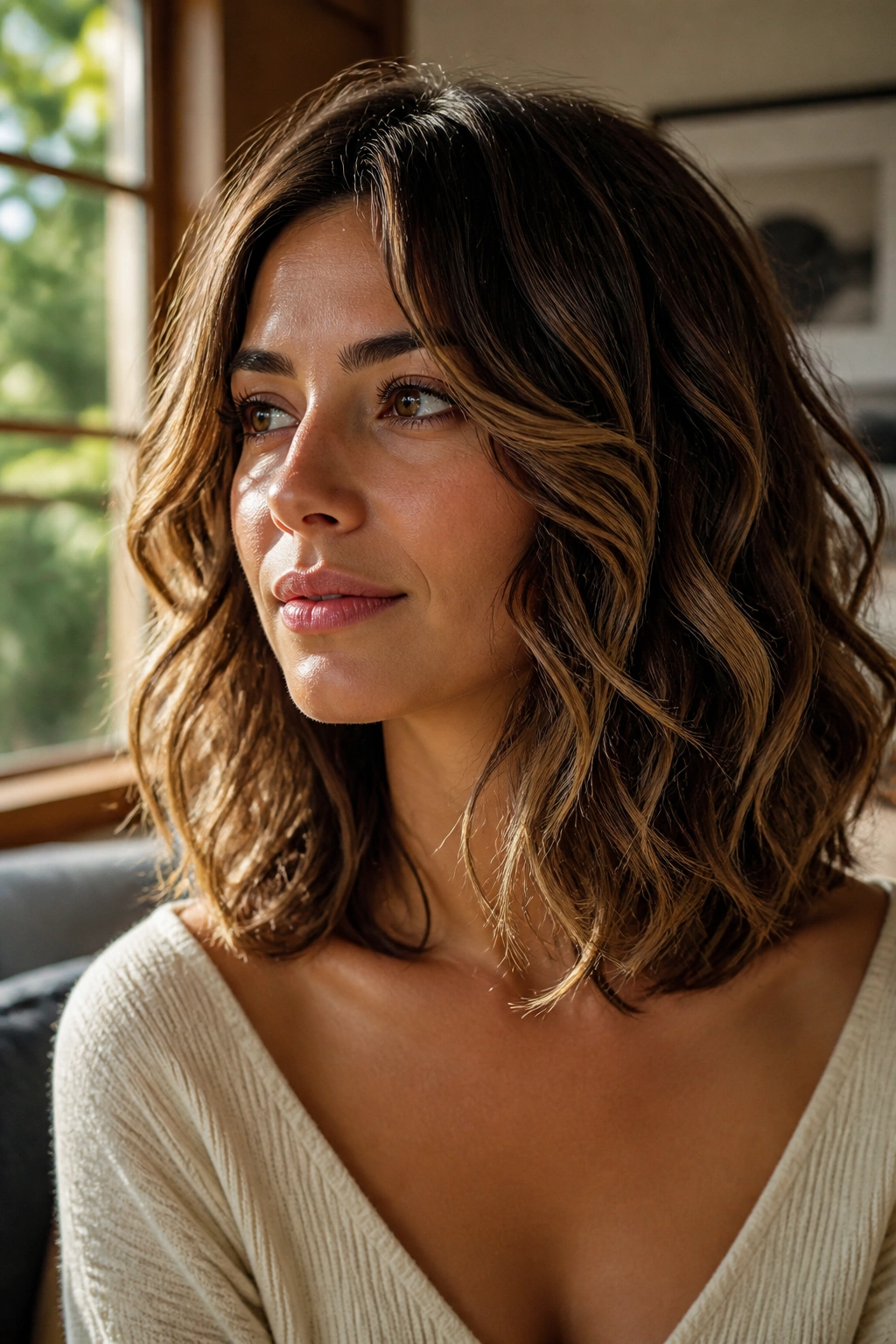
Shoulder-grazing cuts move like fabric when the wind hits them. On wavy hair, that length is useful because it gives the pattern room to swing without getting weighed down at the bottom.
The sweet spot is just above or right at the shoulders. Any shorter, and waves can kick out awkwardly. Any longer, and the roots may flatten while the ends drag. Layers should be soft, not chopped into too many pieces, because waves already have natural lift and do not need a lot of interference.
What makes this length smart
Shoulder-grazing hair is long enough for a ponytail, but short enough that the wave pattern still shows up clearly. It also tends to dry faster than longer cuts, which matters if you air-dry most of the time. A slight bevel at the ends keeps the outline from looking boxy when the hair flips over the shoulders.
Ask for this if
- Your wave pattern gets stringy at longer lengths.
- You want movement but not a dramatic chop.
- You prefer easy styling and fast drying.
A light mousse and a scrunch is often enough here. No elaborate routine. Good shape, then leave it alone.
8. The Wolf Cut for Thick, Bendable Curls
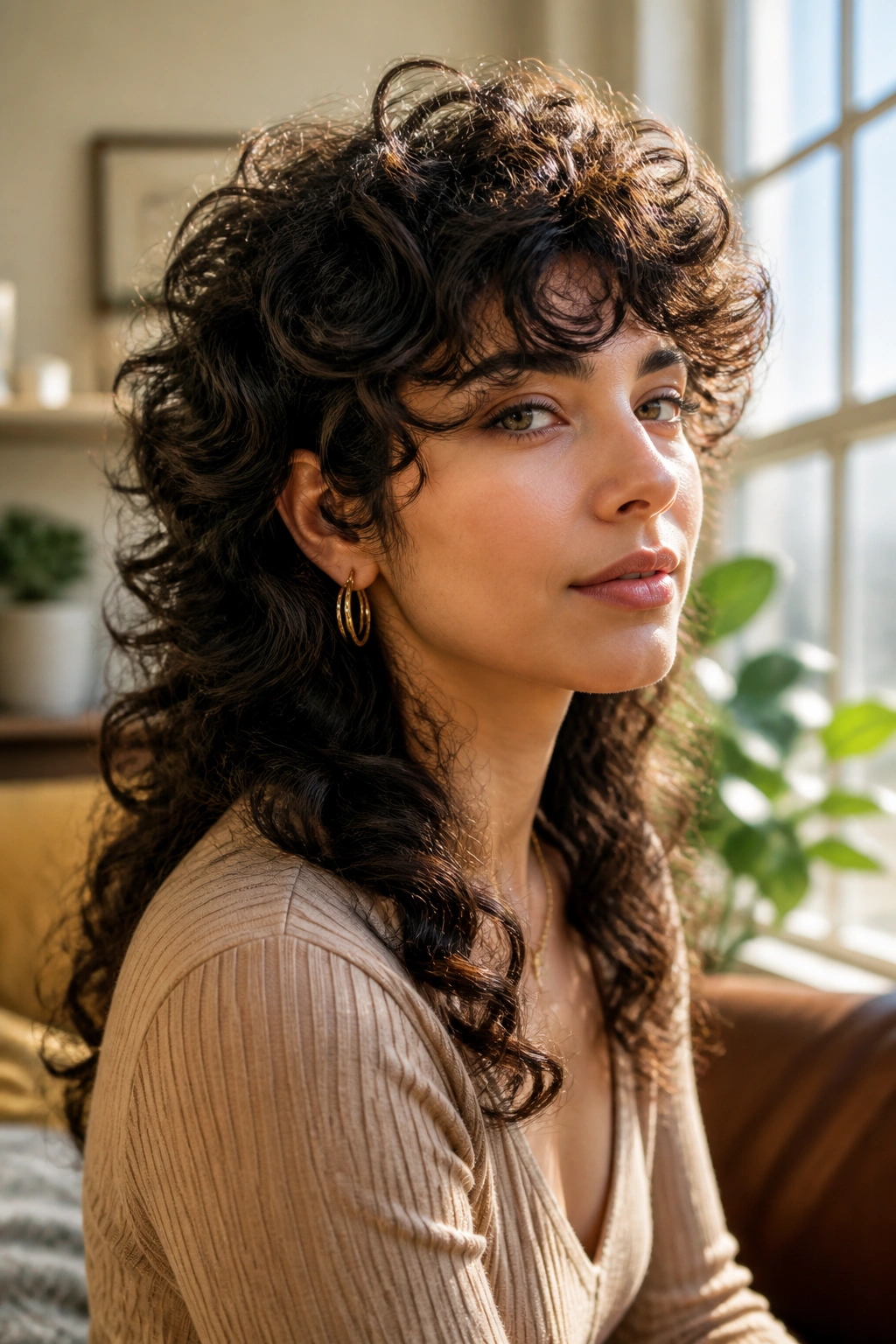
The wolf cut works because it refuses to be neat. It mixes shag energy with a little mullet shape, which gives thick curls room at the crown and in the back without making the whole head feel heavy.
For curls that are dense, bendable, and hard to flatten, this shape can be a gift. The shorter layers up top prevent the roots from sitting flat, and the longer back keeps the hair from puffing into a wide block. Done well, it looks cool in a way that still feels wearable.
The downside is obvious: if the stylist goes too hard with razoring or over-thins the interior, the curl can frizz out and lose structure. This cut needs a steady hand. Not every salon cut that gets called a wolf cut is actually right for curly hair.
A good version should still look intentional when the hair is half-dry, not only after styling.
Best for: thick 3B to 4A curls, big texture, and anyone who likes volume with a bit of grit.
9. Face-Framing Layers That Lighten the Front
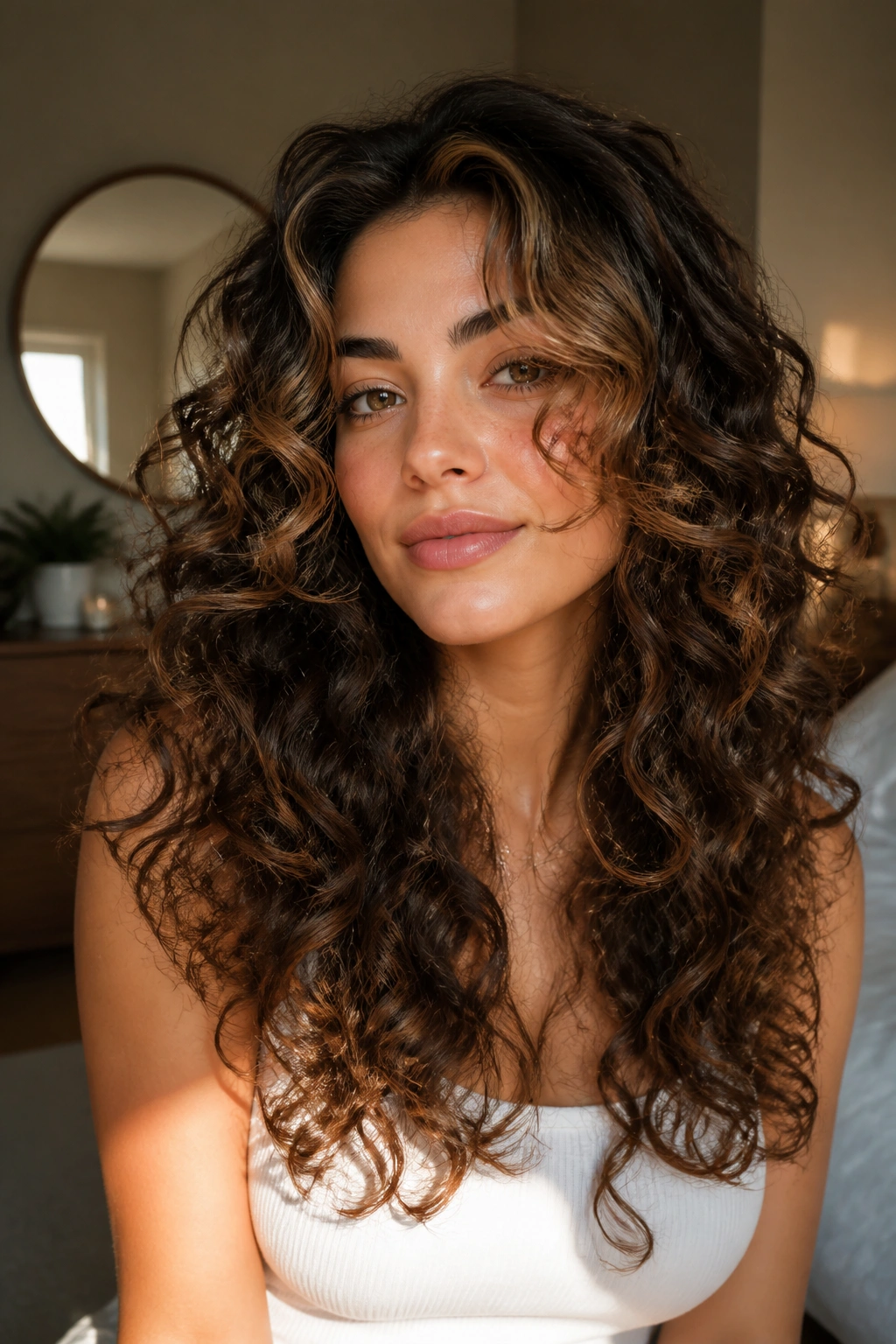
Want movement without giving up length? Face-framing layers are the cleanest answer. They take weight off the front, open up the face, and keep the rest of the hair long enough to stay versatile.
The trick is where those layers start. For rounder faces, pieces that begin below the cheekbone can help stretch the outline. For longer faces, starting around the jaw or just above it can soften the length without crowding the cheeks. That small difference changes the whole read of the haircut.
Why this cut is so popular with curls
Curly hair can gather a lot of visual weight at the sides of the face. A few well-placed layers break that up and stop the front from feeling like a curtain. You still get length in back, which makes this a nice middle ground for someone not ready for a full shag or bob.
What to ask for
- Face-framing pieces that blend into the rest of the cut.
- Soft graduation, not a sharp stair-step.
- Enough length to tuck behind the ears if needed.
This is the haircut I’d call quietly smart. It does not shout, but it changes everything.
10. A Curly Fringe That Sits in the Eyebrows
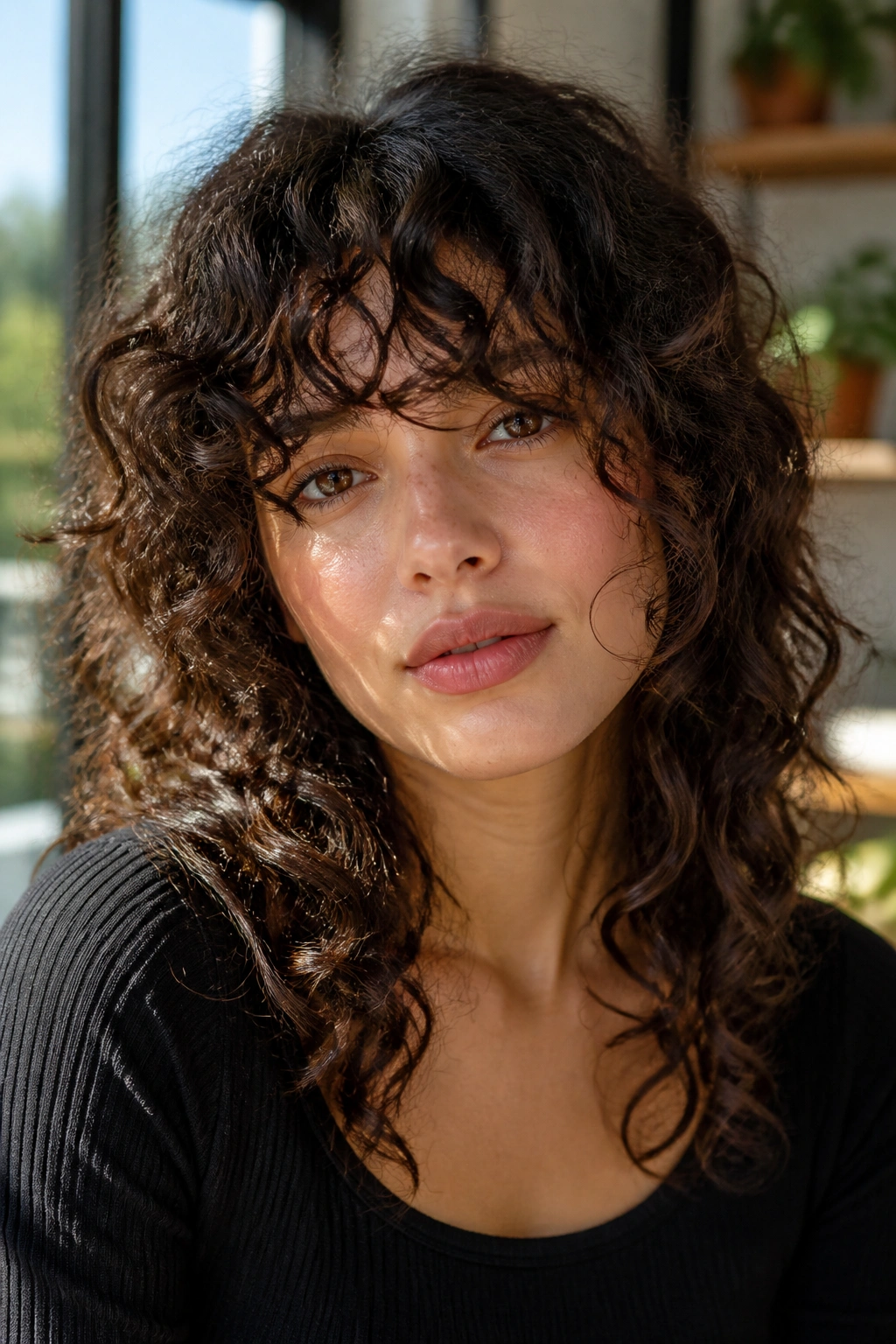
Bangs on curls can smell like trouble in a salon chair, and still be worth it. A curly fringe gives the face instant shape, but it only works when the shrinkage is handled with care.
Length matters more here than most people expect. Curly bangs should usually be cut longer than straight bangs, because they spring up after drying. A fringe that hits the eyebrows wet may sit well above them dry. That is not a mistake; that’s curly hair being curly hair.
What keeps fringe from looking like a bad accident
A stylist who understands curls will often cut the bangs in their natural pattern, then check them again after drying. Point cutting can soften the edge, and a slightly longer center with shorter sides can make the fringe curve instead of sitting as one blunt block.
Quick reality check
- Bangs need more trimming than the rest of the cut.
- Fine curls can get stringy if the fringe is too sparse.
- Coarse curls need enough weight to avoid a frizzy halo.
If you hate trimming every few weeks, skip it. If you love the way bangs change a face, curly fringe is one of the most rewarding moves in the whole list.
11. The Inverted Bob That Lifts the Back
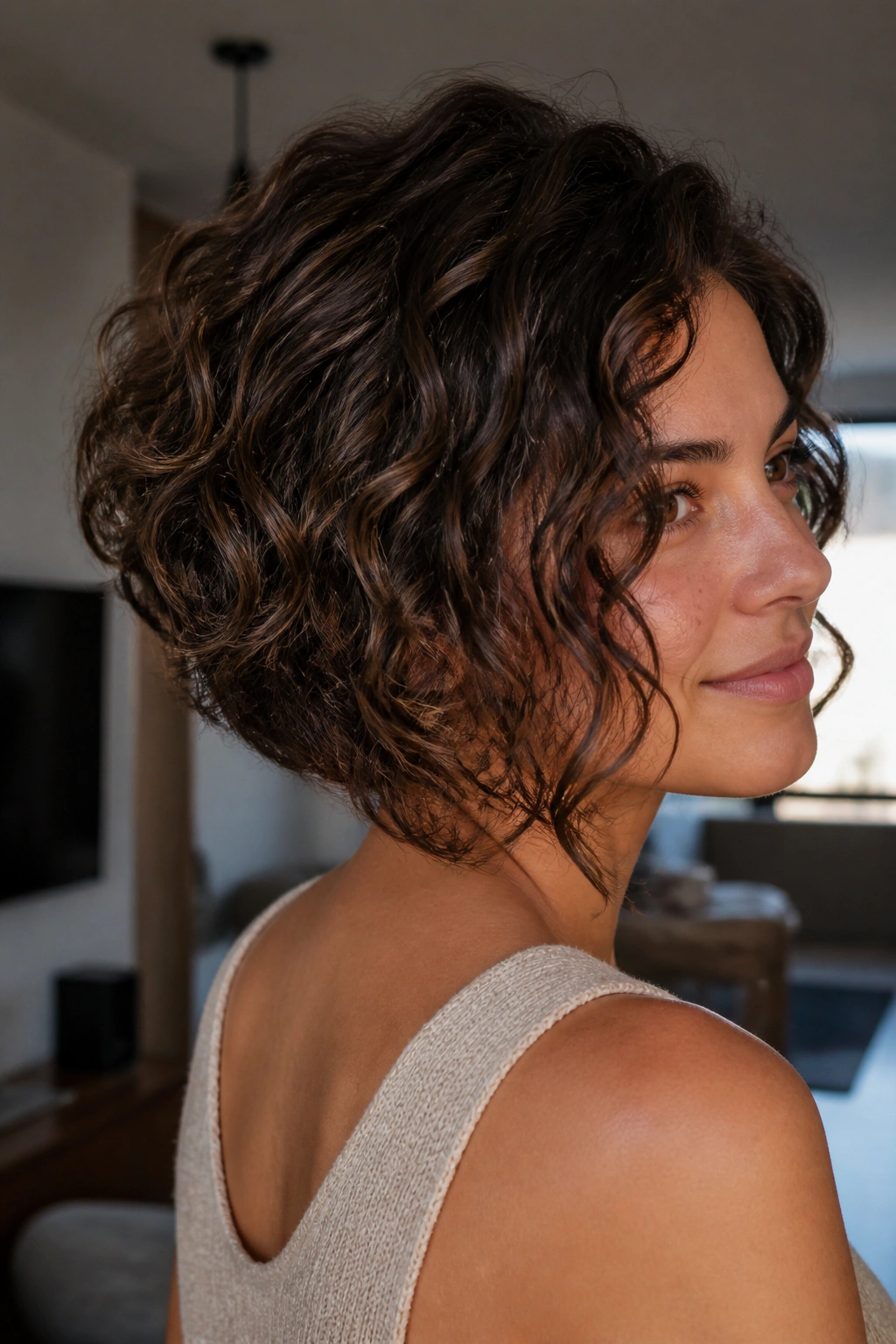
Unlike a straight bob, an inverted bob gives the back a subtle rise. That angled shape creates lift where curls often collapse, especially near the nape and crown.
The shorter back keeps the silhouette light, while the longer front lets the curls fall toward the jaw or collarbone. On dense hair, that angle can take away a surprising amount of bulk without making the cut feel airy in a bad way. It is tidy, but not stiff.
Why curls like this shape
Curly hair can swell at the sides if every section is the same length. An inverted bob controls that by building a line into the haircut. The eye sees movement, not bulk. The shape also works well with a side part, which can help if your crown tends to sit flat.
Good details to ask for
- A gentle angle, not a dramatic wedge.
- Soft interior layers to avoid a shelf effect.
- A neckline that stays clean as the hair grows out.
This is a strong cut for women who want something sharper than a lob but less risky than a pixie. It has structure. That matters.
12. A Deva-Style Dry Cut for Curl-by-Curl Shape
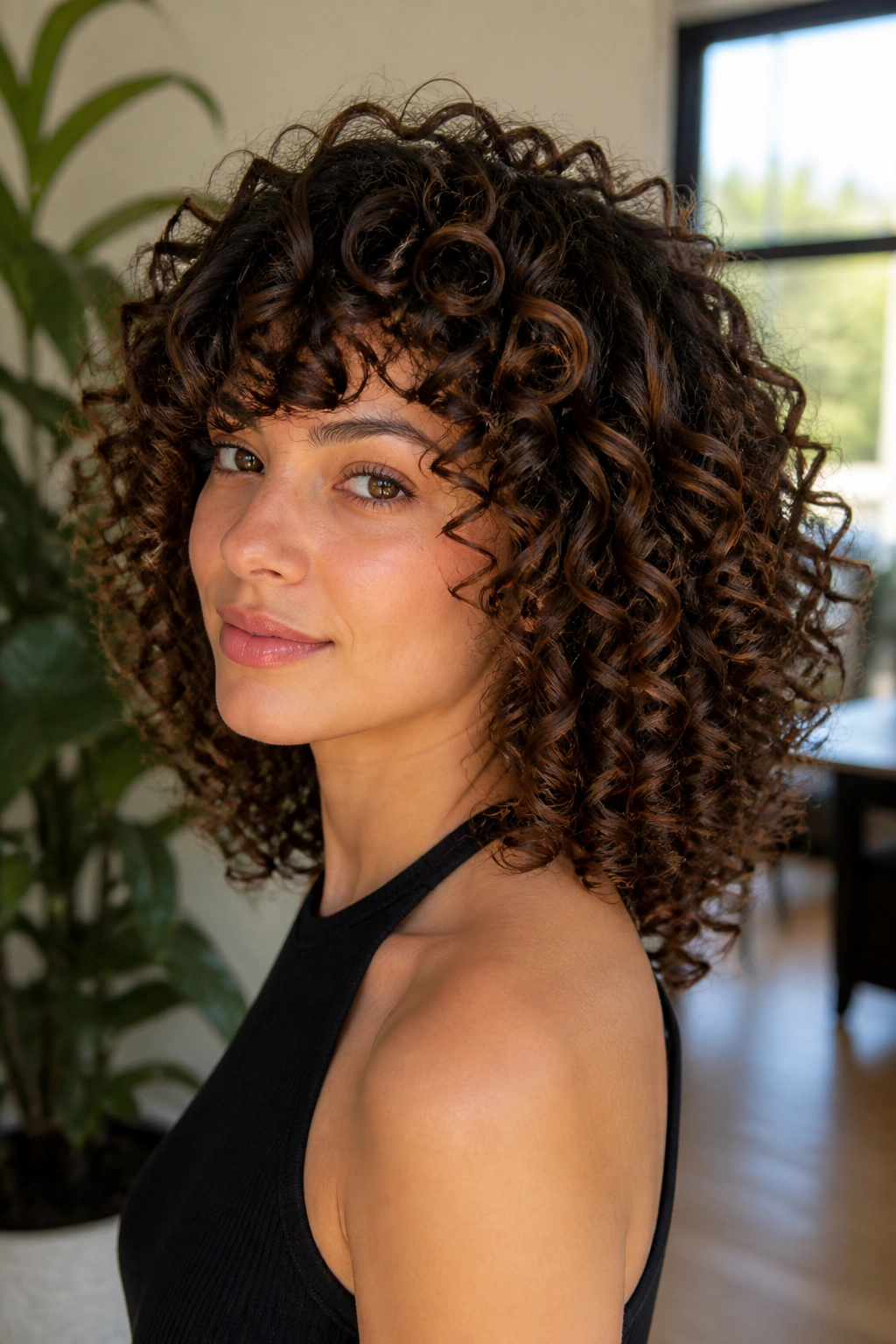
A dry cut sounds simple, but it changes everything for curls. When the hair is cut in its natural state, the stylist can see exactly how each curl shrinks, bends, and stacks against the next one.
What the stylist is actually doing
A curl-by-curl cut is usually done with the hair dry, defined the way you normally wear it. The stylist shapes each section based on how it falls instead of guessing from a wet strand. That is a big deal for mixed patterns, uneven density, and hair that behaves one way on the left side and another on the right.
Why it matters after the first wash
Wet cutting can still work, but it hides too much. A curl that looks long while wet may bounce up past the jaw once dry. A dry cut lets the stylist work with that shrinkage instead of being surprised by it later. The finished shape tends to feel more personal, less generic.
A few things help this cut succeed:
- Wear your hair down and styled the way you usually live in it.
- Skip heavy stretch styles before the appointment.
- Bring photos only if they show shape, not just vibe.
This is the method I’d choose for hair that never seems to match the cut in the mirror. Dry cutting answers that problem at the source.
13. The Butterfly Cut for Length Without Bulk
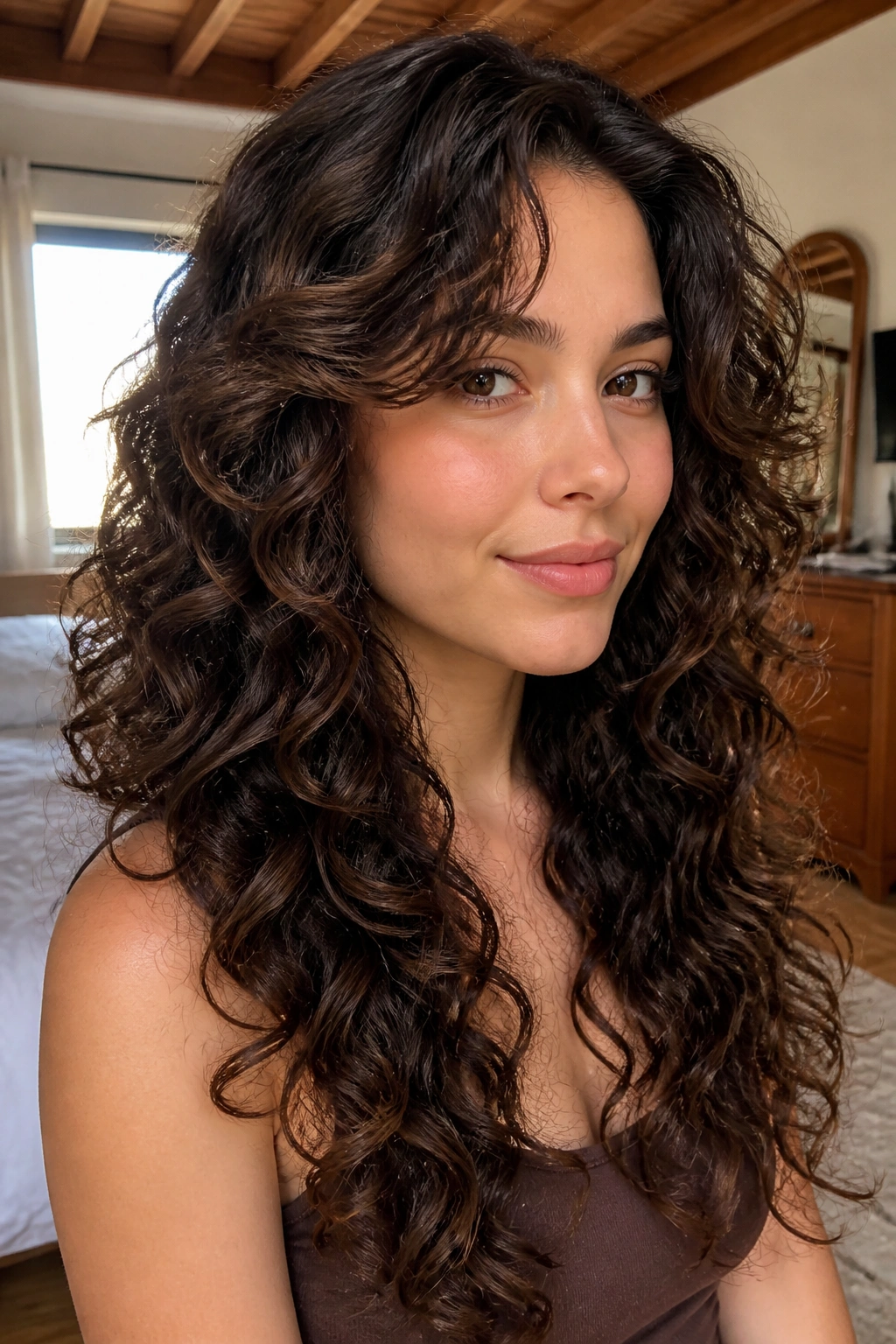
The butterfly cut keeps long hair from feeling like a heavy blanket. It uses shorter layers near the front and crown while preserving length underneath, which gives curls lift without forcing you into a short style.
On curly hair, the shortest layer needs judgment. Too high, and the top springs up too much. Too low, and the haircut barely changes. The sweet spot usually sits below the nose or around the chin, depending on how much density you have and how much shrinkage your curls show.
Balance is the whole trick.
This cut is especially useful if you like the idea of movement around the face but do not want your longest length touched. It can be styled with a diffuser for a fuller look or air-dried for a softer outline. Either way, the top layers make the whole style feel lighter.
The butterfly cut can look glamorous, but it is not just about drama. It is about keeping long curls from going flat at the top and heavy at the bottom. That’s a practical win, not a cosmetic trick.
14. A Midi Cut with Internal Layers
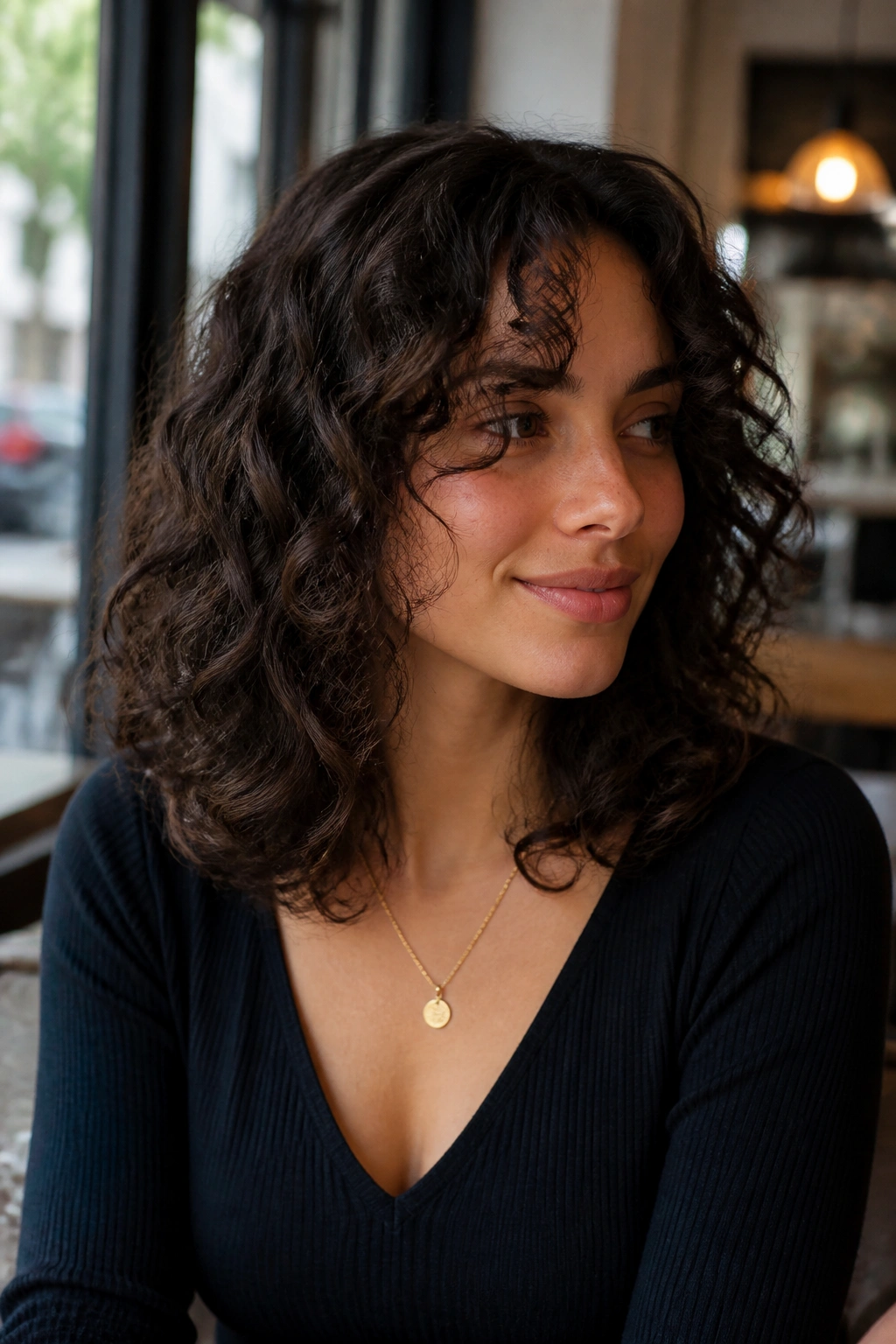
A midi cut sits in that middle zone between shoulder length and full long hair. It is one of the best choices for curly hair if you want movement without obvious shag layers.
Internal layers are the quiet part of this cut. They sit inside the shape, not on the outside, which means the silhouette still looks clean while the curls have room to spring. That matters if you like a smoother outline but hate the blocky look that one-length hair can get when it gets dense.
Why this length is so easy to live with
A midi cut usually dries faster than long hair and is less prone to tangling at the ends. It also works with a center part, a side part, or a half-up clip without fighting the shape. If you spend a lot of time in ponytails, that matters.
Ask for these details
- Keep the outer line soft but not overly layered.
- Remove bulk from inside the shape.
- Leave enough weight at the ends so the curls clump.
This is a quiet haircut. Not flashy. Just reliable, which is a much rarer thing than it sounds.
15. The Asymmetrical Bob for a Sharp Edge
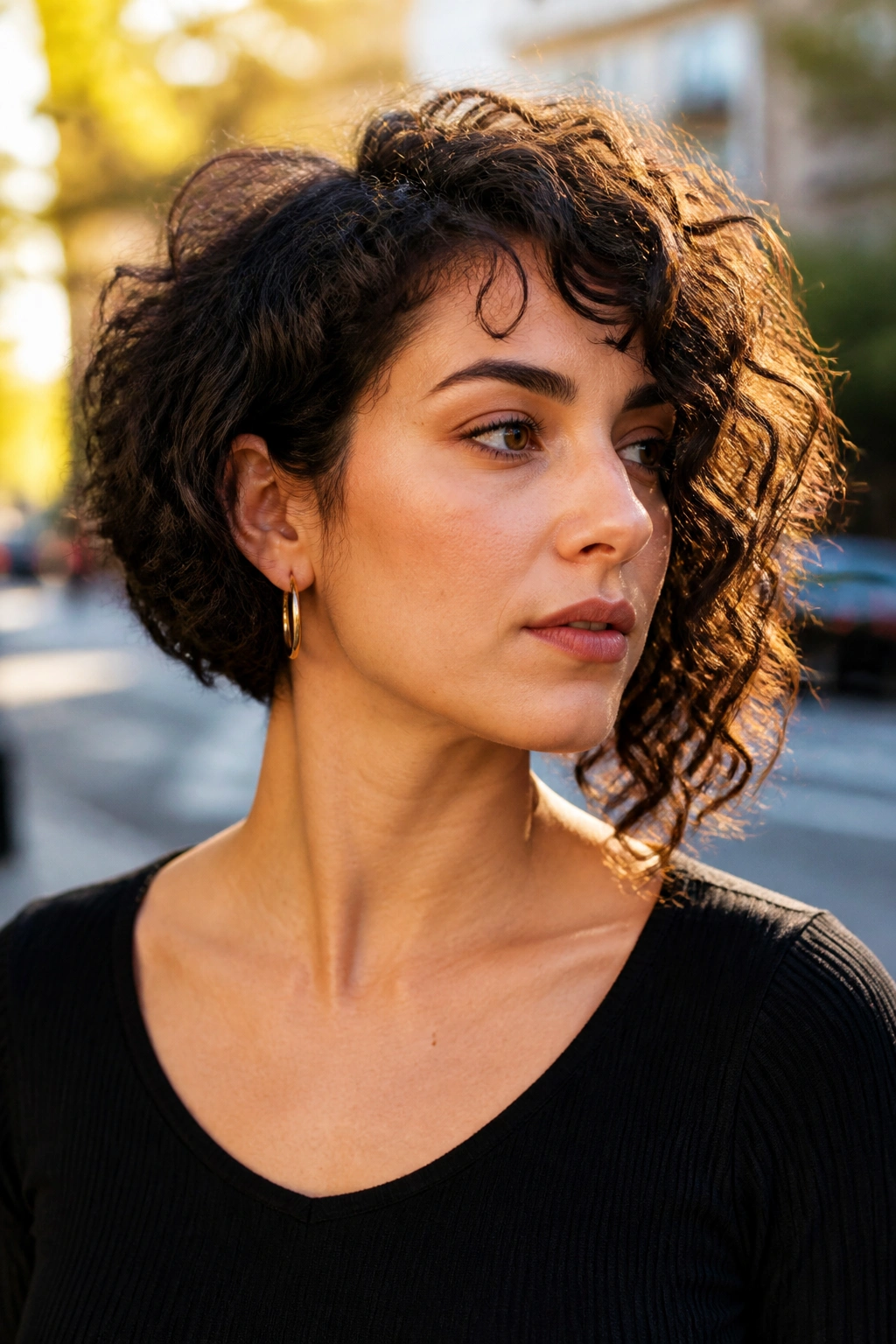
One side longer than the other sounds risky until you see it on curls. A subtle asymmetrical bob adds motion even when the hair is still, because the difference in length keeps the shape from reading flat.
The key word is subtle. Curl shrinkage can exaggerate asymmetry fast, so the difference between sides usually needs to stay modest — often around 1 to 1.5 inches, not a dramatic swing. Anything bigger can turn into a correction project every morning.
Who this suits
- Women who like a little edge in their haircut.
- Curly hair that holds shape instead of collapsing.
- Jawlines you want to emphasize without a severe line.
This cut can be worn smooth, diffused, or a little messy. The asymmetry does the work, so you do not need heavy styling to make it visible. A side part helps, especially if one side tends to take more volume than the other.
The best part is that it looks deliberate even as it grows out. That is a rare thing in short curly hair.
16. A Soft Mullet for Loose Curls and Waves
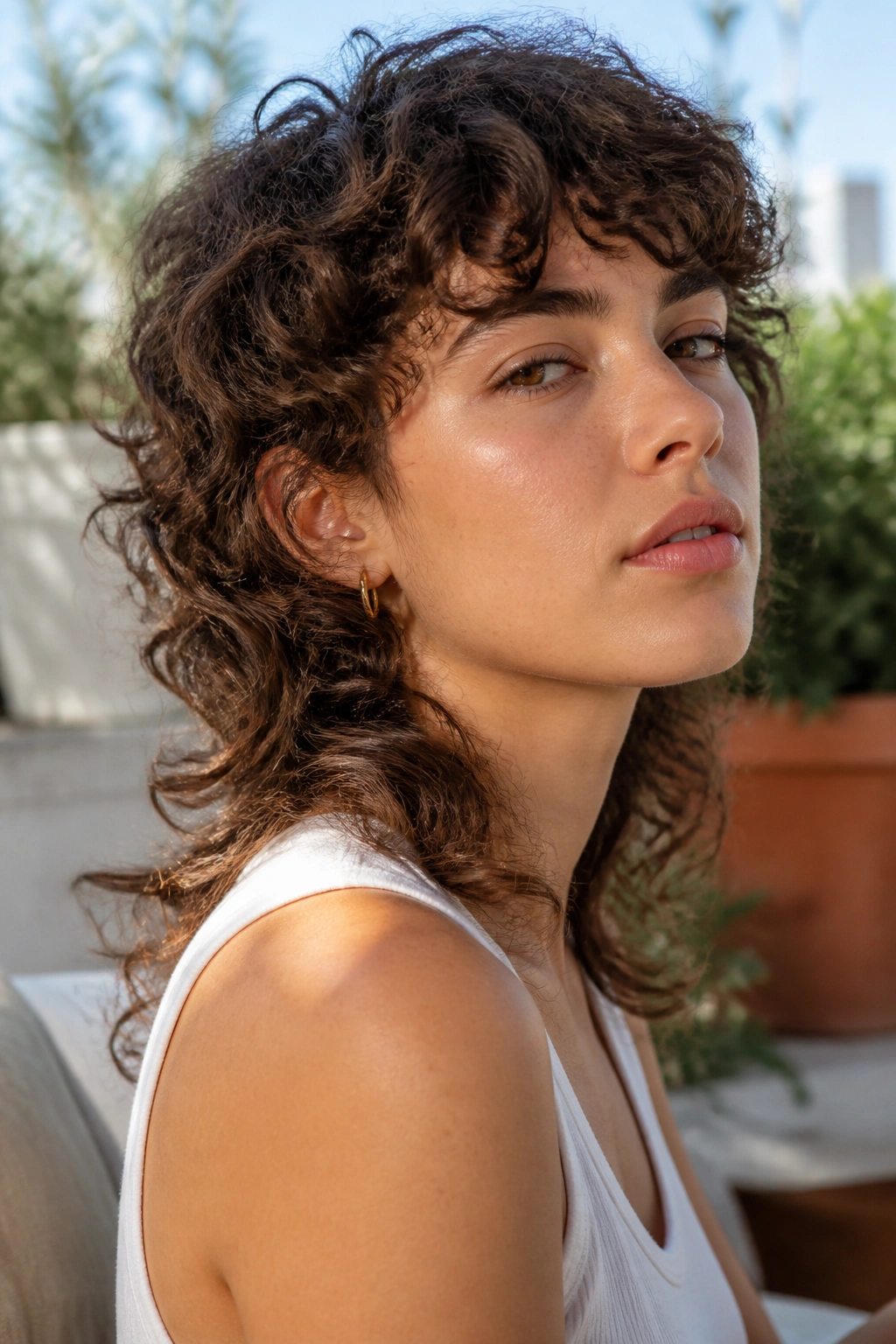
A soft mullet is not the hard-edged haircut people picture when they hear the word mullet. On waves and loose curls, it becomes a layered shape with lift on top, softness around the face, and length left in the back.
The reason it works is simple: wavy hair often collapses where it hits the shoulders, while the crown goes flat. A soft mullet breaks that pattern. Shorter top layers keep the head from looking heavy, and the longer nape keeps the haircut from feeling too chopped.
There’s a nice freedom to this shape. It looks a little undone in a good way, and it does not need perfect styling to make sense. A bit of mousse, a twist with your fingers, maybe a diffuser pass. Done.
The downside is that it can become frizzy if the layers are overcut or too aggressively razored. It needs softness, not shredding. That line is easy to miss and hard to fix later.
For women who want movement and a bit of attitude, this cut has a lot of charm.
17. The Halo Shape for Rounded Volume
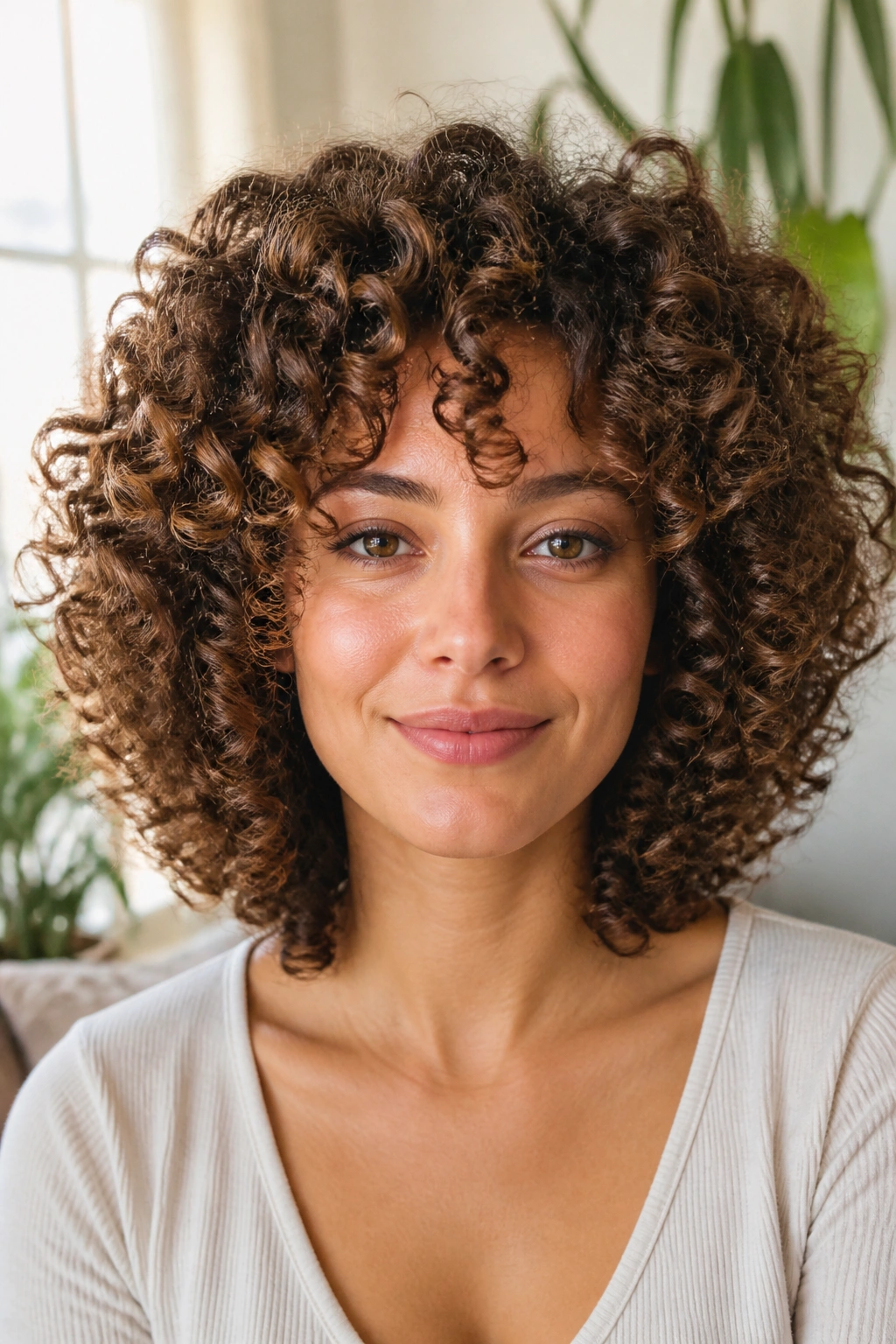
A halo shape gives curls a rounded outline that sits evenly around the head. It works especially well for dense coils and tight curls because it frames the face with volume instead of trying to flatten it down.
What makes the shape different
The hair is cut so the outline feels circular and balanced, with the volume distributed around the head rather than pushed only to the top or bottom. That can make a big head of curls look elegant in a very natural way. The line is soft, but the shape is controlled.
Why people choose it
- It keeps the silhouette full without looking boxy.
- It works with a rounded fro, a defined coil pattern, or a softly shaped afro.
- It makes the face visible without overcutting the crown.
This cut is also one of the best choices when you want your texture to be the main event. Styling is usually simple: hydrate, define, and let the shape do its job. A diffuser can help, but it is not the whole story.
If you have been fighting your volume for years, the halo shape is a different approach. It stops arguing with the hair and starts shaping it instead.
18. A Chin-Length Cut That Makes Ringlets Pop
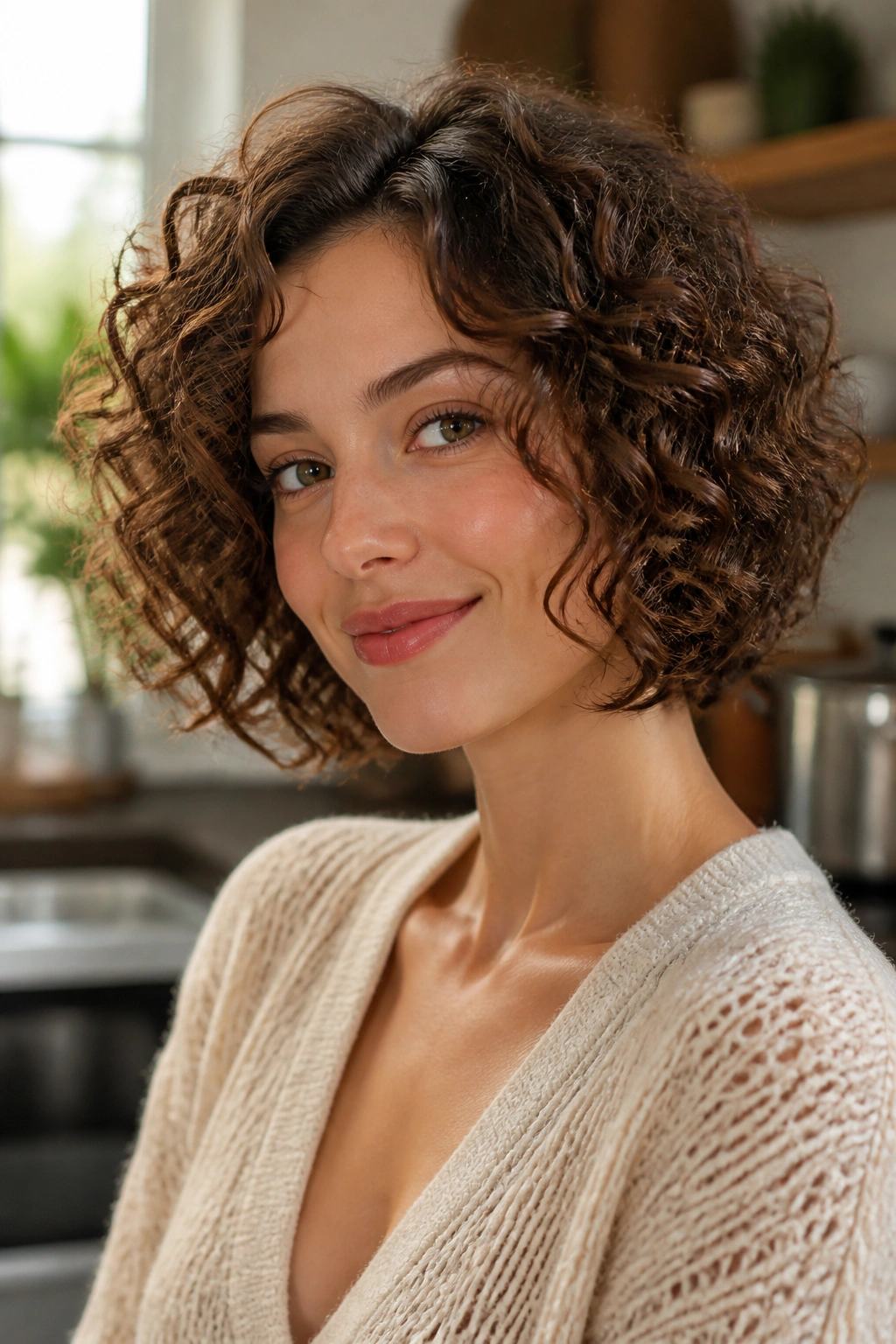
Can a short cut still feel soft? Yes — and chin length is often the proof. A chin-length cut gives ringlets enough room to spring while keeping the outline close to the face, which makes the curl pattern read clearly.
The length detail that matters
Because curls shrink, a cut that lands at the chin when wet may sit at cheekbone level when dry. That is why a stylist who knows curl shrinkage will usually leave a little extra length on purpose. The goal is a shape that looks neat after the curls settle, not right after the cut.
Quick notes for this length
- Ask for the front to sit just below the chin when dry.
- Keep the ends clean so ringlets do not separate into stringy pieces.
- Trim often enough to prevent the line from turning fuzzy.
This length is especially flattering for ringlets with bounce. It gives them a frame without swallowing the face. Short enough to feel fresh, long enough to tuck behind the ear.
It’s a compact cut. That is the appeal. Nothing wasted.
19. A Stretch-to-Shrink Cut for Coils and Tight Curls
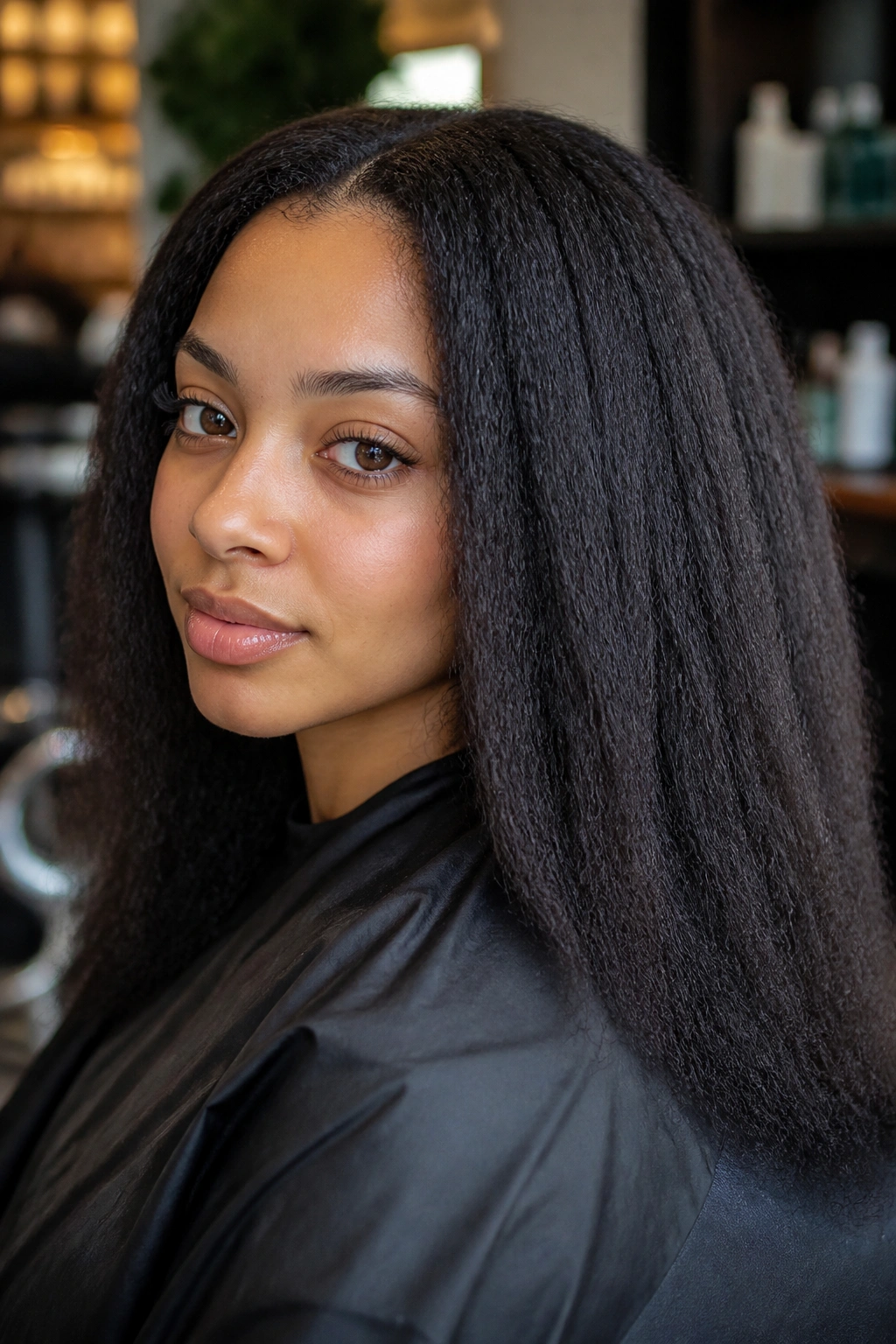
A stretch-to-shrink cut is built for hair that changes shape dramatically as it dries. The stylist works with the hair in a stretched state, then checks how it contracts so the final outline stays balanced once the coils tighten.
Why the prep matters
Coils and tight curls can hide a lot of unevenness while stretched. Once they shrink, the haircut tells the truth. That’s why the prep before the cut matters so much. Some stylists use banding, twisting, or gentle blow-drying on low heat to see how much length the hair really has to give.
What to ask for
- A shape that respects shrinkage from front to back.
- Evenness in the final silhouette, not just in the stretched length.
- A trim that leaves the ends dense enough to hold definition.
This is not the same as a dry curl-by-curl cut, though people mix them up. A stretch-to-shrink cut is about planning the final outline for coils that rebound hard. It is useful if your hair looks one way stretched and another way the second moisture leaves.
If your coils surprise you every time, this approach gives the haircut a better chance of staying honest.
20. The Low-Maintenance One-Length Cut with Smart Ends
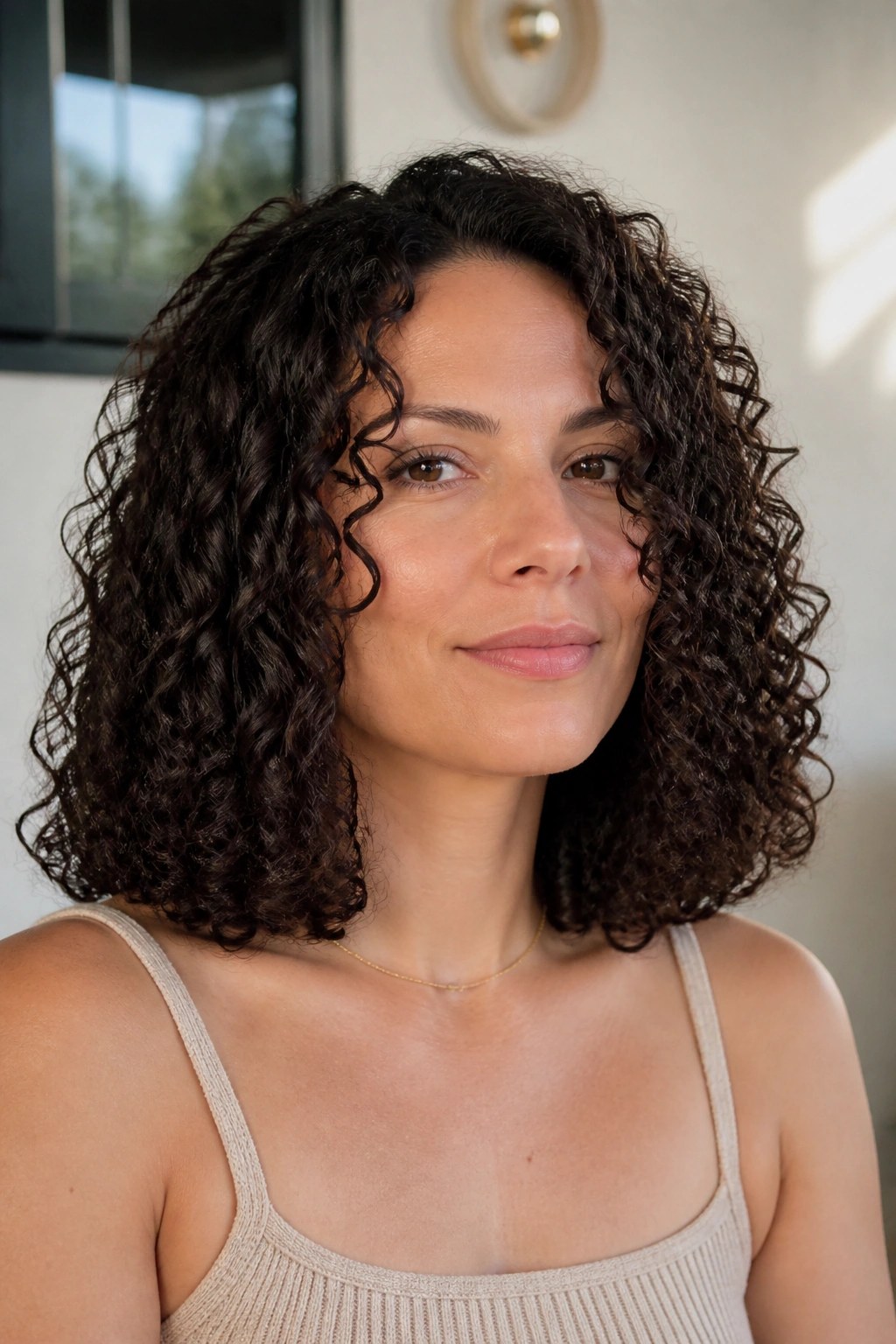
Sometimes the cleanest answer is the least fussy one. A one-length cut can look gorgeous on curly hair when the ends are kept dense and the line is tidy, especially if your curls already have good shape on their own.
This cut works best when the hair is not fighting the outline. If you have balanced density, strong curl clumps, or waves that fall in a neat pattern, too many layers can create more work than they solve. A blunt or near-blunt line keeps the ends full, which can make curls look healthier and thicker. It also grows out in a calm way. That matters.
The “smart ends” part is where the skill comes in. You still want dusting, micro-trimming, and enough shape to avoid that heavy shelf effect, but you do not need a lot of internal carving. A good one-length cut keeps the silhouette simple and lets the texture speak for itself.
For women who are tired of overworked layers, this is a relief. Clean shape. Less drama. More curl.
And sometimes that is the haircut that feels best when you are standing in front of the mirror on an ordinary morning.
