



A curly haircut has one job before all the rest: let the shape live. If the cut fights the curl pattern, the whole style ends up spending its life puffing out, collapsing, or doing that strange in-between thing where it looks fine from the front and lopsided from the side. The best haircuts for curly hair with bold texture do the opposite. They work with spring, shrinkage, density, and bend, then leave enough room for the hair to move.
That sounds obvious. It isn’t.
A blunt line can look sharp on one curl pattern and boxy on another. A few extra layers can give one head of hair gorgeous swing and make another head of hair feel thin at the ends. Curly hair has a memory of its own, and the cut has to account for that memory before the styling ever starts. That is why the same “medium curly cut” can look fresh on one person and weirdly heavy on someone else.
The cuts below lean into that reality. Some keep the silhouette round and soft. Some trim bulk in the nape or sides so the top can breathe. Some make a fringe the star. Some are short, some are long, and some sit right in the middle where curls tend to behave with a little more attitude. If you’ve been wanting a haircut that makes your texture look intentional instead of unruly, start here.
1. Rounded Curly Afro with Soft Edges
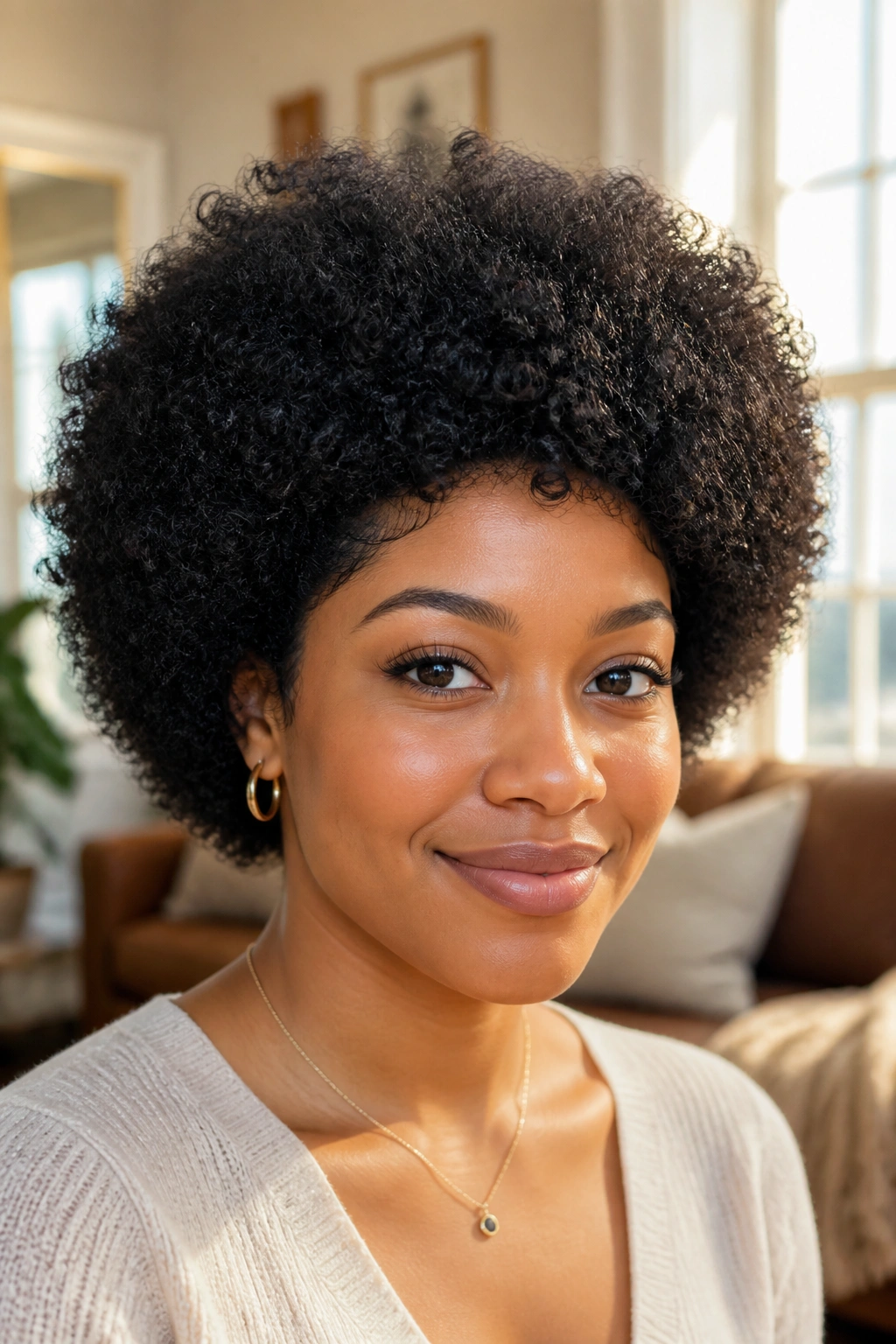
A rounded afro is one of those cuts that looks simple until you see how much shape is doing the work. The beauty is in the outline: full through the crown, soft around the temples, and shaped so the hair follows the head instead of pushing out into a triangle. On tight curls and coils, that round silhouette makes the texture look rich, not heavy.
Why the Rounded Shape Works
The round line gives the eye somewhere to go. Instead of leaving the widest point at the cheeks or jaw, the cut keeps the volume balanced from top to side, which matters a lot when shrinkage is strong. I like this cut most when the stylist leaves enough length on top to show real texture, then cleans up the perimeter so the whole shape feels deliberate.
A short, blunt edge can look severe here. Soft edges are kinder. They still give you structure, but they don’t hard-stop the curl pattern.
- Best for: tight curls, coils, dense hair
- Ask for: a round shape with clean edges and controlled fullness at the sides
- Styling note: a light leave-in and a diffuser are usually enough
- Watch out for: over-thinning, which can make the crown look see-through
Pro tip: ask for the cut on dry hair if your curl pattern shrinks a lot. Wet curls lie.
2. Layered Curly Bob at Jaw Length

Can a jaw-length bob work on curly hair? Absolutely — if the layers are placed with some nerve. A curly bob at the jaw can look crisp and modern, but only when the shape is built for the curl pattern instead of sliced into a straight-hair template.
How to Keep It from Popping Out at the Sides
The issue with a jaw-length bob is the “helmet” problem. Too much bulk at one length, and the sides flare out in a way that feels dated fast. The fix is usually a slightly longer front, gentle internal layers, and enough removal at the ends to let the curl stack instead of fan outward.
This cut is one of my favorites for people who want shorter hair without losing the sense of face framing. It sits close to the neck, opens the jawline, and still gives curls room to spring. Clean. Sharp. A little playful.
What to Ask For
- A bob that lands right at or just below the jaw
- Soft layering inside the shape, not choppy surface layers
- A subtle angle from back to front if you want extra movement
- A dry check at the end so the stylist can fix any side that jumps higher than the other
3. Shoulder-Length Curly Shag with Fringe

There’s a reason the curly shag keeps showing up in salons: it gives texture a place to go. Shoulders are a sweet spot for a lot of curl types because the hair has enough length to weigh itself down a little, but not so much that the shape turns flat. Add a fringe, and the whole cut gets a bit more attitude.
The trick is to keep the layers airy, not ragged. I’m not a fan of shag cuts that look like somebody attacked them with thinning shears and called it movement. Good shag layers should make the curls stack into soft peaks, with the fringe connecting the top to the sides so the cut feels one piece.
This is especially good for people whose curls look best when they’re a little messy. If your hair wakes up with volume and shape, this cut can look alive with barely any effort. If your curls need coaxing every morning, it still works — you’ll just want a diffuser and a curl cream with enough hold to stop the fringe from separating into little wisps.
4. Curly Pixie That Keeps the Crown Full
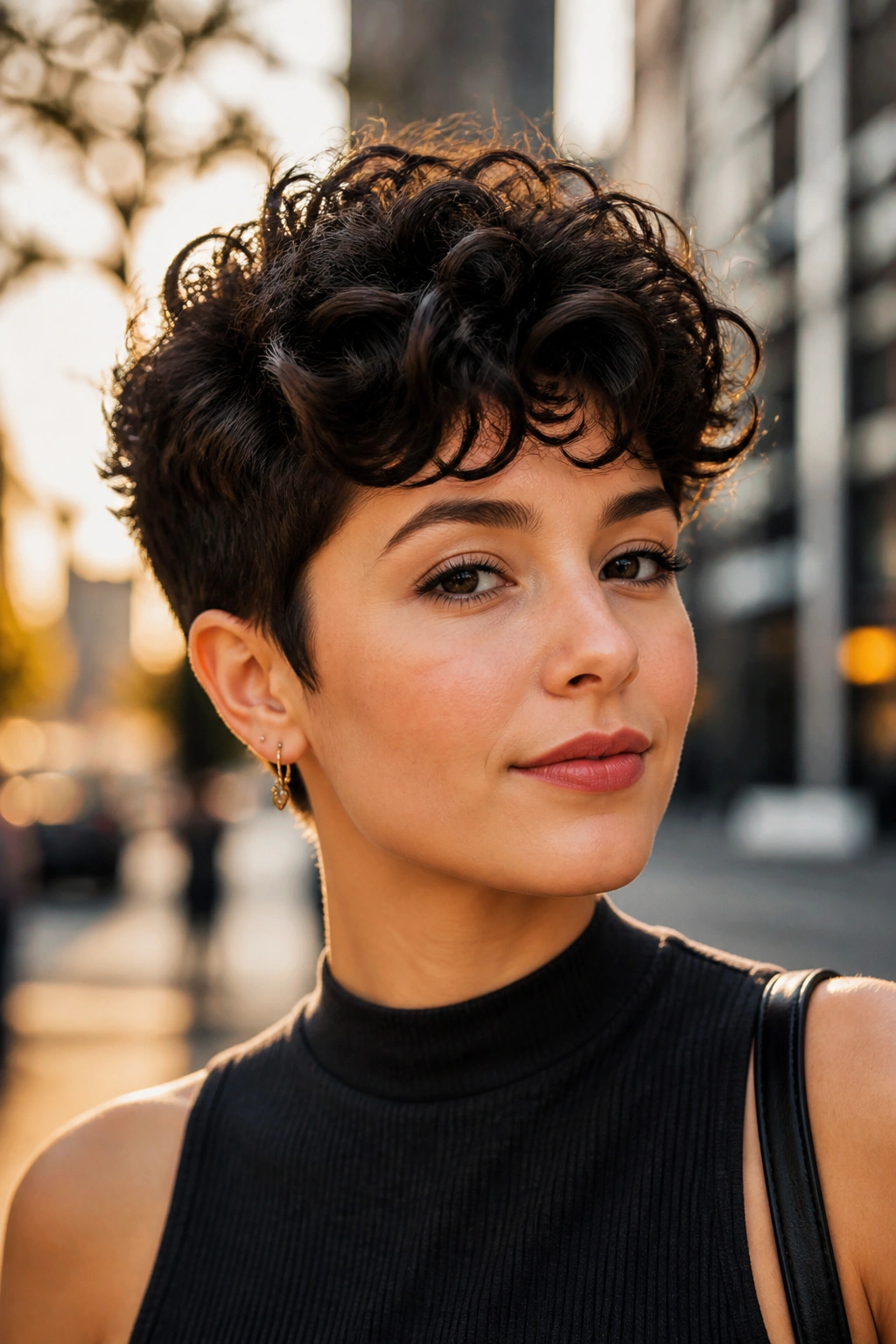
Short curly hair can be fantastic. It can also go wrong in about six different ways. The curly pixie that works has one clear rule: keep the crown full and the sides controlled. That contrast is what gives the cut shape instead of a helmet effect.
Why This Pixie Works Better Than a Flat One
A straight-hair pixie often depends on sleekness. Curly hair doesn’t play by that rule. The better version uses the curl pattern for lift on top, then trims the back and sides tight enough to show the face and ears. The result feels light, but not flimsy.
This cut is especially strong on tighter curls and springy waves that like to stack upward. The top can be left a little longer — often 2 to 4 inches, depending on density — so it has room to curl and not just sit there.
- Best for: people who want easy styling and lots of texture
- Ask for: longer crown, tapered sides, and soft edges around the hairline
- Style with: a pea-sized amount of cream or gel, then scrunch and air-dry
- Skip it if: you dislike frequent trims; short curls show growth fast
Tiny detail, big difference: the neckline should be neat, not shaved to the point of looking severe.
5. Tapered Cut with Lift at the Top

I’ve seen this cut save more dense curls than I can count. If your hair gets heavy around the ears and neck, a tapered cut pulls the bulk down and lets the top stand up with a little pride. It’s neat where it needs to be and full where it should be full.
The shape is the whole point. A taper doesn’t mean “short everywhere.” It means the sides and nape are gradually reduced so the head looks clean, while the curls above keep their body. That makes this cut a smart option for thick hair that tends to feel wide or boxy.
It also grows out well. That matters. A lot of short curly cuts look good for three weeks and then start misbehaving. A tapered shape usually stays readable longer because the outline is already built with growth in mind.
Best Details to Request
- Shorter nape with a clean fade or soft taper
- Fuller top section, especially at the crown
- Controlled side volume so the hair doesn’t balloon at the temples
- Light shaping around the face if you want a softer line
6. Curly Wolf Cut with Choppy Internal Layers

The wolf cut can be brilliant on curly hair, but only when it respects the texture. Done well, it gives you a wild, shaggy shape with crown lift and broken-up layers that stop the hair from sitting like one thick block. Done badly, it can look shredded. There’s a difference, and it’s not subtle.
What makes this cut work is the contrast between short and long sections. The top gets lift, the mid-lengths get movement, and the ends stay loose enough to keep that lived-in feel. On curls, that contrast creates shape without taking away the fun of the texture.
I like this cut for people who want something a little rougher around the edges. It has energy. It also forgives a bad hair day better than a polished bob, which is worth saying out loud because some curly cuts need a whole mood to look right. This one usually doesn’t.
The catch? Don’t let the layers get too high if your hair is fine. Too much removal near the top can leave the ends hanging sad and thin. That’s not the vibe.
7. Blunt Lob for Strong Curl Clumps

Why does a blunt lob work so well on curly hair? Because strong curl clumps need weight. When the hair is cut too heavily into layers, the curl pattern can spread apart and lose that satisfying, rope-like definition. A blunt line keeps the ends thick and helps the curl groups hold together.
This cut is especially nice on looser curls and some wavy patterns that want polish more than volume drama. The lob — somewhere between the collarbone and the upper chest — gives enough length for movement without dragging the curl pattern down. It looks clean, but not stiff.
What Makes It Different
Unlike a layered shag, a blunt lob is about clarity. The edge is what matters here. The line can be slightly curved or subtly angled, but the ends should still feel full and solid. That thickness at the bottom gives the whole cut a stronger outline.
How to Wear It
- Use a medium-hold curl cream or gel to keep the clumps together
- Dry with a diffuser to preserve the end shape
- Trim every 8 to 10 weeks if the outline starts to fuzz out
- Let the front sit a touch longer if you want a softer face frame
8. Long Layers for Dense Ringlets
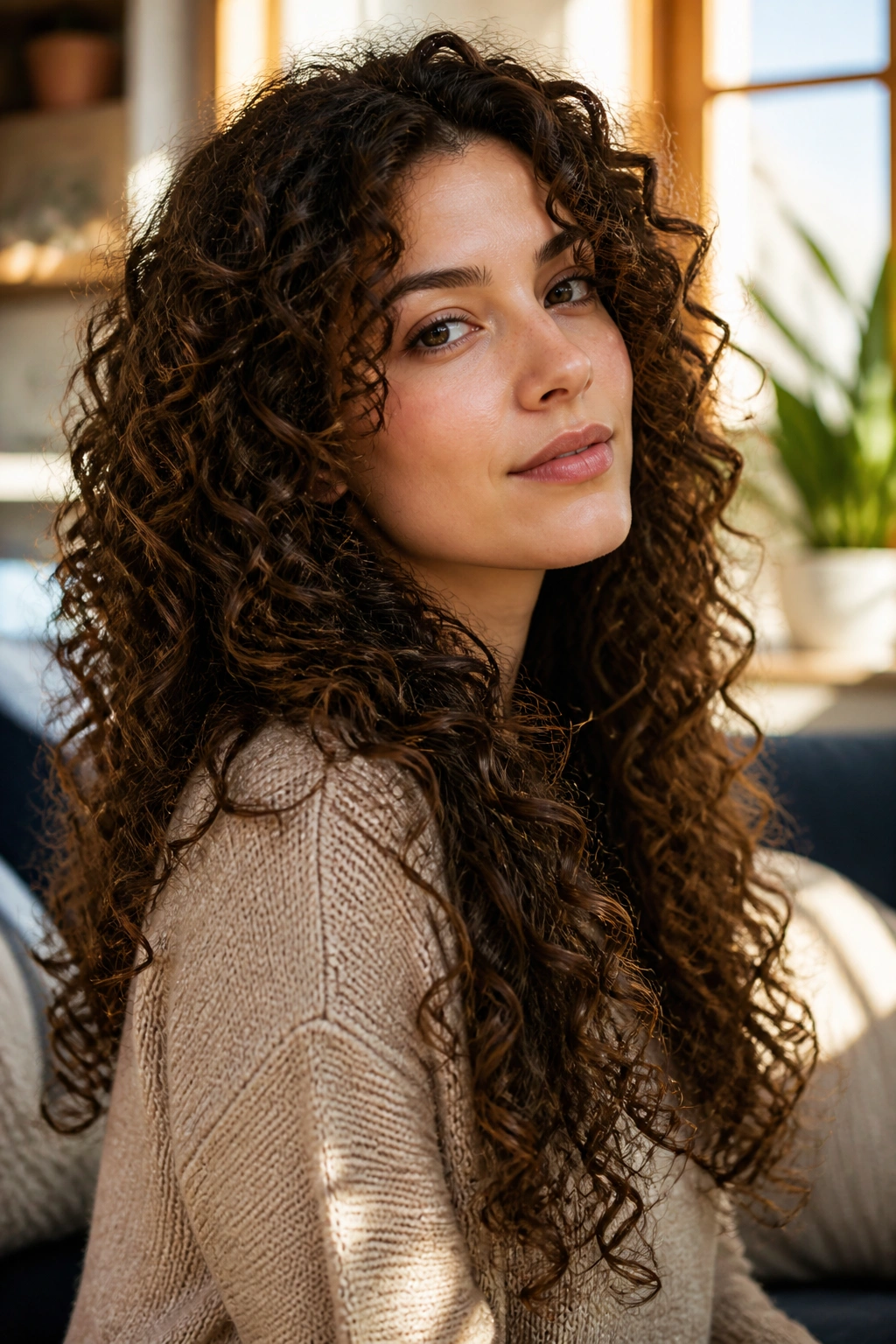
Long curly hair can get heavy in a hurry, especially when the ringlets are dense and springy. The answer is not always cutting it shorter. Sometimes the better move is long layers that remove weight without sacrificing the length people actually want to keep.
The key is restraint. Good long layers should be nearly invisible when the hair is down, but they should change how the curls fall. The top shouldn’t collapse onto the sides. The ends shouldn’t look stringy. Everything should move a little more freely, like the hair can finally breathe.
I’m picky about this cut because it’s easy to overdo. Too many layers and the length turns fuzzy. Too few, and the bottom acts like an anchor. The sweet spot sits somewhere in the middle, where the curl pattern still looks rich and the overall shape stops feeling bulky.
A dry cut helps here, especially if your hair shrinks a lot. A stylist can see where the curls stack and where they need a bit of release. Wet cutting long curls without checking the dry shape is how you end up with a surprise shelf.
9. Side-Parted Curly Crop

A side part can do more for curly hair than people give it credit for. It changes the weight line, opens one side of the face, and adds a little lift at the root without a single product trick. On a short curly crop, that shift can make the whole haircut feel sharper.
If your curls naturally fall forward, a deep side part keeps them from collapsing into a straight curtain. The line creates asymmetry, and asymmetry is often the easiest way to make curls look intentional. I like this for round faces, but it can work on almost anyone if the top has enough length to drape properly.
Best for These Hair Patterns
- Loose curls that need direction
- Short cuts that feel too symmetrical
- Hair with a strong cowlick at the front
- Curls that look flat straight down the center
The styling is simple. Set the part while the hair is wet, clip the roots for a few minutes if you want extra lift, and let the curls dry in that direction. No drama. No fuss.
10. Curly Mullet with a Soft Back Length

A curly mullet sounds like a dare, which is part of the appeal. But the version that works on curly hair is softer than people imagine. The front stays shorter, the crown gets shape, and the back keeps enough length to feel connected instead of chopped off.
This cut thrives on texture. Straight hair can make a mullet look like a gimmick; curls make it look like a style choice. The back length gives motion when you walk, and the shorter top keeps the whole thing from sinking into a flat mass around the face.
It’s not a shy haircut. Good. It shouldn’t be.
What keeps it wearable is the blend. The transition from crown to back has to be gradual, or the cut starts reading as accidental. Ask for soft graduation, not a hard shelf. If the stylist knows curls, they’ll understand that the back still needs enough weight to keep the shape from exploding outward.
11. Chin-Length French Bob for Springy Curls

A chin-length French bob on curly hair has a particular charm. It sits close to the face, leaves the neck exposed, and gives springy curls a neat little halo of shape. On the right texture, it looks crisp without feeling strict.
A Small Cut with a Big Payoff
This style works best when the curls have bounce and the jawline can handle a shorter frame around it. The chin line keeps the cut from floating too high, and the slight bend of curly ends makes the shape feel softer than a straight bob ever would. That’s the pleasant surprise here: the bob is short, but the curl gives it movement that a flat version never gets.
I like this cut on people who want something easy to refresh in the mirror. The outline is clear, so even when the curls get a little messy, the shape still reads. It can be worn with a middle part for a cleaner look or pushed off-center for a touch of asymmetry.
Quick Notes
- Best on springy curls with enough spring to hold a chin line
- Needs regular reshaping to keep the bob from bulking at the sides
- Looks especially good with a soft fringe or face-framing pieces
- Works nicely with a lightweight mousse and a diffuser
12. Deva-Inspired Dry Cut with Interior Shape
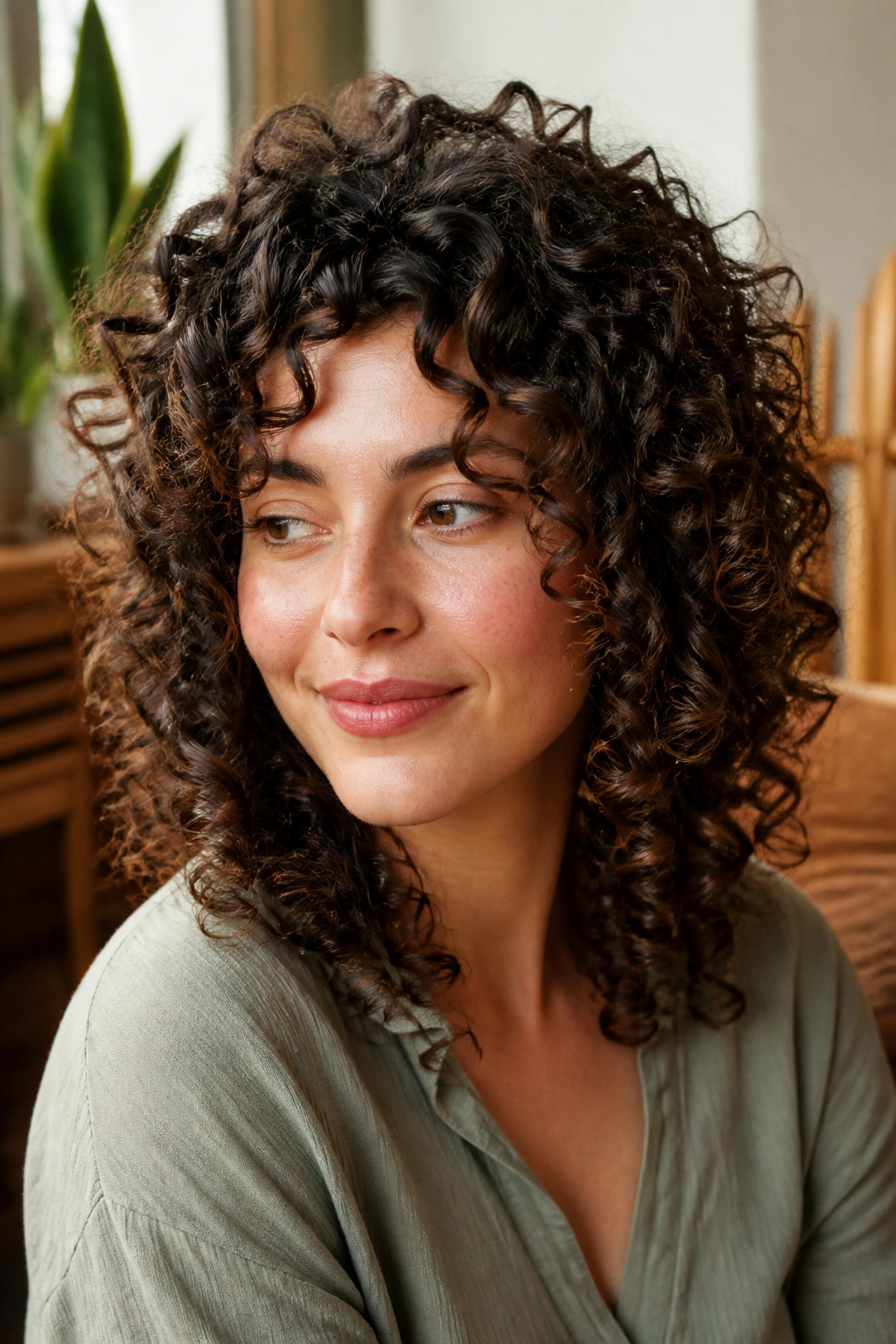
A dry cut can be a lifesaver for curly hair because it shows the stylist what the hair really does, not what it pretends to do when it’s wet and stretched. That matters a lot when you want a haircut that follows the curl pattern instead of fighting it. A Deva-inspired approach is built on that idea.
What I like most about this method is the way it handles the interior of the haircut. The outside can look neat, but the inside does the heavy lifting. Interior shape stops the curls from packing together in awkward chunks, which is what gives the style movement without making the ends thin.
It’s a smarter choice for people with uneven curl behavior. One section may spring tighter than another. One side may be heavier. A dry cut lets the stylist see that in real time and adjust where needed.
You do not need a giant transformation to benefit from this. Sometimes the biggest win is just a better balance around the face and crown. That’s enough.
13. Curly Undercut with a Heavy Top
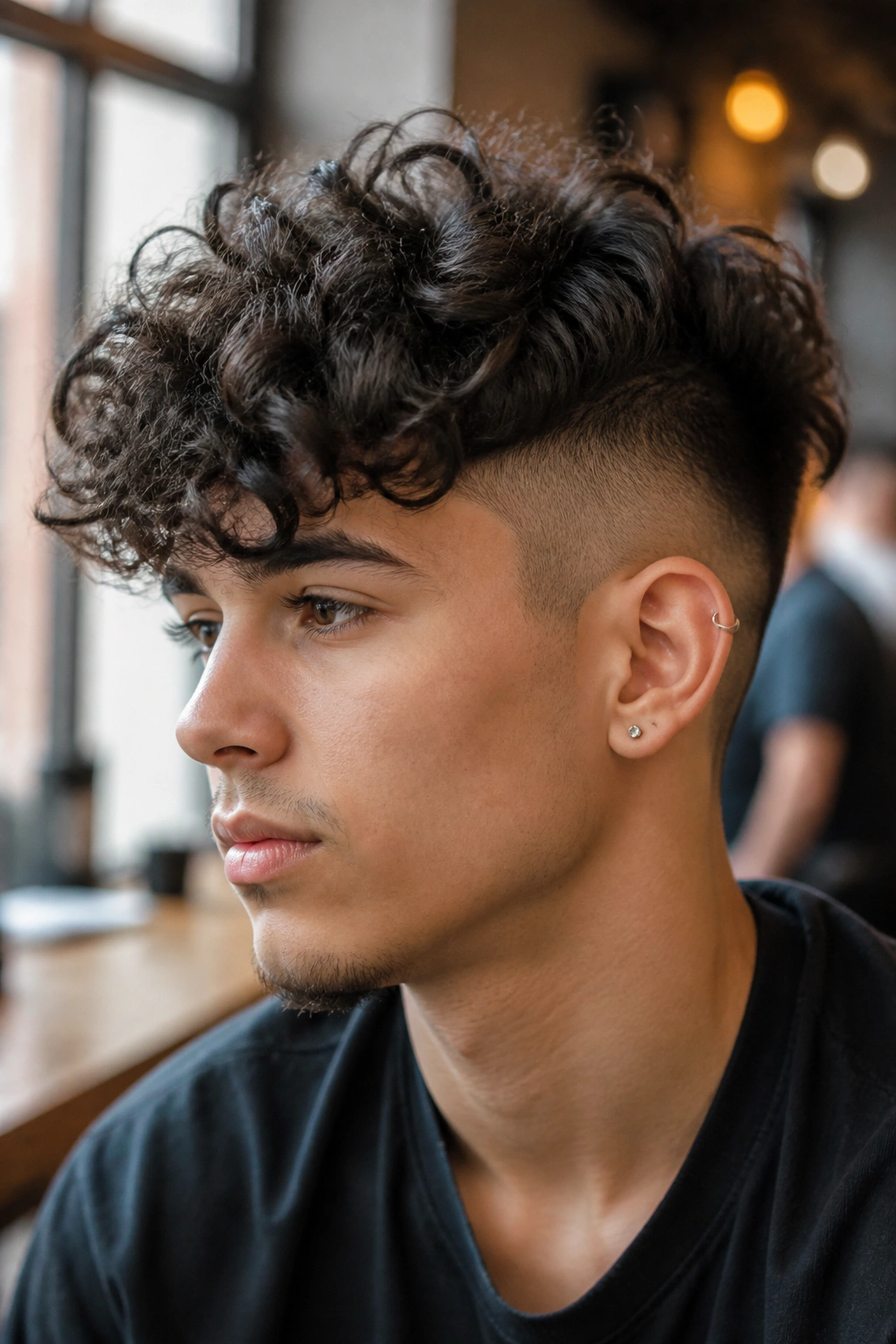
An undercut on curly hair is not about looking edgy for the sake of it. It’s about removing bulk where the bulk is causing trouble. If the sides swell up, the neck gets hot, or the top looks too small compared with the rest, an undercut can reset the whole proportion.
Unlike an undercut on straight hair, this version gets its punch from texture. The top curls sit high and full, while the shaved or closely cropped underneath sections take the weight out of the shape. The contrast is sharp in a good way. It makes the curl pattern look more dramatic, not less.
What to Tell Your Stylist
- Keep the top long enough to show real curl definition
- Take the sides and nape shorter to remove puff
- Blend the transition so the cut doesn’t look disconnected
- Leave enough density at the top to avoid a flat crown
This one is best for thick hair that feels like it owns the room. Sometimes it does.
14. Midi Cut with Face-Framing Pieces
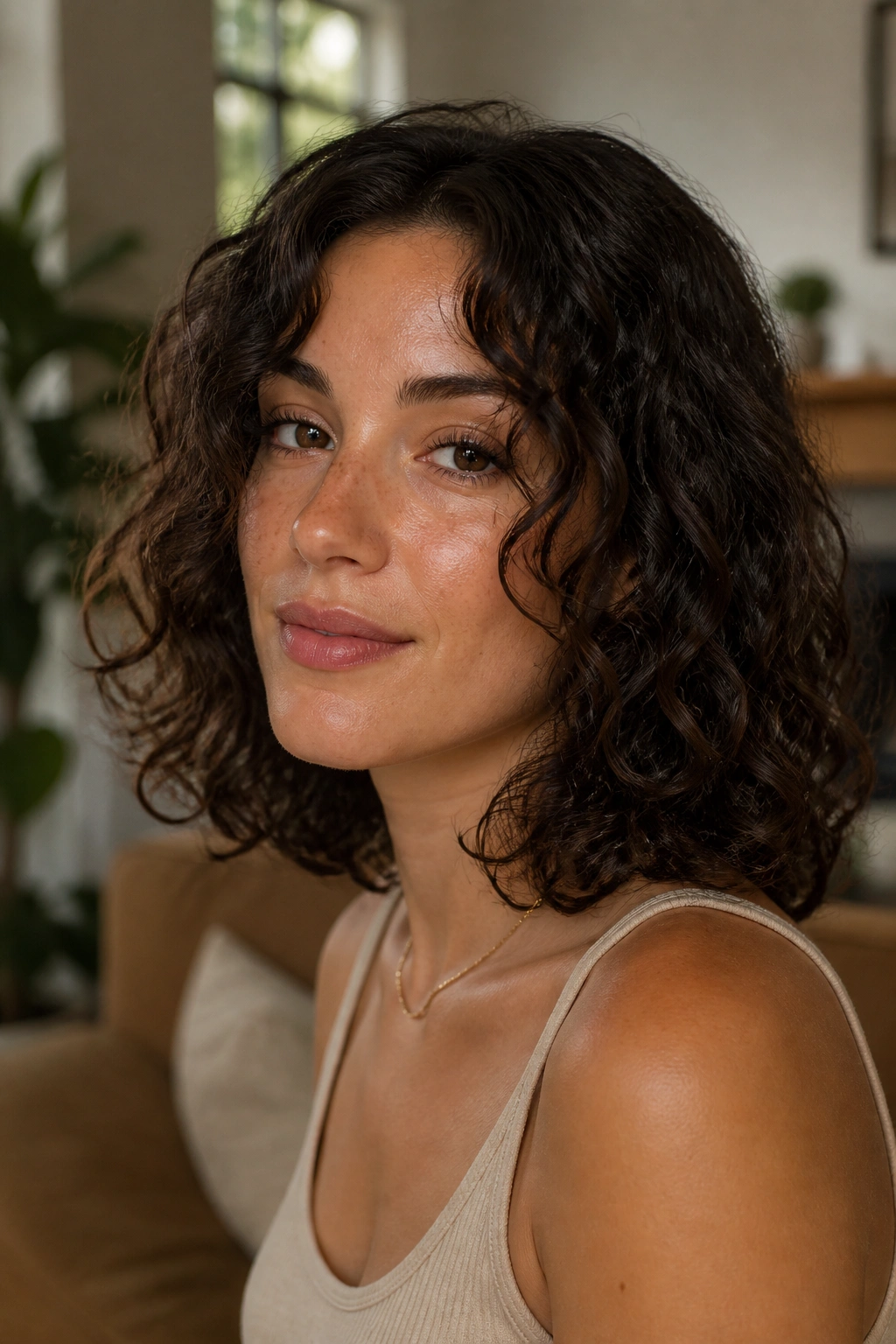
What do you do when you want movement without giving up length? A midi cut with face-framing pieces is the answer more often than people admit. It lands somewhere between the collarbone and the bust, which gives curls enough weight to behave, while the front pieces keep the face from disappearing under all that texture.
The face frame should be soft, not dramatic. A piece that starts around the cheekbone and drops toward the chin is usually enough. Any shorter and the curls can bounce up in a way that feels abrupt. Any longer and you lose the point of the framing.
This cut is nice for people who wear their hair down a lot. It gives the impression of shape even on days when you barely style it. And because the length is medium, it works with claw clips, half-up styles, and loose twists without much trouble.
A little layering through the sides helps, but I would still keep the overall shape substantial. Curls need something to hang on to.
15. Grown-Out Pixie with a Tapered Nape
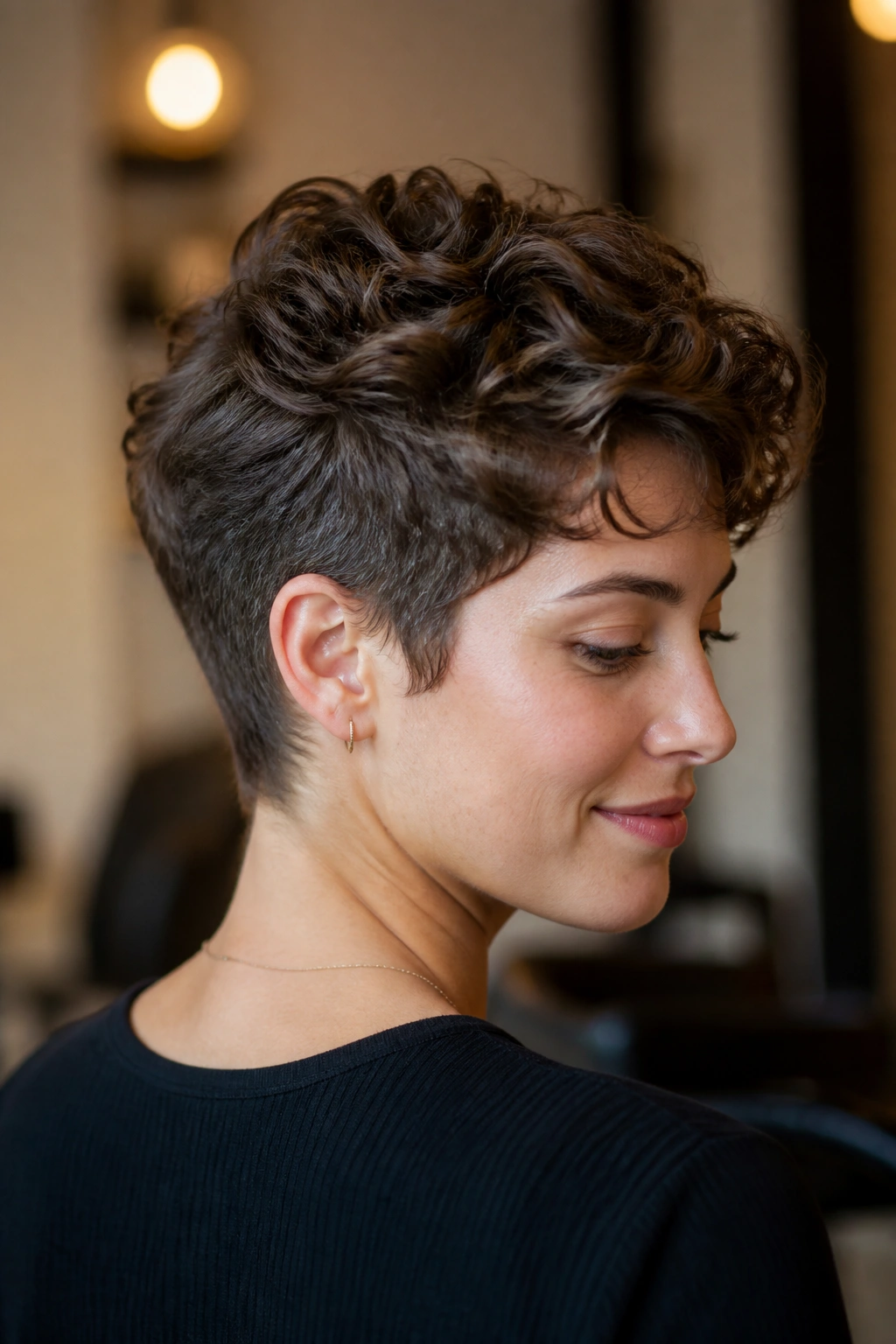
A grown-out pixie is one of the least fussy curly cuts around, which is saying something in a good way. It keeps the shortness you want at the nape and around the ears, but lets the top and front stay long enough to curl and bend with personality.
Why This Short Shape Ages So Well
The reason it works is simple: the haircut respects growth. A super-tight pixie can lose its shape fast on curly hair. A grown-out version gives the curls room to move, so the style still looks intentional when it’s not freshly trimmed. The tapered nape keeps the back neat, while the top gets just enough length to stay soft.
This cut is a good fit if you like short hair but hate constant maintenance. You can scrunch in a little cream, finger-coil a few front pieces if needed, and walk out the door. Not every short cut gives that kind of return for the effort.
Good to Know
- Keep the nape tidy every 4 to 6 weeks
- Leave more length at the front if you like side sweep
- Works best with curls that spring upward instead of hanging flat
- Looks especially clean with subtle ear shaping
16. Boxy Shape for Tight Coils

A boxy shape sounds blunt because it is blunt, and that is exactly why it can look so good on tight coils. Too many curly cuts are rounded by default, but not every head of coils wants a round silhouette. Some need a strong perimeter and a clear edge to make the texture feel powerful instead of overly soft.
The magic here is balance. A boxy cut does not mean harsh or helmet-like. It means the outline stays a little straighter at the sides and bottom so the coils can stack in a clean, architectural way. On dense hair, that can look expensive without trying to look delicate.
This cut is not for every curl type. It shines when the hair has real density and the coils hold their own. If the texture is loose or the hair is fine, the shape can look too heavy. But on thick coils, it has presence.
I also like it because it grows out with character. The shape changes slowly and stays readable for a while, which is more than I can say for some softer cuts.
17. U-Shaped Long Cut for Waves and Curls

A U shape is one of the quietest fixes in curly hair, and one of the smartest. Instead of cutting the ends straight across, the stylist leaves the center slightly longer so the outline curves gently at the back. That shape helps long waves and curls keep their weight in the middle without turning puffy at the sides.
Why the U Line Helps
The curve creates a softer fall through the back. That matters when the hair is long enough to feel heavy, but not so heavy that it naturally hangs straight. The U shape gives the eye a clean line while letting the curls keep movement near the shoulders and down the back.
It’s a strong option for people who want length to stay part of the look. A blunt long cut can feel too blocky on curls, while too many layers can make the ends weak. The U shape splits the difference. It keeps the fullness, but eases the edges.
How to Ask for It
- Keep the front near the collarbone or chest, depending on density
- Let the back taper into a soft curve
- Use minimal face framing if you want the length to stay the star
- Trim only enough to keep the outline smooth, not chopped
18. Asymmetrical Curly Bob

An asymmetrical curly bob is for the person who wants structure with a little edge. One side sits a bit longer than the other — not wildly longer, just enough to shift the line and make the cut feel less expected. On curly hair, that small difference can do a lot of work.
The cut is especially useful if your curls naturally favor one side or if one part of your face feels stronger than the other. The longer side adds softness, while the shorter side lifts the shape and keeps it from dragging. It is a neat trick, and it works because curls already bring movement. The asymmetry gives that movement a place to land.
Quick Fit Check
- Best for medium-density curls
- Works well when you want a bob but not a perfect one
- Nice on round and oval faces
- Needs a stylist who is comfortable checking both sides dry
You do not want a huge length difference here. Keep it subtle, or the haircut starts looking like an accident.
19. Curtain Fringe with a Layered Shoulder Cut

Curtain fringe on curly hair can be gorgeous, but it needs a cut that supports it. A layered shoulder-length shape gives the fringe room to fall into the rest of the haircut instead of sitting on top like a separate event. Done right, it looks soft around the eyes and easy through the sides.
The fringe itself should be cut with shrinkage in mind. Curly bangs can bounce up fast. That is not a flaw; it just means the length needs planning. If the fringe is too short at the start, it may sit high and choppy once dry. A shoulder-length base helps the fringe blend better because there is enough hair underneath to carry the front.
I like this cut for people who want face framing without committing to blunt bangs. Curtain fringe opens the forehead, softens the cheek line, and lets the rest of the curls stay loose. It’s one of the more forgiving fringe choices.
The maintenance is not zero, though. Bangs need attention. That is the trade.
20. Oval Shape Cut for Thick Ringlets

Can a simple oval shape make curly hair look better? Yes, and in a very unflashy way. The oval keeps the widest point just off the head’s center line, which helps thick ringlets fall in a softer, more balanced way. It is less dramatic than a round afro and less sharp than a boxy cut, which makes it a useful middle ground.
The beauty of the oval is that it controls spread without crushing volume. The top stays full, the sides soften gradually, and the bottom doesn’t balloon. That makes the whole haircut feel calm, even when the curls are lively. Thick ringlets especially benefit from that kind of order.
How It Compares
Unlike a blunt bob, the oval shape doesn’t depend on one strong edge. Unlike a shag, it doesn’t rely on broken layers. It sits between those ideas and borrows a little from each one. If your hair is dense but you do not want it to look heavy, this is one of the cleanest answers.
Ask for a rounded perimeter with gentle internal weight removal. That wording helps. A lot.
21. Shoulder-Length Cut with Invisible Layers
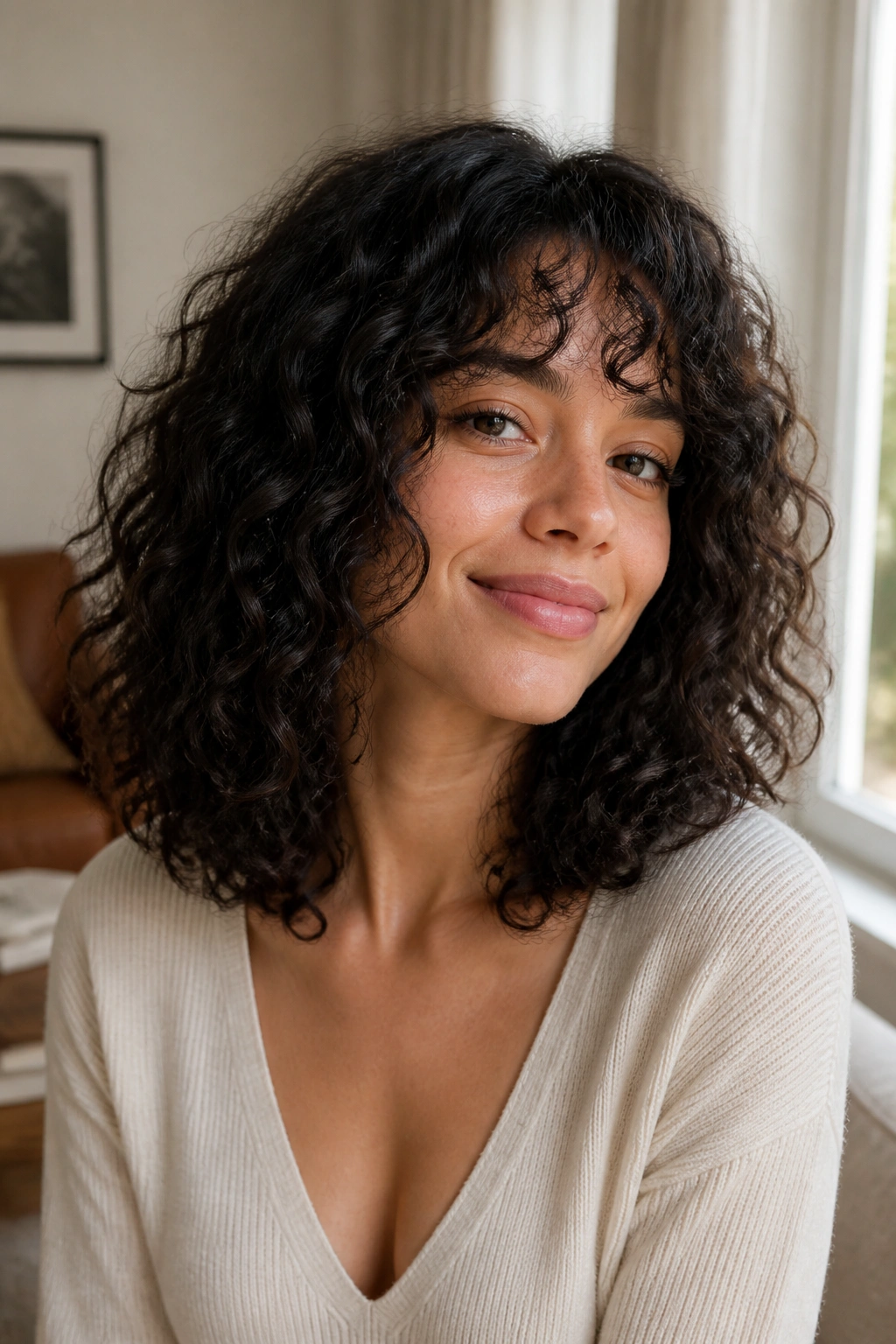
Invisible layers are the move when you want movement without making the haircut scream “layered.” On curly hair, that matters. Heavy visible layers can be useful, but sometimes they scatter the curl pattern too much and make the ends look thin. Invisible layers keep the outline smooth while quietly reducing bulk inside the shape.
This cut sits at the shoulder, which is a dependable length for many curl types. Long enough to pull back. Short enough to avoid dragging. The shoulder line also gives the hair a natural resting point, so the curls can sit in a way that feels controlled instead of overgrown.
This is the haircut for people who want polish without stiffness. It looks thoughtful on wash day and still behaves when you’ve had a long week and can only manage a bit of cream and a diffuser. The shape stays readable, and that is the real win.
If your hair is thick, ask the stylist to check the interior weight from the side, not only from the back. That small detail changes everything.
22. Short Sculpted Crop for Coils and Spirals
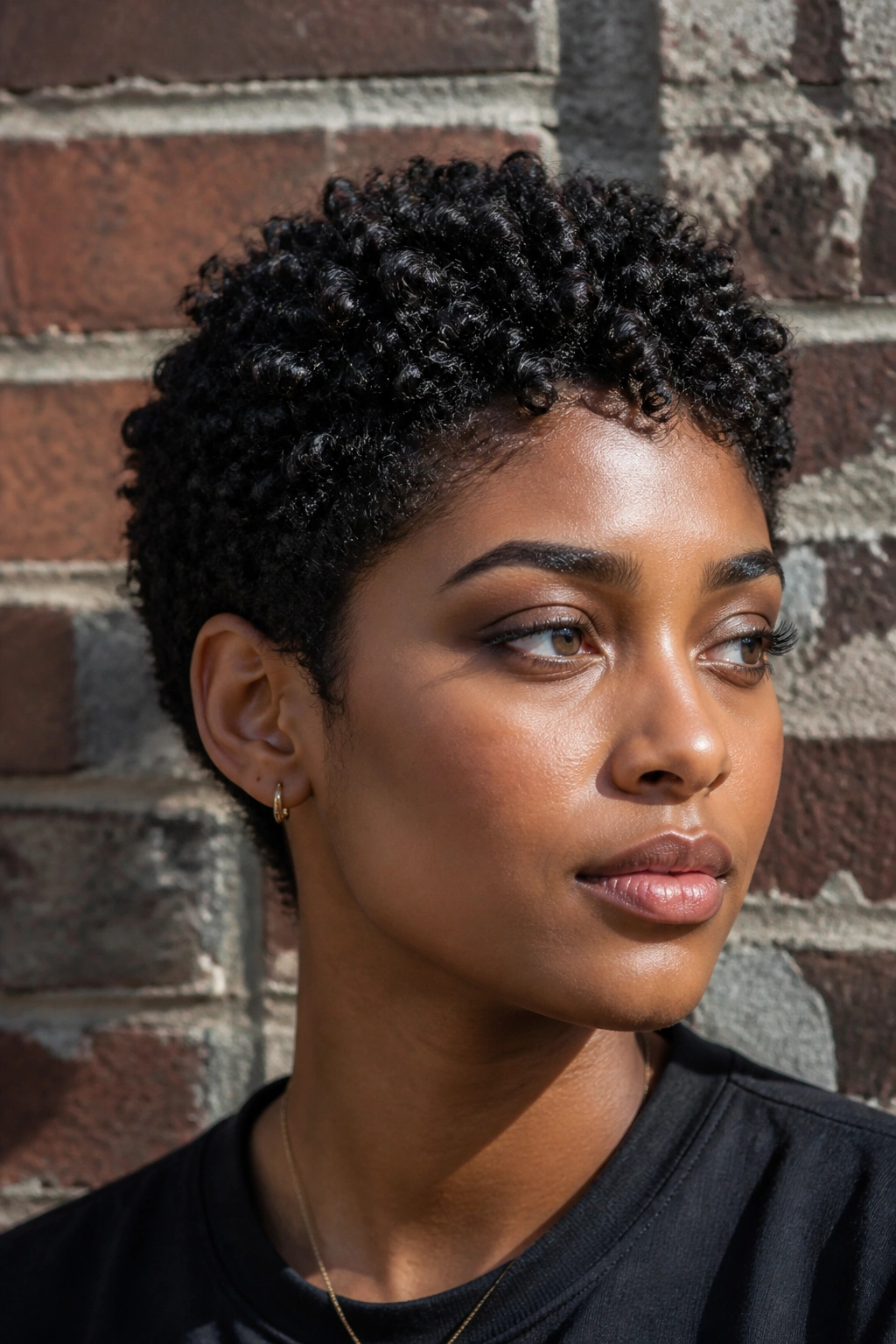
A short sculpted crop is the sort of haircut that makes texture look like a design choice. It works best on coils and springy spirals that hold shape without needing much length to make an impression. The line is close, the silhouette is neat, and the curl pattern gets to be the main event.
What I like here is the clarity. There is no hiding behind length. The crop shows the head shape, the texture, and the neckline all at once, so the cut has to be precise. That sounds severe. It isn’t, when the edges are soft enough and the top keeps enough height to show motion.
Best Features of This Crop
- Keeps the sides tidy without flattening the top
- Shows off dense texture without excess bulk
- Works well with a subtle taper at the nape
- Needs a strong shape check every few weeks to stay clean
A short crop like this suits people who want hair that looks styled with almost no fuss. If that sounds like you, this one earns its place fast.
