



A French bob haircut looks effortless only when the cut is doing a lot of quiet work. The line has to hit in the right place, the ends have to bend in, and the fringe — if there is one — needs to look deliberate without feeling stiff.
That balance is why French bob haircut ideas keep showing up again and again in good salons. The shape is short enough to feel fresh, but not so short that it turns severe. It usually lands around the jaw, cheekbone, or just below the ears, where it can frame the face and still move when you turn your head.
People ask for “a French bob” and mean three different things. Some want a blunt little crop with a brow-skimming fringe. Others want a soft wave, a side part, or a chin-length version that still keeps that Parisian ease. Those details matter more than the label on its own.
A good French bob is never frozen. It should look like it could be tucked into a scarf, pushed behind one ear, or air-dried after a lazy shampoo day — and still look intentional. That is the charm, really. The cut does not shout. It earns attention by sitting in exactly the right place.
1. The Classic Jaw-Grazing French Bob

A jaw-grazing French bob is the cleanest place to start because it gets the proportion right without trying too hard. The line usually sits right at the jaw or a hair above it, which makes the face look more open and the neck look longer. There’s a reason this version has stayed around for so long. It flatters fast.
Why It Works
The shape gives you that crisp, Parisian outline without needing a lot of styling tricks. If your hair bends naturally at the ends, even better. A slight undercurve keeps the cut from feeling boxy, and a soft fringe or side part stops it from looking too severe.
- Best for: Straight to slightly wavy hair.
- Ask for: A blunt perimeter with softly textured ends.
- Style with: A round brush, a paddle brush, or a quick bend from a 1-inch iron.
- Maintenance: Trim it often enough to keep the jaw line clean.
One thing I like about this cut is how honest it is. There is no hiding behind length. The whole face is on display, which sounds bold, but it usually reads as polished rather than loud.
Tip: Keep the ends soft, not razor-sharp, unless you want a harder, fashion-forward look.
2. The French Bob With Micro Bangs
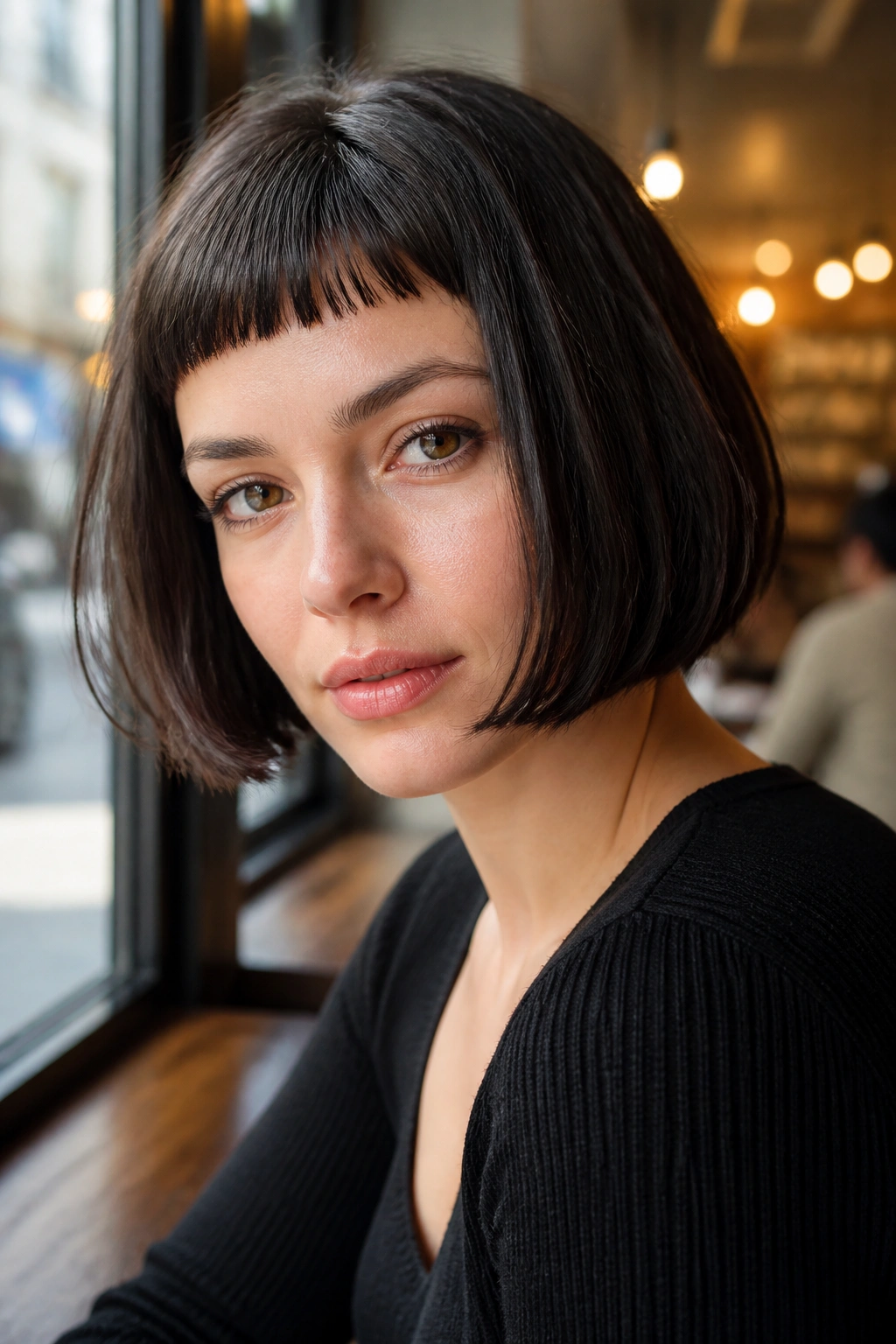
Micro bangs change the mood instantly. They pull the eye upward, make the bob feel sharper, and give the whole cut a more editorial edge. If a classic French bob is a little whisper, this version is a clear statement.
The trick is balance. Tiny bangs can look precious if the bob underneath is too fluffy or too long. They work better when the bob itself stays compact, with a clean line and a bit of movement at the ends. That contrast is what makes it interesting.
This cut also asks for confidence. Not fake confidence. Real confidence. Micro bangs show your brows, your forehead, and a lot of your face, so the cut has to suit your features instead of hiding them. If your hair grows in different directions near the front, ask for a slightly uneven finish. A too-perfect fringe can fight with the rest of the style.
Use this when you want the French bob to feel a little sharper and a little less sweet. It suits straight hair especially well, though a soft wave underneath can keep it from looking too strict.
3. The Chin-Length French Bob With Curtain Bangs
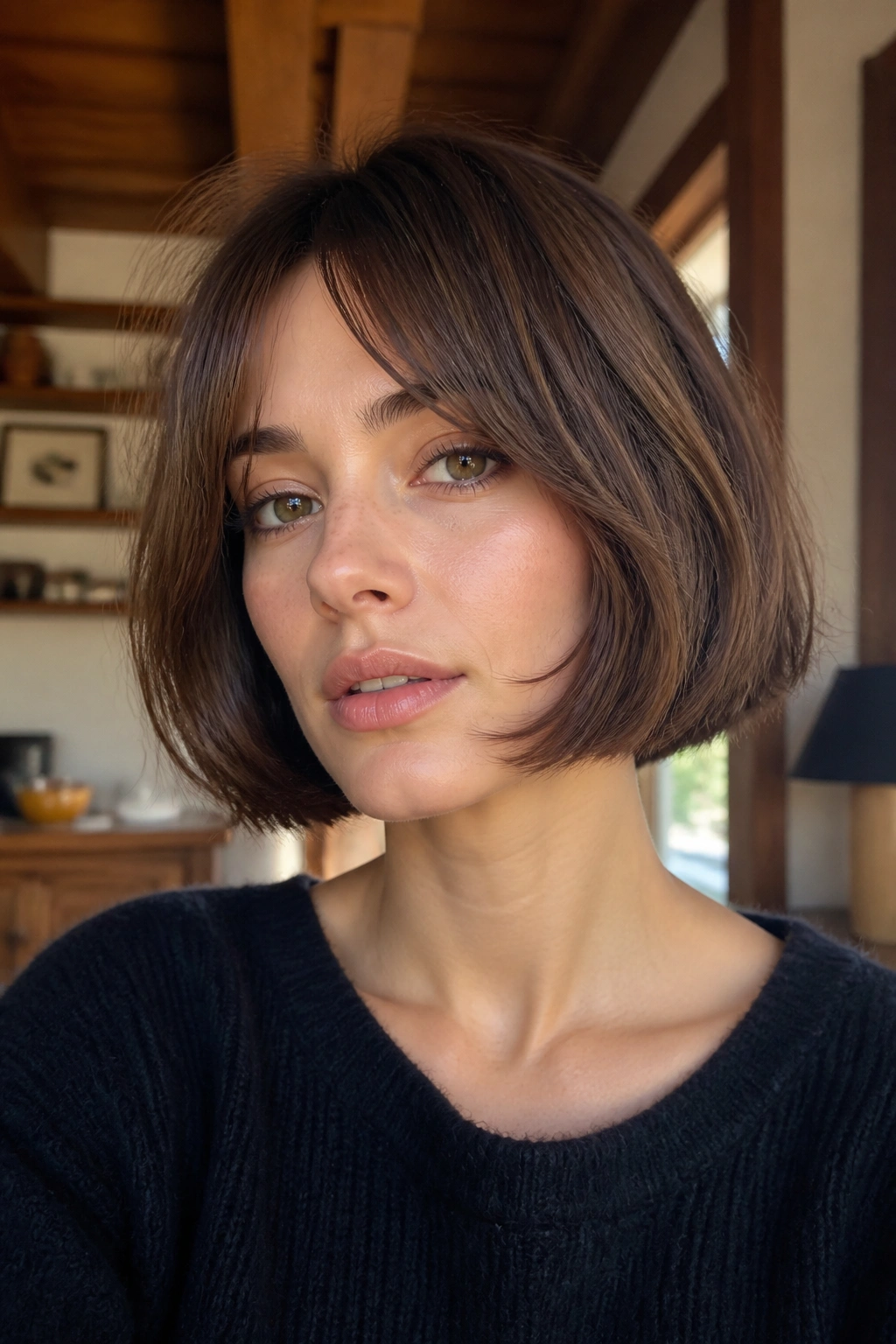
Want a French bob that feels softer around the face? This is the one. The chin-length version gives you a little more room to play, and curtain bangs blur the line between bob and fringe in a way that feels easy, not fussy.
The length matters here. Hitting at the chin keeps the cut light and airy, but it also gives the front pieces enough length to fall into that parted frame around the cheekbones. That frame is doing a lot of work. It can soften a strong jaw, balance a wider forehead, and make a round face look a touch more elongated.
How to Ask for It
Ask for a bob that sits at the chin, with curtain bangs that begin around the cheekbone and taper toward the jaw. The perimeter should stay neat, but the front pieces need movement. Otherwise the bangs just sit there like curtains that never got opened.
A quick blow-dry with a medium round brush is enough for most hair types. Pull the fringe away from the face, then let the ends settle where they want to. The goal is not perfection. It is that lightly bent, lived-in shape that makes a French bob look expensive without looking overworked.
4. The Wavy French Bob With Undone Texture
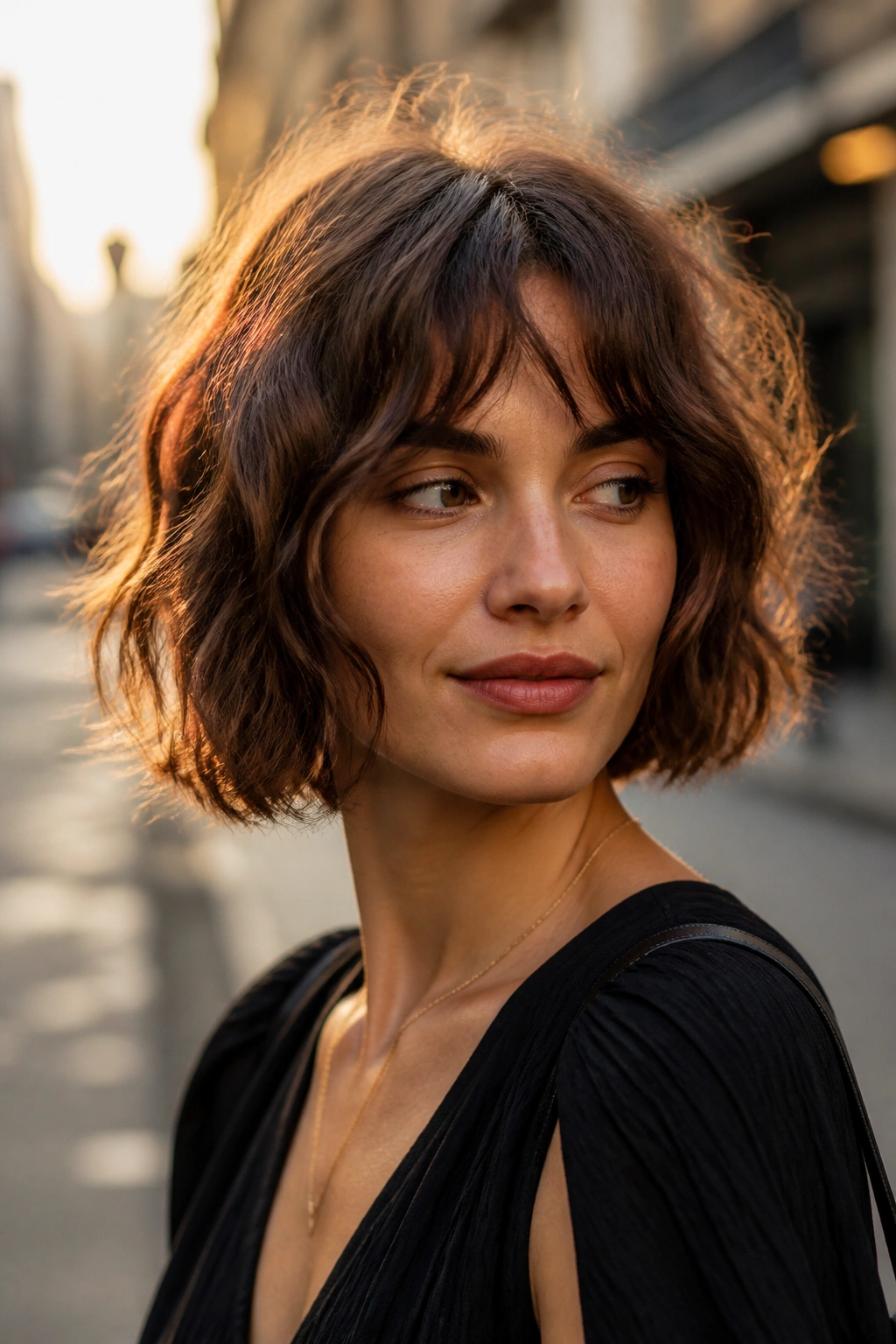
If your hair has a little bend in it, this style may be the easiest French bob haircut idea to wear. It does not ask for perfect symmetry. In fact, a small amount of uneven texture makes it better.
Picture hair that dries with a soft wave and refuses to behave like a helmet. That’s the sweet spot. The bob sits around the jaw, the ends flick slightly, and the whole thing has movement when you turn your head. It feels easy because it is easy. Some cuts want a lot of control. This one likes a bit of disorder.
- Best for: Wavy hair, soft curls, and hair that puffs up if cut too bluntly.
- Good products: Lightweight mousse, sea salt spray, or a soft cream.
- Styling move: Scrunch the mid-lengths, then leave the ends alone.
- Watch out for: Too much product near the roots. It flattens the shape.
I like this version because it looks best when you do less. Rough-dry the roots, let the waves form on their own, and stop fussing once the bob starts to move. That’s enough.
Tip: If your waves collapse at the front, twist the face-framing pieces while they’re damp and let them air-dry that way.
5. The Sleek Blunt French Bob
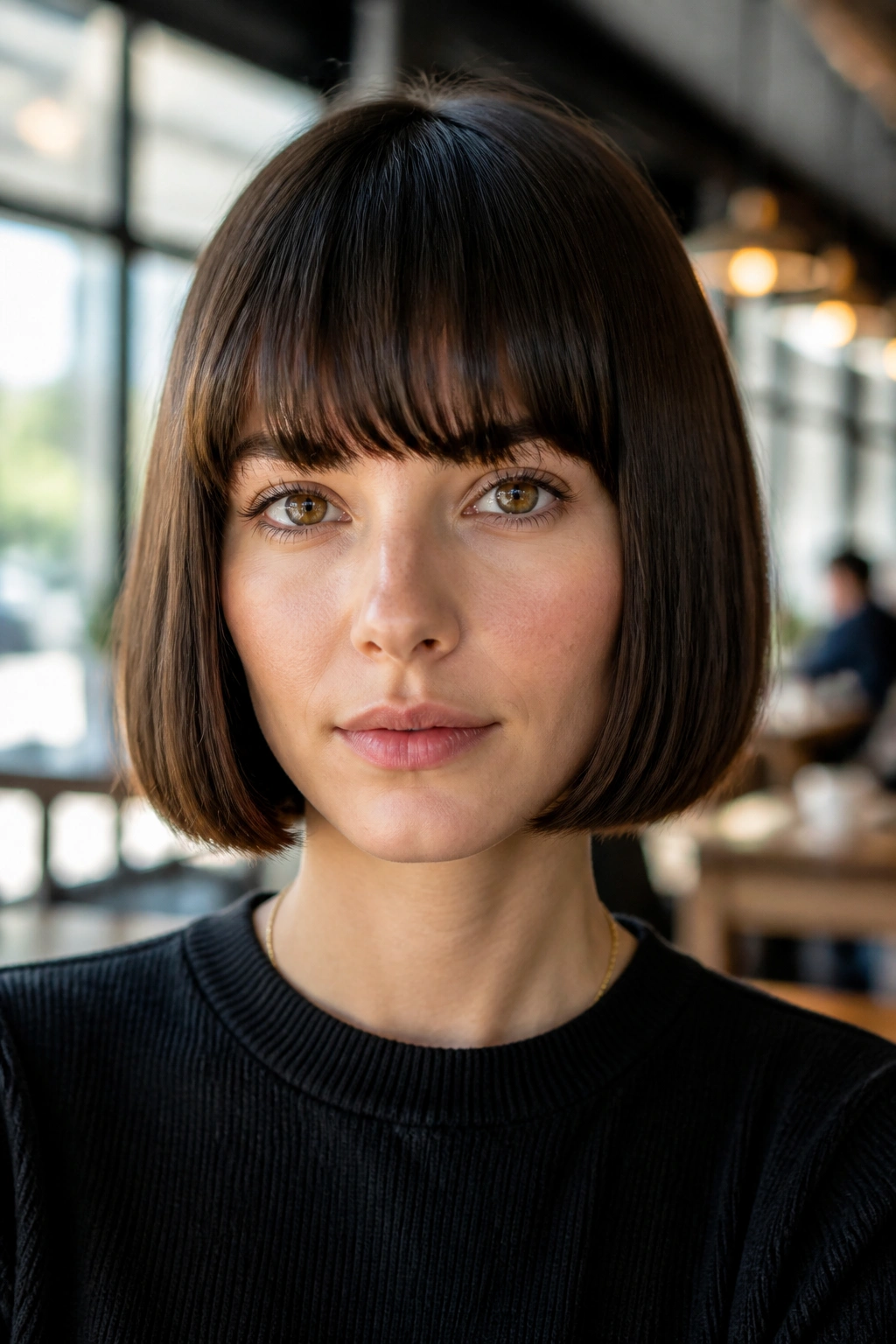
A sleek blunt French bob is the sharpest version in the bunch. The line is clean, the ends are even, and the whole shape reads as polished from a distance. It’s the haircut I’d choose when the goal is not softness, but precision.
The blunt edge is what gives this cut its punch. Without layers competing for attention, the eye lands on the line first. That can be gorgeous on straight hair, especially if your strands are fine to medium and naturally fall in one direction. A little shine serum helps, but the real work is in the cut itself. If the line is crooked, you’ll see it immediately. No mercy there.
This version can also make thick hair look expensive when it’s handled well. The perimeter stays full, but the inside may need some careful weight removal so the bob doesn’t bulge at the sides. That’s the part many people miss. A blunt bob is not automatically simple just because it looks simple.
Wear it with a center part for a clean finish, or tuck one side behind the ear and let the other fall forward. Either move changes the mood without changing the cut. Small shift. Big effect.
6. The Curly French Bob
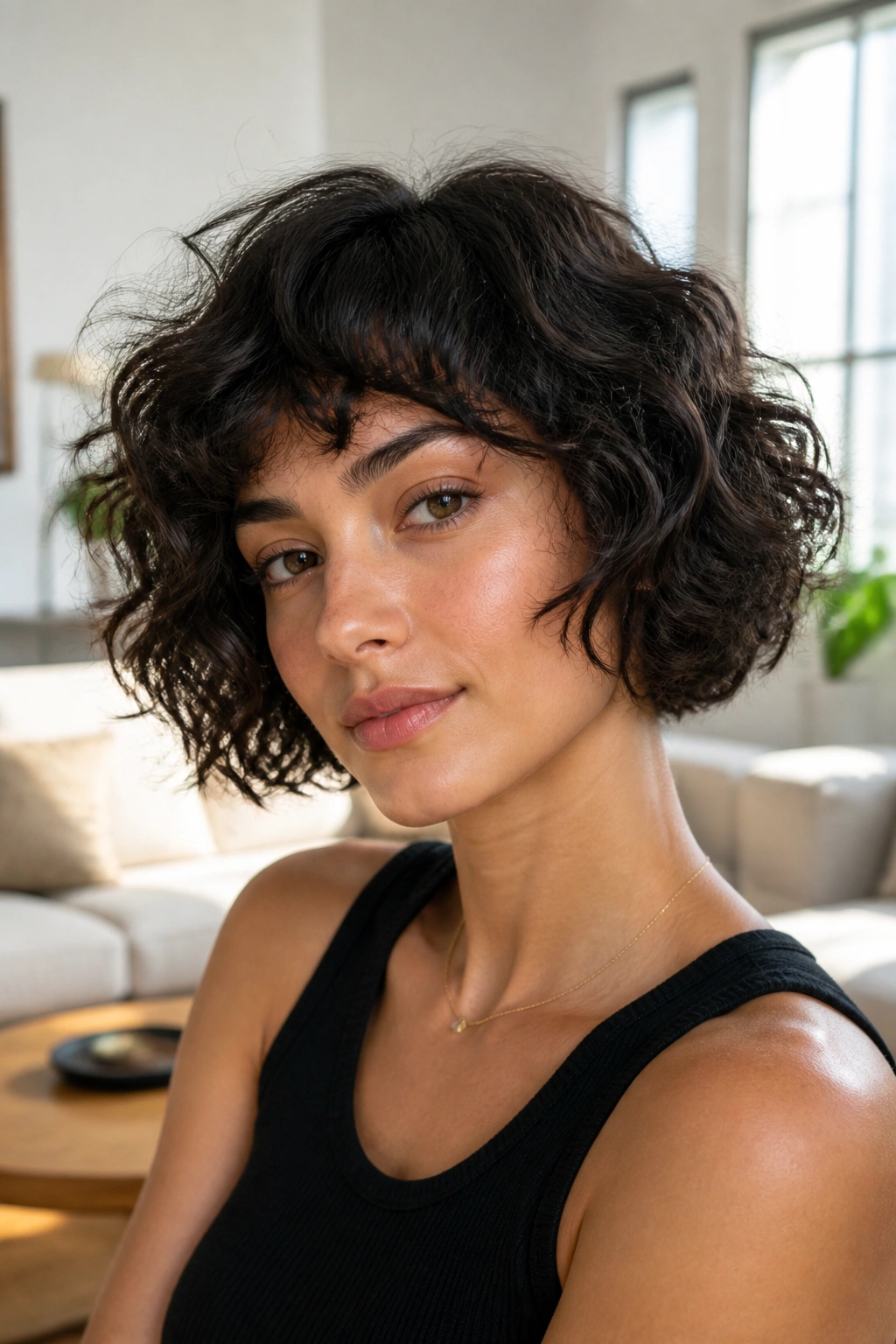
A curly French bob is not the same thing as a standard curly bob, and the difference matters. The French version usually sits shorter and lighter, with shape around the cheekbones and jaw instead of just hanging there. It should feel airy, not heavy.
Curly hair needs room to spring, so the cut has to respect shrinkage. Ask for it dry or nearly dry if your curl pattern changes a lot when wet. That keeps the stylist from cutting it too short by mistake, which happens more often than people admit. The goal is a soft halo around the face, not a triangle.
What I love here is the movement. The bob bounces when you walk. It opens up the face. It can feel very chic with almost no styling if the shape is right, because curls do most of the talking on their own.
A diffuser helps, but don’t overdo the product. A curl cream plus a light gel is usually enough. If the ends start to look crunchy, the whole thing loses the easy French feel.
Specific recommendation: Leave a touch more length in the back and let the front kiss the jawline. That small difference keeps the shape from puffing out.
7. The Side-Part French Bob With Soft Lift
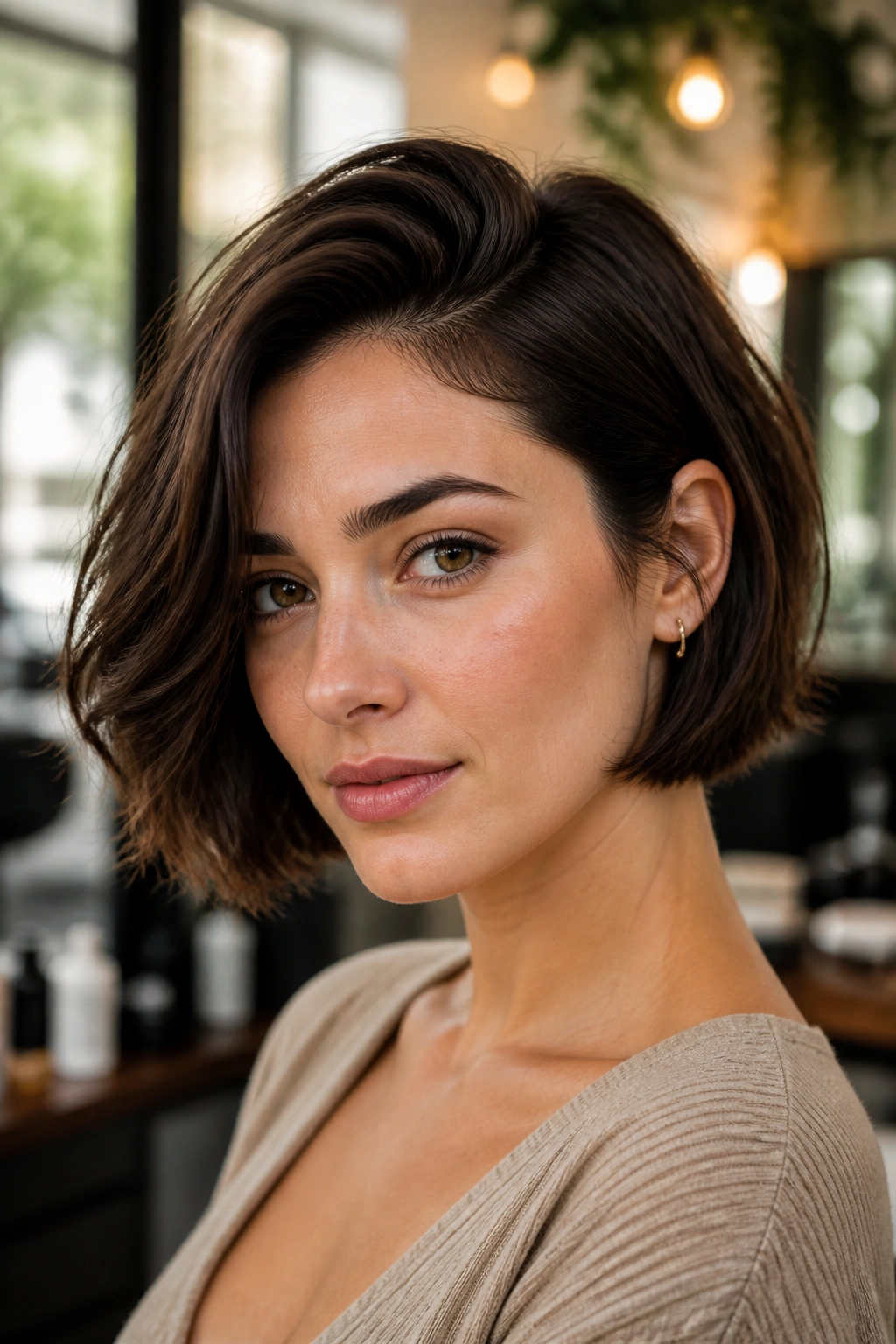
A side part can change a French bob faster than adding layers. It lifts the roots, shifts the weight, and gives the cut a softer, slightly dramatic line that feels very wearable. No fuss. Just a little tilt.
Why the Side Part Matters
The center part gets most of the attention, but the side part often works better if your hair falls flat at the crown or if you want more shape near the temple. The bob instantly looks a little fuller on one side and a little more relaxed on the other. That asymmetry is what keeps it from feeling too neat.
- Best for: Fine hair, flat roots, or anyone who wants soft volume.
- Ask for: A bob that still sits around the jaw, with enough length to tuck one side.
- Style with: A root-lifting spray and a quick bend at the ends.
- Skip if: You hate adjusting your part after washing.
There’s also a face-framing bonus. A side part can soften a broad forehead and bring more attention to the eyes. That sounds small. It isn’t. Tiny changes in parting can change the whole haircut.
Tip: Move the part slightly off-center, not all the way to the side, if you want lift without making the cut look too styled.
8. The Soft Layered French Bob for Fine Hair
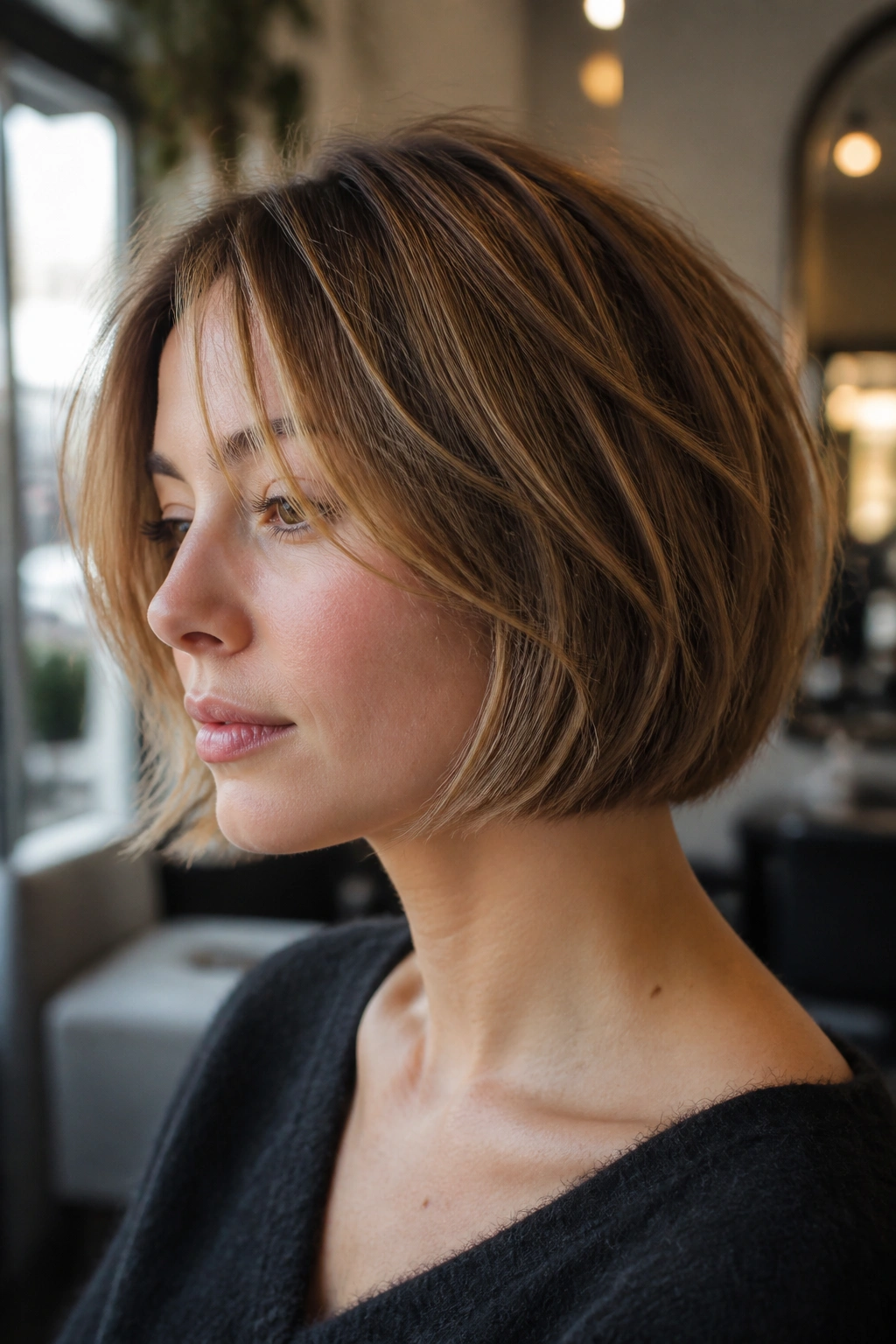
Fine hair does not need more drama. It needs smarter weight placement. That is why a soft layered French bob works so well when the goal is movement without thinning the ends to nothing.
The mistake with fine hair is usually over-layering. A lot of people think layers create volume, and sometimes they do. But if the layers start too high or get too aggressive, the bob loses its shape and the ends go wispy. What you want instead is a little internal shaping so the hair bends and swings, while the perimeter stays strong enough to look full.
This cut looks especially nice when the front pieces are left a touch longer than the back. That tiny difference makes the bob swing around the face instead of sitting flat against it. A blow-dry brush or a round brush at the roots helps, but even air-dried hair can look good if the cut is balanced.
I’d choose this version for someone who wants a French bob haircut idea that still feels light on the head. It is not a power cut. It is a smart cut.
9. The French Bob With Baby Bangs

Baby bangs are not for everyone. They can be brilliant, though, when the rest of the haircut stays soft enough to handle them.
A French bob with baby bangs has a sharper personality than the classic versions. The short fringe pulls focus to the eyes and brows, which gives the whole face a stronger frame. Done well, it looks stylish and a little playful. Done badly, it can look like the fringe was cut in a hurry. That’s a difference worth caring about.
How to Wear It
The rest of the bob should stay tidy and close to the head so the bangs do not get lost. Chin-length works especially well here, but a jaw-grazing line can also look good if the fringe is short enough to balance it. Straight hair makes the style easier to manage, though a slight wave underneath can keep it from feeling severe.
If you are the sort of person who hates frequent trims, skip this one. Baby bangs grow out awkwardly. That’s the honest part. They need attention.
If you want something that feels a little daring without going full avant-garde, this is a strong option. It’s a small haircut with a loud personality.
10. The French Bob for Thick Hair With Hidden Internal Layers
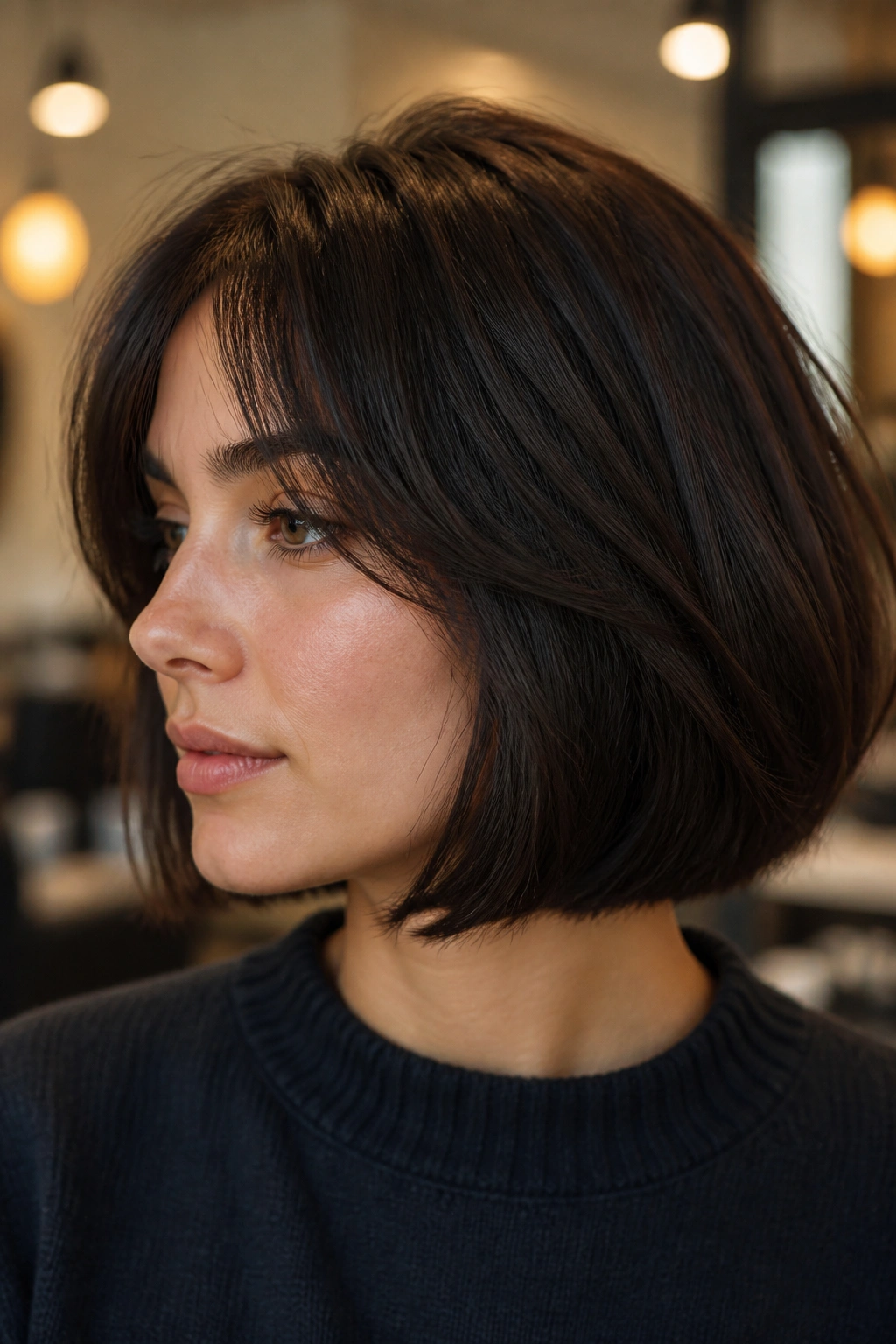
Thick hair can make a bob look beautiful or bulky. There is not much middle ground if the cut is not handled well. That is why hidden internal layers matter so much here.
Imagine thick hair cut into a blunt bob with no weight removed inside. It can puff out at the sides and turn into a triangle. Not chic. Not even close. The fix is careful shaping inside the bob, while the outside line stays clean. You keep the fullness, but you stop the helmet effect.
- Best for: Dense, coarse, or heavy hair.
- Ask for: Internal layers, not choppy surface layers.
- Styling tool: A blow-dryer with a nozzle and a round brush.
- Avoid: Too much thinning at the ends. It frays the outline.
This cut works because it lets the hair sit close to the head without feeling stripped down. The perimeter still looks rich, but the inside has enough movement to keep it from ballooning out by noon. That is the real job here.
Closing thought: If you have thick hair, the French bob should feel controlled, not clipped into submission.
11. The Asymmetrical French Bob

An asymmetrical French bob works because the difference is subtle. One side sits a little longer than the other, and that tiny shift gives the cut motion before you even style it. It feels modern, but not fussy.
The best versions are not dramatic. You do not need a huge angle to make this look interesting. A half-inch to an inch of difference is often enough, especially if the front pieces skim the jaw while the back stays slightly shorter. That small imbalance can soften a strong jawline or make a straight face shape feel less rigid.
I also like this cut for people who always push their hair to the same side. The asymmetry looks intentional because the styling already wants to go that way. It’s one of those cuts that seems more complicated than it is.
Keep the texture simple. A little bend at the ends is enough. Too much curl or too many layers can blur the shape and take away the point of the haircut. You want the line to be visible.
12. The Shaggy French Bob
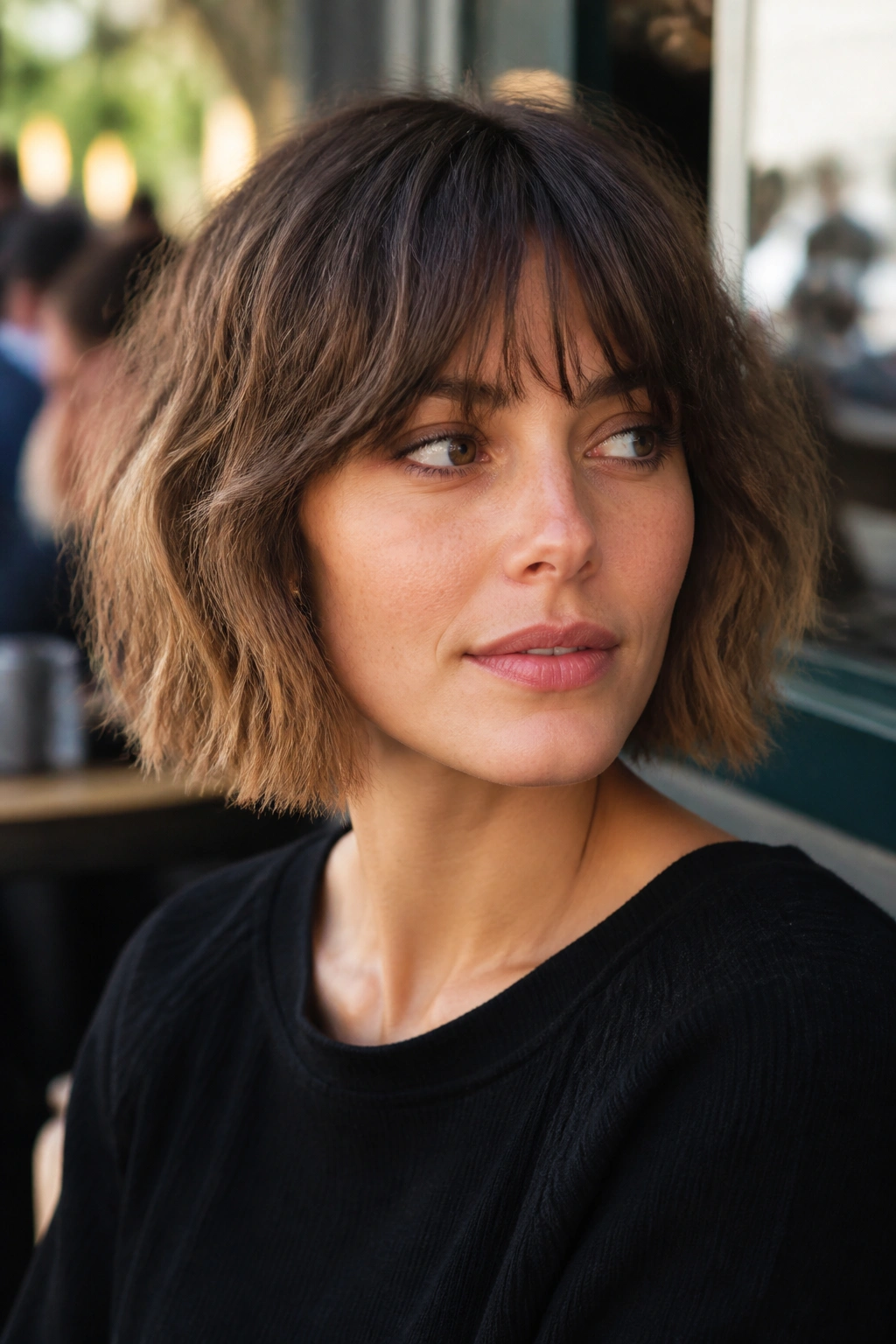
A shaggy French bob is the loose, slightly rebellious cousin of the classic version. It keeps the bob shape, but the edges are softer, the layers are choppier, and the whole thing has more movement through the crown and sides.
What Makes It Different
Unlike a sleek French bob, this version is built for texture. It works beautifully on wavy hair and on straight hair that can hold a bend with a curling iron. The shaggy finish makes it look like you slept in the haircut in the best possible way. Not sloppy. Just relaxed.
A stylist should keep the layers light enough to preserve the bob outline. Too many short pieces turn it into a mini shag, which is a different haircut entirely. The French feel comes from the short length and the face-framing shape, not from losing the bob structure.
Who should wear it? Anyone who likes a bit of mess and does not want to spend ten minutes coaxing every strand into place. If you want polish, choose something cleaner. If you want movement, this is the cut.
Specific recommendation: Use a matte styling cream on dry hair and pinch the ends with your fingers instead of brushing everything smooth.
13. The French Bob That Tucks Behind the Ears

This is one of my favorite ways to wear a French bob because it gives you two looks in one cut. Down, it feels soft and face-framing. Tucked behind the ears, it opens the cheekbones and makes the whole style feel neat in a very unfussy way.
Why It Works
The haircut needs to be slightly longer at the sides than you might think. If the bob is too short, the tucked style falls apart and the pieces pop out from behind the ears. A little extra length at the jaw or just below it gives you enough room to tuck without losing the line.
- Best for: Straight, wavy, or lightly textured hair.
- Great if you wear: Small earrings, hoops, or statement studs.
- Ask for: A clean perimeter with soft side length.
- Style move: Tuck one side and leave the other loose for contrast.
That asymmetry is the charm. It looks casual, but it is not careless. Also, it’s practical. If you spend part of the day wanting hair off your face, this cut cooperates without needing a full updo.
Tip: A tiny bit of texture spray at the ends helps the tucked side stay in place instead of slipping out.
14. The Rounded French Bob

A rounded French bob can soften a strong jaw better than longer hair sometimes does. The shape curves gently inward around the face, which creates a sweet, balanced outline without looking childish.
The rounded finish is subtle. The bob should not balloon. It should arc. That difference matters. A good rounded bob has a clear perimeter, but the corners are softened so the edges fall into a curve instead of a straight line. It feels a little more classic, a little more polished, and less angular than the blunt versions.
This cut is especially nice on square or heart-shaped faces, where a softened outline can make the proportions feel calmer. It can also help if your hair naturally flips outward at the ends. A stylist can work with that bend instead of fighting it.
I’d wear this one with a side part or a soft center part, depending on how much lift you want at the crown. Both work. What matters is that the shape stays round, not puffy.
15. The Long French Bob That Skims the Neck

If the idea of going short makes you hesitate, the long French bob is the safest way into the style. It usually lands at the neck or just brushing the collarbone, which gives you movement without the shock of a true crop.
This version still feels French because the ends are shaped, not left hanging. The line should have enough structure to frame the face, and the top layers need a little lift so it doesn’t read like a plain shoulder-length cut. That’s the whole difference. A long bob can look generic. A long French bob looks considered.
How to Style the Length
A round brush at the front pieces can keep them from collapsing inward too much. If your hair is wavy, a quick bend through the mid-lengths works better than curling every strand. The point is ease, not curls that look painted on.
This cut is especially good if you want to test shorter hair without losing the ability to tie it back. It still gives you that crisp, chic outline, but it leaves enough length for ponytails, clips, and lazy days.
Best for: People who want a softer jump from long hair to short hair.
16. The Deep Side-Part French Bob With Volume
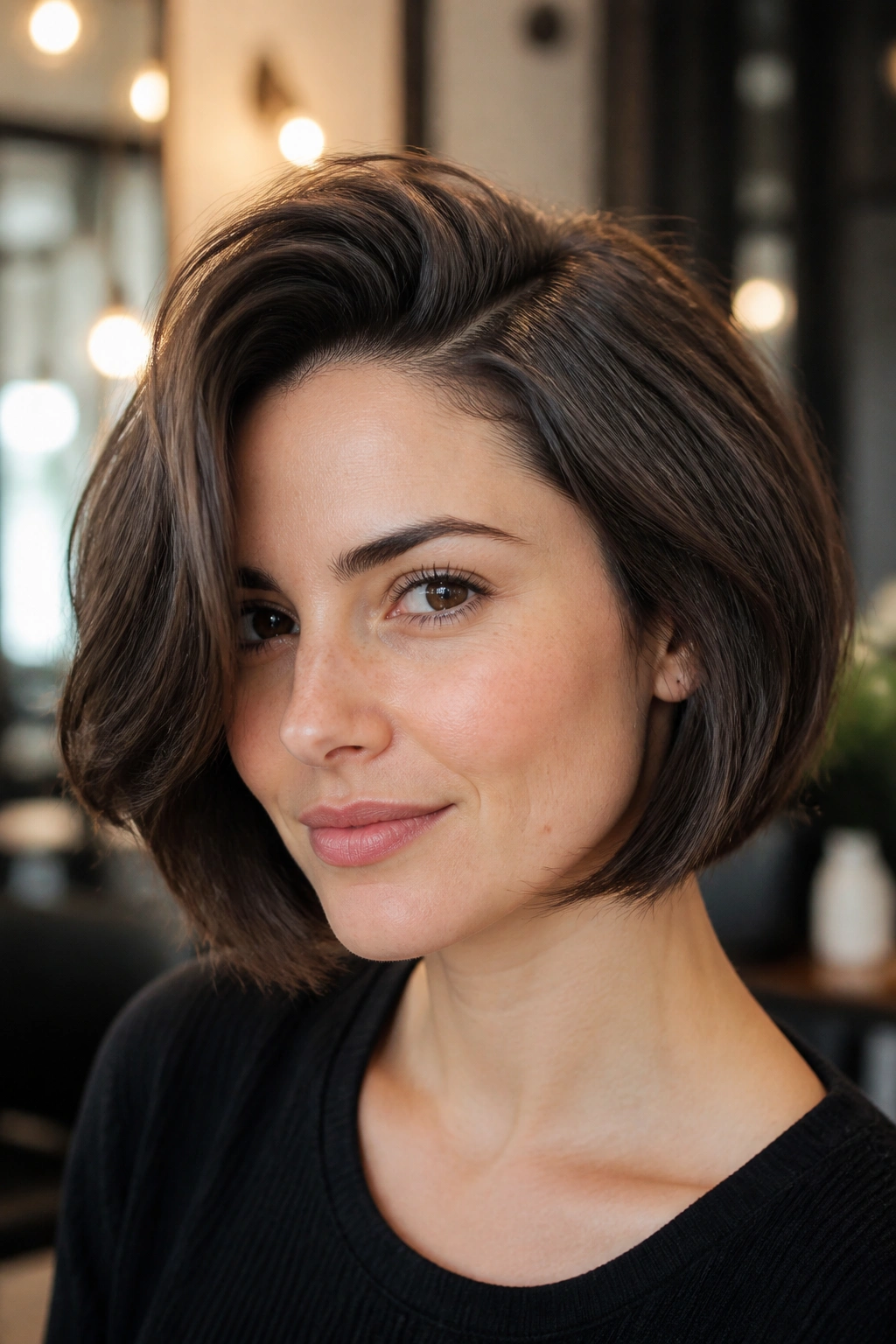
Flat roots can make even a good bob feel sleepy. A deep side part fixes that faster than most people expect.
The part throws the hair over in one direction, which creates height at the crown and a little sweep across the forehead. Suddenly the bob has attitude. It also gives the style a slightly old-Hollywood shape, though still with that French ease that keeps it from feeling overdone.
A deep side part works best when the bob has some body through the mid-lengths. If the hair is too flat and too straight, the style can collapse toward the ends. A root spray, a bit of mousse, or a quick pass with velcro rollers at the crown solves that. Nothing fancy. Just enough lift to make the shape hold.
- Best for: Fine hair, flat crowns, and shorter face shapes.
- Ask for: A bob that keeps weight at the ends but room at the roots.
- Avoid: Over-smoothing the top. You lose the volume.
- Style with: A side blow-dry and a light hairspray.
I like this version on days when you want the haircut to feel a little more dressed up without changing the cut itself.
17. The Razor-Cut French Bob

A razor-cut French bob has softer edges and a touch more air than a blunt version. The razor takes some of the heaviness out of the ends, which can be gorgeous on the right hair, but it needs a careful hand.
The texture it creates is piecey, not shaggy. That distinction matters. You want the ends to move and separate slightly, not fray like they were dragged through a hedge. On straight to medium hair, that airy finish can make the whole cut feel lighter and more relaxed. On coarse hair, though, it can get puffy if the stylist is too aggressive.
This is the kind of French bob haircut idea I’d recommend only if you trust the person cutting it. A good razor cut has shape. A bad one just removes weight without giving anything back.
Wear it with a soft side part or a loose bend through the ends. The movement does the heavy lifting, so the styling can stay simple. If you love that undone, touchable finish, this one is worth a look.
18. The Dimensional French Bob With Subtle Highlights

Color is not the haircut, but it changes how the haircut reads. Subtle highlights can make a French bob look deeper, lighter, and more alive, especially if the cut is blunt or very clean.
Unlike one-tone dark hair, dimensional color shows off the line and the movement. A few lighter ribbons around the face can make the fringe stand out. A touch of brightness through the ends can keep a shorter bob from feeling flat. You do not need thick streaks. Thin, soft pieces are enough.
This works especially well if your hair is fine or medium and you want the bob to show movement even when it is barely styled. Sun-kissed ends, warm caramel pieces, or soft beige tones can all help the shape read from across the room. If your base color is already strong, the highlights should stay quiet. Loud color can overpower a cut this neat.
If you’re keeping the haircut simple, this is an easy way to give it more presence. Not more noise. Just more depth.
19. The Cropped French Bob With a Short Fringe
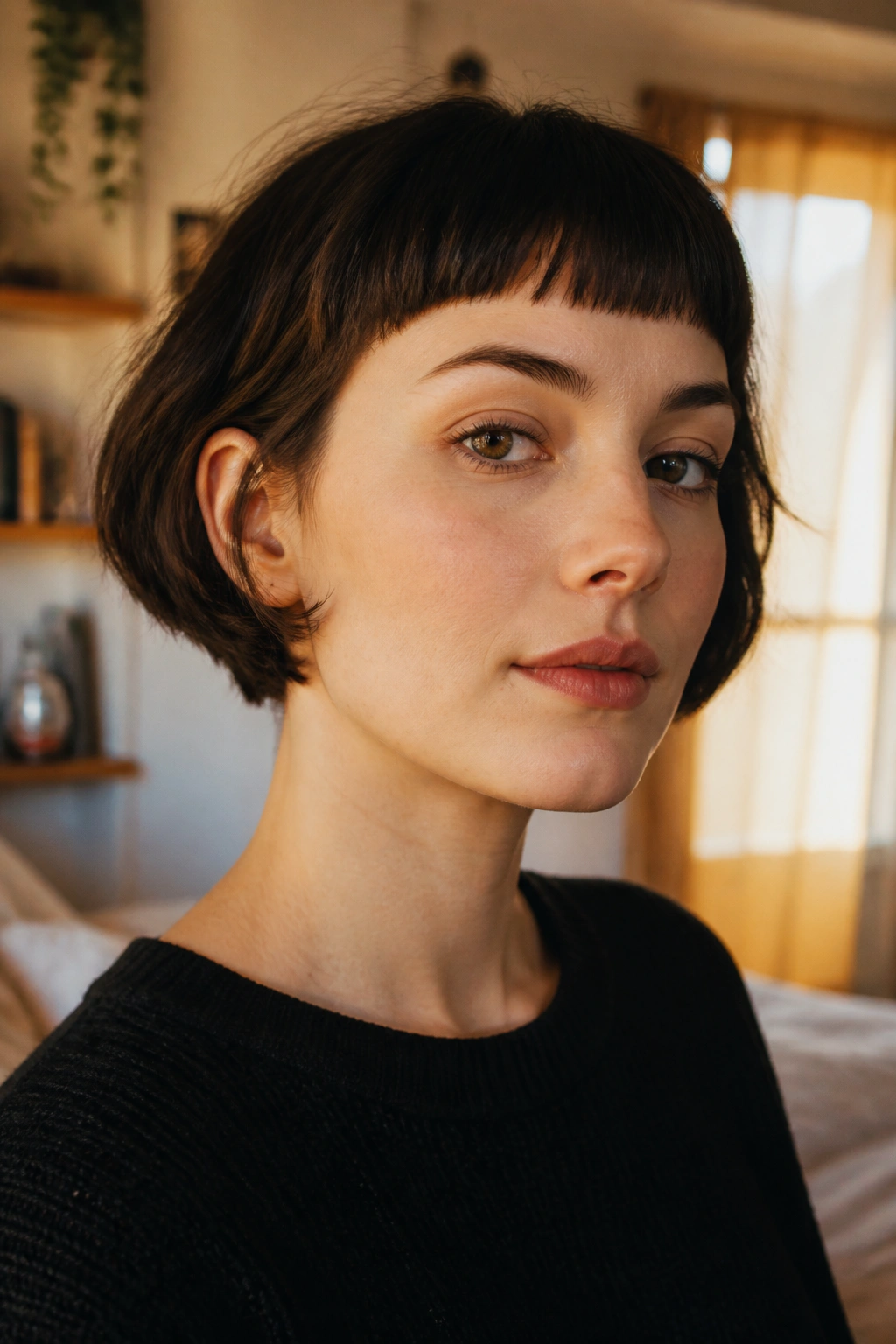
A cropped French bob with a short fringe is the bold little sibling in this group. It sits higher on the neck, often near the ears, and the fringe lands above the brows or just barely brushes them. The result is compact, graphic, and a little playful.
What to Know Before You Cut It
The shorter length opens the face a lot, so the whole style depends on proportion. If the bob is too short and the fringe is too heavy, the cut can look blunt in a bad way. The shape needs breathing room. A bit of softness around the temples helps.
- Best for: Strong brows, small or medium foreheads, and straight to wavy hair.
- Ask for: Short but not clipped ends, plus a fringe that still moves.
- Avoid: Overloading it with product. It should stay light.
- Style with: A tiny amount of cream or pomade on the fringe only.
This haircut has personality. Plenty of it. It suits people who like their hair to make a point the minute they walk into a room. If that sounds like too much work, skip it. If not, it can be one of the chicest looks in the whole lineup.
Tip: Keep the fringe soft at the edges so it does not sit like a block across the forehead.
20. The Soft, Airy French Bob With Minimal Layers
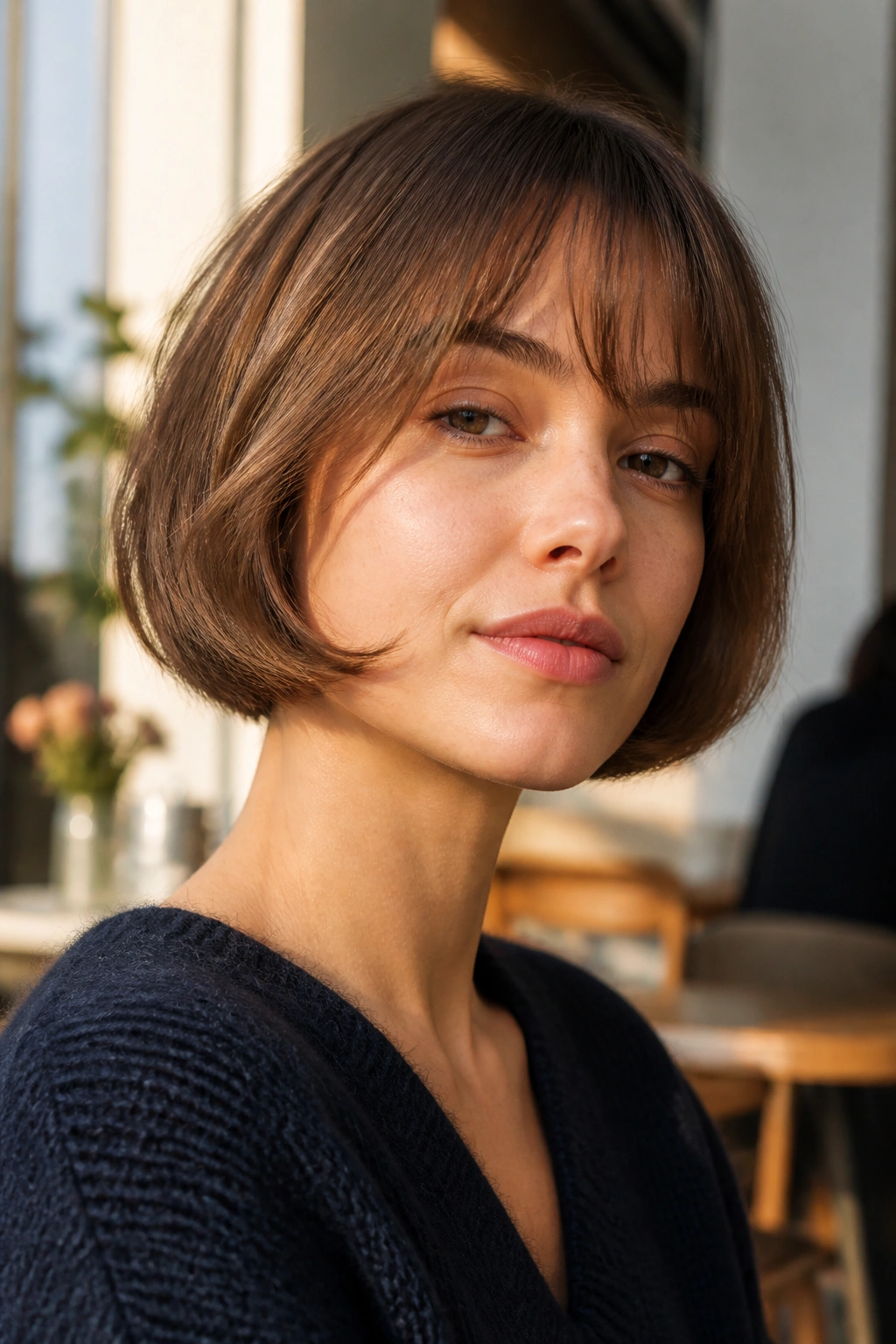
A soft, airy French bob is the one I’d point to if someone wanted a chic look without a lot of daily effort. It keeps the bob shape, adds just enough internal movement, and leaves the ends light enough to swing instead of sit flat.
That “minimal layers” part matters. You are not building a shag, and you are not chasing a perfectly blunt line either. The cut sits in the middle, which is where a lot of the nicest French bobs live. A bit of bend at the front. A small lift at the crown. Ends that turn under or flick out depending on how your hair feels that day. Easy, but not lazy.
This version works across a wide range of textures because it does not force the hair into one hard pattern. Straight hair can tuck it smooth. Wavy hair can let it air-dry. Fine hair gets a little body. Thick hair gets shape without losing all its weight.
If you want one French bob haircut idea that stays chic on a busy morning and still looks good after a long day, this is the one I’d keep near the top of the list.
