



Curly bangs for short hair can look sharp, soft, playful, or a little unruly in the best way. They can also go sideways fast if the shape was built for straight hair and then forced onto curls that shrink, spring, and bunch up in their own stubborn little pattern.
That is the part people miss. A curly fringe doesn’t just sit on the face; it changes the whole outline of a bob, pixie, crop, or shag. Cut it too short and you get surprise forehead exposure. Cut it too heavy and the front can swallow the eyes. Cut it dry, though, and suddenly the whole thing makes sense.
The smartest versions are the ones that respect curl pattern, density, and how much work you actually want to do in the morning. Some need a diffuser and five minutes. Some look better when they’re a little messy. Some want a deep side part, others need a rounder frame, and a few are happiest when they’re barely touching the brows.
These 20 styles cover the useful range — the polished, the easy, the bold, the grown-out, and the ones that give short hair a little attitude without turning your forehead into a mystery.
1. Rounded Curly Bangs for Short Hair
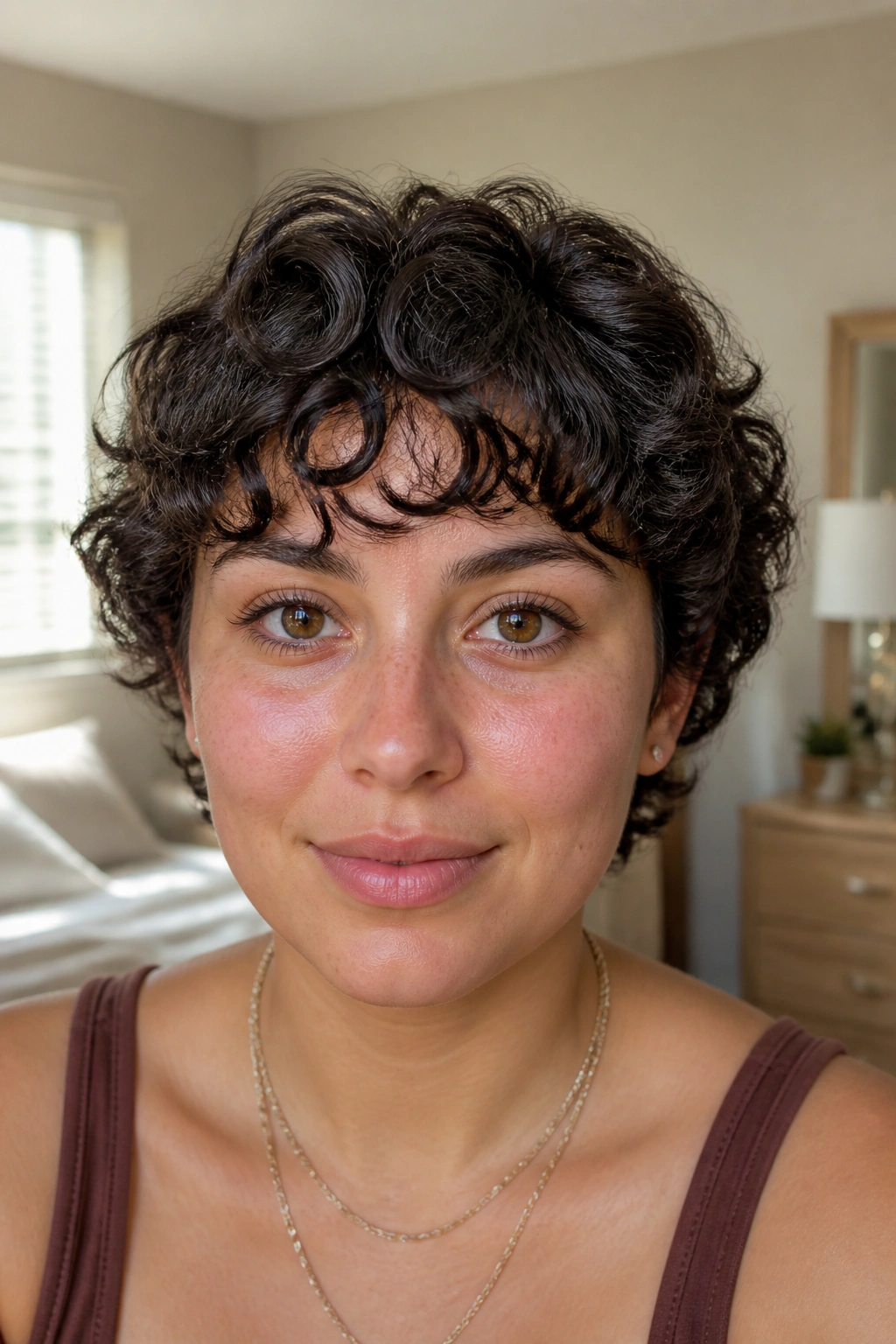
A rounded fringe is one of the easiest ways to make curly bangs for short hair feel intentional instead of accidental. The shape follows the curve of the brows and then softens up into the temples, which keeps the front from looking boxy.
Why it works
Rounded bangs are forgiving on most curl patterns because they do not demand a perfectly flat line. The center can sit a little shorter, then the sides can graze the temples and cheekbone area. That small change in length makes a big difference when your curls dry and jump up.
Ask for the bang area to be cut dry, curl by curl, with the longest pieces landing just at or slightly below brow level when fully dry. Do not let anyone stretch the curls before cutting. That is how you end up with a fringe that looks fine wet and weird once it springs back.
- Keep the curl cream light.
- Diffuse the fringe forward first.
- Nudge the ends with your fingers instead of brushing them out.
- Trim in tiny steps, not big chops.
Pro tip: the cleanest rounded fringe usually looks better when it’s not too perfect. A little unevenness reads as curl. A lot reads as a mistake.
2. Side-Swept Curly Fringe
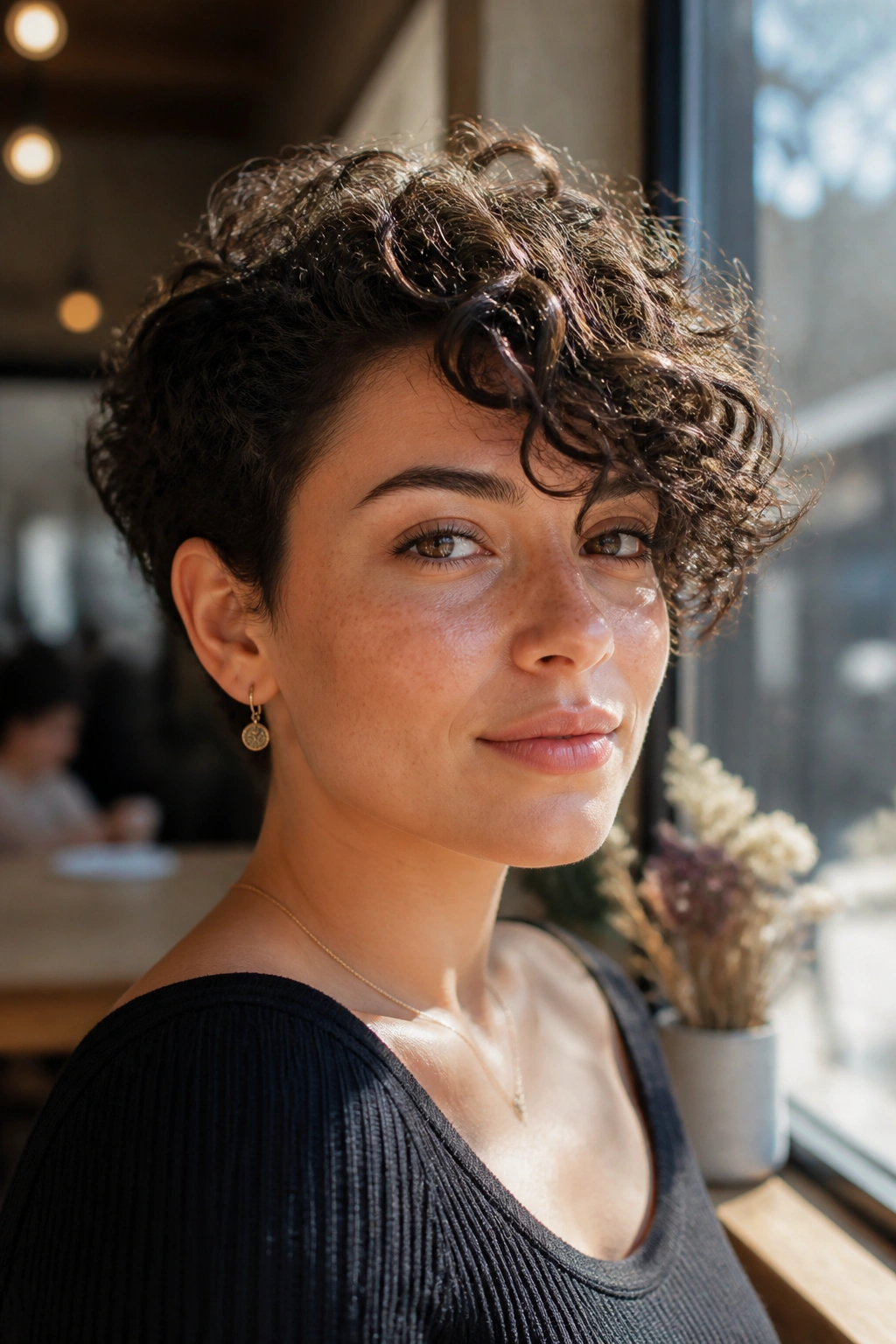
Can curly bangs work when you do not want anything hanging straight across your forehead? Absolutely. A side-swept fringe is the easy answer for anyone who wants softness without the commitment of a full front piece.
The shape is especially good on short cuts with a side part, because the bangs can blend into the top layers instead of sitting there like a separate object. You get forehead coverage on one side, lift on the other, and a face frame that feels relaxed instead of severe.
It also handles grow-out better than a blunt fringe. The longer pieces can simply keep moving into the rest of the haircut, which means you are not stuck with a hard line every time your hair grows half an inch. That matters more than people think.
This style likes a light mousse at the roots and a small amount of gel on the ends. Push the fringe in the direction you want while it dries. Then leave it alone. Touching it ten times never helps.
3. Micro Curly Bangs on a Pixie
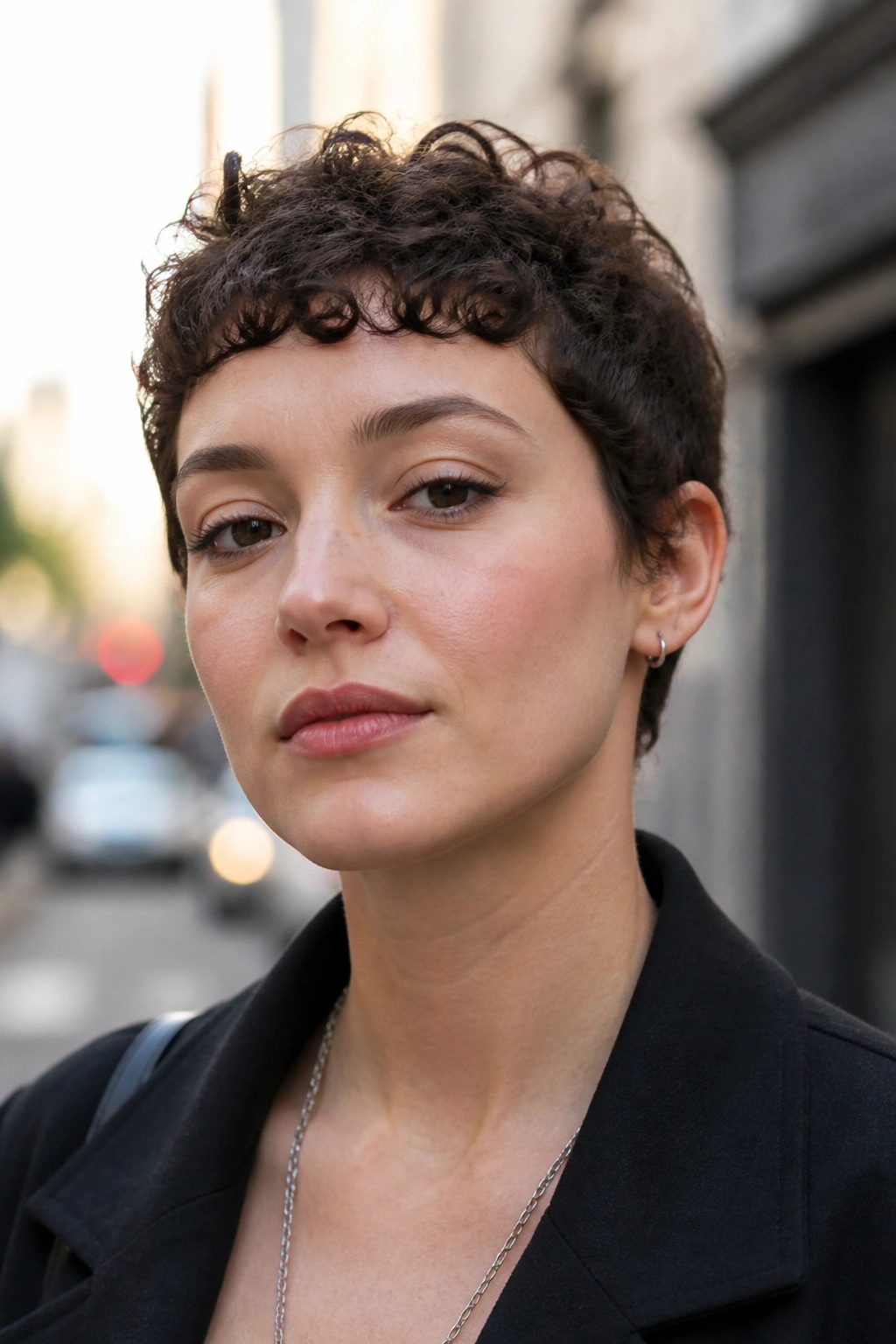
A micro fringe on curls is not subtle. That is the point.
On a pixie, the bang sits well above the brows and lets the curl pattern do the heavy lifting. It works because the rest of the haircut is already short and clean around the ears and neck, so the tiny fringe becomes the whole mood of the cut. Think bold, cropped, and a little editorial without needing a huge styling routine.
What to ask your stylist
- Leave enough length for the curls to bounce upward once dry.
- Cut the front in its natural state, not pulled tight.
- Keep the fringe narrow so it does not spread too wide across the forehead.
- Soften the edge with point cutting if the curl pattern is dense.
This look is best when the curls are springy and have obvious shape, not when they fall in limp ribbons. It also needs confidence. There is no hiding behind a long fringe here.
One thing I like about micro curly bangs is how they make cheekbones and brows look deliberate, even when the rest of the hair is almost boyish in length. That contrast is the whole charm.
4. Curly Curtain Bangs for Short Hair
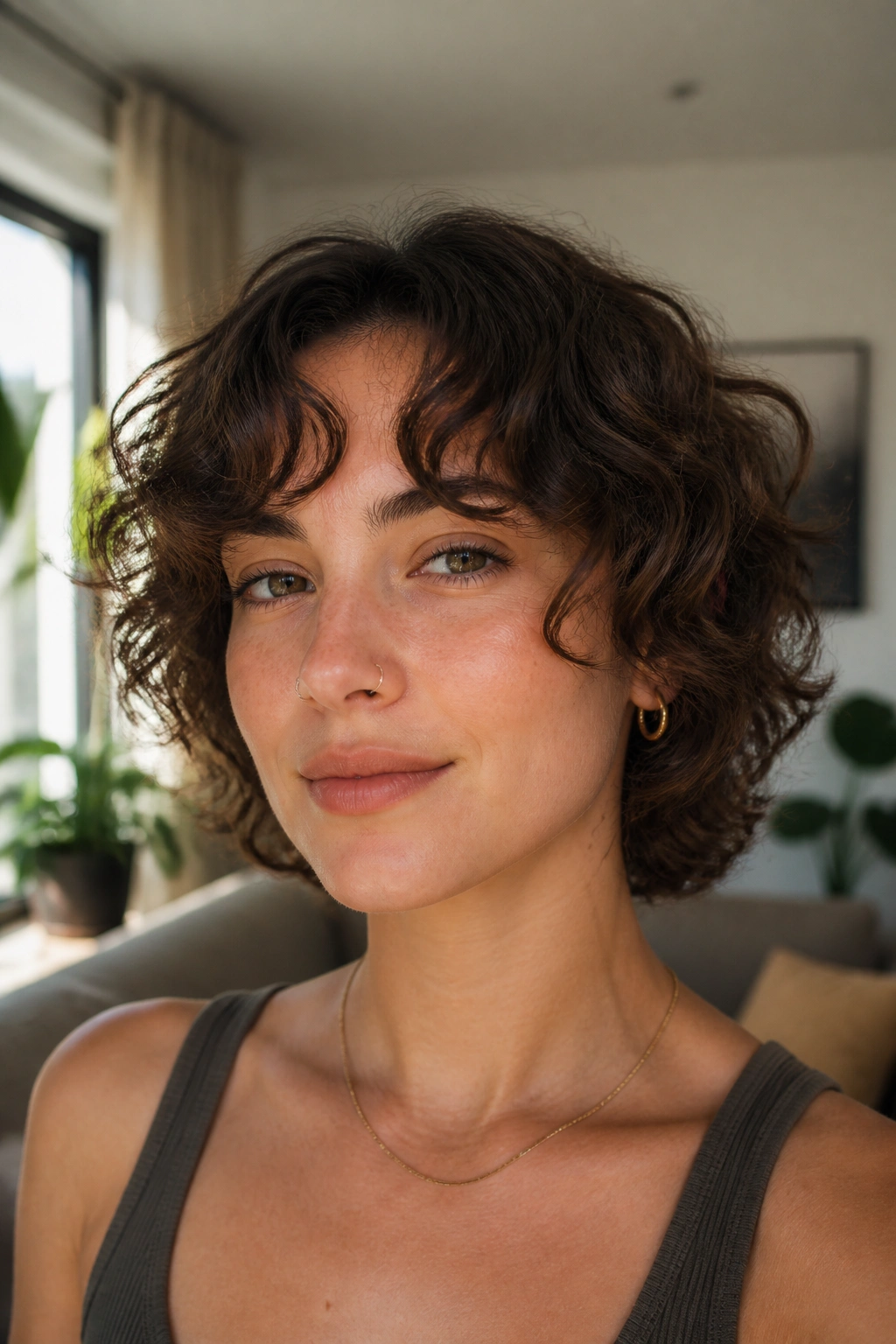
Curtain bangs on short curls work because they split the difference between fringe and face-framing layers. The center stays shorter, then each side opens away from the face, which keeps the forehead from feeling boxed in.
The best version usually starts around the bridge of the nose or just above the cheekbone when wet, then settles higher once dry. That sounds long, and it is. Curls need room. If you trim them to brow length in the chair, they may land in midair once they spring up.
This shape flatters short bobs and longer pixies because it blends into the haircut instead of sitting on top of it. The trick is to keep the center light and let the side pieces taper into the rest of the layers. A hard curtain line can feel heavy fast.
I like this style on anyone who wants movement near the face but not a full wall of bangs. It has a softer finish than a straight-across fringe, and it grows out in a pretty civilized way. That alone makes it worth a look.
5. Wispy Airy Curly Bangs
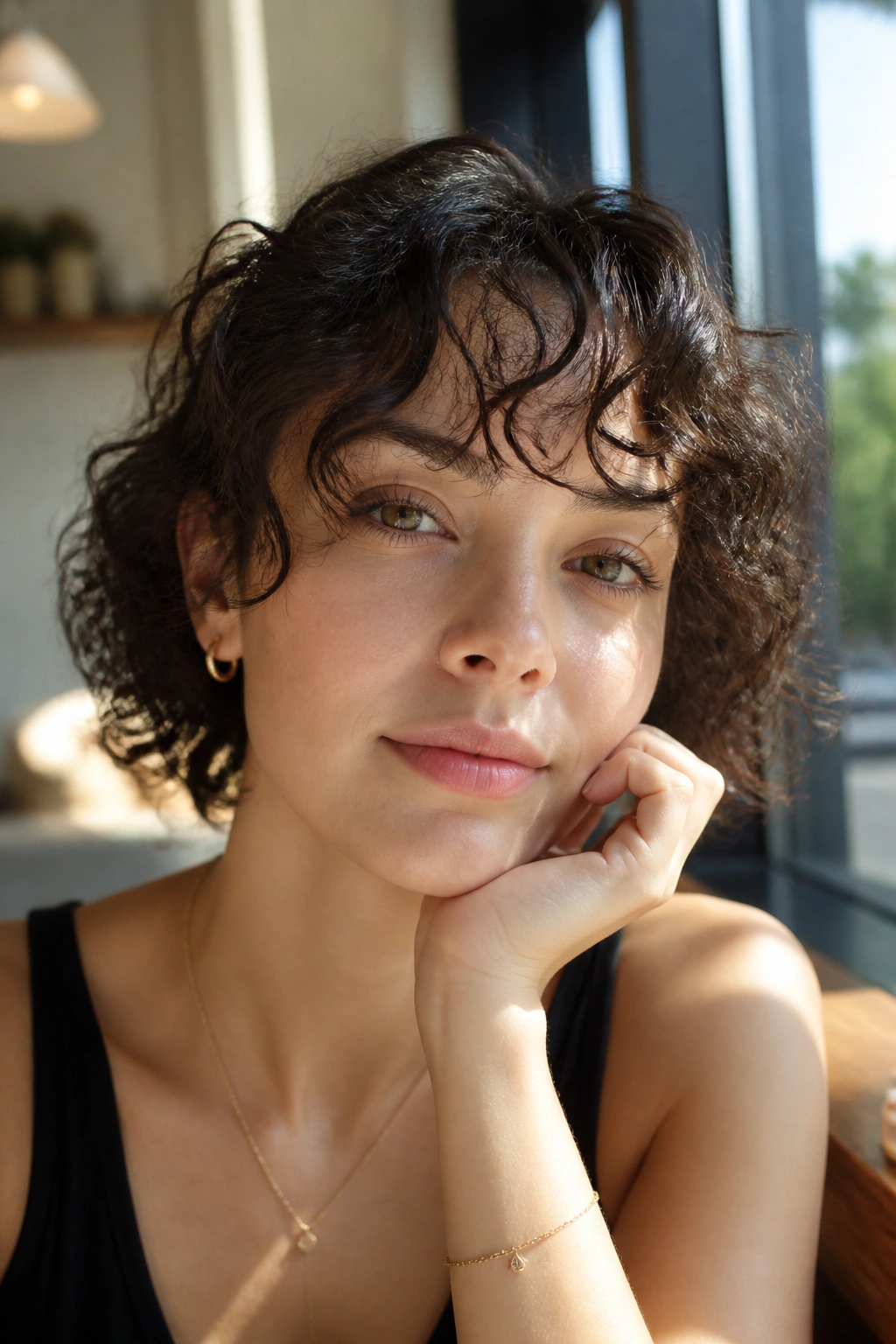
Wispy curly bangs are the answer when you want a fringe that reads as light and breathable, not dense. They suit fine curls, looser wave patterns, and short haircuts that already have a lot of shape around the crown.
Unlike heavier bangs, this version leaves gaps. Tiny ones. That bit of forehead showing through keeps the style from feeling heavy, especially if your hair is naturally low in density. It also means you do not have to fight your texture every day.
What makes them different
Wispy bangs rely on separation, not fullness. A small amount of leave-in, then a soft gel or cream, is usually enough. Too much product and the fringe collapses into a single piece, which ruins the whole airy effect.
The cut should be soft at the ends, with a few shorter curl clumps mixed into longer ones. That unevenness is the point. If everything sits at the same length, the bangs start looking like a curtain someone forgot to finish.
This style is especially nice on short shags and curly crops because it keeps the front from competing with the rest of the haircut.
6. Heavy Full Curly Bangs
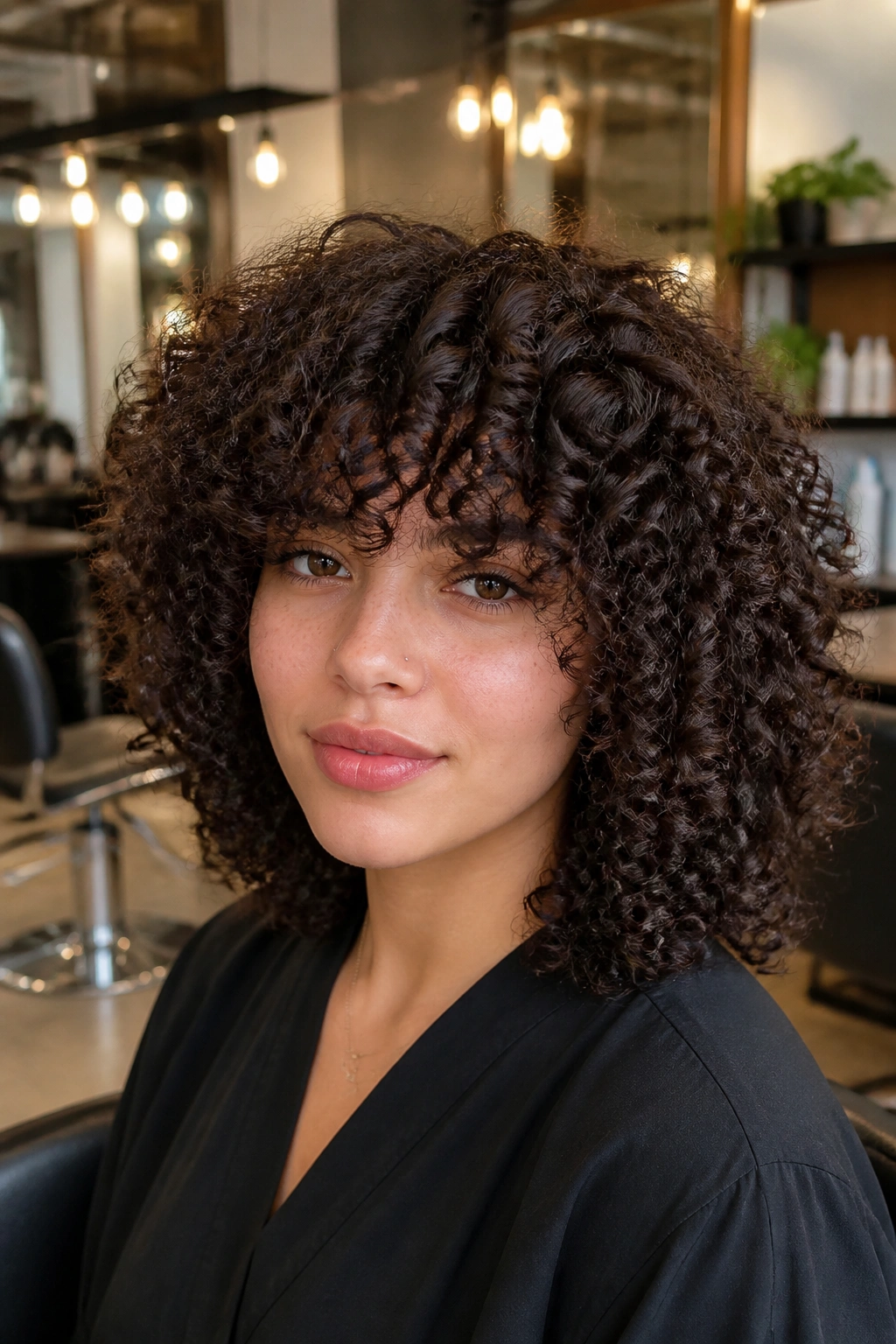
If you want your bangs to carry the whole haircut, this is the one. Full curly bangs make a short cut feel rich and dense, almost like the front of the hair has its own personality.
The shape works best on thick curls that have enough spring to avoid looking flat. Thin hair can do it, but you have to be careful. Too much bulk near the brow line and the fringe starts to sit like a shelf. That is never the look.
How to keep the line soft
A heavy fringe should still be shaped, not hacked bluntly. Ask for internal layering or point cutting so the curls can stack without puffing outward in one solid block. A bit of weight is good. A helmet is not.
- Use a moisturizing curl cream first.
- Add gel only where the front frizzes.
- Diffuse from underneath to keep lift at the roots.
- Trim the bang area while dry so you can see the real shape.
Heavy bangs look especially good on short bobs with a little width through the sides. The front feels dramatic, but the rest of the cut keeps it balanced. That balance matters. Otherwise, the bangs win and the haircut disappears.
7. Grown-Out Curly Bangs

Why do grown-out curly bangs often look better than freshly cut ones? Because the extra length lets the curl pattern settle instead of popping straight up into the air.
This is the fringe for someone who likes a softer, more lived-in shape. The bang can land anywhere from the brow to the cheekbone, and it usually blends into the front layers of a bob or shag. There is less “bang line” and more face movement.
Grown-out bangs are also forgiving on days when styling goes sideways. If one curl clumps higher than the other, the whole fringe still makes sense because the length has room to drift. That makes it a strong option for busy mornings.
Best length targets
- Brow-skimming when fully dry.
- Cheekbone-length if your curl pattern is tight.
- Lip-level if you want to tuck and pin the pieces sometimes.
This style suits people who do not want to trim bangs every few weeks. It also works when you are between shapes and need the front to behave while the rest of the haircut grows out. Honestly, it’s one of the least fussy options on the list.
8. Bottleneck Curly Bangs
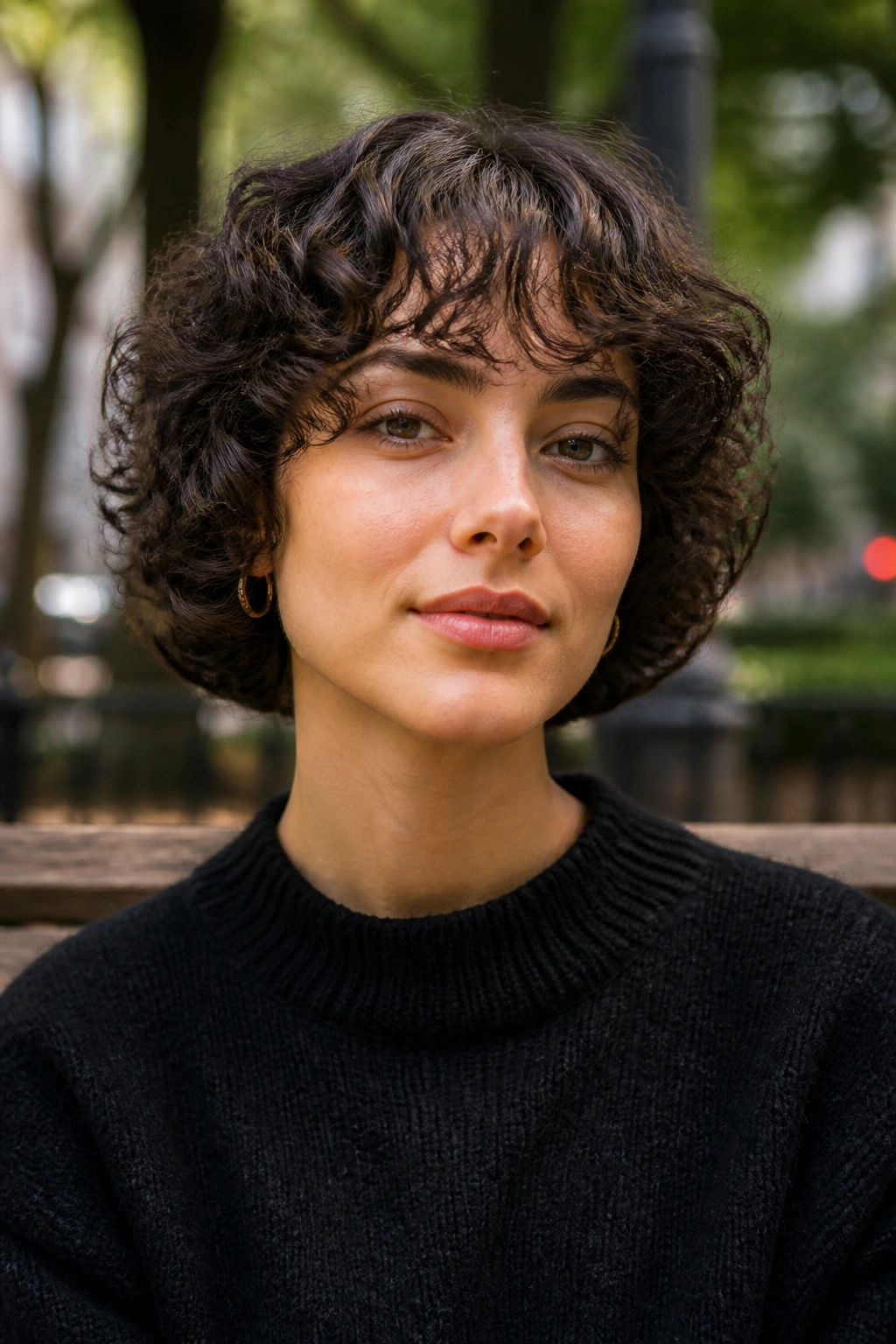
Bottleneck bangs have a very specific shape: short in the center, longer and softer at the sides. On short curly hair, that shape can be magic because it gives the forehead some space while still keeping a fringe in play.
Picture a narrow neck opening into broader sides. That’s the visual. The center pieces hover above or just at the brow, and the outer pieces sweep toward the temples and cheekbone area. On curls, the shape reads gentler than a blunt fringe and less wide than curtain bangs.
This cut is useful when the face has strong features you want to soften without hiding them. It also helps if your hairline has a few cowlicks or a point in the middle, because the shorter center doesn’t fight that growth pattern as hard.
- Ask for the center to stay light.
- Let the side pieces keep more length.
- Use a side-to-center drying motion so the front does not split too early.
- Avoid over-thinning the sides; you still need curl clumps there.
Bottleneck bangs can look polished, but they do not need to be polished to work. That’s the lovely part.
9. Shaggy Curly Bangs

Shaggy bangs are the unruly cousin of the neat fringe, and I mean that affectionately. On short curly hair, they bring movement, texture, and a bit of scruff that makes the whole cut feel alive.
The reason they work so well is simple: curls already want to break up into pieces. A shaggy fringe leans into that instead of fighting it. The front can have a few longer pieces dropping into the eyes, a few shorter ones sitting higher, and a soft cloud of texture around the hairline.
No hard lines. No fussy symmetry. Good.
This is the style I’d point to if you hate the idea of spending ten minutes shaping your bangs every morning. A small amount of leave-in and a diffuse-and-scrunch routine is usually enough. Then stop touching it. Brushing shaggy bangs out is how they turn from cool to puffy.
Shag bangs are especially strong with short shags, curly mullets, and bobs that need a little edge. They can look romantic, but they can also look a bit rebellious, which is honestly the better version.
10. Asymmetrical Curly Bangs for Short Hair

A fringe that’s slightly longer on one side changes the whole balance of a short cut. It pulls the eye diagonally, which is useful if your face feels very symmetrical or if you want to make a short bob look less predictable.
The difference does not need to be dramatic. Sometimes a half-inch matters. Maybe the left side lands at the brow while the right side slips to the cheekbone. On curls, that small mismatch creates movement without looking like the haircut went wrong.
This shape is especially good when one side of the hairline behaves better than the other. Cowlicks, swirl patterns, and a stubborn part can all be used instead of fought. That is smarter than trying to flatten everything into one flat row.
Who it suits
- People who like a side part but still want fringe.
- Short crops with strong cheekbones.
- Curl patterns that shrink unevenly from side to side.
If you want something that feels a little arty without being high-maintenance, this is a strong pick. It gives you shape, motion, and a reason for the bangs to move one direction instead of another.
11. Face-Framing Curly Bangs

What if the bangs are really just the first pieces of the layers? That’s the idea here.
Face-framing curly bangs melt into the haircut instead of announcing themselves. The shortest front pieces skim the forehead, then slide into cheekbone and jawline layers. On short hair, that blending is useful because it keeps the whole cut from looking chopped up.
This style tends to flatter people who want movement around the face but do not want a heavy bang section. It also plays nicely with bobs that have a little bend at the ends, since the front layers can echo the shape of the sides.
The cut needs enough contrast to read as bangs, but not so much that it turns into a separate section. Ask for the front to be layered in a soft diagonal from brow to cheekbone. The goal is flow.
I like this one because it’s honest about curl behavior. It does not pretend the front will lie flat. It lets the hair move and still gives you shape. That usually ends up looking better than a more rigid approach.
12. Blunt-ish Curly Bangs on a French Bob

A blunt-ish curly fringe is a good compromise if you want the neatness of a straight-across bang without the hard edge that can make curls look boxy. On a French bob, it creates a dense, chic front that still has bounce.
The magic word here is ish. The line should feel compact, but not carved with a ruler. Curly ends need a tiny bevel so they can stack naturally. If the edge is cut too perfectly straight, the fringe can puff outward or split in odd places once it dries.
The sweet spot
A good blunt-ish fringe usually sits around brow level when dry, with a little extra length in the center if the curls are springy. The sides should soften just enough to avoid a helmet shape. That is a real risk with a French bob and a thick bang section.
This style works best when the bob itself is clean around the jaw and slightly rounded under. That shape gives the bangs something to balance against. Without that support, the front can feel too heavy.
If you like a vintage feel but still want your curls to look like curls, this is one of the prettiest options on the list.
13. Mixed-Length Fringe
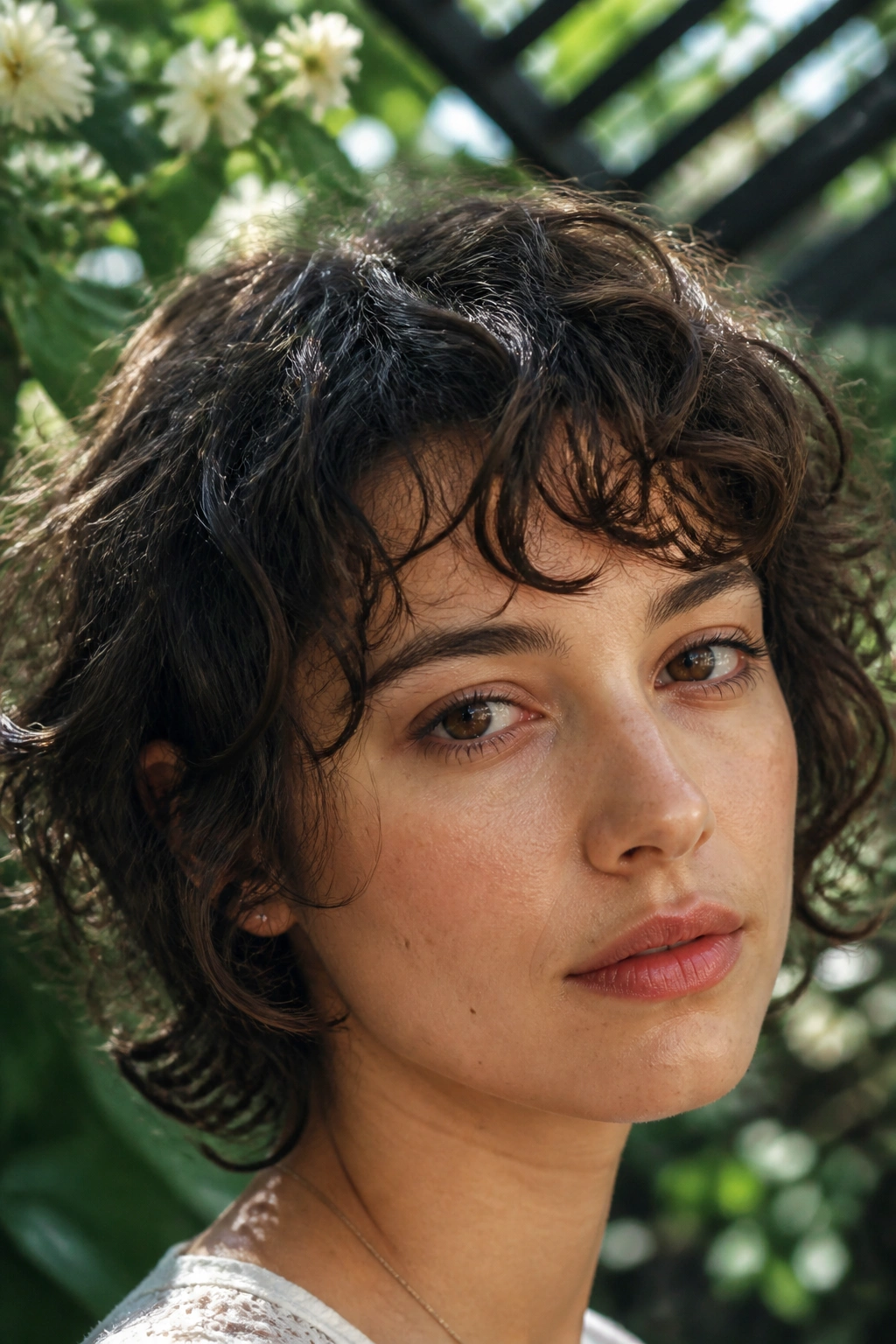
Some curl patterns refuse to match each other across the forehead. Mixed-length fringe turns that problem into the style.
Instead of forcing the whole bang section to line up, this cut intentionally leaves a few pieces shorter, a few longer, and a few somewhere in between. The result looks broken up in a good way, with natural gaps and clumps that feel relaxed rather than uneven by accident.
Why uneven can be better
Curly hair rarely behaves as one smooth sheet. It clumps. It bends. One curl springs tighter than the one next to it. Mixed lengths let that happen without destroying the shape of the fringe.
This is a smart choice if your curl pattern changes from left to right, or if your hairline has different growth directions in the center and at the temples. A little irregularity keeps the style from fighting itself.
- Shorter pieces add lift.
- Longer pieces keep the brow area soft.
- A few separated strands stop the fringe from feeling thick.
- Point cutting helps the ends move together without looking jagged.
I think this style deserves more attention than it gets. It’s one of the most natural-looking options for short curls, and it tends to age well as it grows.
14. Twist-Out Bangs

Twist-out bangs are for the person who likes a little ritual with their hair. The front is set in two-strand twists or tiny flat twists, allowed to dry fully, then released into a shaped fringe with defined, rope-like curls.
The result is neat without being stiff. Each twist creates a controlled curl pattern, so the bangs land in a more predictable place than they would if you just air-dried and hoped for the best. That control is useful on short hair, where a bad front section can dominate the whole cut.
This style shines when you want the fringe to look polished for a day or two, then loosen up into softer pieces. It also helps if your natural front curls are inconsistent. Twists smooth that out.
How to use it
- Start with damp hair, not soaking wet.
- Add a setting gel or foam through the front section.
- Make 2 to 4 small twists, depending on density.
- Let them dry fully before unraveling.
- Separate only after the hair is dry and cool.
Twist-out bangs do take a little more effort. They also look undeniably good when done right.
15. Diffused Soft Fringe
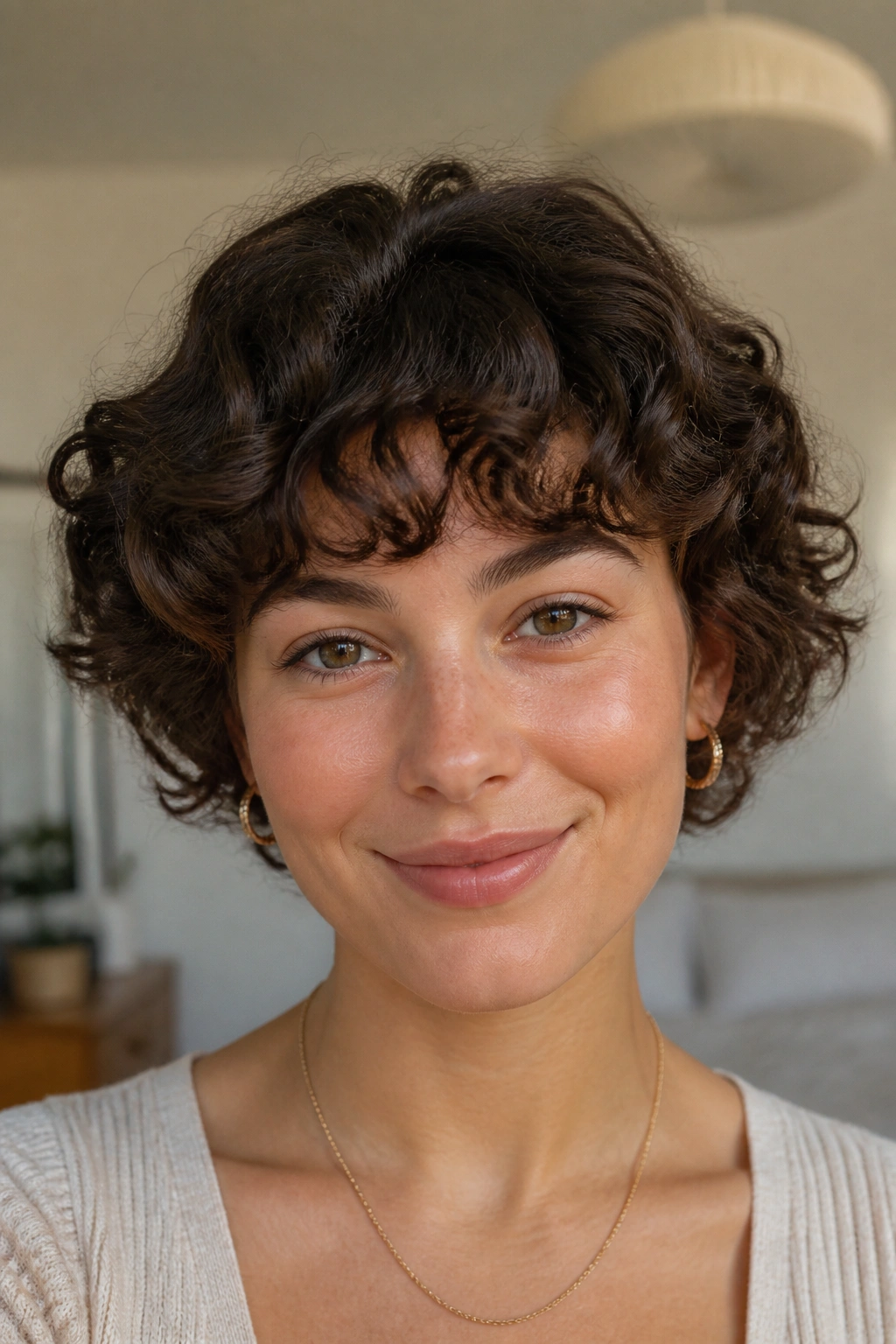
A soft fringe built with a diffuser is probably the easiest curly bang shape to wear day after day. It does not try to be dramatic. It just wants to sit softly across the forehead and move with the rest of the haircut.
The styling matters here more than the cut. Use a lightweight cream, maybe a touch of mousse, and hover the diffuser around the front section on low heat. Don’t blast it. High heat and a heavy hand usually create frizz before they create shape.
Once the fringe starts forming clumps, stop fussing with it. Let the hair set where it wants to sit. If you keep separating the curls while they’re drying, the front can lose its soft line and get fuzzy.
This style works especially well on short bobs and curly crops that need a little softness around the eyes. It also plays nicely with glasses, since the fringe doesn’t crowd the face as much as a denser bang would.
Simple. Easy. Nice.
16. Layered Bangs with a Curly Crop
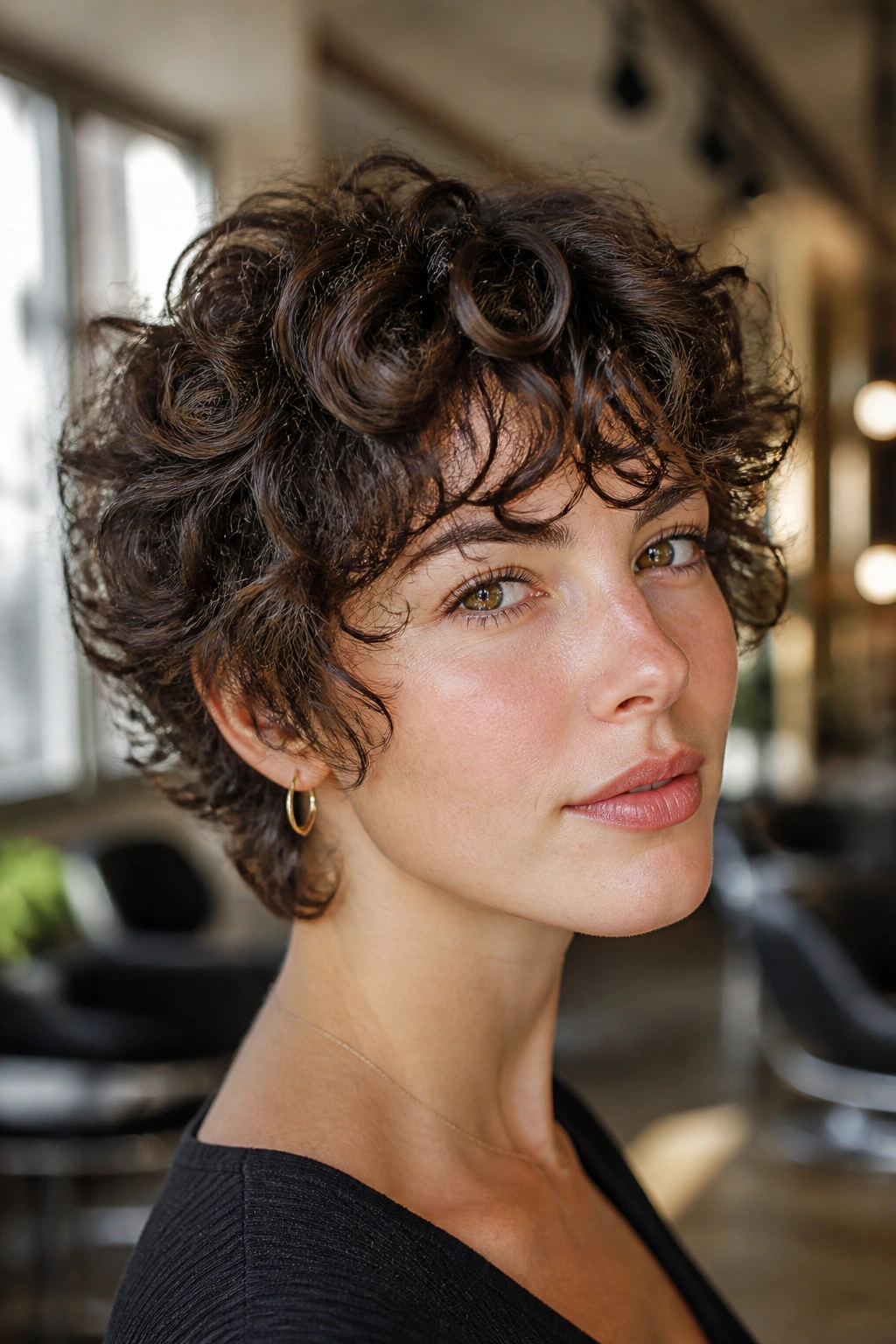
Layered bangs make a curly crop feel lighter at the front, which matters when the rest of the haircut is short and compact. The layers keep the fringe from becoming one big block of curl.
This style is different from a full fringe because the bang section is cut to fall in small, staggered pieces. Some curls sit higher, some drop lower, and the overall effect is movement instead of density. On thick hair, that can be a relief. On fine hair, it can keep the front from disappearing.
The cut should remove bulk without stripping away shape. That is a fine line. Too much thinning and the bangs go stringy. Too little and they puff out around the brow. A stylist who knows how to point cut curls is usually the right call here.
This look suits short crops with a little top length, since the layers in the front can blend into the crown. It’s also useful if your fringe tends to separate into awkward chunks. Layering gives those chunks a job.
17. Curly Bangs with an Undercut
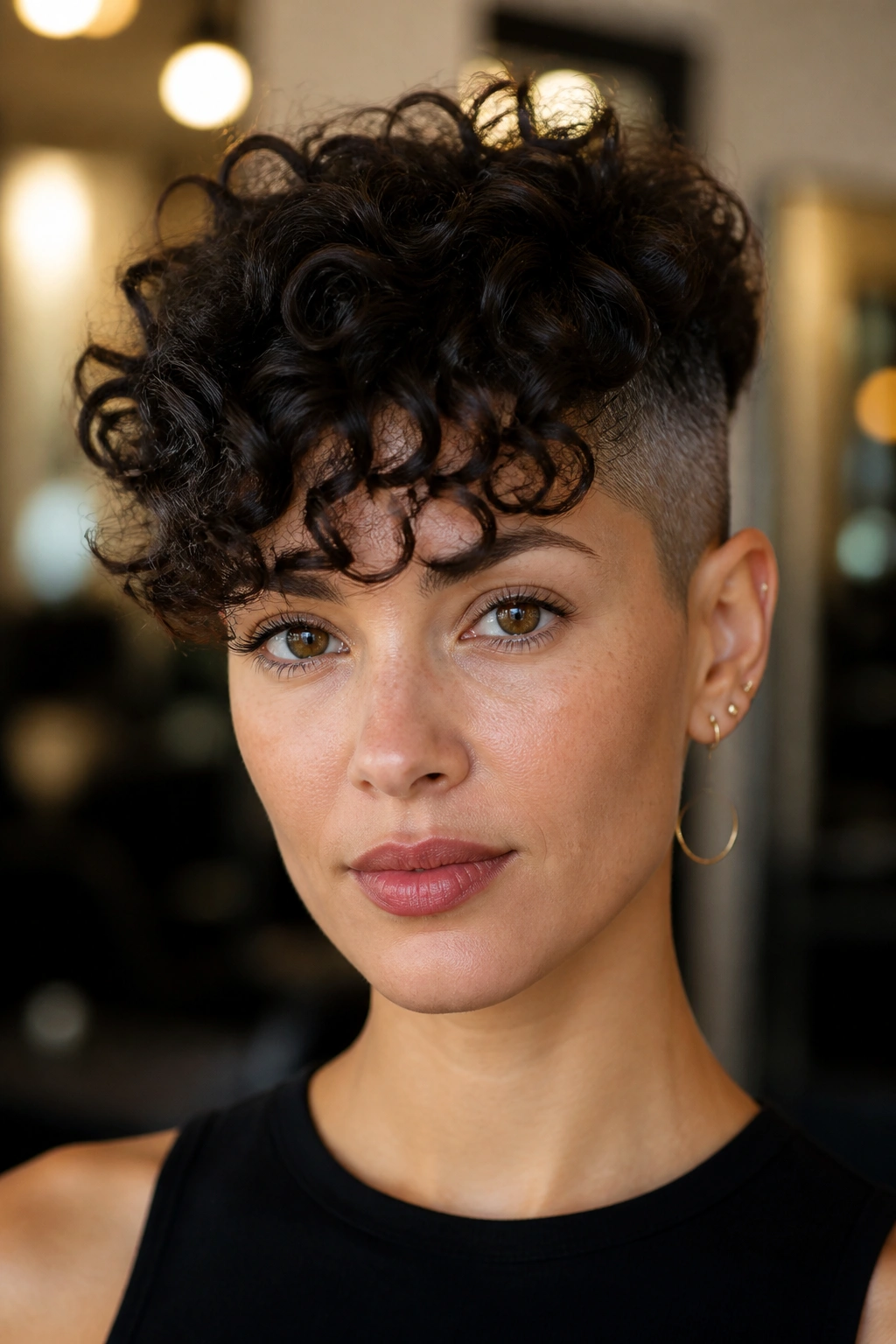
A fringe with shaved or tightly tapered sides is one of the boldest ways to wear curly bangs for short hair. The contrast is the whole point: volume up front, clean sides, less bulk around the ears and temples.
It works because the bangs get to be the star. Without all that side weight competing, the front curls can stand up, fall forward, or spread across the forehead with a lot more impact. That makes it a smart choice for dense curls that feel too wide in a traditional bob.
What to watch for
- Keep the undercut neat enough that it does not swell out around the edges.
- Leave the bang section long enough to show clear curl shape.
- Ask for a soft transition where the top meets the sides.
- Maintain the sides before they start puffing into the shape.
This style is not quiet. It gives you a strong silhouette and a cleaner outline than most curly cuts. If you like your hair to look deliberate the second you walk into a room, this one does that job with no trouble.
18. Pin-Curl Styled Bangs

Pin-curl bangs are what you reach for when you want the front to look set, polished, and a little old-school. The curls are wrapped, pinned, dried, and released into a controlled fringe that sits with more bounce than a regular air-dried bang.
The process matters because short hair leaves less room for error. Use small sections. Four to six pin curls across the front is often enough, depending on density. If the sections are too large, the curl pattern comes out loose and the bangs lose their shape.
How to get the most from it
Let the curls dry all the way before you unpin them. That sounds obvious, but people rush this step and then wonder why the fringe goes flat in ten minutes. Cool hair holds shape better than warm hair. It just does.
Once the pins come out, separate the curls only a little. Too much finger-combing breaks the pattern and turns the fringe into fluff. A drop of lightweight oil on the fingertips can tame the ends if they look dry.
Pin-curl bangs are especially nice for short bobs when you want the front to feel a little dressed up without changing the cut itself.
19. Big Volume Curly Bangs for a Short Bob

Big volume bangs are for people who want the front of the haircut to have presence. Not height for the sake of height — shape. On a short bob, that rounded fullness can make the whole style feel fuller and more dramatic.
This version works best when the curls have some spring and the hair has enough density to hold a cloud-like front without collapsing. Mousse at the roots helps. So does diffusing upside down for a few seconds, then finishing forward so the bangs keep their curve.
The danger here is overworking the front. If you keep scrunching after it has started to set, you break up the root lift and the bangs lose that buoyant look. A little restraint goes a long way.
- Apply mousse near the roots.
- Clip the bang area for lift while drying.
- Use a diffuser on low speed.
- Separate only the biggest clumps once dry.
This style has a bit of personality. It suits short bobs that already have a rounded line or a fuller shape through the sides. If you like hair that looks like it’s doing something, this one does it.
20. Open Curly Bangs for Short Hair

Open curly bangs leave a little forehead showing on purpose. That is what makes them different from a wispy fringe. The gaps are part of the design, not a sign that the bangs are too thin.
This style works beautifully on short hair because it keeps the front light while still framing the eyes. The separated clumps can sit a little off-center, which gives the haircut a looser, more relaxed feel. If your curls naturally divide into small groups, this shape will feel easy almost immediately.
Open bangs are also kind to people who do not want a heavy maintenance routine. You can reshape them with wet fingers, a small amount of gel, and a few quick scrunches. Then let them dry. If one section sits a bit higher than the other, that unevenness adds to the look.
I like this style on short curls that need softness without weight. It keeps the face open, lets the curl pattern breathe, and avoids the boxy front that so many curly bangs accidentally create. That’s a useful little balance.
Final Thoughts
The best curly bangs on short hair are the ones that respect what your curls already want to do. Fights with texture usually end in frizz, puff, or a fringe that needs constant repair. A cut that works with your curl pattern will always look more convincing.
One practical habit makes a huge difference: cut and judge the bangs dry whenever possible. Wet curls lie. Dry curls tell the truth, sometimes in an annoying way, but still. If you can see the real shape before you commit, you save yourself a lot of forehead regret.
And if the first trim is not perfect, leave a little room. Curly bangs almost always need a second pass, not a rescue mission.
