



Medium-length hair sits in a sweet spot. It is long enough to pull back into a ponytail when you are in a rush, but short enough that it doesn’t drag down your features or require a two-hour styling marathon. When you add side-swept bangs to that foundation, you are not just getting a haircut; you are framing your face, softening your angles, and creating a focal point that draws attention to your eyes.
The best part about side-swept bangs is the flexibility. Unlike blunt, straight-across bangs that demand constant trimming and precise styling, side-swept versions are forgiving. They grow out gracefully. They blend into layers. They work with almost every hair texture, from pin-straight fine strands to coarse, curly coils. If you have been hovering over the “book appointment” button, consider this your nudge. It is a low-risk, high-reward move.
1. Soft Wispy Layers
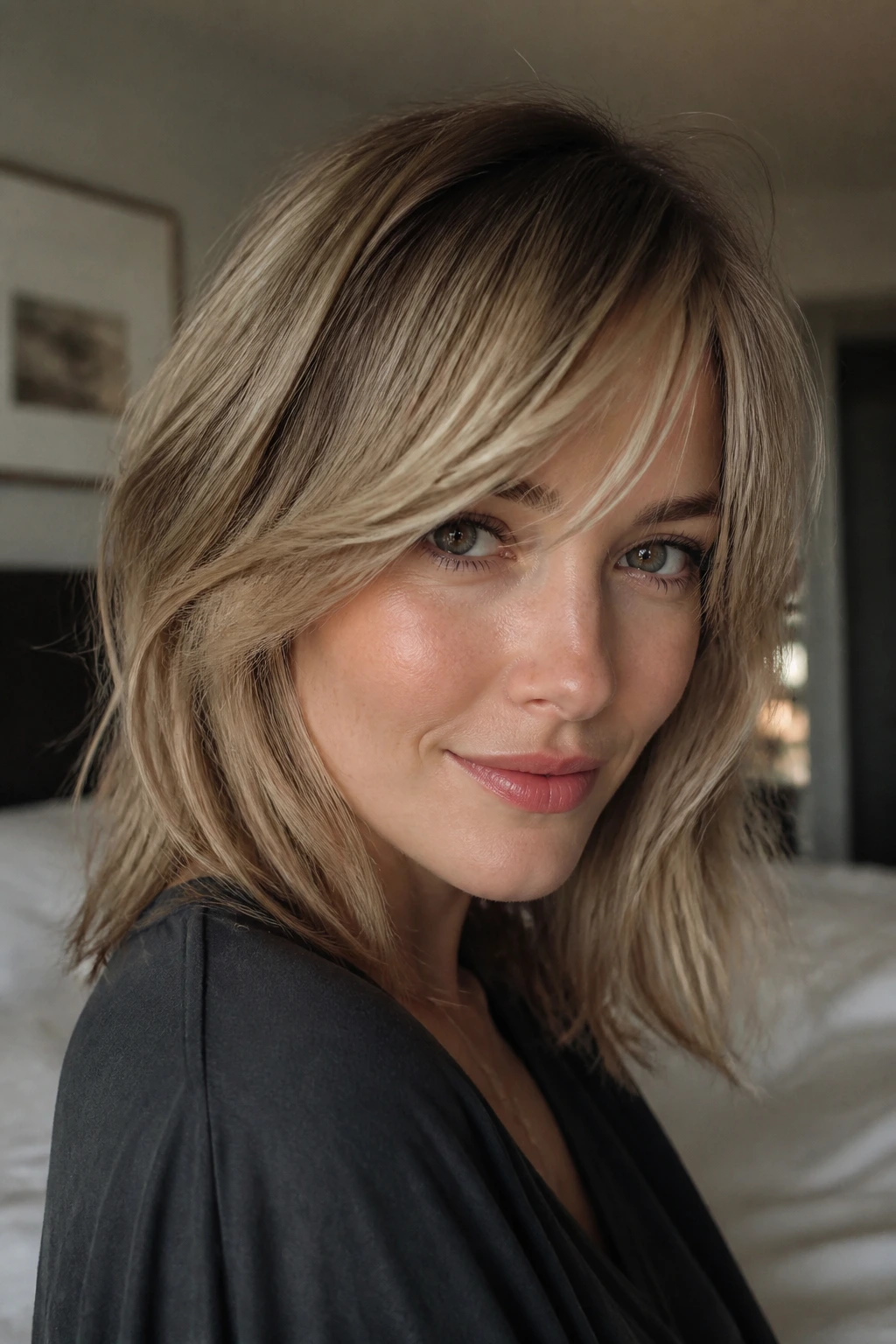
These are the gateway to bangs for people who are nervous about commitment. Instead of a thick chunk of hair, your stylist will cut into the ends, removing weight and creating a feathery, semi-transparent look. Because the hair is layered, it won’t just sit flat against your forehead. It has airiness.
Why It Works for Beginners
When you opt for wispy, you retain the ability to push the hair back into the rest of your cut if you have a day where you just don’t feel like styling. These bangs are designed to blend with the rest of your hair rather than acting as a standalone, rigid piece. They grow out over the course of three or four months without looking like a “problem” that needs an immediate fix.
Pro Tip: Use a tiny amount of lightweight texturizing spray on your fingers before you dry them. This keeps the wisps separated so they don’t clump together into one solid piece.
2. Deep Side Part Sweep
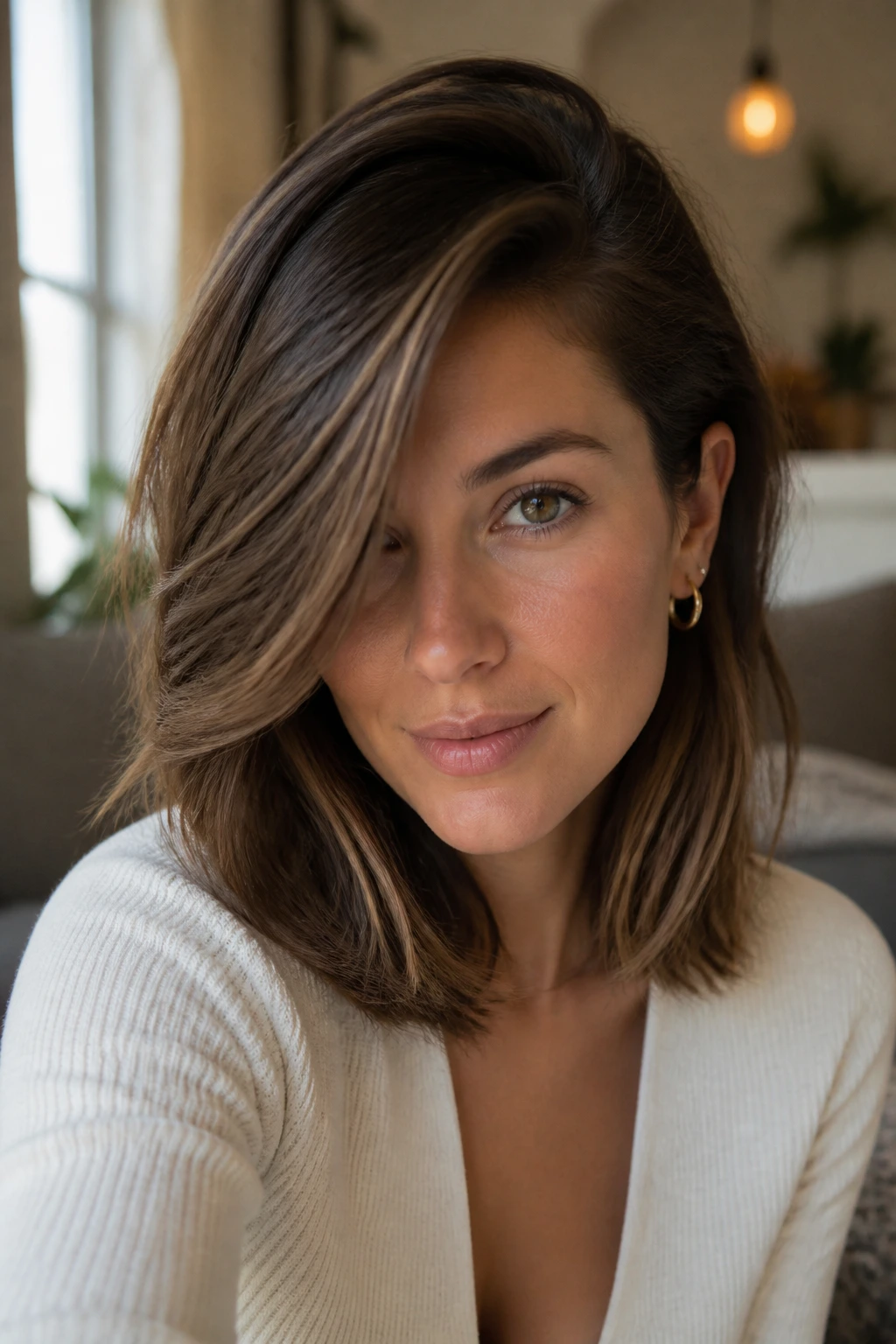
If you want drama, start here. This style relies on a deep, exaggerated side part that forces the hair to sweep across the forehead at a sharp angle. It is an instant face-lift. The diagonal line created by the hair breaks up the roundness of a face, making it look slightly more oval.
Maintenance Considerations
Because the part is so deep, your hair will have a natural tendency to want to fall back into its original “home” position. You have to train your roots. For the first two weeks, dry your damp hair in the opposite direction of where you want it to fall. This adds volume at the base, ensuring the sweep stays put throughout the day without falling flat against your eyebrow.
3. The Curtain-Hybrid Fringe
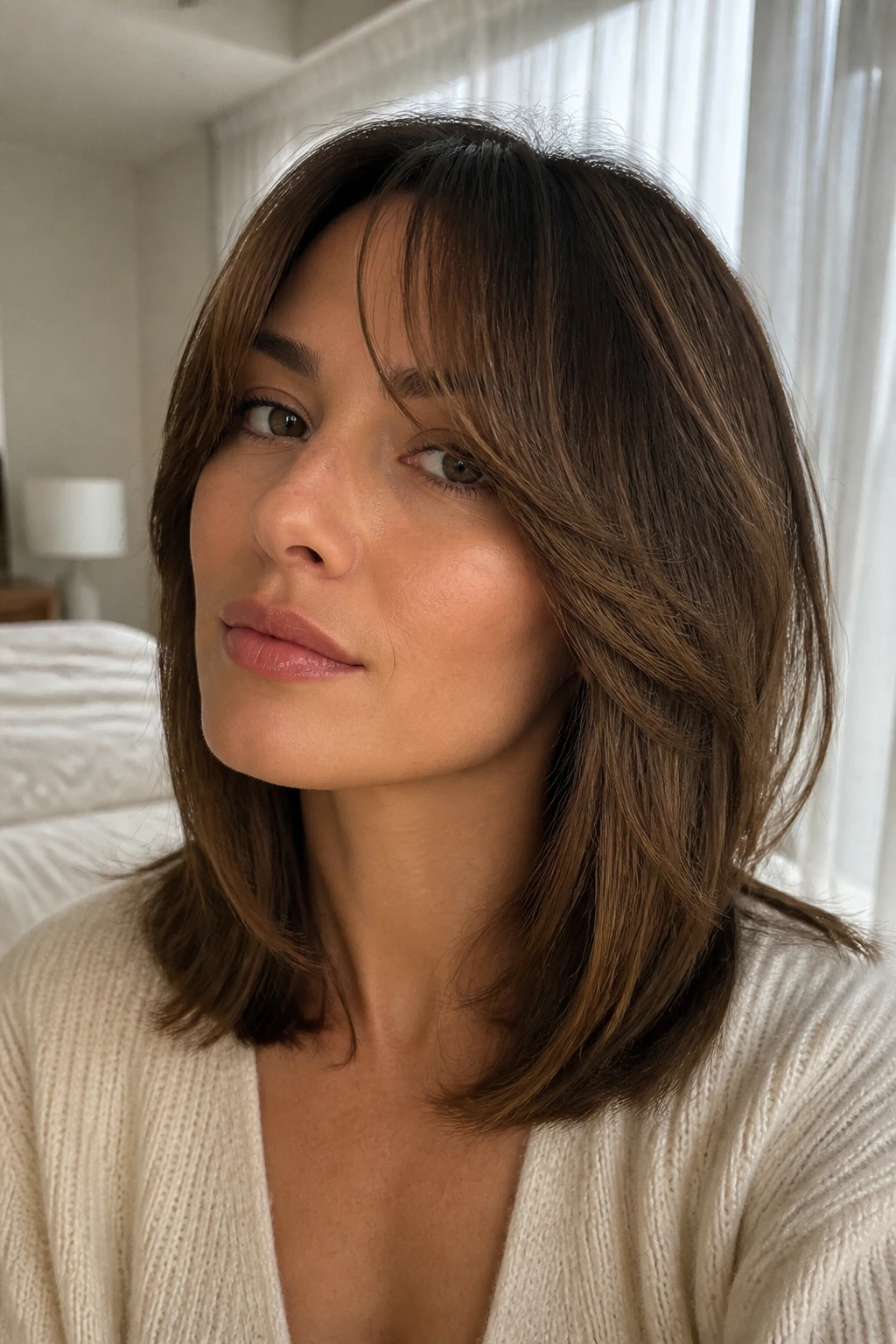
Curtain bangs are great, but sometimes they can feel a bit too retro or heavy. The hybrid version takes the “curtain” concept—longer pieces that frame the face—and blends them into a side sweep. It gives you the best of both worlds: the face-framing effect of a center part with the ease and accessibility of a side sweep.
It is particularly effective for medium hair that has layers throughout the rest of the cut. The bangs act as a bridge, connecting the shorter layers around your cheekbones to the longer length at your shoulders.
4. Textured Choppy Ends
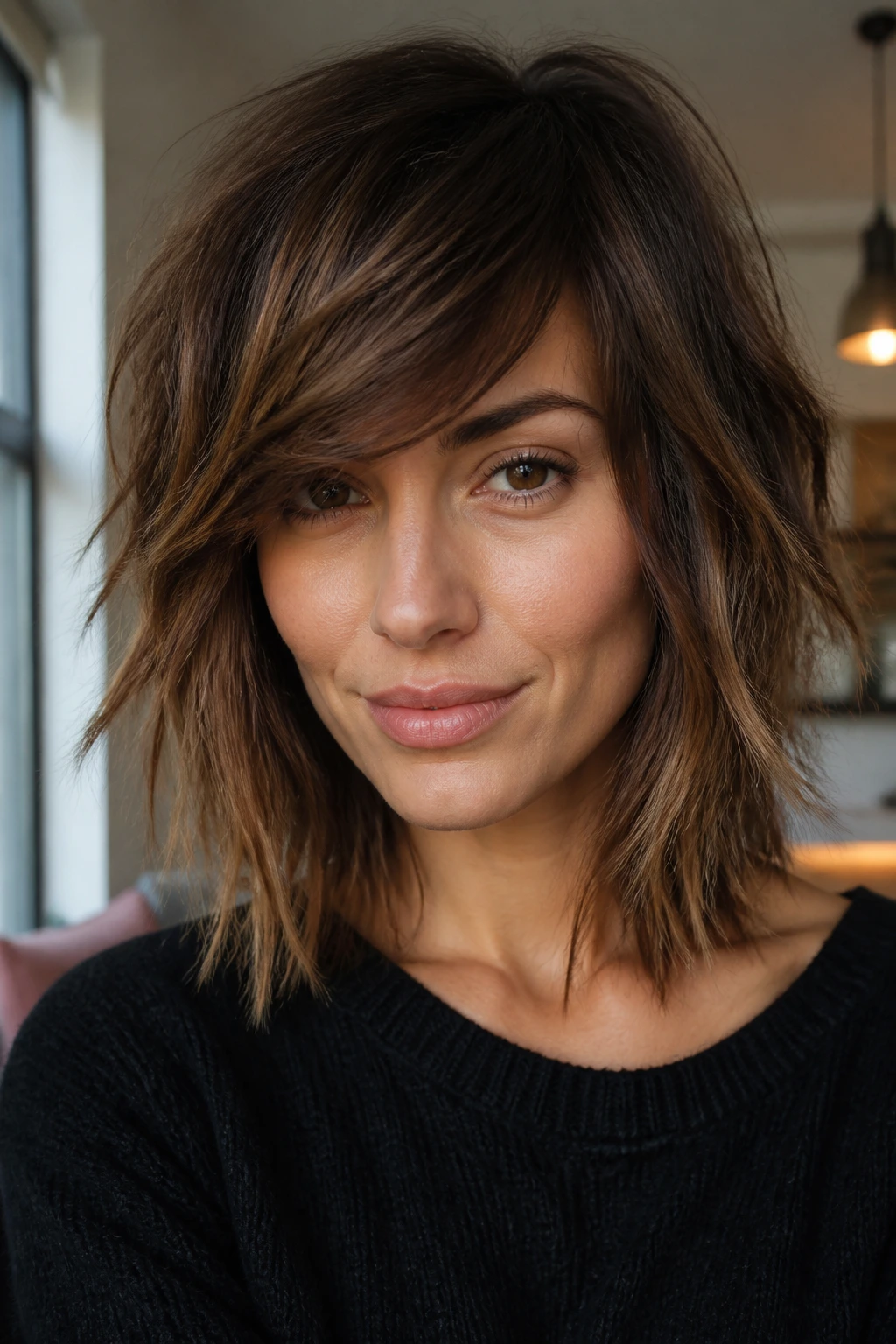
Think of these as the rock-and-roll cousin of wispy bangs. Instead of a soft, blended edge, you want a razor-cut look. The ends should be uneven, with some strands hitting your lash line and others grazing the top of your cheekbone. It looks best when it feels slightly messy, as if you just woke up and didn’t touch your hair.
The Right Styling Technique
Don’t use a round brush on these. A round brush will make them look too “done” and bouncy. Instead, use a flat brush to pull them to the side while you blast them with a hair dryer. Once they are dry, apply a matte pomade or a dry wax to the ends. You want to see the separation. The imperfections are what make this style cool.
5. Blunt-Cut Fringe Sweep
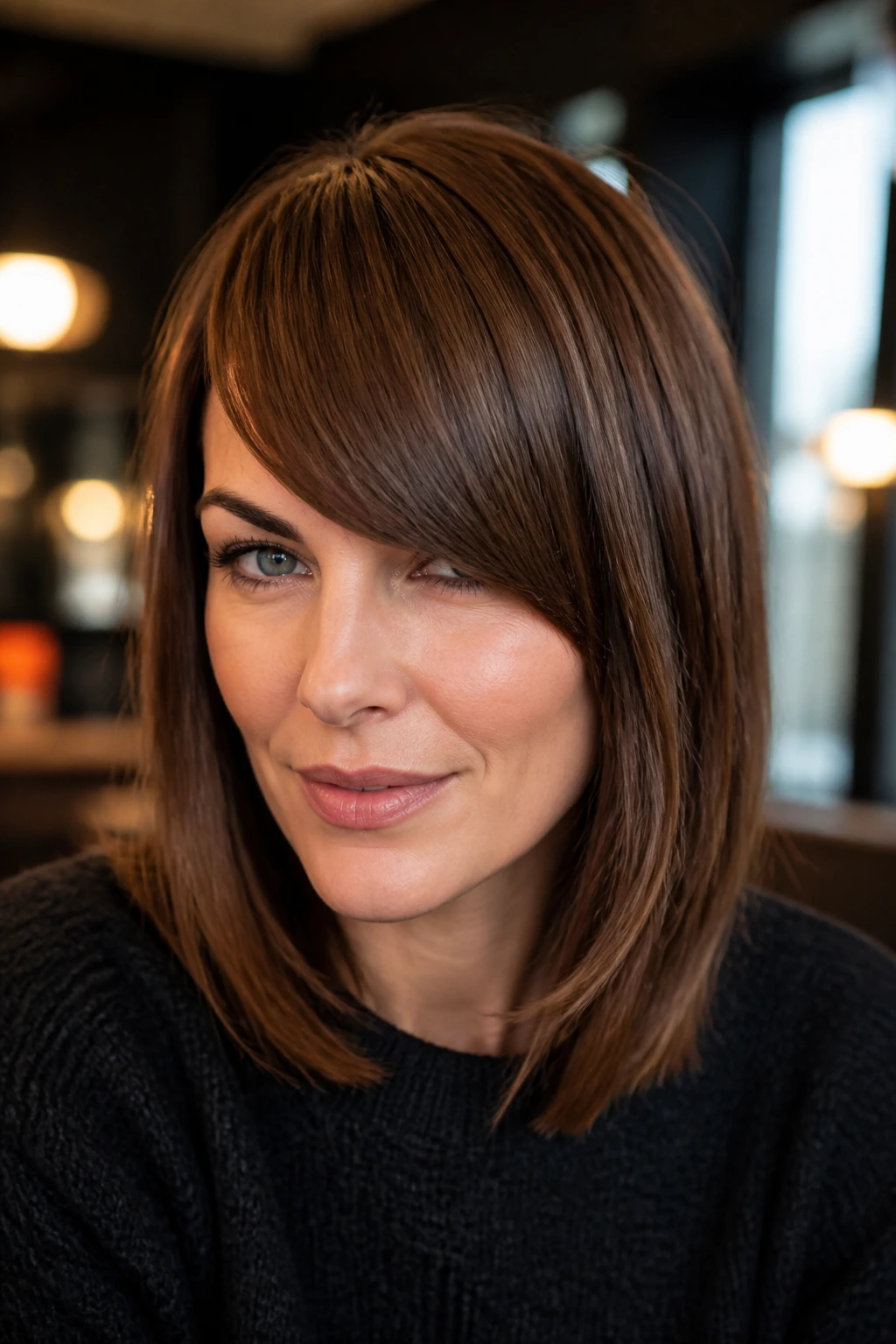
Most people think blunt bangs are meant to sit straight down, but that is a narrow view. You can take a blunt, heavy fringe and simply sweep it to the side. The contrast between the heavy weight of the hair and the soft, angled placement is striking. It creates a bold line across your face that feels very intentional and high-fashion.
This is a bolder choice. It requires enough hair density to pull off the “heavy” look. If your hair is on the finer side, this might look sparse rather than blunt. It works exceptionally well on darker hair colors, where the definition of the ends is clearly visible against the skin tone.
6. Face-Framing Tendrils
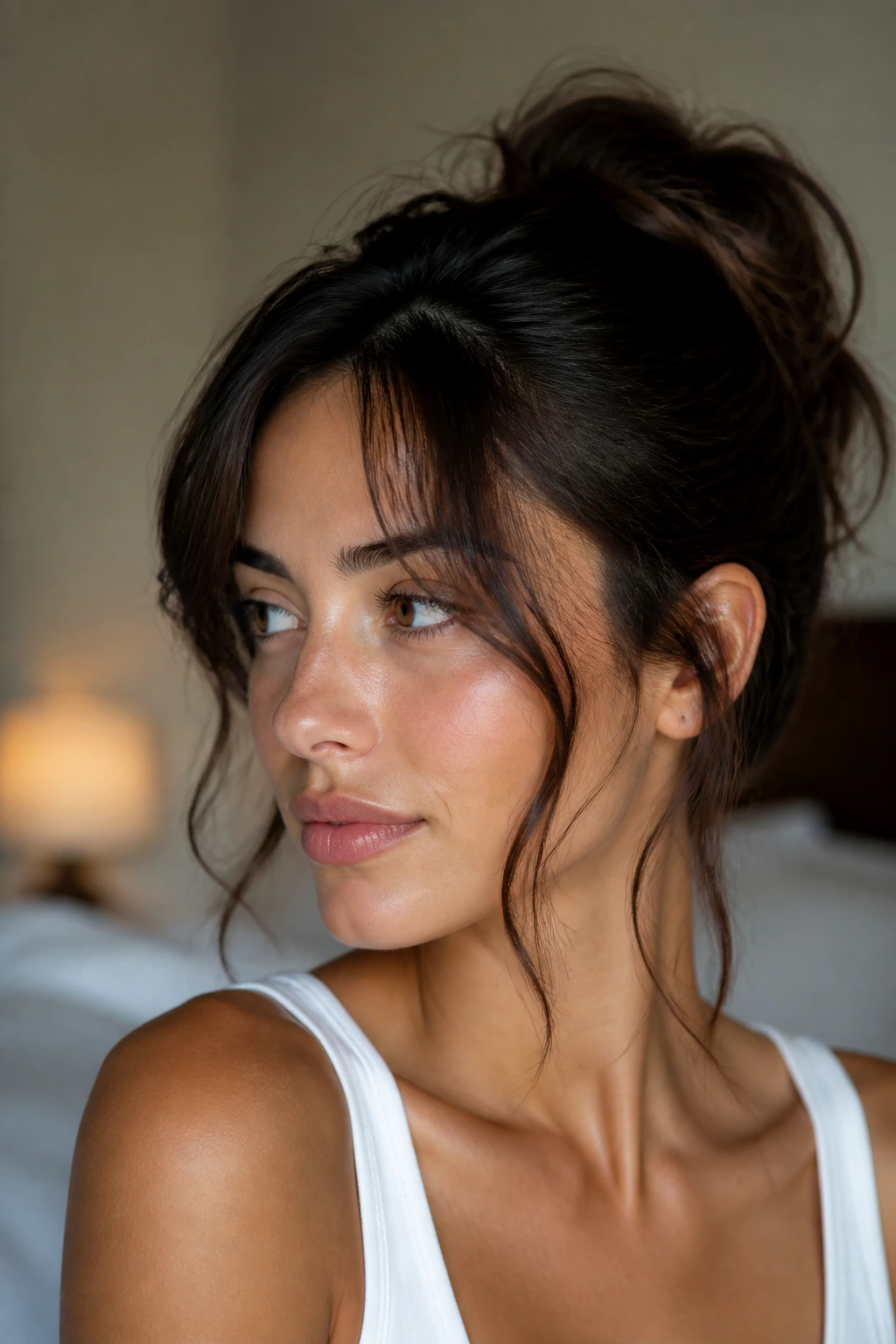
These are essentially the “accessories” of the bang world. They aren’t thick enough to cover your forehead entirely. Instead, they are thin, deliberately cut pieces that hang near the temples. They are designed to soften the edges of your face, especially when you wear your medium-length hair up in a messy bun or a ponytail.
How to Achieve the Look
- Section off a small triangle of hair at your hairline.
- Cut these pieces at a sharp diagonal, starting short near the bridge of the nose and getting longer toward the jawline.
- Use a flat iron to give them a very slight, barely-there bend.
- Let them fall naturally; do not tuck them behind your ears.
7. Vintage Hollywood Sweep
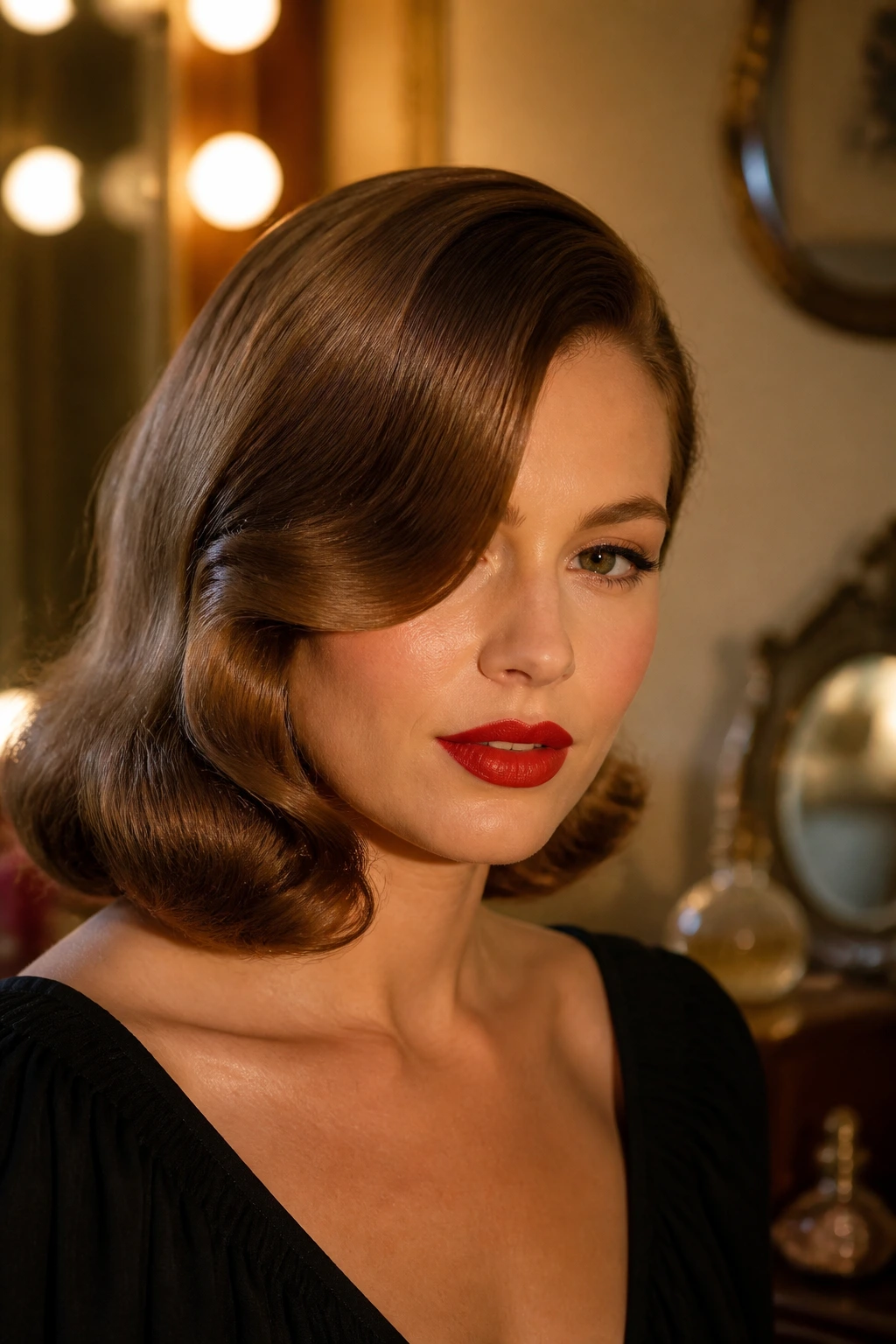
Think of the screen sirens of the 1940s. This look is all about gloss, shine, and a controlled, structured wave. To achieve this, your side-swept bangs need to have a bit of length—they should graze the top of your cheekbone. You are not going for a “piecey” look here; you are going for a seamless, continuous flow of hair.
To pull this off, you need a high-quality boar bristle brush. It creates the tension required to smooth the cuticle while you blow-dry. This style is not about volume at the roots; it is about sleekness. It pairs perfectly with medium-length bobs or lobs that have a clean, finished edge.
8. Choppy Piecey Bangs
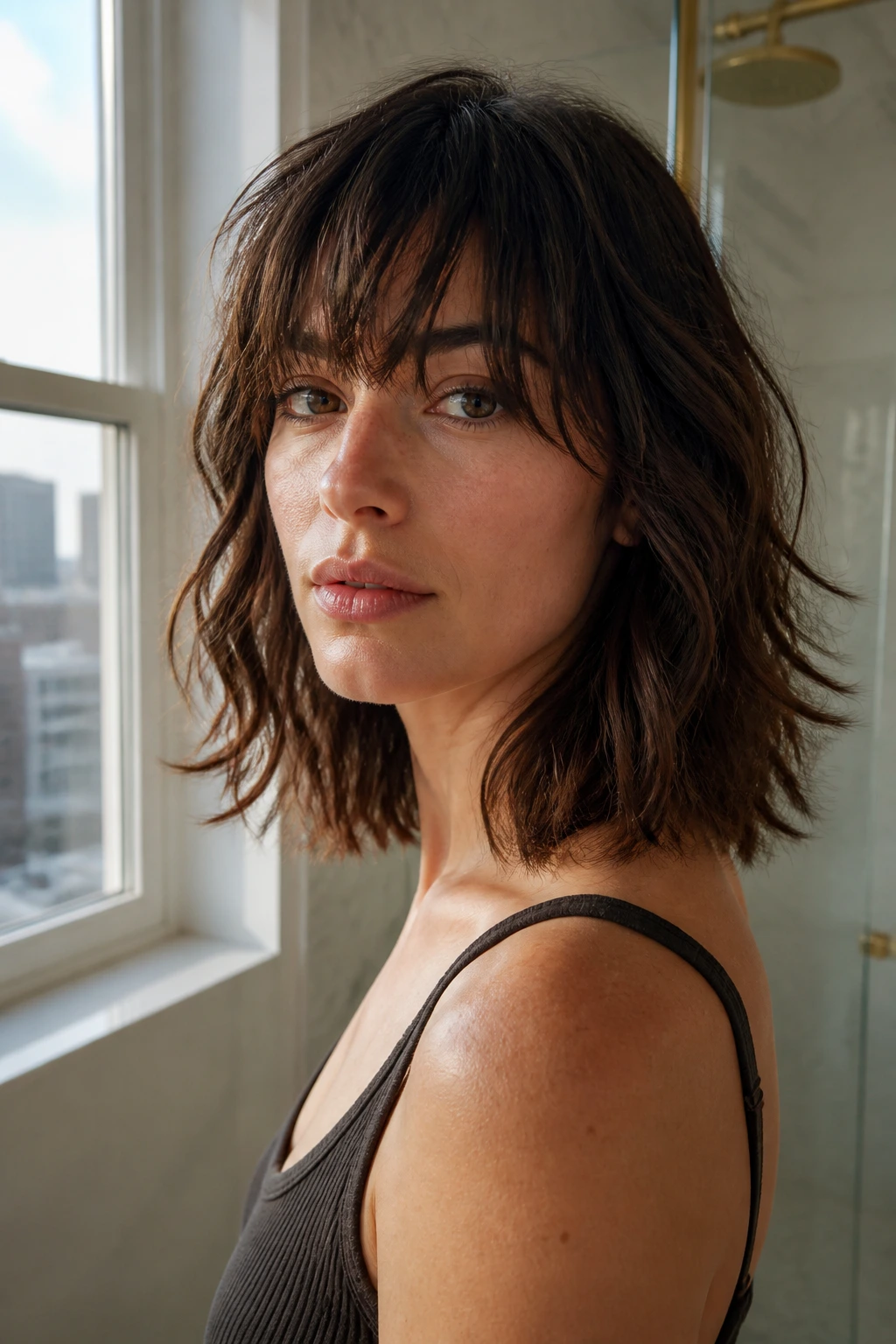
This style is about controlled chaos. You want enough density that it covers the forehead, but enough texture that you can see through it in spots. It is a fantastic option if you have wavy hair because it leans into the natural movement of your strands rather than fighting it.
Why This Style Succeeds
It is low-maintenance. Because the bangs are already cut to look “messy” and textured, you don’t have to stress about them being perfectly styled. If they get a little windblown or out of place, it just adds to the vibe. It is the definition of “I woke up like this” hair.
9. Curly Texture Integration
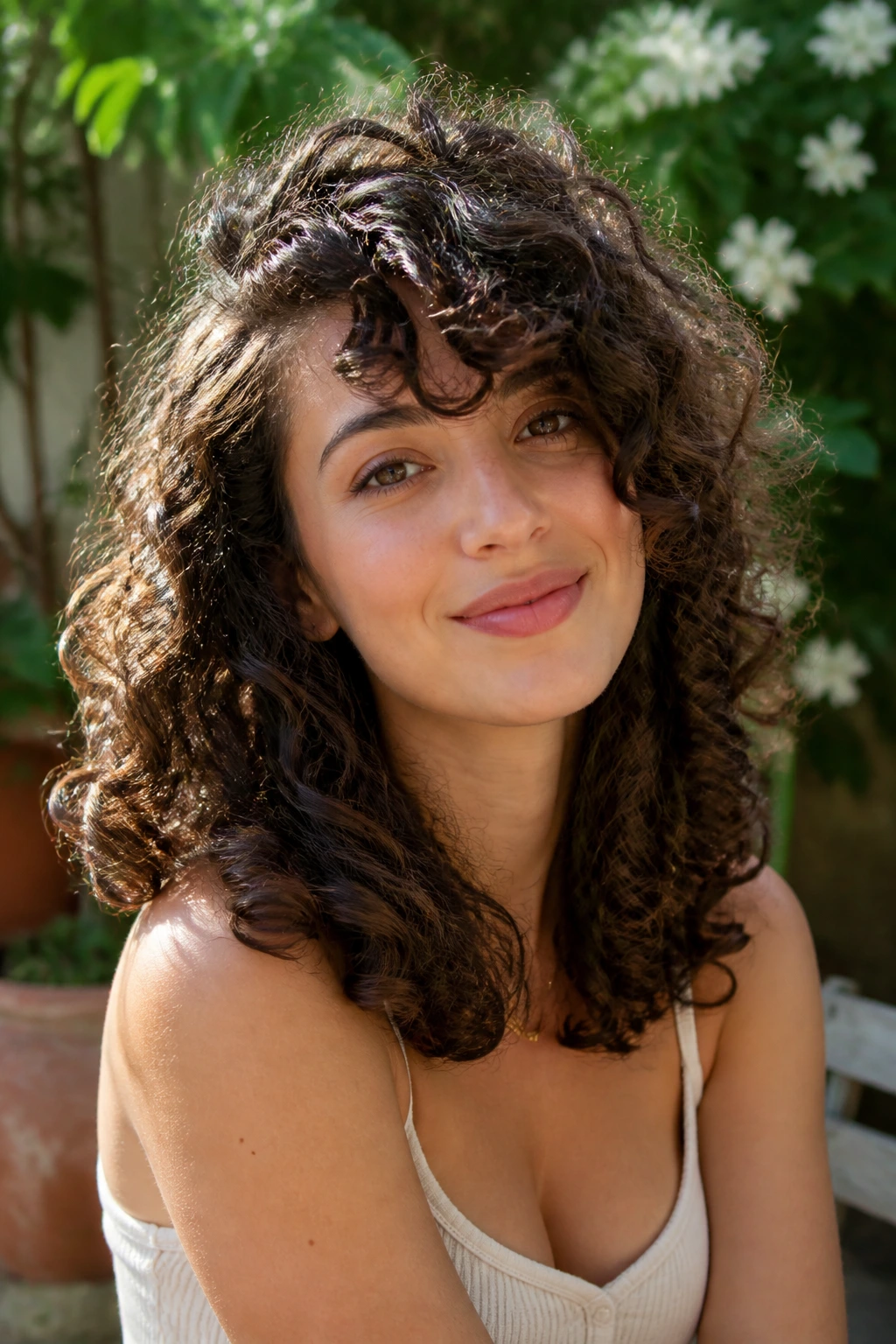
For a long time, the beauty industry told people with curly hair to avoid bangs. That was bad advice. Curly, side-swept bangs are beautiful. The key is to cut them when the hair is dry, in its natural state. You cannot use a “standard” cutting technique, or they will spring up and disappear into your hairline.
The Curly Bang Rule
Cut them longer than you think you need. A good stylist will pull a curl, cut it, and let it bounce. Side-swept bangs on curly hair provide a beautiful frame and stop the “triangle” shape that sometimes happens with curly cuts, where the hair is flat at the top and wide at the bottom.
10. Heavy Fringe Sweep
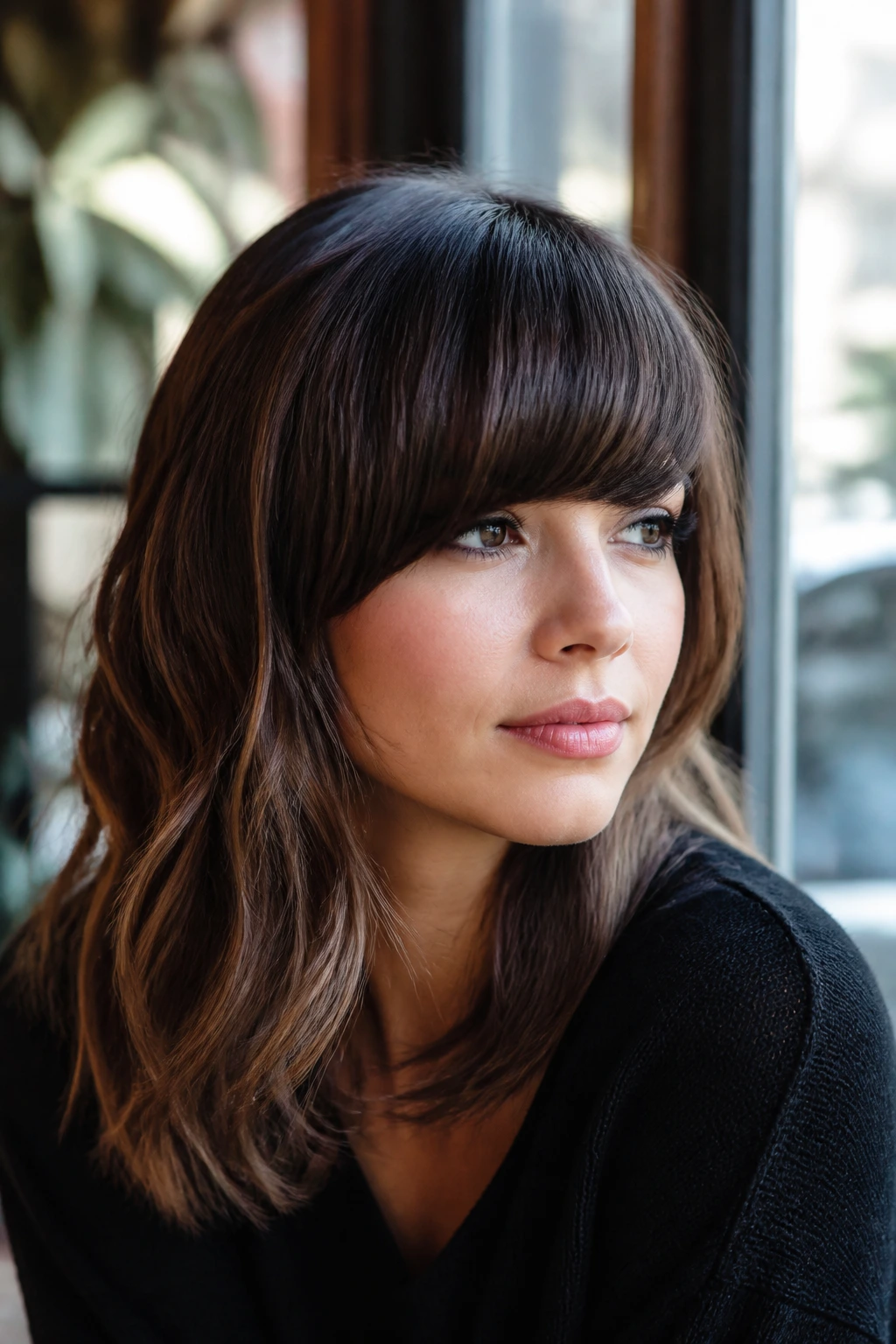
This look leans into the weight. It is thick, substantial, and covers a good portion of the forehead. This is the best style for someone with a high forehead who wants to minimize the exposed skin. It creates a strong horizontal line that balances the face.
Pro Tip: If your hair is thick, ask your stylist to “slice” into the underside of the bangs. This removes bulk so they don’t look like a helmet, but it keeps the thick, blunt appearance on top.
11. Long, Tapered Layers
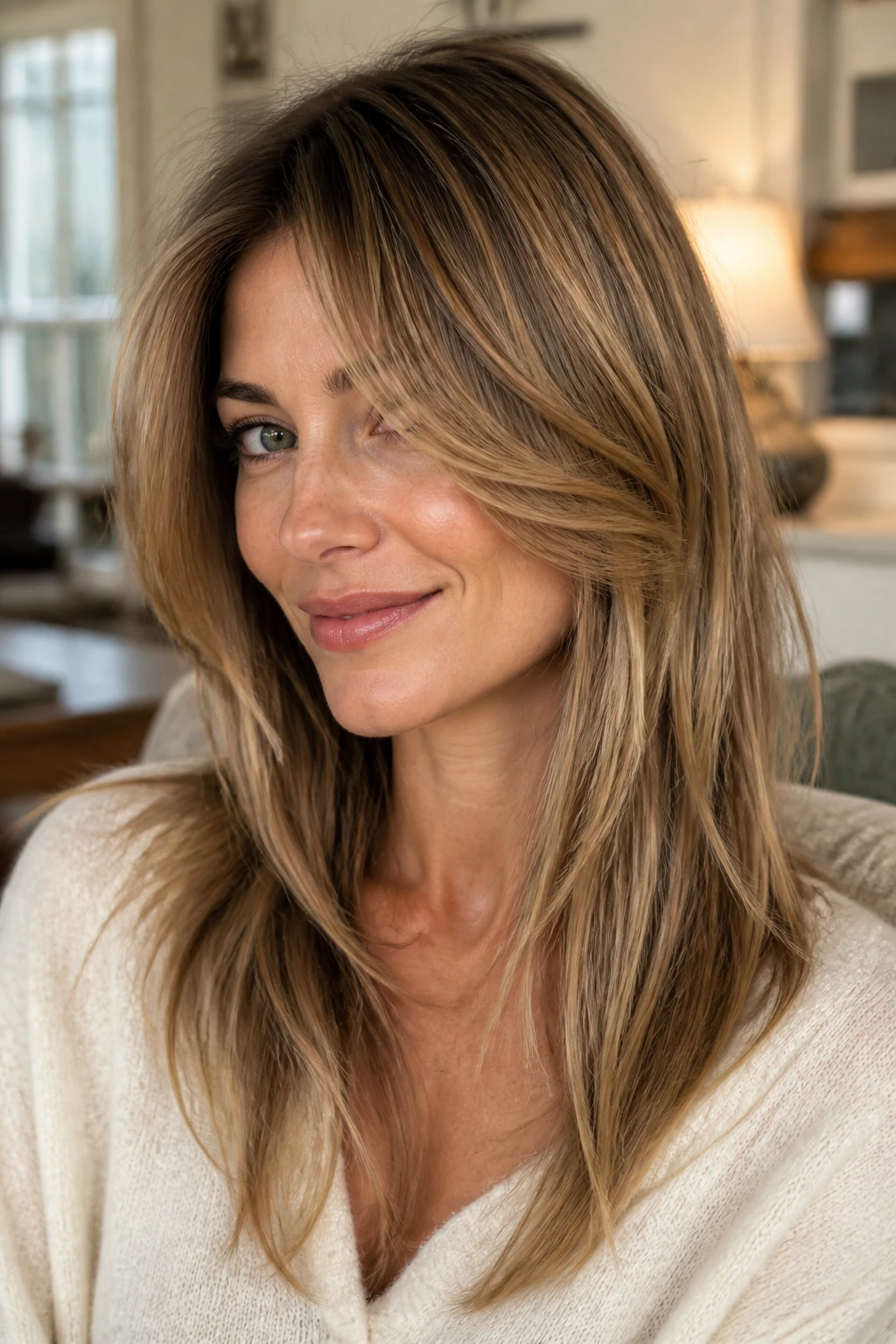
These are not traditional bangs in the sense that they don’t cut across the forehead. They are long, face-framing layers that start near the eye and taper down to the chin. They sweep across the face, giving the illusion of a bang without the commitment of actually cutting a short fringe.
These are the most versatile option on this list. You can tuck them away, you can pin them back, or you can let them hang. They require almost zero maintenance, making them ideal for someone who isn’t ready for a drastic chop.
12. Subtle “Starter” Bangs
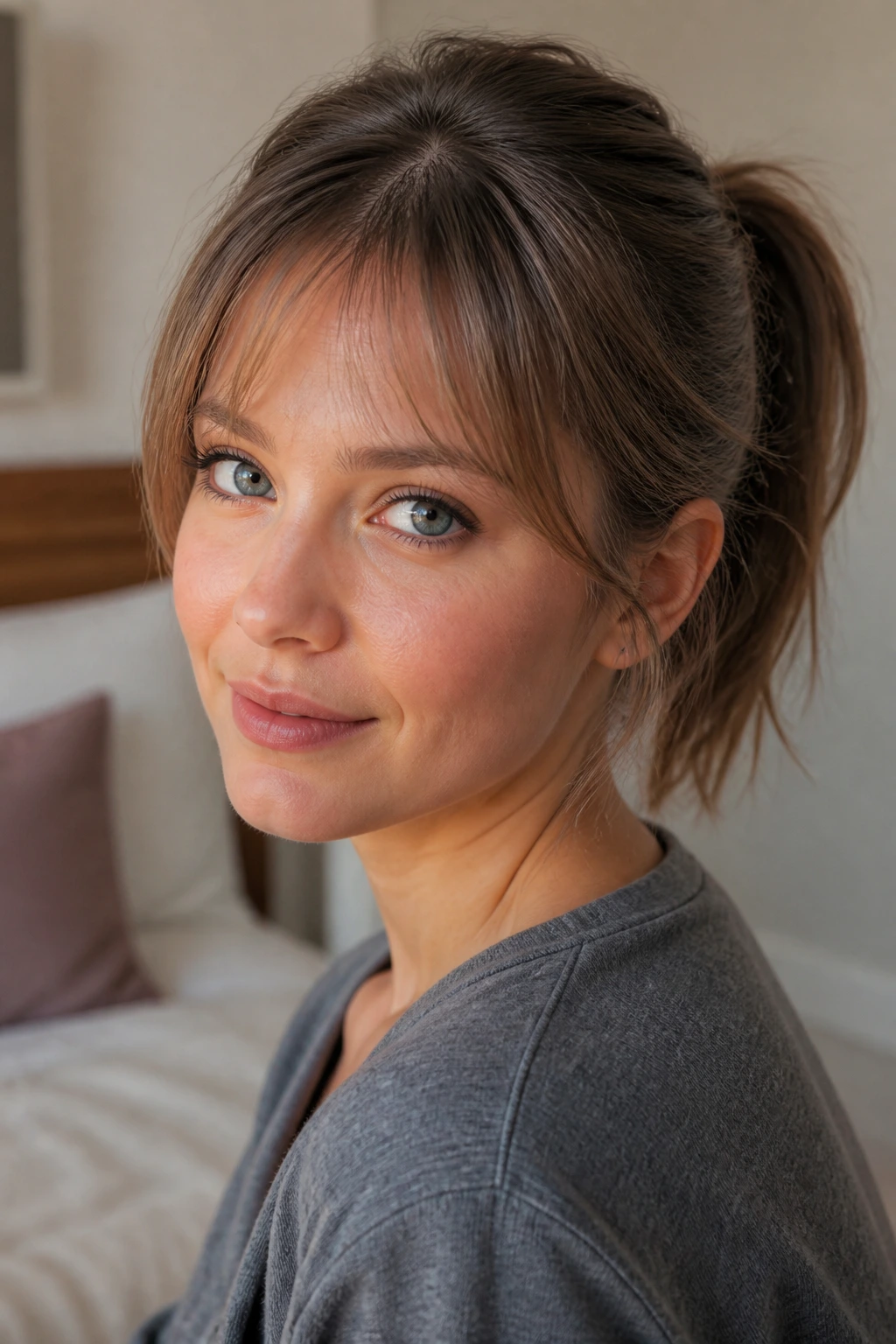
Sometimes you just want a small change. Subtle, starter bangs are light, thin, and sit very close to the natural part. They are almost like a “fringe-lite.” They don’t take up much hair real estate.
They are perfect for someone who wears their hair in a ponytail 90% of the time. These bangs fall forward naturally, framing the face even when the rest of the hair is pulled back. It makes a basic ponytail look styled and intentional.
13. Shaggy Rocker Style
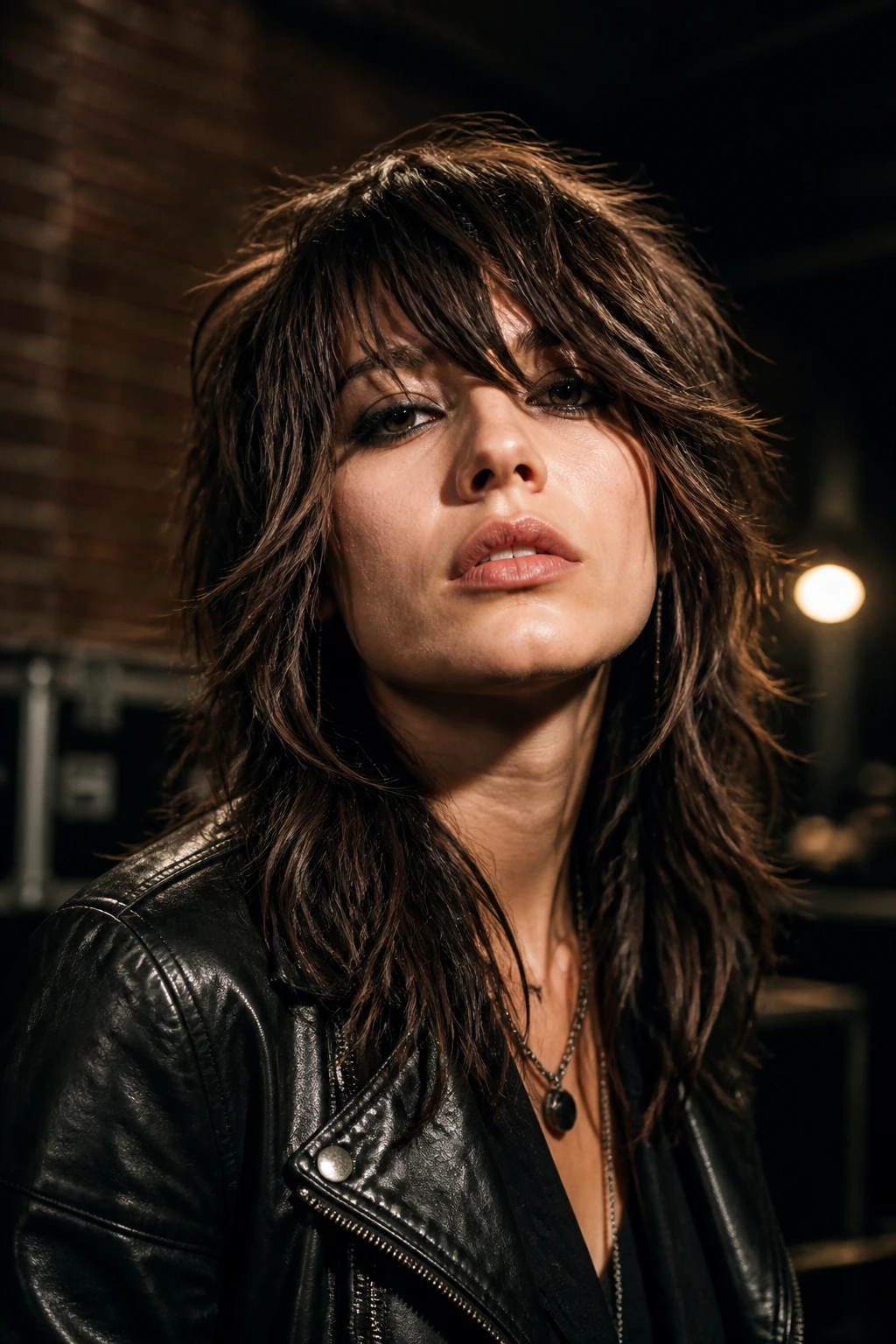
This style is for the brave. It is inspired by 70s rock icons. The bangs are long, piecey, and blend seamlessly into shaggy, layered hair. They look best when paired with messy, natural textures—think bedhead meets concert venue.
How to Style It
- Don’t over-wash: Second-day hair has more grip, which helps this style hold its shape.
- Use sea salt spray: It adds the grit necessary for that “shaggy” look.
- Avoid heat tools: Let them air dry. The more natural they look, the better.
14. Asymmetrical Bob Integration
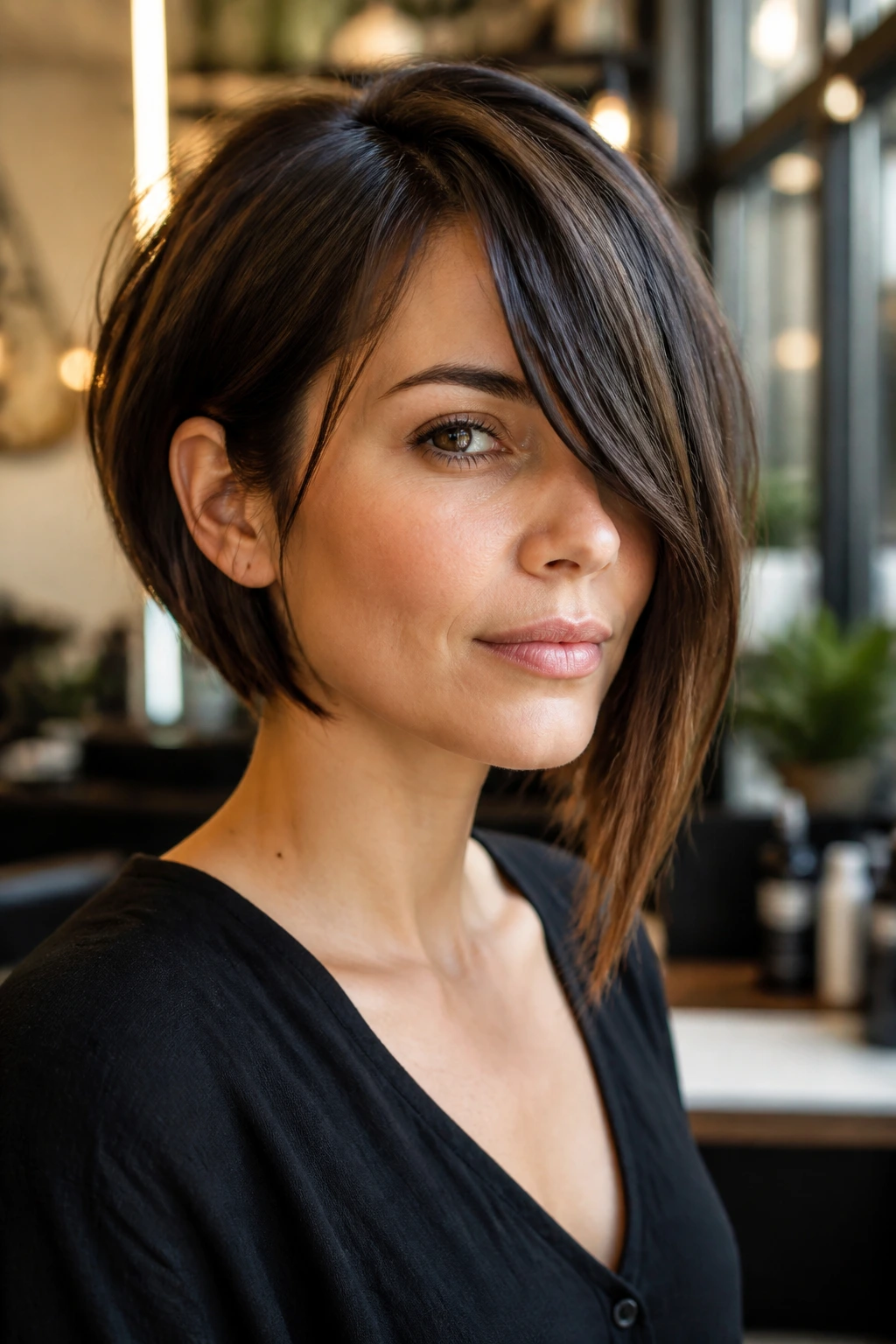
If you have a medium-length asymmetrical bob (where one side is longer than the other), side-swept bangs are the perfect way to emphasize that geometry. The sweep of the bangs should follow the direction of the longer side of the bob. It creates a continuous line of flow that moves the eye across the face.
This is a technical cut. It requires precision. If the bangs are cut too short, they will look disjointed from the rest of the shape. If they are cut too long, they might get in your eyes. Ask for “eye-length” sweeps to start—you can always go shorter, but you can’t add length back on.
15. Side-Swept with Highlights
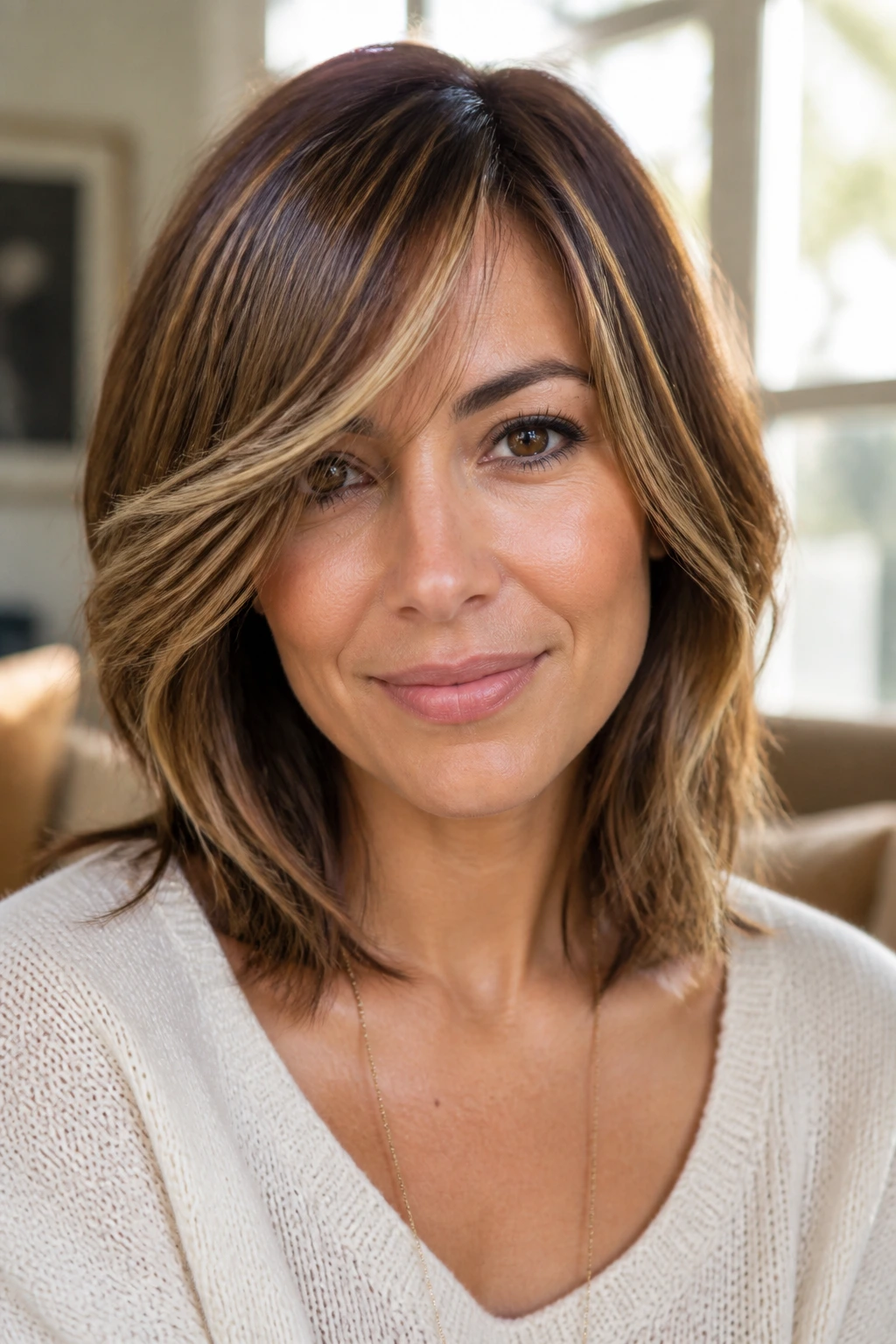
Color placement can change the look of your bangs entirely. By adding subtle, face-framing highlights (sometimes called money pieces) to your side-swept bangs, you draw attention to the area around your eyes and cheekbones. It lightens the face and adds dimension to your hair color.
The trick is to keep the highlights soft. You do not want heavy, chunky stripes. You want a “ribbon” of lighter color that mimics where the sun would naturally hit your hair.
16. Soft Undercut
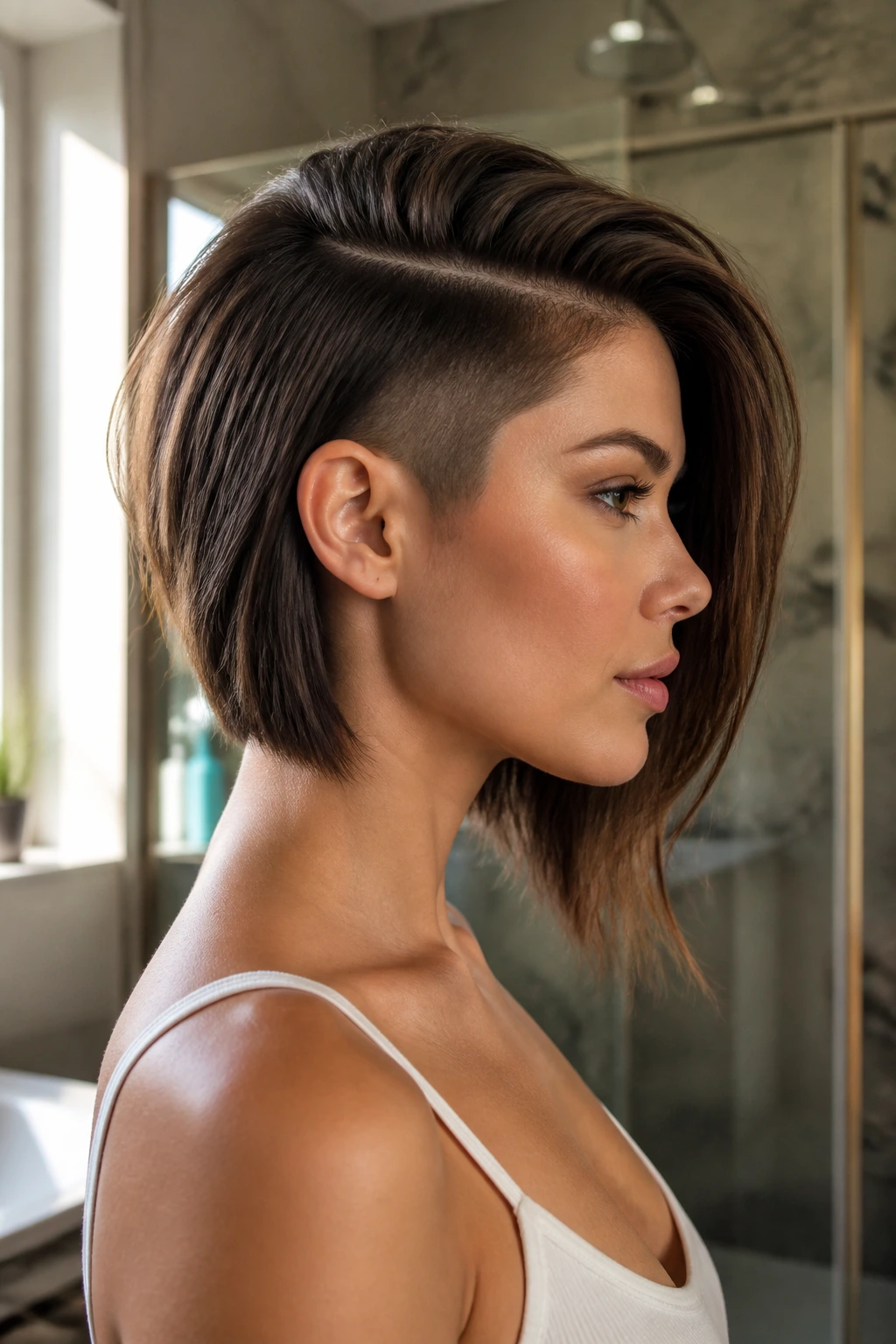
This is a hidden secret. For very thick hair that tends to puff up or feel heavy, some stylists will do a very fine, subtle undercut on the bangs. They take a tiny section of hair at the very base of the fringe—the part closest to the forehead—and cut it much shorter.
This short layer acts as a “prop” for the rest of the bangs, pushing them up and to the side, preventing them from falling flat against the skin. It is an engineering trick that makes your bangs look voluminous without you needing to use a can of hairspray.
17. Bottleneck Blend
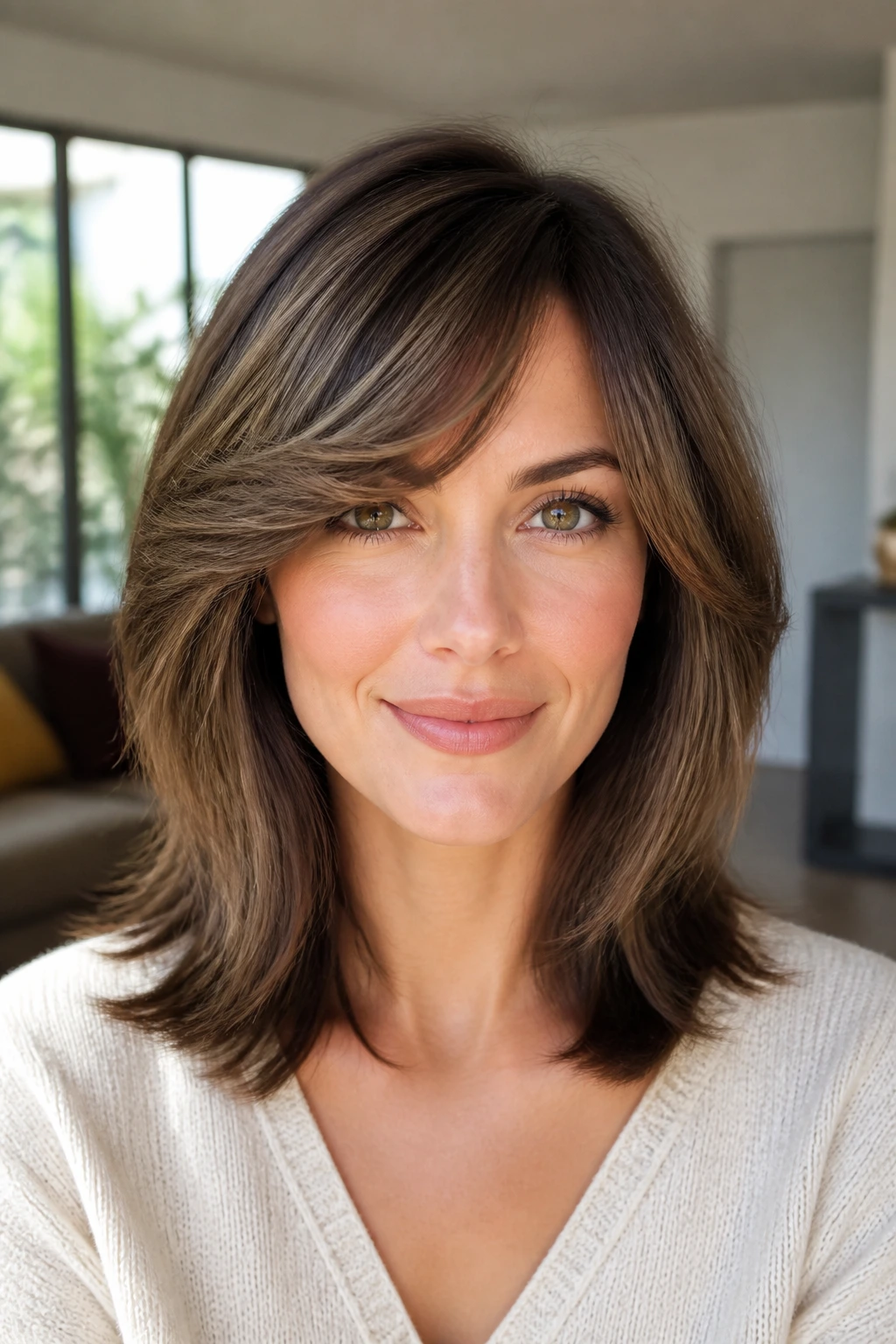
“Bottleneck” bangs have gained popularity because they are flattering on almost everyone. They start short in the center and get longer as they move toward the temples, creating a shape that mimics the neck of a bottle. When you sweep them to the side, they look like a soft, layered fringe.
They are less blunt than a curtain bang and more structured than a wispy bang. They offer a very feminine, soft silhouette. They are particularly great for people with square jawlines, as they help round out the features.
18. Voluminous Blowout Sweep
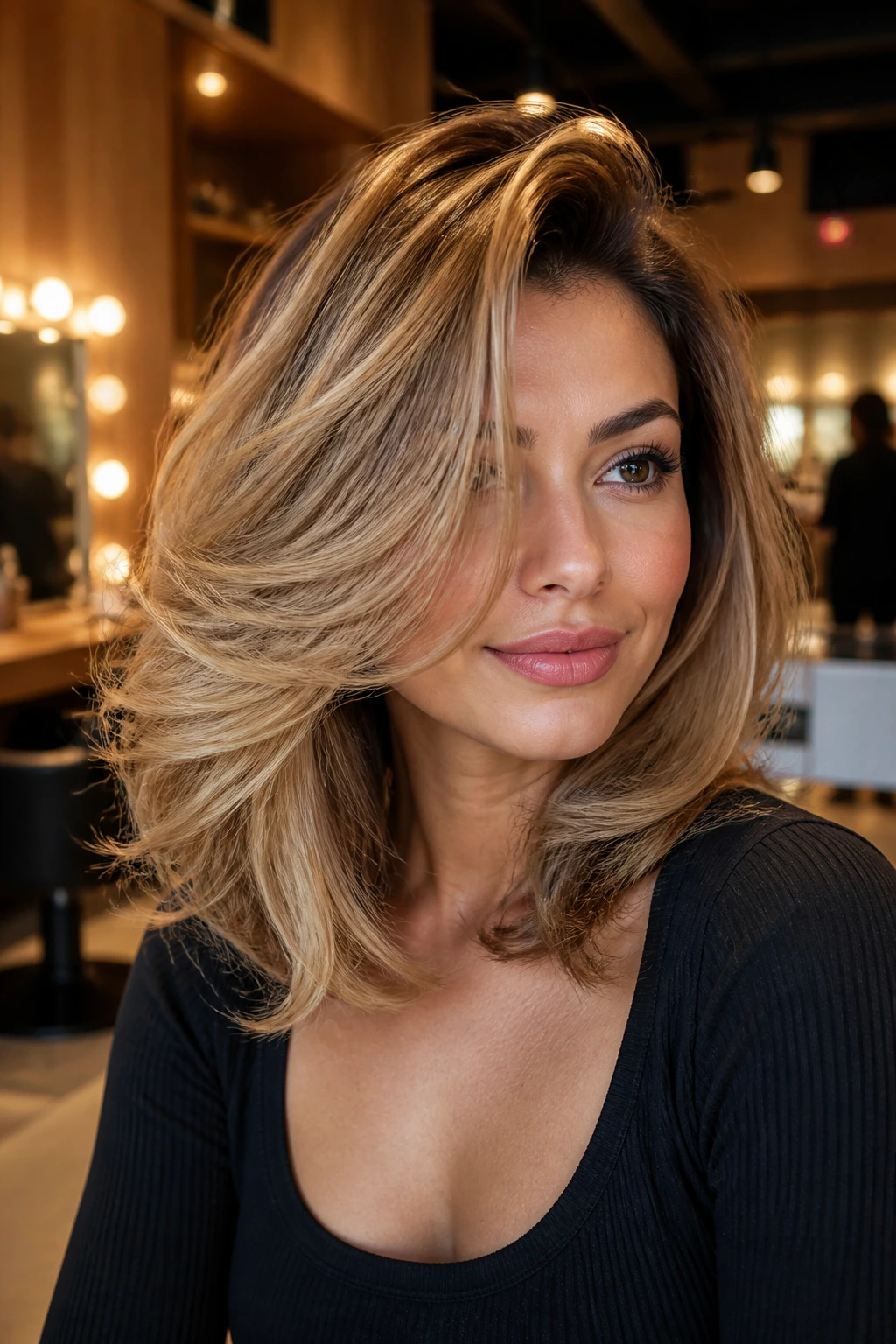
This is the “salon blowout” look. It requires a round brush and some patience. You aren’t just letting the bangs sit; you are actively molding them with heat and tension to create a “C” shape that sweeps away from the face.
The Process
- Use a medium-barrel round brush.
- Pull the bangs forward, then roll the brush backward and upward.
- Hit them with the hot setting of your dryer for 10 seconds.
- Crucial Step: Let them cool completely while still on the brush before releasing. This “sets” the volume.
19. Sleek and Polished
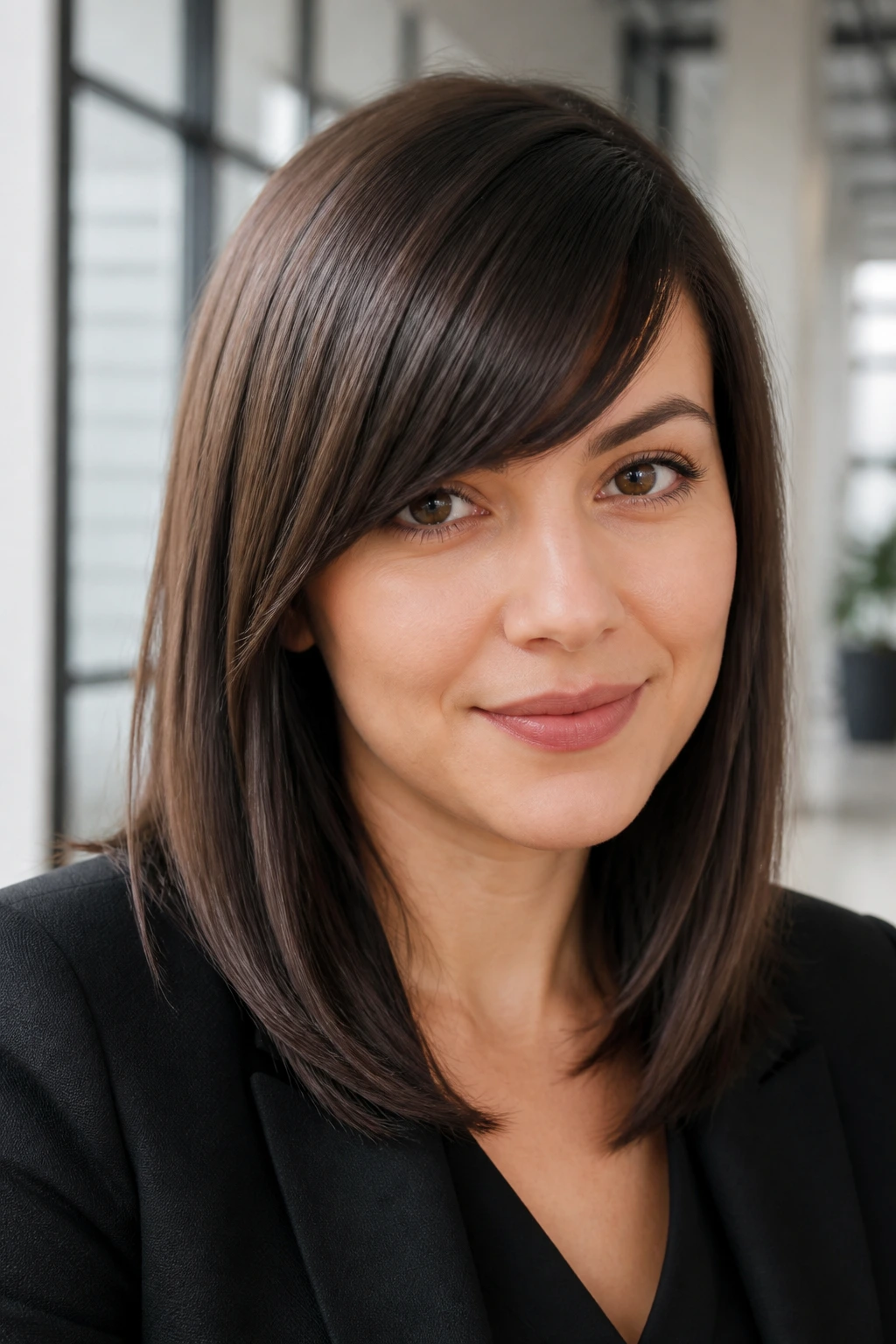
If you have stick-straight, healthy hair, this is a beautiful look. The bangs are cut to a precise angle, and they are styled to be completely smooth. There is no texture, no waves, just a sharp, clean sweep. It looks very sophisticated and works well for office environments or formal settings.
This style demands high-shine products. Use a light finishing oil or a shine spray after you straighten them to get that glassy look. Keep in mind that this style will reveal any imperfections in your trim, so you will need to get them cleaned up at the salon every 4-6 weeks.
20. Messy Bedhead Fringe
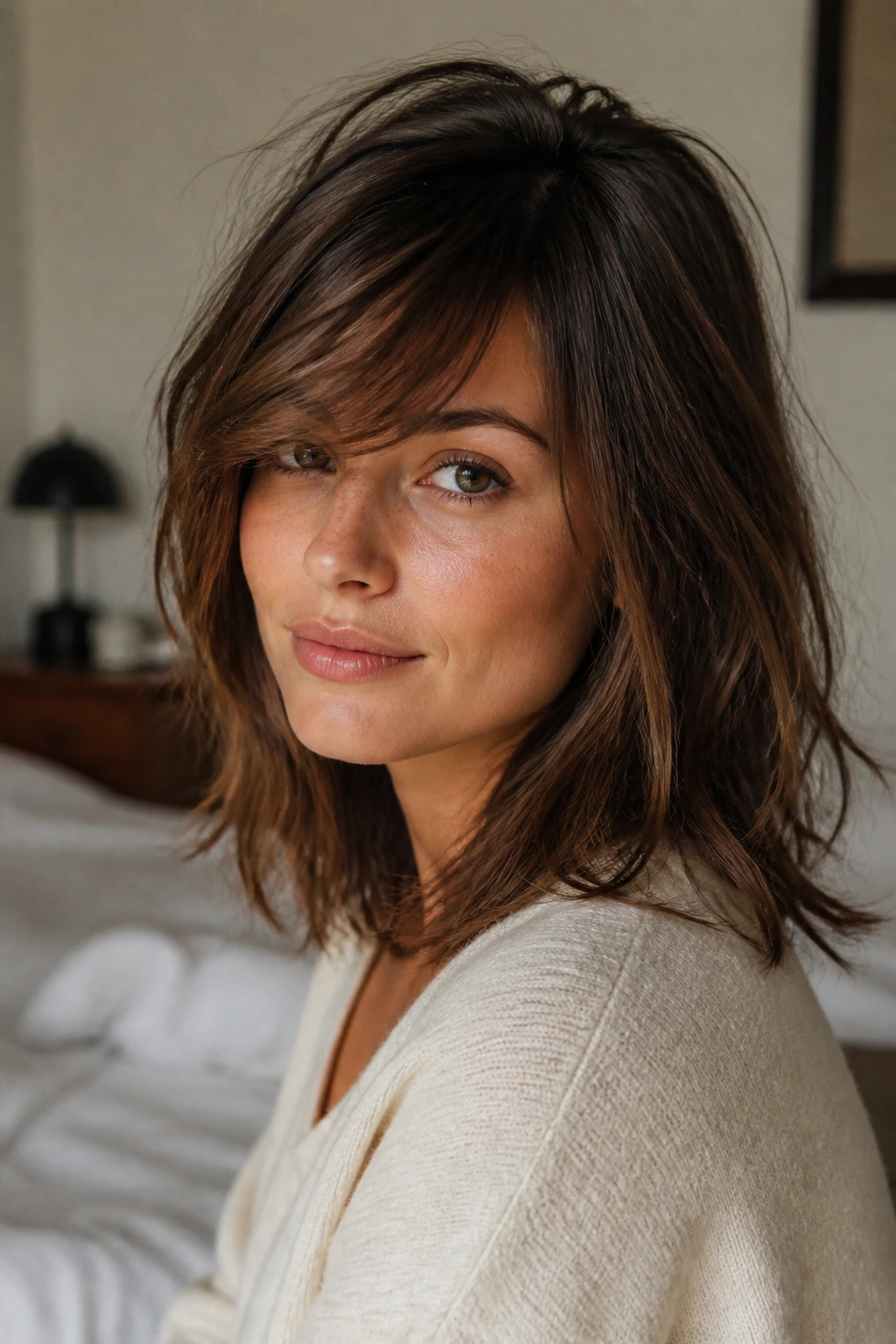
Sometimes, you just want to look effortless. This style is about taking your side-swept bangs and roughing them up. It is the opposite of the polished look. You want them to look like they haven’t been brushed in a few hours.
How to achieve the “undone” aesthetic:
- Use your hands, not a brush.
- Work a little bit of texturizing paste through the bangs.
- Don’t try to make them “perfect.” The more random they are, the better.
- This style is the easiest to manage for those with medium, wavy hair.
21. Wispy Pastel Tips
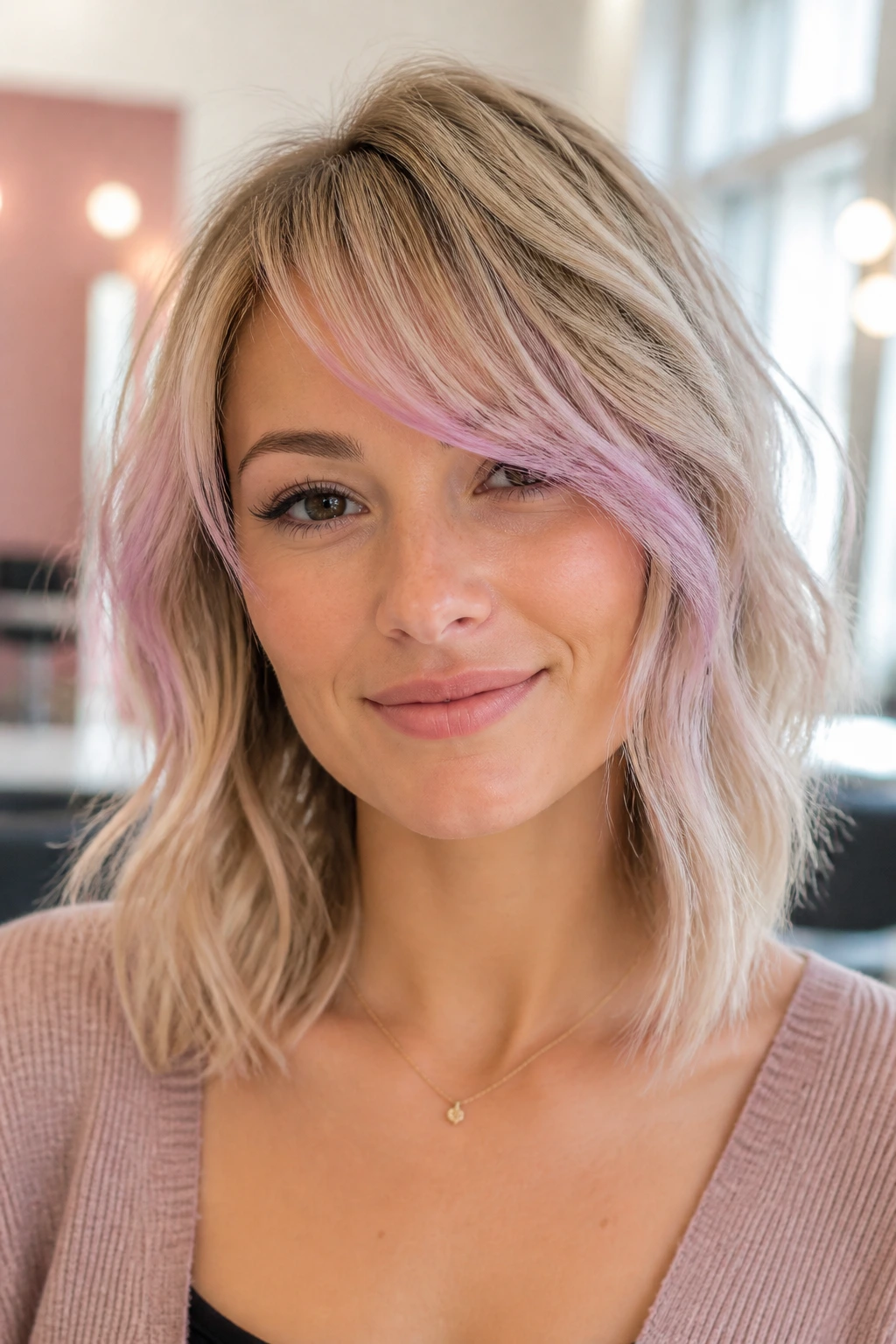
This is a fun, aesthetic-driven idea. If you have light hair, or if you are willing to get a temporary color treatment, adding a subtle pastel tone—like lavender, soft pink, or dusty blue—to just the tips of your side-swept bangs is a great way to express personality.
Because bangs are such a small section of hair, it’s low risk. If you decide you don’t like the color, you are only dealing with a small amount of hair, and it will likely wash out or grow out quickly.
22. Retro 70s Flip
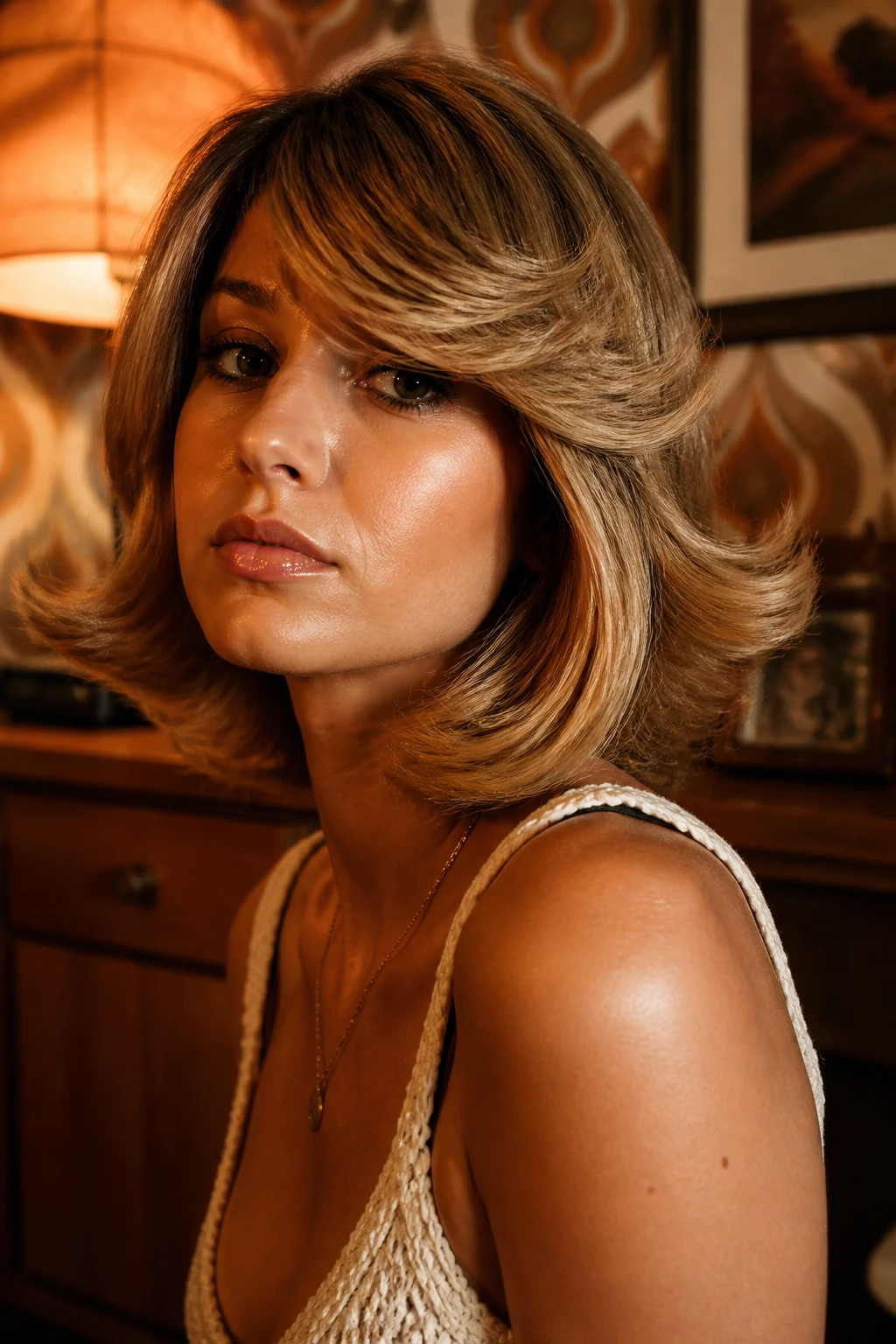
The 70s are having a moment, and the flip is the best way to capture that energy. This look involves blow-drying the ends of your side-swept bangs away from your face in a dramatic flick. It opens up your features and creates a very playful, retro silhouette.
It works exceptionally well with medium-length shags or layered cuts. It gives off a very confident, “I know what I’m doing” vibe.
23. Side-Swept Braids
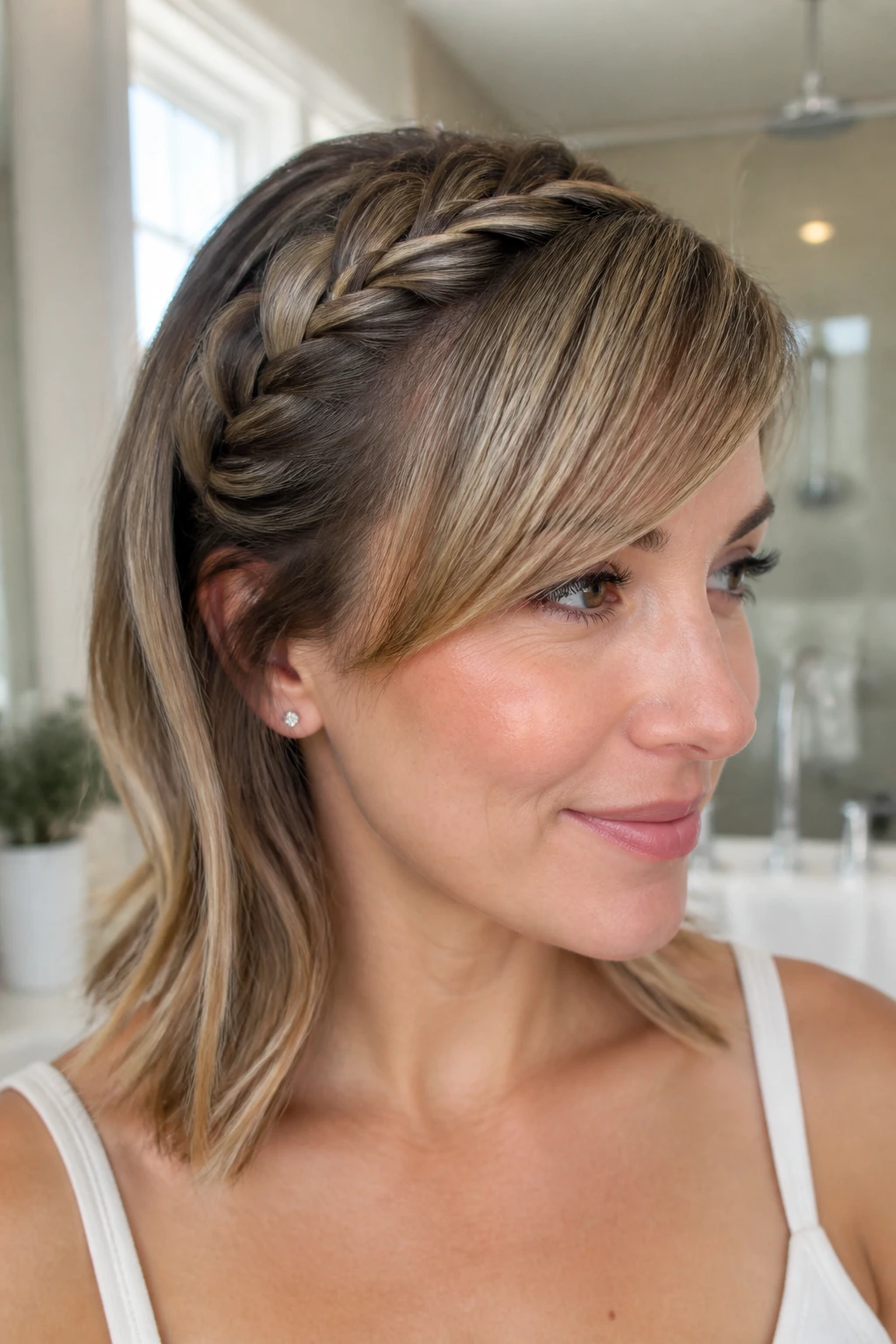
This is more of a styling technique than a cut. If your side-swept bangs are long enough, you can incorporate them into a small French braid or a Dutch braid that runs along your hairline. It keeps the hair out of your eyes while still maintaining the “sweep” look.
It is a lifesaver for days when you didn’t have time to wash your hair. A braid hides grease and adds a level of detail that makes it look like you put a lot of effort into your hair when you really just spent 30 seconds braiding.
24. Tucked-Behind-Ear Fringe
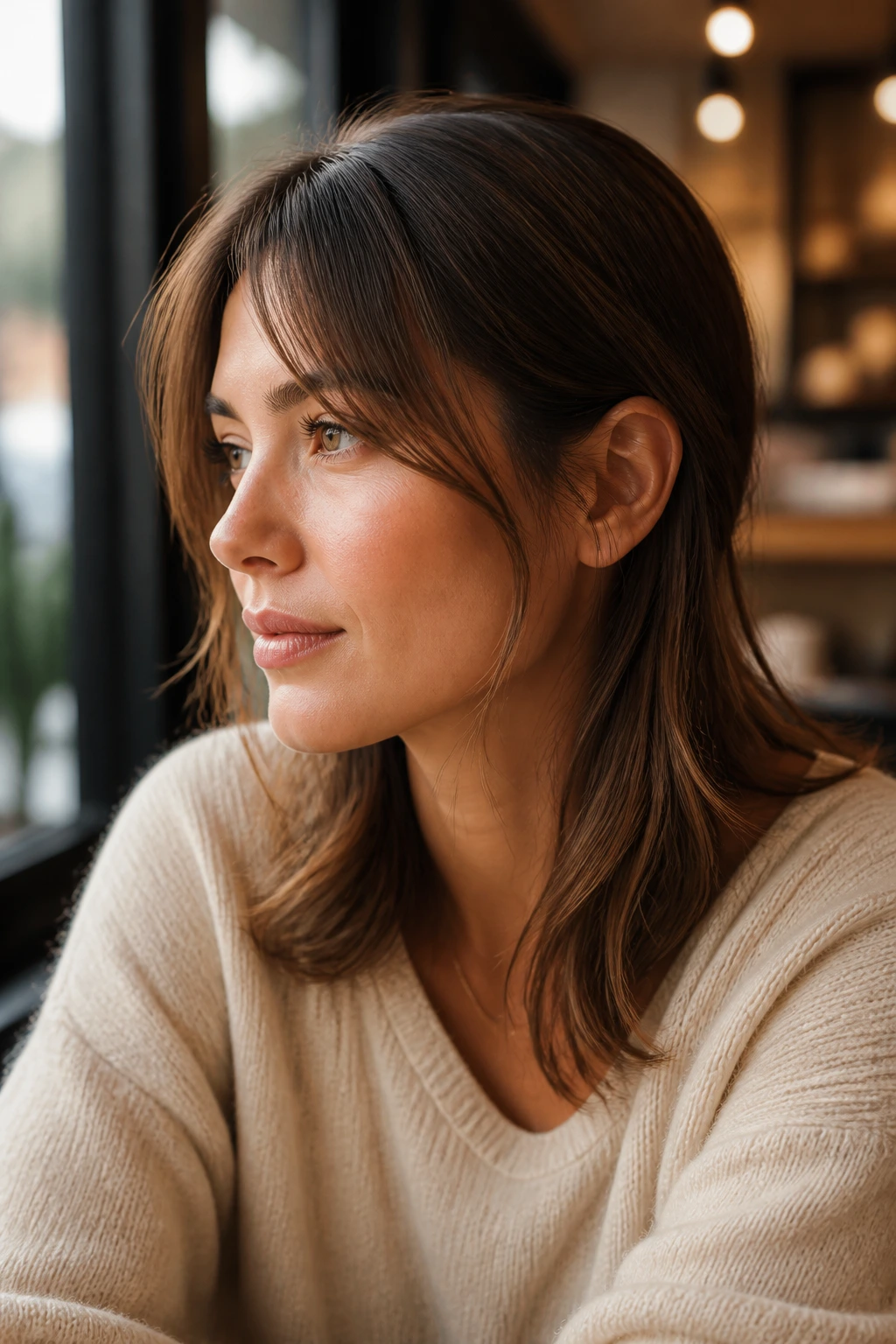
There is a specific “cool girl” way to wear bangs where you tuck them behind your ear, but you leave a few wispy pieces out around your eye. It’s a very intentional, chic look. It helps bridge the gap between having bangs and growing them out.
You don’t need a specific cut for this, but it works best with “long” bangs—the kind that reach your cheekbone or chin. It’s the ultimate low-maintenance style.
25. Layered Lob Transition
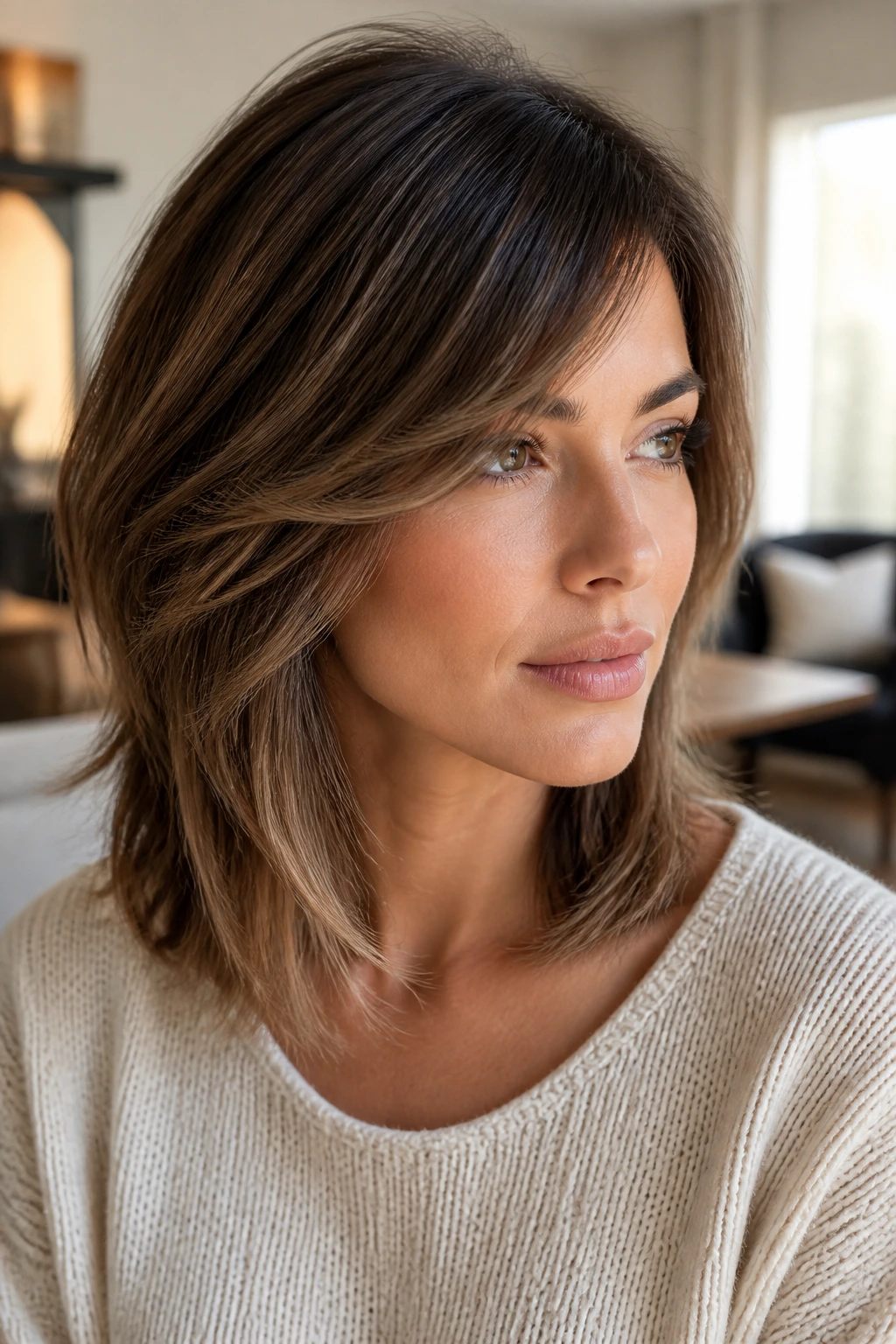
If you have a medium-length “lob” (long bob), the best way to integrate bangs is to cut them as layers that start at the cheekbone and blend into the rest of the hair. This prevents the “poodle” look where the bangs and the rest of the hair feel disconnected.
These bangs should be cut with point-cutting (using the tips of the scissors to cut into the hair vertically) to create soft, invisible layers. You want them to feel like part of the haircut, not an add-on.
26. Gravity-Defying Lift
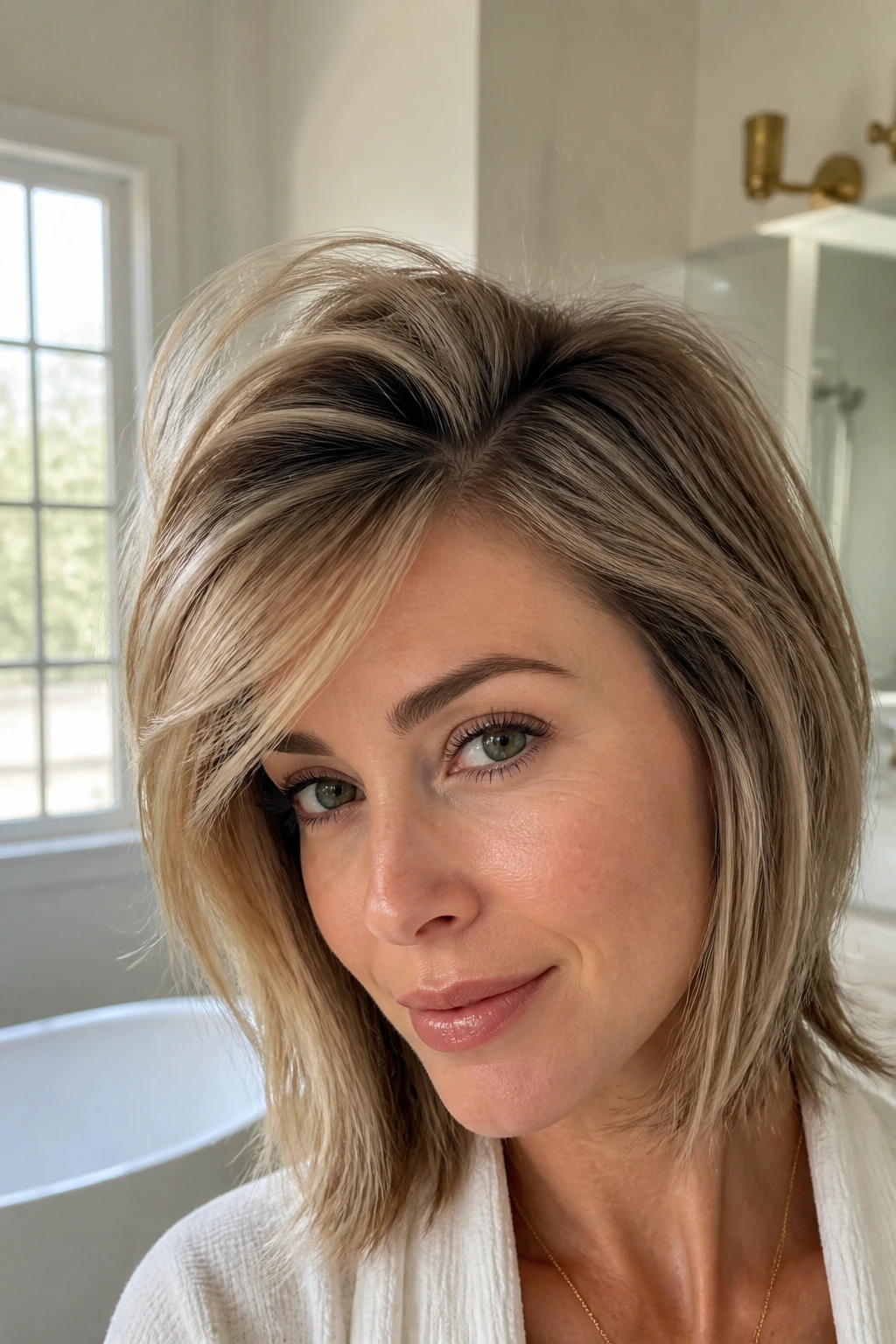
If your hair is fine and tends to flatten against your forehead, you need to create “lift” at the root. The best way to do this is with a root-boosting mousse applied when the hair is damp.
The “Over-Direction” Technique
When drying your bangs, pull them to the opposite side of where you want them to lay. Blow-dry the roots in that opposite direction. Once they are dry, flip them back to their intended side. The roots will be “trained” to stand up rather than lie flat, giving you that salon-quality volume.
27. Blunt Ends with Soft Sweep
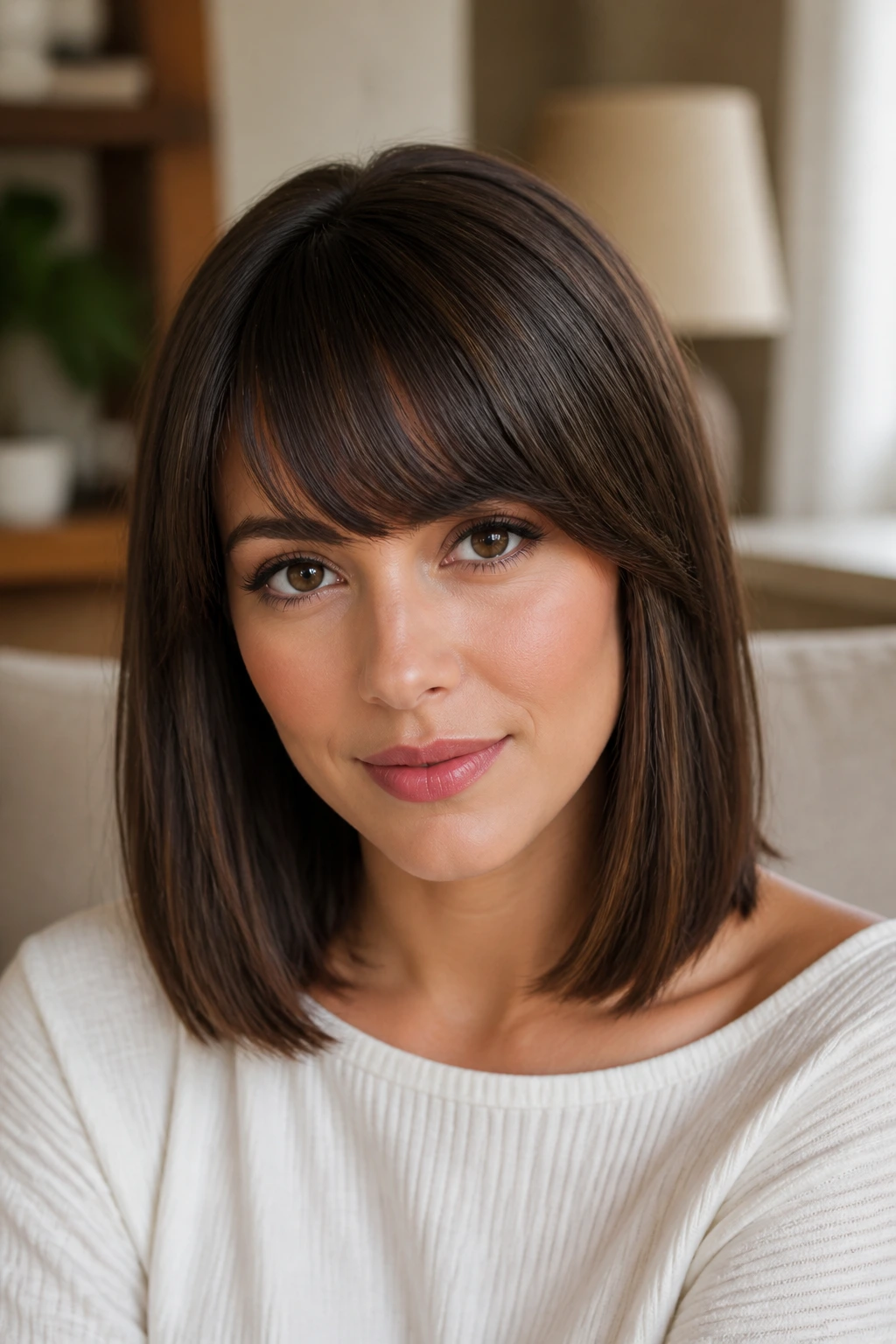
This is a mix of textures. The bangs themselves are cut bluntly, but you style them with a soft, rounded sweep. It’s a great way to get the definition of a blunt cut with the face-framing benefits of a side sweep.
It requires a slightly heavier bang density. If your hair is too thin, the blunt edge will just look stringy. This is a look for those with medium-to-thick hair density.
28. Feathered Fringes
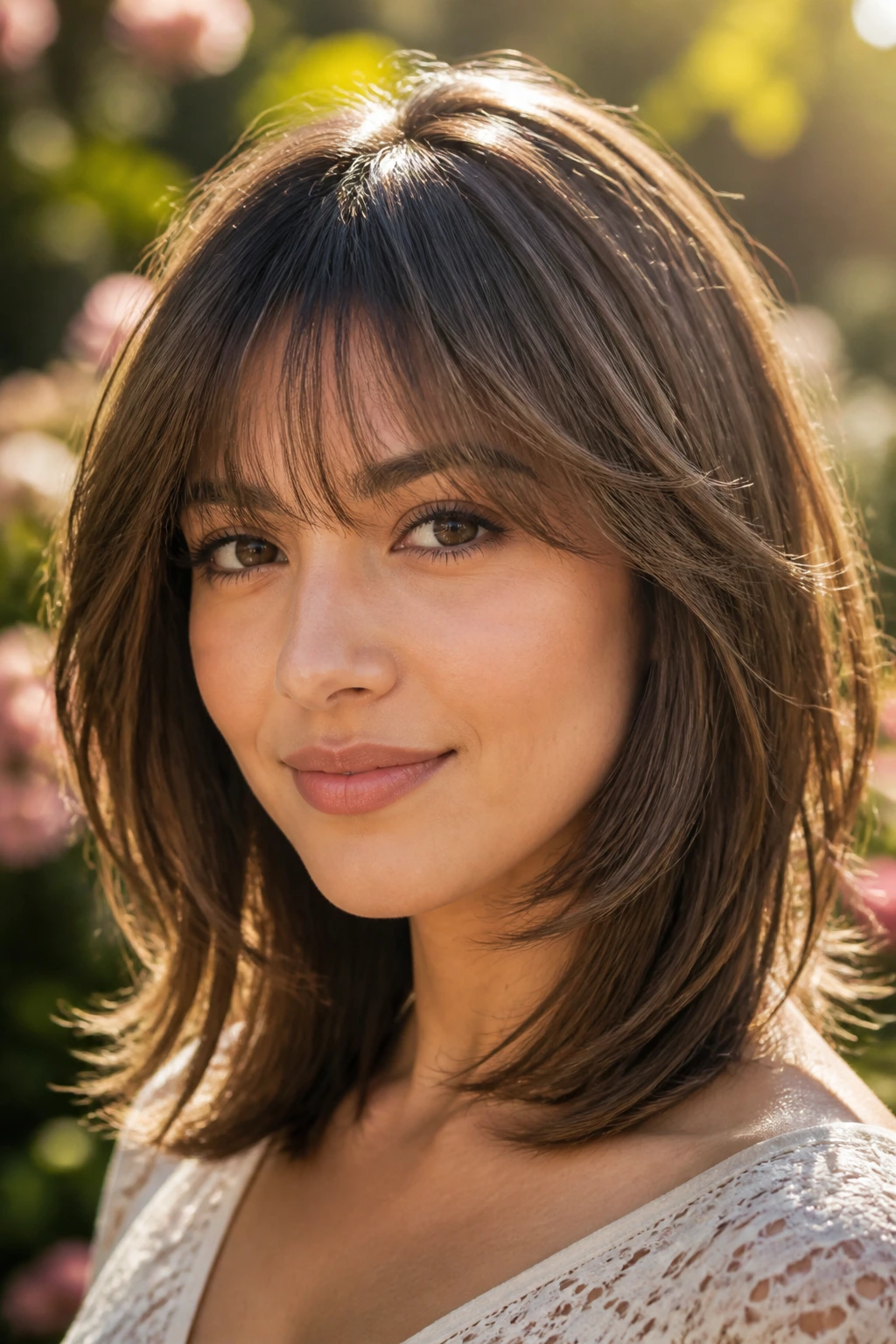
Feathering is a classic technique where the stylist uses a razor or point-cutting to create a soft, tapered edge. It is less “choppy” than the texturized look and more “gossamer.” It is very flattering for mature skin or people who want a softer look.
It is incredibly gentle on the hair. It doesn’t leave harsh lines. It makes the hair look healthy and light, rather than heavy and weighed down.
29. Ombre-Matched Sweep
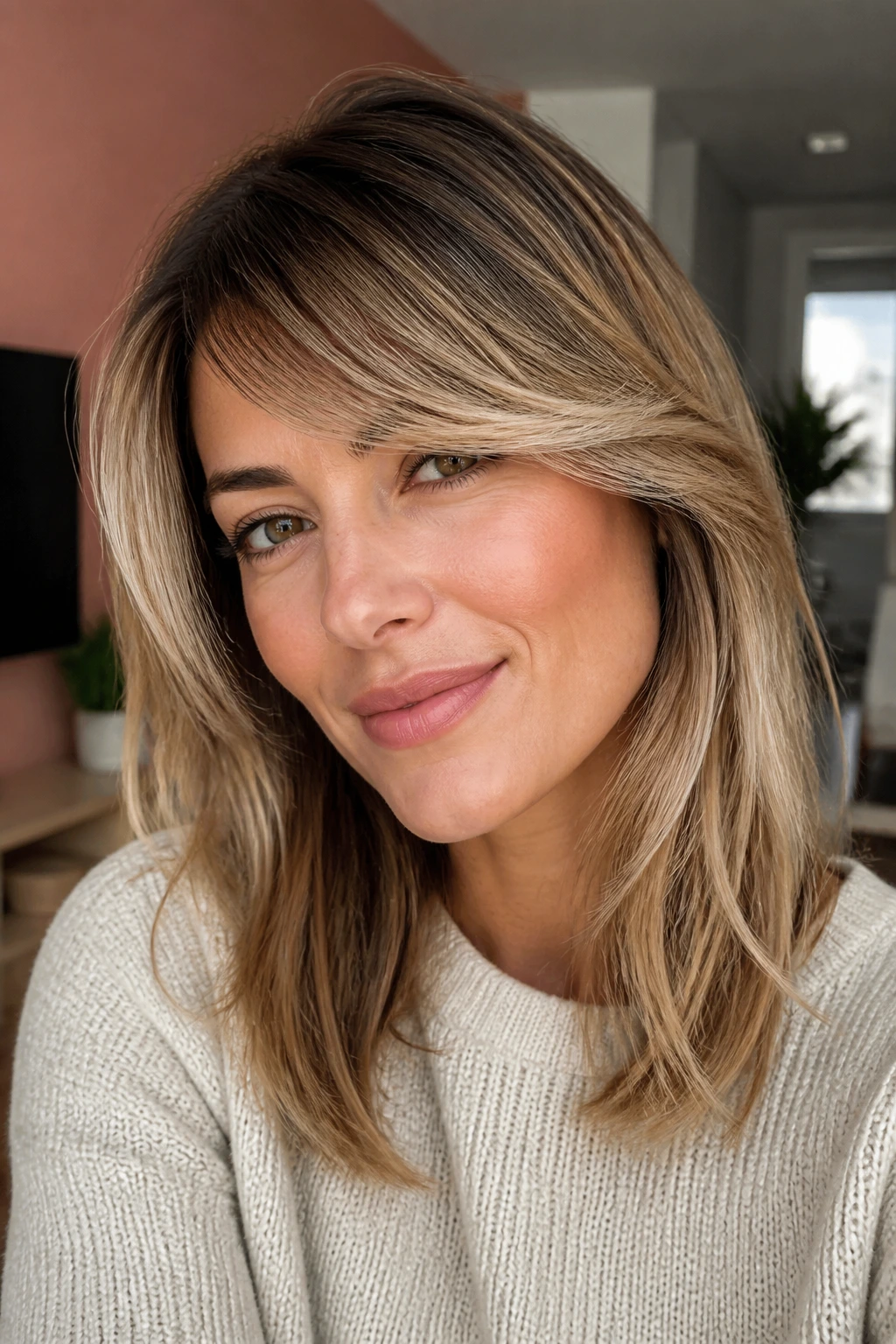
If you have an ombre or balayage color job, you can use that color gradient in your bangs. If the bangs are long enough, the roots can be darker and the ends lighter, which mimics the natural color transition of the rest of your hair.
It creates a seamless look. It prevents that jarring moment where the bangs are all one solid color while the rest of your hair has dimension. It looks very natural and expensive.
30. The “No-Commitment” Clip-In Look
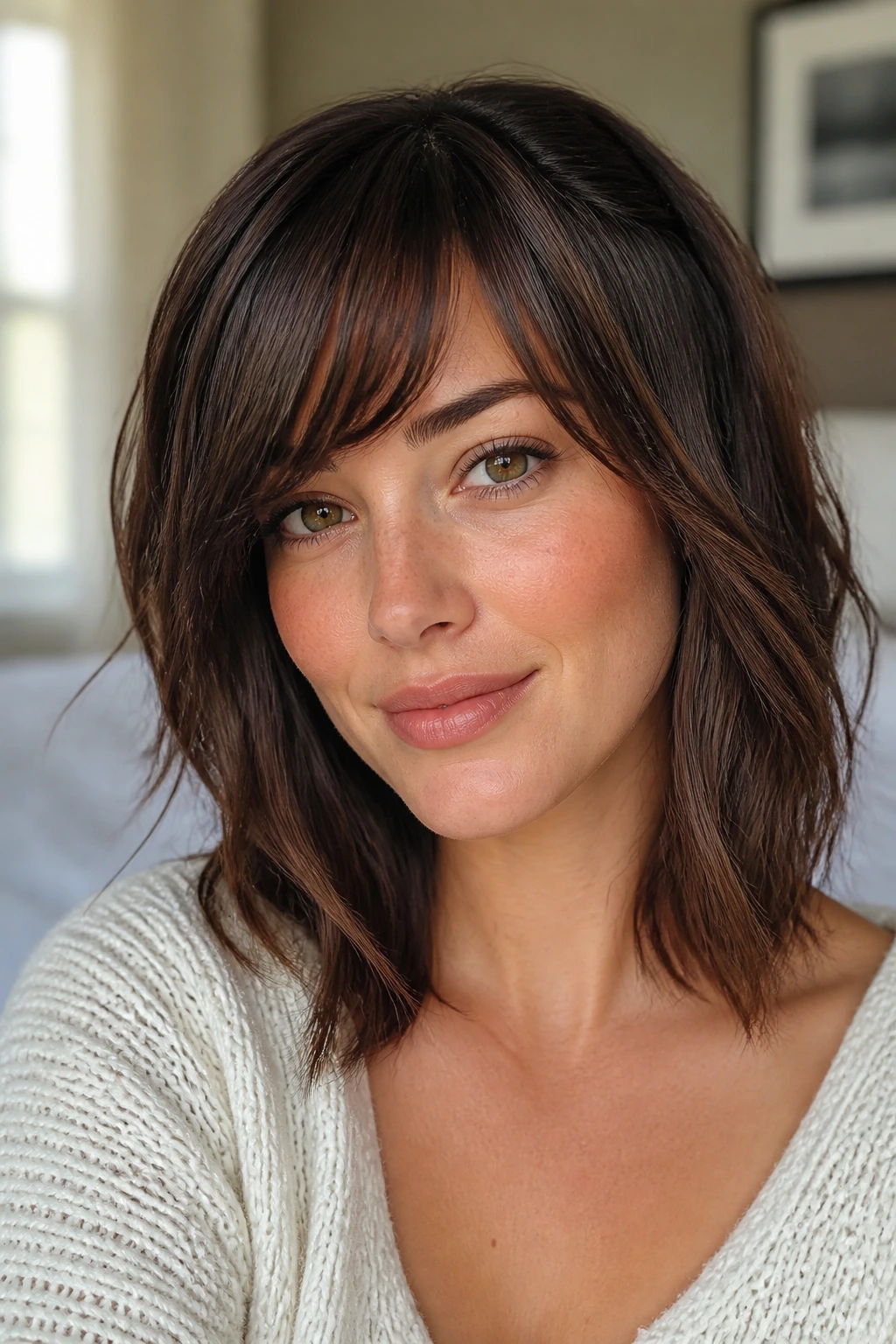
If you are still reading this and are terrified of picking up the scissors, consider clip-in bangs. Modern clip-ins are significantly better than the ones from a decade ago. They use real human hair, they can be heat-styled, and they have multiple clips to ensure they sit flat against your forehead.
Buy a pair that is slightly longer than you think you need and take them to your local stylist. Ask them to trim and blend the clip-in bangs to match your specific hair texture and face shape. They will do a much better job than you can at home, and suddenly you have the look without the permanent change.
Final Thoughts
Side-swept bangs are the ultimate low-commitment, high-impact style. They don’t require the strict, daily maintenance of blunt bangs, yet they offer all the benefits of face-framing and personality. Whether you choose the wispy, barely-there version or the heavy, bold sweep, the key is to customize the cut for your hair texture.
Do not be afraid to tell your stylist exactly what you want. If you are nervous, start long. You can always take more off, but you cannot add length back on. Start with a longer, face-framing sweep, live with it for a few weeks, and then go shorter if you feel the itch. Hair grows, and the best part about these styles is that they tend to look better as they grow out and blend into the rest of your cut. Experiment, play with your part, and see how a simple shift in your silhouette changes how you feel about your hair.
