



A Swedish bob haircut has a way of making hair look finished before you’ve really done much to it. That is the whole appeal, honestly. The shape is neat, the lines are clean, and the movement feels light rather than fussy, which is why this cut keeps showing up on people who want hair that looks deliberate without a full styling session every morning.
What makes the Swedish bob different from a heavy, stacked bob or a piecey shag is restraint. The best versions don’t scream for attention. They sit at the jaw, skim the cheekbones, or fall just below the chin with enough polish to look expensive and enough softness to avoid that helmet effect nobody wants. A good stylist can build that effect with a blunt perimeter, a tiny bit of internal texture, and ends that curve under instead of flipping out in a weird way.
I like this family of cuts because it works on hair that is straight, slightly wavy, or somewhere in between. It can also be adjusted for fine hair, thick hair, long faces, round faces, and the “my hair looks flat unless I do something to it” crowd. The real trick is choosing the version that gives you structure without making you fight it every morning.
Some of the styles below are crisp and minimal. Others are softer and a little more lived-in. All 15 keep that easy, polished Scandinavian feel—the kind of hair that looks like you cared, but not too much.
1. Jaw-Grazing Center-Part Swedish Bob
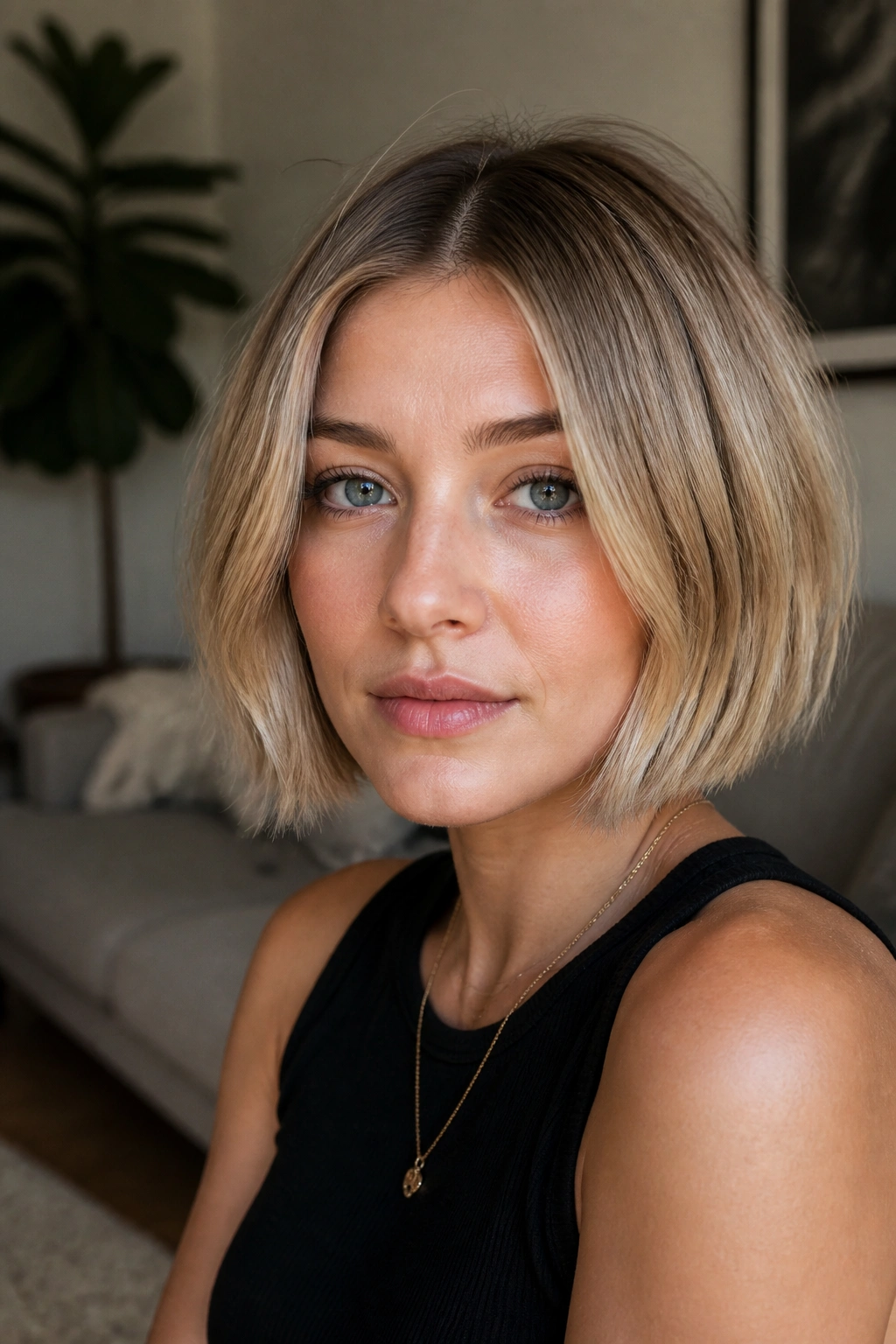
A jaw-grazing center-part Swedish bob is the cleanest place to start. The line lands right around the jaw, which gives the face a neat frame and keeps the whole cut looking intentional even when you air-dry it.
Why It Works
The center part keeps the shape balanced, and the length at the jaw gives just enough edge to sharpen the face without making the haircut feel severe. If your hair bends naturally, this version plays nicely with that bend. If your hair is straighter, the cut still holds because the perimeter does most of the work.
Ask for a blunt base with only a whisper of internal texture. Too much layering kills the whole point. You want the ends to look clean, almost architectural, but not stiff.
- Best for straight to slightly wavy hair
- Works well on oval and heart-shaped faces
- Needs a trim every 6 to 8 weeks to keep the line crisp
- Styles fast with a quick blow-dry or air-dry and a bit of smoothing cream
Tip: Tell your stylist you want the ends to sit just below the jaw, not above it. That small difference changes the whole mood.
2. Soft Blunt Swedish Bob
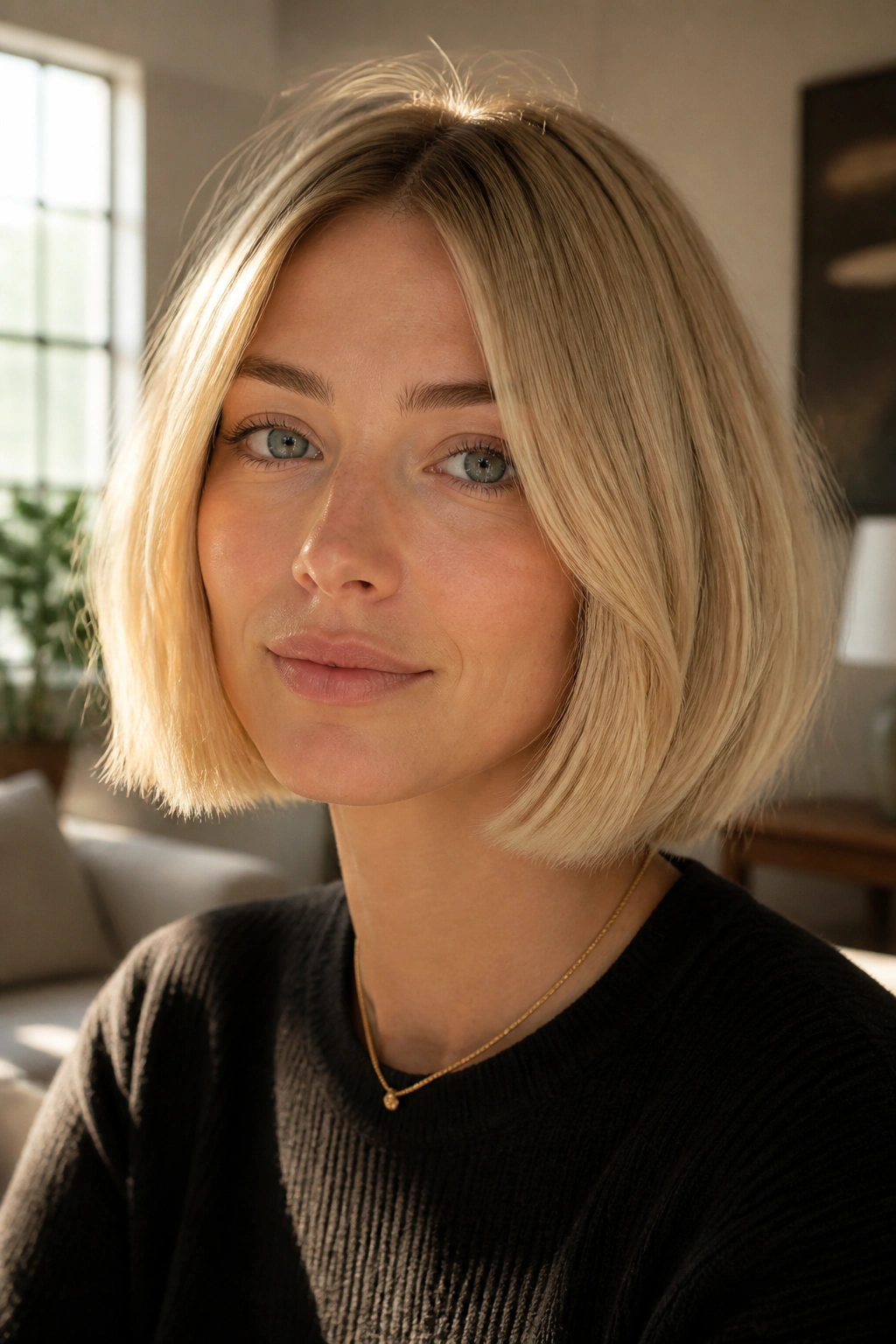
This is the cut that makes people think your hair just behaves. It does not need heavy layering, and that’s the beauty of it. The blunt edge gives the bob a strong shape, while the softness comes from a little bevel at the ends and a natural-looking finish.
The key here is control without rigidity. You want the hair to fall in one clean shape, but not so sharply that it looks boxy. A skilled cut will keep the line tidy while letting the ends tuck in slightly, which is what gives it that quiet, polished look.
This version is especially good if you like a neat silhouette but hate spending time with a round brush. A quick rough-dry, a touch of cream, and maybe a pass with a flat iron on the front pieces is usually enough. The haircut does the rest.
It also grows out nicely. That matters more than people admit. A good blunt bob should still look decent three or four weeks after the salon, not like it’s already gone rogue.
3. Chin-Length Bob with Curtain Bangs

Why do curtain bangs work so well with a Swedish bob? Because they soften the front without taking away the clean shape underneath. That’s the sweet spot.
This version lands at the chin, which keeps it short enough to feel fresh but long enough to tuck behind the ears when you want a cleaner line. The curtain fringe opens the face and gives the cut a bit of movement near the eyes, which is useful if you want polish without looking too strict.
The trick is keeping the bangs light. Heavy curtain bangs can swallow the face, especially with a short bob. Ask for a soft split at the center and pieces that blend into the cheekbones rather than hanging forward in a thick curtain. You want them to move.
How to Style It
- Blow-dry the fringe first with a small round brush
- Lift the roots lightly at the crown
- Bend the ends of the bob under with a flat brush or 1-inch round brush
- Use a pea-sized amount of styling cream on the bangs, not the whole head
This cut is a good choice if you want a little personality in the front but still like the clean finish that makes a Swedish bob so easy to wear.
4. Rounded Tucked-Under Bob
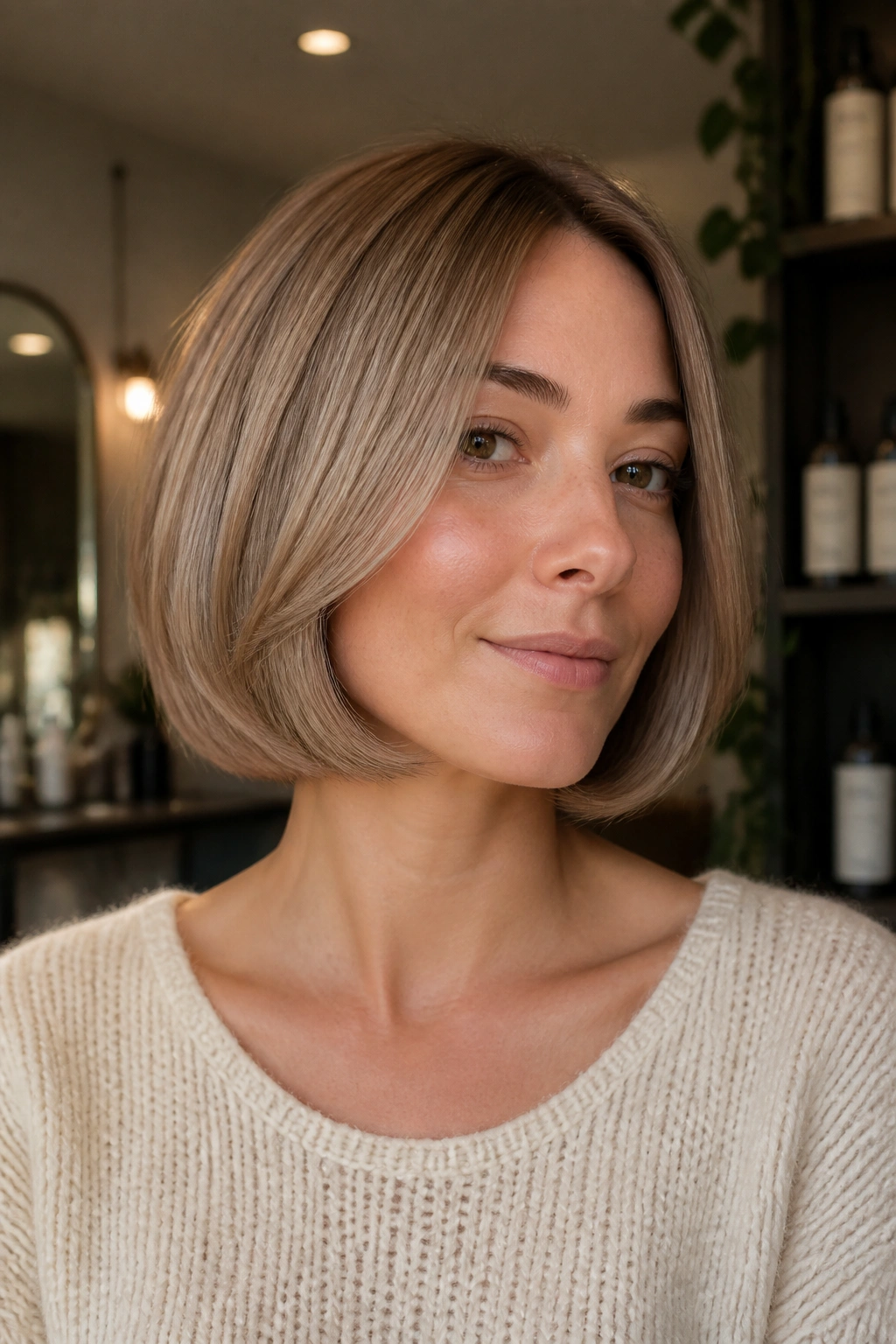
Picture this: you put your hair behind your ears, the ends curve under just enough to stay neat, and the whole cut looks like it was planned down to the last inch. That’s the rounded tucked-under bob.
It’s one of the most flattering versions for people who want softness around the jaw. Instead of a hard line, the hair rounds slightly inward, which makes the shape feel smooth and polished. It also works beautifully with a side tuck, which is one of those tiny styling moves that looks more expensive than it is.
The rounded finish helps if your hair tends to puff out at the sides. A little bevel at the bottom pulls the shape together. If your hair is very thick, though, the cut needs careful debulking inside, not on the surface. Surface thinning is often a mess. It can leave the ends frayed and weird.
- Best on medium-density hair
- Good for square or angular face shapes
- Looks especially neat with earrings or glasses
- Can be air-dried with the ends wrapped inward using your fingers
That tucked-under bend is small, but it changes everything.
5. Sleek Side-Part Swedish Bob

A side part gives the Swedish bob a little drama without taking it out of easy territory. It’s less symmetrical, more relaxed, and a bit more flattering if you want volume at the crown.
The cut itself should stay fairly simple. What changes is the way the hair falls. One side gets a soft sweep over the forehead, and the other side sits closer to the cheek or jaw. That uneven balance adds shape without adding bulk, which is a nice trick if your hair is fine or goes flat on top.
I prefer this version when the hair is naturally smooth. It looks sharp without much effort, and it has that neat, almost tailored feel that works with a blazer, a knit sweater, or a plain white T-shirt. The side part makes it less severe than a true center-part bob, so it can suit people who want polish but not too much symmetry.
A light root lift spray at the crown helps here. Not a ton. Just enough to keep the top from collapsing by midday.
6. Collarbone Swedish Lob with Invisible Layers
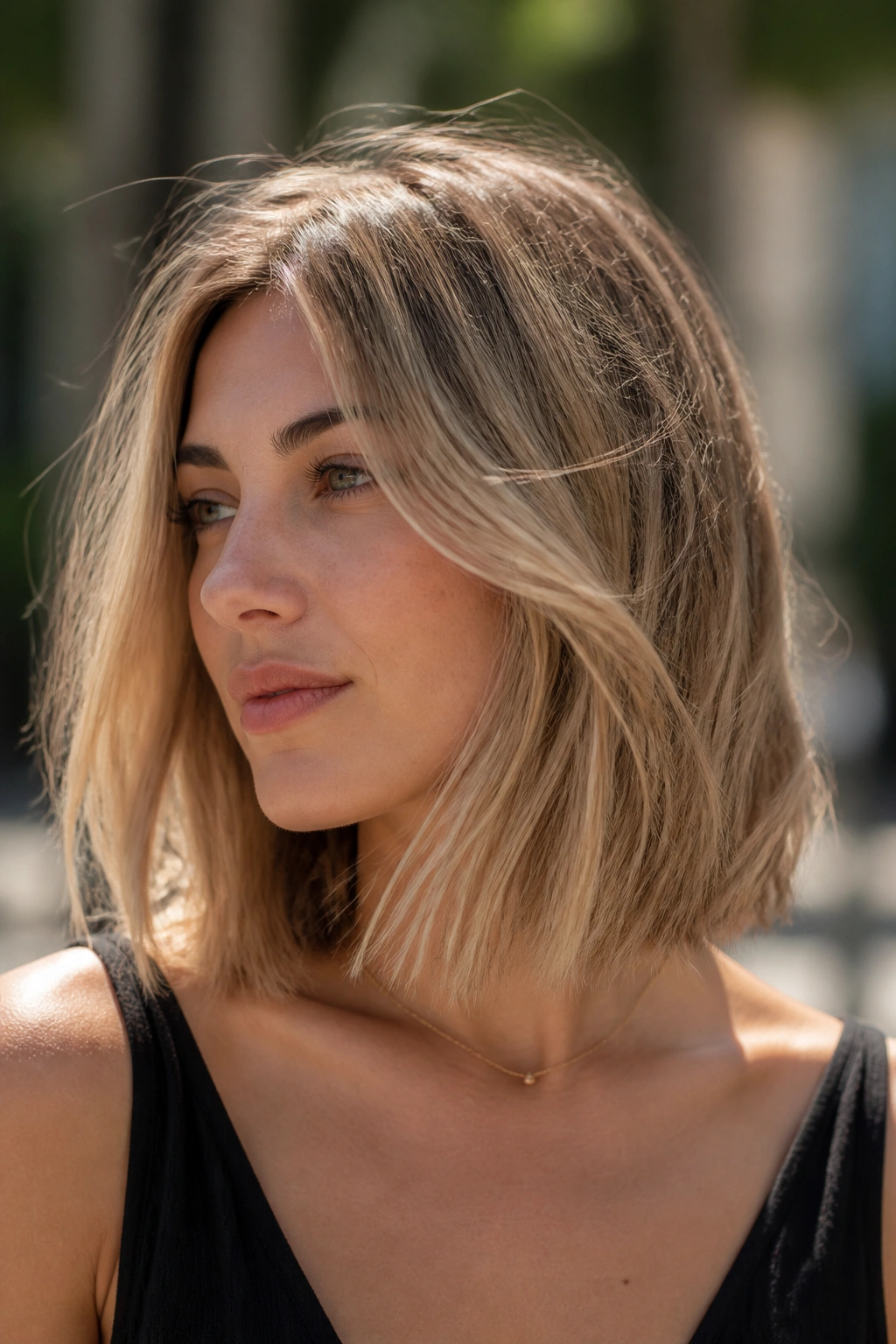
Compared with a chin-length bob, the collarbone lob gives you more room to play. It still feels Swedish—clean, minimal, unfussy—but the extra length makes it softer and easier to tie back when needed.
The interesting part is the layering. Or rather, the lack of obvious layering. Invisible layers are cut to remove weight without showing choppy steps, so the hair moves better while still reading as one smooth shape. That matters a lot for a polished look. A lob that’s too layered can lose the crispness that makes the style feel finished.
This version is a solid middle ground if you want a bob but are nervous about going too short. It also works if your hair grows fast and you don’t want the cut to feel short for only two weeks. The collarbone length buys you time.
Unlike a blunt chin bob, this one can be worn straight, softly waved, or clipped back behind one ear. It’s less strict. That’s why it suits people who like structure but still want options.
7. Air-Dried Wavy Swedish Bob
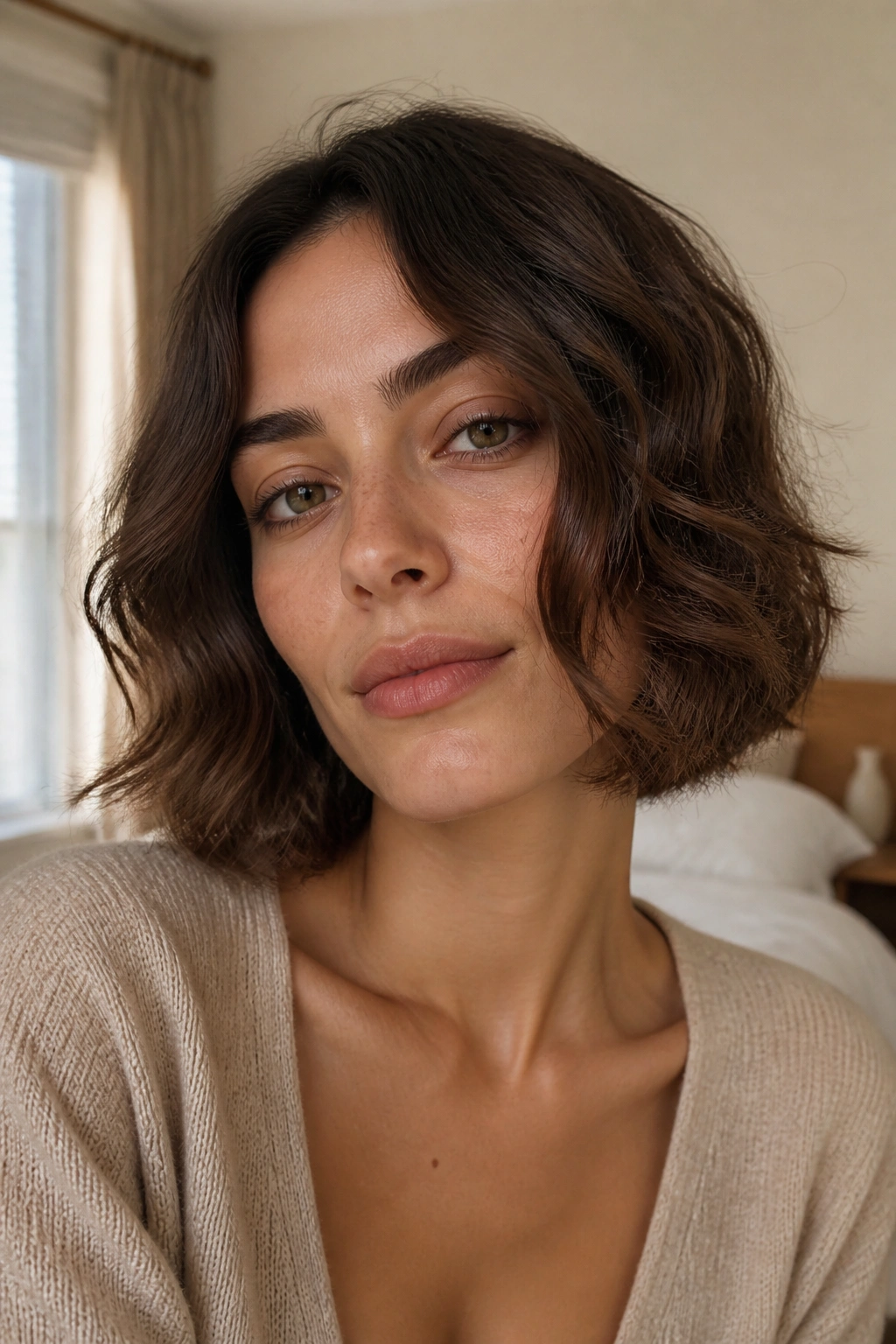
The air-dried wavy Swedish bob is for people who want hair that looks good with minimal intervention. No big brush-out. No hot tools unless you feel like using them. Just shape, texture, and a little bit of patience.
The haircut needs to be cut with the wave pattern in mind. If the ends are too blunt on naturally wavy hair, they can kick out in odd directions. If the cut is too layered, the bob can turn fluffy instead of polished. So the sweet spot is a perimeter that’s clean but softened enough to follow the hair’s natural bend.
A cream or light gel applied to damp hair helps define the wave without making it crunchy. Scrunch gently, then leave it alone. Seriously. The more you poke at it while it dries, the more it frizzes. Once dry, you can break up the cast with your fingers and tuck a few pieces behind the ears for that easy Scandinavian finish.
This one works especially well in humid weather, when flat-ironed hair can feel like a losing battle. It looks relaxed, but not messy. That’s a harder line to walk than it sounds.
8. Micro Bob with Soft Fringe

A micro bob sounds bold, but the Swedish version is never harsh. It’s short—usually somewhere between the cheekbone and the top of the jaw—but the soft fringe keeps it from looking severe.
This cut is one of my favorites for people with strong features or delicate bone structure because it lets the face do some of the work. The fringe can be slightly wispy, full but not heavy, or cut into a soft veil that falls forward a little. The bob itself stays compact and tidy.
You do need confidence for this one. Short hair shows everything: the line of the neck, the set of the jaw, the way your hair grows at the crown. That’s not a flaw. It’s just the reality of short cuts. If the perimeter is clean, the haircut looks sharp in a way longer styles sometimes can’t match.
- Best for finer hair that needs shape
- Great if you want a shorter cut with low daily styling
- Needs regular trims to keep the line neat
- Looks best with a smooth, glossy finish rather than lots of texture
The fringe gives it a softer landing. Without it, the cut can feel a little too precise.
9. Layered Bob for Thick Hair
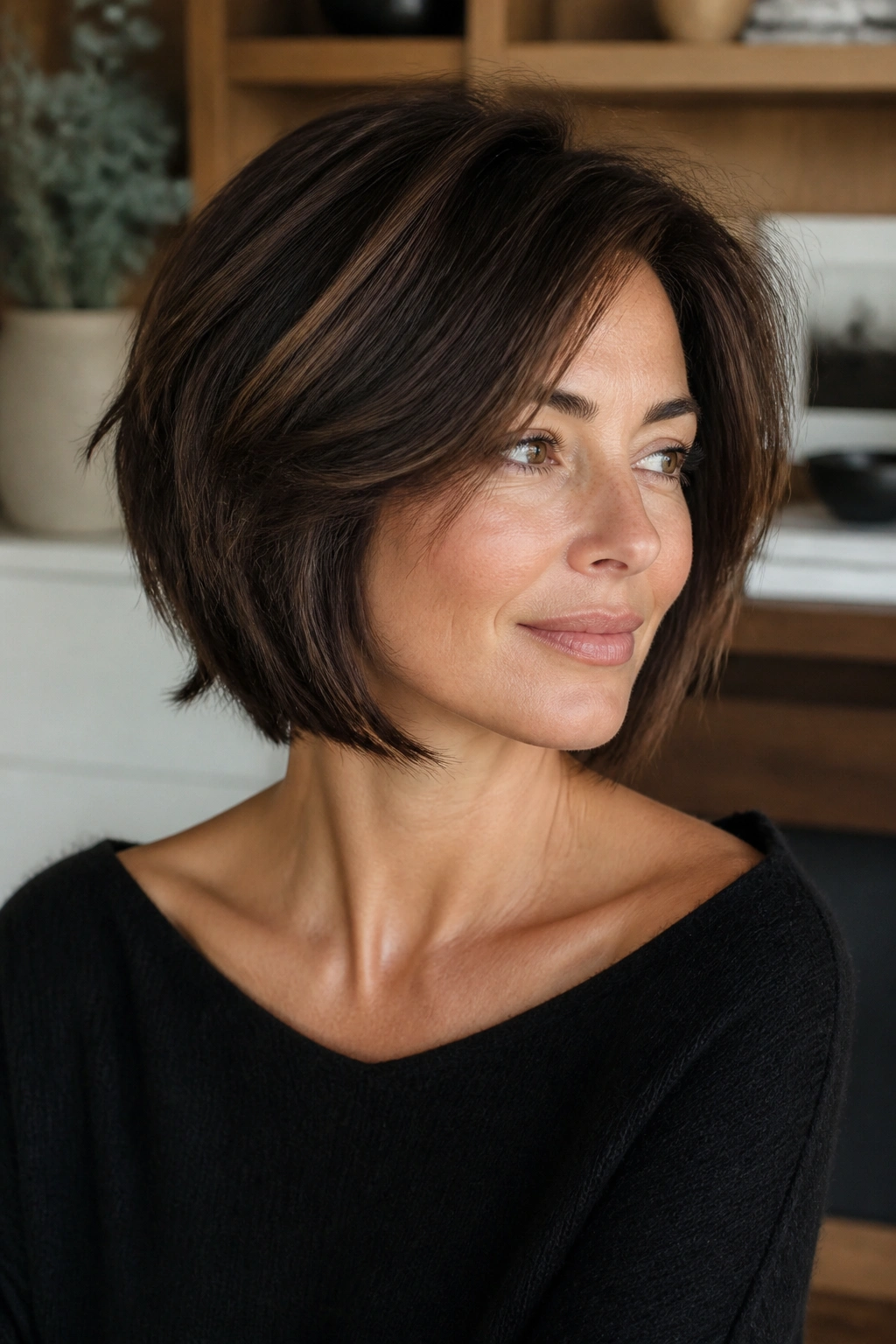
Thick hair and clean bob shapes can get into a fight if the cut isn’t handled well. The answer is not to thin the whole head to death. It’s to remove weight where it matters and leave the perimeter strong.
A layered bob for thick hair keeps the Swedish feel by making the inside lighter while preserving a tidy outer line. Think of it as structure with breathing room. The layers should be discreet, not choppy, and they should sit in a way that helps the hair fall instead of puffing out.
This version matters because thick hair can turn a bob into a triangle if the bottom is too blunt and the inside is too heavy. A little internal layering fixes that. The cut still looks polished, but it stops fighting your head shape.
What to Ask For
- A blunt or slightly beveled perimeter
- Internal layers only where the hair feels bulky
- No aggressive razoring through the ends
- A shape that follows your natural growth pattern
If your hair gets bulky near the nape, mention that specifically. Stylists can correct for it. They just need to know where the weight sits.
10. Floating Bob for Fine Hair

Fine hair loves a floating bob because the cut creates the illusion of density without weighing the hair down. The ends hover a little instead of hanging flat, and that tiny lift makes the whole style feel more alive.
The best version keeps the length around the chin or just below it. Go too long, and fine hair can look stringy. Go too short with too many layers, and it can go wispy in a bad way. The sweet spot is a compact shape with a soft, airy edge.
This is where a blunt line helps. A clean perimeter gives fine hair a stronger visual base, which makes the hair look fuller. You can then add a touch of root lift at the crown or a quick bend through the front pieces with a small round brush.
One sentence advice: do not over-texturize this cut.
Fine hair usually looks better when the finish is clean and controlled, not shredded. A little movement is enough.
11. Ear-Tuck Bob with a Sharp Nape

There’s a certain elegance in hair that can be tucked behind the ears and still look styled. The ear-tuck bob is built for exactly that.
The front stays long enough to skim the jaw or cheekbone, while the back is cut cleanly enough to keep the neckline sharp. That contrast is what makes the shape interesting. From the front, you get softness. From the back, you get neatness. It’s a small thing, but it reads as polished in a way that feels very deliberate.
This haircut is especially useful if you wear earrings or glasses. The tuck opens up the face instead of crowding it. It also keeps the style from feeling too precious. You can sweep one side back, clip it with a simple pin, or wear both sides tucked for a minimal look.
The nape should not be overworked. A clean line there looks best when the hair lies flat and the neckline is visible. If you like the back of a haircut to look as good as the front, this one’s for you.
12. Polished Lob with Beveled Ends

A polished lob with beveled ends sits in that useful space between relaxed and refined. It’s longer than a classic bob, so it has swing, but the beveled finish keeps it from looking loose or heavy.
Compared with a straight blunt lob, this version has a gentler edge. The ends turn under slightly, which gives the cut a smoother finish and helps it look intentional even on second-day hair. That little bend also helps if your hair tends to stick straight out when freshly cut. A bevel calms everything down.
This is the cut I’d point someone toward if they want the Swedish look but need more length for work, workouts, or ponytails. It can be worn center-parted and sleek, or with a soft off-center part for a bit of lift. Because the line is longer, it also grows out gracefully. That is not a small perk.
For styling, a medium round brush and a quick pass through the ends is usually enough. You’re not building curls here. You’re shaping the line.
13. Curved Bob for Round Faces

A curved bob can be a smart move if you want a Swedish bob haircut that adds length through shape instead of just through actual inches. The key is keeping the sides slightly longer than the back, which creates a gentle curve around the face.
That curve matters. It draws the eye downward and away from the widest part of the face, while still keeping the bob soft and wearable. The cut should not be overly angled, though. A harsh angle can look sharp in a way that fights the easy polish you’re after.
This is one of those styles that looks better when the stylist pays attention to how the hair moves when it’s tucked, blown dry, or left alone. The front pieces should frame the cheeks without clinging to them. If they land too short, the shape can feel busy. If they’re too long, the bob loses its lift.
How to Keep It Flattering
- Keep the front below the cheekbone line
- Add only a subtle angle from back to front
- Use a light smoothing product through the mid-lengths
- Lift the crown slightly so the shape doesn’t collapse
The result is tidy, soft, and easy to wear without looking plain.
14. Tousled Scandinavian Bob with Broken Texture
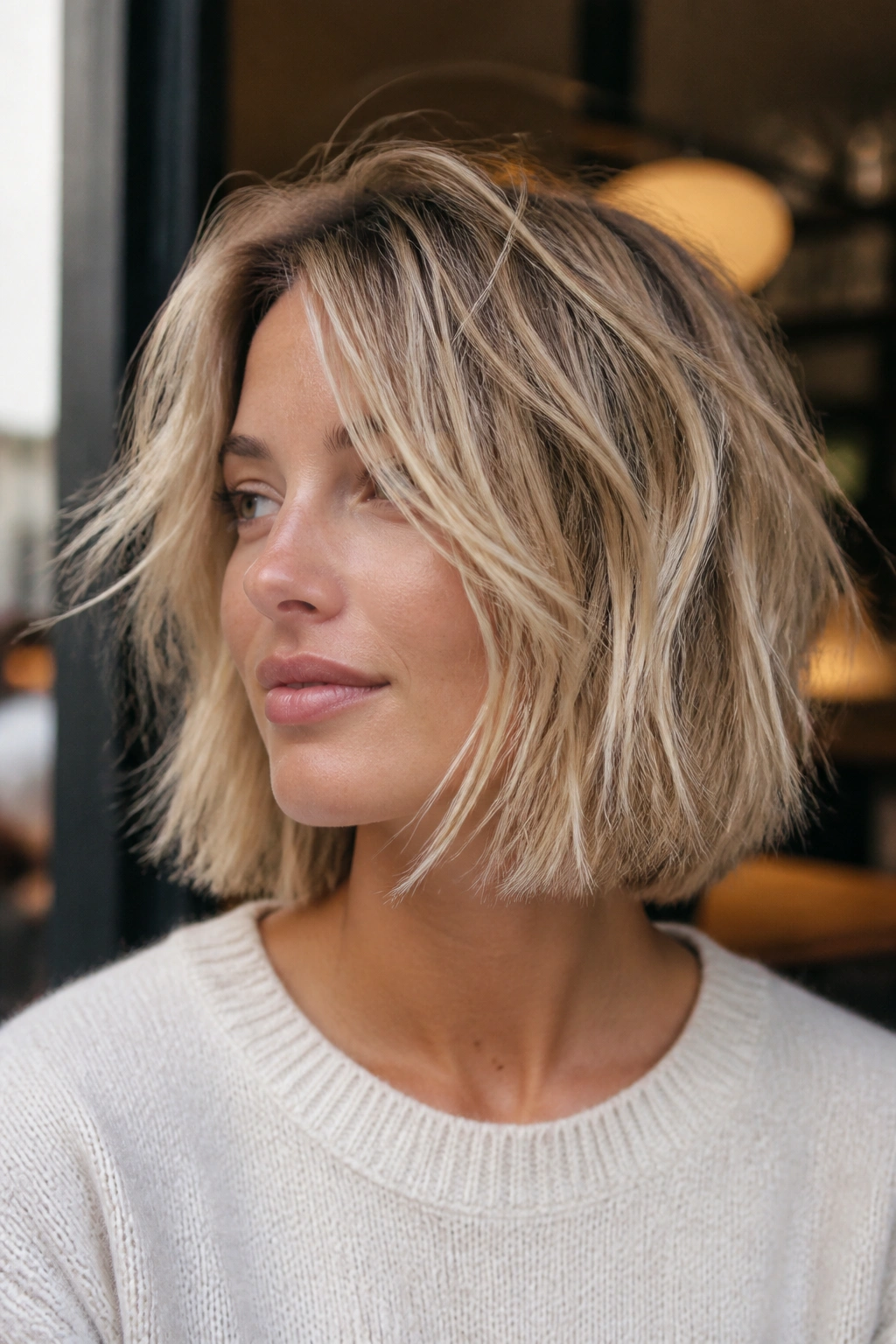
A little mess can still look polished. The trick is making it look chosen, not accidental.
The tousled Scandinavian bob uses broken-up texture in the mid-lengths and ends, but the perimeter stays visible. That keeps the haircut from drifting into shag territory. You still need a shape—strong enough to hold up on a bad hair day, soft enough to keep the movement interesting.
This version is good for people whose hair has a natural bend or wave and wants to live in that middle zone between sleek and undone. A bit of sea salt spray or texture mist helps, but use less than you think. Too much product turns the hair gritty and dull, which is the opposite of the airy finish this cut wants.
I like this one for casual dressing. Jeans, knitwear, clean makeup, hair that looks like it fell into place. It has that relaxed look, but the clean outline keeps it from getting sloppy.
One clean line underneath, a bit of texture on top. That’s the whole formula.
15. Subtle Asymmetrical Bob
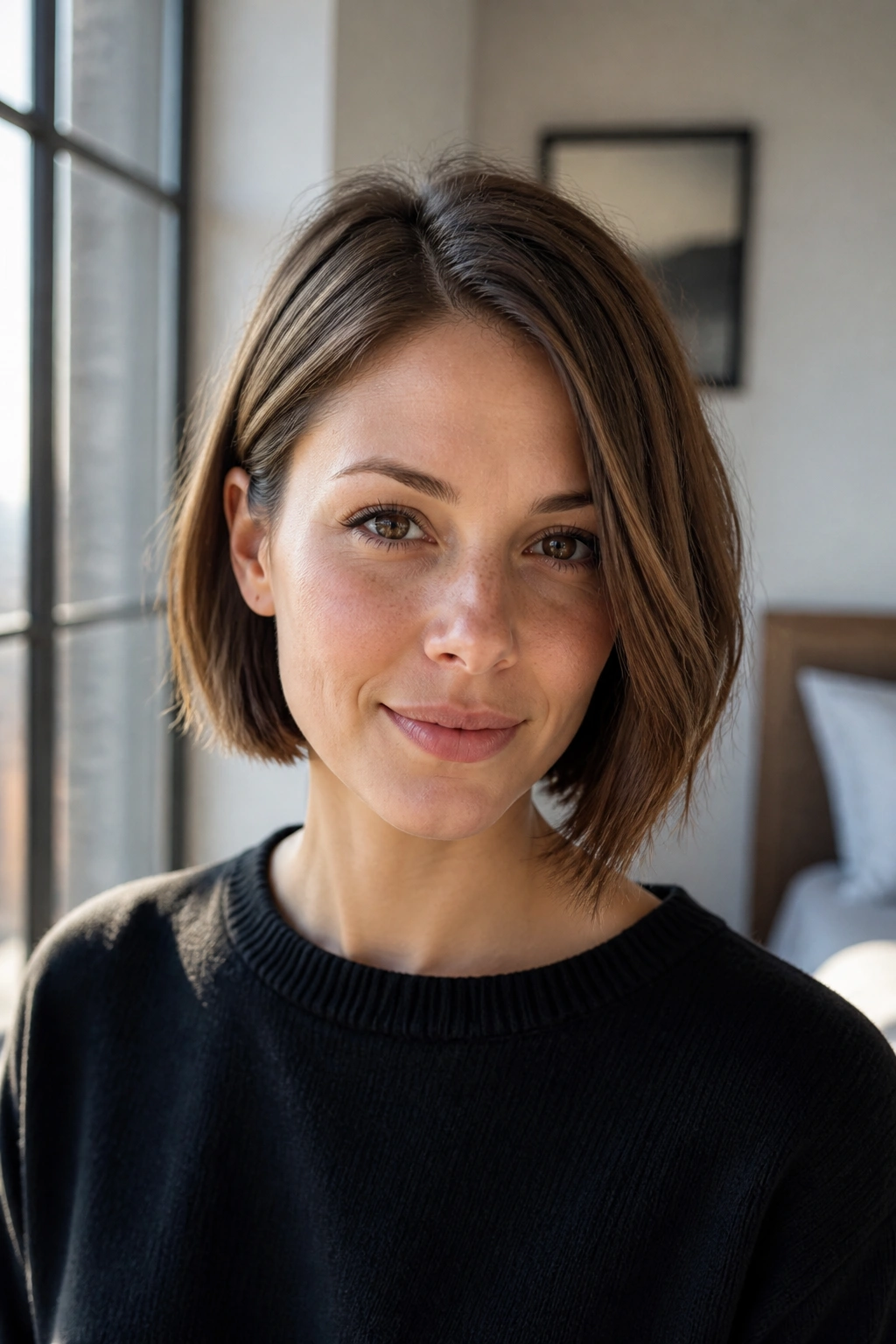
The subtle asymmetrical bob is for someone who wants just enough edge to make the haircut feel personal. One side sits a touch longer than the other, or the part shifts slightly off-center so the balance is not perfectly even.
The nice part is that “asymmetrical” does not have to mean dramatic. In a Swedish bob, the change can be tiny—half an inch here, a soft sweep there—and the effect is still visible. That small imbalance adds movement, especially when the hair is tucked, bent, or clipped on one side.
This cut works well if you wear simple clothes and want the haircut to carry a little more interest. It also flatters people who feel bored by symmetrical bobs but do not want something high-maintenance. The shape is still easy to live with. You just get a little extra character from the line.
What Makes It Different
- The cut looks different from each angle
- It can soften a strong jawline
- It plays nicely with one-ear tucks and side clips
- It still grows out in a calm, manageable way
If you like hair that feels neat but not identical on both sides, this is a smart pick.
Final Thoughts
The best Swedish bob haircuts do the same thing over and over in slightly different ways: they keep the line clean, the texture controlled, and the finish light. That is why they work. You do not need a lot of styling to make them look intentional.
Pick the version that matches your hair texture, your face shape, and your tolerance for trims. A jaw-length blunt bob, a collarbone lob, and a soft fringe version all belong to the same family, but they wear very differently in real life.
Clean hair, neat edges, a shape that sits where it should. That’s the whole point, and it’s a pretty good one.
