



The best long hair for a packed morning is hair that behaves when you barely touch it.
That sounds obvious, but a lot of long styles are secretly high-maintenance. They need a blowout, a curling iron, a smoothing serum, and ten minutes you do not have before school drop-off or a 7:30 meeting. Low maintenance long hairstyles work because the cut does half the job, so your hair has shape even when you air-dry it, pin it up, or shove it into a clip and get on with your life.
The sweet spot is movement without fuss. A good long cut should grow out cleanly, hide a skipped wash day, and still look fine after being tossed over a car seat, tucked into a coat collar, or pulled into a ponytail that you wore for nine hours. That is the real test.
That is where smart cuts and easy-up styles earn their keep.
1. Soft Long Layers That Air-Dry in Place
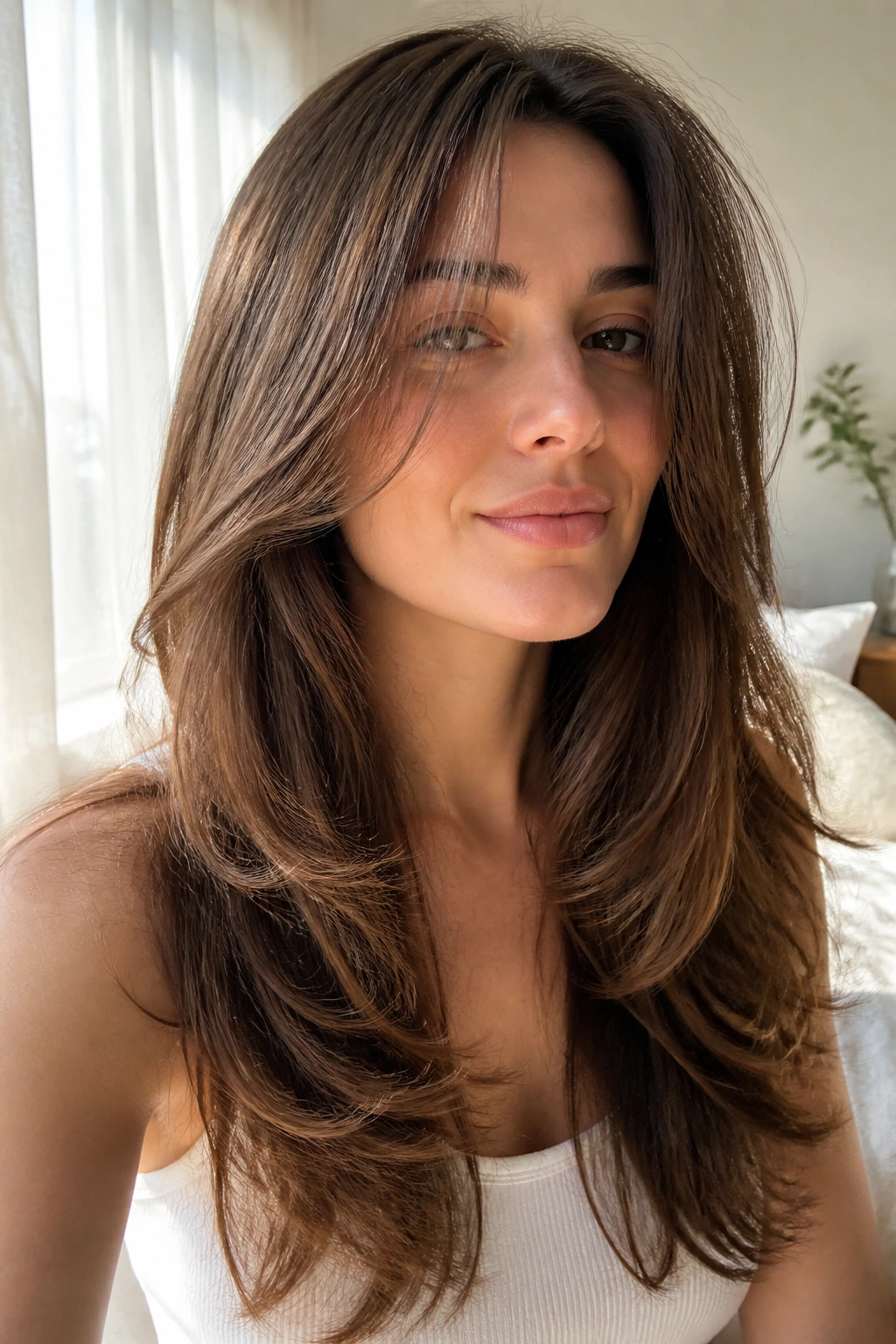
Soft layers are the quiet workhorse of long hair. They take some weight out of the ends, give the hair room to move, and stop it from hanging like one heavy sheet. If your hair takes forever to dry or goes flat by lunch, this is one of the easiest fixes.
What to ask for at the salon
Ask for long layers that start below the chin or collarbone, not short choppy pieces around the cheekbones. That keeps the shape gentle. A little face-framing is fine, but the real magic is in the length retention at the bottom.
I like this cut for thick or wavy hair because it stops the bulk from puffing out like a triangle. The hair still looks full, just lighter. Air-drying works better too, which is half the point.
- Ask for soft, blended layers rather than razor-thin ends.
- Keep the shortest face-framing piece around the chin or collarbone.
- Use a pea-sized amount of leave-in cream on damp hair.
- Scrunch once, then leave it alone.
That last part matters. The more you fuss with it, the frizzier it gets.
2. Blunt Length With a Center Part
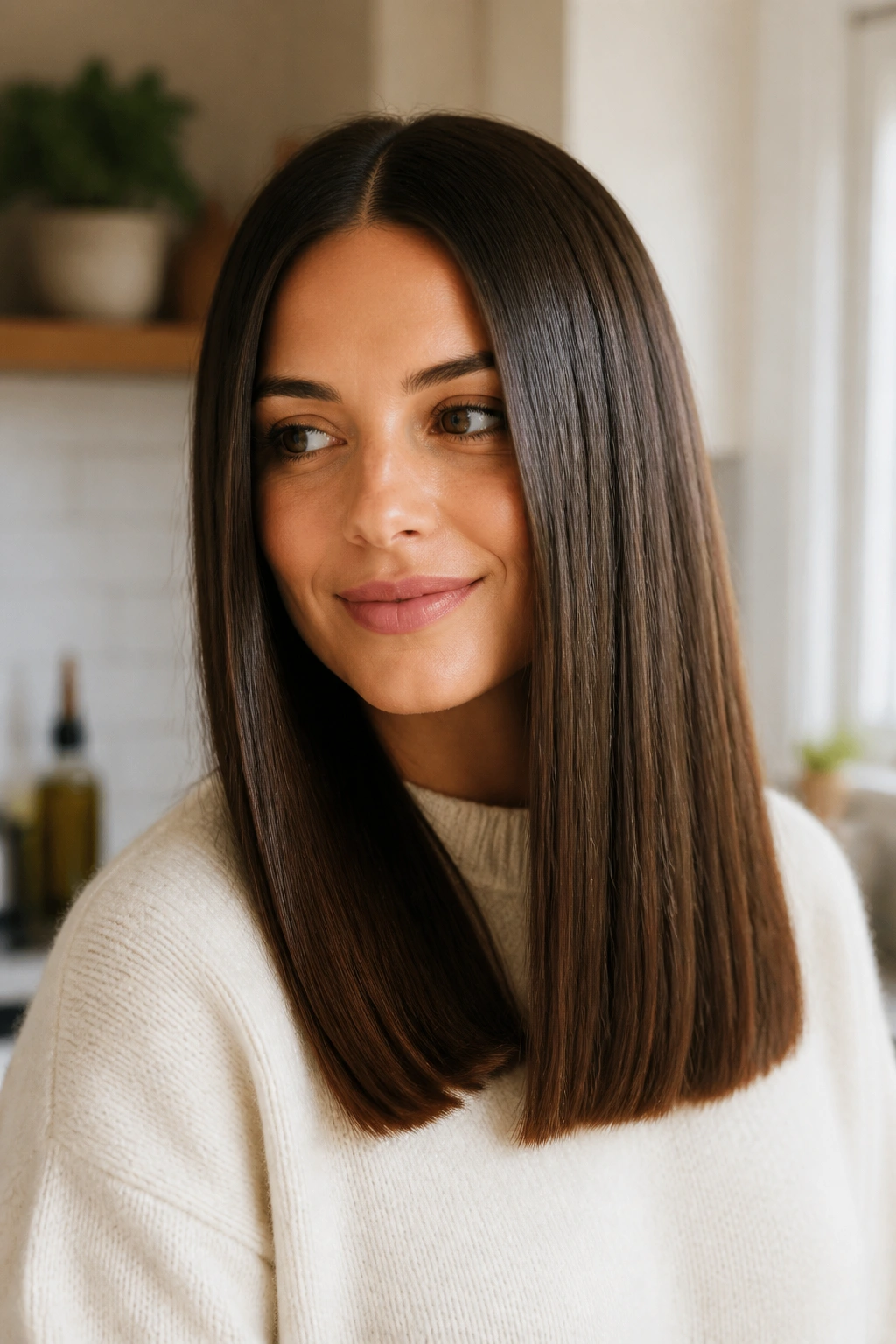
A blunt cut can look almost unfairly easy. The ends stay dense, the line looks clean, and you do not spend half your life trying to shape a dozen different layers. If your hair is fine, straight, or only slightly wavy, this style gives the illusion of thicker hair with very little effort.
The center part keeps it simple. You brush, part, and go. On a good day, a quick pass with a blow-dry brush or flat iron is enough. On a lazy day, it still looks intentional because the whole shape is so even.
There is one catch. Blunt ends need trims more often than people think, usually every 8 to 10 weeks if you want that crisp line to stay neat. Letting them split badly makes the style look tired fast.
Still, this is one of my favorite low maintenance long hairstyles for women who want polish without a lot of moving parts. It is tidy. It is predictable. And some mornings, that is exactly what you want.
3. Curtain Bangs That Grow Out Gracefully
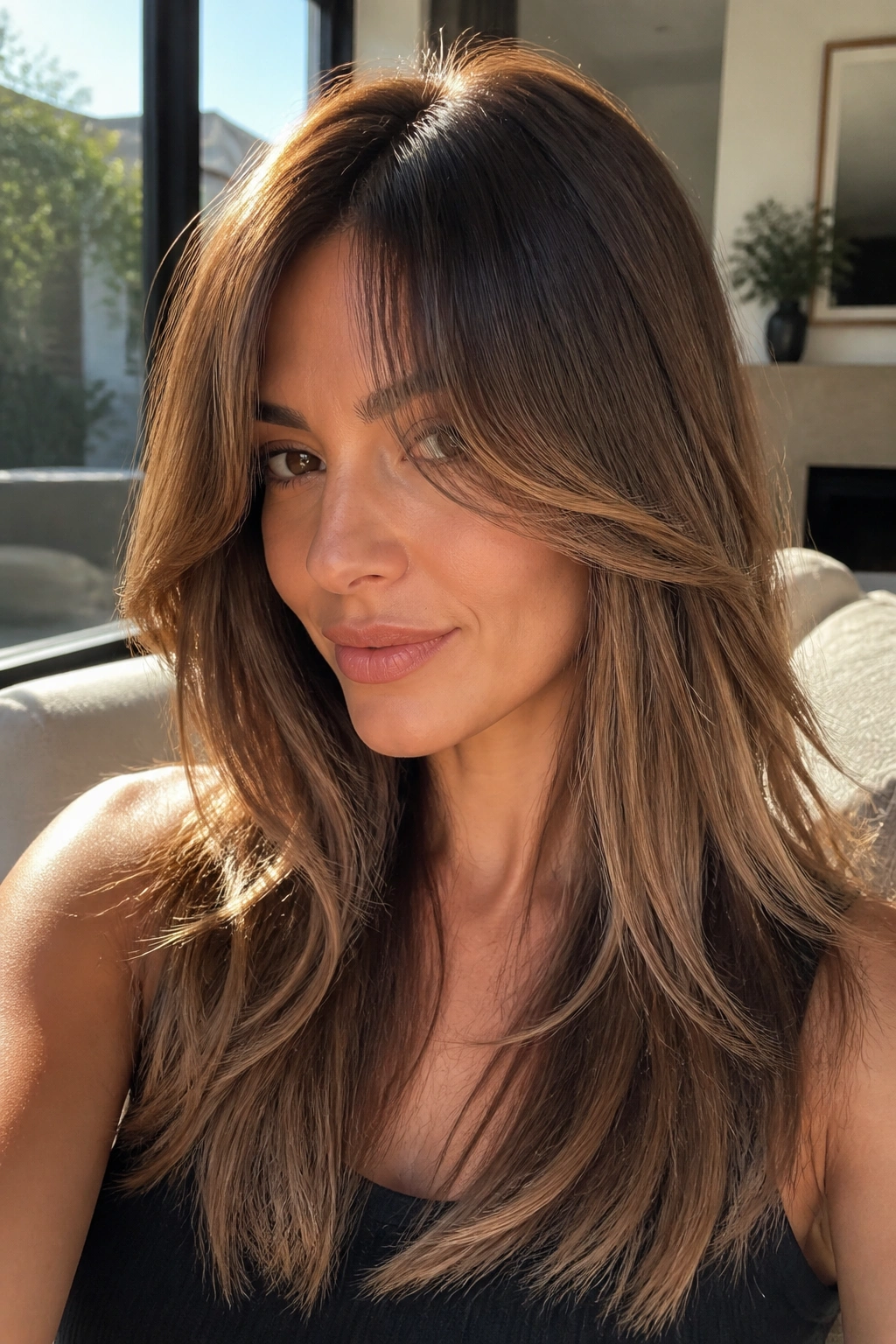
Want face-framing without getting trapped in a high-upkeep fringe? Curtain bangs are the smarter bet. They split in the middle, blend into the sides, and grow out into layers instead of becoming that awkward block of hair you keep pinning back.
The trick is to keep them long enough to hit the cheekbone or jawline. Too short, and they need daily styling. Too short also means they can kick out in weird directions when humidity shows up. Longer curtain bangs sit better, and they can be swept away from the face if you do not have time to deal with them.
How to keep them easy
- Blow-dry them with a medium round brush only at the roots.
- Or twist them to each side while damp and clip them back for 10 minutes.
- Use a light mist of dry texture spray if they separate too much.
They are one of the best low maintenance options for women who want long hair but still need a little shape around the face. Not fussy. Just useful.
4. Low Ponytail With Face-Framing Pieces
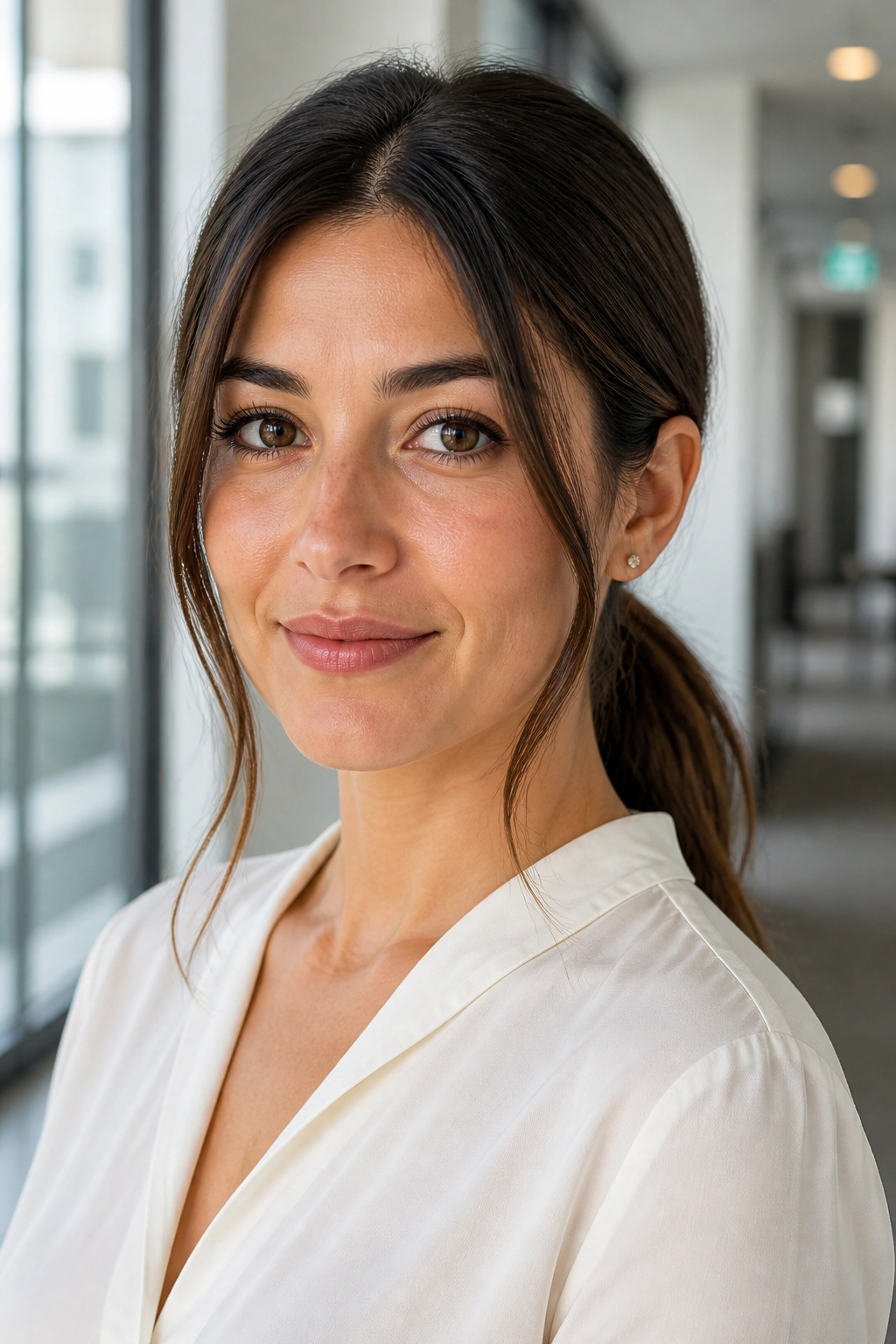
You know this one. Hair pulled back low, a few soft pieces left in front, and suddenly the whole thing looks calmer and more finished than a regular ponytail ever does. It works for work, errands, dinner, and those days when you are two minutes from leaving the house and your hair refuses to cooperate.
The part that makes it look good is restraint. Leave out one-inch sections on each side of the face, not big dramatic tendrils that keep falling into your mouth. Secure the ponytail at the nape, then wrap a small piece of hair around the elastic if you want it to look cleaner.
A low ponytail is low maintenance because it survives real life. Wind, humidity, car rides, long commutes — it handles all of it. And if your hair is second-day dirty, even better. A little dry shampoo at the roots gives the style more grip.
The best version is not perfect. If a few pieces fall loose, leave them alone.
5. Claw-Clip French Twist
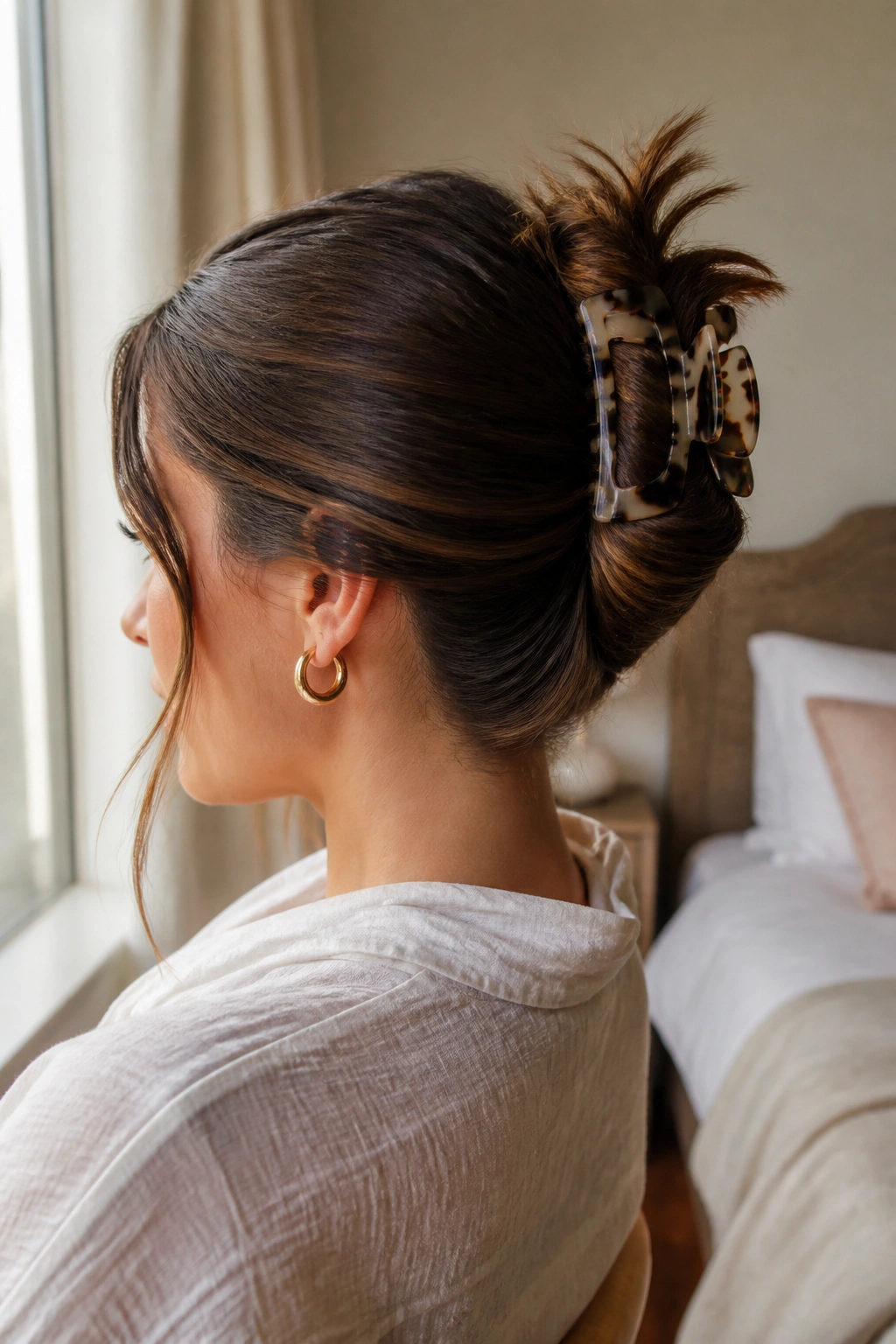
A big claw clip can do more for long hair than a drawer full of hot tools. Twist the hair up, fold the length in half, and clip it in place. That is the whole idea, and on thick hair it can be a lifesaver.
This style works best when the clip is 4 inches or wider with strong spring tension. Cheap clips slip, and slipping clips make you mad by 11 a.m. If your hair is heavy, choose a clip with teeth that grip deeply instead of just sitting on top of the hair.
What makes it different
- It lifts the hair off the neck fast.
- It does not need heat.
- It looks better when a few ends stick out.
- It works on hair that is not freshly washed.
I reach for this one on rushed mornings because it is fast and forgiving. If the twist is a little uneven, nobody notices. If it looks a touch loose, that is part of the charm. Do not overthink the shape.
6. Long Shag With Piecey Ends
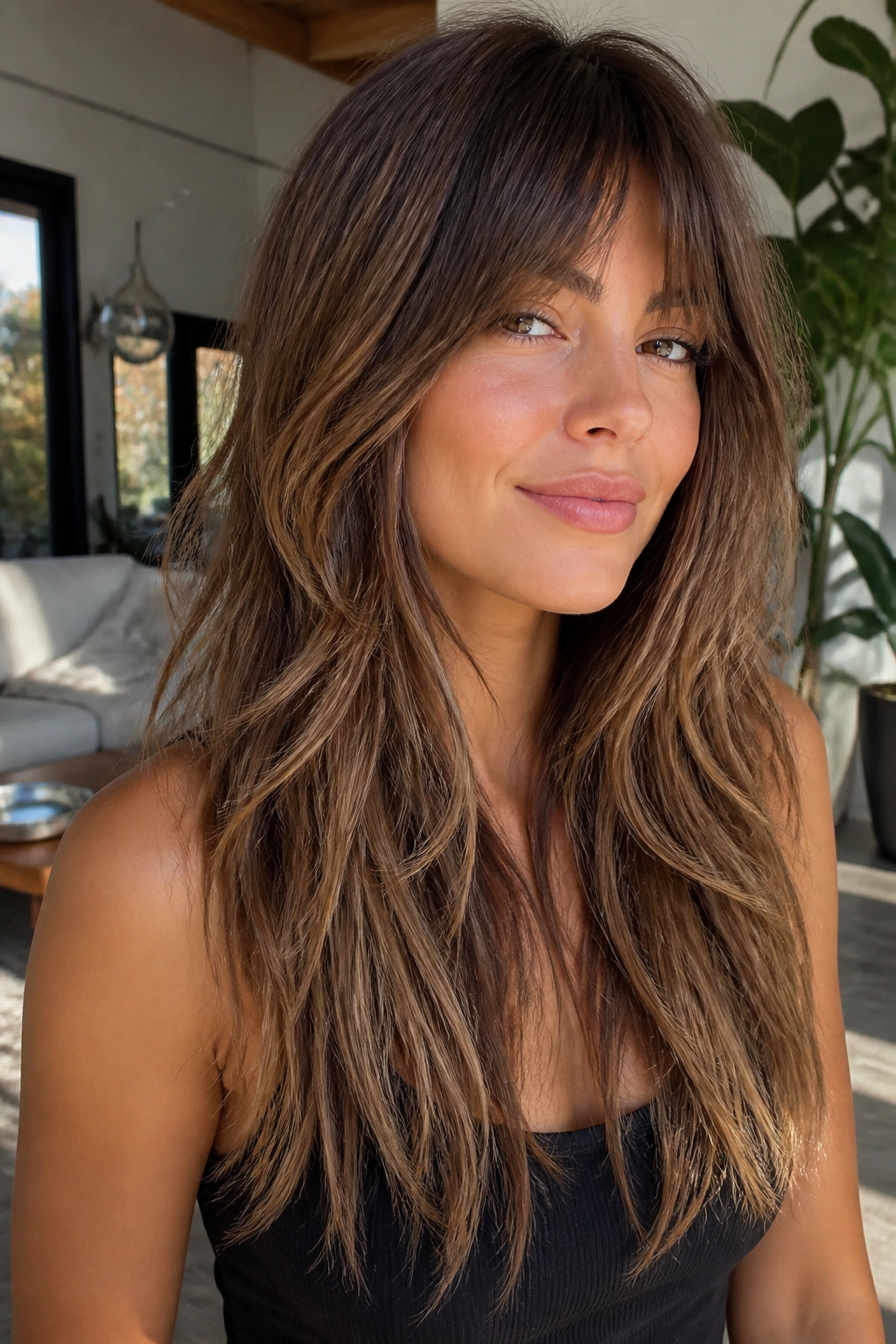
Some cuts look better when they are a little messy. The long shag is one of them. It gives you movement, texture, and that slightly broken-up shape that makes hair look fuller without asking for much styling.
The reason it stays low maintenance is simple: the haircut does the heavy lifting. The layers are built to look good with a rough air-dry, so you are not forced into round-brush perfection every time you wash it. If your hair tends to go flat at the crown and poof at the bottom, a shag can balance that out nicely.
It does ask for a bit of judgment at the salon. Too much thinning can leave fine hair stringy. Too much layering can make thick hair frizzy. A good shag keeps the ends piecey but not ragged.
One more thing. It ages well. That matters. A lot of cuts look great on day one and awkward by week six. A long shag usually gets softer as it grows out, which is one reason it stays on so many busy women’s shortlists.
7. Heatless Waves From Braids or Twists
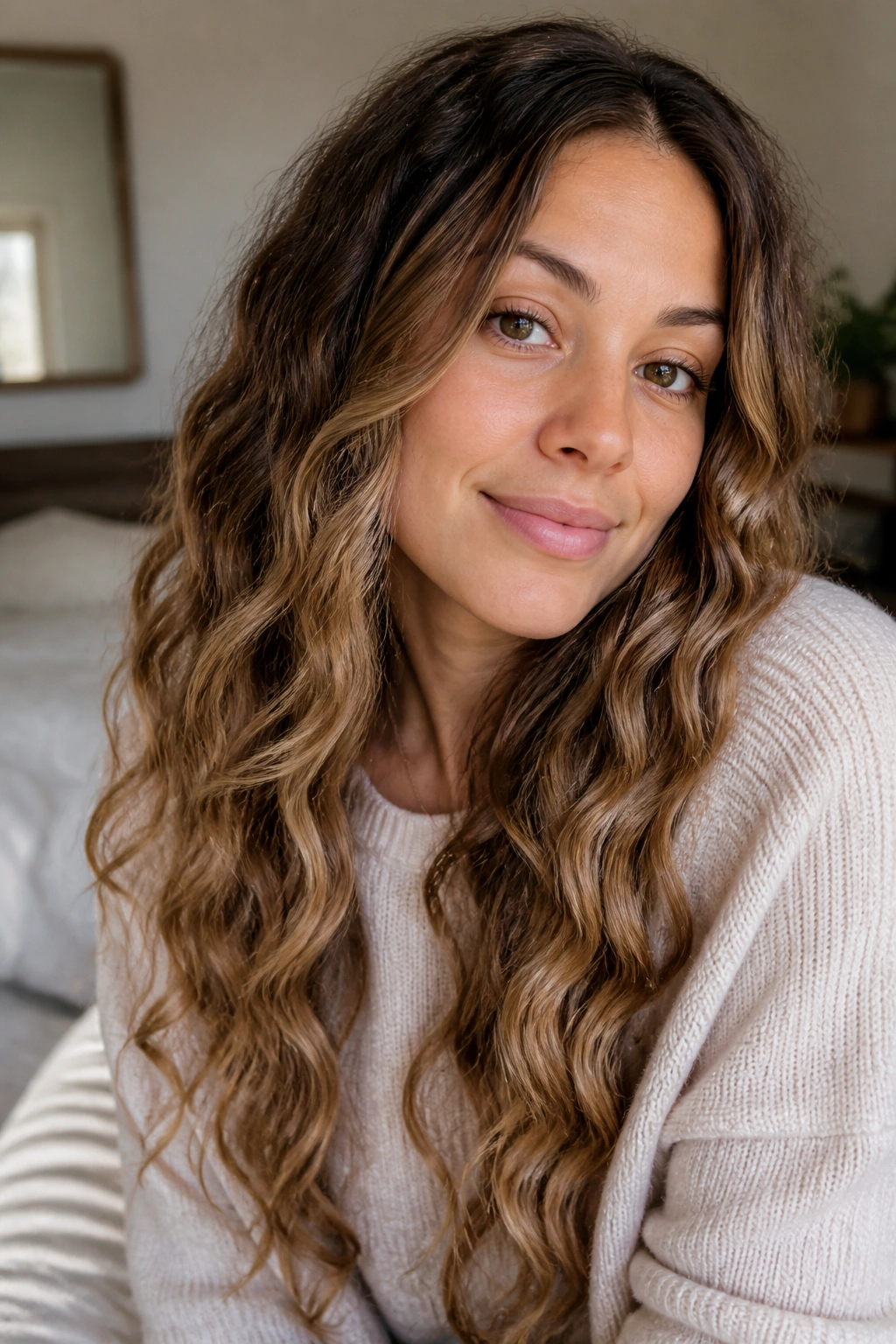
Wake up, pull out two loose braids, and the hair falls with that soft bend that looks far more deliberate than the effort it took. Heatless waves are a gift for anyone who wants shape without spending 20 minutes with a curling iron.
The best version starts with hair that is slightly damp, not wet. Wet hair takes forever to dry inside a braid, and that leads to flat roots or odd creases. Add a light mousse or leave-in spray, then braid or twist the hair before bed. In the morning, undo it, shake it out, and separate the waves with your fingers.
How to make them last
- Use silk or satin scrunchies to avoid sharp dents.
- Braid looser for softer waves, tighter for more definition.
- Sleep on a silk pillowcase if your hair frizzes easily.
- Finish with one light mist of flexible-hold spray.
This is one of those styles that looks a little better on day two. It is easy, cheap, and useful. That alone gets it a spot here.
8. Sleek Low Bun With a Deep Side Part
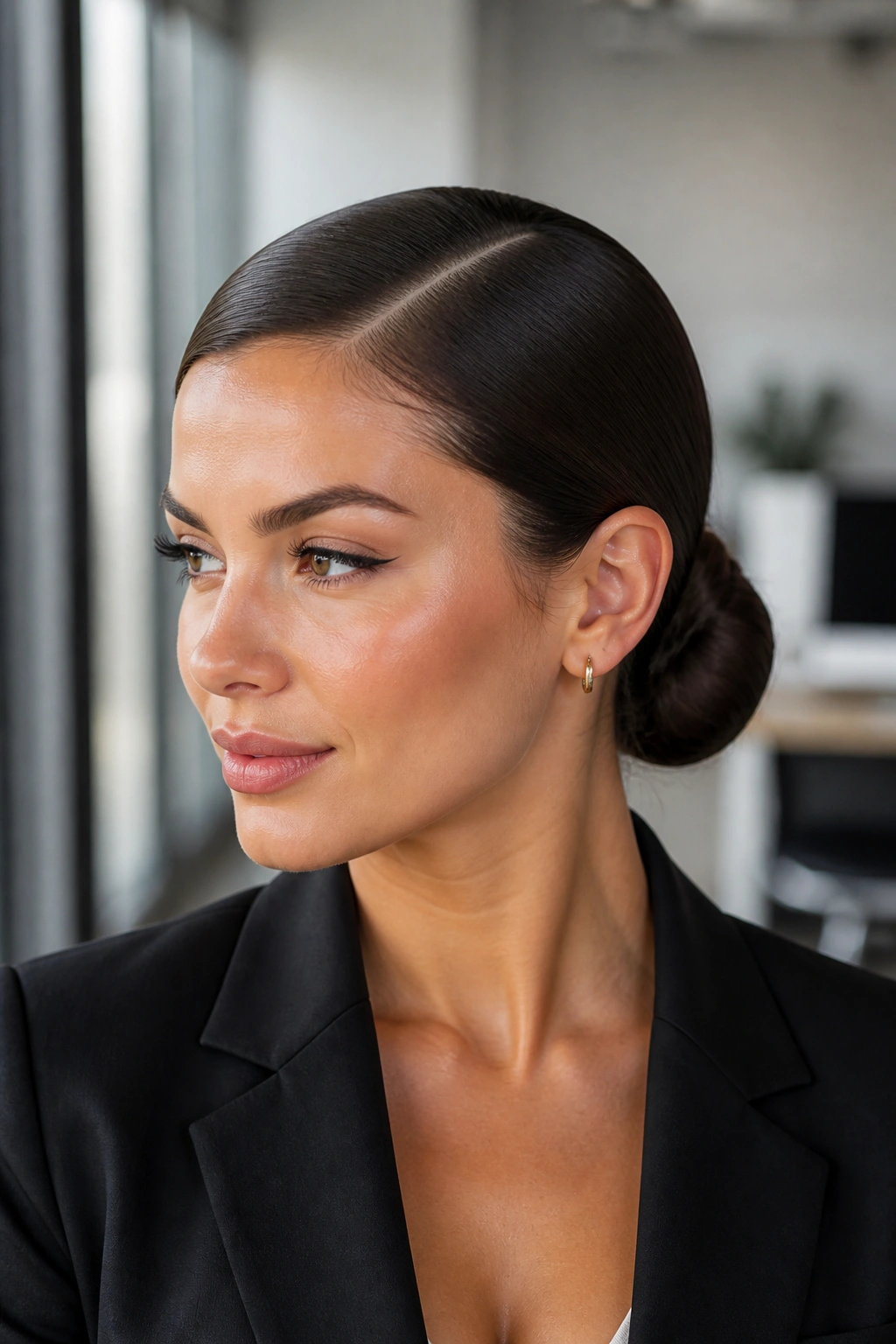
A bun is not boring when it sits low and a little off-center. A deep side part gives the hair shape, and the low placement keeps everything neat without looking severe. It is one of the best moves for meetings, weddings, humid days, or any time you want your hair off your face and still want to look put together.
You do not need a giant amount of product. A dime-size gel or smoothing cream near the crown is enough for most hair types. Brush the hair toward the nape, twist it into a coil, and pin it flat. If the bun is too tight, it can look stiff. If it is too loose, it can sag. Aim for the middle.
This style also hides dirty roots well. A little oil near the scalp is not a deal-breaker if the finish is sleek.
It is not flashy. Good. That is the point. Some days call for hair that stays where you put it.
9. Bubble Ponytail That Stays Put

Pull the hair into a low or mid ponytail, add elastics every 2 to 3 inches, and stop pretending styling has to be complicated. Bubble ponytails look far more styled than they are, which is why they work so well for busy mornings.
The spacing matters. Too close together and the bubbles look tiny. Too far apart and the sections lose shape. I like to gently tug each bubble outward after the elastics are secure, just enough to puff the sections without pulling them apart. That gives the style its shape and keeps it from looking flat.
Why it works on long hair
- Long lengths create bigger, cleaner bubbles.
- Small clear elastics disappear into the hair.
- A little volume at the crown keeps the ponytail from dragging.
- It holds up better than a plain ponytail in wind.
This is a practical style, but it has a bit of personality too. That balance is rare. And useful.
10. Rope Braid for Fast Control
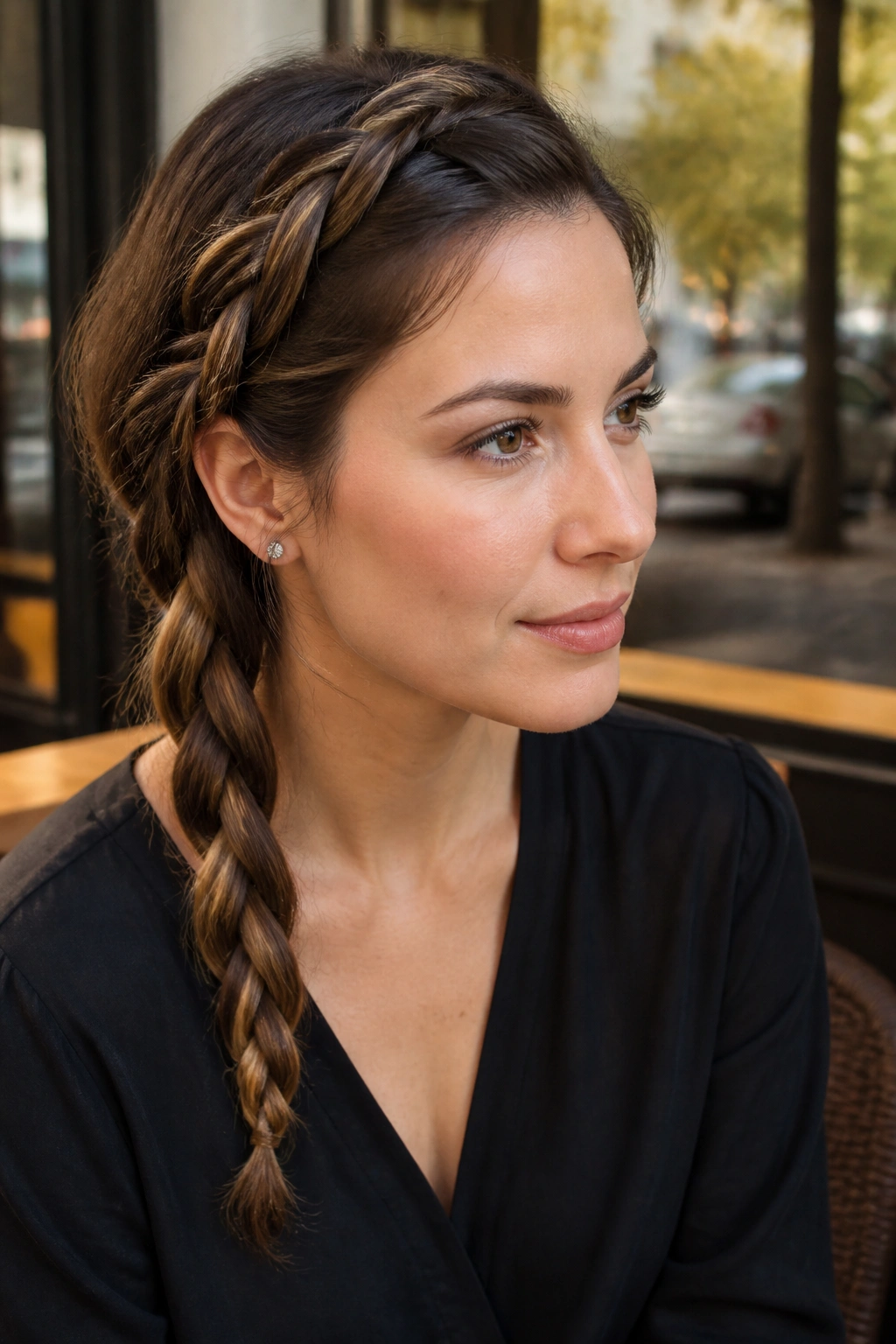
A rope braid is one of the fastest ways to make long hair look finished. It is really just two sections twisted around each other, which means less hand work than a three-strand braid and less chance of tangled fingers when you are in a hurry.
Start with two sections about 1.5 inches wide each, twist them in the same direction, then wrap them around each other in the opposite direction. That counter-twist is what keeps the braid from unraveling. Secure the end with a snag-free elastic. If your hair is slippery, a touch of dry texture spray helps a lot.
This style is good for days when you need the hair out of the way but do not want a bun sitting on the back of your head. It looks tidy with straight hair and even better with a little wave. If the braid loosens by afternoon, that is fine. It usually still reads as intentional.
Fast. Neat. Done.
11. Dutch Crown Braid for Long, Busy Days
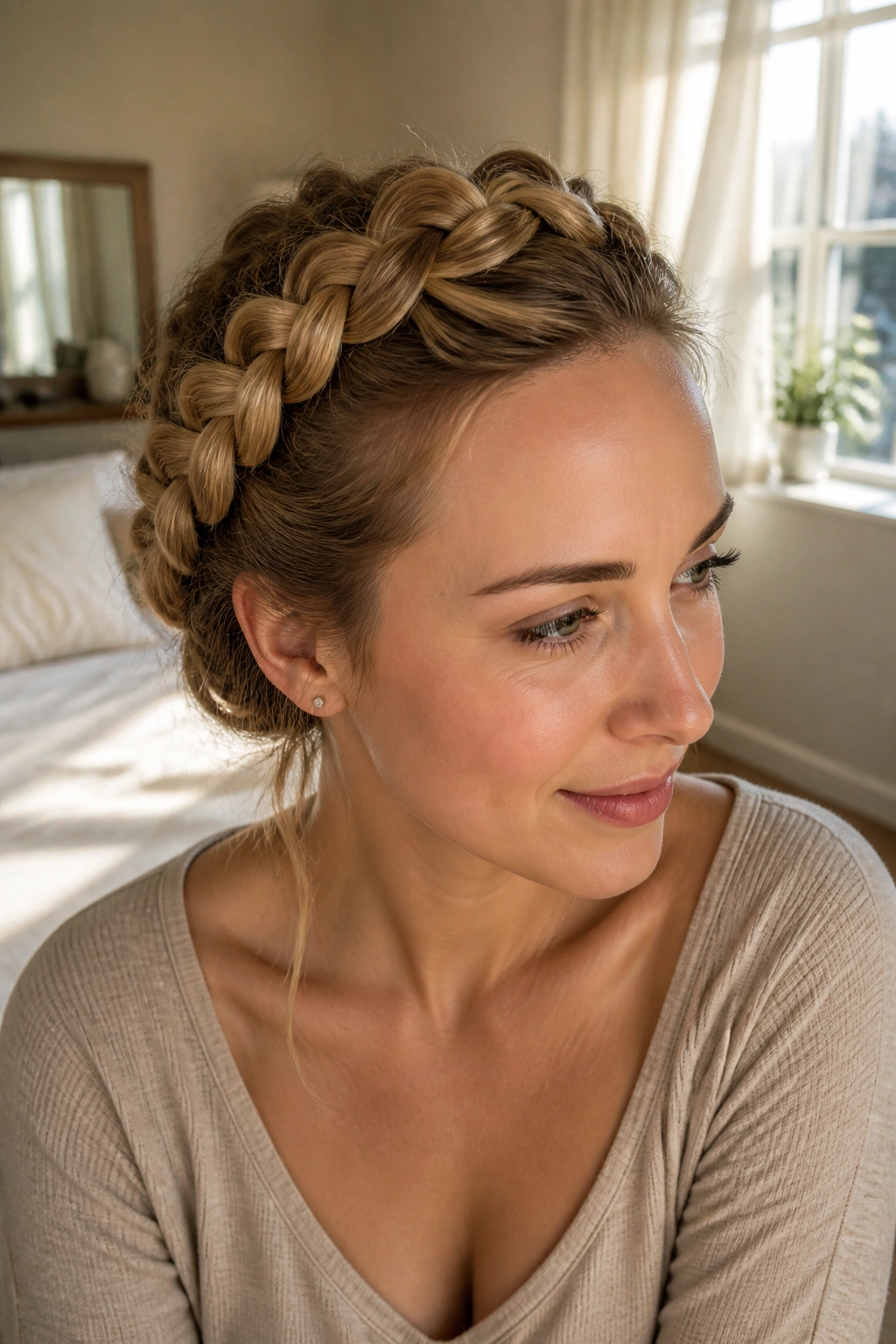
Need one style that can survive a full day and still look decent after dinner? A Dutch crown braid is hard to beat. It wraps the hair close to the scalp, which means the shape stays secure, and the braid itself does the styling for you.
This is not the quickest option on the list, but it pays you back later. Once it is in, you can forget about it. The crown placement keeps the hair away from the face, and the braid holds textured or layered hair better than a loose plait does.
The easiest way to keep it from looking too stiff is to braid it a little loosely and pull the edges apart once it is finished. That little bit of widening makes the braid feel softer and less helmet-like.
If you wear glasses, this style is especially nice. It keeps the sides clean without fighting the frames. And if your hair is thick, it can last all day without a single touch-up.
12. Side Braid With a Soft Finish

A side braid feels casual, but the trick is in how loose you keep it. Pull the hair over one shoulder, braid it low, and leave a little give at the hairline so it does not look tight or severe. That soft edge makes the whole style feel easy instead of school-uniform strict.
You can keep this braid sleek or pull it apart a bit for more width. I prefer the second version for busy women because it hides a little frizz and looks better when it loosens by the end of the day. If you want a cleaner shape, smooth the top with a brush before you start braiding.
- Secure the braid 2 inches above the ends so the tail can stay neat.
- Use a small elastic that matches your hair color.
- Tug the outer loops gently if you want more fullness.
This is one of those long hairstyles that quietly earns its place. It is simple, but not plain.
13. Long Curly Layers That Need Less Styling
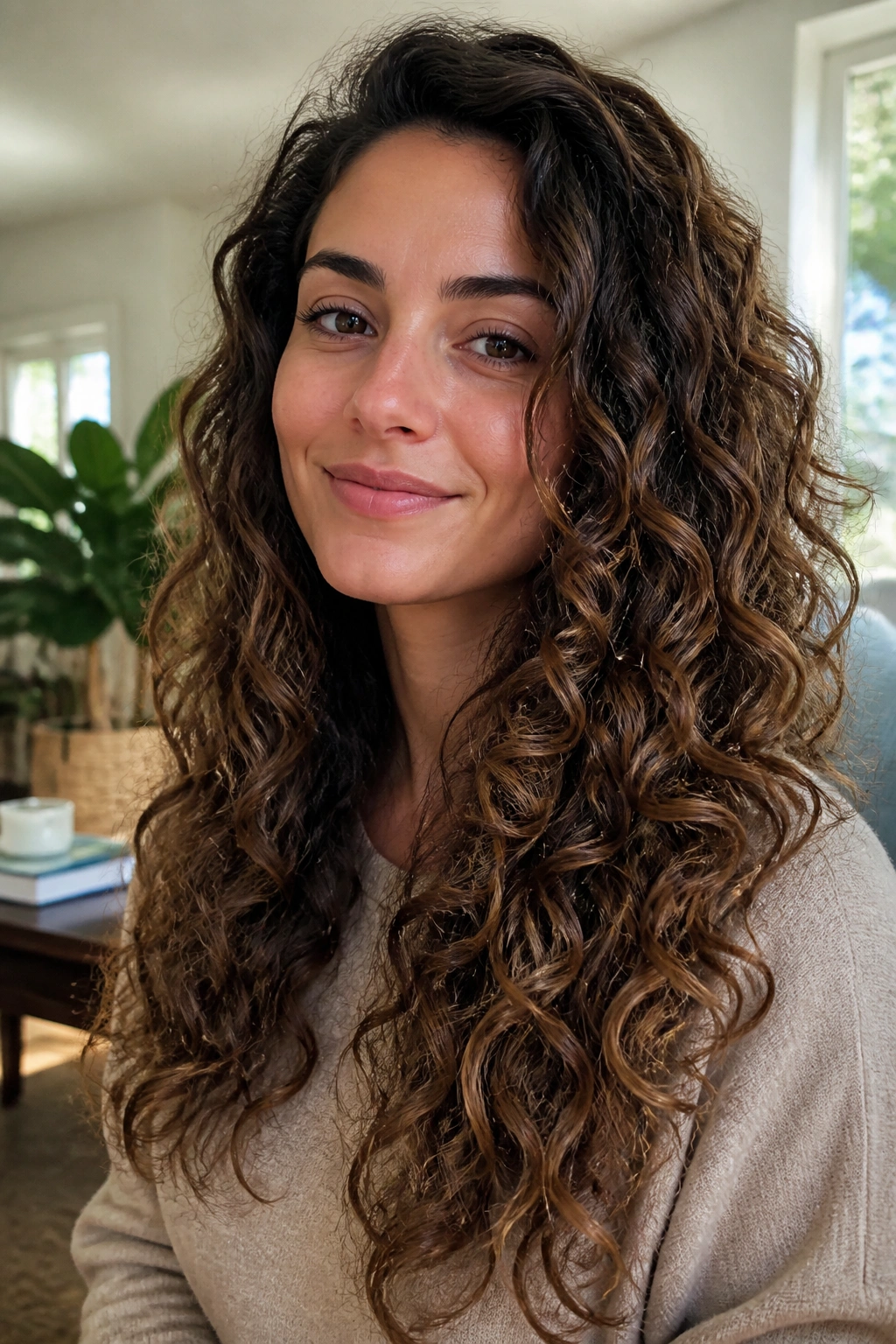
Curly hair does not want to be fought every morning. A good layered cut respects the curl pattern instead of flattening it, and that is what makes it low maintenance. When the shape is right, the curls fall into place with a little leave-in conditioner and a quick scrunch.
What matters most is where the layers sit. You want enough shape to stop the triangle effect, but not so much that the curls lose weight and puff out. A dry cut is often helpful here because the stylist can see where the curls actually land once they are dry. That matters more than guesswork.
What to ask your stylist
- Keep the longest length where you want the weight.
- Add internal layers to remove bulk, not random short pieces.
- Cut around the curl pattern, not against it.
- Leave enough length to pull the hair back on lazy days.
This is the kind of haircut that makes air-drying easier. Not perfect. Easier. And that is the point.
14. Long Wolf Cut for Texture Lovers
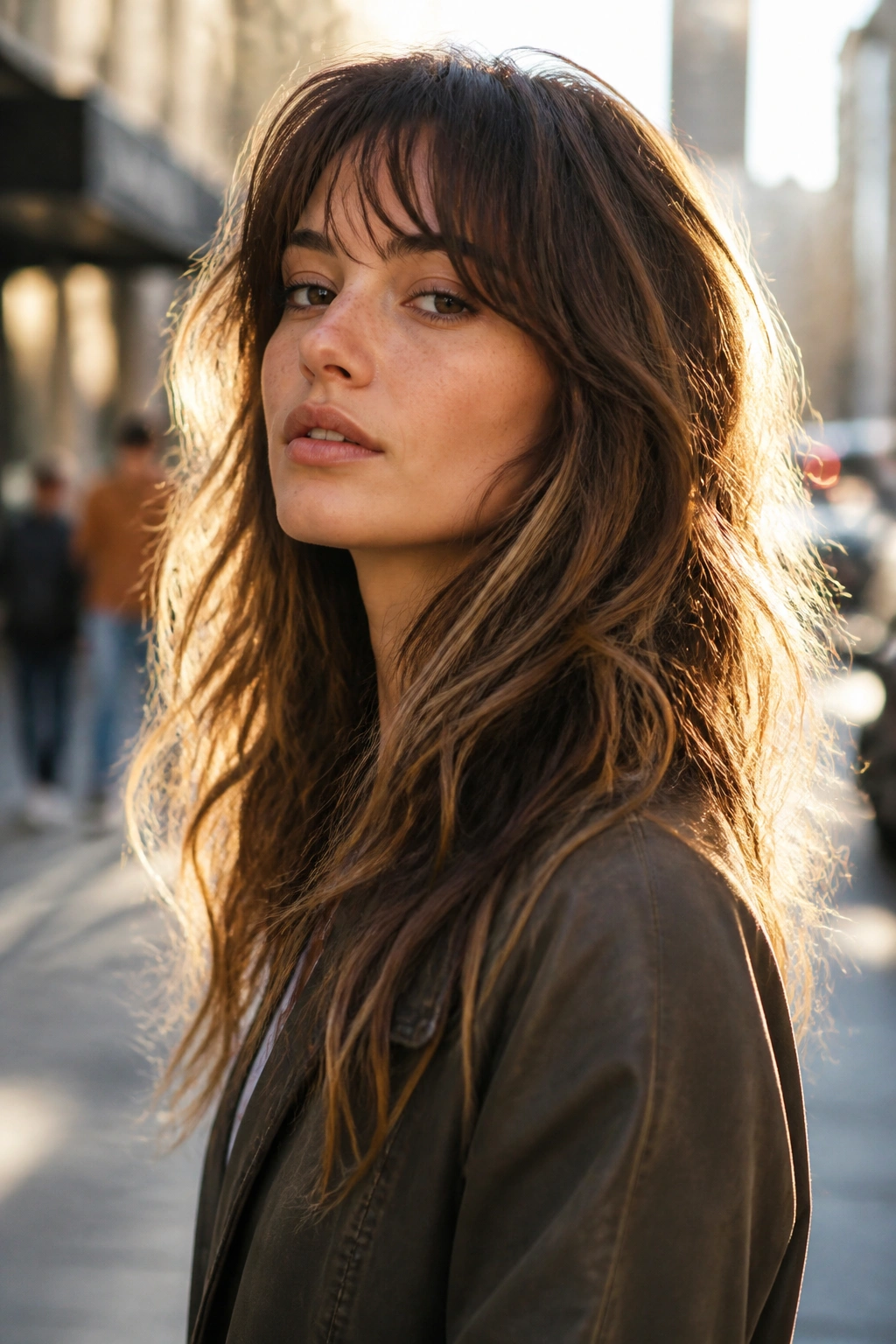
If you like texture and dislike blow-drying, the long wolf cut is one of the smartest cuts on the list. It sits somewhere between a shag and a layered mullet, but when it is done well, it keeps the length while building movement around the crown and through the ends.
The appeal is obvious the first time you air-dry it. The layers create shape without much help, and the haircut keeps some natural messiness built in. That means a rough day does not ruin the style. It often looks better with a little lived-in texture.
There is a downside, and it matters. Too much thinning can make the ends look wispy. If your hair is fine, ask for softer layers and keep the density at the perimeter. Thick hair usually handles this cut better because it has more weight to spare.
This is not the neatest style here. It is for women who like hair with a little edge and do not want to spend every morning polishing it into submission.
15. Scarf-Tied Ponytail for Day-Three Hair
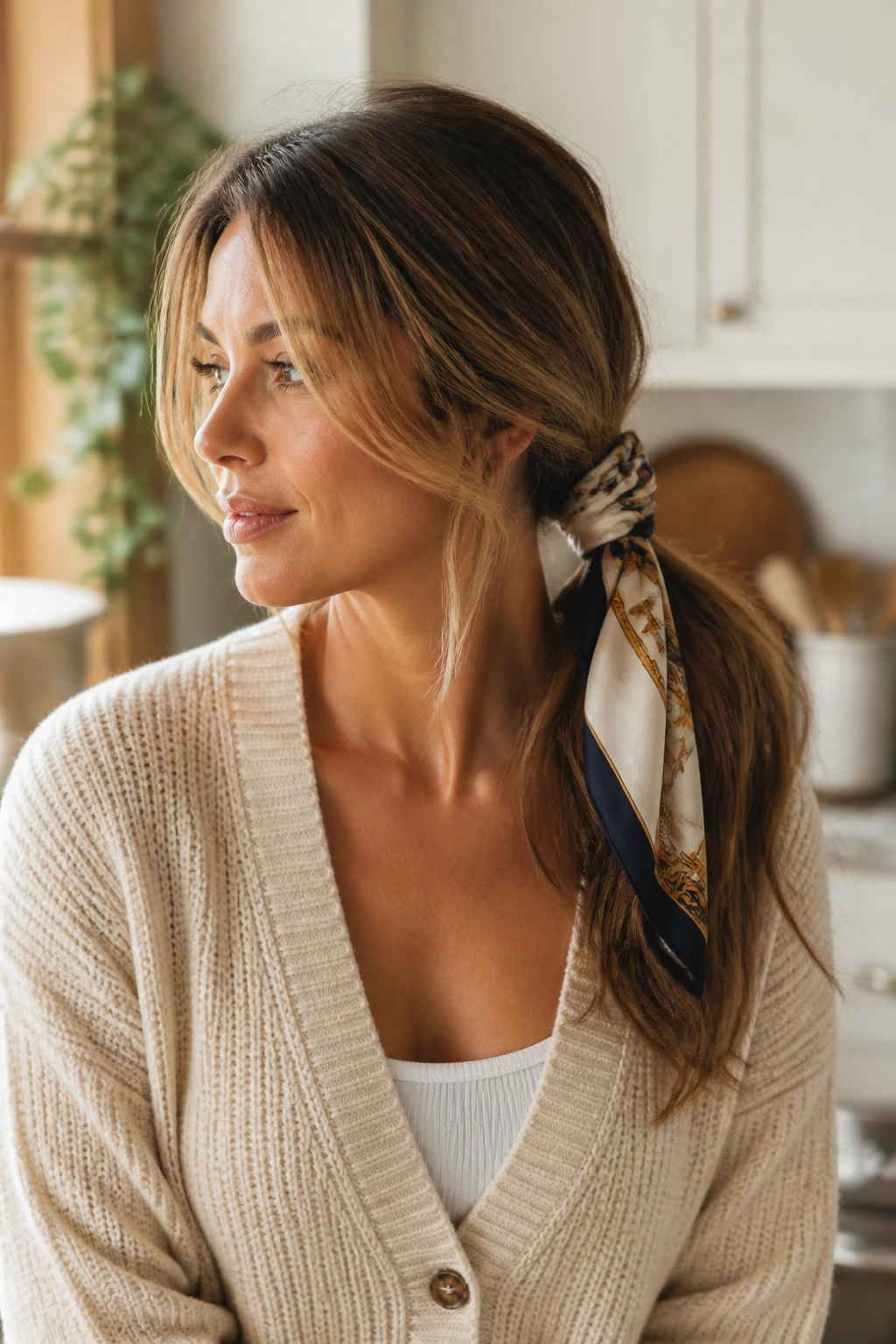
A black silk scarf tied around a low ponytail can make day-three hair look intentional. That is the whole reason this style has such staying power. It covers the elastic, distracts from frizz, and gives a plain ponytail a finished look in under a minute.
The base should stay simple. Pull the hair back low, secure it, and tie the scarf around the elastic with the knot just off-center or at the nape. If the scarf is too wide, it can swallow the whole style. If it is too narrow, it may slide. A medium-width scarf, about 2 to 3 inches folded, tends to work best.
Small details that help
- Choose a scarf with a little grip, not a slick one that slips.
- Keep the ponytail low so the scarf sits flat.
- Let one or two face-framing pieces stay loose if you want softness.
- Use the scarf to hide slightly rough ends.
This is quick polish, not a full styling session. I love that about it.
16. Twisted Half-Up Style
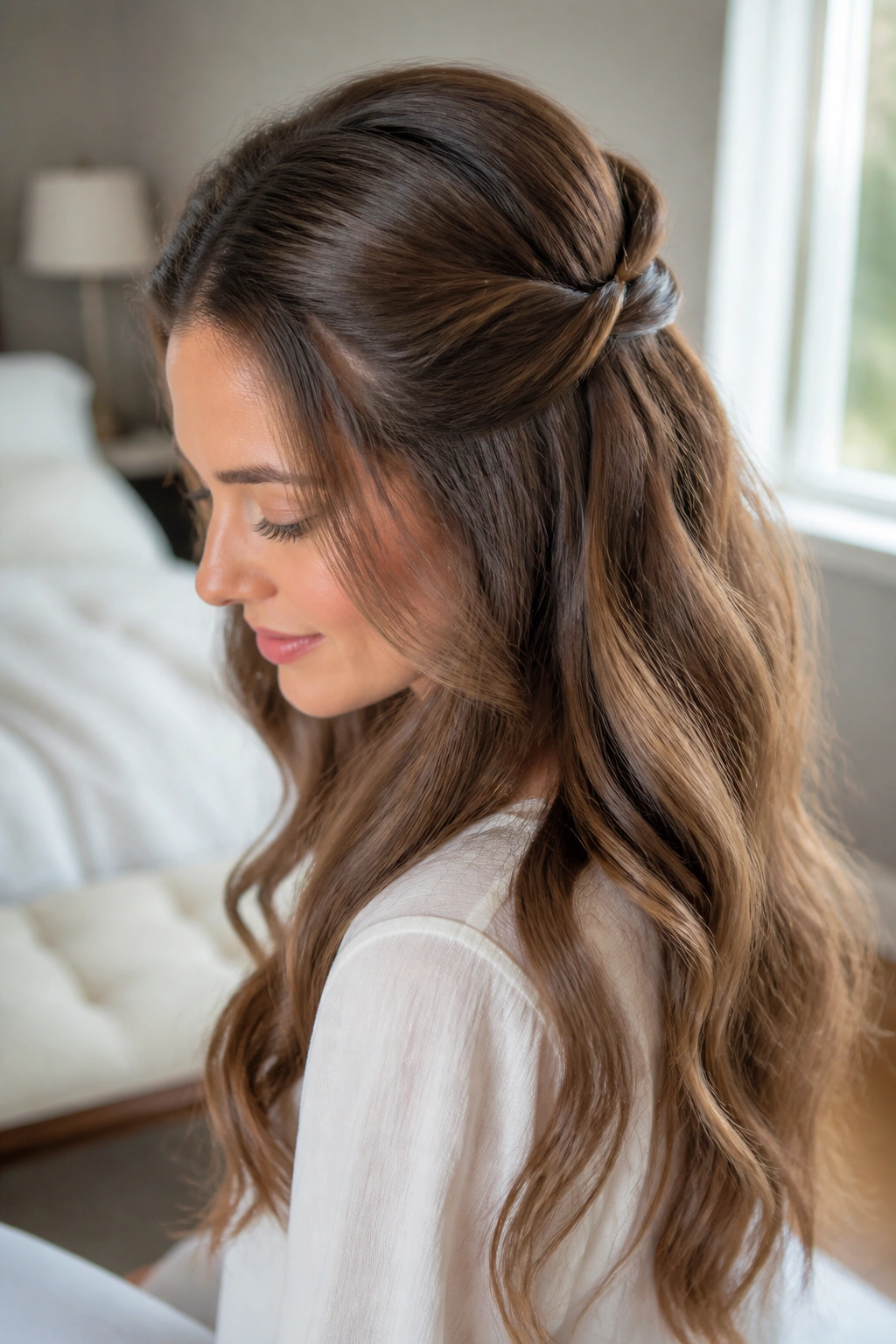
The top half of the hair goes back, the rest stays loose, and the whole thing takes about five minutes. That is why the twisted half-up style keeps showing up in real life, not just in photos. It handles long hair well because it takes weight off the front without forcing the whole length into a ponytail.
Take two sections from the temples, twist them back, and pin them together at the crown with two bobby pins crossed in an X. That tiny cross makes a big difference. One pin often slips; two pins hold. If your hair is silky, mist the section with texturizing spray first.
The look works especially well with natural waves or heatless bends. Straight hair can wear it too, but the style feels softer when there is some movement in the length.
One sentence, and it matters: this is the hairstyle for women who want their hair out of their eyes without losing the length they worked for.
17. Slicked-Back Half-Up Ponytail
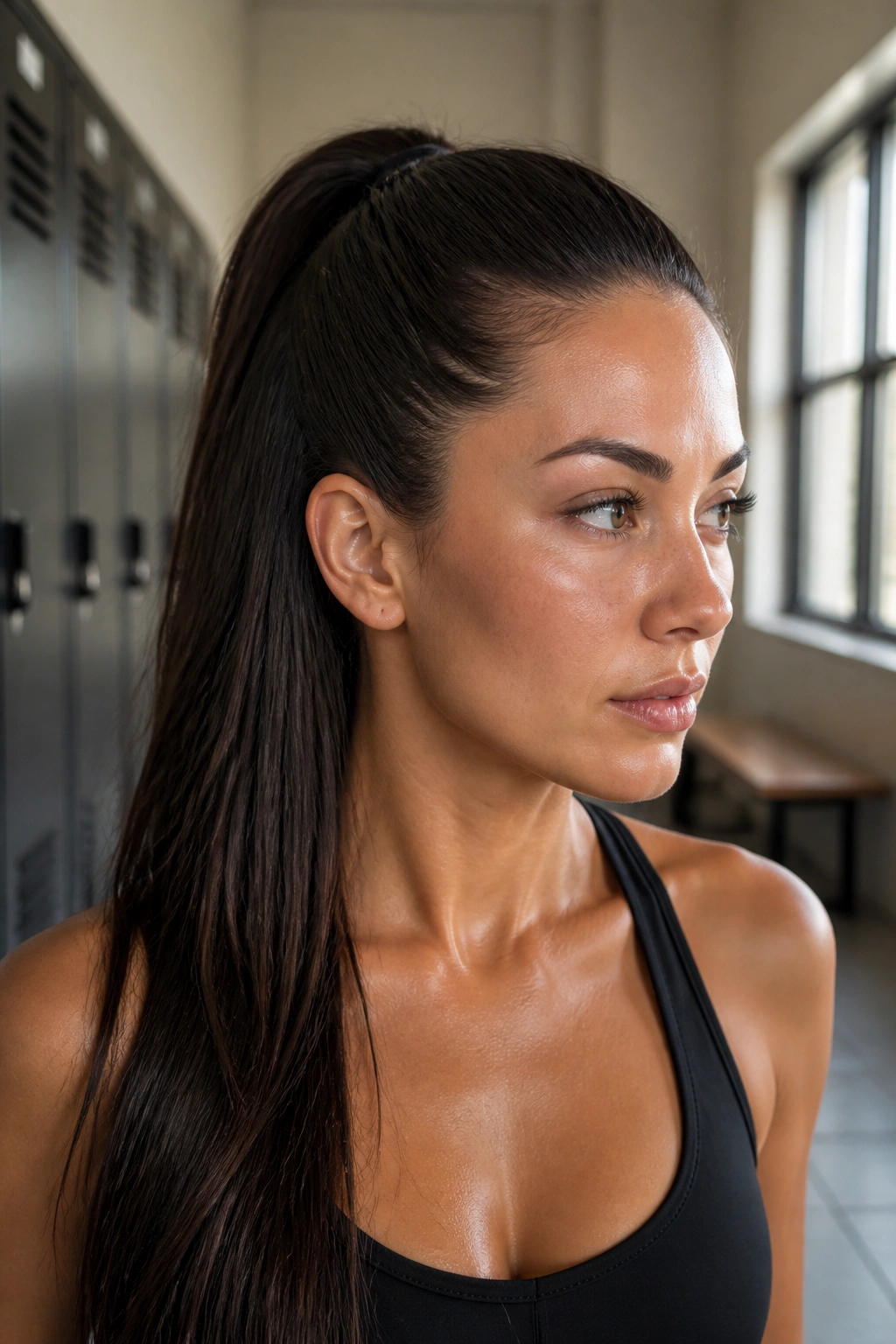
Need something that survives heat, a gym session, or a long commute? A slicked-back half-up ponytail can handle all three. It keeps the front neat, leaves the length visible, and does not require you to commit to a full ponytail if you do not want one.
The trick is to keep the top section smooth and the lower section loose. Use a light gel or styling cream at the roots, then brush the top back with a boar-bristle brush so it lies flat. Secure the half ponytail at the crown or just above it, depending on how much lift you want.
Why it beats a full ponytail
- It puts less tension on the hairline.
- It lets long hair keep its shape.
- It works with straight, wavy, or lightly curly textures.
- It looks cleaner when the bottom half has a little bend.
If you like a neat front and soft length, this style is a solid middle ground. Not too sporty. Not too dressed up.
18. Braided Low Bun for Humid Days
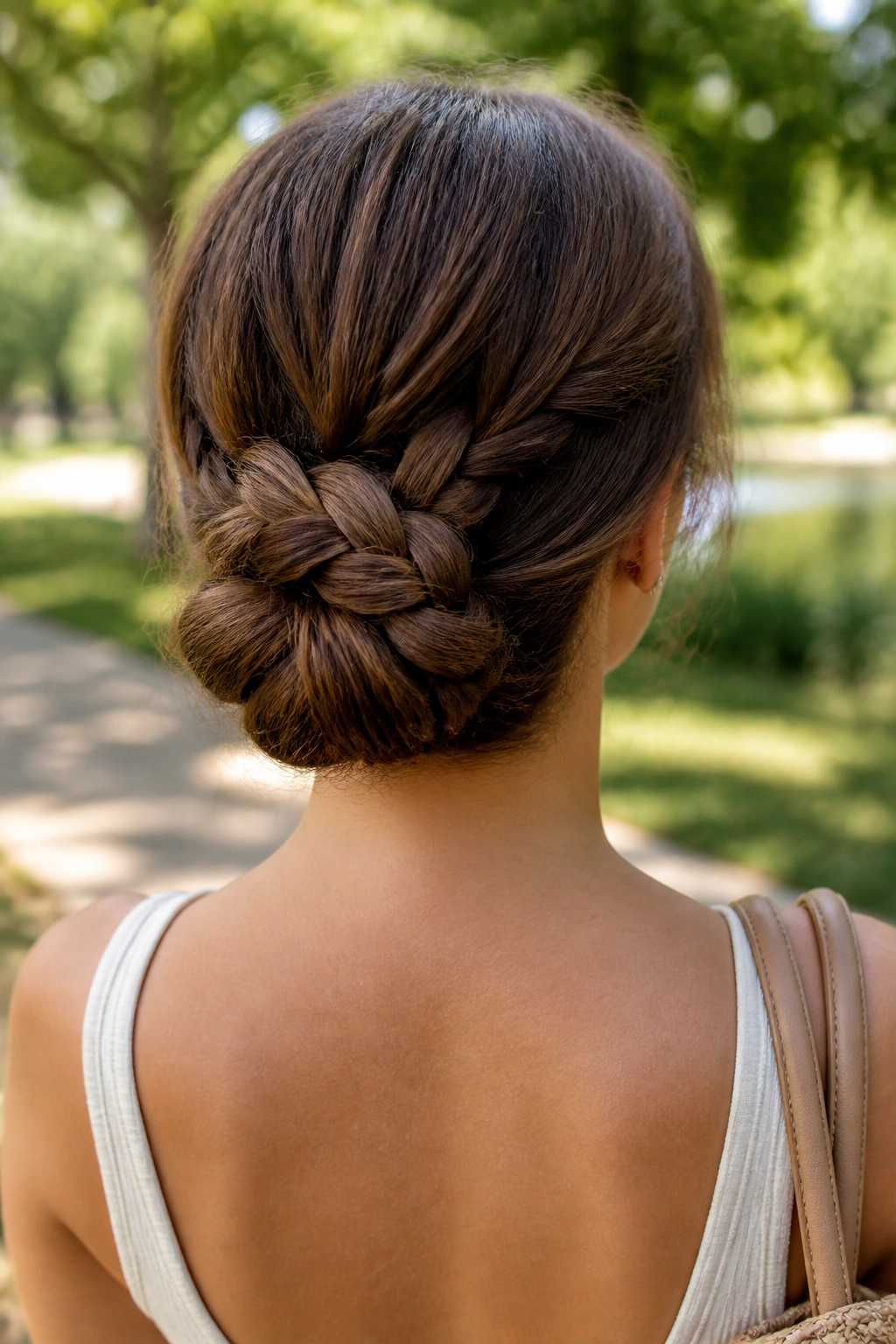
This is the style I reach for when I want my hair to stay put until bedtime. A low braid wrapped into a bun keeps the length tucked away, and the braid gives the bun more grip than a simple coil ever will.
Start with a low ponytail, braid the tail, then wrap it around itself and pin it at the nape. Use 4 to 6 bobby pins if your hair is thick or layered. The pins should go in where the braid crosses, not just along the outside edge. That is the part people miss, and then the bun sags by lunch.
How to pin it so it does not droop
- Anchor one pin into the bun and push it upward.
- Cross a second pin over the first one.
- Hide the ends under the braid before pinning.
- Use a little hairspray only on the outer layer.
It is a working style. Clean, secure, and not precious. Sometimes that is the smartest choice.
19. Long U-Cut With Barely-There Face Framing
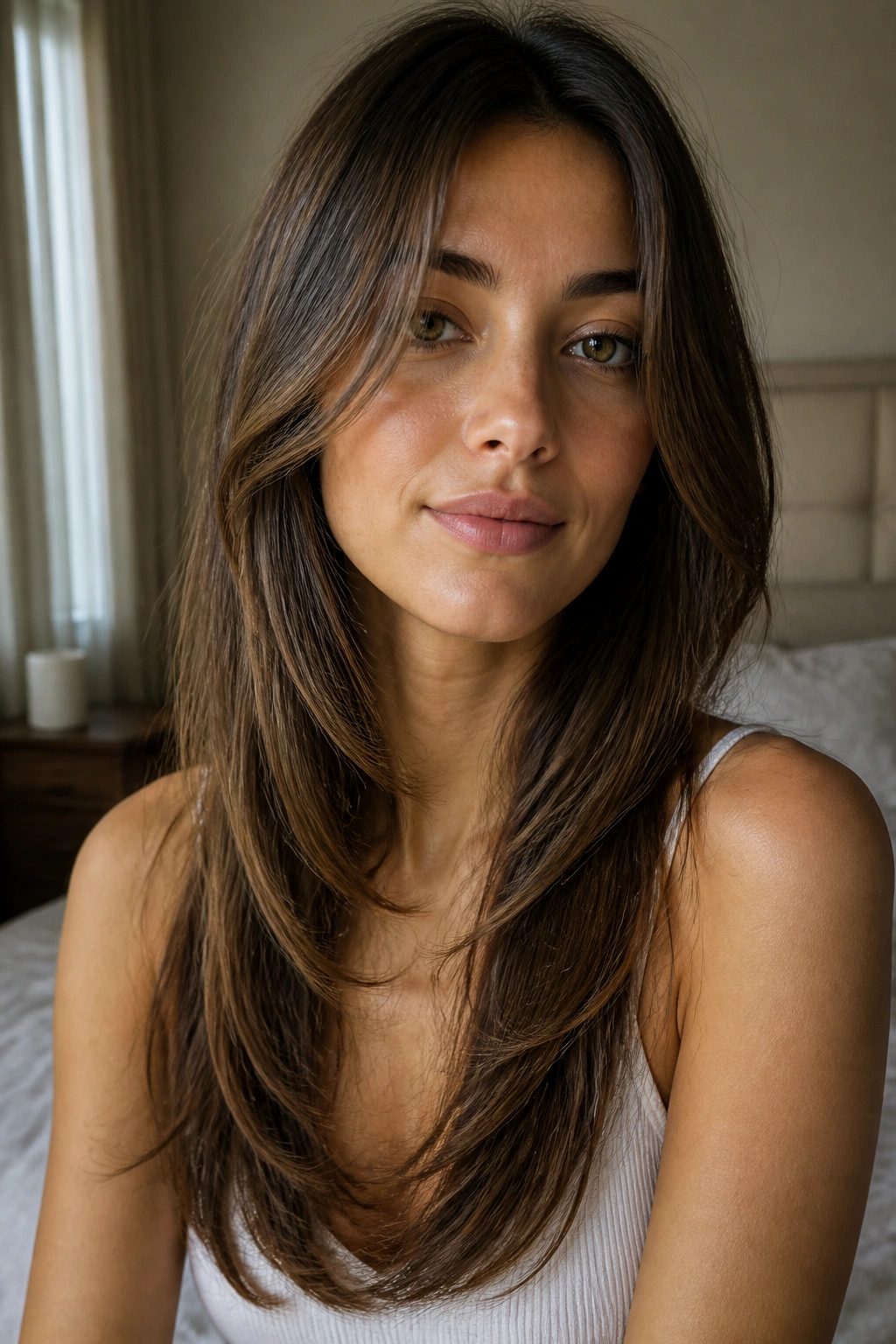
If you wear your hair mostly down and hate heavy ends, a soft U-shape makes life easier. The back keeps a little rounded shape, which looks nicer than a hard straight line on very long hair, and the gentle face-framing pieces stop the style from feeling blocky.
This cut is especially good if you like to grow your hair out. A U-cut tends to blend into itself as it gets longer, so the grow-out phase is usually calmer than with a severe layered cut. You still get movement, but not so much that the length gets eaten away.
The face frame should stay subtle. Think collarbone to chest length, not dramatic shorter pieces that demand styling. That keeps the cut low maintenance and gives you something that looks fine even when the front is tucked behind one ear.
Some styles need a lot of work to look good. This one does not. It behaves best when you leave it alone.
20. Long Hair With a Deep Side Part and Tucked Ends

Sometimes the lowest-effort move is the simplest one: switch the part and tuck the ends behind one ear. A deep side part changes the whole face shape, gives roots a little lift, and makes long hair look styled even when you have done almost nothing to it.
This works especially well on straight and wavy hair, but it can help curly hair too if you want a little asymmetry. The part should sit a bit off the arch of your eyebrow, not all the way to the ear. That small shift keeps it from looking like an accident. Tucking one side behind the ear also shows off earrings and keeps hair off the face without tying anything up.
It is the kind of style that earns its keep on the most ordinary days. Grocery run. Zoom call. School pickup. The hair still looks thoughtful.
And that is the point with these low maintenance long hairstyles: they are not trying to steal your morning. They just need to look good when you are busy living your life.
