



A bob can look sharp in the mirror and flat by lunch. That is exactly why tousled bob haircuts keep hanging around in every stylist’s chair talk: they use shape, broken-up ends, and a little motion to make hair look like it fell into place on purpose.
The lived-in look is not the same thing as messy hair. Messy hair usually means the cut is fighting the texture you were born with. Lived-in hair has a plan, even if the plan looks relaxed. The length sits in the right spot, the ends are softened, and the movement comes from the cut first, product second.
That distinction matters more than people think. A bob that is too blunt can sit like a helmet. A bob that is too layered can frizz out and lose its line. The sweet spot is shape with a little air around it.
Some versions work best with a side part. Some want fringe. Some need a bend near the ends and nothing more. The first style earns its keep quickly.
1. Tousled Jaw-Grazing Choppy Bob

This is the bob I reach for when someone wants movement without losing edge. The length lands around the jaw, which means the cut shows off the neck and keeps the profile clean, while the choppy perimeter stops it from feeling too neat. Short, broken ends do a lot of the heavy lifting here.
Why It Works
A jaw-grazing bob gives hair enough weight to tuck behind one ear, but not so much length that it drags the shape down. That makes it a strong pick for straight and wavy hair that tends to go flat at the crown. It also helps if you like to air-dry, because the line still looks deliberate even when the finish is a little imperfect.
- Ask for point-cut ends instead of one blunt edge.
- Keep the front pieces just under the jaw for softness.
- Use a light mousse at the roots and a touch of texture spray through the mids.
- Trim every 6 to 8 weeks if you want the line to stay crisp.
Best for: oval, heart, and longer face shapes.
Skip it if: your hair grows out into a triangle and you do not want regular reshaping.
A tiny bend with a flat iron at the ends is enough. Nothing fussy. The cut should look good with a denim jacket and a second-day wave.
2. French Bob With Micro Fringe

A French bob with a micro fringe can look soft, not severe, when the fringe is cut a little ragged instead of straight across. That one detail changes the whole mood. You still get the cheekbone-brushing length and the cool, cropped feel, but the hair has room to move instead of sitting there like a cap.
Micro bangs are tricky, though. If they’re too blunt, they can make the cut feel strict. If they’re too wispy, they disappear. The best version sits just above the brows and breaks a little at the ends, so the eyes stay open and the forehead doesn’t feel boxed in.
This cut suits hair that bends easily. Think loose wave, soft straight texture, or curls that can be encouraged into a round shape. A tiny round brush or a quick pass with a flat iron on the front pieces is usually enough. Leave the rest alone. That’s the point.
What I like most is how little it asks for on a normal day. Tuck one side behind the ear. Let the fringe dry on its own. Add a pea-sized amount of matte paste only if the ends need separation.
That’s it. The haircut does the style work.
3. Collarbone-Length Wavy Bob

Why does a slightly longer bob feel so forgiving? Because collarbone length gives you a little swing, a little softness, and a lot more room to live with the haircut before the next trim. The hair brushes the collarbone, bends naturally, and refuses to look overdone even when it is only loosely styled.
This is one of the easiest wavy bob haircuts to wear because the length catches natural movement instead of fighting it. It works for people who want to tie the hair back on busy days and still have shape when it comes down. It also grows out well, which matters more than people admit.
How to Style It
- Mist sea-salt spray through damp hair and scrunch from the ends upward.
- Air-dry until the hair is about 80% dry, then use a diffuser only if the roots need lift.
- Wrap just the front pieces around a 1.25-inch curling wand, leaving the ends out.
- Finish with a dry texture spray, then shake the hair out with your fingers.
The nicest thing about this cut is that it looks a little different every day. That is not a flaw. It is the appeal. If your hair refuses to stay identical from one wash to the next, this bob takes that and makes it look intentional.
4. Razor-Cut Bob With Airy Ends
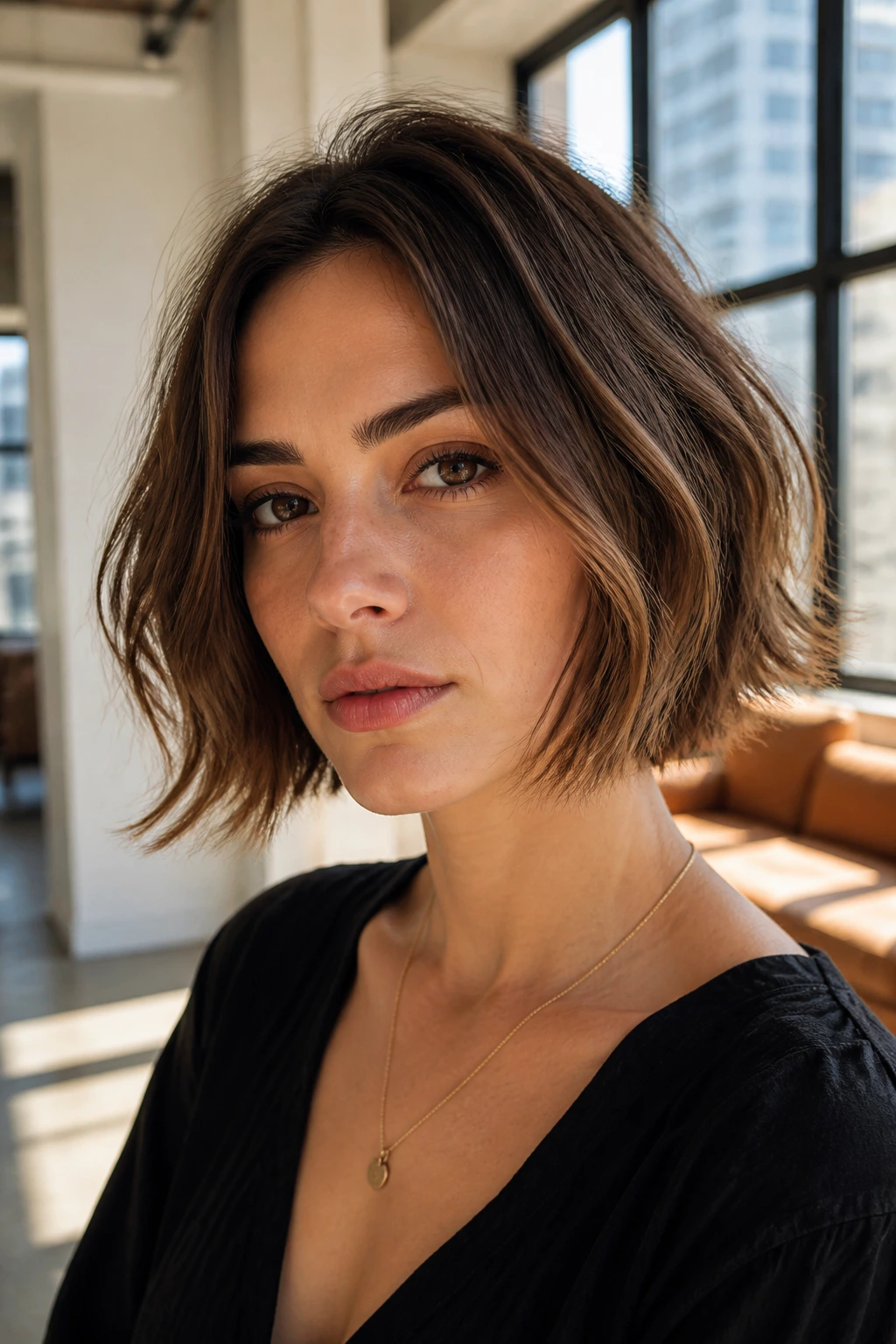
Picture a bob that moves when you turn your head. Not in a stiff, salon-perfect way. In a loose, slightly undone way that makes the ends look feathered instead of heavy. That is what a good razor cut can do.
The trick is restraint. A razor can make hair lighter and softer, but if it is used too aggressively the ends get frayed and the whole cut starts to puff. The best razor-cut bob still has a clear outline. It just has less bulk at the bottom.
- Works well on thick, straight, or dense wavy hair.
- Ask for a soft razor finish, not shredded layers.
- Keep the perimeter around chin to jaw length for control.
- Use a smoothing cream on the mids if your hair frizzes at the first sign of humidity.
I like this version for people who hate the feeling of hair sitting heavy on the neck. The airy ends make the cut feel lighter without making it look thin. That is harder to get than it sounds.
A sharp pair of scissors can do the job too if your stylist prefers a more controlled finish. The result should still feel touchable. Never brittle.
5. Soft Layered Lob
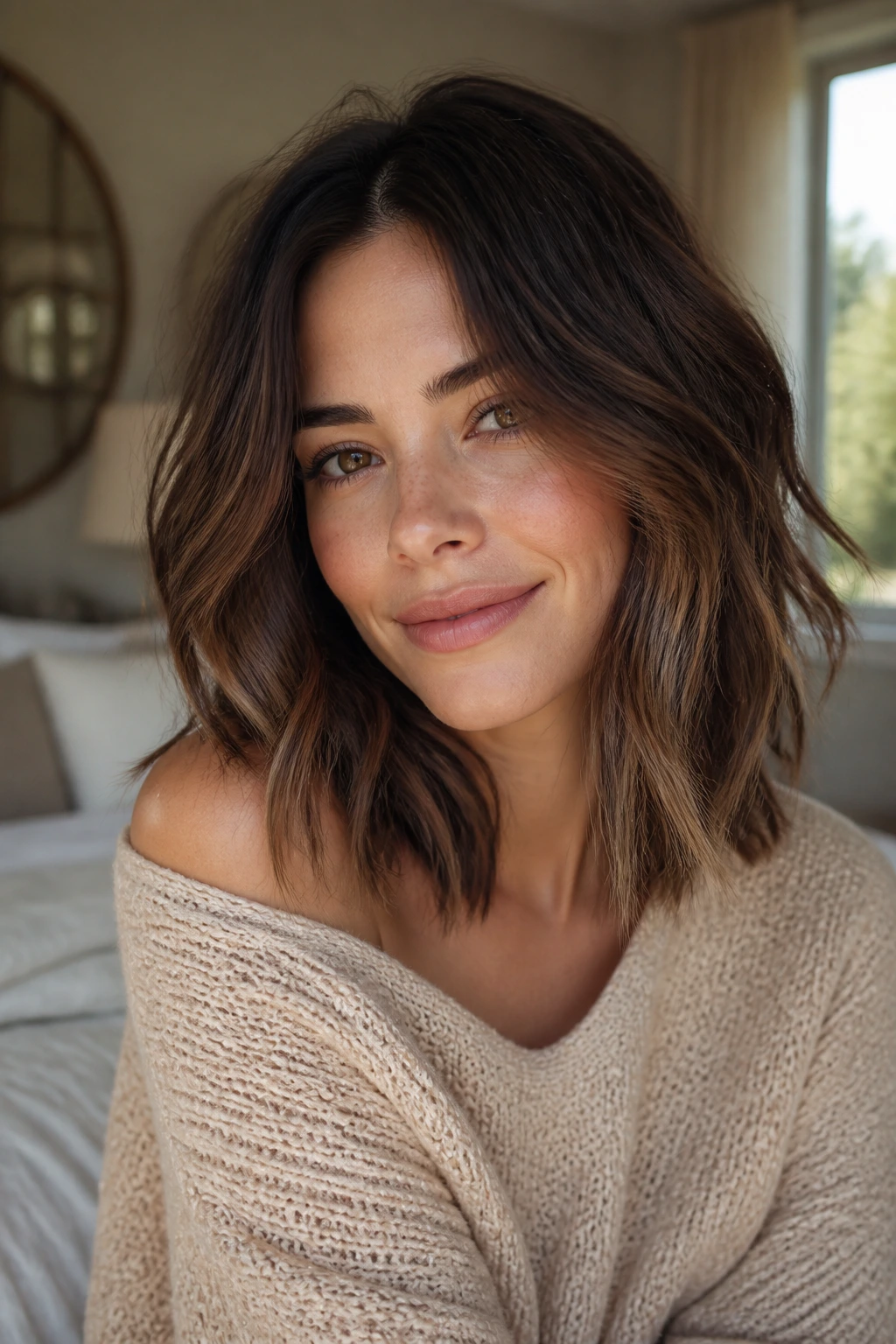
A soft layered lob is the easiest place to start if you want a lived-in bob and you are nervous about going too short. The length stays around the collarbone, which keeps the haircut versatile, but the layers stop it from hanging in one flat sheet. You get movement without losing the feeling of hair.
I have a soft spot for this cut because it flatters so many different hair textures. Fine hair gets a little lift. Medium hair gets swing. Thick hair gets relief at the ends. The layers should be long and blended, though. Short chop marks or too many disconnected pieces can make the whole thing look busy, and that is not what you want.
This is also one of the best cuts for people who like to wear their hair half-up or clipped back. The shape still shows. That matters on days when you are not doing much, which is most days for most people. The lived-in look comes from the way the layers fall around the face and move when the hair shifts, not from obvious styling.
If you are asking your stylist for this, say you want long internal layers, a soft edge, and enough weight left at the bottom so the ends do not flip out like mad. That sentence alone saves a lot of bad haircuts.
6. Asymmetrical Bob With Side Sweep

Unlike a symmetrical bob, an asymmetrical cut gives one side a little more room to breathe. That diagonal line changes the whole read of the haircut. It makes the face look longer, draws the eye downward, and gives the style a bit of attitude without asking for dramatic styling.
The best version is subtle. A half-inch difference can be enough. Maybe an inch, if your hair is thick or you want a stronger shape. Much more than that starts to look accidental unless the rest of the cut is very intentional. Subtle asymmetry wears better than a lopsided experiment.
This style is especially good if you wear a side part most of the time. The longer side can slide along the cheekbone, while the shorter side tucks neatly behind the ear. That little asymmetry helps the bob feel less formal and more like something you have been living in for a while.
I’d suggest this for round and square faces in particular, because the diagonal line softens the width at the cheeks and jaw. Straight hair shows it best, but a loose wave gives it more personality. Keep the styling loose. A crisp blowout kills the mood.
7. Curly Tousled Bob With Broken-Up Ends
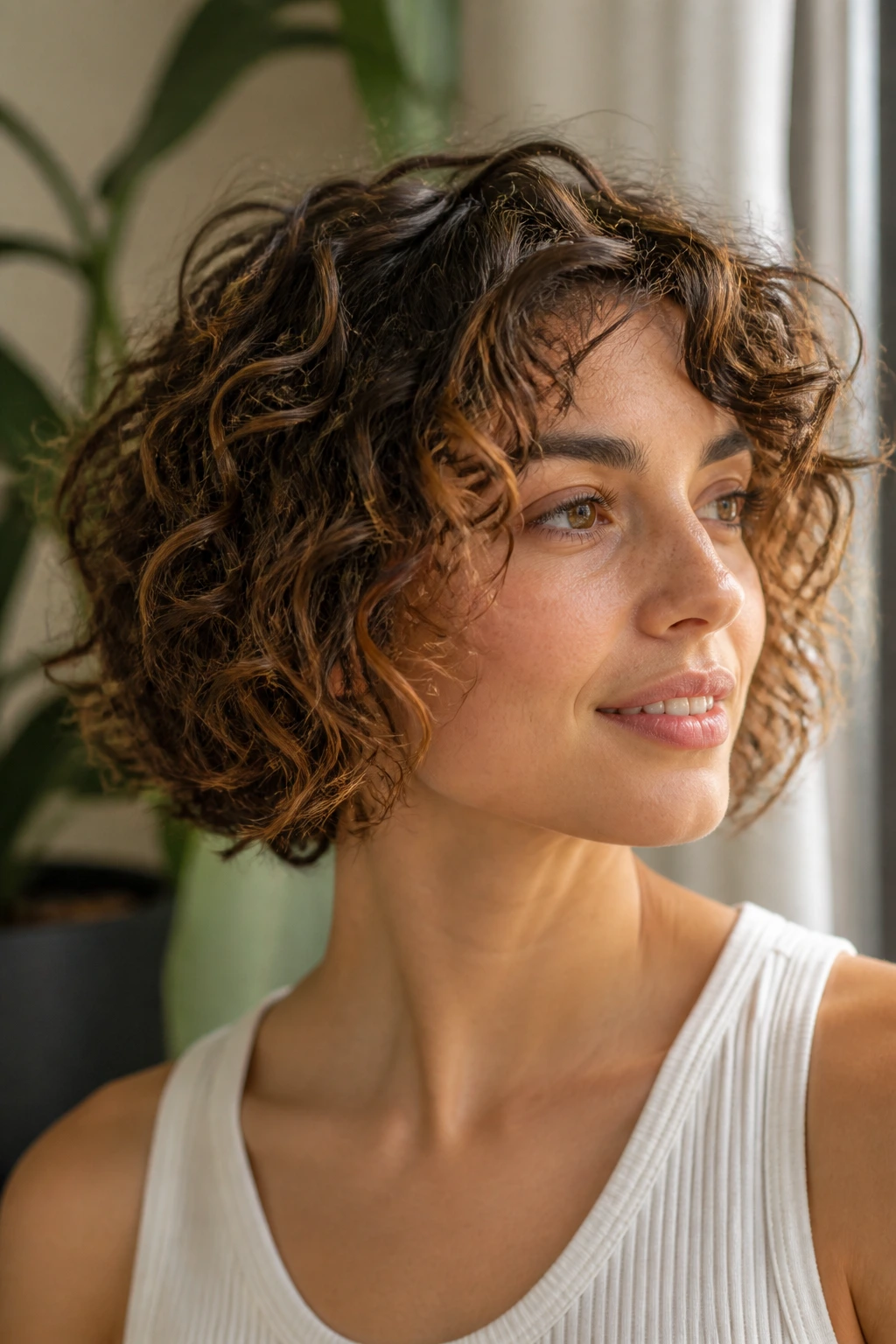
Curly hair does not need to be forced into a neat bob to look polished. It needs shape, moisture, and a perimeter that lets the curl pattern breathe. When that happens, the result looks soft, full, and lived-in in a way that straight hair often tries to fake.
Let the Curl Pattern Lead
The best curly bob is usually cut dry or cut in a way that respects the curl shrinkage. You want the stylist to see how each curl sits before they decide where the line should fall. That is how you avoid the dreaded mushroom shape.
- Keep the outline slightly longer in the back if your curls spring up a lot.
- Ask for broken-up ends, not heavy thinning.
- Use gel or curl cream on soaking-wet hair.
- Scrunch with a T-shirt or microfiber towel instead of rubbing with a terry cloth towel.
The living-in part comes from the curls doing what they naturally do. A bob that lands somewhere between chin and cheekbone looks especially good when the curl pattern creates tiny pockets of space inside the shape. That space is what keeps it from feeling bulky.
If your curls are loose, a diffuser helps. If they are tighter, air-drying with a strong curl cream can be enough. Either way, leave some frizz alone. A little halo around the cut reads as texture. A lot of it reads as dryness.
8. Blunt Bob With Hidden Texture

Blunt does not have to mean stiff. In fact, one of the smartest lived-in bob haircuts is a blunt outline with texture hidden underneath the surface. From a distance, the line looks clean. Up close, the hair breaks apart just enough to keep it from sitting like a block.
That balance works especially well on straight hair. You get the density and the shine a blunt cut gives you, but the internal texture keeps the ends from turning heavy. It also makes the haircut easier to rough up with your fingers, which is useful on days when you want polish without spending twenty minutes with a brush.
The styling here should stay light. A flat iron can smooth the top layer if needed, but don’t press every strand into the same direction. A quick wave through the front, then a little dry shampoo at the roots, is often enough. The cut should look clean at first glance and a bit more relaxed when it moves.
That’s the trick. Not perfection. Shape.
If your hair is very fine, ask for the texture to stay internal so the perimeter does not look see-through. If your hair is very thick, this cut can remove enough bulk to stop the sides from ballooning. Either way, the end result should feel controlled, not crispy.
9. Shaggy Bob With Curtain Bangs
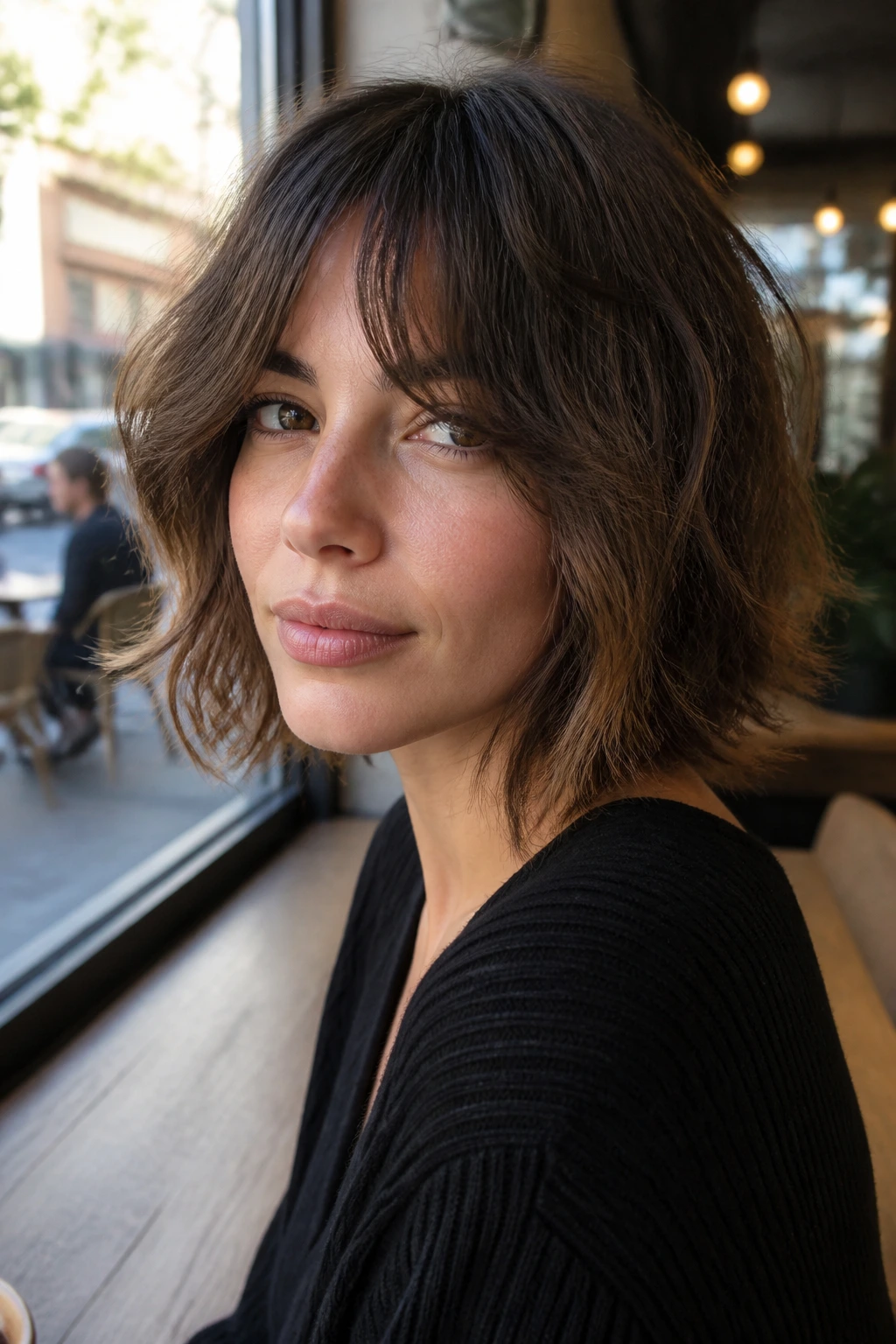
Why do curtain bangs work so well with a shaggy bob? Because both pieces are doing the same job: softening the outline and creating motion where the eye lands first. The bangs open at the center, the sides fall away from the face, and the rest of the haircut carries that loose, broken-up feel through the ends.
This is a strong pick if you want the haircut to look styled even when you have barely touched it. The fringe gives you a shape right away, and the shaggy layers keep the bob from sitting in one solid block. It works especially well on wavy hair, but straight hair can wear it too if you are willing to add a slight bend.
How to Wear It
- Blow-dry the bangs side to side with a small round brush.
- Use a light mousse at the roots and a cream on the ends.
- Curl only the pieces around the face, leaving the back a little softer.
- Finish with a flexible spray so the fringe can still move.
A lot of people overdo curtain bangs and end up with a curtain that won’t part. That usually happens when the bangs are cut too heavy or styled too tight. Keep them soft, keep them movable, and the haircut stays easy. That is the real point.
10. Inverted Bob With Lifted Nape
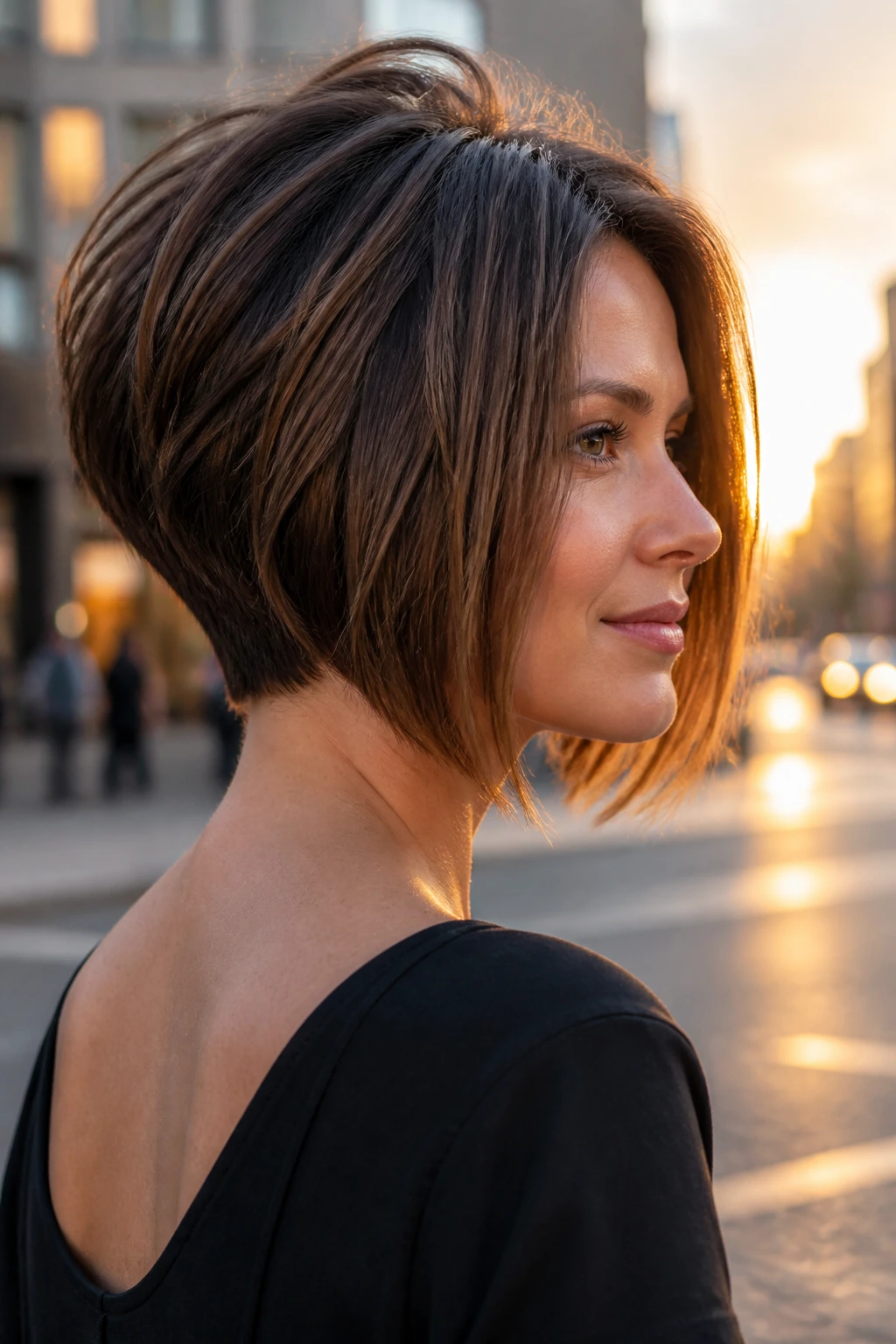
A short back and longer front can look sharp enough to feel formal. Add texture, though, and the inverted bob turns airy instead of strict. The lifted nape gives the cut a bit of height, while the front pieces glide toward the jaw and cheekbones.
This shape is a good move if you want the neck to look longer or the crown to look fuller. The stacked back creates lift without needing a lot of teasing or heavy product. It also helps thick hair sit closer to the head, which makes life easier on humid days.
- Ask for a stacked nape with softened ends.
- Keep the crown from getting too tall.
- Use root spray at the crown and a round brush only where lift is needed.
- Don’t flatten the front. A slight bend keeps the shape from looking severe.
There is a fine line between sleek and old-fashioned with this cut. Texture keeps it on the right side. If you over-smooth it, the angle feels formal. If you leave just enough bend, it looks like you meant to wear it this way all along.
11. Side-Parted Bob With Long Face-Framing Pieces
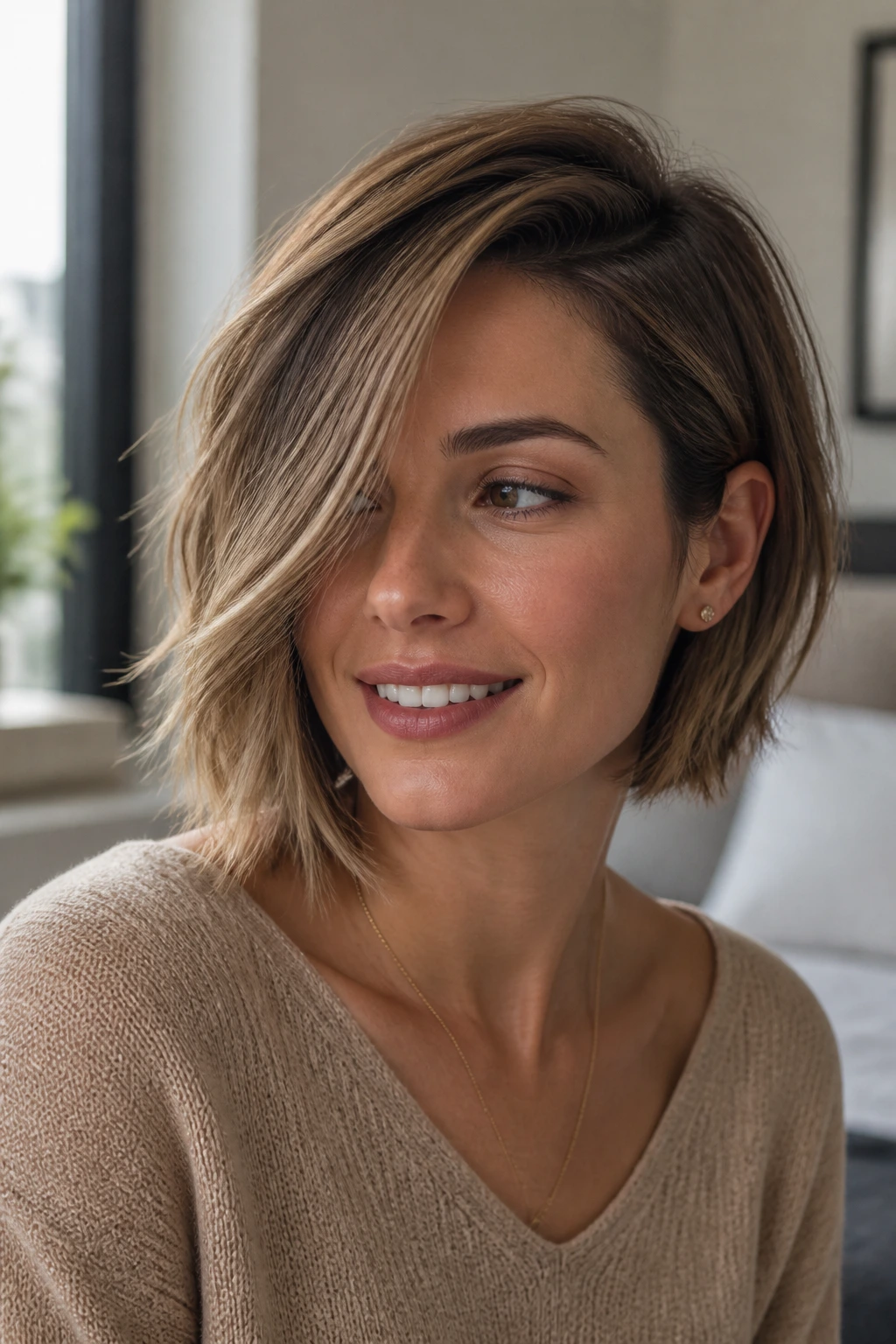
A deep side part can save a bob from looking too symmetrical. It shifts the weight, changes the line across the forehead, and gives the whole haircut a little more attitude. Add long face-framing pieces, and the cut starts to feel softer around the jaw instead of blunt at the bottom.
This version is one of my favorites for people who do not want bangs but still want some shape around the face. The longer front pieces can skim the cheekbones, tuck behind one ear, or fall forward when you turn your head. That movement matters. It makes the haircut feel wearable rather than staged.
It also plays nicely with grow-out. If your bob has been trimmed a few times and you want to stretch the time between appointments, this shape can carry the transition better than a severe straight line. The side part keeps the hair from looking too even, and the longer front buys you time.
A soft blow-dry at the roots near the part helps. So does a tiny bit of texture spray near the crown. You do not need much. The cut should look like it already knows where it wants to go.
12. Boxy Bob Softened By A Bend

Unlike a rounded bob, a boxy bob keeps some width at the sides, which gives thick hair a solid shape instead of a puffed-out dome. The key is to soften the perimeter just enough so it feels current and easy, not rigid. A bend through the ends is enough to break up the square edge.
This cut is underrated. People hear “boxy” and think heavy, but the right version can look expensive in a low-key way. It gives a clear outline, which is useful if your hair has a lot of natural volume, then loosens the finish so it doesn’t read as helmet hair. That combination is harder to get than the photos make it look.
It works best when the layers stay minimal. Too many layers destroy the shape. Too little texture and the haircut can feel severe. I’d ask for clean lines through the body of the hair, then a little bevel at the ends so the shape curves in slightly instead of sticking straight out.
A good test: if the bob looks strong in profile and soft when it moves, you’ve got it right. If it looks puffed at the sides, the balance is off.
13. Fine-Hair Sliced Bob
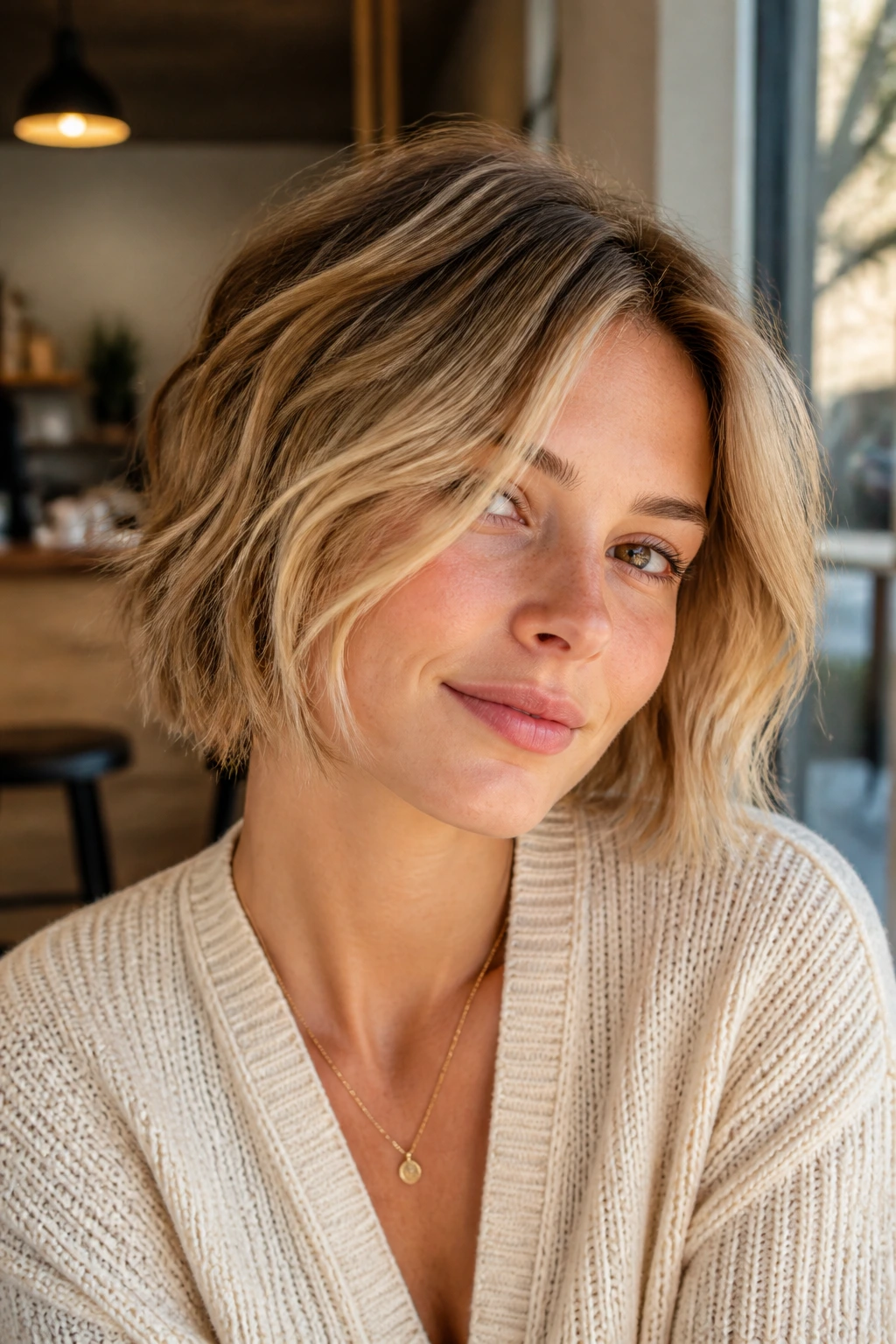
Fine hair can absolutely wear a tousled bob, but it needs a different kind of cut. Heavy layers usually backfire because they take away the little bit of density the hair has. A sliced bob keeps the perimeter light while preserving enough body to make the shape feel full.
Why Sliced Ends Matter
Slicing the ends creates movement without carving giant holes into the cut. That means the hair can swing a little and still look like a bob, not a wispy cloud. For fine hair, that distinction is everything.
- Keep the length around chin to lower cheekbone.
- Ask for soft internal removal, not aggressive thinning.
- Use a root-lifting mousse before blow-drying.
- Finish with a small wave through the top layer only.
The real mistake with fine hair is overloading it with oils and heavy creams. They make the ends clump and the crown collapse. A dry texture spray or a weightless volume spray usually does the job better.
This cut looks especially good on second-day hair, which tends to hold a little bend and a little grit. That tiny bit of lived-in texture is exactly what fine hair needs to stop looking freshly washed and flat.
14. Undone Italian Bob With Loose Ends

The undone Italian bob is the one I suggest when someone wants hair that looks polished but never hard. It sits fuller than a classic French bob, usually around the jaw or just below it, and the shape has enough body to feel rich without turning round and puffy.
What makes it lived-in is the finish. The ends are not curled under into a perfect shell. They’re loose. Maybe even a little irregular. The hair has a soft swell through the mids, then relaxes near the bottom. That subtle looseness keeps the style from looking like a formal blowout that has been frozen in place.
This cut loves medium to thick hair, but fine hair can wear it too if the length is kept a touch shorter and the crown gets some lift. I’d rough-dry most of the hair, then bend only the front sections with a 1.25-inch iron. The back should stay a little softer. If every section is curled the same way, the result gets too neat.
That is the mistake people make. They over-style the very haircut that is supposed to look easy.
15. Cropped Bob With Piecey Texture
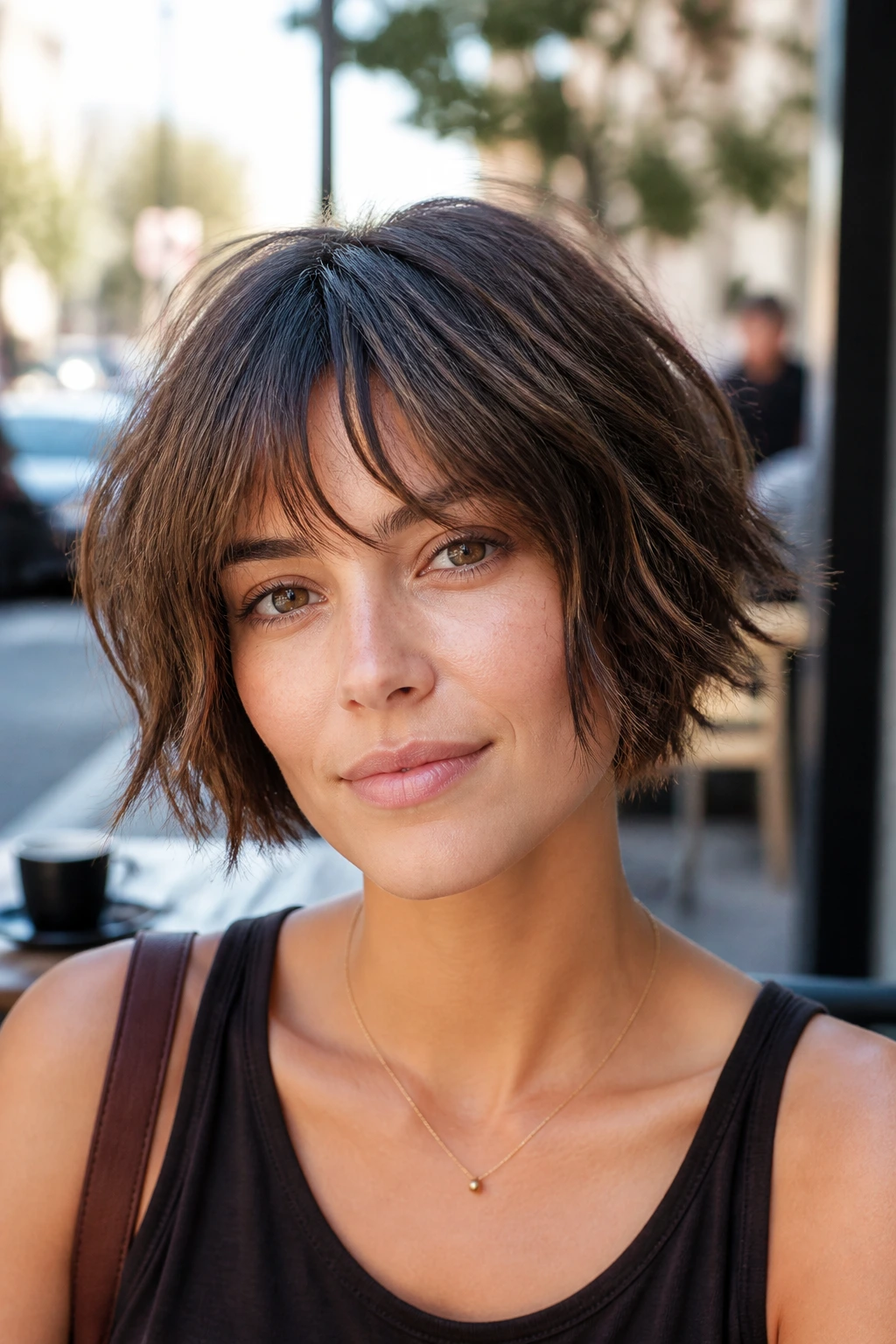
What if you want the shortest cut on the list and still want softness? Go cropped, but keep the texture piecey rather than polished. A cropped bob lands above the jaw or right at it, and the lived-in finish comes from the ends being separated just enough to move.
This is a strong cut for anyone who likes a bit of edge. It shows off the jawline, ears, and neck, which can be a nice change if long hair has been covering all of that for years. The trick is not to make the haircut too perfect. A tiny bend through the top layers, a dab of pomade on the ends, and a little dry shampoo at the roots can keep it from looking flat.
Piecey is the point. Not sticky. Not crunchy. Just separated enough that the strands have definition.
I like this style on hair that grows out quickly or starts to feel heavy at the ends. A cropped bob keeps the outline fresh, and the texture makes it forgiving between trims. If you want the cut to look intentional on day three, this is one of the better bets. The right amount of grit makes the whole shape feel awake.
