



Bob haircuts for thick hair can look razor-clean, or they can swell out sideways by noon. The difference usually comes down to shape, not length.
Thick hair gives you a strong outline, which is a gift, but it also fights softness. If the bottom is too wispy or the layers start at the wrong place, the cut grows wider instead of neater.
I like bobs that keep a deliberate perimeter, take weight out of the inside, and leave enough movement that the haircut doesn’t feel like a helmet. A good bob on dense hair should look calm from the front and tidy from the side.
The 20 cuts below cover sharp, rounded, short, and longer versions, because the cleanest result depends on where your bulk lives — at the crown, the jaw, the nape, or all three at once.
1. Chin-Length Blunt Bob with a Center Part

This is the first cut I’d hand to someone whose thick hair keeps trying to spread outward. A chin-length blunt bob puts the weight right where you want it, so the outline stays crisp instead of blooming into a triangle.
The center part matters more than people think. It splits the bulk evenly and makes the whole shape feel intentional, which is half the battle when the hair itself is dense and a little stubborn.
Why it stays clean
- The hemline sits at the chin, where thick hair can fall in one clear line instead of collapsing on the neck.
- A center part keeps both sides balanced, so the cut doesn’t look heavier on one side by midday.
- Minimal internal layering preserves the bottom edge, which is what makes the haircut read as polished.
Ask for the perimeter to stay blunt, with only tiny point-cutting at the very ends if the hair feels too heavy. That small detail keeps the line from looking chopped up.
2. Rounded French Bob with Soft, Full Ends

A rounded French bob can look cleaner on thick hair than a severe blunt cut. That sounds backward, but the curve is what keeps the width under control.
Instead of sitting flat and boxy, the ends bend gently toward the jaw. The whole cut feels lighter because the shape is doing the work, not the styling cream. I especially like this on hair that grows out with a bit of natural bend, because the rounded finish makes that bend look deliberate.
The key is restraint. Keep the length around the jaw or a touch below it, and don’t let the sides flare out too much. If the bob gets too short at the temples, thick hair can puff in a way that looks old-fashioned fast.
This cut works best when you blow-dry the ends under with a small round brush or even a flat brush and a nozzle. Clean, soft, done.
3. Collarbone Lob with Invisible Layers
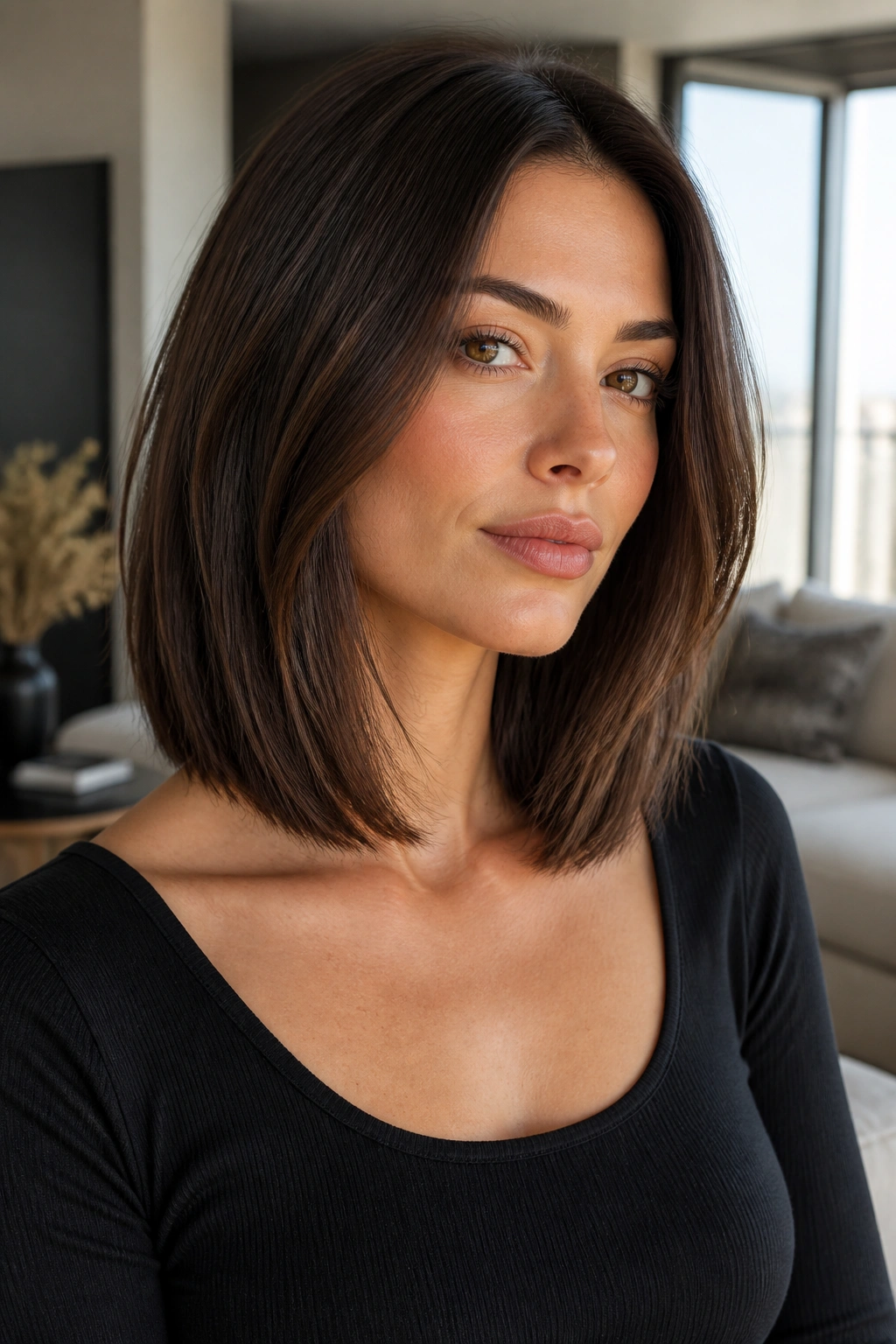
Can a longer bob still look neat on thick hair? Yes, and this is the safest way to do it.
The collarbone lob gives dense hair enough length to lie down, which helps a lot if your hair gets wide when it’s cut too short. Invisible layers are the quiet trick here. They live inside the cut, not on the surface, so the outer line stays full and clean while the bulk is removed from the middle.
How to keep the outline tidy
- Ask for layers that begin below the cheekbone, not near the crown.
- Keep the perimeter blunt so the ends look solid.
- Dry the top smooth first, then bend the ends slightly inward.
This is one of those haircuts that looks expensive without acting fussy. It’s also forgiving on days when you don’t feel like doing much. The shape holds.
4. A-Line Bob with a Clean Forward Angle
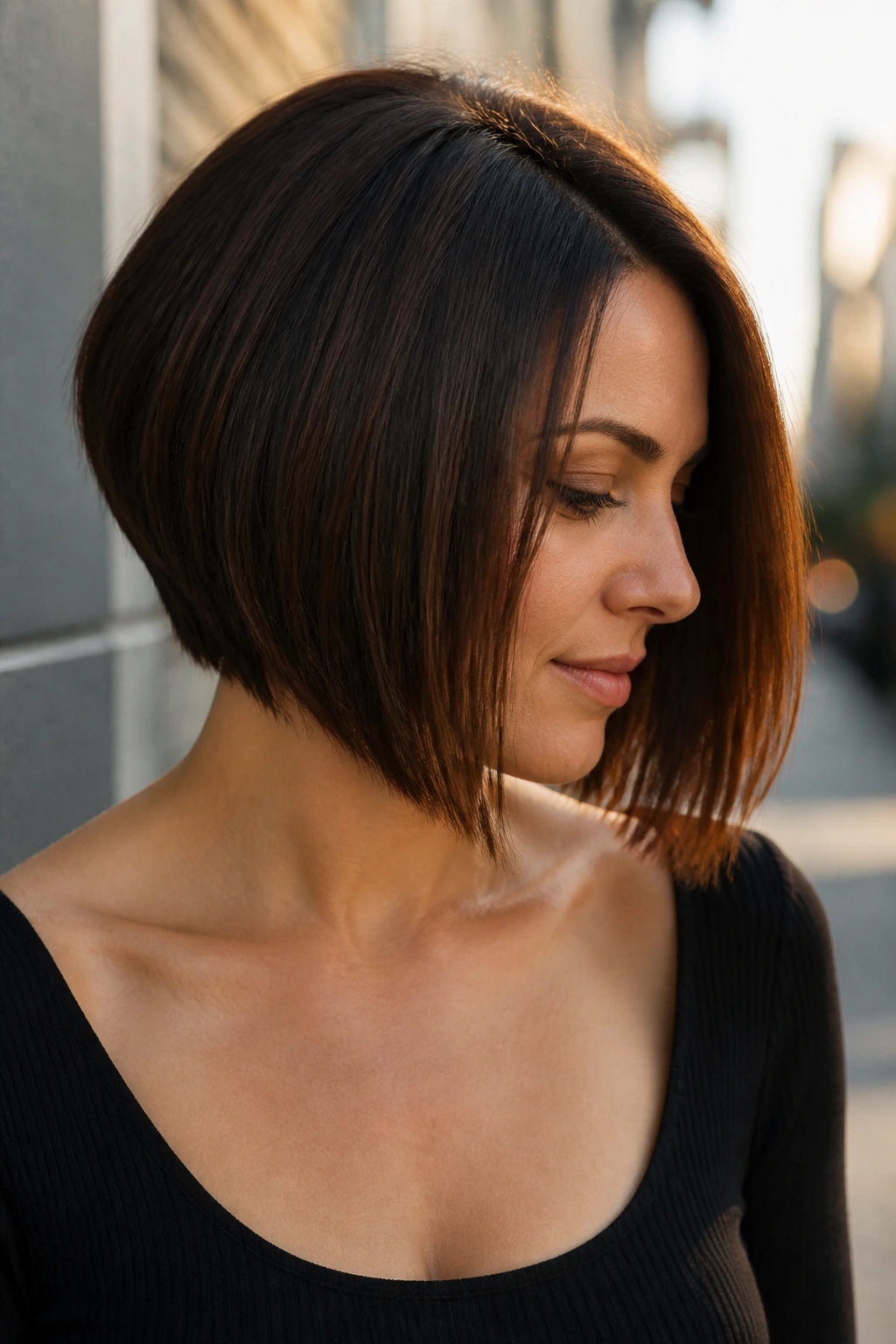
If the back of your hair flips out and the front always feels too full, this angle fixes the mood fast. An A-line bob moves the eye forward and makes thick hair look slimmer from the side.
The difference between a clean A-line and a dated one is subtle. You want the back shorter than the front, but not in a dramatic wedge shape. Think of a gentle slope, with the front landing somewhere around the jaw or just past it and the nape staying snug.
- Keep the front about 1 to 1.5 inches longer than the back.
- Let the angle be visible, but not sharp enough to look severe.
- Style with a paddle brush if you want the line to read clearly.
This cut is especially useful if your hair grows out in a puffy halo around the back of the head. The forward angle gives the style direction, and direction calms thick hair down.
5. Jaw-Length Bob with Internal Weight Removal
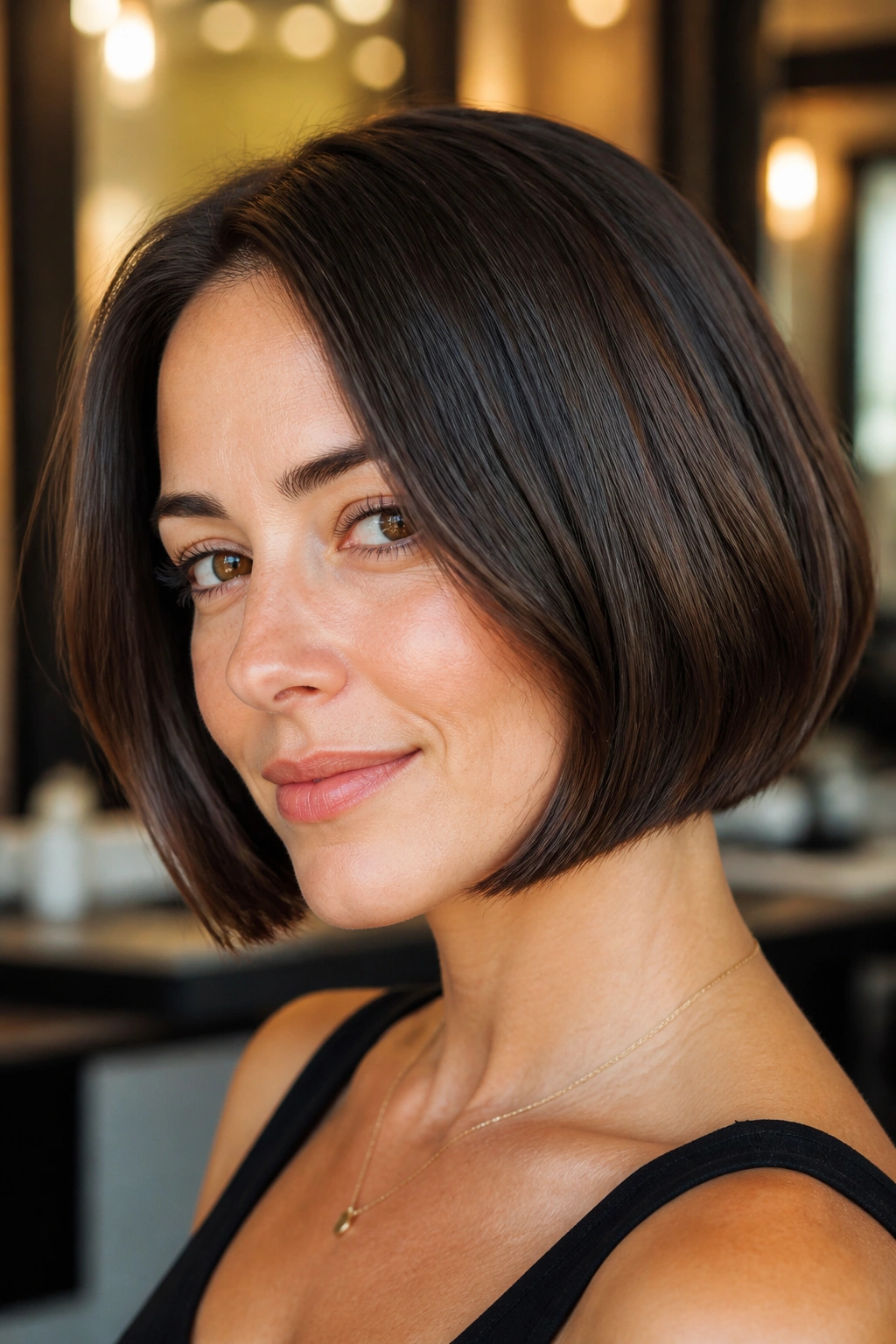
This is the cut I reach for when thick hair is dense rather than fluffy. The line hits the jaw, which gives the style a strong edge, but the inside is trimmed so the shape doesn’t sit like a block.
The magic is in the hidden work. A stylist can remove bulk from underneath the top layer without thinning the ends to death. That matters. Over-thinned ends on thick hair often look ragged after a few wash days, and ragged is the opposite of clean.
The jaw-length version also frames the face in a way that can sharpen softer features. If your hair has a coarse texture, ask for the inside to be relieved with controlled slicing or interior point-cutting, not aggressive razoring. There’s a difference, and it shows.
The bottom stays honest. That’s the whole point.
6. Box Bob with a Straight, Square Edge
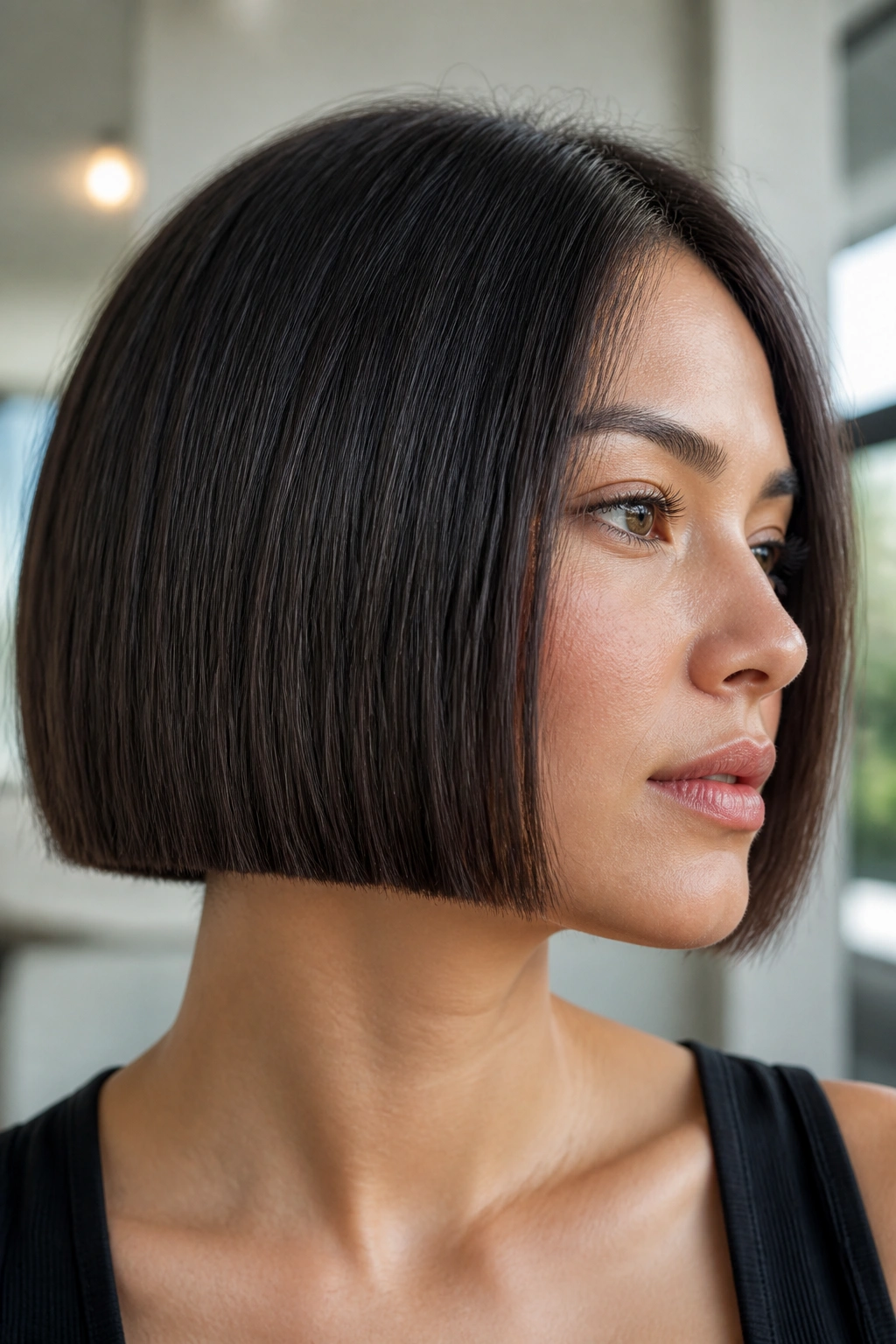
Unlike a rounded bob, a box bob leaves no doubt about its shape. It’s square, compact, and very good at making thick hair look expensive in a plain, direct way.
The trick is to keep the corners at the jaw or slightly below it so the cut doesn’t overwhelm the face. When the bottom line is even and the sides drop in a straight wall, the hair looks disciplined. That’s a nice word for thick hair. Disciplined.
This cut is best for naturally straight or softly wavy hair that lies down without much argument. If your texture is very curly, you’ll spend more time flattening the surface to keep the box shape visible. If you like that crisp, architectural look, though, it’s worth it.
I’d pair it with a deep conditioning mask once a week. A clean line shows everything, including dryness, and thick hair can get thirsty at the ends.
7. Side-Part Bob with a Long Front Sweep
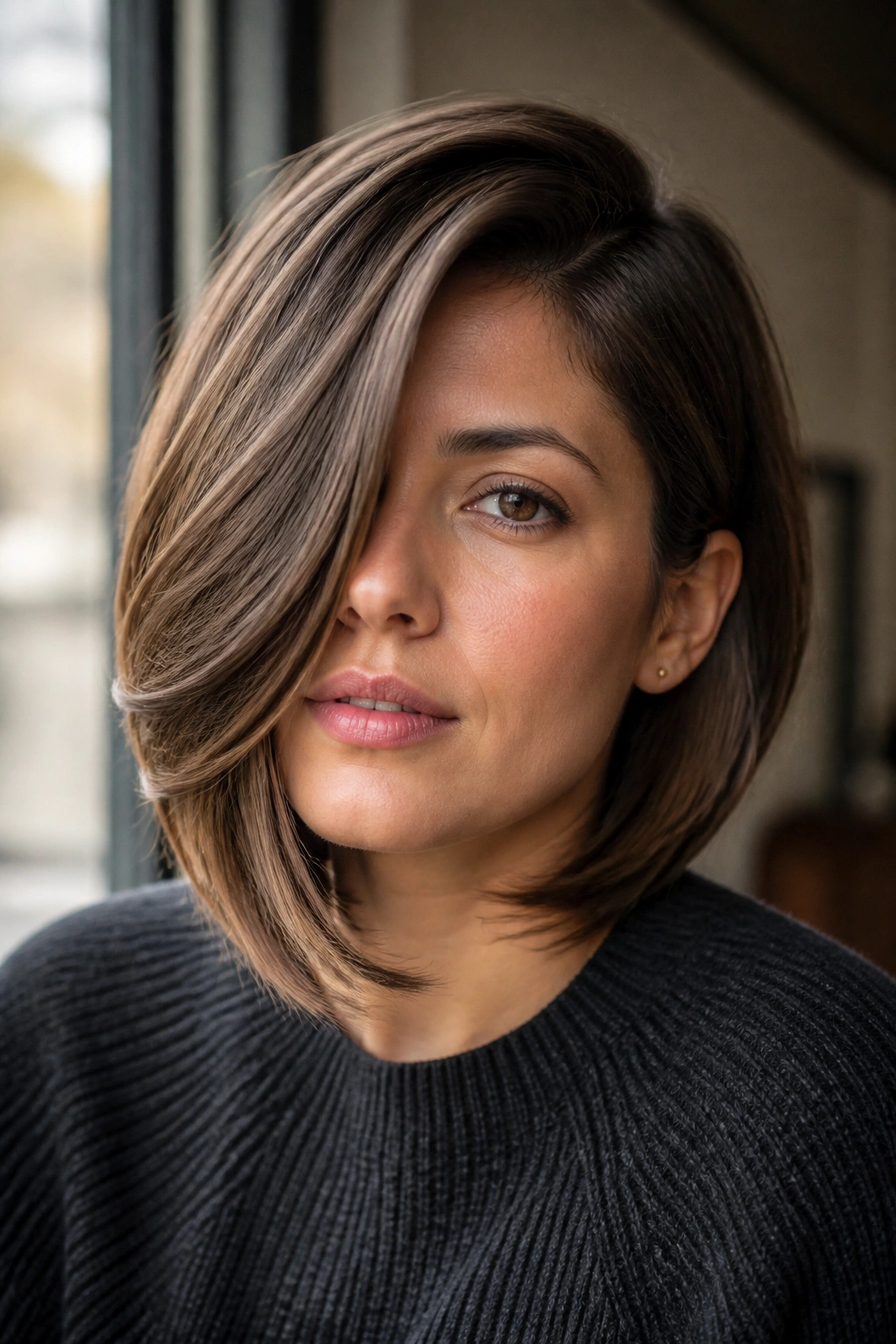
A side part can do more for thick hair than people give it credit for. It takes weight off the center line and breaks up the width that makes some bobs look bulky.
The long front sweep is what keeps the cut from feeling old-fashioned. One side falls a little farther across the cheek, which creates a diagonal line and makes the whole shape read as smoother. It’s a small move, but it changes the silhouette a lot.
What to ask for
- Place the part about 1 to 2 inches off center.
- Keep one front section long enough to skim the cheekbone.
- Ask the stylist to leave the top smooth, not puffed up with too much crown layering.
This is a good choice if your hair tends to separate into two heavy curtains when you wear a center part. The side part interrupts that habit and makes the bob look cleaner right away.
8. Stacked Bob with a Tidy Nape
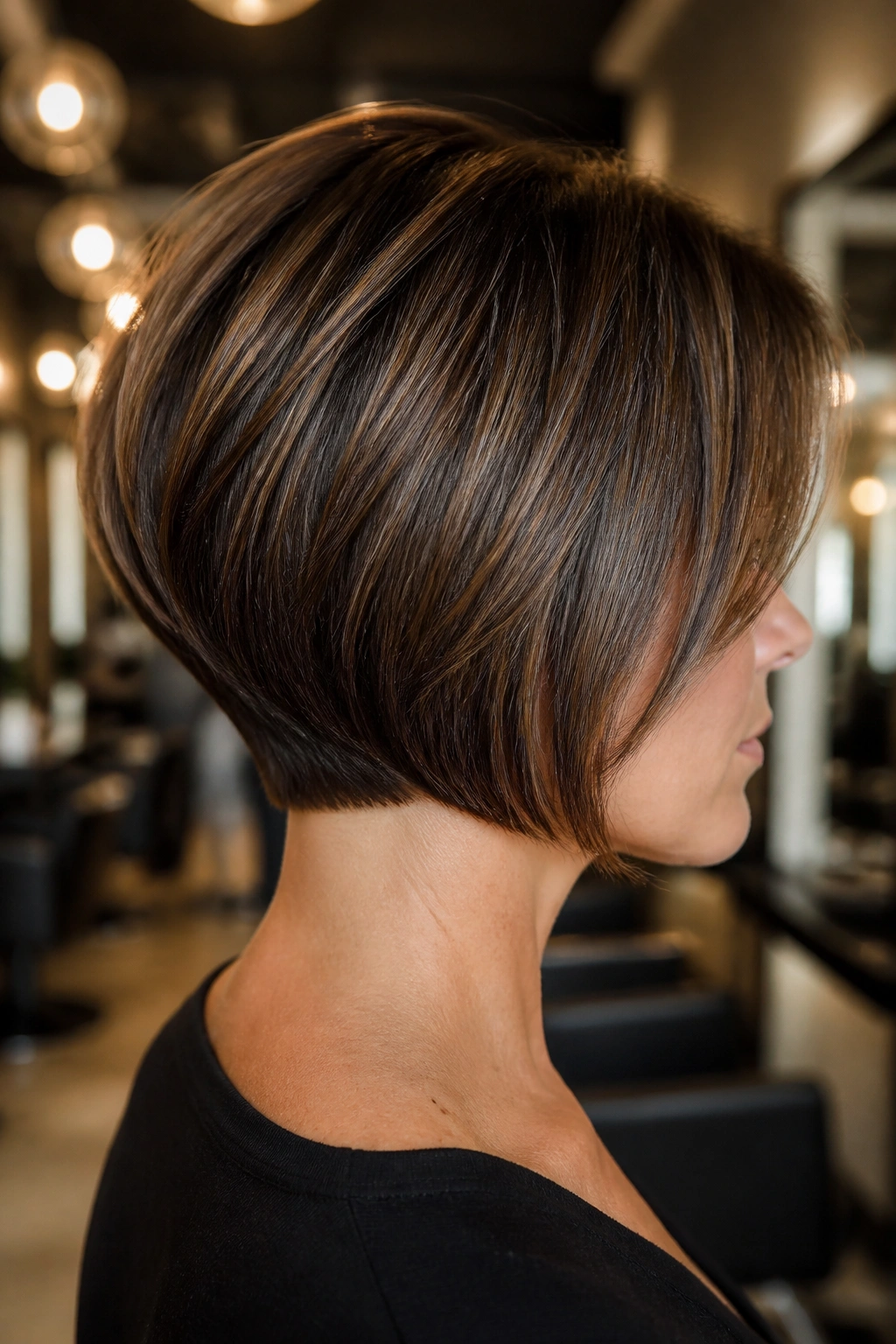
Why does a stacked bob still work on thick hair? Because it handles bulk where bulk usually causes trouble — at the back of the head.
A modest stack gives lift at the crown and trims down the nape so the haircut sits close to the neck. That makes the shape look neater from behind, which sounds boring until you’ve seen what a badly shaped bob looks like from the rear. Then it becomes a religious experience.
The word here is modest. Too much stacking can make thick hair look like a mushroom, and nobody wants that. Keep the graduation smooth, with the shortest layers hugging the head rather than poking out from it.
This cut is excellent if your hair is very full at the occipital bone, the bumpy part at the back of the skull where a lot of bobs either fit perfectly or fight you. A tidy stack fixes that problem fast.
9. Curved Bob That Hugs the Cheekbones
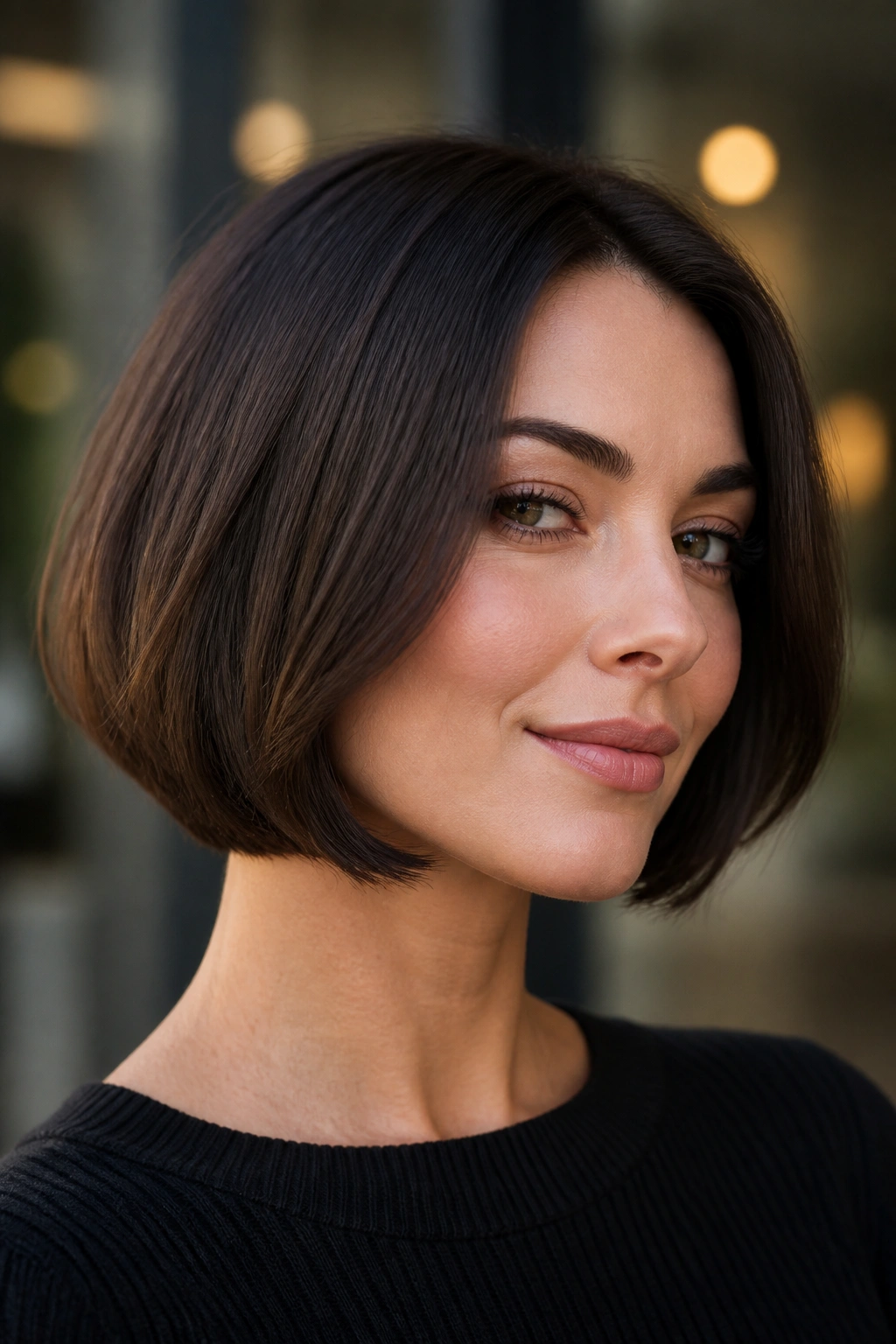
Imagine a bob that bends inward just enough to follow the shape of your face. That’s the point here.
The curved bob works because it tucks the thickness in instead of letting it sit straight out from the cheeks. It feels softer than a blunt square bob, but it still looks clean because the perimeter is controlled. The curve should be subtle, almost like the haircut is leaning toward the face.
The sweet spot
A good curved bob usually lands around the cheekbone or jaw, with the longest point no more than a few inches below the chin. That range keeps the silhouette neat without making the hair look heavy at the bottom.
What I like most is that it flatters thick hair without making it look overworked. A little bend in the shape is enough. You do not need a lot of layers, and you definitely do not need shredded ends.
If your hair has a natural wave, even better. The curve settles in faster and the haircut looks finished with less heat.
10. Bob with Curtain Bangs and a Solid Line

Curtain bangs can make thick hair look cleaner when they’re cut with restraint. The fringe breaks up the front without destroying the bob’s edge, which is where a lot of stylists go too far.
The bangs should start around the bridge of the nose and open toward the cheekbones. Too short, and they jump out of the face. Too heavy, and they sit there like a curtain rod with opinions. The line of the bob below them needs to stay solid, or the whole cut loses its shape.
- Keep the fringe long enough to part easily.
- Blend the sides into the bob so there isn’t a harsh step.
- Blow-dry the bangs away from the face, then let them fall back softly.
This is a smart move if your forehead feels wide compared with the rest of your face. The bangs soften the top, and the bob keeps the lower half from looking bulky.
11. One-Length Lob with a Deep Center Part
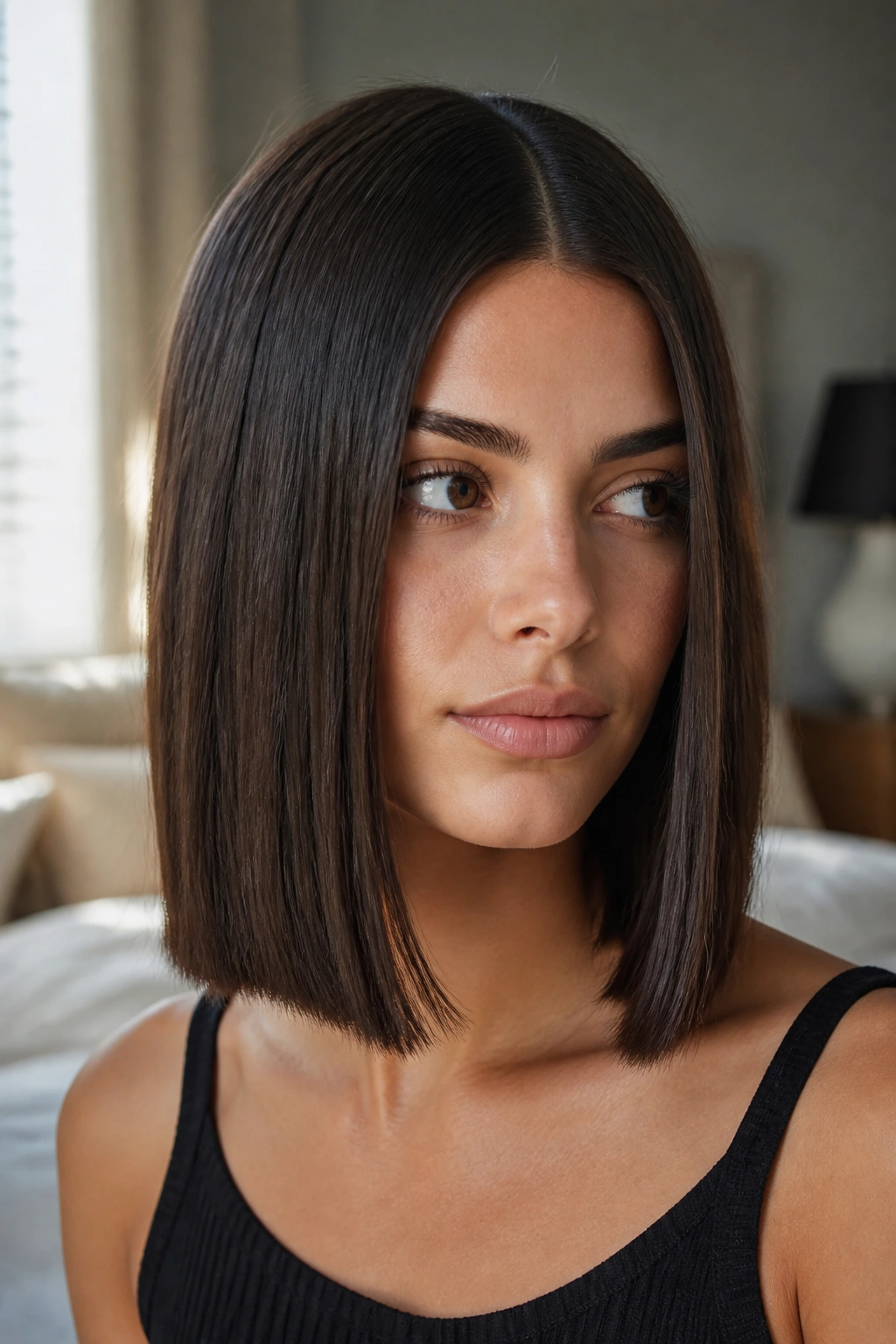
A one-length lob can look cleaner than a heavily layered cut on thick hair because there’s nowhere for the volume to hide. That sounds harsh, but it’s a good thing.
The length should sit at the collarbone or just below it, where the hair can move without flipping out too hard. A deep center part gives the cut symmetry and keeps the weight divided in a way that feels controlled. If the hair is very dense, a blunt one-length lob often behaves better than a textured version because the ends stay solid.
This is the kind of haircut I recommend to people who want low drama. It’s easy to style, easy to grow out, and easy to tuck behind the ears when you’re busy. That last part matters more than salon photos admit.
If your hair is coarse, ask for the ends to be softened only slightly. Too much texture at the bottom can make the line look fluffy by the second day.
12. Ear-Grazing Bob with Tapered Sides

Short bobs can get messy on thick hair fast, but an ear-grazing version with tapered sides keeps things tidy. The length is short enough to feel fresh, yet long enough to avoid the mushroom effect that happens when dense hair is cut too square and too high.
The sides should narrow gently as they move toward the face. That little taper keeps the silhouette close to the head and stops the haircut from sticking straight out over the ears. Around the nape, the hair should sit snugly rather than flare.
The detail that matters
The most important part is balance. If the top is too bulky, the whole cut looks top-heavy. If the sides are too thin, you lose the clean outline that makes the style work in the first place.
This bob is good for people who wear earrings, glasses, or just want a sharper neckline. It has edge, but not chaos. There’s a difference.
13. Invisible-Layer Lob with a Blunt Perimeter

Want movement without that frayed, over-layered look? This is the answer I’d pick.
Invisible layers live inside the haircut, not on the outside, so the perimeter still reads as blunt and clean. That’s the sweet spot for thick hair. You get less bulk in the middle, but the outside line stays full enough to look polished.
The cut usually works best when it sits between the collarbone and the top of the chest. That range gives the layers space to fall naturally, which keeps the hair from building out around the jaw. It also makes styling easier because the ends don’t need a lot of coaxing.
A blunt perimeter is what keeps this from looking thin. The surface remains smooth, and the hidden layers do the boring but necessary work underneath. Not glamorous. Effective.
14. Asymmetrical Bob with One Longer Side
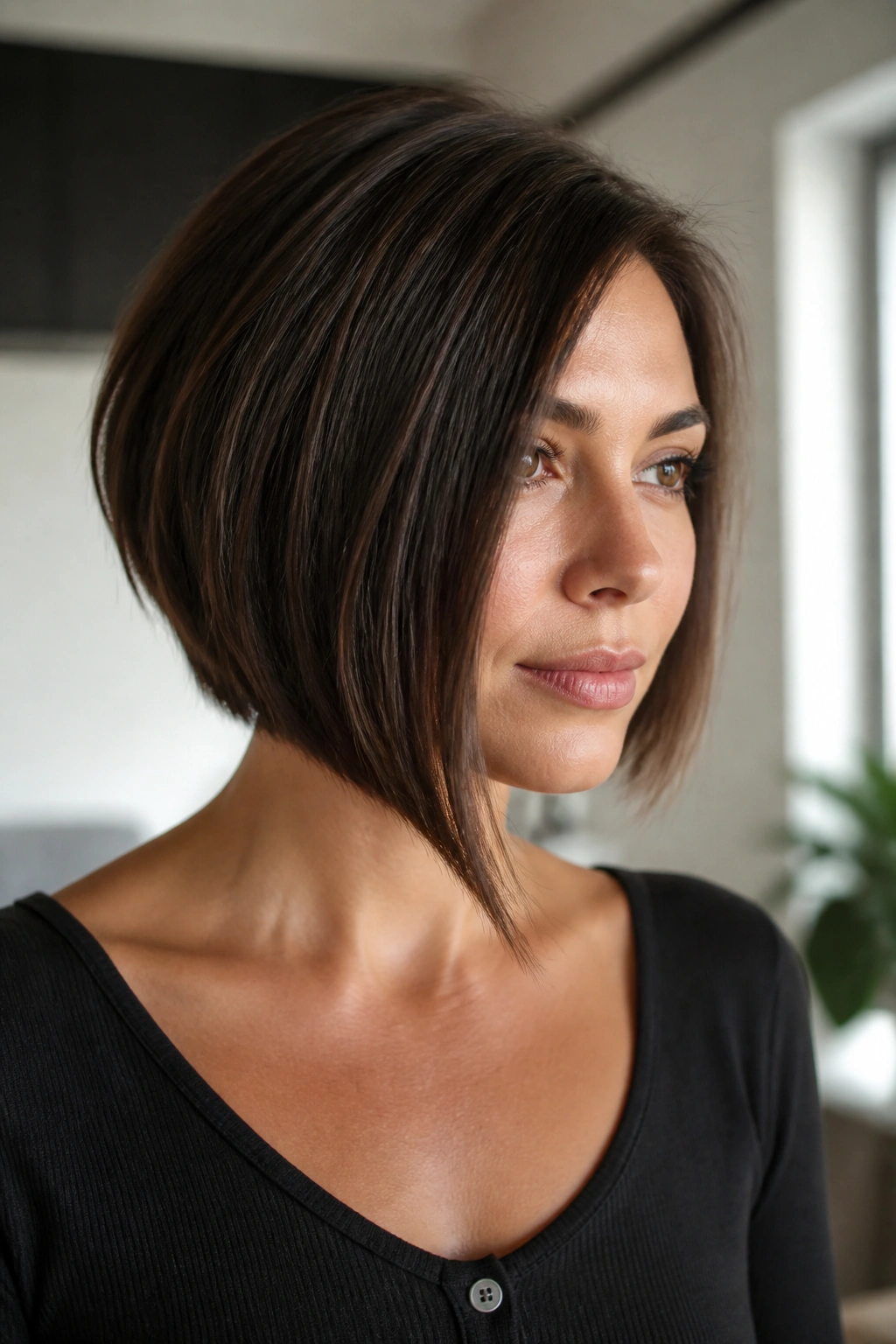
A slight asymmetry can make thick hair look cleaner because it breaks the width of the cut. The eye stops reading the shape as a block and starts reading it as movement.
Keep the difference subtle. One side only needs to be about 1 to 2 inches longer than the other for the effect to land. If the gap gets too dramatic, the bob starts looking like a statement piece instead of a polished haircut, and that’s a different conversation.
This style is useful when one side of your hair grows heavier than the other, which happens more often than people realize. The longer side balances the fullness, and the shorter side keeps the outline neat around the neck.
Best for: thick straight hair, strong jaws, and anyone who wants structure without symmetry that feels too perfect. A tiny bit of imbalance can make the whole cut calmer.
15. Wedge Bob with a Smooth Back Angle
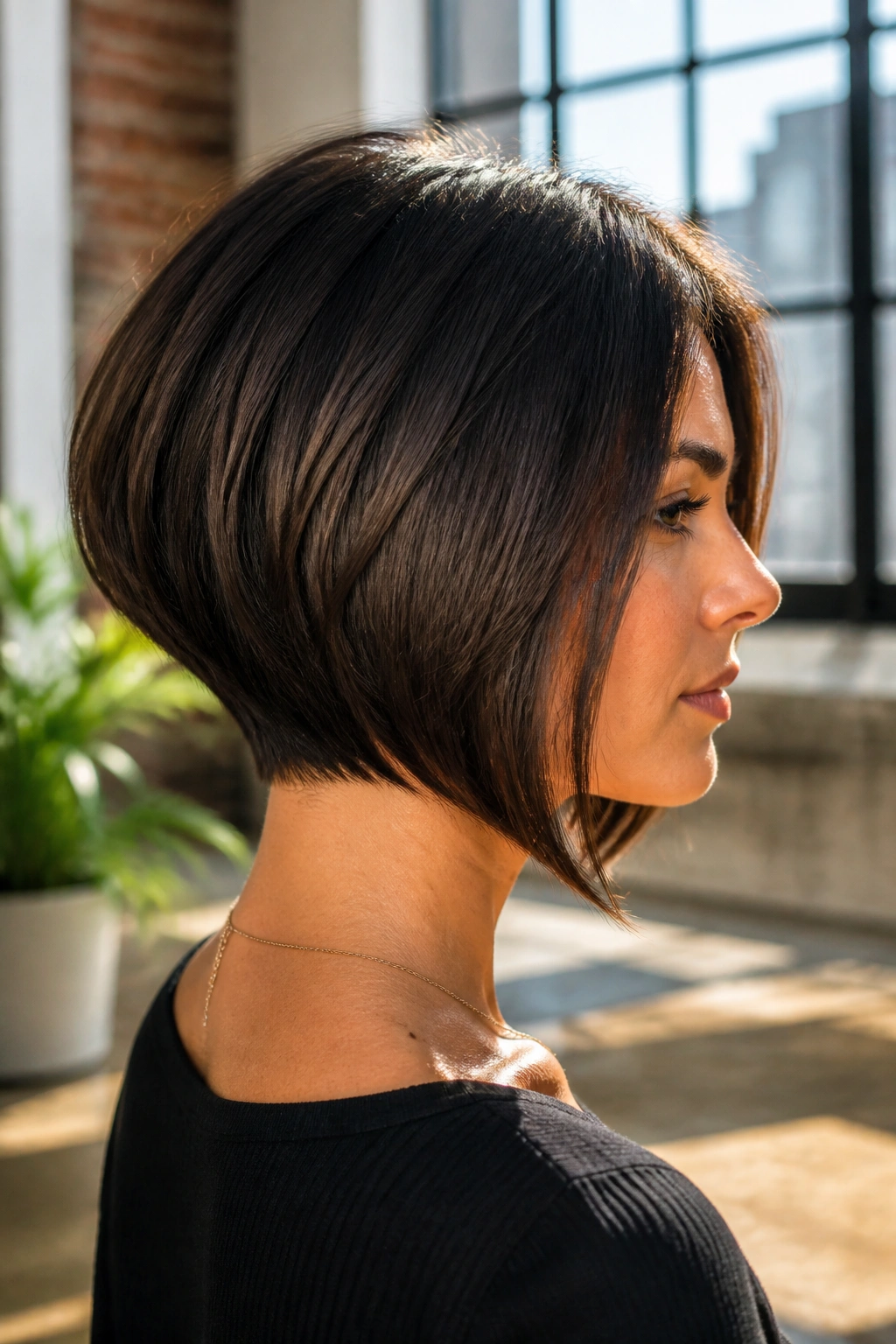
The wedge bob still has a place, especially on dense hair that needs a clear shape at the back. The modern version is smoother and less choppy than the old-school one, which is good because thick hair can look bulky fast if the graduation is harsh.
The back should rise gently toward the crown, then fall forward into longer sides. That slope removes weight from the nape while keeping the head shape clean. If the angle is too steep, the haircut can look dated. If it’s too soft, it loses the wedge effect entirely.
I like this cut on hair that has a lot of body but not much curl. It sits close to the head, looks neat in profile, and dries with a controlled bend that doesn’t need a lot of styling products.
Small stack. Big difference. That’s the whole story.
16. Air-Dry Wavy Bob with Light, Controlled Ends

Not every thick bob needs a blowout to look finished. If your hair already has a wave, a cut that works with air-drying can look cleaner than one that fights it.
The goal is a blunt-enough perimeter with just enough soft layering near the ends to stop the shape from puffing. Too many layers make wavy thick hair look fuzzy. Too few make it boxy. The middle ground is where the clean look lives.
What helps here is a cut that’s slightly longer in front than in back, even by half an inch. That tiny shift keeps the wave from kicking out at the jaw. A bit of curl cream on damp hair, then a gentle scrunch and air-dry, is often enough.
How to style it
- Apply a pea-sized amount of curl cream to damp hair.
- Scrunch from the ends upward, not at the roots.
- Let the hair dry without touching it until it sets.
That’s it. Simple, and honestly enough for a lot of people.
17. Glass-Hair Bob with Micro-Trimmed Ends
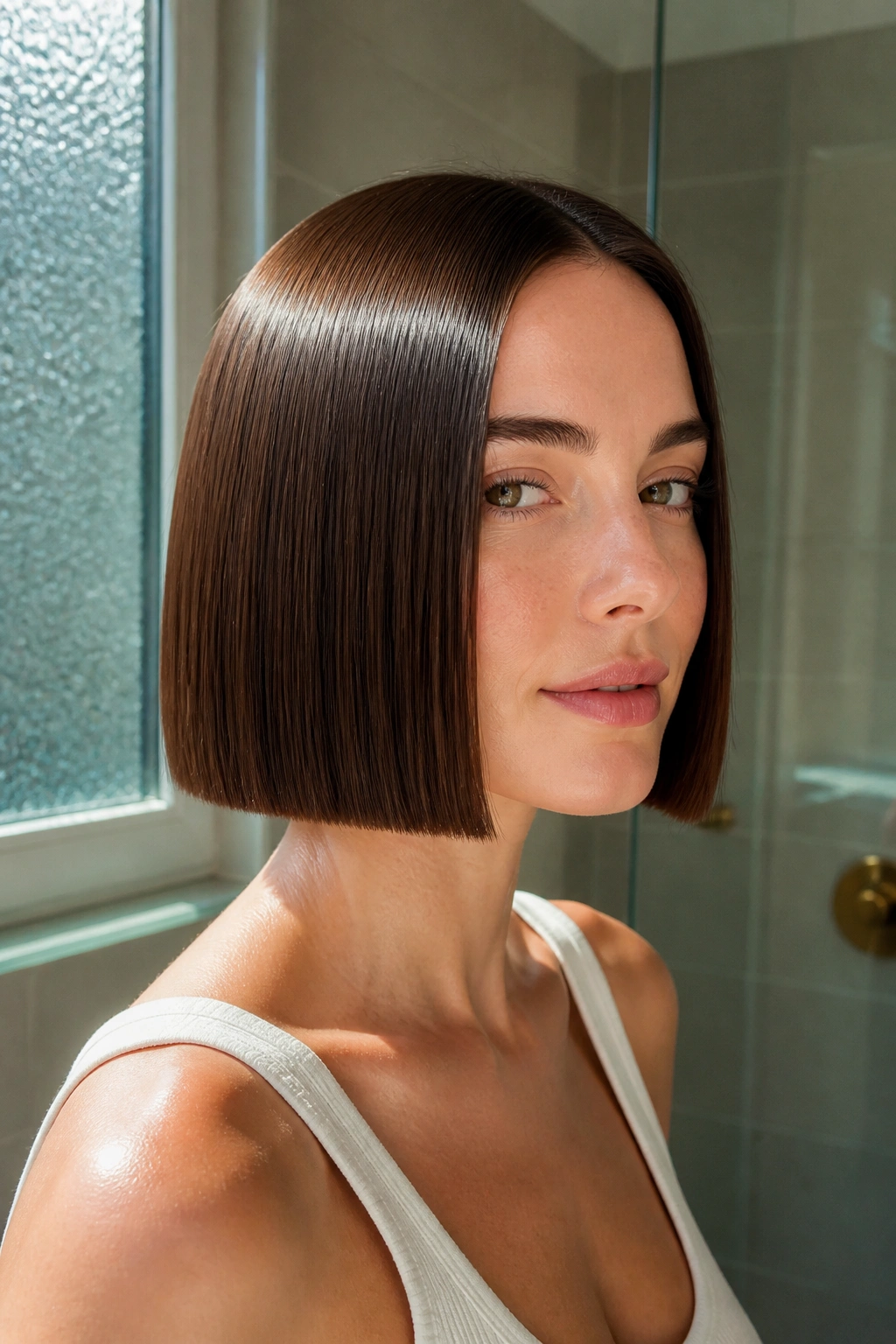
If your thick hair is straight and heavy, this is the sleekest answer on the list. A glass-hair bob depends on a sharp outline, a smooth surface, and ends that have been trimmed often enough to stay precise.
The cut itself should be blunt, but the finish needs maintenance. That means regular micro-trims, especially if your hair grows fast or starts to flip at the bottom after a few weeks. The line is the whole point, and a fuzzy end kills the effect.
How to keep it sharp
- Blow-dry with a nozzle and a flat brush so the cuticle lies flat.
- Use heat protectant before any flat iron work.
- Pass the iron once at a low-to-medium setting rather than overworking the same section.
This haircut looks amazing on hair that naturally reflects light well, but it also shows frizz fast. If your ends are dry, fix that first. The sleek shape only looks clean when the surface does.
18. Soft Undercut Bob for Heavy Density
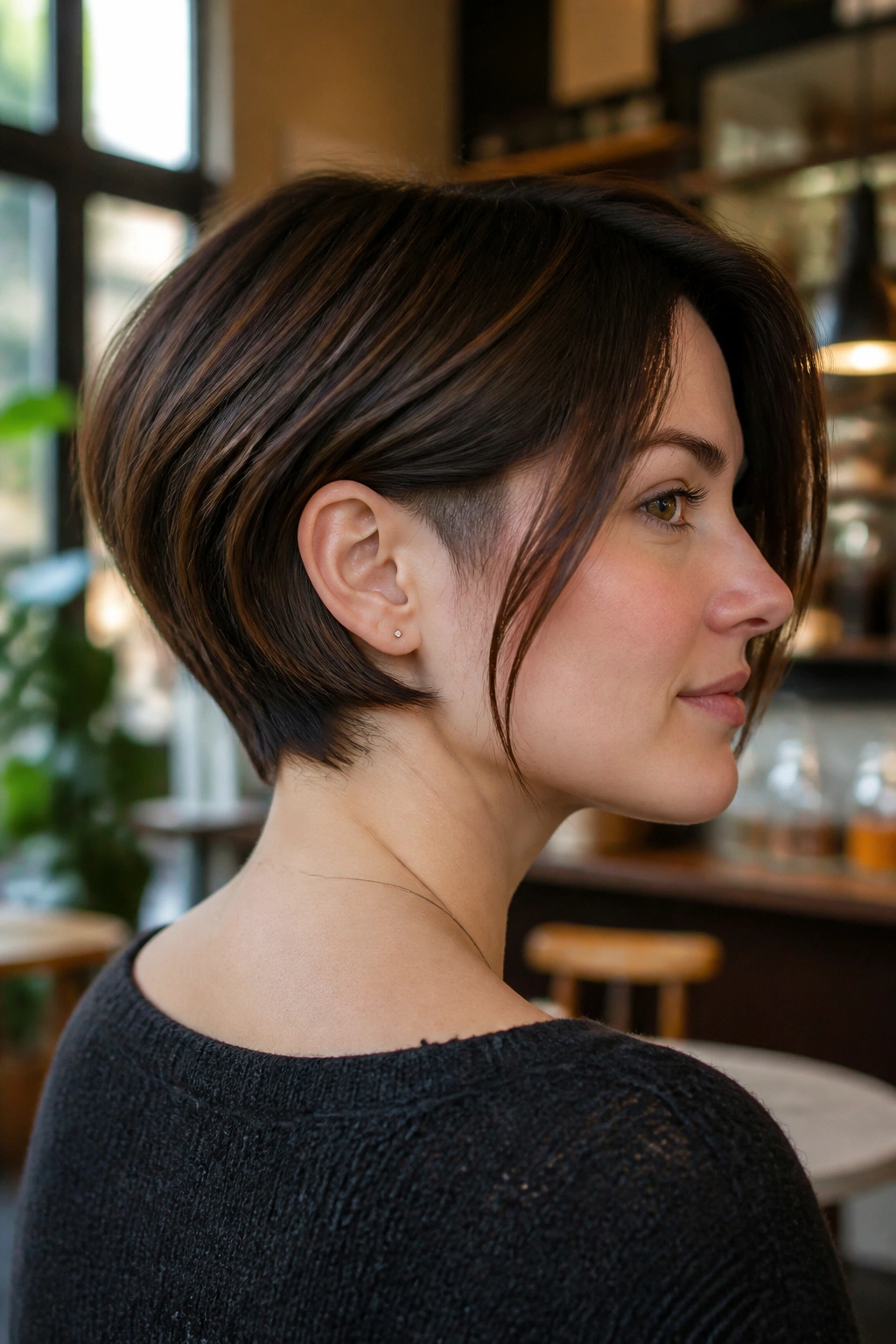
Is an undercut too aggressive for a bob? Not if it’s hidden properly.
A soft undercut removes a small panel of hair underneath the top layers, usually near the nape or just behind the ears. That reduces weight where thick hair tends to pile up, but the outside still looks full and polished. From the front, nobody needs to know the haircut is working harder than it looks.
This is one of my favorite solutions for very dense hair that feels hot, bulky, or slow to dry. It can make a short bob sit closer to the head without turning the whole style into a pixie. The trick is to keep the undercut small and controlled. Too much removal, and the top loses its shape.
- Best if your hair feels heavy at the base of the skull.
- Good if you want a cleaner neckline.
- Less useful if you wear your hair up every day and hate shorter interior pieces.
Hidden, not shaved to the moon. That’s the sweet spot.
19. Face-Framing Bob with Long Cheekbone Pieces

When the widest part of your face sits at the cheeks or jaw, long front pieces can make a bob look cleaner right away. They pull the eye downward and create a slimmer line through the front.
The framing should start below the chin, not at the nose. Too short, and it looks choppy. Too long, and the bob stops being a bob and starts acting like a mid-length cut with commitment issues. The cleaner version is controlled and deliberate, with the longest front pieces grazing the cheekbone or just below it.
This is a nice option if you want softness without losing structure. The back can stay compact, while the front keeps a little movement around the face. It’s a practical cut for thick hair because the front pieces relieve the heaviness without disturbing the perimeter everywhere else.
I’d keep the layers low and the line exact. The more accurate the shape, the cleaner it reads.
20. Polished Shoulder-Length Bob with Airy Ends

Some thick hair looks cleaner a little longer, and I’d argue this is one of those cases. A polished shoulder-length bob gives the ends room to settle instead of flaring out at the jaw, which is a common problem with very dense hair.
The cut should still feel bob-like: solid outline, controlled sides, and enough length to tuck behind the ears without fighting the shape. Airy ends help here, but airy does not mean thin. The edges should be softened, not shredded. That small bit of movement keeps the haircut from looking heavy at the shoulders.
This is the most forgiving option on the list if you want a clean look with less upkeep. It grows out well, handles humidity better than a very short bob, and gives you room to wear it smooth or slightly bent. If your hair has a lot of body, this length often behaves better than anything at the chin.
And that’s the real trick. Pick the line your hair can actually respect. A clean bob on thick hair doesn’t fight density — it uses it.
