



A wavy bob can look razor-sharp one day and oddly puffy the next. That’s the gamble with wavy bob haircuts for wavy hair: the cut has to work with the bend, not bully it into behaving like straight hair.
The good ones do one of three things. They keep a clean outline, remove weight where the wave stacks up, or give the hair enough room to fall into soft, piecey movement. Miss the balance, and you get a triangle at the sides or a bob that flips out in all the wrong places.
Length changes everything.
A bob that sits at the chin behaves nothing like one that brushes the collarbone. A blunt line can make waves look glossy and full; a few internal layers can stop thick hair from ballooning; a deep side part can change the whole mood without touching the scissors. That’s why the same “bob” can read polished, messy, edgy, or easy depending on where it lands and how it’s cut.
The styles below split that terrain into 22 clear options, from crisp and structured to soft and lived-in. Some are better for thick hair, some flatter narrow faces, and some are the sort of cut that still looks decent when you’ve done almost nothing to it. That last part matters more than people admit.
1. Chin-Grazing Blunt Bob for Wavy Hair
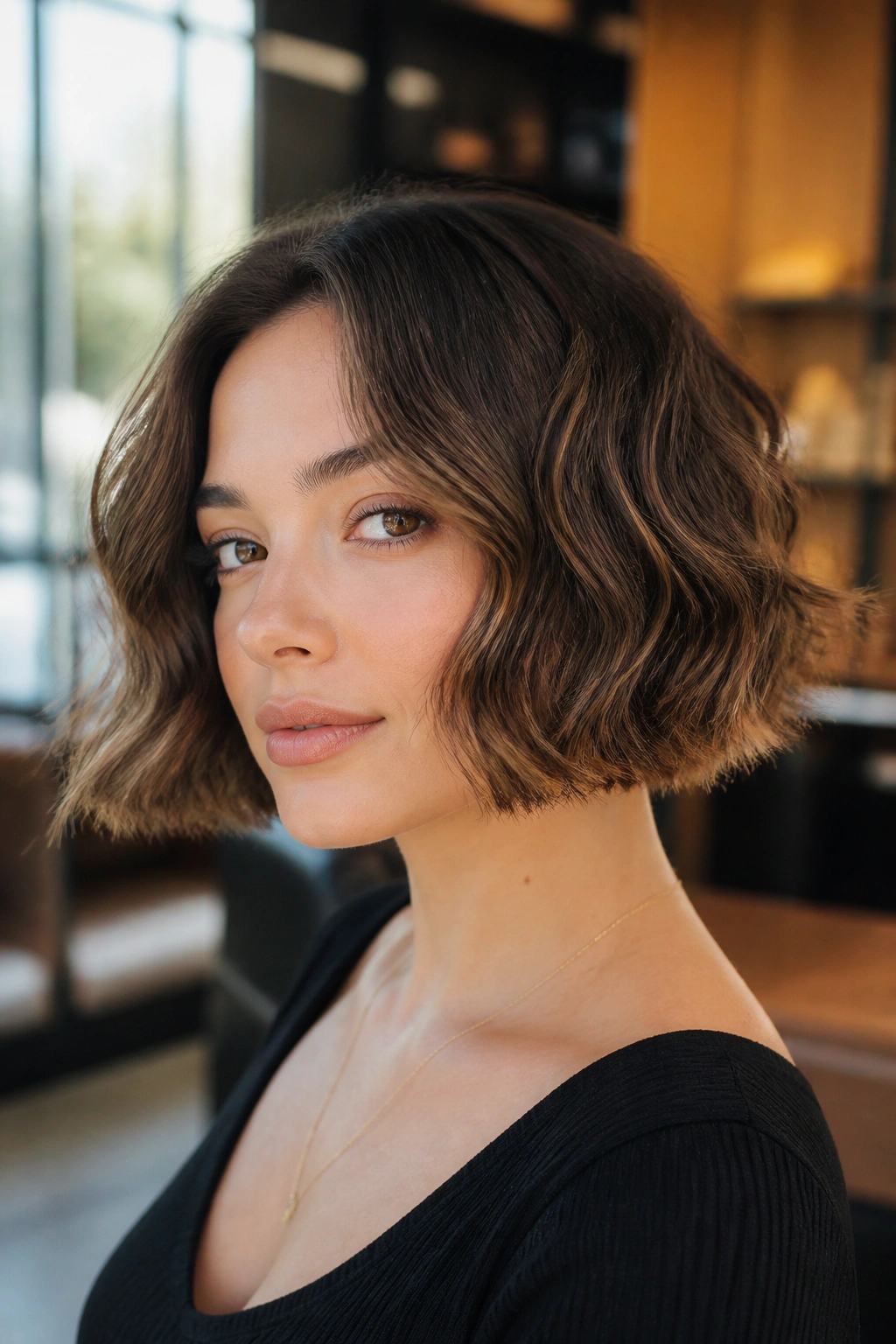
This is the sharpest answer when you want your wave pattern to look deliberate fast. A chin-grazing blunt bob gives wavy hair a clean edge, so the bend in the hair becomes the point instead of a problem.
Why it works
The straight perimeter keeps the shape from looking fuzzy, while the waves add movement through the middle and ends. On medium-density hair, that combo is gold. You get body without a cloud.
Ask for the line to sit right at the chin, or a touch below if your waves spring up a lot when dry. Dry-cutting helps here, because wavy hair often shrinks more than people expect.
- Best for medium-density waves
- Sits neatly under a jacket collar
- Looks good air-dried with a pea-sized cream
- Easier to maintain than heavily layered cuts
Skip heavy texturizing at the bottom. That’s where this cut loses its edge.
2. Soft Layered Bob
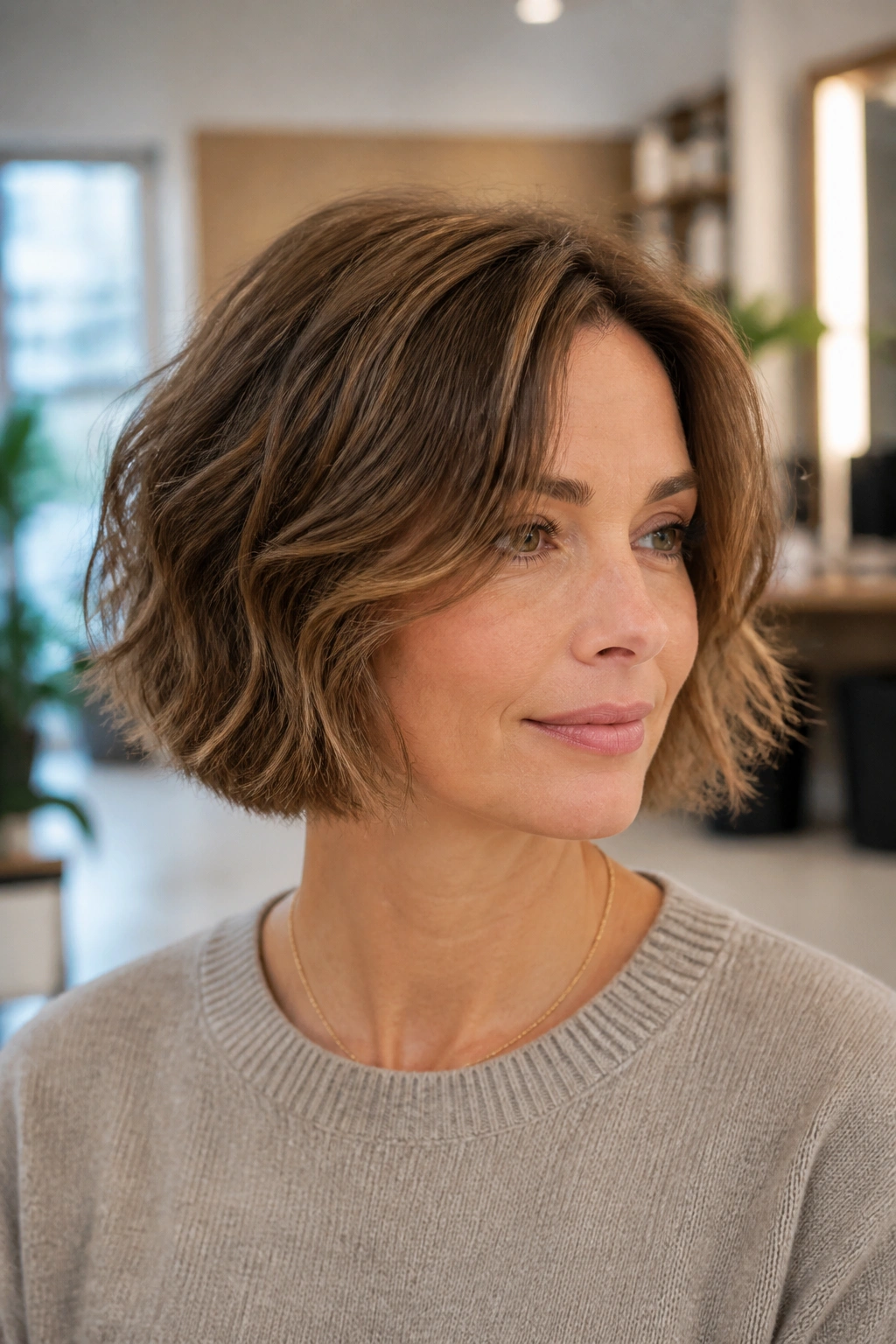
A few invisible layers can save a wavy bob from puffing out at the sides. That’s the whole trick with a soft layered bob: keep the outline calm, then take weight out inside the shape.
Thick or coarse waves love this cut because the bulk gets spread around instead of sitting in one shelf. The hair still looks full, just less stubborn. There’s a difference, and you can see it in the way the ends fall.
What I like most is that this cut doesn’t shout about the layers. It looks easy, not chopped up. If your waves are wide and loose, this shape gives them room to bend without turning into a mushroom.
A light mousse at the roots and a little scrunching at the ends is enough for most people. If your hair frizzes fast, keep the layers longer and ask for softness, not choppy pieces. That tiny wording change matters in the chair.
3. French Bob with Brow-Length Fringe

Why does the French bob keep showing up in wavy hair photos? Because the shorter length and the fringe work together instead of competing. A French bob with brow-length fringe turns a loose wave into part of the haircut, not just decoration.
How to wear it
The fringe should skim the brows or sit just above them when dry. If your wave pattern is stronger at the front, ask for a slightly longer bang so it doesn’t bounce up too far. That one detail can save you from a fringe that feels suddenly tiny after a wash.
This cut suits people who like a little attitude near the face. It’s compact, cheekbone-friendly, and a bit cheeky in the best way. The bob itself usually sits around the jaw, so the eyes and mouth do a lot of the visual work.
A quick pass with a diffuser on low heat keeps the fringe from frizzing. Or air-dry it and tuck the front pieces behind one ear while they set. That gives the shape a softer bend.
4. Collarbone Lob
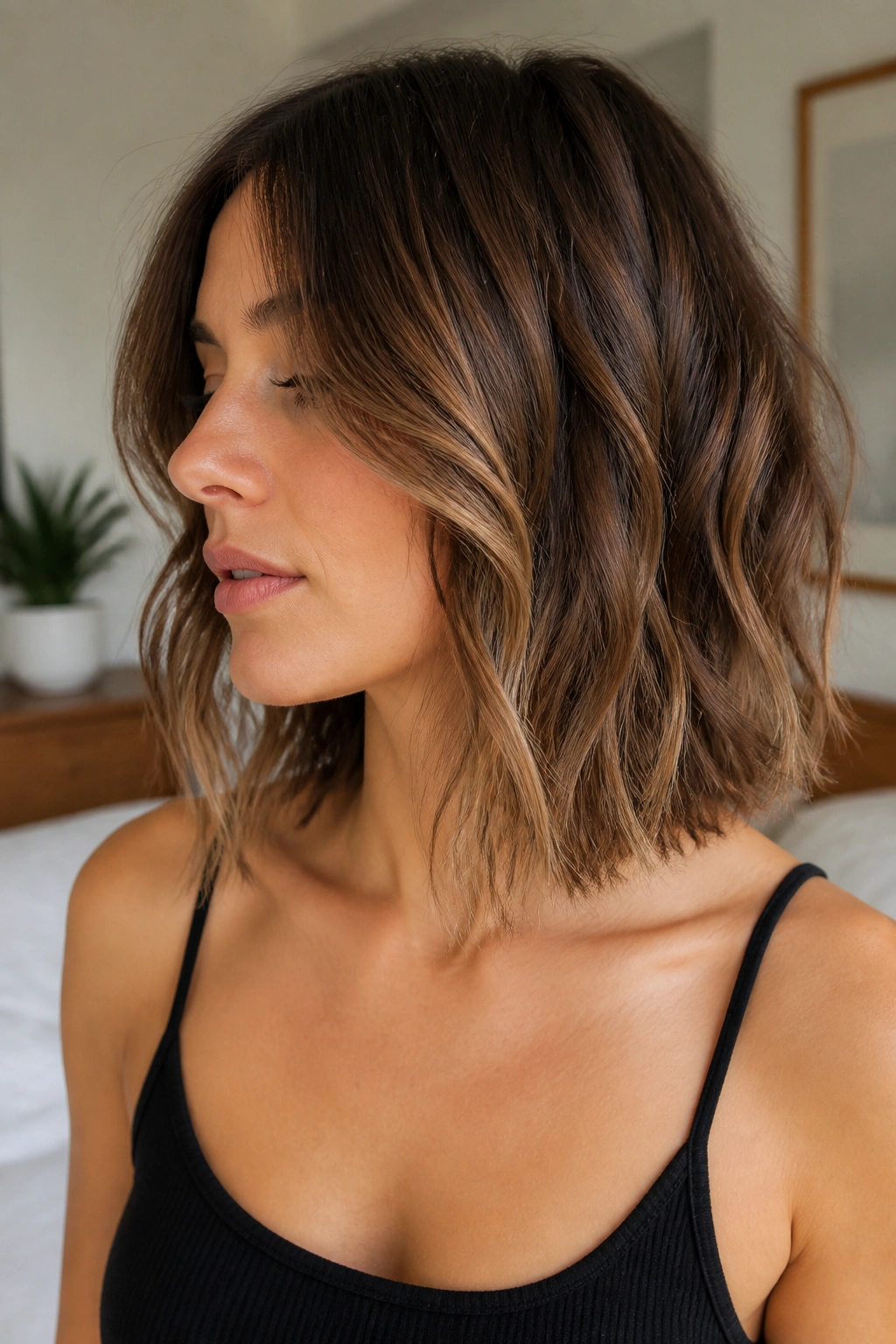
If you like bob energy but don’t want the commitment of a short cut, the collarbone lob is the safest bridge. It keeps the wavy look, but gives you enough length to tie back on a bad hair day.
It’s especially kind to uneven wave patterns. Some people have waves that start high on the head and flatten near the ends; others get loose bends only from mid-length down. This cut lets both patterns breathe. The hair doesn’t fight itself as much.
- Sits between chin and shoulders
- Works well with side parts or middle parts
- Easy to clip back for work or workouts
- Less likely to flip up hard at the nape
A collarbone lob also grows out nicely, which sounds boring until you’re six weeks past a salon visit and still like your hair. That matters. A lot.
5. Angled Bob with Longer Front Pieces

An angled bob with longer front pieces quietly fixes a lot of face-shape problems. The shorter back keeps the nape neat, while the front falls longer and gives the eye somewhere to travel.
That slope is useful if your waves tend to stack up near the cheeks. Instead of the width sitting straight out from the head, the front drapes down and softens the outline. On round or square faces, that can make the whole cut feel longer and lighter.
Ask for the back to hit near the nape and the front to land about 1 to 2 inches longer. Not more, unless you want it drifting into lob territory. Too much length in front can make the angle feel accidental rather than clean.
This cut likes a side tuck. One side behind the ear, the other left loose. Simple. Done.
6. Asymmetrical Bob

An asymmetrical bob is for someone who wants the haircut to look a little bolder without needing bright color or a dramatic fringe. One side is longer than the other, often by 1 to 2 inches, and that offset plays well with wavy hair.
Unlike a perfectly balanced cut, this one embraces slight irregularity. Wavy hair already has movement built in, so the asymmetry feels intentional rather than messy. That’s why it often looks better on air-dried hair than a super-straight bob does.
The key is restraint. If one side gets too long, the cut stops reading as chic and starts reading as a grow-out. Keep the difference visible, not loud.
This shape works well if you like to tuck one side behind your ear or if you wear glasses. The long side can frame the face, while the short side opens it up. Oddly enough, that imbalance makes the whole style feel more settled.
7. Shaggy Wavy Bob
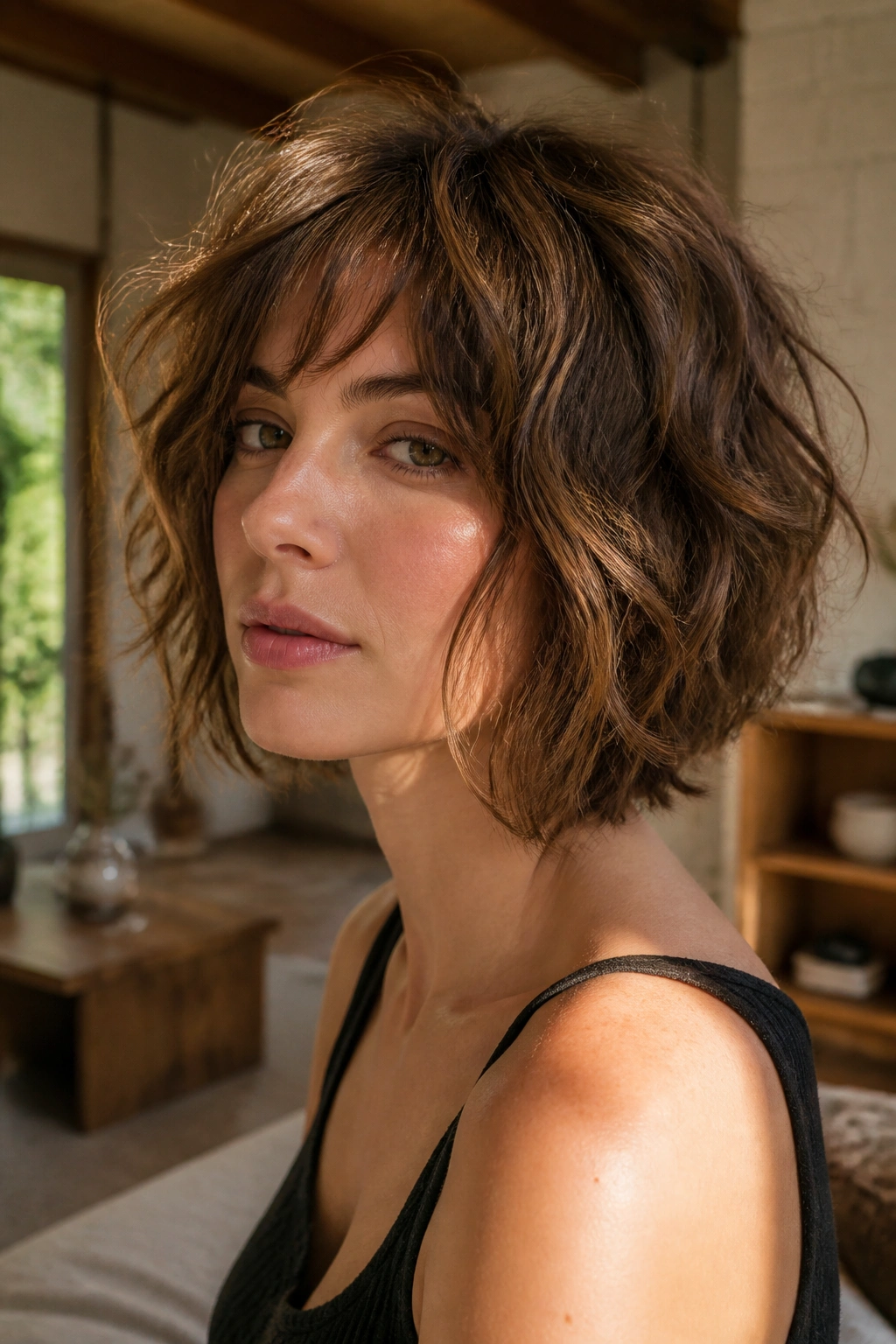
The shaggy bob is the one that looks coolest after a little chaos. A shaggy wavy bob leans into choppy layers, broken ends, and movement that feels almost accidental — though it takes a good cut to look that way on purpose.
What makes it different
The layers are usually shorter around the crown and longer through the ends, which helps waves separate into pieces instead of forming one heavy block. That is why it suits hair that has a lot of natural texture. It also likes a bit of product. A lightweight curl cream or texture spray goes a long way.
Be careful with over-thinning. If the ends get too wispy, the cut can lose shape and start frizzing out. The shag should feel airy, not shredded.
A good shaggy bob looks best when it’s not over-touched. Scrunch, diffuse for a few minutes, and leave it alone. Seriously. The hair does more when you stop fussing with it.
8. Italian Bob for Wavy Hair
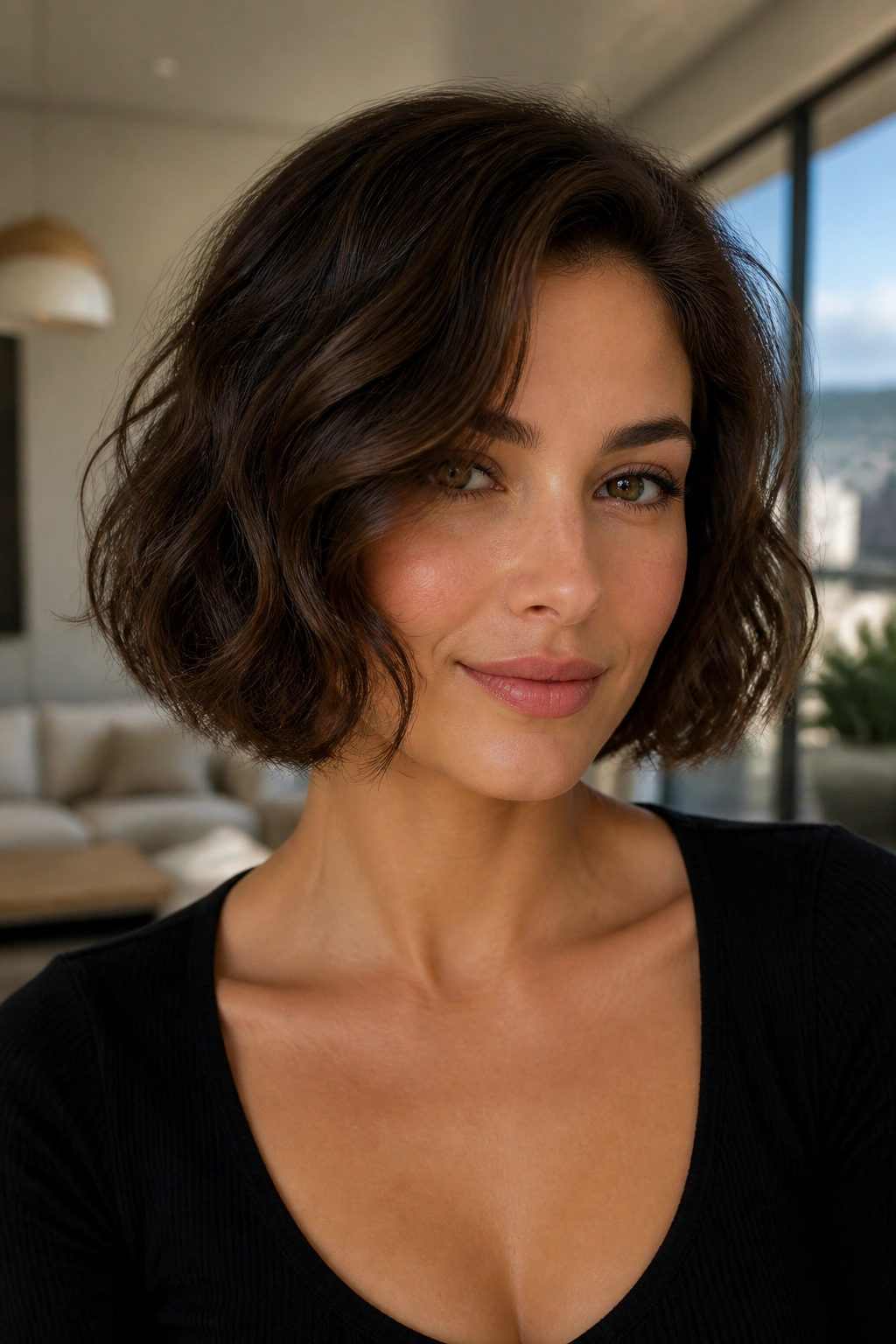
If you want your waves to look rich and full without turning fussy, the Italian bob for wavy hair is a strong choice. It’s fuller than a French bob, softer than a blunt box, and usually cut to keep a plush line around the jaw.
This cut loves hair with medium to thick density. The shape holds weight in the ends, which gives the bob that rounded, polished feel. On wavy hair, the bends stop it from looking too stiff. The mix is what makes it work.
Ask for minimal layering and a strong perimeter. Too much texture will flatten the whole point. The Italian bob is about body, not pieces.
Styling note
A large round brush or a quick blow-dry with the dryer pointed downward smooths the top while leaving the ends with a soft curve. If you prefer air-drying, a leave-in cream and a little finger-combing are enough.
It’s a clean, grown-up bob. Not severe. Not messy. Just solid.
9. A-Line Bob
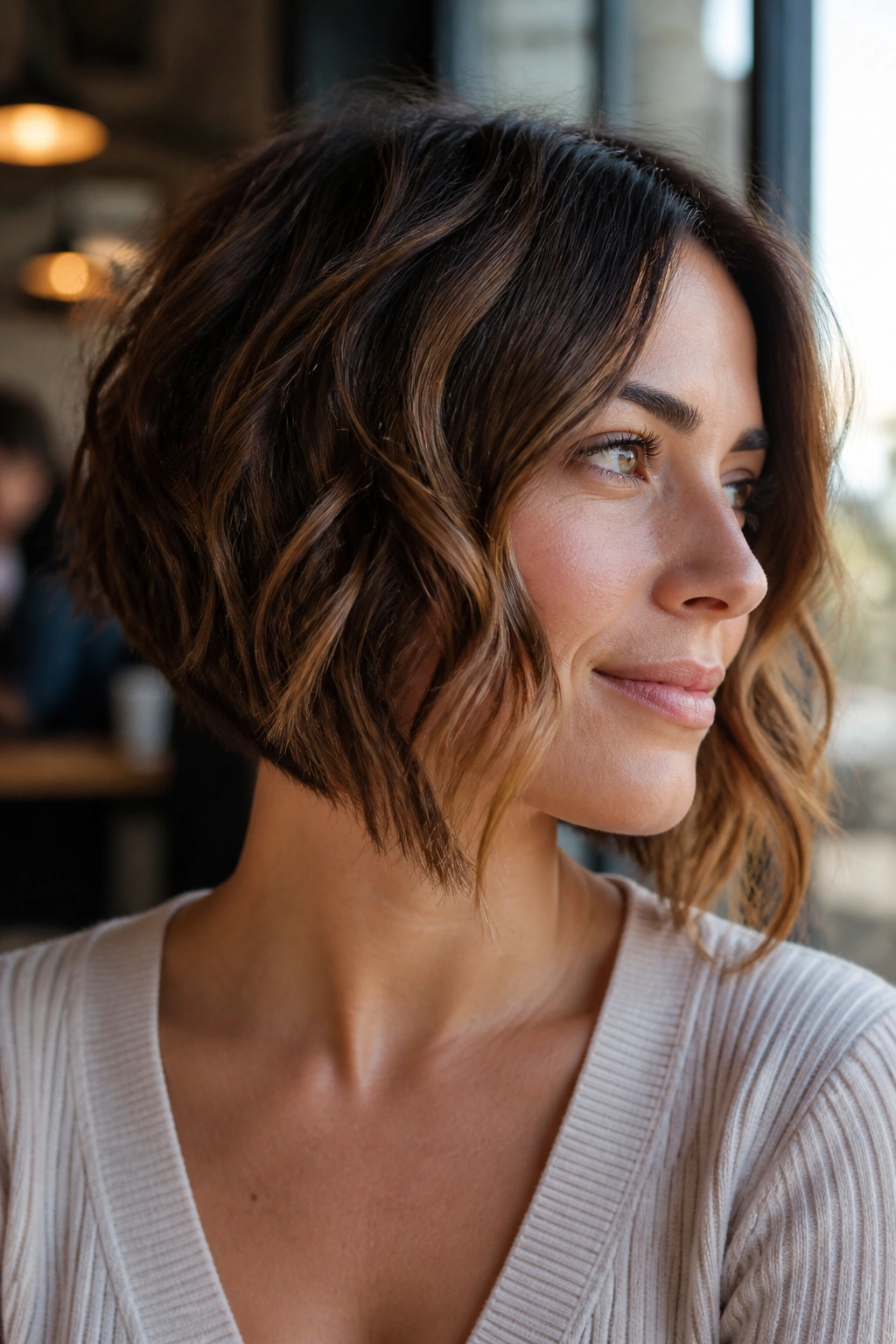
Need a bob that keeps the back neat but still gives the front some swing? The A-line bob does exactly that. It’s shorter in the back and gradually longer toward the front, which makes it a natural fit for waves that need direction.
The forward angle helps frame the jaw and chin without crowding the neck. If your hair gets bulky at the back, this shape can make a huge difference. The graduation in the cut creates a little lift, which is handy for fine or medium hair that goes flat fast.
Keep the difference subtle unless you want a sharper look. A gentle A-line is easier to wear and less likely to feel dated. The wild version can be fun, but it’s a specific mood.
This cut also works nicely with earrings. Small thing, but true. The longer front pieces and a clean neckline leave room for the face to do its job.
10. Curtain Bang Bob
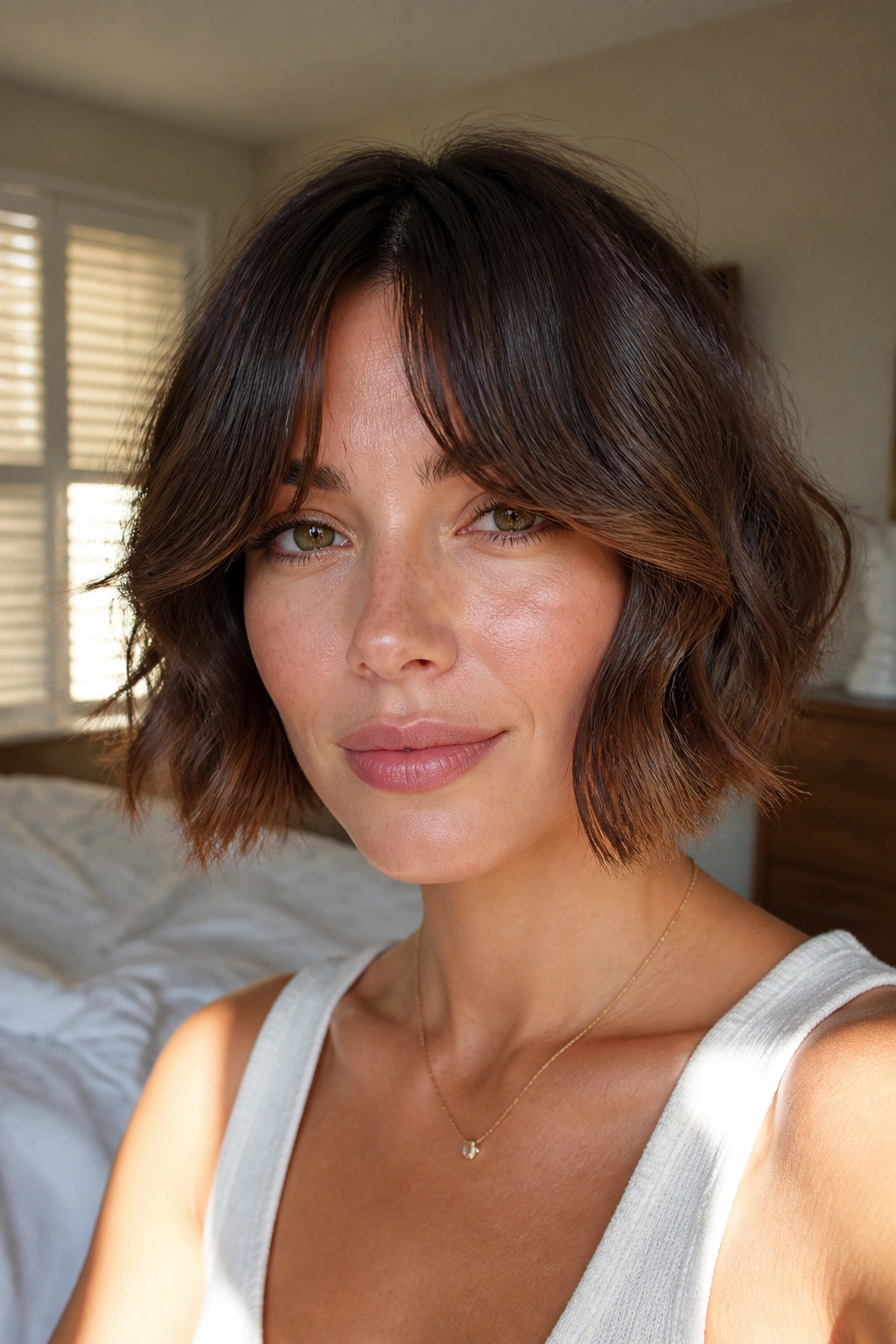
Curtain bangs and waves are old friends. Put them together in a bob, and the result can feel loose, flattering, and a touch romantic without getting precious about it.
The trick is keeping the fringe long enough to split cleanly at the center. If it’s cut too short, wave will kick it up and you’ll spend your mornings fighting it. Brow-to-cheekbone length is usually the sweet spot.
How to wear it
- Part the fringe while damp
- Clip each side away from the face for a few minutes
- Let the ends bend softly instead of forcing them flat
- Keep the bob itself at chin or lip length for balance
This cut suits people who want forehead coverage without a heavy straight bang. It softens the face, and the bob underneath keeps the whole style from feeling too sweet. There’s enough shape here to stay interesting.
11. Rounded Bob

A rounded bob curves into the jaw instead of dropping in a hard line. On wavy hair, that softness can be the difference between a balanced shape and one that sticks out at the sides.
This is a good choice if your face is narrow, long, or angular. The curve gives the hair a little hug around the cheeks and chin. It also suits people who don’t want a lot of visible layer work. The shape itself does the heavy lifting.
The ends should be full, not wispy. That’s the whole point. If the perimeter gets too thin, the rounded feel disappears and the haircut starts to look unfinished.
I like this bob on hair that dries with a soft bend already in it. It doesn’t need much coaxing. A small brush, a little cream, and maybe a tuck behind one ear. That’s usually enough.
12. Razored-End Bob
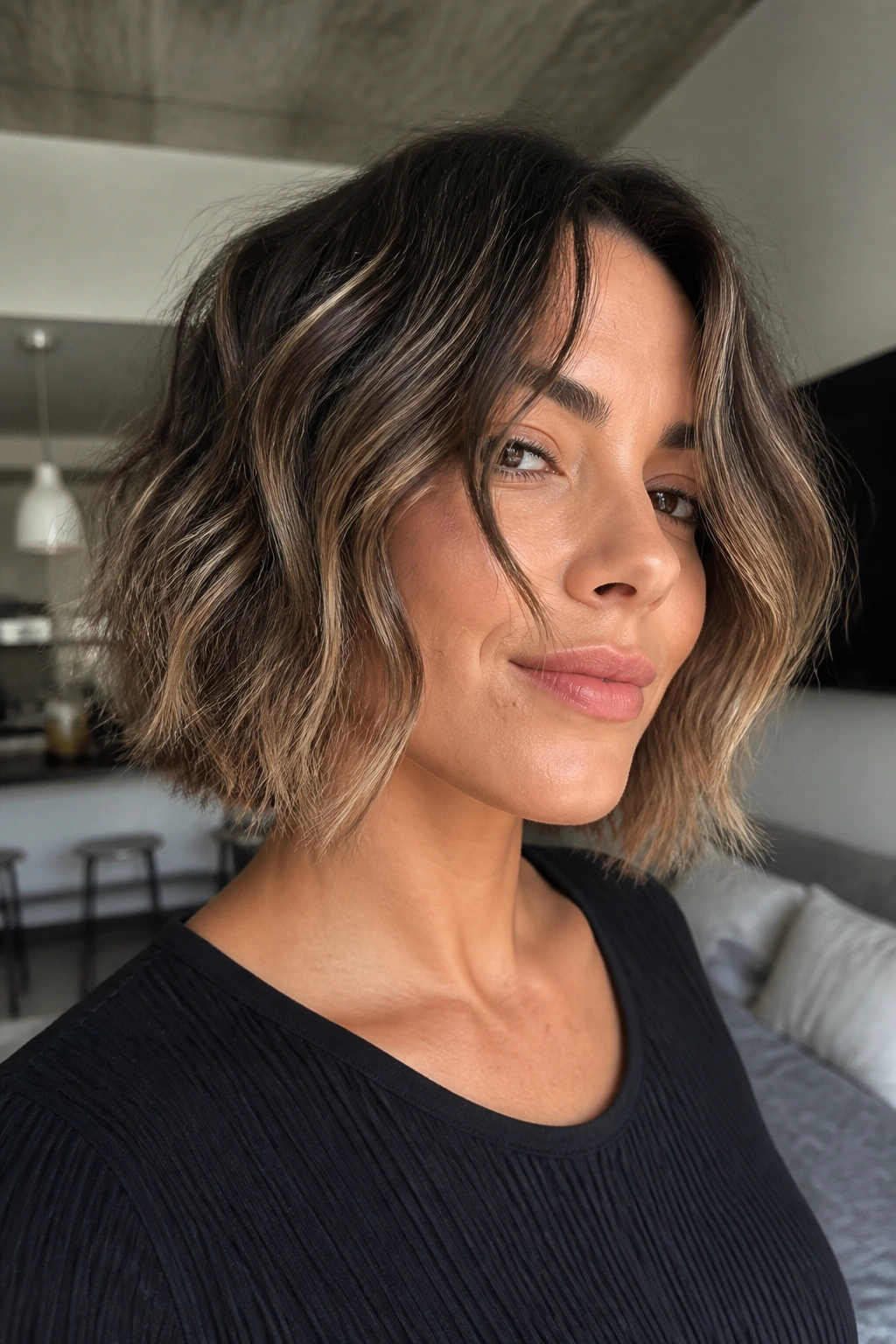
A razored-end bob removes bulk fast, which makes it a smart move for thick or coarse wavy hair. The razor takes the ends down into softer, lighter pieces instead of leaving them blunt and heavy.
Unlike a blunt bob, this cut separates the waves a bit more. You can see the movement sooner, and the hair feels less boxy at the bottom. That can be a relief if your waves tend to swell when humidity creeps in.
The catch is that a razor needs a steady hand. If the stylist goes too far, especially on fine hair, the ends can fray and frizz. So this one is not a casual request.
A razored bob looks best with a bit of bend and separation. Air-dry it, then break up the ends with a drop of serum. Not much. Just enough to keep the texture readable.
13. Stacked Bob at the Nape
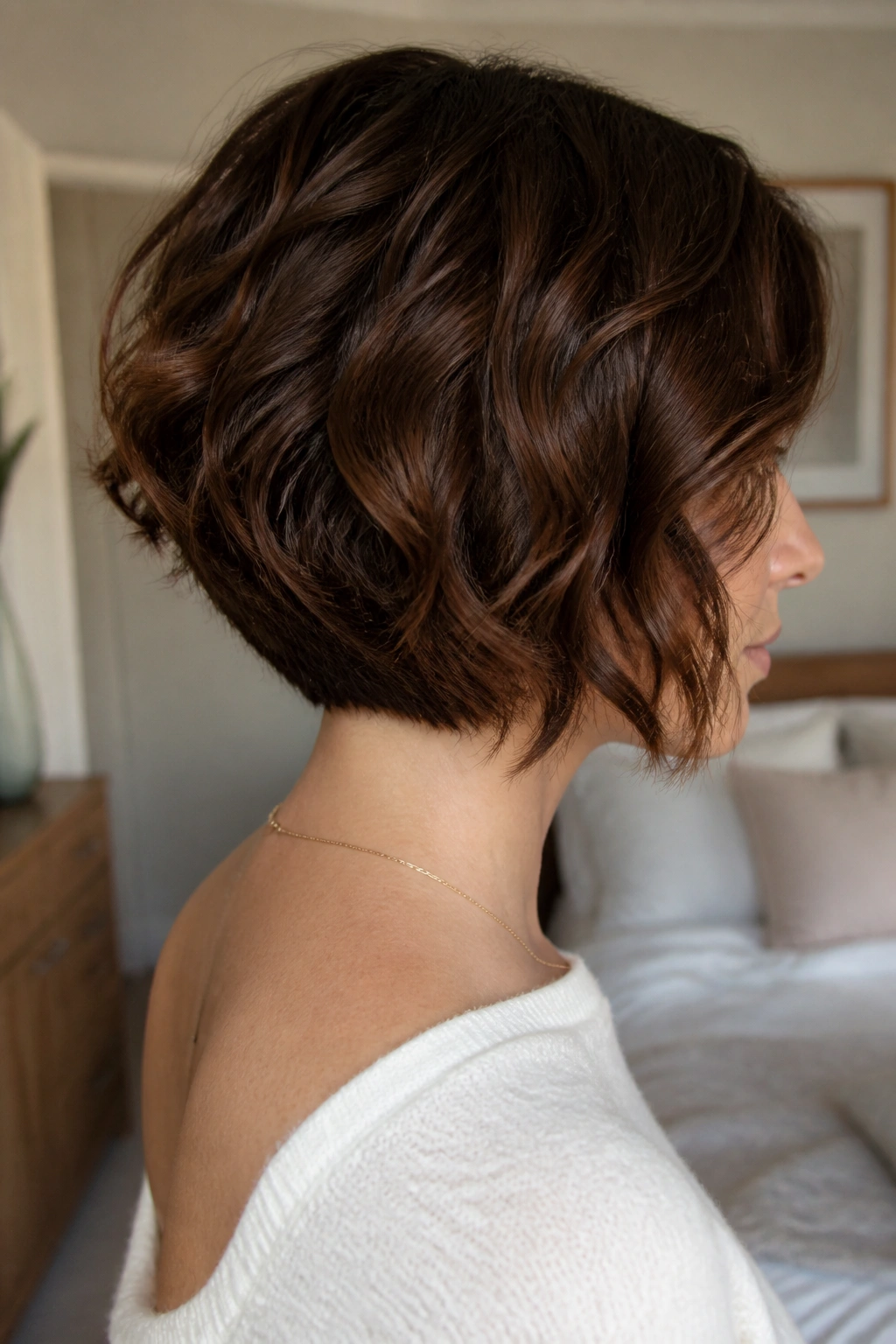
A stacked bob at the nape is all about lift at the back. The layers are graduated so the hair sits shorter and fuller where the head curves, then falls longer toward the front.
That shape can rescue flat crowns. It gives the back more body without needing a ton of blow-drying or root spray. On wavy hair, the effect can be strong in a good way — the waves help the stacked shape show up instead of hiding it.
What to watch for
- Keep the stack soft, not helmet-like
- Ask for weight removal only where needed
- Avoid over-layering the front
- Let the back follow the natural head shape
This cut is especially useful if your hair looks limp from behind in photos. The lift at the nape changes that fast. A little mousse at the roots helps, but the cut does most of the work.
14. Deep Side-Part Bob

Sometimes the cut is fine and the part is what saves it. A deep side-part bob changes how the waves fall, and on many heads that small move creates more lift than a whole new haircut.
The heavier side gets pushed up and over, which adds volume at the root. The lighter side opens the face and gives the bob a little drama. If your hair tends to collapse in the middle, this is a practical fix.
It’s a good choice for people who like a bob but want less symmetry. The part line can make the haircut feel more modern without changing the length at all. Nice trick. Cheap, too.
Try switching the part while the hair is still damp, then clip the heavier side for five minutes while it dries. That helps the root remember where to sit. Small habit, big payoff.
15. Piecey Bob with Face-Framing Layers
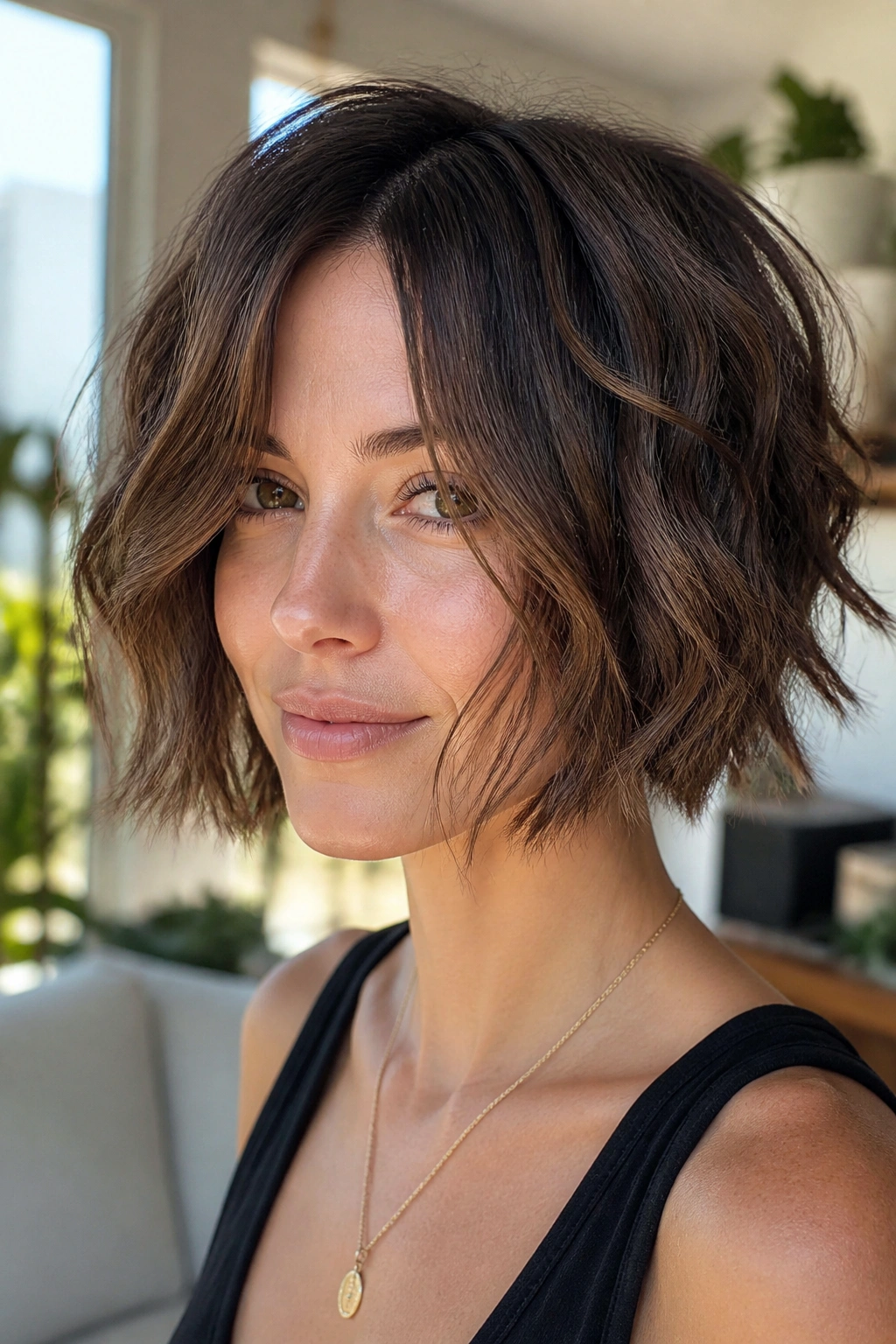
How do you keep wavy hair from turning into one big puff? Break it into pieces. A piecey bob with face-framing layers does exactly that, and it’s especially useful if your wave pattern is loose but dense.
The layers near the face should start around the cheekbones or just below. That keeps the front soft and stops the whole cut from feeling blocky. The rest of the bob can stay fuller, which preserves shape.
What makes it different
This is not the kind of cut that relies on lots of short layers everywhere. It depends on a few well-placed ones. That’s a better deal for most wavy hair, honestly, because too many short pieces can spring out and make the hair frizzy.
Use a small amount of curl cream on the ends and separate the waves with your fingers as they dry. Don’t overcomb it. The “piecey” part comes from leaving the texture alone.
16. Blunt Box Bob
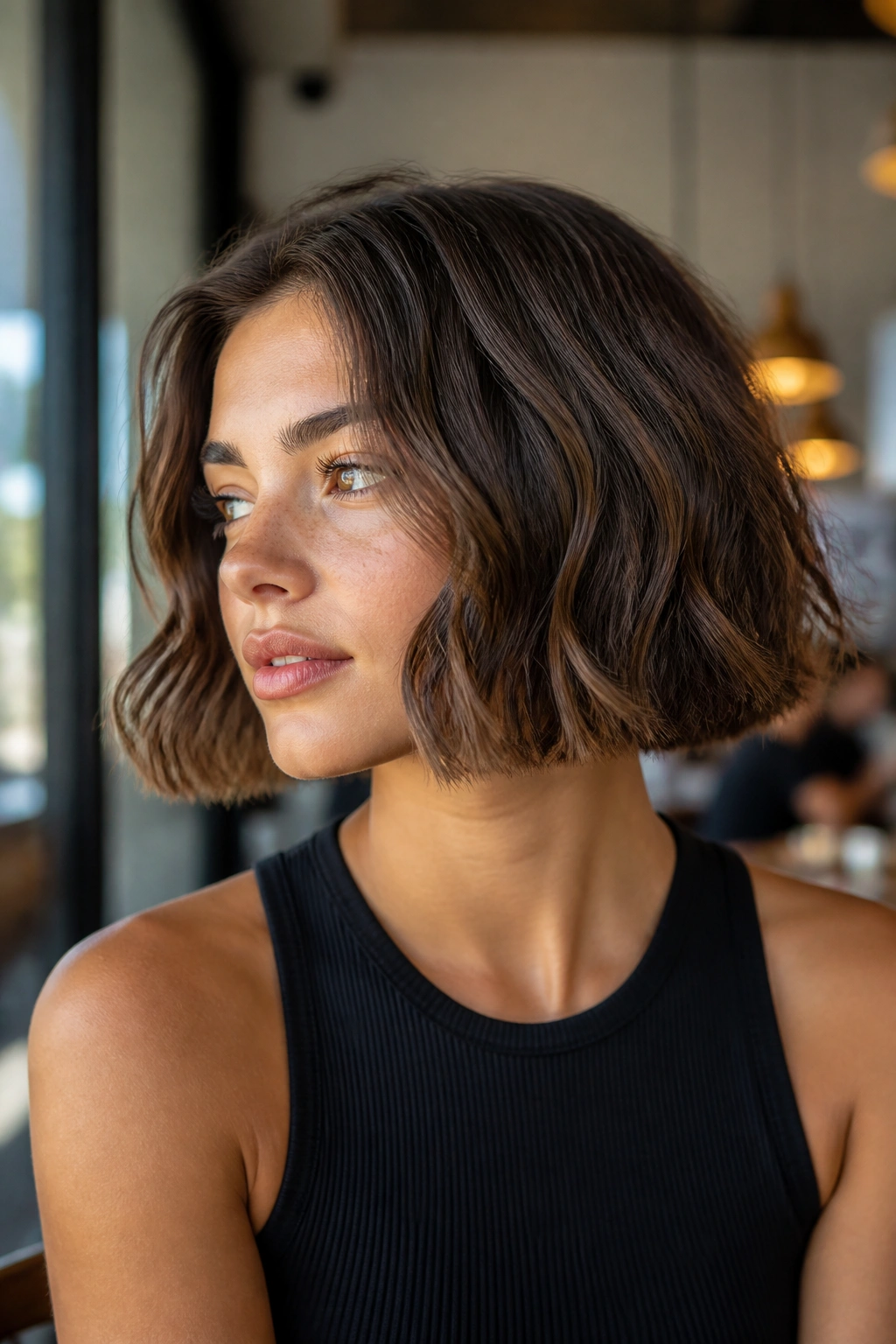
A box bob is square, strong, and a little strict. On wavy hair, that structure can look stunning — if you like bold lines and can live with a shape that says what it means.
The cut usually hits between the jaw and the top of the neck, with a strong, even perimeter. Waves show up inside that frame, which gives the style a neat-but-textured look. It’s not soft. That’s the point.
- Best on medium to thick hair
- Needs a clean neckline
- Works with a middle part or tucked sides
- Can feel too wide on very coarse waves if the ends are too full
I’d choose this if you like strong clothes too: crisp shirts, sharp collars, straight lines. The haircut and the wardrobe tend to agree with each other.
17. Inverted Bob
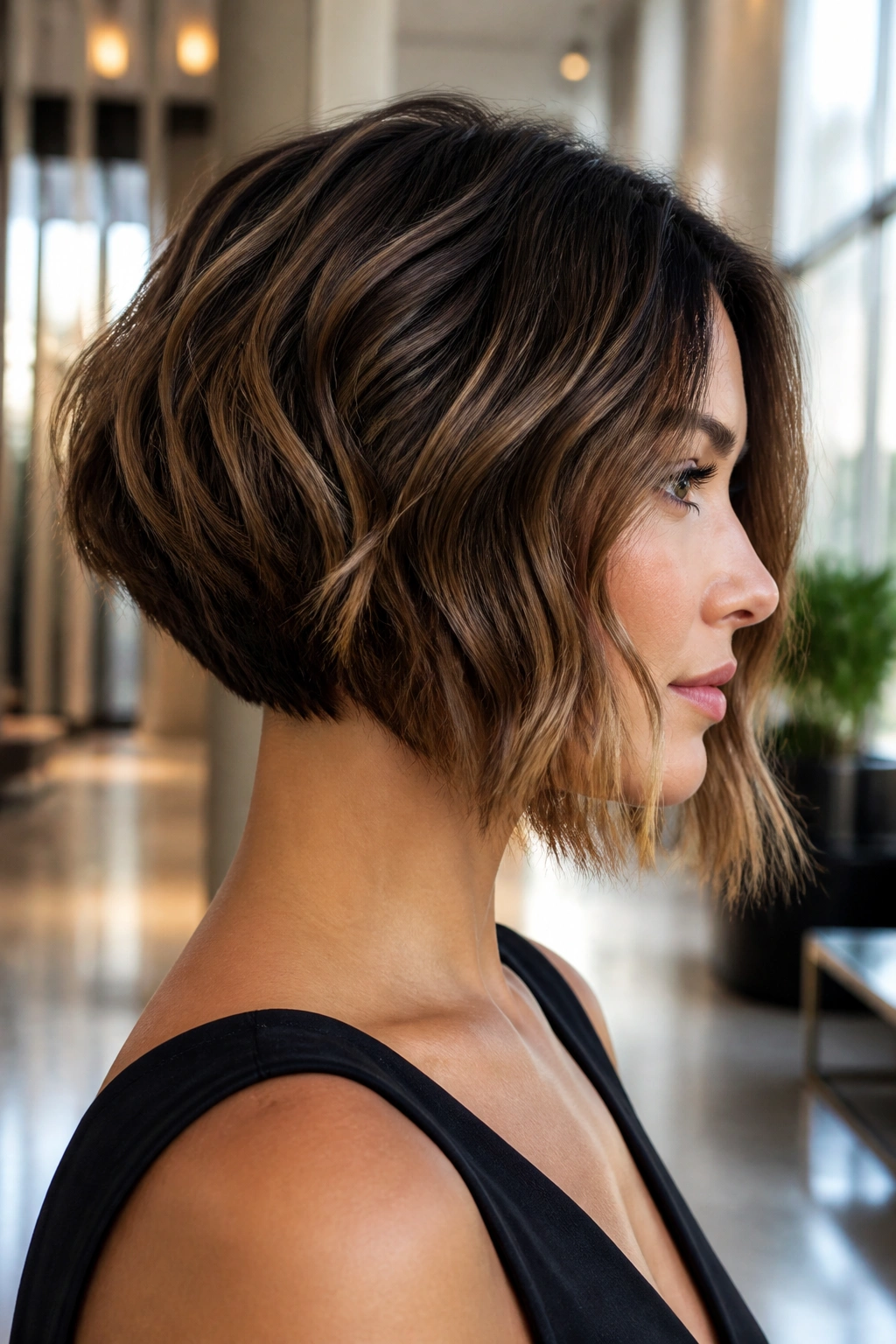
An inverted bob takes the angle of an A-line and pushes it further. The back is shorter, the front is longer, and the slope is more dramatic. On wavy hair, that can create a lot of movement without making the haircut look wild.
The shorter back lifts the crown, while the front pieces skim the jaw or collarbone. That combination gives the face some length and keeps the neck area light. It’s one of those cuts that looks more polished from the side than people expect.
If you like shape but not fuss, this is worth a look. It’s structured, but the waves keep it from feeling stiff. That’s the advantage.
Be careful not to let the front drift too long. Once it gets past the collarbone, the inverted line loses its edge and starts reading like an outgrown lob. Keep the slope visible.
18. Long Layered Bob for Heavy Hair
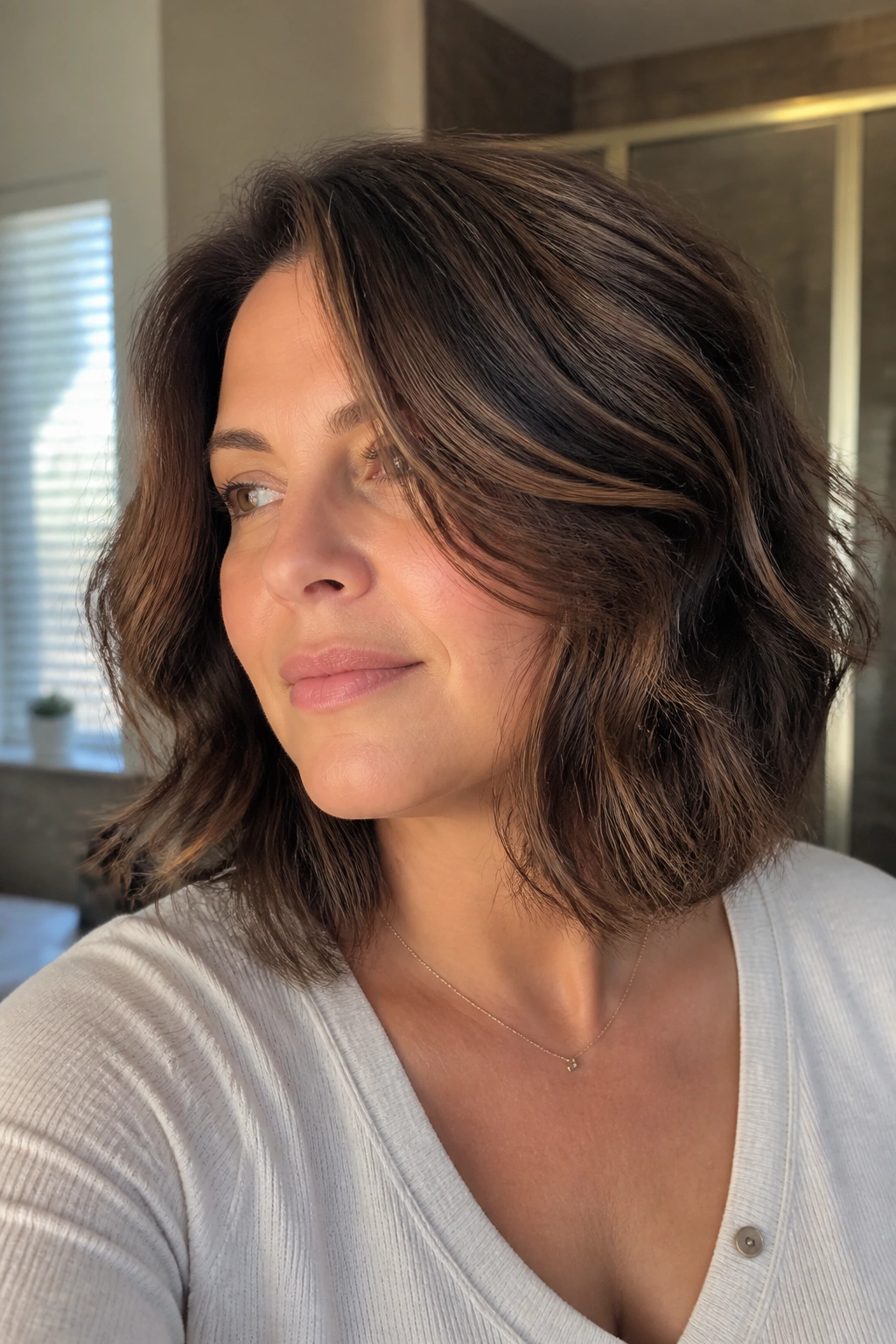
Heavy hair can make a bob feel like a wool hat if the weight sits in the wrong place. A long layered bob for heavy hair solves that by keeping enough length to control the bulk while cutting out the dense middle.
The layering here should be internal and long. Think soft removal, not short choppiness. You want the hair to move, not collapse. If the layers are too high, the ends can go thin and the whole cut turns messy fast.
This style usually sits between the chin and collarbone. That gives wavy hair room to swing while still holding shape. It’s a good middle ground for people who want a bob but know their hair has opinions.
A quick rough-dry with your hands is usually enough. If you like a smoother finish, use a paddle brush on the top layer and leave the ends alone. Mixing those textures looks better than forcing everything into one finish.
19. Tucked-Under Bob

There’s a reason so many wavy bobs look better once the ends fold under a little. A tucked-under bob uses that curve on purpose, giving the haircut a soft, finished feel.
This shape works especially well when the perimeter is cut with a slight graduation, then smoothed with a round brush or a blow-dry brush. The ends roll in just enough to keep the line tidy. Not stiff. Just neat.
What to ask for
Ask for a bob that keeps full weight at the bottom and avoids too much texture through the ends. If the bottom gets shredded, the tucked shape disappears. The cut needs enough substance to hold the curve.
I like this style for office days, dinners, and anywhere you want hair that looks handled without looking sprayed into place. It’s one of the quieter bob options, but not a dull one.
20. Side-Bang Wavy Bob

Side bangs do what a center part cannot. They soften the forehead, redirect the eye, and give a wavy bob a slightly more romantic shape.
The bang should be cut long enough to sweep across the brow and blend into the side of the bob. Too short, and it kicks out awkwardly. Too thick, and it steals the whole haircut. The sweet spot usually lands between the brow and the cheekbone when dry.
A side-bang bob works well for people who want the front of the haircut to feel softer without going full fringe. It also helps if your hair grows in with a natural side part. Less fighting. More wearing.
This cut has a nice built-in trick: on days when you want more drama, flip the bang deeper to one side. On calmer days, let it fall looser. Same haircut. Different mood.
21. Micro-Fringe Wavy Bob
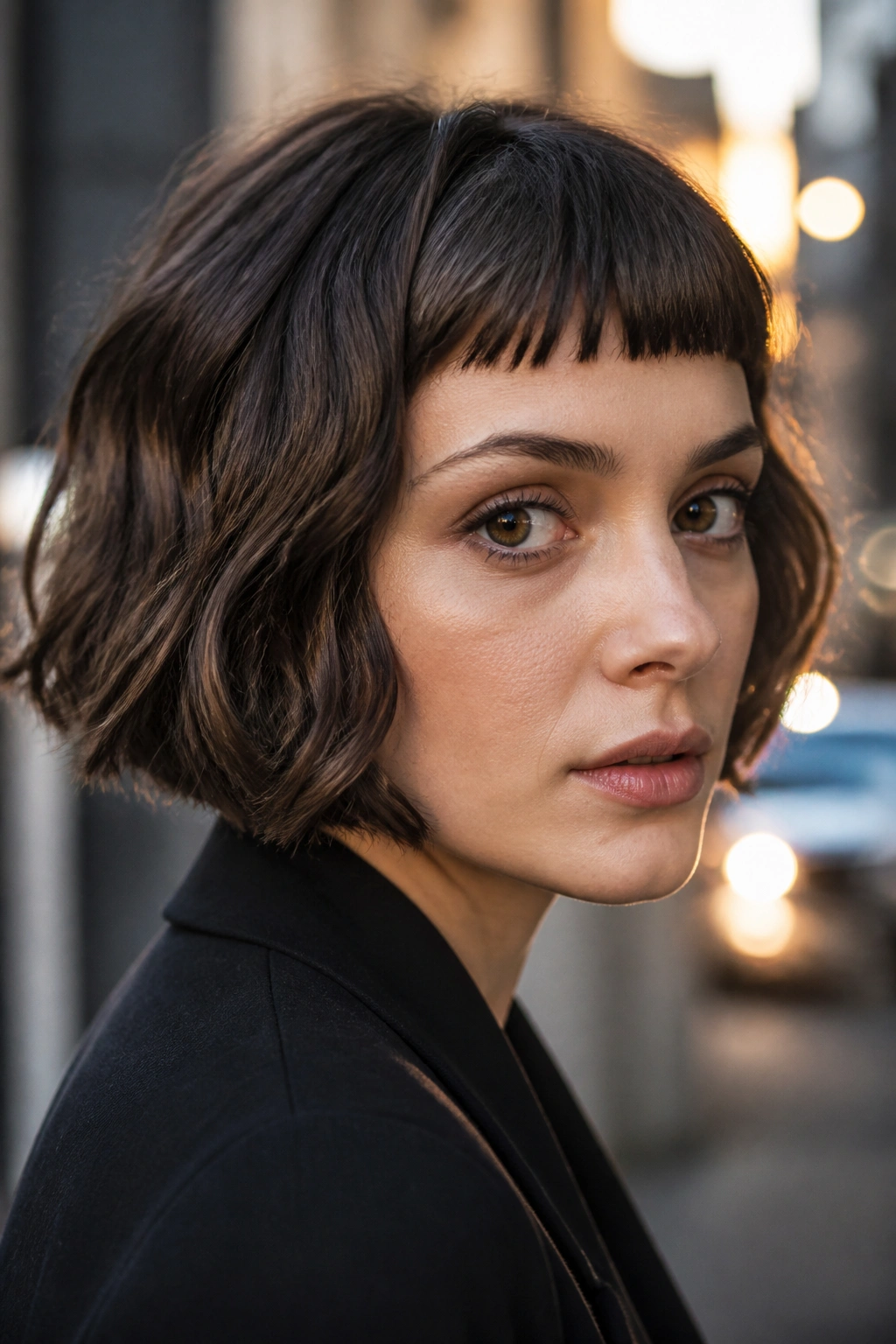
A micro fringe on wavy hair is not shy. It’s short, a little sharp, and very specific. That makes it fun if you like a bob that has a point of view.
The catch is that waves in the fringe area can spring up fast. So this cut works best when the wave pattern at the front is loose, or when you’re okay with a fringe that has movement and does not sit perfectly flat. If you want polished and easy, this is not the easiest route.
How to tell if it suits you
- Your forehead can handle a short fringe
- Your waves are soft, not corkscrew-tight at the hairline
- You don’t mind trims every few weeks
- You like a bit of edge in your haircut
The rest of the bob can stay simple and jaw-length, which keeps the fringe from feeling costume-like. That contrast is what makes the style work.
22. Lived-In Grow-Out Bob for Wavy Hair

The best low-maintenance wavy bob is the one that still looks decent after it grows out a little. A lived-in grow-out bob for wavy hair keeps soft layers, a gentle outline, and enough length to survive the awkward middle stage.
This is the cut for people who want shape without babysitting it. The ends should sit somewhere between the jaw and the upper collarbone, with layers that are long enough to keep their place. Nothing too crisp. Nothing too shredded. Just a shape that gets better as it loosens.
I think this is the quiet winner for a lot of wavy hair. It doesn’t demand daily styling, and it doesn’t punish you when you skip a trim. That matters more than a perfect salon finish.
If you’re stuck between two bob lengths, choose the longer one and let the wave pattern do the decorating. Hair that moves has a way of making the small trade-offs worth it.
