



Straight hair makes a bob look expensive fast. The cut line sits there, crisp and honest, with no curl pattern to hide a shaky perimeter or a rushed finish. That is why sleek bobs for straight hair can look so good when the shape is clean and so bad when the trim is lazy. There is nowhere to hide.
Bad news for sloppy cuts. Good news for anyone who likes a polished look with less daily effort. A strong bob on straight hair can fall into place with a quick blow-dry, a flat brush, or sometimes nothing at all beyond a little smoothing cream on the ends.
The part most people miss is that straight hair does not all behave the same way. Fine straight hair needs a different bob than dense, heavy straight hair. One wants lift. The other wants removal of bulk. Both can look sharp, but the haircut has to respect the fiber, the density, and the way the ends sit against the neck.
And yes, the details matter. A line that is off by a few millimeters can show up the moment the hair moves. That is why the best bob cuts for straight hair feel precise, not precious. Clean edges. Clear shape. A finish that looks intentional from the front and the back.
1. Sleek Blunt Bob
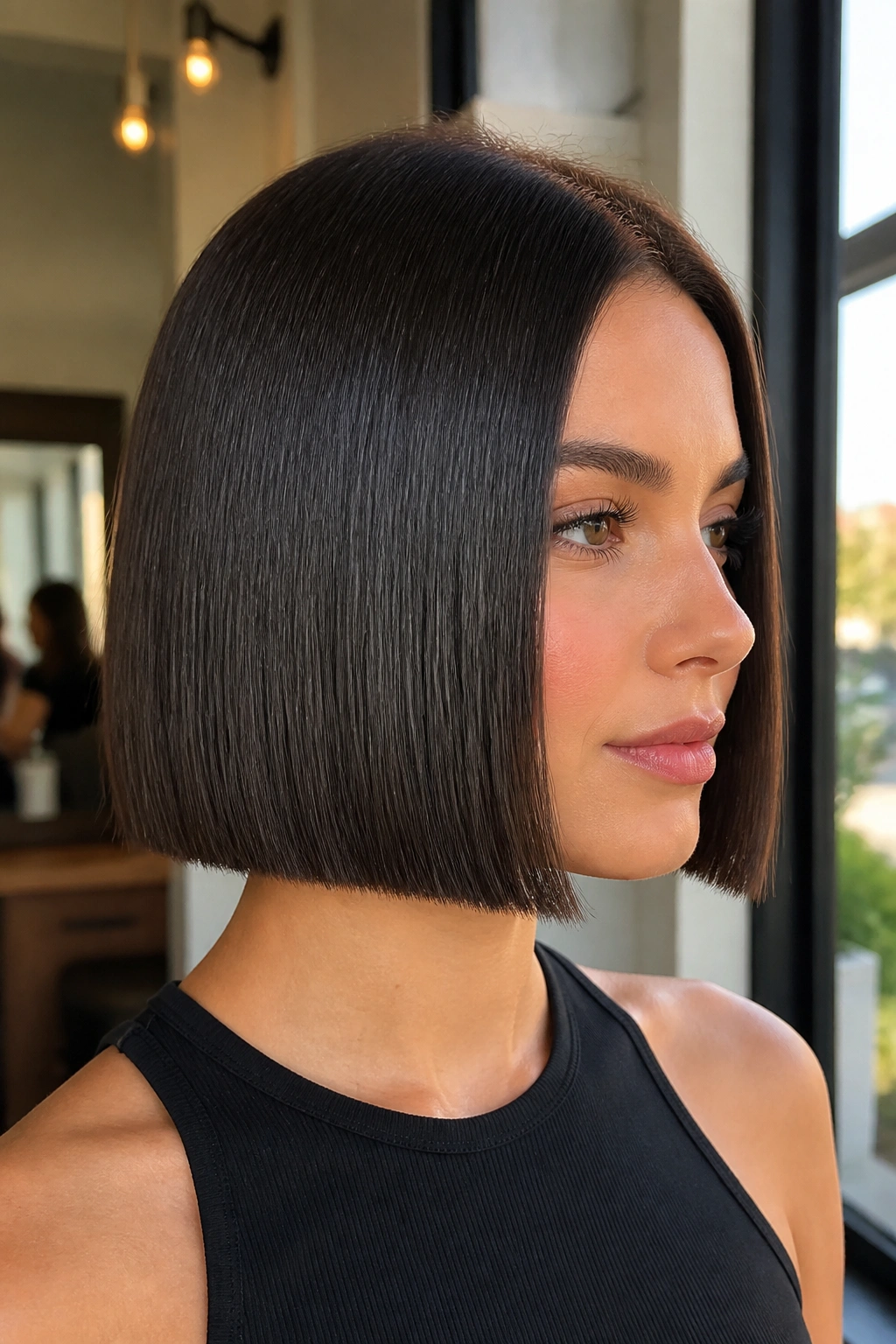
A blunt bob is the cleanest place to start because it does one thing exceptionally well: it turns straight hair into a clear, glossy line. If your hair already lies flat with minimal wave, this cut can look almost mirror-smooth after a quick round-brush blowout or a single pass with a flat iron.
Why It Looks So Sharp on Straight Hair
Straight hair shows the edge of the haircut immediately. That sounds harsh, but it is actually the whole appeal. A blunt bob gives you a solid perimeter with no soft ends to blur the shape, which is why it reads so polished on hair that does not naturally puff or curl.
The best length usually lands somewhere between the jaw and just below it. Too short, and the shape can feel boxy in a bad way. Too long, and you start losing the clean hit that makes the cut work.
- Best for fine to medium straight hair
- Trim every 6 to 8 weeks to keep the line fresh
- Ask for the ends to be cut square, not razored
- A flat iron at 300–350°F is usually enough for smoothing
My take: if you want a bob that looks expensive without trying too hard, this is the one people copy for a reason.
2. Chin-Length French Bob

A chin-length French bob has attitude. It sits higher than a classic bob, skims the jaw, and makes straight hair look purposeful even on days when you barely touch it. The shape feels a little sharper than a soft crop, but not so severe that it starts looking helmet-like.
What makes it work is the balance between precision and air. The cut is short enough to show the neckline, but it still leaves enough length around the face to soften the edges. On straight hair, that matters. Without a bit of movement, a chin-length cut can read too blunt; with the right line, it looks chic in that quiet, slightly rebellious way French bobs are known for.
I like this cut on people who do not want to fuss with styling every morning. A small bend at the ends, a center or slightly off-center part, and maybe a micro-fringe if you like that look. Done.
It also flatters people who want their jawline emphasized. There is something neat about how the cut stops right where the face begins to narrow. Clean. Direct. No drama.
3. Collarbone-Grazing Sleek Lob
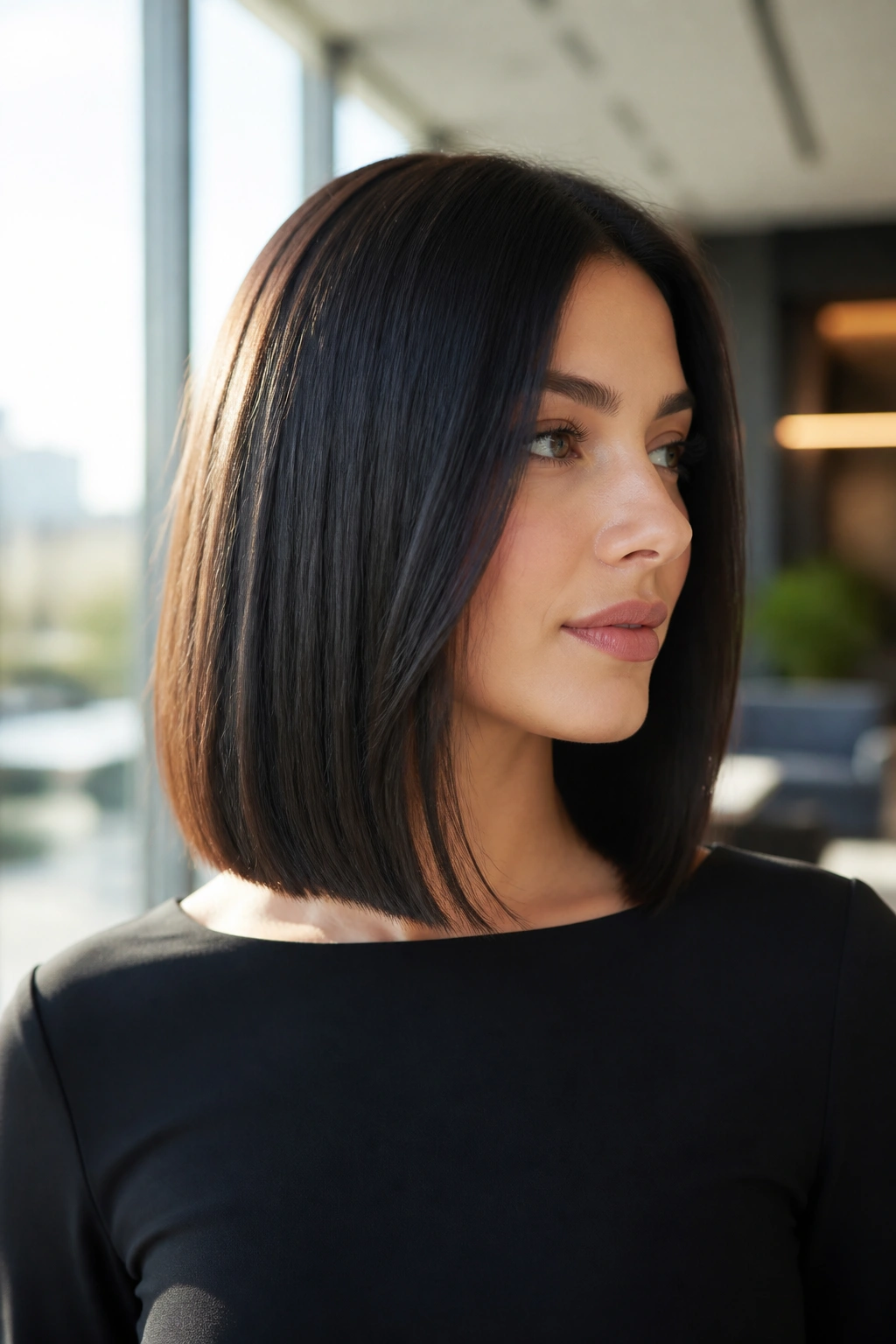
Why does a collarbone-length bob keep showing up on straight hair? Because it is the safest cut with the least compromise. You get the clean outline of a bob, but you keep enough length to tuck it behind an ear, pin it back, or tie it up when life gets annoying.
The Styling Trick That Keeps It From Looking Plain
The trick is not volume. It is line control. Straight hair at this length can fall limp if the ends are left too soft, so the better version has a faint bevel under the perimeter. Not curled under. Just turned under enough to keep the shape from hanging like a board.
A collarbone bob suits people who like structure but dislike commitment. It grows out well, which is half the point. It also works if your hair is medium to thick and you want the weight spread out without losing the blunt effect.
Who It Flatters Most
- Long faces that need width at the jaw
- Rounder faces that benefit from a little vertical stretch
- Anyone growing out a shorter bob and not wanting an awkward stage
If you want one cut that can look polished at work and relaxed on a weekend, this is the easy answer.
4. Angled A-Line Bob
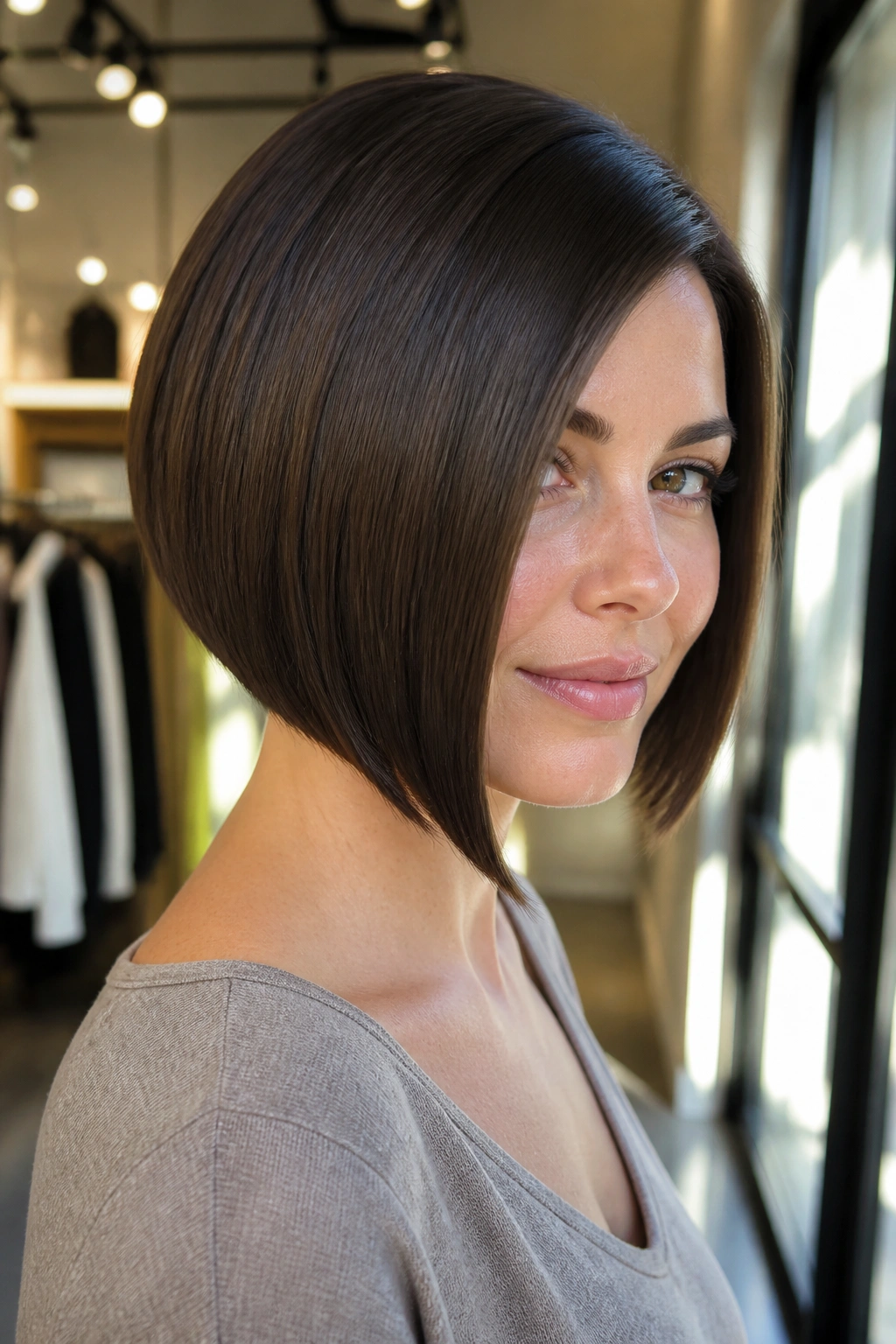
The angled A-line bob is for people who want the back neat and the front a little longer, and that difference changes everything. The longer front pieces create a diagonal line that lengthens the neck and makes straight hair feel sharper, almost architectural.
There is a good reason this shape holds up so well on straight hair. The angle gives the cut motion without depending on waves or layers. The hair falls where it is told. The result is crisp, but not stiff.
A few details make or break it:
- Ask for a difference of about 1 to 2 inches between the nape and the front
- Keep the back stacked lightly, not puffed up
- Use a paddle brush when blow-drying to keep the line smooth
- Best on medium-density hair that needs shape, not bulk
I like this cut on square and round faces because the diagonal line softens the sides while keeping the silhouette strong. It is a neat little trick. Very simple. Very effective.
5. Box Bob with Clean Edges
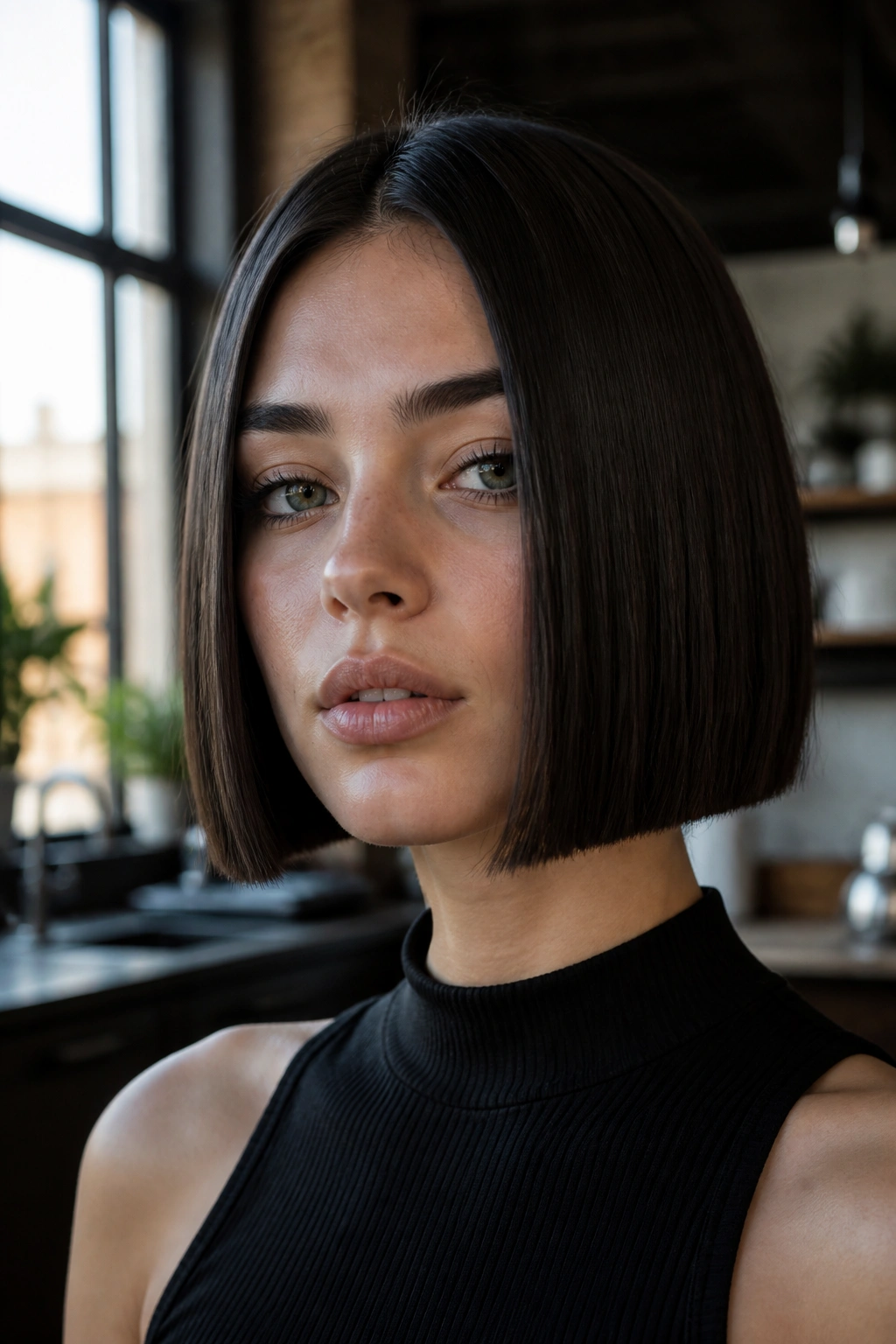
A box bob looks almost graphic. The sides are full, the outline is square, and the ends sit in a way that makes straight hair look deliberate from every angle. If your hair is naturally sleek, this cut can feel bold without needing any extra styling drama.
The shape works because it reduces visual noise. No choppy ends. No wispy layers trying to pretend they are doing something. Just a firm perimeter and a clean fall. On straight hair, that kind of discipline reads beautifully, especially if your hair has good density and you want it to look thick.
It is not the bob for someone who wants soft, airy movement. It is the bob for someone who likes a solid shape and does not mind being noticed for it. The cut line is the whole point.
One thing I would warn about: if your hair is very fine, a box bob can expose gaps at the ends unless the stylist leaves enough weight. You want fullness, not a scraped-down outline. That is a subtle difference, but it matters.
6. Jaw-Length Bob

Jaw-length is where straight hair gets a little bossy. The cut lands right at the widest part of the face or just under it, which gives strong structure and a clear frame. If you want a bob that feels neat and assertive, this length does it.
The Face-Framing Effect
On oval and heart-shaped faces, a jaw-length bob can look clean without stealing attention from the features. On round faces, it can work too, but the perimeter needs to be exact and the ends should not flip outward unless that is the look you want on purpose.
The biggest mistake here is over-layering. Straight hair at jaw length already has a lot of visual weight because the eye notices every millimeter of the line. If you remove too much bulk, the cut can start to wobble instead of sit.
What to Ask For
- A blunt edge with only a tiny bevel
- Minimal graduation at the back
- A center or side part, depending on how your hair falls
- Trims every 5 to 7 weeks if you want the line to stay tight
This is one of those cuts that looks simple and is not simple at all. The geometry has to be right.
7. Side-Part Glass Bob

A side part on straight hair is underrated. People act like it is old-fashioned, but on a sleek bob it can sharpen the whole face and give the cut a little lift without adding layers or bulk. That diagonal sweep across the forehead changes the balance in a good way.
The glass finish matters here. Straight hair already reflects light well, so if the cut is precise and the styling is smooth, the result can look polished without looking flat. A side part gives the crown some natural lift, which helps if your hair lies close to the scalp.
It suits anyone whose hair tends to collapse in the same place every day. The part shift alone can make the cut feel new. That is a small thing, but small things count in bob haircuts. They are often the difference between “nice” and “that looks good on you.”
If you wear glasses, this shape can be especially strong. The part line and the frame line play off each other. Clean. Easy. A little smarter-looking than people expect.
8. Curved Bob with a Soft Bevel

Picture the ends turning inward by half an inch. That is the whole charm of a curved bob with a soft bevel. It still looks sleek, but the edge has enough shape to hug the jaw instead of hanging straight down.
This style is especially useful on straight hair that feels a touch heavy at the ends. The bevel takes the bluntness down a notch while keeping the overall line intact. That means you still get the bob feeling, just with a gentler finish around the face and neck.
What Makes the Shape Hold
- A round brush with a 1.5- to 2-inch barrel
- A blow-dry that follows the curve, not fights it
- Light smoothing cream on the mid-lengths only
- A small amount of internal weight removal if the hair is thick
The best version is subtle. If the curve gets too round, it starts to look dated. If it is too flat, you lose the whole point. That balance is fiddly, and I think that is why this cut is so satisfying when it is done well.
9. Center-Part Bob
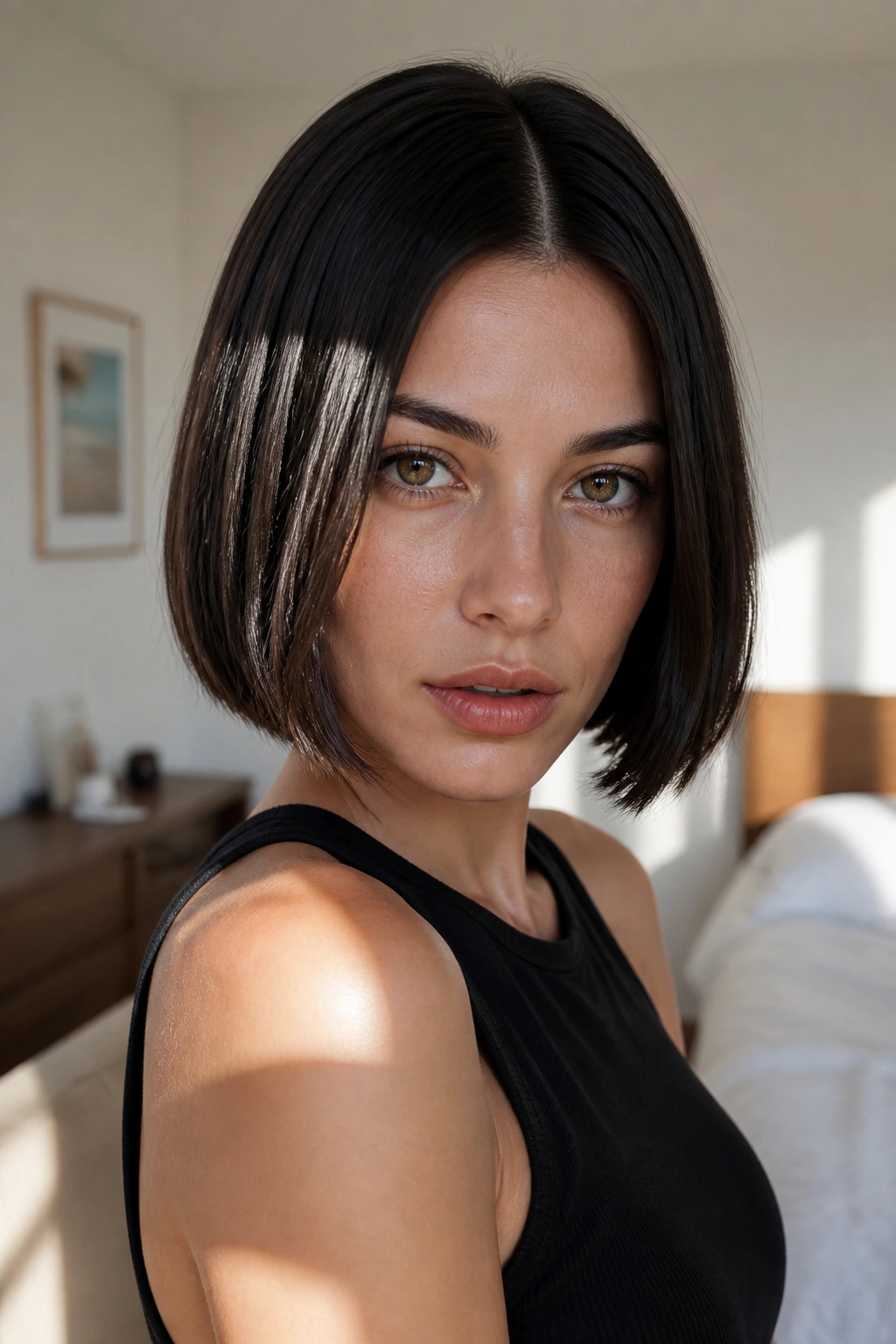
Can a center part make a bob feel severe? Sometimes, yes. But on straight hair, severe is not always the problem people think it is. A center-part bob can look calm, sharp, and almost tailored when the line is clean.
How to Style the Part
Start the part while the hair is damp, not after it dries in the wrong place. Comb it down with a fine-tooth comb, then blow-dry from roots to ends so the front pieces sit flat instead of flipping away from the face. A small amount of lightweight serum on the ends keeps the finish sleek without making it greasy.
This shape works best if your face is fairly symmetrical or if you want a cut that pulls the eye straight down. It is also useful for straight hair that has a little natural bend near the roots, because the center line helps organize the shape.
When to Skip It
If your cowlick fights hard at the front hairline, don’t force it. A center part that separates badly can make the whole style look fussy. A slight offset often solves the problem without changing the haircut itself.
The nice thing is that the bob can stay the same. The part does the heavy lifting.
10. Italian Bob
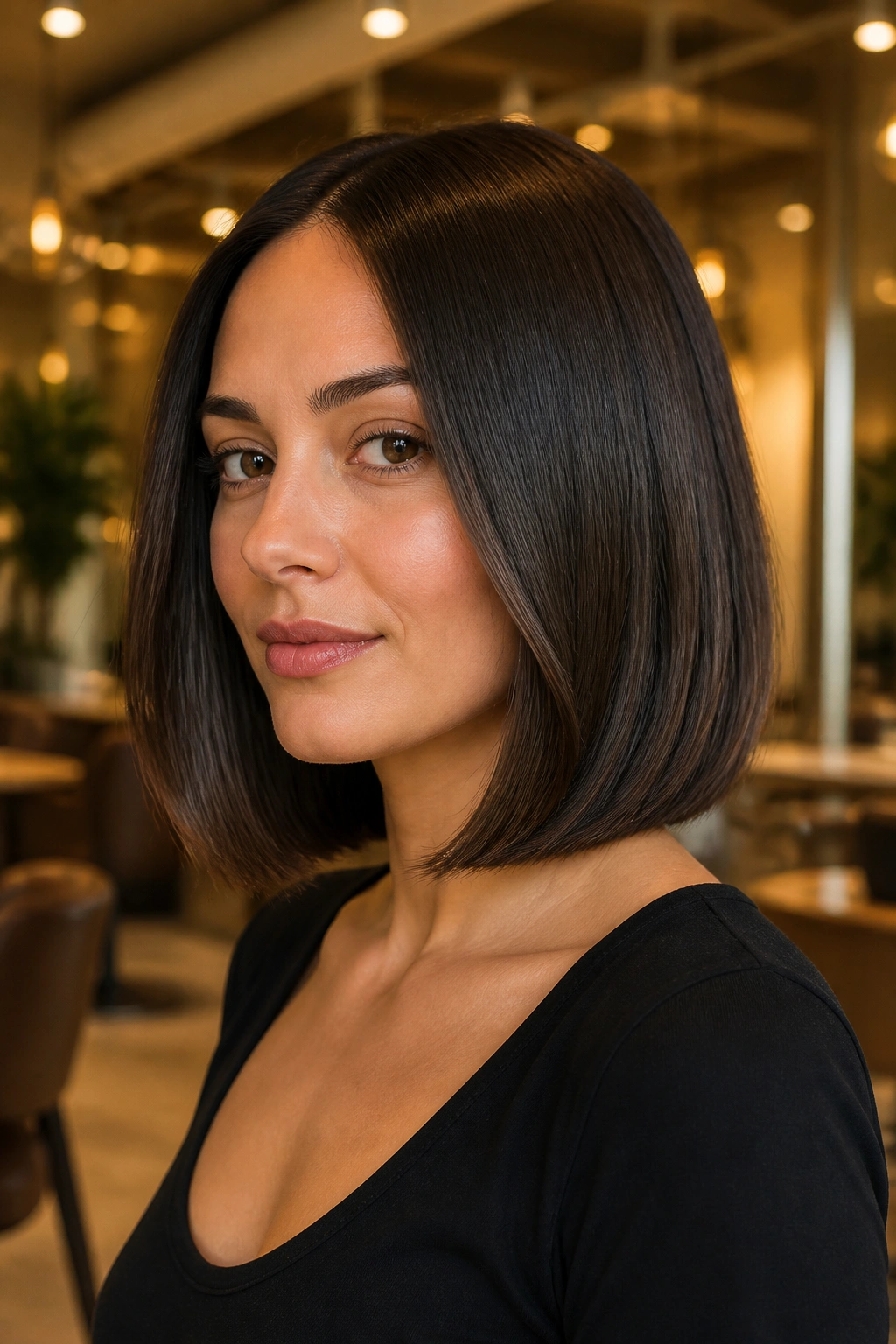
The Italian bob has weight, swing, and a little romance to it, even on straight hair. It usually sits a touch longer than a classic chin-length cut and carries more fullness through the ends, which gives the whole style a plush, expensive feel.
What I like most about it is how un-sterile it looks. A blunt bob can be stunning, but it can also feel a bit severe if the styling is too tight. The Italian version keeps the line clean while leaving enough body in the perimeter to move when you turn your head. That movement matters. Hair should not look nailed down.
Straight hair gives this cut a glossy finish that is hard to fake with texture spray alone. If your hair is thick, the weight helps. If your hair is fine, the cut needs careful shaping so the ends do not collapse into a thin line. A tiny bevel at the bottom keeps it from going flat.
It is one of my favorite options for someone who wants a bob that feels polished but not sterile. There is a softness to it, but it is still sharp where it counts.
11. Micro Bob

A micro bob sounds severe, and sometimes it is. But on straight hair, that short length can look crisp, expensive, and a little bit fearless. The key is precision. If the cut line is off, you see it immediately. If it is right, the result is clean enough to make a plain T-shirt look styled.
What to Ask Your Stylist
- A length that hits around the jaw or just above it
- A square perimeter with tiny internal weight control
- A neckline that is cleaned up carefully, not faded away
- Slight underbeveling if you want the ends to sit inward
This cut works especially well if you want your face to stay front and center. It shows the cheekbones, the jaw, the neck. Nothing gets lost under a lot of hair. That is the appeal.
What to Watch For
If you have a strong nape cowlick or very fast growth around the hairline, the micro bob can lose its shape sooner than a longer cut. It asks for more upkeep. Not a huge amount, but enough to matter.
Still, when it is good, it is good. Clean. Short. Sharp.
12. Long Sleek Lob
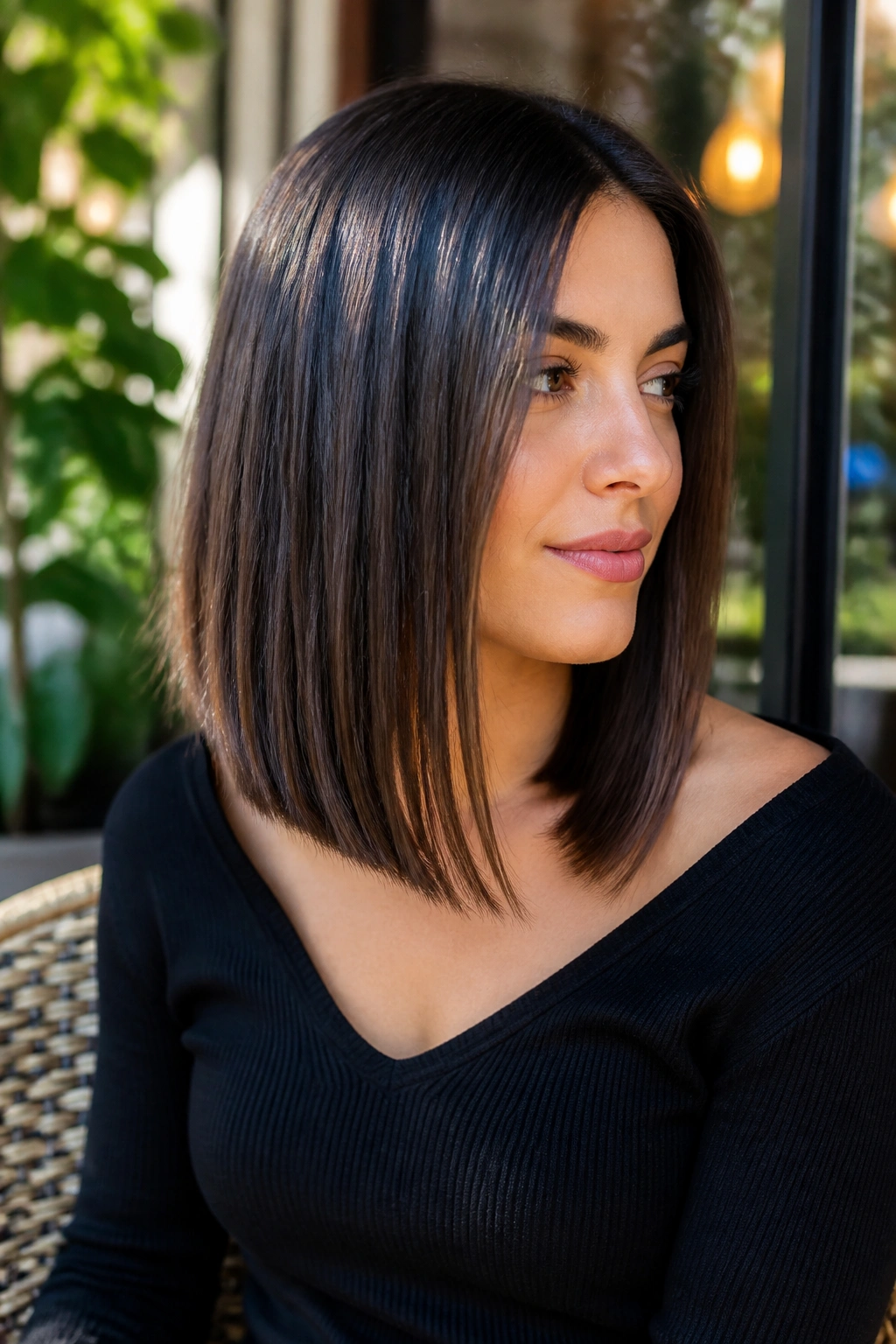
The long sleek lob is the compromise cut that does not look like a compromise. It keeps the bob shape but stretches it out to collarbone or just below, which gives straight hair a smooth fall and enough length to feel versatile. You can wear it down, tuck it, clip it, or twist it up if the day goes sideways.
Unlike a shorter bob, this length is forgiving around the neckline. It is easier to grow out, easier to style, and easier to live with if you are not ready to commit to a chin-length line. That does not make it boring. It makes it practical.
The best version keeps the perimeter clean and avoids too many layers. Straight hair gets messy fast when the ends are overcut. A sleek lob should look intentional from the back, not just from the front. That means checking the way it falls when you turn your head, not only when you face the mirror.
If you work in a place where you want polish without looking severe, this cut is hard to beat. It reads calm. It reads neat. And it does not fight your natural texture, which is half the battle.
13. Hidden-Layer Bob
Hidden layers are the quiet fix for straight hair that feels too heavy but still needs a clean outline. The layers sit inside the haircut, not on the surface, so the outside keeps its bob shape while the inside loses bulk. Smart. Simple. Useful.
What the Layers Actually Do
They let thick straight hair bend a little more at the ends instead of hanging like a block. They also stop the shape from puffing out at the sides, which can happen when a blunt bob gets too wide through the middle. You still keep the line. You just remove some of the armor underneath.
This cut is excellent if your hair feels dense at the nape or around the temples. It can also help if your bob keeps turning into a triangle by the end of the day. Hidden layers break that up without making the surface look choppy.
- Best for medium to thick straight hair
- Ask for internal removal, not surface layering
- Keep the outer perimeter blunt
- Use a paddle brush or large round brush to set the ends
If you like your bob sleek but hate the way heavy hair sits, this is the one to ask about.
14. Inverted Bob
An inverted bob creates movement by making the back shorter and the front longer, and that shift gives straight hair a very clean sense of direction. The line points forward. The neck looks longer. The haircut feels more active than a straight one-length shape.
It is a strong choice if you want your bob to have a little shape even when the styling is minimal. Straight hair can sometimes fall too flat in a classic cut. The inverted line fixes that by building motion into the geometry.
This cut likes careful finishing. A slight bevel at the front keeps the longer pieces from hanging too sharply, and a smooth nape keeps the back from puffing. If you have thick hair, the shorter back helps remove weight. If your hair is fine, the shape needs restraint so the contrast does not get too dramatic.
One thing I appreciate about this style is that it shows from every angle. The front frames the face, and the back keeps the neck area neat. It moves. That is the whole point.
15. Curtain Fringe Bob
Can straight hair wear a curtain fringe without looking fussy? Yes, if the fringe is kept long enough to split cleanly and the bob underneath stays sleek. The combo can look soft around the face while the rest of the cut keeps a crisp outline.
Where the Fringe Should Start
The safest place is somewhere around the bridge of the nose or slightly below it, depending on forehead length and face shape. Too short, and the fringe can look abrupt against a straight bob. Too long, and it stops behaving like a fringe at all.
The bob itself should stay fairly simple. Too many layers around the face will compete with the fringe and make the style feel busy. Straight hair does better when one feature gets to lead.
How Much Face Framing Is Enough
A little. Not a lot.
You want the front pieces to open away from the face just enough to soften the eyes and cheekbones, then blend back into the perimeter. If the shape starts curling inward too hard, the cut loses that clean, straight-haired finish.
This is a nice option if you want your bob to feel less stark without giving up structure.
16. Rounded Bob
A rounded bob is softer than a blunt bob, but it is not fluffy. The goal is a smooth curve that follows the shape of the head and gently turns under at the ends. On straight hair, that can look very polished, almost salon-fresh in the best sense.
The danger here is over-rounding. If the curve is too tight, the cut starts to look dated fast. If it is too flat, there is no reason to choose this shape over a classic blunt bob. The sweet spot is a soft shell of hair that sits close to the head and still has a little bounce at the bottom.
This cut works beautifully on straight hair with a clean hairline and enough density to hold the curve. It can be especially kind to narrow faces because the rounded perimeter adds width without needing layers. It also flatters people who like a softer silhouette but do not want curls or beachy texture.
A round brush, a careful blow-dry, and a light smoothing product are usually enough. You do not need a barrel of styling products. Thank goodness.
17. Tapered Nape Bob
A tapered nape bob keeps the back neat and short around the neck while the sides stay fuller, which is useful if your straight hair gets bulky at the neckline. The cut feels crisp from the side and stays lighter under coats, collars, and scarves.
This is one of those haircuts that looks simple until you grow it out. Then you realize how much work the taper was doing. It removes the thickest part of the shape right where straight hair can start to sit heavy, so the whole style feels cleaner.
Why It Helps Dense Hair
- Cuts down bulk at the nape
- Keeps the silhouette close to the head
- Reduces that boxy look straight hair can get after a few weeks
- Makes the bob easier to tuck behind the ears
What to Ask For at the Salon
Ask the stylist to taper the back gently, not aggressively. You want control, not a stacked pyramid. The sides should still feel connected to the back so the cut looks like one shape, not three separate ideas stitched together.
If your hair grows fast at the neck, this bob can stay neat longer than a blunt one. That alone is reason enough to love it.
18. Precision Bob with a Soft Undercurve
If you want one bob that stays sleek without looking stiff, this is the one I would point to. A precision bob with a soft undercurve keeps the perimeter exact, then bends the ends inward just enough to keep the shape from feeling hard. Straight hair loves that kind of control.
The undercurve is subtle. That matters. You are not trying to create a curl or a helmet shape. You are just giving the ends a quiet turn so the haircut sits close to the face and neck in a flattering way. It works especially well when the hair is glossy and the edges are clean, because the eye reads the line first and the softness second.
This cut is a good fit if you want a polished bob that can survive a long day without collapsing into nothing. It works with a center part, a side part, or a tucked-behind-the-ear look. It also grows out gracefully, which is more useful than people admit. A haircut that still looks decent at week seven saves you time, money, and a fair bit of irritation.
If straight hair has a natural home in any bob shape, it is probably this one: neat, controlled, and just soft enough to keep from feeling severe.
