



A bob with a soft curl has a sneaky advantage: it makes medium-length hair look fuller, lighter, and less fussy all at once. The cut has enough length to move, but not so much that the shape disappears by lunchtime. That matters more than it sounds.
The mistake I see most often is over-curling. Tight ringlets fight the line of the bob and make the whole haircut look older than it should. A loose bend, a brushed wave, or a tucked-under end keeps the shape fresh.
Medium-length hair is the sweet spot here. It can hold a wave without dragging it flat, and it can take face-framing layers without turning into a puffball. A 1-inch iron, a 1.25-inch iron, a round brush, and a good heat protectant can all get you there, but the trick is choosing the kind of movement that suits your face and your texture.
Some versions lean polished. Some look undone. A few depend on bangs, some on a side part, and a few are all about keeping the ends soft instead of curled to the heavens. The shape matters, the finish matters, and the difference between flattering and flat usually comes down to a few inches of length and a little restraint.
1. Chin-Skimming Bob with Loose Bend

This is the bob I recommend when someone wants softness without losing the clean line of a cut. The length sits right around the chin, which gives the curl room to show without turning into a bulky wave pile.
Why It Works
The chin-skimming line puts the eye right where you want it: around the jaw and mouth. That makes the face feel open. It also keeps medium-length hair from sagging, which is a real problem when the ends get too heavy.
A loose bend through the mid-lengths is enough. You do not need full curls from root to tip. In fact, that usually makes the shape look stuffed instead of airy.
- Best for straight to slightly wavy hair.
- A 1-inch curling iron gives enough bend without making the curl tight.
- Leave the last 1 to 2 inches of the ends out for a softer finish.
- Tuck one side behind the ear if you want the jawline to show more.
My favorite trick: curl the front pieces away from the face, then alternate directions through the back. It keeps the bob from looking too matched, which is where the stiffness creeps in.
2. Collarbone Bob with Soft Hollywood Waves
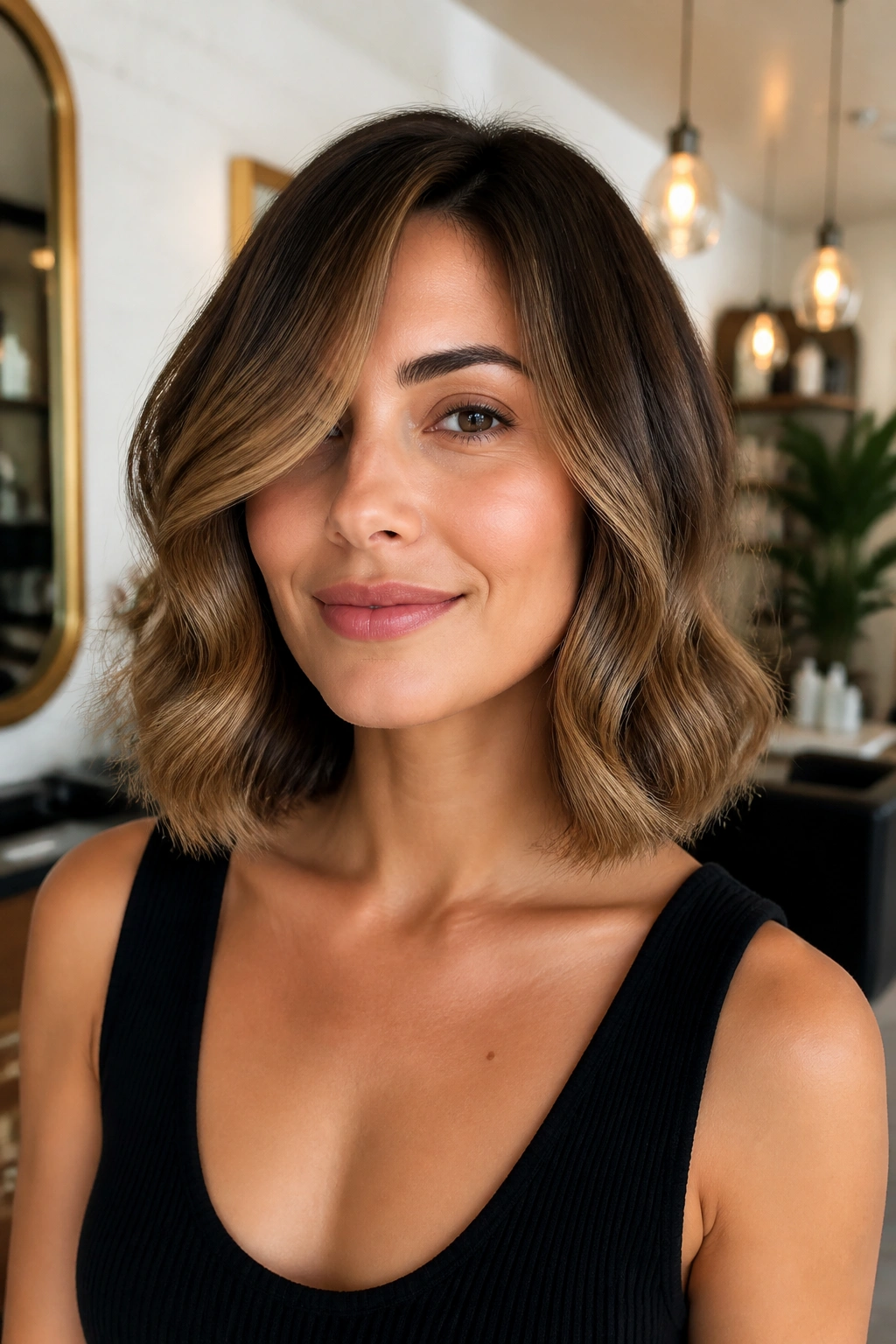
The collarbone bob is the most forgiving shape on this list. It gives you enough length to brush the waves out without losing the haircut’s structure, and that matters if your hair tends to frizz or puff up.
The wave pattern should start around the cheekbone, not at the scalp. That’s the part most people miss. If you start too high, the style gets old-school fast. If you keep the root area smooth and let the curve happen lower down, the result feels cleaner and more modern.
This cut works especially well on thicker hair because the length helps the curl fall with some weight. A 1.25-inch iron or a large barrel wand is usually better than a small one. After curling, run a paddle brush through the ends and stop before you erase all the shape.
A tiny bit of serum on the mid-lengths helps. Not the roots. Never the roots.
3. Curled Bob with Curtain Bangs

Can curtain bangs make a bob feel softer without stealing the show? Yes, if you keep the fringe light and let the rest of the cut do its job.
Curtain bangs are useful because they break up the forehead area and guide the eye down into the curl pattern. They also take a medium-length bob out of that blunt, blocky zone that can happen when all the weight sits at the same line. The key is bend, not curl. You want the fringe to curve back from the cheekbones, not form a little horseshoe on its own.
How to Style the Fringe
Use a round brush or a small roller while the bangs are still warm from the blow-dryer. Direct the hair away from the face, then split the fringe with your fingers and let it settle. That split matters. It keeps the front from looking helmet-like.
A curled bob with curtain bangs is lovely on long faces, but it can also work on square faces if the bangs are cut a little longer at the sides. Short, dense curtain bangs are a different story. Those can crowd the face and make the bob feel busier than it needs to be.
4. French Bob with Airy, Undone Ends

If you’ve ever cut your hair and immediately wished it felt lighter, this is the shape to look at. The French bob usually sits a touch shorter and carries a soft, easy edge that looks better when it is a little imperfect.
The magic is in the ends. They should not clamp under in a hard line, and they should not flip out like you’re trying to prove something. The curve is barely there, which is exactly why the style works. It gives medium-length hair shape without the heavy styling that some curled bobs demand.
- Keep the perimeter soft, not razor-sharp.
- Ask for a bit of internal texture near the ends.
- Use a small dab of cream, not a heavy wax.
- Let a few pieces fall forward around the cheekbones.
This one is especially good if you like your hair to move when you walk. It feels a little undone in the best way. No effort theater. Just good shape.
5. Rounded Bob with a Tucked-Under Finish
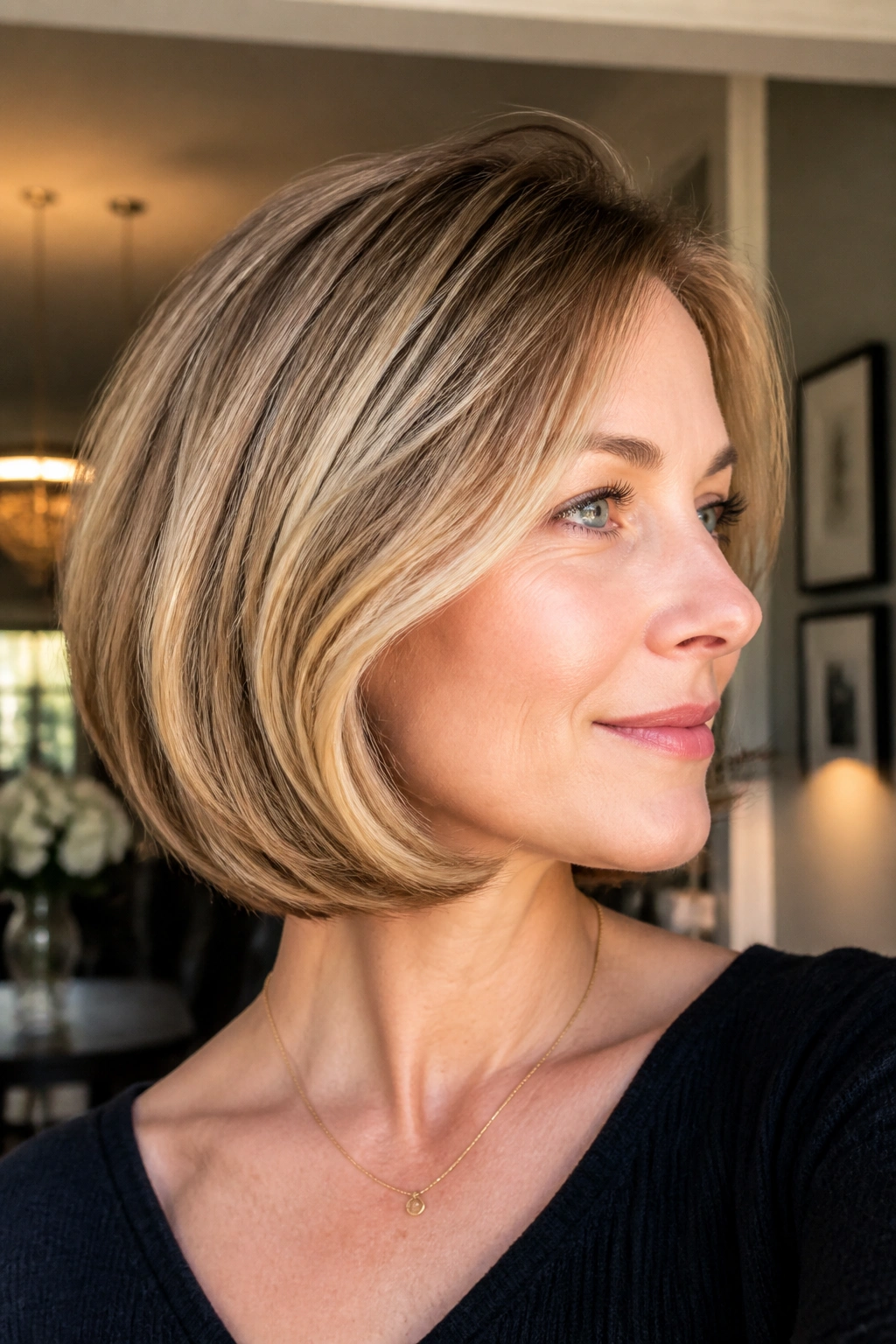
A rounded bob is the haircut that quietly saves fine or flat hair. It creates the illusion of body by curving the outline inward, which makes the whole head of hair look fuller without needing a ton of product.
The trick is to keep the crown smooth and the outline soft. A round brush helps during the blow-dry, but the real payoff comes from the final tuck under at the ends. That little inward turn gives the bob a neat finish that looks polished even when the rest of the hair has a gentle lift.
The worst thing you can do here is over-layer it. Too many layers around the top can make the silhouette collapse, and then the rounded shape turns wispy. Keep the weight in the lower half of the cut and let the curl happen at the perimeter.
A lightweight shine cream on the mid-lengths is enough. You want movement, not grease. And if your hair is naturally straight, this is one of those styles that looks better with a bit of control than with a “washed and hoped for the best” approach.
6. Side-Part Bob with Sweeping Face Framing

Unlike a center part, a side part gives the bob a built-in lift before you even touch a curling iron. It shifts the weight off the face, opens one eye line more than the other, and gives the whole cut a little swing.
That matters if your hair tends to lie flat at the roots. A deep side part can make medium-length hair look fuller on top and softer around the jaw. It also gives the curled pieces a place to land, which keeps the style from spreading out too evenly on both sides.
This is the version I’d point to for round or heart-shaped faces. The sweep across the forehead draws the face out a bit, and the side framing keeps the cheek area from feeling too wide. If you already have strong cheekbones, even better. The part helps show them off without making the cut feel severe.
Best move: place the part above the arch of your eyebrow, not dead at the corner. That small shift gives the bob a much better angle.
7. Layered Bob with Ribbon Curls

Ribbon curls are the cleanest way to give a layered bob movement without making it messy. The curl falls in a smooth, loose spiral, then softens as it’s brushed or finger-combed, which leaves the hair looking shaped rather than styled to death.
What Makes It Different
The layers do the heavy lifting here. They remove weight from the inside of the cut, so the curl can spring without getting stuck under the rest of the hair. That’s why this version works well on medium-thick hair that needs release at the ends.
Use a 1-inch iron and wrap each section in the same direction for one side of the head, then switch on the other side. Leave the ends out if you want the curl to stay loose. If you wrap all the way to the bottom, the style gets too bouncy and starts to look formal.
- Best with shoulder-grazing length.
- Needs internal layers, not choppy surface layers.
- A curl cream helps the ribbon shape hold.
- Finger-separate after cooling; do not brush it out aggressively.
One thing to remember: let the curls cool fully before you touch them. Warm hair drops fast, and that is how a pretty curl turns into a vague wave by lunch.
8. Textured Bob with Piecey Bends
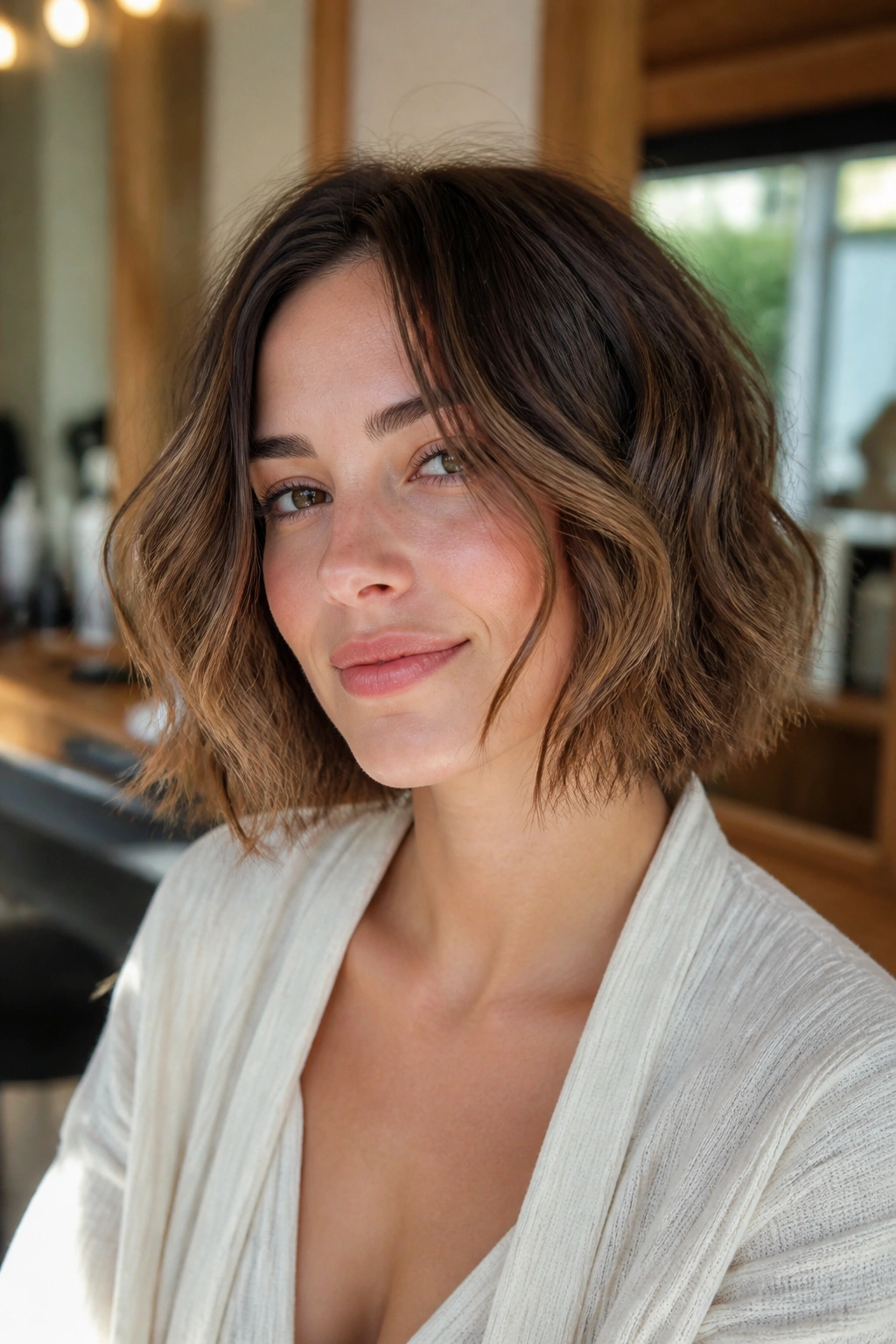
This is the bob for people who do not want everything to match. A little irregularity makes it better. The ends look lived-in, the bends fall in different places, and the haircut feels relaxed instead of posed.
The texture works because the eye reads variation as softness. Some pieces curve more. Some stay straighter. Some sit near the cheekbone and some graze the neck. That unevenness is the point, not a mistake to fix. If your hair is thick, this shape keeps it from turning into one solid mass. If your hair is finer, a bit of texture spray can make the outline feel fuller.
I’d keep the styling products light. A salt spray can be useful, but too much will make the bob dry and grabby. Better to start with a heat protectant, add a small wave with a flat iron or wand, then break the ends apart with your fingers.
This is the bob I’d wear on a busy day. It forgives a lot.
9. Inverted Bob with Soft Graduation

Can an inverted bob still look soft? Absolutely, if the graduation is handled with a light hand.
The short back gives the cut lift, while the longer front pieces keep it from feeling sharp. That combination is useful on medium-length hair because it adds shape without making the outline heavy. The secret is not stacking the back too high. Once the back gets too short and too bulky, the silhouette starts to look dated fast.
How to Keep the Back Soft
Ask for a gentle angle instead of a steep one. The back should hug the head, not pop away from it. A few loose bends through the front sections help carry that softness forward so the cut does not end at the nape like a hard edge.
This shape is a smart pick if you want your neck to look longer or your jawline to feel a little cleaner. It is also good for fine hair that needs a shape with built-in lift. Just do not overdo the curl. A soft bend at the front is enough to finish the idea.
10. Deep Side-Part Bob with Brushed-Out Waves

A deep side part does something useful the second you make it. It creates volume at the root, yes, but it also makes the curled shape fall in a more dramatic line across the face.
The best version of this bob uses broad waves that get brushed out after cooling. That’s the whole point. You want the wave to look soft and wide, not like a row of tight loops. On medium-length hair, this creates a pretty frame without making the ends feel frizzy or overdone.
- Start the part above the outer edge of the eyebrow.
- Curl away from the face on the heavier side.
- Keep the lighter side a little sleeker near the temple.
- Finish with a flexible spray, not a crunchy one.
A deep side-part bob is especially good when you want the style to feel a touch more dressed up. It can go to dinner without changing anything. It can also survive a long workday if you keep the roots lifted and the ends touched with just enough movement.
11. Shoulder-Grazing Bob with Invisible Layers

The shoulder-grazing bob is the one I recommend to people who want movement but hate the look of obvious layers. The cut feels clean at first glance, then you notice the way it moves when the hair shifts. That’s the appeal.
Invisible layers sit inside the shape instead of sitting on top of it. They remove weight without shouting about it. For medium-length hair, that means the curl can fall with a little air between the pieces instead of building into one blocky curtain. It is a subtle difference, but it shows.
This version tends to work best when the ends are curled under just a touch. Nothing dramatic. A brushed bend or a loose S-wave is enough. If you have thick hair, ask for weight removal underneath so the ends do not look blunt and puffy at the same time. If your hair is fine, keep the layers soft and long.
Not flashy. Better than flashy.
12. Blunt Bob with Diffused Wave
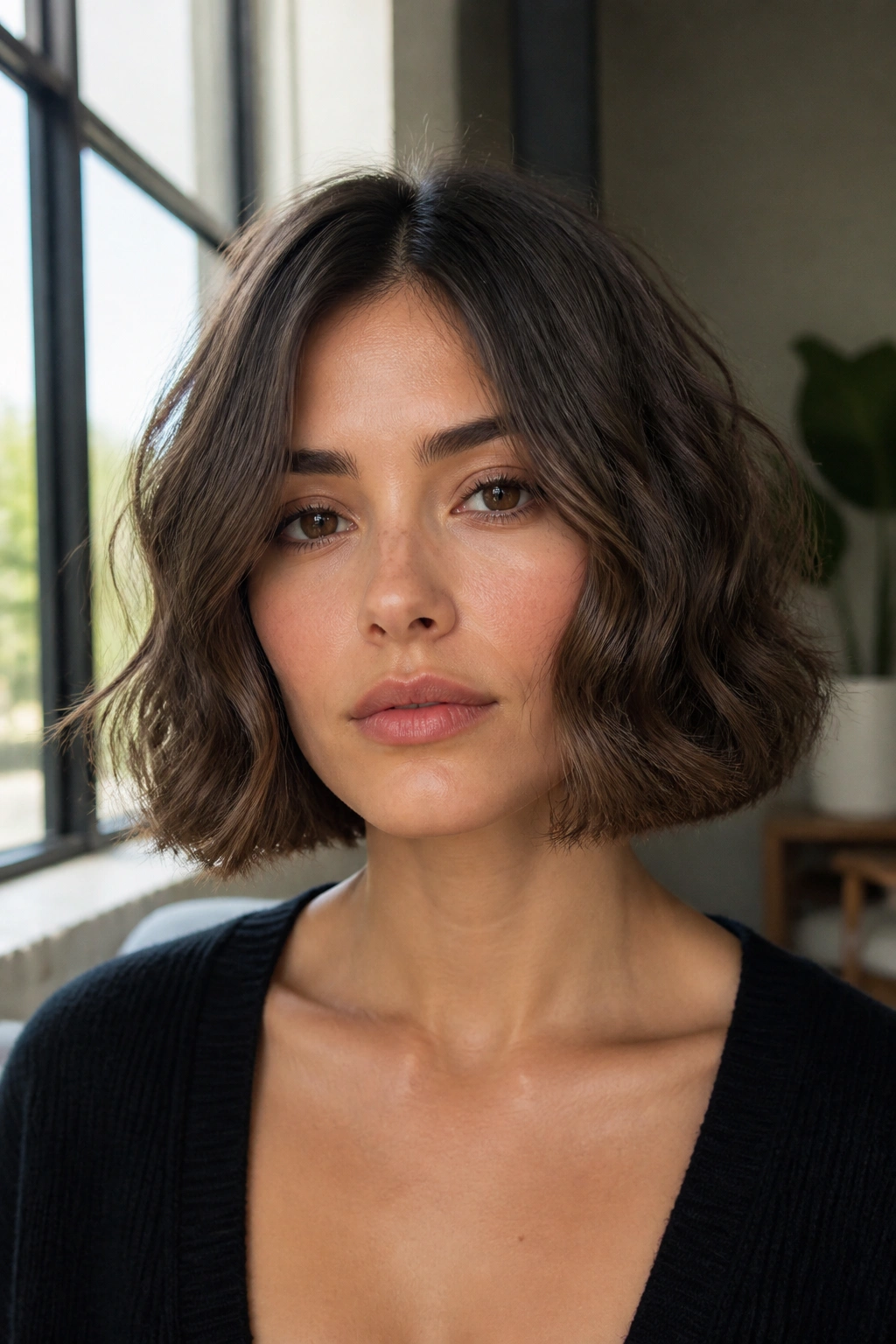
Unlike a beachy shag, this bob keeps an edge. That’s the point. The line stays clear, but the wave takes the hardness off it.
A blunt bob with a diffused wave is one of the smartest choices for straight hair because it adds movement without sacrificing the shape. The wave should look like it happened naturally after a good blow-dry, not like you wrapped each section around a wand with military precision. A 1.5-inch iron or even a flat iron bend can do the job if you keep the curl broad.
This style also works when your hair is fine and you need the bottom line to look thicker. A blunt edge gives the illusion of density, while the loose wave stops it from feeling too severe. That balance is the whole game.
If you like a cleaner finish, this is a very good place to land. It feels controlled, but not stiff. There’s a difference. You can see it right away.
13. Crown-Volume Bob with Tousled Ends
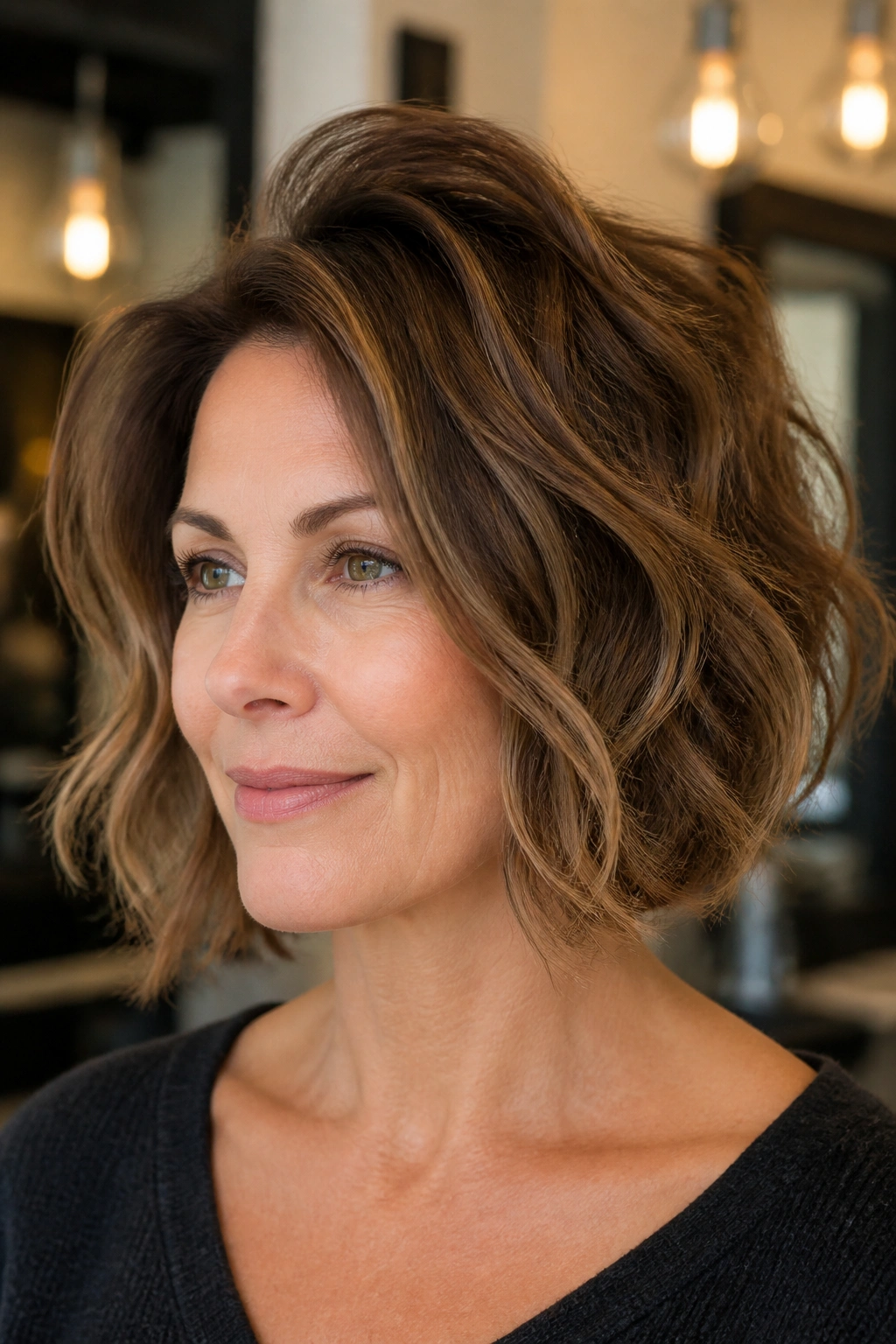
A little lift at the crown changes everything. Without it, a soft curled bob can sink into the sides and look flat by noon. With it, the haircut feels fuller and more alive.
How It Avoids Helmet Hair
The crown should rise, not puff. That means root lift at the blow-dry stage, not later with a teasing comb that leaves the top rough. Use a lightweight mousse near the roots, then direct the hair upward while drying with a round brush or by lifting the section with your fingers.
The ends should stay tousled and loose. If you curl them too neatly, the top volume and the bottom curve start fighting each other. That’s a bad look. Keep the bottom soft, break the wave with your hands, and stop before the whole head turns into one shape.
- Best for flat roots.
- Works well on medium-thick hair.
- Needs a flexible spray at the end.
- Looks better with a side or off-center part.
The crown matters more than most people think. It keeps the bob from collapsing into your head.
14. Feathered Bob with Bouncy S-Curves
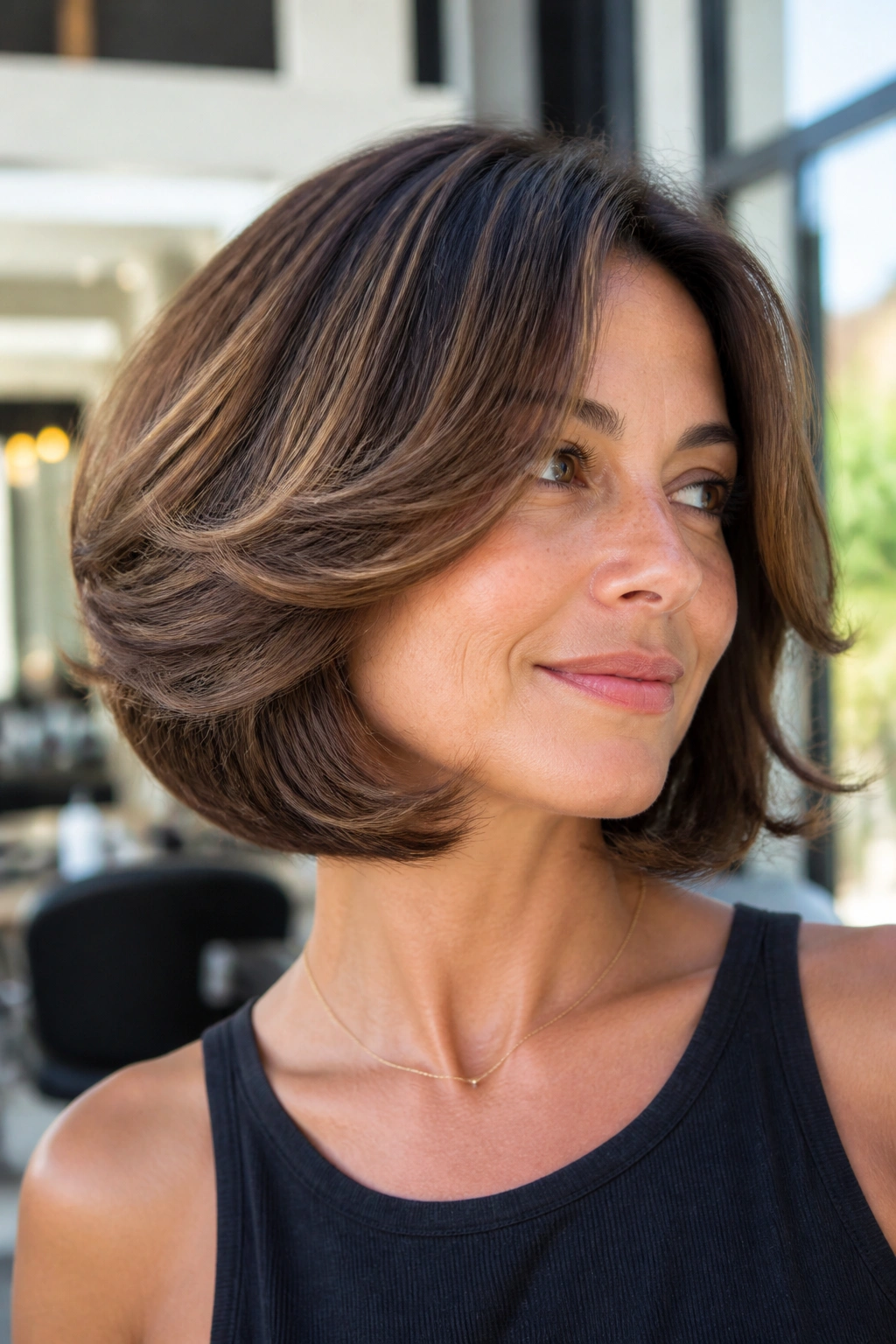
A feathered bob gives medium-length hair a lighter edge, and that matters if the ends feel heavy after a fresh cut. The feathering takes away bulk around the perimeter and lets the curl bend in a softer, more open way.
The bouncy S-curve is what gives this style its movement. It is not a tight wave, and it is not a flip. It sits between the two, which is why it feels easy on the eyes. A vent brush during the blow-dry helps lift the ends, and a medium barrel iron can shape just the sections that need help.
This cut is strong on hair that is neither too fine nor too coarse. Fine hair can lose the feathered effect if it is over-layered, and very coarse hair may need more smoothing at the ends. Medium texture is the sweet spot.
I like this one because it never looks frozen in place. It can move, bend, and settle without losing the outline. That is harder to get than it sounds.
15. Air-Dried Bob with Natural Curl Pattern

Can a soft curled bob work without hot tools? Yes, if your hair already has some wave or curl in it and you respect the pattern instead of fighting it.
The air-dried version is all about shape support. You start with leave-in conditioner, add a curl cream or light mousse, and scrunch gently from the ends upward. Then you leave it alone. That part is not optional. Touching the hair while it dries breaks the curl and makes the surface frizzier than it needs to be.
A microfiber towel helps, and so does a loose clip at the crown if the roots tend to dry flat. If your bob is medium length, the ends will usually dry with a nicer bend than a shorter cut, which gives you a soft finish without much work. The haircut still needs to be cut with movement in mind, though. A blunt, one-length bob will not magically curl just because you want it to.
How to Make It Dry Cleanly
Pat, do not rub. Scrunch once, then leave it. If you need more lift, flip the part after it dries. That tiny switch can wake the whole cut up.
Final Thoughts
Soft curled bobs work because they give medium-length hair a shape you can actually live with. Not too polished. Not too messy. The line stays clear, and the curl does the rest.
If you’re choosing between styles, start with your hair’s natural behavior. Flat roots need lift. Thick hair needs release. Straight hair usually likes a blunt edge with a loose wave, while wavy hair can carry more texture without looking overdone.
One last thing: ask for the cut you plan to wear most days, not the one you think looks best in a single photo. That small shift saves a lot of frustration, and it usually leads to a bob that feels easier from the first wash onward.
