



The best short hairstyles for plus size women over 40 do one thing first: they shape the head, not the body. That sounds obvious, but plenty of haircuts miss the point and end up adding width where you wanted movement, or flattening the crown where you needed a little lift.
Shape matters more than length. A strong short cut can make your cheekbones look cleaner, your neck look longer, and your whole face feel more awake without turning the style into something fussy or overworked. A bad one does the opposite. It sits there. Heavy. Boxy. Flat at the top and too wide at the sides.
Hair changes too, and not always in the ways people expect. It can get finer at the temples, coarser through the ends, or lose a bit of bend in one spot while keeping it somewhere else. That is why the smartest cuts are the ones that work with texture instead of fighting it. They have a plan. A pixie with a soft fringe, a bob with a clean nape, a shag with just enough air through the ends — those are not random choices. They are shape choices.
So I’m not interested in old, lazy advice about “just keep it long.” Long hair is not a rule, and short hair is not a risk. The right short cut can look sharper, lighter, and more expensive in the best sense of the word. Here are 18 short styles that do that job with a little style and a lot of common sense.
1. Textured Pixie With a Side Fringe
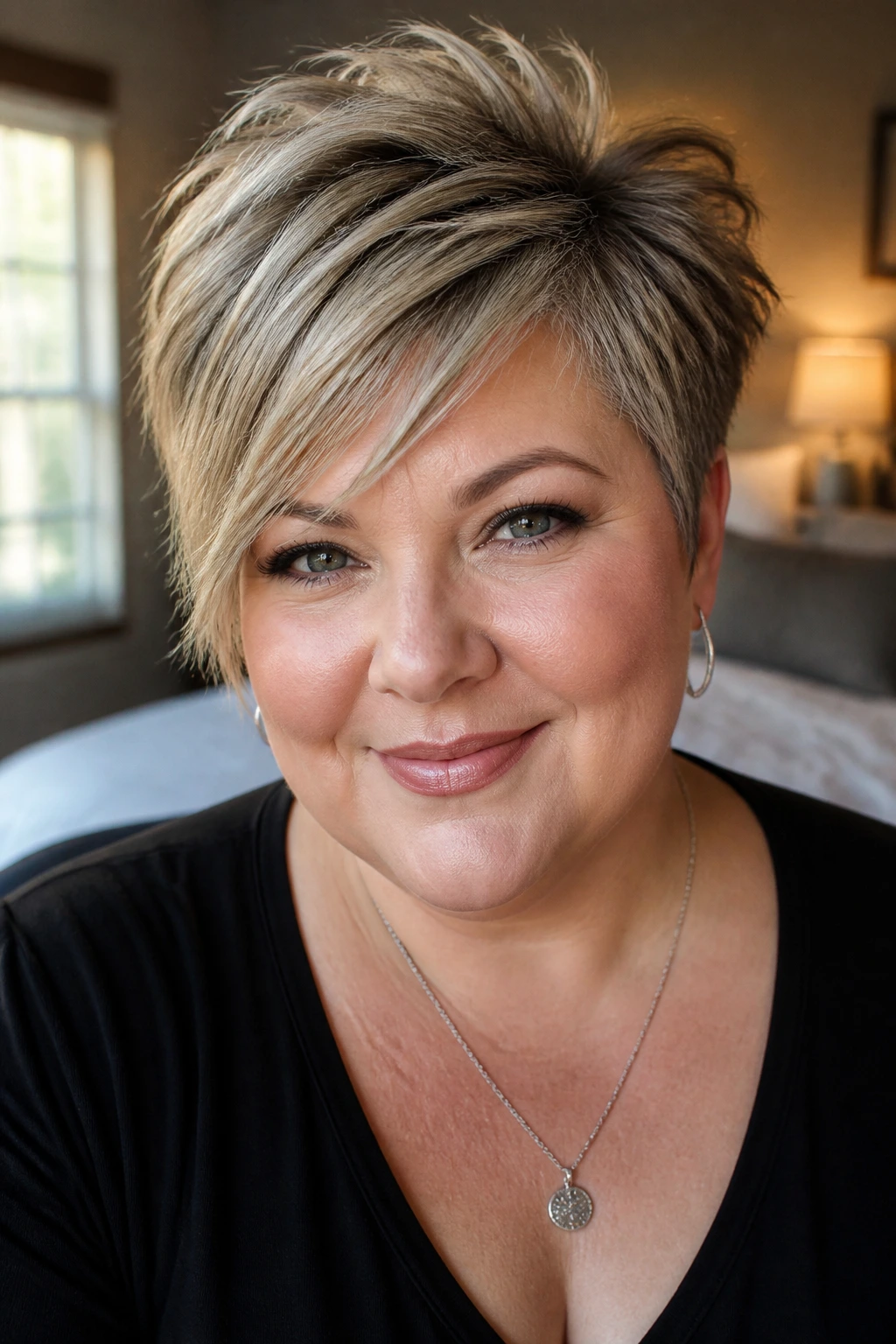
A textured pixie with a side fringe is one of those cuts that looks small on paper and surprisingly full in real life. The trick is the contrast: close around the ears, a little lift through the crown, and a longer fringe that sweeps diagonally across the forehead. That diagonal line matters. It pulls the eye upward and breaks up width in a way that feels natural, not forced.
Why It Flatters So Well
If your hair tends to go flat at the top, this cut gives it some backbone. Ask for 2 to 3 inches on top, soft tapering at the sides, and a fringe that lands somewhere between the eyebrow and the top of the cheekbone. That gives you enough length to tuck, sweep, or piece out with a tiny bit of paste.
- Best for fine to medium hair.
- Works well with glasses.
- Needs a trim about every 4 to 6 weeks to keep the shape tidy.
- Style with a pea-sized amount of matte cream, not half the jar.
My favorite part: the fringe softens the forehead without hiding your face. That balance is hard to beat.
2. Chin-Length French Bob With a Soft Bend
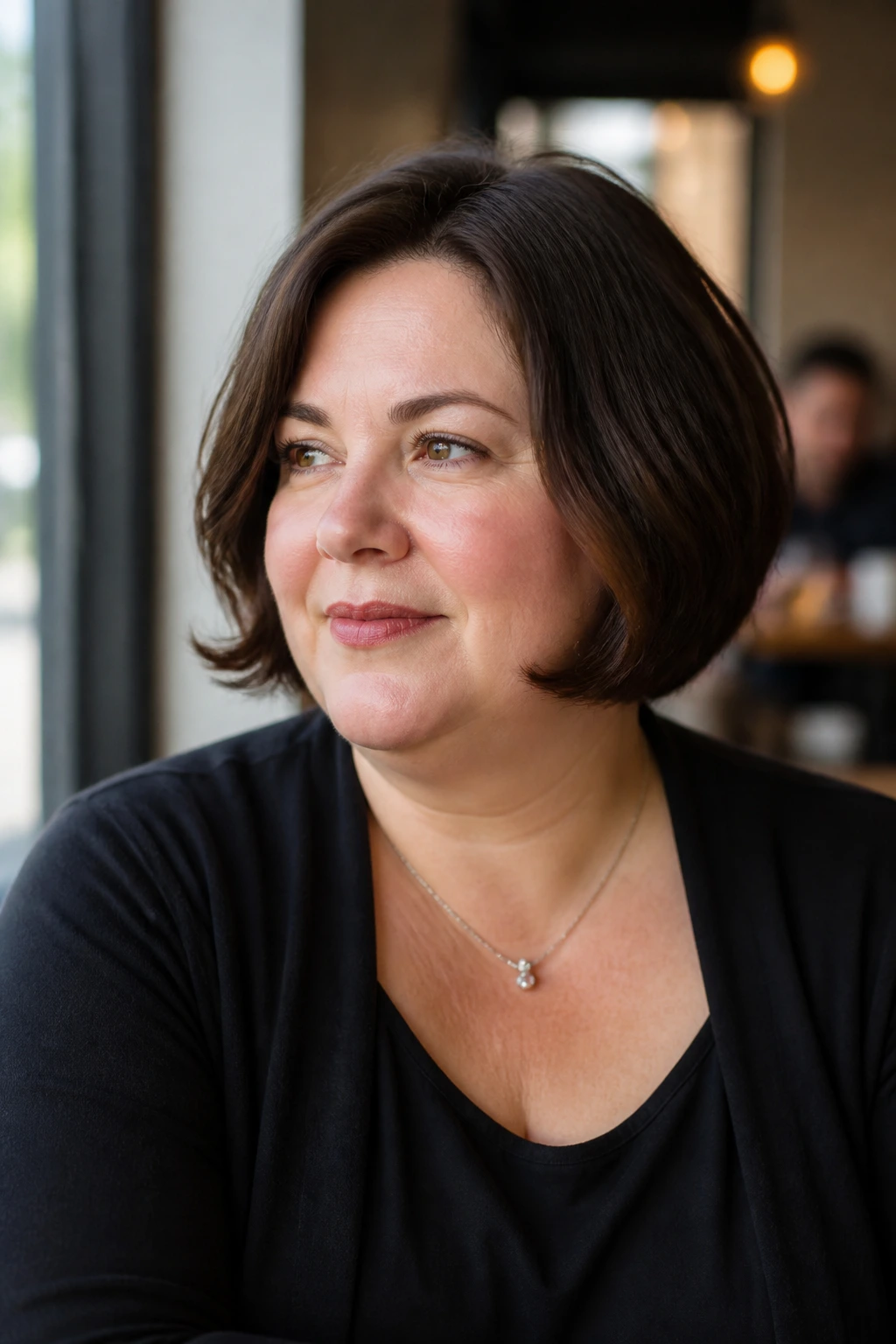
A chin-length French bob is the haircut I reach for when somebody wants polish without stiffness. It sits right at the jaw, sometimes a hair below it, and the ends are usually softened rather than cut into a hard shelf. That small bend at the bottom is what keeps it from feeling severe.
The cut works because it frames the face without crowding it. If you carry fullness through the cheeks or jaw, a clean line at the chin can make everything look more intentional. It also plays nicely with earrings, necklines, and glasses, which sounds minor until you actually wear the cut every day and realize those details matter a lot.
I like this one best when it is blow-dried with a 1-inch round brush and a touch of smoothing cream. Not sleek like a helmet. Just tidy, with a little curve under the ends. If your hair is naturally wavy, let some of that wave stay in place. The result feels French in the good sense — unfussy, a little tailored, and not trying too hard.
3. Soft Shag With Curtain Bangs
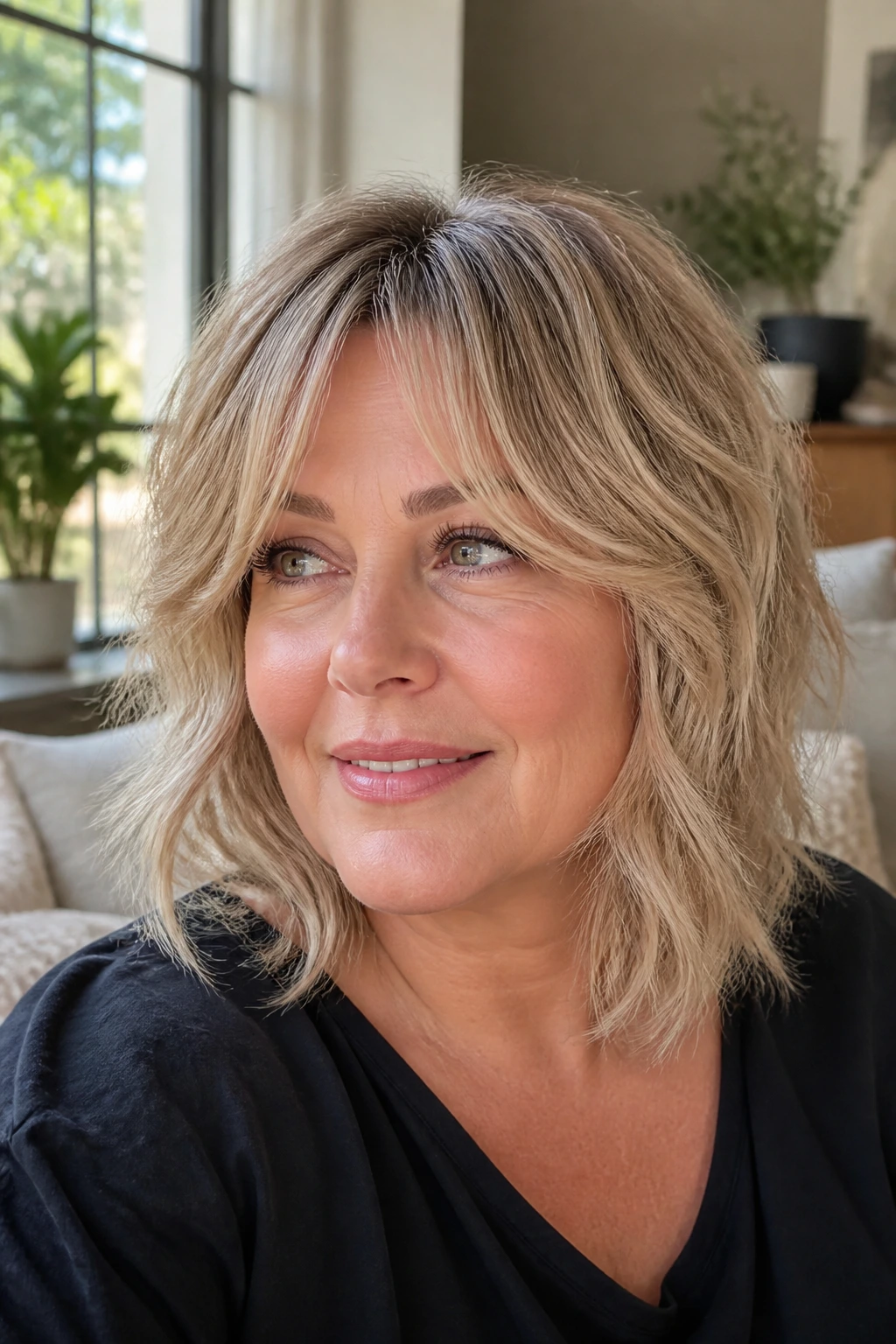
Why do curtain bangs keep showing up with short cuts? Because they work. They split the face vertically, soften the forehead, and give the whole haircut movement near the cheekbones without building bulk at the widest point of the face. That is a smart trade.
A soft shag keeps the top light and the ends feathered, which matters if your hair has any natural wave at all. The goal is not a choppy mess. The goal is a cut with shape inside it, so the hair moves when you turn your head instead of sitting in one fixed block. That movement is what keeps the style from looking heavy.
How to Style It
Use a light mousse on damp hair, then dry with a diffuser or a round brush depending on your texture. The bangs should fall away from the center, not cling to the middle of the forehead. If they separate a little at the ends, that is fine. Better than perfect, honestly.
This is one of the easiest cuts to wear if you like hair that looks a bit undone on purpose.
4. Stacked Bob With a Lifted Nape
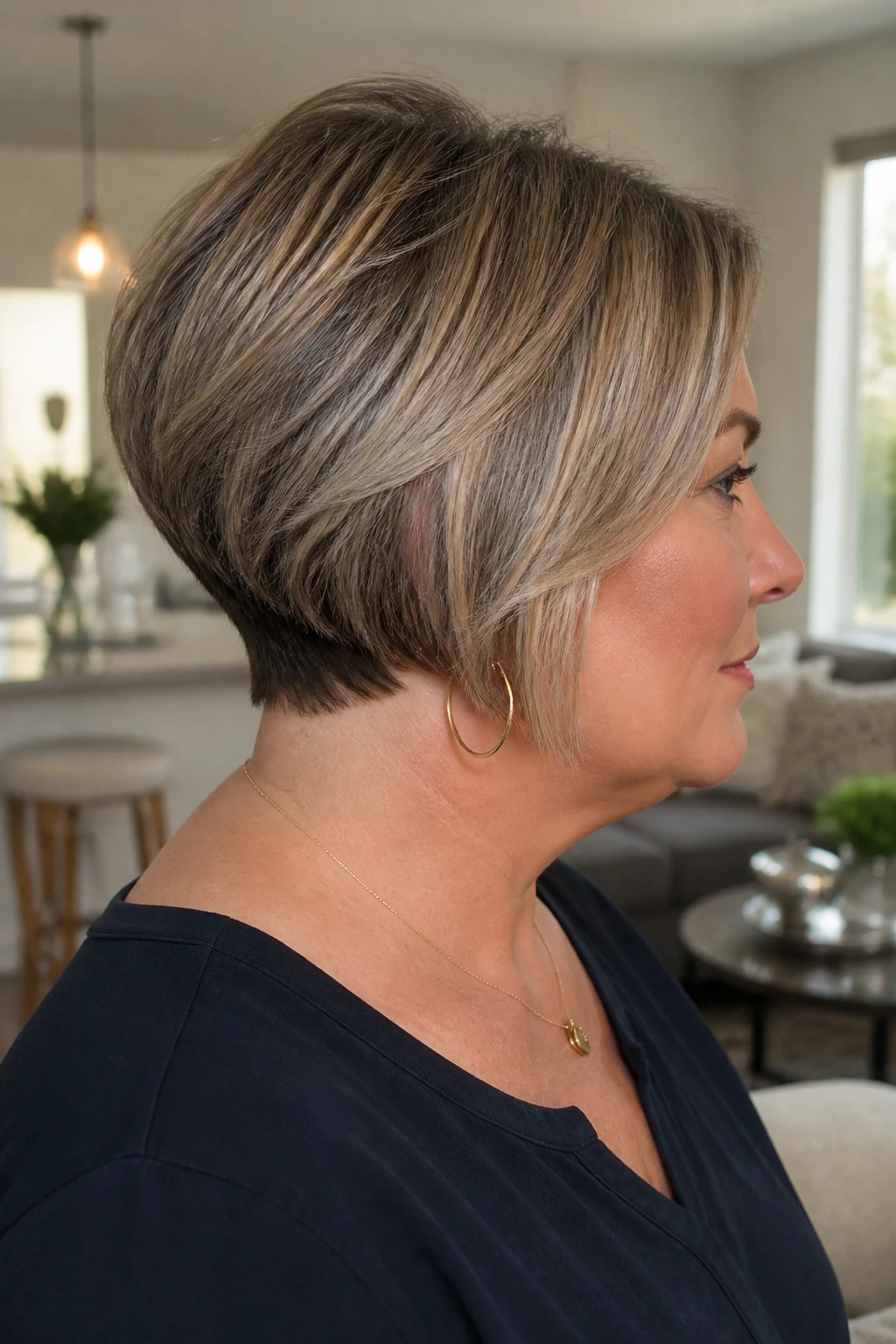
If your hair collapses flat at the back by lunch, this one will feel like a small miracle. A stacked bob builds height through the nape with short, graduated layers underneath, then lets the outer length fall smoothly over that structure. The back looks neat. The top gets a little rise. The silhouette does the work for you.
The nice thing about a stacked bob is that it creates shape without asking you to tease your roots or load up on spray. That matters if you want something that still looks sane at 4 p.m. The line can sit at the jaw or just above it, depending on how much length you want in the front.
- Ask your stylist for graduation at the nape, not choppy layers everywhere.
- Keep the front slightly longer to soften the profile.
- Blow-dry with a small round brush for the cleanest finish.
- Skip heavy oils at the roots; they collapse the lift fast.
A good stacked bob feels tailored from the side and tidy from behind. That’s the real charm. And yes, the back matters.
5. Asymmetrical Bob With a Longer Front
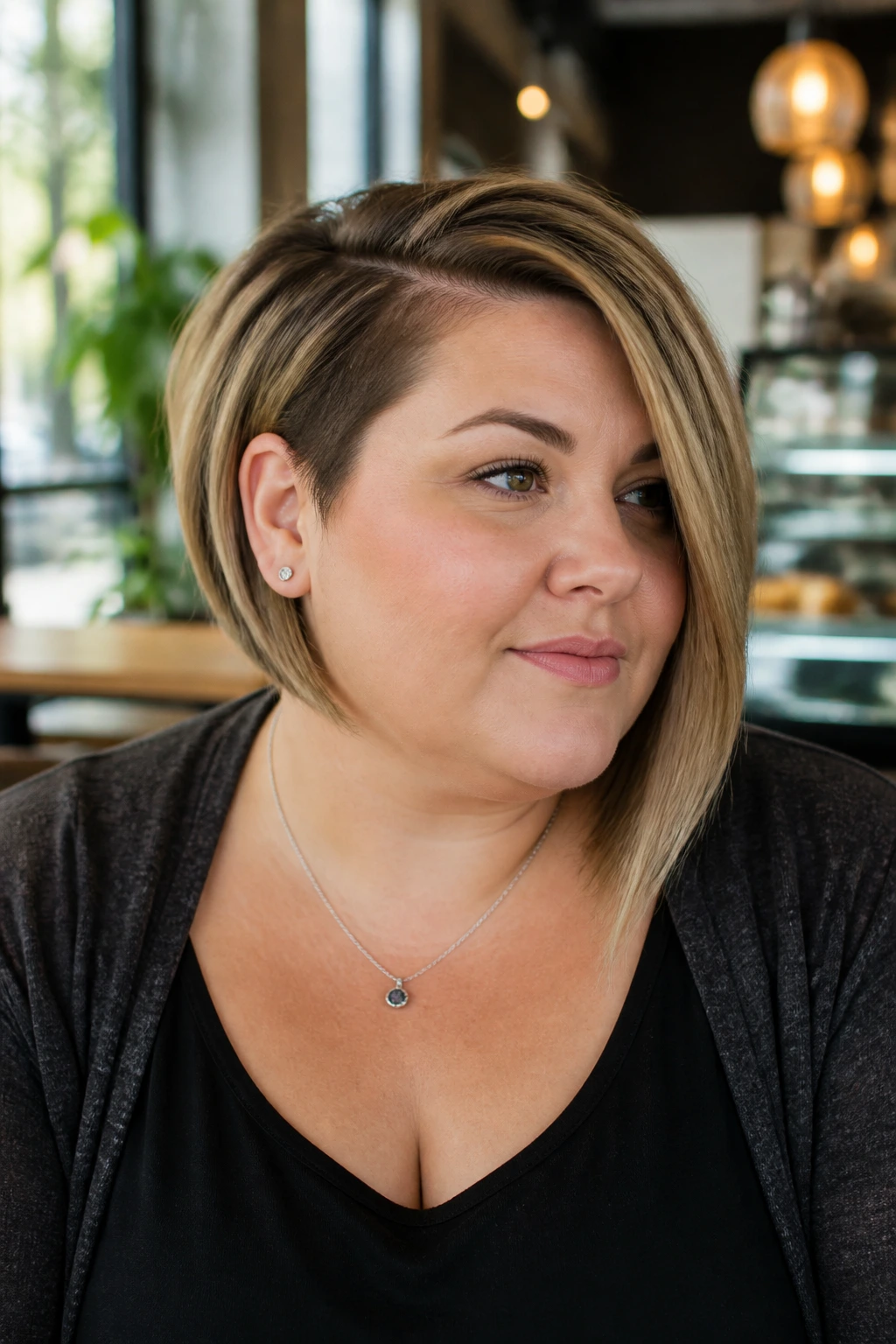
A longer front line changes everything. An asymmetrical bob gives you one side that lands a little lower than the other, which creates a diagonal path across the face and keeps the style from reading as broad or boxy. It looks modern without being loud about it.
I like this cut for women who want their hair to feel a little sharper. The longer side can skim the jaw or graze the top of the neck, while the shorter side keeps the outline neat. That contrast adds motion even when the hair is straight. If you have fuller cheeks, it can draw the eye downward and across instead of straight out.
The key is moderation. A dramatic angle can be fun, but it can also feel dated fast if the contrast is too extreme. Keep the difference subtle — maybe 1 to 2 inches between sides — and ask for soft beveling at the ends. Blow it smooth, then tuck the shorter side behind one ear. That little bit of asymmetry is the whole point.
6. Tapered Crop With Crown Volume

A tapered crop is the bluntest answer to flat hair, and I mean that in a good way. Unlike a classic pixie, this one leaves a little more lift through the top while tapering the sides and nape closely enough to keep the head shape neat. It is clean. It is efficient. It does not waste time.
This cut is especially useful if your hair has thinned at the crown or if you wear glasses and want the hair to sit in a controlled way around the frames. The top can be left long enough to sweep, spike softly, or brush forward with texture, while the sides stay close and light. That shape keeps the eye moving upward.
A small root-lift spray, a round brush, and a fast blow-dry are usually enough. If you want more softness, ask for point-cut ends rather than blunt ones. A tapered crop can look tough if it is cut too hard. It can also look chic, which is the better version.
7. Curly Rounded Bob
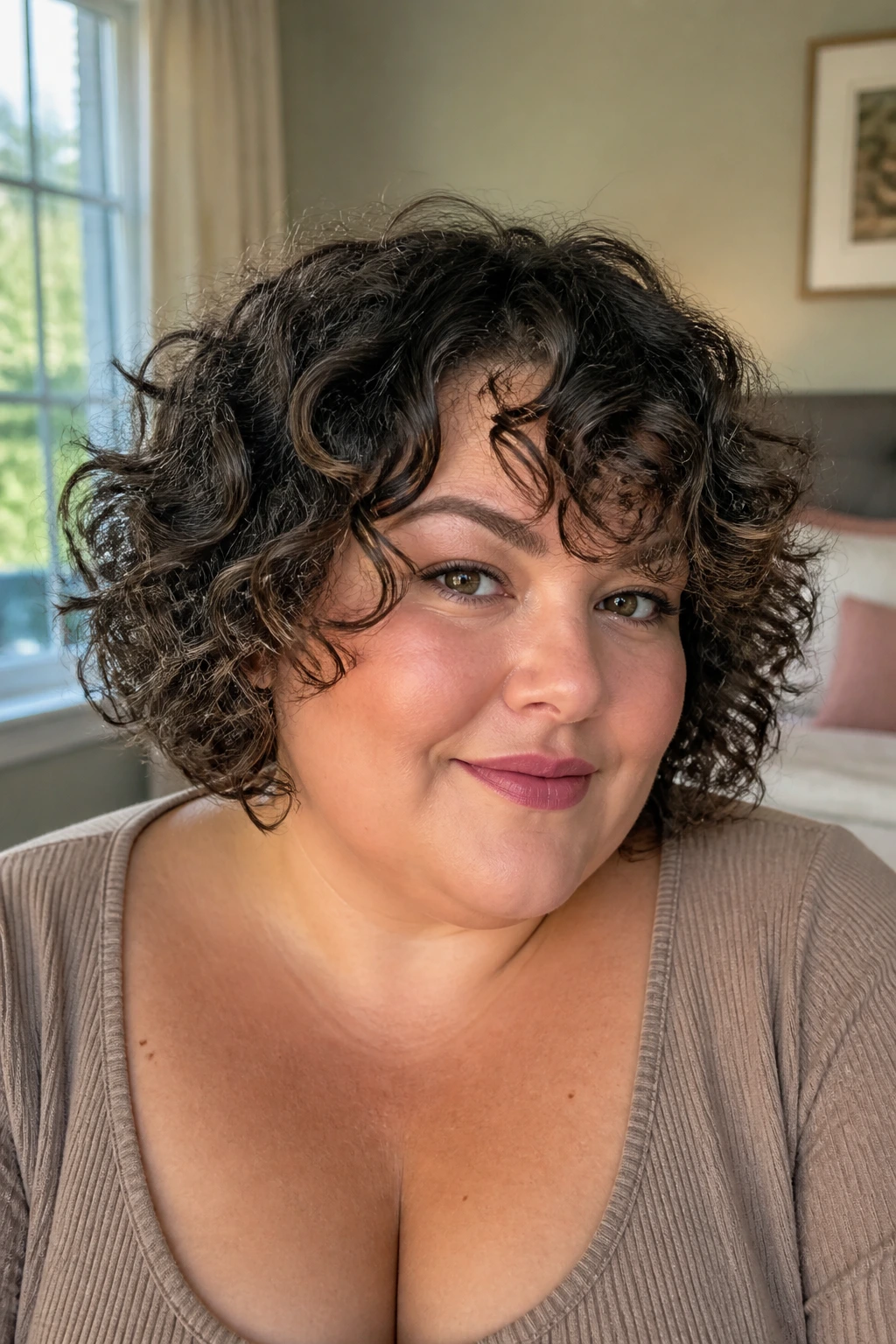
A curly bob should never be forced into a triangle. Never. The best version is rounded through the silhouette, with enough shape at the sides and top to keep the curls from ballooning in odd places. If you have natural curls or strong waves, this cut can be a gift because it lets the texture do the heavy lifting.
What Makes It Different
The shape is cut to follow the curl pattern, often when the hair is dry so the stylist can see where it actually falls. That matters. Wet curls lie. Dry curls tell the truth. The length usually sits around the chin or a touch below it, with layers placed to keep the bottom from getting bulky.
- Ask for curl-by-curl shaping if your texture is inconsistent.
- Use a leave-in cream and a gel with hold.
- Diffuse on low heat, low speed.
- Don’t touch it while it dries if you want cleaner curl clumps.
This cut flatters fuller faces because it frames without squeezing. The right rounded bob has presence, but it doesn’t get wider and wider as the day goes on. That part is the whole battle.
8. Feathered Crop With Wispy Ends
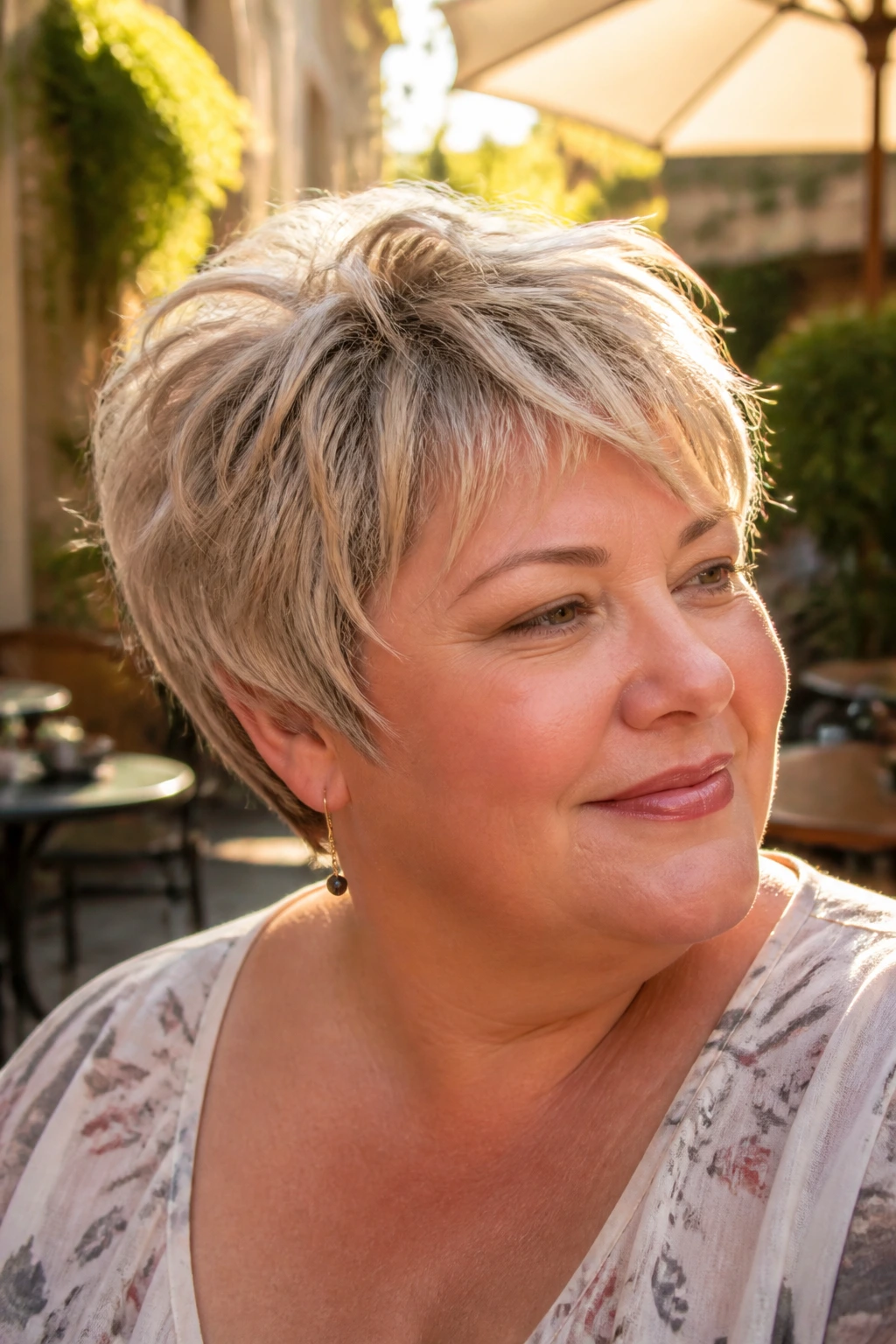
A feathered crop is the haircut I suggest when thick hair feels like it takes up too much space. The feathering removes bulk through the mid-lengths and ends, then leaves a lighter outline that moves instead of sitting like a block. It is especially good when you want short hair but not a severe outline.
This cut works because the ends are softened, often with point cutting or a light razor touch, so the hair doesn’t stack up in a hard line. If you have coarse strands, that little airiness matters. It can make the cut feel more open around the face and less heavy at the jaw.
I’d wear this with a side part and a small round brush, pulling the top forward and away from the face before sweeping it back. A little lift at the roots is enough. Too much volume and the whole thing starts looking fluffy, which is not the assignment. The best feathered crop feels light, almost breezy, but still put together.
9. Bixie Cut With a Side Part
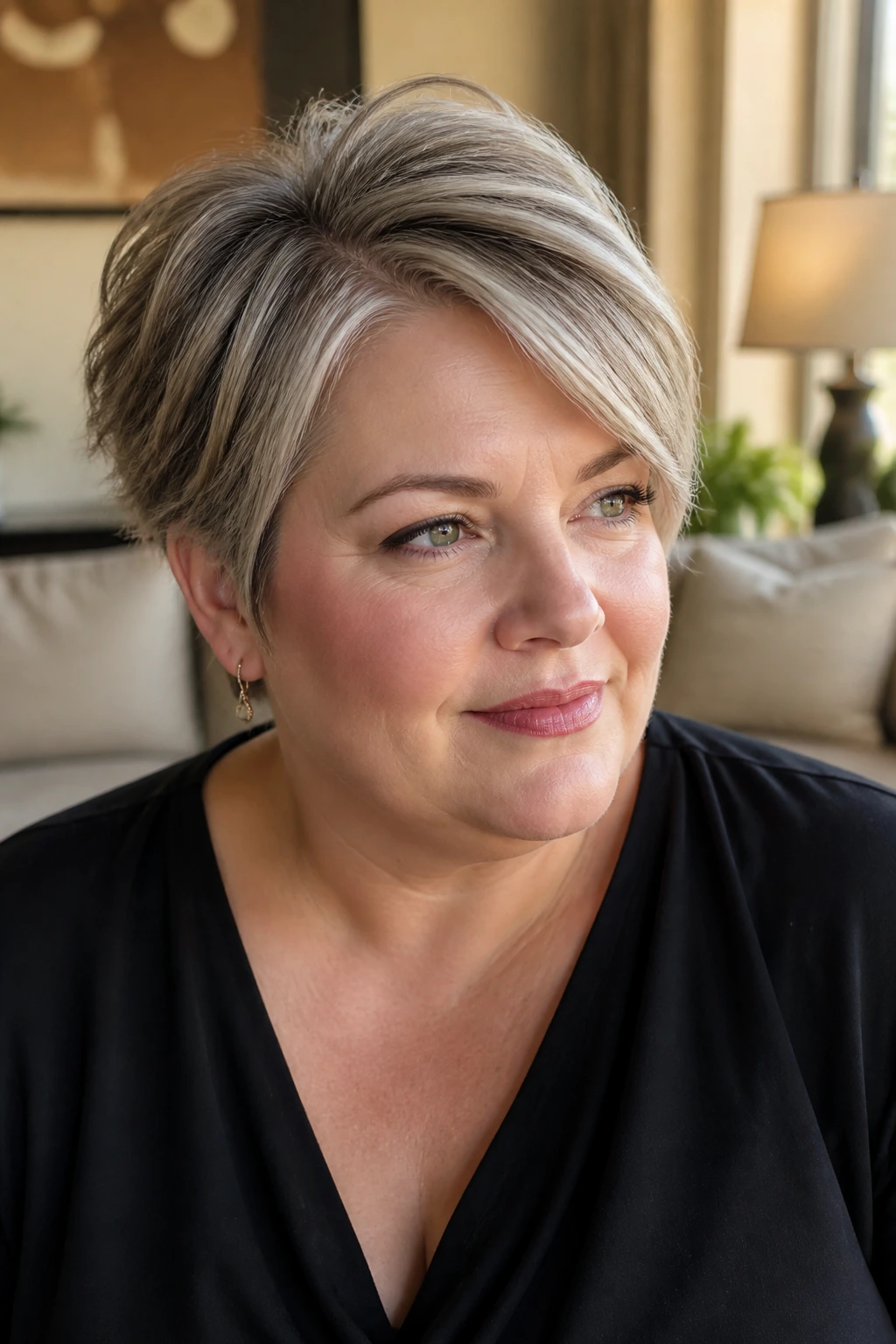
Is it a pixie or a bob? A bixie sits in the middle, and that is exactly why so many people like it. You get the shortness and easy wear of a pixie, but with enough length around the front and sides to feel softer than a clippered cut. It’s one of the most forgiving short shapes out there.
A side part gives it direction. Without one, the bixie can drift toward a generic rounded shape. With one, the haircut gets a little lift on top and a little sweep across the forehead, which is helpful if you want the face to look longer. That diagonal movement matters more than people think.
How to Wear It
Keep the top around 3 to 4 inches if you want flexibility. That gives you room to tuck the sides, piece out the fringe, or brush it forward on low-energy days. A small amount of styling cream is enough. If you load it up, you lose the texture and the whole cut goes limp.
The bixie is a nice middle ground. Not boring. Not fussy either.
10. Deep Side-Part Blunt Bob
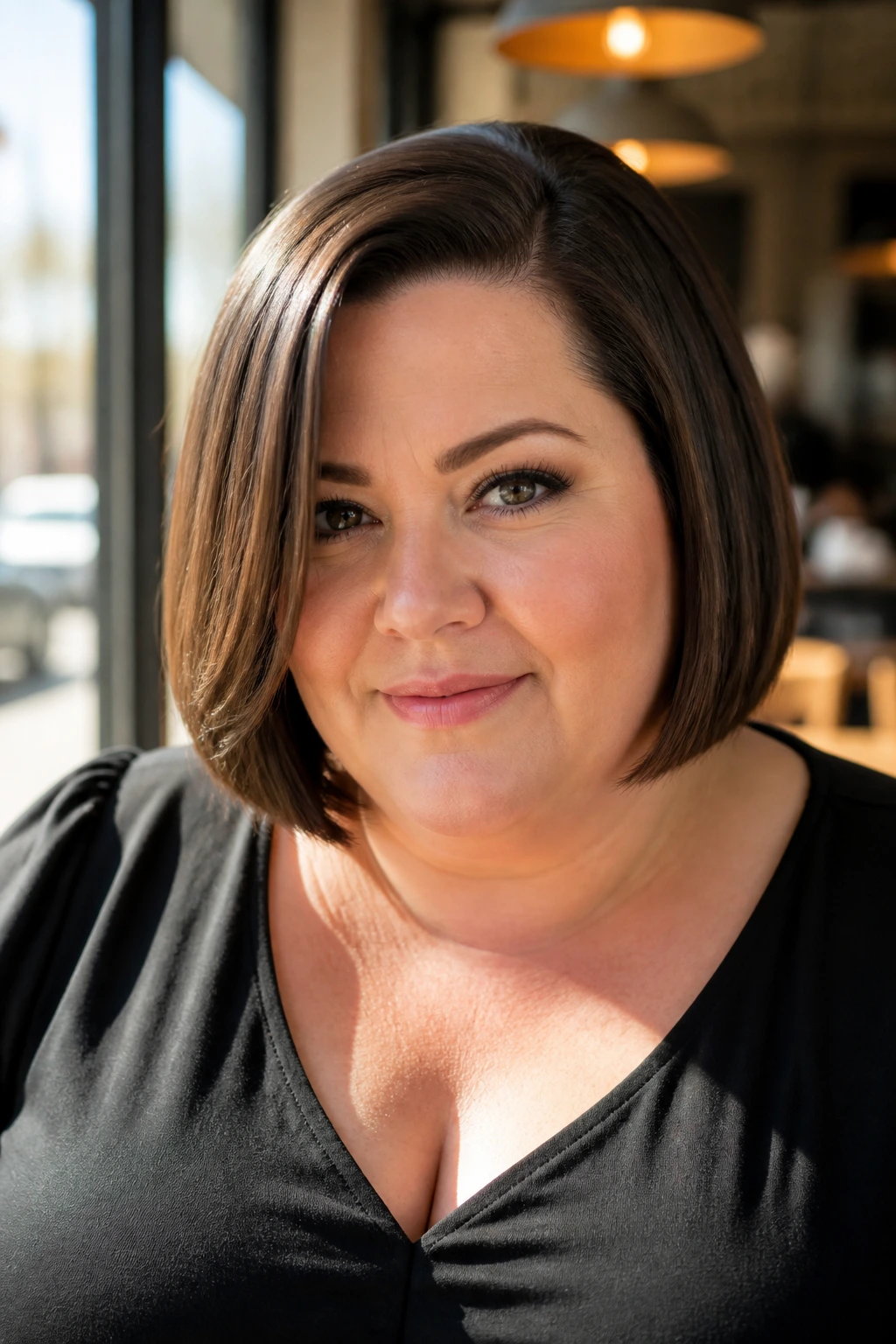
A deep side part can rescue a blunt bob from looking too even. The cut itself is simple: a straight line, usually at the chin or just below it, with ends that hold their shape. The part does the styling work by creating lift on one side and a cleaner fall on the other.
This is a good option if your hair is fine and you want it to look fuller without a lot of layering. Blunt ends keep the perimeter strong. That strong line gives the impression of density, which is exactly what thin hair often needs. If your hair is thick, ask for a little interior debulking so it does not sit like a helmet.
- Part the hair on its heavier side for more lift.
- Blow-dry with a paddle brush for a smoother finish.
- Use a flat iron only on the last inch of the ends if they flip oddly.
- Keep the crown smooth, not puffy.
What I like here is the contrast. Sleek at the bottom. Higher at the top. Simple, and not at all boring when it is cut well.
11. Jaw-Skimming Bob With Flipped Ends
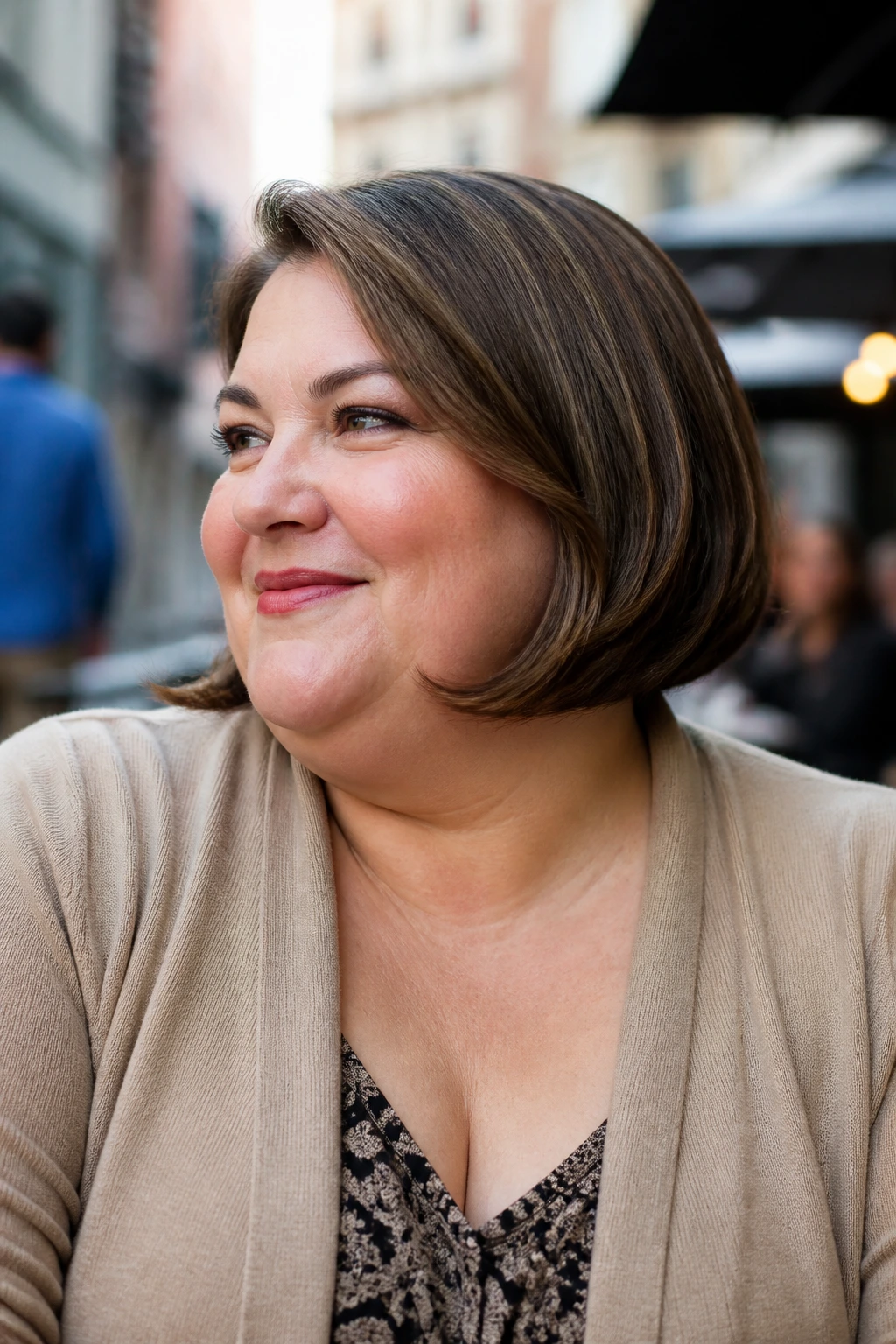
A bob that lands right at the jaw can be tricky. Too blunt, and it can feel boxy. Too wispy, and it loses its shape. The sweet spot is a jaw-skimming bob with softly flipped ends, where the bottom edge moves away from the face just enough to keep the line lively.
That slight flip changes the profile. Instead of sitting flat against the jaw, the ends create a small outward curve that keeps the cut from clinging to the widest part of the face. It also makes the neck look longer, which I always appreciate in a short cut. A 1-inch curling iron or a round brush can do the job in under ten minutes.
This style looks best when the layers are kept light and the finish is smooth but not stiff. If your hair has a bit of bend on its own, let it work with you. If it’s straight, turn only the last inch or so of the ends outward. More than that and you start looking retro in a way you may not have asked for.
12. Soft Wedge Cut

A wedge cut still has a bad reputation in some circles, mostly because people remember the stiff versions. That is unfair. A soft wedge has the same tidy neckline and angled structure, but the edges are blended and the top is less helmet-like. It can look neat, modern, and very easy to live with.
Unlike a stacked bob, a wedge leans a little more into the angle from back to front. That means the hair sits close at the nape and opens slightly toward the face. If you like a haircut that keeps the neck clean and the top controlled, this one is worth a look. It is especially good for straight or slightly wavy hair that loses shape fast.
I would not choose it if you want a lot of swing or shaggy movement. The strength of the wedge is its order. It holds its shape through a normal week, which is rare enough to matter.
13. Layered Bob for Thick Hair
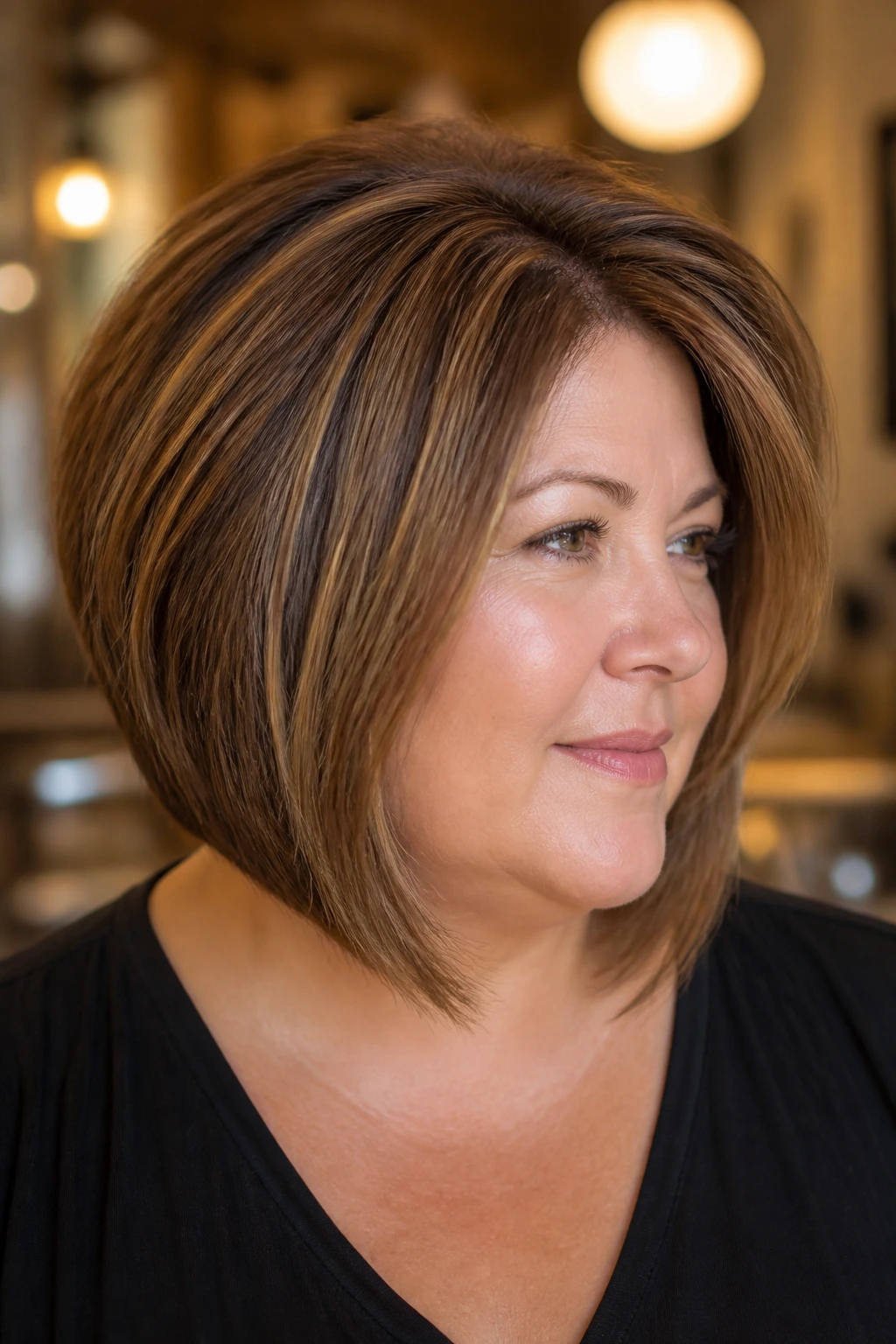
Thick hair needs structure, not just removal. A layered bob can be the right answer if the layers are placed carefully, because the goal is to control bulk without making the ends look stringy. That balance is where most bad cuts go sideways.
Where the Layers Should Sit
The best layers for thick hair usually live inside the haircut, not around the outside edge. That means the stylist removes weight through the middle, then keeps the perimeter strong enough to hold shape. If the top is too thinned out, the haircut turns fuzzy in humidity and puffs out in the wrong places.
Use a smoothing cream before blow-drying, and don’t skip the bottom sections. Thick hair often hides heaviness at the nape and under the ears, and that is exactly where the silhouette gets wide. A good layered bob should feel lighter the minute you lift it with your hands.
- Ask for internal layers, not choppy ones all over.
- Keep the front slightly longer if your hair is very full.
- Blow-dry in sections so the shape lands cleanly.
- Trim every 6 to 8 weeks to stop the ends from going fuzzy.
This is one of those cuts that rewards a careful stylist. That part is not negotiable.
14. Airy Crop for Fine Hair
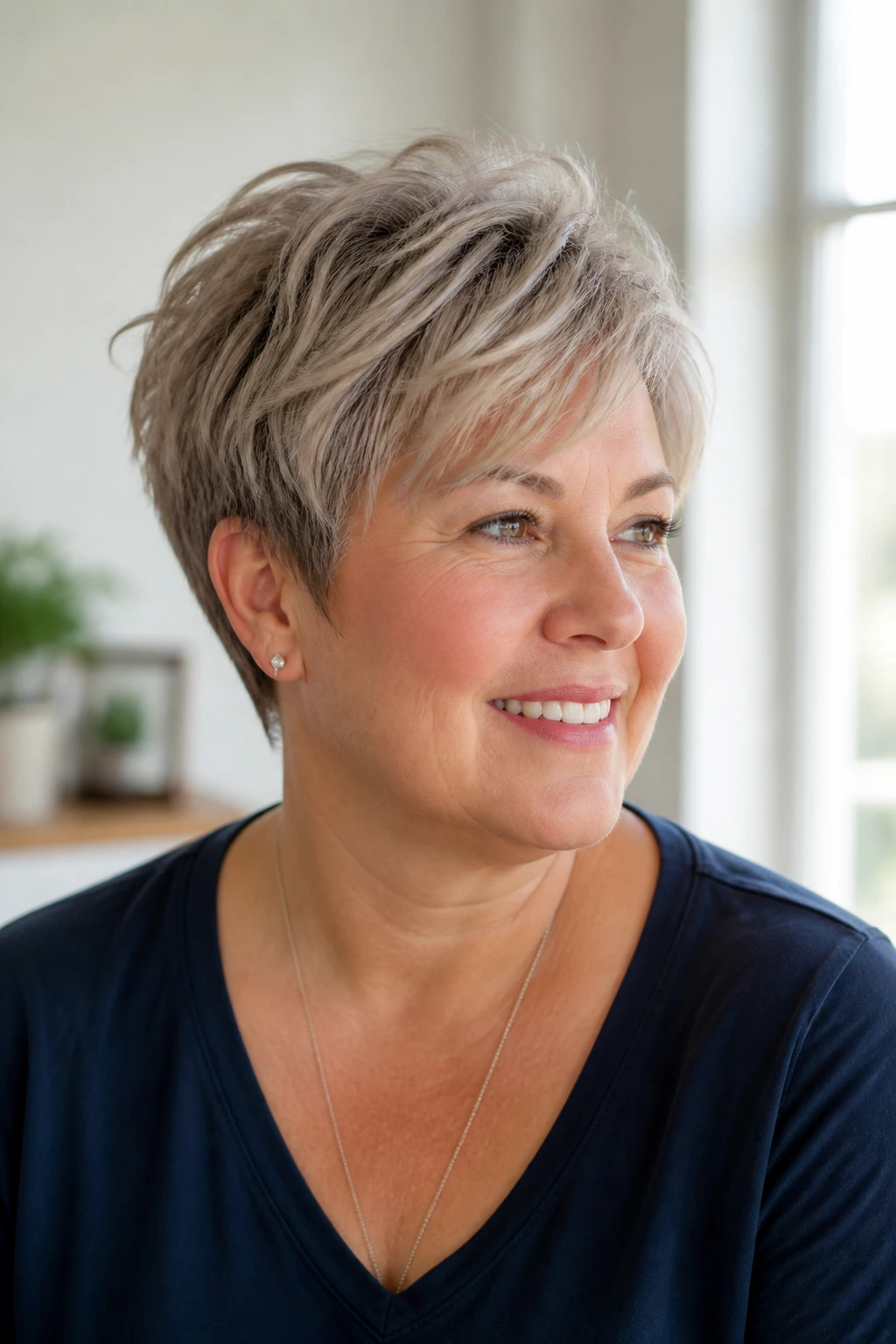
Fine hair needs a cut that respects the strand, not a pile of layers that turns it into dust. An airy crop keeps the shape short and clean, with enough lift at the crown and a slightly soft edge around the face. The idea is to make the hair look fuller, not thinner.
A lot of people think fine hair needs endless layering. Usually, it doesn’t. It needs a smarter outline. Too many layers remove the weight that gives fine hair its body in the first place, so the better move is a blunt or lightly beveled edge with a little crown height. That way the top looks lifted and the sides stay neat.
Use a volumizing mousse at the roots, then rough-dry with your fingers until the hair is about 80 percent dry. Finish with a small round brush only where you need the lift. If your hair is short enough, a dab of matte paste on the ends can keep things piecey without making them greasy.
This cut is small, but it makes a strong case for itself.
15. Tucked-Behind-the-Ear Bob

Do you want something polished that still feels easy? A tucked-behind-the-ear bob is one of the least complicated ways to wear short hair and still look styled. The length usually lands between the chin and the top of the neck, which gives you enough room to tuck one side cleanly behind the ear while leaving the other side loose.
That little asymmetry does a lot. It opens the face, shows off earrings, and keeps the neckline from looking crowded. If you have fuller cheeks, the tuck creates a vertical line near the ear, which helps the haircut feel lighter. It’s subtle, but subtle is often the smarter move.
How to Wear It
Keep the tucked side smooth with a little serum, and let the other side have more texture. A side part usually works better than a center part here because it builds a bit of height and makes the tuck feel intentional. If your hair flips outward by nature, do not fight it too hard. The charm is in the ease, not the perfection.
16. Razor-Cut Mini Shag
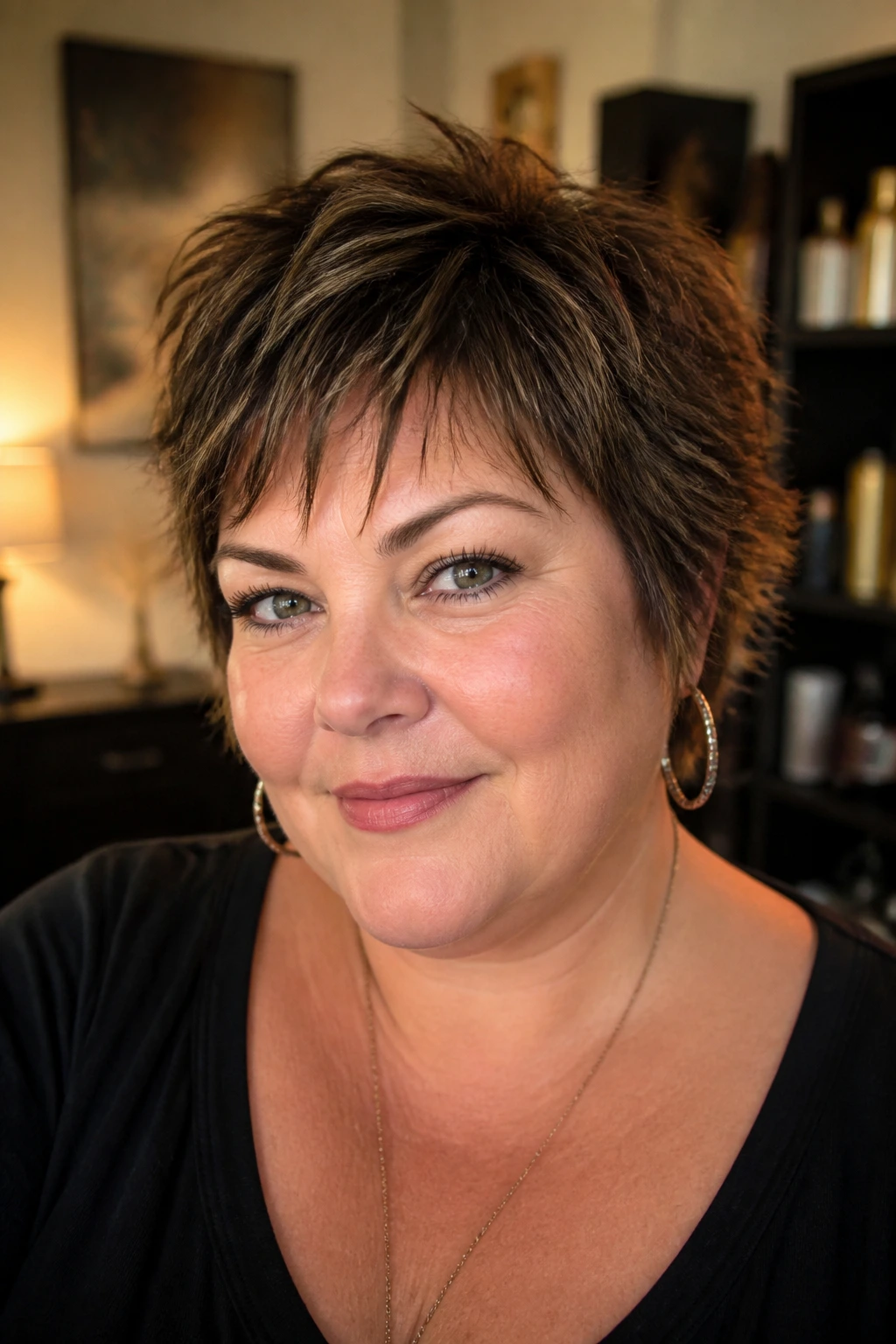
If straight hair can feel stiff, a razor-cut mini shag softens it fast. The razor takes the edge off the ends and creates a bit of irregular movement, which helps the style sit less like a block and more like a lived-in cut. I like it for people who want texture without a lot of daily work.
The mini shag is shorter than the classic shag, with layers concentrated around the crown and sides and the length kept around the jaw or just above it. The effect is relaxed, but not sloppy. That difference matters. A good razor cut should move when you shake your head, not fray out into a mess.
- Best for straight to wavy hair.
- Keep the texture cream light; heavy products make the layers collapse.
- Avoid overbrushing once it dries.
- Great if you like a little edge without a harsh line.
One caution: if your hair is very porous or already frizzy, too much razor work can make it puff. A softer cut with scissors may hold up better.
17. Silver Pixie-Bob
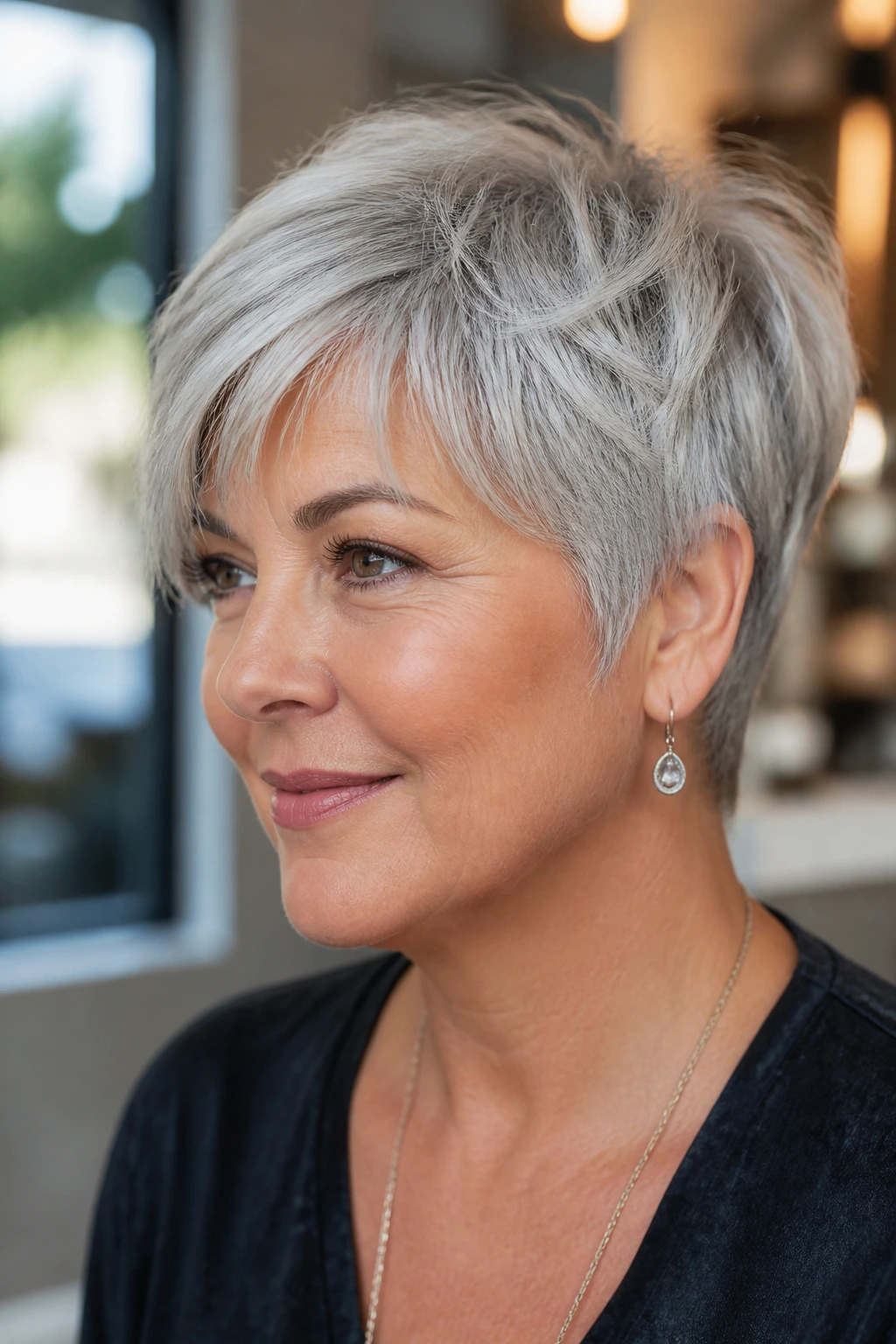
A silver pixie-bob lets natural gray or silver hair do what it does best: show texture. The cut sits between a pixie and a bob, with a little more length on top and around the front than a standard crop. That extra length gives the silver strands room to move, which keeps the style from feeling too severe.
I love this on hair that has gone coarse or wiry in the best way. Silver hair often has a different feel from its old color — a bit drier, a bit lighter in weight, sometimes more resistant to falling flat. A pixie-bob can work with that instead of against it. Keep the nape tapered and the top soft, and the result feels current without trying too hard.
You do not need a lot of product here. A dab of styling paste, maybe a light serum on the ends if they feel rough. Purple shampoo can help if the silver pulls yellow, but use it sparingly. Overdoing it can make the hair look dull instead of bright.
This is one of the few short styles that looks better when it is a little imperfect.
18. Soft Neckline Crop With a Side-Swept Fringe
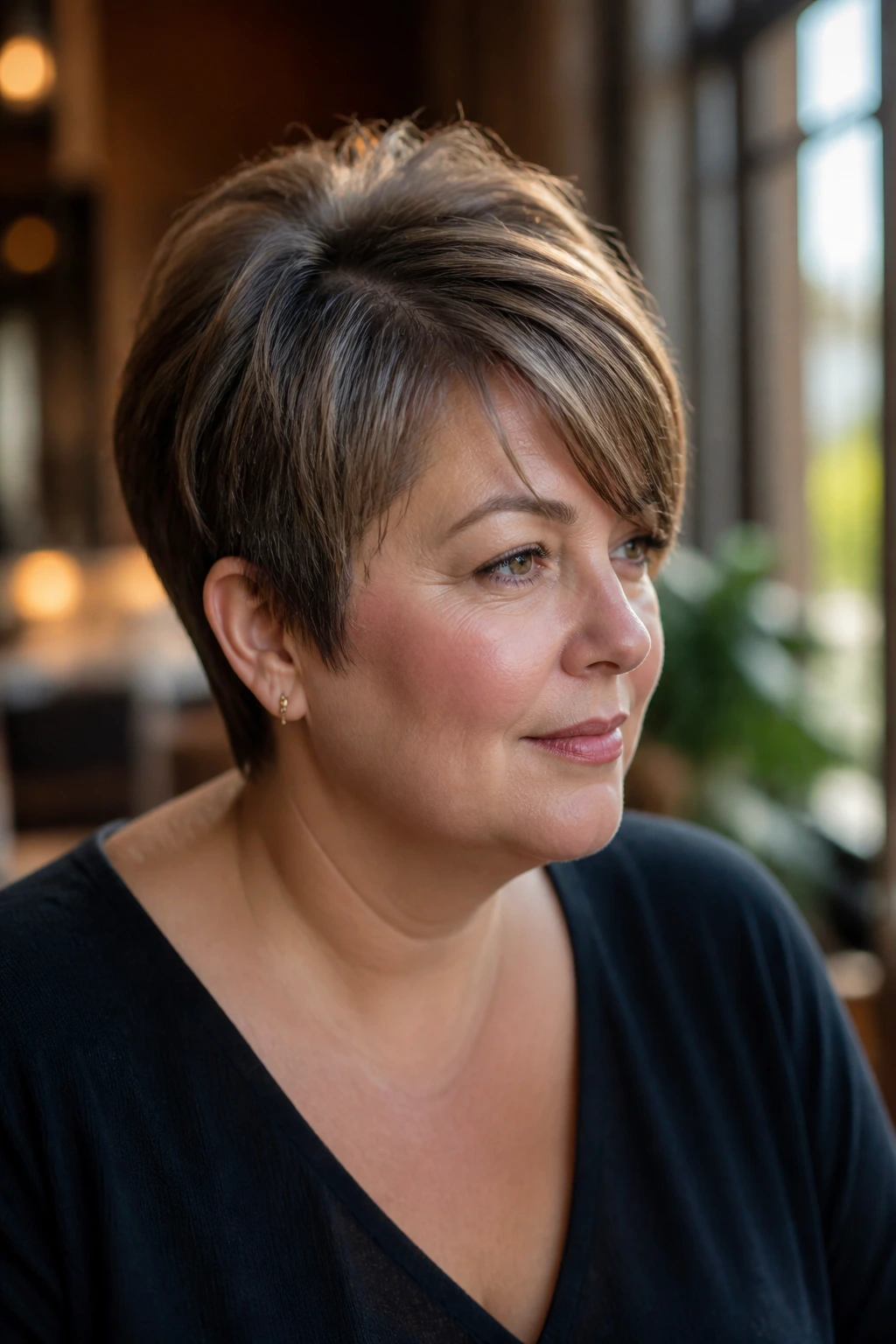
A soft neckline crop is the short cut I’d hand to someone who wants ease but does not want to lose softness around the face. It keeps the back neat and close, then leaves enough length on top for a side-swept fringe that can brush across the forehead or curve into the cheekbone.
Unlike a super-short crop, this one does not expose every edge at once. The neckline stays tidy, the fringe keeps the front gentle, and the crown has enough lift to avoid that flat, chopped look that some short cuts fall into. If you want your haircut to feel clean on day one and still forgiving on day twenty, this is a strong candidate.
Ask your stylist for 1.5 to 2 inches on top, a tapered nape, and a fringe that lands somewhere near the brow. Then style it with a light cream and a quick blow-dry using your fingers, pushing the fringe to one side while it is still warm. That gives the haircut direction without making it stiff.
If I had to name one cut here that fits a busy week, a few good earrings, and almost no patience for styling drama, this would be it.
