



A good pixie cut can do more for a fuller face than people expect. With the right shape, pixie cuts for plus size with a double chin can make the whole face look lighter, longer, and more open without trying too hard. The magic is usually in the silhouette: a bit of lift on top, softness around the cheeks, and a nape that stays neat instead of boxy.
A lot of bad pixie advice is too blunt. “Just chop it all off” is how people end up with a cut that sits flat at the crown and lands right at the jaw, which is the last place you want extra visual weight. Much better is a cut that gives you movement and keeps the eye traveling upward.
Texture matters too. So does where the fringe ends. So does whether the sides are tucked in or left fluffy. Tiny details make the difference between a cut that sharpens your features and one that makes the chin area feel wider.
The good news is that there are plenty of versions that do the job well, and most of them are easier to wear than people assume. Start with a long-top tapered shape, because that’s the safest place to begin if you want something flattering without going extreme.
1. Long-Top, Tapered-Sides Pixie

A long-top, tapered-sides pixie is the dependable choice that rarely fails. The top keeps enough length to create lift and softness, while the sides and nape stay close to the head so the cut does not spread outward around the jaw. That contrast is doing real work.
Why It Helps
The longer top pulls the eye upward. The tapered sides keep the face from looking wider than it is, which is useful when you want a bit of balance around the lower face. If your hair is thick, this shape is especially kind, because it removes bulk where it tends to puff out most.
Ask your stylist for 2.5 to 4 inches on top, with the shortest side areas hugging the head. That gives you enough room to sweep the front a little off center, and a little sweep goes a long way here. Shorter than that, and the cut can get severe fast.
- Best for: straight, wavy, or thick hair
- Ask for: tapered sides, soft crown layers, and a neat nape
- Style with: a lightweight mousse and a small round brush
Best move: keep the crown airy and the sides close. That’s the whole trick.
2. Side-Swept Fringe Pixie
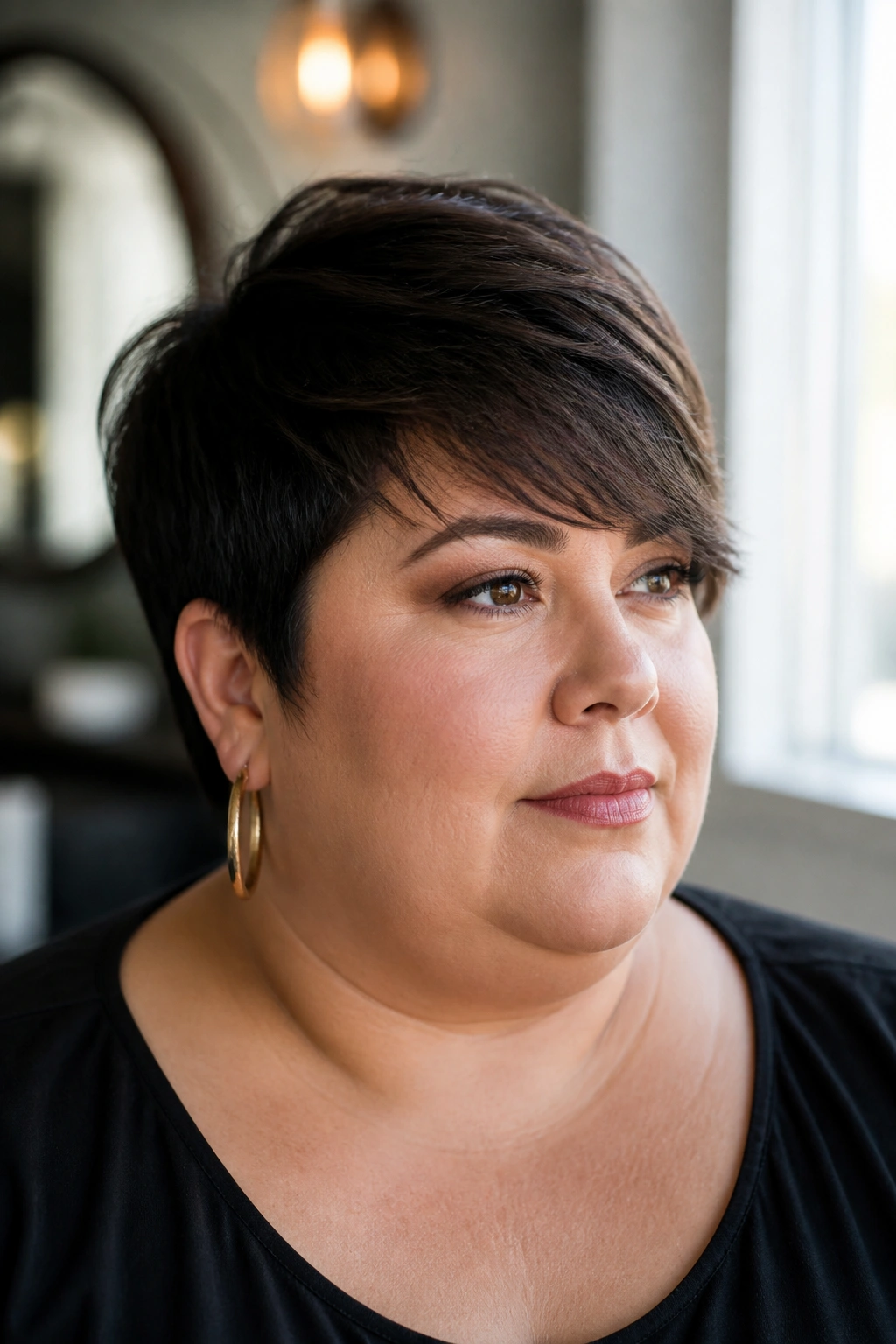
A side-swept fringe is one of the easiest ways to soften a fuller lower face without losing structure. The diagonal line of the bang breaks up width and draws the eye across the forehead instead of parking it on the chin. That little angle matters more than people think.
The fringe should land somewhere between the brow and the outer corner of the eye, depending on your hair texture. Too short, and it turns choppy. Too heavy, and it starts to sit like a curtain that hides the face in the wrong way. You want movement, not a helmet.
This cut works especially well if you like a low-maintenance morning routine. A quick blow-dry with a vent brush, a touch of cream at the ends, and you’re done. If your hair has a stubborn cowlick at the front, ask for a longer bang that can be directed to one side instead of fighting it every day.
A side-swept fringe is also a good pick when you want your pixie to feel a little softer and more feminine without adding width. Clean, simple, and not fussy. That’s the sweet spot.
3. Curly Pixie with Crown Lift
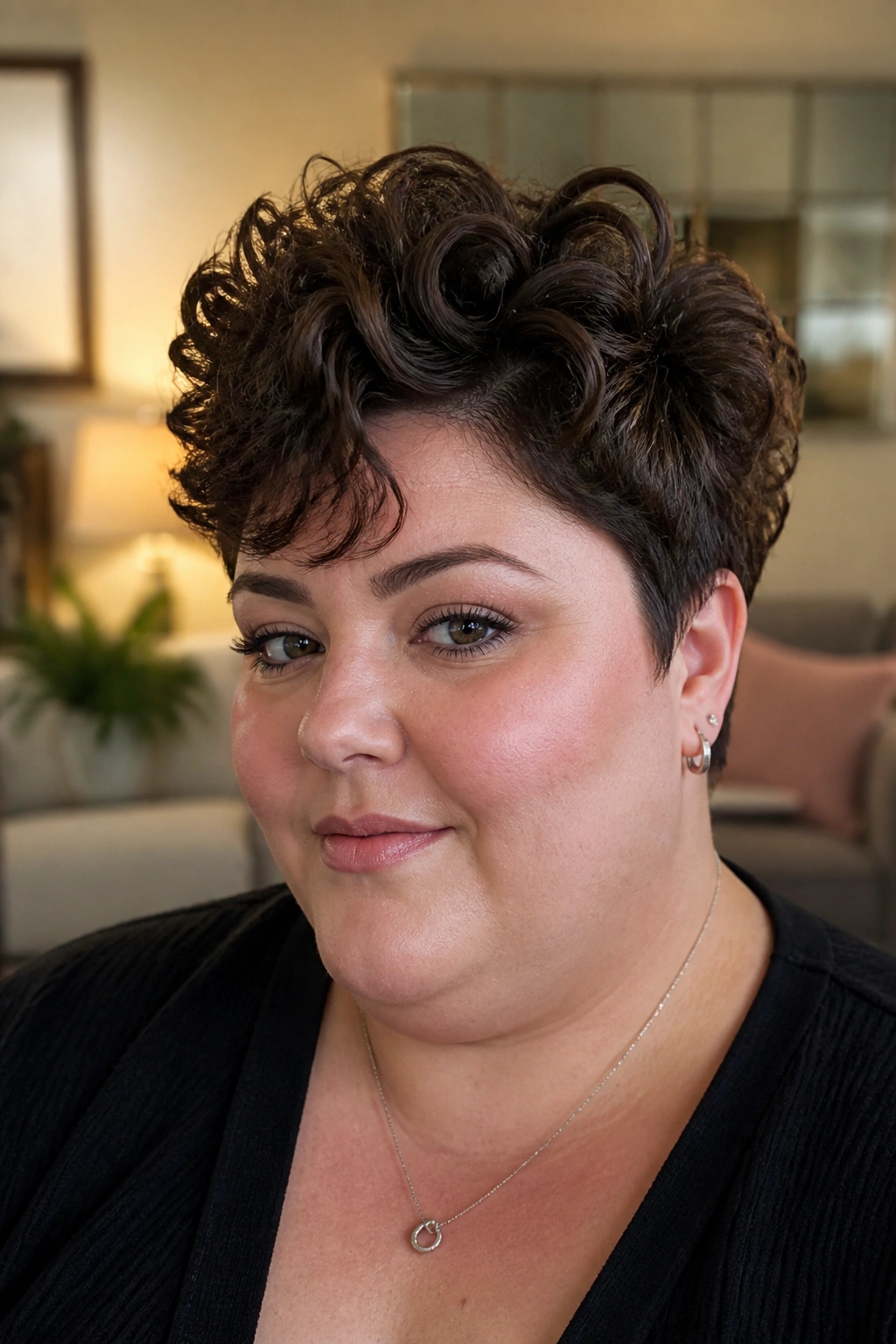
Why do curls help so much? Because they create height and movement at the same time. A curly pixie with a little lift at the crown can make a fuller face look more open, especially when the curls are kept loose around the sides instead of puffing outward.
The key is controlled volume. You want the curl pattern to stack upward, not sideways. A good stylist will shape the top layers so the curls spring up and slightly forward, while the sides are trimmed enough to avoid a round puffball effect. That’s the line you want to respect.
How to Wear It
Use a curl cream or gel on damp hair, then scrunch lightly and air-dry or diffuse on low heat. High heat can make curls frizz out around the cheeks, which is the opposite of what you want here. A little definition goes farther than a lot of product.
Keep the back slightly shorter than the top. That gives the style some lift through the crown and stops the whole shape from collapsing downward. If you’ve got a double chin and soft cheeks, this is one of the kinder pixie cuts to try because it keeps the face lively without exposing every angle.
4. Asymmetrical Pixie with a Long Front Corner
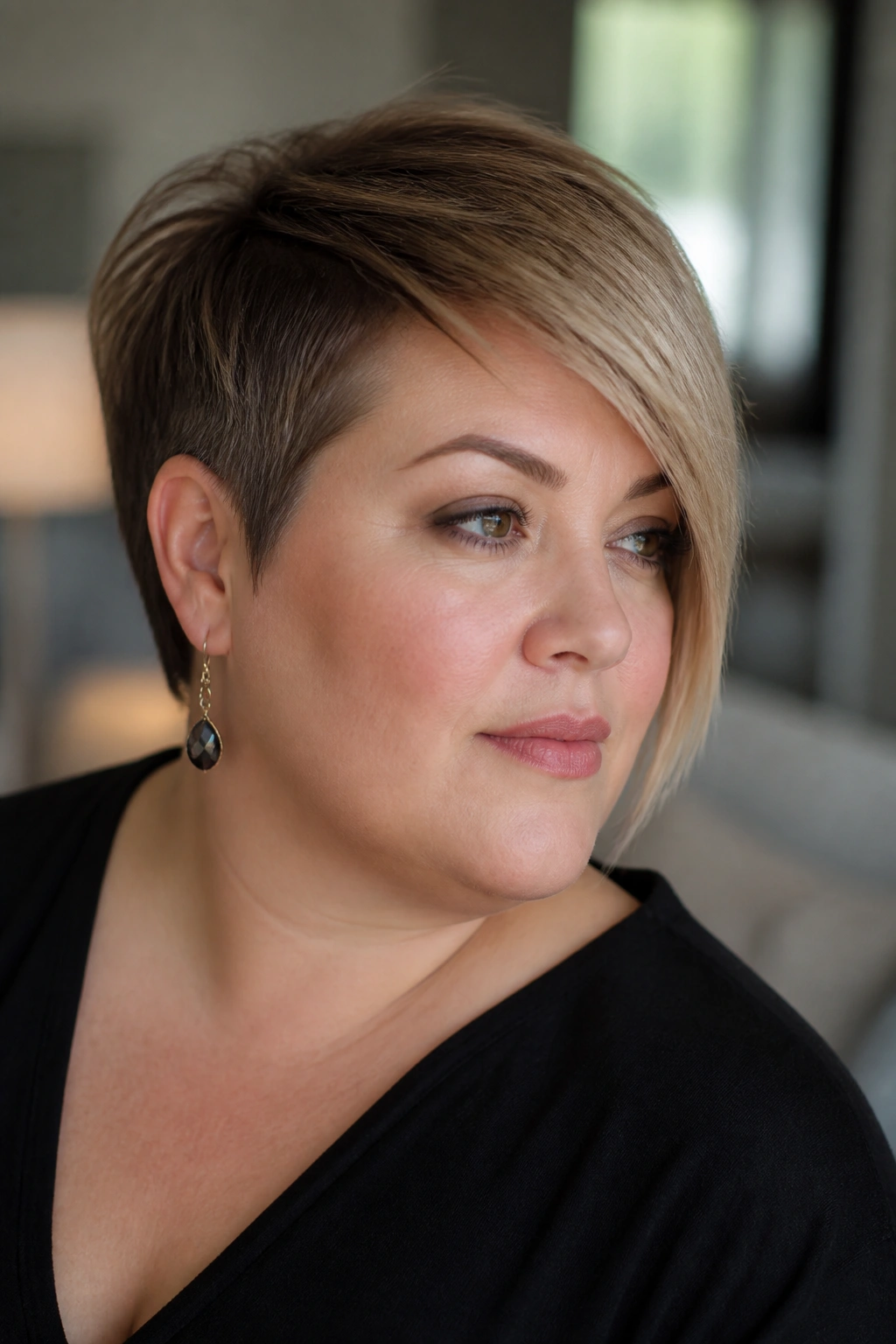
Picture this: one side tucked shorter, the other side left longer and swept forward in a clean diagonal. That asymmetry gives the face a line to follow, and the eye tends to move along that line instead of settling at the chin.
This cut is especially useful if you like a little edge. Not punk, not dramatic for the sake of it. Just enough imbalance to make the face look longer and less square. The long front corner should graze the cheekbone or jawline, not stop right at the widest point of the face.
The shape also works beautifully when you want to distract from a soft neck or fuller jaw area. A strong diagonal creates energy. A blunt, even line usually does the opposite.
Go for a smooth finish if your hair is straight, or a piecey one if it has a bit of bend. Either way, the longer side needs to stay polished enough to read as intentional. Messy is fine. Sloppy is not.
Best for: anyone who wants a bolder pixie that still flatters a rounder lower face.
5. Feathered Pixie with Wispy Ends
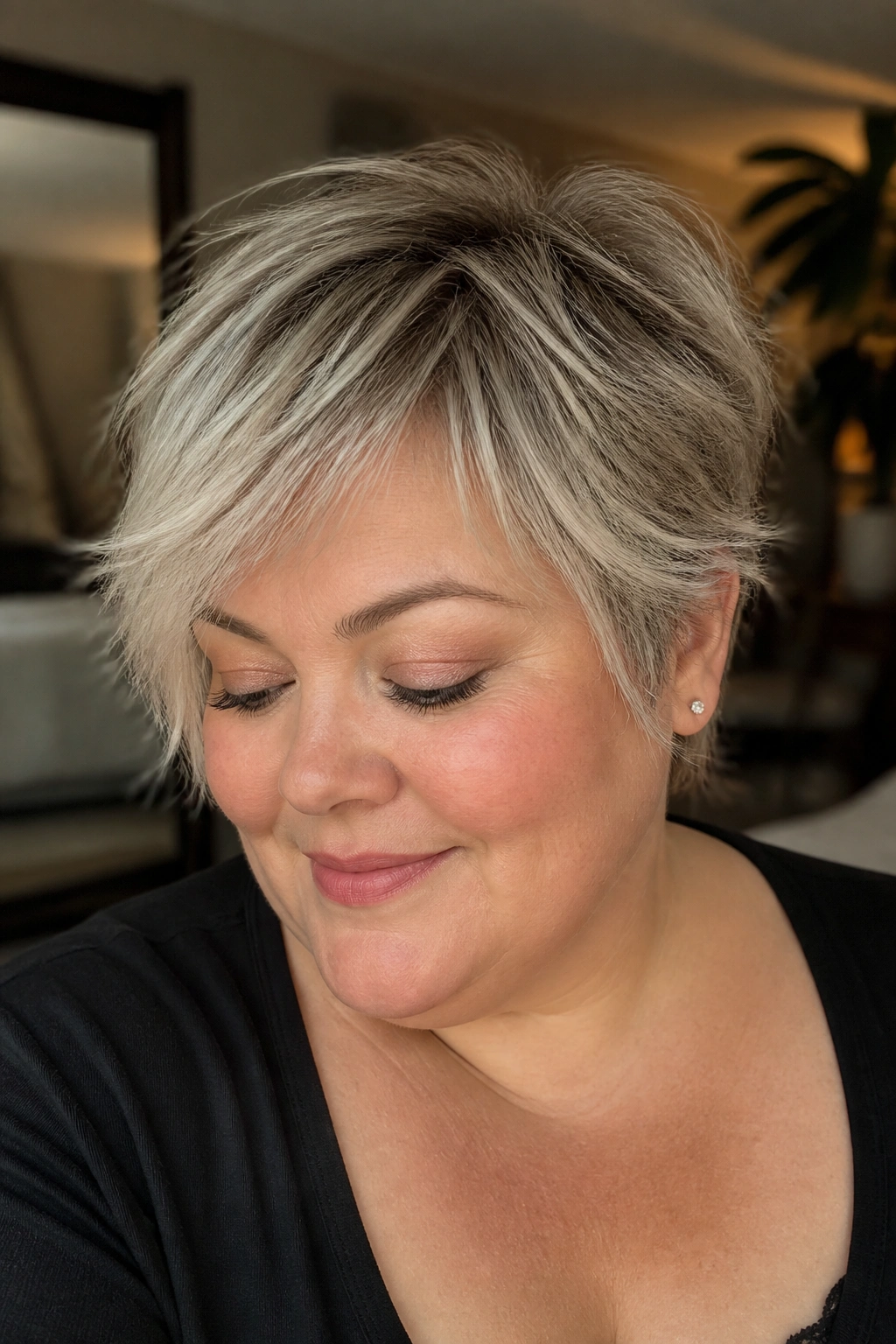
Feathered layers are one of those old-school ideas that still work because they solve a real problem: too much density around the face. When the ends are softened and feathered, the cut feels lighter, and lighter hair around the cheeks usually makes the whole face seem less heavy.
The beauty of this version is in the edges. You are not trying to carve a hard shape. You’re trying to soften it. A razor or point-cutting technique can help, but only in skilled hands; over-thinning will leave the cut stringy and weirdly sparse. That happens more than people admit.
This is a smart pick if your hair is medium to thick and tends to mushroom at the sides. The wispy ends take some of that bulk away without removing the movement that makes a pixie feel fresh. If your face is fuller and your jawline is round, the feathering keeps the cut from landing like a solid block.
One more thing. Feathered does not mean flat. Keep a little lift at the roots, or the whole style can turn tired fast.
6. Choppy Textured Pixie for Thick Hair
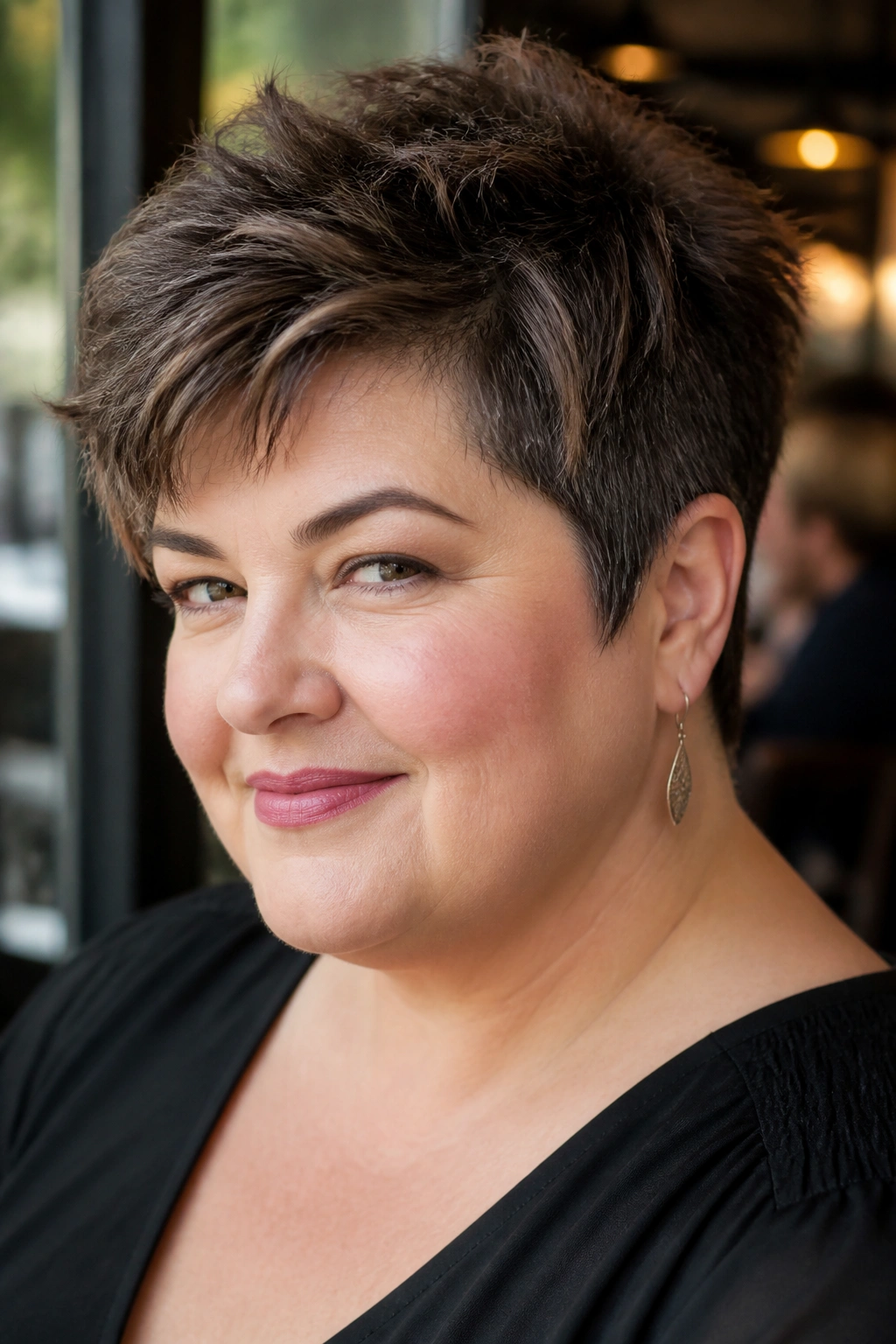
Unlike a smooth, polished pixie, a choppy textured version gives thick hair somewhere to go. That matters. Thick hair can look fantastic in short cuts, but only if the weight is broken up in the right places, or you end up with a bulky cap around the head.
This cut uses uneven layers, tiny piecey ends, and a bit of separation through the top. The result is casual and modern without looking unfinished. A good choppy pixie should move when you turn your head. If it sits still like a block, the layering is too heavy.
What to Ask For
Ask for internal layers, especially through the crown and mid-lengths. That takes bulk out from inside the shape instead of just shaving the edges. You want the top to have texture, not length for its own sake.
- Do ask for: point-cut ends and light layering through the top
- Do avoid: a blunt perimeter around the ears
- Style with: matte paste or a texturizing cream, used sparingly
This cut is a favorite for people who do not want to spend ten minutes arranging every strand. It looks best when it has a little attitude and a little mess. Very controlled, very neat styles can make it feel too stiff.
7. Curtain-Bang Pixie
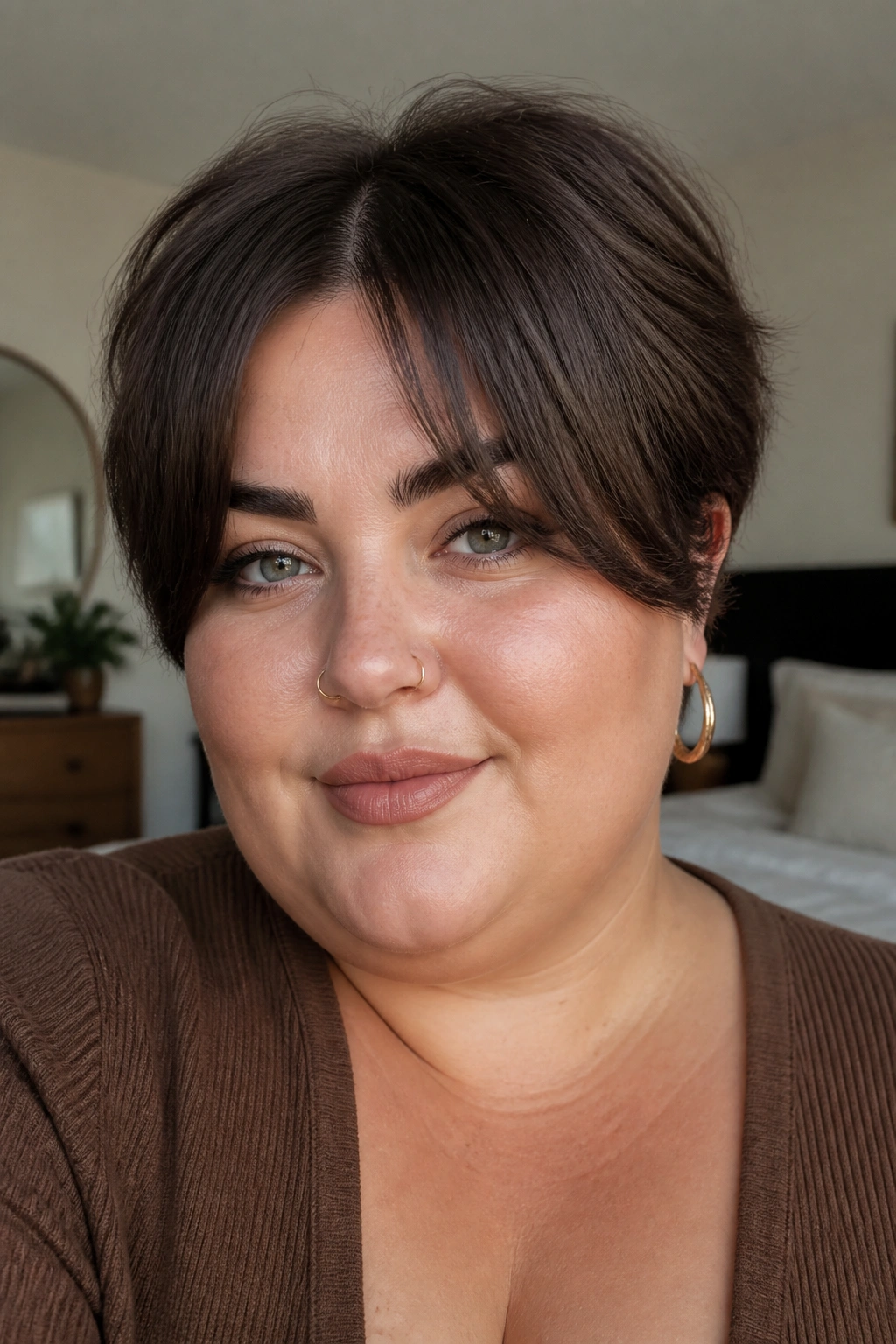
Curtain bangs on a pixie are one of those ideas that sounds tricky and often ends up looking softer than expected. The center part opens the face, while the longer sides of the bang frame the cheekbones and skim away from the chin area.
The trick is keeping the bangs long enough to bend, not so long that they hang into your eyes. Around eyebrow length or just below tends to be the sweet spot, though curly hair will need a different approach because shrinkage changes everything. Ask for the shortest point at the center and longer edges that taper into the sides.
This cut works when you want softness without losing shape. It has a bit of a grown-out feel, which is part of the charm. A harsh, short fringe can sometimes make a fuller face feel boxy; curtain bangs loosen that effect right away.
If your forehead is on the shorter side, keep the center part shallow rather than deep. That small adjustment keeps the proportions balanced. And yes, it still reads as a pixie.
8. Undercut Pixie with Long Top
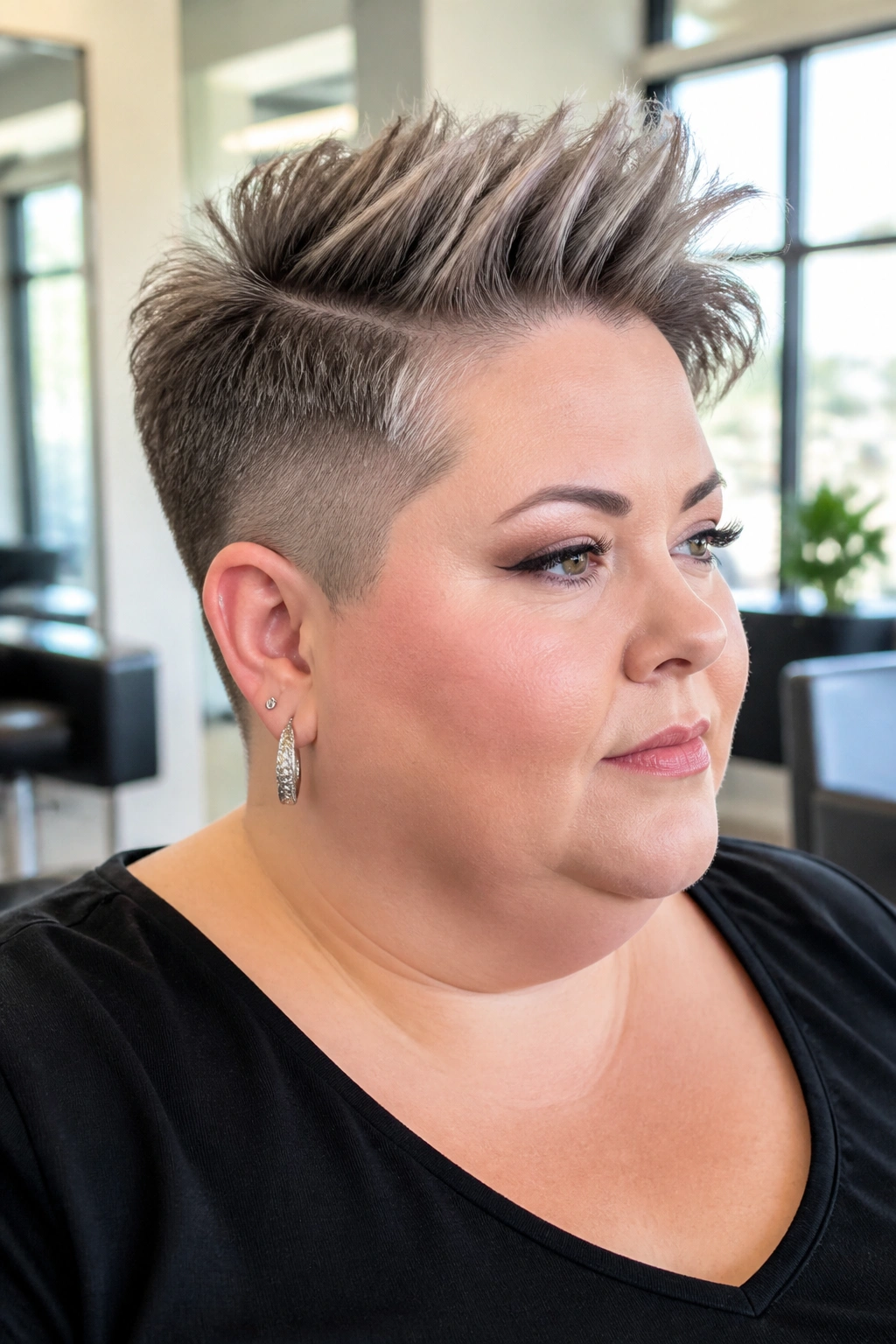
A hidden undercut can be a lifesaver for thick or stubborn hair. It removes bulk underneath, which lets the top sit higher and cleaner. For a fuller face, that extra lift matters because it creates vertical lines instead of sideways width.
The look can be as subtle or as bold as you like. A soft undercut around the nape and behind the ears keeps the shape neat. A more obvious one gives the style attitude and makes the top length feel even more dramatic. Either way, the goal is the same: reduce heaviness where the hair tends to puff.
This cut is not the best choice if you want zero maintenance. It grows out in a way that needs regular cleanup, especially around the neckline. But if you like structure and you’re tired of hair that expands around your face by lunchtime, it’s a solid answer.
Best styling move? Blow-dry the top upward first, then smooth the sides back or slightly forward. That keeps the attention on the upper half of the style, where it helps you most.
9. Bixie with Jaw-Skimming Pieces
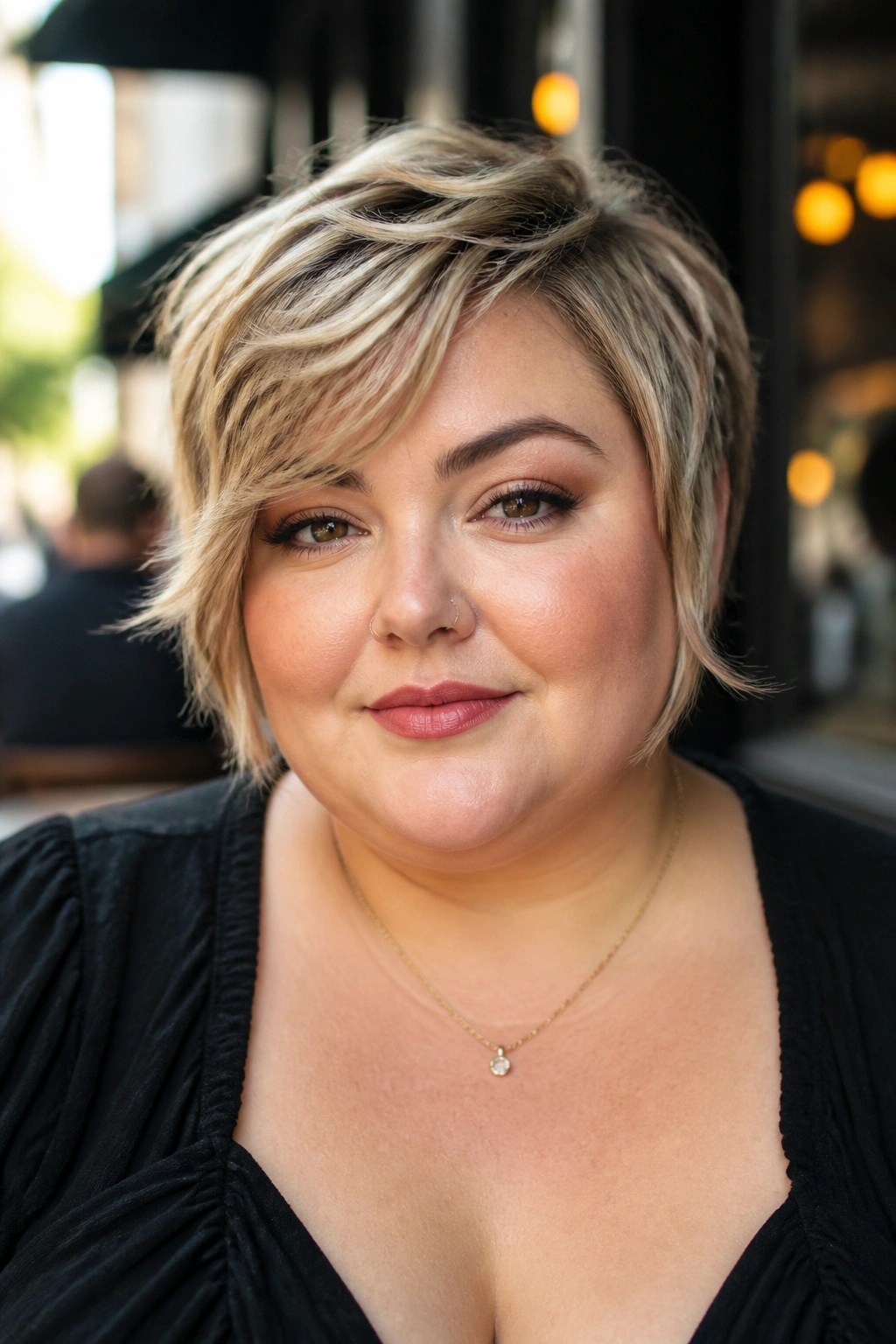
Can a bixie be flattering on a fuller face? Absolutely, if the front pieces are cut with care. A bixie sits between a bob and a pixie, which means it gives you more room around the face without going soft and shapeless. The jaw-skimming pieces are the part that matters here.
Those longer front sections should graze the cheek or jaw, not cling to it. That little gap between hair and skin creates breathing room. When the hair sits directly on the widest part of the face, the whole shape can feel heavier than it needs to. A bixie avoids that if it is layered correctly.
How to Make It Work
Keep the back shorter and the top lifted. That keeps the style from turning into a mini bob. You want the front to feel airy, not dense.
- Best for: wavy hair, dense hair, and anyone growing out a shorter pixie
- Ask for: feathered ends near the jaw and longer crown layers
- Style with: a flat brush or fingers for a loose bend
This is one of the easiest cuts to live with if you want a little more length than a strict pixie gives you. It feels modern, but not in a try-hard way.
10. Rounded Pixie with a Tapered Nape
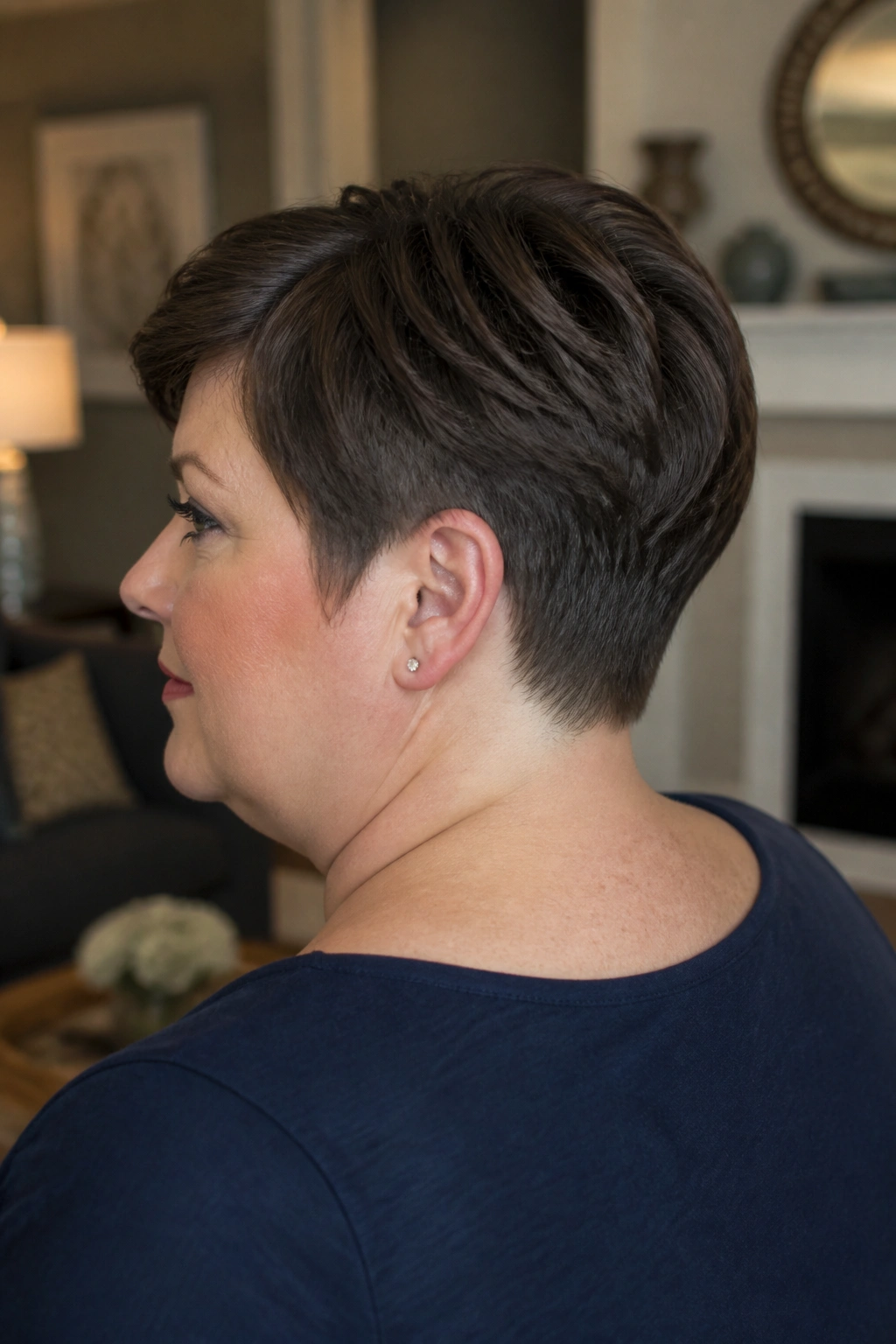
A rounded pixie sounds simple, but the proportions are doing a lot of work. The top stays softly curved, the sides stay close, and the nape is tapered cleanly so the shape ends in the right place. That keeps the cut from widening the lower face.
A lot of people think round shapes are the enemy of a fuller face. Not always. A round crown can actually help if the sides remain snug and the cut rises vertically rather than spreading outward. The difference is where the fullness sits.
This style is especially good for people who want something neat and polished without a severe look. It has a tidy, almost tailored feel. If your hair is fine, a rounded pixie can make it look thicker at the crown. If your hair is coarse, the taper helps keep it under control.
The nape matters more than people realize. A clean taper there keeps the whole cut from sitting heavy against the neck. That small detail changes the whole silhouette.
11. Deep Side-Part Pixie with Crown Volume
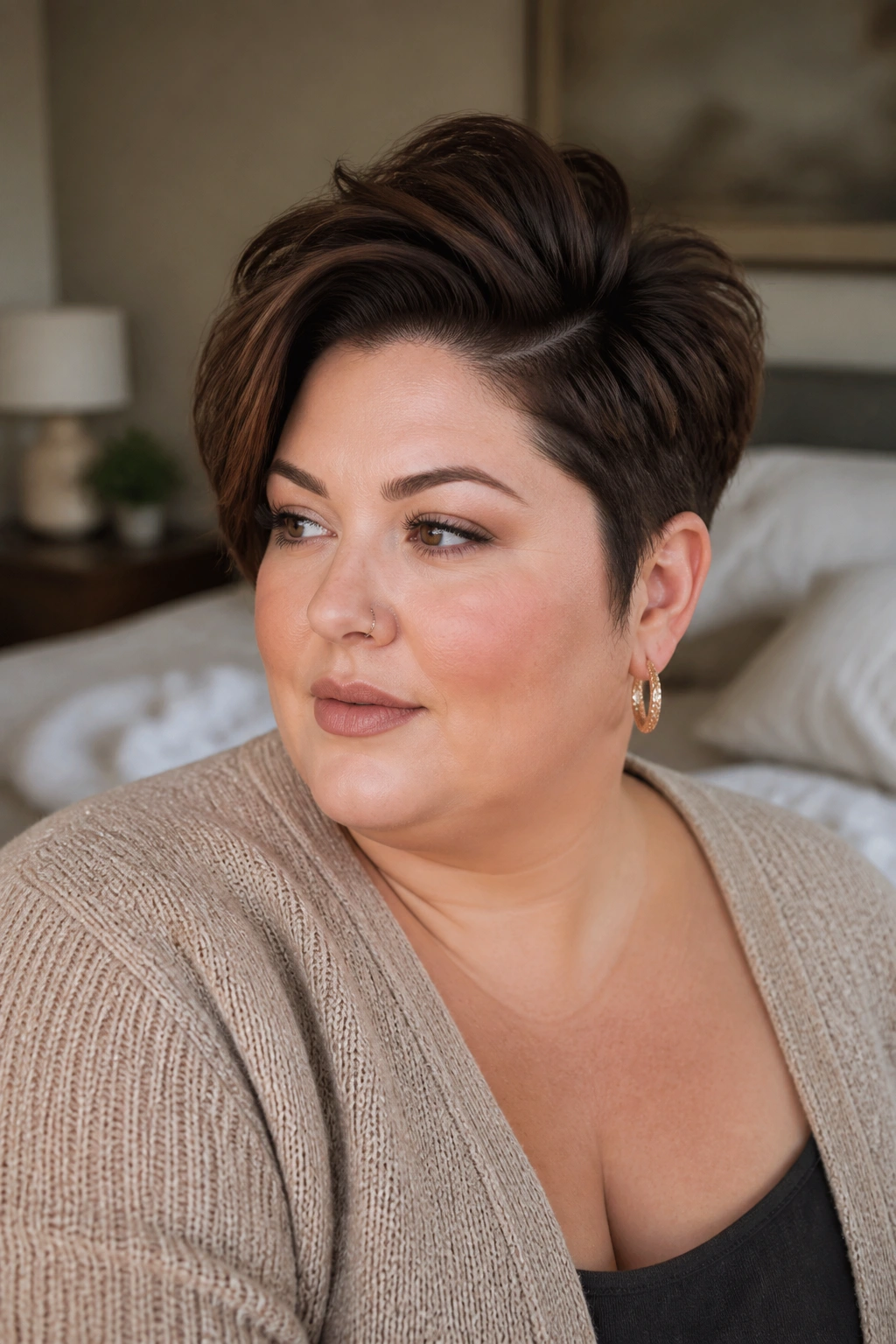
A deep side part creates instant lift, and lift is your friend here. When the hair is pushed high on one side and kept a little closer on the other, the face looks longer and less wide. It’s a simple trick, but it works because it shifts the whole balance of the cut.
This is a good option if you dislike bangs but still want some face framing. The part itself becomes the feature. The top should be long enough to bend over naturally, and the crown should have enough support to hold height without collapsing after an hour.
The styling is not hard. Blow-dry against the part first to build root lift, then sweep the hair over and set it with a light spray. Too much product will make it stiff. Too little and the volume vanishes. There’s a narrow middle ground, and that middle ground is where the cut looks best.
For a double chin, the benefit is subtle but real: the eye sees the height first. That buys the lower face some breathing room.
12. French Pixie with Micro Fringe
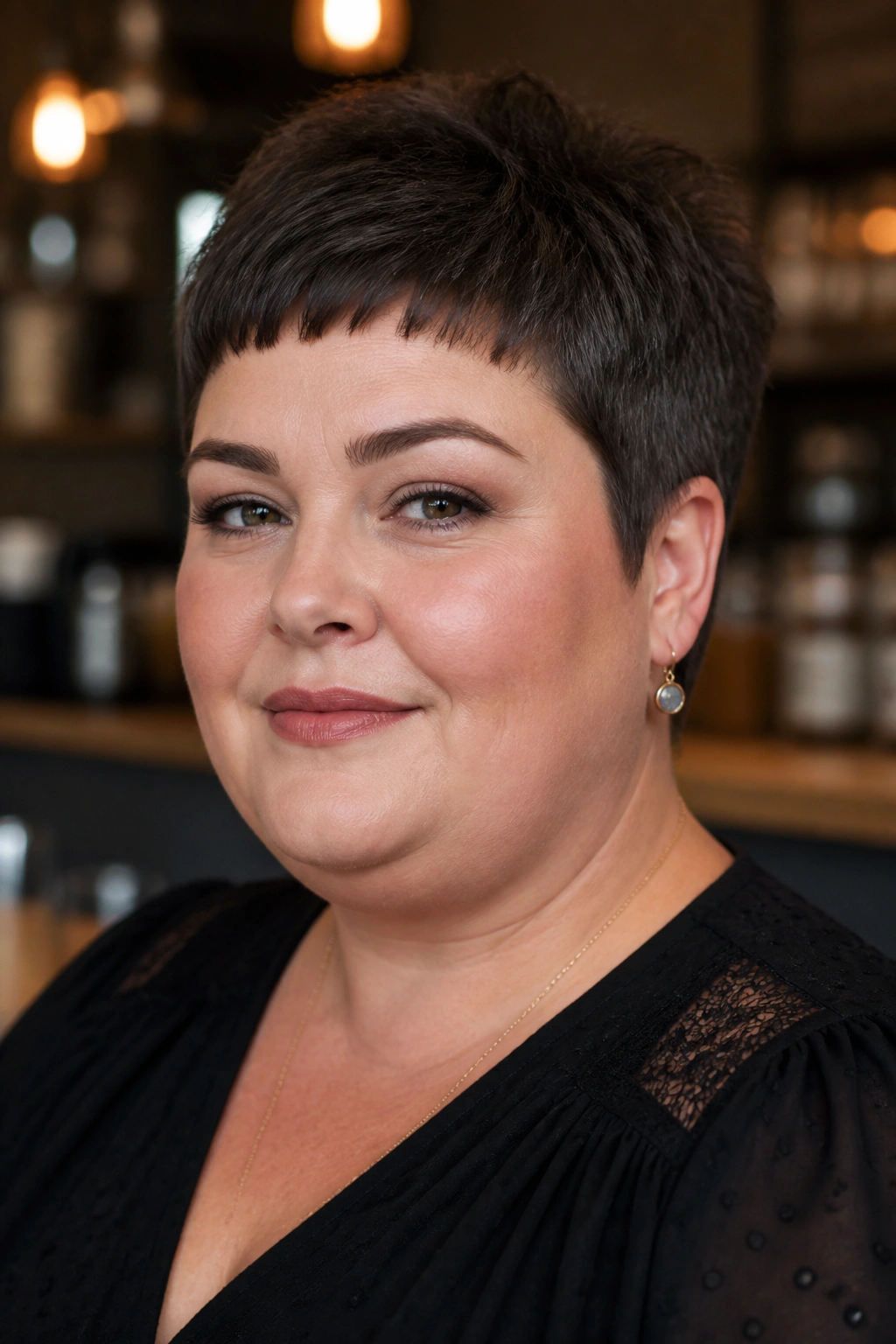
A French pixie can be gorgeous, but it has to be cut with restraint. The micro fringe gives the style character, while the soft, short layers around the head keep it from becoming harsh. On a fuller face, the key is making sure the fringe is light enough to show skin and movement.
A dense, heavy micro fringe can shorten the face. That is the mistake. A thinner one, cut with little gaps and soft texture, keeps the forehead visible enough to preserve balance. You want the cut to feel chic, not severe.
This style suits people who like shorter hair with personality. It’s not the most forgiving option, and it does ask for a bit of confidence. Still, when it’s right, it’s sharp and elegant in a way that never feels overworked.
Best on straight to slightly wavy hair, where the fringe can sit close without exploding upward. Keep the sides neat and the crown softly lifted. Tiny fringe, soft texture, clean outline. That combination is the whole point.
13. Shaggy Pixie with Piecey Layers
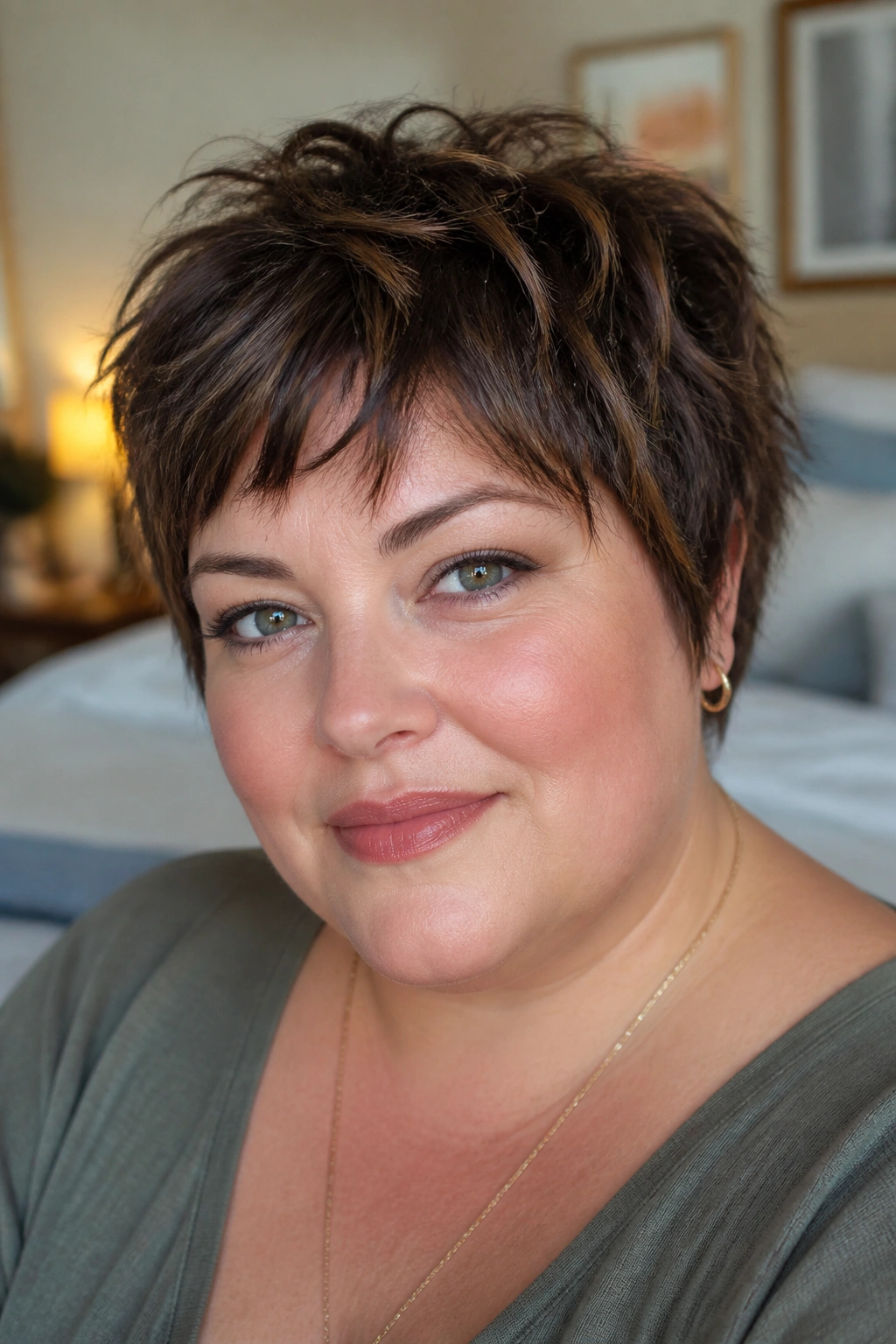
Shaggy texture is useful because it breaks up the outline of the face. A piecey pixie with uneven layers around the top and temples keeps the eye moving, which can make a fuller face look less rigid and less round. It has a lived-in feel that suits real hair, not just photos.
The cut should not be too fuzzy. There is a fine line between piecey and frizzy. If your stylist uses too much razor work, the layers can feather apart in a dry, stringy way. Better to keep the texture intentional and slightly separated, like short, soft strokes rather than a cloud.
Why It’s Worth Trying
The messiness gives you flexibility. You can wear it brushed forward, lifted at the crown, or pushed slightly back on one side. That freedom is one reason this style flatters more face shapes than people expect.
- Good for: wavy hair, thick hair, and anyone who likes a relaxed finish
- Needs: a texturizing cream or paste
- Avoid: over-brushing, which flattens the layers and makes the cut lose its shape
It is a little cooler and less polished than some of the other options here. That’s part of the appeal.
14. Layered Pixie for Fine Hair
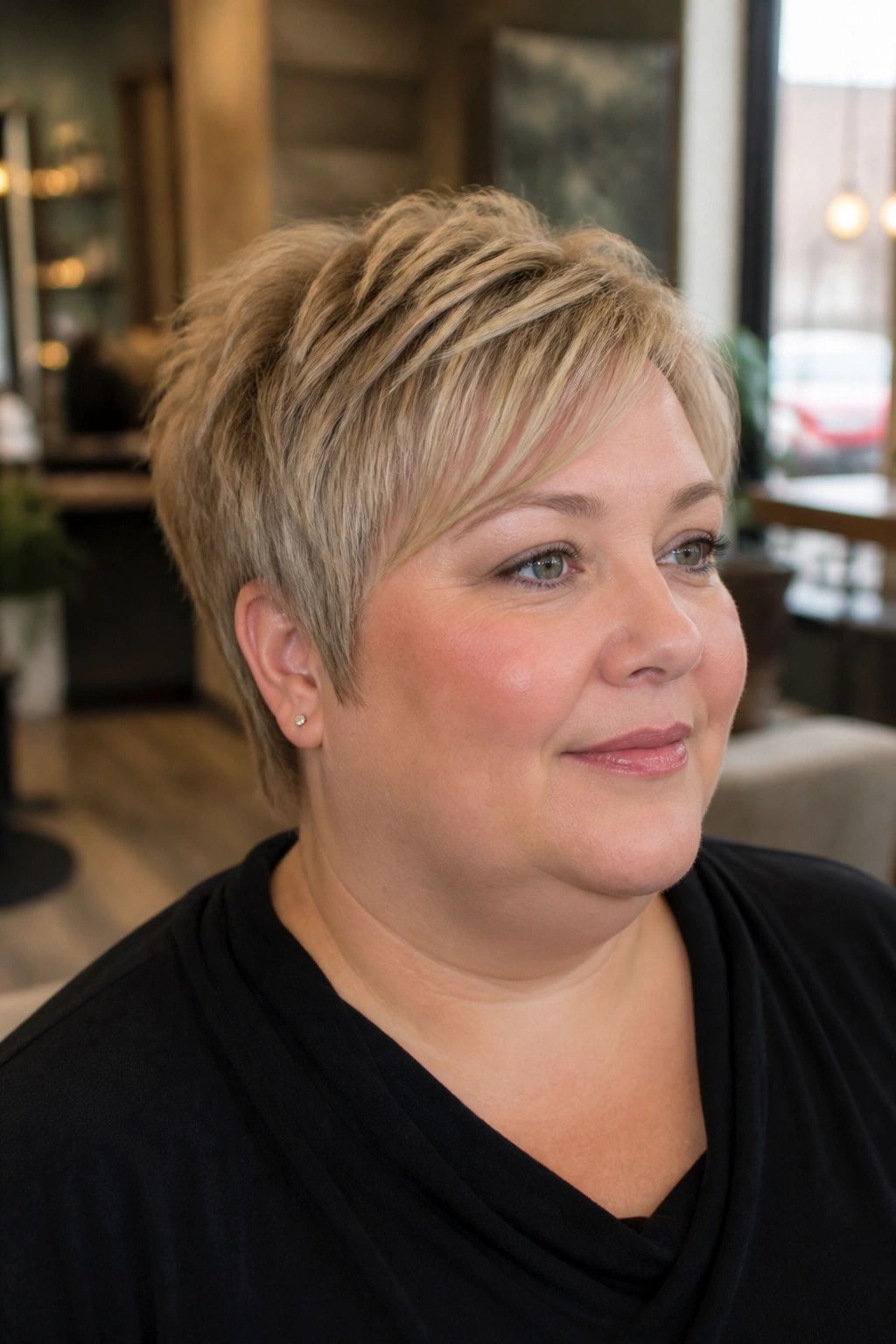
Fine hair can look flimsy in a short cut if the layers are too aggressive. So the goal here is controlled layering, not endless thinning. A layered pixie for fine hair should build lift at the crown and keep enough weight at the ends so the cut does not disappear.
The best version usually has soft internal layers through the top, a light side fringe, and a tapered nape. That keeps the style from sitting flat against the head. Fine hair loves structure. Without it, the cut can read as sparse.
Less is more here. That sounds boring, but it saves you from the dreaded see-through pixie. Ask for texture that supports volume rather than shreds the hair into nothing. A good stylist will know the difference.
This cut is especially useful if you want the face to look longer without adding width. The crown lift does the visual work, while the clean sides keep the silhouette neat. A small round brush and a root spray can make a huge difference on this one. No drama. Just good mechanics.
15. Classic Cropped Pixie with Long Sideburns
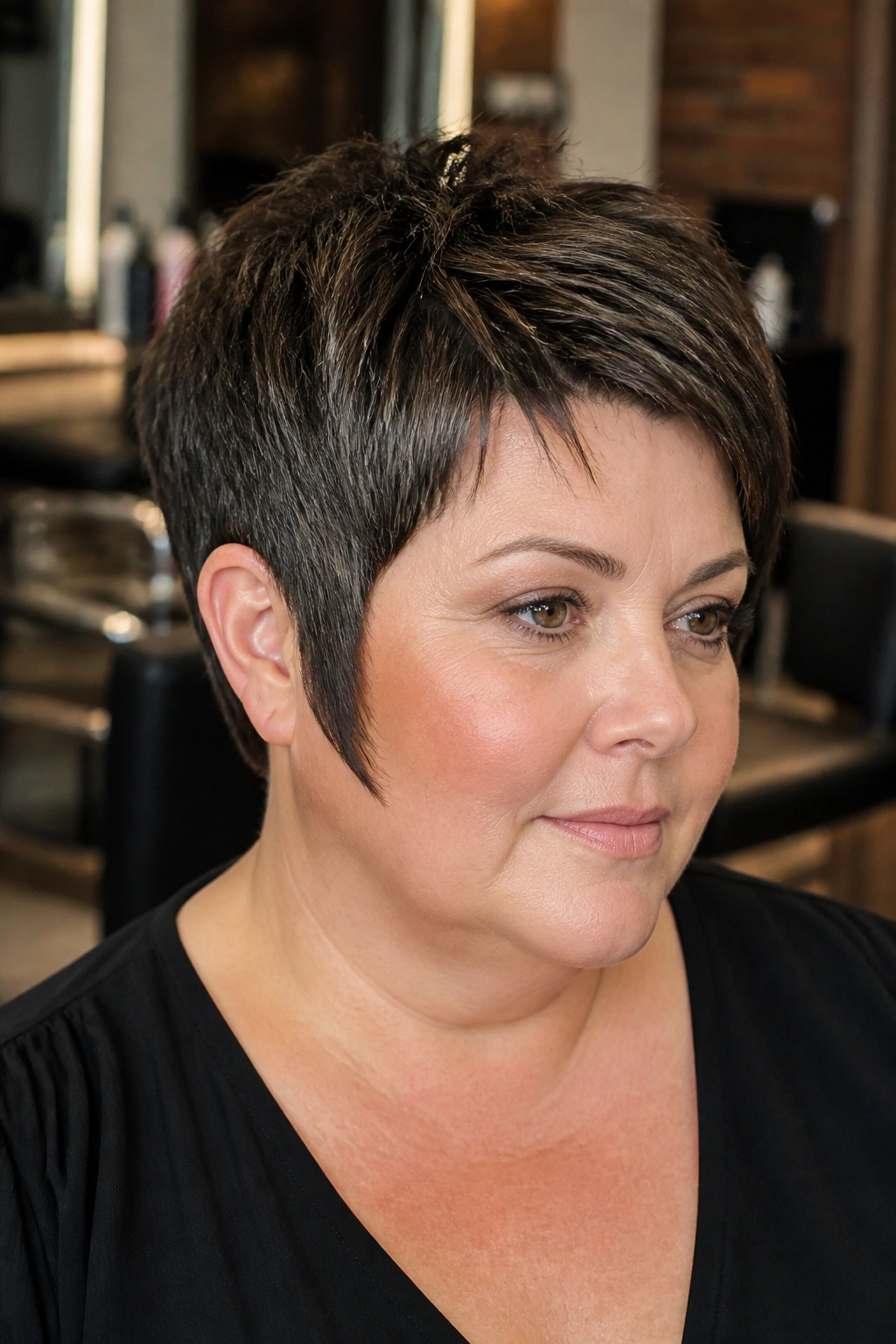
A classic cropped pixie with longer sideburns is one of the most underrated shapes for a fuller face. The close crop keeps the head shape neat, while the longer sideburns create two slim vertical lines beside the face. That line matters because it breaks up the width near the cheeks and jaw.
This cut is cleaner than a shaggy pixie and softer than a severe buzzed look. It sits in a nice middle zone. The top can be slightly textured or fairly smooth, but the sideburns should stay visible enough to frame the face instead of disappearing into the rest of the cut.
The sideburns are doing more than decoration. They guide the eye downward in a narrow line, which can make a double chin feel less prominent by comparison. It is a small detail, and small details are often the ones that matter most.
If you like neat shapes and low fuss, this may be the easiest style to live with. Keep the neckline tidy, let the top stay a touch longer, and ask for the sideburns to be shaped—not shaved away. That last part changes the whole face.
Final Thoughts
The most flattering pixie cuts for plus size with a double chin usually share the same quiet tricks: a little height on top, a cleaner shape at the sides, and some softness near the front. That combination helps the eye travel where you want it to go. Upward. Outward. Away from a heavy, boxy line.
If you’re torn between two options, pick the one with the longer front and the tighter nape. That pairing tends to be the safest and easiest to wear, especially if your hair has a mind of its own. And if your stylist starts talking about adding width at the cheeks, push back a little. You do not need more width there.
Bring photos, but bring a plain-language request too. Say you want height, softness, and a shape that stays narrow around the jaw. That one sentence can save you from a bad cut.
