



A heart face shape can be a gift and a headache. Strong cheekbones, a broader forehead, and a narrower chin create a face that takes a haircut well, but the wrong shape can make the top half feel heavier than it is. That is why so many of the most flattering hairstyles for heart face shapes do one of two things: they soften the forehead with fringe, or they bring a little visual weight lower, toward the cheeks, jaw, or collarbone.
Bangs are optional. Seriously.
What matters more is where the eye lands. A good cut nudges attention down the face instead of stacking it all at the top, and that can happen with curtain bangs, a deep side part, a bob that stops at the chin, or long layers that move around the mouth and jaw. If your hair is fine, the trick is to keep the shape airy. If it’s thick, the trick is to stop the ends from puffing out at the crown and fighting your face.
There’s no single “correct” haircut for heart face shapes. There are better and worse choices, though, and the difference is usually one inch of length, one part line, or one well-placed layer. The first style on the list shows that balance right away.
1. Curtain Bangs for Heart Face Shapes
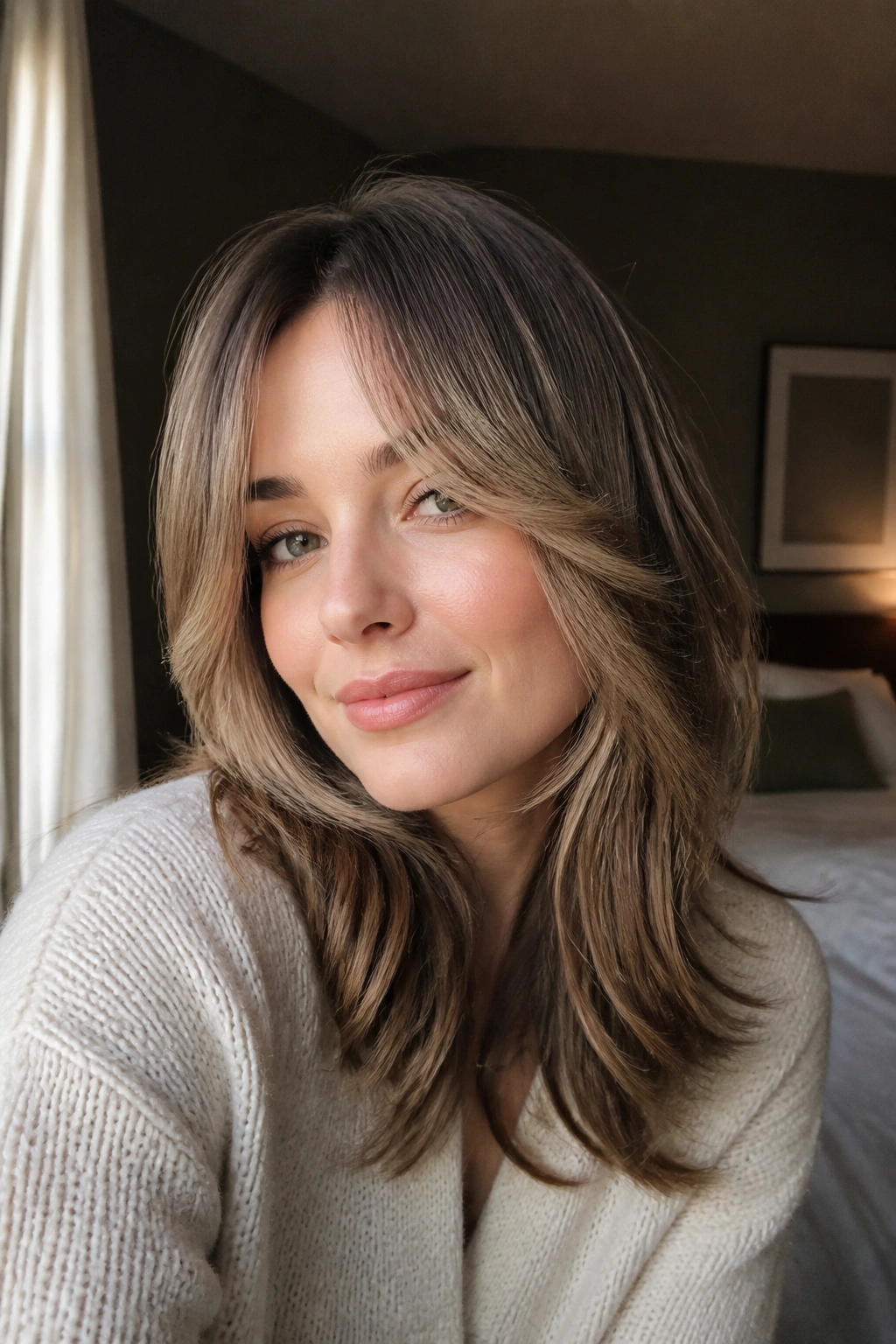
Curtain bangs sit so well on heart face shapes because they split the difference between softness and structure. The center stays open, which keeps the forehead from feeling boxed in, while the longer sides brush past the cheekbones and give the face some movement exactly where it helps most.
Why the Fringe Matters
Curtain bangs usually start lower than blunt bangs — around the brow tail or cheekbone, not right at the hairline. That matters on a heart face because you want to soften width up top without making the forehead look crowded. The shape also gives you a little flexibility; you can wear them parted wider, brushed to one side, or tucked back on days when you want a cleaner look.
They work especially well with shoulder-length cuts, long layers, and lob haircuts. On straight hair, the fringe looks polished with a round brush. On wavy hair, the bend adds a softer finish that feels easy instead of fussy.
- Best on straight, wavy, and loose-curly hair
- Ask for the shortest pieces to hit around the outer brow or upper cheekbone
- Blow-dry with a medium round brush, rolling the fringe away from the face
- Keep the ends light, not chunky
- If you wear glasses, let the side pieces sit a touch longer so they don’t crowd the frames
Tip: have the fringe trimmed every 6 to 8 weeks, or it will start collapsing into your eyes and lose that open, airy split.
2. Deep Side-Parted Waves
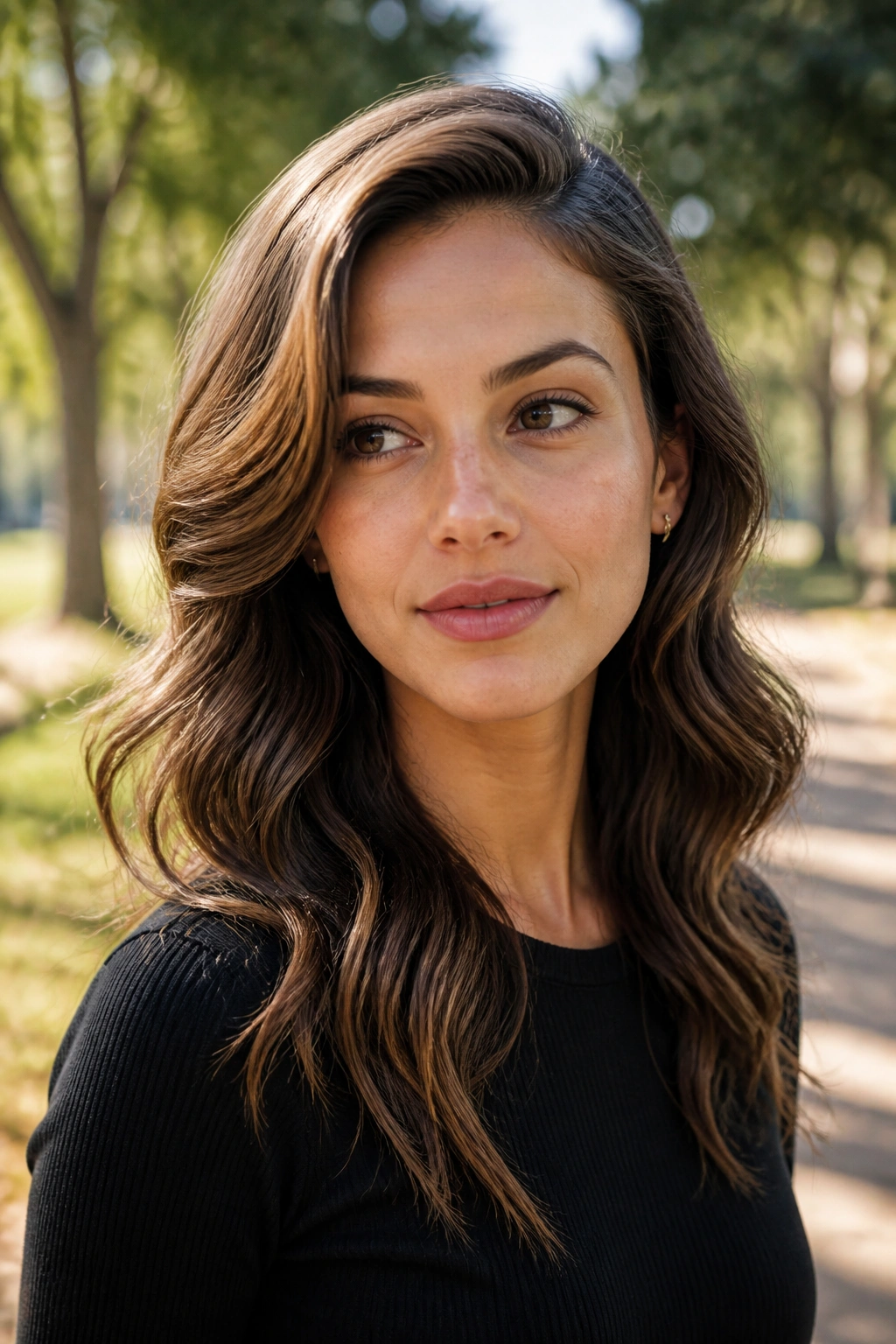
A deep side part is one of the easiest ways to soften a heart face without changing the haircut much at all. Shift the part 2 or 3 inches off center, and the hair starts doing quiet work for you: the forehead feels less broad, the cheekbones look a little more sculpted, and the lower half of the face gets some much-needed balance.
Waves help because they bend the eye outward instead of straight down. A loose wave that starts below the ear creates width near the jaw and collarbone, which is exactly where a heart face often benefits from a little visual weight. Keep the roots lifted, though. Flat roots can make the style look tired fast.
This is a good move if you like long hair and do not want a heavy fringe. It’s also easy to test before committing to a cut. Try a deep part on day-old hair, mist in a light texture spray, and bend the front sections away from the face with a 1.25-inch iron. If the shape feels right, you can keep it. If not, you’ve lost nothing.
3. Chin-Length Bob with Soft Ends

A chin-length bob can be a smart, cheeky little cut for heart face shapes when the ends are soft and not razor-straight. Picture a bob that lands right where the jaw starts to turn inward. That length gives the narrower part of the face some company and keeps the whole shape from looking too top-heavy.
The edge matters more than people think. A hard, blunt line can look sharp in a good way, but it can also make the chin feel smaller if the rest of the cut has no movement. A lightly textured end — not choppy, just softened — works better for most heart faces because it keeps the bob from sitting like a helmet.
- Keep the length at the chin or just below it
- Ask for slight texture at the ends, not a stack of short layers
- Use a flat iron only on the last inch if you want a small bend
- Tuck one side behind the ear to open the face
- Avoid a cut that stops well above the jaw unless you want a sharper, fashion-forward shape
The best version looks clean from the front and a little undone at the ends. That mix is what keeps it from feeling severe.
4. Textured Pixie with Longer Top

Unlike a cropped pixie that sits tight everywhere, this version leaves room on top and through the fringe. That makes a real difference on heart face shapes, because the face already has a lot going on near the forehead and cheekbones. A little length on top gives you styling options, but not so much height that the top half takes over.
I like this cut best when the sides stay soft and the fringe can fall forward, sweep to the side, or stand up in a piecey way. A harsh, flat pixie can make a narrow chin look even narrower. A textured one spreads the attention around and gives the jawline some breathing room.
It’s especially good if you have fine hair and want something low-fuss but not limp. Add a pea-sized amount of paste, rub it through the top, and pinch the ends into little pieces instead of combing everything smooth. That tiny bit of separation keeps the cut from looking too neat, which is the wrong mood for a pixie on a heart face. The shape should feel light, but not wispy.
5. Collarbone Lob with Face-Framing Pieces for Heart Face Shapes

This is the haircut I reach for when someone wants length, polish, and a shape that doesn’t fight the face. A collarbone lob lands low enough to balance a wider forehead, but not so long that it drags everything downward. On heart face shapes, that collarbone line is useful because it gives the eye a landing spot below the cheekbones.
The face-framing pieces matter even more than the length itself. If they start at the cheekbone and taper toward the collarbone, they soften the upper face and keep the jaw from feeling too tucked in. The cut works on straight hair, wavy hair, and curls, which is part of why it’s such an easy recommendation.
I’m a fan of keeping the layers long and sparse here. Too many short layers can make the top of the head feel puffy, and that is not the look. If your hair is thick, ask for internal weight removal instead of a lot of visible steps. If it’s fine, keep the perimeter a little blunt so the ends still look full.
The nice part? It grows out well. That matters more than people admit.
6. Butterfly Layers
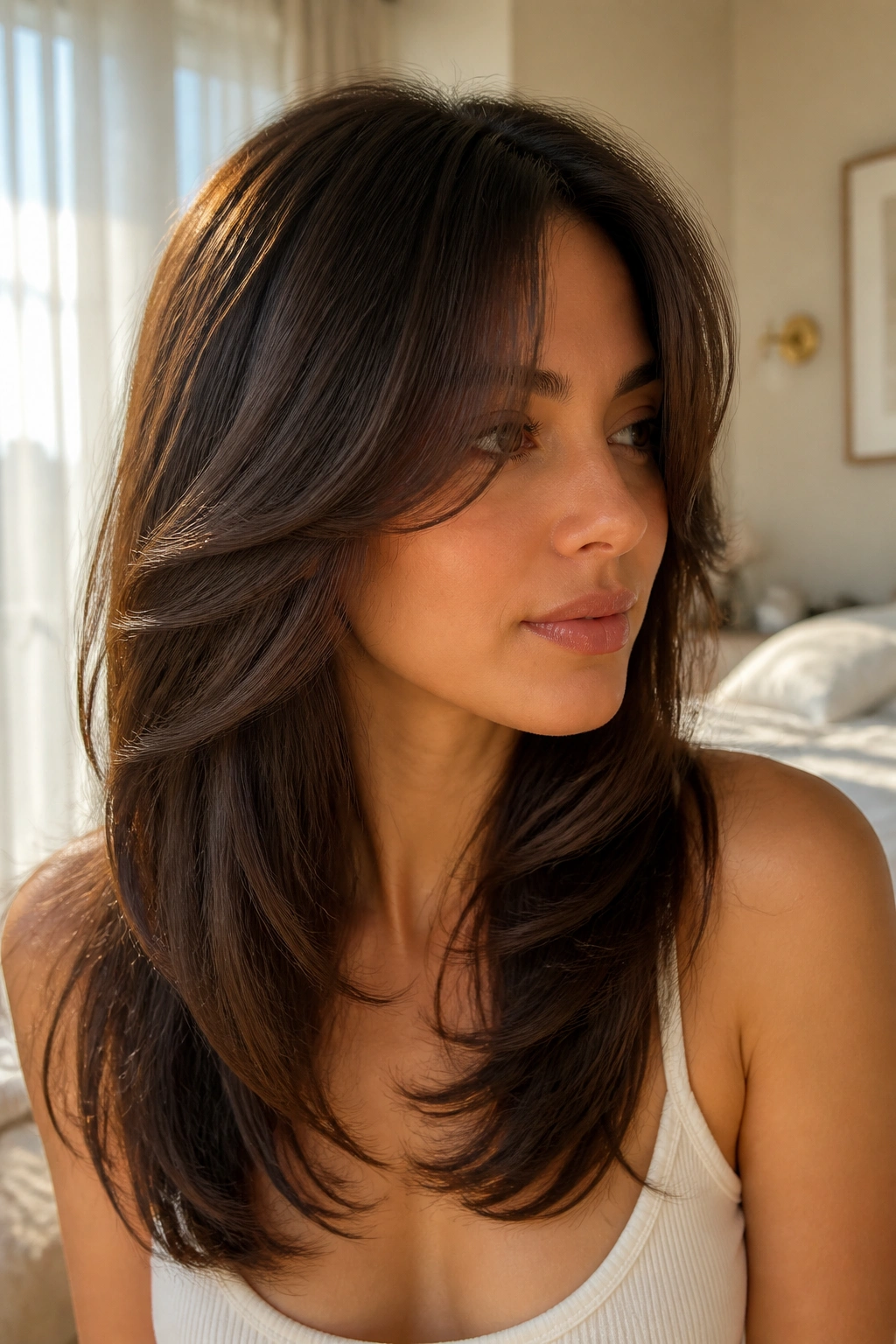
Why do butterfly layers keep showing up on heart face shapes? Because they separate the top of the hair from the lower lengths in a way that adds balance without making the cut feel chopped up. The shorter layers around the face can skim the cheekbones, while the longer layers keep the bottom half full enough to offset a narrower chin.
How to Style Them
Butterfly layers need movement. A quick blow-dry with a round brush or hot-air brush gives the top section lift and keeps the front pieces from hanging straight like curtains. Curl the face-framing layers away from the face, not toward it. That small detail keeps the forehead open and the cheekbones visible.
The cut works especially well if you like hair that feels light but still has length. It is a good answer for anyone who wants shape without sacrificing the overall swoosh of long hair. If your hair is very fine, ask for fewer layers so the ends do not go thin. If it’s thick, the layering can take a lot of bulk out and make the style move better.
This one needs a stylist who knows where to stop. Too high, and the layers puff out near the temples. Too low, and you lose the shape entirely. That little sweet spot around the cheekbone is the whole trick.
7. A Deep Side Part with a Glossy Blowout

A deep side part plus a smooth blowout is the fastest way to pull attention away from a wide forehead and toward the cheekbones. It sounds almost too simple, but simple is often the answer with heart face shapes. The part changes the geometry. The shine makes the cut look deliberate instead of accidental.
A round brush and a medium heat setting are enough for most hair types. Lift the roots at the part, then sweep the front section across the forehead before turning the ends under just a touch. That shape gives the hair some curve around the face, which is what keeps the look from becoming too severe.
This is a good move for medium to thick hair, especially if your natural texture is a little rough or frizzy. A light smoothing cream on damp hair helps, but keep it off the roots or the style will fall flat. You want the crown lifted, not glued down. And you do not need a huge amount of volume. A subtle rise at the roots and a clean bend at the ends is enough.
8. Soft Shag with Airy Fringe
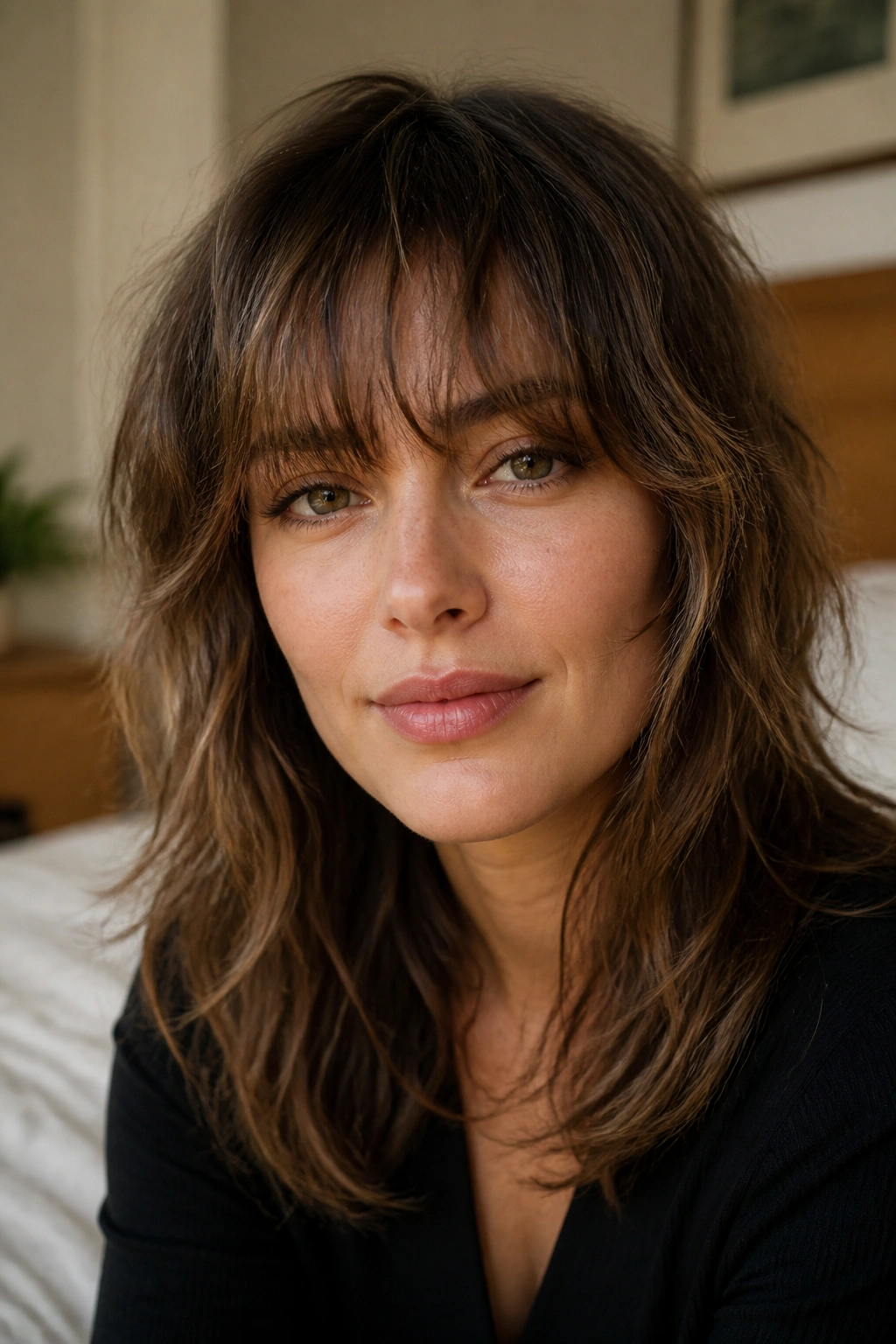
A shag can work on heart face shapes because it breaks up the top-heavy feeling that sometimes comes with a wider forehead. The trick is softness. You want movement, not a spiky halo around the crown. The fringe should skim the brows or sit just below them, and the layers should feather out around the cheekbones instead of kicking out at the temples.
What Makes the Shape Work
The best shags for heart faces are a little messier through the lengths and a little quieter near the top. That may sound backwards, but it is the whole point. You want the eye to drift through the hair, not stop at a thick, bulky fringe. If the top is too full, the face starts to look wider up there.
This cut is one of my favorites for wavy hair, because the texture does half the styling for you. A small amount of mousse, scrunched into damp hair, can give enough grit for the layers to separate without looking crunchy. On straighter hair, a few loose bends with a curling iron keep the shape from falling flat.
- Keep the fringe light and broken up
- Ask for the shortest layers to sit below the temple
- Use diffused heat or air-dry for softer texture
- Avoid a round shape at the crown
- Let the ends move a little freely
Bold tip: skip a shag that piles all the volume at the top. Heart faces need less height there, not more.
9. Loose Curls with Side-Swept Bangs

If your hair already wants to curl, this is a very friendly option. Loose curls with side-swept bangs create a diagonal line across the forehead, and that diagonal does a lot of work for a heart face shape. It softens the upper third of the face while the curls widen the lower half in a way that feels balanced.
The bangs should not be too short or too heavy. A soft sweep that starts around the temple and curves into the cheekbone looks better than a thick block of fringe. I prefer a bigger curling iron here — 1.25 inches or even 1.5 if your hair is long — because tight curls can make the face feel busier than it needs to be.
This style is also forgiving on second-day hair. A quick mist of water, a dab of curl cream, and a little scrunching can bring it back to life. If you want extra shape, pin one side back behind the ear and let the curl on the other side fall forward. That asymmetry is useful. It keeps the face from looking too centered and lets the bangs act like a soft frame instead of a curtain.
10. Bottleneck Bangs with a Medium-Length Cut for Heart Face Shapes
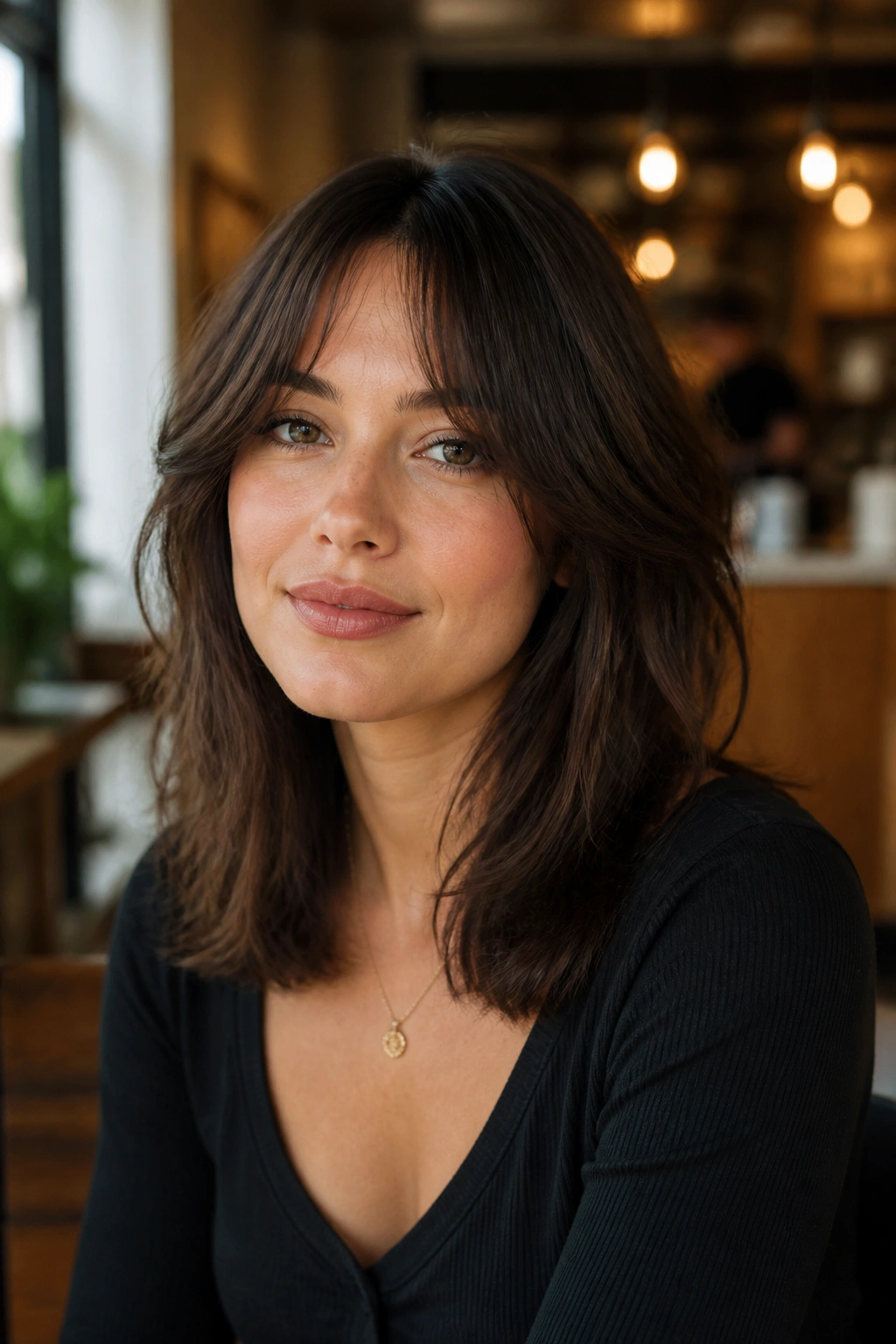
Why do bottleneck bangs work so well on heart face shapes? Because they start narrow at the center, then open out around the brow and cheekbone. That gives you the softness of bangs without the heavy block that can make a forehead look even wider. The shape feels modern, but the logic behind it is old-fashioned: keep the eyes moving down and outward.
A medium-length cut underneath makes the bangs easier to wear. Shoulder length or just below gives the fringe room to blend into the sides, which keeps the whole style from feeling chopped off at the front. The best bottleneck bangs are a little piecey, not perfectly smooth. They should skim the forehead, then part and dissolve into the side layers.
How to Wear Them
Dry the bangs first, side to side, with a small round brush. That keeps the center from sticking flat. If you like a cleaner look, use a flat iron on the last half-inch of the side pieces and give them a tiny bend away from the face.
This is a good choice if you want a fringe but don’t want the maintenance of a full one. The grow-out is kinder, too. That alone wins people over.
11. Shoulder-Length Hair with Flipped-Out Ends
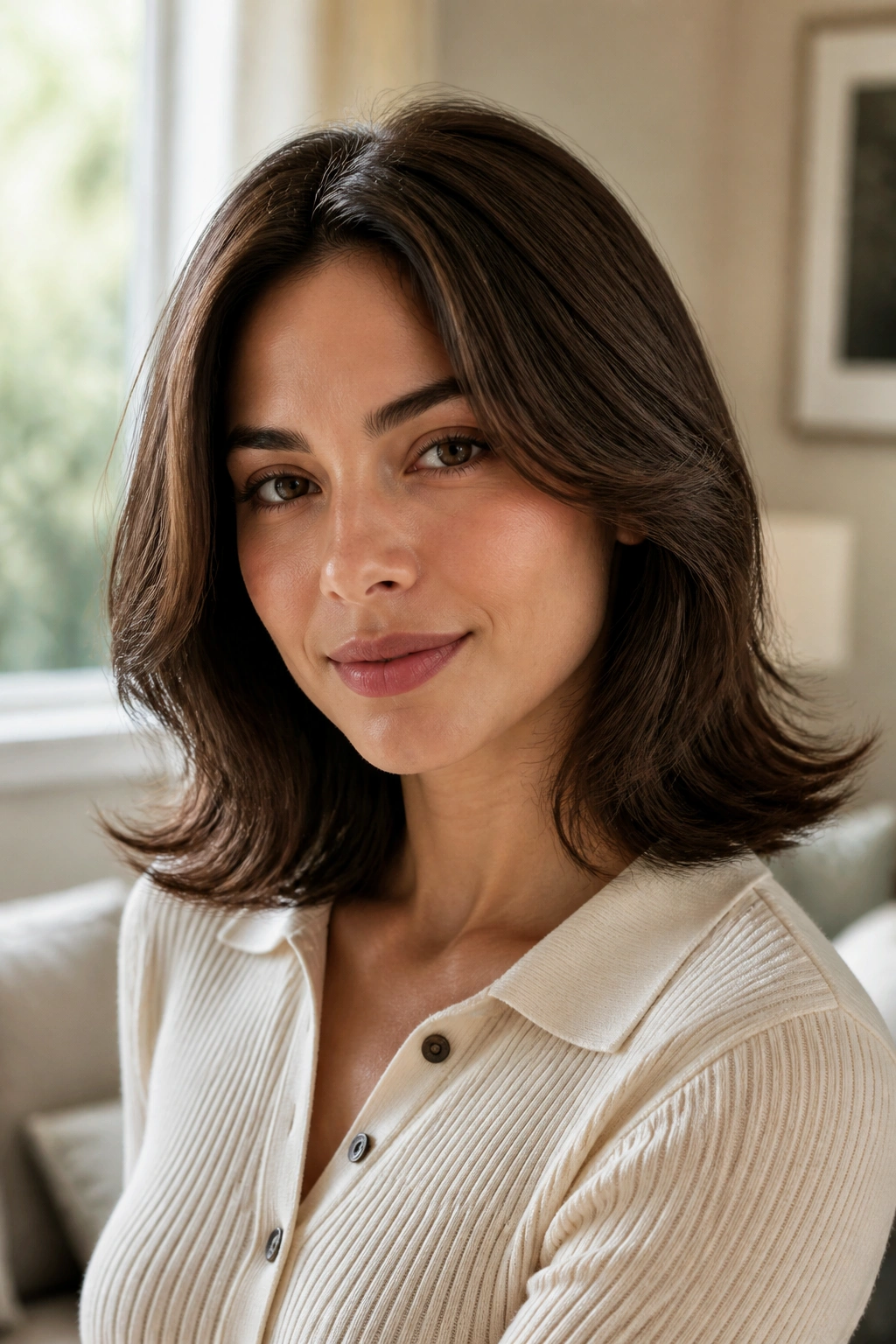
Flipped-out ends are underrated on heart face shapes because they add width exactly where the face starts to narrow. A shoulder-length cut with ends turned slightly outward gives the jaw and lower cheek area more presence, which keeps the forehead from dominating the whole silhouette.
The flip does not need to be dramatic. A half-inch turn at the ends is enough. Use a round brush, a blow-dry brush, or a flat iron if you know how to angle the wrist without making the hair look stiff. The point is movement, not a cartoonish curl.
This shape looks especially good on straight or slightly wavy hair because the line stays visible. If your hair is thick, keep the layers long so the ends do not balloon. If it’s fine, a touch of mousse at the roots and a light texturizing spray through the mids will help the flip hold. I like this cut for people who want something polished but not too formal. It has enough structure to look intentional, but not so much that it feels stiff.
12. Rounded French Bob

A rounded French bob can be lovely on a heart face shape when it sits at the jaw and stays airy through the ends. The rounded silhouette keeps the cut from feeling boxy, and the short length brings attention to the eyes and cheekbones instead of the forehead alone.
The catch is length. Go too short and the face can feel top-heavy. Leave it too long and you lose the clean, small shape that makes the bob special. The sweet spot is usually right around the jawline, maybe a touch above or below depending on neck length and hair density. I also prefer a soft side part or a loose center part here, never a heavy, flat fringe unless the brows and forehead are already well balanced.
It works best when the finish has a little air in it. A slight bend, a soft tuck behind one ear, maybe a bit of volume at the crown — that is enough. The style feels strongest on straight to wavy hair, but curls can wear it too if the barber or stylist leaves room for shrinkage. It is a chic cut, but it needs precision. A few millimeters matter.
13. Long Straight Hair with Angled Front Pieces
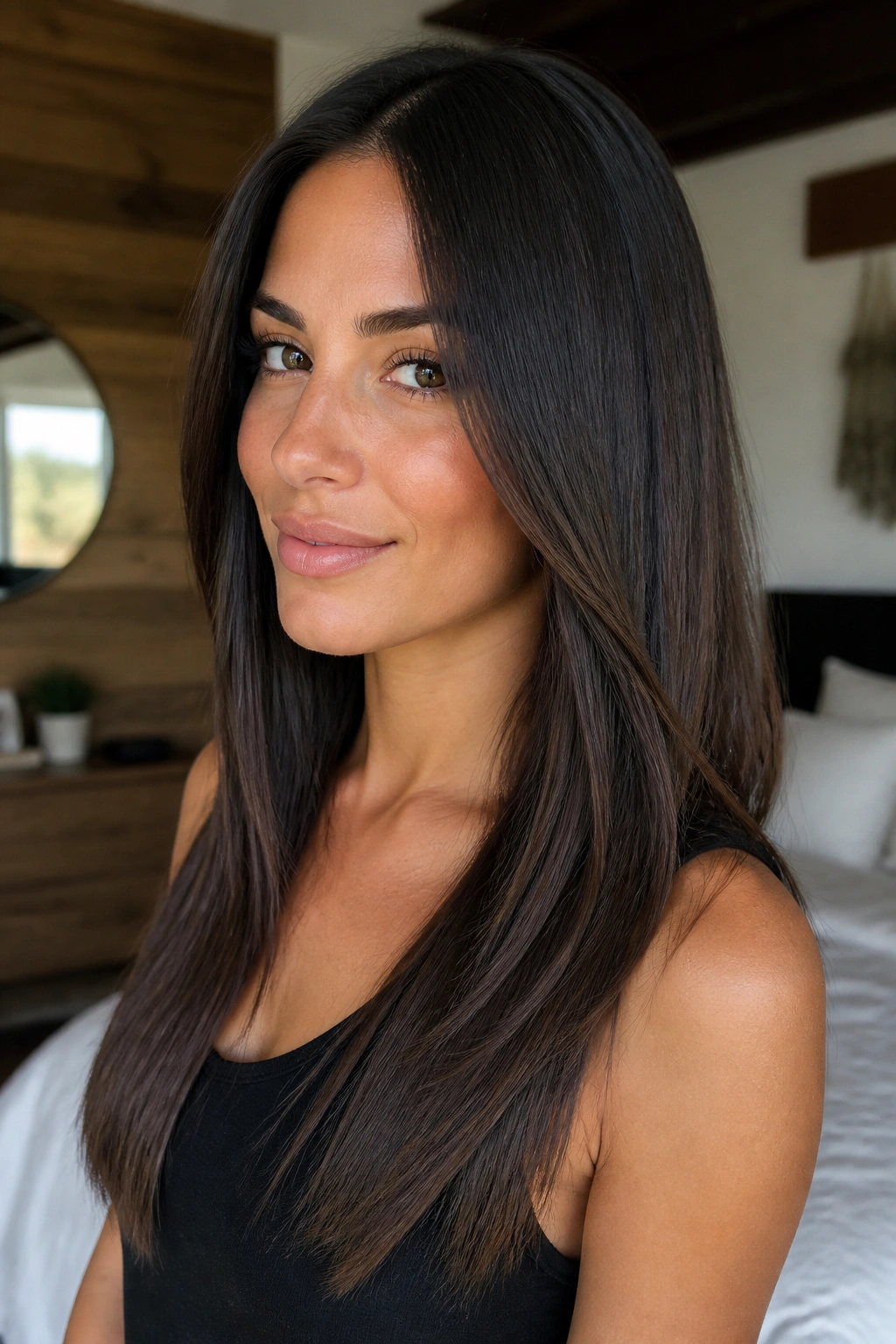
Can long straight hair work on a heart face without looking flat at the top? Absolutely, if the front pieces do some real work. The long length keeps the lower half of the face from feeling bare, while angled pieces around the face help break up the width of the forehead and carry the eye downward.
The angle matters more than the length of the back. If the shortest front piece starts around the cheekbone and tapers toward the collarbone, the cut creates a softer line around the face. That is much better than a straight curtain of hair that starts at the jaw and hangs there. Straight hair needs shape built in, or it can look a little severe.
Where the Angles Go
Ask for front pieces that begin near the cheekbone, not the chin. A tiny bend at the end helps too — just enough to keep the hair from hanging in a dead line. If your hair is very pin-straight, a lightweight smoothing cream plus a flat iron pass on the last couple of inches keeps the style from looking harsh.
I like this option for people who want long hair but still want the face to feel open. It is simple, yes, but it works. No drama needed.
14. Half-Up Hair with Loose Front Pieces
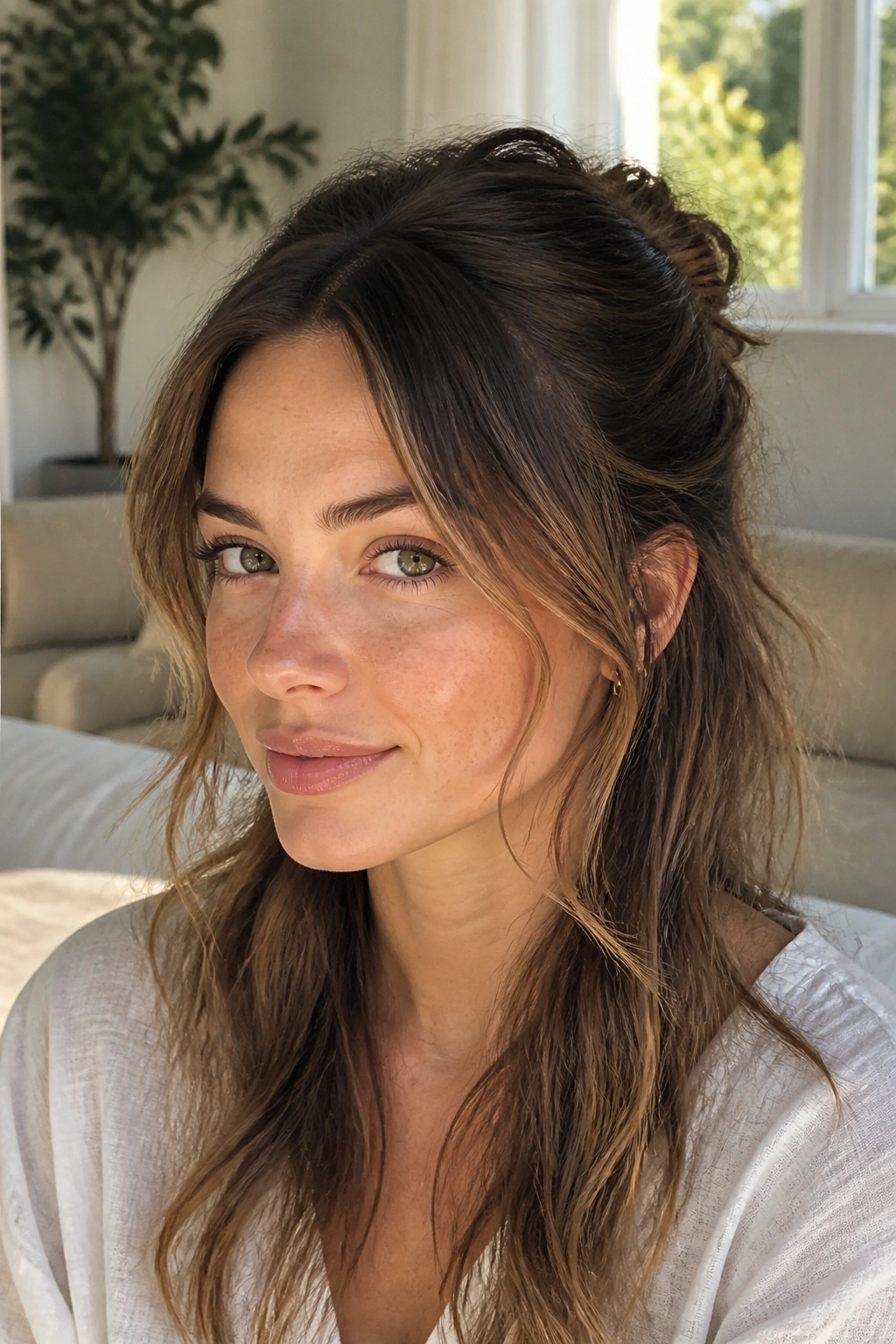
A half-up style can be a smart little trick for heart face shapes because it keeps the top clean while leaving enough hair around the cheeks and jaw to soften the face. Pulling everything back tightly is the mistake. Leaving loose front pieces is what makes the style work.
How to Shape It
Take the top section from temple to temple and secure it loosely at the back of the crown. Then pull a few thin pieces free near the cheekbones and ears. Those pieces should not be stiff. They should fall with a little bend so they can break up the width of the forehead and guide the eye lower.
- Keep the crown slightly lifted
- Leave 1-inch face-framing sections out
- Curl the loose pieces away from the face
- Use a small claw clip for a softer finish
- Avoid pulling the top section too tight
This style is useful on second-day hair, and it works whether your hair is straight, wavy, or curled. If you want it to feel more dressed up, wrap a small section of hair around the elastic or clip. That tiny detail makes the whole thing look finished without turning it formal. It is one of those styles that seems small, then saves the day.
15. Low Ponytail with Crown Lift

A low ponytail can be a heart-face move if you stop pulling it flat. That is the whole thing. A little lift at the crown, a soft part line, and a pony that sits low enough to keep the neck long — that combo keeps the face balanced and stops the forehead from taking over.
The best version is not scraped back tight. Leave a bit of movement at the temples, then smooth the rest with a brush or your hands. If your hair is layered, let a few shorter pieces fall naturally. If it’s one length, gently tug the crown loose after tying it so the style has some shape. The pony itself can be straight, waved, or curled, depending on the mood.
- Place the pony at the nape or just above it
- Add a small bump at the crown with your fingers, not a teasing comb
- Wrap a piece of hair around the elastic for a cleaner finish
- Curl the tail if you want the shape to feel softer
- Keep the front loose enough to avoid a pulled-tight look
It is plain, but plain is not the same as boring. On the right face shape, a simple ponytail can look sharp and calm at once.
16. Messy Bun with Center-Part Tendrils
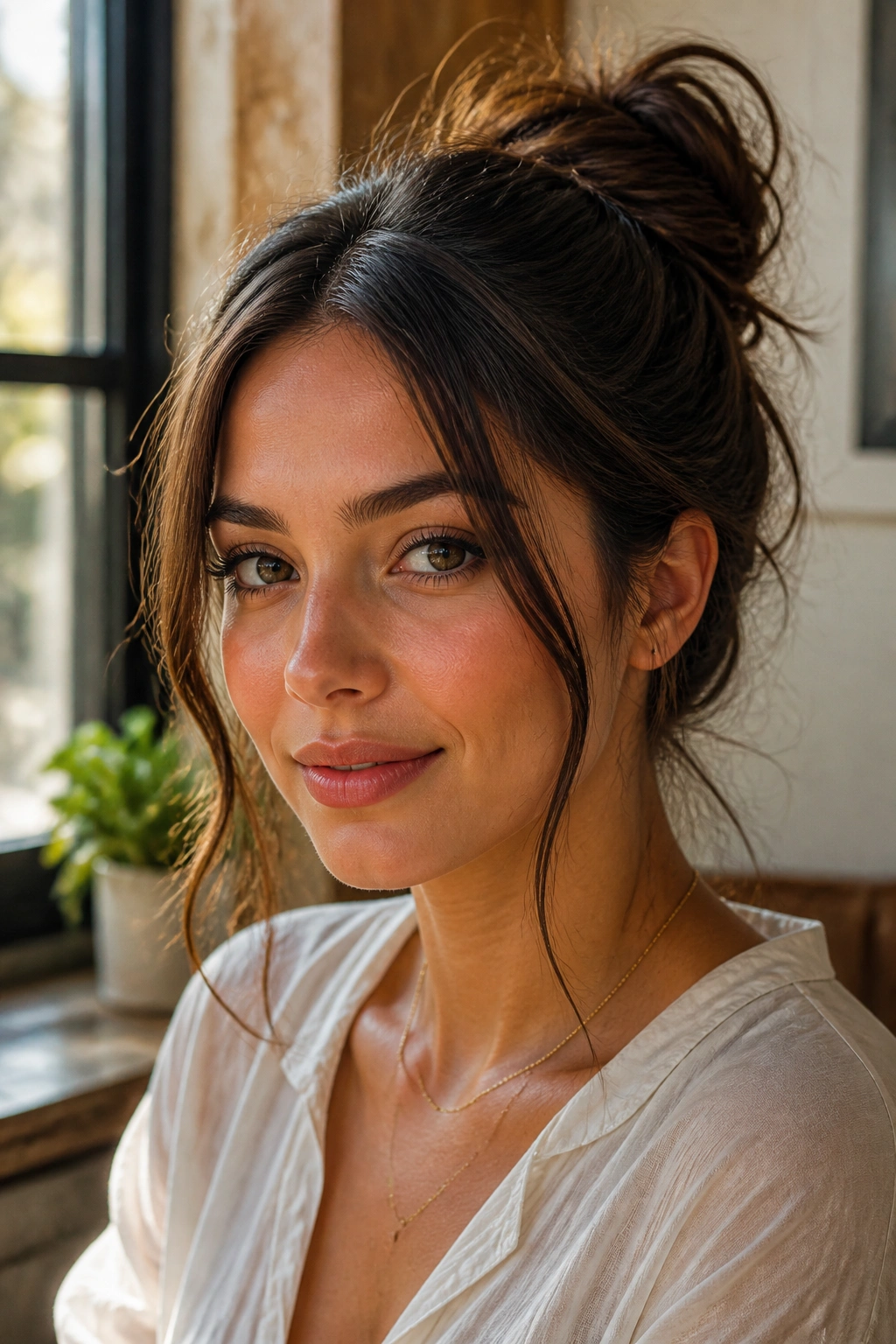
A messy bun is only dull when it ignores the face. On heart face shapes, the trick is to use a center part and leave a pair of tendrils near the cheeks. That keeps the forehead open without making the top half feel bare, and it gives the chin some company.
The bun itself can sit high or mid-height, but I like it a little lower for this face shape. A bun that sits too high can pull attention upward and exaggerate the forehead width. Keep some softness at the temples, twist the hair loosely, and let a few pieces escape around the ears. Those little loose sections stop the style from looking severe.
This is a good choice when your hair has a bit of natural texture or you do not mind using dry shampoo and texture spray. Fine hair may need a small amount of grip first, or the bun will slip. Thick hair, on the other hand, may need a few pins hidden underneath to keep the shape from sagging. The face-framing pieces do most of the visual work. They do not need to be perfect. They just need to be there.
17. Soft Modern Mullet
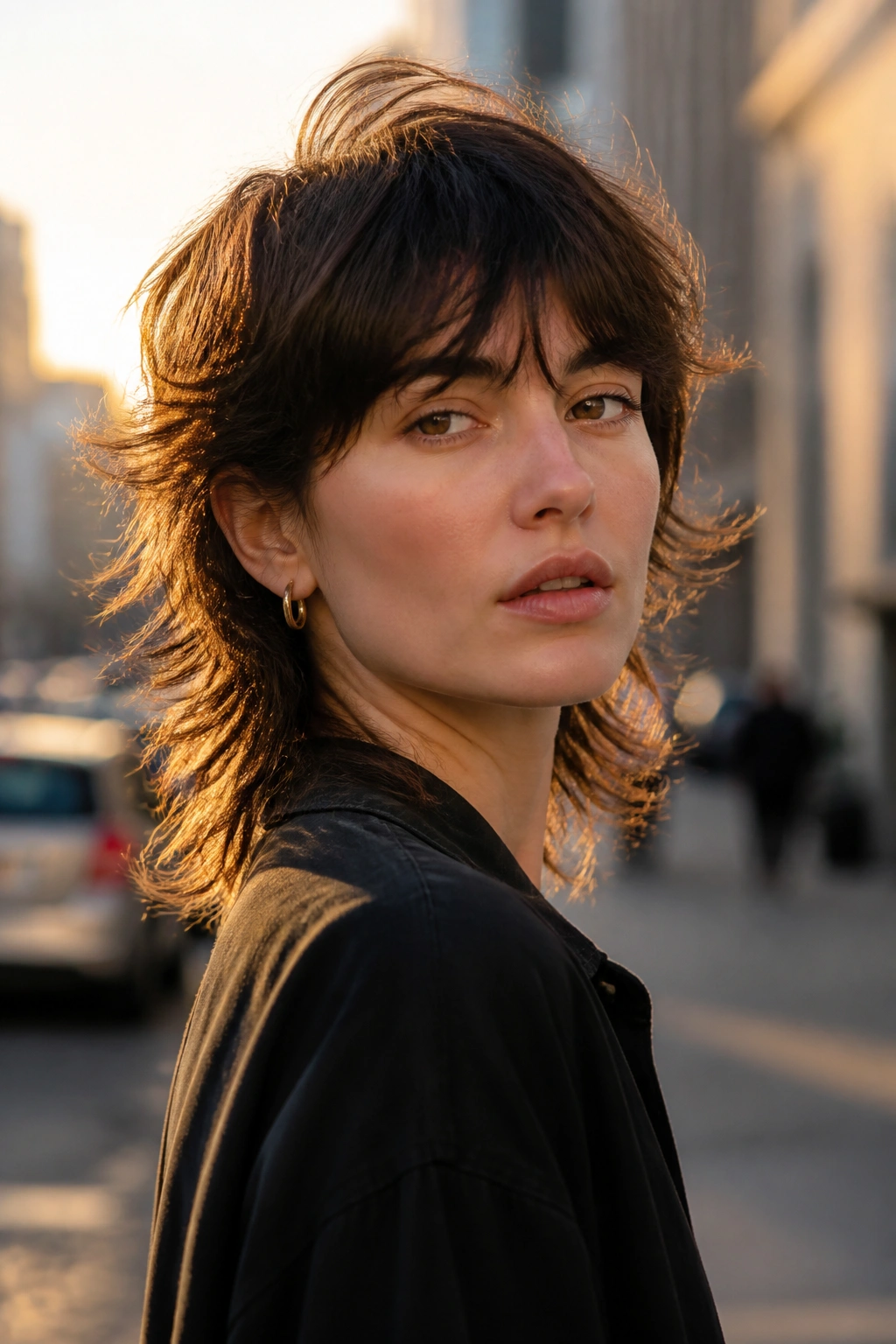
A modern mullet can work on heart face shapes when the edges are soft and the contrast is gentle. I’m not talking about a hard, retro chop with a sharp top and a jumpy back. I mean a version with a wispy fringe, a little movement through the sides, and a nape that stays feathered instead of blunt.
Compared with a classic short crop, this style gives you more length around the neck and collarbone, which helps balance a narrower chin. Compared with a shag, it has a bit more edge and shape shift. That makes it a good pick for people who want something with personality but do not want the face to feel crowded at the forehead.
It suits wavy and curly hair especially well, because the texture hides the transitions and keeps the cut from reading too harsh. On straight hair, ask for softer graduation and avoid a too-high crown. A dry wax or lightweight cream can help define the ends without making them stiff. This is not a haircut for someone who wants to forget about it for six months. It does need some attention. But if you like hair with attitude, it pays off.
18. Long Curls with Invisible Layers

Long curls with invisible layers are one of the calmest, easiest options for heart face shapes. The length pulls the eye downward, and the hidden layering keeps the curls from stacking too heavily around the cheeks. You get shape without a visible staircase of steps, which is useful if you want the cut to feel soft and full.
The best part is that this style is forgiving. If the curls are natural, cut them dry so the shape lands where it should, not where it seems like it should when wet. If the hair is straight, large curls wrapped around a 1.25-inch iron and brushed out give a similar effect. The layers should release movement around the collarbone and jaw, not create a puff near the temples.
This is the kind of cut that looks better when it moves. A breeze, a head turn, even a quick tuck behind the ear — all of that helps. Keep the ends healthy with regular trims, because long curls can start looking thin fast if the bottom gets scraggly. It is a soft finish, and heart face shapes wear softness well.
Final Thoughts
The best hairstyles for heart face shapes usually do one of two things: they soften the forehead, or they give the lower half of the face a little more presence. That can happen with bangs, with a side part, with layers that start near the cheekbones, or with a cut that lands at the jaw or collarbone.
Length is not the enemy. Flatness is. A long cut can look terrific on a heart face if the front pieces move and the roots do not sit like a helmet. A short cut can look just as good if it leaves some softness around the sides and keeps the crown from going too wide.
Bring photos if you’re seeing a stylist, but bring notes too. Say where you want the shortest front piece to land. Say whether you want the forehead open or softened. That tiny bit of direction saves a lot of guesswork.
A good heart-face haircut does not hide your shape. It gives it a better frame.
