



A good short haircut after 50 does something practical before it does anything flattering: it makes hair look sharper, cleaner, and more intentional the second you wake up. That matters more than people admit. Gray hair can be gorgeous, but it also changes the way hair sits, bends, and reflects light, so the same cut that worked five years ago can suddenly feel heavy or flat.
The best short hairstyles for women over 50 do not try to hide age. They work with texture, jawline, glasses, cheekbones, and the way hair behaves in real life—after a shower, in humidity, on day three, when you do not have time to fuss with it. Some cuts add lift at the crown. Others soften a strong jaw. A few make silver and salt-and-pepper tones look polished without a lot of product.
I keep coming back to the same idea: short hair should earn its place. If it takes twenty minutes and three tools just to look decent, that cut is asking for too much. A better style gives shape quickly, grows out in a controlled way, and still looks like you meant it.
Here are 25 short cuts that do that job well, each one with its own strengths, quirks, and tiny trade-offs.
1. Classic Pixie Cut
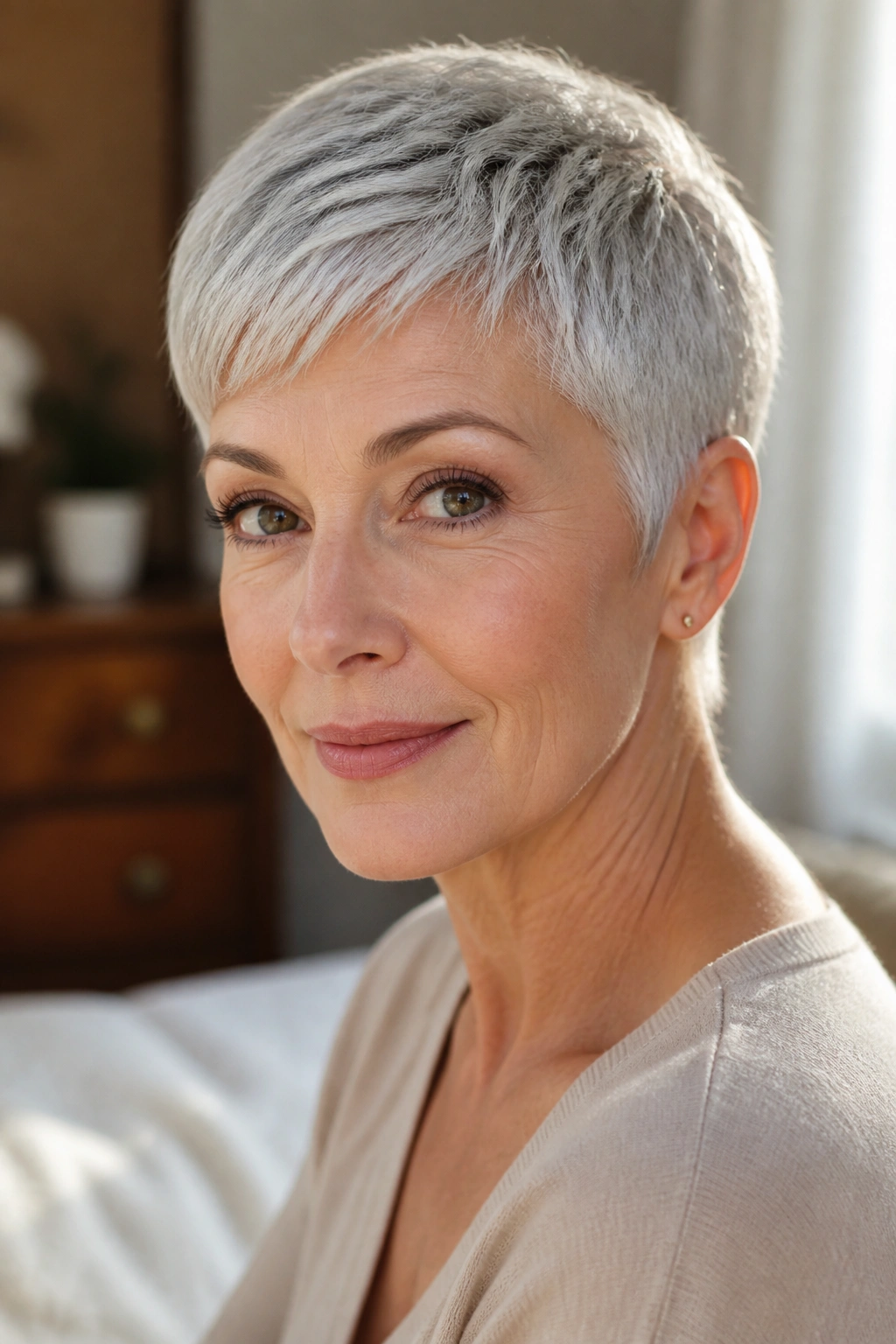
The classic pixie is the shortcut I suggest most often when someone wants a clean reset. It sits close to the head, keeps the sides tidy, and leaves enough length on top to brush forward, lift up, or sweep to the side. Gray hair looks especially crisp in a pixie because the shape does not hide shine; it shows it.
This cut works best when you like low-maintenance hair but still want structure. If your hair is fine, a pixie can make it look fuller because the ends are not dragged down by extra length. If your hair is thick, your stylist will need to remove bulk carefully so it does not turn helmet-like.
A little styling cream or matte paste is usually enough.
A comb, fingers, and five minutes. That’s the whole routine.
Ask for soft tapering around the ears and neck so the grow-out stays neat instead of fuzzy.
2. Soft Feathered Pixie
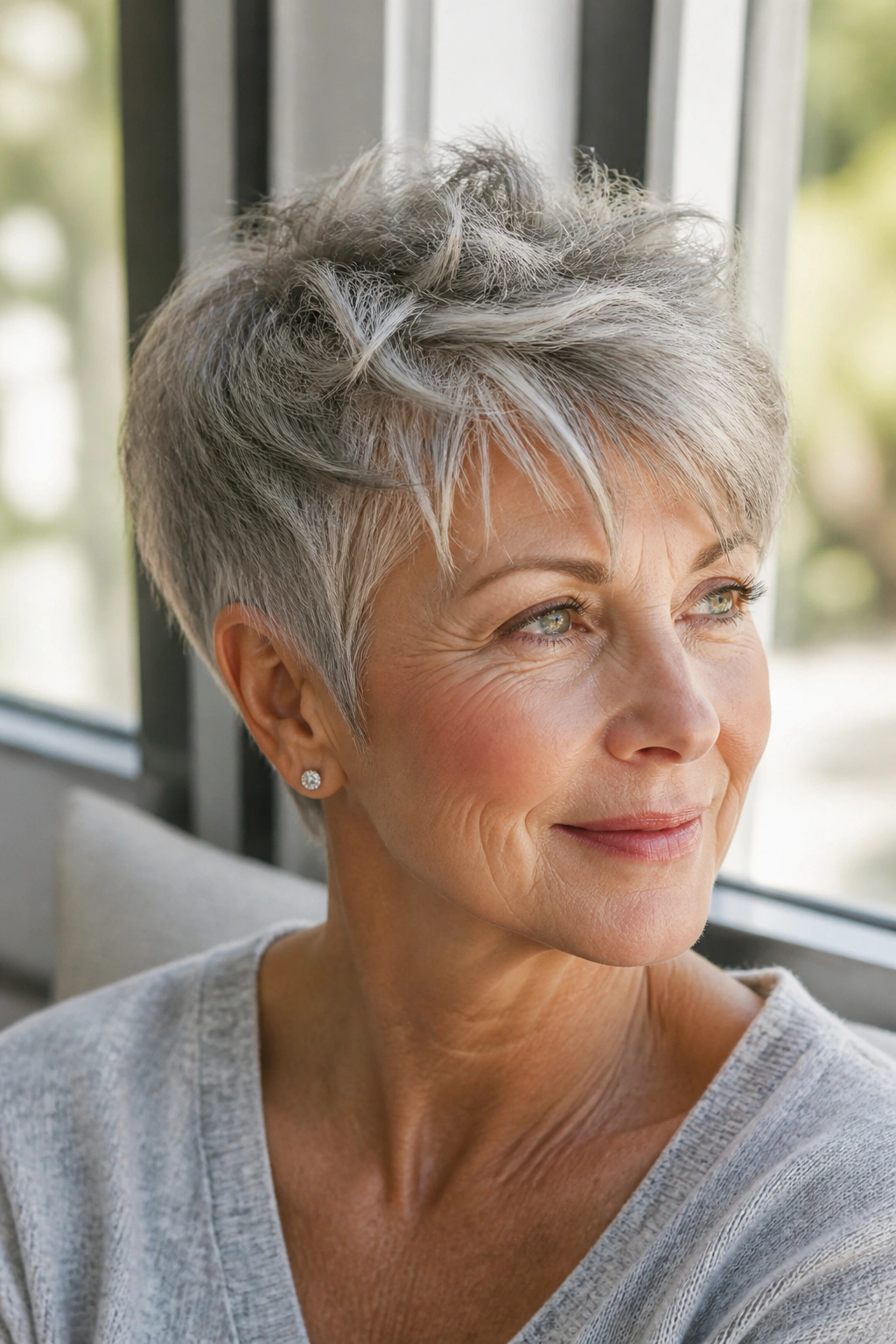
A feathered pixie has the same easy spirit as a classic pixie, but with more movement around the crown and sides. It feels lighter, almost airy, which is why it works so well on hair that has started to lose bounce. The feathered ends also keep the cut from looking too severe.
How to Style It
Use a pea-sized amount of lightweight mousse on damp hair, then blow-dry with your fingers, pushing the top in the direction you want it to sit. If you like a little lift, direct the front upward for the first minute of drying and then smooth it back into place. That small step makes a real difference.
This shape is friendly to fine gray hair because the layers create the illusion of density without looking choppy. It also softens forehead lines better than a blunt crop.
Best for: women who want a pixie without the sharp edges.
3. Tapered Crop
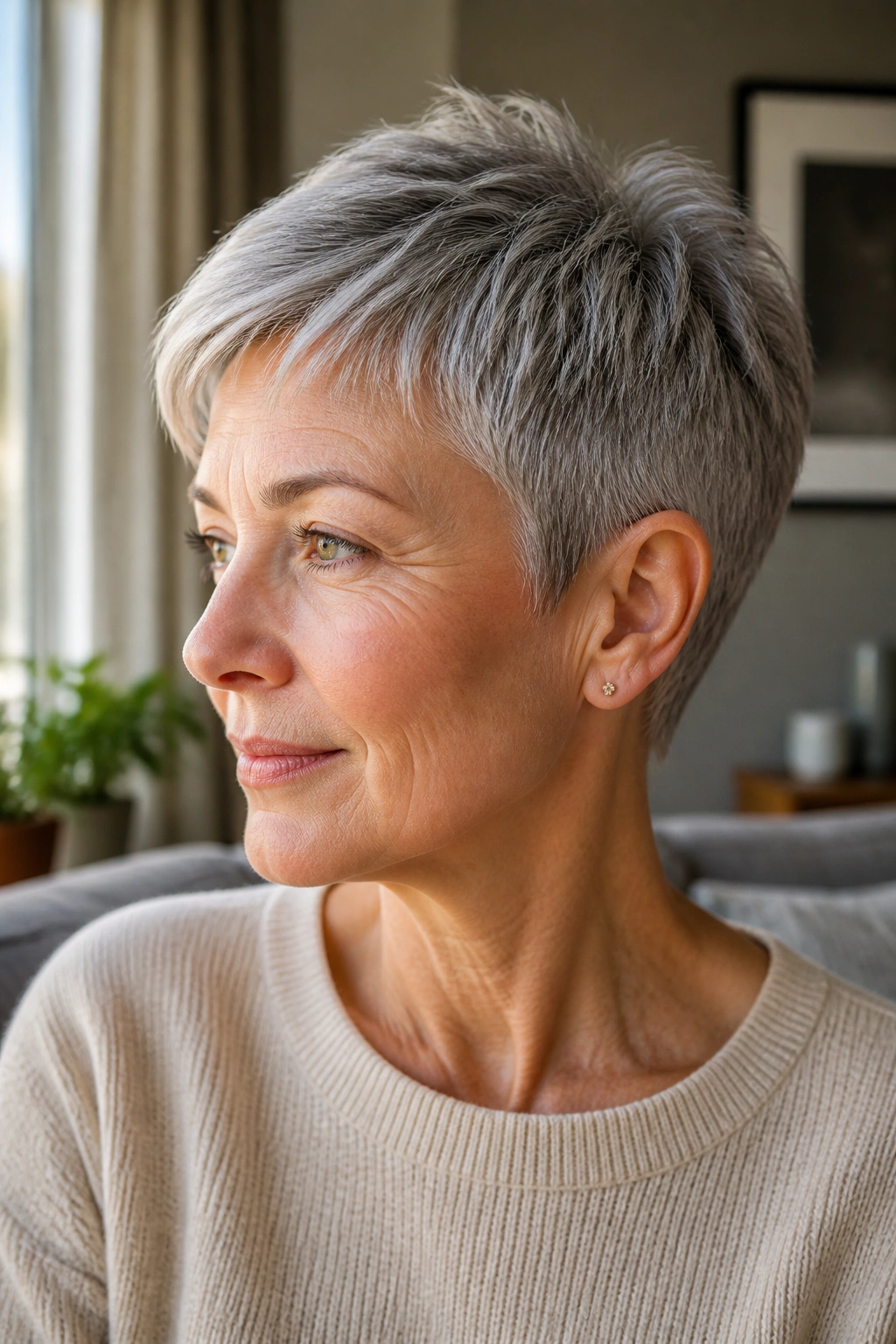
The tapered crop is one of those cuts that looks deceptively simple from the front and quietly excellent from the back. The neckline is trimmed close, the sides are shaped to follow the head, and the top keeps just enough length to create volume without fuss. It has a neat, tailored look that suits silver hair beautifully.
What I like about this style is how well it handles growth. Even when it starts to soften, it still looks intentional. That matters if you do not want a salon visit every few weeks. The silhouette stays clean, which is half the battle with short hair.
A tapered crop also gives the stylist room to work with your face shape. Round face? Keep the top a touch longer. Square jaw? Soften the edges around the temples. Straight hair, wavy hair, coiled hair—it can handle all of them if the cut is adjusted properly.
4. Layered Bob
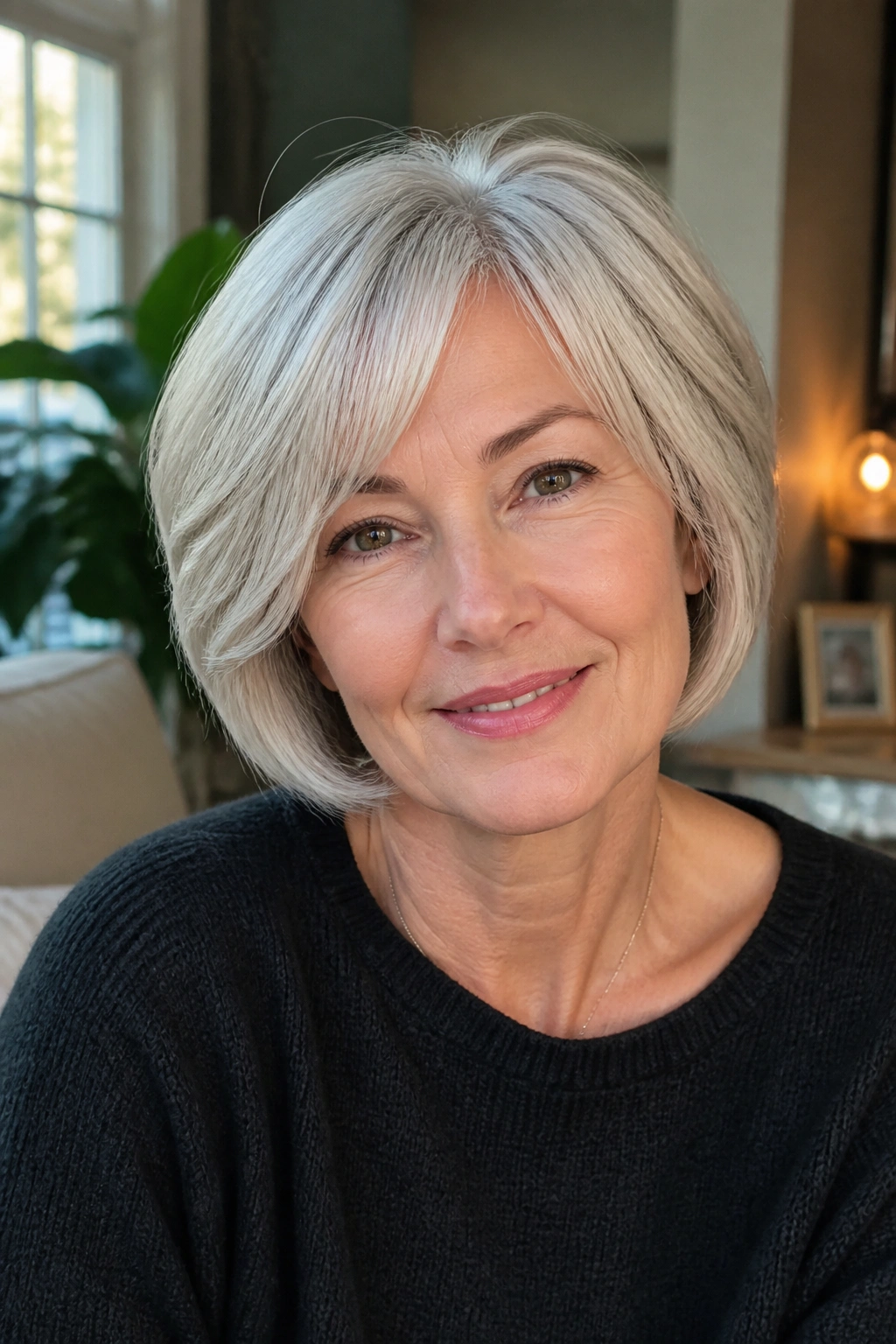
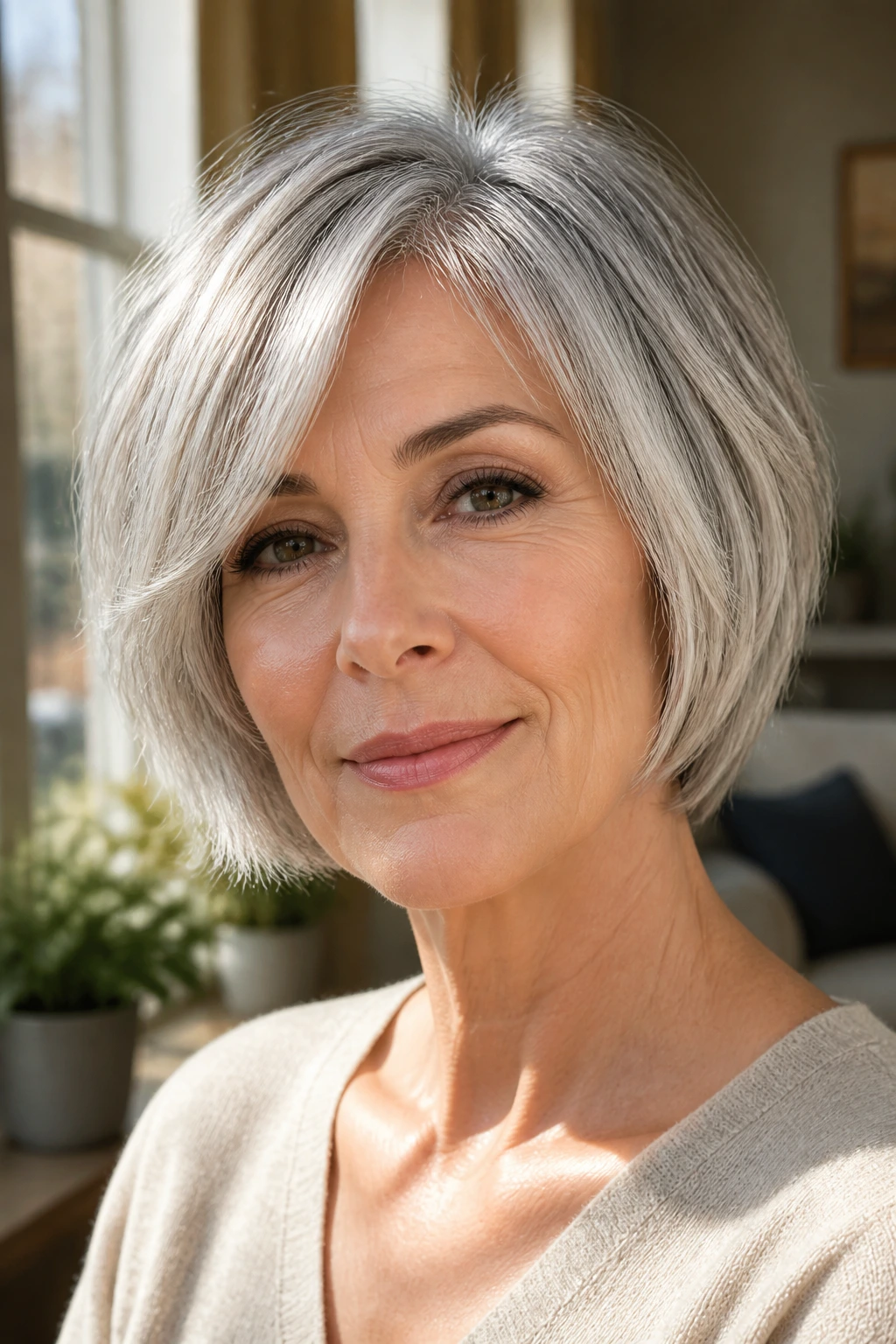
A layered bob is a solid choice when you want short hair, but not too short. It usually hits between the jaw and the neck, with layers that stop the ends from flipping into a heavy block. On gray or silver hair, those layers catch the light in a way that makes the cut feel alive.
Think of this as the bob for people who want movement first and polish second. The layers help fine hair avoid that flat, stuck-to-the-head look. On thicker hair, they take out weight so the shape does not puff out at the bottom.
What Makes It Work
- Layers should be soft, not shredded.
- The shortest pieces should frame the cheekbone or jaw.
- A round brush can give the top a slight bend.
- A smoothing cream keeps the ends from fraying.
One useful rule: if your hair already has natural wave, don’t over-layer it. You want swing, not frizz.
5. Stacked Bob for Women Over 50
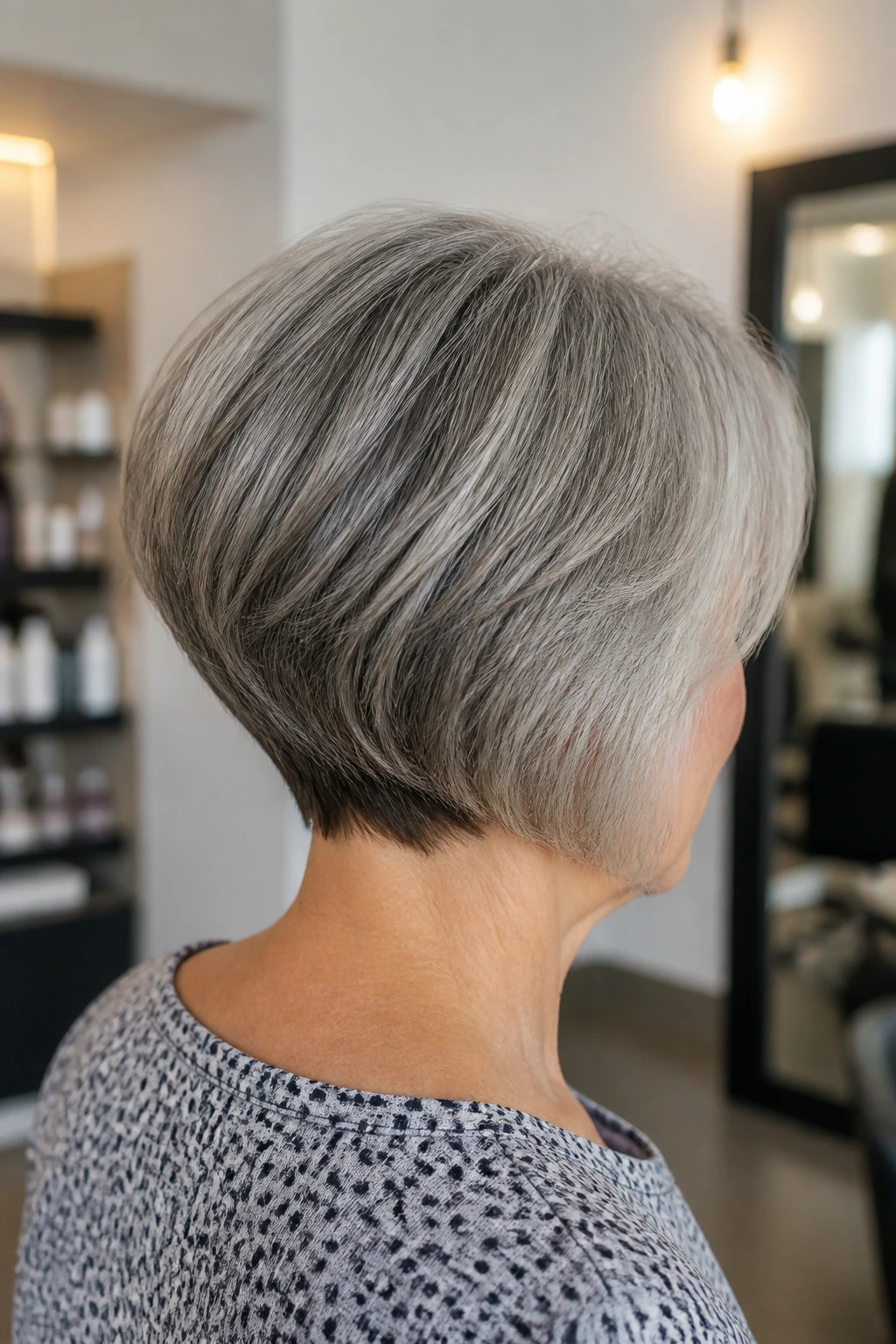
The stacked bob is built for lift. Shorter layers in the back create that rounded, graduated shape that gives the crown a little height and keeps the nape tidy. For women over 50, that extra lift can be a gift, especially if hair has started to sit closer to the scalp than it used to.
This cut shines on straight to slightly wavy hair. Too much curl at the back can make the stacking look bulky, so the shape has to be tailored carefully. When it’s done well, it has a clean line through the back and a soft curve at the sides—nothing stiff, nothing fussy.
It also plays nicely with gray hair because the stacked shape shows off the depth of the color, especially when silver strands mix with darker lowlights. If you like a polished look that still feels easy to wear, this one earns its keep.
6. French Bob
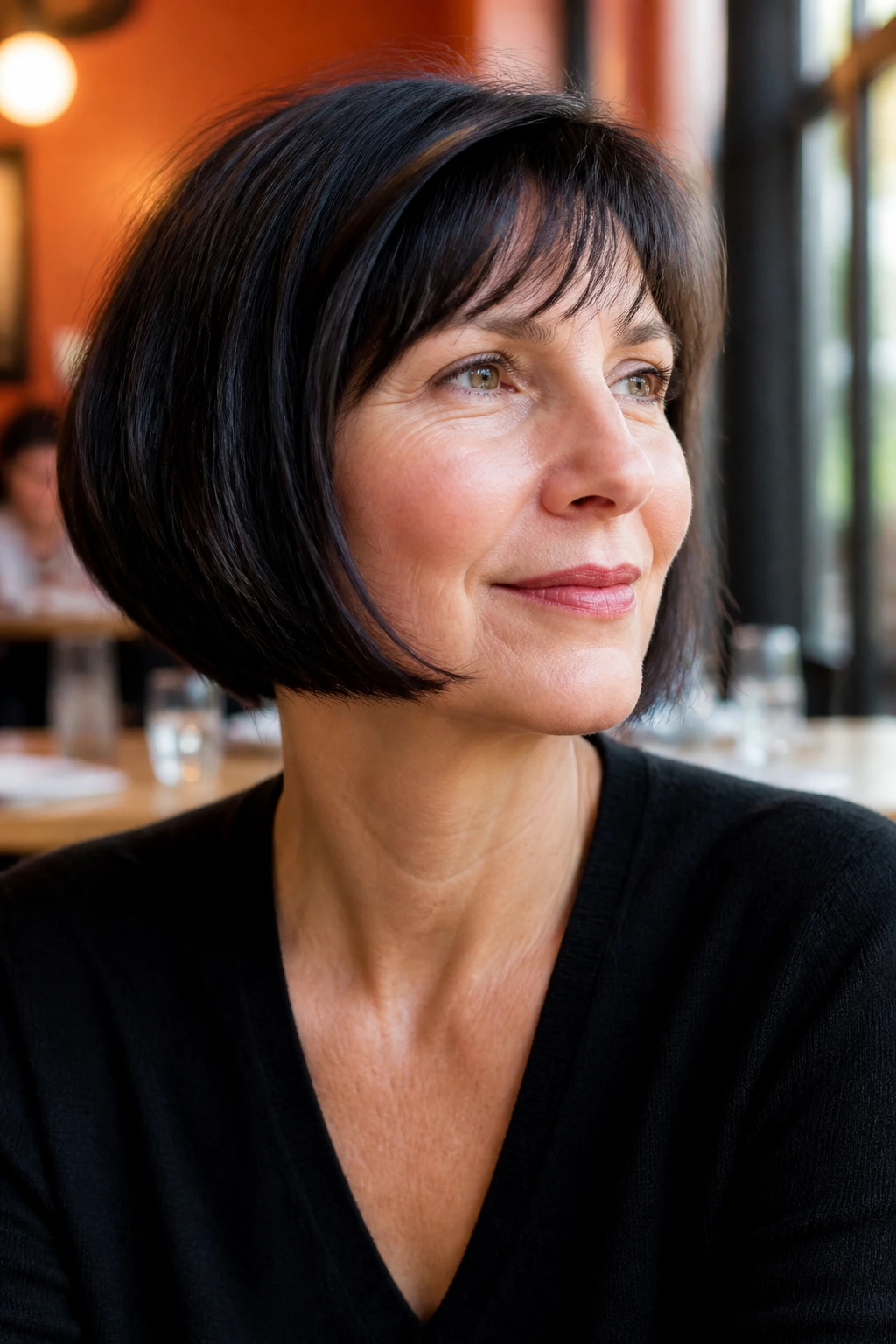
The French bob sits around the jawline, often with a blunt edge and a little bend or wave through the ends. It has a confident look without feeling harsh. On older women, it can be especially flattering because it draws the eye to the mouth and cheekbones instead of the neck.
Where It Falls Best
The sweet spot is usually just below the cheekbone or right at the jaw, depending on your face shape. If you wear glasses, this cut can look sharp in the best way, because the frames and the blunt line work together instead of competing.
A soft fringe or eyebrow-grazing bangs make the style feel more relaxed.
No fringe? Fine too. The cut still works.
The trick is keeping the ends clean. If they turn wispy and uneven, the whole look loses its snap.
7. Chin-Length Bob
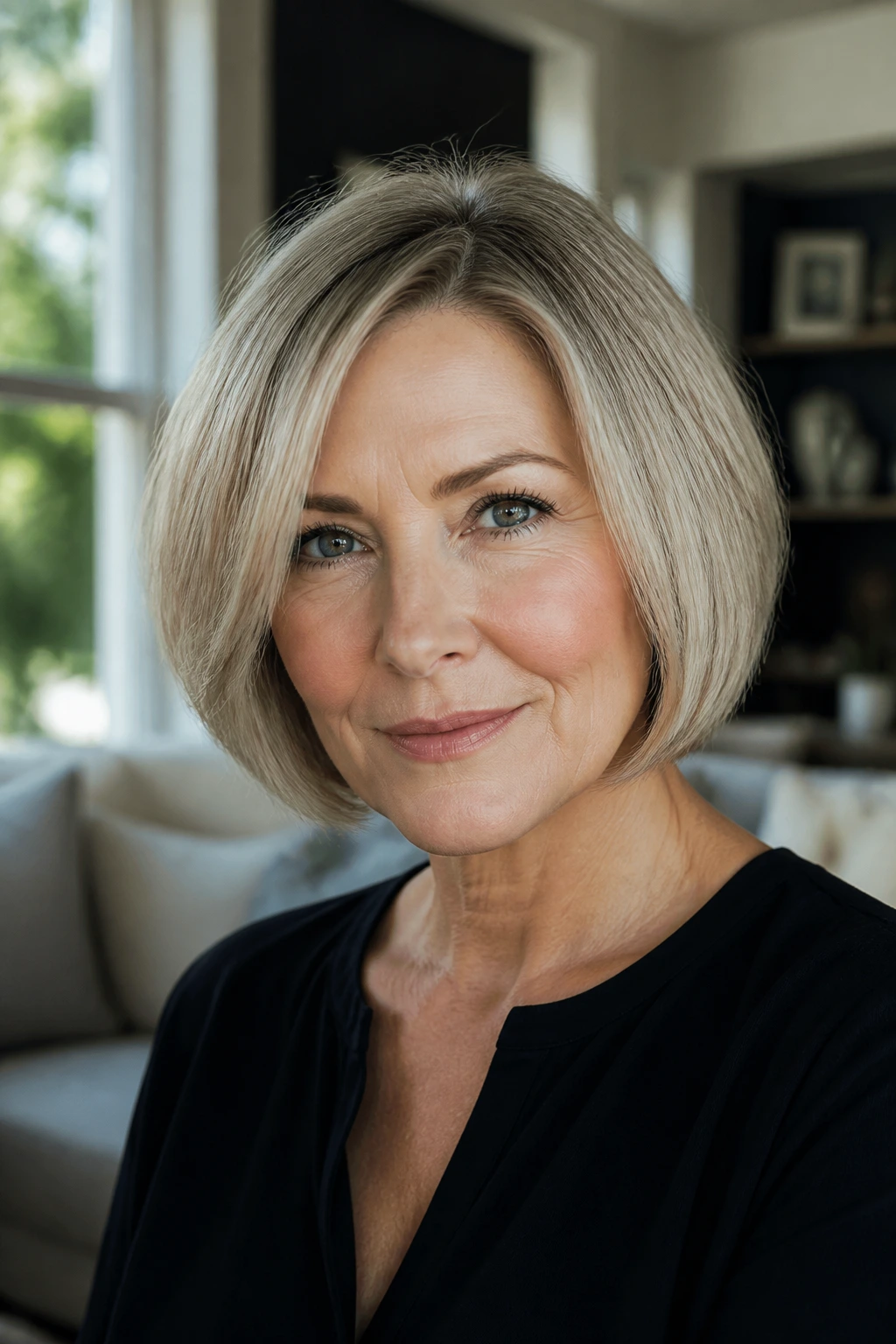
A chin-length bob is one of the most forgiving short haircuts around. It gives you enough length to tuck behind the ears, enough weight to behave in wind, and enough shape to flatter most face types. It is also a good bridge cut if you are moving from longer hair into something shorter.
What makes it useful for gray hair is the way it balances shine with motion. A blunt chin-length bob can look sleek, but a slightly layered version feels softer and more modern. If your hair tends to puff at the sides, ask for subtle internal layering rather than obvious choppy layers.
This is the cut I think of when someone wants short hair without giving up styling options. You can smooth it. You can wave it. You can wear it tucked, clipped, or flipped under with a round brush. That flexibility matters more than people think.
8. Asymmetrical Bob
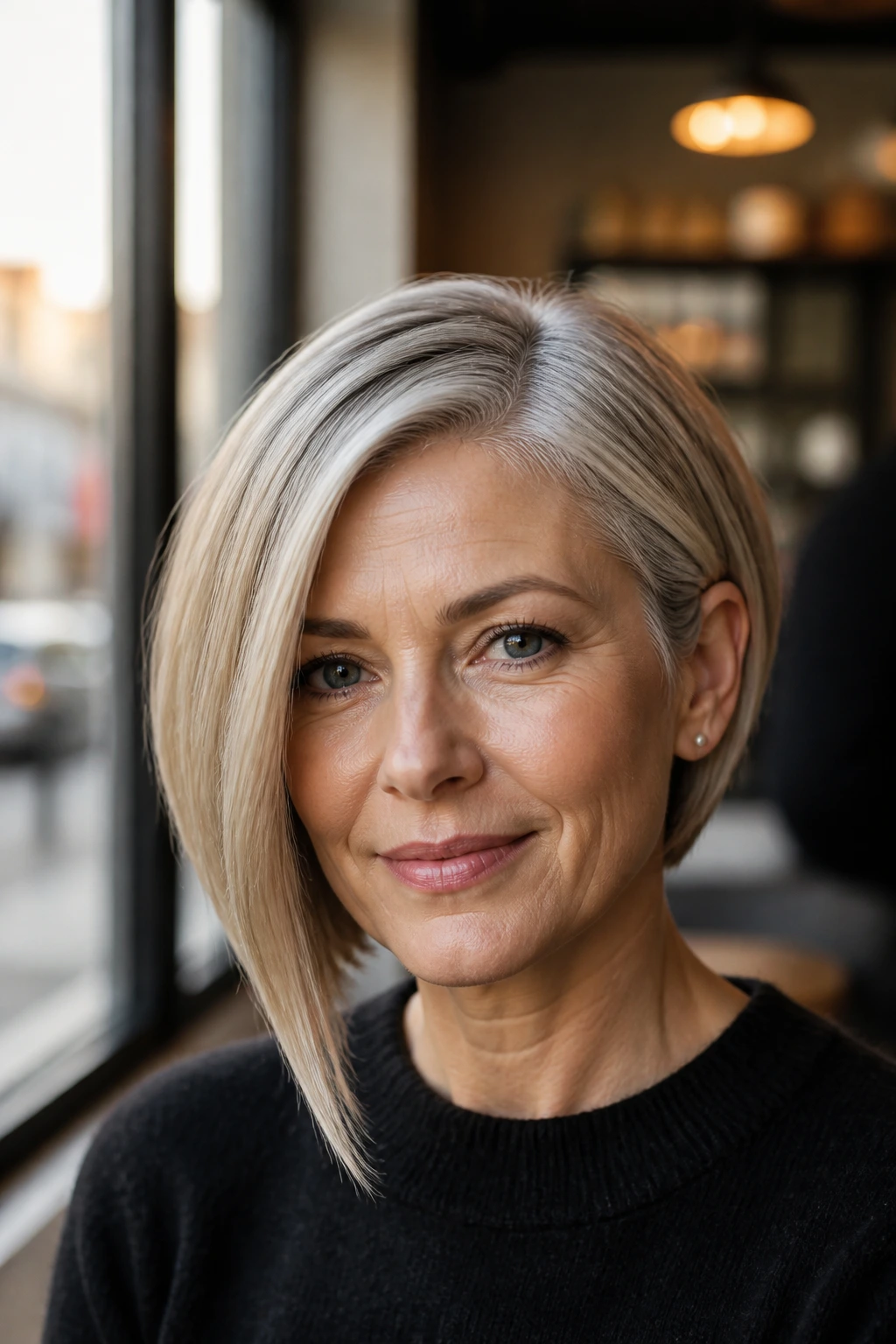
An asymmetrical bob has one side a little longer than the other, and that uneven line gives the cut a bit of edge without making it difficult to wear. It can be subtle—just half an inch longer on one side—or more obvious if you want the shape to feel bold.
I like this style for women who want their haircut to do some of the talking. It brings attention upward and gives the face a longer line, which is useful if you have a round or square face. The longer side can skim the jaw and make the whole cut feel more dynamic.
Quick Notes
- Works well with straight or lightly wavy hair.
- Needs a clean part to show the shape.
- Keep the shorter side trimmed often so it does not lose the point.
- A flat iron on the ends can sharpen the line in under two minutes.
If you wear statement earrings, this cut shows them off beautifully.
9. Bixie Cut
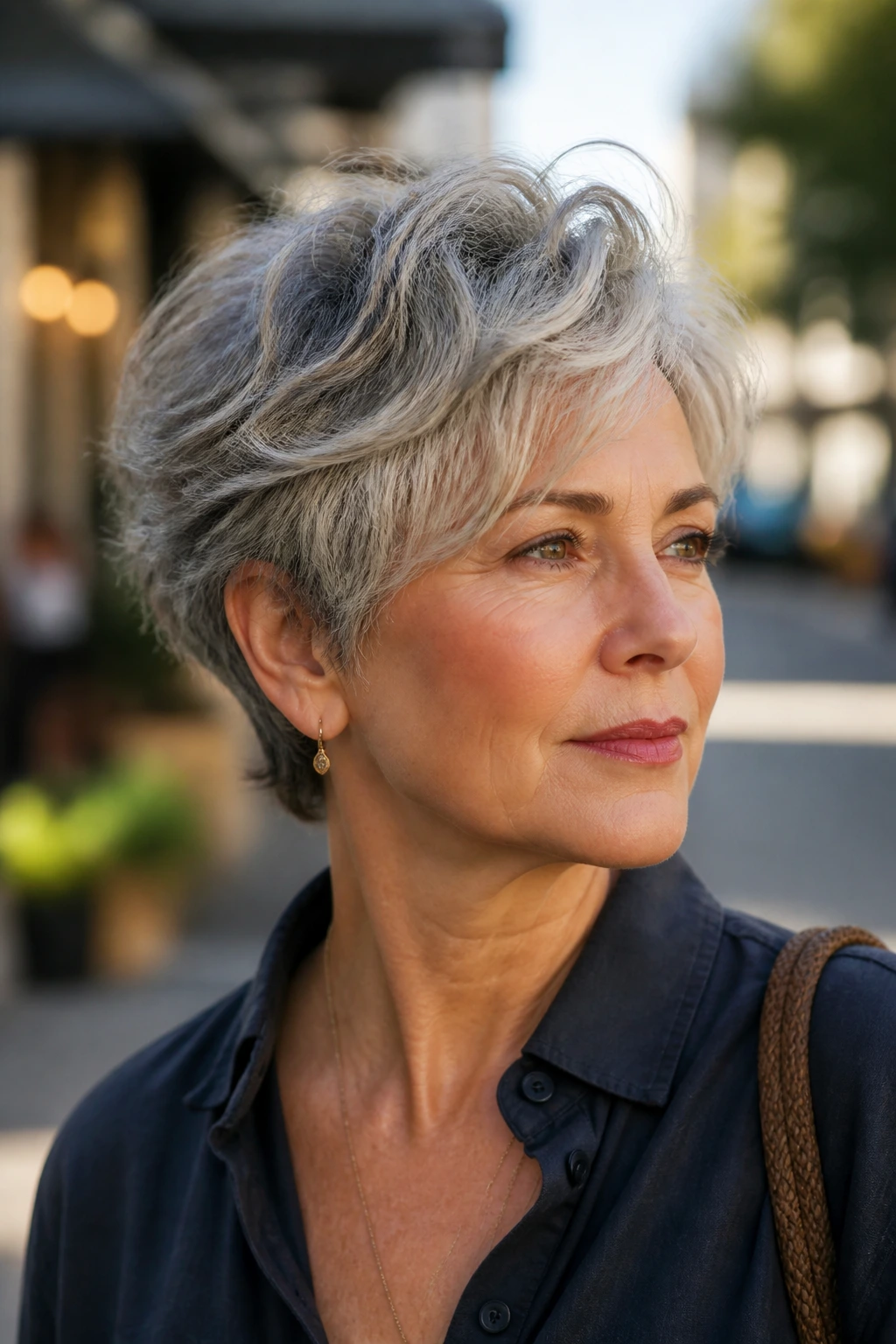
The bixie sits between a bob and a pixie, which is why it has become such a practical favorite. It gives you the cropped ease of a pixie with a little more length around the ears, nape, and top. That extra length softens the look and makes the cut easier to style if you are not ready for very short hair.
The bixie is especially good on hair that has some wave. The texture gives the layers movement, and the cut keeps the ends from looking stringy. On gray hair, the mix of lengths can be a nice thing; it breaks up flat color and makes the whole style feel dimensional.
Why It Works
The bixie keeps the shape close to the head, so it does not balloon out. At the same time, it leaves enough room for a side sweep or a bit of tousling on top. That balance is the point.
If you like pieces that you can finger-style in the morning, this is a smart place to land.
10. Textured Crop with Side-Swept Fringe
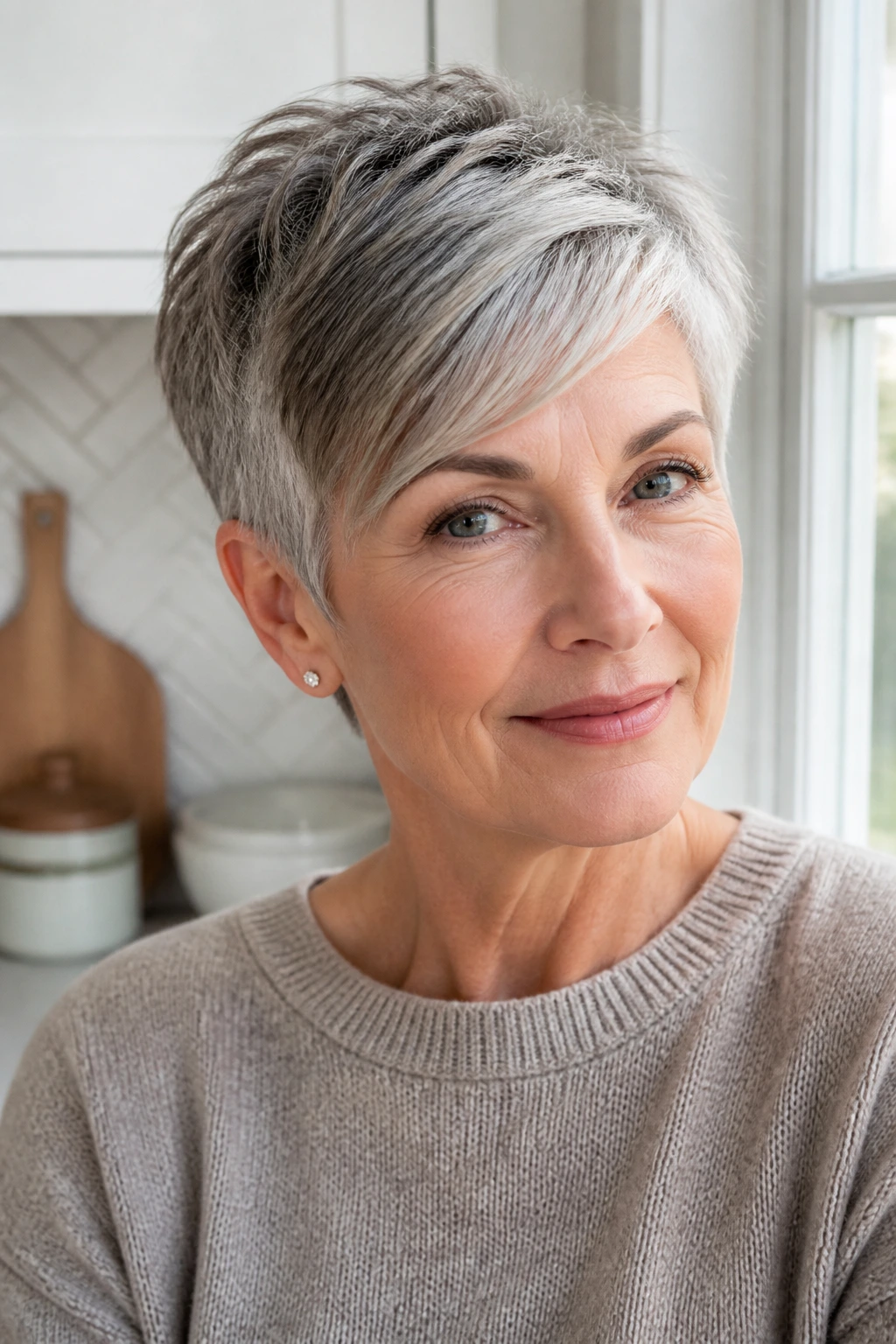
A textured crop with a side-swept fringe is one of the easiest ways to soften a short haircut without losing its edge. The cropped sides keep it neat, while the fringe breaks up the forehead line and adds a little movement across the front. It’s a small change. It changes everything.
This cut is a strong option if your face feels broader through the forehead or if you want to draw attention away from a high hairline. The side-swept fringe also works well with gray hair because it adds shape without hiding the color underneath. You still see the silver tones; they just move.
A light styling cream is enough here. Blow the fringe in the opposite direction first, then sweep it over while it’s still warm. That gives the front a little bend instead of a stiff swoop.
Avoid heavy waxes. They make the fringe collapse by midday.
11. Shaggy Bob
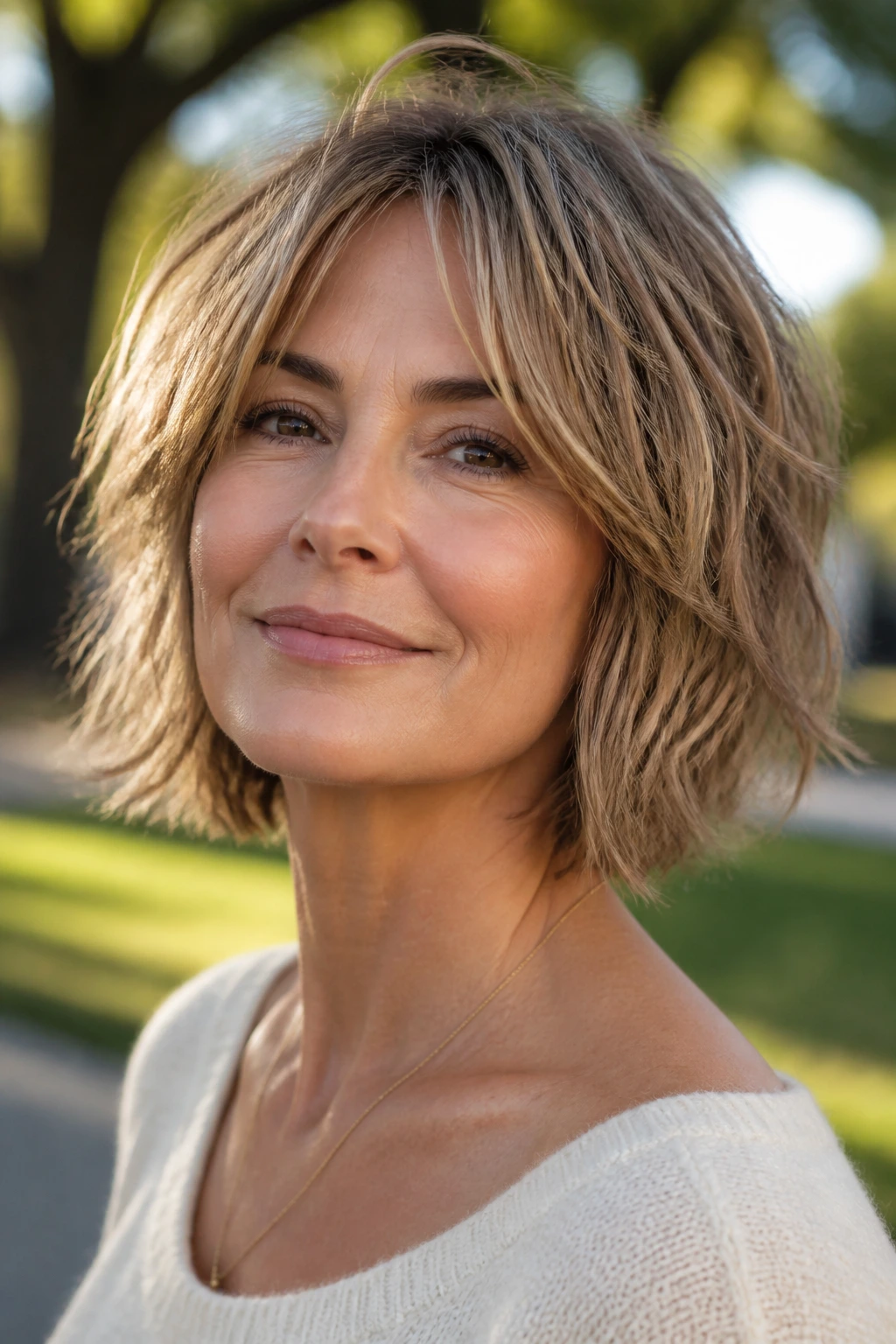
The shaggy bob has a little attitude, and that is exactly why it works so well. It layers the ends, loosens the outline, and creates that casually undone shape that looks better when it isn’t perfect. For women who do not want a polished helmet of hair, it’s a welcome change.
What gives this cut its charm is movement. The layers should fall around the cheekbones and neck, not just at the bottom. That shape keeps the bob from getting heavy and helps waves or bends show up more naturally. On gray hair, the texture can look especially good because the different lengths catch light at different spots.
How to Keep It Looking Good
- Use a small amount of mousse on damp hair.
- Scrunch if you have natural wave.
- Air-dry when you can.
- If you blow-dry, use a diffuser or a rough-dry setting.
This is not the cut for someone who wants every strand to behave. It looks best with a little mess.
12. Curly Crop for Older Women
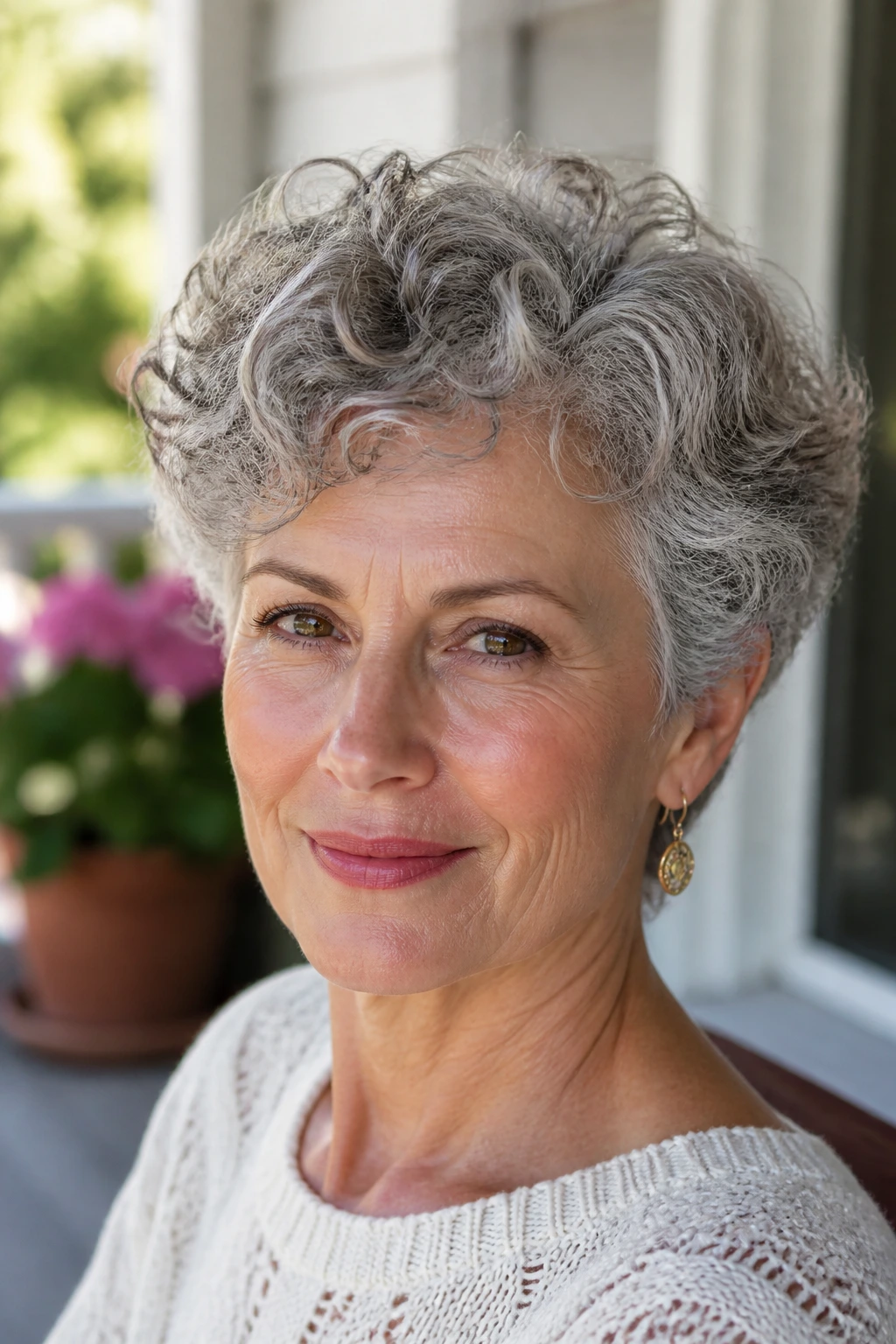
Curly hair needs room, even when it is short. A curly crop gives curls enough length to spring, but not so much weight that they collapse into a triangle or a pyramid. That balance is what makes it flattering on older women with natural curls or strong waves.
The key is cutting it dry or nearly dry so the stylist can see where each curl lives. Wet curls lie. They shrink, twist, and change shape in ways that can fool even a careful hand. With the right cut, the top stays lifted and the sides stay shaped without being flattened.
A curl cream or gel with a soft hold will help define the shape without making it crunchy. You want bounce, not shellacked edges.
If your curls are silver or salt-and-pepper, this cut can look especially rich because the light hits each curl differently.
13. Wedge Cut
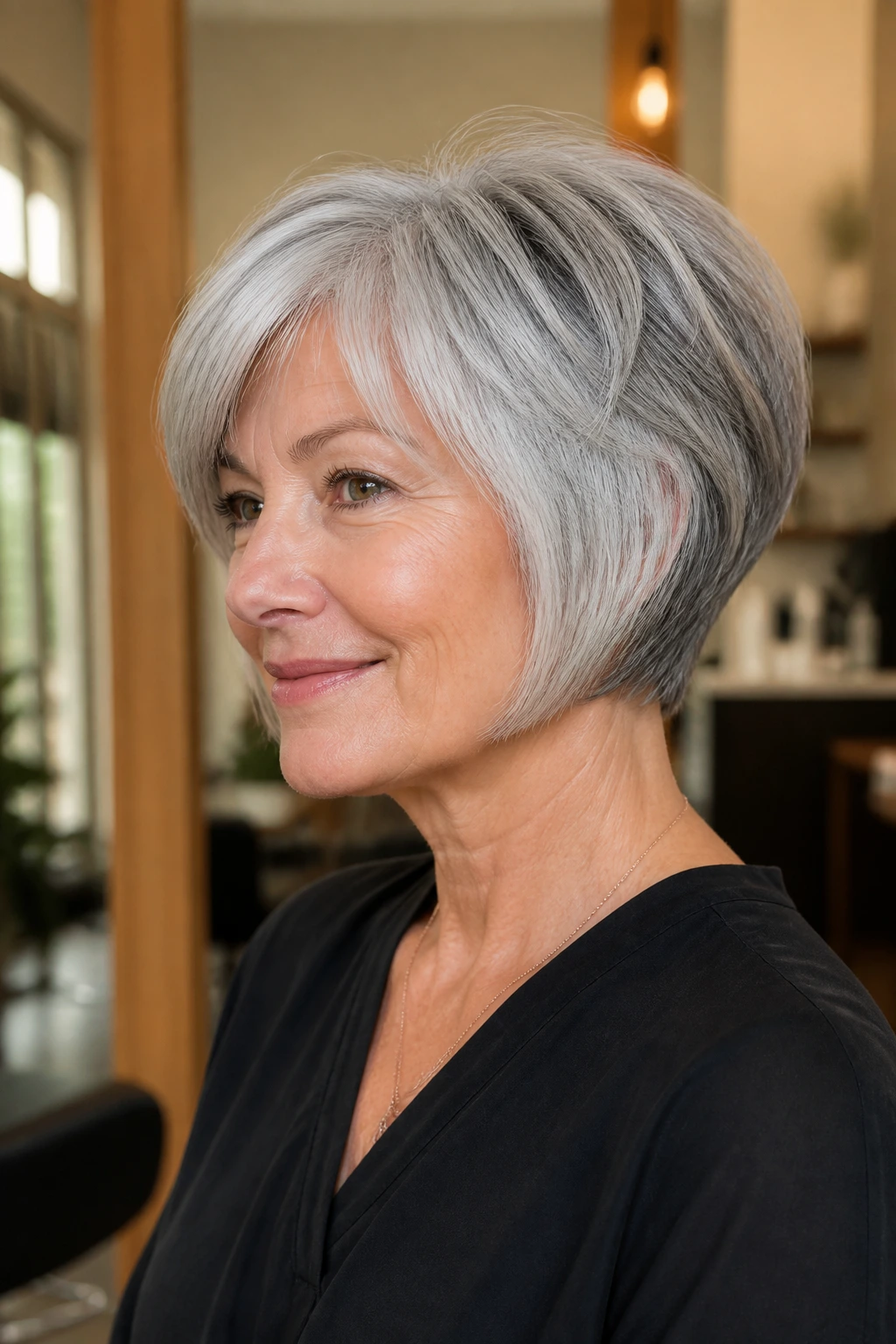
The wedge cut has a built-in shape that does a lot of the work for you. It is shorter in the back, angled forward toward the jaw, and often rounded through the crown. The result is a neat, sculpted profile that still feels easy to wear.
This one has a bit of a retro spirit, but it does not have to feel dated. Keep the layers softer and the front slightly longer, and the style looks clean instead of stiff. It is especially useful for fine hair that needs body at the back without looking overworked.
A wedge cut pairs well with glasses because the shape frames the face instead of crowding it.
A bit of smoothing lotion on the ends helps keep the angle visible.
If you want low effort and a strong shape, this cut is hard to beat.
14. Ear-Length Bob with Tucked Sides
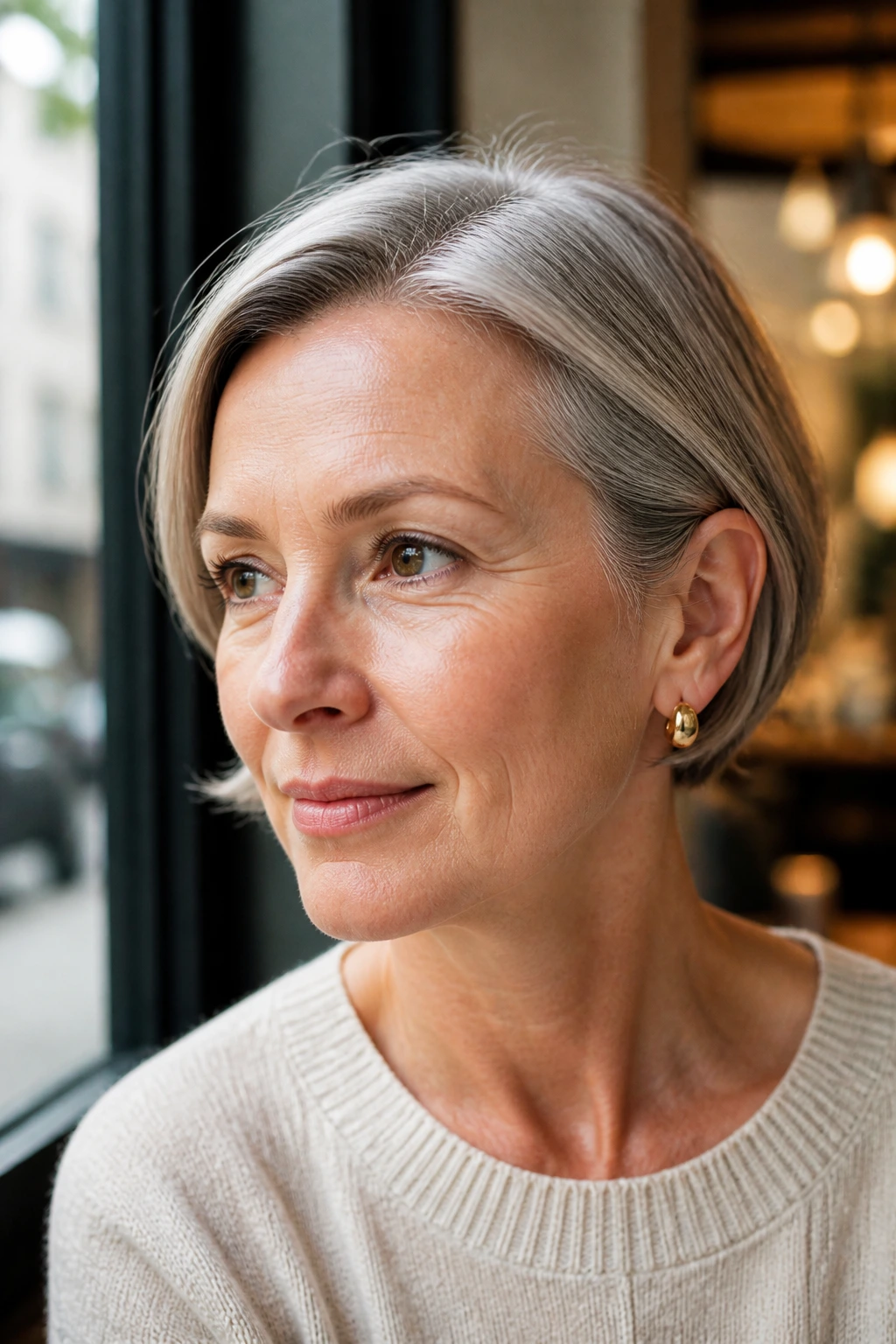
An ear-length bob is shorter than people expect, and that is what makes it interesting. The hair sits around the ears and jaw, with enough length to tuck the sides neatly. It can feel sharp, modern, and a little playful all at once.
Why It Flatters
The cut opens up the face. That matters when you want to show off cheekbones, earrings, or just a clean neckline. It also works well if your hair is straight and you want a style that stays put without constant fixing.
Use a light blow-dry cream and a small round brush to smooth the sides inward.
If you like a more casual finish, flip the ends out just a touch.
This style is not heavy. That’s the appeal.
For women with fine gray hair, the shorter length can make strands look denser because there is less room for the ends to thin out.
15. Undercut Pixie
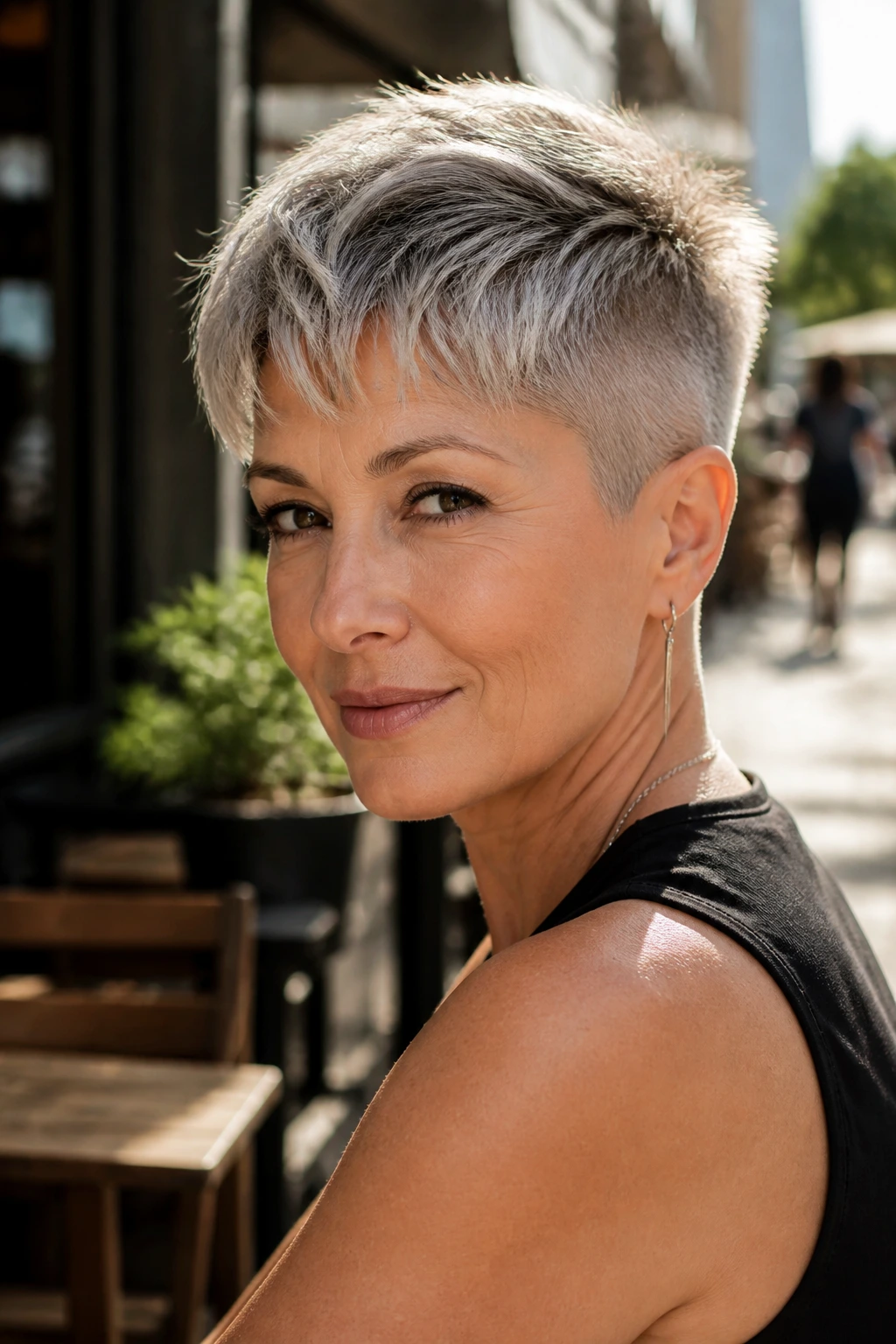
An undercut pixie is for anyone who wants a short haircut with less bulk and a little more edge. The sides or back are clipped shorter underneath, while the top stays longer and more flexible. It can be subtle, but the difference is real. The head feels lighter. The shape looks cleaner.
This cut solves a common problem for thick hair: too much width at the sides and back. By taking out hidden volume, the top can sit better and the whole style becomes easier to manage. It also dries faster, which is one of those small daily wins that matters more than a pretty photo.
Best Uses
- Thick, dense hair that puffs out.
- Straight hair that needs a sharper shape.
- Gray hair that feels coarse and bulky at the nape.
- People who like a bolder silhouette.
Do not ask for the undercut too high unless you really want to show it. A lower placement grows out more gracefully.
16. Sleek Side-Part Bob
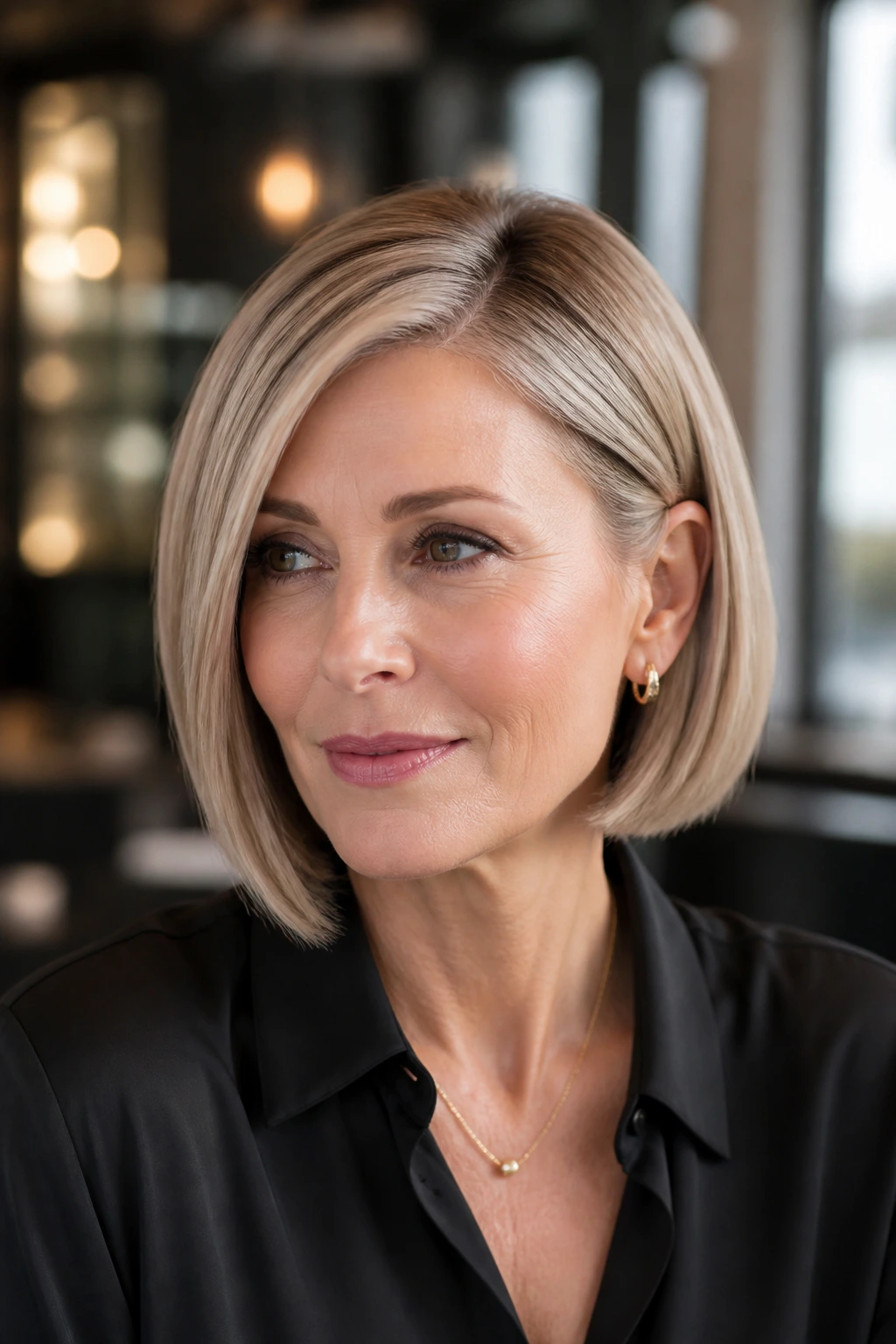
A sleek side-part bob does not try to be cute. It goes straight for clean lines, a deep side part, and a smooth finish that feels composed without looking stiff. If your hair naturally falls flat on one side, this style works with it instead of fighting it.
A side part can soften the face and create a little lift at the roots. That matters for fine or thinning hair, because the top of the head can use all the help it can get. A bob that sits near the chin or just above it usually gives the best balance.
Keep the finish glossy, not greasy. A small drop of serum on the ends is enough.
If the part wants to slide back, pin it while the hair cools after blow-drying.
This cut is especially good with straight gray hair because the shine makes the line look crisp.
17. Feathered Bob with Bangs
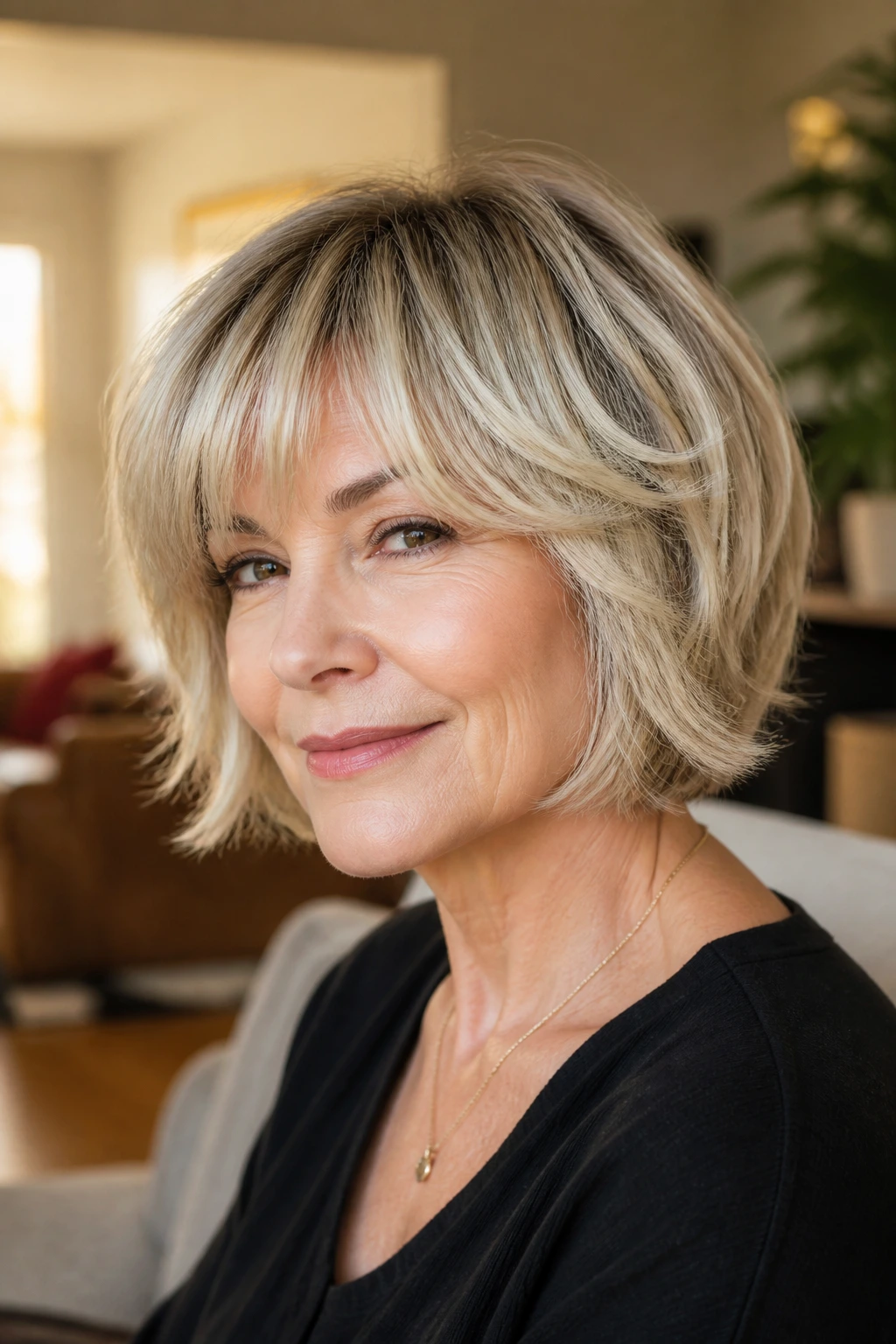
A feathered bob with bangs has a softer mood than a blunt bob, and that softness is often the whole point. The feathered layers keep the hair from sitting in one heavy mass, while the bangs bring the eye down and help balance a higher forehead.
This is one of my favorite cuts for people who want face-framing without a lot of styling drama. The bangs do not have to be thick; in fact, a lighter fringe often works better because it moves with the rest of the haircut instead of sitting on top of it like a lid.
A Few Things to Watch
- Keep the bangs long enough to sweep if needed.
- Ask for soft blending at the temples.
- Use a round brush only at the fringe.
- Trim the bangs before they hit your eyelashes.
That last part sounds obvious. It matters anyway. Bangs can go from flattering to annoying fast when they grow out.
18. Rounded Bob for Glasses
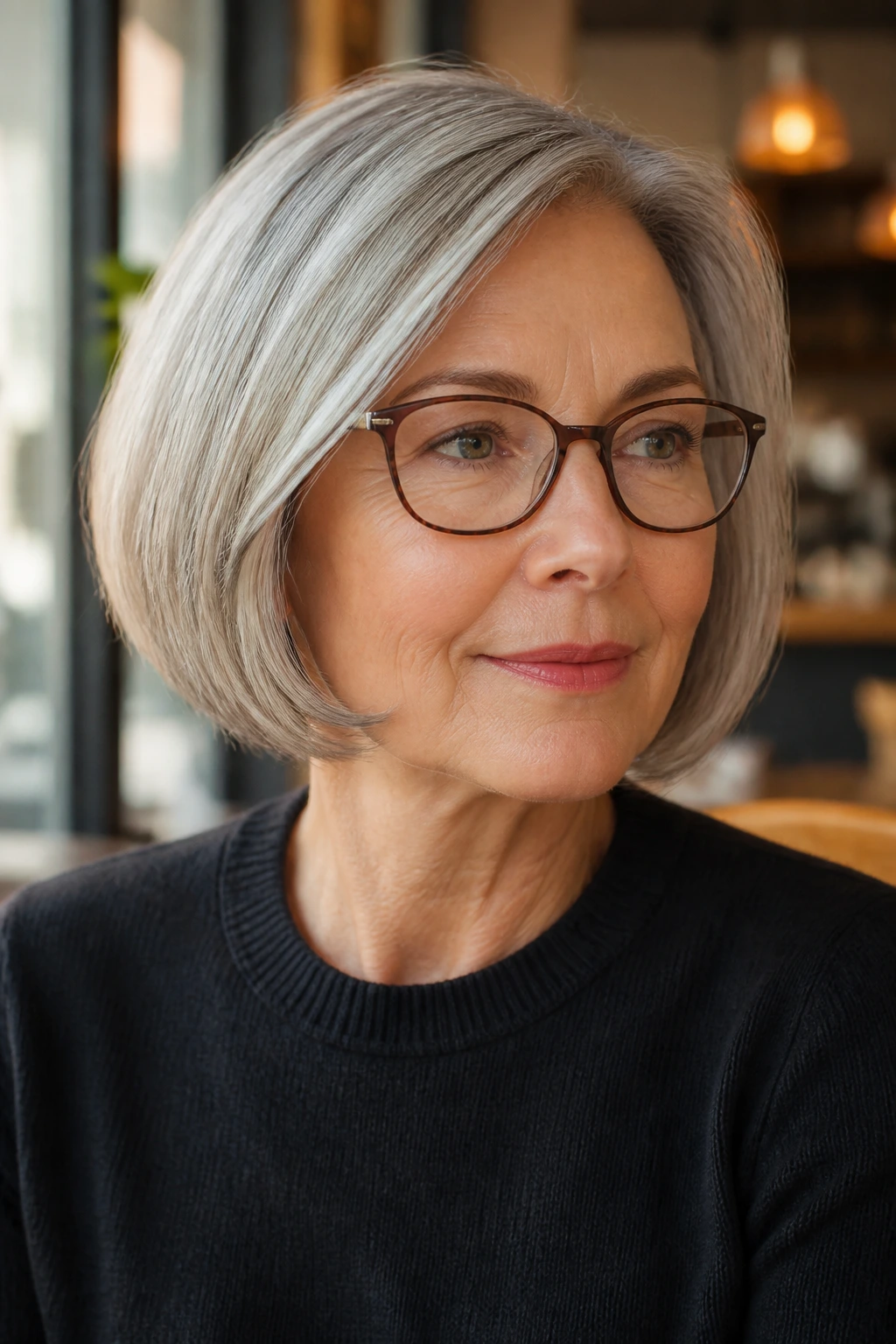
A rounded bob and glasses go together better than people think. The curve in the cut echoes the shape of the frames, which creates a neat, balanced look around the face. It is a small visual trick, but a useful one.
The rounded shape works best when the ends bend gently under the jaw instead of sticking out. That curve softens the profile and keeps the style from looking boxy. If your glasses are bold, a rounded bob helps the hair support them instead of competing with them. If your frames are thin, the bob gives the face more definition.
A little volume at the crown helps the proportions, especially if the frames sit high on the nose.
A side part or soft fringe can keep the look from feeling too round overall.
It’s one of the easiest cuts to wear when you need hair and glasses to get along.
19. Tousled Crop
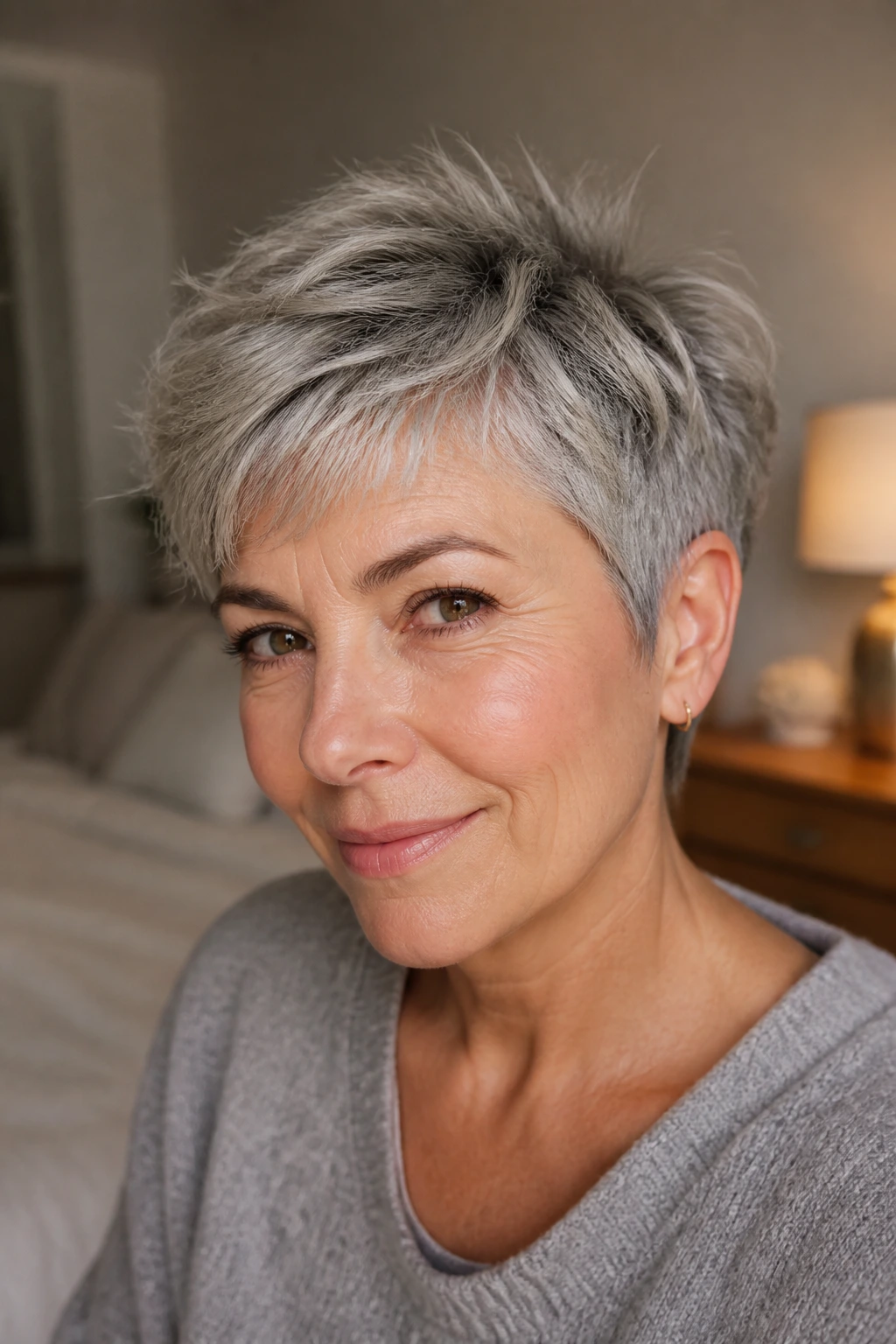
The tousled crop is for days when you want hair that looks touched, not overworked. It keeps the length short, adds some choppy texture on top, and relies on movement rather than precision. That can be flattering on gray hair because the texture makes the color look richer and less flat.
This cut suits women who do not want to spend time polishing every strand. A little salt spray or styling paste goes a long way. Work the product into damp hair, then rough-dry with your hands until the shape wakes up. If the front falls too flat, lift it with your fingers at the roots and give it another thirty seconds of heat.
How to Get the Most From It
The cut needs a light hand from the stylist. Too much thinning and it starts to look patchy. Too little and it turns into a puff. That middle ground is where it lives.
It’s casual, but not careless. That difference matters.
20. Graduated Bob for Gray Hair
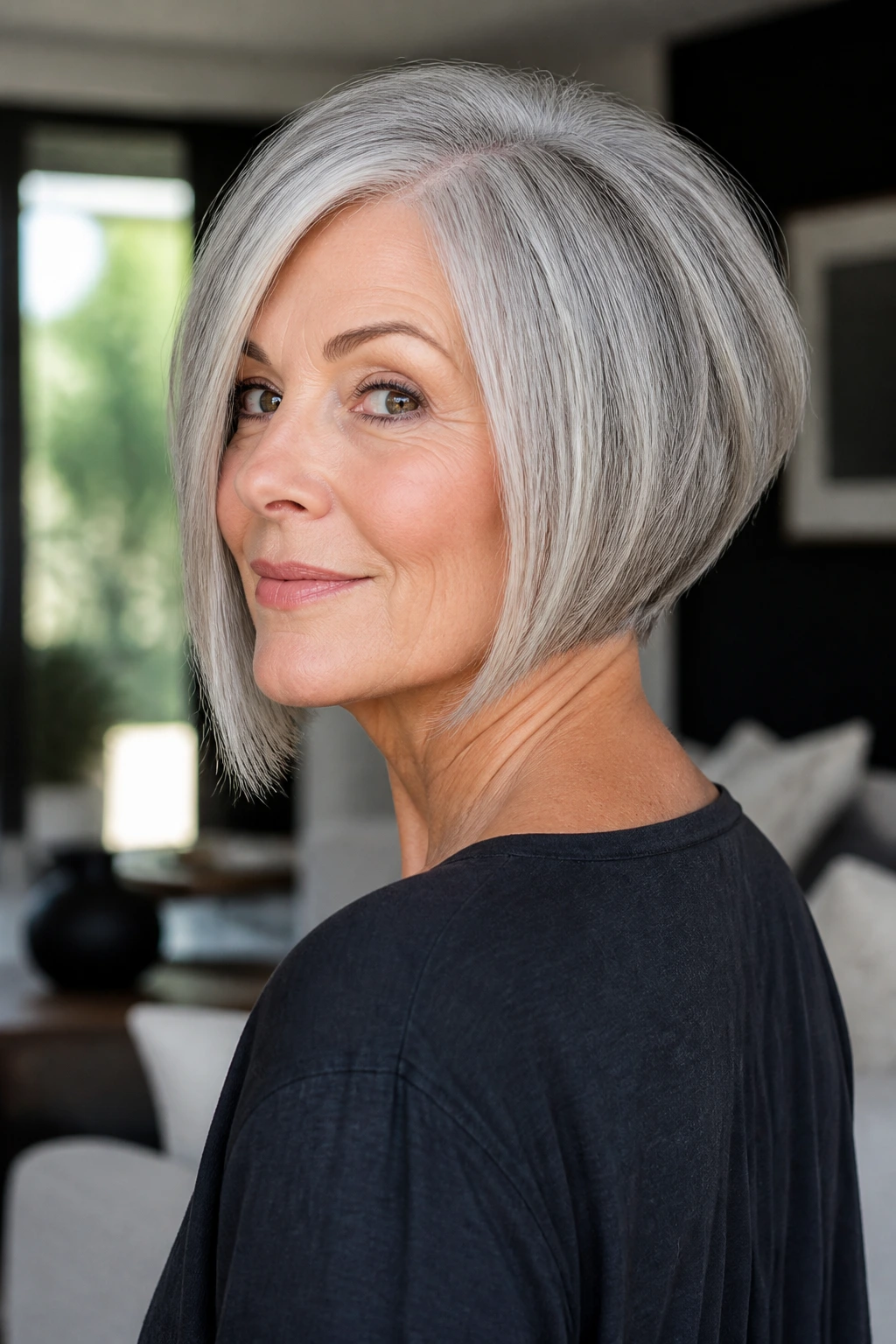
A graduated bob has more structure in the back and a longer front that drops toward the jaw. On gray hair, that angled shape can look especially sharp because the lighter color shows the line of the cut so clearly. You can see the shape from across the room.
What I like here is how the graduation builds a little lift without needing teasing or heavy product. If your hair has started to feel limp at the crown, this shape gives it a push. It also works well if you want a bob that feels more tailored than soft.
You can wear it smooth for a polished finish, or add a slight bend at the ends with a flat iron. Either way, the angle stays visible.
Keep the back trimmed regularly. Once it grows out too much, the whole shape loses its point.
21. Layered Lob
A layered lob is the longest style on this list, but it still counts as a short option for plenty of women who want lighter hair without going all the way to a crop. It usually sits around the collarbone or just above it, with layers that stop the ends from feeling heavy.
This cut is a smart stepping stone if you are unsure about a very short haircut. It gives you movement, face-framing, and some styling room, while still feeling manageable. On silver hair, the layers help the tone look softer and less blocky, especially if the ends have started to feel coarse.
Who It Suits
- Women growing out a shorter cut.
- Thick hair that needs weight removed.
- Wavy hair that likes to bend.
- Anyone who still wants a ponytail option.
A side part can make the lob feel more modern. A center part gives it a calmer, more even shape. Either works.
22. Crop with Wispy Bangs
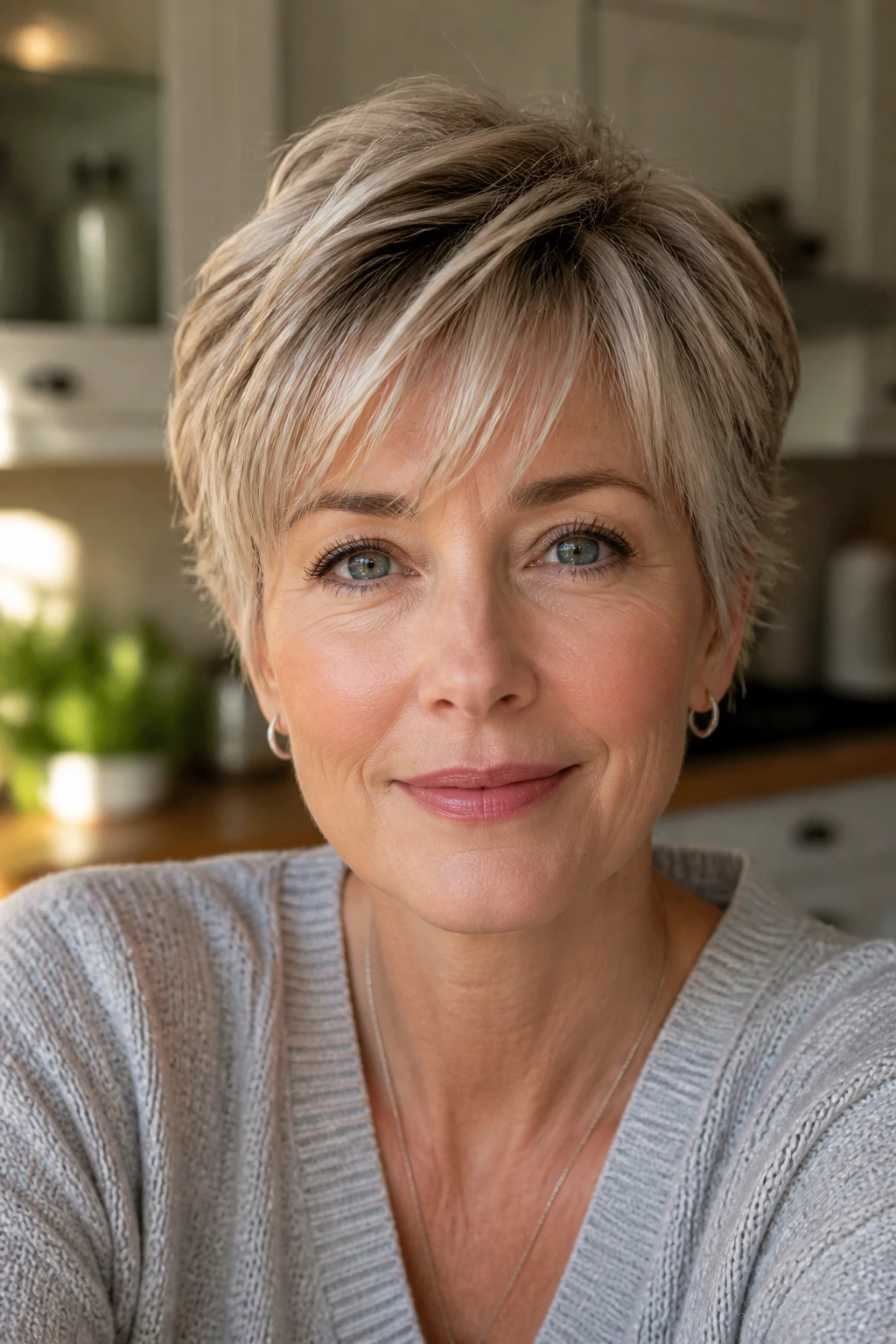
A crop with wispy bangs gives you short hair without a hard front line. The bangs stay light and broken up, which keeps the style from looking severe. That is a real advantage if your forehead is a feature you want to soften instead of spotlight.
The wispy fringe works best when it is cut into the rest of the style, not dropped on top at the end. It should move. It should not sit like a curtain. On gray hair, those lighter strands through the front can be very flattering because they break up the shape and keep it airy.
If you have fine hair, this can be a nice choice because the bangs do not require much density to look good. If you have thicker hair, your stylist may need to thin the fringe from underneath so it lies flat.
A little dry shampoo at the roots helps the front keep its shape on day two.
23. Salt-and-Pepper Shag
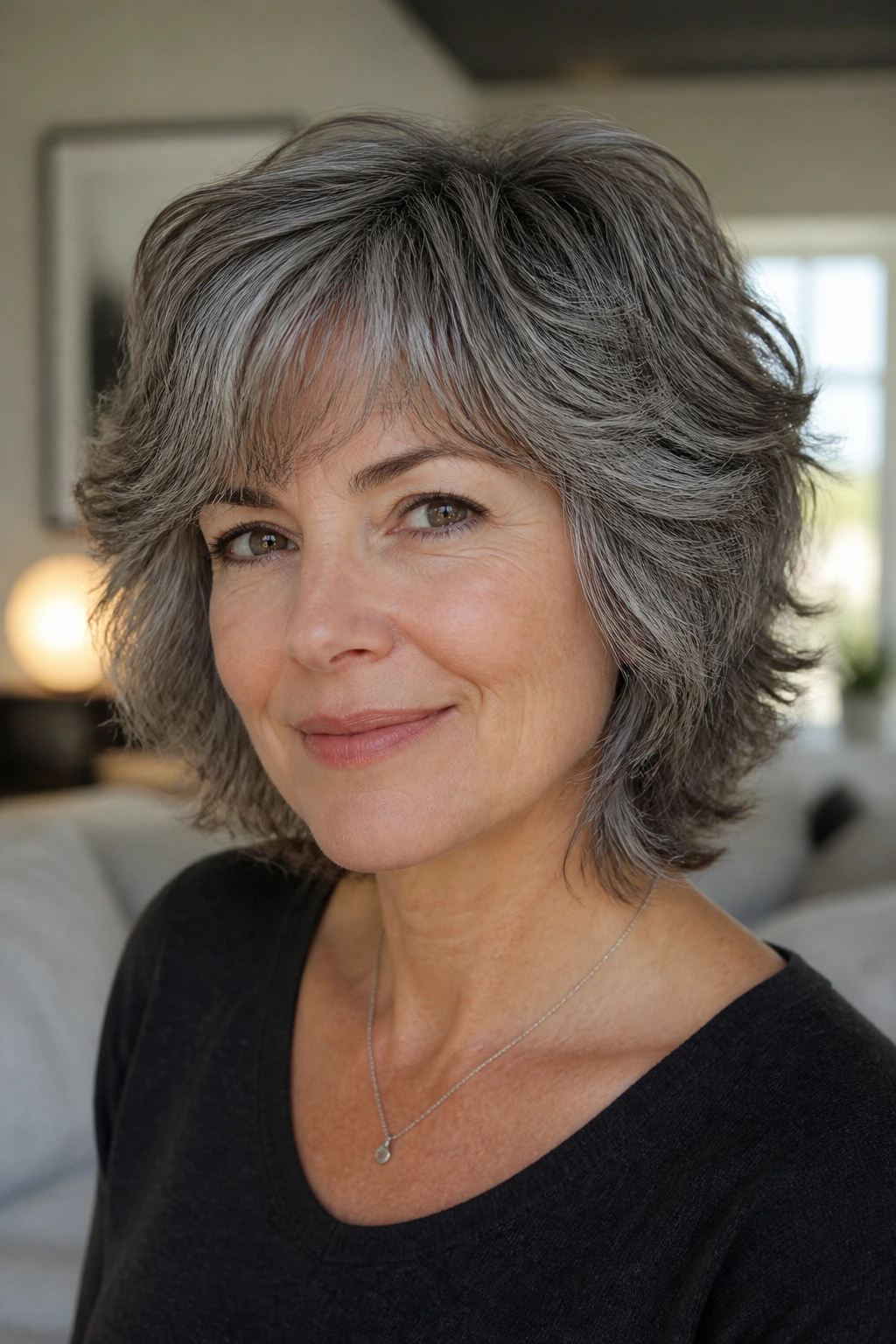
A salt-and-pepper shag has attitude, and I mean that in a good way. The layers are piecey, the outline is loose, and the haircut is built to work with mixed tones instead of pretending they are a problem to solve. The blend of dark and silver strands can look rich here because the cut keeps the eye moving.
This style is a strong fit for wavy or slightly curly hair. The shag does what it has always done: it breaks up bulk, adds motion, and stops the hair from sitting flat against the head. When the color has depth already, the layers make it pop without extra effort.
What to Ask For
- Soft, uneven layers around the cheekbones.
- A little length in the fringe area.
- Tapering at the neck.
- Enough texture to keep the ends separated.
This is not a stiff haircut. If it looks too neat, something went wrong.
24. Short Curly Bob with Layers
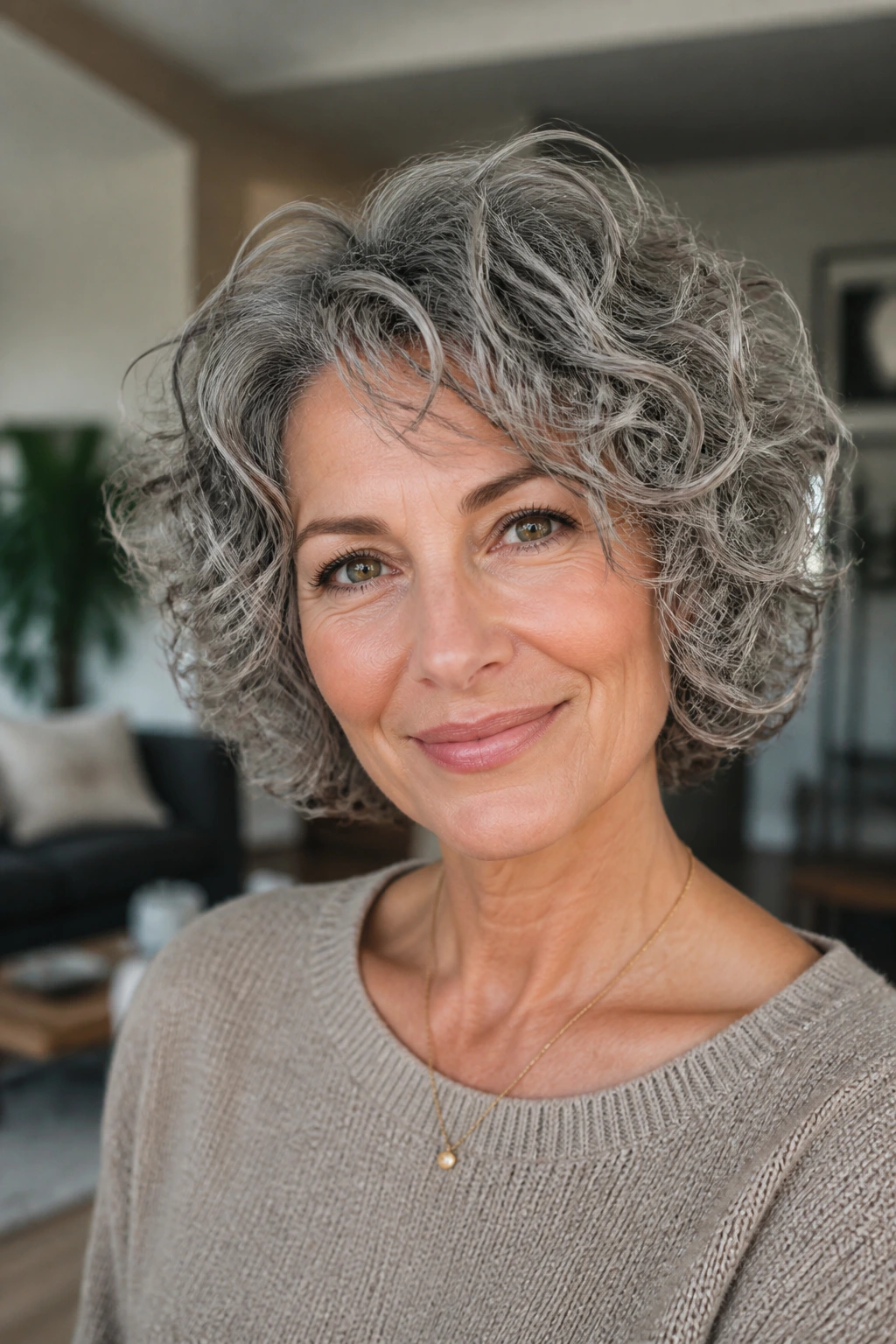
A short curly bob with layers gives curls room to lift while keeping the overall shape under control. Without layers, curls can bunch up at the bottom and create a triangle. With the right layers, the shape rounds out and the curls stack in a better way.
The haircut should follow the curl pattern, not fight it. That means the shortest pieces often land where the curls naturally spring up, and the longer pieces support the silhouette underneath. It sounds technical, but in practice it just means the hair looks like it belongs to your head instead of sitting on top of it.
A curl cream and a diffuser are enough for most days.
Do not rake through it once it starts drying.
That’s the fastest way to create frizz you never wanted.
Gray curls can look especially bright in this shape because each ring has its own shimmer.
25. Neck-Length Layered Bob
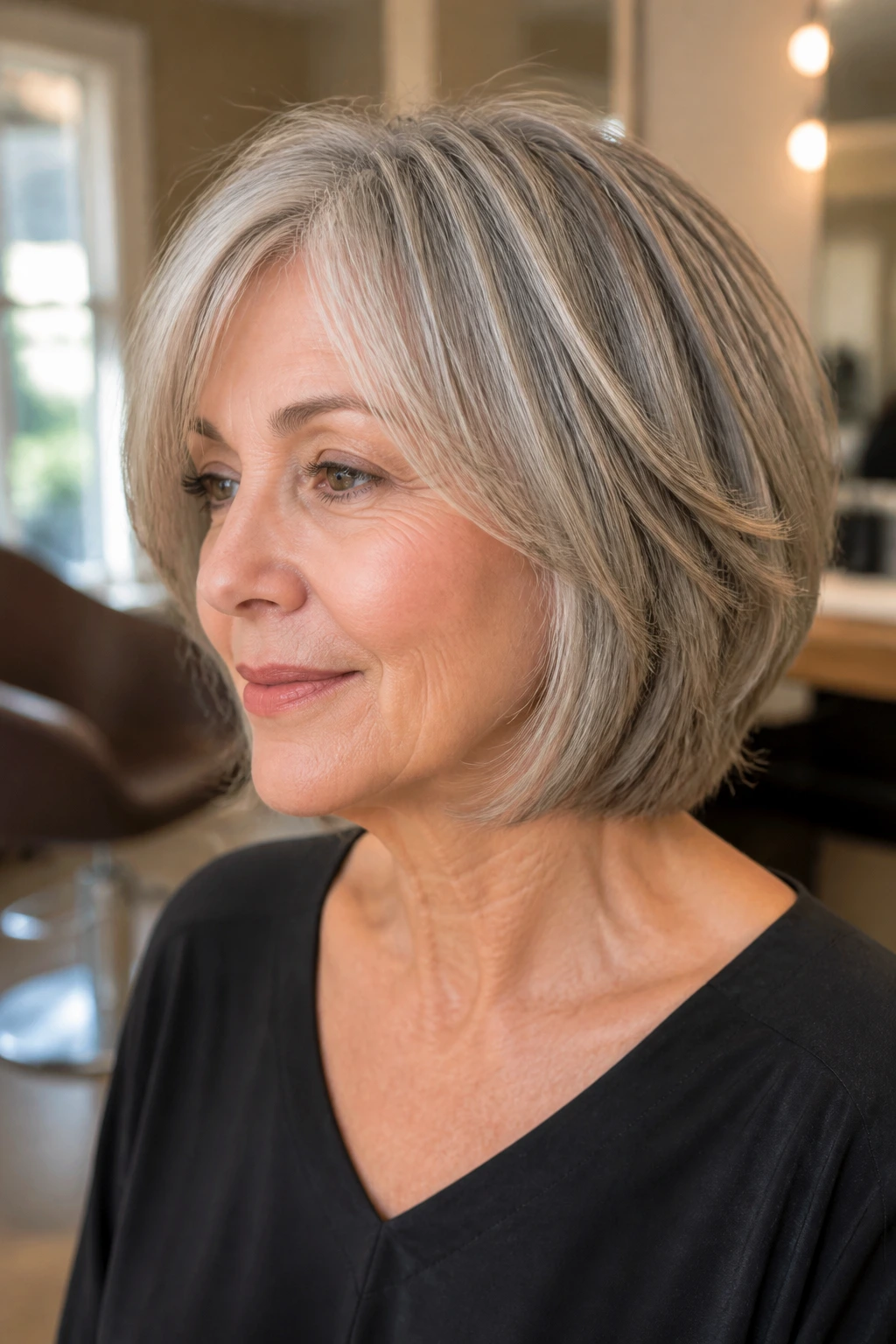
A neck-length layered bob is a strong ending place because it sits in that useful middle zone: short enough to feel lighter, long enough to tuck, smooth, or clip back when needed. The layers keep the cut from becoming heavy at the bottom, which is where a lot of bob styles go wrong.
This is the haircut for someone who wants polish without a hard edge. It can be sleek or softly tousled. It works on straight hair, wavy hair, and even some loose curls if the layers are cut carefully. On gray hair, the neck-length shape gives the color a clean frame, and that alone can make the whole style look more expensive than it is.
If you are deciding between a bob and something shorter, this is a sensible compromise. It does not shout. It holds up. And on busy days, that is usually the better deal.
